Category: Private

  • Manchester Country Club (Private Side)

    Manchester Country Club (Private Side)

    [put_wpgm id=”2″ width=”100%” height=”770px” current_post_only=”true”]

    [letsreview]

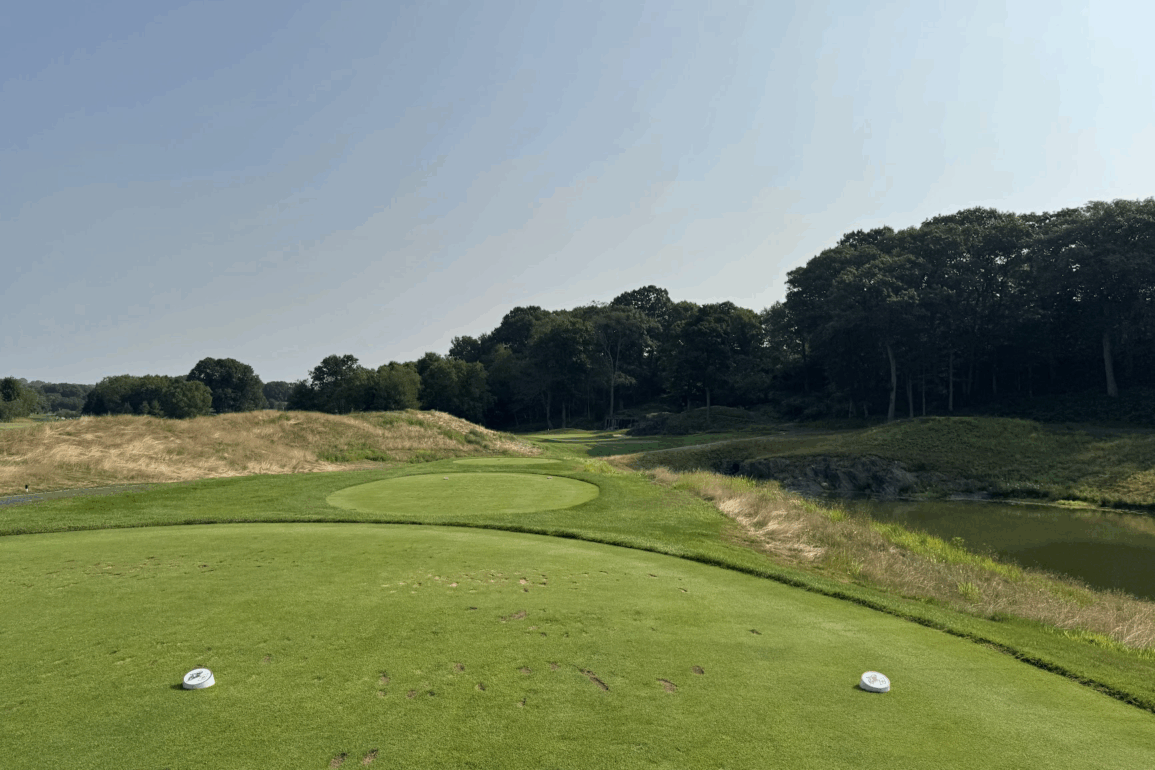
    Manchester Country Club is a semi-private par-72 course measuring approximately 6,285 yards from the tips. The course was originally designed in 1917 by Tom Bendelow and Devereux Emmet and is located in Manchester, Connecticut.

    Manchester Country Club represents a collaborative effort from two Golden Age architects, with Tom Bendelow and Devereux Emmet crafting the original 1917 layout before A.W. Tillinghast contributed modifications to several holes in 1935. This pedigree situates the course firmly within Connecticut’s hickory-era golf tradition, and the property has maintained its architectural integrity through subsequent decades while modernizing practice facilities. The course occupies approximately 125 acres of rolling terrain in Manchester, utilizing natural elevation changes and the area’s topography to create a varied routing. The design philosophy adheres to old New England principles, with routing that follows contours rather than imposing artificial shaping. Small, well-protected contoured greens characterize the layout, demanding precision on approaches while wider fairways provide generous landing areas off the tee. The strategic emphasis on approach play over pure length makes this course particularly rewarding for mid-handicap players who can work the ball into position. Recent facility improvements include a significantly expanded practice area completed in Fall 2025, featuring 18 hitting bays with sculpted target greens and an enlarged short game complex that better integrates with the routing. With its moderate yardage and emphasis on positioning over power, Manchester Country Club appeals to players who appreciate strategic golf architecture and value well-conditioned parkland courses with architectural pedigree.

    Strategic Test

    HandicapCourse Strategy
    High Handicap (18+)From the forward tees measuring 5,610 yards with a slope of 120 and rating of 72.6 for women or 5,610 yards with a slope of 112 and rating of 65.4 for men, the course provides manageable distance while still testing course management skills. The rating differential suggests approximately 5-7 strokes above par for bogey golfers playing to their handicap. The par-4 6th hole at 411 yards from the blue tees plays as the number one handicap hole, featuring a dogleg right with an elevated green complex that rewards proper positioning off the tee. Higher handicappers should consider playing this hole conservatively from the forward markers, where distance management and avoiding the right-side trouble becomes paramount. Strategic layup options short of greenside hazards allow for safer bogey opportunities.
    Mid Handicap (8-18)The white tees at 6,095 yards offer a slope of 127 and rating of 69.4, creating a balanced challenge that rewards solid ball-striking without overwhelming mid-handicap players. This rating suggests approximately 2-4 strokes over par for players in this category. Slope impact becomes significant on the longer par-5s, particularly holes 3 and 4 which measure over 500 yards, where proper club selection and positioning matter considerably. The par-3 5th hole measuring 153 yards from the blue tees exemplifies strategic par-3 design, with Tillinghast bunkering protecting a contoured green. Mid-handicappers should focus on club selection based on pin position, with front pins accepting more aggressive play while back positions demand conservative approaches to avoid short-siding themselves in greenside bunkers.
    Low Handicap (0-8)From the championship blue tees at 6,285 yards with a slope of 129 and rating of 70.4, scratch golfers face a course that demands precision rather than pure length. The rating suggests approximately even par to 2-over for players at this level. The relatively compact yardage means strategic thinking supersedes power, with emphasis on approach angles and green reading. The back-to-back par-5s on holes 14 and 15, measuring 550 and 558 yards respectively, provide scoring opportunities but require careful navigation of hazards and bunker complexes. The par-3 18th at 189 yards serves as a demanding finisher, with water left and a green positioned near the clubhouse creating both strategic and psychological pressure. Low handicappers should focus on birdie opportunities on the par-5s while protecting against mistakes on the shorter, tighter par-4s where strategic bunkering punishes wayward approaches.

    Nearby Course Alternatives

    Lyman Orchards Golf Club in Middlefield offers two championship layouts approximately 30 minutes southwest of Manchester. The Player Course, designed by Gary Player in 1994, stretches 6,725 yards with a slope of 134 and rating of 73.1 from the tips, providing a noticeably stiffer test than Manchester Country Club. Routed through apple orchards across approximately 300 acres of rolling terrain, the layout features over 30 strategically placed bunkers protecting relatively small greens and incorporates significant elevation changes, particularly on the signature 11th and 13th holes which offer panoramic views across southern Connecticut. The course demands accurate iron play and well-positioned drives, with the par-3s averaging 210 yards from the championship tees. Players seeking more dramatic terrain and modern strategic features will appreciate Player’s bold design aesthetic, which incorporates forced carries and more aggressive hazard placement than Manchester’s traditional Golden Age layout. The course particularly rewards ball-strikers who can work shots into receptive pin positions on the undulating greens. Mid-to-low handicap players who enjoy elevation changes and modern target golf architecture will find the Player Course more appealing than Manchester’s flatter, more traditional routing.

    Tallwood Country Club in Hebron provides another semi-private option approximately 20 minutes east of Manchester. Designed by Michael and Karnig Ovian in 1970, the course measures 6,366 yards from the championship tees with a slope of 119 and rating of 70.2, creating a friendlier challenge than Manchester despite similar overall yardage. Spread across approximately 150 acres of gently rolling terrain, Tallwood features wide-open fairways that particularly accommodate players who struggle with accuracy off the tee, though water hazards come into play on multiple holes including the demanding par-4 17th. The practice facilities include two large putting greens, a dedicated chipping and bunker practice area, and an extensive driving range, making it particularly attractive for players focused on game improvement. Tallwood has earned recognition as a tournament venue, regularly hosting Connecticut state amateur championships, which speaks to the quality of course conditioning and playability across all skill levels. The course’s reputation for excellent maintenance and its forgiving width make it especially appealing to higher-handicap players who value scoring opportunities over architectural pedigree. Golfers seeking wider landing areas and less severe greenside bunkering compared to Manchester’s Golden Age design will find Tallwood’s 1970s aesthetic more accommodating.

    Final Word

    Manchester Country Club recently completed a significant practice facility renovation in Fall 2025, expanding the driving range to 18 hitting bays with new mats and sculpted target greens that provide proper distance references for all clubs. The short game area received equal attention, featuring a new 3,000-square-foot bentgrass practice green and redesigned chipping area that better simulates on-course conditions. Enhanced separation from the 17th tee box through strategic landscaping mounds improves both safety and the practice experience. Year-round golf simulators operate Tuesday through Sunday from 9am to 9pm, allowing members and guests to maintain their games during Connecticut’s off-season. The clubhouse features the Waterview Cafe providing lunch and dinner service with a menu that emphasizes seasonal ingredients and casual dining atmosphere. The facility hosts wedding and event services with dedicated banquet spaces overlooking the golf course. Cart and bag service from parking area to first tee reflects attention to detail more commonly associated with fully private facilities. The club’s semi-private structure allows for both membership options and daily fee play, creating accessibility while maintaining consistent course conditions and pace of play standards. What ultimately distinguishes Manchester Country Club is its successful preservation of Golden Age architectural principles within a manageable yardage framework, allowing players of varying abilities to engage with Bendelow, Emmet, and Tillinghast’s strategic concepts without excessive length demands. The combination of architectural pedigree, consistently excellent conditioning, and recently enhanced practice amenities validates the club’s position among Connecticut’s most respected semi-private facilities.

  • Lake of Isles – South Course

    Lake of Isles – South Course

    [put_wpgm id=”2″ width=”100%” height=”770px” current_post_only=”true”]

    [letsreview]

    Lake of Isles South Course is a private par-72 course measuring approximately 7,279 yards from the tips. The course was originally designed in 2005 by Rees Jones and Steve Weisser and is located in North Stonington, Connecticut.

    Opening in April 2005 as the private companion to the resort’s public North Course, Lake of Isles South Course was conceived during the mid-2000s peak of ambitious golf development when the Mashantucket Pequot Tribal Nation sought to establish a championship golf facility adjacent to Foxwoods Resort Casino. The course was carved from heavily wooded terrain in southeastern Connecticut, with both the North and South layouts routed around the property’s signature 90-acre namesake lake. Since opening, the South Course has been limited to its 298 members and their guests, maintaining a pristine playing environment with impeccable conditioning that has earned consistent praise from those fortunate enough to access it. The layout occupies the less dramatic portion of the property compared to its public sibling, though severe elevation changes and forced carries still define much of the routing. Spanning what amounts to nearly 1,000 acres of development between both courses, the South Course utilizes approximately 150-160 acres of rolling, forested Connecticut woodland characterized by rock ledges, wetlands, and dense tree corridors. The routing follows a predominantly out-and-back design with the front nine moving away from the clubhouse through wooded corridors before the back nine returns, punctuated by several memorable water features including the island green at the 11th and the dramatic peninsular green at the 16th. This represents classic Rees Jones championship architecture from the Tiger Woods era, emphasizing target golf with narrow tree-lined fairways, strategic bunkering, and heavily defended greens that reward precision over creativity. The player who will most enjoy this course appreciates a pure ball-striking examination where accuracy off the tee and approach control matter more than strategic options, and who values pristine bentgrass conditions and dramatic water features over architectural variety or strategic flexibility.

    Strategic Test

    HandicapCourse Strategy
    High Handicap (18+)From the forward Copper tees at 5,387 yards with a slope of 122 and rating of 67.1, higher handicappers face a manageable but still demanding test where course management becomes paramount. The narrow fairways require disciplined tee shots with fairway woods or hybrids to find short grass, as thick rough and forced water carries punish wayward drives severely. The slope rating indicates these players can expect to add approximately 22-24 strokes to their handicap, making an honest 95-100 a respectable score for an 18-handicapper. The par-3 11th hole at 196 yards from the Black tees but playing considerably shorter from forward tees offers the most enjoyment, as this signature hole features a peninsula green jutting into Lake of Isles with water on three sides. From the Copper tees this hole plays around 130-140 yards, requiring a well-struck mid to short iron that must carry water and find the putting surface, rewarding accurate iron play while offering a thrilling visual experience that captures the course’s dramatic lakeside setting.
    Mid Handicap (8-18)The Gold tees at 6,757 yards with a slope of 141 and rating of 73.9 provide the ideal challenge for mid-handicappers, who should expect to add approximately 31-33 strokes to par based on the slope differential. This translates to a target score around 105-106 for a mid-range 13-handicapper, though the penal nature of the design means double bogeys accumulate quickly when missing fairways. Strategic positioning becomes critical from these tees, as longer hitters must resist the temptation to overpower the course and instead focus on finding optimal angles into well-guarded greens. The par-4 13th hole at 370 yards from the Black tees represents an ideal mid-handicap test, featuring what reviewers describe as a severely rumpled fairway that slants left toward an infinity green perched at the edge of dramatic elevation change. From the Gold tees this hole plays around 340-345 yards, requiring a controlled 3-wood or hybrid off the tee to navigate the undulating fairway, followed by a precise short iron or wedge that must account for the green’s severe contouring, making par feel like a genuine accomplishment.
    Low Handicap (0-8)The championship Black tees stretch to 7,279 yards with a demanding slope of 148 and rating of 76.3, creating a formidable examination where scratch golfers should expect to shoot 76-77 under normal conditions. This represents one of the stiffer tests in Connecticut private golf, with the elevated slope suggesting even accomplished ball-strikers will be challenged by tight driving corridors, penal rough, and approach shots into elevated, heavily-bunkered greens. The key strategic element involves managing risk on par-5s where length alone cannot overcome water hazards and strategic bunkering, while maintaining concentration through a succession of demanding par-4s that offer little respite. The par-3 16th hole at 200 yards represents the course’s signature challenge for accomplished players, featuring a downhill tee shot to a stunning peninsular green surrounded by water on three sides and set behind an inlet of Lake of Isles. This hole demands a controlled long iron or hybrid that must carry approximately 185-190 yards accounting for the downslope, with any miss short, left, or right finding water and even a miss long leaving a treacherous up-and-down, testing both distance control and nerve under pressure.

    Nearby Course Alternatives

    TPC River Highlands in Cromwell offers Connecticut’s most recognizable private golf experience approximately 45 minutes northwest of Lake of Isles South. This Pete Dye design from 1982, later renovated by Bobby Weed in 1989, stretches to 6,841 yards from the championship tees with a par of 70, slope of 139, and rating of 75.2. The course meanders over 148 acres of gently rolling parkland with mature corridors of maple, oak, sycamore and eastern white pine framing bentgrass fairways surrounded by bluegrass fescue rough. Unlike the forced-carry penal architecture at Lake of Isles, TPC River Highlands emphasizes strategic variety with multiple route options on most holes, culminating in one of professional golf’s most celebrated closing stretches where holes 15-17 play around a four-acre lake. The property’s relatively modest elevation changes make for an easier walk compared to the dramatic topography at Lake of Isles, while the Tournament Players Club pedigree delivers impeccable conditioning throughout the season. The course’s reputation stems from hosting the annual Travelers Championship, Connecticut’s only PGA Tour stop, giving members the unique experience of playing where tour professionals compete each June. A player who values architectural variety, strategic options off the tee, and a more player-friendly design philosophy would find TPC River Highlands more enjoyable than the target-golf demands of Lake of Isles South, particularly mid-handicappers who appreciate rewarding creative shot-making over pure execution.

    Connecticut Golf Club in Easton provides a distinctly different private golf experience approximately 55 minutes west of Lake of Isles South. Designed by Geoffrey Cornish and opened in 1966, this par-71 layout stretches to 6,824 yards with a slope of 136 and rating of 73.5 carved through rocky, wooded hills in western Connecticut. The course occupies roughly 125-135 acres of severely rolling terrain featuring dramatic elevation changes that make the plays-like yardage considerably less than the scorecard suggests, with multiple blind shots and frequent uneven lies testing shot-making ability and course management. Recent renovations have removed trees to restore playing corridors while adding a new head groundskeeper from Winged Foot, positioning the club for improved national recognition in coming years. The routing emphasizes huge, undulating greens that add significant difficulty to approach play and putting, with particularly memorable par-3s that showcase Cornish’s skill with one-shot holes across varied terrain. Founded exclusively as a golf club rather than a full country club, Connecticut Golf Club focuses entirely on the playing experience without extensive social amenities beyond basic dining and locker rooms. The player most likely to prefer Connecticut Golf Club over Lake of Isles South would be an accomplished ball-striker who enjoys old-school design quirks like blind shots and severe green contours, values a more intimate club atmosphere without resort-style amenities, and appreciates dramatic elevation creating strategic interest beyond pure length and water hazards.

    Final Word

    Lake of Isles South Course offers members comprehensive practice facilities including a driving range with 60,000 square feet of teeing space, large putting greens, dedicated chipping areas, and practice bunkers that provide ample opportunity to prepare for the course’s demanding challenges. The practice facility also houses four indoor teaching studios equipped with state-of-the-art technology including TrackMan, Toptracer, and video analysis systems, allowing year-round instruction and game improvement regardless of New England weather. The clubhouse itself reflects the property’s upscale positioning with fine dining options, a well-appointed pro shop carrying premium merchandise and equipment, and comfortable lounges offering panoramic views of the golf course and Lake of Isles. Members and guests can enjoy Matches Tavern for more casual dining, with outdoor deck seating overlooking the water and frequent golfer traffic creating a vibrant post-round atmosphere. Beyond golf, the adjacent Foxwoods Resort Casino provides essentially unlimited entertainment, gaming, and lodging options, making Lake of Isles South unique among Connecticut private clubs in offering seamless integration with a major resort destination. What makes this course genuinely special lies in its members-only status ensuring uncrowded conditions and pristine maintenance, combined with dramatic lakeside holes that rank among the most visually stunning in southern New England. The course proves its value not through architectural innovation or strategic variety, but rather through delivering exactly what its mid-2000s design intended: a championship-caliber examination of pure ball-striking wrapped in tournament-quality conditioning, memorable water features, and exclusive access that makes every round feel like a special occasion worth the membership investment.

  • Hartford Golf Club – Red/Blue

    Hartford Golf Club – Red/Blue

    [put_wpgm id=”2″ width=”100%” height=”770px” current_post_only=”true”]

    [letsreview]

    Hartford Golf Club is a private par-72 course measuring approximately 6,529 yards from the tips. The course was originally designed in 1914 by Donald Ross and Devereux Emmet and is located in West Hartford, Connecticut.

    Hartford Golf Club traces its lineage to 1896, making it Connecticut’s oldest golf-dedicated facility and one that has witnessed more than a century of architectural evolution. The club initially occupied land where Elizabeth Park stands today before relocating in 1914 to its current West Hartford property, where Ross designed fourteen holes on the southern parcel while Emmet contributed to the early layout. The property expanded northward in 1945 with thirteen additional holes based on Ross designs, culminating in today’s 27-hole configuration comprising the Red, Blue, and Green nines. Most recently, architect Bruce Hepner completed a comprehensive bunker renovation in 2017 that refreshed all 132 sand hazards alongside reconstructing or building 45 tees and renovating the short game practice facility. The property spans approximately 256 acres of rolling parkland terrain situated on undulating ground that provides the routing with natural elevation changes without demanding excessive verticality. The Red and Blue combination, which represents the premier 18-hole routing among the three possible pairings, exhibits a three-loop configuration that belies its discontinuous origins through skillful terrain use and design continuity. This is a course for players who value positional golf and appreciate how classical bunkering creates strategic choices rather than mere visual intimidation. The layout rewards those who think their way around the course, using angles and understanding how Ross-style push-up greens interact with approach trajectories. The substantial green complexes demand precision with the putter, particularly when position above the hole brings gravity into play.

    Strategic Test

    HandicapCourse Strategy
    High Handicap (18+)From the White tees at 6,281 yards with a 119 slope and 69.7 rating, higher handicappers face approximately 8-10 strokes above their handicap on a typical day once slope adjustment factors in. The generous fairway corridors provide room for errant drives, though tree-lined edges still require reasonable accuracy. The key strategic consideration centers on avoiding the penalty of being above the hole on approach shots, as the undulating greens can transform three-putt scenarios into scoring disasters. The par-4 7th hole on the Red nine, playing 388 yards from the White tees, exemplifies the course’s strategic architecture. This dogleg design features a creek wandering diagonally across the fairway that threatens drives attempting to cut the corner, creating a risk-reward decision off the tee. Conservative play favors a mid-iron or hybrid to the outside of the dogleg, leaving a mid-iron approach rather than gambling with driver. The green complex rewards those who accept their limitations and play for the center rather than attacking pins.
    Mid Handicap (8-18)The Blue tees at 6,529 yards with a 121 slope and 70.7 rating add approximately 250 yards of strategic complexity while introducing more demanding angles into the design equation. Mid-handicappers can expect to shoot 5-7 strokes above their index depending on green-reading aptitude and wedge precision. The increased length transforms several reachable par-5s into legitimate three-shot holes while making the par-3 collection more demanding with longer clubs. The strategic emphasis shifts from mere fairway-finding to controlling angle of approach, as Ross’s green contours become more penal when approached from incorrect positions. The 450-yard par-4 4th on the Blue nine presents the mid-handicapper with a substantial challenge featuring three visually imposing fairway cross-bunkers that create strategic layering. From the Blue tees at 450 yards, the tee shot demands either aggressive carry over the first bunker complex or acceptance of a longer approach from short of the hazards. A solid drive of 240-250 yards clears the primary obstacle, leaving a mid-iron into a green complex that rewards precision. This hole exemplifies how Hepner’s bunker renovation enhanced strategic definition without resorting to artificial difficulty.
    Low Handicap (0-8)From the championship Black tees, the course would extend beyond 6,760 yards with appropriately scaled slope and rating adjustments that demand scratch golfers execute at tournament tempo. However, the Blue tees at 6,529 yards with their 121 slope and 70.7 rating provide sufficient examination for most accomplished players, who should target even par to 2-over depending on conditions. The architectural sophistication becomes most apparent at this level, where the interaction between green contours, bunker placement, and strategic angles creates genuine decision-making rather than straightforward execution. Ross’s tendency toward subtle rather than dramatic features means the design reveals layers that require multiple plays to fully comprehend. The par-4 7th on Red, stretching to 407 yards from the back tees, becomes an elite examination of driving accuracy and approach precision. The diagonal creek crossing demands a calculated risk assessment: aggressive players can attempt a power draw toward the inside corner to shorten the approach to perhaps 130 yards, but the creek severely punishes miscalculation. Conservative strategy favors a 3-wood or driving iron to the safer right side, accepting a longer approach of 160-170 yards but eliminating creek interaction. The green contours favor approaches from the proper angle, demonstrating Ross’s genius for rewarding strategic thinking over pure power.

    Nearby Course Alternatives

    Wampanoag Country Club in West Hartford sits approximately five minutes east of Hartford Golf Club and offers a compelling alternative for those seeking pure Donald Ross architecture in a concentrated 18-hole format. Measuring 6,610 yards from the championship tees with a slope of 133 and rating of 72.5, Wampanoag underwent a comprehensive restoration that reopened in 2023 under architect Andrew Green’s direction, refreshing Ross’s original 1924 design while extending total yardage beyond 7,000 yards from the tournament tees. The property occupies approximately 150 acres of rolling terrain that Ross shaped into a routing emphasizing diagonal angles and strategic bunkering patterns. The green complexes represent Ross at his most demanding, featuring severe undulations and slopes that create legitimate three-putt danger from beyond fifteen feet. The course rewards players who appreciate architectural nuance over raw length, as the restoration emphasized strategic choice points and recovery options rather than punitive rough lines. Wampanoag excels for the player who enjoys quick greens and values precision with approach irons, particularly the accomplished mid-handicapper who understands how to work the ball into proper green quadrants. The restoration’s emphasis on firm-and-fast conditioning means the course plays substantially different from Hartford’s more traditional parkland presentation, offering a links-influenced experience unusual for Connecticut’s inland geography. The shorter overall length compared to modern standards belies the scoring difficulty, as the green complexes demand exceptional short game execution that penalizes three-putt mistakes more severely than Hartford’s relatively flatter surfaces.

    Tumble Brook Country Club in Bloomfield lies approximately ten minutes northwest of Hartford Golf Club and presents a unique 27-hole facility with architectural pedigree spanning multiple eras and designers. The most common 18-hole routing combines various nine-hole loops to create approximately 6,760 yards from the Black tees with a slope rating of 124 and course rating of 72.6, though the facility offers multiple routing combinations. The property encompasses substantial acreage across rolling terrain featuring scenic vistas toward Talcott Mountain and downtown Hartford. The architectural diversity stems from Willie Park Jr.’s original 1924 Red nine, Orrin E. Smith’s 1949 Blue nine, and George Fazio’s 1971 Green nine, all refreshed by Mark McCumber’s 2005 renovation that modernized bunkering and lengthened several holes for contemporary equipment. The three distinct nines each possess unique character: Park’s Red emphasizes strategic angles and diagonal hazards, Smith’s Blue features more elevation change and natural terrain integration, while Fazio’s Green incorporates water features and modern design aesthetics. Tumble Brook appeals most to the player who enjoys architectural variety and doesn’t mind routing configurations that lack the narrative flow of a traditional out-and-back or returning nine design. The facility excels for higher handicappers who benefit from the generous landing areas and multiple tee configurations, though the green complexes following McCumber’s renovation demand respectable short game execution. The panoramic views and varied hole presentations make Tumble Brook particularly attractive for social golf and member play where variety across multiple rounds outweighs singular architectural vision. Compared to Hartford’s Ross-Emmet consistency, Tumble Brook offers more dramatic elevation changes and contemporary conditioning standards that emphasize target golf over ground-game options.

    Final Word

    Hartford Golf Club extends far beyond its 27 holes of championship golf to encompass a comprehensive private club experience across 256 acres of meticulously maintained grounds. The practice facilities underwent renovation alongside Hepner’s 2017 bunker project and now include a full-length driving range, expansive putting green, and dedicated short game area that allows members to replicate on-course conditions. The 30,000-square-foot clubhouse, reminiscent of an English country manor, serves as the social centerpiece housing elegant dining rooms, casual gathering spaces, and banquet facilities capable of accommodating weddings and corporate events. Beyond golf, the club maintains nine Har-Tru tennis courts, four international squash courts, six platform tennis courts, three pickleball courts, and a four-lane duckpin bowling alley that preserves a charming historical amenity dating to the 1908 clubhouse reconstruction. The swimming complex, known as the Villa, features a six-lane Olympic-sized pool, separate diving pool, and children’s wading pool within a beautifully landscaped setting that operates Memorial Day through Labor Day. A state-of-the-art fitness center provides cardiovascular and strength equipment alongside personal training services, massage therapy, and group exercise classes. The club’s distinction lies not merely in amenity quantity but in how these elements combine to create genuine community rather than mere facility access. Hartford Golf Club proves its worth through architectural heritage that spans more than a century, conditioning standards that rival any private facility in Connecticut, and a member experience that recognizes golf as central but not exclusive to the country club lifestyle. The Red-Blue combination specifically demonstrates how thoughtful routing and consistent architectural vision can create a cohesive 18-hole experience from disparate nine-hole components, rewarding those who value strategic complexity and classical design principles over manufactured difficulty or modern length obsession.

  • Hartford Golf Club – Green/Red

    Hartford Golf Club – Green/Red

    [put_wpgm id=”2″ width=”100%” height=”770px” current_post_only=”true”]

    [letsreview]

    Hartford Golf Club is a private par-70 course measuring approximately 6,450 yards from the tips. The course was originally designed in 1896 by Devereux Emmet and Donald Ross and is located in West Hartford, Connecticut.

    Founded in 1896, Hartford Golf Club stands as the oldest golf club in the Hartford area devoted to the game. The club’s original thirteen-hole layout south of the present property proved problematic due to terrain constraints, prompting the purchase of its current holdings in 1914 where Emmet and Ross collaborated on the design. The property underwent significant expansion in 1955 when five new holes were incorporated and an additional nine holes were constructed west of the clubhouse, creating the 27-hole configuration that exists today. In 1996, Stephen Kay completed renovation work, followed by Ron Forse’s contributions. Most recently, architect Bruce Hepner led a comprehensive renovation beginning in 2017 that addressed all 132 sand bunkers, constructed 16 new tees, rebuilt 29 existing tees, and expanded green collars and fairways. The course hosted the 1996 USGA Mid-Amateur Championship and the 2008 US Girls’ Junior Championship. Situated on approximately 265 acres of rolling terrain with partial woodlands, the facility offers three distinct nine-hole routing options across the Red, Blue, and Green nines. The Green/Red combination presents a traditional parkland layout with significant elevation changes throughout, characterized by tree-lined corridors that frame each hole distinctly. The routing plays across undulating hills with natural topography that creates strategic interest through elevation changes rather than manufactured features. Players who appreciate Golden Age design principles, value shot variety over pure length, and enjoy navigating natural terrain will find the Green/Red combination particularly rewarding. The course demands precise iron play into push-up greens with considerable internal movement, while the bunkering renovation has restored strategic definition to landing areas and green complexes.

    Strategic Test

    HandicapCourse Strategy
    High Handicap (18+)From the forward tees measuring approximately 5,550 yards with a slope of 121, high handicappers face a manageable but still challenging examination. The rating system adds approximately 3-4 strokes to par, meaning bogey golf translates to scores in the mid-90s. The shorter par threes averaging around 150-160 yards from these tees allow for mid to short iron approaches, though the large undulating greens can complicate putting. The par fours generally measure in the 280-350 yard range, creating opportunities to reach greens in regulation with solid drives and accurate approach shots. The uphill eighth hole, playing around 180 yards from the middle tees, presents a particularly engaging challenge as a long par three that rewards bump-and-run approaches when firm conditions prevail. Club selection becomes critical as the green accepts ground game entries, making a hybrid or long iron viable alternatives to forcing a mid-iron carry.
    Mid Handicap (8-18)The white tees stretch to approximately 6,000 yards with a slope near 125 and rating around 69, adding roughly 2-3 strokes to par for mid handicappers seeking to break 90. Strategic routing rewards course management and shot shaping ability. The par fours demand accurate tee shots to avoid fairway bunkering positioned at typical driving distances, while approach angles into canted greens reward proper side-of-fairway positioning. Par threes vary from downhill short irons to uphill mid-iron tests that demand precise distance control. The cape-style seventh hole on the Red nine, measuring approximately 390 yards from these tees, exemplifies strategic architecture with a creek wandering diagonally left across the fairway. Conservative players can bail right away from the hazard while accepting a longer approach, or aggressive drivers can challenge the left side for a shorter angle into the green that slopes from right to left. A well-positioned drive of 230-240 yards leaves a short iron from the ideal angle.
    Low Handicap (0-8)Championship tees measure 6,450-6,500 yards with a slope of 134 and rating of 71.1, adding minimal strokes to par for scratch golfers. The course presents strategic rather than penal challenges, rewarding precise shot placement over raw power. Large undulating greens with significant internal contours demand not just hitting the surface but finding the correct quadrant relative to hole locations. The par threes average 190 yards and test every club in the bag depending on wind and hole location. Fairway bunkers positioned at 240-260 yards force decisions off the tee between laying back or carrying hazards. The finishing holes on both nines provide scoring opportunities with risk-reward elements. The uphill par five ninth, playing around 500 yards from the tips, offers reachable opportunities in two shots for longer hitters who can carry the fairway bunkers with a 270-yard drive, leaving a mid-iron or hybrid approach to a receptive green complex. Conservative play with a layup and wedge third shot remains a viable par strategy when conditions or momentum dictate prudence.

    Nearby Course Alternatives

    Wampanoag Country Club in West Hartford offers a contrasting Donald Ross experience just five minutes northwest from Hartford Golf Club. The 2022-2023 restoration by architects Tyler Rae and Kyle Franz with historian Brad Klein brought the 6,610-yard, par-72 layout back to its 1926 design intent, stretching to 7,011 yards from the tournament tees. The course carries a slope of 133 from the member tees and rating of 72.3, making it slightly more demanding than Hartford’s Green/Red combination. Set on approximately 160 acres of gracefully rolling terrain with significant tree removal completed during renovation, Wampanoag presents a more open playing corridors compared to Hartford’s tree-framed aesthetic. The restoration work enlarged and rebuilt multiple greens to Ross’s original specifications while adding new teeing grounds that restored strategic angles. Fast, severely undulating greens with complex internal contours define the examination, demanding precise approach play to correct tiers. The course’s reputation stems from Ross’s original template-inspired holes and the recent restoration’s commitment to revealing Golden Age design principles through modern turf science. Mid-to-low handicappers who prioritize green complexes over tee shot challenges and prefer wide fairways with strategic bunkering over tree-lined corridors will find Wampanoag’s emphasis on approach play and putting more aligned with their preferences than Hartford’s balanced examination.

    Shuttle Meadow Country Club in Kensington provides a Willie Park Jr. design approximately 20 minutes south of Hartford Golf Club. The par-71 layout measures 6,260 yards from the championship tees with a course rating of 70.4 and slope of 122, playing slightly shorter but no less strategic than Hartford. Established on its current site in 1917 on nearly 400 acres of natural terrain, the course exemplifies Scottish-tradition design principles with dramatic elevation changes throughout. Surrounded by wooded hills with multiple streams winding through the property, Shuttle Meadow presents a more rugged, naturalistic aesthetic compared to Hartford’s manicured parkland character. The par threes range from short downhill offerings to blind uphill tests like the fifteenth, which plays over 200 yards to an unseen green marked only by an extra-long flagstick. Bold, fast greens punish approaches missed on the wrong side, while relatively short par fours demand accuracy over distance. Park’s routing creates distinctive hole variety through creative use of topography rather than manufactured features. The course hosted numerous Connecticut PGA and state amateur championships, earning recognition as one of Connecticut’s most traditional and beautiful layouts despite lacking magazine-famous pedigree. High-to-mid handicappers who embrace walkability, appreciate dramatic elevation changes, and value variety in hole design over pure length will find Shuttle Meadow’s compact examination and scenic mountain-valley setting more appealing than Hartford’s longer, more level routing across suburban terrain.

    Final Word

    Hartford Golf Club maintains comprehensive practice facilities befitting its private club status, including a full-length driving range with a dedicated three-hole short game practice course, dual putting greens adjacent to the pro shop and clubhouse, and dedicated chipping areas for short game refinement. The Bruce Hepner renovation included improvements to the short game practice area as part of the overall bunker and tee project. Beyond golf, the club provides extensive family-oriented amenities across its 265-acre property. The Swimming Villa features an Olympic-sized six-lane, 25-meter pool, separate diving pool, and kiddy wading pool with a first-class pool house containing locker facilities, plus a poolside snack bar offering casual dining with wine and beer service. Nine Har-Tru tennis courts accommodate members’ racquet sports interests, complemented by six outdoor platform tennis courts for winter play, four international squash courts, and three pickleball courts for racquet sport variety. Additional recreational facilities include a four-lane duckpin bowling alley and state-of-the-art fitness center with cardiovascular and strength equipment, on-site personal trainers, massage therapy services, group exercise classes, and fitness instruction. The clubhouse, reminiscent of an English country manor with panoramic views of the grounds and Hartford city skyline, serves classic American cuisine with fine dining and casual options. Hartford Golf Club’s significance lies in its successful balance of historical preservation and modern evolution, maintaining Golden Age design DNA while incorporating contemporary bunker styling and expanded playability through strategic tee placement. The 27-hole configuration creates routing variety unavailable at traditional 18-hole facilities, allowing members multiple playing experiences without leaving the property. Hepner’s bunker renovation elevated the strategic definition without compromising the collaborative Emmet-Ross design intent, while tree management and fairway expansion improved playability and turf health. For members and guests fortunate enough to access this private sanctuary, the Green/Red combination delivers a thinking person’s golf course where strategic positioning trumps brute force, where push-up greens demand precision over power, and where a century-plus of tradition meets contemporary conditioning standards. The course stands as testament to thoughtful stewardship, proving that respecting architectural heritage while embracing necessary evolution creates enduring golf experiences that honor the past while serving present and future generations.

  • Norfolk Country Club

    Norfolk Country Club

    [put_wpgm id=”2″ width=”100%” height=”770px” current_post_only=”true”]

    [letsreview]

    Norfolk Country Club is a private par-36 course measuring approximately 2,795 yards from the tips. The course was originally designed in 1928 by A.W. Tillinghast and is located in Norfolk, Connecticut.

    The club’s origins trace back to 1912 when it was established as the Country Club of Norfolk, initially operating as a tennis club in the center of town. Members played golf at the nearby municipal Norfolk Downs course until 1928, when the club purchased land on the former Curtiss farm to build its own layout. A.W. Tillinghast, fresh from completing major championship venues like Baltusrol and Winged Foot, was commissioned to route a nine-hole course over the rolling terrain. The course opened on July 1, 1928, with much fanfare. For years, the course’s architectural attribution remained uncertain until club historians discovered meeting minutes showing payments to Tillinghast for his work. Members of the A.W. Tillinghast Association later confirmed the pedigree by identifying his characteristic design principles throughout the routing. In 1934, Tillinghast even returned to draw up plans for combining Norfolk with the adjacent Norfolk Downs to create an 18-hole facility, but the Depression and World War II ended those ambitions. The compact 36-acre property sits among the highest elevations in Connecticut, providing a quintessential early 20th century experience where minimal earthmoving produced a course that follows natural contours. The routing style embodies Golden Age minimalism, with holes winding through mature woodlands and open corridors that create strategic interest despite modest yardage. Elevated tees and greens, sidehill lies, and occasional blind shots reward creativity and course management over brute force. This is a layout that appeals to the discerning player who appreciates shot-making nuance, strategic positioning, and architectural heritage over modern length metrics.

    Strategic Test

    HandicapCourse Strategy
    High Handicap (18+)The White/Blue combination tees play at 5,600 yards for 18 holes with manageable challenge for developing players. The modest length removes distance anxiety while the undulating terrain and strategic elements provide proper examination of fundamentals. The first hole serves as the course’s signature challenge and most engaging test for higher handicappers. This par-5 stretches 490 yards and bends dramatically to the left, demanding thoughtful navigation rather than aggressive power. The tee shot must find position in the broad landing area before the dogleg, after which the approach opens toward a green framed by natural features. Club selection off the tee might favor a hybrid or fairway wood to ensure accuracy over distance, keeping the ball in play for a manageable second shot. The elevated greens throughout the property reward proper trajectory control, while the natural terrain creates recovery situations that build short game skills without punitive difficulty.
    Mid Handicap (8-18)Mid-handicap players face legitimate strategic decisions from the White/Blue tees, where the 5,600-yard routing demands precision shot placement over raw distance. The slope and natural elevation changes create approach situations requiring careful club selection and commitment to intended lines. The opening hole becomes a genuine three-shot examination at 490 yards, where positioning off the tee determines whether the green is reachable in regulation. A solid drive of 220-240 yards leaves approximately 250 yards to a receptive but defended green complex. The ideal play involves working the tee ball to the right side of the fairway before the dogleg, opening the angle for a mid-iron approach or conservative layup. The undulating terrain produces varied lies that test ball-striking consistency, while the push-up green complexes demand proper trajectory management. Strategic thinking takes precedence throughout the round, with multiple holes offering risk-reward options through alternate angles of attack.
    Low Handicap (0-8)Accomplished players from the White/Blue tees discover that strategic sophistication matters more than raw length at 5,600 yards. The routing presents tactical puzzles where local knowledge and creative shotmaking produce scoring opportunities. The first hole exemplifies this principle at 490 yards, where elite ball-strikers must weigh aggressive angles against conservative positioning. A well-executed draw off the tee can shorten the hole significantly by cutting the dogleg, leaving a short iron approach to the elevated green. However, the fairway cant and surrounding hazards punish marginal execution, making position play the percentage option. The green complex features subtle contours that reward proper approach trajectory and spin control. Throughout the round, skilled players navigate decisions about when to challenge natural features versus accepting bogey opportunities, with scoring dependent on converting short game situations around the firm, fast greens. The architectural heritage shines through in the strategic variety, where multiple routing solutions exist based on wind, pin position, and player tendencies.

    Nearby Course Alternatives

    Torrington Country Club in Goshen offers a contrasting 18-hole examination approximately 10 minutes southeast of Norfolk. Designed by Orrin Smith and opened in 1929, this 6,518-yard par-72 layout occupies approximately 180 acres of rolling Northwest Connecticut terrain with a course rating of 72.1 and slope of 132. Smith apprenticed under Willie Park Jr. and worked as field supervisor on numerous Donald Ross projects before establishing his own practice, bringing that pedigree to Torrington’s demanding design. Golf Magazine considers this one of Smith’s finest works, featuring true-rolling greens with significant undulation, elevated green complexes, and uneven lies throughout that demand shotmaking precision. The routing requires thoughtful preparation and accurate approach work into greens that rank among the quickest in the state. Architect Ron Forse assisted with a master restoration plan in the 1990s to recapture original design features, removing unnecessary hazards while enhancing strategic elements. The course occupies a larger property than Norfolk with more pronounced elevation changes, creating a more physically demanding walk and longer overall challenge. Players seeking an 18-hole private club experience with championship pedigree and traditional design principles will appreciate Torrington’s stern examination, particularly mid-to-low handicappers who value precise iron play and strategic positioning over Norfolk’s more intimate nine-hole routing.

    Sharon Country Club in Sharon presents another compelling nine-hole alternative approximately 20 minutes west of Norfolk. Established in 1895 and measuring 3,135 yards from the championship tees with a course rating of 70.0 and slope of 119, this private layout occupies similar terrain in Connecticut’s Northwest corner. The course features work by multiple architects including Matthew Dusenberry, Tad Burnett, and James McKenna, creating a varied routing that predates Norfolk by over three decades. Sharon’s greater length and lower slope rating suggest a more straightforward examination compared to Norfolk’s compact Tillinghast design, with wider corridors and more generous landing areas throughout. The 36-acre property shares Norfolk’s intimate scale while providing different strategic questions through its earlier design era aesthetic. Amenities include tennis courts, a driving range with two practice tees, and a putting green for warm-up preparation. The course plays over Bent Grass surfaces on both fairways and greens, offering excellent conditioning and true roll. Players who appreciate hickory-era design principles and prefer slightly longer nine-hole formats will find Sharon compelling, particularly those seeking less severe terrain and more forgiving approach angles. The club caters well to players who value walking rounds and traditional country club atmosphere in an earlier architectural period than Norfolk’s Golden Age pedigree.

    Final Word

    Norfolk Country Club’s non-golf amenities complement the historic golf experience with a thoughtfully balanced approach that honors the club’s heritage. The putting green adjacent to the first tee provides essential warm-up opportunities before venturing onto Tillinghast’s routing, while the teaching professional offers instruction for members seeking to refine their games. The property includes recently resurfaced tennis courts suitable for all abilities, with the addition of two pickleball courts expanding recreational options for the membership. The centerpiece remains the historic clubhouse designed by Alfredo S.G. Taylor in 1915-17, a U-shaped Georgian Revival structure listed on the National Register of Historic Places. Taylor, a New York City architect who summered in Norfolk and credited with over thirty local commissions, designed the building with architectural elegance that includes Palladian windows, gabled dormers, and a projecting portico entrance. The interior features the 1908 dining area surrounded by windows overlooking the golf course, creating an elegant yet casual atmosphere for member dining. The 19th Hole bar area features nine flatscreen televisions and represents the club’s more relaxed social gathering space, while the newest addition, The Patio, offers outdoor relaxation with course views. Norfolk Country Club’s special distinction lies in its rare combination of architectural pedigree, historical preservation, and intimate scale. As one of Tillinghast’s lesser-known works, the course represents authentic Golden Age design principles applied to modest New England terrain, creating strategic interest through routing sophistication rather than manufactured difficulty. The recognition in Anthony Pioppi’s “The Finest Nines” as the 11th best nine-hole course in North America validates what members have long understood about the layout’s architectural merit. The club proves its enduring value through commitment to its founding principles as a convivial gathering place in the country, where golf provides the centerpiece for fellowship among like-minded members who appreciate tradition, architectural heritage, and the pure enjoyment of the game.

  • Newtown Country Club

    Newtown Country Club

    [put_wpgm id=”2″ width=”100%” height=”770px” current_post_only=”true”]

    [letsreview]

    Newtown Country Club is a private par-34 course measuring approximately 2,466 yards from the tips. The course was originally designed in 1915 and is located in Newtown, Connecticut.

    Newtown Country Club stands as one of Connecticut’s oldest continuously operating golf facilities, having served its community for over a century through multiple eras of American golf. The club’s origins trace to December 1915, when Newtown’s leading citizens formed two corporations to acquire land on Route 25 and establish both a golf course and tennis facilities. By 1917, membership had grown to 100 players, and the course became such an integral part of community life that its second and third fairways doubled as Sunday afternoon softball fields during the late 1930s. The facility underwent significant infrastructure changes over subsequent decades, including the sale of the original clubhouse and approximately half an acre of land, the construction of a new two-story clubhouse in the 1960s, and the rebuilding of facilities after a devastating fire in 1974. The current clubhouse, enhanced with a view room addition, serves as the social and operational hub for this nine-hole layout. Set on an estimated 35 to 45 acres of rolling Connecticut terrain, the course occupies compact but varied topography in northern Fairfield County. The routing follows natural contours and elevation changes, creating a layout that plays longer than the scorecard suggests and rewards strategic positioning over raw power. With its modest rating of 31.8 and slope of 108 from the championship tees, the course presents an approachable challenge for developing players while offering experienced golfers an opportunity to work on precision and course management. The design emphasizes accuracy to undulating, push-up style greens that demand thoughtful approach angles and spin control. Players who appreciate strategic shot-making, value fast greens with significant break, and enjoy traditional parkland golf with mature tree framing will find this layout particularly rewarding. The compact nature of the property creates an intimate playing experience where each hole presents distinct strategic questions despite the limited yardage.

    Strategic Test

    HandicapCourse Strategy
    High Handicap (18+)From the forward tees measuring approximately 2,200 yards, high handicappers face a course rating near 30.0 with a slope around 105, translating to roughly 8-10 strokes added to their handicap for scoring purposes. The abbreviated yardage provides realistic opportunities to reach greens in regulation with well-struck mid-irons and hybrids, though the undulating fairways and elevated greens create approach shot complexity. Strategic emphasis should center on keeping the ball in play off the tee with fairway woods or hybrids, accepting conservative angles to greens, and developing lag putting skills on fast surfaces. The par-3 6th hole at 136 yards from the middle tees exemplifies an ideal strategic test, requiring an 8-iron or 9-iron to a well-guarded green where missing short or long leaves challenging recovery options. Club selection focuses on ensuring the ball reaches the putting surface rather than attacking pins, and players should embrace two-putt pars as victories on this hole.
    Mid Handicap (8-18)Mid-handicappers playing from tees measuring approximately 2,300-2,400 yards encounter a course rating of 31.8 and slope of 108, adding roughly 4-6 strokes to handicap depending on specific index. The layout rewards precision ball-striking and intelligent course management, as the premium on accuracy to small greens becomes pronounced. Strategic play emphasizes understanding which holes demand aggressive approaches versus those requiring conservative positioning, managing expectations on the longer par 4s, and capitalizing on scoring opportunities at shorter holes. The par-5 11th hole at 461 yards from the white tees represents an excellent strategic challenge for this skill level, requiring a driver off the tee to establish position, followed by decision-making on the second shot regarding whether to attack the green with a fairway wood or lay up to a preferred wedge distance. Club selection on this hole typically involves driver, 3-wood or 5-wood on the approach, and potentially a wedge for the third shot, with careful attention to green contours that can reject poorly flighted approaches.
    Low Handicap (0-8)Scratch golfers from the championship tees at 2,466 yards face a course rating of 31.8 and slope of 108, playing essentially to par with minimal stroke adjustments. The compact yardage belies the shotmaking precision required, as the design demands exacting iron play, nuanced short game execution, and mastery of quick, contoured greens. Strategic considerations revolve around optimizing angles into greens, managing spin rates on approaches to avoid runouts, and exploiting opportunities to attack pins while respecting trouble. The par-5 11th at 461 yards becomes a reachable birdie opportunity with proper execution, requiring a controlled driver to navigate fairway contours, followed by a mid-to-long iron approach of approximately 180-200 yards depending on drive distance. Club selection typically includes driver off the tee, a 4-iron or 5-iron for the approach depending on conditions and lie, with the challenge lying in controlling trajectory into an elevated green complex where precision matters more than distance.

    Nearby Course Alternatives

    Rock Ridge Country Club in Newtown offers an alternative private club experience just 3 miles to the east, roughly 8 minutes by car. Originally conceived as a backyard three-hole layout for a prominent New York City physician, Rock Ridge opened in 1954 and has evolved into one of northern Fairfield County’s premier nine-hole private facilities. The course measures 3,030 yards from the tips for a par of 35, expanding to 6,061 yards when played as 18 holes with alternate tees, and carries a notably challenging rating of 69.0 with a slope of 133. Designed by Alfred H. Tull, the layout occupies more dramatic hillside terrain than Newtown Country Club, with significant elevation changes that create both visual appeal and strategic complexity. The routing features some of the fastest bentgrass greens in Connecticut, complemented by extensive practice facilities including a five-star driving range with both hitting mats and grass tees, a quality putting green, and a chipping area with full bunker. Rock Ridge provides comprehensive country club amenities beyond golf, including Har-Tru tennis courts, an L-shaped swimming pool, and an active social calendar throughout the summer season. The course’s architectural heritage and slope rating make it particularly appealing to accomplished ball-strikers who relish elevation changes and aggressive green complexes, though the added length and difficulty factor may prove daunting for higher handicappers seeking a more forgiving environment. Players who prioritize comprehensive practice facilities, varied topography, and a more demanding test than Newtown’s compact layout will find Rock Ridge delivers a distinctly different strategic challenge despite the proximity.

    Redding Country Club in West Redding presents a full 18-hole private alternative approximately 15 minutes southwest of Newtown. The facility’s golf history began in 1974 as a nine-hole course designed by Ed Ryder, but achieved its current form in 1980 when renowned architect Rees Jones transformed the property into a complete 18-hole layout measuring 6,317 yards from the championship tees for a par of 71. Jones exploited the property’s natural streams and ponds across 12 holes while incorporating significant elevation changes to create what plays as a deceptively long short course, enhanced by more recent work from Stephen Kay and Doug Smith. The course carries a rating of 71.7 with a slope of 133, indicating substantial challenge despite modest overall length. Set on estimated 120-140 acres of wooded Connecticut landscape, Redding features bentgrass playing surfaces throughout and showcases seasonal beauty from spring dogwood and mountain laurel blooms to spectacular fall foliage visible for miles. The routing has been described as unconventional, with some reviewers noting the importance of careful navigation to avoid losing one’s way among the tight, tree-lined corridors. Strategic design emphasizes positioning off the tee to establish proper angles, as missing fairways severely limits approach options, and elevation variations create optical illusions that challenge club selection. Players who appreciate Rees Jones’s architectural style, enjoy navigating wooded parkland with dramatic elevation shifts, and seek the variety and length of 18 holes will find Redding offers substantially more course than Newtown’s compact nine while maintaining a manageable yardage. The venue particularly suits mid-to-low handicappers who can drive the ball accurately through tree-lined corridors and possess the course management skills to handle elevation-related club selection challenges.

    Final Word

    Beyond the golf course itself, Newtown Country Club distinguishes itself through thoughtfully curated amenities that enhance the member experience without overwhelming the property’s intimate scale. The facility features a practice putting green that allows members to work on speed control before their rounds, though it notably lacks a dedicated driving range, making the course itself the primary venue for warming up with full swings. The club maintains a well-stocked pro shop under the guidance of Head Golf Professional Jim St. Pierre, a distinguished PGA professional who won the Connecticut PGA Professional Championship in 2006 and the Connecticut Open in 2002. St. Pierre offers private 30-minute lessons utilizing visual analysis technology, as well as playing lessons that focus on strategic decision-making and course management. The clubhouse anchors the property’s social dimension, featuring a full-service restaurant with an executive chef that overlooks the ninth green and serves American cuisine emphasizing locally-sourced, seasonal ingredients. The facility includes a full bar and banquet spaces that can accommodate up to 150 people for member events, tournaments, and private celebrations. Members enjoy access to locker room facilities and participate in an active calendar of golf tournaments including weekly scrambles, club championships, and various social competitions throughout the season. While the club no longer offers tennis facilities at its current location, the emphasis remains firmly on golf and social connection, with regular gatherings and themed events fostering the community atmosphere that has defined the club since 1915. What ultimately sets Newtown Country Club apart is its successful synthesis of manageable challenge, historical continuity, and genuine community focus within a compact footprint. The course proves that strategic interest and architectural merit need not require expansive acreage or daunting length, as the layout’s undulating terrain, elevation changes, quick greens, and precision demands create a thinking person’s test that rewards course knowledge and shot placement over pure power. For members seeking a facility that balances competitive golf, professional instruction, quality dining, and authentic camaraderie without the formality or expense of larger championship venues, Newtown Country Club delivers exceptional value through its century-plus legacy of serving Connecticut golfers.

  • New Haven Country Club

    New Haven Country Club

    [put_wpgm id=”2″ width=”100%” height=”770px” current_post_only=”true”]

    [letsreview]

    New Haven Country Club is a private par-70 course measuring approximately 6,560 yards from the tips. The course was originally designed in 1921 by Willie Park Jr. and is located in Hamden, Connecticut.

    Founded in 1898 as one of America’s earliest golf courses, New Haven Country Club carries significant historical gravitas in the development of golf in Connecticut. The club initially operated as New Haven Golf Club in downtown New Haven before relocating to its current 110-acre site along Lake Whitney in Hamden. Notable early members included President William Howard Taft and Walter Camp, the father of American football. The original nine-hole layout was completely redesigned in 1921 by two-time British Open champion Willie Park Jr., one of golf’s pioneering architects who personally supervised construction. Recent restoration work by Brian Schneider of Renaissance Golf Design has focused on expanding playing surfaces and restoring fairway and greenside bunkers to their original positions, making New Haven one of the most authentic Willie Park Jr. designs in America. The course retains 17 of Park’s original greens with their characteristic severe ridges, distinct plateaus, and deep valleys. The routing occupies two distinct levels along Lake Whitney’s eastern shore, with holes transitioning between upper and lower elevations to create significant strategic variety. The layout emphasizes precision over raw distance, rewarding players who position themselves in the correct quadrants on Park’s famously undulating putting surfaces. This course appeals to students of architecture who appreciate golden-age design principles and players who value cerebral shotmaking over brute force. The property’s natural elevation changes provide dramatic vistas while creating complex angles and approach considerations throughout the round.

    Strategic Test

    HandicapCourse Strategy
    High Handicap (18+)Players from the White tees face 5,819 yards with a slope of 119 and rating of 68.2, making par achievable through solid course management. The front nine features multiple mid-length par fours that reward accuracy over length, while the more challenging back nine introduces significant elevation and water hazards. The 12th hole, a par 3 measuring 187 yards from the Black tees, exemplifies the strategic demands throughout the layout. This downhill one-shotter requires a precise carry over a creek that wraps around the green complex, with players needing to cross a distinctive railing-less footbridge to reach the putting surface. Higher handicappers should club up and aim for the center of the green, accepting a two-putt rather than flirting with the water hazard. The large, multi-tiered greens can be both friend and foe, offering ample landing areas but requiring careful attention to pin position. Smart play emphasizes finding fairways and giving oneself full approach shots rather than attempting heroic lines.
    Mid Handicap (8-18)From the Green tees at 6,270 yards with a slope of 128 and rating of 70.7, mid-handicappers face a proper examination of all aspects of their game. The back nine, featuring two par fives and substantial elevation changes, separates competent ball-strikers from those still developing consistency. Strategic positioning becomes paramount on the severely contoured greens where missing on the wrong side can lead to nearly impossible up-and-downs. The 12th hole at 187 yards demands both technical precision and mental fortitude. With the creek front-guarding the green and wrapping around the sides, this hole punishes anything less than committed swings. Mid-handicappers should consider a smooth 6-iron or 5-iron depending on wind conditions, focusing on a slightly draw-biased shot to the center-right portion of the green. The hole rewards aggressive but calculated play, and successfully negotiating the creek crossing on the footbridge after a quality tee shot provides genuine satisfaction.
    Low Handicap (0-8)The Black tees at 6,560 yards, slope of 131, and rating of 71.8 present a formidable challenge that demands both power and finesse. Park’s design philosophy of emphasizing putting shines through the severely undulating green complexes that require precise approach work to specific quadrants. Missing greens on the wrong side often results in near-impossible recovery shots due to the deep bunkers and severe slopes. The back nine’s dramatic elevation changes and two lengthy par fives create significant scoring volatility. The 12th hole stretches to 187 yards and represents one of the layout’s most photographed and strategically demanding one-shotters. With the creek creating a forced carry and wrapping defensively around the green, accomplished players must execute a precise mid-to-long iron under pressure. The hole accepts only quality strikes to specific landing zones, with the severely contoured green penalizing anything but the ideal angle. Better players should consider a controlled 6-iron or 5-iron depending on conditions, focusing on drawing the ball to the center-left portion of the green to maximize birdie chances while avoiding the treacherous creek and severe falloffs.

    Nearby Course Alternatives

    Yale Golf Course in New Haven, located approximately 10 minutes south of New Haven Country Club, represents Connecticut’s most architecturally significant collegiate facility and arguably the finest layout in the state. Measuring 6,749 yards from the championship tees with a slope of 132 and rating of 72.9, this Seth Raynor design opened in 1926 under the advisory supervision of Charles Blair Macdonald. The routing occupies approximately 700 acres of dramatically rolling terrain that Macdonald initially described as veritable wilderness. Raynor incorporated his signature template holes including the Biarritz, Redan, Cape, and Alps while also creating original designs necessitated by the severe topography. The massive, severely contoured greens are benchmarked into hillsides with deep bunkers and grass swales creating dire consequences for wayward approaches. Recent conditioning improvements under Gil Hanse’s ongoing restoration have elevated the course’s presentation to match its architectural pedigree. The scale of the design exceeds most private clubs, with forced carries, blind shots, and dramatic elevation changes testing every club in the bag. Players who appreciate bold, muscular golden-age architecture and prefer courses that demand both physical and mental endurance will favor Yale over New Haven’s more subtle, precision-oriented layout. The course particularly appeals to low-handicap players who relish championship-caliber challenges and don’t mind walking significant elevation changes throughout the round.

    Race Brook Country Club in Orange sits approximately 15 minutes southwest of New Haven Country Club and offers an entirely different architectural experience from its Robert D. Pryde-designed layout. The main 18-hole course stretches 6,403 yards from the back tees with a slope of 131 and rating of 71.9, while an additional nine-hole course provides supplementary playing opportunities on the club’s 270 total acres. Founded in 1912 and opened in 1913, Race Brook became New England’s first 36-hole country club when the second 18 opened in 1926. Pryde, a native Scot who served as Yale’s first golf coach, designed the course with his philosophy of well-kept fairways, splendid greens, and unique hazards that challenge without overwhelming. The routing emphasizes variety with particularly strong par threes, including the demanding uphill 11th hole. The club’s greens feature Creeping Bent Washington strain, personally refined by Pryde to provide consistent yet exacting putting surfaces. Recent decades have seen the course maintain its championship credentials, hosting events including the Connecticut Amateur Championship and New England Amateur Championship. The layout appeals to players seeking a more traditional parkland experience with less severe elevation than New Haven’s Lake Whitney setting. Mid-to-high handicappers who prefer strategic variety without the extreme undulations of Park’s greens will find Race Brook’s balance of challenge and playability particularly appealing, while the supplemental nine-hole course provides an excellent practice venue for working on specific aspects of one’s game.

    Final Word

    New Haven Country Club maintains an iron-only driving range with approximately 190-yard maximum carry distance, necessitating the use of distance-limited balls for longer clubs. The expansive practice putting green sits steps from the clubhouse and offers panoramic views of the 9th green, 18th green, and driving range. In 2015, the club constructed a modern short game practice area featuring two bunkers and an undulating green designed specifically for chipping and pitching practice. The Olympic-size swimming pool and paddle ball courts provide non-golf recreation for members and their families. The historic clubhouse, modeled after Scottish designs from the turn of the 20th century, features dining rooms and grille areas that have been tastefully renovated while preserving the men’s locker room, pro shop, and patios in their original character. The club’s purist golf focus is evident in every detail, from the immediate access to practice facilities to the thoughtful placement of the 18th green adjacent to the clubhouse veranda. The club has hosted six Connecticut Open Championships, 14 Connecticut Amateur Championships, and countless USGA and CSGA qualifiers, cementing its reputation as one of Connecticut’s premier competitive venues. What truly distinguishes New Haven Country Club is its authentic preservation of Willie Park Jr.’s design philosophy combined with Renaissance Golf Design’s sensitive restoration work that has returned the course to its 1920s character. The 17 original Park greens with their severe ridges and dramatic contours provide a direct connection to golf’s golden age that few courses can match. Brian Schneider’s bunker restoration and strategic tree removal have allowed Park’s original sight lines and strategic intent to emerge, creating what many consider the finest preserved Willie Park Jr. course in America. For members who value architectural pedigree, championship-caliber conditions, and the cerebral challenge of navigating severely contoured greens, New Haven Country Club offers an irreplaceable experience that honors both the club’s storied history and its commitment to excellence in course presentation.

  • Mill River Country Club

    Mill River Country Club

    [put_wpgm id=”2″ width=”100%” height=”770px” current_post_only=”true”]

    [letsreview]

    Mill River Country Club is a private par-71 course measuring approximately 6,411 yards from the tips. The course was originally designed in 1925 by Thomas Winton and is located in Stratford, Connecticut.

    Mill River Country Club traces its origins to 1923 when it opened as a nine-hole layout on converted Stratford farmland before expanding to 18 holes in 1925 under the design direction of Thomas Winton, a protege of Willie Park Jr. who continued his mentor’s philosophy of strategic, naturalistic routing. The full 18-hole course officially opened in September 1926 and quickly established itself as one of New England’s premier layouts, earning recognition for Winton’s skillful integration of the property’s natural features. The club weathered the Depression years despite losing two-thirds of its membership between 1930 and 1931, but rebounded spectacularly by hosting the Shoreline Open Championship from 1937 to 1953, welcoming legends including Gene Sarazen, Julius Boros, Tommy Armour, and Harry Cooper. The property subsequently hosted two State of Connecticut Opens, the U.S. Ladies Amateur Championship, and since 2002 has annually hosted the Players Ability Test for the Connecticut Section of the PGA. Course and driving range renovations were completed in 2005, while the clubhouse underwent extensive mid-1970s renovations that transformed it into an elegant 225-seat venue with panoramic course views. Situated along the Housatonic River near Long Island Sound, the estimated 100-acre property unfolds across gently rolling parkland terrain with mature tree corridors framing most corridors and subtle elevation changes that create visual interest without exhausting walkers. The routing demonstrates Winton’s affinity for strategic variety through a balanced mix of demanding par fours, reachable par fives, and well-conceived short holes that reward precision over power. This layout appeals most to the thinking player who values positional strategy, careful course management, and the satisfaction of outmaneuvering an architecturally sound design rather than simply overpowering it.

    Strategic Test

    HandicapCourse Strategy
    High Handicap (18+)High handicap players should strongly consider the Red tees at 5,400 yards with a slope of 124 and rating of 71.4 for women or 116 slope and 66.1 rating for men, as these provide manageable distances while still presenting the strategic elements that make Mill River interesting. From these tees, par becomes a realistic goal on most holes, and the reduced length transforms demanding two-shot par fours into driver-wedge opportunities where accuracy matters more than distance. The course’s relatively modest slope from the forward tees indicates forgiving angles and recovery options for wayward shots, though tree-lined corridors still demand reasonable placement off the tee. The third hole, a 425-yard par four from the Gold tees that plays considerably shorter from the Reds, exemplifies the type of hole where high handicappers can succeed through smart course management. Rather than forcing a heroic carry or demanding precision with long irons, the hole rewards players who keep the ball in play off the tee and accept bogey as a good score while occasionally capitalizing on favorable conditions for par. The handicap-1 designation indicates this is the course’s most difficult hole, so managing expectations and playing within one’s capabilities becomes paramount.
    Mid Handicap (8-18)Mid handicap players will find the Blue tees at 5,964 yards (slope 126, rating 68.9 for men) provide the ideal balance between challenge and playability, offering sufficient distance to test decision-making without overwhelming shot-making capabilities. At this yardage, the course reveals its strategic architecture more fully, as players must choose between aggressive lines that shorten holes but increase risk versus conservative approaches that accept longer second shots in exchange for safer positions. The slope rating of 126 suggests that while the course challenges bogey golfers, it remains fair and doesn’t feature extreme hazards or penal design elements that destroy scorecards. The varied par-four lengths from the Blue tees create interesting club selection decisions, with some holes rewarding aggressive driver play while others demand positional accuracy with long irons or hybrids. The third hole from the Blue tees demonstrates the course’s strategic depth for mid-handicappers, as the 425-yard distance from the tips scales proportionally to create a genuine three-shot examination. This hole’s handicap-1 designation means mid-handicappers will receive a stroke here in most matches, turning what might feel like an impossible par into a competitive opportunity where a well-played bogey equals par for net scoring purposes. Smart players might consider laying back off the tee to a comfortable yardage for their favorite approach club rather than straining for maximum distance and risking the tree-lined corridors.
    Low Handicap (0-8)Low handicap competitors should test themselves from the Gold tees at 6,411 yards (slope 129, rating 70.3), where Winton’s design philosophy fully materializes through demanding precision, strategic risk-reward decisions, and the necessity of controlling trajectory and spin on approach shots to undulating greens. The modest 70.3 rating might suggest a relatively benign test, but the slope of 129 indicates that while scratch players can score well through excellent ball-striking and course management, the design punishes mistakes more severely than the raw yardage implies. The routing demands a complete shotmaking repertoire with the driver required on longer holes while accuracy with mid-to-short irons becomes critical on tighter, tree-lined par fours. The premium on positional play rather than pure power reflects Winton’s golden-age design sensibilities, where angles into greens and avoiding trouble takes precedence over bomb-and-gouge tactics. The third hole at 425 yards exemplifies the examination low handicappers face, as the handicap-1 ranking confirms this as the course’s ultimate test of skill and strategy. At this distance, most accomplished players face a genuine decision: attempt to carry the ball 270-290 yards to reach an optimal angle into the green, or play conservatively to 240 yards and accept a longer approach from a less favorable position. The approach shot likely requires anything from a 5-iron to a 7-iron depending on tee-shot execution, and the green complex presumably features contours and bunkering that reward proper spin and trajectory control. Successfully navigating this hole in regulation demonstrates the combination of distance, accuracy, and touch that defines accomplished golf.

    Nearby Course Alternatives

    Brooklawn Country Club in Fairfield, approximately 15 minutes southwest of Mill River, stands as one of Connecticut’s most storied private clubs and offers an entirely different architectural experience for accomplished players seeking A.W. Tillinghast’s golden-age brilliance. Founded in 1895 and expanded to 18 holes before Tillinghast’s complete 1930 redesign, Brooklawn measures 6,711 yards from the championship tees with a course rating of 73.3 and slope of 138, making it significantly more demanding than Mill River’s statistical profile. The course sprawls across rolling Fairfield terrain with approximately 120-140 acres of property featuring dramatic elevation changes that Tillinghast expertly incorporated into holes like the uphill third and sixth that never feel like exhausting climbs. Tillinghast’s signature undulating greens provide the design’s most distinctive characteristic, with the fourth hole’s putting surface representing some of his finest work in a region dense with his masterpieces. The architectural pedigree includes not only Tillinghast’s original vision but subsequent refinements by Ron Forse and Jim Nagle that have restored and enhanced strategic elements while respecting the original design intent. Brooklawn’s tournament history includes hosting the 1987 U.S. Senior Open won by Gary Player, two U.S. Women’s Opens, and numerous USGA and Connecticut state championships that attest to the layout’s championship caliber. The player who will most appreciate Brooklawn over Mill River is the accomplished low-to-mid handicapper who craves dramatic terrain, severely contoured greens, elite conditioning, significant elevation changes, and the challenge of navigating one of Tillinghast’s final and finest designs where controlling trajectory into elevated greens and reading severe putting surfaces becomes paramount to scoring.

    The Patterson Club in Fairfield, approximately 20 minutes west of Mill River in the Greenfield Hill section, presents a Robert Trent Jones Sr. design that emphasizes strategic water hazards, significant elevation changes, and demanding length for players seeking a more modern championship test. Established in 1929 by General Electric employees and expanded to include golf in 1947 when the club purchased 163 acres from the Palmer family’s Quasset Farm, Patterson measures 6,824 yards from the tips with a course rating of 73.0 and slope of 132, offering a notably stiffer examination than Mill River’s more modest statistics. The course sits on approximately 170 acres of rolling terrain where Jones exploited natural elevation changes to create dramatic uphill and downhill shots, including the spectacular finishing hole where a well-placed drive can utilize a speed slot to gain 40 yards of extra roll. Jones’s original 1947 design has been refined through renovations by Roger Rulewich and Stephen Kay in 1998, followed by work from Jones’s son Rees Jones and associate Greg Muirhead from 2009 onward that opened up vistas, reconstructed bunkers and greens, and enhanced strategic options while maintaining the elder Jones’s architectural vision. The property features stone walls that define some fairway corridors, mature tree-lined fairways that create distinct playing corridors, well-bunkered sloped greens maintained in consistently excellent condition, and water hazards that introduce genuine scoring consequences. Patterson’s tournament pedigree includes hosting the Connecticut State Open, Connecticut State Amateur, and numerous Metropolitan Golf Association events that confirm the layout’s ability to challenge the region’s finest players. The player who will most enjoy Patterson over Mill River is the longer hitter who appreciates dramatic elevation changes, water hazards that create strategic risk-reward decisions, a more modern design aesthetic with emphatic features rather than subtle strategic nuance, and the physical demands of walking a hillier property where conquering terrain becomes part of the competitive challenge.

    Final Word

    Mill River Country Club extends beyond its golf course to provide comprehensive recreational amenities that enhance the member experience throughout the year and across generations. The practice facilities include a driving range with four practice tees where members can work on their full swing, complemented by dedicated putting and chipping areas that allow focused short-game development critical to scoring well on the course’s contoured greens. The golf operation benefits from the expertise of Head Professional John Klug, whose passion for instruction and tournament management has made him a cornerstone of the club’s golfing culture, while Superintendent Sean Flynn maintains the course in pristine condition that draws consistent praise from members. The main clubhouse underwent extensive mid-1970s renovations that created an elegant 225-seat venue with panoramic golf course views, featuring both formal dining in the main ballroom with high ceilings and chandeliers, and more casual experiences in the oak-paneled grill room or outdoor patio dining areas. An Olympic-sized swimming pool constructed in the 1960s serves as the training ground for the Mill River Swim Team and provides family-friendly recreation during summer months, while tennis courts offer additional athletic options. One distinctive feature found in the clubhouse’s lower level is a four-lane bowling alley that hosts adult and youth bowling leagues during winter months, providing year-round social engagement when weather prevents golf. The club’s commitment to diversity and inclusivity throughout its history has fostered a welcoming environment for individuals of all ethnic, cultural, and religious backgrounds, creating a genuine community rather than an exclusive enclave. What makes Mill River special is its ability to balance competitive golf on an architecturally significant Thomas Winton design with comprehensive family amenities and genuine social warmth, all situated on a spectacular property along the Housatonic River that has served as a gathering place for over a century, proving that a club’s true value lies not in exclusivity but in the strength of its community and the quality of experiences it provides across generations.

  • Milbrook Club

    Milbrook Club

    [put_wpgm id=”2″ width=”100%” height=”770px” current_post_only=”true”]

    [letsreview]

    Milbrook Club is a private par-70 course measuring approximately 6,287 yards from the tips. The course was originally designed in 1923 by Geoffrey S. Cornish and is located in Greenwich, Connecticut.

    Milbrook Club occupies a significant place in Connecticut golf history, having opened in 1923 as the centerpiece of a revolutionary planned community. Real estate developers led by Arthur Waterman purchased 300 acres from the historic Milbank Estate, which had previously been owned by the widow of William Boss Tweed, the infamous New York City mayor. Landscape architect Armand Tibbitts designed the surrounding neighborhood, creating what is recognized as America’s first planned community centered around a country club. The course underwent renovations in recent years focusing on infrastructure improvements, with architect A. John Harvey developing a master plan in 2008 that has been progressively implemented. Harvey redesigned greens on the third and sixth holes in 2020, addressing slope issues and creating more fair pin placements while maintaining the strategic character of the original design. Additional improvements have included extensive drainage work, bunker renovations, and green resurfacing that has elevated playing conditions across the nine-hole layout. Milbrook occupies approximately 300 acres within a gated residential community and features rolling parkland terrain that encourages strategic play. The routing exhibits efficiency within its compact footprint, with the nine holes playing to different yardages from dual tees to create variety for the 18-hole rated experience. The tree-lined layout demands precision over power and rewards players who embrace positional golf over aggressive tactics. The design philosophy reflects Cornish’s trademark emphasis on strategic options and fair challenge rather than visual intimidation. Players who appreciate traditional parkland architecture, value shot-making over distance, and enjoy a walkable layout suited for multiple rounds will find considerable appeal in Milbrook’s refined test.

    Strategic Test

    HandicapCourse Strategy
    High Handicap (18+)High handicappers benefit from playing the forward Yellow/Red tees at 5,356 yards, where the slope rating of 130 and course rating of 73.2 create a manageable challenge that still requires thoughtful execution. The opening hole, a par-5 measuring 509 yards from the Blue tees but significantly shorter from forward markers, offers an excellent opportunity to begin the round with confidence as a reachable par 5 that rewards steady progression down the fairway. Club selection on this hole becomes critical after the drive, with mid-to-long irons setting up a comfortable approach rather than forcing players to attack the green prematurely. The elevated terrain throughout the course means accurate distance control matters more than raw power, particularly on approach shots where missing greens leaves challenging recovery situations. Strategic layup positions on longer par 4s help higher handicappers avoid penalty areas and maintain forward momentum.
    Mid Handicap (8-18)Mid handicappers find their optimal challenge from the White/Blue combination at 6,287 yards, where the slope of 127 and rating of 71.1 create scoring opportunities balanced against demanding tests of accuracy. The 18th hole, a par-3 measuring 211 yards from the championship tees, exemplifies the precision required throughout the round and serves as an exacting finisher that can define the score. This closing hole demands a confident long iron or fairway wood struck purely to hold the green, with any miss leaving a delicate recovery to save par. The dual-tee system allows mid handicappers to experience different angles and shot values on each nine, fundamentally altering strategic decisions and club selections. Accurate driving becomes paramount given the tree-lined corridors, where finding fairways sets up manageable approach distances and avoids scrambling from trouble. Understanding when to attack pins versus playing to safe zones on the greens separates good rounds from great ones.
    Low Handicap (0-8)Low handicappers face a refined strategic examination from the Blue tees at 6,324 yards, where the course reveals its architectural sophistication through demanding shot values and green complexes that penalize imprecision. The sixth hole, recently redesigned by A. John Harvey, showcases the modern restoration work that has enhanced Milbrook’s strategic options while maintaining classical design principles throughout the routing. Working the ball both ways becomes advantageous on several holes where tree placement and green orientations favor shaped approaches over straight-line attacks. The elevated, contoured greens demand exceptional distance control and proper trajectory, as any approach leaving the ball above the hole creates three-putt scenarios even for accomplished players. Harvey’s renovations introduced more pronounced internal green movement while preserving receptive surfaces, rewarding precise iron play. Course management skills distinguish scoring rounds, particularly when playing the layout twice from different tees where the strategic calculus shifts dramatically based on angle of approach and distance remaining.

    Nearby Course Alternatives

    Stanwich Club in Greenwich offers a dramatically different experience located approximately 10 minutes north of Milbrook and represents one of Connecticut’s most demanding championship tests. The William and David Gordon design from 1964, substantially renovated by Tom Fazio and his associates including Tom Marzolf beginning in 2005, stretches to 7,445 yards from the tips with a slope rating of 144 and course rating of 76.0. The 18-hole par-72 layout occupies rolling terrain that generates significantly more elevation change than Milbrook’s gentler contours, creating dramatic shot values and vistas throughout the round. Stanwich’s pedigree as a frequent tournament host has shaped its architectural character, with demanding length from the back tees, lightning-fast greens among the fastest in the region, and penal bunkering that punishes wayward shots severely. The course sprawls across more acreage than Milbrook, allowing for wider playing corridors and more expansive green complexes that test every aspect of the game. Recent renovations addressed playability from forward tees while maintaining championship difficulty for accomplished players, particularly evident in the completely reimagined first hole and five rebuilt green complexes. Low handicap players seeking a stern examination and tournament-caliber conditions will find Stanwich’s elevated difficulty and pristine maintenance standards compelling, though the course demands more physical stamina given its hillier terrain and greater length. Mid handicappers comfortable playing championship yardages will appreciate the variety and strategic options despite the intimidating rating numbers, while higher handicappers should carefully consider tee selection given the course’s demanding nature.

    Innis Arden Golf Club in Old Greenwich presents an intriguing alternative approximately 5 minutes southeast that emphasizes shotmaking over power in a more compact footprint. The 18-hole par-70 layout measures 6,307 yards from the championship tees with a slope of 134 and rating of 71.7, created through the collaborative work of multiple architects including J. Kennedy Tod, A.W. Tillinghast, Ken Dye, and Robert Trent Jones Sr. across different eras. Established in 1899 and occupying its current Tomac Avenue location since 1908, the course expanded from nine to eighteen holes in 1925 under Tillinghast’s design guidance. Ken Dye’s 2008 renovation modernized infrastructure while respecting the Golden Age routing, creating a layout featuring narrow, tree-lined fairways and small, well-protected greens that reward precision. Water hazards factor prominently on all but one hole, introducing strategic considerations absent from Milbrook’s drier terrain and requiring accurate carry distances throughout the round. The course occupies less acreage than Milbrook but still delivers considerable variety through its parkland setting with mature specimen trees framing each hole. Innis Arden’s architectural pedigree traces to Tillinghast’s influential design principles, evident in the strategic bunkering and thoughtful green complexes that create multiple routes to success. Players who value classic architecture from the Golden Age, enjoy managing water hazards as integral strategic elements, and appreciate courses where accuracy consistently trumps distance will find Innis Arden particularly satisfying. The similar yardage and slope rating to Milbrook make Innis Arden an excellent comparison for mid and low handicappers seeking a different design philosophy within the same difficulty range.

    Final Word

    Milbrook Club provides comprehensive practice facilities that enhance the member experience, including a driving range with multiple practice tees allowing players to work on various shot trajectories and distances. The putting green offers ample space for pre-round preparation and dedicated practice sessions, while a short game area enables members to refine chipping and bunker play. The recently renovated Tudor-style clubhouse represents the social heart of the club, featuring formal dining in the elegant Lakeview Room that overlooks two scenic lakes and dramatic waterfalls visible from the dining room. The Overlook Grill provides more casual dining options with views of the 18th green, while an expansive seasonal outdoor patio becomes the central gathering space during warmer months with a la carte dining and family-friendly barbecues. Six Har-Tru tennis courts complement the golf facilities, along with three paddle tennis courts housed in a renovated paddle hut that enables year-round racquet sports. The 25-meter outdoor pool serves as a summer focal point with a robust youth aquatics program including swim team, diving, synchronized swimming, and water polo. Multiple dining venues accommodate different occasions, from intimate fine dining to casual poolside cafe service, ensuring members have appropriate settings for various social functions. Summer camps for children ages 4-10 provide structured programming that keeps younger members engaged while parents enjoy club facilities. What distinguishes Milbrook from larger championship clubs in the area is its deliberate emphasis on family-centered community rather than architectural intimidation or tournament pedigree. The nine-hole format enables efficient rounds that can be completed in reasonable timeframes, appealing to busy professionals who value course access without sacrificing entire days to golf. The dual-tee system provides sufficient variety across eighteen holes while maintaining a compact, walkable footprint that many members navigate on foot. The strategic architecture rewards thoughtful play over brute force, creating an environment where improving players can genuinely develop course management skills rather than simply trying to overpower designed challenges. The extensive recent infrastructure improvements demonstrate sustained commitment to maintenance standards and playing conditions that rival larger, more publicized facilities in Fairfield County.

  • Madison Country Club

    Madison Country Club

    [put_wpgm id=”2″ width=”100%” height=”770px” current_post_only=”true”]

    [letsreview]

    Madison Country Club is a private par-70 course measuring approximately 6,069 yards from the tips. The course was originally designed in 1900 by Willie Park Jr. and is located in Madison, Connecticut.

    Established at the turn of the century, Madison Country Club stands among Connecticut’s oldest golf courses, having operated continuously for over 125 years along the northern shores of Long Island Sound. The original nine holes by Willie Park Jr., the two-time British Open champion who crafted over 170 courses worldwide including Olympia Fields and Maidstone, established the foundation for what would become a cherished shoreline layout. Orrin Smith expanded the facility to 18 holes in 1930, and architect Brian Silva completed a comprehensive renovation in 2015 that introduced three new holes while respecting Park’s strategic intentions and preserving the essential character that defines the routing. The course occupies approximately 90 acres of compact property threading through forested lands punctuated by ponds, streams, and salt-fresh water marshes that create both visual interest and strategic complications. The terrain demonstrates remarkable efficiency in routing, with the front nine playing tighter and quirkier through more confined corridors while the back nine opens up with pronounced elevation changes and coastal exposures that bring Long Island Sound breezes into play. The design philosophy favors precision and strategic positioning over pure distance, making it an ideal test for the thinking golfer who values shot-making angles, course management decisions, and the subtle interplay between green contours and approach angles. Players who appreciate Golden Age architecture, compact routing that creates a genuine walking experience, and courses where local knowledge compounds with each round will find Madison particularly rewarding.

    Strategic Test

    HandicapCourse Strategy
    High Handicap (18+)From the white tees at 6,027 yards with a 69.0 rating and 121 slope, the course provides manageable distances while maintaining strategic interest through well-placed hazards and green complexes that reward accurate positioning. The slope rating suggests that while scoring potential exists for steady play, the penalty for wayward shots through tree-lined corridors and around water features accumulates quickly for players still developing consistency. The 12th hole represents an ideal strategic challenge at 411 yards from the whites, demanding a carefully positioned drive to set up the approach to a green that slopes back left to front right and sits in a natural hollow flanked by bunkers, requiring precise distance control with a mid-iron that likely tests the full extent of a higher handicapper’s approach game while offering legitimate par opportunities for well-executed shots.
    Mid Handicap (8-18)The blue tees at 6,446 yards carry a 70.9 rating and 125 slope that creates a balanced examination where strategic decision-making becomes increasingly important as approach angles tighten and green contours demand more precise trajectory control. The modest increase in slope from the forward tees reflects how the additional yardage compounds the premium on accuracy through Park’s corridor framing and Silva’s green complexes that become more challenging when approached from longer distances. The signature 6th hole offers a fascinating strategic puzzle, playing as a double dogleg that demands thoughtful club selection and route management rather than aggressive pursuit of maximum distance, with a very shallow diagonal green surrounded by tight collection areas that punish approaches lacking proper angle, making this an ideal test of risk assessment and execution where a well-played par feels like a victory.
    Low Handicap (0-8)From the championship tees at 6,520 yards with a 70.3 rating and 123 slope, the course demands precise execution despite relatively modest length, as the tight tree-lined corridors, small green targets, and Park’s emphasis on angles into greens create a strategic examination where positioning trumps power. The modest slope rating belies the course’s ability to defend par through strategic complexity rather than brute difficulty, with the ever-present coastal wind adding a variable element that requires constant recalibration of club selection and trajectory. The back-to-back short par fours at holes 7 and 8 exemplify the risk-reward decision-making that defines championship play at Madison, with both holes offering genuine birdie opportunities for players willing to challenge driver off the tee while punishing aggressive misses with recovery situations that can quickly turn birdies into bogeys, making this stretch an ideal examination of competitive nerve and strategic discipline.

    Nearby Course Alternatives

    Clinton Country Club in Clinton presents a contrasting architectural philosophy approximately four minutes to the west of Madison. Geoffrey Cornish crafted this 6,518-yard par-72 layout from the championship tees with a 71.6 rating and 130 slope across 110 acres of gently rolling former dairy farm terrain. Cornish first designed nine holes in 1958 before completing the full 18-hole routing in 1968, with subsequent work by Bill Robinson and A. John Harvey ensuring the course remains strategically relevant for contemporary play. The property features classic parkland characteristics through mature tree-lined corridors that require accurate tee ball placement, with subtle undulations throughout that favor players who value precision over power. The elevation changes remain modest throughout but sufficient to create variety in stance and lie, while the green complexes demonstrate Cornish’s philosophy of creating engaging strategic tests accessible to diverse membership skill levels. Clinton stretches approximately 400 yards longer than Madison while occupying nearly 20 additional acres, providing more generous landing zones and slightly less compact routing that creates a different walking rhythm. The player who values traditional parkland aesthetics, straighter holes with fewer doglegs, and a design that emphasizes consistent fundamentals over quirky angles will likely prefer Clinton’s more conventional strategic framework over Madison’s tighter, more angular approach.

    Black Hall Club in Old Lyme presents a formidable Robert Trent Jones Sr. design approximately 12 minutes to the east of Madison. Jones carved this 6,625-yard par-71 championship layout through 160 acres of heavily wooded terrain in 1967, creating the first championship-caliber course in the lower Connecticut Valley. The tips play to a demanding 73.2 rating with a 141 slope that reflects Jones’s emphasis on shot values and the premium placed on accuracy through tree-lined corridors, elevated greens flanked by bunkers, and fast undulating putting surfaces. The routing showcases classic Jones characteristics including numerous doglegs that force careful positioning off the tee, strategic bunkering that narrows ideal landing zones, and green complexes that require exceptional approach precision and green-reading skills. Despite playing shorter than modern championship layouts, Black Hall compensates through tightness and the necessity of managing angles around mature tree lines that define playing corridors and severely limit recovery options. The property features significantly more land movement than Madison’s flatter coastal terrain, with elevation changes that create dramatic downhill tee shots and uphill approaches that amplify the challenge of distance control. The player who seeks a stern examination of ball-striking, prefers tree-lined parkland corridors over coastal quirk, and values the prestige of playing a Jones design that has hosted numerous state championships and USGA qualifiers will find Black Hall’s traditional championship test more appealing than Madison’s compact strategic puzzle.

    Final Word

    Madison Country Club functions as a golf-only facility, with members embracing the purity of focus that defines the club’s identity and distinguishes it from larger multi-sport operations along the Connecticut shoreline. The practice facilities reflect the compact property constraints, consisting of a small short game area that provides adequate space for wedge work and putting while acknowledging the limited acreage available beyond the 18-hole routing. The modest practice amenities encourage members to treat the course itself as the primary laboratory for improvement, with the walkable layout and relatively quick pace of play facilitating multiple loops that build course knowledge and strategic understanding through repetition. The clubhouse maintains an unpretentious atmosphere that complements the course’s understated character, providing dining options and social spaces without the expansive facilities that define larger shoreline clubs. The absence of tennis courts, swimming pools, and other recreational amenities reinforces the golf-centric mission that has guided the club since its founding, attracting members who prioritize playing time, course conditioning, and strategic golf over broader country club programming. The 2015 Brian Silva renovation represents the club’s commitment to maintaining architectural relevance while preserving the essential character that Park established over a century ago, with the investment in course improvements demonstrating forward-thinking stewardship. What distinguishes Madison within the competitive southeastern Connecticut private club market stems from the authentic Golden Age pedigree combined with Silva’s thoughtful modernization, creating a layout that rewards repeated play through accumulated local knowledge while remaining engaging across varied skill levels. The course proves its value through strategic complexity rather than intimidating length, tight but fair corridors that demand accuracy without being punitive, and green complexes that create genuine excitement around scoring opportunities while defending par through subtle contours and intelligent bunkering that make two-putt pars feel earned.

  • Litchfield Country Club

    Litchfield Country Club

    [put_wpgm id=”2″ width=”100%” height=”770px” current_post_only=”true”]

    [letsreview]

    Litchfield Country Club is a private par-70 course measuring approximately 5,618 yards from the tips. The course was originally designed in 1898 by Tom Bendelow and is located in Litchfield, Connecticut.

    The club traces its lineage to 1892 when the Litchfield Country Club formally incorporated, evolving from the Litchfield Lawn Club established in 1878. A six-hole course was added in 1896 near North Street, but by 1898, disputes over golf investment led to a split, with golf enthusiasts forming the Bantam River Golf Club with a new nine-hole layout. The clubs ultimately merged in 1916, relocating to the current White Memorial Foundation property where the course opened on Independence Day 1917. The Bendelow layout remains largely intact, a testament to early American golf architecture from one of the era’s most prolific designers, often credited with democratizing the game across small towns nationwide. The course occupies approximately 80 acres of rolling terrain within the White Memorial nature preserve, where the Bantam River winds through six of the nine holes, creating a distinctive water-influenced routing. Playing as 18 by utilizing four sets of tees per green, the layout emphasizes position play over the Bantam’s meanders, with elevation changes throughout that reward the strategic thinker. The bent grass surfaces and varied topography appeal to members who appreciate traditional golf architecture and walkable conditioning, though the second-nine tees alter angles and distances enough to provide distinct experiences. Players seeking cerebral golf with constant river interaction and natural corridor definition will find this design philosophy particularly engaging, especially those who value architectural heritage over modern length.

    Strategic Test

    HandicapCourse Strategy
    High Handicap (18+)From the forward tees at 3,632 yards with a rating of 60.4 and slope of 101, higher handicappers face a manageable test that emphasizes course management over distance. The abbreviated yardage reduces the penalty for shorter drives while maintaining strategic interest through the Bantam River’s presence on six holes. The par-4 7th hole, playing approximately 390 yards from the blue/white tees but shortened considerably from forward markers, exemplifies the routing’s accessibility. This hole requires a controlled tee shot that respects the fairway corridor, followed by a mid-to-short iron approach that must account for green contours. The river proximity throughout demands spatial awareness more than heroic carries, making course navigation the primary skill development opportunity. Club selection becomes predictable: driver or fairway wood from tees, followed by mid-irons on par 4s and short irons on par 3s. The slope rating below 105 indicates that bogey golfers can score close to their handicap with solid execution, as Bendelow’s design philosophy prioritized playability alongside challenge.
    Mid Handicap (8-18)The white tees at 5,873 yards present a rating of 68.6 and slope of 121, offering mid-handicappers a balanced examination that rewards strategic thinking over pure power. Course management decisions multiply here, particularly regarding when to challenge the Bantam River versus playing away from water hazards. Elevation changes create uneven lies that require thoughtful club selection and trajectory control. The par-5 9th hole, measuring 548 yards from championship tees, becomes the signature challenge for this cohort. The hole demands a disciplined tee shot to establish position, followed by a layup decision that weighs risk against the green’s defensive characteristics. Mid-handicappers typically face a fairway wood or long iron for the second shot, then a wedge approach where precision matters more than distance control. The slope increase to 121 reflects how positional errors compound, particularly when the river enters play on consecutive holes. This group benefits most from understanding how Bendelow routed holes to create natural corridors between elevated and low-lying sections.
    Low Handicap (0-8)From the championship tees at 5,618 yards (par 70) with a rating of 68.0 and slope of 117, accomplished players encounter a finesse examination that prioritizes accuracy and green-reading over distance management. The modest yardage by modern standards shifts emphasis to approach shot precision and scoring zone conversion, where par becomes a competitive target rather than a protective baseline. The par-4 8th hole at 437 yards represents the layout’s most demanding non-par-5 challenge, requiring a controlled driver or 3-wood from the tee to establish optimal approach positioning. The second shot typically demands a mid-iron (5-7 iron depending on conditions) to a green complex where contour reading determines birdie opportunities. Low-handicappers must resist the temptation to overpower the course, as Bendelow’s routing places premium value on angle creation and approach shot trajectory control. The relatively modest slope rating of 117 suggests that skilled ball-strikers can exploit scoring opportunities, though the river’s tactical presence and green firmness prevent reckless aggression. This demographic appreciates how the double-tee system creates 18 distinct holes despite utilizing nine greens, with alternate angles revealing strategic nuances.

    Nearby Course Alternatives

    Lake Waramaug Country Club in Washington operates as a private 9-hole facility playing to 3,128 yards and par 35, with a course rating of 35.0 and slope of 124 for a full 18-hole round. Built in 1916, the club sits approximately 15 minutes northwest of Litchfield along scenic Route 202, nestled within rolling hills overlooking its namesake lake. The routing occupies roughly 50-60 acres of lakeside terrain, offering dramatic elevation changes and water views that distinguish it from Litchfield’s river-influenced corridors. The architecture emphasizes short game precision over distance, with green complexes that demand thoughtful approach angles despite modest yardages. The course’s pedigree centers on New England country club tradition rather than notable designer attribution, though recent maintenance standards reflect membership investment in playing surfaces. Players who thrive on significant elevation change and prefer even shorter walking distances than Litchfield will gravitate toward Lake Waramaug, particularly mid-to-high handicappers seeking a confidence-building layout that rewards accuracy over power. The facility’s lakeside setting provides photogenic backdrops throughout, appealing to members who value aesthetic experience alongside competitive golf. The steeper terrain creates more dramatic downhill and uphill shots compared to Litchfield’s more moderate elevation changes, offering variety for players seeking topographical diversity in northwestern Connecticut’s private club landscape.

    Watertown Golf Club in Watertown presents a full 18-hole private test measuring 6,638 yards from the championship tees with a par of 71, course rating of 71.5, and slope of 128. Located 16 minutes southeast of Litchfield via Route 63, the club traces its origins to 1915 with major expansions in 1931 and 1971-1973, when Geoffrey Cornish and Bill Robinson redesigned nine holes across rolling Litchfield County hillsides. The course occupies approximately 150 acres, providing spacious hole corridors and strategic variety that modern full-length layouts afford. Bent grass throughout maintains consistency with regional standards, while the routing’s Cornish influence brings mid-century strategic principles including diagonal hazards and variable angles of approach. The 128 slope rating indicates a more demanding test than Litchfield for equivalent handicaps, with length and hazard placement requiring both power and precision. Players seeking a contemporary 18-hole private club experience with more substantial yardage and Cornish architectural pedigree will find Watertown appealing, particularly low-to-mid handicappers who can capitalize on scoring opportunities through well-executed driver play. The club’s expanded acreage allows for greater hole-to-hole separation and variety in shot values compared to Litchfield’s more intimate nine-hole double-tee system. Members who prioritize traditional full-round 18-hole experiences over the efficiency of nine-hole routing, and who value the ability to test themselves against par-71 championship layouts, will gravitate toward Watertown’s offering despite the slightly longer commute from Litchfield proper.

    Final Word

    Litchfield Country Club complements its golf offering with practical amenities focused on playability rather than extensive practice infrastructure, reflecting the facility’s intimate scale and membership priorities. The practice area provides adequate space for pre-round preparation without the expansive range facilities found at larger clubs, maintaining the property’s emphasis on course play over extensive training zones. Four Har-Tru tennis courts position the club as a multi-sport facility where golf represents one dimension of recreational membership, a traditional country club model that predates modern golf-centric facilities. The outdoor swimming and wading pools anchor summer family programming, extending the club’s appeal beyond golf to create multi-generational activity centers during peak season. Paddle tennis and pickleball courts reflect evolving member interests, demonstrating facility adaptability without compromising golf course integrity. The clubhouse provides dining and social space appropriate to a member-run organization, maintaining comfortable gathering areas without excessive formality. The property’s position within White Memorial Foundation land creates extraordinary natural surroundings that enhance every visit, with conservation acreage bordering holes and providing corridor definition through native vegetation. What distinguishes Litchfield most powerfully is its architectural continuity, preserving a Bendelow routing from golf’s formative American era while maintaining relevance through thoughtful conditioning and subtle refinements that respect original design intent. The Bantam River’s presence on two-thirds of holes creates strategic coherence rarely found in nine-hole layouts, establishing water as a constant tactical consideration rather than occasional hazard. The club proves that intimately scaled golf, when executed with architectural integrity and maintained with member devotion, provides competitive satisfaction and aesthetic pleasure that transcends raw yardage measurements, offering northwestern Connecticut golfers a window into early 20th-century design principles that prioritized strategic variety within constrained acreage.

  • Lake Waramaug Country Club

    Lake Waramaug Country Club

    [put_wpgm id=”2″ width=”100%” height=”770px” current_post_only=”true”]

    [letsreview]

    Lake Waramaug Country Club is a private par-70 course measuring approximately 6,210 yards from the tips. The course was originally designed in 1916 by Seth Raynor and is located in New Preston, Connecticut.

    The club traces its origins to a four-hole golf course established in 1898 on property that contained the old Hitchcock race track, remnants of which remain visible near the second and third holes today. The course expanded to nine holes in 1903 before the Lake Waramaug Golf Club merged with the Lake Waramaug Yacht Club in 1916 to form the Lake Waramaug Country Club. During World War II, the facility was abandoned as gasoline rationing and wartime measures reduced membership to just six persons, allowing the greens to be destroyed and fairways to revert to hayfields. Two original club families reorganized the effort in 1944, refinancing and rebuilding the course as the war ended. Seth Raynor’s architectural influence shaped the initial design to harmonize with the natural terrain, though the course underwent reconstruction following its wartime closure. The layout plays across approximately 60 acres of rolling terrain in the Litchfield Hills, with the nine-hole routing beginning and ending near the clubhouse. The property features varied fairway corridors ranging from tight to open, with medium-sized greens that run fast. The course presents a traditional examination of shot placement rather than overwhelming length, rewarding players who think their way around the property. Low handicappers will appreciate the strategic demands and green complexes, while higher handicappers benefit from playable yardages that don’t overwhelm. The setting along the shores of Lake Waramaug provides scenic backdrops, particularly at the par-three fourth hole where the lake serves as a stunning visual terminus beyond the green.

    Strategic Test

    HandicapCourse Strategy
    High Handicap (18+)From the forward tees at 5,349 yards with a rating of 72.5 and slope of 127 for women, higher handicappers face a manageable yet engaging test that rewards consistency over distance. The slope rating indicates approximately 6-7 additional strokes above the course rating for a bogey golfer. The par-five fifth hole at 391 yards offers an excellent scoring opportunity, playing as a reachable three-shotter where proper positioning off the tee sets up a short iron approach or wedge into the green. The hole demands accuracy rather than power, making it ideal for players building confidence in course management.
    Mid Handicap (8-18)Playing from the middle tees, mid-handicappers navigate approximately 5,800-6,000 yards with strategic considerations throughout. The blue tees carry a slope of 121 and rating of 70, suggesting roughly 4-5 strokes above rating for this skill level. The course rewards intelligent play over brute force, with narrow corridors punishing wayward drives and fast greens testing precision on approaches. The varied hole lengths create natural rhythm changes that keep mid-handicappers engaged, with several drivable par-fours balanced by testing longer two-shotters that demand solid ball-striking.
    Low Handicap (0-8)From the championship tees measuring 6,210 yards as an 18-hole double loop, scratch players face tight driving corridors and quick greens that penalize misses. The rating of 70 with slope 121 suggests a fair but not overwhelming test, where par represents solid execution rather than heroics. The fourth hole, a par-three playing approximately 170 yards downhill, stands as perhaps the finest hole on the property. The tee shot plays to a green protected by bunkers on either side, with Lake Waramaug visible beyond creating both visual drama and psychological pressure. Club selection becomes critical as the downhill angle and potential wind off the water can affect distance calculation. The green’s flanking bunkers demand precise iron play, and any miss leaves a delicate recovery with limited margin for error.

    Nearby Course Alternatives

    Bull’s Bridge Golf Club in South Kent sits approximately 15 minutes northwest of Lake Waramaug and represents one of Tom Fazio’s few New England designs. This private 18-hole layout measures 6,992 yards from the tips with a par of 72, sprawling across significant acreage in the isolated Berkshire foothills. The course rating and slope reflect a championship-caliber test with dramatic elevation changes throughout. Fazio routed the course with the clubhouse positioned on high ground, sending each nine down hillsides before climbing back up, creating memorable downhill tee shots that showcase the tumbling terrain. The opening holes immediately establish the property’s character with significantly downhill shots framing expansive backdrops. The course features bent grass fairways and greens with strategic bunkering and considerable elevation variation that leaves players with frequent uneven lies. The dramatic topography makes this a strenuous walk, though the visual rewards justify the effort, particularly during autumn when the surrounding hills display peak foliage. Players who prioritize dramatic vistas and significant elevation changes over the more intimate scale of Lake Waramaug will find Bull’s Bridge compelling, particularly low-handicap players seeking a longer, more physically demanding examination.

    Washington Golf Club in Washington sits approximately 5 minutes south of Lake Waramaug, making it the nearest alternative nine-hole private facility. The course measures 5,535 yards from the tips with a par of 71, carrying a rating of 67.7 and slope of 122. Designed by David Johnson and dating to 1914, the layout plays across bent grass greens and bluegrass fairways with a reputation for particularly difficult putting surfaces. The course occupies a compact routing that some consider among the most challenging greens in Connecticut despite the modest overall yardage. The club formed in 1890 with the course officially opening in 1903, making it one of the region’s earliest golf facilities. The property’s smaller scale and significantly shorter yardage compared to Lake Waramaug create a different strategic puzzle, where precision iron play and putting dominate scoring more than driving prowess. The course sits approximately 800 yards shorter per nine than Lake Waramaug, shifting the emphasis toward approach shot accuracy and short game performance. Players who enjoy testing their iron play and putting on demanding greens without extensive walking distance will appreciate Washington Golf Club’s concentrated challenge, particularly mid-to-high handicappers who may find the reduced length more manageable while still facing legitimate strategic questions.

    Final Word

    Lake Waramaug Country Club provides members with a driving range featuring two practice tees where players can work on their long game before heading to the first tee. The practice facilities allow for adequate warm-up sessions to dial in distances and establish rhythm. Beyond golf, the club maintains tennis courts for members seeking racquet sports and operates a private beach on Lake Waramaug itself, providing summer recreation options that extend the club’s appeal beyond the fairways. The clubhouse serves as the social hub, offering dining facilities where members gather after rounds. The facility hosts various social events throughout the year, including holiday parties and member tournaments that foster community among the membership. The integration of multiple recreational options, from golf to tennis to waterfront access, creates a well-rounded country club experience rather than a golf-only facility. What makes Lake Waramaug special is its combination of genuine architectural pedigree from Seth Raynor, dramatic natural setting with lake views, and intimate scale that feels personal rather than sprawling. The course survived near-destruction during World War II through member dedication, emerging as a testament to community commitment. The fourth hole’s downhill shot to a green framed by Lake Waramaug represents Connecticut golf at its scenic best, offering a moment that lingers in memory long after the round concludes. The routing’s varied corridors and fast greens provide legitimate strategic interest despite modest championship yardage, proving that thoughtful design trumps pure length in creating engaging golf.