Category: Private

  • Black Hall Club

    Black Hall Club

    [put_wpgm id=”2″ width=”100%” height=”770px” current_post_only=”true”]

    [letsreview]

    Black Hall Club is a private par-71 course measuring approximately 6,625 yards from the tips. The course was originally designed in 1967 by Robert Trent Jones Sr. and is located in Old Lyme, Connecticut.

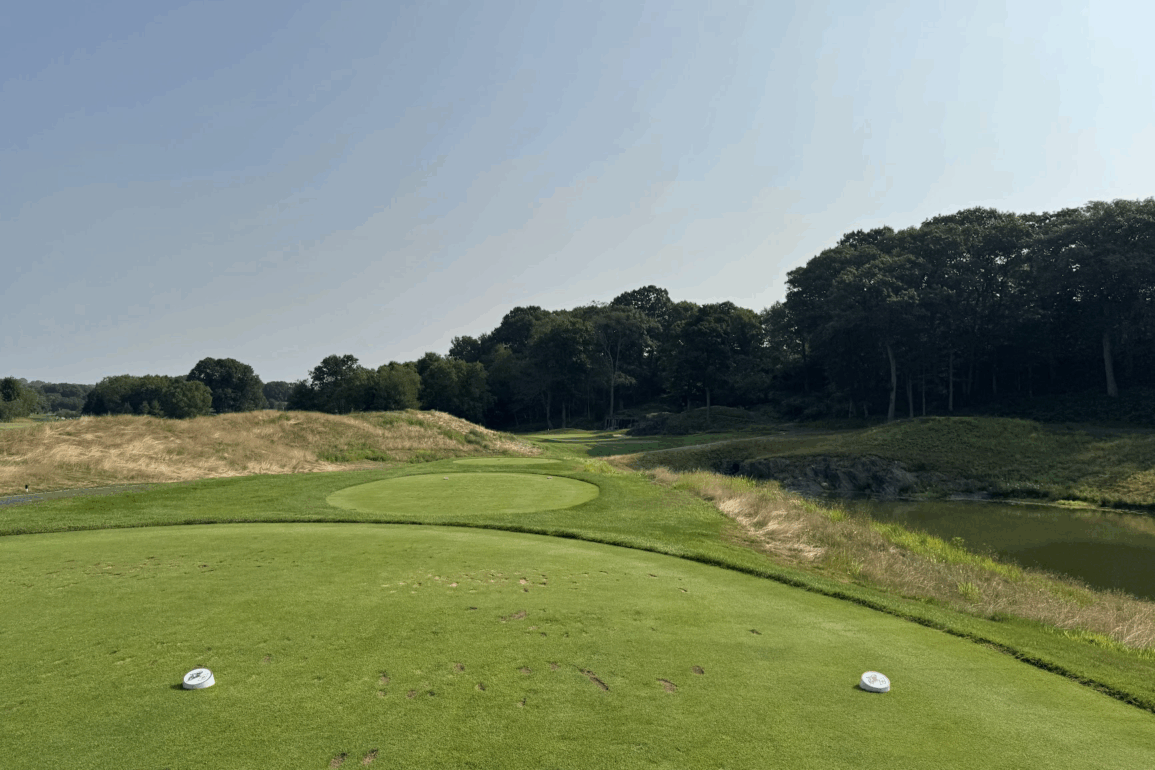
    Black Hall Club stands as a testament to classical golf course architecture, carved from 160 acres of heavily wooded terrain less than a mile inland from Long Island Sound. The club was incorporated in 1965 when founding members signed a contract with Trent Jones to create the first championship-caliber course in the lower Connecticut Valley. Construction began in February 1962, and the routing opened for play on July 8, 1967, establishing what would become the top-rated private club in southeastern Connecticut. The course has hosted numerous state championships, multiple Connecticut Opens, and several USGA qualifiers, cementing its reputation as a serious test of championship golf. Jones’s design philosophy shines through the corridor-style routing, where each hole exists as an isolated challenge within towering hardwood canopies that create what one reviewer describes as a “Pine Valley-esque aura that this golf club aims to create, making almost every hole a standalone challenge.” The absence of tee times and walk-on tradition maintains an unhurried atmosphere reminiscent of golf’s golden age. Black Hall has consistently been recognized as the premier private facility in southeastern Connecticut, with Golf Digest ranking it 16th in the state among all courses. The club’s commitment to pure golf experience without extensive non-golf amenities reflects the founding vision of creating a golf club in the truest sense.

    The 160-acre property utilizes every available square foot of its constrained footprint, creating an intimate yet challenging experience that maximizes strategic design elements within natural constraints. The heavily forested terrain features gentle elevation changes and strategic water hazards positioned throughout the routing, with Long Island Sound’s maritime influence moderating the coastal Connecticut climate and creating ideal conditions for bentgrass surfaces. Jones’s masterful routing weaves through mature specimen trees, creating visual isolation between holes that one architecture critic noted “ensures that few other golfers will be present during a given round.” The design philosophy strongly favors precision over power, as one reviewer observed: “Short Hitters paradise! A long drive is not favored here, but short irons and wedges truly are, especially with the green undulations.” This strategic emphasis makes the course particularly appealing to accomplished golfers who appreciate cerebral shot values and course management over pure distance. Players must work the ball both ways around corridor trees while managing trajectory under canopy coverage, creating what reviewers describe as “target golf all the way.” The walkable routing and absence of real estate development preserve the course’s timeless character while focusing purely on the golf experience. Course conditioning remains exceptional year-round on bentgrass surfaces, with the grounds crew implementing a tree removal program to improve turf health while maintaining the claustrophobic character that defines the Black Hall experience. As one member noted, “The bones of this course are outstanding and it is always well maintained.” The design rewards thinking players who can execute precise shots under pressure while severely punishing tactical errors and wayward ball striking.

    Strategic Test

    Black Hall presents a comprehensive strategic examination that rewards intelligent course management while severely punishing wayward shots through its corridor-style design philosophy. The Robert Trent Jones Sr. layout centers on precision placement rather than raw distance, with centerline hazards and strategic tree placement creating multiple decision points throughout the round. Players face genuine strategic choices on nearly every tee shot, as Jones incorporated alternate playing angles that favor different approach trajectories into the elevated, push-up green complexes. The putting surfaces, consistently flanked by strategic bunkering, require careful club selection and precise distance control to access optimal pin positions, particularly given the bentgrass greens’ speed and undulation. One reviewer captured the strategic essence perfectly: “You will work your entire bag here.” High-handicap players will find the course demanding but fair, provided they select appropriate tees and resist the temptation to overpower the design’s strategic framework.

    Course rating and slope provide quantitative measures of difficulty that directly impact strategic decision-making for players of all skill levels. The course rating represents the expected score for a scratch golfer under normal conditions, while the slope rating measures how much more difficult the course plays for a bogey golfer compared to a scratch player. Black Hall’s 73.2 rating from the tips indicates that even scratch players should expect to shoot approximately 2.2 strokes over par under normal conditions, reflecting the premium placed on accuracy and course management. The 141 slope rating significantly exceeds the standard baseline of 113, indicating the course becomes progressively more difficult as handicap increases. This differential means that strategic decisions become increasingly critical as player skill decreases, with the severe tree-lined corridors and small target areas magnifying the penalty for tactical errors exponentially. The slope rating particularly impacts higher handicappers, where each stroke differential from the course rating translates to approximately 5.3 additional strokes for an 18-handicap player compared to a scratch golfer. This mathematical relationship explains why course management becomes paramount at Black Hall, where aggressive play often yields diminishing returns regardless of skill level. The elevated greens, surrounded by collection areas and strategic bunkering, demand precise approach trajectories that reward conservative positioning over heroic attempts. Understanding these ratings allows players to develop appropriate strategies that match their skill level with the course’s strategic demands.

    Strategic elements vary significantly across handicap levels, requiring different tactical approaches to optimize scoring potential while minimizing penalty strokes. The course’s multiple tee complexes allow players to select appropriate starting positions that match their skill level with the strategic challenges presented by Jones’s design philosophy.

    HandicapCourse Strategy
    High Handicap (18+)Play from gold tees measuring approximately 5,800-6,000 yards where slope rating drops to 119-126. Focus entirely on keeping ball in play through tree corridors rather than maximizing distance off tees. The high slope differential means course management becomes absolutely critical, with laying up short of doglegs and playing to center of greens yielding significantly better scoring than aggressive lines. Conservative club selection prevents penalty strokes that compound quickly due to limited recovery options. Expect 8-10 additional strokes beyond handicap due to penalty areas and forced carries.
    Mid Handicap (8-18)Blue and white tees measuring 6,200-6,400 yards with slope ratings of 130-132 provide optimal challenge-to-playability ratio. Strategic tee shot placement becomes crucial on dogleg holes where tree placement creates preferred approach angles into elevated greens. Course rating suggests playing 1-2 strokes over handicap with proper club selection and conservative green-side strategy around push-up putting surfaces. Working ball flight patterns becomes essential for accessing pins tucked behind strategic bunkering.
    Low Handicap (0-8)Championship black tees measuring 6,625-6,691 yards with slope rating of 138-141 demand complete shot-making arsenal and aggressive strategic choices. Must work ball both ways around corridor trees while managing spin rates and trajectory on elevated greens with severe run-off areas. Course rating of 73.2 indicates even scratch players face significant challenge, particularly on fast, undulating bentgrass surfaces that require precise speed control and green reading skills. Risk-reward decisions on reachable par-5s and short par-4s become critical for scoring.

    The signature hole at Black Hall is the par-5 14th, a strategic masterpiece that epitomizes Jones’s design philosophy through genuine risk-reward decision-making and multiple playing options. This dogleg-left measures 507 yards from the championship tees but tempts aggressive players to cut significant yardage by challenging the corner carry over mature tree cover. The optimal aggressive driving line requires carrying approximately 250 yards over dense woodland to reach the fairway’s left side, leaving a short iron approach of 110-130 yards to the elevated green complex. Conservative players can work down the right side with a controlled 200-yard layup using hybrid or long iron, accepting a longer approach of 160-180 yards into a green surrounded by strategic bunkering on all sides. High handicappers should play safely right with hybrid or fairway wood, avoiding the corner-cutting temptation entirely and accepting a wedge approach from 120-140 yards that provides the best angle into the putting surface. Mid-handicappers face the strategic dilemma of risk versus reward, with the ability to attempt the corner carry using driver if conditions favor their typical ball flight, but must prepare for recovery shots if the carry attempt fails short or right. Low handicappers confront the genuine strategic question of whether cutting 40 yards off the approach justifies the potential penalty, particularly when pin positions are tucked behind greenside bunkers that require precise angle control and spin rate management to access successfully. The green itself slopes from back to front with subtle breaks that reward approach shots from the preferred left side, making the risk-reward calculation even more complex for accomplished players.

    Nearby Course Alternatives

    Black Hall Club provides members with comprehensive practice facilities including a state-of-the-art driving range, putting green, and short game area where golfers can refine all aspects of their game under professional instruction. As a golf-only property, the club maintains its singular focus on delivering an exceptional golf experience without the distractions of other recreational amenities, distinguishing itself from multi-sport country clubs in southeastern Connecticut. The clubhouse, constructed in 1980, offers elegant dining facilities with panoramic views of the surrounding landscape and serves as the venue for member events, tournaments, and special occasions. The club has undertaken an ongoing strategic tree removal program designed to improve shot options, enhance turf conditioning, and allow more sunlight to reach fairways and greens, addressing the challenges inherent in the heavily wooded 160-acre Robert Trent Jones Sr. design. These improvements preserve the course’s tight, target-golf character while opening up playing corridors and improving overall course health. For golfers seeking different architectural styles or playing experiences, two distinguished private clubs within a short drive offer compelling alternatives to Black Hall’s demanding woodland layout.

    Great Neck Country Club in Waterford presents a classic golden-age design experience just 13 minutes northeast of Black Hall. This 18-hole layout stretches to 6,450 yards from the championship tees with a par of 71, slope rating of 127, and course rating of 71.2. Originally designed by William G. Robinson, ASGCA, and opened in 1925, Great Neck underwent thoughtful restoration work by renowned architects Ron Forse and Mark Mungeam in 2003, which modernized certain elements while preserving the timeless strategic principles of 1920s course design. The layout features more open playing corridors than Black Hall’s woodland setting, with strategically placed bunkers and natural terrain features defining holes rather than dense tree lines. Great Neck’s bent grass fairways and blue grass greens provide firm, fast playing conditions that reward creativity and ground game approaches. The course occupies gently rolling terrain that creates natural elevation changes without the extreme slopes found on some hillier layouts, making it an excellent walking course for members who appreciate traditional, unhurried golf. Players who prefer a more open, strategic style of golf over Black Hall’s tight, target-oriented layout will appreciate Great Neck’s emphasis on angles, positioning, and thoughtful course management, particularly those who enjoy visible hazards and width off the tee that allows for multiple routes to greens based on skill level and playing conditions.

    Clinton Country Club in Clinton offers a challenging Geoffrey S. Cornish design approximately 13 minutes west of Black Hall, with the current 18-hole configuration playing to 6,501 yards from the back tees at par 72, carrying a slope rating of 130 and course rating of 71.6. The club traces its origins to 1895, though the present course opened in 1958 and was expanded from nine to 18 holes in 1968, all designed by the prolific New England architect Geoffrey S. Cornish. Recent renovation work by A. John Harvey in 2017 has updated bunkers and refined certain strategic elements while maintaining Cornish’s original design intent. Clinton Country Club’s layout spreads across more varied terrain than Black Hall’s tightly treed property, featuring a mix of open holes and wooded sections that provide greater variety in shot selection and playing strategy. The course demands accuracy but offers slightly wider playing corridors than Black Hall, with bentgrass greens that blend poa annua and perennial rye providing interesting putting surfaces with subtle undulations. Clinton’s superintendent maintains the course in excellent condition year-round, with particular attention paid to the driving range, putting green, and chipping green that support the club’s active instruction programs. Golfers who appreciate Black Hall’s tree-lined challenge but desire slightly more length and a traditional par-72 layout will find Clinton an ideal alternative, especially players who favor courses where accuracy matters but forgiveness exists for the occasional wayward shot, and those who enjoy the architectural legacy of Geoffrey Cornish’s thoughtful, member-friendly designs.

    Final Word

    Black Hall Club represents the pinnacle of strategic golf course architecture in Connecticut, where Robert Trent Jones Sr.’s masterful routing creates an examination of precision and course management that remains timelessly relevant in the modern game. The course proves its value through the purity of the golf experience, stripping away contemporary distractions to focus entirely on the strategic challenge that has tested Connecticut’s finest players for over half a century. Every element from the corridor-style tree framing to the elevated bentgrass greens reflects an unwavering commitment to championship golf that justifies the premium membership investment for serious golfers seeking authentic strategic challenges. Black Hall stands as definitive proof that when design excellence meets impeccable conditioning and traditional club culture, the resulting experience transcends simple recreation to become a genuine examination of golf mastery that rewards intelligent play and punishes poor decisions in equal measure, creating lasting memories and improvement opportunities that justify its position as southeastern Connecticut’s premier private golf destination.

  • Birchwood Country Club Golf Course

    Birchwood Country Club Golf Course

    [put_wpgm id=”2″ width=”100%” height=”770px” current_post_only=”true”]

    [letsreview]

    Birchwood Country Club is a private par-36 course measuring approximately 3,157 yards from the tips. The course was originally designed in 1946 by Orrin Smith and is located in Westport, Connecticut.

    Birchwood’s history reflects the changing social landscape of mid-20th century America, when returning World War II veterans purchased the dormant Westport Country Club property in 1946 and created an inclusive haven for those previously excluded from area establishments. The original 18-hole Westport Country Club had been squeezed onto the same 83-acre property before laying fallow during the war years. Smith was tasked with creating a challenging 9-hole layout to replace the old, restricted course, transforming overcrowded routing into strategic brilliance. The club gained national recognition when Sports Illustrated ranked it among the Top 10 Nine Hole Golf Courses in the United States in 1997. The course’s commitment to premium conditioning includes rare velvet bent grass greens, a strain typically found much farther north but thriving in Birchwood’s microclimate due to careful maintenance and favorable site conditions. Smith’s routing incorporated mature specimen trees and natural elevation changes to create strategic interest within compact dimensions. The club’s transformation from exclusionary institution to welcoming community reflects broader social progress while maintaining championship-caliber golf standards.

    The 83-acre layout demonstrates masterful use of limited space, with Smith’s routing creating strategic variety through thoughtful incorporation of natural terrain contours and elevation changes. The course features tree-lined corridors that frame landing areas without creating penal restrictions, allowing skilled players to work the ball in both directions while providing clear targets for higher handicappers. Push-up green complexes reward precision approach shots while offering collection areas for slightly mishit balls, creating strategic interest at multiple skill levels. The design philosophy emphasizes shot value over raw length, requiring players to think strategically about club selection and course management rather than relying purely on distance. Elevated tee positions provide strategic preview of each hole’s challenges, allowing players to formulate attack plans based on pin positions and playing conditions. The course appeals to analytical players who appreciate nuanced short game requirements, varied approach angles, and green complexes that reward precise execution. Players who enjoy walking golf and strategic decision-making will find Birchwood’s intimate scale and walkable routing particularly appealing, especially those seeking quality golf experiences within time-efficient formats.

    Strategic Test

    Birchwood’s architectural merit lies in its ability to present genuine strategic choices despite compact dimensions, with Smith’s routing creating meaningful decision points off multiple tees where players must weigh risk versus reward based on pin positions and playing conditions. The course rewards different playing styles through varied approach angles into green complexes, with some holes favoring draws while others benefit from fades, though the tree-lined corridors require precise execution regardless of shot shape preference. Push-up green sites create natural collection areas that can assist slightly off-target approaches while also providing challenging pin positions on elevated sections, offering strategic flexibility for players who can execute different trajectory shots. The design particularly excels in accommodating different skill levels through multiple tee options and strategic flexibility in club selection, though higher handicappers must exercise course management discipline to avoid penalty areas and difficult recovery positions.

    Course rating and slope provide quantitative measures of difficulty relative to scratch golfers and bogey players respectively, serving as standardized metrics for strategic planning and score expectations. Birchwood’s 37.3 course rating indicates that a scratch golfer would be expected to shoot approximately 37.3 for nine holes, or about 1.3 strokes over par, suggesting that even skilled players will find strategic challenges throughout the routing. The 131 slope rating measures the relative difficulty for bogey players compared to scratch golfers, with 113 being average for all courses nationwide. At 131, Birchwood plays moderately more difficult for higher handicappers than for scratch players, indicating that strategic precision and course management become increasingly important as handicaps rise. This slope differential suggests that players who rely primarily on distance without strategic positioning will struggle more than those who emphasize accuracy and smart decision-making, particularly around the challenging green complexes that define Smith’s architectural approach.

    HandicapCourse Strategy
    High Handicap (18+)Forward tees around 2,400-2,600 yards provide appropriate challenge while maintaining playability. Slope impact suggests conservative strategy essential, prioritizing fairway position over distance and accepting bogeys as good scores while avoiding penalty areas that can lead to large numbers.
    Mid Handicap (8-18)Middle tees around 2,800-2,900 yards balance challenge with strategic interest. Course rating suggests par remains achievable with solid course management, favoring center-line approaches over aggressive angles and emphasizing two-putt strategies on undulating green complexes.
    Low Handicap (0-8)Championship tees at 3,157 yards utilize full strategic potential through shot-shaping capabilities and aggressive lines. Course rating indicates scoring opportunities exist with precise iron play, allowing strategic positioning off tees to create optimal approach angles for birdie chances on push-up greens.

    The course’s signature 9th hole exemplifies Smith’s architectural philosophy through its 499-yard par-5 design that demands strategic navigation rather than raw power, serving as the ultimate test of course management skills. The hole plays as a legitimate three-shot par-5 for most players, with the opening tee shot favoring the right side to open up the ideal approach angle for the subsequent layup and approach sequence. From the 150-200 yard range, players face the hole’s critical strategic decision: lay up left of the dominant guardian tree to ensure clear access to the green complex, or attempt to challenge the tree line with a right-side approach that provides more direct access to certain pin positions. High handicappers should employ conservative strategy by playing left on all three shots, accepting the longer final approach in exchange for avoiding the penal tree and potential recovery problems. Mid-handicappers can challenge the right side off the tee but should prioritize safe layup positioning left of the tree, using wedges from 80-100 yards for their approach shots. Low handicappers possess the precision to challenge the tree with mid-irons from 140-160 yards, creating genuine birdie opportunities when executed properly while risking bogey or worse if the strategic gamble fails.

    Nearby Course Alternatives

    Birchwood Country Club offers members excellent practice facilities including a driving range, pitching and chipping area, and putting green to refine all aspects of their short game. Beyond golf, the club features seven Har-Tru tennis courts, two lighted paddle tennis courts, and three recently added pickleball courts that have quickly become member favorites. The swimming pool complex includes both a main pool and kiddie pool, providing year-round recreational opportunities for families. The clubhouse has undergone recent renovations and enlargements, with the restaurant earning particular acclaim as one of Westport’s finest dining establishments, now featuring an expanded menu focused on organic and sustainable options. These facility improvements have positioned Birchwood as an increasingly attractive venue for both member events and private functions. For golfers seeking different playing experiences, two distinguished private clubs within a short drive offer compelling alternatives to Birchwood’s compact nine-hole layout.

    Shorehaven Golf Club in East Norwalk provides a dramatically different golf experience just 10 minutes east of Birchwood. This championship 18-hole layout stretches to 6,548 yards from the tips with a par of 71, slope rating of 132, and course rating of 72.2. Designed by the renowned Robert White and Willie Park Jr. in 1924, Shorehaven occupies a spectacular waterfront setting along Long Island Sound, offering genuine links-style golf rarely found in Connecticut. The course has earned Golf Digest recognition as the 11th-best course in Connecticut for 2025-26, a testament to its architectural merit and conditioning. Shorehaven’s greatest distinction lies in its collection of par-3s, particularly the signature 17th hole that plays long into prevailing winds with water views throughout. The property’s coastal location creates firm, fast playing conditions with strategic bunkering and wind patterns that demand thoughtful club selection and creative shot-making. Players who appreciate traditional links golf, dramatic water vistas, and courses with genuine championship pedigree will find Shorehaven offers substantially more length and strategic complexity than Birchwood’s nine-hole layout, making it ideal for accomplished players seeking a full 18-hole test in a scenic coastal setting.

    Silvermine Golf Club in Norwalk presents a versatile 27-hole facility approximately 10 minutes north of Birchwood, straddling the Wilton town line. The main 18-hole Sier Hill course plays to 6,077 yards with a par of 70, slope rating of 107, and course rating of 65.0, designed by John E. Warner and opened in 1954. The layout features numerous dog-leg holes, small elevated greens, and strategic water hazards that demand precise iron play and course management. Complementing the main course is the nine-hole Sier Crest executive layout, measuring 1,984 yards at par 31, which provides a quick-play option similar in concept to Birchwood’s format. Established in 1959, Silvermine has cultivated a reputation as one of Fairfield County’s most active private clubs with strong family-oriented programming. The club’s 27 holes spread across more acreage than Birchwood’s property, offering greater variety in hole design and playing conditions. The main course’s undulating terrain provides more pronounced elevation changes than Birchwood’s relatively flat layout. Golfers who value having both a challenging 18-hole championship course and a shorter executive nine for quick rounds or family play will appreciate Silvermine’s dual-course setup, particularly players seeking more dramatic elevation changes and those who enjoy the flexibility of choosing between serious competitive golf and casual family rounds at the same facility.

    Final Word

    Birchwood Country Club proves that architectural excellence transcends mere acreage through thoughtful routing, strategic variety, and impeccable conditioning standards. Smith’s masterful design demonstrates how nine holes can provide complete strategic testing while maintaining playability across skill levels, particularly through the rare velvet bent grass surfaces that create superior putting conditions year-round. The club’s transformation from exclusionary institution to welcoming community reflects broader social progress while preserving championship-caliber golf in an intimate, walkable format that respects both tradition and modern sensibilities. For discerning players seeking strategic depth over raw length, Birchwood offers exceptional value through its unique combination of architectural merit, conditioning excellence, and genuine nine-hole character that remains increasingly rare in contemporary golf.

  • Aspetuck Valley Country Club

    Aspetuck Valley Country Club

    [put_wpgm id=”2″ width=”100%” height=”770px” current_post_only=”true”]

    [letsreview]

    Aspetuck Valley Country Club is a private par-71 course measuring approximately 6,600 yards from the tips. The course was originally designed in 1967 by Hal C. Purdy and is located in Weston, Connecticut.

    Aspetuck Valley Country Club sits on 210 acres of rolling, wooded terrain along the Aspetuck River, established when a group of committed Westonites realized their vision for a first-class country club in 1965. The course opened its doors in 1967 as a Hal Purdy design, embodying the golden age sensibilities of strategic bunkering and natural corridor routing. What makes this property particularly compelling from an architectural standpoint is the recent comprehensive renovation undertaken by Lester George, beginning in 2017 with the first phase completed in 2021. George’s master plan addresses the functional deficiencies that had plagued certain holes while enhancing the strategic elements that define thoughtful golf course architecture. The most significant transformation occurred on the former thirteenth hole, which George describes as having been “universally considered the worst hole on the course” due to its narrow fairway, poor drainage, and blind approach to an elevated green positioned forty feet above the fairway. George’s solution involved clearing the hillside, widening the fairway, and repositioning the green to create a strategic 310-yard par-four with genuine strategic options. The club maintains Audubon International Certified Cooperative Sanctuary status, reflecting its commitment to environmental stewardship across its wooded acreage. This layout rewards players who understand positional golf, with its bent grass surfaces providing consistent playing conditions throughout the routing that weaves through mature Connecticut woodland. The course appeals most to golfers who appreciate strategic subtlety over visual intimidation, where success depends more on course management and precision than raw distance.

    Strategic Test

    Aspetuck Valley presents a compelling strategic examination that rewards cerebral approaches to course management while remaining accessible across skill levels. The routing philosophy emphasizes positional play, where optimal angles into greens become paramount rather than simply advancing the ball as far as possible. George’s renovation work has enhanced these strategic elements, particularly through the introduction of what he terms “bolder bunker styles” that create more definitive risk-reward scenarios off the tee. The course demands tactical thinking through its corridor design, where tree-lined fairways create natural penalty areas that punish wayward shots without requiring artificial hazards.

    The strategic accessibility stems from multiple tee options and generous bailout areas, though the slope rating of 132 indicates meaningful challenge progression as one moves toward the tips. The course rating of 72.5 suggests scoring opportunities exist for well-positioned approaches, while the slope differential indicates that course knowledge and strategic awareness become increasingly important as difficulty escalates. Push-up greens and subtle internal contouring reward approach shots played from preferred angles, while penalizing poorly positioned drives with difficult recovery situations.

    For higher handicap players, the strategic framework becomes more about course management and avoiding the severe penalties that tree-lined corridors impose on wayward shots. The slope rating of 132 means that course difficulty increases disproportionately for players who miss fairways consistently. Mid-handicap players find the optimal balance where strategic decision-making becomes paramount, with the course rating suggesting that solid course management can lead to scoring opportunities. Low-handicap players face a test where the higher slope rating rewards precision and strategic awareness, particularly in working ball flight and attacking from optimal angles while severely punishing slight misses.

    HandicapCourse Strategy
    High Handicap (18+)Play from forward tees (5,800-6,000 yards), focus on keeping ball in play rather than aggressive lines. Slope rating means course becomes disproportionately difficult when missing fairways.
    Mid Handicap (8-18)Middle tees (6,200-6,400 yards) offer optimal strategic balance. Course rating suggests par is achievable with solid course management and avoiding penalty situations created by tree-lined corridors.
    Low Handicap (0-8)Back tees (6,600+ yards) demand precision and strategic awareness. Higher slope rating rewards players who can work ball flight and attack from optimal angles while punishing slight misses more severely.

    The renovated thirteenth hole exemplifies the course’s strategic philosophy, transformed from George’s described “forced carry to an extremely small green” into a driveable 341-yard dogleg-left par-four with genuine strategic options. Long hitters can attempt to drive the green but must contend with George’s repositioned bunkering that guards the putting surface. The strategic alternative involves laying back to the optimal approach distance, typically 80-100 yards, leaving a controlled wedge shot from the preferred angle. This hole particularly challenges mid-handicappers who might be tempted by the aggressive line but lack the precision to execute consistently, while rewarding low-handicap players who can shape shots around George’s corridor framing. High handicappers benefit from the widened fairway and forward tee positioning that makes the hole more accessible without removing its strategic interest, but must avoid the centerline bunker complex that George strategically positioned to force genuine decision-making rather than straightforward execution.

    Nearby Course Alternatives

    Aspetuck Valley Country Club offers members comprehensive practice facilities including a driving range and putting green to hone their skills before venturing onto the club’s challenging 210-acre layout. Beyond golf, the club features eleven tennis courts equipped with night lighting for extended play, a swimming pool with diving tank, and three paddle tennis courts surrounding a warming hut—ensuring year-round recreation for the entire family. The clubhouse, renowned for its world-class dining program, serves as the social centerpiece of this family-oriented community. Recent major improvements have significantly enhanced the member experience, including the completion of a state-of-the-art 10,000-square-foot maintenance facility, upgraded driving range, an underground golf cart garage, and a modernized water supply distribution system. These capital investments underscore the club’s commitment to maintaining premier conditions while preserving the intimate, informal atmosphere that has defined Aspetuck Valley since its founding in 1965. For members exploring alternatives in Fairfield County’s private club landscape, two distinguished courses merit consideration.

    Rolling Hills Country Club in Wilton, just seven minutes northeast of Aspetuck Valley, presents a compelling alternative for those seeking a championship-caliber test with slightly more bite. Playing to 6,737 yards from the tips with a formidable slope of 139 and rating of 73.1—both steeper than Aspetuck’s 132 slope and 72.5 rating—this Alfred H. Tull original (1960) underwent comprehensive bunker renovations in 2023 by acclaimed architect Tripp Davis following Roger Rulewich’s 2002 restoration. The tree-lined layout traverses rolling terrain similar to Aspetuck’s topography, though with marginally more demanding approach shots to undulating greens that reward precision over power. One of only two Connecticut clubs to have hosted the CT Amateur, CT Open, Palmer Cup, CT Senior Amateur, and CT Women’s Open, Rolling Hills carries significant tournament pedigree. The club’s 2009 clubhouse renovation delivers resort-like amenities including a six-lane swimming pool, eight tennis courts, three paddle courts with a modern warming hut, and a 300-seat ballroom overlooking the property. Players who appreciate Aspetuck’s hilly character but desire a course with more severe strategic demands—particularly low-handicappers who relish shot-making into complex green sites—will find Rolling Hills’ elevated difficulty and competitive heritage especially appealing.

    The Patterson Club in Fairfield, fifteen minutes south of Aspetuck Valley, offers an altogether different architectural experience rooted in golden-age pedigree. Stretching 6,824 yards across 170 acres with a slope of 132 and rating of 73.0—dimensions remarkably similar to Aspetuck’s measurements—this Robert Trent Jones Sr. design from 1947 carries historical gravitas unmatched in the region, having opened with Bobby Jones and Gene Sarazen playing in the inaugural foursome. Rees Jones’ 2010 renovation honors his father’s original vision while incorporating modern playability standards, most notably opening vistas through strategic tree removal that reveals the course’s captivating use of elevation changes and five man-made lakes winding through the rolling, wooded property. The signature closing hole features an uphill approach where a well-placed drive can utilize a “speed slot” that adds forty yards—the type of risk-reward option RTJ Sr. favored. The magnificent 2010 clubhouse overlooks an expansive amenity package including seven tennis courts, five paddle courts, four pickleball courts, and a complete aquatics complex with heated pools and diving boards. Players who prioritize architectural lineage, tournament-tested conditioning (the course hosts the CT State Open and Amateur), and a more open, strategic layout with heroic water carries will find Patterson’s golden-age character a refreshing contrast to Aspetuck’s densely wooded, heavily contoured terrain—particularly appealing to mid-handicappers who prefer visible hazards and defined landing areas over blind tee shots.

    Final Word

    Aspetuck Valley Country Club represents a compelling case study in how thoughtful renovation can elevate existing architecture without sacrificing its essential character. Lester George’s strategic interventions have transformed what were once problematic holes into genuine strategic examinations, while Hal Purdy’s original corridor routing through mature Connecticut woodland remains the foundation of the experience. The course’s topographical complexity, described by Golf Digest as a “very hilly course,” creates natural strategic frameworks that reward course management over raw execution. This combination of architectural integrity, Audubon-certified environmental stewardship, and strategic design philosophy creates a rare commodity in modern golf: a thinking person’s course that proves its value through substance rather than spectacle. For members who appreciate strategic subtlety and positional play, Aspetuck Valley delivers an authentic test of golf intelligence that justifies its place among Connecticut’s premier private clubs.

  • Patterson Club Golf Course

    Patterson Club Golf Course

    [put_wpgm id=”2″ width=”100%” height=”770px” current_post_only=”true”]

    [letsreview]

    The Patterson Club Golf Course Review

    The Patterson Club is a private par-71 course measuring approximately 6,824 yards from the tips. The course was originally designed in 1947 by Robert Trent Jones Sr. and is located in Fairfield, Connecticut.

    The Patterson Club traces its origins to 1929, when a dedicated group of General Electric Company employees established a Dining and Social Club in downtown Bridgeport with just 20 charter members, naming it after Charles E. Patterson, a Vice President who supported the organization in its formative years. In December 1945, General Electric purchased the 163-acre Quasset Farm property in Fairfield, formerly the Carlton H. Palmer estate where horses were trained, to expand the club’s facilities to include golf. Within two years, woodlands and swamps had been cleared, old farm stone walls dismantled, and fairways routed around five man-made lakes by the legendary Robert Trent Jones Sr., who was establishing himself as one of America’s preeminent golf course architects. The course officially opened on June 28, 1947, with an inaugural four-ball match featuring two of golf’s greatest names, Bobby Jones and Gene Sarazen, both of whom carded matching 74s in what would become one of Bobby Jones’s final competitive rounds. Over the decades, the course has undergone several thoughtful updates, including significant work by Stephen Kay and Roger Rulewich in 1998, and a comprehensive renovation led by Rees Jones in 2009 when a new clubhouse was constructed, during which two greens were rebuilt, all bunkers were renovated, new tees were added, and drainage was improved throughout. The club was sold to its members in 1968 after membership expanded beyond General Electric employees, and it currently is undergoing another round of renovations expected to be completed by 2026, with plans to expand practice facilities including a full-sized driving range and short game area.

    The Patterson Club unfolds across approximately 170 acres of rolling, wooded terrain in Fairfield’s prestigious Greenfield Hill section, making captivating use of the property’s natural elevation changes and water features. The routing follows a traditional out-and-back configuration, with fairways carved through mature tree corridors that frame each hole distinctly, though recent tree management programs have opened up vistas and improved playability while maintaining strategic integrity. The design philosophy reflects Robert Trent Jones Sr.’s early signature style, characterized by bold bunkering schemes, strategic water hazards positioned to challenge specific shots, and green complexes that demand thoughtful approach play, all elements that would define his later, more famous works. This is a course that rewards the thinking player who can manage risk and position the ball intelligently, rather than simply overpowering holes with distance. Players who appreciate classic Golden Age architecture translated through a mid-century lens will find much to admire here, as will those who enjoy courses that require calibrated shot-making and thoughtful course management over every hole. The layout presents a balanced test with varied hole lengths and strategic dilemmas, offering uphill, downhill, and sidehill lies, doglegs in both directions, and enough variety in shot requirements to keep players engaged throughout the round.

    Strategic Test

    The Patterson Club presents a sophisticated strategic examination that scales appropriately across skill levels, offering genuine decision points throughout the round rather than prescribing a single correct line of play. From the championship tees, the course demands accuracy and course management more than pure power, with tree-lined corridors tightening landing areas and water hazards positioned to penalize aggressive misses. The design rewards players who can work the ball in both directions, particularly on dogleg holes where the ability to shape shots provides distinct advantages in approach angles and distances. Green complexes exhibit the kind of strategic depth one expects from a Robert Trent Jones Sr. design, with undulating surfaces, multi-tiered putting areas, and greenside bunkering that creates distinct zones of safety and danger depending on pin positions. The course’s slope rating of 132 and course rating of 73.0 from the back tees indicate a layout that plays significantly more difficult than its raw yardage suggests, largely due to elevation changes, forced carries, and approach shots that must navigate both vertical and horizontal challenges. For higher handicappers, forward tees provide reasonable distances that make holes accessible, though the architectural features remain prominent and demand respect regardless of tee box selection. The routing’s variety prevents monotony, offering short risk-reward par-4s alongside lengthy three-shotters, and par-3s that range from short irons to long clubs, ensuring players cycle through their entire bag multiple times per nine. Recent renovations opening up tree corridors have improved accessibility for mid-to-high handicappers by widening landing zones and reducing penal misses, while maintaining strategic interest for accomplished players through green contours and bunker positioning.

    The course rating and slope system provides critical context for understanding how Patterson plays relative to a scratch golfer and how difficulty escalates for higher handicappers. A course rating of 73.0 against a par of 71 indicates that a scratch golfer should expect to shoot approximately two over par under normal conditions, reflecting subtle challenges like green speed, strategic hazard placement, and precise distance control requirements. The slope rating of 132 sits well above the standard baseline of 113, quantifying how much more difficult the course becomes for bogey golfers compared to scratch players, with every 10 points of slope roughly representing one additional stroke of difficulty. This mathematical relationship between rating and slope reveals that while accomplished players must respect strategic complexity and execute quality shots, recreational golfers face compounding challenges from narrower margin for error, longer approach distances, and more severe consequences for wayward shots. The net effect is that high handicappers may find themselves playing significantly over their handicap unless they manage expectations, select appropriate tees, and focus on course management over heroic attempts.

    HandicapCourse Strategy
    High Handicap (18+)Players in this range should strongly consider the white tees at 6,067 yards, which reduces the rating to 69.3 and slope to 125, making the course more accessible while maintaining its strategic character. The focus should be on avoiding penalty hazards rather than aggressive lines, accepting bogeys as victories, and prioritizing position over distance on tee shots to set up manageable approach distances. Water hazards and forced carries become significantly less daunting from forward tees, allowing players to enjoy the round’s rhythm without feeling overwhelmed. Green reading and short game efficiency become paramount, as three-putting and poor chipping will inflate scores more than any other factor given the undulating surfaces throughout.
    Mid Handicap (8-18)The blue tees at 6,454 yards represent an ideal balance for this cohort, offering a rating of 71.5 and slope that creates genuine challenge without punishment. Strategic thinking becomes increasingly important, as the ability to shape shots around doglegs and position drives for optimal approach angles can save multiple strokes per round. These players should study each hole’s architecture to identify safe bail-out areas versus reward zones, understanding when aggressive play makes mathematical sense versus when par represents an excellent score. Distance control on approaches becomes critical, as missing greens in regulation to the wrong side can leave difficult up-and-downs given the green contours and surrounding hazards.
    Low Handicap (0-8)From the black tees at 6,824 yards with a 73.0 rating and 132 slope, accomplished players face a complete examination of all facets of their game. The course demands precise tee ball placement to set up scoring opportunities, as many greens play significantly differently depending on approach angle and distance. Par-5s become genuine three-shot holes rather than automatic birdie opportunities, requiring strategic decisions about when to attack versus when to lay back. Green complexes reward precision, with subtle breaks and tier transitions that demand careful study and confident execution. These players will find scoring opportunities on shorter par-4s and accessible par-5s, balanced against several difficult stretches where par represents success.

    The 18th hole at Patterson Club serves as both a dramatic finale and a comprehensive test of shot-making ability, embodying the course’s strategic philosophy in a single decisive examination. This par-5 closer plays approximately 520-540 yards from the championship tees, featuring the defining up-and-over profile that gives the hole its reputation among members and visitors. The tee shot presents an immediate strategic decision, as players must carry an elevated fairway that rises sharply before tumbling downhill into a valley landing area, with longer hitters who can carry the ridge rewarded with what locals call a speed slot that can add 40 yards of roll to well-positioned drives. Shorter hitters or those playing conservatively must accept laying back before the crest, which leaves a blind second shot and extends the hole significantly. The fairway narrows as it descends into the valley, with trees encroaching from both sides and strategic bunkering positioned to catch errant shots that miss the preferred side. For high handicappers, the hole plays as a challenging three-shot par-5, requiring careful navigation of the elevation changes and acceptance that par represents an excellent score. Mid handicappers face the tempting decision of whether to attempt reaching in two by carrying the ridge with their drive and hitting a long fairway wood or hybrid toward an elevated green, weighing potential reward against the risk of missing positioning for a comfortable third shot. Low handicappers often view this as a birdie opportunity if they execute properly, using the speed slot to maximize distance before deciding whether green conditions and pin position merit an aggressive second shot approach to an elevated, well-defended green complex. The green itself sits perched above the fairway, requiring approaches to carry bunkers and accurately judge both distance and trajectory to hold the putting surface, with misses leaving difficult recovery shots from awkward angles and lies.

    Nearby Course Alternatives

    Country Club of Fairfield in Fairfield presents a compelling alternative for players seeking a different architectural aesthetic within the same town, located just 10 minutes northeast of Patterson Club. Designed by the legendary Seth Raynor and opened in 1914, this private layout measures 6,358 yards from the tips with a par of 70, course rating of 71.6, and slope of 133, making it slightly shorter but comparably challenging to Patterson. The course unfolds across a more compact footprint than Patterson’s 170 acres, with Raynor’s distinctive template hole philosophy evident throughout, including his characteristic Redan, Cape, and Alps hole concepts that require specific shot-making strategies. The architectural lineage connects directly to Charles Blair Macdonald’s groundbreaking work at the National Golf Links, as Raynor served as Macdonald’s construction supervisor and design partner before striking out independently. Strategic depth defines the routing, with bold, geometric bunkering that presents clear visual information while demanding precise execution, and green complexes that exhibit dramatic contours and tier transitions characteristic of Raynor’s uncompromising design philosophy. The course plays slightly easier than Patterson for high handicappers due to shorter yardage and more forgiving landing areas, though low handicappers will find the strategic complexity and green reading challenges equally demanding. Players who appreciate architectural history and template hole design will find Country Club of Fairfield intellectually stimulating, while those who prefer Patterson’s more naturalistic tree-lined corridors and water features might find Raynor’s more stark, strategic presentation less visually dramatic but no less demanding.

    Brooklawn Country Club in Fairfield offers yet another distinguished private option, located approximately 15 minutes south of Patterson Club near the Connecticut shoreline. The 6,711-yard, par-71 layout represents one of A.W. Tillinghast’s final design projects, with the course completely redesigned in 1930 by the architect responsible for Winged Foot, Baltusrol, and Bethpage Black, among countless other championship venues. With a course rating of 73.3 and slope of 138, Brooklawn plays as the most difficult of the three Fairfield private clubs, presenting a stern test even for accomplished players. The course exhibits Tillinghast’s mature design philosophy, with greens featuring dramatic internal contours that create multiple distinct pin positions, fairways that tilt and cant to gather or reject shots based on accuracy, and bunker complexes positioned to challenge both tee shots and approaches while maintaining aesthetic harmony. Founded in 1895, Brooklawn possesses deep historical significance as one of the earliest USGA member clubs, having hosted the U.S. Women’s Open, U.S. Senior Open, and numerous other prestigious championships over the decades. More recent work by Ron Forse and Jim Nagle has restored many of Tillinghast’s original features while updating agronomic standards for modern maintenance practices. The course demands exceptional ball-striking and course management, with narrow fairways, strategic hazards, and greens that slope predominantly back-to-front requiring precise distance control on approach shots. Low handicappers seeking the ultimate test in Fairfield County will find Brooklawn’s difficulty and championship pedigree appealing, while mid-to-high handicappers may find the course’s demands less forgiving than Patterson’s more balanced challenge. Players who value architectural significance, championship history, and the opportunity to experience a Tillinghast masterwork will prioritize Brooklawn, while those seeking a less severe test with more visual variety might prefer Patterson’s Jones design.

    Final Word

    Beyond the golf course itself, The Patterson Club provides members and guests with a comprehensive array of amenities befitting a premier family-oriented country club. The practice facilities, currently undergoing expansion as part of the 2026 renovation project, will soon include a full-sized driving range and dedicated short game area, addressing one of the few limitations of the current property layout and providing members with superior preparation opportunities before heading to the first tee. The putting green adjacent to the clubhouse offers ample space for pre-round warm-ups and practice sessions, with contours that mirror the subtle breaks found throughout the course’s green complexes. The club features seven tennis courts that serve an active tennis program throughout the season, complemented by platform tennis facilities for cold-weather play. The swimming and diving complex provides a family-friendly recreational hub during summer months, while the dining facilities in the clubhouse, rebuilt in 2010, offer upscale casual dining in an elegant setting with views across the property. The club maintains a professional golf staff that provides instruction and fitting services, ensuring members can continually improve their games through expert guidance. Social programming extends throughout the year, with member events, tournaments, and gatherings that foster the camaraderie and fellowship that have defined the club since its 1929 founding. The 170-acre property itself provides an oasis of tranquility in Fairfield County, with the scenic beauty of mature trees, five lakes, and carefully maintained grounds creating an atmosphere of escape from everyday pressures.

    The Patterson Club represents an exceptional private golf experience that successfully balances championship-level strategic complexity with accessibility for players across the handicap spectrum, all while maintaining the architectural integrity of Robert Trent Jones Sr.’s original 1947 vision. The course’s recent renovations have opened sightlines and improved conditioning without sacrificing the strategic challenge that defines quality golf architecture, demonstrating thoughtful stewardship by the membership and committee. For players who value courses that reward intelligence and shot-making over pure power, that present genuine strategic decisions rather than single prescribed routes, and that exhibit the classic design principles of golf’s Golden Age filtered through a mid-century master’s interpretation, Patterson delivers consistently satisfying rounds. The upcoming 2026 completion of expanded practice facilities will address one of the few remaining deficiencies, elevating the club to true championship venue status in terms of both course quality and supporting infrastructure. The combination of rich history, architectural pedigree, meticulous conditioning, comprehensive amenities, and genuine strategic interest across all 18 holes establishes Patterson as one of Fairfield County’s premier private clubs. Players seeking membership in a club that honors tradition while embracing thoughtful evolution, that provides family-oriented programming alongside serious golf, and that maintains standards of excellence in every aspect of operations will find Patterson Club represents the complete package, proving its enduring value not through flash or gimmickry but through consistent delivery of outstanding golf and community experience.