Category: Private

  • Tumble Brook Country Club – West/North

    Tumble Brook Country Club – West/North

    [put_wpgm id=”2″ width=”100%” height=”770px” current_post_only=”true”]

    [letsreview]

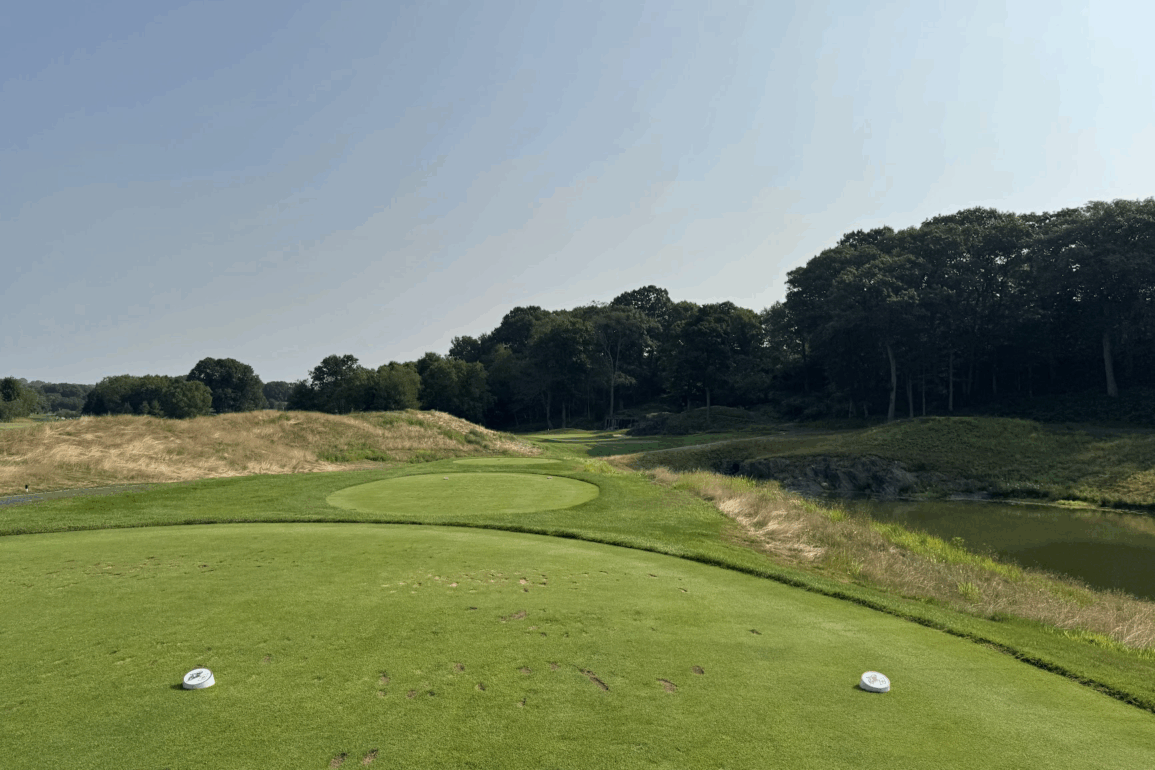
    Tumble Brook Country Club is a private par-72 course measuring approximately 6,760 yards from the tips. The course was originally designed in 1924 by Willie Park Jr. and is located in Bloomfield, Connecticut.

    Tumble Brook Country Club was founded in 1922 and has evolved through three distinct architectural phases spanning nearly a century of golf in Connecticut. Willie Park Jr., the two-time British Open champion and pioneering golf architect, crafted the original nine holes that opened for play in 1924, establishing the foundation of what would become one of New England’s most respected private facilities. In 1949, architect Orrin E. Smith added a second nine-hole layout, expanding the club’s offerings during the post-war golf boom. The property reached its current 27-hole configuration in 1970 when George Fazio, known for his strategic design philosophy and collaboration with his nephew Tom, completed the third nine. In 2005, Mark McCumber and Associates undertook a comprehensive renovation of all 27 holes, modernizing the playing surfaces and refining the strategic elements while respecting the architectural heritage of each nine. Spread across approximately 229 acres of rolling Connecticut terrain northwest of Hartford, the course occupies elevated ground that provides panoramic views of downtown Hartford to the south, Talcott Mountain to the west, and the Berkshires to the north. The three nine-hole layouts can be combined into different 18-hole configurations, each offering a distinct strategic examination with the Red/Blue combination serving as the championship routing. The terrain features moderate elevation changes, bent grass playing surfaces throughout, and strategic bunkering that reflects the evolving architectural philosophies across seven decades. The design aesthetic blends classic golden age principles from Park’s original work with mid-century strategic concepts from Smith and Fazio’s more aggressive modern style. The course appeals to traditionalists who appreciate architectural variety and strategic shot-making, with particular emphasis on approach play to undulating greens that demand precise distance control and proper angle selection.

    Strategic Test

    HandicapCourse Strategy
    High Handicap (18+)High handicap players should strongly consider the Green tees at 5,826 yards with a slope of 123 and rating of 71.5, which provides a more manageable examination while still presenting strategic interest. The shorter yardage reduces the frequency of forced carries and allows for more aggressive play around the greens. The slope rating indicates that while the course rewards good play, it does not impose excessive penalty for wayward shots typical of developing players. Hole 16, a par-4 measuring 343 yards from these tees, exemplifies ideal risk-reward architecture for this skill level, offering the option to lay up safely or attempt to challenge the green with a well-struck fairway wood. The moderate length allows higher handicappers to reach the green in regulation with two solid strikes, while the strategic bunkering still demands thoughtful club selection and proper angle awareness.
    Mid Handicap (8-18)Mid handicappers will find excellent challenge from the White tees at 6,481 yards with a slope of 128 and rating of 74.5, which balances strategic demands with scoring opportunities. This yardage creates genuine decision-making on par-5s while keeping most par-4s within range of mid-iron approaches. The elevated slope rating reflects sophisticated green complexes and well-placed hazards that punish imprecise approach angles. Hole 16, stretching to 440 yards from these markers, presents the quintessential mid-handicap examination as the number one handicap hole. The length demands two substantial strikes just to reach the putting surface, likely requiring driver followed by a mid to long iron. The hole’s strategic merit lies in its requirement for position off the tee to establish proper approach angles, rewarding players who can shape tee shots and select appropriate landing areas while penalizing those who rely solely on distance.
    Low Handicap (0-8)Low handicap players should embrace the Black tees at 6,760 yards with a slope of 124 and rating of 72.6, which provides appropriate length while emphasizing precision over pure power. The relatively moderate slope rating indicates that superior ball-striking is rewarded more than scrambling ability, favoring consistent players who can control trajectory and spin. The McCumber renovation enhanced the strategic demands through green contours and pin positions that require specific approach angles and precise distance control. Hole 16, measuring 440 yards and ranked as the most difficult hole, exemplifies championship-caliber architecture by demanding both length and precision. The hole requires driver to establish position for a demanding long-iron or hybrid approach that must navigate strategic hazards while factoring in green contours that reject offline shots. The absence of bail-out areas forces accomplished players to commit to aggressive lines and execute under pressure.

    Nearby Course Alternatives

    Wampanoag Country Club in West Hartford offers a contrasting single-routing private club experience just 10 minutes south of Tumble Brook. The Donald Ross design, originally opened in 1924 and recently renovated, measures 6,610 yards from the championship tees with a slope of 133 and rating of 72.3. Spread across a more compact routing than Tumble Brook’s 229 acres, Wampanoag features quintessential Ross characteristics including crowned fairways, strategic cross-bunkers, and severely contoured push-up greens that demand creative approach play and sophisticated green reading. The course occupies rolling terrain adjacent to the Hartford Reservoir with moderate elevation changes throughout, creating natural corridors that frame the playing angles. The architectural pedigree emphasizes positional play over length, with fairway bunkers placed to influence tee shot strategy and approach angles dictated by green slopes rather than hazard proximity. The recent renovation restored original Ross design elements while modernizing agronomic practices, resulting in firm, fast playing conditions that reward ground game tactics and aerial precision. Wampanoag appeals most to low and mid-handicap players who prize shot-shaping demands and nuanced approach play over raw distance, particularly those who enjoy reading complex green contours and appreciate how classic golden age architecture creates strategic variety through subtle ground features rather than manufactured hazards. Players seeking a pure Donald Ross experience with more severe green complexes and tighter strategic corridors than Tumble Brook’s more forgiving modern design will find Wampanoag particularly appealing.

    The Hartford Golf Club in West Hartford presents another distinguished private alternative located approximately 15 minutes southeast of Tumble Brook. The club features three nine-hole courses designed by Donald Ross and Devereux Emmet, with the original Red nine dating to 1896 and subsequent nines added in the early 20th century, creating various 18-hole combinations that can stretch beyond 6,500 yards from the championship markers. The Red/Blue combination offers slope ratings in the 125-135 range with course ratings reflecting championship examination. Situated on expansive acreage with mature tree-lined corridors, the property features classic parkland architecture with strategic bunker placement, water hazards on select holes, and green complexes that showcase both Ross’s characteristic crowned surfaces and Emmet’s more receptive designs. The architectural variety across three distinct nines provides strategic diversity that parallels Tumble Brook’s multi-nine configuration, though Hartford’s designs reflect earlier golden age principles with more emphasis on ground game options and less reliance on aerial demands. The facility offers old-world country club ambiance with extensive non-golf amenities including tennis facilities, swimming, and an elegant English manor-style clubhouse that speaks to its century-plus history. Hartford Golf Club appeals most to players who value architectural heritage and traditional country club atmosphere, particularly mid to high handicappers who appreciate more forgiving landing areas and ground game options compared to Tumble Brook’s modern renovation that emphasizes aerial precision and manufactured strategic elements through contemporary bunkering and green contouring.

    Final Word

    Tumble Brook Country Club provides comprehensive practice facilities that support serious game improvement and pre-round preparation across all aspects of the short game. The practice area includes a driving range with mat stations that accommodate extended practice sessions throughout the season, though the synthetic surfaces may not perfectly replicate fairway conditions for accomplished players seeking precise trajectory feedback. A dedicated putting green allows members to study green speeds and practice stroke mechanics on surfaces maintained to match on-course conditions, while a separate chipping green and practice bunker area enable focused work on greenside recovery shots and sand technique. The facility also includes indoor practice options for year-round instruction with the professional staff, who offer individual lessons and group clinics for members of all ages and abilities. Beyond golf, the club delivers substantial recreational amenities including five Har-Tru tennis courts that support active programming for competitive and social play, two paddle tennis courts for winter recreation, and a heated 25-yard swimming pool with adjacent kiddie pool and play area that serves as a social hub during summer months. The clubhouse features multiple dining venues ranging from casual options to more formal settings, providing versatile spaces for everyday member interaction and special events. Tumble Brook’s distinctive value proposition lies in its rare 27-hole configuration that provides extraordinary playing variety and access, allowing members to experience three architecturally distinct nine-hole courses without leaving the property. The strategic diversity across Willie Park Jr.’s classic routing, Orrin Smith’s mid-century design, and George Fazio’s more aggressive modern layout creates an architectural timeline that few facilities can match. The Mark McCumber renovation successfully unified agronomic standards while preserving the individual character of each nine, resulting in consistently excellent playing conditions that rival any private facility in Connecticut. Combined with the panoramic views, exceptional pace of play, and comprehensive family amenities, Tumble Brook proves its value not through any single architectural masterpiece but through the breadth of strategic examinations and the depth of recreational opportunities that keep members engaged across generations.

  • Tumble Brook Country Club – North/East

    Tumble Brook Country Club – North/East

    [put_wpgm id=”2″ width=”100%” height=”770px” current_post_only=”true”]

    [letsreview]

    Tumble Brook Country Club is a private par-72 course measuring approximately 6,610 yards from the tips. The course was originally designed in 1922 by Willie Park Jr. and is located in Bloomfield, Connecticut.

    The initial nine-hole loop established the club’s identity before Orrin Smith expanded the property to eighteen holes in 1948, with George Fazio later adding a third nine in 1970 to create the current twenty-seven hole configuration. Recent renovation work has focused on restoring the classic geometric intent of the early design while modernizing the bunkering to account for the distances of the contemporary game. Occupying roughly 200 acres of rolling Hartford County terrain, the routing utilizes the natural undulations of the land to create a diverse mix of uphill and downhill approaches. The design vibe leans heavily into the Golden Age philosophy, where wide corridors offer generous off-tee targets but demand specific angles to access tucked pin positions on push-up green complexes. Players who appreciate traditional parkland aesthetics and sophisticated green-side contouring will find the layout particularly engaging. The routing is clever in its use of the local creek, which acts as a lateral hazard and a diagonal crossing on several key holes, forcing players to commit to clear strategic decisions.

    Strategic Test

    HandicapCourse Strategy
    High Handicap (18+)Navigating the 129 slope rating requires a conservative approach that avoids the deep fescue and thick primary rough. Playing from the white tees at 5,910 yards allows these players to avoid many of the forced carries over water and wetlands. On the 350-yard par four 6th hole of the North course, the priority is a straight drive to avoid the water on the left, followed by a mid-iron to a green that slopes significantly toward the hazard.
    Mid Handicap (8-18)The 71.3 rating from the blue tees suggests that managing the challenging green complexes is the key to maintaining a respectable score. Mid-handicappers must account for the subtle breaks and the firm surfaces that can repel indifferent approach shots. The 6th hole provides a classic risk-reward scenario where a well-placed 220-yard drive leaves a short iron in, but the narrow landing area and the proximity of the water demand precise execution over raw power.
    Low Handicap (0-8)From the championship markers at 6,610 yards with a 72.3 rating, the course tests the ability to shape shots into specific quadrants of the greens. The 6th hole on the North nine, playing 355 yards from the back, represents a tactical chess match where a long iron or hybrid is often the superior choice to ensure a flat lie for a wedge. Deep bunkers and the water hazard framing the left side penalize overly aggressive lines, making par a reflection of disciplined course management.

    Nearby Course Alternatives

    Wampanoag Country Club in West Hartford is located approximately ten minutes south of Tumble Brook. This Donald Ross masterpiece plays to 6,610 yards from the championship tees with a slope of 134 and a rating of 72.4. Set on a sprawling acreage that emphasizes the natural flow of the land, the course is renowned for its intricate green complexes and strategic bunkering that are hallmarks of the Ross pedigree. The elevation changes are subtle yet impactful, requiring players to constantly adjust their yardage calculations for uphill and downhill trajectories. Its reputation as a premier competitive venue is bolstered by a routing that lacks any weak holes and demands a high degree of shot-making. This course would be particularly enjoyed by the low-handicap player who relishes the historical significance of a Ross design and prefers a dense, high-stakes strategic environment. The connectivity of the holes and the emphasis on the ground game provide a different but complementary challenge to the Bloomfield area.

    Hartford Golf Club in West Hartford is situated roughly twelve minutes south of the original course. Featuring twenty-seven holes with the primary eighteen measuring over 6,700 yards from the tips, it carries a slope of 132 and a rating of 72.8. The course was designed by Donald Ross and later refined by Devereux Emmet, offering a rich architectural heritage across its diverse terrain. The layout utilizes significant elevation shifts and large, undulating greens to create a stern test of both physical execution and mental fortitude. Known for its immaculate conditioning and classic parkland framing, the course provides a sense of grandeur and scale. The strategic value is found in the varied tee angles and the requirement to carry several deep ravines and water features. This destination would appeal most to the mid-to-high handicap player who enjoys dramatic vistas and a variety of hole styles within a single outing.

    Final Word

    The club provides an expansive practice environment featuring a full-length driving range and a dedicated short-game area designed for honing bunker play and pitching. A sprawling practice putting green mirrors the speed and undulations found on the course, ensuring players are well-prepared for the technical challenges of the round. Beyond the fairways, the facility includes a grand clubhouse that serves as the social hub, complemented by a premier tennis complex and a swimming pool for summer recreation. These amenities create a comprehensive private club experience that caters to a lifestyle focused on sport and community. What makes this property truly special is the seamless integration of three distinct nines that maintain a cohesive architectural language while offering varied tactical puzzles. The commitment to preserving the Willie Park Jr. influence while evolving for the modern game demonstrates a deep respect for the sport’s traditions. It is a venue that proves its value through consistent quality and a layout that remains engaging after countless rounds.

  • Tumble Brook Country Club – East/West

    Tumble Brook Country Club – East/West

    [put_wpgm id=”2″ width=”100%” height=”770px” current_post_only=”true”]

    [letsreview]

    Tumble Brook Country Club is a private par-72 course measuring approximately 6,760 yards from the tips. The course was originally designed in 1924 by Willie Park Jr. and is located in Bloomfield, Connecticut.

    Tumble Brook’s storied development unfolded across three distinct phases spanning nearly five decades. Willie Park Jr.’s original nine holes opened in 1924 on what had been a 155-acre farm, establishing the club’s foundation with classic Golden Age principles. Orrin Smith expanded the property in 1949 with nine additional holes that introduced different strategic considerations. George Fazio completed the triumvirate in 1970 with a third nine, creating the 27-hole configuration that exists today. Mark McCumber and Associates undertook a comprehensive renovation of all 27 holes in 2005, modernizing conditioning standards and bunker complexes while respecting the architectural heritage of each designer’s work. The property spans approximately 229 acres of rolling Connecticut terrain that offers panoramic vistas toward downtown Hartford, the Berkshire Mountains, and Talcott Mountain. The routing style reflects the piecemeal development, with each nine possessing its own character rather than forming a seamless 18-hole journey. The East/West combination pairs the Smith nine with elements of either the Park or Fazio nines depending on daily setup. Undulating topography creates natural amphitheaters around greens and demands thoughtful club selection on approaches. Players who appreciate strategic variety and design pedigree will find considerable satisfaction here, particularly those who value historically significant architecture updated to modern maintenance standards. The course rewards course management over pure power, with green complexes that penalize imprecise approaches regardless of distance achieved off the tee.

    Strategic Test

    HandicapCourse Strategy
    High Handicap (18+)High handicappers face manageable distance from the white tees at 6,481 yards with a 128 slope and 74.5 rating, though the rating indicates scoring will run approximately four strokes above par for a bogey golfer. Strategic priority centers on positioning rather than maximum distance, particularly on holes where the routing creates diagonal hazards or angled green complexes. The 16th hole serves as an exemplary test, playing 440 yards from the championship tees with the number one handicap designation. This lengthy two-shotter demands accuracy off the tee to establish an approach angle, then requires precise distance control into a green complex that punishes misses. Higher handicappers playing forward should focus on reaching the green in regulation from approximately 370-390 yards, likely requiring driver followed by a mid to long iron depending on conditions.
    Mid Handicap (8-18)Mid-handicappers encounter strategic complexity from the green tees at 5,826 yards, where the 123 slope and 71.5 rating suggest scores near four over par. The course rewards tactical thinking over aggressive play, particularly where Mark McCumber’s renovation introduced modern bunkering schemes around classical green sites. From this distance, decision-making becomes paramount on risk-reward opportunities where attempting to challenge hazards may yield minimal advantage. The 16th hole continues to test decisively, demanding driver followed by mid-iron approach from approximately 340-360 yards for players in this bracket. The length alone creates pressure, but the green’s contours and surrounding bunker complex make execution the primary challenge. Players must commit fully to approach shots while accepting that three-putt territory lurks for anything landing on the wrong tier.
    Low Handicap (0-8)Accomplished players from the black tees confront 6,760 yards at 124 slope and 72.6 rating, suggesting a stroke or two over par for scratch golfers. The course architecture demands precision rather than overwhelming distance, with green complexes that expose minor execution flaws through severe penalty. McCumber’s renovation enhanced strategic options by restoring angles and introducing modern bunker complexes that frame approach corridors without dictating singular paths. The 16th hole at 440 yards represents the ultimate examination, requiring 280-300 yards off the tee to establish ideal angle, then demanding pinpoint accuracy with approach clubs ranging from 5-iron to 7-iron depending on conditions and tee position. The green’s undulations create multiple quadrants where proximity to specific pin positions determines realistic birdie chances versus par protection mode.

    Nearby Course Alternatives

    Wampanoag Country Club in West Hartford stands as Connecticut’s preeminent Donald Ross design, located approximately 10 minutes south of Tumble Brook. The championship layout measures 6,610 yards from the blue tees with a formidable 133 slope rating and 72.5 course rating, presenting one of the most demanding tests in the region. Ross crafted the original 18 holes beginning in 1924, with the course opening for play in 1926, making it a near contemporary of Tumble Brook’s Park nine. The property occupies approximately 150 acres of rolling terrain that Ross expertly incorporated into his routing, creating natural corridors framed by mature hardwoods. Characteristic Ross features dominate the landscape, including crowned greens with falloffs, strategic fairway bunkering that creates preferred angles of approach, and green complexes that demand aerial precision. Stephen Kay undertook bunker restoration work in recent decades to restore Ross’s original intent where decades of maintenance had softened edges. The course favors thinking players who can shape shots and control trajectory, with green speeds that rank among the fastest in the state. Players who prioritize architectural pedigree and appreciate severe green contours will find Wampanoag more intellectually stimulating than Tumble Brook, though the singular designer creates greater routing cohesion compared to Tumble Brook’s three-architect composition. Mid to low handicappers who relish the challenge of reading severe slopes and executing under pressure will particularly appreciate Wampanoag’s demands.

    The Hartford Golf Club in West Hartford represents Connecticut’s oldest golf institution, situated approximately 12 minutes southwest of Tumble Brook. This exclusive 27-hole facility features three distinct nines that can be combined for different 18-hole experiences, with the Red/Blue combination measuring approximately 6,589 yards with a 135 slope and 72.0 rating. Devereux Emmet and Donald Ross collaborated on the original design work beginning in 1914, with subsequent additions and refinements extending through 1950. Recent restoration work by Stephen Kay in 1996 and Ron Forse with Bruce Hepner in 2017 has honored the historical architecture while updating infrastructure. The property sprawls across more than 200 acres of gently rolling parkland that offers less dramatic elevation change than either Tumble Brook or Wampanoag. The multi-designer heritage creates varied strategic presentations across the three nines, with Ross’s characteristic crowned greens appearing alongside Emmet’s more receptive surfaces. Conditioning standards rank exceptionally high, with bentgrass fairways and greens maintained to championship specifications throughout the season. The course rewards accuracy and course management over distance, with tree-lined corridors that punish wayward drives severely. Players seeking traditional country club ambiance with less severe green contours than Wampanoag will find Hartford Golf Club more forgiving while still presenting legitimate challenge. Higher handicappers who struggle with severely undulating greens but appreciate classic parkland architecture will likely prefer Hartford Golf Club’s more accessible green complexes, though the narrow fairways demand precision that may frustrate less consistent ball-strikers.

    Final Word

    Tumble Brook’s practice facilities include a grass driving range, practice putting green, dedicated bunker practice area, and short game facility that allows members to work on all aspects of their game. The 40,000-square-foot clubhouse anchors the property with full-service golf and tennis pro shops, multiple dining options ranging from casual to formal, private meeting spaces, and a grand ballroom accommodating up to 300 guests for events. Five Har-Tru tennis courts provide year-round playing opportunities for racquet sports enthusiasts, complemented by two platform tennis courts for cold weather recreation. Aquatic amenities include a 25-yard heated pool for lap swimming and family recreation, plus a separate kiddie pool with adjacent play area for younger members. The social calendar features active men’s and women’s golf programs with varied tournament formats throughout the season, plus mixed events, senior competitions, junior development programs, and interclub matches that create regular member interaction. What distinguishes Tumble Brook ultimately stems from its unique architectural provenance, presenting three distinct design philosophies unified through McCumber’s sensitive renovation work. The 27-hole configuration provides strategic variety rarely available in traditional 18-hole facilities, allowing members to experience different tests without leaving the property. Conditioning standards rank consistently among New England’s finest, with bentgrass surfaces maintained to exacting specifications that reward precision while punishing carelessness. The panoramic vistas toward Hartford’s skyline and surrounding mountains create memorable backdrops throughout the round. Tumble Brook proves its enduring value through architectural significance that honors Golden Age principles while meeting contemporary expectations for playability and conditioning.

  • Silvermine Golf Club – Nine-Hole Course

    Silvermine Golf Club – Nine-Hole Course

    [put_wpgm id=”2″ width=”100%” height=”770px” current_post_only=”true”]

    [letsreview]

    Silvermine Golf Club is a private par-31 course measuring approximately 2,105 yards from the tips. The course was originally designed in 1959 by John E. Warner and is located in Norwalk, Connecticut.

    Silvermine Golf Club opened in 1959 as a nine-hole layout before expanding to accommodate 27 holes, giving the club unusual flexibility in routing options. The executive nine-hole course, often referred to as the Pro Shop Nine, represents Warner’s original design vision before the club expanded its footprint. While some sources reference a 1954 opening date for portions of the property, the club officially established itself in 1959 and celebrated its 50th anniversary in 2009. The executive nine has maintained its original character as a compact yet complete test of golf skills. The layout consists of five par 3s and four par 4s, playing to a par of 31 from the back tees at just over 2,100 yards. The course occupies roughly 25 to 30 acres within the larger 150-acre property that encompasses all 27 holes. The terrain features rolling elevation changes typical of southern Connecticut’s glacially sculpted landscape, with several holes playing through natural corridors framed by mature hardwoods. The routing follows a straightforward out-and-back configuration, maximizing the available land while maintaining strategic interest through green complexes and approach angles. This course appeals to multiple player profiles including beginners developing their skills, juniors learning course management, seniors seeking a quicker round, and accomplished players working on scoring or enjoying a practice loop. The club has positioned this nine-hole course as an ideal training ground and low-pressure environment, keeping it open year-round weather permitting with no tee time restrictions for members.

    Strategic Test

    HandicapCourse Strategy
    High Handicap (18+)Players in this range should consider the forward tees at approximately 1,600 to 1,700 yards, though the executive nine’s minimal slope rating indicates that scoring should remain manageable even for developing players. The short overall distance removes driver decisions on most holes, allowing higher handicappers to focus on iron play and short game execution without the intimidation factor of lengthy forced carries. The par 3 holes ranging from roughly 110 to 180 yards present realistic birdie opportunities when executing mid-to-short iron shots properly, while the par 4s in the 250 to 350 yard range typically allow for a conservative layup followed by a wedge approach. The layout’s forgiving nature means that high handicappers can complete a round in under two hours while working specifically on course management skills and building confidence. Most enjoyable would be one of the shorter par 4s that rewards accuracy over distance and provides a legitimate scoring opportunity.
    Mid Handicap (8-18)From the middle tees at approximately 1,850 to 1,950 yards, mid-handicap players face interesting club selection dilemmas despite the abbreviated yardages. The strategic value lies in determining which par 4s invite aggressive lines versus which reward position play. With several par 4s measuring between 280 and 320 yards, these players must decide whether to attack with driver or position with irons to preferred wedge distances. The par 3s offer proper variety in club selection and target acquisition. The executive nine’s utility for this cohort centers on scoring practice and tempo maintenance during peak season when the main 18 is crowded. These players can work on specific weaknesses like lag putting or bunker play while still tracking score in a legitimate competitive setting. The most strategic hole for mid-handicappers would be a par 4 in the 300-yard range that presents genuine birdie potential with good execution but can yield bogey or worse with careless play.
    Low Handicap (0-8)Playing the back tees at approximately 2,105 yards presents an entirely different test than the yardages suggest. Accomplished players quickly realize that execution matters far more than power on this compact layout. The course rating of 31.0 with minimal slope indicates that par should be the baseline expectation, but scoring opportunities demand precision rather than length. The strategic interest for single-digit handicappers emerges from green complexes, which according to course descriptions follow Warner’s preference for elevated and often smaller target areas. With several par 4s reachable with long irons or hybrids off the tee, these players face constant risk-reward calculations about attacking pins versus playing to centers. The par 3s require proper distance control and trajectory management when greens feature run-off areas or backstops. Low handicappers often use the executive nine for focused practice rounds, working on specific scoring scenarios or maintaining sharpness during periods when time doesn’t permit a full 18. Any of the longer par 3s in the 170 to 180-yard range would provide the most challenge, demanding precise iron play and proper green reading.

    Nearby Course Alternatives

    Woodway Country Club in Darien offers a distinctly different experience for members seeking traditional championship golf approximately 10 minutes east of Silvermine. Willie Park Jr. designed Woodway in 1916, creating a classic layout that has earned consistent recognition as one of Connecticut’s premier private clubs. The course stretches to 6,716 yards from the championship tees with a course rating of 72.8 and slope of 139, presenting significantly more length and challenge than Silvermine’s executive nine while still maintaining a similar par-71 configuration on the main 18-hole course. The property encompasses approximately 150 to 175 acres of rolling, wooded terrain that Park routed with remarkable efficiency, creating what many consider a seamless flow through elevation changes that range from subtle to pronounced. Bruce Hepner’s recent restoration work has enhanced the original design intent by removing invasive tree growth and reestablishing proper playing corridors. Strategic elements include small, elevated greens with complex contours, multiple forced carries over natural hazards, and precise approach angle requirements that reward course knowledge. The club’s reputation centers on conditioning excellence and architectural pedigree from one of golf’s pioneering designers. Players who value traditional shot-making over distance and prefer courses where local knowledge provides significant advantage would find Woodway more satisfying than Silvermine’s straightforward executive nine. The longer format and demanding green complexes particularly suit accomplished players who want a fuller strategic test within the same geographic area.

    Wee Burn Country Club in Darien presents another compelling alternative approximately 12 minutes southeast of Silvermine for members interested in championship-caliber golf with significant tournament history. Devereaux Emmet designed this 1896 layout around a stream that Andrew Carnegie named Wee Burn in honor of Scottish nomenclature, and the routing has earned consistent top-five rankings among Connecticut courses. The championship tees measure approximately 7,034 yards with a course rating of 75.1 and slope of 146, making it substantially longer and more demanding than Silvermine while offering a proper championship test. The course occupies roughly 180 to 200 acres of varied terrain that combines parkland aesthetics with strategic water features and thoughtful bunkering. Recent tree removal programs have restored sight lines and playing corridors closer to Emmet’s original vision while improving turf quality through enhanced sunlight and air circulation. Strategic architecture includes multiple par 4s with optional driving lines, par 3s that require various trajectories and clubs across the set, and par 5s that present genuine three-shot challenges even for long hitters. Wee Burn has hosted multiple USGA championships including three U.S. Women’s Amateur Championships, establishing its credentials as a venue capable of testing elite amateur players. The club’s reputation emphasizes both architectural significance and conditioning standards that rival any facility in Fairfield County. Players who enjoy tree-lined corridors, value historical pedigree, and seek courses where strategy and execution matter more than power would find Wee Burn more rewarding than Silvermine’s abbreviated format. Low-handicap players particularly benefit from the full strategic experience and championship-level conditioning that Wee Burn delivers consistently throughout the season.

    Final Word

    Beyond the golf course itself, Silvermine Golf Club offers comprehensive practice facilities that support member development across all skill levels. The driving range features mat stations with distance markers and target greens, allowing players to work on full swing fundamentals and specific distance control. A dedicated putting green near the pro shop provides ample space for stroke work and green reading practice, essential for scoring well on the elevated and often tricky green complexes found throughout the property. Chipping and short game areas allow members to practice various lies and trajectories, developing the versatile wedge game required on both the executive nine and the championship 18. The clubhouse maintains seasonal operations from April through November, featuring dining facilities with patio seating that overlooks the golf course and provides Long Island Sound views from certain vantage points. Members can enjoy breakfast, lunch, and dinner service during the active season, with the facility serving as a social hub for the membership. The club emphasizes family-oriented programming with junior golf clinics, parent-child tournaments, and family fun days that leverage the executive nine’s accessibility. Head Professional Stuart Waack has earned recognition as a two-time recipient of the Met PGA Junior Leader Award, highlighting the club’s commitment to youth development. Tennis courts and swimming facilities round out the recreational offerings, though these amenities remain secondary to the golf-focused mission. What makes Silvermine’s executive nine-hole course particularly special is its role as both training ground and legitimate scoring opportunity within a club that values inclusive golf access. The decision to maintain a separate nine-hole course with flexible tee time policies demonstrates foresight in serving diverse member needs, from juniors developing fundamentals to experienced players seeking efficient practice rounds. The course proves its value not through length or tournament pedigree but through consistent utility across multiple member segments throughout the entire golf season.

  • Silvermine Golf Club – Main Course

    Silvermine Golf Club – Main Course

    [put_wpgm id=”2″ width=”100%” height=”770px” current_post_only=”true”]

    [letsreview]

    Silvermine Golf Club is a private par-70 course measuring approximately 5,301 yards from the tips. The course was originally designed in 1959 by John E. Warner and is located in Norwalk, Connecticut.

    Silvermine Golf Club opened in 1959 as a nine-hole layout before expanding to its current 27-hole configuration, with the main course consisting of 18 holes formed from the Woods Nine and Barn Nine combinations. The facility was designed by John E. Warner, whose work created a layout that sits compactly on the northern edge of Norwalk along the Wilton town line. Over the decades, the course has remained relatively true to Warner’s original design philosophy, with refinements focused on maintaining conditioning standards and updating infrastructure rather than wholesale architectural changes. The club celebrated its 50th anniversary in 2009, marking a half-century of private golf in Fairfield County. The facility occupies an estimated 90 to 100 acres of undulating terrain that features significant elevation changes and mature tree coverage throughout. The routing makes efficient use of the available land, creating a relatively short but demanding test where accuracy supersedes distance. The course incorporates numerous water hazards and pushup greens with substantial contours, many of which sit elevated above fairway grade. Warner’s design philosophy emphasizes target golf over bombers’ paradise, with narrow landing corridors that penalize wayward drives and force thoughtful club selection. The Barn side of the property offers glimpses of Long Island Sound in the distance, adding visual interest to several holes. This layout appeals most to the strategic player who values course management and precision over pure length, making it particularly suitable for mid-handicappers who can score well through smart positioning and those who appreciate classic northeastern parkland design where thinking outweighs power.

    Strategic Test

    HandicapCourse Strategy
    High Handicap (18+)Players in this range should consider the Forward tees at 4,743 yards (rating 66.5, slope 114 for men). The manageable yardage and moderate slope rating suggest that high-handicappers can avoid severe score inflation, with the slope indicating they might add approximately 5 to 7 strokes above their handicap on an average day. The shorter forced carries and reduced emphasis on distance control make this an accessible option. The 17th hole, a par 5 measuring 485 yards from the back tees, offers an excellent scoring opportunity from the forward markers where it plays considerably shorter. This hole provides the chance to reach in regulation or set up a comfortable wedge approach, with generous width off the tee before the fairway narrows approaching the green. High-handicappers should favor accuracy over distance on the tee shot and resist the temptation to force a risky second shot, instead laying up to their comfortable wedge distance.
    Mid Handicap (8-18)The Middle tees at 5,116 yards (rating 68.2, slope 117) provide an ideal challenge for this skill level, offering manageable length while still requiring strategic thought. The slope rating suggests mid-handicappers will add approximately 4 to 5 strokes to their handicap, making this a fair test without overwhelming difficulty. The course’s design rewards players who can work the ball both directions and execute approach shots to elevated greens. The 17th hole at 485 yards from the championship tees plays somewhat shorter from the middle markers while maintaining its risk-reward profile. As the number two handicap hole, it demands respect with its length and typically requires a solid drive followed by a fairway wood or hybrid for most mid-handicappers. The approach must be judged carefully given the green’s elevation, and club selection becomes critical in reading the uphill distance. This hole exemplifies Silvermine’s emphasis on strategic positioning rather than brute force.
    Low Handicap (0-8)Low-handicappers should embrace the Back tees at 5,301 yards (rating 66.4, slope 122), which presents a unique challenge for accomplished players. While the yardage is modest by contemporary standards, the slope of 122 indicates the course still has teeth, with scoring dependent on accuracy and short game prowess rather than distance. Better players might expect to shoot 1 to 2 strokes under their handicap on a good day, though the elevated greens and water hazards can quickly turn a round if ball-striking falters. The 17th hole, stretching 485 yards as a par 5, becomes a genuine three-shot hole for many scratch players who must navigate narrow landing areas twice before executing a precise approach to an elevated green. The hole’s ranking as the second-hardest suggests it yields few birdies even to accomplished players. The tee shot requires a controlled draw or fade to maximize distance while staying in the fairway, followed by a strategic layup that avoids fairway bunkers and positions the ideal angle into the green. The approach demands precise distance control given the elevation change and green contours.

    Nearby Course Alternatives

    Shorehaven Golf Club in East Norwalk offers an intriguing comparison just 5 minutes east of Silvermine. Measuring 6,548 yards from the championship tees, Shorehaven plays to a par 71 with a substantially higher slope rating of 136 and course rating of 72.4, making it a notably more challenging examination than Silvermine’s 122 slope. Designed by Robert White and opening in 1924, Shorehaven predates Silvermine by 35 years and occupies approximately 100 acres along the Connecticut coastline with spectacular water views of Long Island Sound. The course features a traditional links-style layout on its back nine holes, where coastal winds and visual intimidation from water hazards create memorable moments. The routing incorporates tree-lined fairways on the front nine before transitioning to more open, wind-swept holes near the water, demanding versatility in shot-making. Shorehaven’s reputation includes hosting numerous Met and Connecticut championships, with particular acclaim for what many consider the finest collection of par 3s in the region, including the signature 17th hole that often plays directly into prevailing winds. The terrain offers moderate elevation changes, less dramatic than Silvermine but sufficient to create strategic interest. This course appeals most to the accomplished mid-to-low handicapper who seeks a longer, more demanding test and appreciates links-influenced design elements combined with traditional parkland characteristics. Players who struggle with long forced carries or fighting wind conditions might find Silvermine’s more protected, wooded environment preferable.

    Birchwood Country Club in Westport provides a fascinating contrast located just 10 minutes south of Silvermine. This nine-hole facility measures 3,332 yards from the tips with a par of 36, though the course’s true character emerges in its remarkable slope rating of 132 when played twice around for 18 holes, rating 37.3 for nine holes. Originally designed by Orrin E. Smith and opening in 1900, Birchwood represents one of the oldest continuously operating courses in Connecticut, occupying approximately 35 to 40 acres in downtown Westport. The layout was recognized by Sports Illustrated in 1997 as one of the top ten nine-hole courses in the United States, earning acclaim for its supremely maintained velvet bent greens that are rarely found this far south. The course’s architectural pedigree includes subsequent work by Stephen Kay and Doug Smith, who have refined the original routing while preserving its character. The terrain features significant elevation changes with several dramatic uphill and downhill holes, including a memorable finishing par 5 that plays to 483 yards with strategic positioning requirements on both the drive and layup. The compact property creates an intimate experience where mature trees frame tight corridors and protect greens, demanding accuracy off the tee despite modest yardages. Birchwood appeals most to players who appreciate strategic nine-hole layouts and those seeking a traditional country club experience that emphasizes green contours and approach play over length. High-handicappers who prefer a shorter, more manageable test might gravitate toward Birchwood, while players who desire full 18-hole variety and distance might find Silvermine’s main course more satisfying.

    Final Word

    Silvermine Golf Club provides members with comprehensive practice facilities including a driving range with limited-flight balls for quick warm-ups, a dedicated short-game area for wedge work and bunker practice, and multiple putting greens that prepare players for the contoured surfaces they will encounter on the course. The Pro Shop 9, an executive nine-hole layout with five par 3s and four par 4s totaling approximately 1,984 yards, offers an excellent option for quick rounds, junior play, and beginners throughout the year with no tee time restrictions, operating weather permitting even during winter months. The clubhouse serves as a comfortable gathering space open daily for dining from April through November, featuring casual fare and a patio that overlooks the course with views toward the Barn side. The club maintains a family-oriented atmosphere with robust junior programming led by award-winning PGA professionals, including Head Professional Stuart Waack who has twice received the Met PGA Junior Leader Award for his commitment to youth golf development. Members enjoy an active tournament schedule for both men and women, with options ranging from competitive stroke play events to social formats that encourage participation across skill levels. Tennis and swimming amenities complement the golf offerings, though the primary focus remains squarely on the game itself. What makes Silvermine Golf Club special is its ability to present a legitimate strategic challenge on modest acreage without relying on excessive length, proving that thoughtful architecture and course management can create engaging golf regardless of total yardage. The club’s commitment to conditioning, particularly the elevated push-up greens that demand precise approach play, demonstrates how a golden-age design can remain relevant for contemporary players. For members who value shot variety, strategic positioning, and the thinking person’s game over pure distance, Silvermine delivers an authentic private club experience that rewards skill and intelligence rather than simply power.

  • Sharon Country Club

    Sharon Country Club

    [put_wpgm id=”2″ width=”100%” height=”770px” current_post_only=”true”]

    [letsreview]

    Sharon Country Club is a private par-36 course measuring approximately 3,162 yards from the tips. The course was originally designed in 1895 and is located in Sharon, Connecticut.

    Originally established in 1895 as a rudimentary layout, the grounds underwent a significant transformation when the club hired Wayne Stiles and John Van Kleek to modernize the site during the golden age of golf design. The architects utilized the rugged New England landscape to create a nine hole routing that emphasizes natural landforms rather than artificial features. In 2002, the club expanded the routing briefly before ultimately deciding to convert two holes into a comprehensive practice facility in 2010 to better serve the membership. Occupying a picturesque parcel characterized by ancient stone walls and dense stands of oak and maple, the course spans an estimated eighty acres of rolling terrain. The routing style is intimate yet demanding, utilizing constant changes in grade to challenge a player’s ability to manage uneven lies and vertical transitions. With its push up greens and strategic corridor framing, the design vibe reflects a classic Brookline era aesthetic that rewards precision and thoughtful approach angles. Players who appreciate old school shot making and the nuances of small, sloping green complexes will find this layout particularly engaging.

    Strategic Test

    HandicapCourse Strategy
    High Handicap (18+)Players at this level should focus on navigating the 2886 yard Sharon tees, where the 119 slope rating reflects the primary challenge of managing significant elevation changes. The strategic priority is avoiding the dense timber and stone walls that frame the corridors, as recovery shots from the thick fescue can be punishing. Hole 4, a par 3 playing 133 yards, is the most enjoyable test for this group as it requires a confident short iron over a valley to a green that demands proper distance control. Club selection is critical here, typically ranging from an eight iron to a wedge depending on the wind, as anything short leaves a difficult uphill recovery.
    Mid Handicap (8-18)Mid handicap golfers typically utilize the white tees at 3033 yards, where a 124 slope indicates that navigating Stiles’ deceptive green movement is the key to scoring. The strategy revolves around finding the correct side of the fairway to open up looks at the small putting surfaces which often slope aggressively from back to front. Hole 2 is a standout par 4 at 422 yards that requires a precise drive to set up a long iron or hybrid into a guarded green complex. Players must account for the uphill grade on the approach, often necessitating one extra club to reach the putting surface safely.
    Low Handicap (0-8)Playing from the blue tees at 3162 yards with a 128 slope, the low handicap player must respect the subtle internal contours and centerline obstacles that dictate play. The strategy demands working the ball both ways to navigate the rolling topography and ensure approaches are hit below the hole on the quick, undulating greens. Hole 7 is a premier par 5 at 435 yards that presents a high risk reward opportunity where a powerful drive can leave a mid iron into the green for an eagle look. The challenge lies in the tight approach window, where any miss left or right is severely penalized by the natural terrain and bunker placement.

    Nearby Course Alternatives

    Bull’s Bridge Golf Club in South Kent is located approximately twenty minutes south of Sharon Country Club. This private championship layout measures 7012 yards from the tips with a slope of 144 and a rating of 74.2, offering a significantly larger scale and more modern architectural profile. Designed by Tom Fazio and opened in 2004, the course occupies a sprawling site with dramatic elevation changes and expansive vistas of the Berkshire foothills. The strategic value is high, with wide fairways often leading to complex greenside bunkering and large, tiered putting surfaces. While the original course is intimate and historic, Bull’s Bridge provides a rugged, mountainous experience with more forced carries and a greater demand for power. A low handicap player who enjoys bold, modern bunkering and panoramic views would likely prefer this destination. The pedigree of the Fazio design ensures a high level of maintenance and a sophisticated routing that moves through diverse forest and meadow environments.

    Torrington Country Club in Goshen is situated about twenty-five minutes east of the Sharon grounds. This private course features a classic routing measuring 6665 yards with a slope of 133 and a rating of 72.5. Originally designed by Orrin Smith in 1929, the layout shares a similar golden age lineage but offers a full eighteen hole experience. The terrain is characterized by gentle rolls and mature tree lines, providing a consistent strategic test that emphasizes accuracy over pure distance. The course is widely recognized for its exceptional green conditions and traditional bunkering that forces players to think through every approach shot. Compared to the Sharon layout, Torrington offers a more conventional length while maintaining the quiet, rural atmosphere typical of northwestern Connecticut. A mid handicap player who appreciates a historic parkland setting with a balanced mix of long and short par fours would find this course highly rewarding.

    Final Word

    The practice facilities at the club are among the most comprehensive for a boutique private environment, featuring a 250 yard driving range with both synthetic mats and a dedicated grass tee for iron work. Adjacent to the range is a specialized short game area that includes a deep bunker, a thirty yard apron, and a practice green designed with significant internal movement to replicate on course conditions. The clubhouse serves as a central social hub, having been recently rebuilt in 2020 to provide modern comforts while maintaining the classic character of the property. Additional amenities include tennis and platform tennis courts, which round out the recreational offerings and foster a vibrant community atmosphere. The routing remains special because it preserves the architectural integrity of Wayne Stiles while adapting to the needs of the modern golfer through its elite practice grounds. There is a distinct sense of tranquility found within the ancient stone walls and rolling hills that defines the experience here. The club proves its standing by offering a refined, thoughtful test of golf that celebrates the natural beauty of the region. It is a place where the history of the game and the quiet charm of the countryside exist in perfect harmony.

  • Washington Golf Club

    Washington Golf Club

    [put_wpgm id=”2″ width=”100%” height=”770px” current_post_only=”true”]

    [letsreview]

    Washington Golf Club is a private par-71 course measuring approximately 5,481 yards from the tips. The course was originally designed in 1903 by David Johnson and is located in Washington, Connecticut.

    Established in 1889 as the Washington Field Club, the organization represents one of the oldest golfing entities in the United States. The golf section eventually merged with the Washington Club in 1914, solidifying its place in the Litchfield Hills community. The current nine hole configuration was developed through several land acquisitions in the early 1960s, which expanded the property by approximately thirty-seven acres to accommodate the current routing. The estimated acreage allows for a layout that capitalizes on the classic rolling topography of Litchfield County, featuring significant elevation changes and pastoral vistas. The routing utilizes a shared fairway and alternate tee system to provide an eighteen hole experience that emphasizes precision over sheer distance. The design vibe is that of an understated New England classic, where small, push-up green complexes and natural corridor framing dictate the strategy. Players who appreciate a walk through history and a cerebral approach to shot making will find the grounds particularly rewarding.

    Strategic Test

    HandicapCourse Strategy
    High Handicap (18+)Players at this level should focus on navigating the 5,481 yards by playing to the fat of the corridors to avoid the dense framing of the hillsides. With a slope rating of 127 and a course rating of 68.3 from the back markers, the primary challenge is managing the severe elevation changes that can significantly impact club selection and total score. Hole 4, a par 5 playing 430 yards, offers the most accessible path for a higher handicap to utilize the natural slopes. The challenge here involves avoiding the lateral trouble while positioning for a safe third shot into a green that demands a high, soft approach to hold the surface.
    Mid Handicap (8-18)Mid handicap players must respect the internal contours of the small green complexes and the strategic placement of bunkers that guard the primary lines of charm. The slope of 127 suggests that a disciplined approach to yardage management is essential, especially when playing the second loop with adjusted angles. Hole 4 provides a significant birdie opportunity at 430 yards if the player successfully navigates the initial corridor and avoids the greenside hazards. A conservative play with a fairway wood or hybrid for the second shot sets up a comfortable wedge into a green that requires precise distance control to avoid a difficult three putt.
    Low Handicap (0-8)The low handicap player will find the strategic test lies in the nuance of the short par 4s and the demand for precise ball striking into tiny targets. Despite the modest total yardage, the 127 slope indicates that errant shots are penalized by the difficult lies found on the undulating terrain. Hole 4 at 430 yards is a reachable par 5 that rewards a bold centerline drive with a chance to reach the surface in two. The challenge for the scratch player is hitting a precise long iron or hybrid into a green that is well protected and features subtle internal breaks that can frustrate aggressive putting.

    Nearby Course Alternatives

    Lake Waramaug Country Club in New Preston is a private nine hole facility located approximately ten minutes west of Washington. The course measures 6,210 yards from the championship tees with a par of 70, a course rating of 70.0, and a slope of 121. Designed with a focus on its namesake lake, the layout features dramatic elevation changes and a variety of parkland and hillside holes. The property covers a compact acreage that emphasizes the natural beauty of the Litchfield Hills, featuring strategic bunkering and medium sized greens. The course is known for its immaculate conditions and a pedigree that dates back to the early 20th century. Players who enjoy panoramic water views and a slightly longer test of their long iron game would find this an excellent alternative. The routing is particularly engaging for those who appreciate a course that feels isolated from the surrounding residential areas. High handicap players who prefer a scenic, tranquil atmosphere with generous fairways will enjoy this experience over the tighter corridors of Washington.

    Litchfield Country Club in Litchfield is a private nine hole course located roughly fifteen minutes northeast of Washington. The layout measures 5,618 yards from the tips with a par of 70, carrying a course rating of 68.0 and a slope of 117. Established in 1916, the course is set upon the White Memorial nature preserve, offering a landscape defined by the meandering Bantam River which comes into play on six holes. The terrain is relatively flat compared to its neighbors, but it utilizes the river as a prominent centerline and lateral hazard to create a high level of strategic value. The greens are small and require precise approach play, consistent with the golden age design style prevalent in the region. The course has a reputation for being a hardy walker’s track, though it lacks the severe verticality of other area clubs. A player who values water hazards and a more traditional parkland feel with fewer blind shots would likely prefer this layout. It is particularly suited for the mid handicap golfer who enjoys navigating lateral hazards rather than managing extreme elevation shifts.

    Final Word

    The clubhouse at the Washington Club serves as a focal point for the membership, offering a historic and intimate setting that overlooks the surrounding hills. The practice facilities are surprisingly comprehensive for a classic nine hole club, featuring a dedicated driving range with both grass and matted teeing areas. The short game complex includes two putting greens and a chipping area, allowing players to refine the precise touches required on the course. Beyond the links, the club provides a wide array of amenities including tennis and racquet facilities located near the local school campus. The club also maintains a private beach on Lake Waramaug, offering seasonal activities such as sailing and swimming that complement the golf experience. The combination of these non-golf features creates a community atmosphere that extends well beyond the final green. What makes this course truly special is its preservation of a bygone era of golf architecture, proving that strategic depth does not require massive yardage. The course stands as a testament to the enduring appeal of the thinking person’s game in a serene and historic setting.

  • Woodway Country Club

    Woodway Country Club

    [put_wpgm id=”2″ width=”100%” height=”770px” current_post_only=”true”]

    [letsreview]

    Woodway Country Club is a private par-71 course measuring approximately 6,687 yards from the tips. The course was originally designed in 1916 by Willie Park Jr. and is located in Darien, Connecticut.

    Woodway Country Club traces its lineage back to 1916 when a group of members from nearby Wee Burn sought to establish a full 18-hole facility and acquired the Woodway Farm property. Walter Travis initially appraised the land and reportedly called it one of the finest sites he had encountered, though the club ultimately selected Willie Park Jr., a two-time British Open champion and accomplished architect, to design the layout. Park’s routing was approved in 1917, and by June 1918, Woodway opened as Connecticut’s longest golf course at 6,470 yards. The course gained international recognition in 1921 when George Duncan, fresh from his Open Championship victory, declared Woodway the best course he encountered during his American tour, placing it above venues like Merion, Myopia Hunt, and The Country Club. Throughout its history, the course has undergone several modifications, including a 1936 clubhouse expansion that relocated the 18th green, and a 1999 clubhouse reconstruction that necessitated the creation of a new 9th hole. More recently, Bruce Hepner led a thoughtful restoration beginning in 2019, working alongside superintendent Anthony Garzia to restore playing corridors, thin tree lines, and reestablish original green sizes to better reflect Park’s architectural intent. The property encompasses approximately 184 acres of rolling terrain with the Noroton River threading through the layout, creating natural movement and strategic complexity. Park’s routing capitalizes on a central ridge line and the winding water feature to establish memorable green complexes, particularly the tabletop-style push-up greens that have long defined the course’s character. The terrain provides moderate elevation changes throughout, with the front and back nines following nearly identical par sequences through the first eight holes before diverging at their conclusions. This is a thinking player’s course that rewards strategic positioning and demands precision around intricate green complexes, making it ideal for golfers who appreciate architectural nuance and routing that maximizes natural landforms.

    Strategic Test

    HandicapCourse Strategy
    High Handicap (18+)From the green tees at 5,786 yards with a slope of 129 and rating of 68.0, high handicappers encounter a layout that demands course management over distance. The modest yardage helps keep holes within reach, though the deceptive greens and strategic bunkering still present substantial challenges. The slope rating indicates approximately 11 strokes above par for this player, making target selection and avoiding penalty areas critical to scoring. The 5th hole, a par-5 measuring 575 yards from the black tees but considerably shorter from the forward markers, offers the most engaging opportunity for this golfer. With its status as the number one handicap hole, it provides a legitimate birdie chance when played intelligently, requiring a solid drive followed by careful layup positioning to set up an approachable wedge into a large, undulating green that rewards accurate distance control.
    Mid Handicap (8-18)Playing from the white tees at 6,302 yards with a slope of 135 and rating of 70.7, mid-handicappers face a balanced test that emphasizes strategic thinking. The rating suggests rounds approximately 7 strokes above par, with the elevated slope indicating that green reading and approach shot accuracy become paramount. The varied hole lengths and routing create opportunities to use most clubs in the bag. The 16th hole serves as an excellent proving ground for this caliber player, stretching to 428 yards from the championship tees as a strong par-4. The tee shot plays over a seasonal brook with bunkers positioned both right and left, demanding accuracy off the tee. The approach requires a precise long iron or hybrid to a green elevated 18 feet above the fairway, previously surrounded by trees but now more open following recent restoration work. The large green features a diagonal ridge dividing the surface into distinct tiers, with subtle undulations adding complexity even when finding the correct level.
    Low Handicap (0-8)From the black tees measuring 6,687 yards with a demanding slope of 140 and rating of 74.0, accomplished players face a stern examination. The rating projects rounds approximately 4 over par, with the elevated slope reflecting the difficulty posed by Park’s green complexes and strategic hazard placement. The course requires precision with mid and long irons, as many approach shots must navigate elevation changes and find specific quadrants of multi-tiered surfaces. The 3rd hole, a par-3 of 213 yards from the tips, exemplifies the architectural challenge throughout. As the 15th handicap hole, it might appear straightforward, but the combination of distance and green complexity demands a committed strike with a long iron or hybrid. The putting surface likely features the tabletop styling characteristic of Park’s work, with subtle breaks that become evident only through careful green reading, making two-putt pars a solid outcome and highlighting how Willie Park Jr. used green contouring as the primary defense rather than overwhelming length.

    Nearby Course Alternatives

    Wee Burn Country Club in Darien sits approximately 5 minutes northeast of Woodway and represents one of Connecticut’s most storied layouts. The course measures 7,039 yards from the championship tees with a slope of 146 and rating of 75.1, making it notably more challenging than Woodway from a pure length and difficulty perspective. Designed by Devereux Emmet in 1925 on 230 acres after the club relocated from its original nine-hole property, the routing artfully follows the wee burn, a stony brook that Andrew Carnegie suggested naming after its Scottish counterpart. The course occupies gently rolling parkland terrain with tree-lined fairways and strategic bunkering protecting narrow approach corridors. Tom Fazio has undertaken significant renovation work in recent years, including extensive stream and lake bank restoration exceeding three thousand yards of shoreline, while the club has also removed considerable tree growth to restore playing corridors and improve turf conditions. The architectural pedigree and conditioning standards rival any private facility in the state, with the course consistently ranked among Connecticut’s top five layouts. The property features elevation changes particularly notable on holes 9, 10, and 18, which play toward, away from, and back to the clubhouse on pronounced slopes. Low-handicap players seeking greater length and more pronounced terrain movement would find Wee Burn’s additional yardage and strategic water features more engaging than Woodway’s comparatively flatter and shorter test.

    Country Club of Darien in Darien stands approximately 3 minutes south of Woodway and offers a distinctly different architectural experience. Originally designed by Alfred H. Tull in 1958 on Edgar S. Auchincloss’s 200-acre gentleman’s farm, the course has undergone extensive transformation under Michael Hurdzan’s guidance over nearly two decades. The layout currently measures 6,912 yards from the tips with a slope of 131 and rating of 73.1, presenting slightly more length than Woodway but with a more modest slope rating. Hurdzan’s comprehensive renovation included routing adjustments such as flipping the nines, building new practice facilities that necessitated hole modifications, expanding greens with collection areas, adding fescue rough, and improving drainage throughout. The property occupies relatively flat, landlocked terrain within an affluent suburb, lacking the dramatic topography and natural water features that define Woodway. However, the modern championship conditioning and tournament-ready infrastructure have enabled it to host prestigious events including the Connecticut State Open, PGA Met Match Play Championship, and IKE MGA Stroke Play. The course emphasizes length and contemporary green complexity with collection areas, representing a more modern strategic approach compared to Park’s classical push-up greens at Woodway. Mid-to-high handicap players who prefer wider fairways, more forgiving modern green complexes, and championship-caliber practice facilities including two ranges and multiple short game areas would likely find Country Club of Darien more accommodating than Woodway’s tighter, more architectural demanding layout.

    Final Word

    Beyond the golf course itself, Woodway Country Club provides comprehensive practice facilities that include a driving range, putting green, and chipping areas that allow members to refine their skills before rounds. The vibrant caddie program adds a traditional element to the golf experience, with knowledgeable loopers who understand the nuances of Park’s green complexes and can provide invaluable course management guidance. The 19th Hole grill offers a casual gathering space adjacent to the pro shop where members can decompress after their rounds. Head Professional Michael Crawford, the 2008 Met Section Merchandiser of the Year, leads a full-service golf operation that includes group clinics, individual instruction, a comprehensive junior program, and an active tournament schedule featuring multi-day member competitions, mixed summer twilights, and specialized events for both men and women. The main clubhouse underwent a significant renovation coinciding with the club’s 100th anniversary in 2016, modernizing dining facilities and member spaces while maintaining the property’s traditional character. The pool and tennis complex features ten Har-Tru clay courts along with a swimming pool and viewing pavilion, while a separate paddle tennis facility provides year-round racquet sports. Woodway Beach Club on Shippan Point in Stamford extends the club’s recreational offerings seasonally with waterfront access, two Deco Turf tennis courts, beach activities, and dining overlooking Long Island Sound. The club has earned recognition from the National Audubon Society as the first golf course designated as a bird sanctuary, reflecting its commitment to environmental stewardship across the 184-acre property. What ultimately distinguishes Woodway is the combination of Willie Park Jr.’s timeless architectural merit, the recent restoration work that has revealed the routing’s original strategic intent, and the comprehensive member experience that extends well beyond the golf course. For those who value classical design, strategic complexity derived from green contouring rather than excessive length, and a club culture that honors tradition while maintaining championship conditioning standards, Woodway proves its enduring relevance among Connecticut’s finest private clubs.

  • Wethersfield Country Club

    Wethersfield Country Club

    [put_wpgm id=”2″ width=”100%” height=”770px” current_post_only=”true”]

    [letsreview]

    Wethersfield Country Club is a private par-71 course measuring approximately 6,614 yards from the tips. The course was originally designed in 1916 by Robert D. Pryde and is located in Wethersfield, Connecticut.

    Wethersfield Country Club holds the distinction of perhaps the richest golf history in southern New England, having served as the host venue for the Insurance City Open and Greater Hartford Open for 32 consecutive years from 1952 through 1983. The inaugural tournament in 1952 saw Ted Kroll claim victory, launching a legendary run that included Arnold Palmer’s first PGA Tour win in the United States in 1956, Sam Snead’s record seven-stroke victory in 1955, and Tommy Bolt’s course-record 60 in 1954. The layout witnessed Billy Casper win four times and featured nearly every major professional of the era with only Ben Hogan and Byron Nelson notably absent from tournament play. Robert D. Pryde, who would later become the first Executive Director of the Connecticut State Golf Association, crafted the design in two phases, with the inside nine opening in 1917 and the outside nine completing the championship layout in 1925. The course underwent a comprehensive bunker renovation in 2022-2023 under the direction of architect Bruce Hepner, restoring strategic bite to hazards that had fallen into disrepair while maintaining the historic character of the original design. Spanning approximately 150 acres across rolling terrain south of Hartford, the routing winds through mature tree-lined corridors framed by residential boundaries, creating individual stages for each hole that provide both visual isolation and strategic variety. The traditional parkland design rewards precision over power, with narrow driving corridors demanding accuracy from the tee and smaller, subtly contoured greens requiring deft touch on approach shots. Players who appreciate Golden Age architecture and strategic shot-making over forced carries and modern manufactured hazards will find the layout particularly engaging, while those seeking generous landing areas and forgiving recovery zones may find the demands more exacting than contemporary private club standards.

    Strategic Test

    HandicapCourse Strategy
    High Handicap (18+)From the White tees measuring 5,717 yards with a slope of 125 and rating of 68.7, higher handicappers face a manageable yet still challenging examination that prioritizes course management over heroics. The reduced yardage brings more holes within reach of regulation in two or three shots, though the tree-lined corridors still demand reasonable accuracy to avoid penalty situations. The par-5 6th hole measures approximately 510 yards from these tees, offering a legitimate three-shot hole where steady play with fairway wood off the tee, mid-iron to position, and wedge approach rewards patience over aggression. Strategic bunker placement penalizes wayward drives while leaving recovery options for players willing to accept laying up short of trouble. The slope differential suggests approximately 5-7 additional strokes compared to scratch play, making target scores in the mid-to-high 90s realistic for this bracket when executing their usual game without major penalties.
    Mid Handicap (8-18)The Blue tees at 6,289 yards with a slope of 127 and rating of 70.5 present the classic examination Pryde intended, requiring both tactical awareness and solid ballstriking to navigate successfully. At this yardage most par-4s require driver or strong fairway wood followed by mid-to-long irons, while the three par-5s offer genuine risk-reward scenarios for players capable of executing fairway wood approaches. The 18th hole, measuring 423 yards from the Black tees and approximately 395-405 from the Blues, serves as an ideal strategic test for this caliber player, demanding a well-positioned tee shot to set up a mid-iron approach to a subtly contoured green that rejects poorly flighted shots. The closing hole typically plays driver or 3-wood followed by 5 or 6-iron depending on pin position and wind, with bunkers framing the approach and requiring precision rather than power to find the proper quadrant. The slope rating suggests approximately 3-4 strokes over course rating for mid-handicappers, targeting rounds in the low-to-mid 80s when playing to handicap.
    Low Handicap (0-8)From the championship Black tees at 6,614 yards with a slope of 130 and rating of 72.0, accomplished players face a stern examination that tests every facet of their game without overwhelming through excessive length. The modest total yardage by modern standards belies the strategic demands, as narrow corridors eliminate the aerial bailout strategies common at longer courses and smaller greens punish approaches lacking proper trajectory and spin control. The par-5 6th hole at 585 yards presents the course’s longest challenge, requiring driver to a tightly framed landing area followed by fairway wood or long iron into a green complex where bunker positioning severely penalizes anything but precisely flighted approaches. Better players will likely hit driver followed by 3-wood or 2-iron, depending on conditions, with the green accepting only properly shaped shots that work right-to-left into the prevailing contours. With a slope in the 130 range, low handicappers should target rounds at or slightly below the 72.0 rating, making pars precious and birdies earned rather than gifted.

    Nearby Course Alternatives

    Indian Hill Country Club in Newington sits approximately 8 minutes southwest of Wethersfield and offers a markedly different strategic examination on comparable acreage. Originally designed by John Duncan Dunn in 1899 and significantly revised by Robert Jack Ross in 1924, with additional touches by Robert D. Pryde in 1912, the 6,513-yard par-72 layout features more pronounced terrain movement than its neighbor, with elevation changes creating both downhill and uphill approaches that demand precise distance control. The slope rating of 134 and course rating of 71.8 from the tips suggest greater scoring difficulty than Wethersfield, primarily driven by more severe green complexes and tighter driving corridors through dense tree lines. The routing across approximately 120 acres showcases traditional New England architecture with meandering fairways, undulating greens touched by Ross’s characteristic diagonal hazard placement, and native grasses framing playing corridors that reward strategic positioning over pure distance. Members consistently cite the green surfaces as among the finest in Connecticut, providing true roll and accepting only properly struck approaches, while the shorter overall yardage compared to modern championship layouts emphasizes accuracy and local knowledge over power. Indian Hill particularly suits the mid-to-low handicap player who values traditional architecture, understands how to work the ball both directions to match green contours, and appreciates courses where scoring requires precise iron play rather than overpowering par-5s with aerial approaches. The more compact property creates tighter playing corridors that may frustrate higher handicappers seeking wider margins for error, though recent tree removal initiatives have opened sightlines and improved recovery options without sacrificing strategic integrity.

    Hartford Golf Club in West Hartford, located approximately 12 minutes west of Wethersfield, presents an entirely distinct experience through its 27-hole configuration originally crafted by Devereux Emmet and Donald Ross in 1914. The club’s three nine-hole courses combine into three different 18-hole rotations, with the Red-Blue combination stretching to approximately 6,610 yards at par-71 with a slope of 137 and rating of 72.2, while the Red-Green pairing measures 6,589 yards with a slope of 135. Spread across approximately 200 acres of rolling parkland northwest of downtown Hartford, the property showcases more pronounced elevation changes than Wethersfield, with fairways gliding downhill and back uphill through corridors of mature maples, oaks, and specimen trees that create distinct playing zones. Bruce Hepner’s comprehensive 2017-2018 renovation restored architectural intent by reshaping 132 bunkers to provide visual intimidation and strategic teeth while expanding greens and rebuilding tees to accommodate modern equipment without sacrificing classical routing principles. The combination of Golden Age pedigree, variety offered through multiple nine-hole combinations, and significantly higher slope ratings creates a more demanding examination for accomplished players, particularly from elevated or downhill lies requiring precise trajectory control. Hartford Golf Club particularly appeals to the low-handicap player who seeks variety through multiple course combinations, appreciates the opportunity to play Donald Ross greens with their characteristic false fronts and subtle interior contours, and values the elevated conditioning standards that come with extensive recent capital improvements. The steeper terrain and more severe green complexes may prove less forgiving for higher handicappers compared to Wethersfield’s gentler parkland routing, though the multiple tee boxes provide appropriate yardages across all skill levels.

    Final Word

    Beyond the championship layout, Wethersfield Country Club provides members and their guests with comprehensive practice facilities befitting its competitive heritage, including a spacious grass driving range that accommodates extended sessions when turf conditions permit, a large putting green for reading subtle breaks similar to those found on course, and dedicated chipping and short game areas that allow focused wedge work around green complexes. The clubhouse anchors the property with traditional New England understatement, featuring a formal dining room that overlooks the course, a full-service bar with comfortable seating for post-round conversation, traditional locker rooms with shower facilities, and a well-appointed pro shop offering equipment, apparel, and professional instruction through PGA-certified staff. The ballroom spaces accommodate member functions ranging from casual gatherings to formal events, with the versatile layout capable of hosting weddings, corporate outings, and milestone celebrations against the backdrop of manicured fairways and specimen trees. What distinguishes Wethersfield from peer institutions throughout Connecticut is the tangible connection to professional golf history that permeates every corner of the property, from the first tee plaque listing all Insurance City Open and Greater Hartford Open champions to the understated reminders throughout the clubhouse of the legendary players who competed here during the tournament’s 32-year run. The course proves its enduring value not through manufactured difficulty or excessive length, but through strategic demands that reward local knowledge, precise iron play, and thoughtful course management over raw power. The 2022-2023 bunker renovation ensures the layout will continue testing players for decades to come, maintaining strategic relevance without resorting to unnecessary modernization that would erase the Golden Age character Pryde embedded in the routing over a century ago.

  • Wee Burn Country Club

    Wee Burn Country Club

    [put_wpgm id=”2″ width=”100%” height=”770px” current_post_only=”true”]

    [letsreview]

    Wee Burn Country Club is a private par-72 course measuring approximately 7,040 yards from the tips. The course was originally designed in 1925 by Devereux Emmet and is located in Darien, Connecticut.

    The club traces its roots to 1896 when George Strath from St Andrews laid out a 6-hole course on forty-eight acres of leased farmland, with three additional holes soon added to create a 9-hole layout. When space constraints prevented expansion to a full 18-hole course, the club acquired a 230-acre site in 1923 and commissioned Devereux Emmet to design an entirely new layout. Emmet unveiled his creation two years later, and members were delighted to discover that Stony Brook, affectionately known as the wee burn, wound through the new property just as it had at the original site. The club’s name came from industrialist Andrew Carnegie, who suggested the Scottish term for the small stream that flows throughout the property. Gene Sarazen officially opened the course, and the USGA showed immediate favor by selecting Wee Burn to host three US Women’s Amateur Championships, won by Betty Jameson in 1939, Ann Quast in 1958, and Martha Wilkinson in 1970. In recent years, Tom Fazio conducted significant modifications, renovating more than 3,000 yards of stream and lake banks, while Ron Forse led a 2018-2019 restoration project to recapture historical features while modernizing certain aspects of the design. The club has also undertaken extensive tree removal to allow the course to play closer to Emmet’s original intent and improve conditioning. Spread across approximately 230 acres, the parkland layout features rolling terrain with significant elevation changes on several holes, particularly where the 9th, 10th, and 18th holes play up, away from, and back to the clubhouse on a considerable slope. The routing demonstrates Emmet’s skill at working with natural features, as the burn and various ponds come into play on multiple holes, including one completely island green. Tree-lined fairways frame playing corridors, and small, elevated green complexes surrounded by mounding and bunkers demand precision on approach shots. The strategic design rewards players who can execute their shots correctly while providing scoring opportunities, making it an ideal test for accomplished players who appreciate Golden Age architecture and demanding green complexes.

    Strategic Test

    HandicapCourse Strategy
    High Handicap (18+)From the Gold tees at 5,717 yards with a 134 slope and 69.0 rating, high handicappers face a manageable yet engaging test that emphasizes course management over raw distance. The combination of slope and rating suggests players in this bracket should budget approximately 24-28 strokes above par for their round. The strategic emphasis centers on avoiding penalty areas, particularly the wee burn that meanders through multiple holes, and laying up short of bunkers that protect narrow approach angles. The 6th hole, a par-5 measuring 587 yards from the championship tees but playing considerably shorter from forward markers, exemplifies the scoring opportunities available when position trumps power. This signature hole plays from an elevated tee down toward two ponds with a dogleg left, featuring out-of-bounds that can catch both slices and hooks. High handicappers should consider using fairway woods off the tee for accuracy, laying up short of the water on the second shot, then executing a manageable wedge to a small green surrounded by sand and mounding. The hole rewards smart club selection and discipline over aggressive play.
    Mid Handicap (8-18)The Green tees at 6,561 yards present a 142 slope and 72.7 rating, creating a formidable challenge that should result in scores ranging from 84-94 for players in this bracket. The increased slope relative to yardage indicates that Wee Burn’s difficulty derives more from precise execution requirements than sheer length. Mid-handicappers must navigate tree-lined corridors that penalize offline tee shots, while elevated and heavily bunkered greens demand accurate approach play. The strategic equation revolves around finding fairways with controlled drives, then calculating approach distances carefully given the prevalence of mounding and false fronts. The 6th hole at 587 yards becomes genuinely reachable in two shots for longer players in this category, though the risk-reward calculation must account for the two ponds guarding the fairway and the out-of-bounds flanking both sides. The optimal strategy involves a driver to reach the corner of the dogleg around 240-260 yards, avoiding the right-side bunkers, then either laying up to 100 yards or attempting to clear the water with a fairway wood or hybrid from approximately 220-240 yards out. The small, undulating green demands precision, particularly with back-to-front slope that can reject approaches landing short or long.
    Low Handicap (0-8)From the Black tees at 7,040 yards with a 146 slope and 75.3 rating, Wee Burn presents one of Connecticut’s sternest examinations, with single-digit players facing a course that should play 3-11 strokes over par. The championship setup emphasizes driving accuracy into tree-lined corridors, precise distance control to small, elevated greens averaging under 5,000 square feet, and exceptional putting on some of the fastest and most contoured surfaces in the region. The strategic test demands shot variety, as some holes reward aggressive play while others penalize anything less than perfect execution. The 6th hole at 587 yards represents the signature risk-reward scenario, featuring a tee shot that must carry approximately 240 yards to reach ideal position while avoiding fairway bunkers and out-of-bounds on both sides. Low handicappers capable of executing a controlled draw can attempt to reach the green in two, requiring a precise long iron or fairway wood from 220-240 yards over water to a shallow target surrounded by sand, mounding, and collection areas. The alternative three-shot strategy involves laying up to 100 yards, but given the green’s small size and severe undulation, wedge play must be precise to access favorable pin positions. The hole exemplifies Emmet’s strategic architecture, where both aggressive and conservative approaches remain viable depending on conditions and the player’s confidence level.

    Nearby Course Alternatives

    Stanwich Club in Greenwich, approximately 15 minutes south of Wee Burn, offers another elite private club experience with a distinctly different architectural pedigree and playing characteristics. Originally designed by William and David Gordon in 1964 and substantially modified by Tom Fazio beginning in 2002, the course measures 7,445 yards from the championship tees with a 145 slope and 76.6 rating. The relatively flat parkland layout is routed across former farmland and reclaimed swampland, creating a different topographical challenge than Wee Burn’s rolling terrain. Spread across approximately 180-200 acres, Stanwich features water hazards on half its holes, mature trees lining fairways, and some of the fastest, most fiercely contoured greens in the Metropolitan area. The strategic value lies in precise driving to avoid water and bunkers, then executing exacting approach shots to tiny, elevated targets that can measure under 4,000 square feet. Recent renovations by Fazio and his associate Tom Marzolf have softened some severity while adding low-cut collection areas and improving shotmaking variety, though the course remains extraordinarily demanding from the back tees. Mid to low handicappers who excel at ball striking and can handle lightning-fast greens will find Stanwich slightly more penal than Wee Burn but similarly rewarding for precise execution, while the flatter terrain may appeal to players who prefer less elevation change and a more modern bunker aesthetic compared to Emmet’s Golden Age style.

    Woodway Country Club in Darien, located less than 5 minutes from Wee Burn, provides an architectural contrast through its 1916 Willie Park Jr. design that predates Emmet’s work by nearly a decade. Measuring 6,906 yards from the championship tees with a 140 slope and 74.0 rating, Woodway plays approximately 150 yards shorter than Wee Burn while maintaining comparable difficulty through its unique and deceptive green complexes. The course occupies 184 acres of rolling wooded hills through which the Noroton River winds, creating natural habitat that earned recognition from the National Audubon Society as the first golf course designated a bird sanctuary. Park’s routing demonstrates seamless integration with the property’s natural contours, with each nine following an identical par sequence through the first eight holes before diverging at the finish. The strategic emphasis falls heavily on approach play and putting, as Park’s greens feature subtle breaks and false edges that challenge even the most skilled players, while recent renovation work by Bruce Hepner has restored playing corridors and green sizes to their original intent through selective tree removal. Woodway has hosted four Connecticut Opens and attracted legends like Bobby Jones, Harry Vardon, and Arnold Palmer to its fairways over the decades. Players who prioritize short game and green reading over driving distance will find Woodway’s shorter length and emphasis on finesse more suited to their game than Wee Burn’s demanding tee-to-green examination, while those who appreciate Golden Age architecture and natural routing will recognize Park’s design as representing an earlier evolution of strategic principles that Emmet later refined.

    Final Word

    Wee Burn’s practice facilities include a driving range positioned adjacent to the first tee, multiple chipping areas for short game work, and meticulously maintained putting surfaces that allow members to prepare for the speed and contour they’ll encounter on the course. The range features both grass and mat hitting areas, providing year-round practice opportunities essential for maintaining the sharp ball-striking skills Emmet’s design demands. Beyond golf, the club offers comprehensive amenities befitting its status as one of Connecticut’s premier private clubs, with Har-Tru tennis courts for warm-weather play, platform tennis courts with warming facilities for winter competition, and a private Beach Club on Long Island Sound at Rowayton providing swimming and waterfront recreation. The Mediterranean-style clubhouse underwent significant renovations in recent years, adding the Emmet Room for casual dining and entertainment along with fire terrace features that have dramatically increased usage and member satisfaction. Additional club amenities include bowling lanes, skeet shooting ranges, and extensive dining facilities that support the full-service country club experience members expect. What distinguishes Wee Burn is how it has maintained relevance as both a championship test and member course through careful stewardship of Emmet’s strategic architecture while adapting to modern playing standards. The combination of Golden Age design principles, tournament-caliber conditioning with sub-air systems throughout, and varied shot requirements from demanding green complexes creates an experience that rewards thoughtful play over any single skill dimension. Recent tree removal and stream bank restoration work has enhanced playing corridors while preserving the essential character of Emmet’s routing around the wee burn. For accomplished players who appreciate strategic architecture that emphasizes precision over power, small targets that demand accurate iron play, and green complexes that test every aspect of the short game, Wee Burn represents Connecticut golf at its most refined, proving that Golden Age design principles remain as relevant and challenging today as they were a century ago when Emmet first laid out these fairways across the rolling Darien landscape.

  • Watertown Golf Club

    Watertown Golf Club

    [put_wpgm id=”2″ width=”100%” height=”770px” current_post_only=”true”]

    [letsreview]

    Watertown Golf Club is a private par-71 course measuring approximately 6,638 yards from the tips. The course was originally designed in 1915 and is located in Watertown, Connecticut.

    The lineage of Watertown Golf Club traces back to 1898 when Horace Taft, founder of The Taft School, constructed a rudimentary nine-hole layout on his Watertown estate in Connecticut’s lower Litchfield County. In 1915, Taft relocated these original nine holes to the grounds of his boarding school, formally establishing Watertown Golf Club as an independent entity. The club expanded to eighteen holes in 1931 with the addition of nine holes north of the Taft School property and the construction of its first dedicated clubhouse. The most significant architectural intervention occurred between 1971 and 1973 when Geoffrey Cornish and his associate Bill Robinson crafted nine replacement holes into the rolling hills north of the clubhouse, extending the property across West Road while The Taft School reclaimed the original nine holes for athletic fields. This renovation created the current configuration that members play today. The routing unfolds across an estimated 150 acres of undulating terrain characterized by meaningful elevation changes and specimen hardwoods that frame corridors throughout the property. The design philosophy reflects Cornish’s functional approach to architecture, emphasizing strategic shot values and natural land movement rather than extensive earthwork or artificial hazards. Players who appreciate cerebral golf with varied shot requirements, multiple decision points from tees, and green complexes that reward precise distance control will find considerable satisfaction here. The layout demands course management skills and punishes wayward drives with recovery situations that test creativity, making it particularly engaging for mid-to-low handicappers who value positioning over pure distance.

    Strategic Test

    HandicapCourse Strategy
    High Handicap (18+)From the White tees at 5,471 yards (course rating 66.7, slope 115), higher handicappers face a manageable examination that emphasizes accuracy over distance while still presenting genuine challenge through elevation change and corridor definition. The slope rating of 115 represents one of the more forgiving configurations among Connecticut private clubs, suggesting that bogey golfers can post competitive scores if they avoid penalties and execute controlled approach shots. Hole 2, a 360-yard par-4 from the Whites, provides an excellent strategic dilemma where players must decide between driver accuracy down a defined corridor or a conservative layback with fairway metal to establish a comfortable approach distance. The hole plays uphill to a receptive green complex that accepts well-struck mid-irons, rewarding players who prioritize position over aggressive distance. Club selection off the tee proves critical as overaggression into right-side trouble or left-side rough complicates what should be a straightforward two-putt par opportunity.
    Mid Handicap (8-18)The Blue tees at 6,248 yards (course rating 70.2, slope 126) create meaningful strategic variety for mid-handicappers who possess sufficient distance to attack par-5s in two while maintaining accuracy on demanding par-4s. The slope rating of 126 indicates that course management becomes increasingly critical as handicaps decrease, with positioning off tees and approach angle selection separating competent rounds from exceptional scores. Hole 7, the number one handicap at 542 yards from the championship tees (playing approximately 510-520 yards from Blues), presents the layout’s most compelling risk-reward equation. This par-5 demands a well-positioned drive that avoids corridor hazards before presenting the decision to attack the green in two or lay back to a preferred wedge distance. Players who execute precise tee shots gain access to green-in-regulation opportunities with long irons or fairway metals, while those who miss fairways face difficult recovery situations that often eliminate par chances. The strategic architecture rewards players who understand their distance capabilities and commit to calculated decisions rather than hopeful execution.
    Low Handicap (0-8)From the Gold tees at 6,638 yards (course rating 71.5, slope 128), accomplished players encounter a layout that demands precise distance control, strategic positioning, and mental discipline throughout eighteen holes. The relatively modest slope rating of 128 belies the challenge posed by elevation-affected club selection, green complexes with meaningful contour, and corridors that severely punish misses into recovery positions. Hole 7, measuring 542 yards from the tips as the number one handicap, epitomizes the strategic complexity that defines Cornish’s architectural philosophy. Players face decisions beginning at the tee where driver accuracy into a defined landing area establishes access to green-in-regulation opportunities, while those who bail out sacrifice birdie chances for safer par attempts. The second shot presents the layout’s most dramatic risk-reward calculation where accomplished ball-strikers can attack with long irons or fairway metals to a receptive but elevated green complex, while conservative players lay back to wedge distance and accept par as a satisfactory outcome. Green-side recovery demands precise touch, as the putting surface’s surrounding grades deflect mishit approaches into positions requiring creative short game execution.

    Nearby Course Alternatives

    Country Club of Waterbury in Waterbury represents the most architecturally significant private alternative, located approximately 10 minutes southeast through lower Litchfield County. Originally designed in 1928 by Donald Ross and thoughtfully restored by Brian Silva in recent years, this layout measures 6,301 yards from the championship tees to an unusual par of 69, with a slope rating of 133 and course rating of 71.0 that creates meaningful challenge for accomplished players. The course occupies roughly 200 acres of dramatically contoured terrain featuring pronounced elevation changes, rocky outcroppings, and Ross’s characteristic pushed-up greens with false fronts that demand precise approach play from varied angles. The routing showcases Ross’s golden age philosophy through penal yet fair hazard placement, strategic bunkering that influences decision-making from tees, and green complexes that reward thoughtful course management over aggressive distance. The par-69 format eliminates two par-5s compared to traditional configurations, creating a test that emphasizes demanding par-4s and forces difficult club selection decisions throughout the round. Players who appreciate classic architecture, strategic complexity over visual intimidation, and layouts that reward cerebral golf over pure athleticism will find Country Club of Waterbury more engaging than Watertown’s functional design, particularly single-digit handicappers who relish grinding out pars on difficult par-4s rather than expecting birdie opportunities. The course has earned recognition as Golf Digest’s eighth-ranked Connecticut private club for 2025-2026, reflecting its architectural pedigree and championship conditioning standards.

    Silo Point Country Club in Southbury provides a contrasting architectural experience approximately 15 minutes south along the Pomperaug Valley. Designed by Al Zikorus in 1967 and originally known as Heritage Village Country Club, the layout measures 6,241 yards from the championship tees to a par of 71, with a slope rating of 127 and course rating of 71.1 that indicates marginally more challenge than Watertown for equivalent tee selections. The course unfolds across Heritage Village’s residential development with sixteen of eighteen holes carved through foothills and along the Pomperaug River, creating a parkland aesthetic with tree-lined corridors and water hazards that demand accuracy. The routing emphasizes positional golf through doglegs that reward shaped tee shots, creek hazards that influence approach club selection, and bentgrass green complexes that accept well-struck irons while deflecting marginal contact into recovery positions. Recent ownership changes under Alliance Management have modernized conditioning standards and practice facilities while maintaining the layout’s fundamental strategic character. Players who prefer clearly defined risk-reward scenarios, water hazards that create visual intimidation, and parkland aesthetics over naturalistic design will find Silo Point more engaging than Watertown’s understated presentation, particularly mid-to-high handicappers who appreciate generous landing areas but distinct penalty zones. The club’s reciprocal playing privileges with other Alliance Management facilities provides additional value for members seeking variety beyond their home course.

    Final Word

    Watertown Golf Club supports member development through comprehensive practice facilities that include a driving range with mat stations, dedicated putting green, and chipping area for short game refinement. The range allows players to work through full bags with adequate distance for driver practice, while the putting surface provides representative green speeds and contours for pre-round preparation. The clubhouse anchors the member experience with a grill room and covered patio that facilitate casual dining before and after rounds, creating the relaxed social atmosphere that defines the club’s character. Full-service locker rooms with bag storage eliminate logistical concerns for regular players, while the well-stocked golf shop ensures access to equipment, apparel, and accessories without requiring trips to external retailers. The banquet facility accommodates up to 180 guests for member events and private functions, supporting the club’s extensive social calendar that includes seasonal celebrations like Easter Brunch, Oktoberfest, and the New Year’s Eve gala. Watertown distinguishes itself through its successful balance of accessible private club golf and competitive championship standards, having hosted Connecticut State Golf Association Junior Amateur Championships, Connecticut Junior PGA Championships, and multiple Connecticut Section PGA Championships that validate the layout’s tournament-worthy conditioning and strategic merit. The course proves its enduring value through Geoffrey Cornish’s functional architectural philosophy that prioritizes strategic shot values and natural terrain movement over artificial spectacle, creating a layout that rewards thoughtful golf while remaining playable for members across skill levels. For families seeking a private club that emphasizes fellowship and approachable atmosphere without sacrificing architectural substance or playing conditions, Watertown represents a compelling combination of championship golf and genuine community in Connecticut’s lower Litchfield County.

  • Wampanoag Country Club

    Wampanoag Country Club

    [put_wpgm id=”2″ width=”100%” height=”770px” current_post_only=”true”]

    [letsreview]

    Wampanoag Country Club is a private par-72 course measuring approximately 6,610 yards from the tips. The course was originally designed in 1924 by Donald Ross and is located in West Hartford, Connecticut.

    Founded by 330 area residents in 1924, Wampanoag Country Club established itself as one of Connecticut’s premier private clubs on a gracefully gliding property in West Hartford’s wooded suburbs. The course has hosted over 20 prestigious tournaments throughout its history, including the Connecticut Amateur, the Kennedy Cup in 1998, and the Connecticut Women’s Open in 2005. Through the decades, various modifications strayed from Ross’s original vision, including a poorly-received 1980s renovation that introduced period-typical mounds and moguls. In 2022, architects Tyler Rae and Kyle Franz, working alongside historian-consultant Brad Klein, commenced a comprehensive restoration that earned fourth place in Golf Digest’s 2023 Best Renovation awards. The restoration included several new and newly enlarged greens and tees, significant tree removal, and the return of Ross’s signature cops and chiseled bunkers rotated at angles into the avenues of play. Estimated at approximately 120 acres, the property features gentle elevation changes characteristic of park-like settings in the Hartford region. The routing philosophy emphasizes strategic shot-making over brute force, with corridor-framed fairways that reward accurate driving and complex green surfaces demanding thoughtful approach angles. The restoration doubled the overall square footage of bunkering while reintroducing short top-shot bunkers that create depth and directional confusion. Players who appreciate cerebral golf and nuanced green reading will find the most enjoyment here, as the course rewards those who can work the ball both ways and understand Ross’s principles of optical illusion and strategic bunkering. The club serves as the physical home of the Donald Ross Society, which began at Wampanoag in 1988 when members protested alterations to the master’s classic designs.

    Strategic Test

    HandicapCourse Strategy
    High Handicap (18+)From the forward tees at 5,544 yards with a 72.0 rating and 121 slope, higher handicappers will find Wampanoag challenging yet manageable when playing appropriate yardages. The slope rating indicates that scores will increase approximately 21 strokes above a scratch golfer’s expected score. Course management becomes paramount on a layout where distance matters less than positioning. The 13th hole serves as an ideal example at 265 yards from the tips, playing as a long par-3 that demands accuracy over power. From the forward tees, this hole provides an opportunity to use a fairway wood or hybrid to find the putting surface, but the green’s undulations require careful study to avoid three-putting. Strategic elements include selecting clubs that ensure staying below hole locations on severely sloped greens and avoiding bunkers that feature steep faces difficult to escape.
    Mid Handicap (8-18)The white tees at 6,413 yards offer mid-handicappers a thorough examination with a 71.3 rating and 132 slope, suggesting approximately 13 strokes above par represents solid play. The slope indicates the course difficulty ramps up considerably for this skill level compared to higher handicappers. Strategic shot selection becomes crucial on holes where angle of approach determines scoring opportunities. The 8th hole, nicknamed Old Baldy, plays 454 yards as the course’s most demanding par-4 and features as the number one handicap hole. From the white tees, this hole requires a driver or strong 3-wood to leave a manageable approach, but positioning off the tee determines whether the green can be attacked or must be played conservatively. The green’s complex surface punishes approaches from the wrong angle, making course management more valuable than aggressive play.
    Low Handicap (0-8)Championship tees at 6,610 yards with a 72.3 rating and 133 slope present accomplished players with a demanding test of precision and strategy rather than length. The slope rating indicates even accomplished players will find scoring difficult, with approximately 13 strokes separating scratch from bogey golf. Ross’s restoration work shines from the tips, where bunker placement and green contours create genuine strategic dilemmas on nearly every hole. The 8th hole at 454 yards demands both power and accuracy, with bunkers rotated at angles across the fairway creating strategic choices off the tee. A well-positioned drive leaves a mid-iron approach to a green with severe undulations that must be navigated from below the hole. Low handicappers should focus on approach angles into greens and understand that positioning 20 feet below the hole often yields better results than aggressive pins tucked behind bunkers.

    Nearby Course Alternatives

    The Hartford Golf Club in West Hartford presents an intriguing alternative approximately 10 minutes south of Wampanoag. Founded in 1896 as the oldest golf club in the Hartford area devoted exclusively to the game, the facility offers 27 holes of championship parkland golf across three distinct nine-hole courses designed by Donald Ross and Devereux Emmet. The Red-Blue combination stretches to 6,589 yards with a 72.0 rating and 135 slope from the championship tees, while other combinations provide varied strategic challenges across the property’s generous acreage estimated at over 150 acres. The club underwent extensive renovations in 2017 by golf course architect Bruce Hepner, including complete renovation of 132 bunkers, construction of 16 new tees, and expansion of greens, collars, and fairways. Strategic value emerges from the variety of hole combinations available, allowing members to experience different routing options throughout the season. The property features moderate elevation changes and mature tree corridors framing fairways with stately maple, oak, sycamore, and eastern white pine. The 27-hole configuration provides architectural variety that appeals to players seeking different strategic challenges from round to round. Mid-to-low handicappers who enjoy variety in their golf and appreciate having multiple routing options would find Hartford Golf Club particularly appealing compared to Wampanoag’s single 18-hole layout. The combination of Ross and Emmet design work creates an interesting contrast in architectural styles that rewards repeat play.

    TPC River Highlands in Cromwell offers a completely different experience approximately 20 minutes southeast of Wampanoag. The course stretches 6,820 yards to a par of 70 with a 73.1 rating and 131 slope from the championship tees. Originally known as Middletown Golf Club in 1928 and later Edgewood Country Club, the property was purchased by the PGA Tour in the early 1980s and redesigned by Pete Dye, reopening in 1984 as the TPC of Connecticut. Bobby Weed further remodeled the course in 1989 in consultation with tour professionals Howard Twitty and Roger Maltbie, creating the modern TPC River Highlands that has hosted the Travelers Championship annually since 1984. The property sprawls across approximately 148 acres with stately corridors of mature trees framing gently rolling fairways, and numerous lakes and ponds adding strategic elements and visual appeal. The course features bentgrass from tee to green surrounded by bluegrass fescue rough and maintains Audubon Cooperative Sanctuary Program certification for ecologically-sound land management. Strategic value centers on the challenging finishing stretch from holes 15-18, where a four-acre lake creates genuine risk-reward scenarios on consecutive holes. The 15th features as one of golf’s premier drivable par-4s, offering aggressive players options that can yield eagles or disasters in equal measure. Players who appreciate tournament-style conditioning, dramatic finishing holes, and courses designed to test professionals would find TPC River Highlands more stimulating than Wampanoag’s classic strategic puzzles. The modern TPC aesthetic contrasts sharply with Ross’s subtlety, appealing to golfers who prefer visual drama and clearly defined strategic choices over understated complexity.

    Final Word

    Wampanoag Country Club provides members with comprehensive practice facilities anchored by a driving range with dedicated practice tees allowing work on all aspects of the long game. Multiple putting greens enable pre-round preparation on surfaces that mirror the course’s notoriously complex green contours, while short-game areas offer opportunities to refine wedge play and bunker technique essential for scoring on Ross’s strategic design. The club embraces a family-oriented atmosphere with facilities extending beyond golf to include tennis courts, paddle tennis, and a swimming complex featuring a championship junior swimming program. Social activities and quality dining options provide gathering spaces for members throughout the year, fostering the relaxed, welcoming environment the club has cultivated since its founding. The club’s unique no-tee-time policy reinforces this laid-back atmosphere, allowing members flexibility in their play while maintaining a pace that respects the game’s traditions. Following the tragic clubhouse fire in April 2024, just before the club’s centennial celebrations, the membership has rallied to continue operations while planning for the facility’s reconstruction. What makes Wampanoag truly special extends beyond its architectural pedigree as a restored Donald Ross masterpiece. The course serves as the spiritual home of the Donald Ross Society, representing a commitment to preservation and proper stewardship of classic golf course architecture that few clubs can claim. The 2022-2023 restoration by Rae, Franz, and Klein demonstrates how thoughtful renovation work can recover a course’s essential character while incorporating modern agronomic infrastructure. After nearly a century, Wampanoag has reclaimed its rightful place among the premier Ross courses in the northeastern United States, offering members a rare opportunity to experience strategic golf as the master architect intended it to be played.