Category: Private

  • Wallingford Country Club

    Wallingford Country Club

    [put_wpgm id=”2″ width=”100%” height=”770px” current_post_only=”true”]

    [letsreview]

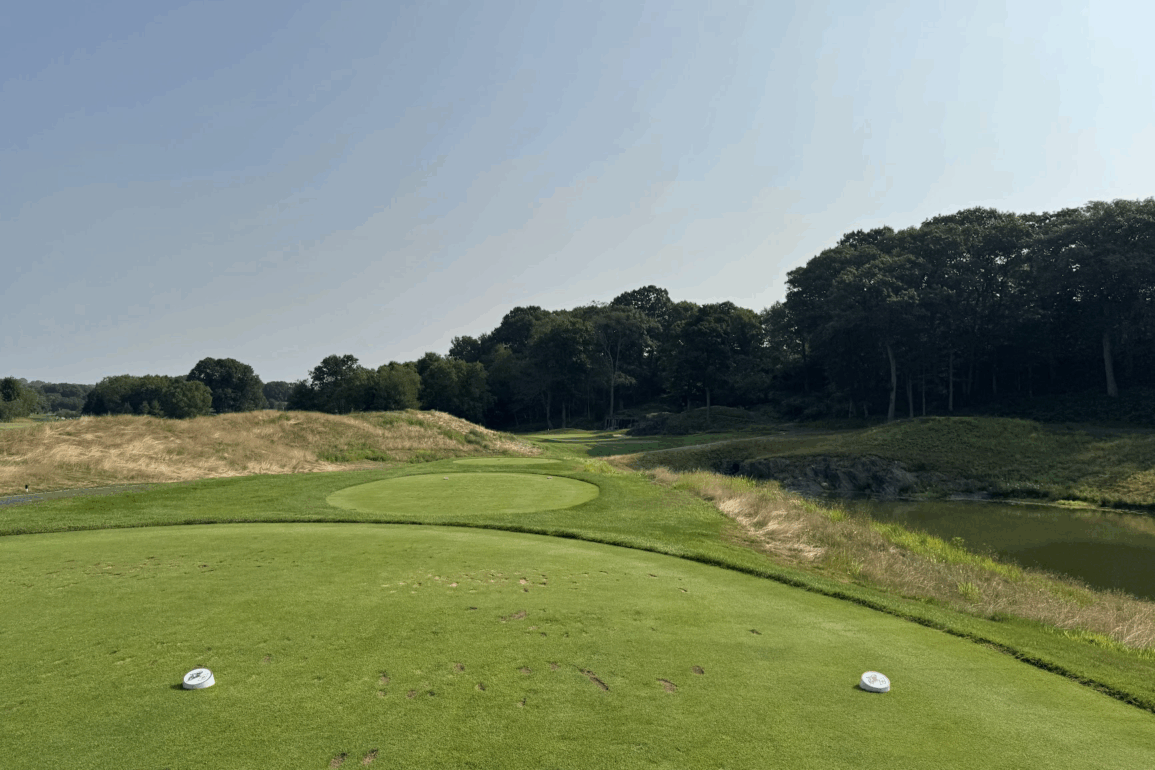
    Wallingford Country Club is a private par-71 course measuring approximately 6,447 yards from the tips. The course was originally designed in 1898 and is located in Wallingford, Connecticut.

    The club traces its roots back to the Spanish American War era, when members first laid out a nine-hole layout spanning 2,402 yards across undulating terrain interspersed with natural hazards. Early course maintenance relied on farmers wielding horse-drawn sickle cutters to clear fairways, while Charles Foster served as the first recorded greenskeeper, trimming rough to allow balls to roll into holes. The original routing has evolved considerably over more than a century of play, with recent bunker renovations on holes 5-9 executed by Turco Golf in collaboration with Mungeam Golf Design enhancing drainage systems and visual appeal through new bunker edging, floor compaction, and upgraded irrigation infrastructure. The layout occupies approximately 145 acres of rolling Connecticut landscape, presenting what the club aptly describes as a tale of two nines. The front nine delivers a traditional arrangement of strategic par fours ranging from drivable to demanding, punctuated by one of Connecticut’s most formidable par threes at the 4th hole measuring 224 yards from the championship tees. The back nine adopts a more creative personality, inviting players to shape shots and utilize imagination across varied terrain. This duality in character rewards cerebral players who can adapt their approach based on hole requirements, making Wallingford particularly appealing to students of strategic architecture who appreciate versatility in design philosophy. The course features bent grass on both fairways and greens, with water hazards and bunkering providing definition throughout.

    Strategic Test

    HandicapCourse Strategy
    High Handicap (18+)Players in this bracket will find the Green tees at 5,559 yards (122 slope, 67.0 rating) offering the most appropriate challenge, where a typical round yields scores in the mid-90s to low-100s range accounting for the slope adjustment. The 10th hole presents an ideal strategic opportunity at 320 yards from these tees, playing as a reachable par four that tempts aggressive plays off the tee while offering bail-out options for those preferring a safer approach. The abbreviated yardage eliminates forced carries and allows higher handicappers to utilize mid-irons or hybrids for positioning, with the green complex receptive to ground-game approaches. Strategic thinking centers on avoiding penalty strokes rather than pursuing heroics, as the slope rating indicates this layout penalizes wayward shots more severely than many courses at similar yardages.
    Mid Handicap (8-18)The White tees measuring 6,257 yards with a 128 slope and 70.6 rating provide balanced examination for this skill level, where expected scores fall in the low-80s to mid-90s range depending on specific index. The 4th hole emerges as the defining test at 224 yards, requiring a long iron or hybrid to carry onto a putting surface that ranks among Connecticut’s most challenging one-shotters. Club selection becomes paramount here, as the elevated green demands precise distance control and the surrounding hazards punish anything offline. Wind direction often dictates whether to attack the flag or play to the fat of the green, making course management rather than raw power the determining factor in recording a favorable score. The 128 slope indicates mid-handicappers should expect their index to translate directly into scoring differentials, with strategic lapses magnified by the routing’s subtle complexities.
    Low Handicap (0-8)Championship tees stretching 6,447 yards present a 129 slope with 71.4 rating that tests all facets of single-digit players’ games, where par represents solid scoring and anything in the 60s demands exceptional play. The 5th hole at 544 yards epitomizes the strategic decisions confronting accomplished players, offering risk-reward dynamics where longer hitters can attempt reaching in two while others must navigate optimal layup positions to set up manageable approach angles. The recent bunker work has restored definition to these landing areas, forcing precise tee shots that favor specific corridors based on hole location. From this distance, driver may not always represent the optimal play, as positioning for favorable second-shot angles often trumps maximum distance off the tee. The relatively modest yardage by modern standards shifts emphasis toward accuracy and shotmaking rather than overwhelming length, rewarding players who can work the ball both directions and control trajectory in Connecticut’s variable wind conditions.

    Nearby Course Alternatives

    The Farms Country Club in Wallingford presents another distinguished private option situated approximately 5 minutes northwest of Wallingford Country Club. Designed by Geoffrey S. Cornish and opened in 1961, this par-72 layout stretches 6,810 yards from the championship tees with a 73.0 rating and 130 slope, playing slightly longer and more demanding than Wallingford’s routing. The course occupies rolling terrain across approximately 165 acres, featuring bent grass fairways and greens with strategic bunkering throughout the Cornish design vocabulary. Elevation changes prove more pronounced than Wallingford, particularly through the property’s hillier sections where approach shots require precise distance control accounting for significant grade differentials. The 130 slope rating signals a layout that penalizes errant shots more severely, with tighter landing areas and more penal hazard placement than Wallingford’s more forgiving corridors. Cornish’s architectural pedigree brings Golden Age sensibilities to a mid-century routing, incorporating push-up green complexes and strategic centerline hazards that demand thoughtful positioning. Players who relish more dramatic topography and prefer courses where length and precision combine in equal measure will gravitate toward The Farms, particularly scratch golfers seeking a steeper challenge reflected in the elevated slope rating. The facility includes comprehensive practice areas with a driving range, putting green, and chipping area, along with full clubhouse amenities including dining and banquet facilities.

    Race Brook Country Club in Orange provides another private alternative located approximately 25 minutes southwest of Wallingford Country Club. Founded in 1912 and designed by Robert D. Pryde, the main 18-hole course measures 6,403 yards from the championship tees with a par of 71, carrying a 71.9 rating and 131 slope across bent grass and bermuda grass surfaces. Pryde, a Scottish native who served as Yale University’s first golf coach, crafted the original routing with his philosophy of well-kept fairways, splendid greens, and unique hazards that challenge without overwhelming. The course occupies the original 145 acres opened in 1913, with nine additional holes reopened in 1951 after wartime closure. The facility’s championship credentials include hosting the 2004 New England Amateur Championship and 2005 Connecticut PGA Championship, testament to the layout’s ability to test accomplished players while remaining accessible to all skill levels. The 131 slope rating signals a course that demands precision, with the uphill par-three 11th particularly noted for difficulty among the one-shot holes. Elevation changes throughout the property exceed those at Wallingford, requiring players to account for uphill and downhill lies more frequently. Players who appreciate courses with significant championship pedigree and more varied topography will find Race Brook compelling, especially those seeking a test that emphasizes shot variety across undulating terrain. The club features extensive practice facilities including a driving range, along with full amenities including a pro shop and food service.

    Final Word

    Wallingford Country Club supports player development through well-maintained practice facilities including a driving range with multiple hitting stations and a putting green where members can refine their short game before rounds. The recently renovated pro shop stocks contemporary equipment and apparel from leading manufacturers, with PGA professionals available for custom club fittings and instruction for players seeking to improve specific aspects of their games. Head Professional Steve Birkmeyer leads a staff of PGA-certified instructors who provide both private and group lessons, while assistant professionals handle club repair services including regripping, reshafting, and loft-lie adjustments. The facility’s focus remains deliberately centered on golf rather than expansive auxiliary amenities, with the clubhouse providing dining options and banquet facilities for member events and tournaments. This golf-centric approach appeals to players whose primary interest lies in course quality and playing conditions rather than supplementary recreational offerings. The club has earned recognition for maintaining some of Connecticut’s finest putting surfaces, with members consistently praising the greens for speed, trueness, and consistent conditioning throughout the season. What distinguishes Wallingford is the dual personality of its routing, where traditionalists appreciate the front nine’s classic strategic demands while creative shotmakers find the back nine’s imaginative opportunities equally compelling. This architectural diversity within a single round prevents monotony and rewards different skill sets across eighteen holes, making the course infinitely replayable for members who walk its fairways throughout the season. The combination of championship pedigree demonstrated through hosting Connecticut State Amateur and New England Senior Amateur championships, exceptional conditioning especially on greens, and the strategic variety embedded in the routing make Wallingford a compelling membership option for serious golfers seeking a pure test of the game without distraction.

  • TPC River Highlands

    TPC River Highlands

    [put_wpgm id=”2″ width=”100%” height=”770px” current_post_only=”true”]

    [letsreview]

    TPC River Highlands is a private par-70 course measuring approximately 6,841 yards from the tips. The course was originally designed in 1928 and redesigned by Pete Dye in 1984 and Bobby Weed in 1989, and is located in Cromwell, Connecticut.

    The property began its life as Middletown Golf Club in 1928 before becoming Edgewood Country Club in 1934. The PGA Tour acquired the facility in the early 1980s, initiating a transformation that would redefine Connecticut golf. Pete Dye redesigned nine holes to Tournament Players Club standards in 1984, reopening the facility as TPC of Connecticut. Five years later, Bobby Weed executed a comprehensive renovation while simultaneously integrating newly acquired acreage into a residential development, one of the first golf course repurposing projects of its kind. Weed worked alongside PGA Tour player consultants Roger Maltbie and Howard Twitty to create the layout seen today. The property was renamed TPC River Highlands in 1989. Most recently, a bunker renovation project was completed in 2016 that altered the character of the course’s hazards, transitioning from flashed faces to flat-bottomed bunkers with steep turf walls. The facility spreads across approximately 148 acres of gently rolling terrain situated on a bluff overlooking the Connecticut River. Mature corridors of maple, oak, sycamore, and eastern white pine frame the holes, creating well-defined playing corridors throughout the routing. The property features bentgrass from tee to green with bluegrass fescue rough. Numerous lakes and ponds punctuate the landscape, with water playing a decisive role on the closing stretch. The front nine meanders through relatively open terrain with modest elevation changes, while the back nine delivers the strategic meat of the examination, particularly the amphitheater-like finish around the four-acre lake that defines holes 15 through 18. The routing balances strategic variety with member playability, offering multiple tee complexes that allow golfers across the skill spectrum to engage meaningfully with the architecture. This facility appeals most to players who appreciate tournament-tested design, prefer courses where precision trumps length, and value the drama of risk-reward scenarios that can swing momentum in a matter of holes. The strategic architecture favors accuracy over distance, with water hazards and greenside bunkering demanding thoughtful club selection and proper angles of approach.

    Strategic Test

    HandicapCourse Strategy
    High Handicap (18+)From the forward tees measuring approximately 5,465 to 6,067 yards, the slope rating ranges from the low 120s to upper 120s depending on the tee selected. The course rating hovers in the 70 to 71 range, meaning these players should expect to shoot roughly 91 to 93 strokes on average given the slope adjustment. The strategic emphasis shifts toward navigating around rather than over hazards, making course management paramount. The generous landing zones off the tee provide confidence, but approach play into elevated greens demands proper distance control. Water hazards on the back nine require conservative lay-up strategies rather than heroic carries. The 15th hole, playing 296 yards from the championship tees, becomes a genuine three-shot hole from the forward markers, likely playing closer to 230 yards. The strategic play involves a fairway wood or long iron to the widest part of the fairway short of the green complex, followed by a pitch that must account for the water left and bunkers right of the putting surface. The narrow green sits on a pedestal, making accuracy more critical than aggression. Club selection for the second shot might range from a gap wedge to a pitching wedge depending on drive distance, with the primary goal of leaving an uphill rather than downhill third shot.
    Mid Handicap (8-18)From the middle tees measuring approximately 6,067 to 6,327 yards, players face a slope rating in the 122 to 127 range with course ratings of 70 to 71. This translates to expected scores in the 84 to 89 range depending on handicap positioning within this band. These golfers possess sufficient length to threaten greens in regulation on most holes but must contend with precise placement demands on both drives and approach shots. The slightly elevated greens throughout the property punish misses, particularly those that come up short into collection areas and bunkers. The water-dominated finishing stretch from 15 through 18 becomes the defining strategic examination, requiring intelligent risk assessment and acceptance that pars represent excellent scoring. The 15th hole at 296 yards presents the quintessential risk-reward dilemma. Players with sufficient carry distance can contemplate driver, but the miss zones are severely punitive with water left and deep bunkers right. The strategic approach involves a 3-wood or driving iron to approximately 100 to 120 yards out, establishing an ideal angle into the middle of the green. From this distance, a sand wedge or gap wedge allows for aggressive targeting without the consequences of the direct assault. The swale bisecting the green complicates two-putt scenarios, making precision on the approach paramount to scoring opportunities.
    Low Handicap (0-8)From the championship tees at 6,841 yards, the course presents a 73.1 rating with a 131 slope. Accomplished players should expect to shoot between 73 and 78 strokes, with the slope suggesting the course plays notably more difficult than its modest yardage indicates. The strategic architecture reveals itself fully from these tees, with angles of approach and proper distance control becoming critical to accessing certain pin positions. The relatively short par-70 layout demands accuracy over power, with several key drives requiring precise placement to establish optimal angles into narrow or angled green complexes. The severely undulating greens punish approaches from incorrect quadrants, often leaving three-putt scenarios even when the ball finds the putting surface. The closing four-hole stretch, particularly the water-dominated 15 through 17, represents one of the finest finishing sequences in tournament golf. The 15th hole at 296 yards epitomizes strategic design at the highest level. From the championship tee, driver becomes viable for players carrying the ball 280-plus yards, but the margin for error compresses to mere yards. Water guards the entire left side with only a thin buffer of rough, while deep bunkers protect the right edge. The optimal strategy for most single-digit players involves a controlled fade with driver or 3-wood to the right-center of the fairway, leaving 60 to 90 yards to a receptive wedge distance. This preserves the ability to attack regardless of hole location. The boldest line requires a draw that starts over the water and uses the left-to-right tier in the green to funnel balls toward center hole locations, but this demands precise execution under pressure.

    Nearby Course Alternatives

    Shuttle Meadow Country Club in Kensington is a private facility located approximately 15 minutes northwest of TPC River Highlands. The course measures 6,260 yards from the championship tees with a par of 71, course rating of 70.4, and slope rating of 122. Willie Park Jr. designed the original layout in 1916, establishing one of Connecticut’s authentic Scottish-tradition courses. The property sprawls across nearly 400 natural acres, significantly exceeding River Highlands in overall acreage despite its shorter playing length. The terrain delivers substantially more topography than River Highlands, with pronounced elevation changes throughout the routing that create both strategic interest and physical demands. Hills, wooded corridors, and multiple stream crossings define the character. Bruce Hepner completed a comprehensive renovation in 1996, followed by another bunker and tee renovation in 2017 that included 132 redesigned bunkers, 16 new tees, and 29 rebuilt tees. The design features bold, undulating greens that demand exceptional short game proficiency, with several blind approach shots adding old-world charm. The architectural pedigree places this among Connecticut’s most traditional and historically significant layouts, offering a more intimate club atmosphere compared to the TPC network’s corporate structure. Players who relish walking golf and appreciate classic golden-age architecture will find Shuttle Meadow more appealing than River Highlands. The course particularly suits mid-handicap players who value strategic variety over modern tournament conditioning, as the significant elevation changes and blind shots reward course knowledge and creativity rather than raw power.

    The Hartford Golf Club in West Hartford is a private 27-hole facility located approximately 20 minutes north of TPC River Highlands. The property features three nine-hole loops that can be combined into different 18-hole configurations. The Blue-Red combination measures approximately 6,365 yards from the championship tees with a par of 72, delivering course ratings around 71 to 72.2 with slope ratings ranging from 123 to 129 depending on the nine-hole pairing. Donald Ross and Devereux Emmet share design credits, with the Red course dating to 1896 and subsequent nines added in 1930 and 1950. The facility occupies significantly more acreage than the 148 acres at River Highlands, with the multiple routing options providing distinct strategic examinations. The terrain features rolling hills with pronounced elevation changes, creating uphill and downhill shots that add complexity to club selection. Bruce Hepner completed a major renovation in 2017, redesigning all bunkers throughout the 27 holes while maintaining the essential character of the Ross greens. The putting surfaces showcase the massive, severely contoured greens characteristic of Ross’s work, demanding precise approach angles and confident putting strokes. The property has hosted prestigious championships including the 1996 USGA Mid-Amateur and the 2008 U.S. Girls’ Junior Championship. Golf Digest currently ranks Hartford as Connecticut’s 10th best course, reflecting its consistent architectural quality across all 27 holes. The Red course in particular is known for its demanding par fours, while the Blue offers more strategic variety with cape-style holes and elevated approach shots. This facility appeals most to low-handicap players who appreciate Ross’s strategic complexity and have the ball-striking precision to access difficult hole locations on severely contoured greens. The 27-hole configuration also provides strategic variety that River Highlands cannot match, making Hartford ideal for members who play frequently and value different routing options throughout the season.

    Final Word

    TPC River Highlands maintains a 23-acre championship practice facility that ranks among Connecticut’s most comprehensive training complexes. The range extends 360 yards with 110,000 square feet of teeing area, allowing players to work on every aspect of the long game with multiple target greens and distance markers. A dedicated putting green provides ample space for stroke work and reading practice on surfaces that mirror the speed and contour of the course greens. The short game area includes a separate chipping green with multiple hole locations and surrounding bunkers, enabling players to rehearse the delicate touch shots demanded by River Highlands’ elevated green complexes. The facility also houses The First Tee 4-hole course adjacent to the practice area, completed in 2009 to support junior golf development. The New England-style clubhouse sits prominently on the property with multiple dining options and spaces designed for both casual post-round gatherings and formal events. Members enjoy access to pool and tennis facilities that complement the golf offerings, creating a comprehensive country club experience within the TPC network structure. The club’s certification in the Audubon Cooperative Sanctuary Program for Golf Courses demonstrates commitment to environmental stewardship and wildlife habitat protection across the property. The residential community component distinguishes River Highlands from traditional country clubs, with homes integrated throughout the property in one of the first developments of its kind when Bobby Weed completed the 1989 expansion. What makes TPC River Highlands genuinely special is its dual identity as both a world-class tournament venue and a supremely playable members course. The multiple tee complexes on each hole allow players of vastly different abilities to experience meaningful versions of the same strategic concepts the professionals navigate during the Travelers Championship. The closing four-hole stretch delivers amphitheater golf at its finest, with the 15th hole standing as one of tournament golf’s iconic drivable par fours. The strategic architecture rewards thoughtful play over brute force, making the course engaging regardless of skill level. The facility proves its value through architectural integrity that has withstood nearly four decades of professional scrutiny while remaining accessible to members, a balance few tournament venues achieve with such success.

  • Torrington Country Club

    Torrington Country Club

    [put_wpgm id=”2″ width=”100%” height=”770px” current_post_only=”true”]

    [letsreview]

    Torrington Country Club is a private par-72 course measuring approximately 6,609 yards from the tips. The course was originally designed in 1929 by Orrin Smith and is located in Goshen, Connecticut.

    The club’s origins trace back to August 1926, when Dr. H.E. Bartle and D.F. Hildreth convened a meeting to establish a golf course for Torrington, attracting thirty-five interested men. A site committee examined twelve farms before recommending a 180-acre property in Goshen composed of farms owned by Fred and Ed Johnson, F.L. Oviatte, and Fred Vail, purchased for $18,000. Orrin Smith, a New Britain golf architect who made his name as construction superintendent to Willie Park Jr. and field supervisor on numerous Donald Ross projects, was awarded the contract in October 1926. The initial nine holes opened for play in spring 1929, with the clubhouse constructed that summer and all eighteen holes completed by 1932. In the mid-1990s, noted restoration architects Ron Forse and Jim Nagle developed a master plan to restore original course features, with ongoing improvements to bunkers, strategic tree management, and tee renovations continuing the club’s commitment to preserving Smith’s design intent. Golf Magazine recognizes Torrington Country Club as one of Orrin Smith’s finest course designs. Situated in Connecticut’s Northwest Hills on rolling terrain estimated at 180 acres, the routing follows the natural contours of the land with significant elevation changes throughout. Smith demonstrated remarkable restraint in his design, respecting the swirling topography to create a layout where some fairways tilt dramatically enough that centerline tee shots can bound into the rough. The design philosophy emphasizes strategic positioning over distance, with elevated push-up greens featuring false fronts, wildly varied green complexes ranging from perched knobs to bowl settings, and undulating surfaces that demand precision on approach shots. Players who value strategic course management, appreciate Golden Age design principles, understand how to work the ball into different green quadrants, and enjoy the intellectual challenge of uneven lies will find this layout particularly rewarding. The course rewards thoughtful shot placement over brute force, making it ideal for students of architecture who understand that proper angles into greens matter more than raw yardage.

    Strategic Test

    HandicapCourse Strategy
    High Handicap (18+)From the White tees at 5,694 yards with a 68.2 rating and 132 slope, higher handicappers face significant challenges with the elevated greens and uneven lies that characterize the property. The slope rating indicates approximately 13-14 strokes above course rating for a bogey golfer, suggesting rounds in the mid-80s for players at the top of this handicap range. Strategic elements include playing to wider landing areas on tilted fairways to avoid bounding into rough, accepting front-edge pin positions as off-limits when false fronts are in play, and taking extra club on uphill approaches to elevated greens. The 12th hole, a par-5 measuring 502 yards from the Gold tees, offers the most strategic interest for this player as it presents a legitimate birdie opportunity with smart course management. This hole features a hard dogleg right with trees guarding the ideal landing area approximately 200 yards out, requiring a fade off the tee or a conservative line to avoid the gnarly rough, followed by a layup to a comfortable wedge distance rather than attempting to cut the corner or reach in two.
    Mid Handicap (8-18)From the Blue tees at 6,285 yards with a 70.4 rating and 132 slope, mid-handicappers will find Torrington plays significantly longer than the yardage suggests due to elevation changes and firm, fast conditions. The slope indicates this group should score approximately 11-12 strokes above rating, placing typical rounds in the low-to-mid 80s. Strategic considerations include managing the abbreviated par-5s that measure between 472 and 514 yards, where reaching in two brings serious trouble into play behind and beside greens. Course management requires accepting that some elevated greens simply cannot hold long irons from sidehill lies, necessitating intelligent up-and-down strategies. The 3rd hole, a par-3 playing 173 yards from the Gold tees, exemplifies the strategic demands placed on this player with yawning bunkers at right front and left front creating a narrow entrance corridor. The green slopes back-to-front, making anything beyond the pin a difficult two-putt, and the false front means short misses tumble well away from the putting surface. Club selection becomes critical—a thin 6-iron might find the green through the gap, but a pure strike with insufficient spin will bound over, while taking a 7-iron and playing to the fat of the green requires accepting a lengthy lag putt.
    Low Handicap (0-8)From the Gold tees at 6,609 yards with a 71.5 rating and 134 slope, scratch players will find Torrington extracts its toll through green complexes rather than length. The slope suggests approximately 6-7 strokes above rating for a bogey golfer equivalency, indicating this routing punishes mistakes severely despite modest yardage. Strategic elements revolve around precise distance control into greens with severe back-to-front slopes, creative shot-shaping to access different quadrants of greens, and superior short game execution from collection areas surrounding push-up greens. The abbreviated par-5s tempt aggressive plays but feature severe consequences—miss the small target greens and recovery becomes nearly impossible. The 13th hole at 319 yards from the Gold tees presents maximum strategic intrigue for accomplished players, appearing drivable with a hill running down to the green from 60 yards out but featuring a fairway that slopes upward to a crest before falling sharply. The green sits perched on a hill with a nearly sheer drop behind it, making going long catastrophic. Wedge shots from the fairway play blind to an incredibly small green, rewarding players who lay back to a precise yardage around 80-90 yards where they can generate maximum spin control, while aggressive drivers must execute a precise draw that crests the hill with enough momentum to reach but insufficient pace to bound through.

    Nearby Course Alternatives

    Hop Meadow Country Club in Simsbury presents a compelling alternative approximately 30 minutes northeast of Torrington Country Club for members seeking a different private club experience. This Geoffrey Cornish design from 1961 stretches to 6,915 yards from the championship tees with a 73.9 rating and 136 slope, offering slightly more length and difficulty than Torrington’s 6,609 yards and 134 slope. The course occupies rolling Farmington Valley terrain with strategic bunkering and well-designed green complexes characteristic of Cornish’s architectural style. While Torrington emphasizes elevated greens and false fronts as its primary defense, Hop Meadow relies more on length, with an average par-3 distance of 192 yards compared to Torrington’s 180 yards. The property features distinctive cliff-hanger par-3s and several extreme dogleg holes that some find quirky, contrasting with Torrington’s more naturalistic routing that follows the land’s contours. Hop Meadow offers a full family country club experience with eight outdoor Har-Tru tennis courts, platform paddle courts, and an Olympic-size swimming pool, appealing to families prioritizing multi-sport amenities alongside golf. Players who prefer a longer, more modern test with dramatic elevation features and enjoy variety in recreational offerings beyond golf would find Hop Meadow’s setting particularly attractive, especially those willing to trade Torrington’s Golden Age subtlety for Cornish’s bolder architectural statements and comprehensive family programming in a central Connecticut location.

    Litchfield Country Club in Litchfield offers an intimate nine-hole experience approximately 15 minutes southeast of Torrington for members who appreciate understated golf within a nature conservancy setting. This venerable layout, established in 1892 with redesign work attributed to Tom Bendelow in 1898, plays to 5,618 yards for a full 18-hole round with a 68.0 rating and 117 slope from the longest tees, presenting a markedly different challenge than Torrington’s 6,609 yards and 134 slope. Nestled within the White Memorial Foundation property with views of the Litchfield Hills, the course routes along the meandering Bantam River, which comes into play on six of the nine holes, creating strategic water hazards that contrast sharply with Torrington’s reliance on bunkering and green contours. Four sets of tees for each green provide variety on the second nine, though the abbreviated yardage and gentler slope make this a less demanding examination than Torrington’s uneven lies and elevated greens. The property features changing elevations that make walking a stimulating workout, and the club maintains a no-cart-requirement policy with many walking members, appealing to traditionalists who value exercise alongside their golf. Beyond golf, Litchfield offers four Har-Tru tennis courts, platform tennis, swimming and wading pools, and a summer children’s program, all housed in a restored mid-19th century farmhouse clubhouse overlooking the Bantam River. Players who prefer a more relaxed, shorter round with a walking emphasis, value intimate nine-hole golf where they know every blade of grass, appreciate nature conservancy settings, or seek a less architecturally demanding layout while maintaining private club amenities would gravitate toward Litchfield’s understated charm and family-oriented atmosphere in a bucolic Litchfield County setting.

    Final Word

    The practice facilities at Torrington Country Club provide comprehensive preparation opportunities with a spacious driving range featuring mat stations, a dedicated putting green, and a short game area for chipping and bunker practice. The clubhouse functions as the social heart of the club, offering multiple dining venues including The TCC Restaurant with spectacular golf course views providing first-class service and fine dining, while the Lounge offers a more casual atmosphere perfect for post-round gatherings or watching sporting events on television. The Patio extends outdoor dining during favorable weather, capitalizing on the picturesque Northwest Hills setting. The Ivy Mountain Banquet Room, Formal Dining Room, and Board Room accommodate weddings, business functions, and special occasions, demonstrating the club’s commitment to serving as a complete social venue beyond golf. The pro shop maintains inventory of equipment and apparel while the professional staff offers instruction for players seeking to improve their games. Tournament hosting capabilities have been proven through Connecticut Open, Connecticut State Men’s and Women’s Amateur Championships, New England Women’s Championship, and multiple USGA and state qualifiers, validating the layout’s championship credentials. What distinguishes Torrington Country Club is the authenticity of its Golden Age pedigree married to thoughtful modern restoration work that honors Orrin Smith’s original design intent rather than imposing contemporary architectural trends. The green complexes alone justify membership, presenting an encyclopedia of push-up, bowl, perched, and plateau configurations that force players to think three-dimensionally about how balls will react on false fronts, back-to-front slopes, and severely contoured surfaces. Smith’s routing demonstrates how architecture can extract strategic interest from modest yardage through intelligent use of natural topography, creating a thinking person’s course where bogeys result from mental errors as often as physical execution failures. The club’s commitment to gradual, restoration-focused improvements under Forse and Nagle’s guidance ensures the course will continue evolving while maintaining its historic character, making Torrington Country Club a distinctive private option in northwestern Connecticut for players who value architectural substance over cosmetic flash.

  • The Course at Yale

    The Course at Yale

    [put_wpgm id=”2″ width=”100%” height=”770px” current_post_only=”true”]

    [letsreview]

    The Course at Yale is a public par-70 course measuring approximately 6,825 yards from the tips. The course was originally designed in 1926 by Seth Raynor and Charles Blair Macdonald and is located in New Haven, Connecticut.

    The Course at Yale represents one of the most significant achievements in American golf course architecture, built on a 700-acre tract of swamp and woodland gifted by Sarah Wey Tompkins in memory of her husband Ray, a former Yale football captain. Seth Raynor, working under the consultation of Charles Blair Macdonald and with construction oversight by Charles Banks, transformed this rugged wilderness into what would become America’s finest collegiate golf course at a then-record cost of 400,000 dollars. The property’s challenging topography required extensive blasting, drainage work involving 35,000 feet of pipe, and the clearing of dense forest and rock formations before opening in April 1926. The course underwent various modifications over subsequent decades, including work by Roger Rulewich in the 1990s, though these alterations moved the design away from its original Raynor vision. In 2024, Yale commenced a comprehensive 25 million dollar restoration under Gil Hanse, closing the course through 2026 to restore bunkers, expand greens, improve drainage, and return the layout to its 1926 scale and character. The facility occupies approximately 200 acres of the original estate, with the routing navigating severe elevation changes across rocky, tumbling terrain that gives the course its distinctive penal and strategic character. The design philosophy centers on Raynor’s template holes, including world-class examples of the Biarritz, Road, Cape, Knoll, Alps, and Redan, all rendered at massive scale with greens often exceeding 10,000 square feet and bunkers so deep they require wooden stairs for entry. The player who thrives here possesses both precision ball-striking ability and strategic thinking, understanding that placement trumps distance on a course where fairway width varies dramatically and greens feature severe internal contouring that can render two-putt outcomes nearly impossible from the wrong tier.

    Strategic Test

    HandicapCourse Strategy
    High Handicap (18+)From the Short tees at 5,468 yards (par 70, rating 70.7, slope 124), course management becomes paramount for double-digit handicappers navigating Yale’s penal architecture. The slope rating indicates scores will balloon quickly when missing fairways into dense rough or finding the cavernous bunkers that define the layout’s strategic framework. The par-3 5th hole at 147 yards presents the most approachable birdie opportunity, requiring only a short iron or wedge to a relatively flat green, though the putting surface sits ten feet above surrounding bunkers that encircle the target. Club selection here depends entirely on pin position within the massive green complex, with a front flag playing closer to 135 yards while a back location stretches to 160 yards. High handicappers should focus on finding the center of these enormous greens rather than attacking pins, as missing on the wrong tier creates three-putt scenarios that are difficult to avoid. The forgiving width on certain holes provides breathing room, but errant tee shots into Yale’s distinctive geometric bunkering require precise recovery work to salvage bogey.
    Mid Handicap (8-18)The Regular tees stretch 6,122 yards (par 70, rating 72.6, slope 131), presenting mid-handicappers with a stern examination of every facet of their game across Raynor’s demanding template designs. The 131 slope suggests that consistent ball-striking and sound course management separate respectable scores from complete breakdowns, particularly on holes where blind shots and dramatic elevation changes obscure landing areas. The par-3 9th hole, Raynor’s famous Biarritz at 196 yards, exemplifies the challenge mid-handicappers face at Yale, requiring a forced carry of approximately 175 yards over water to a two-tiered green measuring 64 yards in depth. A swale five feet deep bisects the putting surface, creating essentially two separate targets depending on pin position, with the front section playing as an approach area and the back portion representing the green proper. From the Regular tees, a well-struck 4-iron or 5-iron must carry the water and avoid the deep swale that punishes shots lacking sufficient distance or precision. Players must commit fully to their club selection, as indecision leads to finding either the pond short or the swale that creates impossible recovery situations.
    Low Handicap (0-8)From the Long tees measuring 6,749 yards (par 70, rating 72.9, slope 132), Yale reveals its championship pedigree, testing accomplished players with angles, carries, and green complexes that demand both power and precision. The slope rating of 132 reflects how quickly scores deteriorate when missing fairways or approaching greens from incorrect angles, as Raynor’s penal design philosophy punishes wayward shots severely. The par-4 4th hole at 437 yards, Raynor’s interpretation of the Road template, represents perhaps the most demanding test on the property, requiring a 150-yard forced carry over water from the championship tee to a fairway that narrows as water encroaches from the right at the 230-yard mark. Longer hitters who successfully navigate the carry face an additional water hazard that curves back into the landing zone, making driver a risk-reward proposition that requires careful consideration of wind and pin position. The approach shot then plays uphill to an elevated green complex, typically requiring a long iron or hybrid from 190-210 yards depending on drive distance and fairway position. Low handicappers must weigh the benefit of extra distance against the penalty for missing fairways, as recovery from Yale’s brawny bunkers or dense rough leaves minimal margin for error in reaching greens that feature false fronts and severe back-to-front slopes.

    Nearby Course Alternatives

    New Haven Country Club in Hamden offers a contrasting strategic examination approximately 10 minutes north of Yale, presenting accomplished players with a Willie Park Jr. design that emphasizes precision over power across rolling terrain with less severe elevation change. The private facility stretches 6,580 yards from the tips with a par of 71, course rating of 72.3, and slope of 134, playing slightly tighter than Yale while maintaining comparable difficulty through intricate green complexes rather than massive scale. Established in 1898 and relocated to its current Lake Whitney location in the 1920s, New Haven Country Club sits on substantially less acreage than Yale’s sprawling 700-acre estate, creating a more intimate routing that flows naturally across parkland rather than wilderness terrain. Park’s design philosophy centers on 17 original greens featuring severe ridges, distinct plateaus, and dramatic valleys that require precise approach work, with recent restoration efforts by Brian Schneider expanding playing surfaces and bringing fairway bunkering back into strategic relevance. The course boasts particularly memorable par-3s including the drop-shot 9th and the surrounded 17th, both demanding heroic carries to well-defended targets. The player who prefers New Haven to Yale likely values subtle ground game options over aerial assault, appreciating firm conditions and smooth bent greens that enhance the property’s natural contours rather than overwhelming them with manufactured features. Mid-handicappers find the reduced yardage and absence of Yale’s extreme elevation changes more manageable, while the iron-only driving range and short game practice area with two bunkers provide adequate preparation facilities in a more traditional club setting. The distinctive Scottish-style clubhouse with its red-tile roof maintains an historic atmosphere that contrasts with Yale’s more modern William S. Beinecke Golf House, offering members a purist’s golf experience where the course remains the primary focus rather than extensive amenities.

    Race Brook Country Club in Orange provides a more accessible private club experience roughly 15 minutes southwest of Yale, featuring 27 holes designed by Robert D. Pryde that opened in 1912 and offer varied strategic challenges across rolling Connecticut landscape. The championship 18-hole course measures 6,403 yards from the tips with a par of 71, course rating of 71.9, and slope of 131, playing slightly shorter and more forgiving than Yale while still presenting accomplished tests through well-positioned hazards and undulating greens. The facility includes an additional 9-hole course and the O’Sullivan inside nine, providing members with combination options that create diverse playing experiences within the club’s more compact footprint compared to Yale’s expansive acreage. Race Brook’s remarkable conditioning of both the championship course and practice areas delivers year-round playability for members of all ages and skill levels, with the remodeled 2002 clubhouse offering traditional golf club atmosphere and comprehensive amenities including private lounge, grille room, and facilities for weddings and banquets. The golf shop, redesigned by Procraft Heritage Creations in 2010, stocks a full range of equipment and apparel, while club professionals provide private instruction and clinics throughout the season. The player who gravitates toward Race Brook over Yale typically values consistent conditioning and traditional country club services over architectural pedigree, appreciating a layout that presents strategic interest without the extreme blind shots and forced carries that characterize Raynor’s design. High handicappers find the reduced length and gentler terrain more enjoyable for regular play, while the practice area and short game facilities allow for pre-round preparation unavailable during Yale’s restoration period. The club’s century-plus history as the former home course for Yale’s golf team creates interesting historical continuity, as the university’s students played Race Brook before the construction of their own facility in 1926, making the club an integral part of Yale golf’s developmental timeline.

    Final Word

    The William S. Beinecke Golf House, dedicated in 2015, serves as the operational center for Yale Golf Course, housing a well-appointed pro shop with curated equipment and apparel selections alongside locker rooms that maintain the historic character befitting a Golden Age facility. The clubhouse provides views of both the 1st tee and 18th green, allowing visitors to observe the course’s dramatic opening and closing sequences while enjoying food and beverage service in an understated but comfortable setting. Practice facilities underwent significant expansion during the 2024 restoration, with the driving range becoming fully accessible to all players for the first time since the course transitioned to public daily-fee operation in 2020, addressing a longstanding limitation that restricted pre-round preparation. The short game area features multiple bunkers and an undulating green for chipping and pitching practice, essential preparation for navigating the severe green complexes that define Raynor’s architectural philosophy. Large practice greens positioned near the clubhouse allow players to acclimate to the speed and break characteristics of Yale’s massive putting surfaces before teeing off. The course operates as a public daily-fee facility following the 2024 restoration, representing a significant departure from its historical membership model and providing unprecedented access to one of America’s most significant architectural treasures. Yale’s ambitions extend beyond daily play to hosting major championships, with informal discussions underway with the NCAA, USGA, PGA Tour, and LPGA regarding potential events including NCAA nationals, U.S. Amateur, Walker Cup, and even a Ryder Cup. The restoration positions Yale to reclaim its standing among America’s elite layouts, with General Manager Peter Palacios and his team committed to maintaining championship-level conditions through significant maintenance endowments and sustainable turf management practices. What makes this course truly special extends beyond its architectural significance or championship pedigree to the ambitious vision of making authentic Raynor-Macdonald design accessible to the general public, a rarity in American golf where similar layouts remain sequestered behind private gates. The 2026 reopening promises to reveal a sleeping giant awakened, with Gil Hanse’s faithful restoration returning the property to its 1926 scale and character while incorporating modern drainage, irrigation, and turf advances that ensure long-term sustainability and playability that honors both Raynor’s original vision and the expectations of contemporary championship golf.

  • The Club at River Oaks

    The Club at River Oaks

    [put_wpgm id=”2″ width=”100%” height=”770px” current_post_only=”true”]

    [letsreview]

    The Club at River Oaks is a private par-71 course measuring approximately 6,740 yards from the tips. The course was originally designed in 2003 by Robert McNeil and is located in Sherman, Connecticut.

    The layout emerged from one of golf architecture’s more unusual origin stories, as McNeil was tasked with routing 18 holes through a failed residential development where streets, utilities, and lot lines had already been established. The site had been platted solely for housing before the developers went bankrupt, leaving McNeil to work within rigid constraints that included existing paved roads he couldn’t relocate and conservation easements woven throughout the property. Despite attending more than 50 public hearings and navigating strict municipal regulations that prevented earthmoving in certain areas, McNeil crafted a course that takes full advantage of the property’s 350 acres in the Berkshire foothills. The routing follows a zig-zagging pattern across rolling terrain, with several holes running along or toward the Housatonic River, one of the Northeast’s premier trout fisheries. Elevation changes range from subtle to dramatic, particularly on the ninth hole, which plays from an elevated tee with panoramic views of the surrounding hills. The design philosophy emphasizes variety, alternating between longer, more open fairways and tighter, technical corridors framed by mature maples and pines. Players who appreciate strategic course management and the ability to work the ball will find the most satisfaction here, as successfully navigating the layout requires thoughtful club selection and understanding how to use the natural terrain. The course’s bent grass greens feature artful contouring that rewards precise approach angles, while bunkering tends toward sculptured white sand that provides both aesthetic appeal and strategic positioning.

    Strategic Test

    HandicapCourse Strategy
    High Handicap (18+)From the white tees at 5,644 yards with a slope of 125 and rating of 68.5, the course provides a fair examination without overwhelming length. The slope differential suggests that course management becomes critical as players navigate elevation changes and strategically positioned hazards. The 17th hole, a par-3 measuring approximately 210 yards from the championship tees, plays significantly shorter from the forward markers and presents one of the layout’s most scenic moments as the tee shot carries over a pond to a narrow green. The hole demands accurate distance control and club selection, likely requiring a fairway wood or hybrid from the white tees. Higher handicappers benefit from the variety in hole lengths and the opportunity to score on shorter par-4s like the 12th, though they must manage fairway bunkers that guard landing areas and avoid the water hazards present on numerous holes.
    Mid Handicap (8-18)Playing from the blue tees at 6,103 yards with a slope of 130 and rating of 70.7, mid-handicappers face a test that rewards strategic thinking over pure power. The slope rating indicates the course’s difficulty amplifies for this skill level, particularly given the elevation changes that create uneven lies and require thoughtful club selection. The ninth hole, a par-4 of approximately 435 yards from the back tees, showcases the design’s dramatic use of terrain with a tee shot from an elevated box to a fairway that bends around the 150-yard marker, protected by bunkers and tree lines on both sides. The second shot plays across a ravine to a green that snakes along a small hill, making par a satisfying accomplishment. Mid-handicappers must carefully position tee balls to specific landing areas and understand how uphill and downhill lies affect approach distances, particularly on holes where the green complexes feature significant contouring.
    Low Handicap (0-8)From the black tees at 6,465 yards with a slope of 134 and rating of 72.3, accomplished players encounter a layout that tests precision and course management rather than overwhelming length. The slope rating reflects how the design’s subtleties and strategic elements create scoring challenges through placement demands and green complexes that reject poorly executed approaches. The 17th hole at 210 yards exemplifies the strategic examination, as the long carry over water to a narrow target requires committed ball-striking and careful attention to pin position. Low handicappers must navigate the course’s varying corridors and work angles of attack that complement the green’s internal slopes, while also managing risk-reward decisions on holes where aggressive play can yield birdies but wayward execution leads to difficult recovery positions. The greenside bunkering and internal putting surface contours demand precise distance control and understanding of how the ball will release based on approach trajectory.

    Nearby Course Alternatives

    Bull’s Bridge Golf Club in South Kent provides a contrasting experience approximately 15 minutes south of Sherman, sitting on nearly 400 acres of dramatically rolling terrain in Litchfield County. The Tom Fazio design, which opened in 2004, plays to par-72 and stretches to approximately 7,000 yards from the championship tees with a slope rating reaching 136. The course features significantly more elevation change than River Oaks, with opening holes that plunge downhill from the clubhouse perch and create a mountainous feel throughout the property. Sweeping fairways framed by sculptured white sand bunkers showcase Fazio’s trademark aesthetic, while New England stone walls weave throughout to add both charm and strategic challenge. The property’s rugged topography allows for dramatic tee shots and approach angles, particularly on holes where elevation creates optical illusions for distance control. Bull’s Bridge recently completed a renovation that added bunkers to eight holes and repositioned others to address modern equipment, while also expanding fairway corridors and adding multiple tee complexes that now allow the course to play from 5,300 to over 7,200 yards. The greens represent perhaps the facility’s most outstanding feature, with artful contouring and pristine putting surfaces that demand precise speed control. Low-handicap players seeking a more visually dramatic layout with greater elevation changes and modern Fazio bunkering aesthetics would likely prefer Bull’s Bridge, though the course’s isolation and exclusivity make access more limited.

    Richter Park Golf Course in Danbury offers an exceptional public alternative approximately 20 minutes southwest of Sherman, playing to par-72 over nearly 6,800 yards from the championship tees. Designed by Edward Ryder and opened in 1971, this municipal facility has earned recognition as one of the finest public courses in Connecticut and has been ranked among the top public courses in the country. The layout spreads across 180 hilly acres with the West Lake Reservoir bordering seven holes on the front nine and water coming into play on 14 total holes throughout the routing. The course features more dramatic elevation changes than River Oaks, particularly on the back nine where hillier terrain creates challenging uneven lies and demands thoughtful club selection. Richter’s signature 12th hole, a dogleg-right par-5, features a blind second shot and a peninsula green jutting into Boggs Pond, creating one of the area’s most memorable finishing sequences to an approach shot. The facility has hosted multiple championship events including the Connecticut Public Links Championship and AJGA tournaments, testament to the design’s tournament-worthy examination. With four tee boxes starting at 4,922 yards, the course accommodates all skill levels while the slope rating of 139 from the tips signals a stern test for accomplished players. Mid to high-handicap players who prefer a public facility with excellent practice amenities and don’t mind a more crowded playing experience would find Richter Park an attractive option, particularly those drawn to layouts where water hazards create clear strategic choices on nearly every hole.

    Final Word

    The practice facilities at The Club at River Oaks include a driving range that, while constrained by the property’s topography and wetland areas, provides adequate space for warming up with irons and shorter clubs, along with well-maintained putting greens and a dedicated short-game area with its own putting surface for dialing in wedge distances and pitch shots. The 26,000-square-foot clubhouse anchors the facility with formal and informal dining options in the Grille Room, which serves members throughout the season with views overlooking the course, while the Grand Ballroom provides banquet facilities for special events and gatherings. Beyond golf, the club offers comprehensive recreational amenities including a heated outdoor pool, two tennis courts, and marked hiking trails that wind through the property’s 350 acres, taking advantage of the proximity to both the Berkshire foothills and the Appalachian Trail. An exercise room equipped with aerobic and weight training equipment, along with specialized fitness classes, rounds out the wellness offerings. The club’s location in Sherman, rated Connecticut’s number one small town, provides members with a genuine New England countryside retreat within 90 minutes of New York City. What makes The Club at River Oaks particularly special is how McNeil transformed a seemingly impossible site into a legitimate golf experience that rewards strategic thinking and course management over pure power. The routing’s variety keeps players engaged throughout the round, from riverside holes that showcase the Housatonic’s natural beauty to elevated tees that frame distant mountain vistas, creating memorable moments that linger long after the round concludes. For those seeking a private club experience in northwest Connecticut that prioritizes shot-making and strategic variety within a genuine country setting, River Oaks delivers an authentic test that proves its value through thoughtful design rather than overwhelming length or manufactured difficulty.

  • Tamarack Country Club

    Tamarack Country Club

    [put_wpgm id=”2″ width=”100%” height=”770px” current_post_only=”true”]

    [letsreview]

    Tamarack Country Club is a private par-71 course measuring approximately 6,841 yards from the tips. The course was originally designed in 1929 by Charles Banks and is located in Greenwich, Connecticut.

    Tamarack Country Club traces its origins to 1909 as the Port Chester Country Club in Westchester County, New York, where it operated on 107 acres until 1928 when the municipality purchased the land for a new high school. The club relocated across the state line to Greenwich, acquiring rolling farmland in the backcountry that would become the current 170-acre property. Charles Banks, protégé of Seth Raynor and C.B. Macdonald, was commissioned to design the new course, which opened on July 4, 1929. The property has undergone significant tree removal campaigns beginning in the 2010s to restore corridor visibility, followed by a comprehensive restoration completed in 2023 by Brian Schneider of Renaissance Golf Design that focused on reestablishing original fairway parameters, tying green entrances into approaches, and returning bunkering shapes to Banks’ original schemes. The routing unfolds around a prominent hilltop clubhouse with expansive views across the property, presenting a bold architectural statement through massive scale, dramatic earthwork, and Banks’ signature steep and deep bunkering. The course showcases numerous Golden Age template holes including an Eden third, a Redan seventh, a Punchbowl eleventh, and a Biarritz twelfth, mixed with original designs on the back nine that feature equally imaginative green complexes and strategic challenges. The terrain is characterized by significant elevation changes, particularly as holes venture southwest from the flatter middle section, with rolling fairways that provide generous width for recovery but demand precise positioning for optimal scoring angles. This layout rewards the player who appreciates strategic architecture, understands the importance of green-entry angles, and enjoys the mental challenge of navigating template holes with modern equipment against designs conceived nearly a century ago.

    Strategic Test

    HandicapCourse Strategy
    High Handicap (18+)High handicappers will find the most enjoyment from the Gold tees at 5,719 yards with a course rating of 67.6 and slope of 125, though the forward Red tees at 5,710 yards offer similar length with a more forgiving 112 slope rating for women. The massive fairway corridors provide ample room for wayward drives, with the recent tree removal and combined fairway on holes one and two offering particularly generous landing areas. The slope differential suggests bogey golfers will add approximately 12 strokes to their handicap on this course, primarily due to the severity of the greenside bunkering and the need for solid approach play into elevated putting surfaces. The seventh hole, the Redan template, plays 196 yards from the championship tees and features Banks’ characteristic bold shaping with a diagonally angled green that slopes from front-right to back-left. This par three demands nothing more than a hybrid or long iron for higher handicappers from forward tees, but the massive bunker guarding the right side and the severe green contours create significant recovery challenges for those missing the putting surface, making club selection and accepting bogey a prudent strategy.
    Mid Handicap (8-18)Mid handicappers should consider the White tees at 6,452 yards with a rating of 71.5 and slope of 133, which presents a balanced test requiring accurate ball-striking without overwhelming length. The 133 slope indicates these players will face approximately three additional strokes beyond their handicap, with the penal nature coming primarily from the demanding approach shots into elevated greens defended by deep bunkers and false fronts. Strategic positioning off the tee becomes paramount, as the generous fairway width creates options but penalizes poor angles with difficult recovery shots from Banks’ steep bunker faces. The seventh hole Redan at 196 yards presents an ideal mid-handicap challenge, requiring a mid to long iron to find a green complex that rewards understanding of the template’s strategic intent by playing to the high right side and using the slope to feed balls toward left pins. Missing the correct quadrant of this severely contoured green creates three-putt territory, while the back-right bunker famously labeled “No!” in the yardage book should be avoided at all costs, making course management and understanding green breaks more critical than pure distance.
    Low Handicap (0-8)Low handicappers will want to test themselves from the Blue tees at 6,783 yards with a rating of 73.9 and slope of 139, or the championship Black tees at 6,841 yards rated 73.3 with a slope of 137. These yardages combined with the slope ratings reveal a course where positioning trumps distance, as the relatively modest differential between rating and par indicates skilled players face strategic rather than pure length challenges. The narrow scoring margins come from the precision required on approach shots into intricate green complexes, the penalty for missing optimal angles into template greens, and the mental demands of navigating centerline hazards on holes like the fourth Bottle hole with its pinched landing area. The seventh hole Redan at 196 yards exemplifies the examination of accomplished ball-strikers, demanding a mid-iron that must account for wind exposure on the elevated tee, select the proper entry angle based on pin position, and commit to either the safe high-right approach or the aggressive low-left line that flirts with the cavernous front bunker. The extreme undulation of this putting surface means even well-struck approaches can leave challenging two-putt scenarios, while the infamous back-right bunker presents recovery demands that can quickly turn par into bogey, making this hole a true test of precision, course knowledge, and acceptance of strategic principles over aggressive play.

    Nearby Course Alternatives

    The Stanwich Club in Greenwich, approximately 10 minutes northeast of Tamarack, presents a dramatically different architectural philosophy within the same affluent backcountry enclave. Measuring 7,445 yards from the championship tees with a par of 72, course rating of 76.6, and slope of 145, Stanwich plays significantly longer and more penal than Tamarack while occupying a similar 186-acre footprint on rolling Connecticut terrain. Originally designed in 1964 by William and David Gordon, the course has undergone extensive renovations by Tom Fazio and associate Tom Marzolf, most recently completing a five-green rebuild and complete reimagining of the first hole. The architectural pedigree differs fundamentally from Banks’ Golden Age template philosophy, instead emphasizing mid-century modern design principles with narrow fairways requiring precise driving, elevated greens heavily defended by front bunkers, and fast undulating putting surfaces that rank among the most notorious in the Metropolitan area. The property features less dramatic elevation change routing compared to Tamarack’s southwest holes, though the course makes captivating use of its terrain with a strong finishing stretch on the back nine, particularly the standout par-five seventeenth. Players who prefer championship length tests, pristine conditioning with exceptional greens, and tournament-caliber difficulty without the quirk of template holes will find Stanwich more appealing than Tamarack, particularly mid-to-low handicappers who can navigate the demanding 7,400-yard back tees and appreciate modern strategic architecture that emphasizes ball-striking precision over positional complexity.

    Country Club of Fairfield in Fairfield, roughly 25 minutes east of Tamarack along the Connecticut coastline, offers a contrasting Seth Raynor design experience on dramatically different seaside terrain. Playing 6,358 yards from the tips with a par of 70, course rating of 71.6, and slope of 133, the course occupies approximately 170 acres of former onion fields and tidal marshes that required massive landfill operations to transform into the playable terrain opened in 1921. The original Raynor design underwent significant modifications by A.W. Tillinghast in the 1920s and 1930s, Robert Trent Jones Sr. in the 1960s, and recent restoration work by Tom Doak associate Bruce Hepner to reestablish Raynor’s aesthetic amid what one writer called a “topsy-turvy design history.” The routing features holes touching Long Island Sound with spectacular water views, coastal wind exposure critical to the strategic design, and the exceptional stretch of holes four through six including Tillinghast’s island par-four and what many consider the finest hole in Connecticut at the sixth. Recent tree removal has restored original seaside vistas and wind patterns that create difficulty transcending the modest yardage, with the 133 slope reflecting how coastal conditions and strategic bunkering complexes challenge bogey golfers significantly more than the rating suggests for scratch players. Players who value shoreline golf, appreciate the interplay of wind with template architecture, prefer a flatter routing with water views over dramatic elevation changes, and enjoy understanding the layered history of multiple Golden Age architects will find Country Club of Fairfield more compelling than Tamarack, particularly those who relish the unique character of seaside Connecticut golf and the challenge of coastal weather affecting play on Raynor greens.

    Final Word

    Beyond the championship golf course, Tamarack Country Club provides members with comprehensive amenities centered around the impressive 55,000-square-foot clubhouse that sits at the property’s highest elevation with commanding views across the layout and Connecticut landscape. The practice facilities include a driving range that cleverly utilizes the thirteenth fairway with a signal system alerting range users when players tee off on that hole, along with putting and chipping areas for short-game development. The club recently added a full-service outdoor poolside bar in 2024, featuring an 1,800-square-foot covered structure with large-screen televisions and comfortable seating that doubles as a halfway house for golfers making the turn. The pool complex itself spans 13,000 square feet with a zero-entry toddler pool, main pool with lap lanes and diving well, full locker facilities, and adjacent summer café. Tennis facilities include four Har-Tru courts with professional instruction available, competitive league teams in both Fairfield County and Westchester leagues, and organized clinics throughout the season. The clubhouse features multiple dining options with covered and uncovered terraces, a private dining room, fitness center, indoor golf practice facility, and pro shop. Family programming remains central to the club’s mission with popular kids’ camps, junior golf instruction, and Friday night pizza-and-tennis events that create multi-generational engagement. What distinguishes Tamarack among Connecticut’s premier private clubs is the successful integration of Charles Banks’ bold Golden Age architecture with modern conditioning standards and member amenities, creating an environment where serious golfers can study template holes in their fully restored glory while families enjoy comprehensive country club living. The 2023 Schneider restoration has elevated the course to its rightful place among the state’s finest layouts, with the massive scale of the property, the dramatic bunkering that defines Banks’ aesthetic, and the strategic complexity of both template and original holes providing an architectural education that rewards multiple plays and deepening understanding of Golden Age design principles.

  • Suffield Country Club

    Suffield Country Club

    [put_wpgm id=”2″ width=”100%” height=”770px” current_post_only=”true”]

    [letsreview]

    Suffield Country Club is a private par-72 course measuring approximately 6,004 yards from the tips. The course was originally designed in 1927 by Orrin Smith and is located in Suffield, Connecticut.

    Founded nearly a century ago, Suffield Country Club represents one of the enduring private facilities in north-central Connecticut, occupying approximately 60 to 70 acres of rolling terrain along Route 75. The layout reflects the work of Orrin Smith, a protégé of Donald Ross who made his reputation designing strategic shorter courses that demand accuracy over distance. Smith worked continuously from the 1920s through the 1950s, and his signature elements remain evident throughout Suffield’s nine holes, which members play twice from different tee boxes to complete an 18-hole round. The clubhouse underwent renovation in 2005, maintaining its New England Colonial aesthetic while modernizing facilities. The property showcases gently undulating topography with elevation changes of 30 to 40 feet on several holes, mature oak trees lining narrow fairways, and small undulating greens that reward precise approach play. The routing follows a traditional out-and-back configuration with out-of-bounds defining several holes and natural water features adding strategic complexity. This venue appeals most to players who value shot placement and course management over brute length, as no par-5 exceeds 500 yards and no par-4 stretches beyond 400 yards. The design philosophy emphasizes positional golf, with many greens oriented away from the direct line of play to create preferred angles of approach. Members enjoy a stress-free experience with no tee times required, even on busy weekends.

    Strategic Test

    HandicapCourse Strategy
    High Handicap (18+)From the forward tees measuring approximately 5,729 yards with a course rating of 73.7 and slope of 127 for women, high handicappers face a demanding test despite the shorter overall distance. The slope rating indicates that bogey golfers will play significantly above their handicap, with the tight tree-lined fairways and small greens creating ample scoring variance. The 6th hole, a par-3 playing between 130 and 140 yards, offers the best birdie opportunity for this group. With minimal bunkering and a relatively flat green surface compared to other holes on the property, this short iron presents a straightforward challenge where keeping the ball on target yields par or better. However, heavy rough flanks both sides, and an errant tee shot left or right can quickly inflate the score. The key for higher handicappers lies in accepting conservative club selection and prioritizing green-finding over pin-hunting, as the undulating putting surfaces make two-putts from long range difficult to achieve.
    Mid Handicap (8-18)Playing from the red-yellow combination tees at approximately 5,729 yards for men yields a 67.0 rating and 121 slope, presenting a manageable but strategic test for mid-handicappers. The slope differential suggests these players can score near their handicap with sound course management and capitalizing on the shorter par-5s. The 1st hole, a par-4 playing approximately 360 to 380 yards, exemplifies the strategic challenge throughout the round. The tee shot descends roughly 40 feet from an elevated tee, with fairway bunkers positioned around 220 yards on both sides and mature oak trees guarding the left corridor. Out-of-bounds threatens the right side throughout. The green orientation favors approaches from specific fairway positions depending on pin placement, rewarding players who shape their tee shots rather than simply pursuing maximum distance. A well-positioned drive leaves a short iron to a two-tiered green, but the angle of approach proves critical to avoiding three-putt territory. Mid-handicappers must resist the temptation to attack pins without proper positioning, instead working the ball into the fat of greens to ensure makeable two-putt opportunities.
    Low Handicap (0-8)Championship golfers playing the white-blue combination measuring 6,044 yards encounter a 69.6 rating and 124 slope, indicating the course plays slightly easier than its par suggests for scratch players. The modest length might appear benign, but the strategic architecture demands precision and creativity rather than overpowering ability. The 7th hole, widely considered the most difficult on the course, typifies the mental challenge low handicappers face. This par-4 dogleg left climbs approximately 35 feet over the final 60 yards to an elevated green complex. Large trees frame both sides of the fairway, with a significant tree on the left corner making fade trajectories problematic for holding the fairway. The blind uphill approach requires adding roughly 10 yards to account for elevation, and two deep bunkers protect both sides of the green entrance. Low handicappers must execute a shaped tee shot to establish the proper angle, then flight their approach to account for both elevation and wind exposure on the hilltop green. The narrow fairways throughout the course punish wayward drives with difficult recoveries, and the small, contoured greens require precise distance control to access tucked pins. Scoring opportunities exist on the par-5s, but the premium on accuracy and positional play creates more challenges than the yardage suggests.

    Nearby Course Alternatives

    Tumble Brook Country Club in Bloomfield offers a distinctly different experience approximately 15 minutes southwest of Suffield. The facility features 27 holes spanning three nine-hole combinations originally designed by Willie Park Jr., Orrin Smith, and George Fazio before Mark McCumber’s comprehensive 2005 renovation unified the property. The championship configuration stretches to 6,760 yards from the black tees with a 72.6 rating and 124 slope, providing considerably more length than Suffield’s compact layout. Tumble Brook occupies a larger footprint with more dramatic elevation changes and wider fairway corridors, creating a different strategic emphasis. The property showcases more modern course conditioning standards and practice facilities, including extensive short game areas that cater to serious players looking to work on their wedge play. The architectural lineage connects to Suffield through the Smith nine, which displays similar strategic bunker placement and green contouring, though the overall feel skews toward a more parkland aesthetic with less severe tree encroachment. Players who enjoy variety in their golf experience and prefer a fuller 18-hole championship layout over the repeat-nine configuration will find Tumble Brook’s scale and scope more appealing. The larger membership base and more extensive amenities including five Har-Tru tennis courts and a heated pool create a more resort-like country club atmosphere compared to Suffield’s intimate community feel.

    Wampanoag Country Club in West Hartford presents a compelling alternative approximately 20 minutes south of Suffield, featuring a recently restored Donald Ross masterpiece that showcases the Golden Age design principles Ross brought to Connecticut. Measuring 6,610 yards from the tips with a 72.5 rating and challenging 133 slope, Wampanoag delivers a significantly more difficult test than Suffield despite the modest yardage difference. The 2022-2023 restoration by Tyler Rae and Kyle Franz, with consultation from historian Brad Klein, returned Ross’s original strategic bunkering and removed decades of accumulated trees to restore proper playing corridors. The property spans approximately 120 acres of gracefully rolling terrain in suburban West Hartford, with the expanded bunker complexes now occupying double their previous square footage and positioned at angles that create classic Ross set-piece decision points. The greens feature pronounced Ross characteristics including crowned surfaces, false fronts, and strategic internal contours that reward precise approach angles. Wampanoag’s pedigree includes hosting over 20 significant championships, including the 2005 Connecticut Women’s State Open, establishing a tournament-caliber reputation that exceeds Suffield’s more member-focused orientation. Low-handicap players seeking architectural sophistication and a genuine championship test will find Wampanoag’s restored Ross design more stimulating than Suffield’s straightforward Smith layout, particularly those who appreciate restored Golden Age architecture and the strategic complexity of angled bunker placements that create multiple routes to par.

    Final Word

    Beyond the golf course, Suffield Country Club provides members with well-maintained practice amenities including a driving range with two practice tees, a putting green, and accessible short game areas that allow for pre-round preparation without the congestion typical of larger facilities. The swimming pool complex serves as a summer gathering point for families, while three clay tennis courts offer alternative recreational pursuits for athletically inclined members. Tavern 1927, named for the club’s founding year, reopened in 2024 following an extensive renovation that preserved the New England Colonial clubhouse architecture while modernizing the dining experience. The restaurant operates from late March through November with extended winter hours Thursday through Saturday, featuring classical American fare that has garnered praise from both members and outside diners who appreciate the elevated culinary standards. The intimate scale of the facility creates a family-oriented atmosphere where multiple generations gather without the formality or pretension of larger championship clubs. What distinguishes Suffield is the quality of the golf experience relative to the property’s modest footprint, with Smith’s architectural principles rewarding thoughtful play over athletic prowess. The no-tee-time policy reflects the club’s commitment to a relaxed pace and member accessibility, though the nine-hole configuration means players must embrace the unique rhythm of playing the same holes twice per round from different perspectives. For golfers who value strategic design, immaculate conditioning, and genuine community over sprawling layouts and extensive amenities, Suffield Country Club proves that architectural integrity and member experience transcend raw yardage and championship credentials.

  • Stonington Country Club

    Stonington Country Club

    [put_wpgm id=”2″ width=”100%” height=”770px” current_post_only=”true”]

    [letsreview]

    Stonington Country Club is a private par-72 course measuring approximately 6,604 yards from the tips. The course was originally designed in 1992 by Al Zikorus and is located in Stonington, Connecticut.

    The first nine holes opened in August 1992 as the founding vision of members who financed development entirely through their own generosity. Al Zikorus executed the original routing across this 155-acre property of rolling hills and meadows tucked along a quiet country road in southeastern Connecticut. Two years later, in spring 1994, the back nine debuted with enhanced design work from Pennsylvania architect Ron Forse, who refined Zikorus’s earlier plans to complete the eighteen-hole layout. The 155-acre parcel provides ample breathing room for strategic corridors without the cramped feel of tighter New England routings. The terrain features gently rolling contours rather than severe elevation changes, creating a parkland character with mature tree-lined fairways and bentgrass playing surfaces throughout. The routing follows a traditional out-and-back structure that returns to the clubhouse after nine, allowing for straightforward navigation and solid pace of play. Players who appreciate thoughtful course management over raw distance find considerable reward here, as the sub-6,700-yard layout emphasizes positional play and green-reading skills over forced carries. The slope rating of 131 from the championship tees indicates a layout that punishes wayward shots while remaining fair from appropriate tees, making this an ideal venue for members who value strategic variety and consistency in conditioning over flashy design flourishes.

    Strategic Test

    HandicapCourse Strategy
    High Handicap (18+)From the forward tees measuring 4,054 yards with a slope of 103 for men and 106 for women, high-handicap players encounter a forgiving test that rewards center-cut drives and conservative approach angles. The rating of 61.6 for men and 63.6 for women suggests scoring opportunities exist when avoiding trouble, as the slope differential indicates hazards are positioned to punish aggressive lines rather than center-fairway play. Hole 3, a 313-yard par 4 from the blue tees that scales down considerably from the forward markers, offers the most enjoyable strategic puzzle for this group. The shorter yardage creates legitimate birdie potential with a well-positioned tee shot, though the player must resist the temptation to attack with driver when a mid-iron leaves a comfortable wedge approach. Club selection becomes the primary decision, as laying back to a preferred yardage often yields better results than gambling on distance.
    Mid Handicap (8-18)The white tees at 6,154 yards with a slope of 126 and rating of 69.9 present the prototypical member experience, balancing challenge with playability across varied shot requirements. The slope increase of 23 points over the forward tees reveals strategic complexity that emerges as players attempt to attack pins and take aggressive lines. Hole 6, measuring 425 yards from the championship tees and rated as the number-one handicap hole, delivers the quintessential challenge for mid-handicap players. This substantial par 4 demands a quality drive to set up any reasonable approach opportunity, as missing the fairway leaves little chance of reaching the green in regulation. The mid-handicapper faces critical decisions on tee club selection, as an extra 20 yards of carry can mean the difference between a mid-iron and a long-iron approach. Green-reading skills become paramount on this hole’s contoured putting surface, where two-putts require careful speed control.
    Low Handicap (0-8)From the championship blue tees measuring 6,604 yards with a slope of 131 and rating of 71.9, scratch players confront a layout that demands precision rather than power. The modest yardage relative to modern championship courses shifts the emphasis toward positional accuracy and scrambling ability, as the 131 slope indicates hazards are positioned to penalize even slight misses. Hole 13, a 419-yard par 4 with the second handicap ranking, exemplifies the strategic demands placed on accomplished players. This lengthy two-shotter plays as one of the stoutest par 4s on the property, requiring a driver or strong 3-wood off the tee followed by a mid-iron approach. The low-handicapper must commit to an optimal driving line that provides the best angle into the green complex, as playing conservatively leaves an approach of 200-plus yards that severely limits birdie chances. The green’s contouring rewards precise distance control, separating those who flight their approaches with intention from those merely aiming at the center.

    Nearby Course Alternatives

    Lake of Isles South Course in North Stonington, approximately 15 minutes northwest of Stonington Country Club, presents a vastly different architectural philosophy for private club members seeking championship-caliber challenge. Rees Jones designed this member-only layout in 2005 as the companion to the public North Course, stretching the South to 7,346 yards from the back tees with a formidable slope of 141 and rating of 76.2. The course occupies roughly 450 acres of the 900-acre Lake of Isles property adjacent to Foxwoods Resort Casino, providing dramatic elevation changes and extensive wetland features that shape nearly every hole. Jones employed a penal architectural approach with forced carries off most tees, elevated green complexes that demand aerial precision, and thick rough that severely punishes missed fairways. The routing incorporates the 90-acre namesake lake on multiple holes, including the par-3 11th with its peninsula green and the dramatic par-3 16th that plays across an inlet to a putting surface backed by water. Players who thrive on modern championship tests with extensive hazards and demanding length will find Lake of Isles South far more suitable than Stonington’s strategic subtlety, though conditioning quality remains exceptional at both facilities. The Jones design favors long hitters who can execute forced carries and elevated approach shots, whereas Stonington rewards course management and positional play regardless of distance, making the South Course ideal for accomplished players who enjoy conquering overtly difficult layouts.

    The Misquamicut Club in Westerly, approximately 20 minutes southwest across the Rhode Island border, offers private members a golden-age classic that contrasts sharply with Stonington’s modern parkland aesthetic. Donald Ross completely redesigned this coastal property in 1923 after earlier work by Tom Bendelow, Willie Anderson, and Seth Raynor, creating an 18-hole par-69 layout measuring just 6,214 yards with a slope of 125 and rating of 70.0. The course occupies a unique dual-character routing where the front nine plays across dramatically undulating inland terrain while holes 11 through 17 literally traverse beachfront land adjacent to tidal marshes and the Atlantic coastline. Raynor’s influence appears most notably on the par-3 8th, called the Volcano hole, which features one of the most distinctive green complexes in New England with severe falloffs surrounding a pushed-up putting surface. The compact yardage and par-69 configuration create strategic interest through variety in shot values rather than length, as Ross maximized the movement in the ground to defend against scoring. Players who appreciate architectural history and golden-age design principles will find Misquamicut far more engaging than Stonington’s straightforward modern layout, especially those who favor creative short-game opportunities over measured approach shots to receptive greens. The coastal setting provides entirely different playing conditions from Stonington’s protected inland corridors, with seaside wind and firm-fast conditions testing shotmaking skills that rarely factor on more parkland-style layouts, making this an excellent complement for members who can access both facilities.

    Final Word

    Beyond the eighteen holes, Stonington Country Club provides comprehensive practice facilities that include a driving range with mat-based hitting stations, multiple putting greens for pre-round preparation and stroke work, and dedicated short-game areas with bunkers for refining wedge play and greenside technique. The practice range features clear yardage markers and adequate space for working on full-swing mechanics, though the mat surfaces rather than natural turf represent the primary limitation for players seeking authentic course conditions during practice sessions. The putting surfaces maintain the same conditioning standards as the course greens, allowing members to properly gauge speed and break before heading to the first tee. The clubhouse serves as the social hub of the facility, offering dining options and event spaces that foster the member community atmosphere essential to the club’s identity since its founding. Members financed the entire development through personal investment rather than external capital, creating a sense of shared ownership that permeates club culture and explains the consistent focus on maintaining exceptional playing conditions. The practice amenities, while straightforward rather than elaborate, provide everything necessary for serious game improvement and pre-round warmup routines. What distinguishes Stonington Country Club is its commitment to delivering a pure golf experience on a strategically sound layout that rewards thoughtful play across all skill levels, avoiding the modern tendency toward excessive length or artificial difficulty. The Zikorus and Forse collaboration produced a routing that maximizes the natural rolling terrain without resorting to forced carries or contrived hazards, creating honest shot values where execution determines outcomes. For members seeking a private club focused primarily on golf rather than extensive resort amenities, Stonington provides exactly what it promises: a well-maintained championship layout that challenges without overwhelming, set within a member community that values the game’s traditions and strategic demands above all else.

  • Stanwich Club

    Stanwich Club

    [put_wpgm id=”2″ width=”100%” height=”770px” current_post_only=”true”]

    [letsreview]

    Stanwich Club is a private par-72 course measuring approximately 7,445 yards from the tips. The course was originally designed in 1964 by William and David Gordon and is located in Greenwich, Connecticut.

    The club traces its name to a 1732 settlement established near the Mianus River Gorge, a piece of local history that has endured for nearly three centuries. The original layout by the father-son team of William and David Gordon was routed across former farmland and reclaimed swampland, presenting a relatively flat canvas for what would become one of Connecticut’s most demanding tests. Over the decades, the course has undergone significant evolution, most notably through work by Tom Fazio and his design associates beginning in 2002. The Fazio renovation addressed greenside bunkering, added strategic challenges throughout, and softened some of the Gordon greens that had become nearly unplayable at tournament speeds. More recent work by Stephen Kay and Tom Marzolf continued this trajectory, including a complete reimagining of the opening hole that transformed a tree-choked dogleg into a strategic test with multiple playing angles. Most recently, OCM Golf was appointed as consultant architects in late 2022, tasked with creating a comprehensive masterplan that includes redesigning the 8th and 16th holes and developing a new nine-hole short course called The Cauldron on recently acquired land. Stanwich occupies roughly 150 acres of gently rolling terrain in Greenwich’s backcountry, where mature tree lines frame each corridor and water hazards appear on approximately half the holes. The routing is traditional in nature, moving outward and returning, with elevation changes subtle enough to make the course highly walkable yet varied enough to create interesting stances and approach angles. The design philosophy centers on precision over power, demanding accurate tee shots to set up proper angles into elevated, heavily bunkered greens that feature significant front-to-back slope. The putting surfaces are renowned throughout the Metropolitan area for their speed and difficulty, routinely maintained at stimpmeter readings around 13. This is a course that rewards the thinking player who understands how to position the ball, manage risk around treacherous greenside complexes, and exercise discipline when the margin for error narrows. Players who appreciate strategic architecture, value shotmaking over brute force, and enjoy the challenge of lightning-fast greens will find Stanwich to be an endlessly engaging examination.

    Strategic Test

    HandicapCourse Strategy
    High Handicap (18+)From the White tees at 6,131 yards with a 70.5 rating and 132 slope, the course remains formidable but more manageable for developing players. The slope rating indicates approximately 12 additional strokes compared to scratch play, meaning an 18-handicapper should target around 90 from these markers. The forward placement reduces forced carries and provides wider margins around the greenside bunkering. The par-3 13th hole measures 152 yards from the Whites, playing over a creek and pond to a raised, L-shaped green complex surrounded by bunkers. Club selection becomes critical here as the green’s undulation punishes anything long or short, and the elevated target creates optical illusions regarding distance. A smooth 7-iron or 6-iron that commits to the center of the green offers the highest probability of avoiding the steep penalty for missing. This hole exemplifies Stanwich’s design ethos: even at reduced yardages, precision matters more than power.
    Mid Handicap (8-18)The Blue tees at 6,619 yards present a rating of 73.2 and slope of 138, adding significant challenge through increased distance and tighter angles. A player in this range should expect to shoot in the low-to-mid 80s, as the slope translates to roughly 13-14 additional strokes over par. At this length, water hazards come into play more frequently off the tee, and approach shots must navigate more demanding angles into elevated greens. The 13th hole extends to 163 yards, requiring a confident mid-iron carry over both creek and pond. The margin for error decreases substantially from this distance, as anything short finds water and anything long faces a nearly impossible up-and-down from deep bunkers. A well-struck 5-iron or 6-iron aimed at the heart of the green represents sound strategy, accepting two-putt par as a victory. The elevated green demands players account for extra yardage, and the undulation means even center-struck putts require precise speed control.
    Low Handicap (0-8)The championship Witch tees stretch to 7,445 yards with a rating of 76.6 and slope of 145, creating one of the most formidable tests in Connecticut. Scratch players face approximately six additional strokes beyond par, while a 5-handicapper should target the mid-to-upper 70s. At this length, the course reveals its full strategic complexity: narrow driving corridors demand precision off the tee, water hazards become genuine threats on multiple holes, and approach shots must be struck from exact distances to hold firm, sloping greens. The 13th hole plays 198 yards, requiring a long iron or hybrid carry over substantial water to an elevated target. The raised green complex sits well above the tee, and the L-shaped putting surface creates multiple distinct zones where hole locations dramatically alter the required line. From the tips, a confident 4-iron or 5-iron must commit fully to the carry, as anything tentative will find water and anything aggressive risks the back bunkers. The green’s wicked undulation means even perfectly struck approaches can lead to three-putts if the ball finishes on the wrong tier.

    Nearby Course Alternatives

    Round Hill Club in Greenwich offers an intriguing contrast for players seeking a more compact, strategic challenge approximately three miles southwest of Stanwich. Designed initially by Walter Travis in 1922 and modified by Robert Trent Jones Sr. in the 1960s, Round Hill measures just 6,525 yards from the championship tees with a par of 71, rating of 71.3, and slope of 127. The course occupies roughly 100 acres of varied topography, creating dramatic elevation changes that add visual interest and shot variety despite its modest yardage. Travis’s routing emphasizes strategic positioning over length, with multiple short par-4s on the back nine that tempt aggressive play while punishing wayward execution. The signature 11th hole, a 178-yard par-3 playing predominantly over a pond, showcases Robert Trent Jones’s penchant for heroic design and serves as the layout’s photographic centerpiece. The greens feature substantial slope and considerable size, demanding precise approach angles and thoughtful putting lines. The course benefits from meticulous conditioning and mature landscaping that frame each hole beautifully. Round Hill’s architectural pedigree rivals Stanwich, though its overall challenge measures somewhat less severe given the reduced yardage and gentler slope rating. Players who prefer strategic interest over raw distance, particularly those in the mid-to-high handicap range who find Stanwich’s length overwhelming, will appreciate Round Hill’s emphasis on angles, positioning, and thoughtful course management over pure power.

    Tamarack Country Club in Greenwich provides template-hole enthusiasts with a Charles Banks design located approximately four miles northwest of Stanwich. Originally laid out in 1929 by Banks, a protégé of Seth Raynor, the course stretches 6,841 yards from the championship tees with a par of 71, rating of 72.9, and slope of 126. The property encompasses approximately 140 acres of rolling terrain that Banks utilized brilliantly, incorporating classic template holes throughout while taking advantage of natural elevation changes and strategic corridors. A comprehensive restoration by Brian Schneider of Renaissance Golf Design, completed in 2024, removed decades of tree encroachment, expanded fairways and greens to their original dimensions, and restored the bold, scaled bunker complexes that define Banks’s aesthetic. The par-3 collection stands out, featuring a 171-yard Eden at the 3rd, a 196-yard Redan at the 7th, and a 214-yard Biarritz at the 12th. The routing includes other template tributes such as the Cape 2nd, Alps 6th, and Road Hole 14th, creating a Golden Age architecture tour that educates while it challenges. The massive scale of Tamarack’s features—from cavernous bunkers like Big Bertha at the 17th to expansive fairway corridors—gives the course a grand, bold character distinct from Stanwich’s more contained, tree-lined aesthetic. While Tamarack measures shorter than Stanwich and carries a notably lower slope rating, its architectural interest and historical significance make it compelling for students of classic design. Players who value template-hole architecture, appreciate wide strategic corridors that reward creative shotmaking, and seek a course with significant architectural pedigree will find Tamarack delivers an experience rich in both challenge and charm.

    Final Word

    Beyond the championship course, Stanwich provides members with comprehensive practice amenities designed to develop all aspects of the game. The facility includes a full-length driving range with ample hitting stations, two separate putting greens that mirror the speed and contour of the course surfaces, and an extensive short game area for practicing chips, pitches, and bunker shots. These practice grounds receive the same meticulous maintenance standards as the course itself, ensuring consistent conditions and genuine preparation. The recently renovated clubhouse anchors the property with elegant dining spaces, including both formal and casual options, comfortable locker rooms, and gathering areas that foster community among members. The club also features outdoor tennis courts covered with a winter bubble for year-round play, paddle tennis facilities, and a heated swimming pool that serves as a summer focal point. Youth programming remains robust, with junior golf instruction, summer camps, and competitive opportunities designed to develop the next generation of players. The athletic facilities complement a year-round social calendar that includes member tournaments, themed events, and family-focused activities. Stanwich recently acquired an additional 24 acres adjacent to the clubhouse, commanding views of Long Island Sound, where OCM Golf is developing The Cauldron, a nine-hole short course that will enhance member play and family engagement. The club hosted the 2002 US Mid-Amateur Championship, where member George Zahringer became the oldest winner at age 49, claiming the title on his home course in what must have been a deeply satisfying achievement. More recently, Stanwich served as venue for the Arnold Palmer Cup, showcasing its tournament-ready conditioning and championship pedigree to future tour professionals. What distinguishes Stanwich from peer facilities is the singular focus on maintaining championship conditions while fostering a welcoming, family-oriented atmosphere. The greens represent arguably the finest putting surfaces in Connecticut, consistently praised by touring professionals who seek them out when in the area. The course demands strategic thinking, precise execution, and mental discipline, rewarding the player who understands how to navigate its challenges with patience and course management. For those fortunate enough to gain access, Stanwich delivers an experience that validates its reputation as Connecticut’s premier golf facility, combining architectural merit, conditioning excellence, and comprehensive amenities into a complete country club offering.

  • Southington Country Club

    Southington Country Club

    [put_wpgm id=”2″ width=”100%” height=”770px” current_post_only=”true”]

    [letsreview]

    Southington Country Club is a public par-71 course measuring approximately 5,932 yards from the tips. The course was originally designed in 1922 and is located in Plantsville, Connecticut.

    The club was incorporated in August 1922 through the vision of local golf enthusiasts who secured a ninety-acre tract known as the Webster farm in the South End district. Temporary greens were hurriedly prepared, and on Labor Day 1922, a golf tournament was played by the founding members. A rubble stone clubhouse constructed from materials harvested from the property’s stone walls was completed in 1923. The course underwent notable renovations in 1997, including the addition of a pond along the left side of the fairway on the 13th hole. The facility sits on approximately ninety acres in the picturesque Apple Valley between the Meriden and Waterbury Mountain Ranges. The routing establishes a clear dichotomy between nines, with the front presenting hilly, open terrain that rewards aggressive play, while the narrower back nine plays flatter and demands greater precision through tighter corridors. Water influences play on ten holes throughout the layout, creating a consistent hazard theme. The medium-sized greens integrate naturally with the surrounding topography, particularly on the uphill holes where approach angle becomes paramount. Players who appreciate classic parkland architecture with moderate elevation changes and strategic water placement will find this a compelling test, especially those who value scoring opportunities on the front nine balanced against precision requirements coming home.

    Strategic Test

    HandicapCourse Strategy
    High Handicap (18+)From the red tees at 4,898 yards with a slope of 115 and rating of 67.2, high handicappers face a manageable test that rewards steady play. The layout provides ample fairway width on the front nine to build confidence, though water hazards on ten holes require thoughtful course management. The 13th hole at 328 yards from the blue tees offers an ideal strategic proposition for this player, playing as a short par 4 where accuracy trumps distance. With the pond positioned left of the fairway from the 1997 renovation, a conservative tee shot with a hybrid or fairway wood to the right side establishes a short iron approach, avoiding the forced carry and allowing for a straightforward scoring opportunity that can offset bogeys accumulated on the longer par 5s.
    Mid Handicap (8-18)The white tees at 5,675 yards with a slope of 122 and rating of 67.6 present the optimal balance for mid handicappers seeking to challenge their shot-making without overwhelming length. This player must navigate the contrasting demands between nines, utilizing driver on the open front side while exercising restraint on the tree-lined back. The 6th hole emerges as the defining challenge at 522 yards from the blue tees, playing uphill its entire length with water guarding the green complex. The number one handicap demands three quality shots, with the tee shot requiring a draw to maximize distance up the slope, a fairway wood or long iron for position, and a precise short iron over water. Club selection becomes critical on the approach, as anything short finds the hazard while an overly aggressive play can balloon the score on what should be a manageable par.
    Low Handicap (0-8)From the blue tees at 5,932 yards with a slope of 124 and rating of 68.7, skilled players must manufacture scoring opportunities on a layout that lacks overwhelming length but demands precision throughout. The narrow back nine eliminates bail-out options, requiring commitment to target lines with water constantly in play. The same 6th hole at 522 yards becomes the critical birdie opportunity for scratch players who can execute a controlled fade off the tee, position an accurate fairway wood to 100 yards, and attack the pin with a wedge despite the water fronting the green. The uphill nature favors those who can flight the ball properly, while the medium-sized target demands spin control on the approach. Birdieing this hole can offset the inevitable bogey on the back nine where misses compound quickly in the tighter playing corridors.

    Nearby Course Alternatives

    Timberlin Golf Club in Berlin, approximately 10 minutes northeast of Southington, provides a more substantial examination for players seeking additional yardage and slope. The Al Zikorus design from 1970 stretches to 6,733 yards from the championship tees with a slope of 129 and rating of 72.2, having undergone a comprehensive renovation in 2006 by Stephen Kay and Doug Smith that added strategic bunkering throughout. The municipal facility occupies land along the base of Ragged Mountain, establishing rolling terrain and spectacular views of surrounding farmland across its par-72 routing. The property spans approximately 150 acres with elevation changes exceeding those at Southington, particularly on the front nine where multiple uphill approaches test club selection and stamina. Timberlin features over sixty bunkers strategically positioned to define landing areas and protect greens, while water comes into play on several back-nine holes including the challenging par-3 12th. The bent grass surfaces on both greens and fairways provide consistent playing conditions. Players who prioritize championship-caliber length and prefer a more demanding slope rating will find Timberlin superior, particularly low handicappers who can handle the back-to-back challenges on holes 13 through 15 that can quickly derail a round. The facility also offers a driving range with multiple practice areas for pre-round preparation.

    Lyman Orchards Golf Club in Middlefield, approximately 25 minutes east of Southington, presents two distinct championship layouts that elevate the architectural pedigree considerably. The Jones Course, originally designed by Robert Trent Jones Sr. in 1969 and renovated by Mungeam-Cornish, measures 7,011 yards from the tips with a slope of 129 and rating of 73.2, while the Gary Player Course from 1994 plays to 6,725 yards with a slope of 134 and rating of 73.1. The Jones layout occupies rolling terrain with dramatic elevation on the front nine transitioning to woodlands and wetlands on the back, where water influences seven holes and over forty bunkers guard severely sloped greens. The Player Course routes through apple orchards with over thirty bunkers framing small targets and deciduous trees along with white pines defining playing corridors. Both courses span portions of the 1,100-acre property and feature Audubon International certification as Cooperative Sanctuaries. The facility provides comprehensive practice areas and a separate nine-hole Apple Nine Course for warming up. Mid-to-low handicappers who appreciate championship-caliber architecture from legendary designers and don’t mind the longer drive time will find Lyman superior, particularly those who thrive on precision approaches to elevated greens and can navigate the strategic complexity that Jones and Player incorporate into their designs, including forced carries and demanding green complexes that test every aspect of the game.

    Final Word

    The practice facilities at Southington Country Club include a mat driving range for pre-round preparation along with a dedicated putting green for dialing in pace before the round. The clubhouse anchors the property with The Back Nine Tavern, a full-service restaurant and sports bar that operates year-round and features specialty brick-fired pizza, burgers, and appetizers. An outdoor patio overlooks the front nine grounds, providing scenic views of the hilly terrain and establishing an ideal setting for post-round reflection. The pro shop maintains a complete inventory of equipment and apparel, while the staff provides attentive service from check-in through bag drop. What distinguishes Southington Country Club is its historical continuity since that inaugural Labor Day tournament in 1922, maintaining the founding members’ vision of providing accessible championship golf in the Apple Valley. The dichotomous routing between the open, aggressive front nine and the precision-demanding back nine creates strategic variety that keeps returning players engaged across multiple rounds. The water integration on ten holes establishes a consistent thematic element without overwhelming the design, while the medium-sized greens reward quality approach shots without punishing minor misses. The course proves its value through exceptional conditioning, fair but challenging design principles, and a commitment to course management that respects both the game’s traditions and the evolving needs of modern players.

  • Silver Spring Country Club

    Silver Spring Country Club

    [put_wpgm id=”2″ width=”100%” height=”770px” current_post_only=”true”]

    [letsreview]

    Silver Spring Country Club is a private par-71 course measuring approximately 6,636 yards from the tips. The course was originally designed in 1930 by Robert White and is located in Ridgefield, Connecticut.

    Established in 1930 amidst Ridgefield’s rolling hills, Silver Spring emerged as a small club in the country designed to provide weekend recreation for city-dwelling members. The original Robert White layout opened as a par-70 course, showcasing the design philosophy of the Scottish-born architect who served as the first president of the PGA of America and co-founding member of the American Society of Golf Course Architects. In 1933, Alfred H. Tull, who would later become Devereux Emmet’s design partner, contributed refinements to the layout. The course underwent significant evolution in 1968 when Tull returned to redesign portions of the property, purchasing additional land adjacent to the 11th hole and extending it from a par-4 to a par-5, bringing the course to its current par-71 configuration. More recently, Roger Rulewich, the longtime associate of Robert Trent Jones Sr., executed restoration work in 2005 that has helped preserve White’s naturalist design intent while accommodating modern playing expectations. The property occupies approximately 300 acres of varied Connecticut terrain, with the front nine bordered by mature hardwood stands and the back nine displaying younger growth hardwoods, ornamentals, and pine. The routing style follows classic out-and-back principles with subtle elevation changes throughout, creating a walkable yet strategic test. Recent tree management has opened corridors that were once densely wooded, restoring sightlines and strategic angles that had been lost over decades. The course appeals to players who appreciate traditional design elements, premium conditioning, and shot values that reward precision over power, making it particularly suitable for thoughtful competitors who understand how to work the ball and manage their way around a layout where accuracy trumps distance.

    Strategic Test

    HandicapCourse Strategy
    High Handicap (18+)From the white tees at 6,151 yards with a 70.1 rating and 132 slope, high handicappers face a demanding test that emphasizes accuracy and course management over aggressive play. The slope rating indicates substantial difficulty relative to bogey golfers, with tree-lined corridors and subtle green complexes requiring careful navigation. The par-3 third hole, measuring approximately 185 yards from the whites, serves as an excellent strategic challenge for this player segment. The hole demands a mid-to-long iron depending on wind conditions, with the green accepting well-struck approach shots but penalizing misses with surrounding trouble. Club selection here becomes critical, as players must commit fully to reaching the putting surface while accepting that a safe bailout to the fat part of the green represents sound strategy. The slope differential suggests that high handicappers will lose approximately 10-12 strokes to par beyond their handicap due to the course’s defended corridors and modest but exacting green complexes.
    Mid Handicap (8-18)From the blue tees at 6,394 yards with a 71.4 rating and 134 slope, mid-handicappers encounter a layout that rewards strategic thinking and precise execution. The narrow fairway corridors demand consistent ball striking, while the slope rating indicates that scoring opportunities exist for players who can manage their games effectively. The par-4 sixth hole, playing approximately 390 yards from the blues, exemplifies the strategic demands placed on this skill level. Length alone won’t conquer this hole, as the approach shot must navigate to a receptive but subtle green complex that rewards proper angles from the fairway. Players who can shape their tee shots to find the optimal angle will have scoring opportunities with mid-irons, while those who simply bomb driver without considering position will face difficult recovery situations. The course rating suggests that solid mid-handicappers playing to their abilities should expect to shoot in the mid-80s range, with the slope indicating that every stroke matters in the battle against par.
    Low Handicap (0-8)From the championship tees at 6,636 yards with a 72.4 rating and 135 slope, scratch golfers face a design that tests every aspect of their game through precision rather than sheer length. The relatively modest yardage by modern standards belies the strategic complexity, as the tree-lined corridors demand accuracy and the green complexes reward proper approach angles. The par-5 11th hole, stretching approximately 520 yards from the tips, provides the quintessential risk-reward scenario for accomplished players. Reachable in two for longer hitters, the hole demands precise positioning off the tee to set up the optimal angle for the second shot. The strategic decision revolves around whether to challenge the green in two with a fairway metal or lay back to a preferred wedge distance, with the subtle putting surface rewarding proper commitment while punishing indecision. The course rating suggests that elite amateurs should view par as a reasonable target, with the slope indicating that execution under pressure separates scoring from struggling, particularly on the narrow back nine where precision becomes paramount.

    Nearby Course Alternatives

    Waccabuc Country Club in Waccabuc sits approximately 15 minutes southeast across the New York border and offers a compelling alternative for private club golfers seeking a different strategic experience. This par-70 layout stretches 6,489 yards from the championship tees with a 71.3 rating and 125 slope, presenting a less severe test than Silver Spring for most handicap levels. Originally designed by George Gullen and Fred Studwell in 1912, the course received significant contributions from Alfred H. Tull in 1967, with more recent work by Ron Forse and Jim Nagle maintaining the traditional design integrity. The property occupies approximately 150 acres of rolling Westchester County terrain, featuring bent grass greens and bluegrass fairways that provide a distinct playing experience from Silver Spring’s all-bent surfaces. The routing flows naturally over moderate elevation changes, creating a variety of lies and approach angles that reward creative shotmaking. Strategic value emerges through thoughtful green complexes and well-positioned hazards rather than through narrow corridors, making it somewhat more forgiving off the tee than Silver Spring while still demanding precision on approaches. The membership maintains the course in excellent condition, with firm greens that reward skilled iron play and accept proper execution. Mid-to-high handicappers who prefer a slightly more generous layout with comparable strategic interest will find Waccabuc particularly appealing, as the lower slope rating indicates fewer penalty situations while the course rating suggests similar scoring opportunities for skilled players who can capitalize on the generous driving areas.

    Ridgewood Country Club in Danbury lies approximately 12 minutes west of Silver Spring and provides a contrasting architectural experience through its Devereux Emmet heritage and subsequent Roger Rulewich restoration. The par-72 course measures 6,610 yards from the tips with a course rating of 72.8 and a formidable 138 slope, making it one of the more demanding tests in the region. Emmet’s original 1920 design emphasized naturalist principles, fitting the routing to the existing terrain rather than imposing geometric shapes, while Rulewich’s 2002 restoration work honored these design tenets while accommodating modern expectations. The property occupies approximately 200 acres of dramatically rolling Connecticut terrain, featuring significant elevation changes that contrast with Silver Spring’s more subtle contours. A meandering stream winds through the layout, creating water hazards on multiple holes and adding strategic complexity to club selection and shot execution. The course presents every variety of challenge including blind holes, demanding doglegs, and strategically positioned bunkers that defend broad fairways and fast greens. Strategic value derives from the combination of elevation changes and water features, requiring players to execute a variety of shots while managing the psychological pressure of defended targets. Low-to-mid handicappers who appreciate dramatic elevation changes and enjoy the challenge of navigating more severe topography will find Ridgewood particularly rewarding, as the higher slope rating reflects a course that separates good shots from great ones through both design and conditioning. The tree-lined fairways and defended green complexes create a complementary experience to Silver Spring’s more horizontal challenges, offering variety for accomplished players seeking different strategic problems.

    Final Word

    Beyond the course itself, Silver Spring maintains practice facilities that support member development and pre-round preparation. The driving range features three practice tees that accommodate different skill levels, though the facility has been noted as an area for potential enhancement compared to the immaculate course conditioning. A quality putting green allows members to dial in their speed control on surfaces that mirror the subtle breaks found throughout the layout, preparing players for the nuanced reads required on White’s green complexes. The practice area supports both casual warm-up sessions and serious game improvement work. The clubhouse underwent a major renovation in 2019, updating facilities while maintaining the original charm designed by Roger Bullard. Members enjoy both casual and formal dining options, with a wrap-around porch featuring a trademark gazebo that provides open-air dining opportunities during the golf season. The club offers a full range of country club amenities including six har-tru tennis courts, paddle tennis facilities with lighted courts for winter play, and a complete swimming complex that serves families throughout the summer months. A golf simulator operates during winter months, allowing members to maintain their games year-round. The facility also hosts dining events and social functions that strengthen the community bonds among the 300-plus membership families. What makes Silver Spring special extends beyond the quality golf and comprehensive amenities to encompass the distinctive character of a traditional private club that has evolved thoughtfully over nearly a century. The combination of Robert White’s architectural pedigree, the property’s natural beauty across 300 acres of Ridgefield countryside, and the member-focused approach to both golf and social programming creates an environment where families can build lasting memories. The course proves its value through meticulous conditioning, strategic design that rewards thoughtful play, and a walkable layout that encourages the traditional game. The extensive tree management work has restored architectural integrity while the Rulewich restoration honors White’s original intent, ensuring that members experience golf as it was meant to be played. For those fortunate enough to join this Fairfield County gem, Silver Spring delivers a first-class private club experience rooted in tradition yet responsive to contemporary expectations.

  • Shuttle Meadow Country Club

    Shuttle Meadow Country Club

    [put_wpgm id=”2″ width=”100%” height=”770px” current_post_only=”true”]

    [letsreview]

    Shuttle Meadow Country Club is a private par-71 course measuring approximately 6,516 yards from the tips. The course was originally designed in 1917 by Willie Park Jr. and is located in Kensington, Connecticut.

    The club traces its founding to 1899, though it relocated to its current site in 1917 when Willie Park Jr., the two-time British Open champion and pioneering transatlantic architect, laid out the original eighteen holes. Park’s work at Shuttle Meadow marked his first design on the American side of the Atlantic and represents an authentic example of Scottish traditional golf principles translated to New England terrain. In 1996, architect Bruce Hepner undertook a significant renovation that included rebuilding greens and bunkers, bringing Park’s original strategic concepts into sharper relief while maintaining the fundamental routing and character. The course occupies nearly 400 acres of rolling, wooded property in central Connecticut, positioned at the geographical center of the state. The routing follows classic out-and-back principles across undulating parkland framed by mature trees and punctuated by streams that wind through the property. Park employed varied elevation changes throughout, creating a mix of uphill, downhill, and sidehill lies that demand thoughtful club selection and ball flight control. The design philosophy leans toward strategic rather than penal golf, with generous fairway corridors balanced by boldly contoured greens that fall away at the edges and feature pronounced back-to-front slopes. Players who appreciate Golden Age architecture, value shot-making over distance, and enjoy courses where position trumps power will find Shuttle Meadow particularly rewarding. The layout suits those who can shape shots both ways and understand how to use ground contours to feed the ball toward pin positions.

    Strategic Test

    HandicapCourse Strategy
    High Handicap (18+)From the forward tees at approximately 5,400-5,700 yards with a slope around 122-125, high handicappers face a manageable test that rewards accuracy over distance. The course rating in the high-60s to low-70s suggests scoring opportunities exist for players who keep the ball in play and avoid the penal areas around greens. The par-3 6th hole presents an ideal challenge at roughly 150-170 yards from the appropriate tees, playing downhill to a green fronted by a creek and surrounded by bunkers. Club selection becomes paramount as the downhill nature can cause mid-to-short irons to run out if hit too firmly. The visual intimidation factor tests course management skills, but a well-struck 7 or 8-iron that lands softly on the putting surface yields a realistic birdie opportunity for players in this handicap range.
    Mid Handicap (8-18)Playing from the middle tees at approximately 6,100-6,300 yards with slopes around 127-130 and ratings near 70-71, mid-handicappers encounter a balanced examination that exposes weaknesses in approach play and short game execution. The modest overall yardage belies the difficulty created by elevated greens, strategic bunkering, and significant green contours that reject poor approach angles. Park’s design philosophy becomes apparent as players must think several shots ahead, particularly on short par-4s where driver may not be the optimal play. Strategic positioning for approach shots proves more valuable than maximum distance off the tee, and understanding how to use the ground game on run-up approaches becomes advantageous on firm conditions.
    Low Handicap (0-8)From the championship tees at 6,516 yards with a slope of 127-130 and rating around 71-72, accomplished players face a precise shotmaking challenge that rewards creativity and penalizes poor execution. The relatively modest yardage by modern standards actually intensifies the strategic demands, as players must resist the temptation to overpower the layout and instead focus on angles, spin control, and distance management into greens. The par-3 15th hole exemplifies the test for skilled players, playing uphill with the green not visible from the tee and requiring precise distance control with a mid-to-long iron. Only the top of an extra-long flagstick provides visual reference, demanding commitment to yardage and club selection without visual confirmation. A well-struck 4 or 5-iron that carries the proper distance and holds the elevated green surface creates a legitimate birdie chance, while any miss typically results in a difficult recovery and potential bogey.

    Nearby Course Alternatives

    Hartford Golf Club in West Hartford offers an intriguing alternative approximately 15 minutes northwest of Shuttle Meadow. This 27-hole facility measures 6,500-6,700 yards depending on which nines are combined, with slopes ranging from 130-135 and ratings from 71-73. The course sits on roughly 150-180 acres of rolling parkland terrain with more pronounced elevation changes than Shuttle Meadow. Founded in 1896, Hartford Golf Club features design work primarily attributed to Donald Ross and Devereux Emmet, establishing significant Golden Age pedigree. Bruce Hepner completed an extensive bunker and tee renovation in 2017 that restored the strategic intent of the original architects while updating playability for modern equipment. The Red and Blue nines typically combine to form the championship layout, offering a stern test with uphill and downhill approaches to elevated greens. Hartford’s reputation centers on its demanding par-4s and the quality of green complexes that require precise approach work. Players who particularly enjoy pronounced elevation changes and prefer a slightly longer, more physically demanding walk would find Hartford compelling, especially mid-handicap players who can capitalize on the dramatic topography to manufacture different shot shapes. The course appeals to those seeking a more assertive architectural statement and less subtle ground game than Shuttle Meadow provides.

    Wethersfield Country Club in Wethersfield presents another compelling comparison roughly 10-12 minutes southeast of Shuttle Meadow. The Robert Pryde design from 1916 measures approximately 6,560-6,610 yards from the tips with a slope around 124-132 and rating of 72-72.5. Spanning a similar acreage to Shuttle Meadow, Wethersfield features more open, less tree-lined corridors with parkland characteristics that differ from Park’s tighter, more Scottish-influenced routing. The course famously hosted the Insurance City Open and later the Greater Hartford Open from 1952 to 1983, establishing tournament pedigree and conditioning standards. Recent renovations by Bruce Hepner focused on bunker restoration and strategic updating while maintaining Pryde’s original design concepts. The course offers a flatter overall profile than Shuttle Meadow with less dramatic elevation change, though strategic bunkering and water features create scoring challenges. Wethersfield’s greens tend toward larger, more receptive surfaces compared to Park’s smaller, more severely contoured putting complexes at Shuttle Meadow. Players who prefer wider fairways, a flatter walking experience, and more straightforward approaches to greens would gravitate toward Wethersfield, particularly high-handicap players who benefit from the additional margin for error off the tee. The course suits those who value a classic American parkland test over Scottish traditional principles and prefer length and carry requirements over ground game options.

    Final Word

    Shuttle Meadow Country Club provides comprehensive practice facilities including a driving range with both mat and grass tee options, allowing players to prepare for the round ahead with proper warm-up. The practice area includes a spacious putting green where members can familiarize themselves with the speed and break characteristics of Park’s boldly contoured greens before heading to the first tee. A short game practice area with bunkers enables players to work on the delicate touch required around Shuttle Meadow’s elevated and severely sloped putting surfaces. Beyond golf, the club has invested significantly in family-oriented amenities that distinguish it as a full-service country club rather than a golf-only facility. The recently renovated clubhouse features both formal and casual dining spaces with indoor and outdoor seating options that provide scenic views of the golf course. Tennis facilities include resurfaced Har-Tru courts that attract players throughout the season, while platform tennis extends racquet sport opportunities into colder months. The pool complex underwent renovation to enhance the aquatic experience for families, complemented by a new kids playscape that appeals to younger members. Miles of walking trails traverse the 400-acre property, offering non-golf recreation opportunities that take advantage of the natural beauty. What ultimately distinguishes Shuttle Meadow is the authenticity of Willie Park Jr.’s original design principles preserved across more than a century of operation, representing a genuine connection to golf’s Golden Age executed by one of the era’s most accomplished transatlantic architects. The course proves its value not through length or modern artifice but through strategic sophistication, where intelligent play consistently defeats brute force and where understanding angles, contours, and ground game options yields scoring success regardless of handicap level.