Category: Public

  • River Ridge Golf Course

    River Ridge Golf Course

    [put_wpgm id=”2″ width=”100%” height=”770px” current_post_only=”true”]

    [letsreview]

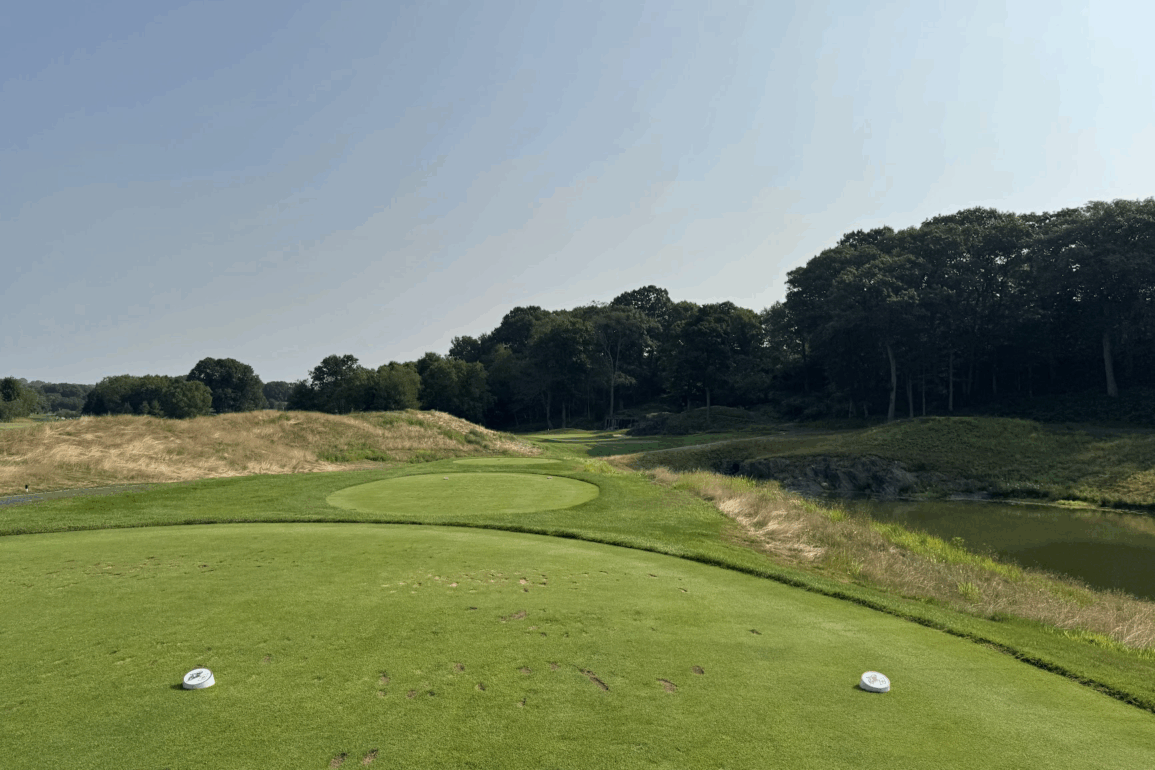
    River Ridge Golf Course is a public par-72 course measuring approximately 6,871 yards from the tips. The course was originally designed in 1999 by Joseph Rustici and Charles Rustici and is located in Griswold, Connecticut.

    River Ridge opened for play in May 1999 as one of southeastern Connecticut’s premier public championship facilities. The course occupies an estimated 150 acres of rolling terrain with a defining split personality. The opening three holes traverse what was formerly an apple orchard, presenting relatively open playing corridors that ease players into the round. From the fourth hole forward, the routing transitions into classic New England hill country, where the remaining fifteen holes tumble through wooded corridors with significant elevation changes and scenic vistas overlooking the Quinebaug River valley. The facility features a state-of-the-art tee-to-green irrigation system that maintains playing surfaces in championship condition throughout the season. Four distinct tee placements on each hole accommodate skill levels ranging from 5,393 yards off the forward tees to the demanding 6,871-yard championship layout. The design philosophy emphasizes strategic positioning over pure distance, with fairway bunkers placed at key decision points and green complexes that reward precision over brute force. This layout particularly appeals to the thoughtful player who values course management and understands how to use terrain and wind to their advantage, though the dramatic elevation shifts and undulating terrain can prove challenging for those who struggle with uneven lies or prefer flatter, more forgiving layouts.

    Strategic Test

    HandicapCourse Strategy
    High Handicap (18+)From the White tees at 6,142 yards with a 126 slope and 69.3 rating, high handicappers should expect to add approximately 15-18 strokes to their index. The elevated terrain demands accurate distance control, particularly on approach shots where misjudging the slope can cost two or three strokes per nine. Hole 8 presents an ideal challenge for this player group, described as the easiest hole on the course and a short par 3 where the deep green accepts mid-iron approaches and rewards smart club selection. Managing the second cut rough, which plays significantly longer than the fairways, becomes critical to keeping the round under control. The routing’s dramatic elevation changes require conservative club selection on uphill approaches, while downhill holes demand controlled swings to avoid running through fairways into trouble.
    Mid Handicap (8-18)Playing from the Blue tees at 6,474 yards with a 127 slope and 71.0 rating, mid-handicappers can expect to play close to their index with intelligent course management. The slope differential suggests that course knowledge becomes increasingly valuable, particularly in understanding where fairway bunkers come into play off the tee. Hole 6 provides an excellent test for this caliber player as a par 5 where very long hitters may reach in one but most will need strategic positioning with a long iron off the tee to set up a short iron approach. The two mounds fronting the green demand precise yardage calculation. Strategic decisions around risk-reward scenarios define the experience, with multiple holes offering alternate routes depending on wind conditions and confidence level. The premium bent grass surfaces roll true at stimpmeter readings around 11-12, requiring touch around elevated and sloped green complexes.
    Low Handicap (0-8)From the Gold tees at 6,871 yards with a 129 slope and 73.0 rating, accomplished players face a stern examination that emphasizes ball-striking precision over power. The narrow fairway corridors through tree-lined sections punish wayward drives, while the elevated and push-up green complexes demand high-trajectory iron play. Hole 17 exemplifies the challenge, featuring water in play with downhill approach demands and the necessity to avoid going long into trouble beyond the green. The combination of forced carries, strategic bunkering, and green contouring creates scoring opportunities for players who can execute under pressure. The bentgrass playing surfaces throughout provide tour-quality conditions when the superintendent has them running hot, with fairways offering excellent lies that reward proper technique. Low-handicappers who can control trajectory and work the ball both ways will find multiple route options throughout the round, though the course’s length and demands off the tee make par a respectable achievement.

    Nearby Course Alternatives

    Lake of Isles North Course in North Stonington, approximately 20 minutes southeast of River Ridge, represents the pinnacle of public golf in Connecticut and occupies nearly 900 acres of dramatic terrain adjacent to Foxwoods Resort Casino. Designed by renowned architect Rees Jones and opened in 2005, this championship layout measures 7,252 yards from the tips with a slope rating of 146 and course rating of 76.7, establishing it as significantly more demanding than River Ridge. The North Course features extensive water hazards throughout, including the signature downhill par-3 second hole playing to an island green that immediately announces the property’s premium on ball-striking accuracy. The routing winds through densely wooded corridors with numerous forced carries off elevated tees, creating a penal design philosophy that rewards precision over creativity. The facility includes a natural grass driving range and comprehensive practice areas, plus the Lake of Isles Academy with four indoor teaching studios. Course conditions consistently rank among the finest in the region, with bentgrass fairways and greens maintained to resort standards. The elevation changes exceed anything found at River Ridge, with several holes featuring drops of 50 feet or more from tee to fairway. Low to mid handicappers seeking a championship test that demands technical excellence and mental fortitude will find Lake of Isles more compelling than River Ridge, particularly those comfortable with forced carries and penal design elements. The acreage and routing scale dwarf River Ridge’s more intimate setting, creating a resort golf experience versus River Ridge’s traditional public course character.

    Norwich Golf Course in Norwich, approximately 15 minutes northeast of River Ridge, offers a compelling contrast as a classic municipal layout with deep architectural pedigree. Designed by Tull & Tull and opened in 1926, this par-71 championship course measures 6,228 yards from the back tees with a slope of 131 and rating of 70.0, making it slightly less demanding than River Ridge from a pure numbers perspective. The facility occupies an estimated 120 acres of undulating terrain characterized by mature tree-lined fairways and small, elevated green complexes that reflect golden age design principles. Norwich’s routing emphasizes strategic positioning over distance, with the shorter overall length offset by narrow corridors and severely contoured greens that demand precise approach play. The rye grass playing surfaces offer a different aesthetic than River Ridge’s bentgrass, with fairways that provide excellent lies but require different spin characteristics around the greens. The property’s mature landscaping creates intimate playing corridors with a parkland feel, while elevation changes remain moderate compared to River Ridge’s more dramatic hill country character. Municipal management keeps conditioning strong without reaching resort standards, though recent facility investments have significantly elevated maintenance quality. High handicappers who prefer shorter length and more forgiving driving areas will find Norwich less intimidating than River Ridge’s back fifteen holes, while shotmakers who value precision over power and appreciate classic routing principles may prefer Norwich’s understated elegance to River Ridge’s modern conditioning and dramatic terrain.

    Final Word

    River Ridge Golf Course provides comprehensive practice facilities that include a grass-surface driving range with multiple target greens, a dedicated putting area with significant slope to prepare players for the greens’ undulation, and a short game area for dialing in wedge distances. The range’s natural grass tees are maintained alongside the course proper, offering realistic practice conditions rather than mats. The clubhouse features Tulli’s Tap House Craft Kitchen & Beer, a full-service restaurant and lounge with indoor seating and an outdoor patio overlooking scenic New England countryside. The facility offers open access to the public for both lunch and dinner service throughout the week except Mondays, serving as both a 19th-hole destination and a standalone dining option for the local community. River Ridge maintains comprehensive outing capabilities for groups of all sizes, with professional staff coordinating everything from charity events to corporate tournaments to bachelor parties. The pro shop stocks quality equipment and apparel, while the facility offers membership options designed to provide value for frequent players without the country club price tag. What distinguishes River Ridge from competitors is the intelligent routing that creates genuine strategic interest across multiple skill levels within a compact property footprint. The opening three holes through the former orchard provide accessible golf that builds confidence, while the back fifteen through hill country demand thoughtful navigation and reward local knowledge. The combination of championship-caliber conditioning, dramatic natural terrain, and sophisticated green complexes creates a public facility that competes with private clubs in terms of playing experience. For golfers seeking a course that emphasizes strategy over raw power and rewards repeat play with increasing appreciation for subtle design elements, River Ridge validates itself as southeastern Connecticut’s most complete daily-fee option.

  • Richter Park Golf Course

    Richter Park Golf Course

    [put_wpgm id=”2″ width=”100%” height=”770px” current_post_only=”true”]

    [letsreview]

    Richter Park Golf Course is a public par-71 course measuring approximately 6,547 yards from the tips. The course was originally designed in 1971 by Edward C. Ryder and is located in Danbury, Connecticut.

    The genesis of Richter Park traces to 1968 when Stanley and Irene Richter donated 230 acres to the city of Danbury for recreational use, with Edward Ryder’s golf course opening in 1972 as the centerpiece of what became the Stanley L. Richter Memorial Park. Over the decades, the facility has maintained its championship pedigree by hosting the American Junior Golf Association championships four times, the Met Public Links Championship in 2013, and the Connecticut Pub Links Championship in 2009. A significant bunker renovation occurred in 2008, redesigning and rebuilding all 49 sand hazards to modernize their strategic impact. The course occupies approximately 180 acres of rolling terrain nestled between West Lake Reservoir and Boggs Pond, with water influencing play on 14 holes. The routing showcases Ryder’s skill at working with natural topography, dividing the property across Aunt Hack Road with the front nine featuring dramatic lakeside corridors and the back nine climbing through tighter, hillier woodland. The design philosophy emphasizes variety through elevation change and strategic water placement rather than length, with the layout offering four tee options ranging from 4,922 to 6,547 yards. Players who appreciate thinking their way around a course will find reward in the shot values and risk-reward opportunities, particularly those who can work the ball and manage distance control on undulating Bent/Poa greens. The tree-lined fairways create corridor framing that reaches peak visual splendor during fall foliage season, while mature hardwoods throughout the property demand position and accuracy over pure power.

    Strategic Test

    HandicapCourse Strategy
    High Handicap (18+)From the Red tees at 4,922 yards with a slope of 124 and rating of 70.7 for women, the course still presents considerable challenge with water hazards on 14 holes demanding careful club selection and conservative strategy. The slope rating suggests approximately 12-15 additional strokes above the course rating for this player profile, making bogey golf a realistic target. The par-3 5th hole at 174 yards from the Blue tees exemplifies the water-carry challenges throughout, requiring a mid to long iron over West Lake Reservoir to a back-to-front sloped green defended by bunkers on both sides. For higher handicaps playing forward tees, this becomes a manageable mid-iron that still tests nerve and execution. The hole rewards accuracy and club selection discipline over attempting to overpower hazards, making it an ideal strategic test where smart play trumps aggressive tactics.
    Mid Handicap (8-18)From the White tees measuring 6,119 yards with a slope of 134 and rating of 70.8, the layout presents a balanced examination of all facets while keeping scoring opportunities within reach for solid ball-strikers. The slope indicates roughly 8-12 strokes above rating for this group, making pars on the easier holes critical while minimizing damage on the more demanding tests. The signature par-5 12th hole at 527 yards from the Blue tees presents the quintessential risk-reward scenario for mid-handicappers, playing as a hard dogleg right with the tee shot climbing uphill toward a tight tree-lined fairway that bends sharply right around 195 yards out. Length off the tee earns little advantage due to tall trees guarding the corner, often forcing layback with a 3-wood or long iron. The second shot navigates narrow, undulating fairway before the approach plays to a peninsula green surrounded on three sides by Boggs Pond with a single bunker long. The hole demands strategic thinking on every shot, rewarding patience and precision while heavily penalizing aggressive mistakes, making it the ideal showcase for course management skills.
    Low Handicap (0-8)From the championship Blue tees at 6,547 yards with a slope of 137 and rating of 73.2, the examination requires precise distance control, creative shotmaking, and mastery of sloped lies on both fairways and greens. Single-digit players can expect 4-6 additional strokes beyond the rating based on slope, making the pursuit of par a legitimate challenge. The 18th hole at 438 yards rates as the number 2 handicap and provides a fitting closer, playing as a dogleg right with out-of-bounds threatening down the right side throughout. The drive must navigate around the dogleg at approximately 230 yards with trees right and a bunker left pinching the landing zone, leaving a mid to long iron approach that climbs steadily uphill to a back-to-front sloped green defended by a bunker left. Length alone provides no advantage as position becomes paramount, and even well-struck approaches can run off the back-to-front slope if distance control wavers. The hole epitomizes how Ryder designed strategic pressure into every shot, demanding both power and finesse while punishing the slightest mental or execution lapse.

    Nearby Course Alternatives

    Oak Hills Park Golf Course in Norwalk provides an excellent complement to Richter Park approximately 25 minutes southeast down Route 7 through lower Fairfield County. The Alfred Tull design opened in 1969 and stretches 6,407 yards from the tips for a par of 71, playing to a rating of 70.3 and slope of 133 from the championship tees. Tull, who served as design partner to renowned architect Devereux Emmet before continuing the practice independently, created a classic hilly New England landscape that sprawls across a naturally varied property. The course occupies roughly 150 acres of rolling terrain with mature tree corridors framing tighter fairways than Richter Park, particularly through the demanding opening stretch where the first six holes wind through heavily wooded hillside requiring accuracy over length. The routing showcases strong par-3 holes throughout while the greens complexes feature Tull’s characteristic subtle undulations and strategic bunkering. Oak Hills maintains a reputation as one of Fairfield County’s premier public facilities with consistently fast, true-rolling putting surfaces that many consider among the area’s finest. The architectural pedigree connecting Tull to Emmet lends Golden Age strategic sensibilities despite the later construction date. Players who prefer tighter, more heavily tree-lined corridors with less water but more elevation change will find Oak Hills an ideal contrast, particularly mid-to-high handicappers who value defined holes and clear strategic options over the more open, water-dominated challenges at Richter Park.

    Ridgefield Golf Course in Ridgefield offers another compelling public option about 20 minutes east of Richter Park along Route 7 through central Fairfield County. The George and Tom Fazio father-son collaboration opened in 1974 and measures 6,444 yards from the Blue tees for a par of 71, with a course rating of 70.9 and slope of 123. The Fazios crafted a parkland-style layout over rolling hills with tree-lined fairways, strategic pond placements, and challenging green complexes that reward precise approach play. The approximately 150-acre routing divides philosophically between nines, with the front playing more open tee-to-green while featuring severely undulating greens, and the back demanding greater accuracy off the tee through tighter corridors while offering somewhat more receptive putting surfaces. The design showcases the Fazio tendency toward visual intimidation balanced with playability, creating memorable risk-reward scenarios without excessive penal features. Bentgrass greens and bluegrass fairways provide excellent turf conditions when properly maintained, while 31-40 bunkers protect scoring zones throughout. The course earned recognition for interesting architecture particularly on the back nine where elevation changes, carved woodland passages, and narrow landing areas create distinctly different character than the front. Players seeking a more straightforward strategic challenge with less water hazard pressure but more emphasis on green complex reading and approach shot precision will appreciate Ridgefield, particularly lower handicappers who can take advantage of the wider driving corridors to attack pins. The Fazio pedigree brings name recognition and proven design principles that contrast nicely with Ryder’s more water-dependent strategic framework at Richter Park.

    Final Word

    Richter Park provides comprehensive practice amenities with a 20-bay driving range offering full-service instruction and warm-up opportunities, complemented by dedicated putting and chipping practice areas adjacent to the first tee. The pro shop maintains a fully stocked inventory of equipment and apparel while the staff delivers professional service and course knowledge. Beyond golf, the 230-acre park complex enriches the overall experience through marked hiking trails, tennis courts, winter recreation including cross-country skiing and sledding, and the Richter Arts Association center hosting year-round exhibitions and performances. Summer brings Musicals at Richter, Connecticut’s longest-running outdoor theater presenting Broadway productions under the stars, while the annual Juried Art Show each autumn attracts regional artists competing for prizes. Cafe on the Green Restaurant consistently earns recognition from dining critics for its Italian cuisine, ambiance, and panoramic views, offering both fine dining and the more casual Grill Room with patio seating for post-round refreshment. The facility operates year-round when weather permits, with locker rooms available though shower facilities are not provided. Individual and group instruction programs serve adults and juniors through PGA professionals, while the course regularly hosts tournaments and charitable events including the long-running Danbury Amateur which has donated over a quarter million dollars to local causes. What distinguishes Richter Park from typical municipal operations stems from the Richter Park Authority’s autonomous governance structure allowing focused investment and maintenance standards that rival many private clubs. The course has accumulated impressive accolades including the 2015 PGA Walter Lowell Distinguished Public Golf Course Service Award, rankings among Connecticut’s top public courses by multiple publications, and recognition as a top-25 public facility nationally by Golf Digest. The strategic examination Edward Ryder crafted remains relevant and challenging across all skill levels through intelligent routing, varied hole designs, and green complexes that demand thought and precision. Water hazards create visual drama and strategic pressure without becoming unfairly penal, while elevation changes throughout add dimension and interest. The mature landscaping and seasonal beauty particularly during autumn foliage provide aesthetic reward alongside the competitive challenge. For players seeking championship-caliber public golf that tests every club and rewards course management, Richter Park delivers an experience that validates its sterling reputation and proves that municipal golf can achieve excellence when given proper resources and stewardship.

  • Raceway Golf Club

    Raceway Golf Club

    [put_wpgm id=”2″ width=”100%” height=”770px” current_post_only=”true”]

    [letsreview]

    Raceway Golf Club is a public par-72 course measuring approximately 6,663 yards from the tips. The course was originally designed in 1947 by Donald Hoenig and is located in Thompson, Connecticut.

    Raceway Golf Club carries a fascinating origin story as one of the more unusual golf facilities in New England, sharing its property with Thompson Speedway Motorsports Park since its inception. The course was designed and built by John Hoenig and his son Donald J. Hoenig in the mid-1940s, with the original nine holes opening in 1947 on what had been the Hoenig family dairy farm. The original 1700s family farmhouse still stands adjacent to the 16th green, providing a tangible connection to the property’s agricultural heritage. During the early 1960s, the second nine holes were constructed to complete the current 18-hole layout. Over subsequent decades, the facility has undergone numerous green, tee, sand trap, and fairway renovations, along with the addition of comprehensive irrigation. Notably, the 16th green remains the last surviving original from the 1940s construction, built in true New England push-up style. The course now operates under the ownership of Tri-State Golf Company, which also manages Melody Hill Country Club and Harrisville Golf Course. Spanning an estimated 140 acres of rolling terrain characteristic of northeastern Connecticut, Raceway presents a classic New England parkland routing with tree-lined corridors, old growth hardwoods, and historic stone walls defining the playing areas. The layout favors strategic positioning over raw distance, with multiple risk-reward opportunities on the back-to-back par-5s on the front nine, including one double-dogleg hole that requires carrying water to reach the green. The design philosophy emphasizes corridor golf through mature trees, rewarding accuracy and thoughtful course management. Players who appreciate traditional New England golf architecture, interesting ground movement, and a walkable layout will find Raceway an engaging test that doesn’t rely on excessive yardage or artifice.

    Strategic Test

    HandicapCourse Strategy
    High Handicap (18+)From the white tees at 6,154 yards with a slope of 120 and rating of 69.3, higher handicappers face a manageable yet honest examination that requires accuracy over power. The slope differential indicates moderate penalty areas and recovery options, making course management essential for avoiding big numbers. Hole 5, the par-5 measuring 536 yards from the whites, provides an excellent scoring opportunity as a reachable three-shotter where keeping the tee ball left-center avoids the massive tree on the right side. The generous fairway width on this hole allows for positional play, and a well-executed second shot leaves a short approach to a long green complex. Club selection might include driver, fairway wood or long iron for position, then wedge to the green. This hole exemplifies the strategic accessibility built into Raceway’s design, offering clear visual targets and reward for smart decision-making rather than punishing minor execution errors.
    Mid Handicap (8-18)Playing from the white tees or blue tees (6,663 yards, slope 124, rating 71.6), mid-handicappers encounter the course at its most strategically interesting. The increased slope rating from the tips reflects tighter corridors and more demanding angles off the tee, particularly on the longer par-4s where tree encroachment narrows landing zones. Hole 10, a 522-yard par-5 from the blues, serves as an excellent strategic canvas where players must decide whether to challenge the fairway’s architecture for advantageous approach angles. The hole rewards aggressive but controlled tee shots that set up potential eagle or birdie opportunities. From the whites at 486 yards, mid-handicappers can reach this green in two with proper execution, making club selection critical—typically driver, mid-iron or hybrid, then precision wedge work around the green complex. The hole’s design creates genuine decision points about risk versus reward, particularly regarding the second shot’s trajectory and landing area.
    Low Handicap (0-8)From the championship blue tees at 6,663 yards with a 124 slope and 71.6 rating, scratch golfers face a course that demands precision shotmaking and strategic sophistication. The rating indicates a stern test that plays above its yardage due to tight tree-lined corridors and cleverly positioned hazards. Hole 8, a substantial par-4 measuring 423 yards from the tips, represents the course’s most demanding strategic challenge. This hole requires a well-positioned tee shot that avoids trouble while setting up an optimal angle for the approach into what is typically a firm, contoured green complex. The length combined with accuracy demands means low handicappers must execute driver or strong 3-wood off the tee, followed by mid to long iron approach requiring both distance control and directional precision. The green’s subtleties reward players who can shape shots and control trajectory, making this hole an ideal examination of complete game management. Strategic players who can work the ball both ways and adjust trajectory will find scoring opportunities that straight hitters might miss.

    Nearby Course Alternatives

    Connecticut National Golf Club in Putnam offers a distinctly different architectural experience approximately 8 minutes southeast from Raceway, presenting one of the region’s premier daily-fee options. Measuring 6,935 yards from the championship tees with a slope of 133 and rating of 72.9, Connecticut National represents a significant step up in difficulty and modern design philosophy. The course underwent complete transformation in 2007 under architect Mark Mungeam’s vision, evolving from the original 1994 Putnam Country Club layout into a links-parkland hybrid spanning approximately 180 acres. The routing showcases dramatic elevation changes, expansive fairway corridors bordered by native fescue, and large undulating greens that reward precise approach play. The par-5 opener climbs significantly uphill before the layout descends through varied terrain, culminating in a dramatic downhill closing par-5. Mungeam added over 700 yards to the original design, installed 44 bunkers, created 33 tee complexes, and implemented sophisticated shaping throughout. The course has consistently earned top-25 rankings among New England public courses and regularly hosts USGA qualifiers and regional amateur championships. Players who seek modern strategic architecture, prefer generous playing corridors with recovery options over tree-lined tunnels, and enjoy courses with significant elevation variation will favor Connecticut National over Raceway. The conditioning typically runs a notch higher with pristine fairway lies and faster green speeds averaging 11-12 on the stimpmeter. Mid to low handicappers particularly appreciate the multiple strategic angles available on approach shots and the premium placed on three-dimensional shotmaking around complex green surrounds.

    Harrisville Golf Course in Woodstock provides an intimate alternative approximately 10 minutes northwest, offering a completely different scale and character as a 9-hole layout. Measuring 2,814 yards for 18 holes (par-70) with a slope of 113 and rating of 35.0 per nine, Harrisville presents classic New England short-course architecture designed by Aimee Salvas in 1929. The routing occupies roughly 60 acres of rolling terrain with dramatic elevation changes uncommon for courses of this length, creating a British inland aesthetic with heathland and parkland characteristics blended throughout. The design incorporates template holes reminiscent of strategic golden-age principles, including an Eden-inspired second hole and a risk-reward par-4 sixth measuring just 275 yards that tempts aggressive play toward an elevated green complex. The property features mature conifers and deciduous trees framing corridors without creating the claustrophobic tree-tunnel effect found at some northeastern layouts. Recent ownership under Tri-State Golf Company has elevated conditioning standards dramatically, with bentgrass greens running true at medium speeds and well-maintained fairways providing excellent lies. The seventh hole, known as The Ravine, offers a semi-blind par-3 where only the flagstick is visible from the tee, creating one of the region’s most memorable short holes. Players who value strategic variety over length, appreciate golden-age design principles, prefer walking golf on undulating terrain, and enjoy the pace and intimacy of nine-hole facilities will favor Harrisville. Higher handicappers particularly benefit from the manageable yardages combined with sophisticated green complexes that teach proper approach play and short game execution without punishing distance limitations.

    Final Word

    Raceway Golf Club maintains solid practice amenities befitting a traditional daily-fee facility, anchored by an extensive driving range featuring both grass and mat hitting stations along with target greens for distance control work. The range accommodates players seeking pre-round warmup or extended practice sessions, complemented by a regulation putting green and short-game area allowing players to dial in their scoring clubs. The facility’s unique positioning adjacent to Thompson Speedway Motorsports Park creates an atmosphere unlike any other golf venue in the region, where the sounds of racing occasionally provide ambient energy during summer weekends. The Raceway Restaurant and Banquet Hall serves as the social hub, having provided quality food and beverage service to the northeast Connecticut, Rhode Island, and Massachusetts communities for over 70 years. The restaurant operates from 7am to 7pm daily, offering breakfast, lunch, dinner, and full bar service in a comfortable atmosphere that welcomes both golfers finishing their rounds and motorsports enthusiasts from the adjacent track. The banquet facility accommodates groups up to 300 guests, making it a popular venue for golf outings, corporate events, weddings, and private functions. Bogey’s Ice Cream stand adds family-friendly appeal with over 30 flavors available, creating an additional amenity rarely found at public golf facilities. The pro shop stocks essential equipment and apparel while offering instruction through PGA professionals, including private lessons, junior programs through PGA Junior League, and summer camps for developing players. What distinguishes Raceway as particularly valuable within Connecticut’s competitive public golf market is its unpretentious commitment to providing authentic New England golf character without manufactured difficulty or excessive grooming demands. The routing’s inherent strategic interest, born from the original Hoenig family’s thoughtful use of existing farmland topography, creates genuine decision-making on nearly every hole while remaining accessible to players across the skill spectrum. The 16th hole’s surviving push-up green stands as architectural testimony to a bygone construction era, offering modern players a tangible connection to post-war American golf design philosophy. For players seeking traditional New England golf values where shot placement trumps power, where stone walls and mature trees define playing corridors naturally rather than artificially, and where a round concludes with quality food and genuine hospitality, Raceway Golf Club delivers an experience that honors its seven-decade heritage while serving contemporary golfers’ needs.

  • Quarry Ridge Golf Club

    Quarry Ridge Golf Club

    [put_wpgm id=”2″ width=”100%” height=”770px” current_post_only=”true”]

    [letsreview]

    Quarry Ridge Golf Club is a public par-72 course measuring approximately 6,389 yards from the tips. The course was originally designed in 1993 by Al Zikorus and Joe Kelley and is located in Portland, Connecticut.

    The layout began as an initial nine holes in 1993 before expanding to a full 18-hole facility in 1998, establishing its presence in the Connecticut golf landscape over a multi-phase development period. In early 2021, ownership transferred to Tim and Patti Vale of Guilford, who invested considerably in upgrading course conditioning and clubhouse amenities to enhance the overall experience for golfers. The course occupies approximately 150 acres of dramatic terrain carved into former quarry land, featuring spectacular granite rock outcroppings that punctuate nearly every hole and provide a signature visual element unique among Connecticut public courses. The routing takes full advantage of the existing topography, with substantial elevation changes creating a vertical golf experience that flows through woodlands, over ridgelines, and alongside exposed bedrock formations overlooking the Meshomasic State Forest and Connecticut River valley. Players who appreciate bold terrain, risk-reward shot values, and strategic thinking will find considerable merit in this layout, as will those who value memorable par threes and reachable par fives that encourage aggressive play. The design emphasizes accuracy over pure length, with fairway corridors framed by native forest and granite ledges that penalize wayward shots while rewarding well-positioned approaches into greens that feature moderate undulation and challenging pin positions.

    Strategic Test

    HandicapCourse Strategy
    High Handicap (18+)From the green tees at 5,213 yards with a slope of 108 and rating of 65.1, higher handicappers face a manageable test that rewards conservative play while still presenting the dramatic scenery that defines the property. The slope differential suggests most strokes will be saved by avoiding penalty areas rather than attempting heroic carries, particularly given the elevation changes that can deceive distance judgment. Hole 14, a par-3 measuring approximately 162 yards from the back tees and playing shorter from forward markers, exemplifies the strategic dilemma facing this player category as the green sits adjacent to a pond on the left front with bunkers guarding the entrance, demanding a committed mid-iron that must carry the hazards without spinning back off the putting surface. The elevated tee provides excellent visibility but club selection becomes critical when accounting for downhill trajectory and potential wind exposure on this exposed ridge location.
    Mid Handicap (8-18)The blue tees at 6,049 yards present a slope of 119 and rating of 69.5, creating a legitimate championship test that requires sound course management and the ability to execute shots from uneven lies given the rolling terrain throughout the property. These players will find scoring opportunities on the reachable par fives mixed with demanding par fours where accuracy from the tee becomes paramount to set up approach angles into greens protected by natural contours and strategic bunkering. The 7th hole, a par-4 playing 356 yards from the championship tees with proportionally shorter distances from the blues, demonstrates the architectural philosophy as trouble exists throughout the corridor from tee to green, requiring precise execution on both the tee ball and approach without the margin for error that length alone might provide on more open layouts.
    Low Handicap (0-8)The black tees stretch to 6,389 yards with a slope of 124 and rating of 70.9, providing a stern examination where the modest yardage belies the difficulty created by elevation change, forced carries, and greens that reject imprecise approach shots despite appearing generous from the fairway. The course rating nearly two strokes over par indicates that even accomplished players will need to manage expectations and construct rounds through strategic positioning rather than overpowering the layout. Hole 12, a par-4 measuring 447 yards from the championship markers, ranks as the number one handicap and demands a confident drive followed by a long approach often played from an uneven stance to a green complex where distance control proves critical given the surrounding contours and potential for three-putts on the undulating surface.

    Nearby Course Alternatives

    Portland Golf Course in Portland offers a contrasting strategic proposition approximately 5 minutes to the northwest of Quarry Ridge for golfers seeking a Geoffrey Cornish design with more traditional Connecticut River Valley characteristics. Measuring 6,218 yards from the tips with a par of 71, the course features a slope rating in the mid-120s and encompasses roughly 130 acres of rolling terrain with tree-lined fairways and moderate elevation changes that create visual interest without the dramatic vertical movement found at its quarry-based neighbor. The Cornish routing emphasizes strategic bunkering and green complexes that reward approach shot precision, with longer par fours and well-defended par threes testing every aspect of shot-making ability across the round. The layout provides a more classical parkland examination where accuracy from the tee and iron play into receptive greens becomes paramount, particularly for mid-handicappers who can take advantage of scoring opportunities on well-executed approach shots. Higher handicap players who prefer tree-lined corridors and gentler elevation changes over exposed granite outcroppings will find Portland Golf Course offers a less intimidating visual presentation while still providing substantial strategic interest through hole variety and the thoughtful placement of hazards that penalize loose shots without creating penal architecture. The course occupies similar acreage but distributes its features across more horizontal terrain, creating a walking-friendly experience that contrasts with Quarry Ridge’s cart-mandatory vertical journey through former quarry land.

    Timberlin Golf Club in Berlin provides another public alternative roughly 15 minutes to the west, nestled along the base of Ragged Mountain and offering a different architectural perspective through Al Zikorus design principles applied to more pastoral Connecticut terrain. The layout measures 6,733 yards from the championship tees with a par of 72, featuring a slope of 129 and rating of 72.2 that creates a slightly more demanding examination than Quarry Ridge despite occupying approximately 160 acres of rolling farmland with less dramatic elevation change. Originally opened in 1970, the course received subsequent renovations by Stephen Kay and Doug Smith in 2006, with additional refinements by Ray Hearn in 2014, creating a mature layout where fairway corridors are well-defined by deciduous trees and strategic bunkering penalizes wayward tee shots. The design emphasizes precision over power with numerous holes featuring doglegs and approach shots into elevated greens that demand accurate distance control, particularly on the challenging back nine where consecutive difficult holes can quickly derail scoring momentum. Low handicap players seeking a rigorous test of shot-making where every club in the bag receives usage across varied hole types will appreciate Timberlin’s architectural diversity and the way the routing builds tension through strategic sequencing of par values and hazard placement. The course also features superior practice facilities including a grass hitting range with multiple target greens, providing warmup opportunities that Quarry Ridge lacks given its compact footprint, making Timberlin an attractive option for players who prioritize range access alongside their competitive rounds.

    Final Word

    Beyond the golf course itself, Quarry Ridge provides a practice putting green located adjacent to the clubhouse that allows players to familiarize themselves with the speed and grain characteristics of the greens before their round, though the facility does not include a dedicated driving range given the property’s space constraints on its hillside location. The absence of a full short-game practice area represents a limitation for golfers seeking comprehensive warmup options, though nearby facilities within the Portland area can supplement this need for players desiring extended range work before competitive rounds. The clubhouse underwent significant renovations following the 2021 ownership change, creating a welcoming environment that features the Terrazza Restaurant and Bar with panoramic views overlooking the golf course and surrounding valley, providing post-round dining and social opportunities in an elevated setting. The banquet facility accommodates golf outings and special events, leveraging the property’s dramatic natural scenery as a backdrop for tournaments and celebrations throughout the golf season. Virtual golf technology has been incorporated into the clubhouse operations, allowing year-round engagement with the game during Connecticut’s winter months when outdoor play becomes weather-dependent. What distinguishes Quarry Ridge among Connecticut public courses is the singular commitment to terrain-driven architecture where every hole presents a unique visual statement through the integration of exposed granite bedrock, elevation change, and strategic hazard placement that rewards thoughtful play over mindless aggression. The course proves its value through the combination of dramatic natural features, conditioning that has improved markedly under current ownership, and strategic architecture that engages golfers across all skill levels while providing memorable shot-making opportunities that linger long after the round concludes in the shadow of the finishing hole’s elevated tee complex.

  • Portland West Golf Course

    Portland West Golf Course

    [put_wpgm id=”2″ width=”100%” height=”770px” current_post_only=”true”]

    [letsreview]

    Portland West Golf Course is a public par-60 course measuring approximately 4,012 yards from the tips. The course was originally designed in 1985 by Al Zikorus and is located in Portland, Connecticut.

    Portland West Golf Course opened its doors in 1985 following construction in the early 1980s, with Al Zikorus serving as both architect and construction consultant throughout the development process. The facility occupies approximately 70 acres of rolling terrain in the Connecticut River Valley, situated just off Gospel Lane in rural central Portland. The layout distinguishes itself through its intentional incorporation of man-made waterways, with a trio of ponds and series of creeks threading through at least half the holes. The property serves as a sanctuary for waterfowl, deer, and fox, creating a naturalistic corridor that remains notably free of residential encroachment. The executive format distributes twelve par-3s and six par-4s across returning nines, with the back nine claiming superiority through more pronounced elevation changes and a stronger collection of risk-reward scenarios. Players seeking efficient rounds without sacrificing strategic complexity will appreciate the design’s emphasis on accuracy over distance, as the layout demands precise iron play and thoughtful course management rather than brute force off the tee. The varied par-3 distances ranging from 131 to 215 yards ensure that nearly every club in the bag sees action, while the par-4s between 304 and 376 yards present positioning challenges that reward strategic thinking over aggressive play.

    Strategic Test

    HandicapCourse Strategy
    High Handicap (18+)High handicappers playing from the white tees at 3,620 yards with a slope of 107 and rating of 59.6 will find Portland West an accessible yet legitimate challenge that can build confidence through achievable scoring opportunities. The 107 slope indicates the course plays slightly more difficult than bogey golf would suggest, meaning an 18-handicap player should expect to shoot approximately 95-97 for the round. The 14th hole, a 198-yard par-3 from the blue tees, exemplifies the examination that awaits players at this level. From the white markers at a more manageable distance, the hole still requires a confident mid-iron or hybrid over a forced carry, demanding commitment to the swing without the luxury of a bail-out area. The green’s elevation and surrounding hazards transform club selection from a simple yardage calculation into a psychological test where conservative play often yields better results than aggressive attempts at the flag.
    Mid Handicap (8-18)Mid-handicap players from the blue tees face 4,012 yards with a slope of 109 and rating of 60.9, presenting a scoring opportunity that nevertheless demands precision and course management to break par or shoot low-60s. The modest 109 slope suggests minimal separation between scratch and bogey golfers on this layout, making it fertile ground for players in this range to post career rounds if they control their misses. The 6th hole, a 366-yard par-4, stands as Head Pro Gerry D’Amora’s signature challenge and the number-one handicap on the front nine. Two ponds guard the left side of the fairway throughout the hole’s length, creating a severe penalty for pulls or hooks while simultaneously dictating that the tee ball must favor the right side for optimal positioning. The approach shot from 100-130 yards after a well-placed drive requires navigating past the water hazards while respecting the green’s contours, transforming what appears on the scorecard as a short par-4 into a genuine par-protection hole where a bogey often feels like a victory.
    Low Handicap (0-8)Scratch players attacking from the 4,012-yard blue tees with a 60.9 rating and 109 slope should target scores in the mid-50s, though the course rating suggests that breaking par-60 requires near-flawless iron play and putting. The relatively modest slope indicates the course doesn’t significantly separate elite players from the field through distance, instead relying on precision requirements and green complexes to defend par. The 10th hole, a 368-yard par-4 that opens the back nine, presents the thinking player’s dilemma that characterizes Portland West’s strategic merit. The uphill approach shot to a green perched above the fairway offers a receptive left-side bounce for approaches from the proper angle, while the right side of the putting surface falls away from incoming shots. Low-handicap players must execute a drive of approximately 220-240 yards to the ideal position, then deliver a controlled mid-iron approach that accounts for both the elevation change and the green’s internal contours, with the knowledge that missing the target line by more than a few yards results in a challenging up-and-down that can quickly inflate the scorecard.

    Nearby Course Alternatives

    Quarry Ridge Golf Course in Portland offers a full-scale championship test just one mile from Portland West, measuring 6,389 yards from the black tees with a par-72 rating of 70.9 and slope of 124. Designed by Joe Kelly and Al Zikorus and opened in 1993, this public facility sits elevated with commanding views of the Connecticut River, dramatic ledge outcroppings, and the Meshomasic State Forest across approximately 150 acres of rugged terrain. The routing exploits the property’s natural granite formations and severe elevation changes, creating a visual spectacle that transports players to northern New England despite the central Connecticut location. Strategic value emerges through the judicious placement of gaping fairway bunkers, forced carries over quarry features, and severely contoured greens that present three-putt opportunities even for accomplished players. The course reputation rests on its signature sixth hole, a short par-5 filled with treachery from tee to green, and the demanding 11th, the number-one handicap hole that requires both power and precision on the drive and approach. Quarry Ridge lies just three minutes northeast up Rose Hill Road from Portland West, making it an ideal companion round for players seeking a traditional-length layout after an executive warm-up. Low-handicap players who prioritize elevation changes, dramatic vistas, and target golf over manufactured hazards will find Quarry Ridge provides the vertical movement and heroic shotmaking absent from Portland West’s more horizontal executive design.

    Portland Golf Course in Portland delivers a Geoffrey Cornish design from 1974 that measures 6,213 yards from the championship tees with a par-71 rating of 70.5 and slope of 127. This public facility, owned and maintained by the Kelley family since opening, occupies approximately 120 acres of gently rolling Connecticut River Valley terrain with tree-lined fairways and varied elevation changes throughout the returning-nine routing. Cornish and co-designer Bill Robinson created strategic interest through large, threatening bunkers of varied shapes, fairway trees positioned in unconventional locations including mid-fairway placements, and green complexes featuring substantial internal movement with humps, falloffs, and dramatic slopes. The course’s architectural pedigree shines through details like the Cape hole at 16 and the Switchback par-5 12th, which many consider the layout’s finest hole for accomplished ball-strikers. Portland Golf Course sits approximately one mile southeast of Portland West along Bartlett Street, roughly four minutes by car through downtown Portland. The full-length Cornish design appeals particularly to mid-handicap players who appreciate Golden Age architectural principles, strategic variety without excessive length, and the opportunity to play a thoughtful routing that rewards course management and precision over raw power while maintaining walkability through the moderate terrain changes.

    Final Word

    Portland West provides comprehensive practice facilities anchored by a large driving range with mat stations that allow players to work on full swings throughout the season. The practice area includes a dedicated putting green and practice bunker for short-game refinement, ensuring that players can address all aspects of their game before or after their rounds. The modest on-site grill offers convenient food service for quick meals between nines or after completing 18 holes, though the facility maintains a BYOB policy for adult beverages. The course stays open year-round when weather and conditions permit, providing central Connecticut golfers with a reliable winter option for maintaining swing sharpness during the off-season. Electronic handicapping through the USGA system allows players to post scores and track their progress within the official framework, adding competitive legitimacy to what might otherwise be dismissed as merely a practice layout. The meticulously groomed conditions across tees, fairways, and greens demonstrate the ownership’s commitment to providing a quality product regardless of the executive designation. Portland West proves its worth through the fundamental architectural truth that strategic interest and shot-making demands need not correlate with overall yardage, as the varied par-3 distances, thoughtfully positioned water hazards, and elevation changes create genuine decision-making moments on nearly every hole. The course serves its market brilliantly by offering time-conscious players a legitimate test that can be completed in under three hours without sacrificing the core elements that make golf intellectually engaging, while simultaneously providing a venue where accuracy and course management skills developed here transfer directly to championship-length layouts.

  • Portland Golf Course

    Portland Golf Course

    [put_wpgm id=”2″ width=”100%” height=”770px” current_post_only=”true”]

    [letsreview]

    Portland Golf Course is a public par-71 course measuring approximately 6,213 yards from the tips. The course was originally designed in 1974 by Geoffrey Cornish and William G. Robinson and is located in Portland, Connecticut.

    Portland Golf Course opened its doors in 1974 when the Kelley family purchased the property and commissioned Canadian Golf Hall of Fame architect Geoffrey Cornish and his partner William G. Robinson to design an 18-hole layout in the rolling hills of the Connecticut River Valley. Cornish, who designed more courses in New England than any other architect, brought his characteristic functional approach to the property, laying out holes that work with rather than against the natural terrain. The course has remained under continuous ownership and operation by the Kelley family for five decades, with meticulous attention to conditioning standards. The layout occupies approximately 120 acres of hillside terrain along the base of the Connecticut River Valley, featuring substantial elevation changes throughout the round. The routing embraces a classic New England parkland aesthetic with tree-lined corridors and tactical shotmaking requirements that reward positional play. Players who appreciate strategic architecture, varied green complexes with significant contouring, and holes that demand both distance control and course management will find Portland particularly engaging. The design incorporates several notable template holes including a Cape-style par-5 at the 16th and a Switchback par-5 at the 12th, both demonstrating Cornish’s encyclopedic knowledge of classical golf architecture principles.

    Strategic Test

    HandicapCourse Strategy
    High Handicap (18+)High handicappers should play from the white tees at approximately 5,800 yards, which offers a manageable test with a course rating around 68.0 and slope of 119. The shorter distance reduces the penalty for wayward drives on the narrow, tree-lined fairways while still presenting strategic decisions around the large, contoured greens. The 9th hole, a short par-4 measuring around 320 yards from these tees, provides an excellent strategic challenge without overwhelming length. Multiple bunkers guard the green complex, demanding accuracy over power, and the hole can be approached with anything from driver to hybrid depending on confidence level. The green features significant pitch from back to front, making club selection on the approach critical. Higher handicappers benefit from leaving the driver in the bag here and playing conservatively to the wider landing areas short of the greenside bunkers.
    Mid Handicap (8-18)Mid handicappers find optimal challenge from the blue tees at approximately 6,000 yards with a rating of 69.8 and slope of 122. These players must navigate the balance between Portland’s modest overall yardage and its demanding positional requirements on narrow fairways with strategic tree placements. The 12th hole, a Switchback par-5 measuring approximately 500 yards, exemplifies the strategic complexity that engages this skill level. The hole demands precise positioning off the tee to set up the proper angle for a second shot that must navigate around trees strategically placed in the fairway. Good ball-strikers can reach the green in two shots with well-executed fairway woods, but the green complex features significant contouring and bunker protection that punishes missed approaches. Mid handicappers must decide whether to challenge the green in two or lay back to a preferred wedge distance.
    Low Handicap (0-8)Low handicappers should play from the championship tees at 6,213 yards with a rating of 70.5 and slope of 127. While the overall yardage appears modest, the course defends par through elevation changes, narrow driving corridors, and severely contoured greens that demand precise iron play. The 12th hole, a 500-yard Switchback par-5, represents the course’s best strategic examination for accomplished players. The tee shot must find a relatively narrow fairway to set up an approach angle that avoids mature trees positioned to block out direct routes to the green. Long hitters can attack with a fairway wood or long iron for their second shot, but the risk-reward calculation must account for bunkers guarding the green and severe falloffs on missed approaches. The green’s internal contours create difficult two-putt scenarios from wrong positions, making this a true three-shot test despite the reachable distance for skilled players.

    Nearby Course Alternatives

    Quarry Ridge Golf Course in Portland, located less than 5 minutes west from Portland Golf Course, offers a dramatically different visual and strategic experience on a slightly longer 6,369-yard, par-72 layout with a slope rating of 129 and course rating of 70.8. Designed by Joe Kelly and Al Zikorus and opened in 1993, Quarry Ridge occupies roughly 140 acres of dramatically rugged terrain adjacent to the Meshomasic State Forest with spectacular views of granite rock outcroppings and the Connecticut River Valley. The course features significantly more dramatic elevation changes than Portland, with several holes requiring forced carries over quarry features and natural ledge formations that create a Vermont or New Hampshire aesthetic despite its Connecticut location. Strategic value comes from numerous risk-reward opportunities on short par-4s like the driveable 10th and 13th holes, balanced against demanding par-3s like the 204-yard 9th. The architect pedigree emphasizes visual drama and memorability over subtlety, with extensive water hazards appearing on half the holes and substantial bunkering throughout. Players who prefer dramatic scenery, extreme elevation changes, and visually intimidating shot requirements would enjoy Quarry Ridge more than Portland, particularly high-handicap players who embrace the challenge of mountainous terrain and aren’t concerned with walkability, as carts are essentially mandatory given the distance and elevation between some holes.

    Timberlin Golf Club in Berlin, approximately 15 minutes southwest from Portland Golf Course, presents a longer and more demanding test at 6,733 yards from the championship tees with a par-72 rating of 72.2 and slope of 129. Originally designed by Al Zikorus in 1970 and renovated in 2006 by Stephen Kay and Doug Smith with new and redesigned bunkers, Timberlin occupies approximately 150 acres along the base of Ragged Mountain with rolling terrain and panoramic views of surrounding farmland. The municipal facility provides a more traditional parkland experience with wider fairways than Portland but compensates with greater length and more substantial bunkering following the Kay-Smith renovation. Strategic architecture emphasizes positional play off the tee to set up favorable approach angles to well-protected greens, though the design lacks some of the template sophistication and green contouring complexity found in Cornish’s work at Portland. The architect pedigree represents Connecticut’s prolific mid-century designer Zikorus with modern enhancement from respected renovation specialist Stephen Kay. Timberlin attracts a strong men’s club organization and junior programs, creating an active tournament schedule and competitive atmosphere. Players seeking additional yardage, wider fairways with more room for error, and a full practice facility with driving range would prefer Timberlin over Portland, particularly mid-to-low handicap players who value length and want a course that can stretch to nearly 6,800 yards while maintaining excellent municipal conditioning standards.

    Final Word

    Portland Golf Course provides golfers with comprehensive practice facilities including a putting green adjacent to the clubhouse for dialing in speed before rounds. The facility notably does not have its own driving range, but players can utilize the nearby Portland Golf Course West facility for full-swing practice. The clubhouse features Fox on the Green, a full-service restaurant operated year-round serving lunch and dinner with both indoor dining and a glass-enclosed area offering sweeping views of the course. The restaurant provides a diverse menu of American club fare including sandwiches, salads, and entrees with more upscale touches, making it a destination for non-golfers as well. The fully stocked pro shop carries equipment, apparel, and accessories with knowledgeable staff available for recommendations. Portland maintains its commitment to year-round operation, staying open weather and course conditions permitting, which provides dedicated Connecticut golfers opportunities during shoulder seasons when many courses close. What makes Portland Golf Course particularly special within the Connecticut public golf landscape is how Geoffrey Cornish’s thoughtful routing maximizes strategic interest and hole variety within a modest overall yardage, creating a thinking player’s course where club selection, angle management, and green-reading supersede raw power. The Kelley family’s five-decade stewardship has preserved the design’s architectural integrity while maintaining conditioning standards that match or exceed regional competitors. For players who appreciate classical golf architecture principles, contoured greens that defend par through subtlety rather than brute length, and layouts where no two holes feel repetitive, Portland delivers exceptional value through intelligent design that has aged gracefully over fifty years.

  • Pequot Golf Club

    Pequot Golf Club

    [put_wpgm id=”2″ width=”100%” height=”770px” current_post_only=”true”]

    [letsreview]

    Pequot Golf Club is a public par-70 course measuring approximately 5,903 yards from the tips. The course was originally designed in 1958 by Wendell Ross and is located in Stonington, Connecticut.

    Pequot Golf Club opened for play in 1958 and has maintained its classic design over the decades. The layout has benefited from modest updates to bunker complexes and green surfaces, preserving the original routing while enhancing playability across skill levels. Most notably, the facility earned a place in golf lore when Jack Nicklaus established the course record of 65 during a 1966 visit, a mark that stands to this day. The property encompasses approximately 120 acres of rolling woodland terrain characteristic of southeastern Connecticut. The routing takes full advantage of natural elevation changes, winding through corridors of mature trees with stone walls framing several fairways. This traditional New England parkland design emphasizes strategic shot placement over raw distance, making it particularly appealing to golfers who appreciate positioning and course management. The layout unfolds through a series of elevation shifts that create distinct playing angles and demand careful club selection, especially on approach shots to the undulating, often diminutive putting surfaces. Mid-handicap players who value cerebral golf over bomber-friendly layouts will find Pequot particularly rewarding, as will those who appreciate scenic New England golf aesthetics.

    Strategic Test

    HandicapCourse Strategy
    High Handicap (18+)From the forward tees at 5,248 yards with a rating of 65.6 and slope of 114, higher handicappers face a manageable but engaging challenge. The abbreviated yardage removes length concerns while maintaining the strategic elements that define the layout. Players should prioritize fairway positioning over distance, particularly on tighter corridors where trees and stone walls create firm boundaries. The par-4 10th hole at 276 yards from the tips offers an ideal strategic puzzle, playing significantly shorter from forward markers. This drivable par-4 presents options between laying back with a fairway wood for position or attempting to reach the green with driver, though the surrounding hazards penalize offline attempts. Course management and conservative approach angles prove more valuable than aggressive play.
    Mid Handicap (8-18)The white tees at 5,476 yards with a rating of 66.6 and slope of 118 provide an ideal championship for mid-handicappers seeking both challenge and scoring opportunities. At this distance, players must execute a full range of shots while navigating strategically positioned hazards. The slope rating suggests differential scoring potential based on execution of approach shots to small, contoured greens. The par-4 14th hole at 417 yards from the tips exemplifies the demands placed on this player. With its number two handicap designation, this hole requires a solid drive followed by a mid-to-long iron into a green that slopes front-to-back. Proper distance control becomes paramount, as missing the target surface leaves difficult up-and-downs. Strategic accuracy trumps pure power here.
    Low Handicap (0-8)From the blue tees at 5,903 yards with a rating of 68.5 and slope of 121, accomplished players face a stern examination that emphasizes precision over length. The absence of water hazards shifts focus to tree lines, bunkers, and green complexes as primary defenses. With only two par-5s on the card, birdie opportunities compress significantly, demanding near-perfect ball striking to challenge par. The par-5 18th at 565 yards provides the ultimate finishing test for scratch golfers. This uphill closer tightens progressively from tee to green, with a diminutive target surface flanked by substantial bunkers. Even with wedge in hand for the approach, the green proves elusive. Breaking par at Pequot requires exceptional short game execution and strategic discipline throughout.

    Nearby Course Alternatives

    Elmridge Golf Course in Pawcatuck sits just 5 minutes east of Pequot and offers a distinctly different golf experience through its 27-hole configuration. The facility features three nine-hole courses that can be combined into various 18-hole routings, with the most popular being the White/Blue combination measuring 6,650 yards with a slope of 121 and rating of 72.3. Designed by Joseph Rustici and Charles Rustici, the original 18 holes opened in 1966-67, with the Blue nine added in 1998. Set on approximately 200 acres atop rolling hillsides, Elmridge delivers significantly more dramatic elevation changes than Pequot, particularly on the White nine where multiple holes play along pronounced slopes. The architect utilized the natural terrain to create variety in playing angles and visual interest, with elevated greens and greenside bunkering providing the primary defenses. The bent grass playing surfaces remain in consistently good condition, and the open hilltop setting allows wind to factor into club selection decisions. The facility’s multiple routing options mean tee times tend to be more readily available compared to traditional 18-hole layouts. Players who enjoy pronounced topographical variation and prefer bold elevation changes to woodland intimacy will gravitate toward Elmridge. High-handicap golfers seeking gentler terrain may find Pequot more accommodating, while those who appreciate dramatic downhill and uphill shots will favor Elmridge’s more pronounced topography.

    Norwich Golf Course in Norwich offers another compelling public option approximately 20 minutes northwest of Pequot. The municipal facility measures 6,228 yards from the championship tees with a par of 71, carrying a course rating of 70.0 and slope of 131. Designed by the architectural firm Tull & Tull and opened in 1926, Norwich represents classic golden-age architecture adapted to Connecticut’s rolling landscape. The layout occupies approximately 140 acres of undulating terrain, routing through mature hardwood forests on rye grass fairways maintained to municipal standards. Norwich plays considerably longer than Pequot from the tips while maintaining a tighter overall feel through corridor golf that demands accuracy off the tee. The higher slope rating of 131 versus Pequot’s 118 signals that Norwich presents greater scoring differential between accomplished and developing players. The green complexes at Norwich tend toward larger dimensions than Pequot’s diminutive targets, but feature more pronounced internal contouring that challenges lag putting. Multiple par-4s in the 400-yard range test ball-striking capabilities, particularly holes like the number three handicap seventh that exemplifies strategic architecture. Recent facility improvements have elevated conditioning standards across tees, fairways, and putting surfaces. The architecture at Norwich rewards thoughtful, tactical play over pure power, similar to Pequot’s strategic emphasis. Players seeking a slightly longer test with more severe scoring penalties and classic golden-age design principles will appreciate Norwich’s architectural pedigree and challenging layout.

    Final Word

    Beyond the golf course itself, Pequot Golf Club provides essential practice facilities including a driving range with three practice tees where golfers can work on their full swing before heading to the first tee. A putting green allows players to familiarize themselves with green speeds and practice their stroke, while chipping areas provide opportunities to dial in wedge distances. The historic clubhouse anchors the property with traditional charm, featuring a pro shop stocked with equipment, apparel, and accessories from major manufacturers. Rental clubs remain available for visiting golfers or those traveling without their own equipment. The Grille at Pequot offers dining options both indoors and on the patio overlooking the 18th green, where players can enjoy post-round refreshments while reviewing their scorecards and watching others navigate the challenging uphill finisher. The atmosphere maintains a welcoming, unpretentious character that reflects the facility’s public accessibility. What distinguishes Pequot among southeastern Connecticut public courses is its ability to deliver strategic golf architecture within a compact yardage envelope while maintaining exceptional scenic beauty. The routing showcases thoughtful design principles where positioning trumps power, rewarding course management and precise execution over brute force. The layout proves that championship golf need not stretch beyond 6,000 yards to challenge accomplished players, provided the architect emphasizes strategic hazard placement and demanding green complexes. Combined with its historical significance, evidenced by Nicklaus’s still-standing course record, and its genuine New England character expressed through stone walls and woodland corridors, Pequot establishes itself as more than merely an alternative when premier private clubs prove inaccessible. The course represents a legitimate destination for golfers who value cerebral shot-making and classic design aesthetics over modern amenities and manufactured difficulty.

  • Orange Hills Country Club

    Orange Hills Country Club

    [put_wpgm id=”2″ width=”100%” height=”770px” current_post_only=”true”]

    [letsreview]

    Orange Hills Country Club is a public par-71 course measuring approximately 6,511 yards from the tips. The course was originally designed in 1927 by Geoffrey Cornish and is located in Orange, Connecticut.

    The property traces its roots to 1924 when a group of New Haven residents acquired a former Victorian estate and formed Rolling Ridge Country Club, which opened for play on Memorial Day 1927 as a nine-hole layout with sand greens. The facility changed ownership in 1930 and was renamed Orange Hills Country Club, with the Smith family taking sole ownership in 1955. The course underwent its most significant expansion between 1956 and 1961 when the Smith family constructed the back nine to complete the eighteen-hole configuration, a project overseen by Geoffrey Cornish who brought his functional design philosophy to the additional holes. The layout received a modern clubhouse in 1966 positioned atop one of the property’s hills, offering views toward Long Island Sound. The course spans approximately 120-140 acres of rolling Connecticut terrain characterized by mature hardwood corridors and modest elevation changes throughout the routing. The design philosophy emphasizes playability for a wide range of abilities while maintaining strategic interest through corridor definition and green complexes rather than excessive length. Players seeking honest, straightforward golf with classic New England character will appreciate the traditional parkland routing and tree-lined fairways that reward accuracy over distance.

    Strategic Test

    HandicapCourse Strategy
    High Handicap (18+)From the Red tees at 5,616 yards with a 119 slope and 67.8 rating, higher handicap players face approximately 15-20 strokes above their index on a typical round. The front nine offers more forgiving terrain and wider landing areas to build confidence before the tighter, tree-lined back nine. The 7th hole presents an ideal strategic opportunity at 381 yards from these tees as the number one handicap hole. This demanding par-4 features white stakes defining the left boundary and requires a well-positioned drive to set up an approach to the green. Most players in this range will use driver off the tee followed by a mid-iron or hybrid approach, with the key being to avoid the boundary hazards that can quickly inflate scores. The hole rewards conservative play and positions this group to make bogey or better with sound course management.
    Mid Handicap (8-18)From the White tees measuring 6,115 yards with a 124 slope and 70.2 rating, mid-handicap players typically score 8-15 strokes over par. The course demands accurate driving as mature trees line virtually every fairway, particularly on the back nine where overhanging branches penalize wayward tee shots. The 12th hole offers excellent strategic challenge at 383 yards (rated as the second hardest hole) with white stakes right and fencing near the green creating a precise corridor. Players in this bracket typically hit driver followed by short iron from 140-160 yards depending on drive quality. The narrow approach window and green-side hazards reward those who can shape shots and understand angle of entry. This hole exemplifies the course’s ability to test shot-making without relying on excessive length.
    Low Handicap (0-8)From the Blue tees at 6,511 yards with a 130 slope and 72.1 rating, accomplished players face a test that yields scores of 1-8 over par. The routing challenges single-digit players through green complexity and strategic positioning rather than sheer distance. The 7th hole at 417 yards (number one handicap) demonstrates the course’s strategic depth for skilled players. From the championship tees, the hole requires precise drive placement while avoiding left-side white stakes, typically leaving 160-180 yards into the green depending on tee shot execution. Low handicappers must decide between aggressive driver to shorten the approach or controlled fairway wood to ensure optimal angle. The green’s contours and surrounding features reward precise distance control and proper club selection. This hole epitomizes how the Geoffrey Cornish design creates challenge through routing and green complexes rather than artificial length.

    Nearby Course Alternatives

    Grassy Hill Country Club in Orange sits just five minutes northwest from Orange Hills and provides an alternative public experience on similar rolling terrain with distinctly different character. The par-70 layout stretches 6,208 yards from the championship tees with a 70.5 rating and 122 slope, offering a slightly shorter but nonetheless challenging test on approximately 120-140 acres of classic Connecticut landscape. Designed in 1927 without a credited architect, the course features bent grass greens and fairways that have developed character through nearly a century of play and refinement. The routing emphasizes shot values through smaller, faster green complexes that demand precision on approaches, creating scoring opportunities for players who can control trajectory and spin. Notable architectural features include the long par-5 fifth hole measuring 612 yards that tests driver strategy across multiple shots, along with a distinctive par-3 tenth hole playing 218 yards downhill that creates club selection uncertainty. The facility maintains a reputation for excellent drainage allowing play even after significant rainfall, a valuable attribute for the committed golfer seeking year-round access. Players who prioritize putting surface speed and enjoy reading challenging green contours will find Grassy Hill particularly appealing, as the smaller targets and undulation create a premium on short game execution that differs from Orange Hills’ slightly more generous green complexes. The course suits mid-to-low handicap players seeking to sharpen their approach game and putting skills on fast, true surfaces.

    The Tradition Golf Club at Oak Lane in Woodbridge provides a compelling public alternative approximately ten minutes south of Orange Hills with increased strategic complexity and refined conditioning. The par-72 championship layout measures 6,680 yards from the Black tees with a 72.9 rating and 125 slope, creating similar overall difficulty while utilizing different architectural strategies across 140-160 acres. Originally designed by Geoffrey Cornish in 1961 as Oak Lane Country Club, the facility operated as a private club for over five decades before transitioning to daily-fee access in 2013 under new management committed to capital improvements. The routing incorporates water hazards on several holes and numerous strategically placed bunkers that demand precise positioning, with the most significant recent renovation completing new Capillary Concrete bunker installations throughout all 31-40 sand features in Spring 2022 to improve drainage and playability. The opening hole presents immediate strategic interest as a 570-yard par-5 with a river bisecting the slight dogleg-left fairway, forcing decisions about layup positioning versus aggressive play toward the green. Green sites throughout feature Cornish’s characteristic pitch and undulation creating multiple pin positions that significantly alter hole difficulty, with larger putting surfaces than typically found on his designs offering both aggressive and conservative approach options. The facility earned recognition as the Connecticut PGA’s Walter Lowell Distinguished Public Golf Course in 2020, reflecting the ownership’s reinvestment in conditioning and customer service. Players seeking elevated conditioning standards with private club presentation and more pronounced strategic elements from hazard placement will gravitate toward Oak Lane, particularly low-to-mid handicappers who can work the ball and understand positional advantages from different approach angles.

    Final Word

    Orange Hills Country Club maintains practice facilities that support player development, including a grass hitting area where golfers can work on full swing mechanics before their rounds. The property features a practice putting green adjacent to the clubhouse allowing players to develop feel for green speeds, along with limited short-game practice space for chipping and pitching work around the practice green complex. The clubhouse built in 1966 occupies an elevated position providing panoramic views of the surrounding towns and Long Island Sound, creating a distinctive sense of place that enhances the overall experience. The facility operates a pro shop stocked with essential golf equipment and accessories under the guidance of PGA professionals who offer instruction and equipment services to members of the Men’s and Women’s Golf Associations. The property includes a bar and grill providing food and beverage service, with hot dogs earning particular mention in player reviews as a simple but satisfying post-round option. Orange Hills has maintained recognition from Golf Digest with consistent four-star ratings on their Best Places To Play list, validating the facility’s commitment to conditioning and playability. The course holds memberships in both the Connecticut State Golf Association and United States Golf Association, along with Audubon Society recognition for environmental stewardship practices. What distinguishes Orange Hills in Connecticut’s competitive public golf market is the Smith family’s six-decade stewardship creating institutional knowledge and consistency that many daily-fee facilities cannot match. The Geoffrey Cornish design demonstrates enduring strategic principles that remain relevant more than 60 years after completion, with mature tree corridors and thoughtful green complexes providing challenge without artificial difficulty. The facility successfully balances accessibility for developing players through multiple tee options while maintaining enough strategic depth to engage accomplished golfers, fulfilling Cornish’s vision of functional architecture that serves the masses without sacrificing interest. Orange Hills proves its value through honest, well-maintained golf on classic New England terrain where course management and accuracy trump pure distance, delivering an authentic public golf experience that honors the game’s traditions.

  • Lyman Orchards Golf Club – Player Course

    Lyman Orchards Golf Club – Player Course

    [put_wpgm id=”2″ width=”100%” height=”770px” current_post_only=”true”]

    [letsreview]

    Lyman Orchards Golf Club – Player Course is a public par-71 course measuring approximately 6,725 yards from the tips. The course was originally designed in 1994 by Gary Player and is located in Middlefield, Connecticut.

    The Player Course sits on a portion of the expansive 1,100-acre Lyman Orchards property, a working farm established in 1741 that has evolved into one of Connecticut’s premier recreational destinations. Hall of Fame golfer Gary Player crafted this layout to work through the property’s apple orchards, creating a test that emphasizes precision over raw distance. The routing navigates approximately 150 acres of rolling terrain, utilizing natural elevation changes and the property’s existing topography to create strategic interest. The front nine moves through both open orchard sections and densely wooded corridors, while the back nine climbs into more dramatic highland terrain before descending through flatter closing holes. With 34 bunkers protecting relatively small greens and par 3s averaging 210 yards from the championship tees, the course rewards accurate iron play and thoughtful course management. The layout appeals to accomplished ball-strikers who appreciate target golf and players seeking a thinking person’s test that doesn’t rely on manufactured difficulty. Four sets of tees ranging from 4,667 to 6,725 yards make the strategic demands scalable while maintaining the architectural intent.

    Strategic Test

    HandicapCourse Strategy
    High Handicap (18+)From the Bronze tees at approximately 5,100 yards with a slope around 117, high handicappers face a manageable yet engaging test that prioritizes position over power. The slope indicates players should expect to add roughly 12-15 strokes to their index, making bogey golf a realistic target. Strategic considerations center on club selection off the tee to avoid the dense tree-lined corridors and keeping approaches below the hole on greens with significant internal contouring. The par 3s become particularly demanding with forced carries, so taking extra club and playing to the fat of greens becomes essential. Hole 11, a downhill par 3 playing around 140-160 yards from forward tees, offers panoramic views and a straightforward challenge where a mid-iron to the center of the green yields a solid scoring opportunity without the hazard exposure found on other one-shotters.
    Mid Handicap (8-18)The Silver tees at approximately 6,100-6,300 yards with a slope near 128 present a proper championship test where course management separates good rounds from mediocre ones. Players should anticipate adding 8-11 strokes beyond their index, making pars feel earned rather than given. The routing reveals its strategic depth at this yardage, with alternate angles of attack on approaches rewarding players who can work the ball or vary trajectory. The small, undulating greens demand precision with scoring clubs, and the penalty for missing on the wrong side becomes severe. The back nine’s elevation changes create optical illusions and club selection challenges that punish overconfidence. Hole 11, playing approximately 190-200 yards downhill, showcases the layout’s strengths with its dramatic drop, stunning vistas, and a green complex that accepts well-struck mid-irons but severely punishes anything short or right. The visual intimidation often leads to poor club selection, making it a defining test of decision-making.
    Low Handicap (0-8)From the championship tees at 6,725 yards with a 73.1 rating and 134 slope, scratch golfers face a layout where precision trumps power at every turn. The slope suggests rounds will typically play 2-3 strokes over par, with the rating placing it among Connecticut’s sterner public tests alongside courses like Wintonbury Hills. The strategic architecture demands thoughtful positioning off the tee, as narrow landing zones and angles into push-up greens reward players who can shape shots both ways. The par 3s, averaging 210 yards, require consistently pure ball-striking with long irons, while the relatively short par 71 routing means birdie opportunities must be converted on the handful of reachable par 5s. Back-to-back-to-back demanding holes through the highland section test mental fortitude and course management discipline. Hole 11, stretching to approximately 220-230 yards downhill from the tips, exemplifies the course’s philosophy with its combination of visual intimidation, precise distance control requirements, and a narrow green that rejects anything but perfectly struck shots, making it a true separator where par feels like a victory.

    Nearby Course Alternatives

    Gillette Ridge Golf Club in Bloomfield provides a compelling alternative approximately 35 minutes northwest of Middlefield for players seeking a more modern championship test. Designed by Arnold Palmer and Ed Seay and opened in 2004, this par-72 layout stretches to 7,191 yards from the tips with a formidable 74.5 rating and 140 slope. Sprawling across approximately 200 acres of dramatic topography featuring natural wetlands and mature hardwood forests, the course incorporates elevation changes and water hazards on nearly half the holes to create shot values that challenge even accomplished players. The architectural style reflects Palmer’s aggressive risk-reward philosophy, with strategic bunker placement complementing the natural challenges rather than overwhelming them. Palmer’s design creates bailout areas adjacent to intimidating approach shots, rewarding intelligent course management while punishing overly aggressive play. The wetlands corridors and tree-lined fairways demand both length and accuracy, making it one of New England’s most complete examinations. The conditioning and presentation elevate the experience beyond typical daily-fee standards, with bent grass wall-to-wall and immaculate greens that hold approaches and putt true. Players who appreciate bold, modern championship design with dramatic elevation changes and forced carries will find Gillette Ridge more engaging than the Player Course’s subtler strategic demands. Low handicappers seeking a course where length matters as much as accuracy, or mid-handicappers drawn to visually stunning golf with clear risk-reward decisions, should prioritize Gillette Ridge.

    Timberlin Golf Club in Berlin offers a distinct architectural experience approximately 15 minutes southwest of Middlefield for players valuing traditional parkland design and strategic variety. Originally designed by Al Zikorus in 1970 and enhanced through renovations by Stephen Kay and Doug Smith in 2006, this par-72 municipal course plays 6,733 yards from the championship tees with a 72.2 rating and 129 slope. Situated along the base of Ragged Mountain on roughly 140 acres, the layout features rolling fairways through farmland and moderate elevation changes that create interesting visual perspectives without overwhelming the architecture. The 2006 renovation added 12 bunkers and renovated 50 existing ones, bringing modern hazard placement to complement Zikorus’s routing while maintaining the course’s playability for various skill levels. The fairway bunkering, uncommon among Connecticut municipal courses, creates strategic decisions off the tee and rewards players who think their way around rather than simply bombing driver. Relatively open landing areas provide recovery options for errant shots, making it less penal than more target-oriented designs. The greens feature moderate undulation and tend toward the smaller side, demanding precise approach play to score well. Conditioning for a municipal facility exceeds expectations, with bent grass greens and fairways that present well throughout the season. Mid-handicappers who appreciate traditional parkland golf without forced carries or severe hazards will find Timberlin more forgiving and enjoyable than the Player Course. Players seeking an honest test that rewards sound fundamentals and course management over pure ball-striking, or those looking for excellent conditioning at moderate difficulty, should consider Timberlin as their primary central Connecticut option.

    Final Word

    Lyman Orchards Golf Club’s comprehensive practice facility sets a Connecticut standard, featuring one of the Golf Range Association of America’s Top 50 public hitting ranges with over 40 stations split between natural grass and mat surfaces. The 20,000-square-foot short-game complex includes dedicated chipping greens, practice bunkers, and an expansive bent grass putting surface with multiple hole locations and varied undulations for practicing different speeds and breaks. Range targets and measured yardage markers provide game-authentic feedback, while the facility’s mobile app delivers precise distances to targets from any hitting position. Four PGA professionals and two LPGA professionals staff the instruction program year-round, offering everything from private lessons to group clinics, with specialized women’s programs that have made Lyman the state’s largest female instructional facility. The separate Apple Nine par-29 course, honored with the American Society of Golf Course Architects’ inaugural Design Excellence award, provides an ideal venue for beginners or experienced players working on scoring while wrapping around the practice complex. Beyond golf amenities, the 1741 Pub & Grill offers full dining service with live music options, creating a complete experience rather than just a round of golf. The property’s integration with the working orchard adds unique character, allowing visitors to pick fruit seasonally or visit the Apple Barrel Market. What distinguishes the Player Course within this broader recreational destination is its commitment to strategic architecture over manufactured difficulty. Gary Player’s design philosophy prioritizes thoughtful shot-making and course management rather than relying on length or visual intimidation to create challenge. The small greens, strategic bunkering, and elevation-influenced club selection demand precision across all skill levels, while four tee options ensure accessibility without diluting the architectural intent. The course proves its value through repeat playability, revealing strategic nuances that aren’t immediately apparent and rewarding players who study the layout’s demands rather than attempting to overpower it.

  • Laurel View Country Club

    Laurel View Country Club

    [put_wpgm id=”2″ width=”100%” height=”770px” current_post_only=”true”]

    [letsreview]

    Laurel View Country Club is a public par-72 course measuring approximately 6,900 yards from the tips. The course was originally designed in 1969 by Geoffrey Cornish and Bill Robinson and is located in Hamden, Connecticut.

    Situated in the rolling hills of northern Hamden, Laurel View has witnessed a transformative arc since its 1969 opening under the design guidance of Geoffrey Cornish and Bill Robinson. The course experienced a period of neglect before recent ownership initiated an ambitious restoration program, with the most visible change being the removal of thousands of trees from the front nine to restore both playability and the spectacular panoramic views that earned the property its rebranded name, The Vue. This selective clearing represents more than aesthetic enhancement—it addresses decades of tree encroachment that had narrowed playing corridors and limited strategic options off the tee. Work on the back nine restoration has begun more recently, suggesting a phased approach to returning the layout to its original design intent. The property occupies approximately 140 acres across undulating terrain that provides natural elevation changes throughout the routing. Cornish’s design philosophy emphasizes functional architecture with strategic bunkering and natural contours rather than artificial hazards, creating a thinking player’s layout where positioning trumps power. The course features bent grass greens and fairways, with several signature elements including a shared double green serving the seventh and ninth holes, a challenging par-three 17th hole that climbs uphill through woodland corridors, and multiple risk-reward par fives that tempt aggressive lines. The routing utilizes the property’s natural topography to present a varied examination that will appeal most to mid-handicappers who value strategic decision-making and golfers who appreciate classic northeastern architecture in various states of restoration.

    Strategic Test

    HandicapCourse Strategy
    High Handicap (18+)Playing from the white tees at 5,449 yards with a slope of 129 and rating of 69.0, higher handicappers face a manageable test that still demands accuracy given the narrow tree-lined corridors. The slope rating suggests the course becomes notably more difficult as skill level decreases, primarily through punishing off-line tee shots and demanding approach angles to elevated or contoured greens. The 14th hole, a par-five playing 480 yards from these tees, represents an ideal strategic challenge for this group—reachable in regulation with two quality strikes but protected by fairway bunkers that guard the preferred driving angle. The hole rewards disciplined play with driver followed by fairway wood or long iron, while overly aggressive attempts to cut distance often find trouble. For high handicappers, this becomes a genuine three-shot hole requiring a mid-iron layup to wedge distance, transforming the challenge into course management rather than raw distance.
    Mid Handicap (8-18)From the blue tees at 6,376 yards with a slope of 131 and rating of 71.8, mid-handicappers encounter Cornish’s strategic architecture in its most balanced form. The rating hovering just under par indicates the course presents a fair but challenging test where execution matters more than overpowering design elements. The par-four fifth hole measures 492 yards from these tees, playing as the number one handicap hole and demanding respect from the opening strike. This long par four plays downhill from an elevated tee before turning slightly, requiring a precise drive to avoid fairway bunkers and maintain sight lines to the green. The approach plays to a sprawling green complex with multiple pin positions, rewarding the player who can generate sufficient distance off the tee to leave a manageable mid-iron rather than fairway wood into a shallow target. For this skill level, the hole exemplifies strategic architecture—length matters, but positioning and execution determine scoring outcomes.
    Low Handicap (0-8)Championship tees at 6,900 yards with a slope of 136 and rating of 74.0 transform Laurel View into a legitimate test for accomplished players. The rating four strokes over par signals a demanding layout where even scratch golfers should expect to work for their numbers. The eighth hole, a par-five measuring 579 yards, provides the most compelling strategic examination from the championship tees. This lengthy five-par plays relatively open from the tee, encouraging aggressive play with driver, but the green complex sits at an elevated position that demands precise distance control and trajectory on the approach. Low handicappers face the decision between laying up to ideal wedge distance or attempting to reach in two with a long iron or hybrid to a target that penalizes anything short with collection areas. The hole exemplifies risk-reward architecture—the aggressive play yields birdie opportunities, while conservative management still provides accessible par chances. From these tees, the combination of length and strategic complexity creates the most comprehensive test of ball-striking and course management skills.

    Nearby Course Alternatives

    The Tradition Golf Club at Oak Lane in Woodbridge delivers a polished daily-fee experience located approximately 15 minutes south of Laurel View. Originally opened in 1961 as Oak Lane Country Club before transitioning to public access under Tradition Golf management, this Geoffrey Cornish design plays to 6,680 yards from the championship tees with a slope of 125 and rating of 72.9. The property occupies roughly 150 acres of gently rolling terrain with less dramatic elevation change than Laurel View, creating a more traditional parkland routing that emphasizes strategic positioning over dramatic terrain features. Recent capital improvements including capillary concrete bunkers installed in 2022 have elevated conditioning standards, while the course earned recognition as the Connecticut PGA’s Walter Lowell Distinguished Public Golf Course in 2020. The layout features classic Cornish hallmarks including push-up green complexes, strategic bunkering patterns, and template hole concepts that reward studied play. Oak Lane appeals most to golfers seeking consistent championship conditions and polished amenities in a private club atmosphere without membership commitment. Players who value immaculate presentation and predictable playing surfaces over dramatic topography will appreciate Oak Lane’s refined alternative to Laurel View’s more rustic charm. The course particularly suits mid-handicappers building strategic thinking skills in a supportive environment with wider fairway corridors and more forgiving approach angles than Laurel View’s tighter confines.

    Alling Memorial Golf Course in New Haven presents authentic pre-Depression era architecture located approximately 10 minutes southeast of Laurel View. Designed by Robert Pryde and opened in 1932, this municipal facility plays 6,283 yards with a slope of 120 and rating of 71.9 across terrain that incorporates blind approach shots and strategic bunkering patterns that predate modern earth-moving capabilities. The course underwent a million-dollar renovation completed in 2005 that enhanced bunker positioning, installed new tees, and refined presentation while maintaining the architect’s original routing concepts. The property occupies approximately 130 acres with multiple elevation changes and has hosted numerous Connecticut Golf Association and USGA tournaments despite its public status. Alling Memorial’s strategic architecture emphasizes intellectual challenge over manufactured difficulty, with multiple blind shots rewarding local knowledge and careful course management. The opening hole presents a 480-yard par-four with water in play on the drive, immediately establishing the layout’s demands for precision over power. Players drawn to Alling Memorial over Laurel View typically appreciate Golden Age design principles, classical strategic concepts, and the increased difficulty that comes from tighter margins for error around smaller green complexes. Low-handicap golfers seeking tournament-caliber challenge and historical architecture will find Alling Memorial’s authentic strategic demands more compelling than Laurel View’s more forgiving presentation, though conditioning can vary at the municipal facility.

    Final Word

    Laurel View provides fundamental practice facilities including a driving range with mat hitting stations, a putting green for pre-round preparation, and short-game areas that allow players to dial in wedge distances and greenside recovery shots. The range underwent renovation work completed in 2023, restoring proper hitting areas after a period of deterioration. The property’s signature amenity remains the 19,000 square foot clubhouse facility that blends contemporary styling with functional convenience, featuring crystal chandeliers, a wraparound deck with panoramic views across the rolling Connecticut hills, and dining options operated by an in-house culinary team. The clubhouse serves as both a 19th hole for daily-fee players and a banquet facility for weddings and corporate events, with the elevated position providing striking vistas across the property. The pro shop maintains essential equipment and apparel selections, while cart rentals include GPS units for distance measurement. The course allows walking for players preferring to experience the terrain on foot, though the elevation changes present a legitimate physical challenge across 18 holes. What distinguishes Laurel View in the competitive Connecticut public golf market is the combination of legitimate Geoffrey Cornish architecture at a property price point that remains accessible to regular players rather than premium daily-fee pricing. The ongoing restoration work, particularly the dramatic tree removal program that has reopened sight lines and strategic angles on the front nine, signals ownership commitment to returning the course to its original design intent. For golfers who value strategic architecture and natural terrain movement over manufactured water features and target-style holes, Laurel View delivers an authentic northeastern golf experience where course management and execution matter more than raw distance.

  • Lyman Orchards Golf Club – Jones Course

    Lyman Orchards Golf Club – Jones Course

    [put_wpgm id=”2″ width=”100%” height=”770px” current_post_only=”true”]

    [letsreview]

    Lyman Orchards Golf Club – Jones Course is a public par-72 course measuring approximately 7,011 yards from the tips. The course was originally designed in 1969 by Robert Trent Jones Sr. and is located in Middlefield, Connecticut.

    The Jones Course sits on a portion of the family’s 1,100-acre property, established as a working farm in 1741 and now serving as a year-round recreational destination in the Connecticut River Valley. Robert Trent Jones Sr. was commissioned in the mid-1960s by then-president Jack Lyman to anchor the property’s transformation into a premier golf destination, with the layout debuting in 1969 to widespread acclaim. The course underwent a comprehensive renovation in 2009 by Mungeam Cornish Golf Design, which included an updated irrigation system, tree management, and refinements to preserve Jones’s original strategic intent while addressing modern agronomic standards. Situated on approximately 200 acres of rolling terrain, the routing takes full advantage of elevation changes on the front nine before transitioning into wooded corridors and wetland complexes on the back. The design philosophy reflects Jones’s signature approach of risk-reward architecture where each hole presents multiple routes to the green, rewarding calculated aggression while offering conservative bail-out areas. Players who appreciate strategic variety, architectural pedigree, and well-defined shot values will find the Jones Course compelling, particularly those drawn to Golden Age principles executed with mid-century scale and ambition.

    Strategic Test

    HandicapCourse Strategy
    High Handicap (18+)From the white tees at 6,200 yards with a 128 slope and 70.3 rating, higher handicappers face a manageable but firm examination of fundamental ball striking. The slope differential of approximately 8 strokes from one’s index means a 20-handicapper should target low-90s scoring, though the course’s water hazards on seven back-nine holes and pervasive bunkering can inflate scores quickly with errant play. The par-4 6th hole at 350 yards from the whites offers an accessible test where positioning off the tee to the generous landing area allows a mid-iron approach to a receptive green complex, making it an ideal hole for building confidence through the round. Club selection here favors accuracy over distance, with a hybrid or fairway wood off the tee leaving a comfortable 8 or 9-iron into the green.
    Mid Handicap (8-18)The blue tees at 6,614 yards present a 129 slope and 72.0 rating, positioning mid-handicappers to shoot in the low-to-mid 80s if executing sound course management. At this yardage, Jones’s strategic architecture reveals itself more fully, as the expanded bunkering fields and longer approach angles demand more precise iron play and thoughtful route selection. The par-5 4th hole at 552 yards becomes a pivotal scoring opportunity, requiring a substantial drive down the right side to open the ideal angle for the layup, followed by a short iron to a green protected by frontal hazards. For a 12-handicapper, this hole rewards measured aggression, typically playing driver, 3-wood layup, and wedge, though the green-in-two option exists for well-struck fairway woods.
    Low Handicap (0-8)From the gold tees at 7,010 yards with a 134 slope and 74.0 rating, accomplished players confront a formidable test where even scratch golfers should expect scores in the mid-to-upper 70s given the course’s length and hazard density. The rating suggests the course plays approximately 2 strokes over par for a scratch player, with the elevated slope indicating that small mistakes compound rapidly. The par-5 18th hole at 515 yards epitomizes Jones’s philosophy of risk-reward finishes, demanding a precise tee ball to navigate the fairway corridor before presenting the choice of attacking the green in two over frontal hazards or laying up to a preferred wedge distance. Better players will typically play driver, long iron or hybrid to the layup zone, then execute a controlled wedge, though length-capable players with favorable conditions may attempt to reach with driver and fairway wood.

    Nearby Course Alternatives

    Gillette Ridge Golf Club in Bloomfield sits approximately 25 minutes northwest of Lyman Orchards and stretches to 7,191 yards from the tips with a slope of 135 and rating of 74.8. The Arnold Palmer and Ed Seay design opened in 2004 on what was formerly farmland and quarry property, utilizing the dramatic elevation changes and natural rock outcroppings to create a bold, modern championship test. Spanning roughly 180 acres with significant vertical movement, the routing features forced carries over wetlands, strategically placed fairway bunkers that demand consideration from the tee, and green complexes perched on hillsides or nestled in valleys. Palmer’s architectural signature of risk-reward heroic golf manifests through drivable par-4s and reachable par-5s that tempt aggressive players, while the course’s conditioning and visual intimidation factor make it a demanding venue that has hosted numerous state qualifiers. The layout favors players comfortable with uneven lies and trajectory control, as the hilly terrain rarely provides flat stances. Mid-to-low handicappers who relish dramatic elevation shifts and bold architectural statements will find Gillette Ridge more engaging than the Jones Course, particularly those who prioritize visual spectacle and modern design aesthetics over classical strategic subtlety.

    Timberlin Golf Club in Berlin lies 15 minutes west of Middlefield, measuring 6,733 yards from the championship tees with a slope of 129 and rating of 72.2. Al Zikorus crafted this municipal layout in 1970 along the base of Ragged Mountain, incorporating rolling terrain and views across surrounding farmland into a par-72 design that balances accessibility with strategic interest. The course occupies approximately 140 acres of varied topography, with the front nine presenting two demanding par-5s while the back nine features consecutive challenging par-4s that test course management and mental fortitude. Timberlin’s architecture leans toward restraint rather than excess, with moderate bunkering and strategic mounding that rewards precision without overwhelming players, making it a fair examination that rarely feels overly punishing despite its rigorous moments. The design philosophy emphasizes strategic placement over sheer length, with generous landing areas offset by well-protected green complexes that demand accurate approach play. Higher handicappers seeking a less visually intimidating experience with more forgiving margins for error will appreciate Timberlin’s balanced challenge compared to the Jones Course, particularly players who prefer traditional parkland corridors and predictable playing angles to Jones’s more dramatic water-laden back nine and expansive bunkering schemes.

    Final Word

    The practice facilities at Lyman Orchards center on the Golf Center complex adjacent to the Apple Nine, featuring one of the Golf Range Association of America’s Top 50 Public Practice Facilities with over 40 hitting stations across both natural grass and synthetic surfaces. The 20,000-square-foot short game practice area includes multiple rough conditions, uneven lies, rebuilt bunkers, and various hole locations, allowing for comprehensive wedge and recovery shot work often neglected at public facilities. The oversized bentgrass putting green features nine hole locations with varying slopes and speeds, providing adequate space to practice different putt lengths and breaking putts. The driving range incorporates accurate yardage measurements to target greens and bunkers, with the Lyman Orchards app providing precise distance information from any position on the hitting area. Beyond golf, the property’s Apple Barrel market offers fresh produce and the locally famous apple pie, while the historic Lyman Homestead dating to the 1860s serves as an event venue. The combination of three distinct courses, comprehensive practice amenities, and the working orchard atmosphere creates a destination experience rather than merely a golf outing. What distinguishes the Jones Course is its embodiment of Robert Trent Jones Sr.’s architectural philosophy at a moment when he was defining American championship golf design, executed on terrain that naturally complemented his strategic vision. The 2009 renovation preserved this pedigree while ensuring modern playability standards, resulting in a layout that challenges without overwhelming, rewards thoughtful strategy over brute force, and presents authentic Golden Age principles scaled for contemporary play.

  • Oak Hills Park Golf Course

    Oak Hills Park Golf Course

    [put_wpgm id=”2″ width=”100%” height=”770px” current_post_only=”true”]

    [letsreview]

    Oak Hills Park Golf Course is a public par-71 course measuring approximately 6,407 yards from the tips. The course was originally designed in 1969 by Alfred H. Tull and is located in Norwalk, Connecticut.

    Construction of the course began in 1967 and opened for play in 1969, representing one of the final designs from Alfred Tull’s distinguished career as a golf architect. Tull, who became a full partner with the renowned Devereux Emmet in 1929 and continued the practice after Emmet’s death in 1934, possessed a unique talent for walking a site and planning a layout without the use of a map, relying instead on his ability to envision routing and holes mentally before transferring them to topography maps. The course experienced a period of neglect before the Oak Hills Park Authority was created in March 1998 to oversee daily operations. Since then, the facility has undergone significant capital improvements, including a comprehensive renovation in 2016 through 2018 that reshaped bunkers, tees, and greens while upgrading drainage and cart paths. Over the past two golf seasons, the Authority has renovated, eliminated unnecessary bunkers, and refurbished all golf bunkers in a multi-year restoration project that has enhanced the course’s strategic challenge and playing conditions. Set across an estimated 130 to 144 acres, Oak Hills occupies former woodland that provides an intimate, tree-lined routing particularly evident on the front nine. The terrain moves meaningfully through the property, with the opening six holes presenting classic hilly New England topography featuring tight, mature-tree-lined corridors that demand precision and accuracy off the tee. The layout then transitions on the back nine to more open, flatter ground with wider playing corridors that allow for better scoring opportunities and reward aggressive play. Tull’s design philosophy is evident throughout, with naturally designed holes that offer variety and strategic interest, water hazards coming into play on seven holes, pot bunkers guarding greenside approaches, and chipping-friendly surrounds that reward creativity around the greens. The course appeals to thinking players who value positional golf, club selection decision-making, and the ability to shape shots rather than simply overpower the layout. Players who enjoy classic parkland designs with genuine routing variety, strategic bunkering, and fast, true-rolling greens will find Oak Hills a rewarding test that favors thoughtful course management over raw distance.

    Strategic Test

    HandicapCourse Strategy
    High Handicap (18+)From the forward tees at approximately 5,208 yards with a gentler slope, high handicappers will find the back nine particularly accommodating, where the layout opens up and wider fairways reduce penalty for off-line tee shots while green entrances allow run-up approaches that don’t require perfect carry shots. The course rating and slope suggest that scores will likely run 15 to 25 strokes over par for this group, with the tight, tree-lined front six holes presenting the greatest challenge before more forgiving terrain emerges. A particularly enjoyable hole for this player would be the par-4 9th at 456 yards from the tips but playing considerably shorter from forward tees, where the strategy shifts from three-shot approach to laying up short of greenside bunkers and relying on short-game skills around the putting surface.
    Mid Handicap (8-18)Playing from the white tees at approximately 5,920 yards with a course rating around 69 and slope of 125 to 130, mid-handicappers face a balanced examination that rewards strategic thinking on tighter front-nine holes while allowing scoring chances on the more open back nine where driver can be deployed more freely. This group can expect to shoot in the low-to-mid 80s on a good day, with the slope rating indicating the course plays considerably harder than its yardage suggests due to elevation changes, forced carries, and small, well-protected greens. The par-4 9th hole at 456 yards serves as the number-one handicap hole and exemplifies the challenge, requiring a well-struck drive to avoid fairway bunkers followed by a mid-to-long iron approach that must navigate bunkers right of the green while accounting for the slightly uphill terrain.
    Low Handicap (0-8)From the championship tees at 6,317 to 6,407 yards with a course rating of 70.3 and slope of 133, skilled players encounter a layout that demands precision more than power, with narrow fairway corridors on the opening stretch requiring accuracy off the tee while small, elevated greens penalize missed approaches. Scoring in the mid-to-high 70s is realistic for this group, though the elevated slope rating indicates the course defends par effectively through strategic bunkering, thick rough that can save balls from the trees but punishes recovery shots, and putting surfaces that roll fast and true but present subtle breaks. The par-4 9th at 456 yards from the back markers plays as a true three-shot hole for most in this category, rewarding a strategic layback with the second shot to set up a short wedge approach that can hold the firm, elevated green while avoiding the bunker complex that guards the right side.

    Nearby Course Alternatives

    Longshore Golf Course in Westport offers a contrasting experience approximately 15 minutes south of Oak Hills along the Connecticut coastline. Measuring 5,845 to 5,895 yards from the tips for a par of 69 to 73 depending on the tees, Longshore presents a course rating of 68.3 to 69.0 with a slope of 115 to 122, making it a notably more forgiving test than Oak Hills. Originally designed by Orrin E. Smith in 1922 and renovated by architect A. John Harvey, the layout occupies land along Long Island Sound that provides scenic water views and relatively flat terrain with minimal elevation change. The course is known for its compact design and quick pace of play, with short scoring holes balanced by well-bunkered greens that demand accuracy on approach shots despite the abbreviated yardage. Set on approximately 100 to 120 acres, Longshore features wide fairways with maple trees framing holes and presents challenges through strategic bunkering rather than length or severe topography. The facility underwent a comprehensive remodeling in 2007 including bunker renovations that have given the course improved definition, though some observers note that certain bunkers were removed and sea grass reduced during recent updates. High handicappers who prefer flatter terrain and more generous landing zones will appreciate Longshore’s accessibility, as the reduced slope rating means scores won’t balloon as dramatically as they might at Oak Hills’ tighter, hillier front nine. Players seeking a traditional seaside municipal experience with classic 1920s-era charm and faster playing times will find Longshore an attractive alternative.

    Sterling Farms Golf Course in Stamford provides another compelling option roughly 15 to 20 minutes southeast of Oak Hills and consistently ranks as the top public course in Fairfield County. Measuring 6,308 to 6,423 yards from the championship tees for a par of 72, Sterling Farms carries a course rating of 71.1 to 72.0 with a slope of 118 to 129, positioning it as a similarly challenging but slightly longer test than Oak Hills. Originally designed by noted architect Geoffrey S. Cornish in 1969 and opened in 1972, the course was renovated by architect Robert McNeil in 2005, bringing updated strategic elements while preserving Cornish’s original routing over 144 acres of former dairy farm. The layout’s rolling terrain guides players through picturesque farm buildings and challenging holes, particularly known for its demanding collection of par-3s that require distance, accuracy, and deft putting to score well. Sterling Farms features bent grass greens and rye grass fairways that are meticulously maintained and noted for their superior conditioning, complemented by a heated driving range that allows year-round practice opportunities. The course presents a more open feel than Oak Hills with wider fairways that still demand strategic positioning, while elevation changes create interesting lies and visibility challenges throughout the round. Mid-to-low handicappers who appreciate well-maintained conditions, strong par-3 holes, and the ability to work on their game at a quality practice facility will favor Sterling Farms, particularly those who value the prestige of playing the region’s highest-rated public course. The routing offers more variety in hole lengths and orientations compared to Oak Hills’ more compact woodland setting, appealing to players who enjoy a parkland course with generous breathing room and mature landscaping around historic farm structures.

    Final Word

    Oak Hills Park offers practice amenities that include two putting greens with dedicated chipping areas that allow players to work on short game before their rounds, though the facility notably lacks a full driving range, which limits pre-round warm-up options to putting and chipping preparation. The course features modern GPS-equipped golf carts with Visage Technology that provides real-time course information, scoring capabilities, and food service integration, while the halfway house at the 10th tee provides convenient refreshments and restrooms at the turn. Beyond golf, the 144-acre park includes eight Har-Tru tennis courts operated by an independent tennis club from May through October, a restaurant facility with banquet capabilities located in the clubhouse that serves as a gathering spot after rounds, revamped nature hiking trails maintained by local Eagle Scout projects, and the Great Lawn area behind the restaurant building that provides open recreational space. The Oak Hills Park Authority operates the facility independently from city funding, managing all aspects of the golf course, tennis operations, and related amenities while maintaining the property as a true multi-use recreational destination rather than a golf-only facility. The welcome center and pro shop relocated in 2018 as part of comprehensive improvements create a professional clubhouse atmosphere, while cart paths throughout the property ensure all-weather playability and protect turf during wet conditions. What distinguishes Oak Hills from many municipal courses is the Oak Hills Park Authority’s commitment to continuous improvement and reinvestment in the facility, evident in the recently completed bunker restoration project and ongoing maintenance programs that have elevated conditioning standards to rival many private clubs in the region. The course has earned recognition as Connecticut Insider Magazine’s 2025 best public golf course in Fairfield County, validation of the substantial progress made since the Authority assumed control in 1998. For players seeking a genuine strategic test on a classically routed Tull design with fast greens, varied terrain, and the charm of a tree-lined parkland course, Oak Hills delivers exceptional value through thoughtful architecture and dedicated stewardship. The combination of challenging golf, accessible amenities, and year-round availability makes Oak Hills Park a cornerstone of public golf in southwestern Connecticut and a worthy destination for anyone who appreciates Golden Age design principles executed on compelling natural terrain.