Category: Public

  • Tallwood Country Club

    Tallwood Country Club

    [put_wpgm id=”2″ width=”100%” height=”770px” current_post_only=”true”]

    [letsreview]

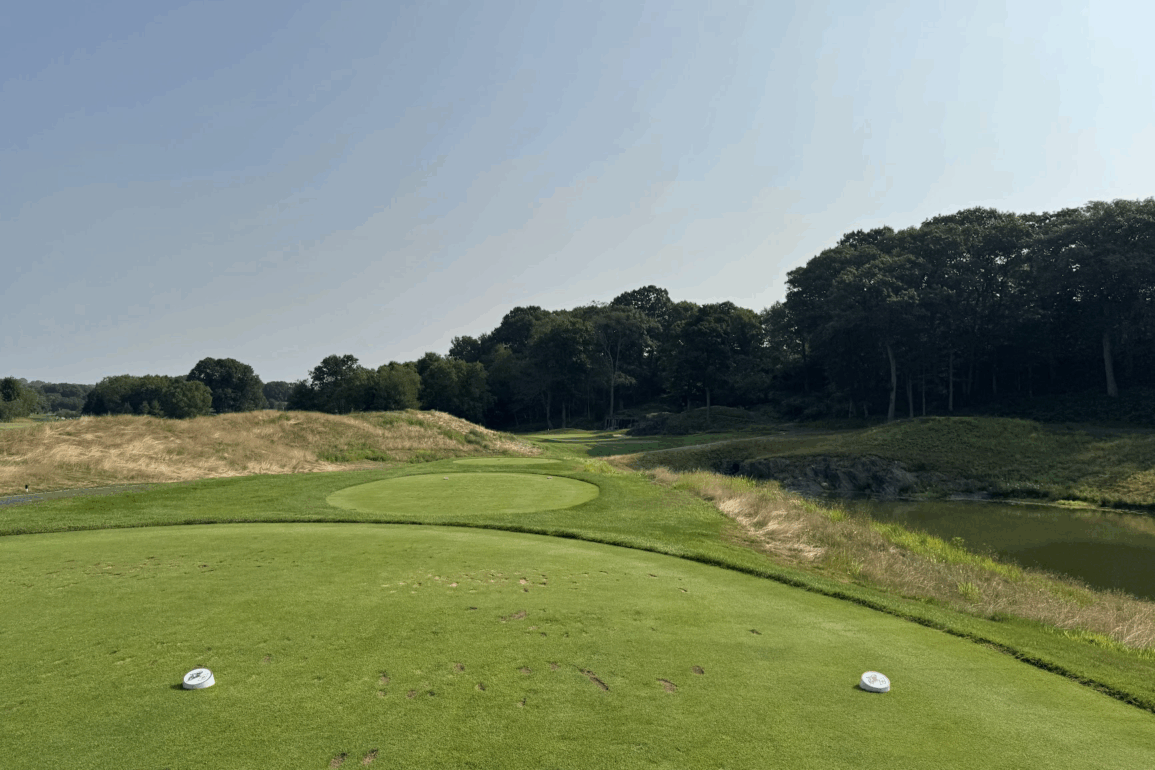
    Tallwood Country Club is a public par-72 course measuring approximately 6,520 yards from the tips. The course was originally designed in 1970 by Michael and Karnig Ovian and is located in Hebron, Connecticut.

    Tallwood Country Club began life in 1970 when founder Mike Ovian opened the first nine holes, with friends and a dedicated Men’s Club helping to complete the second nine in 1974. The Ovian family operated the facility for twenty-five years before selling to the McDermott family in 1995, who undertook numerous renovations to transform the layout into a championship venue, including lengthening the course and upgrading various aspects to make it suitable for tournament play. The facility has since hosted numerous Connecticut amateur and state tournaments, earning the prestigious Walter Lowell Public Course Distinguished Service Award in 2004. In 2021, Concord Golf Properties acquired the property and completed a full clubhouse interior renovation along with additional course improvements. Sprawling across approximately 200 acres of rolling country farmland, Tallwood presents a classic New England landscape with two distinct nine-hole layouts offering varied terrain and vistas. The routing showcases wide fairways framed by wooded edges, with strategic water hazards concentrated on the back nine and moderate elevation changes throughout. The design emphasizes course management and strategic play over raw distance, making it accessible for higher handicappers while still providing sufficient challenge for accomplished players through risk-reward opportunities and well-placed hazards. Players who appreciate thoughtful positioning, variety in shot-making, and traditional parkland golf in a peaceful rural setting will find Tallwood particularly enjoyable.

    Strategic Test

    HandicapCourse Strategy
    High Handicap (18+)From the white tees at 6,342 yards with a 70.2 rating and 126 slope, this group faces a slope-adjusted playing difficulty that adds approximately 3-4 strokes to their round compared to a scratch golfer. The wide fairways provide generous landing areas that forgive the occasional slice or hook, while the relatively straightforward approach angles keep double bogeys manageable with smart club selection. The par-4 17th hole presents an ideal test for this player, featuring water protecting the green on the approach shot. From the white tees, the hole requires a solid drive followed by a mid-iron approach that must carry the pond fronting the putting surface, demanding accurate distance control and club selection while offering a clear strategic decision between aggressive and conservative play.
    Mid Handicap (8-18)Playing from the blue tees at 6,523 yards with a 71.2 rating and 126 slope, mid-handicappers experience a course that rewards consistent ball-striking while punishing wayward shots with strategically positioned hazards. The slope rating indicates this group will play approximately 2-3 strokes above their handicap on a typical day, with scoring opportunities balanced against demanding par-4s and water-protected greens on the back nine. The par-4 17th hole becomes particularly engaging for this skill level, as the ability to shape shots and control trajectory comes into play when attacking the green. The hole demands both length and precision, with the pond creating a natural decision point about whether to take on the flag or play to the fat part of the green based on pin position and wind conditions.
    Low Handicap (0-8)From the championship tees at 6,520 yards with a 71.2 rating and 126 slope, accomplished players find a layout that emphasizes accuracy and course management over brute strength. The relatively modest slope suggests this group plays close to their handicap, making red numbers achievable through intelligent positioning and capitalizing on scoring holes like the short par-4s. The par-4 17th hole offers low handicappers the opportunity to demonstrate precision iron play, with the water hazard demanding commitment to the chosen line and the green’s contours requiring careful consideration for birdie putts. The hole’s length and hazard placement create a proper risk-reward scenario where aggressive play can yield birdies but poor execution results in bogeys, making it a genuine strategic test rather than a simple execution hole.

    Nearby Course Alternatives

    Blackledge Country Club in Hebron, located just minutes down West Street from Tallwood, offers thirty-six holes of championship golf spread across two distinct layouts. The Anderson’s Glen course, designed by Geoffrey Cornish in 1963 and later refined by Silva and Mungeam, plays to 6,787 yards from the tips with a 72.0 rating and 127 slope, while the newer Gilead Highlands course designed by Mark Mungeam opened in 2000 with a more modern aesthetic. Blackledge occupies a similar footprint in terms of acreage but provides significantly more elevation change and dramatic terrain features compared to Tallwood’s rolling farmland character. The Anderson’s Glen layout features corridor-style holes carved through mature woodlands with pronounced topography creating uneven lies and demanding approach shots to elevated greens, establishing a more traditional New England tree-lined parkland experience. Cornish’s architectural pedigree as a Canadian designer trained in the Scottish tradition brings strategic bunkering and green complexes that reward proper angles of approach, while the course’s reputation as one of Connecticut’s finest public facilities draws accomplished players seeking championship conditions. The Gilead Highlands course offers contemporary design elements with wider fairways and more dramatic water features than its older sibling, providing variety for players who want to experience both classic and modern course architecture. Players who appreciate elevation changes, mature tree-lined corridors, and a more rugged topographical challenge will find Blackledge’s offerings a compelling alternative to Tallwood’s gentler, more open character.

    Timberlin Golf Club in Berlin, approximately 25 minutes west of Tallwood, presents another municipal option with championship credentials and a different strategic profile. The Al Zikorus design from 1970, later enhanced by Stephen Kay and Doug Smith in 2006, stretches to 6,733 yards from the tips with a 72.2 rating and 129 slope, making it slightly more demanding than Tallwood from a pure difficulty standpoint. Nestled along the base of Ragged Mountain on rolling terrain, Timberlin occupies a similar acreage footprint but incorporates more pronounced elevation changes and dramatic vistas of the surrounding farmland and mountain backdrop. The 2006 renovation project brought significant enhancements including redesigned and additional bunkers, fairway recontouring, and a modern irrigation system, elevating conditioning standards to rival private clubs in the region. Timberlin’s strategic merit lies in its fairway bunkering, a feature many public courses lack, which creates genuine positional advantage for players who can shape shots and avoid these hazards off the tee. The greens feature moderate but not severe slopes, with frequent greenside bunkering and mounding demanding precise short game skills, while the back nine presents a particularly stern test with consecutive long, difficult holes that can derail a good round. Players seeking a tougher slope rating, more dramatic elevation changes, superior bunker aesthetics, and championship conditions will find Timberlin an excellent complement to Tallwood, especially those in the mid-to-low handicap range who want to test themselves against a layout with slightly more teeth and strategic complexity.

    Final Word

    Beyond the eighteen holes, Tallwood offers one of Connecticut’s premier public practice facilities, featuring a large driving range, two expansive putting greens, and a dedicated chipping and bunker practice area with a target green, providing players ample opportunity to work on all aspects of their game before the round. The practice areas receive the same attention to conditioning as the course itself, with well-maintained turf and clear yardage markers allowing for productive range sessions. PGA professionals on staff offer private and group instruction along with multi-day instructional camps, catering to players seeking to improve their skills in a structured environment. The clubhouse underwent complete interior renovation in 2021 under new ownership by Concord Golf Properties, modernizing the facility while maintaining the welcoming atmosphere that has characterized Tallwood for decades. The pro shop carries essential equipment and apparel, while the restaurant provides a comfortable setting for post-round meals and refreshments with views overlooking the course. What distinguishes Tallwood from other public facilities in the region is its remarkable balance between challenge and playability, offering wide fairways and strategic interest without overwhelming higher handicappers while still providing enough teeth to engage accomplished players through risk-reward opportunities and well-conceived hole designs. The course’s designation as a tournament venue for Connecticut’s top amateur events demonstrates its championship credentials, while the peaceful rural setting on over 200 acres ensures an escape from daily pressures. Tallwood proves its value not through architectural pedigree or dramatic landforms but through consistently delivering an honest test of golf in excellent condition with first-rate practice facilities and tournament-quality amenities, making it a destination worthy of regular play for those seeking a traditional New England public golf experience without pretension or gimmickry.

  • Sunset Hill Golf Club

    Sunset Hill Golf Club

    [put_wpgm id=”2″ width=”100%” height=”770px” current_post_only=”true”]

    [letsreview]

    Stonybrook Golf Course is a public par-35 course measuring approximately 2,996 yards from the tips. The course was originally designed in 1955 by Al Zikorus and is located in Litchfield, Connecticut.

    The property began its life as a working farm before Al Zikorus transformed it into a golf course in the mid-1950s. Zikorus, who worked with noted golf course architects including Bill Mitchell and Orrin Smith during his career, brought his Ross-influenced design sensibilities to this compact nine-hole layout. The farm’s original chicken coop was converted into a simple clubhouse that served golfers for decades. Under the ownership of Robert Ferrarotti beginning in 1976, the course maintained its reputation as one of Connecticut’s better-kept nine-hole layouts. In 2021, the property entered a new era when Ferrarotti’s daughter Jill and her husband Jon Philips took over operations. The couple completed an extensive clubhouse renovation in August 2022, modernizing the facility with eco-friendly materials and creating Clubhouse Provisions, a full-service restaurant open to both golfers and the general public. The golf course itself occupies approximately 60 acres of rolling Litchfield Hills terrain. The routing makes intelligent use of elevation changes and natural contours, with Butternut Brook weaving through the property to create both visual interest and strategic complexity. This is classic New England parkland golf where uneven lies and sloping greens demand thoughtful course management. The layout rewards players who can control trajectory and spin, as the small, undulating greens repel carelessly struck approach shots. Those who appreciate strategic variety within a compact footprint will find much to admire here, particularly players seeking a quick but substantive test that requires every club in the bag.

    Strategic Test

    HandicapCourse Strategy
    High Handicap (18+)From the Gold tees at 2,552 yards with a slope of 116 and rating of 33.2, higher handicappers face a manageable but still testing layout. The generous fairways provide room for wayward tee shots, though the hilly terrain creates awkward stances that can challenge ball-striking consistency. The real difficulty emerges around the greens, where steep falloffs punish missed approaches. The slope rating suggests these players will add approximately 2-3 strokes over their handicap on a nine-hole round. The par-4 fifth hole at 293 yards from these tees offers an excellent strategic introduction to the course, requiring a mid-iron or hybrid off the tee to stay short of trouble, followed by a wedge or short iron to a receptive green.
    Mid Handicap (8-18)The White tees stretch to 2,868 yards with a slope of 121 and rating of 34.8, presenting mid-handicappers with genuine shot-making challenges. From this distance, doglegs become more pronounced and forced carries over Butternut Brook come into play on multiple holes. The slope indicates these players will shoot approximately 3-4 strokes over their nine-hole handicap. Club selection becomes paramount, especially on uphill par-4s where distance control separates good scores from mediocre ones. The par-4 seventh hole at 347 yards provides the most compelling test for this group, demanding an accurate tee shot down a tree-lined corridor followed by an approach to one of the course’s most severely contoured greens.
    Low Handicap (0-8)From the Blue tees at 2,996 yards, slope 125 and rating 35.1, accomplished players face a layout that punishes even minor errors. The additional yardage transforms several holes into legitimate three-shot challenges where precise distance control and creative shotmaking become essential. The slope rating suggests scratch golfers will play approximately one stroke over their nine-hole handicap. Fast, undulating greens demand exceptional touch, and the elevated nature of many putting surfaces creates complex recovery situations. The par-4 seventh hole at 384 yards represents the course’s defining examination for skilled players, playing as the number one handicap hole with a narrow fairway flanked by trouble on both sides and an approach that must be struck with precision to access a green that severely penalizes anything but the ideal angle and distance.

    Nearby Course Alternatives

    Fairview Farm Golf Course in Harwinton sits just 11 minutes northeast of Stonybrook and offers a dramatically different golf experience on 180 acres of former farmland. This championship 18-hole layout stretches to 6,660 yards from the tips with a par of 72, slope of 125, and rating of 71.7. Designed by Dick Christian and owner Bob Ferrarotti and opened in 2000, Fairview Farm capitalizes on spectacular rolling terrain with holes that tumble into valleys and climb steep hillsides. The routing incorporates varied hazards including fairway bunkers, small ponds, large mounds bordering fairways and greens, and greenside slopes that create demanding recovery situations. The course features bent grass greens and bluegrass fairways maintained to high standards, with a 7,000-square-foot clubhouse overlooking the property. Strategic depth comes from numerous doglegs that reward proper angles of approach, with the fifteenth hole standing out as a visual and strategic highlight where players drive from an elevated tee over marshland to a gently rolling fairway before approaching a green protected by slope and water. Players who prefer the strategic complexity and stamina test of full 18-hole championship golf, particularly those who enjoy dramatic elevation changes and links-style mounding, will find Fairview Farm provides a more comprehensive examination than Stonybrook’s compact nine.

    Western Hills Golf Course in Waterbury lies approximately 24 minutes south of Stonybrook and represents another Al Zikorus design from the early 1960s, later renovated by Stephen Kay in 2007. This municipal 18-hole course plays to 6,427 yards with a par of 72, slope of 129, and rating of 71.1 from the championship tees. Originally designed by William F. Gordon and opened in 1960, the property was acquired by the city and subsequently enhanced by Zikorus, with Kay’s modern renovation improving drainage and adding strategic bunkering to sharpen the shot values. The course occupies rolling parkland terrain with tree-lined fairways and one water hazard, featuring greens that vary in shape and slope but maintain playability for the municipal demographic. A stretch from holes thirteen through sixteen showcases the design’s strengths, including a reachable par-5 thirteenth with a heavily bunkered green, a long uphill par-4 fourteenth to a massive sloped green, and a tight par-5 fifteenth where the green becomes accessible from the plateau landing zone with a precise second shot. While the non-course amenities remain basic with only a putting green and no driving range, the layout itself offers competitive challenge at a slope rating higher than many private clubs. Players seeking a full 18-hole round at a municipal facility with Zikorus design pedigree and modern Kay refinements, particularly those who value strategic variety and don’t require premium practice facilities, will appreciate Western Hills as a more extensive but similarly hilly alternative to Stonybrook.

    Final Word

    Stonybrook’s practice facilities remain purposefully minimal, as the course does not feature a driving range, though daily customers have access to a well-maintained practice green for pre-round preparation. The August 2022 clubhouse renovation transformed what was once a basic refreshment counter into a comprehensive amenity package that extends the property’s appeal well beyond golf. Clubhouse Provisions operates as a full-service restaurant and bar with a complete liquor license, open Tuesday through Sunday from 10:30 AM until dusk. The modernized interior features exposed beams, angled shiplap, dramatic lighting pendants, and a stylized chippendale panel bar, all designed to frame panoramic views of the course’s undulating hills through expansive windows. A spacious deck extends the dining area outdoors, providing al fresco seating that overlooks the golf course. The restaurant menu, crafted by executive chef and co-owner Jon Philips, emphasizes modern American cuisine with Korean influences, sourcing ingredients from local farms including Chanticleer Acres. Below the main clubhouse level, PGA Professional Jill Philips operates a bright, fully stocked pro shop featuring both hard and soft goods, offering golfers convenient access to equipment and apparel without requiring a drive to larger retail locations. The renovation incorporated environmentally conscious improvements including a shift from oil to propane heating, solar shades, motion-sensing light switches, and extensive use of low-impact and recycled materials designed for permanence. What distinguishes Stonybrook in Connecticut’s competitive nine-hole market is the marriage of thoughtful, strategic golf architecture with genuine hospitality and modern amenities. The Zikorus routing demonstrates sophisticated understanding of how terrain, green contours, and strategic angles can create compelling golf within a compact footprint. The recent ownership transition has elevated every aspect of the non-golf experience without compromising the course’s essential character. For players seeking a quick but substantive round that demands full engagement with course management and shotmaking, followed by the option to enjoy restaurant-quality dining in a welcoming environment, Stonybrook proves that excellence in golf need not require 18 holes or private club exclusivity.

  • Stonybrook Golf Course

    Stonybrook Golf Course

    [put_wpgm id=”2″ width=”100%” height=”770px” current_post_only=”true”]

    [letsreview]

    Stonybrook Golf Course is a public par-35 course measuring approximately 2,996 yards from the tips. The course was originally designed in 1955 by Al Zikorus and is located in Litchfield, Connecticut.

    The property began its life as a working farm before Al Zikorus transformed it into a golf course in the mid-1950s. Zikorus, who worked with noted golf course architects including Bill Mitchell and Orrin Smith during his career, brought his Ross-influenced design sensibilities to this compact nine-hole layout. The farm’s original chicken coop was converted into a simple clubhouse that served golfers for decades. Under the ownership of Robert Ferrarotti beginning in 1976, the course maintained its reputation as one of Connecticut’s better-kept nine-hole layouts. In 2021, the property entered a new era when Ferrarotti’s daughter Jill and her husband Jon Philips took over operations. The couple completed an extensive clubhouse renovation in August 2022, modernizing the facility with eco-friendly materials and creating Clubhouse Provisions, a full-service restaurant open to both golfers and the general public. The golf course itself occupies approximately 60 acres of rolling Litchfield Hills terrain. The routing makes intelligent use of elevation changes and natural contours, with Butternut Brook weaving through the property to create both visual interest and strategic complexity. This is classic New England parkland golf where uneven lies and sloping greens demand thoughtful course management. The layout rewards players who can control trajectory and spin, as the small, undulating greens repel carelessly struck approach shots. Those who appreciate strategic variety within a compact footprint will find much to admire here, particularly players seeking a quick but substantive test that requires every club in the bag.

    Strategic Test

    HandicapCourse Strategy
    High Handicap (18+)From the Gold tees at 2,552 yards with a slope of 116 and rating of 33.2, higher handicappers face a manageable but still testing layout. The generous fairways provide room for wayward tee shots, though the hilly terrain creates awkward stances that can challenge ball-striking consistency. The real difficulty emerges around the greens, where steep falloffs punish missed approaches. The slope rating suggests these players will add approximately 2-3 strokes over their handicap on a nine-hole round. The par-4 fifth hole at 293 yards from these tees offers an excellent strategic introduction to the course, requiring a mid-iron or hybrid off the tee to stay short of trouble, followed by a wedge or short iron to a receptive green.
    Mid Handicap (8-18)The White tees stretch to 2,868 yards with a slope of 121 and rating of 34.8, presenting mid-handicappers with genuine shot-making challenges. From this distance, doglegs become more pronounced and forced carries over Butternut Brook come into play on multiple holes. The slope indicates these players will shoot approximately 3-4 strokes over their nine-hole handicap. Club selection becomes paramount, especially on uphill par-4s where distance control separates good scores from mediocre ones. The par-4 seventh hole at 347 yards provides the most compelling test for this group, demanding an accurate tee shot down a tree-lined corridor followed by an approach to one of the course’s most severely contoured greens.
    Low Handicap (0-8)From the Blue tees at 2,996 yards, slope 125 and rating 35.1, accomplished players face a layout that punishes even minor errors. The additional yardage transforms several holes into legitimate three-shot challenges where precise distance control and creative shotmaking become essential. The slope rating suggests scratch golfers will play approximately one stroke over their nine-hole handicap. Fast, undulating greens demand exceptional touch, and the elevated nature of many putting surfaces creates complex recovery situations. The par-4 seventh hole at 384 yards represents the course’s defining examination for skilled players, playing as the number one handicap hole with a narrow fairway flanked by trouble on both sides and an approach that must be struck with precision to access a green that severely penalizes anything but the ideal angle and distance.

    Nearby Course Alternatives

    Fairview Farm Golf Course in Harwinton sits just 11 minutes northeast of Stonybrook and offers a dramatically different golf experience on 180 acres of former farmland. This championship 18-hole layout stretches to 6,660 yards from the tips with a par of 72, slope of 125, and rating of 71.7. Designed by Dick Christian and owner Bob Ferrarotti and opened in 2000, Fairview Farm capitalizes on spectacular rolling terrain with holes that tumble into valleys and climb steep hillsides. The routing incorporates varied hazards including fairway bunkers, small ponds, large mounds bordering fairways and greens, and greenside slopes that create demanding recovery situations. The course features bent grass greens and bluegrass fairways maintained to high standards, with a 7,000-square-foot clubhouse overlooking the property. Strategic depth comes from numerous doglegs that reward proper angles of approach, with the fifteenth hole standing out as a visual and strategic highlight where players drive from an elevated tee over marshland to a gently rolling fairway before approaching a green protected by slope and water. Players who prefer the strategic complexity and stamina test of full 18-hole championship golf, particularly those who enjoy dramatic elevation changes and links-style mounding, will find Fairview Farm provides a more comprehensive examination than Stonybrook’s compact nine.

    Western Hills Golf Course in Waterbury lies approximately 24 minutes south of Stonybrook and represents another Al Zikorus design from the early 1960s, later renovated by Stephen Kay in 2007. This municipal 18-hole course plays to 6,427 yards with a par of 72, slope of 129, and rating of 71.1 from the championship tees. Originally designed by William F. Gordon and opened in 1960, the property was acquired by the city and subsequently enhanced by Zikorus, with Kay’s modern renovation improving drainage and adding strategic bunkering to sharpen the shot values. The course occupies rolling parkland terrain with tree-lined fairways and one water hazard, featuring greens that vary in shape and slope but maintain playability for the municipal demographic. A stretch from holes thirteen through sixteen showcases the design’s strengths, including a reachable par-5 thirteenth with a heavily bunkered green, a long uphill par-4 fourteenth to a massive sloped green, and a tight par-5 fifteenth where the green becomes accessible from the plateau landing zone with a precise second shot. While the non-course amenities remain basic with only a putting green and no driving range, the layout itself offers competitive challenge at a slope rating higher than many private clubs. Players seeking a full 18-hole round at a municipal facility with Zikorus design pedigree and modern Kay refinements, particularly those who value strategic variety and don’t require premium practice facilities, will appreciate Western Hills as a more extensive but similarly hilly alternative to Stonybrook.

    Final Word

    Stonybrook’s practice facilities remain purposefully minimal, as the course does not feature a driving range, though daily customers have access to a well-maintained practice green for pre-round preparation. The August 2022 clubhouse renovation transformed what was once a basic refreshment counter into a comprehensive amenity package that extends the property’s appeal well beyond golf. Clubhouse Provisions operates as a full-service restaurant and bar with a complete liquor license, open Tuesday through Sunday from 10:30 AM until dusk. The modernized interior features exposed beams, angled shiplap, dramatic lighting pendants, and a stylized chippendale panel bar, all designed to frame panoramic views of the course’s undulating hills through expansive windows. A spacious deck extends the dining area outdoors, providing al fresco seating that overlooks the golf course. The restaurant menu, crafted by executive chef and co-owner Jon Philips, emphasizes modern American cuisine with Korean influences, sourcing ingredients from local farms including Chanticleer Acres. Below the main clubhouse level, PGA Professional Jill Philips operates a bright, fully stocked pro shop featuring both hard and soft goods, offering golfers convenient access to equipment and apparel without requiring a drive to larger retail locations. The renovation incorporated environmentally conscious improvements including a shift from oil to propane heating, solar shades, motion-sensing light switches, and extensive use of low-impact and recycled materials designed for permanence. What distinguishes Stonybrook in Connecticut’s competitive nine-hole market is the marriage of thoughtful, strategic golf architecture with genuine hospitality and modern amenities. The Zikorus routing demonstrates sophisticated understanding of how terrain, green contours, and strategic angles can create compelling golf within a compact footprint. The recent ownership transition has elevated every aspect of the non-golf experience without compromising the course’s essential character. For players seeking a quick but substantive round that demands full engagement with course management and shotmaking, followed by the option to enjoy restaurant-quality dining in a welcoming environment, Stonybrook proves that excellence in golf need not require 18 holes or private club exclusivity.

  • Sterling Farms Golf Course

    Sterling Farms Golf Course

    [put_wpgm id=”2″ width=”100%” height=”770px” current_post_only=”true”]

    [letsreview]

    Sterling Farms Golf Course is a public par-72 course measuring approximately 6,423 yards from the tips. The course was originally designed in 1969 by Geoffrey Cornish and is located in Stamford, Connecticut.

    Sterling Farms opened for public play in the spring of 1972, transforming 144 acres of a former dairy farm into one of Fairfield County’s premier municipal golf facilities. The Geoffrey Cornish design showcases his characteristic restraint and strategic sensibility, routing the layout through picturesque farm buildings and across rolling terrain that provides natural elevation changes without being overly punishing. In 2005, Robert McNeil led a comprehensive renovation that modernized bunkering, improved drainage, and refined green complexes while respecting Cornish’s original design intent. The course occupies approximately 144 acres with a routing that maximizes the property’s natural topography, creating a parkland-style experience that rewards accurate ball-striking and thoughtful course management. The layout features four demanding par 3s that average over 200 yards, testing distance control and club selection across varied wind conditions. Players who appreciate strategic architecture will find Sterling Farms particularly engaging, as the routing presents clear risk-reward scenarios without resorting to artificial difficulty. The rolling fairways and well-positioned hazards create natural shot corridors that favor positional play over pure power. Mid-to-high handicappers benefit from multiple tee options ranging from 5,402 to 6,423 yards, while lower handicappers must navigate firm, fast greens and strategically placed bunkers that defend scoring zones. The course rewards the thinking player who prioritizes accuracy and strategic positioning over aggressive play.

    Strategic Test

    HandicapCourse Strategy
    High Handicap (18+)From the Gold tees at 5,423 yards with a rating of 67.3 and slope of 118, higher handicappers face a manageable test that emphasizes course management over raw power. The relatively modest slope rating suggests that strategic mistakes are forgivable, though the elevated green complexes still demand solid approach play. The 15th hole, a par 3 measuring 154 yards from the Gold tees, exemplifies accessible design that remains interesting. At this yardage, most higher handicappers can reach the green with a mid-iron or hybrid, though the green’s contours and fronting bunkers require careful attention to pin placement. Club selection becomes critical when wind affects the exposed hole, potentially requiring anything from a 7-iron to a 5-iron depending on conditions.
    Mid Handicap (8-18)The White tees at 5,899 yards offer a balanced examination with a 69.6 rating and 123 slope, presenting mid-handicappers with legitimate scoring opportunities while maintaining architectural interest. This length stretches the course sufficiently to test distance control without overwhelming players who average 200 yards off the tee. The 5th hole, a par 3 playing 224 yards from the Black tees and proportionally shorter from the White tees, stands as the course’s signature one-shotter and the number one handicap hole. This lengthy par 3 demands a confident long iron or hybrid, typically requiring a 3-wood or low hybrid for many mid-handicappers playing from the appropriate tees. The green’s size accommodates the aerial demands, but accurate distance control proves essential as the putting surface features subtle breaks that punish misread approaches.
    Low Handicap (0-8)From the championship Black tees at 6,423 yards with a 72.0 rating and formidable 129 slope, accomplished players encounter a legitimate test that demands precision and strategic planning. The slope rating indicates that even skilled players will find their handicaps properly challenged, particularly given the firm, fast greens that characterize the course’s conditioning. The 17th hole, a par 3 measuring 241 yards from the Black tees, presents one of Connecticut’s most demanding one-shotters. At this distance, most accomplished players face a 3-wood or driving iron, with club selection heavily influenced by wind direction and pin position. The green’s size and contouring create strategic interest, rewarding precise distance control while punishing bailout plays that leave difficult two-putt scenarios.

    Nearby Course Alternatives

    E. Gaynor Brennan Golf Course in Stamford presents an intriguing alternative just 10 minutes northwest of Sterling Farms, occupying 70 acres of more compact, tightly-routed terrain. Measuring 5,935 yards from the tips with a par of 71, the course features a 69.5 rating and 121 slope that suggests a slightly more forgiving scoring environment than Sterling Farms. Originally opening in the 1920s as the private Hubbard Heights Golf Club, the facility transitioned to municipal ownership in 1949 and underwent significant renovations in 2020 that created two new holes and realigned the routing. The layout, designed by Maurice McCarthy, presents a more claustrophobic playing experience with tree-lined corridors that demand accuracy over distance. The shorter yardage and tighter fairways create a distinctly different strategic examination compared to Sterling Farms’ more expansive parkland routing. Players who struggle with Sterling Farms’ demanding par 3s may find Brennan’s shorter one-shotters more accessible, as the average par 3 measures approximately 167 yards. The course’s modest elevation changes and intimate scale reward precision ball-striking and creative shotmaking around heavily treed corridors. Higher handicappers who prefer tighter, more defined playing lines over Sterling Farms’ broader corridors will appreciate Brennan’s more contained architecture, though the narrow fairways demand greater accuracy from the tee.

    Longshore Golf Course in Westport offers coastal golf 20 minutes southwest, presenting a dramatically different aesthetic and strategic experience on approximately 100 acres of Long Island Sound waterfront property. The compact par-69 layout measures just 5,895 yards from the championship tees with a 68.3 rating and 120 slope, creating an entirely different examination than Sterling Farms’ longer, more demanding test. Designed by Orrin E. Smith in 1922, the course features seaside influences with prevailing winds that significantly impact club selection and shot shaping. The shorter overall yardage belies the strategic complexity created by heavily bunkered approaches and firm, undulating greens that demand precise distance control. Players seeking spectacular water views and coastal golf atmosphere will find Longshore particularly appealing, as several holes offer panoramic Long Island Sound vistas absent from Sterling Farms’ inland parkland setting. The layout’s reduced length and lower slope rating create more accessible scoring opportunities for mid-to-high handicappers, though the abundance of greenside bunkers and firm putting surfaces maintain strategic interest. Golfers who prioritize scenic beauty and coastal ambiance over pure strategic examination may prefer Longshore’s waterfront setting and relaxed resort atmosphere. The course particularly suits players seeking a walkable layout with spectacular views, shorter approach shots, and the unique challenge of coastal wind patterns that differ significantly from Sterling Farms’ more sheltered parkland environment.

    Final Word

    Sterling Farms distinguishes itself among Connecticut municipal facilities through comprehensive practice amenities that elevate the overall golf experience beyond the course itself. The heated driving range features 48 covered bays with accurate yardage markers and maintains year-round operation, providing valuable practice opportunities during Connecticut’s challenging winter months. The facility includes dedicated short game areas with practice bunkers, chipping greens, and expansive putting surfaces that allow players to refine all aspects of their game before heading to the first tee. The range’s heated bays represent a significant investment in player development, creating practice conditions uncommon among public facilities. Beyond golf-specific amenities, Sterling Farms operates as a comprehensive recreational complex featuring tennis courts, a theater company that hosts 10-12 annual productions including the outdoor Shakespeare on the Green series, and a well-appointed clubhouse with dining facilities. The property’s former dairy farm architecture adds historical character that distinguishes the facility from typical municipal courses, creating an atmosphere of established permanence. The pro shop maintains strong inventory and professional staff who provide club fitting services, equipment sales, and instruction from PGA professionals including Golf Digest recognized instructors. Sterling Farms proves its value through the combination of Geoffrey Cornish’s strategic architecture, Robert McNeil’s thoughtful renovations, and comprehensive amenities that serve both serious players and recreational golfers. The course’s consistent recognition as Fairfield County’s top-ranked public facility reflects not just strong conditioning and interesting architecture, but a holistic approach to golf facility management that creates memorable experiences. What truly distinguishes Sterling Farms is the property’s ability to maintain championship-caliber playing conditions while remaining accessible to a broad spectrum of players, fulfilling the democratic promise of excellent municipal golf.

  • Sleeping Giant Golf Course

    Sleeping Giant Golf Course

    [put_wpgm id=”2″ width=”100%” height=”770px” current_post_only=”true”]

    [letsreview]

    Sleeping Giant Golf Course is a public par-35 course measuring approximately 2,671 yards from the tips. The course was originally designed in 1924 by Ralph Barton and is located in Hamden, Connecticut.

    Sleeping Giant occupies a special place in Connecticut golf history as one of the state’s vintage nine-hole tracks, carved from land at the base of the dramatic Mount Carmel formation. Barton, a mathematics professor turned architect who worked closely with Seth Raynor on legendary projects like Yale and Mid-Ocean Club, laid out this modest but thoughtful routing during the same period he was collaborating on nearby Yale Golf Course. The facility underwent significant alterations in 1951 when William F. Mitchell executed a remodel that introduced large, characteristically sculptured bunker complexes around the putting surfaces. Additional modifications over the decades included the addition and subtraction of holes, though the core routing has remained intact. The course sits on approximately 30 to 40 acres of relatively flat terrain that makes for an easily walkable experience, a quality increasingly rare in modern golf. The property offers rolling fairway contours despite the lack of severe elevation changes, and Mount Carmel towers in the background providing an imposing visual anchor. The design philosophy reflects a simpler era when strategic placement mattered more than raw power, with emphasis on accurate approach play to small, undulating greens surrounded by Mitchell’s substantial bunkering. This is a course that rewards the thinking player who values precision iron work and deft touch around the greens over those seeking length-driven heroics. The walker who appreciates classic design principles and understands the value of variety in hole lengths will find much to admire, particularly given the property’s historical pedigree and connection to the Raynor design school through Barton’s association.

    Strategic Test

    HandicapCourse Strategy
    High Handicap (18+)From the forward tees at 2,216 yards with a 32.3 rating and 104 slope, this layout provides an encouraging introduction to regulation golf without overwhelming newer players. The relatively modest slope suggests bogey golfers can expect to shoot approximately 10 strokes over their handicap on a typical day. Several holes play under 200 yards as par fours, which presents opportunities to reach greens in regulation without requiring exceptional length off the tee. The opening hole, a 130-yard par three, offers an immediate birdie opportunity to build confidence, though the wedge demands precise distance control to a small target. The challenge for higher handicappers comes primarily from the green complexes rather than off-the-tee hazards, as Mitchell’s bunker work and undulating putting surfaces can quickly add strokes through three-putts and difficult up-and-downs. The forgiving fairway widths allow players to keep the ball in play, making course management and club selection the keys to posting a respectable number.
    Mid Handicap (8-18)Playing from the white tees at 2,572 yards with a 32.0 rating and 102 slope, mid-handicappers face a distinct test of iron precision and short game finesse. The moderate slope rating indicates players should expect scores hovering around their handicap plus five or six strokes on average. The second hole, a 407-yard par four from the blue tees, stands as the course’s signature strategic challenge and would be the most engaging for this skill level. The tee shot plays down an undulating fairway that dips into a valley before rising again toward the green, requiring careful club selection off the tee to position the approach from a level lie. The double-bunkered green complex sits atop a slight plateau with mounding around the perimeter, demanding a well-struck mid to long iron depending on tee ball placement. The key for mid-handicappers lies in finding the proper balance between aggressive play on shorter holes and conservative management on longer tests, while staying below the hole on approach shots to avoid treacherous downhill putts on the firm, quick surfaces.
    Low Handicap (0-8)From the championship tees at 2,671 yards with a 32.7 rating and 99 slope, accomplished players will find limited resistance in terms of length but considerable challenge in execution. The low slope rating reflects the absence of severe penalty areas and relatively wide corridors, suggesting single-digit players should expect to shoot one to three strokes over par on a well-played round. The short overall yardage removes length as a factor, placing premium importance on wedge control, precise distance management, and reading the characteristically quick, contoured greens. Holes seven and eight, both listed as par fours under 230 yards in some scorecards, represent the most controversial strategic elements, functioning essentially as long par threes that test commitment and nerve rather than power. The fifth hole at 459 yards from the tips provides the lone legitimate par five, offering a legitimate risk-reward opportunity for the skilled player. The advanced golfer’s scoring opportunities come from capitalizing on shorter holes while avoiding careless mistakes around the heavily bunkered, Mitchell-designed green complexes where recovery shots demand creativity and touch. The real test lies in maintaining concentration and discipline on a course where birdies seem readily available but where mental lapses can quickly turn potential red numbers into frustrating even par rounds.

    Nearby Course Alternatives

    Woodhaven Country Club in Bethany presents a compelling nine-hole alternative approximately 10 minutes northwest of Sleeping Giant for those seeking more dramatic terrain and strategic interest. This Al Zikorus design from 1968 stretches 3,387 yards from the back tees with a 36.4 rating and formidable 128 slope, making it substantially more challenging than its Hamden counterpart. The course occupies roughly 60 acres of heavily wooded hillside property that rises and falls through stands of mature hardwoods, creating the distinct feeling of playing in a forest cathedral. Zikorus, a Connecticut architect known for integrating natural features into his routings, crafted corridors that demand accurate tee shots through tree-lined fairways before approaching small, elevated greens protected by strategic bunkering. The seventh hole, a 370-yard downhill par four, exemplifies the design philosophy with a tight driving zone leading to a more routine but elevated approach, while the eighth presents a stout 180-yard par three that penalizes anything less than a committed strike to a severely guarded target. The ninth closes the round with a 400-yard dogger that favors drives aimed down the left side of a fairway that tilts right. The course’s architectural pedigree stems from Zikorus’s reputation for creating challenging, well-bunkered layouts that reward shot-making over power, though recent reports suggest maintenance has declined from historical standards. Mid to low handicap players who relish elevation changes, tree-framed holes, and the demand for accurate ball-striking will find Woodhaven more engaging than Sleeping Giant’s flatter terrain, particularly those who value dramatic topography over historical architecture. The additional yardage and significantly higher slope rating mean that single-digit players seeking a more robust test of their abilities will discover a course that demands respect and strategic planning on every hole.

    Indian Springs Golf Club in Middlefield offers another nine-hole option roughly 25 minutes northeast of Hamden that has garnered recognition as Connecticut Magazine’s Best Public Golf Course for multiple years. Designed by Al Zikorus and opened in 1964 under the stewardship of the Parmelee family, the course plays 3,000 yards from the tips with a 34.5 rating and 116 slope across hilly terrain that creates both visual interest and strategic complexity. The property encompasses approximately 40 to 50 acres of rolling Connecticut countryside with mature tree coverage framing fairways that rise and fall through the landscape. Zikorus crafted a routing that requires every club in the bag, with two legitimate par fives providing scoring opportunities balanced by demanding par threes and mid-length par fours. The second hole, a 446-yard par five, climbs uphill before plunging downward to a green guarded by three bunkers, creating a genuine three-shot proposition for most players. The fifth, measuring 552 yards, features a tree-lined fairway that follows a sharp dogleg right descending to a green ringed by timber, presenting one of the most visually striking and strategically complex holes on the property. Indian Springs has earned its stellar reputation through exceptional conditioning, particularly the putting surfaces which consistently receive praise for rolling true at medium to quick speeds. The family-owned operation maintains the course to standards that rival many private clubs, with bentgrass greens that hold approach shots and reward aggressive play. Higher handicappers who want a beginner-friendly environment with outstanding conditions and moderate pricing will find Indian Springs more accommodating than either Sleeping Giant or Woodhaven, while still encountering enough variety and challenge to remain engaged. The elevation changes provide more visual drama than Sleeping Giant’s flatter canvas, though the historical significance and architectural lineage to the Raynor school give the Hamden course unique appeal for students of golf design. Players seeking the total package of conditioning, variety, challenge, and value consistently rank Indian Springs at the top of Connecticut’s nine-hole hierarchy, making it the obvious choice for those willing to drive an extra 15 minutes for a superior overall experience.

    Final Word

    Sleeping Giant Golf Course maintains practical amenities that support an efficient day on the links without unnecessary elaboration. The facility includes a driving range with mat stations allowing players to warm up before their rounds, particularly useful given the immediate demands of the 130-yard par three opener. A practice putting green provides opportunity to gauge green speeds before heading to the first tee, essential preparation for navigating Mitchell’s characteristically undulating surfaces. The modest pro shop stocks necessary supplies and handles tee time management, operating with the straightforward efficiency typical of vintage municipal layouts. A simple clubhouse serves basic food and beverage needs without pretense, offering a casual environment for post-round refreshment and discussion. The absence of extensive facilities like full practice areas with chipping greens or elaborate locker room amenities reflects both the course’s historical roots and its focus on delivering accessible, unpretentious golf rather than full-service country club amenities. What ultimately distinguishes Sleeping Giant in Connecticut’s crowded golf landscape stems from its authentic connection to the golden age of American course design through Ralph Barton’s involvement and the subsequent imprint of William F. Mitchell’s thoughtful renovations. The property delivers something increasingly rare in modern golf: a walkable, historically significant layout where strategy trumps power and where the architecture rewards thought as much as athleticism. The course’s position beneath Mount Carmel provides a dramatic natural backdrop that few other nine-hole tracks can match, creating an atmosphere that transcends the modest yardage and unpretentious facilities. While conditioning may not rival the pristine standards of destination facilities and while the quirky routing with its par three opener and abbreviated par fours on the back nine may frustrate those seeking conventional balance, these idiosyncrasies contribute to the course’s distinct character rather than detracting from it. The value proposition for players within thirty minutes becomes compelling when considering the combination of historical significance, architectural merit from two respected designers, and the simple pleasure of a walkable round in less than three hours. Sleeping Giant proves its worth not through championship credentials or tournament pedigree but through its honest presentation of classic design principles on accessible, well-maintained terrain that welcomes players of all abilities while still engaging those who understand and appreciate strategic golf architecture.

  • Skungamaug River Golf Club

    Skungamaug River Golf Club

    [put_wpgm id=”2″ width=”100%” height=”770px” current_post_only=”true”]

    [letsreview]

    Skungamaug River Golf Club is a public par-70 course measuring approximately 5,785 yards from the tips. The course was originally designed in 1965 by Chet Jenkins and is located in Coventry, Connecticut.

    The facility represents a thoughtful evolution of Connecticut public golf, with the original nine holes crafted by Jenkins opening in 1965, followed by John Motycka’s complementary back nine that debuted in 1981. This phased development allows discerning players to experience two distinct design philosophies within a single round. The property encompasses approximately 130 acres of rolling terrain along the Skungamaug River corridor, creating a surprisingly varied topographical canvas. The front nine presents a more open, links-influenced character with wider playing corridors and strategic sight lines, while the back nine transitions into tighter, more heavily wooded passages that demand precision over power. The routing takes full advantage of natural elevation changes, particularly on the inward half where several tee shots launch from elevated positions overlooking fairways carved through mature hardwood stands. Course conditioning emphasizes firm, fast greens that reward proper angle of approach, with Bent grass putting surfaces that test green-reading skills on complex contours. The design philosophy centers on strategic variety rather than overwhelming length, requiring players to work through their entire bag rather than relying on distance alone. Mid-handicappers who value course management and shot-making creativity over pure bombing will find the layout particularly engaging, as will low-handicap players seeking to sharpen their iron play and short game precision. The property’s compact acreage creates an intimate feel without sacrificing strategic depth, with the Skungamaug River, marshland features, and wooded boundaries providing natural hazards that define playing corridors. Players who appreciate Golden Age design principles and old-school New England parkland golf will recognize the timeless qualities embedded in the layout.

    Strategic Test

    HandicapCourse Strategy
    High Handicap (18+)Playing from the white tees at 5,624 yards with a course rating of 68.6 and slope of 118, higher handicappers face a manageable yet engaging test that emphasizes accuracy over distance. The moderate slope rating suggests scoring opportunities exist for players who avoid penalty areas and navigate around rather than over hazards. Strategic focus should center on keeping the ball in play off the tee, as the relatively short overall yardage means reaching greens in regulation remains achievable even with conservative club selection. The par-5 7th hole at 461 yards exemplifies the accessible challenge this routing provides, playing uphill to an elevated green that demands a well-positioned drive followed by careful placement of the second shot to avoid bunkers flanking the putting surface. Club selection on the approach becomes critical, as the upward slope can deceive distance judgment and the large, modern green complex features pronounced internal contours that can three-putt players who miss their target quadrant.
    Mid Handicap (8-18)From the blue tees at 5,785 yards, mid-handicappers encounter a course rating of 69.4 and slope of 120 that rewards strategic thinking over raw power. The modest slope rating indicates that while hazards exist, they punish wild misses rather than creating impossible recovery situations for competent ball-strikers. The key strategic element involves managing the transition from the more forgiving front nine to the demanding back nine, where tighter fairways and elevated greens require precise distance control. The par-3 11th hole at 171 yards serves as an excellent benchmark for this skill level, playing as a steeply uphill one-shotter that demands commitment to the club selection. The green sits perched atop a significant rise with the most severely pitched putting surface on the property, creating a three-club differential depending on pin placement. Players hitting anything less than a confident mid-iron risk leaving their ball well short of the target, while those who over-club face treacherous downhill putts on a surface that can quickly compound scoring problems.
    Low Handicap (0-8)Scratch players tackling the blue tees at 5,785 yards face a course rating of 69.4 that might initially suggest limited challenge, yet the layout’s strategic depth reveals itself through precision demands rather than length requirements. The slope rating of 120 indicates a relatively flat scoring range, meaning low handicappers must execute consistently rather than rely on individual heroic shots to separate themselves from the field. The compact yardage removes distance as a competitive advantage, shifting emphasis toward iron accuracy, wedge play, and putting prowess on complex green surfaces. The par-4 13th hole at 377 yards exemplifies the strategic puzzle this routing presents to accomplished players, beginning from an elevated tee that provides commanding views of a fairway bordered by marsh and dense woodland. The dogleg configuration and narrow landing zone demand a precisely shaped tee shot that must find the optimal angle for the approach, as missing the fairway leaves virtually no recovery options. The green complex features bold internal contours that reward players who control not just distance but also spin and trajectory, with pin positions on upper tiers requiring exacting distance control to avoid leaving difficult two-putt situations.

    Nearby Course Alternatives

    Tallwood Country Club in Hebron offers a contrasting experience approximately 15 minutes southwest of Skungamaug River. This public facility stretches to 6,366 yards from the championship tees with a par of 72, presenting a course rating of 70.2 and slope of 119 that suggests slightly more forgiving scoring conditions despite the additional length. Designed by Michael and Karnig Ovian and opened in 1970, Tallwood occupies roughly 170 acres of gently rolling terrain that provides more generous fairway widths and less severe elevation changes than its Coventry neighbor. The architectural pedigree emphasizes playability for a wider range of skill levels, with strategic hazards that penalize poor shots without creating impossible recovery situations. The routing flows naturally across the property with excellent variety in hole lengths and directional changes, avoiding the repetitive feel that can plague some municipal layouts. Conditioning typically ranks among the best in the region, with smooth putting surfaces and well-maintained fairways that provide consistent lies. Players who prefer a more open, resort-style experience with wider landing areas and more forgiving rough lines will find Tallwood’s design philosophy particularly appealing. Higher handicappers seeking confidence-building rounds appreciate the absence of forced carries and the multiple route options Tallwood provides on most holes. The course’s reputation for excellent pace of play and strong operational management enhances the overall experience, making it a reliable choice for players prioritizing conditioning and playability over severe strategic demands.

    Manchester Country Club in Manchester presents an entirely different architectural experience roughly 20 minutes northwest of Skungamaug River. This semi-private facility, which welcomes public play, measures 6,339 yards from the tips with a par of 72, offering a course rating of 70.6 and slope of 128 that indicates significantly more scoring variability than either Tallwood or Skungamaug. The design pedigree carries exceptional historical weight, with Tom Bendelow’s 1917 original routing receiving subsequent refinements from Golden Age luminaries Devereux Emmet and A.W. Tillinghast in the 1930s. This layered architectural evolution creates a fascinating study in early American golf design, with Tillinghast’s distinctive bunkering style still evident in the strategic placement around greens and in driving zones. The property spreads across approximately 140 acres of classic New England terrain adjacent to a scenic reservoir, providing dramatic water views on several holes that enhance the aesthetic experience. Strategic emphasis centers on approach angle and green complex navigation rather than distance, with push-up greens and internal contours that reward precise iron play. The firmness of playing surfaces and speed of greens typically exceeds regional norms, creating conditions that favor accomplished ball-strikers who can control trajectory and spin. Low to mid-handicap players with an appreciation for architectural history and traditional design principles will find Manchester particularly rewarding, as the course demands shot-making creativity and strategic thinking reminiscent of pre-modern era layouts. The semi-private atmosphere and dress code requirements create a more formal playing environment than typical daily-fee facilities, attracting players who value that traditional country club experience without the commitment of full membership.

    Final Word

    Skungamaug River Golf Club distinguishes itself through practice amenities that support serious game improvement, beginning with a grass tee driving range that allows players to experience authentic turf interaction rather than mat-based practice. The facility includes a dedicated putting green with multiple hole locations that enable work on various break patterns and speeds, complemented by a practice bunker for refining sand technique. A separate lesson tee provides PGA Professional Rick Nelson with an optimal teaching environment isolated from general practice traffic. The clubhouse itself carries unique charm as a converted 18th century barn, providing architectural character rarely found in modern golf facilities while maintaining functional amenities including a well-stocked pro shop that serves both equipment needs and apparel preferences. The grill and bar operate daily, offering post-round refreshments in a casual atmosphere that encourages lingering rather than rushing off the property. The rustic barn conversion creates an intimate scale that contrasts dramatically with sprawling modern clubhouses, fostering a sense of community among regular players while maintaining welcoming hospitality for first-time visitors. This combination of authentic New England character and functional practice amenities separates Skungamaug River from competitors that may offer one element but rarely both. The facility proves that exceptional golf experiences need not require expansive yardages or massive capital investment when thoughtful design principles, quality conditioning, and genuine hospitality converge. For players seeking strategic depth wrapped in traditional New England charm, Skungamaug River delivers a complete package that honors the game’s timeless values while providing modern playing surfaces that test skills rather than merely measure distance.

  • Simsbury Farms Golf Course

    Simsbury Farms Golf Course

    [put_wpgm id=”2″ width=”100%” height=”770px” current_post_only=”true”]

    [letsreview]

    Simsbury Farms Golf Course is a public par-72 course measuring approximately 6,597 yards from the tips. The course was originally designed in 1971 by Geoffrey Cornish and Bill Robinson and is located in Simsbury, Connecticut.

    Built on the former Orkil Farms apple orchard following its purchase in the late 1960s, Simsbury Farms opened for play in 1972 as a centerpiece of the town’s recreational vision. The Geoffrey Cornish and Bill Robinson design has benefited from ongoing maintenance improvements over the decades, with recent renovations including updated bunkering that has enhanced the strategic demands of the layout. Spanning 235 rolling acres, the terrain features strongly rolling topography that creates natural elevation changes throughout the routing. The course presents a classic New England aesthetic with tree-lined fairways set back by generous corridors of rough, creating an unusual openness around the greens that distinguishes it from more tightly wooded Connecticut tracks. The routing maximizes the available land with a balanced mix of hole lengths, particularly evident in the varied par-3 and par-5 selections. Players who appreciate strategic bunkering, contoured green complexes, and thoughtful risk-reward scenarios will find considerable enjoyment in this layout. The course rewards careful club selection and course management over pure distance, making it accessible to a wide range of skill levels while maintaining sufficient challenge for accomplished players through large, severely pitched putting surfaces that can exceed 50 yards in depth.

    Strategic Test

    HandicapCourse Strategy
    High Handicap (18+)From the red tees measuring 5,388 yards with a slope of 119 and rating of 69.8, the layout remains manageable for developing players while introducing them to strategic concepts. The course rating suggests scores in the mid-90s range for bogey golfers, with the slope indicating that the course plays slightly more difficult than average relative to par. The 12th hole, a par-5 measuring 475 yards from the reds, represents an ideal opportunity for this caliber player. The relatively moderate distance allows for legitimate three-shot planning, with the uphill approach on the second and third shots demanding accurate execution without overwhelming length requirements. The strategic bunkering fronting the green rewards proper positioning on the first two shots, and the generous landing areas throughout the hole provide forgiveness for wayward drives. Most high-handicappers will approach this green with a mid-iron or hybrid after a fairway wood second shot.
    Mid Handicap (8-18)The white tees at 6,178 yards present a 70.2 rating and 130 slope, creating a balanced challenge that should yield scores in the mid-80s for this skill level. The slightly elevated slope rating indicates that while the course measures reasonably, its contoured greens and strategic hazards exact a meaningful penalty on imprecise execution. The 7th hole, a par-5 stretching 551 yards from the championship tees and rated as the number-one handicap hole, provides the quintessential test for mid-handicappers. This demanding hole requires both accuracy and length, with tree-lined corridors framing the fairway and strategic bunkering forcing tactical decisions off the tee and on the layup. Mid-handicappers typically face driver, fairway wood or long iron, and wedge or short iron sequence. The elevated and severely contoured green complex punishes anything less than a precise approach, turning this into a legitimate three-shot par-5 where par feels like a victory.
    Low Handicap (0-8)From the championship blue tees measuring 6,597 yards with a 71.5 rating and 127 slope, the course presents a stern examination that should produce scores around par or slightly above. The rating suggests this layout plays true to its yardage, while the elevated slope indicates that off-line shots and poor approaches to the large, severely pitched greens carry significant consequences. The 12th hole, a par-5 playing 565 yards, epitomizes the strategic challenge for accomplished players. This lengthy hole demands three quality strikes, with the uphill nature of the second and third shots making distance control paramount. A cluster of three large bunkers guards the green front, penalizing any miscalculation on the approach. Low-handicappers typically play driver off the tee, followed by a long iron or fairway wood to position within wedge distance, though aggressive players may attempt to reach in two with optimal conditions. The pitch of the green complex and the strategic bunkering make this one of the course’s most demanding pars to secure.

    Nearby Course Alternatives

    Wintonbury Hills Golf Course in Bloomfield represents Connecticut public golf at its apex, located approximately 15 minutes southwest of Simsbury. Measuring 6,711 yards from the championship tees with a rating of 78.4 and slope of 141, this Pete Dye and Tim Liddy design opened in 2005 and immediately established itself among New England’s elite municipal offerings. The course sprawls across approximately 80 acres of environmentally sensitive terrain incorporating wetlands and forest, with several holes positioned along the Tunxis Reservoir creating dramatic vistas. The front nine features open, links-style characteristics with 125 bunkers strategically positioned throughout, while the back nine transitions to more traditional tree-lined corridors. Dye’s signature architectural elements appear throughout, including severe greenside bunkering, dramatic elevation changes, and bold strategic options that reward aggressive play while severely punishing miscalculation. The bentgrass fairways and greens maintain exceptional conditioning year-round, with push-up green complexes and fallaway slopes creating demanding approach requirements. Players seeking a more penal, target-oriented design with premium course conditioning and Dye’s distinctive architectural style will find Wintonbury Hills compelling, particularly low-handicappers who appreciate courses that defend par through strategic complexity rather than sheer length. The facility includes The Tap Inn restaurant, comprehensive practice facilities, and GPS-equipped carts that enforce environmental buffer zones. Those who prefer strategic bunkering, dramatic water features, and consistently ranked championship-caliber conditions should prioritize this venue over the more forgiving corridors at Simsbury Farms.

    Timberlin Golf Club in Berlin provides another compelling public option, positioned approximately 25 minutes south of Simsbury along the base of Ragged Mountain. The Al Zikorus design from 1970 measures 6,733 yards with a rating of 72.2 and slope of 129, offering a strategic test across rolling terrain with spectacular farmland vistas. Subsequent renovations by Stephen Kay, Doug Smith, and Ray Hearn have modernized certain elements while preserving Zikorus’s original emphasis on deep greenside bunkering, raised green complexes with severe putting surfaces, and strategically placed fairway hazards. The 235-acre property features bentgrass fairways and greens with moderate elevation changes throughout, creating optical variety without overwhelming climbing. The course philosophy prioritizes strategic options over pure penalty, with adequate bailout areas flanking most fairways while rewarding precise execution through thoughtful hazard placement. Zikorus designed the layout to challenge players through rigorous putting surfaces and complex green approaches rather than narrow landing areas, creating a course where par requires thoughtful club selection and distance control. Players who appreciate old-school strategic architecture, raised push-up greens with severe pitch, and fairway bunkering that forces genuine decision-making will find Timberlin particularly rewarding, especially mid-to-low handicappers who value strategic variety over pure length. The facility includes Par For The Course restaurant, full instruction programs from PGA professionals, and one of Connecticut’s largest men’s club organizations. Those seeking slightly more yardage, deeper greenside bunkering, and mountain backdrop scenery should consider Timberlin’s more demanding green complexes compared to Simsbury’s more approachable putting surfaces.

    Final Word

    Simsbury Farms offers comprehensive practice facilities anchored by a 300-yard driving range with mat stations and a large, well-maintained putting green that allows players to acclimate to the speed and grain of the bentgrass surfaces they will encounter on the course. The practice areas position conveniently near the first tee and clubhouse, creating efficient pre-round preparation. The clubhouse features a full-service restaurant called Simsbury on the Green, serving breakfast and lunch with views overlooking the course, providing a comfortable 19th-hole experience after the round. The men’s locker room includes a spacious lounge area with seating, television, and clean facilities, while the pro shop stocks equipment and apparel for purchase or rental. The broader Simsbury Farms recreational complex encompasses the golf course within a 235-acre facility that includes four swimming pools, a covered ice skating rink, outdoor lighted tennis courts, paddle tennis courts, basketball courts, and various other recreational amenities, though these remain separate from the golf operations. The teaching program offers group clinics alongside private and semi-private instruction for all ages and abilities, delivered by professional staff committed to game improvement. What distinguishes this facility is its embodiment of Geoffrey Cornish’s architectural philosophy, integrating seamlessly with the natural farmland topography while creating a layout that rewards strategic thinking over brute force. The large, contoured greens with severe pitch serve as the primary defense, demanding precision in approach play and touch around the putting surfaces, while the generous fairway corridors encourage aggressive play without creating excessive penalty for wayward drives. The course proves its value through consistently excellent conditioning, thoughtful strategic design that remains engaging across multiple plays, and a welcoming atmosphere that balances municipal accessibility with championship-caliber architecture, making it a deserving fixture in regional best-of lists and a genuine hidden gem in Hartford County public golf.

  • Short Beach Golf Course

    Short Beach Golf Course

    [put_wpgm id=”2″ width=”100%” height=”770px” current_post_only=”true”]

    [letsreview]

    Short Beach Golf Course is a public par-27 course measuring approximately 1,359 yards from the tips. The course was originally designed in 1988 by Geoffrey Cornish and Brian Silva and is located in Stratford, Connecticut.

    This municipal facility sits directly on the Connecticut coastline at the mouth of the Housatonic River where Long Island Sound meets the shore. Built on what was described as a links-style property, the course opened under town ownership and has served the Stratford community for nearly four decades. In recent years, the municipality committed resources toward enhanced conditioning, resulting in improved fairway, green, and tee box maintenance that elevated the playing experience considerably. The property encompasses approximately 15 to 20 acres of relatively flat terrain, making it one of the more walkable layouts in Fairfield County. The routing follows a straightforward out-and-back pattern with holes running roughly parallel to the shoreline in various orientations. Prevailing winds off Long Island Sound represent the primary defense mechanism, transforming club selection calculations throughout the year. The design philosophy leans toward accessibility rather than architectural complexity, though Silva and Cornish incorporated interesting green contours and strategic bunkering that reward precision over power. This executive-length facility appeals most strongly to beginners developing full-swing mechanics, mid-handicappers seeking short-game practice without the time commitment of eighteen holes, and seniors or juniors who appreciate walkable distances and manageable yardages. The coastal setting provides scenic value that distinguishes the experience from typical executive courses built on landlocked parcels.

    Strategic Test

    HandicapCourse Strategy
    High Handicap (18+)Players in this range should consider the forward tees measuring 1,153 yards, which compress club requirements into wedge-through-seven iron territory and eliminate the pressure of forced carries over marshland on several holes. Without formal course and slope ratings, score expectations remain highly individualized, though completing nine holes around bogey golf becomes achievable with consistent contact. The opening hole serves this demographic particularly well at 135 yards from the tips, playing slightly shorter from forward tees to a wide green defended by a single bunker short right. The generous target area forgives directional mistakes while the straightforward approach introduces the round without intimidation. Club selection simplifies to an eight or nine iron depending on wind conditions, with the primary objective being green-finding rather than proximity to the pin given the undulating surface.
    Mid Handicap (8-18)The middle tees at 1,289 yards provide appropriate challenge for this skill level, requiring everything from gap wedge through hybrid while keeping the round under ninety minutes. The absence of slope rating makes precise handicap adjustments impossible, though players typically expect to shoot between two under and five over par on clean ball-striking days. The seventh hole presents the most compelling strategic examination at 230 yards from the championship tees, positioned as the longest one-shotter on the property. This hole demands a forced carry of approximately 120 yards over marshland to reach the putting surface, leaving little margin for error on mishits. Wind direction dramatically influences club selection, potentially requiring anything from a fairway wood in headwinds to a long iron downwind. A bunker positioned short right penalizes conservative play that leaks toward safe areas, while the relatively flat green rewards aggressive approaches with reasonable birdie opportunities. The length and exposure make this the signature hole for testing ball-striking capabilities.
    Low Handicap (0-8)Advanced players face limited strategic complexity from the 1,359-yard tips beyond managing coastal wind patterns and executing precise short irons. Expectations generally center on scoring three to six under par, with the potential for perfect rounds reaching eight or nine under given the abbreviated layout. The fifth hole represents the most architecturally interesting challenge despite measuring only 102 yards, positioned to showcase Long Island Sound views while presenting genuine scoring risk. Four bunkers surround the putting surface on the left, long, and right sides, creating a target that appears deceptively simple from the tee but punishes marginal swings with sandy lies. The green slopes from back to front at a moderate grade, meaning long approach shots face challenging two-putt scenarios and potential three-putt disasters if speed control falters. Wind directly off the sound can add or subtract a full club depending on direction, turning what appears to be a sand wedge into a pitching wedge or gap wedge. The combination of aesthetic appeal, hazard placement, and green contours makes this the most memorable one-shotter despite the minimal yardage.

    Nearby Course Alternatives

    D. Fairchild Wheeler Golf Course in Fairfield offers a dramatically different experience approximately fifteen minutes northwest of Short Beach. This thirty-six hole municipal complex features the Red Course at 6,568 yards with a 71.0 rating and 124 slope, alongside the Black Course measuring 6,559 yards with a 71.5 rating and 123 slope. Originally designed by Robert White and opened in 1931, the facility has undergone periodic renovations including recent bunker restoration work that enhanced both aesthetics and playability. The property encompasses significantly more acreage than Short Beach, allowing for proper championship-length holes with distinct separation between fairways. Elevation changes throughout the Black Course create scenic vistas and uneven lies that test shotmaking versatility, while the Red Course emphasizes accuracy off the tee with tighter corridors leading to complex green complexes. Both layouts demand full bag usage with legitimate par fours and fives requiring strategic layup decisions and course management. The conditioning generally maintains municipal standards with serviceable fairways and decent greens, though consistency can vary seasonally. Players who prioritize full-length golf and appreciate rolling terrain would find Fairchild Wheeler more satisfying than Short Beach, particularly mid-to-low handicappers seeking legitimate scoring challenges and architectural variety that reward strategic thinking over simple execution.

    H. Smith Richardson Golf Course in Fairfield provides another compelling alternative approximately twenty minutes north of Short Beach. This eighteen-hole municipal layout stretches between 5,773 and 6,676 yards depending on tee selection, with a par 72/73 rating of 72.1 and slope of 126 from the tips. Designed by Hal Purdy and Malcolm Purdy and opened in 1972, Richardson has earned recognition as one of Fairfield County’s premier public facilities through consistently strong conditioning and thoughtful architectural features. The property occupies rolling acreage that creates natural elevation changes throughout the routing, requiring golfers to execute uphill, downhill, and sidehill lies while managing strategic doglegs in both directions. Large, undulating green complexes represent the course’s signature design element, demanding precise approach shot placement and confident putting strokes to avoid three-putt scenarios. Woodland borders many holes creating both aesthetic appeal and penalty for wayward drives, while sparse hazards beyond trees keep play moving efficiently. The facility maintains a driving range on campus and hosts teaching professionals who provide quality instruction. Richardson suits players who value greens complexity and elevation variety, particularly low-to-mid handicappers who appreciate subtle strategic elements like green contours and preferred angles of approach. The additional yardage and terrain movement make this a far more demanding test than Short Beach while retaining accessibility for higher handicappers from forward tees.

    Final Word

    Short Beach Golf Course provides basic practice facilities including a putting green and small net area near the first hole, allowing players to warm up before their round though options remain limited compared to full-service facilities. The modest clubhouse handles essential functions like tee time reservations and starter operations without extensive amenities, operating more as a check-in station than a destination gathering space. The property includes beach access, athletic fields, and recreational areas beyond the golf course itself, creating a multi-use municipal complex that serves various community needs throughout the year. The beach setting itself becomes an amenity, with views of Long Island Sound and the coastal atmosphere adding environmental character that differentiates this facility from landlocked alternatives. The flat terrain and compact routing make walking particularly pleasant for those who prefer carrying bags or using push carts rather than riding, completing rounds in well under two hours during uncrowded periods. What makes Short Beach special within the regional golf landscape stems from its accessibility and coastal location rather than architectural sophistication or conditioning excellence. The combination of municipal ownership, reasonable walk-up availability, genuine links-style wind conditions, and waterfront setting creates an approachable environment for introducing newcomers to the game or allowing experienced players to work on short iron precision without four-hour time commitments. The recent conditioning improvements demonstrate municipal commitment to maintaining playable standards, ensuring the greens and tees provide fair surfaces even if fairway quality varies. For Connecticut golfers seeking quick practice rounds, family-friendly introductions to golf, or scenic coastal golf without country club pretensions, Short Beach delivers honest value through simplicity and setting rather than championship pedigree.

  • Shennecossett Golf Course

    Shennecossett Golf Course

    [put_wpgm id=”2″ width=”100%” height=”770px” current_post_only=”true”]

    [letsreview]

    Shennecossett Golf Course is a public par-71 course measuring approximately 6,562 yards from the tips. The course was originally designed in 1898 by Thomas Avery and redesigned by Donald Ross in 1926, and is located in Groton, Connecticut.

    Shennecossett stands as Connecticut’s only public Donald Ross design, a distinction that carries significant weight among students of Golden Age architecture. The property originated as a modest four-hole layout on the Avery farm before expanding incrementally through the early 1900s. Ross completed his redesign work in 1926, establishing a routing that remained largely intact until 1997, when a consequential land exchange with Pfizer resulted in the loss of three original holes but gained spectacular waterfront property along the Thames River and Long Island Sound. Architect Mark Mungeam integrated five replacement holes so seamlessly that even Ron Whitten, Golf Digest’s Architecture Editor Emeritus, initially failed to distinguish them from Ross originals. The course occupies approximately 120 acres of gently rolling coastal terrain that the Pequot people called Shennecossett, meaning level land. The routing exhibits classic links sensibilities with wide fairways, firm playing surfaces, and strategic bunkering that rewards thoughtful navigation over pure length. Ross’s characteristic crowned greens demand precision on approach shots, while prevailing winds off Long Island Sound add a variable that transforms club selection daily. The layout appeals most to traditionalists who appreciate strategic architecture, walkable courses with minimal elevation change, and the opportunity to play ground game golf on firm, fast conditions where ball position and green reading trump raw power.

    Strategic Test

    HandicapCourse Strategy
    High Handicap (18+)Players in this range should consider the white tees at 6,062 yards with a slope of 123 and rating of 69.3, which shaves 500 yards off the tips while maintaining Ross’s strategic intent. The moderate slope rating suggests that course management matters more than length, as the wide fairways and generally forgiving angles provide ample room for errant drives. The 4th hole, measuring 208 yards from the championship tees, exemplifies why precision matters at Shennecossett. This uphill par 3 features Ross’s signature inverted bowl green that rejects anything but center contact, with steep falloffs on all sides transforming a missed green into a likely bogey or worse. The Hartford Courant recognized it as Connecticut’s top par 3, and for higher handicappers, a smooth 5-iron or hybrid to the front third of the green represents sound strategy over forcing a mid-iron that risks the back tier and subsequent three-putt.
    Mid Handicap (8-18)From the white tees at 6,062 yards, mid-handicappers face a course rating of 69.3 and slope of 123 that demands strategic thinking on every hole. The balanced slope suggests that accurate iron play and competent short game work prove more valuable than extra distance off the tee. Small, undulating greens and firm conditions require understanding approach angles and managing spin rates on firm turf. The 4th hole at 208 yards presents a defining challenge for this group, as reaching the green requires a confident long iron or fairway wood struck purely uphill into an inverted bowl surface. Missing left, right, or long leaves treacherous recovery shots from severe slopes where par becomes difficult. Smart play accepts that landing short and pitching up to the crowned surface often yields better results than forcing a career shot that risks running through the green or catching a side slope.
    Low Handicap (0-8)Championship players should embrace the blue tees at 6,562 yards, where the course rating of 71.7 and slope of 124 reveal that Shennecossett defends par through subtle architectural features rather than overwhelming length. The modest yardage belies the difficulty created by small, contoured greens, strategic bunkering, and firm conditions that demand precise distance control and green reading ability. Wind off Long Island Sound frequently requires two-club adjustments and careful attention to trajectory management. The iconic 4th hole at 208 yards uphill represents pure Ross at his most demanding. The severely crowned green penalizes anything but a perfectly struck shot to the correct tier, with Arnold Palmer famously calling it the easiest five-par he ever played. Low handicappers must commit to a solid 3-iron or 4-iron depending on wind, accepting that the safer play often involves taking less club to ensure clearing the front edge while avoiding the severe back slope where recovery proves nearly impossible.

    Nearby Course Alternatives

    Norwich Golf Club in Norwich, approximately 20 minutes northwest of Shennecossett, offers another municipal option with distinctive architectural merit. Designed by Alfred H. Tull in 1926, the same Golden Age era that produced Ross’s work at Shennecossett, Norwich measures 6,228 yards from the tips with a par of 71, course rating of 70.0, and notably challenging slope of 131. The course occupies similar acreage but features more pronounced elevation changes as it winds through undulating woodland terrain, creating a different visual aesthetic than Shennecossett’s coastal openness. Norwich’s reputation centers on its strong collection of par 4s, particularly the index 3 seventh hole, which demands precision from tee to green on a challenging layout that rewards accurate ball striking over power. The higher slope rating indicates that Norwich presents more difficulty for mid-to-high handicappers than Shennecossett, though scratch players find both courses similarly demanding. Players who favor tree-lined corridors, dramatic elevation changes, and forced carries will appreciate Norwich’s woodland routing over Shennecossett’s more open links-style presentation, though both share that appealing Golden Age architectural DNA that emphasizes strategy over length.

    Pequot Golf Club in Stonington sits approximately 25 minutes east of Shennecossett and provides another public alternative with classic design pedigree. Wendell Ross designed this par-70 layout in 1958, and it measures 5,903 yards from the tips with a slope of 118 and rating of 68.7, making it the shortest and most approachable of the three courses discussed. Pequot occupies roughly 140 acres of gently rolling terrain that showcases beautiful long vistas across the Connecticut countryside, with a routing that emphasizes variety through a mix of open and tight holes, uphill and downhill shots, and strategic bunkering over water hazards. The course’s proximity to the coast means wind plays a significant factor, similar to Shennecossett, though Pequot’s inland setting provides more tree definition. Jack Nicklaus set the course record of 65 in 1966, demonstrating that while shorter, Pequot demands precision around small, undulating greens. The facility maintains a welcoming atmosphere with notably friendly staff and consistently excellent green conditions. Players who prefer a quicker round, more manageable yardage, or a course that emphasizes shotmaking over raw distance will find Pequot particularly appealing, especially mid-to-high handicappers who can score well here while still facing legitimate architectural challenges through elevation changes and well-defended greens.

    Final Word

    Beyond the golf course itself, Shennecossett provides practice facilities including putting and chipping greens that allow players to dial in their short game before the round, though the facility does not maintain a full driving range. The modest practice area fits the traditional municipal character and encourages players to arrive early for warm-up putting rather than extensive range sessions. The vintage clubhouse presides over the property with unpretentious charm, housing a well-stocked pro shop with equipment and apparel at competitive prices, plus rental clubs for visitors. Par 4 Restaurant adjoins the clubhouse and serves as both the 19th hole and a standalone dining destination, featuring extensive beer selections, casual fare, and sweeping views across the finishing holes toward Long Island Sound. The restaurant’s covered patio provides an ideal setting for post-round analysis while watching golfers navigate the challenging approach to eighteen. What elevates Shennecossett beyond typical municipal offerings stems from its authentic connection to golf history combined with the dramatic coastal setting that few public courses anywhere can match. Walking fairways trod by Arnold Palmer, Bobby Jones, Walter Hagen, and countless other legends while watching nuclear submarines glide through the Thames River creates an experience that transcends architecture alone. The seamless integration of Mungeam’s waterfront holes, particularly the stunning 16th and 17th, proves that thoughtful renovation can enhance rather than diminish classic designs. Shennecossett delivers exceptional value through its combination of legitimate Ross pedigree, genuine links characteristics on firm, fast surfaces, spectacular water views, and welcoming accessibility that makes championship-caliber architecture available to anyone willing to book a tee time.

  • Rolling Meadows Country Club

    Rolling Meadows Country Club

    [put_wpgm id=”2″ width=”100%” height=”770px” current_post_only=”true”]

    [letsreview]

    Rolling Meadows Country Club is a public par-72 course measuring approximately 6,818 yards from the tips. The course was originally designed in 1997 by Al Zikorus and is located in Ellington, Connecticut.

    Rolling Meadows Country Club opened for play in 1997 as a family-owned facility and has remained under the same ownership structure since its inception. The course was designed by noted Connecticut architect Al Zikorus, an ASGCA Fellow who established his practice after working under Orrin Smith in the 1950s. Zikorus became known throughout New England for crafting courses that integrated native materials into signature green complexes featuring subtle reverse slopes and strategic bunkering. Since opening, the course has maintained its original routing and design integrity without major renovations, though ongoing maintenance practices have kept the facility in tournament-caliber condition. The layout occupies an estimated 130 to 140 acres of rolling terrain in northeastern Connecticut, positioned along the Ellington countryside with minimal residential encroachment. The routing follows a distinctive two-personality structure where the outward nine presents gently rolling parkland characteristics with open sight lines and generous landing areas, while the inward nine ascends an imposing hillside with tighter corridor framing and elevation-based strategic complexity. The design philosophy reflects Zikorus’s mature period work, emphasizing flowing terrain integration and thoughtful green site selection over manufactured features. Players who appreciate strategic variety, meaningful elevation changes, and green complexes that demand precise approach work will find considerable merit in this layout, particularly those who value both scoring opportunities on the front nine and genuine examination of shotmaking discipline on the closing stretch.

    Strategic Test

    HandicapCourse Strategy
    High Handicap (18+)From the gold tees at 5,767 yards with a course rating of 67.3 and slope of 120, high handicappers face a manageable examination that rewards steady play without overwhelming length demands. The slope differential of approximately 15 strokes allows room for inconsistency while still providing realistic par opportunities. The signature third hole, a 165-yard par 3 from these tees, exemplifies the strategic considerations throughout the round. The hole demands a forced carry over water that extends nearly the entire distance from tee to green, with a lateral hazard continuing right and woodland flanking deep. A greenside bunker protects the right approach, while the putting surface slopes gently upward from front to back. For players in this range, a mid to long iron or hybrid represents the appropriate club selection, with emphasis on clearing the fronting hazard rather than attacking pin positions. The elevated back nine presents greater difficulty for this group, as narrow corridors and uphill approaches compound any directional inconsistencies.
    Mid Handicap (8-18)Playing from the white tees at 6,269 yards with a rating of 69.6 and slope of 124, mid handicappers encounter a balanced test where course management becomes increasingly relevant. The moderate slope rating indicates that scoring separation occurs through strategic decision-making rather than pure length advantage. The third hole measures 166 yards from these markers and serves as an early examination of iron precision. With the water hazard demanding full carry and the green sitting at a shallow angle with limited bailout options, the hole forces commitment to the shot. Most players in this bracket face a mid iron, likely 5-iron through 7-iron depending on wind conditions, with particular attention to the greenside bunker that captures anything pushed right. The upward slope of the putting surface means front pin positions play shorter while back locations demand an extra club. Throughout the back nine, these players benefit from understanding how the uphill routing affects club selection, as several approach shots play 10 to 15 yards longer than the flat distance suggests.
    Low Handicap (0-8)From the championship tees at 6,818 yards with a rating of 72.3 and slope of 125, accomplished players face legitimate length combined with precision demands that test all aspects of shotmaking. The relatively modest slope rating compared to yardage indicates that skilled players can score when executing properly, but the course provides little margin for error. The third hole stretches to 195 yards from the blue markers, transforming from an iron selection for higher handicaps into a genuine long iron or hybrid examination. The forced carry demands roughly 190 yards to safely clear the water and find the front portion of the green, while anything short or right finds penalty areas. The greenside bunker positioned right creates a narrow entry corridor, rewarding draws that work away from the hazard. For players comfortable with 4-iron or 5-iron control, the hole offers birdie opportunity when the pin sits front, but back positions on the upsloping surface can push the effective playing distance beyond 200 yards. Throughout the round, these players find scoring opportunities concentrated on the parkland-style front nine, where driver accuracy is rewarded with short iron approaches, while the back nine demands precise distance control on elevated greens and strategic positioning off the tee where fairway width constricts.

    Nearby Course Alternatives

    Topstone Golf Course in South Windsor offers a compelling alternative approximately 15 minutes southwest of Rolling Meadows. Also designed by Al Zikorus and opened the same year as Rolling Meadows in 1997, Topstone presents 6,549 yards from the championship tees with a rating of 71.2 and slope of 122 across par-72 routing. The course occupies similar acreage on rolling terrain but follows a more straightforward design philosophy, with holes that generally advance directly toward their targets rather than incorporating significant doglegs or forced strategic angles. The layout resists easy categorization as it blends open, converted farmland characteristics on the outward half with carved woodland corridors on portions of the inward nine, creating visual and strategic variety throughout the round. Topstone’s green complexes demonstrate Zikorus’s signature attention to subtle contouring and strategic bunkering placement, though the overall difficulty level skews slightly more accessible than Rolling Meadows. The course maintains consistently high conditioning standards with well-manicured fairways and true-rolling putting surfaces. Strategic value centers on thoughtful tee shot placement that establishes favorable approach angles rather than manufactured hazards or artificial difficulty, rewarding players who can shape shots and understand how the terrain influences ball flight. Players seeking a more balanced and straightforward examination compared to Rolling Meadows’ split personality will appreciate Topstone’s unity of design, particularly mid handicappers who may find the reduced length and wider fairway corridors more conducive to scoring while still encountering meaningful strategic decisions.

    Twin Hills Country Club in Coventry provides another nearby option approximately 20 minutes southeast of Rolling Meadows. Designed by George McDermott and opened in 1972, Twin Hills measures 6,315 yards from the tips with a rating of 69.8 and slope of 123 across par-71 routing. The course occupies 130 acres of rolling hills in a rural setting, featuring traditional New England design elements including stone walls, a covered bridge, and the signature stone bridge located on the third hole. The terrain generates more dramatic elevation changes than Rolling Meadows, particularly on the back nine where several holes track up and down pronounced slopes. The routing incorporates multiple long par 5s, including a 585-yard examination that serves as a genuine three-shot hole for most players. The design follows a traditional parkland structure with tree-lined fairways that narrow approach angles and demand accuracy over pure distance. Green complexes feature more pronounced slopes than the other Zikorus designs, with several push-up surfaces that create challenging short game situations for anything missing the putting surface. The course appeals particularly to players who favor strategic positioning and accurate iron play over raw power, as the par-71 structure and shorter overall yardage place premium on avoiding mistakes rather than overpowering the layout. High handicappers who struggle with Rolling Meadows’ forced carries and tight back nine corridors may find Twin Hills more forgiving off the tee, while still encountering sufficient challenge through green complex defense and meaningful elevation-influenced club selection.

    Final Word

    Rolling Meadows Country Club provides comprehensive practice facilities that support serious game development. Multiple practice greens allow players to experience the undulating characteristics that define the course’s putting surfaces before heading to the first tee. The driving range offers adequate distance for full club testing, though space constraints compared to larger facilities mean some longer hitters may find range length limiting. A dedicated short game area supports chipping and bunker practice, addressing the precise wedge work demanded by the course’s elevated and protected green complexes. Beyond golf, the clubhouse features a full-service restaurant and bar that accommodates both casual dining and more formal occasions, with menu offerings ranging from traditional pub fare to more refined entrees. The dining room provides views of the course while the bar area features high-definition screens for those seeking to combine golf with sports viewing. The pro shop maintains a well-curated selection of equipment and apparel appropriate for the facility’s daily-fee structure. The clubhouse aesthetic reflects the course’s 1990s construction era with clean lines and functional spaces rather than traditional country club architectural flourishes. What distinguishes Rolling Meadows from similar northeastern Connecticut public courses is the genuine two-act structure that Zikorus built into the routing, where the front nine allows players to establish rhythm and confidence before the back nine extracts proof of shotmaking discipline. The combination of parkland accessibility and hillside examination, paired with consistently excellent conditioning and green complexes that reward precision without demanding tour-level execution, creates a facility that serves both as a regular venue for area players and a worthwhile destination for those seeking thoughtful design. The course proves its value through strategic substance rather than manufactured difficulty, rewarding players who can think their way around the layout while still providing enjoyment for those who simply appreciate well-maintained golf in a rural setting with genuine elevation and views extending to the Berkshire mountains in the distance.

  • Rolling Greens Golf Course

    Rolling Greens Golf Course

    [put_wpgm id=”2″ width=”100%” height=”770px” current_post_only=”true”]

    [letsreview]

    Rolling Greens Golf Course is a public par-70 course measuring approximately 6,000 yards from the tips. The course was originally designed in 1973 by Geoffrey S. Cornish and is located in Rocky Hill, Connecticut.

    Rolling Greens opened in 1973 as one of prolific New England architect Geoffrey Cornish’s many Connecticut designs, part of a regional portfolio that demonstrates his functional, lay-of-the-land design philosophy. The course occupies an estimated 60 acres nestled within a residential area along Cold Spring Road, though most holes maintain a sense of seclusion from the surrounding development. The routing unfolds across rolling terrain with significant elevation changes throughout, a defining characteristic that gives the layout its name and strategic complexity. The property features mature tree-lined corridors framing tight fairways that demand accuracy over distance, bent grass greens set on elevated plateaus, and selective water hazards near the second and sixth greens. The design philosophy emphasizes positioning and shot-making rather than raw power, with doglegs at the first and sixth holes creating alternate angles of attack and forcing decisions off the tee. This woodland-style layout attracts thinking players who appreciate elevation-driven strategy, precise approach requirements to raised putting surfaces, and a course that rewards course management. The compact nine-hole format allows for brisk pace of play while presenting genuine architectural interest through varied shot requirements and dramatic topographical features that rarely appear on courses of this length.

    Strategic Test

    HandicapCourse Strategy
    High Handicap (18+)From the forward tees measuring approximately 5,227 yards with a rating of 71.7 and slope of 130, higher handicappers face significant challenges primarily from the course’s elevation changes and push-up green complexes that demand full carries. The slope rating indicates these architectural features disproportionately impact scoring for developing players who struggle with consistent distance control and trajectory management. Hole 3 plays as a 191-yard uphill par 3 from the championship tees, requiring club selection consideration for the uphill shot to a narrow green perched on a plateau. The elevated target surface rejects anything short while the slope adds approximately one club to standard yardage calculations. For higher handicappers, this translates to mid-hybrid or fairway wood depending on individual carry distances, with the key strategic element being acceptance of bogey when the green proves elusive rather than attempting heroic recoveries from the steep falloffs.
    Mid Handicap (8-18)The white and blue tees at 6,000 yards present rating of 69.6 and slope of 127, positioning the course as moderately challenging for mid-handicappers who possess consistent ball-striking but lack elite precision. The slope differential suggests that course management decisions around the doglegs and elevated greens separate good scores from mediocre rounds. Hole 6 measures approximately 347 yards as a downhill dogleg right that plummets 80 feet from tee to fairway, creating dramatic visual intimidation and strategic complexity. The optimal play requires a controlled draw around corner trees positioned at the 200-yard mark, leaving approximately 100 yards to the green. Mid-handicappers must choose between aggressive driver lines that could cut distance but risk trees, or conservative fairway wood placement that ensures position but lengthens the approach. The elevation masks true playing distance, with the downhill slope effectively reducing the hole by 15-20 yards.
    Low Handicap (0-8)From the championship tees at 6,074 yards with rating 67.4 and slope 126, accomplished players find scoring opportunities balanced against precision requirements that prevent casual dismantling of the layout. The relatively modest slope indicates that elite ball-strikers neutralize many architectural challenges, though the elevated green complexes and tight corridors still demand execution. Hole 1 stretches 365 yards as a dogleg left playing 50 feet uphill to an elevated green, establishing the tone for the round with its combination of length, turning angle, and vertical climb. The narrow tree-lined fairway restricts driver lines, forcing low handicappers to shape controlled fades that hold the right side while avoiding the left rough. The approach plays one to two clubs longer than standard yardage due to elevation, typically requiring a mid-iron from 150-160 yards that must carry fully onto the plateau green complex. Anything landing short rejects down the slope, while the narrow green dimensions demand precise distance control and trajectory management that separates birdie opportunities from scrambling situations.

    Nearby Course Alternatives

    Rockledge Golf Club in West Hartford offers a contrasting 18-hole municipal experience approximately 15 minutes north of Rolling Greens. The layout stretches 6,436 yards from the tips with a par of 72, carrying a 71.1 rating and 129 slope that positions it as slightly more demanding than Rolling Greens despite similar slope characteristics. Designed by Al Zikorus and opening in 1940, Rockledge occupies significantly more acreage with a routing that flows across gentler rolling terrain rather than dramatic elevation changes, creating a more traditional parkland experience. The strategic value centers on relatively open fairways balanced against small, undulating greens that require precise approach play, with multiple ponds and brooks introducing water elements absent from Rolling Greens. The bent grass surfaces throughout maintain consistent conditions, and the mature tree-lined corridors frame holes without the claustrophobic tightness found at Rolling Greens. Rockledge features full practice facilities including a large driving range and two putting greens, along with GPS-equipped carts and a full-service restaurant. The architectural pedigree includes subsequent work by various renovators, though the fundamental Zikorus routing preserves its historical character. Mid-handicap players seeking longer par 4s, more generous landing areas, and less severe elevation demands would find Rockledge more forgiving while still presenting legitimate scoring challenges through its subtle green complexes and strategic water placement.

    Timberlin Golf Club in Berlin presents another municipal alternative approximately 20 minutes northwest of Rolling Greens with a more substantial championship layout. The Al Zikorus design from 1970 measures 6,733 yards from the championship tees with par 72, rated at 72.2 with a slope of 129, establishing it as considerably longer and more rigorous than Rolling Greens while maintaining similar slope characteristics. The course occupies approximately 150 acres nestled along the base of Ragged Mountain, utilizing rolling farmland terrain that creates elevation interest without the extreme vertical movement characterizing Rolling Greens. Strategic value derives from adequate fairway bunkering rarely found at public facilities, precise greenside protection through mounding and bunkers, and moderate green speeds that demand accurate lag putting. The layout includes demanding par 5s at holes 1 and 7 that test length and strategy, along with back-to-back-to-back challenging holes from 13-15 that can derail rounds for players lacking consistent execution. The bent grass greens and fairways maintain superior conditioning compared to Rolling Greens, while practice amenities include a six-station driving range, multiple practice greens, and full professional instruction from PGA staff. Recent renovation work by Stephen Kay, Doug Smith, and Ray Hearn has updated elements while preserving the fundamental Zikorus architecture that emphasizes fair, strategic golf over punitive design. Low handicap players seeking greater length, superior conditioning, championship-caliber bunkering, and a full 18-hole test would prefer Timberlin’s more substantial examination, particularly its demanding closing stretch that rewards complete shot-making skills over the compact, quirky challenges presented at Rolling Greens.

    Final Word

    Rolling Greens provides basic golf amenities appropriate to its nine-hole municipal format, with a pro shop stocked with essential equipment and accessories for daily play. The facility lacks a dedicated driving range or formal practice area, limiting pre-round warmup opportunities to on-course play or putting practice if available. The signature amenity remains Casa Mia on the Green, an Italian-American restaurant situated on the property that serves lunch, dinner, drinks and appetizers, creating a post-round gathering space that distinguishes the facility from bare-bones municipal operations. The restaurant provides full outdoor dining options during favorable weather, extending the golf experience beyond the course itself. Cart service includes standard golf carts without GPS technology, appropriate for the compact routing that presents minimal navigational challenges. Distance markers consist of 150-yard fairway sticks supplemented by yardage plaques affixed to trees lining fairways, a creative if unconventional approach to course management information. The facility maintains modest infrastructure reflecting its scale and municipal heritage, focusing resources on course maintenance rather than elaborate clubhouse amenities. What makes Rolling Greens special within the greater Hartford public golf ecosystem is its distinctive topographical drama compressed into nine holes, delivering elevation changes and strategic interest that challenge players to think beyond standard municipal golf expectations. The Geoffrey Cornish design philosophy shines through in routing decisions that maximize natural terrain features rather than imposing artificial earth movement, creating memorable holes like the plunging sixth and uphill first that linger in memory. The course proves its value by offering legitimate architectural interest at a scale that accommodates quick rounds without sacrificing strategic complexity, serving players who appreciate thoughtful design over championship length and understand that genuine golf architecture transcends hole count.

  • Rockledge Golf Club

    Rockledge Golf Club

    [put_wpgm id=”2″ width=”100%” height=”770px” current_post_only=”true”]

    [letsreview]

    Rockledge Golf Club is a public par-72 course measuring approximately 6,440 yards from the tips. The course was originally designed in 1940 by Al Zikorus and is located in West Hartford, Connecticut.

    The history of Rockledge traces back to 1924 when Yale alumnus Wilton Sherman established a 14-hole layout on his 120-acre estate, which expanded to 18 holes by 1927 and hosted tournaments for decades. Following Sherman’s death in 1959, the Town of West Hartford acquired the property and transformed it into the municipal facility it remains today, with Al Zikorus redesigning the routing in 1940 to create the current championship test. While the course has maintained its bones, infrastructure improvements continue, most notably the recent enhancement of practice facilities and ongoing maintenance programs that keep Rockledge competitive with top-tier Connecticut tracks. The property sits on roughly 120 acres of gently rolling terrain, with the routing flowing across modest elevation changes that provide strategic interest without exhausting walkers. The design philosophy leans traditional parkland with tree-lined corridors framing most holes, though fairways remain generous enough to accommodate higher handicappers while demanding precision from accomplished ball-strikers. Players who appreciate thinking their way around a course rather than overpowering it will find satisfaction here, as Zikorus incorporated subtle contours and back-to-front sloping greens that reward calculated approaches and penalize mindless aggression. The course appeals most to mid-handicappers seeking a fair but thorough examination of their complete skillset, though championship yardage and green complexes provide enough teeth to challenge single-digit players.

    Strategic Test

    HandicapCourse Strategy
    High Handicap (18+)From the White tees at 5,722 yards with a slope of 126 and rating of 72.3, high handicappers face a manageable test that rewards course management over heroics. The slope impact means that an 18-handicap player will need approximately 18 strokes above par to shoot their expected score, making bogey golf the target for steady play. The third hole exemplifies the strategic demands these players will encounter: a 435-yard par-4 from the championship tees that plays closer to 385 yards from the Whites, rated as the number one handicap hole on the course. The length alone requires two quality strikes to reach the green, with out-of-bounds right and fairway positioning critical to setting up a manageable approach angle. For high handicappers, hitting driver then hybrid or fairway wood will be the likely play, with acceptance of laying up short if the tee shot strays to avoid compounding errors with forced carries into large, sloping greens.
    Mid Handicap (8-18)The Gold tees at 6,049 yards provide mid-handicappers an ideal balance of challenge and playability, with a slope of 130 and rating of 74.1 creating scoring opportunities while demanding solid execution. A player at 13 handicap should expect to shoot around 87, requiring strategic navigation of Rockledge’s varied hole lengths and green complexes. The third hole from these tees stretches to approximately 410 yards, presenting a legitimate three-shot hole for many in this group while tempting longer hitters to reach in regulation. Driver is the appropriate club off the tee to maximize distance down the generous fairway, leaving anywhere from a long iron to hybrid for the approach depending on the quality of the drive. The key strategic element lies in avoiding the tendency to force approaches into a green that slopes severely front-to-back, as missing long leaves nearly impossible two-putt situations. Mid-handicappers who play conservatively to front hole locations and accept par as a victory on this demanding test will score better than those chasing birdies.
    Low Handicap (0-8)From the Blue tees at 6,440 yards with a slope of 125 and rating of 70.4, low handicappers will find Rockledge plays shorter than modern championship standards yet demands precision throughout. A scratch player expects to shoot even par here, though the large, undulating greens with consistent back-to-front tilt create scoring variance even for accomplished ball-strikers. The third hole at 435 yards represents the course’s stiffest challenge, a straightaway par-4 where length combines with accuracy demands to produce the highest stroke index. Low handicappers will attack this hole with driver, looking to carry 260-280 yards to the optimal landing area that leaves a mid-iron approach of 155-175 yards. The approach strategy revolves entirely around green reading and distance control, as the putting surface accepts well-struck shots but punishes anything landing beyond the hole with treacherous downhill comebackers. Smart low handicappers will favor front pin positions and aim for the heart of the green on back placements, knowing that Rockledge’s architectural strength lies not in brute length but in the subtlety of green contours that can humble even single-digit players.

    Nearby Course Alternatives

    Keney Park Golf Course in Hartford sits approximately 10 minutes north of Rockledge and represents one of Connecticut’s most significant restoration success stories. Measuring 6,449 yards from the tips with a slope of 118 and rating of 68.2, Keney plays as a par-70 layout across roughly 140 acres of rolling parkland terrain. The front nine was designed by Devereux Emmet in 1927, with Robert Ross completing the back nine in 1931, and Matthew Dusenberry led a comprehensive 2016 restoration that returned template holes including a Redan and Road hole while reintroducing strategic bunkering that had been lost to decades of neglect. The course features significant elevation changes throughout, with greens displaying tumbling ridges and internal contours that demand creativity in the short game. Keney’s architectural pedigree exceeds Rockledge’s straightforward design, offering golden-age enthusiasts the opportunity to experience genuine template holes and church pew bunkers within a municipal setting. Players who prioritize architectural interest and don’t mind firm, fast conditions that reward ground game approaches will find Keney more intellectually stimulating than Rockledge. The course appeals most to low and mid handicappers who appreciate classical design principles and can navigate heavily contoured greens, though higher handicappers may struggle with the green complexes that represent both Keney’s greatest strength and most significant scoring challenge.

    Wintonbury Hills Golf Course in Bloomfield offers a dramatically different experience approximately 15 minutes northwest of Rockledge. The Pete Dye design opened in 2005 and stretches to 6,711 yards from the championship tees with a slope of 141 and rating of 78.4, making it one of Connecticut’s most demanding public tests. The par-70 layout unfolds across roughly 200 acres, with the front nine presenting links-style open expanses and the back nine transitioning to tree-lined traditional holes through elevation changes of up to 80 feet. Dye’s trademark railroad ties, dramatic bunkering, and strategic mounding create a visual intimidation factor that matches the difficulty, though multiple tee boxes allow customization for different skill levels. The course earned consistent recognition as Connecticut’s top municipal facility and ranks among Golfweek’s best courses you can play in the state. Players seeking a true championship examination with modern design aesthetics and significant elevation drama will prefer Wintonbury over Rockledge’s more understated parkland presentation. Low handicappers and adventurous mid handicappers who embrace risk-reward decisions and don’t mind losing golf balls to Dye’s penal hazard placement will find Wintonbury worth the slightly higher engagement, while the dramatic terrain and memorable holes create a bucket-list quality experience absent from Rockledge’s workmanlike routing.

    Final Word

    Rockledge’s practice facilities have evolved considerably in recent years, with the most significant enhancement being the new driving range featuring 17 covered bays including two state-of-the-art teaching simulation bays equipped with radar-based swing analysis technology. The modernized range facility includes restrooms, a snack service area, and ball washing station, transforming what was previously a utilitarian practice area accessed by cart into a destination facility rivaling private club amenities. Two practice putting greens of different sizes allow players to work on different length putts and read various breaks, while a practice sand bunker provides greenside simulation for short game work. The clubhouse underwent renovations in 1995 and again in 2017, now housing a well-stocked pro shop staffed by PGA professionals and the Rockledge Grille restaurant. The Grille operates year-round with small plates and full meals in the tavern atmosphere, while spring through fall months feature an expansive outdoor deck overlooking the 18th fairway that locals consider among West Hartford’s finest views. Beyond golf-specific amenities, Rockledge serves the community during winter months when three marked walking trails of varying length transform the course into a recreation area for hiking, cross-country skiing, and snowshoeing. What distinguishes Rockledge in Connecticut’s competitive municipal landscape is the combination of meticulous conditioning that rivals private clubs, an approachable yet strategic design that rewards thoughtful play, and 12 consecutive years earning Hartford Magazine’s Best Public Golf Course designation. The course proves its value not through architectural pyrotechnics or championship length but through consistent delivery of a first-rate golf experience that welcomes players of all abilities while maintaining standards that satisfy accomplished ball-strikers, all within a setting that feels far removed from the municipal course stereotype.