Category: Public

  • The Tradition Golf Club at Oak Lane

    The Tradition Golf Club at Oak Lane

    [put_wpgm id=”2″ width=”100%” height=”770px” current_post_only=”true”]

    [letsreview]

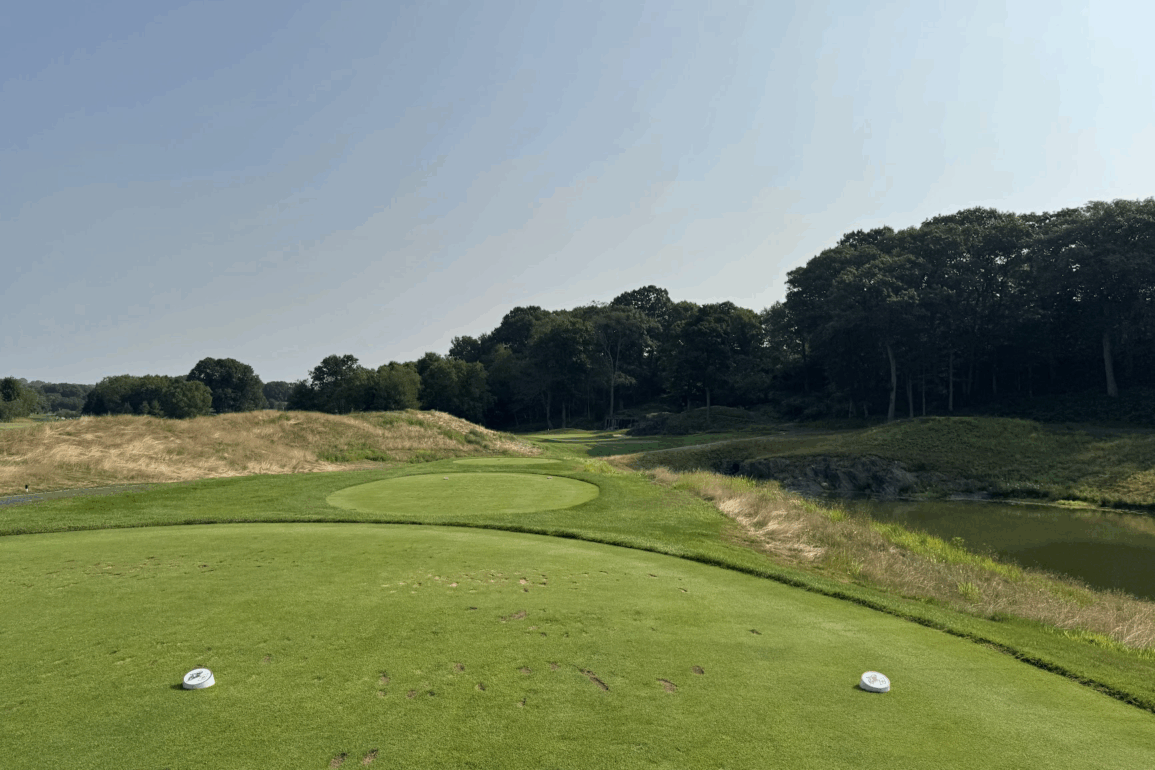
    The Tradition Golf Club at Oak Lane is a public par-72 course measuring approximately 6,680 yards from the tips. The course was originally designed in 1961 by Geoffrey S. Cornish, ASGCA and is located in Woodbridge, Connecticut.

    The property has a distinguished history as Oak Lane Country Club, serving as a private facility for over five decades before transitioning to public daily-fee access in 2013 when acquired by The Tradition Golf Club management group. The Geoffrey Cornish design has proven remarkably durable, with the architect’s functional approach to routing and green complexes still providing strategic interest more than 60 years after opening. Since becoming a public facility, the course has undergone significant improvements while maintaining Cornish’s original design principles. Most notably, the ownership invested in a comprehensive bunker renovation project completed in Spring 2022, installing Capillary Concrete technology throughout all 31-40 sand features to improve drainage and consistency. These efforts earned recognition from the Connecticut PGA, which awarded the facility the Walter Lowell Distinguished Public Golf Course designation in 2020. The maintenance standards and playing conditions have steadily improved under the current management, with greens running firm, true, and fast while fairways receive consistent attention. The transformation from private club to high-quality public facility represents one of the more successful conversions in Connecticut golf.

    The layout occupies approximately 100-120 acres of rolling New England terrain, showcasing elevation changes throughout the routing that add both visual interest and strategic complexity to club selection. Cornish, who designed more courses in New England than any architect in history, utilized the natural topography masterfully, creating a routing that flows naturally across the hilly property without resorting to excessive earthmoving or artificiality. The design philosophy reflects Cornish’s training under Stanley Thompson and his membership in the American Society of Golf Course Architects, where he served as president in 1975-76. Water hazards appear on several holes, most notably a creek that bisects the first fairway and ponds that guard approaches on multiple occasions. Mature trees frame fairways throughout, creating defined corridors without becoming overly penal. The course appeals to players who appreciate strategic, thinking golf over pure length, with its 6,680-yard championship length favoring accuracy and course management rather than distance. Bent grass surfaces on both greens and fairways provide consistent playing conditions from April through October. The player who thrives here enjoys deciphering subtle green contours, navigating risk-reward scenarios off the tee, and appreciating classic Golden Age design principles executed by one of the profession’s most prolific and respected architects.

    Strategic Test

    The strategic architecture at The Tradition Golf Club at Oak Lane rewards players who think beyond simple power golf, presenting consistent decision-making opportunities throughout the round. The opening hole, a 570-yard par 5 with a river cutting through the landing area, immediately establishes the premium on positioning over distance. Several holes feature diagonal hazards and angular green complexes that create distinct advantages for players willing to challenge the more aggressive lines. The par-4 fifth hole exemplifies this approach, presenting two small ponds in the fairway that must be avoided off the tee while still leaving a reasonable approach angle to a green protected by three fronting bunkers. Green sites throughout the routing feature Cornish’s characteristic pitch and undulation, creating multiple pin positions that significantly alter hole difficulty. The moderate overall yardage of 6,680 from the Black tees allows most players to reach par-4s in regulation without needing driver on every hole, opening strategic options about club selection off the tee. Understanding when to lay back versus when to challenge hazards becomes central to scoring well, particularly given the undulating green surfaces that punish approaches from incorrect angles.

    The course maintains excellent accessibility for higher handicappers while still challenging accomplished players through green complexes and strategic hazards rather than excessive length. Course rating and slope rating provide quantitative measures of difficulty relative to par and playing ability respectively. Course rating represents the expected score for a scratch golfer under normal conditions, while slope rating measures the relative difficulty for bogey golfers compared to scratch players, ranging from 55 to 155 with 113 representing standard difficulty. At The Tradition, the 72.9 course rating from the Black tees indicates that a scratch player would be expected to shoot approximately one stroke over par, while the 125 slope rating suggests moderately above-average difficulty for higher handicappers. This combination creates a course that challenges all skill levels appropriately without becoming discouraging. The elevated slope relative to course rating indicates that hazard placement, green contours, and approach demands create more separation between scratch and bogey players than pure length would suggest. Mid-handicappers benefit from the strategic options, as thoughtful course management can mitigate weaknesses in distance or accuracy. The variety of tee boxes allows players to select yardages matching their abilities, with four sets providing options from 5,050 to 6,680 yards.

    HandicapCourse Strategy
    High Handicap (18+)Forward tees measure approximately 5,050-5,650 yards with ratings around 67-70 and slopes of 119-125, creating a playable challenge that emphasizes keeping the ball in play rather than distance. Strategy centers on avoiding hazards and finding fairways, accepting bogeys as solid scores while capitalizing on shorter par-4s and reachable par-5s. Course management trumps aggressive play, with emphasis on hitting approach shots to green centers rather than challenging tucked pins. The 125 slope indicates that double bogeys will occur with some frequency, but the accessible design prevents disaster holes for players who maintain composure.
    Mid Handicap (8-18)Middle tees stretch 6,120-6,330 yards with ratings of 70-71 and slopes around 119-124, creating legitimate scoring opportunities while maintaining challenge. This range allows competitive rounds where pars feel earned and birdies require quality execution. Strategic decisions become more nuanced, with options to challenge diagonal hazards or play conservative lines based on hole location and match situation. The moderate slope indicates that course knowledge and smart club selection can overcome power disadvantages, rewarding players who learn green contours and optimal approach angles.
    Low Handicap (0-8)Championship tees at 6,680 yards with a 72.9 rating and 125 slope demand precision ball-striking and creative shotmaking. The relatively modest slope for this yardage suggests that accomplished players will score close to their handicaps with solid play, but the firm, undulating greens and strategic bunkering prevent easy rounds even for scratch golfers. Aggressive lines off the tee become viable with accurate driving, opening up preferred approach angles that simplify up-and-downs and birdie opportunities. Sub-par rounds require not just ball-striking but also superior green-reading and distance control.

    The par-4 18th hole stretches 460 yards from the championship tees, serving as a demanding closer that often determines the outcome of competitive rounds. This substantial finishing hole plays as the fourth-most difficult on the course, requiring two quality strikes to find the green in regulation. High handicappers playing from forward tees around 350-380 yards can approach this as a three-shot hole, prioritizing position off the tee and avoiding hazards that could lead to big numbers on the final hole. A conservative layup strategy, keeping the second shot short of trouble, leaves a manageable pitch that should find the green and allow for a closing bogey or occasionally par. Mid-handicappers from 400-430 yards face decisions about driver versus fairway wood off the tee, balancing the benefit of a shorter approach against the risk of finding trees or rough with an errant drive. A well-struck drive leaves anywhere from 140-170 yards into the green, a challenging mid-iron approach that must navigate any greenside protection while respecting the putting surface’s contours. Low handicappers attacking from 460 yards must execute a penetrating drive that finds the fairway to have any reasonable chance at birdie, likely leaving 150-180 yards for the approach. The elevated difficulty on this closing hole, combined with typical end-of-round pressure, makes par a satisfying finish and birdie a real achievement.

    Nearby Course Alternatives

    Tashua Knolls Golf Course in Trumbull, located approximately 25 minutes southeast of Woodbridge, presents an appealing alternative for players seeking a different strategic challenge on similar acreage. The 27-hole facility features an original par-72 layout stretching 6,540 yards from the championship tees with a slope of 133 and rating of 72.4, making it slightly more demanding than Oak Lane despite comparable yardage. Designed by Al Zikorus and opened in 1976, the course occupies approximately 120-140 acres of former farmland originally inhabited by the Tamtashua Indians, now transformed into gently rolling terrain with strategic bunkering and modest elevation changes. The layout emphasizes accuracy over power, with small, sloping greens that create difficult putting surfaces requiring precise approach play. Players consistently note the premium on green-reading skills, as Tashua’s putting surfaces feature more dramatic contours than typically found at public facilities. The course has hosted notable amateur competitions, lending it credibility among accomplished players seeking championship-caliber conditions. Mid-handicappers who enjoy target golf and take pride in their short game will find Tashua particularly rewarding, as the smaller greens punish wayward approaches while rewarding quality iron play. The facility also includes a 9-hole executive course called Tashua Glen, adding variety for quick rounds or short-game practice.

    H. Smith Richardson Golf Course in Fairfield, positioned approximately 30 minutes southwest of Woodbridge, offers a distinctly different experience on rolling terrain with more pronounced elevation changes. The par-72 championship layout measures 6,676 yards from the tips with a 72.1 rating and 126 slope, creating similar statistical difficulty while utilizing entirely different architectural features. Originally designed by Hal Purdy and opened in 1972, with subsequent renovation work by Stephen Kay, the course sprawls across 140-160 acres of classic Connecticut hardwood forest. The routing incorporates significant uphill and downhill holes that add an athletic component absent from most area courses, with notable climbs on the back nine testing both physical conditioning and club selection adjustments. Large, undulating greens provide multiple pin positions and reward aggressive approaches while offering bail-out areas for conservative players. The municipal facility maintains excellent conditions and has earned recognition as one of Fairfield County’s premier public options, attracting a loyal membership base. Players who appreciate the mental challenge of adjusting for elevation changes and prefer larger putting surfaces that reward lag putting will find Smith Richardson compelling. The course suits stronger ball-strikers who can control trajectory and distance with precision, as the uphill and downhill lies throughout the property demand advanced shotmaking. The slightly higher slope rating compared to Oak Lane suggests that bogey golfers will find Richardson more penalizing, making it ideal for accomplished players seeking a test of their complete game.

    Final Word

    The practice facilities at The Tradition Golf Club at Oak Lane provide adequate preparation options, with a grass driving range offering realistic feedback on ball flight and contact quality. A practice putting green near the clubhouse allows players to acclimate to the pace and grain of the bent grass greens before their round, which proves valuable given the subtle breaks and firmness encountered on the course. Additional short-game practice areas give players opportunities to work on chips and pitches, though these facilities remain functional rather than extensive. The clubhouse offers a welcoming atmosphere with a restaurant and bar providing post-round refreshments and dining, creating a social environment that enhances the overall experience. Pro shop inventory covers essential equipment and apparel needs, with staff available to assist with club fitting and merchandise selection. Golf instruction services from PGA professionals provide opportunities for players seeking to improve their games, with individual lessons and group clinics accommodating various skill levels and schedules. The overall facility impression reflects the ownership’s commitment to creating a private club experience at daily-fee rates, with attention to customer service and property maintenance exceeding expectations for public golf.

    The Tradition Golf Club at Oak Lane distinguishes itself through the combination of Geoffrey Cornish’s timeless design principles and the current ownership’s dedication to conditioning and service excellence. The course provides genuine strategic interest without resorting to artificial difficulty or excessive length, allowing players to score well through intelligent course management while still requiring quality execution. The transformation from private club to public facility has succeeded admirably, maintaining the property’s dignity and conditioning standards while making championship-caliber golf accessible to all players. The rolling terrain, mature trees, and water features create natural beauty throughout the routing, offering a peaceful escape from daily routine. Cornish’s architectural pedigree brings historical significance to each round, connecting modern players with Golden Age design philosophy and the ASGCA’s traditions. The recent bunker improvements, recognition from the Connecticut PGA, and consistent course conditioning demonstrate management’s long-term commitment to the property. For players seeking a thinking person’s course that rewards precision and creativity over pure power, Oak Lane delivers an experience that justifies repeated visits. The course proves its value through sustainable design, excellent maintenance, and the simple pleasure of playing quality golf on a layout that has stood the test of time while continuing to challenge and delight players more than six decades after opening.

  • Carl Dickman Par 3 Golf Course

    Carl Dickman Par 3 Golf Course

    [put_wpgm id=”2″ width=”100%” height=”770px” current_post_only=”true”]

    [letsreview]

    Carl Dickman Par 3 is a public par-27 course measuring approximately 1,240 yards from the tips. The course was originally designed in 1968 by Geoffrey Cornish and Bill Robinson and is located in Fairfield, Connecticut.

    Carl Dickman Par 3 opened during golf’s great democratization period when architects like Geoffrey Cornish were creating accessible entry points to the game. Originally known as South Pine Creek Par 3, the facility served the Town of Fairfield’s mission to provide affordable golf instruction and recreational opportunities. The course honors Carl Dickman, a longtime Fairfield parks and recreation advocate who championed public golf access. Cornish’s design philosophy emphasized strategic simplicity over penal complexity, creating a routing that teaches fundamental golf principles without intimidating newer players. The municipal facility operates under walk-only policies, reinforcing the contemplative pace that reveals subtle strategic elements. Located just hundreds of yards from Long Island Sound, the course benefits from consistent sea breezes that add strategic complexity without overwhelming less experienced golfers. The facility underwent renovations in the early 2000s to improve drainage and green conditions while maintaining Cornish’s original design intent. Today it serves approximately 15,000 rounds annually, making it one of Connecticut’s busiest par-3 layouts. The course has produced several notable junior golfers who developed their short games on these approachable holes before advancing to championship golf. Local golf professionals frequently use the facility for instruction, recognizing how the progressive hole lengths create ideal learning conditions. Recent upgrades include improved practice facilities and modernized irrigation systems that maintain consistent playing conditions throughout the season. The pro shop offers equipment rentals and basic amenities while keeping operational costs minimal to preserve affordable green fees.

    The course occupies approximately 15-20 acres of relatively flat terrain that Cornish intentionally preserved to eliminate intimidation factors common in championship layouts. The routing follows a straightforward out-and-back design that maintains visual separation between holes while maximizing strategic variety within the compact footprint. The design vibe emphasizes accessibility and instruction over championship challenge, with generous landing areas and minimal hazards that allow players to focus on approach shot fundamentals. Distance variance serves as the primary strategic tool, creating holes that range from 90 to 187 yards and demand everything from wedge precision to hybrid execution. The player who will most enjoy this course appreciates strategic golf education over dramatic scenery, values walk-only golf policies that encourage reflection between shots, and seeks to develop short-game skills in a non-intimidating environment. Serious golfers use the facility for approach shot practice and course management study, while beginners find the perfect introduction to golf’s strategic elements. The consistent wind patterns from Long Island Sound add subtle complexity that teaches players to factor environmental conditions into club selection. Families particularly appreciate the manageable walking distances and the ability to complete rounds in under two hours, making golf accessible to players with limited time commitments.

    Strategic Test

    Despite its modest 1,240-yard length and minimal hazards, Carl Dickman presents genuine strategic interest through distance variety and wind management. The course features holes ranging from 90 to 187 yards, requiring players to use virtually every short iron and wedge in their bag. Cornish deliberately avoided placing holes of similar length consecutively, forcing constant club selection adjustments throughout the round. Risk-reward opportunities emerge primarily on the extremes, with the 187-yard eighth hole demanding accurate long-iron execution and the 90-yard ninth offering a scoring opportunity for birdie finish. The coastal location means wind becomes the course’s most significant strategic element rather than topography or hazards, with sea breezes often adding or subtracting one to two clubs on longer holes.

    The course challenges different skill levels through different mechanisms. Beginners benefit from flat terrain, shorter distances averaging 138 yards per hole, and limited hazards that allow focus on fundamentals without intimidation. Mid-handicappers face the challenge of precision distance control across nine different yardages, wind management, and scoring on greens rated as medium speed but true in roll. Low handicappers use the course primarily for short-game practice, with the best recorded score of 25 (two under par) demonstrating that excellent play is required to beat par significantly. The greens themselves add strategic complexity through their large, undulating surfaces that require careful reading despite medium speed, with pin position becoming critical where conservative play to the center often proves wiser than aggressive attacks at tucked pins.

    Carl Dickman’s accessibility extends across all skill levels while maintaining strategic merit. The course rating and slope provide quantitative measures of difficulty that help players understand expected performance. Course rating represents the expected score for a scratch golfer under normal conditions, while slope rating measures the relative difficulty for bogey golfers compared to scratch golfers on a scale of 55 to 155, with 113 representing standard difficulty. For Carl Dickman, the blue tees carry a 26.2 course rating with an 80 slope, while red tees show a 27.1 rating with an 82 slope. These modest ratings confirm the course’s accessible nature, though the spread between course rating and par reveals that even scratch golfers rarely achieve scores significantly under par. The slope ratings near 80 indicate relatively easy conditions for bogey golfers, meaning high handicappers can expect reasonable scoring relative to their established handicaps. For mid and low handicappers, the low slope suggests limited penalty for wayward shots, shifting strategic emphasis from avoiding trouble to executing precise distance control and capitalizing on birdie opportunities.

    HandicapCourse Strategy
    High Handicap (18+)High handicappers should play from the red tees at 1,073 yards, where distances range from 78 to 173 yards and average under 120 yards per hole. The 27.1/82 rating suggests an 18-handicapper can expect to shoot around 45 (18 over par), making bogey golf on each hole a realistic target. Strategic priorities include using enough club to reach greens consistently rather than under-clubbing, focusing on center-green targets regardless of pin position, and avoiding the temptation to help the ball into the air. The flat terrain eliminates concerns about uneven lies, allowing full concentration on fundamentals. The minimal hazards mean aggressive recovery shots are rarely necessary, with advancing the ball safely forward always the correct play. Wind management becomes critical, with players needing to take one or two extra clubs into prevailing breezes.
    Mid Handicap (8-18)Mid handicappers typically play from white or blue tees between 1,240 and 1,073 yards depending on preference and conditions. The 26.2/80 rating from blue tees suggests a 13-handicapper can expect to shoot approximately 39-40 (12-13 over par), making pars feel like small victories and bogeys acceptable outcomes. Strategic focus shifts to scoring opportunities on shorter holes while managing longer holes conservatively. Accurate distance calculation with wind adjustment becomes critical, with players needing reliable yardage to each pin position. Pin position deserves consideration, but favoring safe sides of greens remains wise given the undulating surfaces. Success requires trusting yardage reads, committing fully to club selection, and executing quality lag putting from distance. The course rewards disciplined course management over aggressive heroics.
    Low Handicap (0-8)Low handicappers playing from blue tees at 1,240 yards face a 26.2/80 rated course where the scratch golfer expects to shoot around 26 (one under par). Gaining strokes on a par 27 course requires capitalizing on every birdie opportunity through aggressive yet calculated play. Strategic priorities include precise yardage calculation incorporating wind, trajectory, spin rates, green firmness, and potential roll-out. Pin positions should be attacked when favorable, though knowing proper miss zones remains critical especially on undulating greens with tucked pins. Advanced players may consider two-club wind adjustments on exposed coastal holes and should commit to aggressive play when conditions allow. The difference between shooting 25 (tying the course record) and 30 often comes down to converting makeable birdie putts, making quality lag putting and short game essential. The course serves primarily as short-game practice and iron tune-up facility rather than competitive challenge.

    The signature eighth hole at 187 yards represents Carl Dickman’s defining strategic test. From the blue tees, most players face a 5-iron to 6-iron in calm conditions, though the coastal location means wind dramatically alters club choice with headwinds requiring 4-iron or hybrid and tailwinds playing more like 6-iron to 7-iron. This two-to-three-club wind variance exemplifies how weather becomes the course’s primary strategic element. The putting surface features the undulating contours typical of Cornish’s design style, with multiple pin positions allowing varying difficulty and greens rolling true at medium speed. High handicappers (18+) should prioritize simply reaching the green surface or immediate vicinity using a hybrid or fairway wood if necessary, targeting exclusively the center regardless of pin position and taking one extra club for a smooth, balanced swing, with par representing an excellent score and bogey entirely acceptable. Mid handicappers (8-18) should aim to hit the green in regulation while creating birdie opportunities through accurate distance calculation with wind adjustment, considering pin position but favoring safe sides, and committing fully to club selection while slightly favoring the long side to avoid short-sided trouble. Low handicappers (0-8) must view this as a birdie opportunity, incorporating precise yardage calculation with wind, trajectory, spin rates, green firmness, and roll-out into club selection, attacking pins when favorable while knowing proper miss zones, and making the birdie putt following quality approach shots to score well on the full nine. The hole’s positioning as the penultimate challenge before the short 90-yard ninth creates interesting strategy, with players who struggle on the long eighth having immediate redemption on the short ninth, while those who birdie eight can build momentum into a strong finish.

    Nearby Course Alternatives

    Short Beach Golf Course in Stratford sits 9-11 minutes northeast via I-95, measuring 1,359 yards from blue tees with a 27.0/81 rating (middle tees: 1,262 yards, forward: 1,116 yards). This Geoffrey Cornish and Brian Silva design from 1988 occupies 15-20 acres of relatively flat coastal terrain. Short Beach offers 119 additional yards compared to Carl Dickman, with holes ranging from 98 to 230 yards where the 230-yard seventh represents a significantly longer challenge. The links-style design features spectacular Long Island Sound views with sea winds consistently in play, well-placed bunkers, and sophisticated green complexes that slope back-to-front requiring careful putting. Silva’s modern design sensibility creates more sophisticated architecture than Carl Dickman’s simpler layout. Practice facilities include both putting and chipping greens, an advantage over Carl Dickman. The course is described as one of the better executive courses and a hidden jewel in Stratford, featuring bent grass greens and rye grass fairways maintained despite modest municipal budget. Players seeking more challenge through greater length variation and longer maximum distance (230 versus 187 yards), dramatic oceanside settings with strategic wind play, sophisticated green complexes and bunker placement from accomplished architects, or a chipping area for short game practice would prefer Short Beach over Carl Dickman.

    The Orchards Golf Course in Milford sits 16-17 minutes northeast via I-95, measuring 1,625 yards from white tees with a 36.1/113 rating (forward: 1,433 yards, same rating). This John R. Casey Sr. design from 1997 occupies 20-25 acres of flat former farmland. The Orchards differs fundamentally as a par 32 executive course mixing five short par 4s (207-266 yards) with four par 3s (68-167 yards), creating entirely different strategic dynamics particularly on drivable par 4s where longer hitters face risk-reward decisions. The signature ninth hole at 266 yards features a field goal of tall trees at 200 yards requiring accuracy, while the seventh hole, a 167-yard uphill par 3 surrounded by rough, is considered the best hole. Large, elevated greens with significant slopes create excellent chipping and pitching practice opportunities, though the cramped layout receives some criticism for awkward routing. The course is known as a best-kept secret in south central Connecticut with excellent conditioning including nicely maintained fairways, teeboxes, and lush rough, professionally managed by Northeast Golf Company since 2021. Modern amenities include ForeUp online booking, well-stocked pro shop with Callaway equipment, and large practice green plus hitting net. Approximately 35,000 rounds are played annually at very affordable rates of sixteen to nineteen dollars for non-residents. Players preferring The Orchards over Carl Dickman include beginners and high handicappers seeking easier scoring through short par 4s that build confidence, families with mixed skill levels benefiting from varied hole lengths accommodating different abilities, golfers wanting driver practice on drivable holes impossible on pure par 3 courses, those focused on short game around elevated tricky greens, value seekers getting 385 additional yards and higher par for comparable fees, players prioritizing course conditioning and modern professional management, and convenience seekers valuing efficient online booking systems and well-stocked pro shops.

    Final Word

    Carl Dickman operates as a no-frills municipal facility with minimal amenities beyond the golf course itself. A large, beautifully maintained practice putting green is available to all players, with arrivals encouraged 15-20 minutes early for warmup, though there is no driving range at Carl Dickman as the sister facility H. Smith Richardson Golf Course operates a separate range on Hoydens Lane. No dedicated chipping or short game practice area exists, though the course itself serves this function for many players. The facility features minimal infrastructure with a check-in window handling transactions and pro shop purchases carrying basics including golf balls, tees, gloves, and rental clubs in limited selection appropriate for a par 3 course. Payment is cash only or Venmo with no credit cards accepted. There are no food or beverage facilities beyond bottled water, as the separate H. Smith Richardson facility has Boca Grille and Raw Bar restaurant that Carl Dickman does not share. Rental clubs and pull carts are available, though the course operates as walking-only with no motorized golf carts available for general use and electric carts reserved exclusively for handicapped players with proper documentation. Convenient parking is plentiful and complimentary. The facility offers no swimming pool, tennis courts, or other recreational amenities beyond golf, though junior golf camps operate with blocked tee times Monday-Thursday 12:30-3:00 PM through August and online tee time booking provides modern convenience despite otherwise basic amenities.

    Carl Dickman Par 3 Golf Course succeeds brilliantly at its intended purpose of providing accessible, affordable public golf to the Fairfield community while maintaining the strategic interest that respected architect Geoffrey Cornish built into the original 1968 design. The course honors Carl Dickman’s legacy as a public golf advocate by serving beginners, families, juniors, and seniors without alienating skilled players who appreciate efficient short-game practice. The flat coastal terrain, minimal hazards, and manageable distances create a welcoming environment, while distance variation from 90 to 187 yards and consistent wind play from Long Island Sound preserve strategic complexity. The walking-only policy encourages fitness and maintains quick pace, with typical rounds completing in 90 minutes. At sixteen to twenty dollars for non-residents and less for Fairfield residents, Carl Dickman delivers excellent value for quality golf on well-maintained grounds. While amenities remain minimal with no driving range, no chipping area, and no dining facilities, this no-frills approach focuses resources where they matter most through consistent course conditioning and affordable access. The course excels within its niche as Connecticut’s premier beginner-friendly, family-accessible par 3 that serious players respect for legitimate strategic merit despite modest length, proving that thoughtful architecture and proper maintenance matter far more than elaborate facilities when delivering meaningful golf experiences to the community.

  • H. Smith Richardson Golf Course

    H. Smith Richardson Golf Course

    [put_wpgm id=”2″ width=”100%” height=”770px” current_post_only=”true”]

    [letsreview]


    H. Smith Richardson Golf Course is a public par-72 course measuring approximately 6,734 yards from the tips. The course was originally designed in 1972 by Hal Purdy and is located in Fairfield, Connecticut.

    The course traces its origins to a generous donation by H. Smith Richardson, president of Vicks Chemical Company (later Richardson-Merrell), who contributed 271 acres off Morehouse Highway to the Town of Fairfield in the early 1970s. Of this substantial tract, 153 acres were developed into the 18-hole championship layout while 88 acres became conservation land named after Richardson’s wife, Grace Jones Richardson. The facility officially opened in 1972 with Hal Purdy’s design, and within three years earned recognition as one of Connecticut’s top ten public golf courses. The course has maintained its reputation through consistent conditioning and thoughtful management. Stephen Kay later contributed design input to the property, though specific renovation dates remain undocumented in public records. More recently, a 2018 renovation refreshed various course features, maintaining the layout’s competitive standards while preserving its classic character. First Selectman John Sullivan, notably not a golfer himself, ceremonially struck the first ball at the official opening, underscoring the course’s civic importance. The property has hosted the Connecticut Public Links Championship three times throughout its history—in 1989, 2012, and 2021—testament to its standing among the state’s public facilities.

    The course occupies an estimated 150 to 175 acres within a mixed suburban woodland setting characterized by rolling terrain and elevation changes, particularly on the back nine where players encounter some of the highest viewpoints in Fairfield. The routing follows a traditional two-loop pattern with both nines returning to the clubhouse, providing convenient access for players seeking nine-hole rounds on weekdays. Purdy’s design philosophy emphasizes strategic variety over overwhelming difficulty, incorporating left and right doglegs, uphill and downhill shots, and substantial green complexes that reward careful reading. The layout features mature hardwoods that frame corridors without creating overly penal rough lines, while ponds and wetlands appear at decisive moments rather than dominating every hole. Players who appreciate shot-making creativity, positional golf, and greens that demand attention rather than force will find considerable appeal. The bent grass greens are known for their speed and true roll, displaying moderate to significant undulation that punishes poor distance control without venturing into unfair territory. Those seeking a modern, wide-open resort experience may find the property somewhat constrained, but players who value traditional New England parkland golf with genuine strategic interest will recognize the design’s merits. The course rewards local knowledge, particularly regarding wind patterns that can affect club selection significantly.

    Strategic Test

    Strategic decision-making permeates the routing, though not every hole offers multiple viable approaches. The strongest strategic elements appear on holes where angle of approach meaningfully affects scoring chances—several par 4s present shorter but riskier lines that open preferred angles into green complexes, while conservative routes leave longer but safer approaches. The par 5s generally offer legitimate three-shot options for higher handicappers while presenting reachable scoring opportunities for longer players willing to accept increased risk. Hazard placement tends toward strategic positioning rather than purely penal design—bunkers guard preferred angles and ponds force decisions on aggressive lines, yet bailout areas exist for those prioritizing par over birdie. The greens themselves constitute the primary strategic challenge, with contours that can render a well-struck approach from the wrong angle significantly more difficult than a less precise shot from the preferred side. Wind becomes a strategic factor throughout, particularly on elevated holes where club selection can vary by two or three clubs depending on conditions.

    The course’s accessibility varies considerably by handicap category. Higher handicappers benefit from generous fairway widths and the absence of severe forced carries, though green complexes and longer approach distances from the appropriate tees create scoring challenges. Course rating and slope provide essential context for strategic planning: these numbers represent the USGA’s assessment of difficulty, with course rating indicating the expected score for a scratch golfer and slope measuring relative difficulty for bogey golfers compared to scratch players. Higher slope ratings indicate that the course plays progressively harder as handicap increases. From the championship tees, the 72.4 rating suggests scratch players should expect to shoot about 72, while the 129 slope indicates significant challenge for mid and high handicappers through length, green difficulty, and hazard positioning. Understanding these metrics helps players select appropriate tees and manage expectations—a 15-handicap player selecting the wrong tees might face an unintentionally difficult round that offers little enjoyment or strategic interest.

    HandicapCourse Strategy
    High Handicap (18+)Forward tees measuring 5,074 to 5,642 yards offer the most appropriate experience, with ratings ranging from 68.0 to 70.1 and slopes from 105 to 127. Strategy should prioritize keeping the ball in play and avoiding hazards rather than attempting heroic lines. The slope indicates the course becomes considerably more challenging relative to ability, so accepting bogey golf and focusing on avoiding penalty strokes will produce the best scores. Green reading deserves extra attention, as three-putting from the wrong tier can quickly inflate scores. Course management should emphasize playing to personal strengths rather than attempting low-percentage shots.
    Mid Handicap (8-18)The middle tees at 6,055 to 6,378 yards provide balanced challenge, with ratings of 69.4 to 70.8 and slopes of 124 to 138. Strategic opportunities become more meaningful at this level, as the ability to shape shots and control distance allows players to attack certain pins while respecting others. The slope suggests course difficulty scales appropriately with skill, rewarding good execution without becoming overwhelming. Focus should center on angular approaches to greens, selective aggression on reachable par 5s, and disciplined course management on demanding par 4s. Wind awareness and club selection accuracy become critical factors for scoring.
    Low Handicap (0-8)Championship tees at 6,734 yards (72.4/129) present the full examination, requiring precision off the tee to access preferred angles and distance control to score effectively. The manageable slope for scratch players suggests the course doesn’t introduce undue difficulty through gimmickry but rather through length and green complexity. Low handicappers should study green approaches carefully, as angular advantages significantly affect scoring opportunities. Strategic routing rewards risk-taking in specific situations—cutting doglegs, attacking reachable par 5s in two, and aggressive lines that reduce approach distances. Green speed and break require careful attention, as even well-struck approaches can finish in challenging positions if angle is misjudged.

    The eighteenth hole exemplifies the course’s strategic philosophy while providing memorable conclusion to the round. This 536-yard par 5 plays downhill with a severe left dogleg of nearly 90 degrees, creating distinct strategic options for each handicap level. From the championship tees at 536 yards, longer hitters face an immediate decision off the tee—attempting to carry or cut the corner with a draw risks entanglement with trees lining the right side but can reduce the hole to a mid-iron approach. More conservative players must lay back with fairway wood or long iron to the elbow approximately 230 yards out, accepting a longer second shot but maintaining position. The approach shot introduces additional complexity through a pond protecting the front and left portions of the green complex, making the second shot on this hole a genuine risk-reward proposition for players capable of reaching in two. Low handicappers playing aggressively might attempt a 280-yard drive over the corner trees, leaving 250 yards to a green they can reach with a hybrid or long iron, but any miscalculation off the tee eliminates this option entirely. Mid handicappers benefit from a controlled 230-yard tee shot followed by a fairway wood or hybrid to approximately 100 yards short of the green, positioning a comfortable wedge for the third shot that can avoid the water hazard. High handicappers playing from forward tees should prioritize three reliable shots—200 yards off the tee, another 160 to 180 yards with a fairway wood or hybrid, then a short iron into the generous portions of the green away from the water. The blind nature of the approach shot over the pond for those attempting to reach in two adds psychological pressure that can affect club selection and swing commitment. Green reading on this hole requires attention to multiple tiers and the influence of slope created by the downhill terrain, making four-putting a genuine possibility for those unfamiliar with the surface.

    Nearby Course Alternatives

    D. Fairchild Wheeler Golf Course in Fairfield offers an intriguing alternative just 10 minutes northeast, featuring two distinct 18-hole layouts on the same property. The Red Course measures 6,568 yards from the championship tees (par 72, rating 71.0, slope 124), while the Black Course spans 6,559 yards (par 71, rating 71.5, slope 123). Designed by Robert White of St. Andrews in 1934 with later work by Doug Smith, this facility occupies a larger footprint with both courses following the undulating Connecticut landscape from hilly to relatively flat terrain. The Red Course emphasizes accuracy off the tee, rewarding players with mid to short iron approaches but defending with challenging green complexes that feature significant break. The Black Course presents longer, tighter corridors through more wooded sections with pronounced elevation changes and scenic views, particularly from the tenth hole which overlooks Long Island Sound. Both courses feature rye grass greens and fairways, a departure from Richardson’s bent grass surfaces. The facility includes extensive practice areas with a wide-open driving range, the First Tee of Connecticut program, and post-round dining options at Tommy’s Grill. Architectural pedigree and variety distinguish this property—having 36 holes allows players to experience meaningfully different strategic tests within a single facility. High handicap players who struggle with Richardson’s green reading complexity might find the Red Course’s more straightforward approaches appealing, though its green difficulty still commands respect. Mid handicappers seeking elevation change and scenic variety will likely prefer the Black Course’s dramatic terrain and tree-framed corridors. The acreage supports a more expansive feel than Richardson’s compact routing, though conditioning has occasionally drawn mixed reviews depending on seasonal maintenance priorities.

    Oak Hills Park Golf Course in Norwalk provides another compelling public option approximately 20 minutes southwest. This 6,407-yard, par-71 layout (rating 70.3, slope 133) represents one of Alfred Tull’s final designs before his retirement, opening in 1969 after a distinguished career as Devereux Emmet’s partner. Tull’s unique talent for walking a property and envisioning routing without maps resulted in a course notably devoid of housing intrusion, maintaining a peaceful parkland character throughout. The front six holes present a classic New England experience with tight, tree-lined corridors requiring precision, while the layout opens considerably on the back nine with wider playing areas that allow for recovery and more aggressive play. Mature hardwoods and varied terrain create visual interest, while water hazards appear on seven holes in the form of ponds that influence strategic decisions without dominating every approach. The number one handicap ninth hole plays 456 yards from the tips, testing length and accuracy simultaneously. Oak Hills earns particular recognition for conditioning, with bent grass greens that consistently roll fast and true—many reviewers note green quality rivals private facilities in Fairfield County. Practice facilities include two putting greens with chipping areas, though the driving range footprint remains limited compared to Richardson’s recently renovated Toptracer-equipped facility. The clubhouse features a full-service restaurant with banquet capabilities and eight tennis courts for non-golf recreation. Players who value immaculate green conditions above all else will likely prefer Oak Hills, particularly those willing to accept the 133 slope that indicates meaningful challenge for higher handicappers. Mid handicappers who enjoy contrasting nine-hole experiences—tight and hilly followed by open and scoring-friendly—will appreciate Tull’s routing philosophy. The course attracts significant play, making pace of play an occasional concern, though most reviewers consider the quality worth any wait. Low handicappers seeking pure green quality and traditional shot values without modern design flourishes will find considerable appeal in this historically significant layout.

    Final Word

    Non-course amenities support a comprehensive golf experience while reflecting the facility’s municipal ownership and commitment to accessibility. The newly renovated driving range, located at 500 Hoydens Lane (requiring a short drive from the main clubhouse), represents a significant investment in practice infrastructure. This 25-bay facility now features covered, heated bays enabling year-round practice—a noteworthy amenity for Connecticut golfers facing harsh winter conditions. Each bay incorporates Toptracer technology that tracks ball flight and provides detailed data points about swing mechanics, club speed, and shot dispersion, bringing technology typically found at premium indoor facilities to an outdoor public setting. The range location separate from the main course requires players to factor in travel time when planning pre-round warmups. Chipping and putting areas complement the driving range, though specific details about these facilities remain less prominently documented than the range itself. The clubhouse underwent substantial renovation when Brennan’s Shebeen took over restaurant operations, transforming a previously dated dining area into an inviting space with full bar service and multiple flat-screen televisions. The pro shop maintains adequate inventory for immediate needs, while locker rooms provide basic changing facilities. The course management maintains a strict pace of play policy, providing each group with timing cards indicating target completion times at specific holes—a system that generates mixed reactions but generally succeeds in maintaining four-and-a-half-hour rounds during busy periods.

    H. Smith Richardson Golf Course distinguishes itself through strategic design that rewards thoughtful golf, consistent conditioning that matches many private facilities, and recent infrastructure investments that enhance the overall experience. The 1972 Purdy design remains relevant five decades later precisely because it emphasizes timeless principles—angular advantage, green complex variety, and risk-reward balance—rather than artificial difficulty or gimmickry. The course’s ability to host competitive events like the Connecticut Public Links Championship while remaining accessible to recreational players demonstrates successful balance between challenge and playability. Recent improvements, particularly the Toptracer-equipped driving range and clubhouse renovations, signal commitment to maintaining standards that justify the facility’s reputation as one of Fairfield County’s premier public offerings. The combination of genuine strategic interest, excellent greens, significant elevation change for visual interest, and proximity to Fairfield’s residential areas ensures continued relevance. Players seeking traditional shot values, variable wind conditions that require adaptability, and greens that reward proper reading will find considerable appeal. The course proves its value not through length or excessive hazards but through thoughtful design that remains engaging across multiple rounds, supported by infrastructure that respects players’ time and investment. Those fortunate enough to call Fairfield home benefit from a municipal facility that compares favorably with many private clubs in the region, offering a genuine test of golf without pretense or exclusivity.