Category: Public

  • Cedar Ridge Golf Course

    Cedar Ridge Golf Course

    [put_wpgm id=”2″ width=”100%” height=”770px” current_post_only=”true”]

    [letsreview]

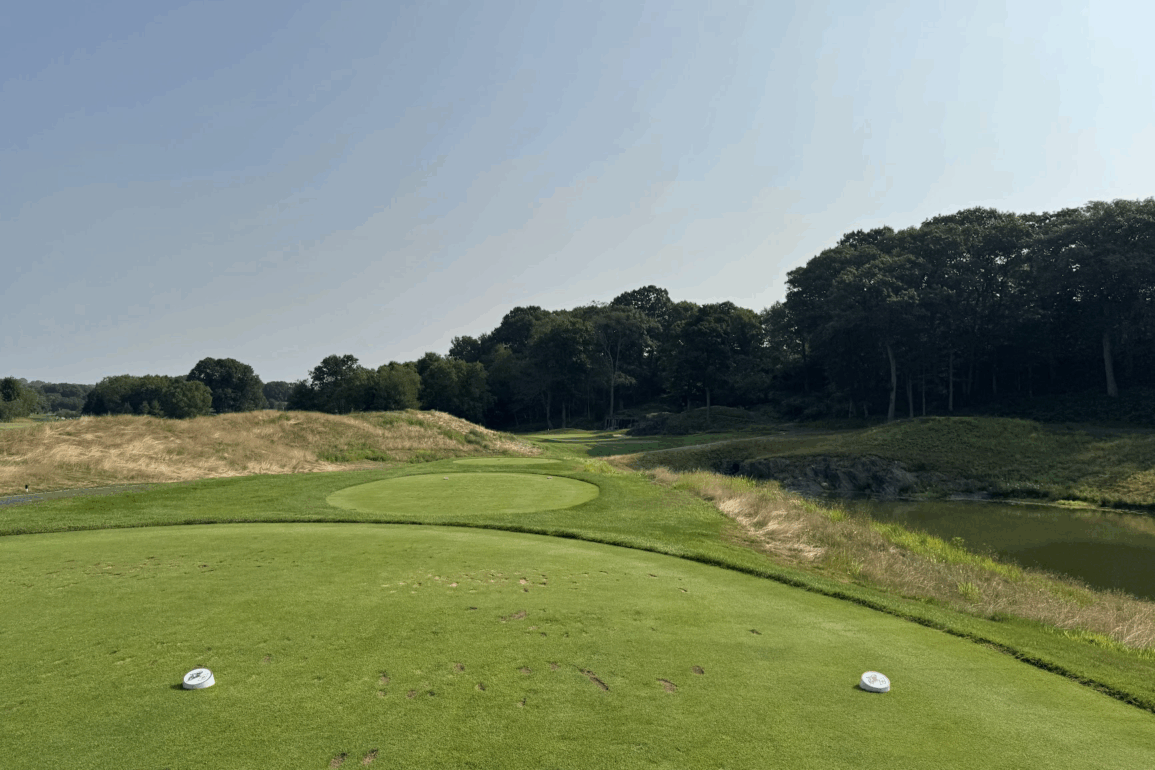
    Cedar Ridge Golf Course is a public par-54 course measuring approximately 3,025 yards from the tips. The course was originally designed in 1964 and is located in East Lyme, Connecticut.

    Opened in 1964, Cedar Ridge Golf Course has carved out a specific and valuable niche in the Connecticut golf landscape. It is a true 18-hole executive course, a format that offers a complete golfing experience in a fraction of the time, typically between two and a half to three hours. This distinction is central to its identity, providing a full round with a beginning, middle, and end, unlike many shorter nine-hole layouts. The course has long been known for its relaxed and welcoming atmosphere, making it a popular choice for beginners, families, and those looking for a less intimidating introduction to the game. Over the years, reviews on conditioning have been mixed, with some golfers praising the grounds while others have noted periods of neglect. However, the course’s website notes it is under new management, suggesting a renewed focus on the quality of the facility. The core appeal of Cedar Ridge remains its straightforward, unpretentious approach to the game, focusing on playability and accessibility for a wide spectrum of golfers.

    The course occupies a compact footprint, defined by its all-par-3 design. The terrain incorporates “lots of elevation changes,” which adds a significant layer of interest and challenge to the otherwise short holes. The routing is the star of the show, presenting players with a remarkable variety of shot lengths that test one’s entire iron game and more. Holes range from just over 100 yards to a formidable 250 yards, demanding everything from a delicate wedge to a precisely struck fairway wood or even a driver. The design vibe is open and functional; one reviewer noted there is “not much tree line protection,” creating wide playing corridors. This openness, combined with a minimal use of hazards—one source mentions few sand traps and another notes water on only four holes—makes the course forgiving for the errant shot. It is a design that will be most enjoyed by players who appreciate a pure test of ball-striking, those looking to hone their iron play, and anyone seeking a legitimate 18-hole round without the five-hour commitment of a championship course.

    Strategic Test

    The strategic examination at Cedar Ridge is a pure and direct interrogation of a player’s ball-striking and distance control. With no par-4s or par-5s, the concept of setting up the next shot is removed; every tee shot is an approach shot. The primary strategic decision a player makes is on the teeing ground, where selecting the correct club is paramount. The course presents a remarkable variety of lengths, with holes ranging from the 103-yard 4th to the formidable 250-yard 12th. This spread ensures that a player will likely use everything from a wedge to a driver or fairway wood, making it a comprehensive test of iron and hybrid play. The strategy is not about finding alternate angles or challenging a centerline hazard, but rather about executing a precise shot of a known distance to a specific target.

    With every shot being a question of hitting the green, the architectural integrity rests heavily on the green complexes themselves. The design features a minimal number of bunkers and water hazards, with one source noting water on only four holes. This places the burden of defense on the size, shape, and contour of the greens. The challenge is not punitive avoidance but rather one of precision; can the player find the putting surface from 190 yards, and can they place the ball in a position to make a putt? The quality of conditioning, which some reviews have noted as inconsistent, becomes a critical factor in whether this strategic intent is fully realized. When the greens are in good condition, the course provides a fair and engaging test of shotmaking. For the high-handicap player, Cedar Ridge is exceptionally accessible. The open nature of the playing corridors and the general lack of forced carries or penal hazards mean that lost balls are infrequent. The relaxed atmosphere further contributes to a welcoming environment for those new to the game.

    The primary difficulty for the novice is not survival but scoring. The longer par-3s will realistically play as two-shot holes, making bogey a very good score. This dynamic is perfectly reflected in the course’s USGA Slope and Rating, which provides a mathematical fingerprint of its strategic character. A thorough understanding of these numbers is essential to appreciating the course’s design. The Course Rating indicates the expected score for a scratch golfer, while the Slope Rating measures the relative difficulty for a bogey golfer compared to that scratch player, with 113 being the national average. While some databases erroneously list Cedar Ridge with a 70.0 Rating and 113 Slope—figures that are mathematically incongruous for a 3,025-yard, par-54 course—the correct and officially registered values are a Course Rating of 53.5 and a Slope of 80 for men. The 53.5 rating indicates a scratch player is expected to score just under the par of 54, which is logical. The exceptionally low Slope of 80 confirms that the course does not become disproportionately more difficult for a higher handicap player, reinforcing its accessibility.

    HandicapCourse Strategy
    High Handicap (18+)The single set of tees at 3,025 yards is manageable. The very low slope of 80 means your Course Handicap will be significantly lower than your Handicap Index, resulting in fewer strokes. Focus on playing the five holes over 200 yards as two-shot holes; a bogey is a good score. The main goal is to avoid big numbers by keeping the ball in play.
    Mid Handicap (8-18)The 3,025-yard tees provide a stern test of mid-to-long iron play. The 53.5 rating means a well-played round should be close to or under par. The challenge is converting birdie opportunities on the shorter holes (like #4 at 103 yards and #18 at 127 yards) to offset the difficult pars on the longer holes (#12 at 250 yards, #15 at 218 yards).
    Low Handicap (0-8)The course rating of 53.5 indicates a scratch player is expected to shoot under par. This is a scoring course. The strategy is aggressive: attack pins on the shorter holes and use precision long irons to secure pars on the longer ones. The low slope means there are few “disaster” areas; the challenge is pure execution and converting putts.

    This strategic philosophy is beautifully encapsulated in the course’s finishing hole. The 18th hole is a delicate 127-yard par-3. For the low-handicap player, this is a scoring opportunity; the 127-yard shot is a comfortable wedge or short iron, and the primary thought is attacking the flag to set up a birdie putt, with the water being a minor obstacle to be carried with ease. For the mid-handicapper, the hole demands discipline; the correct play is to aim for the center of the green, ignoring a tucked pin position to ensure a safe par and take the water out of play. For the high-handicapper, the hole presents a significant mental challenge where the water hazard is the only feature that matters. The strategy is simply to take enough club to guarantee that the ball carries the hazard, even on a slight mishit, making bogey an entirely acceptable result.

    Nearby Course Alternatives

    Shennecossett Golf Course in Groton is located about 15 minutes east and offers a journey into the Golden Age of golf architecture. As the only publicly accessible Donald Ross design in Connecticut, Shennecossett presents a comprehensive examination of the game that stands in contrast to Cedar Ridge’s specialized focus. This par-71 layout measures 6,562 yards from the championship tees, with a course rating of 71.7 and a slope of 124. Founded in 1898, its pedigree is impeccable, featuring the strategic bunkering and subtly contoured green complexes that are hallmarks of Ross’s work. The course occupies a more expansive property with a routing that incorporates stunning views of the Thames River and Long Island Sound, particularly on the newer holes designed to complement the Ross originals. A player who seeks a traditional championship test, values architectural history, and wishes to engage with a more complex set of strategic questions involving all facets of the game would find Shennecossett to be a compelling alternative.  

    Fenwick Golf Course in Old Saybrook, situated approximately 20 minutes to the west, provides an entirely different, yet equally historic, public golf experience. As Connecticut’s oldest public course, established in 1896, Fenwick is a 9-hole, par-34 layout that embodies the spirit of early American links golf. Playing to 2,867 yards for nine holes, the course is set on a flat, easily walkable peninsula where the Connecticut River meets the Sound. Its primary strategic challenge is not length or elevation, but the capricious coastal winds that sweep across the property. The design is elemental and charmingly rustic, with small greens that demand surgical iron play. Fenwick would be most enjoyed by the player who appreciates historical significance, the unique ground-game challenges of links golf, and an immersive coastal setting. It offers a quicker, more elemental round for the purist who enjoys battling the course and the weather in equal measure.  

    Final Word

    The amenities at Cedar Ridge are tailored to support its core function as a place to play golf. The pro shop is equipped with golf supplies, and both club and cart rentals are available for players. While there is no driving range located on the immediate property, the course is affiliated with the 100 Acres Driving Range in the neighboring town of Old Lyme for those seeking to warm up before a round. The facility also offers opportunities for instruction through its golf academy, providing resources for players looking to improve their game.  

    What makes Cedar Ridge a special and vital part of its local golf ecosystem is its unwavering dedication to the 18-hole, all-par-three format. It is not an abbreviated version of a larger course, but a complete and thoughtfully designed facility that isolates and tests one of the most critical skills in golf: iron play. The course proves its value by catering to a diverse cross-section of the golf community, from novices taking their first swings to accomplished players sharpening their scoring clubs. It provides an accessible, time-efficient, and genuinely enjoyable way to engage with the game, cementing its role as a valuable and enduring community asset.

  • Cedar Knob Golf Course

    Cedar Knob Golf Course

    [put_wpgm id=”2″ width=”100%” height=”770px” current_post_only=”true”]

    [letsreview]

    Cedar Knob Golf Course is a public par 72 course measuring approximately 6,734 yards from the tips. The course was originally designed in 1963 by Geoffrey S. Cornish and is located in Somers, Connecticut.

    Cedar Knob emerged during Geoffrey Cornish’s independent practice years when the Canadian-born architect was establishing his reputation for creating accessible public courses throughout New England. Cornish, who designed over 240 courses during his career, applied his “functional” design philosophy emphasizing minimal earth movement while maximizing strategic interest. The course represents mid-20th century public golf architecture at its finest, built during the post-war golf boom to democratize the game for Massachusetts-Connecticut corridor golfers. Cornish’s agronomic background influenced every design decision, creating a layout that balances challenge with maintainability across approximately 130 acres of rolling Connecticut terrain. The routing winds through mature cedar forests utilizing natural elevation changes, pronounced swales, and existing landforms to create strategic corridors. Cornish’s signature oversized bunkers, styled after British Isles sand hazards, serve as both visual intimidation and strategic punishment for poorly positioned approach shots. The design philosophy emphasizes accuracy and course management over distance, with water hazards deployed sparingly but decisively on holes 10, 11, and 18. Green complexes feature mild contouring with characteristic back-to-front slopes, requiring approaches to stay below pin positions. The course maintains its original 1963 design integrity under current owner/superintendent John Gale, preserving Cornish’s vision of affordable, strategic public golf.

    Cedar Knob exemplifies the architect’s commitment to creating “honest” golf courses that reward thoughtful play while remaining accessible to golfers of all skill levels. The mature forest setting creates dramatic cedar backdrops throughout the round, with the namesake evergreens serving as both aesthetic enhancement and strategic framing elements. Course conditions consistently earn praise from players who appreciate the balance between challenge and playability that Cornish embedded in his design. The layout demands precision over power, making it an ideal test for golfers who value course management and strategic thinking over raw distance.

    Strategic Test

    Cedar Knob presents a sophisticated strategic examination that rewards course management while punishing reckless aggression. The Geoffrey Cornish design philosophy creates multiple decision points throughout the round, where players must weigh risk against reward on both tee shots and approaches. The course’s slope rating of 129 from the championship tees indicates significant strategic complexity, while the 72.4 course rating suggests scoring opportunities exist for players who navigate the design intelligently.

    The slope rating represents the relative difficulty of a course for bogey golfers compared to scratch players, measured on a scale from 55 to 155. A slope rating of 129 places Cedar Knob in the “moderately difficult” category, meaning higher handicap players will find the course proportionally more challenging than low handicappers. The course rating of 72.4 represents the expected score for a scratch golfer under normal playing conditions, indicating the course plays slightly more difficult than its par 72 suggests.

    Strategic decision-making opportunities present themselves consistently throughout the round, particularly on holes where Cornish employed his signature risk-reward design principles. The architect’s use of centerline hazards, alternate approach angles, and corridor framing creates multiple playing options that favor different skill sets and playing styles. Players who embrace conservative positioning often find themselves rewarded with easier approach angles, while aggressive players face heightened consequences for marginal execution.

    HandicapCourse Strategy
    High Handicap (18+)Focus on course management from forward tees (5,920 yards, 67.2/121 rating). The lower slope rating reduces penalty severity while maintaining strategic interest. Emphasize accuracy over distance, targeting fairway centers and green centers to minimize big numbers.
    Mid Handicap (8-18)Play from white tees (6,298 yards, 70.3/125 rating) to balance challenge with scoring opportunity. Strategic positioning becomes crucial, with calculated risks on holes offering clear reward for precise execution. Course management skills directly correlate with scoring improvement.
    Low Handicap (0-8)Championship tees (6,734 yards, 72.4/129 rating) demand precision and strategic sophistication. The elevated slope rating punishes marginal shots severely, requiring consistent execution and advanced course management to score effectively.

    The 18th hole exemplifies Cedar Knob’s strategic sophistication, serving as a demanding closer that epitomizes Cornish’s risk-reward philosophy. This 405-yard par 4 features a severe dogleg left with a forced water carry over the pond from the 10th hole. The narrow landing zone at the dogleg’s apex creates intense pressure, while stately evergreens frame both tee shot options and approach angles. High handicappers must accept conservative center-fairway placement, avoiding water and trees while accepting a 150+ yard approach. Mid handicappers can position strategically right of centerline to open the approach angle, though club selection becomes critical due to the downhill lie. Low handicappers face the ultimate risk-reward decision: aggressive corner-cutting over small trees to shorten the approach, but only precise execution yields reward. The hole’s architectural brilliance lies in its escalating penalty structure, where even conservative play demands two quality shots while aggressive angles offer reward only through precise execution.

    Nearby Course Alternatives

    Keney Park Golf Course in Windsor, located approximately 25 to 30 minutes south of Somers, offers a compelling alternative with a deep historical pedigree. A public facility measuring 6,449 yards from its back tees to a par of 70, Keney Park carries a course rating of 70.6 and a slope of 127. The course’s origins date to 1927 with an original nine holes designed by Devereux Emmet, a celebrated architect of golf’s “Golden Age”. A recent and highly acclaimed restoration by Matthew Dusenberry has revived the classic features of the design, including bold green complexes and strategic bunkering. While Cedar Knob is an excellent example of mid-century parkland design, Keney Park provides a journey further back in architectural history. A player who prioritizes Golden Age character, with its often more dramatic and naturalistic features, and who enjoys the unique challenge of a par-70 layout would likely find Keney Park to be a fascinating and rewarding experience.  

    Topstone Golf Course in South Windsor presents a more modern public alternative, located a convenient drive from Somers. Opened in 1997, this Al Zikorus design is a par-72 championship layout that stretches to 6,546 yards from the tips, with a course rating of 70.9 and a slope of 124. Built more than three decades after Cedar Knob, Topstone reflects a different era of design, often utilizing more pronounced shaping and taking advantage of its “rolling hills” to create more significant elevation changes throughout the round. The course is known for its excellent conditions and presents a strong, modern test of golf. With a slightly lower slope rating than Cedar Knob, it may prove marginally more forgiving for the average golfer. The player who enjoys a more contemporary aesthetic, appreciates varied topography with uphill and downhill shots, and seeks a layout representative of late 20th-century architecture would find Topstone Golf Course to be an excellent choice.  

    Final Word

    Beyond the 18 holes, Cedar Knob provides a well-rounded and accommodating golf experience. The facility includes an on-site driving range, allowing players a proper space to warm up before a round or to work on their game. The club also offers professional instruction for those seeking to improve their skills. Off the course, the clubhouse serves as a comfortable hub for players. It features a fully stocked pro shop to handle equipment needs and a restaurant and banquet facility that has been beautifully renovated, providing a pleasant atmosphere for post-round relaxation and social functions.  

    What makes Cedar Knob Golf Course a special and enduring place is its commitment to the core principles of enjoyable golf. It does not rely on dramatic vistas or modern contrivances to prove its merit. Instead, it offers the quiet confidence of a soundly designed course by a respected architect, set on a mature landscape that rewards strategy and precision. The challenge is straightforward but not simple, engaging the mind as much as the swing. It proves its value by providing a consistently fair, strategic, and pleasant test of golf that has stood for over half a century and remains a distinguished public asset for the golfers of north central Connecticut.

  • Candlewood Valley Country Club

    Candlewood Valley Country Club

    [put_wpgm id=”2″ width=”100%” height=”770px” current_post_only=”true”]

    [letsreview]

    Candlewood Valley Country Club is a public par-71 course measuring approximately 6,388 yards from the tips. The course was originally designed in 1955 and is located in New Milford, Connecticut.

    Opening for play in 1960, Candlewood Valley has matured into a staple of public golf at the gateway to the Litchfield Hills. The course has evolved over the decades, establishing a well-earned reputation as a tale of two distinct nines. This defining characteristic presents a round of great variety and strategic progression. The front nine offers a more open, traditional parkland feel with wider corridors that give players room to operate. As the round progresses, the course undergoes a dramatic shift in character. The back nine tightens considerably, demanding greater precision as it winds through dense forest and natural marshland, transforming the strategic challenge from one of positioning to one of pure accuracy.

    Situated on a 175-acre property, the course utilizes its relatively flat landscape to create a subtle but engaging strategic challenge. The routing is straightforward, with a classic design vibe that favors thoughtful shot-making and intelligent course management over sheer power. Because the challenge is derived from the routing and hole design rather than dramatic elevation changes, it presents a pure and honest test of golf. This classic parkland layout is highly accessible and enjoyable for a wide spectrum of players, from the recreational golfer seeking a pleasant round to the skilled player looking for a fair examination of their game. Its appeal is broadened by four sets of tees, ensuring that every golfer can find a comfortable and appropriate challenge.

    Strategic Test

    The strategic examination at Candlewood Valley is subtle yet effective, rewarding thoughtful course management over raw power. The primary strategic choices are presented through angles of approach and club selection from the tee. On the more forgiving front nine, the wider corridors give the player options; a drive down the left side of a fairway might open up a better angle to a right-side pin, while a more conservative play to the center leaves a straightforward, if less advantageous, approach. The strategic question is not simply about hitting the fairway, but about positioning the tee shot to create the optimal second shot. This changes on the back nine, where the corridors narrow. Here, the strategic emphasis shifts from optimizing position to simply securing it. Finding the fairway becomes the paramount objective, as errant shots are more likely to be penalized. This deliberate contrast in design prevents the round from becoming monotonous and tests a player’s adaptability.

    The course is highly accessible to players of all abilities, a strength reinforced by its four sets of tees that range from 6,388 yards down to a manageable 4,758 yards. This flexibility allows high-handicap players to enjoy the layout without being overwhelmed. The strategic challenge can be quantified through its Course Rating and Slope Rating. A Course Rating represents the expected score for a scratch golfer; from the back tees, Candlewood Valley’s rating is 72.1, indicating a challenge slightly above its par of 71 for an expert player. The Slope Rating measures the relative difficulty for a bogey golfer compared to a scratch golfer, with 113 being the national average. The back-tee slope of 127 signifies that the course is substantially more difficult for the average player than for the elite one, a characteristic likely driven by the precision required on the back nine where misplaced shots can lead to compounding errors.

    HandicapCourse Strategy
    High Handicap (18+)Play from the Gold (4,998 yards) or Red (4,758 yards) tees. The primary goal is fairway management, especially on the tighter back nine. The slope of 112/113 from these tees suggests a more manageable challenge, where avoiding major trouble will lead to a score close to their handicap.
    Mid Handicap (8-18)Play from the White tees (6,032 yards). This yardage requires more strategic club selection off the tee to set up preferred angles. The slope of 122 indicates that mistakes will be punished more severely than on a course of average difficulty, placing a premium on course management.
    Low Handicap (0-8)Play from the Blue tees (6,388 yards). The challenge is to score, not just survive. This requires shaping shots to attack pin positions and taking calculated risks. The 72.1 rating and 127 slope demand precision on approach shots to score well relative to par.

    The 18th hole serves as a memorable and fitting conclusion to the round. A par 4 playing 402 yards from the Blue tees, it demands two well-executed shots to finish on a high note. For the high-handicap player teeing off from the 259-yard forward marker, the hole is a short par 4 where a fairway wood or hybrid followed by a wedge is the prudent play. The mid-handicap player faces a 385-yard challenge from the White tees, where a solid drive is required to set up a mid-iron approach; the key decision is how aggressively to attack a potentially guarded pin. From the 402-yard Blue tees, the low-handicap player is tested fully. A well-placed drive is essential to leave a manageable second shot into the green. A closing par here is a rewarding achievement, capping off the strategic examination posed by the demanding back nine.

    Nearby Course Alternatives

    Richter Park in Danbury is a highly regarded public facility located approximately 20 minutes south of Candlewood Valley. Designed by Edward Ryder, this par-71 course measures 6,547 yards from its championship tees and presents a formidable challenge, with a Course Rating of 72.3 and a Slope Rating of 135. Unlike the more understated parkland setting of Candlewood Valley, Richter Park is known for its dramatic terrain and penal design, with water coming into play on 14 of the 18 holes. It has a strong competitive pedigree, having hosted numerous state and regional championships. A player who seeks a rigorous, championship-level test with significant water carries and a reputation for difficulty would likely prefer Richter Park’s unrelenting examination of their game.

    Oxford Greens in Oxford, about 30 minutes to the southeast, offers a completely different style of public golf. This is a modern, large-scale design from architect Mark Mungeam that opened in 2005. The course is a par-72 behemoth, stretching to 7,186 yards from the tips with a demanding 75.4 Course Rating and 135 Slope. Set on a vast 794-acre property, the layout features holes that never run parallel, creating a sense of isolation and grandeur on a scale that Candlewood Valley does not attempt. Its architectural character is defined by its length and its neo-classical green complexes, which pay homage to the work of early American architects like C.B. Macdonald and Seth Raynor. Golfers who enjoy modern architecture, appreciate a course that demands the use of every club in the bag, and seek a grand, championship experience would find Oxford Greens more to their liking.

    Final Word

    The club’s amenities are tailored to support the on-course experience. For practice, the facility includes a chipping and putting area for golfers to use before their round. A notable feature is the absence of a full public driving range; the range that exists is reserved exclusively for private instruction with the Head Golf Professional. While this limits pre-round warm-up options for long clubs, it places an emphasis on the importance of the short game. Off the course, the clubhouse contains a banquet facility with picturesque views, positioning the club as a venue for weddings, outings, and other social events. The presence of active golf leagues further cultivates a strong sense of community among its regular players.

    What makes Candlewood Valley Country Club a special place is its commitment to a balanced and engaging design that has stood the test of time. The course proves its merit not through overwhelming difficulty or architectural celebrity, but through a thoughtful routing that presents a distinct and memorable strategic narrative. The contrast between the open, inviting front nine and the precise, demanding back nine provides a varied challenge that keeps a player intellectually engaged for the entire round. In a region with more punishing and larger-scale alternatives, Candlewood Valley offers a refreshing and consistently enjoyable test of classic parkland golf, securing its place as a cherished staple for public players in Connecticut.

  • Canaan Country Club

    Canaan Country Club

    [put_wpgm id=”2″ width=”100%” height=”770px” current_post_only=”true”]

    [letsreview]

    Canaan Country Club is a public par-70 course measuring approximately 5,776 yards from the tips. The course was originally designed in 1931 and is located in Canaan, Connecticut.

    The history of Canaan Country Club traces back to the early 1930s when it was first established as a 9-hole layout on farmland beside the Blackberry River. While the original architect is not documented, the course reflects Golden Age design values of walkability and simplicity, with subtle challenges rather than penal hazards. In 2005, a new par-3 fifth hole was added, but otherwise the routing remains close to its original form. Over the decades, the club became a community hub for the northwest corner of Connecticut, hosting leagues, scrambles, and casual play. Ownership changed hands in 2021, with Joseph Quattrocchi investing in facility improvements and revitalizing the on-site restaurant. Hall of Fame professional Fran Marrello has long been associated with the club, offering instruction and lending his pedigree to the golf program. Despite its small scale, Canaan has earned loyal devotees who praise it as “a relatively complete test of your game” while still welcoming for beginners. The course has survived and thrived by embracing golf’s simpler traditions: modest scale, fair challenge, and a warm community spirit.

    The property spans just over 200 acres along the Blackberry River valley. Terrain here is largely flat meadows, with bordering wetlands and the river itself adding character to multiple holes. Routing is straightforward: a nine-hole loop beginning and ending at the clubhouse, played twice for 18 holes, with alternate tees used to vary angles and yardage. The design vibe is rustic parkland golf, emphasizing open fairways, small push-up greens, and hazards tucked just enough to demand thought. Tree lines, wetlands, and small creeks frame holes rather than dominate them. Four sets of tees accommodate a wide range of skill levels, from under 4,900 yards to nearly 5,800. The scale of the property means holes are tightly linked, lending excellent walkability and efficiency of routing. Players who enjoy classic, understated New England golf will find the setting appealing. The course suits a broad audience: newcomers benefit from wide landing areas and affordable access, while seasoned golfers are tested by tiny, firm greens and long par-3s. One reviewer summarized the setting as “relatively flat course with small greens [and] great scenery,” capturing its balance of charm and challenge.

    Strategic Test

    Strategically, Canaan Country Club leans on its greens and wetlands to defend par. Fairways are generally forgiving, meaning players feel comfortable pulling driver, but approaches are demanding due to the small target areas. On par-5s, bold hitters can attempt to reach in two, though out-of-bounds and river edges punish mistakes. Mid-length par-4s and long par-3s require exacting club selection; under-clubbing uphill shots on #3 and #8 is common, and both greens repel off-line strikes. As one visitor put it, “They will also test your short game around their undulating greens,” emphasizing that precision irons and deft recovery play are mandatory.

    The slope and rating tell the story: with a 114 slope and course rating under par at 67.5, the layout is more forgiving to bogey golfers than most, while still offering low-handicappers a chance to go low. High handicaps aren’t overwhelmed by forced carries or blind hazards, while scratch golfers can attack with wedges and see rewards. The balance ensures everyone has choices off the tee and into greens, with outcomes depending more on execution than brute strength.

    Accessibility for all handicaps is key. Beginners enjoy wide fairways and short total yardage, while better players find intrigue in the small, quick greens. The course is neither punishing nor toothless: its defense comes in the form of angles into greens, strategic risk-reward par-5s, and a handful of daunting one-shot holes. A slope of 114 means less deviation between scratch and bogey scores compared to tougher layouts, but still enough bite to make scoring under par an accomplishment.

    HandicapCourse Strategy
    High Handicap (18+)Use hybrids or fairway woods to stay in play. Treat long par-4s as three-shot holes and aim for green centers. Slope 114 means scores won’t balloon if mistakes are kept short.
    Mid Handicap (8–18)Driver is playable on most holes, but respect wetlands on #6 and #7. Club up on uphill par-3s. Rating 67.5 suggests birdies are available with smart management.
    Low Handicap (0–8)Attack short par-4s and reachable par-5s. Use length to set up wedges but respect tight green surrounds. Course rating below par means under-par scoring is achievable.

    The most memorable test comes at Hole 7, a 371-yard par-4 that doubles as the course’s signature. From the white tees, players face a corridor flanked by wetlands right and trees left, demanding a precise 230–250 yard tee shot down the middle. Longer hitters may take driver to leave only a wedge, but any push right is swallowed by marsh. Approaches play into a flat green ringed by bunkers, with the front-right trap particularly punishing. High handicaps fare best laying up and wedging on, mid handicaps aim center-green with mid-iron, and low handicaps try to stick short irons tight for birdie. The hole exemplifies the course’s philosophy: accessible yet testing, with one mistake enough to cost a stroke.

    Value

    Non-course amenities are modest but welcoming. The Belted Cow Tavern offers hearty food and drinks with patio views, while a small pro shop and practice putting green round out the facilities. Cart rentals are available, though most golfers walk the flat property. Weekend non-resident walking rates are currently $45 for 18 holes, with nine-hole play at $30. Pull carts and power carts are optional extras, and tee times can be booked via Chronogolf. These rates are competitive within Connecticut and align well with the course’s community-oriented vibe.

    Egremont Country Club in Great Barrington, Massachusetts lies 20 minutes north and provides an interesting comparison. Egremont is a full 18-hole, par-71 layout stretching over 6,036 yards on more rolling terrain. The front nine is open and flat with smaller greens, while the back nine climbs hills with larger, more complex greens. Its slope near 121 means a tougher test for bogey golfers, though scratch players see similar opportunities. Weekend rates hover around $45 for 18 walking, nearly identical to Canaan. Egremont offers a larger clubhouse and full practice range, but its walk is hillier and more demanding. For golfers seeking variety, Egremont delivers more yardage and elevation, though Canaan provides an easier stroll with equal value.

    Hotchkiss School Golf Course in Lakeville, Connecticut is another nearby public option, 15 minutes southwest. Designed in 1924 by Seth Raynor, this 9-hole course is par-35 at 3,043 yards and is renowned for its Golden Age template holes like the Redan and Biarritz. Played as 18, it stretches to about 6,000 yards with far more elevation change than Canaan. Hotchkiss is walk-only and more physically demanding, but architecturally it is exceptional, often ranked among the top 25 nine-hole courses in the U.S. Weekend fees are roughly $40 for 18 holes, slightly less than Canaan. The difference lies in feel: Hotchkiss offers bold architecture and hilly terrain, while Canaan emphasizes flat walkability and small greens. Together they showcase two very different but complementary styles of Connecticut golf.

    Final Word

    Canaan Country Club proves that great golf does not require great length. Its 1931 roots, small greens, and wetlands corridors create a layout that is approachable yet never dull. The community atmosphere, affordable rates, and tranquil Blackberry River valley setting make it more than just a round of golf – it’s an experience of New England charm. Whether you’re new to the game or a seasoned player chasing birdies, Canaan offers a test scaled to your skills. Its greatest distinction lies in balancing challenge and enjoyment, a reminder that golf can be fun, affordable, and memorable all at once.

  • Buena Vista Golf Course

    Buena Vista Golf Course

    [put_wpgm id=”2″ width=”100%” height=”770px” current_post_only=”true”]

    [letsreview]

    Buena Vista Golf Course is a public par-31 course measuring approximately 1,832 yards from the tips. The course was originally designed in the 1960s by the Town of West Hartford and is located in West Hartford, Connecticut.

    Buena Vista Golf Course was built as a community-accessible venue in the postwar expansion era, intended to give juniors, seniors, and recreational golfers a place to play without intimidation. Its reputation as an executive layout belies the subtle sophistication in its routing and green complexes. Over the decades, it has served as an incubator for new players and a convenient practice ground for seasoned golfers, with its compact footprint ensuring rounds are quick and affordable. The course has long been part of the town’s recreational complex, adjoining other facilities like skating and swimming, further enhancing its role as a communal hub. Local leagues and after-work rounds have given it a loyal following, and despite its small size, it retains architectural interest in how it sequences shots and integrates terrain.

    Spread over approximately 40 acres, the course makes inventive use of moderately hilly terrain. The routing begins with a pair of doglegs that ask golfers to shape shots and consider angles, before settling into a run of mostly straight holes that emphasize distance control and accuracy. The design vibe is one of accessibility layered with subtle challenge: bunkers protect several greens, elevation changes influence club selection, and the finale introduces a demanding short par-4. This is not a course for the bomber, but rather for the thoughtful player who relishes mid-iron strategy, wedge precision, and reading greens with surprising contour. Juniors and high-handicap players will enjoy the forgiving scale, while low-handicappers can use it to sharpen scoring clubs and putting on subtly tilted surfaces.

    Strategic Test

    Buena Vista requires decision-making disproportionate to its yardage. The opening two doglegs immediately present choices about line and club: lay back safely or challenge the corner for a shorter approach. The prevalence of par-3s forces repeated tests of iron control, particularly when bunkers pinch greens or slopes reject imprecise shots. While the course is forgiving of wayward length, it is unforgiving of poor accuracy into greens. Different play styles are rewarded: conservative players can plot steady bogey-free rounds, while aggressive ones can chase birdies on short par-4s if they flirt with trouble.

    Course rating and slope quantify this balance. At 35.5/113 from the back tees, the numbers indicate a layout of average difficulty, particularly fair to bogey golfers. Slope of 113 is the USGA baseline, meaning a high-handicapper will find it neither punishing nor artificially easy. Low-handicaps, however, gain little leeway; to beat expectation, they must go under par. Thus, Buena Vista’s strategy is not about brute survival but about fine-tuned scoring.

    HandicapCourse Strategy
    High Handicap (18+)Use irons or hybrids off tees to stay straight and avoid bunkers. Slope 113 ensures typical scoring; keeping the ball in play avoids doubles. Focus on reaching greens in regulation conservatively.
    Mid Handicap (8–18)Weigh risks on doglegs and short par-4s. A 200-yard club into position leaves wedge approaches. Average slope means smart play equals handicap performance.
    Low Handicap (0–8)Attack aggressively; drivable par-4s are prime birdie chances. Slope offers no cushion, so under-par rounds are needed. Precision approaches and putting under pressure define scoring.

    The finishing hole at Buena Vista is a short par-4 measuring 239 yards from the back tee. Despite its modest length, the hole is tactically engaging. From the tee, players are presented with a narrow corridor framed by trees. At about 153 yards, the fairway begins to tighten, leaving an 83-yard approach into a green that is guarded by bunkers both short-left and right. The hole’s defense is psychological — it appears drivable, yet the precision required off the tee and on the approach make it far from automatic. High-handicap players should take a controlled iron of about 150 yards to the wide section of fairway, leaving a manageable wedge into the green. Two steady shots and a two-putt secure a bogey at worst and a chance at par. Mid-handicappers can take a fairway wood or long iron of 180–200 yards over the main landing area, leaving a wedge from under 60 yards with a good angle. Low-handicappers may attempt the green in one with driver or 3-wood, chasing eagle or birdie, though sand and trees punish misses. For tournament-minded players, a controlled long iron into the fairway still leaves a high-percentage scoring chance. This hole epitomizes Buena Vista’s ethos: short and seemingly gettable, yet demanding precision and strategy if you want to close with a birdie.

    Nearby Course Alternatives

    Beyond the course itself, Buena Vista offers a practice green for chipping and putting that helps golfers warm up or work on their short game before heading out for a round. The facility maintains a modest but functional pro shop stocked with basic equipment and essentials, while a small snack bar provides refreshments for those looking for a quick bite between nines. Golf clubs and both riding and pull carts are available for rental, making the course accessible for those without their own equipment. The setting shares space with the adjacent Cornerstone Pool complex, creating a family-friendly recreational atmosphere. While Buena Vista keeps things simple and focused on golf, those seeking alternatives within easy reach will find two excellent options that offer different experiences depending on skill level and preferred course length.

    Westwoods Golf Club in Farmington presents an appealing step up for golfers wanting more holes while maintaining an executive-style format that emphasizes iron play and scoring. Located approximately 10 minutes west of Buena Vista, this Geoffrey S. Cornish design opened in 1966 and stretches to 4,407 yards from the tips with a par of 61, course rating of 58.6, and slope of 85. The 18-hole layout sprawls across mature acreage in the southwestern corner of Farmington, featuring moderately rolling terrain that provides more strategic variety than Buena Vista’s compact footprint. Cornish’s design pedigree brings thoughtful routing and green complexes that reward precise approach shots, while the course’s reputation as a well-maintained municipal gem draws players from throughout Hartford County. The facility enhances the experience with Carol’s Lunchbox restaurant, a well-maintained driving range, eight pickleball courts, and even a splashpad for families. Mid-handicap players who appreciate Buena Vista’s quickness but crave additional holes and slightly more distance will find Westwoods offers double the golf in a similarly accessible format, while the on-site dining and practice facilities make it ideal for those wanting a fuller day at the course.

    Stanley Golf Course in New Britain delivers a more comprehensive experience with its distinctive 27-hole layout divided into three unique nine-hole courses – Red, White, and Blue – each offering different character and challenges. Situated approximately 15 minutes southeast of Buena Vista, Stanley’s original routing came from Robert J. Ross in 1958, with later renovations by Geoffrey S. Cornish and Ian Scott Taylor in 1999 adding strategic bunkering and refinements. The Red Nine plays to 3,222 yards (par 35, rating 35.7, slope 111), the White Nine measures 3,036 yards (par 35, rating 33.8, slope 112), and the Blue Nine extends to roughly 3,230 yards (par 36). This configuration allows players to mix and match nines for 18-hole rounds while experiencing varied topography across the property’s expansive acreage, from the rolling, open White Nine to the more tree-lined and strategic Red Nine. Stanley’s reputation as one of Connecticut’s best-value public facilities is bolstered by its state-of-the-art 19-station driving range powered by Toptracer Technology (with 10 covered, heated, and illuminated bays), full-service restaurant called The Back 9, and comprehensive practice facilities. Golfers who enjoy Buena Vista but want more variety, better practice amenities, and the ability to play different combinations of nines will appreciate Stanley’s flexibility and value proposition, particularly beginners and seniors looking to build their game on forgiving but strategic layouts that don’t overwhelm with excessive length.

    Final Word

    Buena Vista Golf Course proves that nine holes of modest length can still deliver an engaging, strategic test. Its hilly routing, mix of doglegs and par-3s, and subtle green contours keep architecture-minded golfers intrigued. Affordable pricing, quick pace, and a welcoming community atmosphere make it one of Connecticut’s best values for casual and serious players alike. While not a full-length course, it stands out as a place to practice, enjoy the walk, and finish on a high note at the picturesque 9th.

  • Blue Fox Run Golf Course – White/Blue

    Blue Fox Run Golf Course – White/Blue

    [put_wpgm id=”2″ width=”100%” height=”770px” current_post_only=”true”]

    [letsreview]

    Blue Fox Run Golf Course is a public par-72 course measuring approximately 6,644 yards from the tips. The course was originally designed in 1976 by Joseph Brunoli, with the White nine added in the mid-2000s by Stephen Kay and Doug Smith, and is located in Avon, Connecticut.

    Blue Fox Run’s story is tied to its evolution from a traditional 18-hole public course to one of Connecticut’s few 27-hole facilities. The original 18 (Red and Blue) opened in 1976, designed by Joseph Brunoli to make use of the Farmington River floodplain. In the mid-2000s, the White nine was added by Stephen Kay and Doug Smith, bringing a modern edge to the course with sharper bunkering and water hazards. This expansion allowed Blue Fox Run to offer three different 18-hole routings: Blue/Red, Red/White, and White/Blue. Among them, White/Blue has developed a reputation for being the strongest of the three, thanks to its blend of strategic variety and standout holes. This review focuses exclusively on the White/Blue routing. Separate posts analyze the other combinations.

    Spread over approximately 230 acres, the White/Blue routing captures two different design philosophies. The White nine uses bold bunkers and water hazards to force decisions, highlighted by its dramatic island-green closer. The Blue nine returns to Brunoli’s parkland ethos: wide corridors, long par-4s, and greens that subtly reward positioning. Together, the routing style alternates between target-golf precision and forgiving expanses, producing a rhythm that challenges both decision-making and execution. Players who enjoy variety will gravitate to White/Blue: higher handicaps can enjoy the spacious Blue nine, while advanced players can test themselves against the White nine’s risk-reward architecture. The design vibe is dynamic and contrasting, offering both intimidation and relief within the same round.

    Strategic Test

    White/Blue offers perhaps the boldest strategic questions of the three routings. The White nine is unapologetically modern, presenting hazards that pinch landing zones and putting water directly in play. Tee shots demand commitment, and approaches must navigate bunkers that cut into green entrances. The Blue nine then broadens out, rewarding players who take aggressive lines to shorten approaches but allowing safer routes as well. The net effect is a round where tempo shifts dramatically — players must survive the White nine’s demands, then take advantage of the scoring opportunities on the Blue. As one golfer wrote, “the White nine forces you to think on every shot, while the Blue gives you a little breathing room.”

    From the back tees, White/Blue plays to 6,644 yards with a rating of 72.1 and a slope of 126. From the middle tees around 6,100 yards, the rating drops to 70.0 and slope to 121, offering a fair but challenging test for bogey golfers. At forward tees, the yardage reduces to roughly 5,400 yards with slope in the low 110s, keeping the course accessible to beginners. The course rating and slope show that scratch golfers will find par achievable but only with careful management, while bogey golfers must manage hazards carefully to avoid big numbers. The design ensures that slope is felt most acutely on the White nine, where hazards magnify errors, while the Blue nine tempers those risks with broader corridors.

    The routing adapts differently to handicap levels. High handicaps must play conservatively on the White and build confidence on the Blue. Mid-handicaps face nuanced decisions, deciding when to take on carries and when to lay up. Low handicaps will look to separate themselves on the White nine, attacking pins on the Blue where birdie chances are more plentiful.

    HandicapCourse Strategy
    High Handicap (18+)Forward tees (~5,400 yds). Survive the White nine by playing away from water and laying up before bunkers. Use Blue nine’s open holes to regain rhythm.
    Mid Handicap (8–18)Middle tees (~6,100 yds) with slope ~121. Choose layups vs. carries carefully on White. On Blue, take advantage of wider fairways with driver to shorten approaches.
    Low Handicap (0–8)Back tees (6,644 yds) with slope 126. Aggressively attack White nine par-5s and short par-4s. On Blue, shape drives to set up angles into subtly contoured greens.

    The signature stretch of the White/Blue routing is unmatched at Blue Fox Run. Hole 7 on the White nine is a dogleg left over a pond, where bold players can cut off water for a shorter approach. Hole 9 on the White is a full pond carry par-3, demanding accuracy and nerve from all levels of golfer. Finally, the island-green par-3 (played as the 17th in this routing) is the course’s showstopper, roughly 170 yards from the back tees, where one swing decides success or disaster. Low-handicaps aim a precise mid-iron to the center, mid-handicaps often club up for safety, and high-handicaps benefit from a shorter forward-tee carry. This trio of holes defines White/Blue as the strongest routing, offering architectural drama, strategic choice, and unforgettable visuals.

    Nearby Course Alternatives

    The White/Blue combination at Blue Fox Run shares access to the same comprehensive practice facilities as the other layouts, including a driving range to work on your full swing, a quality putting green for speed and break practice, and an excellent chipping and short-game area that’s particularly valuable for dialing in those crucial scoring shots. After tackling the course’s championship yardage, Mulligans restaurant and bar in the clubhouse offers a welcoming environment to relax and recount your round over food and beverages, while the well-appointed golf shop provides equipment and accessories to keep your game sharp. For golfers who have mastered the White/Blue’s 7,025-yard challenge and seek variety in course architecture, conditioning, and playing experience, the greater Hartford area offers several outstanding municipal courses that showcase different design eras and philosophies.

    Rockledge Golf Club in West Hartford, situated just 10 minutes southeast of Blue Fox Run, stands as one of Connecticut’s premier municipal courses and a perennial selection in Golf Digest’s “Best Places to Play.” Originally designed by Al Zikorus in 1940, this 6,436-yard par 72 layout with a slope rating of 129 and course rating of 71.1 has earned recognition from Hartford Magazine as the area’s “Best Public Golf Course” through its combination of meticulous conditioning, strategic design, and hilly terrain that provides scenic vistas throughout the round. The course sprawls across 150 acres of rolling topography, featuring narrow fairways flanked by mature trees, strategic bunkering that rewards thoughtful course management, and notably large, undulating greens that universally slope back to front but incorporate subtle breaks that create challenging putting surfaces. While the routing includes a reasonable mix of hole lengths, Rockledge places particular emphasis on accuracy over distance, with several short par 4s that tempt aggressive play and excellent par 3s that can vary by 40 yards depending on tee and pin placement, making club selection crucial. The Rockledge Grille offers quality dining year-round, with an expansive deck known for the best view in town during warmer months, complementing the championship golfing experience. Players who appreciate classic golden-age architecture, enjoy strategic shot-making on large green complexes, or prefer courses where position and accuracy trump raw power will find Rockledge offers a more traditional parkland test compared to the varied styling and greater length of the White/Blue combination.

    Timberlin Golf Club in Berlin, located 24 minutes southeast of Avon along the base of Ragged Mountain, delivers another Al Zikorus design from 1970 that has been enhanced by subsequent renovations from Stephen Kay, Doug Smith, and Ray Hearn. Playing 6,733 yards from the championship tees at par 72 with a slope rating of 130 and course rating of 72.2, this municipal gem features rolling terrain and spectacular views of surrounding farmland that create a scenic backdrop for a demanding golf experience. The layout presents a relatively moderate yet fair challenge where strategic play outweighs pure power, with ample fairway bunkering—a feature many public courses lack—that rewards thoughtful positioning and adequate bailout areas on most holes that prevent the course from becoming overly penal. The front nine establishes the course’s character with demanding par 5s at the first and seventh holes (the #1 and #3 handicap indexes), while the back nine intensifies the challenge with a particularly brutal stretch at holes 13, 14, and 15 that can quickly derail a good round. Timberlin’s greens feature moderate slopes and are typically well-protected by mounding, bunkers, and falloffs that demand precise approach shots and thoughtful greenside play. The course hosts one of the largest men’s club organizations in Connecticut and offers comprehensive amenities including a fully stocked pro shop, PGA instruction, and Par For The Course, a full-service restaurant. Golfers who seek a fair but rigorous test where strategic positioning matters more than distance, appreciate courses with strong par 5s and excellent fairway bunkering, or prefer a more open playing environment with spectacular mountain views will find Timberlin offers a distinct alternative to Blue Fox Run’s river valley setting and slightly longer championship challenge.

    Final Word

    The White/Blue routing is Blue Fox Run’s most dramatic and best combination, pairing the White nine’s penal modernity with the Blue’s forgiving expanses. It demands adaptability, asking players to survive one nine and score on the other. The highlights — the dogleg left over the pond at White 7, the full pond-carry White 9, and the island-green White 17 — make this routing the most memorable of the three. At an affordable price point, with architectural variety that keeps each hole engaging, White/Blue delivers a round both challenging and rewarding. White/Blue demonstrates the enduring appeal of Blue Fox Run’s 27-hole design: a course where contrast defines character and signature moments set it apart.

  • Blue Fox Run Golf Course – Red/White

    Blue Fox Run Golf Course – Red/White

    [put_wpgm id=”2″ width=”100%” height=”770px” current_post_only=”true”]

    [letsreview]

    Blue Fox Run Golf Course is a public par-72 course measuring approximately 6,205 yards from the tips. The course was originally designed in 1976 by Joseph Brunoli, with the White nine added in the mid-2000s by Stephen Kay and Doug Smith, and is located in Avon, Connecticut.

    Blue Fox Run’s history reflects its gradual transformation into one of Connecticut’s few 27-hole public layouts. The original 18-hole course (Red and Blue nines) opened in 1976 and quickly became popular for its flat river-valley terrain and forgiving corridors. By the early 2000s, the club sought to expand, commissioning Stephen Kay and Doug Smith to design a third nine. This became the White nine, a more modern addition that injected contrast into the older, broader-stroked Brunoli design. The White nine introduced bold bunkering, tighter corridors, and even an island green to enhance variety. The Red/White combination is now one of the most frequently played routings at Blue Fox Run, pairing the classic, slightly wooded Red nine with the newer, more penal White nine. While Blue Fox Run has seen ownership changes and varying levels of conditioning over the years, it has remained a staple of Hartford-area public golf. This post focuses exclusively on the Red/White routing. Separate reviews will examine the Blue/Red and White/Blue combinations.

    The Red/White layout stretches across approximately 230 acres of river-valley ground along the Farmington River. The Red nine plays over the slightly more undulating sections of the property, using tree-lined corridors and angled greens to create interest. The White nine, by contrast, takes advantage of flatter land but adds sharper hazards: more penal bunkers, narrower driving corridors, and water features that force decisions. The routing style remains parkland, but the juxtaposition of the two nines creates a hybrid design vibe: half forgiving and broad, half modern and target-oriented. Players who enjoy contrast will find the Red/White routing particularly appealing. Beginners benefit from the Red’s wider fairways, while advanced players face true risk-reward challenges on the White. For those who like to test both length and precision, the Red/White blend provides a round of golf that never feels monotonous and highlights the flexibility of a 27-hole facility.

    Strategic Test

    The Red/White routing demands more decision-making than the Blue/Red combination. The Red nine still welcomes players with ample fairway width, but angled greens and subtle elevation changes reward accurate positioning. The White nine, however, forces choices more explicitly: water hazards guard layup zones, and several bunkers pinch landing areas, creating centerline hazards. A player’s round is often defined by how well they navigate the transition from the forgiving Red to the testing White. One reviewer remarked, “the White nine was clearly designed to be tougher — the fairways are narrower and the greens make you pay attention.” That difference in tone makes the routing strategically diverse, appealing to those who like shifts in tempo across a round.

    From the back tees, the Red/White combination plays to a course rating of roughly 73.0 and slope of 128, making it a stern but not overwhelming challenge. From middle tees at about 6,100 yards, the rating is around 70.0 with slope near 120, a playable but testing setup for bogey golfers. These numbers indicate that scratch players will find the course to play a stroke or two over par on average, while higher handicaps will feel the difficulty in recovery situations around the White nine’s bunkered greens. Slope, which measures how much more difficult the course plays for bogey golfers compared to scratch, being near 128 means higher handicaps must manage expectations: avoiding compounding errors is crucial. The rating and slope values show that Red/White is harder than Blue/Red, primarily due to the White nine’s hazards.

    The routing adapts differently to each handicap bracket. High handicaps are given wider margins for error on the Red but must approach the White cautiously. Mid-handicaps face the most nuanced test, as they have length to challenge hazards but must decide when to lay back. Low handicaps see the White nine as an opportunity to separate themselves with superior shot-making.

    HandicapCourse Strategy
    High Handicap (18+)Forward tees (~5,400 yds) minimize carries. Use Red nine to build confidence, then play conservatively on White. Safer plays off tee avoid bunkers and water.
    Mid Handicap (8–18)Middle tees (~6,100 yds) with slope near 120. Use driver for Red’s width, but club down on White where hazards pinch. Focus on smart layups and two-putt pars.
    Low Handicap (0–8)Back tees (~6,205 yds) with slope 128. Must attack select par-5s for birdies, accept bogey avoidance on White’s narrow par-4s. Accuracy into bunkered greens is decisive.

    A particularly memorable hole on the Red/White routing is the par-4 16th, a classic dogleg right, measuring 400 yards from the tips. From the back tee, a bunker sits 240 yards away just past the apex of the corner, dictating a choice: lay back short for a safe approach, or challenge the bunker line for a shorter wedge in. The prudent play leaves about 118 yards to the green, but strong hitters can gamble by cutting the corner entirely, flying the pond at roughly 281 yards to leave only a short pitch. For low-handicap players, the temptation is to take on the carry when conditions favor it, while mid-handicaps will often aim safely short of the bunker and trust their wedge game. High-handicaps should favor the wide left side, accepting a longer approach but eliminating the water and sand from play. This hole captures the essence of the Red/White routing: blending Brunoli’s openness with Kay’s strategic hazard placement, it demands both calculation and execution.

    Nearby Course Alternatives

    The Red/White combination shares the same excellent practice facilities as the other layouts at Blue Fox Run, featuring a driving range for distance work, a quality putting green to dial in your speed control, and a particularly well-regarded chipping and short-game practice area where you can master those delicate touch shots around the green. After your round, Mulligans restaurant and bar in the clubhouse provides a welcoming spot to review your scorecard over food and drinks, while the on-site golf shop carries essential equipment and apparel. For golfers seeking to test their skills against different architectural styles and more demanding championship layouts, Bloomfield—just northeast of Avon—is home to two of Connecticut’s premier public courses that represent distinctly different design philosophies.

    Wintonbury Hills Golf Course in Bloomfield, located just 13 minutes northeast of Blue Fox Run, stands as Pete Dye’s first and only championship design in New England and has earned recognition as the #2 course in Connecticut on Golfweek’s Best Courses You Can Play list. Playing 6,711 yards from the championship tees at par 70 with a slope rating of 141 and course rating of 72.3, this 2005 Tim Liddy and Pete Dye collaboration routed across 80 acres of environmentally sensitive terrain moves seamlessly through wetlands and forests adjacent to the Bloomfield reservoir. The layout features Dye’s signature design elements including pot bunkers, railroad ties, and subtly sloping greens that make chipping and pitch shots the most challenging aspect of play, combined with significant elevation changes that range from moderate slopes to some severe uphill climbs. The front nine presents a more open, links-inspired character while the back nine transitions into traditional tree-lined holes, creating a diverse playing experience that includes three par fives and five par threes. Designed specifically as a walking course with greens and tees positioned in close proximity, Wintonbury Hills rewards strategic thinking and precise shotmaking over pure distance, though the course’s length and difficulty from the back tees provides ample challenge for skilled players. Golfers who appreciate modern championship architecture, enjoy navigating dramatic elevation changes and pot bunker complexes, or seek a more demanding test with tournament-caliber greens and slope ratings will find Wintonbury Hills a significant step up in difficulty compared to the more forgiving Red/White combination at Blue Fox Run.

    Gillette Ridge Golf Club in Bloomfield, also positioned 13 minutes northeast of Avon, represents Arnold Palmer and Ed Seay’s only public design in the Northeast and sprawls across 229 acres of the Cigna headquarters campus. This bold 2004 layout plays 7,191 yards from the championship tees at par 72 with a slope rating of 133 and course rating of 72.2, capitalizing on the property’s dramatic natural features including mature forests of towering maples, oaks, and elms, multiple streams and lakes, and significant elevation changes throughout the routing. Palmer crafted a target-style design that demands accuracy and strategic course management, with water hazards coming into play on numerous holes, well-placed fairway bunkers that require precise tee shot placement, and several spectacular carries that showcase the property’s natural beauty. The course has hosted prestigious events including the LPGA Futures Tour Cigna Golf Classic from 2005-2008 and the PGA Tour Travelers Championship Qualifier from 2010-2012, testament to its championship credentials and conditioning. While some holes were redesigned after opening to increase playability for mid-handicappers, the course remains supremely challenging from the tips at over 7,000 yards, though multiple tee boxes allow golfers of all abilities to find an appropriate challenge. The 14th hole, a long par 4 playing along the town’s water retention reservoir, exemplifies the course’s dramatic aesthetic and demanding shotmaking requirements. Players who seek a true championship test with significant length, appreciate Palmer’s bold and daring architectural style with risk-reward opportunities, or prefer courses with tournament pedigree and dramatic visual appeal will find Gillette Ridge offers a more muscular challenge than Blue Fox Run’s shorter, more accommodating Red/White layout.

    Final Word

    The Red/White routing at Blue Fox Run offers perhaps the most strategically diverse 18-hole combination on the property. The Red’s forgiving corridors ease players in, while the White introduces bold hazards and architectural teeth. Together, they produce a round that shifts in tone and tempo, rewarding adaptability and thoughtfulness. Blue Fox Run’s value pricing and 27-hole flexibility strengthen its appeal, but it is the Red/White combination’s ability to test multiple aspects of a player’s game that makes it stand out. For golfers seeking a round that feels like two distinct design eras blended into one, Red/White is the routing to choose.

  • Blue Fox Run Golf Course – Blue/Red

    Blue Fox Run Golf Course – Blue/Red

    [put_wpgm id=”2″ width=”100%” height=”770px” current_post_only=”true”]

    [letsreview]

    Blue Fox Run Golf Course is a public par-72 course measuring approximately 7,025 yards from the tips. The course was originally designed in 1976 by Joseph Brunoli and is located in Avon, Connecticut.

    Blue Fox Run’s history is tied to the transformation of farmland in the Farmington Valley into a golf facility during the boom years of 1970s municipal expansion. The original design by Joseph Brunoli captured the open river plain with generous corridors and wide fairways, giving the course a reputation for being playable to all. The name derives from the Farmington River corridor, where wildlife like foxes and herons are often spotted, adding to the course’s pastoral feel. In 2004, Hartford Magazine named Blue Fox Run the best public golf course in Greater Hartford, a period when it was known for both conditioning and affordability. The course has since seen ownership changes, with new investment aimed at restoring greens and bunkers. A notable development came in the mid-2000s with the addition of a third nine (the White), designed by Stephen Kay and Doug Smith, which expanded the original Red and Blue layout into a 27-hole facility. This review focuses specifically on the Blue/Red routing combination, the most traditional 18-hole setup at Blue Fox Run.

    Spread across approximately 230 acres, Blue Fox Run sits on largely flat terrain shaped by the Farmington River floodplain, though the routing takes subtle advantage of rises near the Red nine. The routing is classic parkland: a loop that alternates between tree-lined corridors and open meadowland, with water coming into play in the form of creeks and the river itself. The design is generous from the tee, with broad fairways that invite a confident swing, but the greens are often push-up style and call for precise approaches. The corridors are generally parallel, which some critics feel creates repetition, but occasional shifts across the river lend variety and vistas. The design vibe is democratic: friendly to beginners, yet offering layered strategy for the thoughtful player who looks at alternate angles into greens. It’s a course that suits the player who values forgiveness off the tee but still wants to test shot-making skills. Long hitters enjoy the opportunity to take bold lines and chase par-5s in two, while control players find satisfaction in placing drives on the correct side of fairways to open up pin positions. High-handicap golfers benefit from minimal forced carries, while lower-handicaps will appreciate the moments of genuine risk-reward. In short, the course offers a balance of playability and intrigue, making it enjoyable both for casual weekend golfers and those who treat each round as a study in strategy.

    Strategic Test

    The strategic test at Blue Fox Run is less about punishing misses and more about rewarding the thoughtful line. Off the tee, many holes allow room, but positioning is critical for accessing greens with subtle contour. A well-placed drive to one side of the fairway often opens an approach to a receptive portion of the green, while shots from the wrong angle leave awkward pitches to tight hole locations. The course’s moderate bunkering provides interest rather than intimidation, serving as directional targets as much as hazards. As one golfer noted, “the Red-White layout features diverse hole designs with undulating greens that really make you think your way around.” This thinking quality is at the heart of Blue Fox Run: not all choices are obvious, and players who pay attention to angles and pin positions will outperform those who simply hit it straight.

    The course’s rating and slope numbers reflect this balance. From the back tees, the rating is around 73.8 with a slope of 126, making it a legitimate test for scratch golfers. From middle tees around 6,200 yards, the rating drops to 69.6 with slope near 120, creating a fair but challenging round for bogey golfers. Course rating measures what a scratch player is expected to score; slope measures how much harder the course plays for bogey players compared to scratch, with 113 being average. At Blue Fox Run, the slope in the 120s indicates that mistakes cost bogey golfers more heavily, often through three-putts or recovery shots from water’s edge. Yet the forgiving corridors keep rounds from spiraling, and the multiple tee options ensure accessibility. Reviews often highlight this balance: “Wide fairways, scenic river setting, but greens demand your full attention.”

    The strategic variety is evident in how the course adapts to different levels. High handicaps find safety in width and few forced carries; mid-handicaps face choices between aggressive and conservative plays; low-handicaps find a nuanced test of shot-making.

    HandicapCourse Strategy
    High Handicap (18+)Best to play forward tees (~5,400 yds) where slope falls near 110. Strategy is to avoid water and favor large landing areas. Keeping the ball in play yields manageable bogeys.
    Mid Handicap (8–18)Middle tees (~6,000 yds) with slope ~114. Strategy involves deciding when to attack par-5s or drive short par-4s. Playing to fat sides of greens and avoiding short-siding is key.
    Low Handicap (0–8)Back tees (~7,025 yds) with slope 126. Demands long iron accuracy into greens. Strategy revolves around aggressive lines when wind and pin location allow, balanced with prudent lag putting.

    The most memorable hole is the island-green par-3, often played as the 8th when doing the Blue/Red routing. From the championship tees it plays about 175 yards, requiring a full carry over water to a small circular green. For low-handicap players, the hole is a pure test of execution: a mid-iron to the center is the only sensible play, as chasing a tucked pin risks a watery penalty. Mid-handicaps face the classic choice: take on the shot with a longer iron or hybrid, or aim for the safe center and accept a long two-putt. High-handicaps benefit from forward tees that reduce the carry to about 120 yards, making a safe short-iron play possible. What elevates this hole is its psychological weight: the target feels tiny, and the penalty severe, making it a hole where nerves and commitment decide the outcome.

    Nearby Course Alternatives

    Beyond the fairways, Blue Fox Run provides solid practice facilities to help refine your game, including a driving range, a good putting area, and a notably strong chipping and short-game practice area that allows golfers to work on the finesse shots that can save strokes around the green. The 6,000-square-foot clubhouse features Mulligans restaurant and bar for post-round refreshments and casual dining, along with a well-stocked golf shop. For golfers in the Farmington Valley seeking variety or looking to experience different design philosophies and playing challenges, several excellent public courses sit within a short drive of Blue Fox Run.

    Simsbury Farms Golf Course in West Simsbury offers a classic Geoffrey Cornish design just 10 minutes north of Blue Fox Run that rewards precision and strategic thinking. Stretching 6,509 yards from the championship tees with a par of 72, a slope rating of 121, and a course rating of 70.3, this 1971 Cornish and Bill Robinson layout features rolling hills and dramatic elevation changes throughout its routing. The course sprawls across scenic terrain offering spectacular views of the Farmington Valley, particularly stunning during autumn, and is renowned for its large, undulating greens—some measuring up to 50 yards from front to back—that present stern putting tests when pin positions are tucked in challenging locations. The traditional parkland design incorporates mature trees, strategic water hazards including ponds that must be carried on select holes, and well-placed bunkers that demand thoughtful course management. Golfers who appreciate elevation changes, strategic shot-making around large green complexes, and a more traditional New England parkland aesthetic will find Simsbury Farms an excellent complement to the flatter, more varied styling of Blue Fox Run’s Blue/Red combination.

    Tunxis Country Club – Green Course in Farmington, located approximately 12 minutes southeast of Blue Fox Run, delivers a distinctive links-inspired experience as part of New England’s largest golf complex with 45 total holes. The Green Course plays 6,354 yards from the tips at par 70 with a slope rating of 120 and course rating of 70.0, designed by Al Zikorus with the original nine dating to 1962 and nine additional holes added in 1994 to create the current routing. This hybrid layout blends traditional parkland elements with UK-style architectural touches, featuring narrow fairways, extensive mounding throughout the property, and strategic bunkering that demands accurate tee shots and precise approach play. The course flows along portions of the scenic Farmington River and presents a more open, links-influenced character than many Connecticut courses, with liberal use of ground contours and fewer trees framing the holes. The Green Course’s design philosophy emphasizes strategic options and rewards creative shotmaking, with generous landing areas off the tee but smaller, well-protected greens that require thoughtful club selection. Players who enjoy links-style golf with firm conditions, prefer navigating mounds and ground game options, or seek a more open playing environment where wind and terrain dictate shot selection will particularly appreciate Tunxis Green as an alternative to Blue Fox Run’s more sheltered, tree-lined holes.

    Final Word

    Blue Fox Run proves its value as a course that blends generosity off the tee with nuanced greens and memorable moments like its island par-3. It is both a community course and a strategic test, capable of satisfying beginners and architecture enthusiasts alike. The combination of affordable fees, 27-hole variety, and a scenic river setting make it a staple of central Connecticut golf. Blue Fox Run endures because it delivers what matters most: a fun, fair, and thought-provoking round.

  • Blackledge Country Club – Gilead Highlands

    Blackledge Country Club – Gilead Highlands

    [put_wpgm id=”2″ width=”100%” height=”770px” current_post_only=”true”]

    [letsreview]

    Blackedge Country Club – Gilead Highlands is a public par-72 course measuring approximately 6,537 yards from the tips. The course was originally designed in 2000 by Mark Mungeam and is located in Hebron, Connecticut.

    Blackledge Country Club stands as a unique and valuable golfing resource in central Connecticut, distinguishing itself as a 36-hole public facility in the scenic countryside. This review focuses on the Gilead Highlands course, often referred to as “The New Course,” to differentiate it from the older, Geoffrey Cornish-designed Anderson’s Glen. Opened in the spring of 2000, Gilead Highlands represents a more contemporary architectural philosophy, offering a stark contrast to the classic design of its sibling course. The course has earned a formidable reputation, frequently hosting prestigious amateur events such as the CSGA Mid-Amateur Qualifier and the CT Women’s Amateur Championship, giving it a reputation that feels far more exclusive than its public status suggests. A major reason for this reputation is the facility’s standing as a nationally top-rated course for its conditioning, which further cements its standing as a premier golf destination that transcends the typical public golf paradigm. The club’s dual-course offering provides a diverse and complete golf experience, ensuring that players of all levels have a place to play and improve their game.

    The club’s entire property spans approximately 310 acres, with the Gilead Highlands course specifically occupying an estimated 60-acre site. The course’s terrain is characterized by lush, rolling fairways that seamlessly blend into the natural surroundings, with sweeping scenic views that are not merely decorative but are integral to the routing and playability of the course. Mungeam’s design philosophy is rooted in classic golf architecture, prioritizing elements like “visual appeal, player interest and ease of maintenance” to create thoughtful course routings that minimize costly earthmoving and are enjoyable to walk. The design vibe is one of strategic subtlety, catering to the player who appreciates nuance and thoughtful shot-making over brute force. It is a course that rewards careful consideration of lines and angles, providing a high-quality experience that maintains a distinct “private touch” for all who play it.

    Strategic Test

    The strategic test presented by Gilead Highlands is its most compelling feature, a direct result of Mark Mungeam’s design principles. The layout provides players with genuine choices from the tee and on the approach, forcing a conscious decision-making process on nearly every shot. The architect’s commitment to “classic risk and reward hazard placement” is evident in the strategic positioning of bunkers and other features that influence a player’s line of attack. For example, a well-placed fairway bunker or a subtle elevation change might compel a player to choose a longer, safer route rather than a direct, more aggressive line that promises a shorter approach shot. The course rewards players who can navigate these decisions with precision, placing a premium on thoughtful course management. This is not a one-dimensional course where the longest drive is always the best option; it is a test of intelligence and shot execution, demanding that players think through each hole.

    The course’s strategic depth does not come at the expense of accessibility for higher-handicap players. A thoughtfully designed course includes multiple tee sets, and Gilead Highlands excels in this regard, offering a scaled challenge for players of all skill levels. The course provides Gold tees at 6,537 yards, Blue tees at 6,129 yards, White tees at 5,714 yards, and Red tees at 4,951 yards. This tiered approach is fundamental to a well-designed public course, allowing a high-handicapper to play from a shorter distance that suits their game. By selecting the appropriate tees, a player can avoid forced carries and severely penalized areas, focusing on a more conservative game plan to manage their way around the course and have a positive experience. A player review notes, “The course’s thoughtful design provides enjoyable challenges that keep both seasoned golfers and beginners coming back for more”.

    A deeper understanding of the course’s strategic value is found by interpreting its Course Rating and Slope Rating. The Course Rating, a metric that indicates the expected score for a scratch golfer under normal conditions, is a solid 71.4 from the Gold tees. This suggests that a highly skilled golfer will likely finish their round slightly under par, a testament to a fair and challenging design. The Slope Rating, however, is a measure of the course’s relative difficulty for a bogey golfer compared to a scratch golfer. From the same Gold tees, the Slope Rating is a significant 130, well above the baseline value of 113. This numerical relationship indicates that while a scratch player might not find the course prohibitively difficult, a high-handicap player will find it disproportionately harder. This suggests that Mungeam’s design includes elements, such as strategic hazards and complex green complexes, that more severely penalize mistakes, directly influencing a player’s scoring potential and demanding a strategic approach tailored to their skill level.

    HandicapCourse Strategy
    High Handicap (18+)From the Red tees (approximately 4,951 yards), the focus is on conservative play and avoiding major hazards. With a slope of 122, errant shots are heavily penalized, making a strategy of playing for bogey and focusing on clean shots a necessity. This player should use hybrids or fairway woods from the tee to ensure a clean second shot and approach greens conservatively.
    Mid Handicap (8-18)From the White tees (approximately 5,714 yards), the course presents a balanced challenge. The 118 slope rating indicates a round that is manageable but requires thoughtful execution. The strategy involves hitting precise tee shots to establish optimal angles into the greens, utilizing the course’s natural contours and avoiding greenside trouble.
    Low Handicap (0-8)From the Gold tees (approximately 6,537 yards), a slope of 130 demands a strategic and aggressive game. The course requires precise ball striking and meticulous course management. The strategy is to attack the course’s risk-reward elements, using driver to shorten long par 4s and 5s and taking on alternate angles to gain an advantage. The high slope reflects the severe penalty for any strategic miscalculation.

    The 18th hole at Gilead Highlands provides a fitting conclusion to the round, offering a perfect example of the strategic elements at play throughout the course. This hole is a par 4 that requires a well-considered plan of attack, especially from the championship tees. Playing from the Pro tees at 370 yards, the low-handicapper is faced with a critical tee shot. A well-placed driver is necessary to leave a short iron approach, but a missed shot can easily lead to a difficult second. The strategic decision here is whether to aim for an aggressive line to open up the green or play a more conservative shot to a safe fairway position, accepting a longer, more challenging approach shot. A mid-handicapper playing from the Champ tees at 345 yards will find the hole more manageable, but the challenge remains. A well-struck tee shot is a must to set up an approach to a green that is subtly guarded. The high-handicapper, playing from the Mens tees at 321 yards, must choose their club carefully to ensure a clean tee shot, perhaps laying back with a hybrid or fairway wood to minimize the risk of a disastrous score. The true strategic merit of the hole is that it demands a different type of thought process from each player, ensuring a memorable finish regardless of skill level. One reviewer praised the course for its “exceptional greens that receive the ball beautifully, enhancing the overall playing experience”.

    Nearby Course Alternatives

    Blackledge Country Club features a brand new premier practice facility stretching 340 yards to accommodate even the longest hitters, with 40 hitting stations, target greens, practice bunkers, and a dedicated fairway bunker for long game work. The short game area includes a practice bunker and 7,500 square feet of putting green, while three putting greens are strategically located around the property for pre-round preparation. The facility employs qualified PGA staff including Director of Instruction Nicole Damarjian, offering private lessons and group clinics. The Blackledge River Tavern, voted Reader’s Choice Best Restaurant in Tolland County 2020 by Connecticut Magazine, serves as both a post-round gathering spot and special event venue. For golfers seeking different playing experiences in the greater Hartford area, two distinguished public courses within reasonable driving distance offer compelling alternatives to Gilead Highlands’ modern Mark Mungeam design.

    Tallwood Country Club in Hebron provides a notably easier test just minutes from Gilead Highlands in the same town. At 6,366 yards with a par of 72, course rating of 70.2, and slope of 119, Tallwood plays considerably more forgiving than Gilead Highlands’ 6,537-yard, slope 131 layout. Where Gilead Highlands represents cutting-edge design from 2000 with Mark Mungeam’s sophisticated strategic concepts, Tallwood reflects simpler 1970s design philosophy by Michael and Karnig Ovian emphasizing playability over complexity. Gilead’s signature features—trees intruding into fairways, greens with complex hard-to-read slopes, and bunkers positioned 20-30 yards from greens creating optical illusions—contrast sharply with Tallwood’s more straightforward presentation of tree-lined corridors and simpler green contours. Both courses occupy rolling farmland, but Gilead Highlands’ woodsy character and mounding around greens create more difficult recovery situations than Tallwood’s generous landing zones. Gilead’s standout par-fives (the adventurous seventh with 100-yard landing strip before the green, and the angular third hole) offer strategic complexity absent from Tallwood’s more conventional risk-reward holes. Mungeam’s preference for open front approaches allowing pitch-or-run decisions contrasts with Tallwood’s less varied green surrounds. Golfers who appreciate Gilead Highlands’ modern architectural sophistication but prefer significantly lower difficulty will find Tallwood ideal, particularly those who want rolling farmland scenery without Gilead’s demanding shot requirements, strategic optical illusions, or complex green-reading challenges that characterize contemporary course architecture.

    Timberlin Golf Club in Berlin offers closer difficulty comparison to Gilead Highlands than any Hartford-area public course, located approximately 34 minutes west. At 6,733 yards with a par of 72, course rating of 72.2, and slope of 129, Timberlin nearly matches Gilead Highlands in both length and challenge. However, the architectural philosophies differ significantly—where Gilead Highlands (2000) showcases modern design trends with Mark Mungeam’s innovative strategic concepts, Timberlin represents Al Zikorus’ 1970 original design updated through Stephen Kay and Doug Smith’s 2006 renovations. Gilead’s defining characteristics—trees occupying fairways rather than just bordering them, complex green slopes requiring careful reading, and deceptive bunkering creating Scottish-inspired optical illusions—contrast with Timberlin’s more traditional American parkland presentation along Ragged Mountain’s base. Both courses demand strategic thinking over pure length, but Gilead’s woodsy corridors with intrusive trees create narrower playing angles than Timberlin’s more open fairways with bailout areas. Gilead’s short par-fours at the fourth and ninth holes exemplify Mungeam’s risk-reward philosophy, while Timberlin’s consecutive difficult stretch (13-14-15) tests endurance differently than Gilead’s varied difficulty throughout. The greens differ substantially—Gilead’s surfaces feature Mungeam’s signature complex slopes and deep falloffs without excessive ridiculousness, contrasted with Timberlin’s more moderate undulations and traditional bunkering patterns. Players who appreciate Gilead Highlands’ modern strategic architecture and higher slope rating will find Timberlin offers comparable difficulty with more dramatic mountain elevation changes, particularly those seeking similar length and challenge without Gilead’s contemporary design elements like fairway-intruding trees, Scottish-inspired optical illusions, and the sophisticated green complexes that make Mungeam’s work distinctive among New England public courses.

    Final Word

    Gilead Highlands is a course that proves its value by offering a public experience that is anything but ordinary. It is an architectural achievement that successfully blends a contemporary design philosophy with the natural New England landscape. The course provides a rigorous, strategic challenge for skilled players while remaining thoughtfully accessible to beginners, a balance that is difficult to strike. From its immaculate conditioning and extensive practice facilities to its nationally recognized reputation, Gilead Highlands has established itself as a premier destination that provides a private-club-quality experience without the burdens of membership. The premium for a round at Blackledge is justified by the exceptional level of design, maintenance, and amenities, making it a valuable and rewarding play for the discerning golfer.

  • Blackledge Country Club – Anderson’s Glen

    Blackledge Country Club – Anderson’s Glen

    [put_wpgm id=”2″ width=”100%” height=”770px” current_post_only=”true”]

    [letsreview]

    Anderson’s Glen at Blackledge Country Club is a public par-72 course measuring approximately 6,787 yards from the tips. The course was originally designed in 1963 by Geoffrey Cornish and William G. Robinson and is located in Hebron, Connecticut.

    Anderson’s Glen represents the finest expression of post-war Canadian architectural philosophy transplanted to New England soil. Geoffrey Cornish and William Robinson, emerging from a tradition blending Scottish sensibilities with Robert Trent Jones influences, created something distinctly their own in the rolling countryside of eastern Connecticut. The original 18 holes opened in 1963 as “The Old Course,” establishing what would become Blackledge’s reputation as one of the Hartford area’s premier public facilities. The course earned national recognition, ranking seventh nationally by Golf Advisor for course conditions, a testament to decades of meticulous maintenance standards. The layout seamlessly integrates with its natural setting, where mature hardwoods frame corridors and elevation changes create strategic interest without overwhelming lesser skilled players. The design philosophy emphasizes strategic variety over consistent difficulty, offering routine opportunities alongside demanding tests. Blackledge operates as a 36-hole facility alongside the newer Gilead Highlands course, with Anderson’s Glen maintaining its status as the championship layout that has hosted numerous Connecticut Golf Association tournaments. The facility includes the award-winning Blackledge River Tavern, voted Connecticut Magazine’s Reader’s Choice Best Restaurant in Tolland County, demonstrating the comprehensive recreational experience available beyond the golf itself.

    The course sprawls across approximately 160 acres of rolling parkland terrain, showcasing classic corridor-style routing that maximizes the property’s natural contours. The design aesthetic favors traditional lines and proportional hazards over modern architectural bombast, utilizing elevation changes judiciously to create visual interest and strategic depth without creating overly punitive conditions for higher handicappers. Players who appreciate strategic golf architecture, thoughtful green complexes, and courses that reward course management over raw power will find Anderson’s Glen particularly engaging. The layout’s appeal extends across skill levels, with forward tees providing accessible challenge while championship markers test accomplished players. The routing flows naturally through varied topography, creating what one reviewer described as “some very nicely shaped holes that make you think about position.” Multiple blind approach shots add an element of local knowledge advantage, while the green complexes feature subtle undulations that reward precision without resorting to extreme slopes. As another player noted, “Anderson Glen is a hidden gem. First couple holes are fairly straight with generous fairways,” establishing the course’s welcoming nature before revealing its strategic complexity. The design creates a rare balance between challenge and playability that appeals to students of classic golf architecture seeking authentic post-war design principles at exceptional public access.

    Strategic Test

    Anderson’s Glen presents a masterclass in graduated strategic complexity, offering genuine decision points throughout the round while maintaining accessibility for players across the handicap spectrum. The architects employed corridor framing and selective hazard placement to create alternate playing angles, though the strategic options reveal themselves most clearly to players capable of precision shotmaking. The course rewards intelligence over athleticism, with multiple routes to most greens and strategic variety that prevents repetitive play patterns. Green complexes showcase Cornish and Robinson’s understanding of push-up construction and false-front design, creating approach shots that reward proper angle selection while punishing marginal execution through collection areas and subtle slopes.

    Course rating and slope provide quantitative measures of difficulty relative to a scratch golfer and bogey player respectively. Anderson’s Glen carries a 72.0 rating with a 127 slope, indicating that scratch golfers should expect to shoot approximately even par under normal conditions, while bogey golfers (18-20 handicap) face roughly 9-10 shots above par due to the course’s strategic demands. The slope rating suggests moderate difficulty amplification for higher handicappers, primarily due to well-defended green complexes and selective forced carries that penalize wayward shots more severely than centerline misses. This slope rating places Anderson’s Glen in the moderately challenging category, where strategic elements become increasingly important as player skill decreases, though the course avoids the extreme penalties that create unplayable conditions for recreational golfers.

    The strategic architecture reveals different layers depending on tee selection and player ability. The course rating of 72.0 sitting at par indicates balanced scoring opportunities when played from appropriate tees, while the slope of 127 reflects how strategic demands compound for less precise players. Multiple bail-out areas and generous landing zones from forward tees ensure that higher handicappers can enjoy the strategic elements without facing constant penalty shots, while championship distance amplifies the premium on accuracy and course management.

    HandicapCourse Strategy
    High Handicap (18+)Multiple bail-out areas and generous landing zones from forward tees (6,100-6,300 yards). Strategic penalties focused on recovery shots rather than lost balls. Forward tee placement minimizes forced carries, with rating differential suggesting 2-3 additional strokes over rating due to green defense and approach shot demands.
    Mid Handicap (6-14)True strategic choices emerge from middle tees (6,400-6,500 yards). Risk-reward decisions on approach shots and tee shot positioning become critical. Most strategic variety available at these distances, with slope rating most accurately reflecting challenge where precise iron play determines scoring success.
    Low Handicap (0-5)Championship tees (6,787 yards) expose subtle strategic elements with premium placed on distance control and approach angle selection. Length amplifies green defense, with slope becoming less relevant as accuracy from optimal positions determines scoring rather than recovery play.

    The fourth hole exemplifies Anderson’s Glen’s strategic sophistication, a 518-yard par-5 that earned designation as the number-3 handicap. From the championship tees, the hole presents classic risk-reward architecture with a tree-lined left hazard creating a natural corridor down the right side. The fairway’s right margin features rolling hillsides that can redirect slightly offline shots back into play, demonstrating the architects’ understanding of strategic forgiveness. High handicappers benefit from playing conservative routes down the right side, accepting three-shot approaches to avoid the left-side penalty while still maintaining reasonable birdie opportunities through accurate wedge play. Mid-handicappers must weigh aggressive lines that shorten approach distances against safer positioning that ensures regulation opportunities, with the hole’s length at 518 yards creating genuine decision-making for players capable of 230-250 yard drives. Low handicappers can challenge the left-side hazard for optimal approach angles, with precise execution rewarded by makeable birdie chances from preferred distances and angles, though the green’s subtle slopes demand exact distance control to avoid three-putts from poor positions.

    Nearby Course Alternatives

    Blackledge Country Club features a brand new premier practice facility stretching 340 yards to accommodate even the longest hitters, with 40 hitting stations, target greens, practice bunkers, and a dedicated fairway bunker for long game work. The short game area includes a practice bunker and 7,500 square feet of putting green, while three putting greens are strategically located around the property for pre-round preparation. The facility employs qualified PGA staff including Director of Instruction Nicole Damarjian, offering private lessons and group clinics. For golfers seeking different playing experiences in the greater Hartford area, two distinguished public courses within reasonable driving distance offer compelling alternatives to Anderson’s Glen’s classic Geoffrey Cornish parkland design.

    Tallwood Country Club in Hebron provides a more forgiving alternative just minutes from Anderson’s Glen in the same town. At 6,366 yards with a par of 72, course rating of 70.2, and slope of 119, Tallwood plays significantly shorter and easier than Anderson’s Glen’s 6,787-yard, slope 128 layout. Founded in 1970 and designed by Michael and Karnig Ovian, Tallwood represents a different architectural philosophy than the Cornish/Robinson approach—where Anderson’s Glen varies strategically in difficulty with a mix of routine, solid, and brutally demanding holes, Tallwood offers more consistent playability with spacious landing zones and less severe consequences for wayward shots. Both courses occupy rolling farmland terrain, but Tallwood’s tree-lined fairways provide more generous width than Anderson’s Glen’s tighter, more strategic corridors. The signature 505-yard par-five eleventh at Tallwood mirrors Anderson’s Glen’s risk-reward philosophy but with less punishment for aggressive play that doesn’t execute. Tallwood’s extensive practice facilities rival Blackledge’s new setup, making it ideal for serious practice sessions. Golfers who appreciate Anderson’s Glen’s rolling parkland character but prefer more forgiving fairways and lower slope ratings will find Tallwood an excellent alternative, particularly those who want the strategic interest of Geoffrey Cornish-era design without the precision demands of Anderson’s Glen’s most difficult stretches.

    Timberlin Golf Club in Berlin offers a playing experience most similar to Anderson’s Glen among Hartford-area public courses, located approximately 34 minutes west. At 6,733 yards with a par of 72, course rating of 72.2, and slope of 129, Timberlin matches Anderson’s Glen almost identically in length and difficulty. Both courses opened in the same post-war era (Timberlin in 1970, Anderson’s Glen in 1964) and share the Geoffrey Cornish design philosophy of superior strategic architecture with broad playability. Where Anderson’s Glen unfolds across rolling countryside east of the Connecticut River, Timberlin climbs Ragged Mountain’s base with more pronounced elevation changes and mountain vistas. The two courses share similar design strengths—neither punishes excessively, yet neither offers pushovers, with strategic fairway bunkering and greens defended by mounding and falloffs demanding thoughtful shot placement. Timberlin’s signature stretch of consecutive demanding holes (13-14-15) mirrors Anderson’s Glen’s own challenging sequences where good rounds can quickly unravel. Both layouts achieve the rare balance of challenging accomplished players while remaining playable for mid-handicappers through intelligent routing rather than artificial difficulty. Recent renovations by Stephen Kay and Doug Smith at Timberlin echo the thoughtful restoration work at Anderson’s Glen that preserved original design intent while modernizing playing surfaces. Players who love Anderson’s Glen’s post-war era Cornish architecture and strategic variety will find Timberlin the most architecturally similar alternative in the region, particularly those seeking more dramatic elevation changes and mountain scenery while maintaining the same level of strategic sophistication and balanced difficulty that makes Anderson’s Glen exceptional.

    Final Word

    Anderson’s Glen endures as Connecticut’s most compelling example of post-war golf architecture, where Geoffrey Cornish and William Robinson created strategic complexity without sacrificing playability. The course’s greatest asset lies in its architectural integrity – every hole serves a purpose within the larger strategic framework, building toward a cohesive examination of golf skills. While newer courses may boast flashier features or greater yardage, few can match Anderson’s Glen’s fundamental understanding of how great golf holes should challenge, reward, and ultimately satisfy players across all skill levels. Taken as a whole, the course delivers exceptional value through meticulous conditioning, timeless design, and strategic depth that reveals new subtleties with each round, proving that truly great architecture never goes out of style.

  • Alling Memorial Golf Course

    Alling Memorial Golf Course

    [put_wpgm id=”2″ width=”100%” height=”770px” current_post_only=”true”]

    [letsreview]

    Alling Memorial Golf Course is a public par-72 course measuring approximately 6,283 yards from the tips. The course was originally designed in 1930 by Robert D. Pryde and is located in New Haven, Connecticut.

    Alling Memorial stands as a testament to pre-Depression era golf architecture, carrying the hallmarks of Robert Pryde’s strategic design philosophy that emphasized natural terrain integration over manufactured difficulty. The layout underwent a comprehensive million-dollar renovation completed in 2005, which enhanced bunker positioning, installed new tees, and refined the overall presentation while maintaining the architect’s original routing concepts. The course has hosted numerous Connecticut Golf Association and USGA tournaments over the decades, cementing its reputation as a legitimate championship venue despite its municipal status. Built originally as the Knickerbockers course by local families, three holes from the original members’ design remain in play today as the current 1st, 8th, and 9th holes. The facility operates under the management of New England Golf Corporation, with Kyle Lockery serving as General Manager/Superintendent. Historical significance extends beyond mere tournament hosting—this layout represents authentic Golden Age architecture that survived the modern renovation trend largely intact. Maintaining its championship credentials, the course features a rating of 71.9 and slope of 120, reflecting the thoughtful balance between challenge and playability that defines Pryde’s design philosophy. The routing showcases classic strategic principles through centerline hazards, alternate angles of attack, and push-up green construction that rewards precision over power.

    Situated on approximately 80 acres of rolling New England terrain, the course showcases classic parkland design principles with significant elevation changes that create both strategic interest and visual appeal. The routing demonstrates Pryde’s understanding of natural corridor framing, utilizing existing topography to create distinct playing angles while preserving the property’s inherent character. This is decidedly old-school architecture that rewards thoughtful course management over raw distance, making it appealing to strategic players who appreciate the chess match of golf course design. Multiple blind approach shots add an element of local knowledge advantage, while the green complexes feature tabletop characteristics with collection areas that punish marginal strikes. The front nine provides superior golf architecture and visual appeal through better integration of natural features and more varied hole corridors, while the back nine, though solid, lacks the front’s architectural distinction. Players who enjoy courses requiring precision over power will find Alling Memorial’s design philosophy compelling, particularly those drawn to layouts like Bethpage Black or other parkland courses that demand strategic thinking. The course appeals to students of classic golf design and budget-conscious players seeking championship-caliber strategic golf without resort pricing.

    Strategic Test

    The strategic architecture at Alling Memorial reveals itself through carefully orchestrated risk-reward scenarios that demand genuine decision-making rather than mindless bombing. The opening hole immediately establishes the design’s intent with a substantial 480-yard dogleg par-4 featuring water as a centerline hazard off the tee, forcing players to choose between aggressive lines for shorter approaches or conservative angles that leave longer irons into well-protected greens. This pattern repeats throughout the layout, with multiple holes offering alternate angles of attack based on driving strategy. The course’s green complexes showcase Pryde’s mastery of push-up green construction and false-front design, creating approach shots that reward precision over power. Several greens feature tabletop characteristics with collection areas that punish marginal strikes while rewarding well-executed shots with holding surfaces.

    Pryde’s strategic philosophy finds its perfect expression in contrasting hole types that test different aspects of decision-making. The short par-4 5th hole, measuring just 256 yards from the tips, exemplifies strategic minimalism—offering eagle opportunities for bold players while punishing those who fail to execute with precision around a tightly defended green complex. Conversely, the demanding par-3s averaging 194 yards create sustained pressure through length and target precision, particularly when wind becomes a factor. Multiple blind approach shots add an element of local knowledge advantage, rewarding frequent play while challenging first-time visitors to rely on yardage books and careful course management rather than visual intimidation.

    The course rating of 71.9 sits just under par, indicating that a scratch golfer should expect to shoot slightly better than even par under normal conditions—a testament to the layout’s fair but demanding nature. More revealing is the slope rating of 120, which falls into the moderate-to-challenging range and reflects how Pryde’s design philosophy creates increasing difficulty as players move away from scratch ability. This isn’t achieved through artificial penalties, but through strategic demands that compound for less skilled golfers. The slope rating proves particularly insightful architecturally, suggesting sufficient strategic complexity to separate players by skill level without overwhelming higher handicappers through penal design elements.

    HandicapCourse Strategy
    High Handicap (18+)Course rating 71.9/slope 120 creates manageable challenge; generous fairways offset demanding approaches; recovery options prevent disaster scores
    Mid Handicap (8-18)Slope rating of 120 perfectly calibrated for skill development; false-front greens and strategic bunkering teach course management without excessive penalty
    Low Handicap (0-8)Rating of 71.9 reflects legitimate scoring challenge; small greens and precise iron requirements justify slope rating; demands all-around game mastery

    The opening hole perfectly encapsulates Alling Memorial’s strategic design philosophy and serves as the most memorable test on the property. This 480-yard dogleg par-4 presents water as a centerline hazard approximately 200 yards from the championship tees, creating the classic strategic dilemma between risk and reward. High handicappers should play conservatively to the right side of the fairway, accepting a longer approach with a mid-iron to avoid the water hazard that guards the aggressive line. Mid handicappers can challenge the water carry with driver, gaining 20-30 yards of distance advantage for a shorter iron into the green, but must execute under pressure. Low handicappers face the most interesting decision: an aggressive line over the water corner yields wedge distance but demands precise execution, while a safe play still leaves a demanding 7-8 iron to a well-protected green complex featuring false-front characteristics. The green slopes from back to front with collection areas short, meaning approach shots must carry the front edge to hold the putting surface. As one Yelp reviewer noted: “Not many will start you off with a 480 yard dogleg par 4 with water in play on your drive.”

    Nearby Course Alternatives

    Alling Memorial’s authentic strategic architecture and demanding course management challenges attract golfers who appreciate the intellectual side of the game, where precision and decision-making trump raw power. For players drawn to this style of thoughtful, championship-caliber golf, Connecticut offers two additional options that complement Alling Memorial’s strategic authenticity while serving different skill levels and playing preferences.

    Keney Park Golf Course [Hartford], represents the perfect introduction to Golden Age architecture for golfers ready to graduate from everyday municipal play. Located 30 minutes northeast of Alling Memorial, this Devereux Emmet and Robert Ross collaboration offers a more forgiving expression of classic design principles across 80 acres of rolling Hartford terrain. The course serves golfers who love strategic architecture but prefer wider margins for error, featuring generous fairways and more accessible green complexes that allow players to focus on learning course management without the survival pressure found at more demanding venues. Mid-handicap golfers particularly thrive here, as the 68.2/118 rating provides manageable challenge while introducing template holes like the Redan and Road variations that educate players about classic design concepts. The 2016 renovation brought modern conditioning standards that make Keney Park ideal for golfers who prioritize consistent playing surfaces and enhanced amenities alongside their architectural appreciation. This course appeals to golfers building their strategic thinking skills in a more supportive environment.

    Richter Park Golf Course [Danbury], delivers a completely different Connecticut golf experience, designed for accomplished players who crave modern championship conditions and tournament-style pressure. Located 45 minutes northwest of Alling Memorial, Edward Ryder’s 1971 design sprawls across dramatically rolling terrain with water hazards influencing play on 14 holes, creating the kind of target golf that tests every aspect of an advanced player’s game. This course serves golfers who have mastered strategic fundamentals and seek the elevated challenge of precise distance control, forced carries, and fast, undulating greens that mirror tournament setups. The 73.0/130 rating reflects its appeal to single-digit handicappers and competitive players who regularly break 80, while the comprehensive practice facilities and conditioning standards attract serious golfers focused on game improvement. Richter Park represents the pinnacle of Connecticut municipal golf for players who view each round as a test of their skills rather than a leisurely walk, particularly suiting golfers who enjoy the mental pressure of water hazards, elevation changes, and premium turf conditions that reward precision and punish casual play.

    Final Word

    Alling Memorial Golf Course succeeds where many modern designs fail—it creates genuine strategic interest without resorting to penal architecture or artificial difficulty. Pryde’s 1930 design remains remarkably relevant, offering thoughtful golf that rewards intelligence over athleticism while remaining accessible across skill levels. The 2005 renovation enhanced presentation without compromising architectural integrity, creating a rare municipal gem that delivers private club golf at public rates. This represents authentic Golden Age architecture at exceptional value, making it essential playing for students of classic golf design and budget-conscious players seeking championship-caliber strategic golf.

  • Airways Golf Course

    Airways Golf Course

    [put_wpgm id=”2″ width=”100%” height=”770px” current_post_only=”true”]

    [letsreview]

    Airways Golf Course is a public par-71 course measuring approximately 5,845 yards from the tips. The course was originally designed in 1976 by Geoffrey S. Cornish, ASGCA and is located in West Suffield, Connecticut.

    Airways Golf Course opened in the mid-1970s as part of Geoffrey Cornish’s prolific career designing accessible public layouts throughout New England. The family-owned operation has maintained the original Cornish routing while implementing gradual conditioning improvements over the past decade. Recent efforts have focused on fairway turf density, particularly on holes three through five and fourteen through sixteen, where tree thinning has improved sunlight penetration and grass establishment. The course remains open year-round weather permitting, with occasional routing modifications during spring when the 16th fairway experiences flooding.

    The property occupies roughly 100 acres of gently rolling ex-farmland northwest of Bradley International Airport. Cornish employed his signature lay-of-the-land philosophy here, creating a routing that minimizes earth-moving while extracting strategic interest from existing topography. The design reflects Cornish’s democratizing approach to golf architecture—he was known as the Johnny Appleseed of New England golf, prioritizing playability and maintenance economy over flashy features. Tree-lined fairways provide natural corridor definition throughout most holes, though the layout avoids the extreme tightness that would punish developing players. The course particularly appeals to mid-to-high handicappers seeking forgiving corridors, league play, and an unpretentious test that emphasizes position over power, though accomplished players will find adequate challenge in approach shot precision and green reading.

    Strategic Test

    The strategic complexity at Airways resides primarily in green approaches rather than tee shot positioning. With generous fairway widths throughout most holes and limited fairway bunkering (fourteen bunkers total across the property), the course permits aggressive driving lines without severe penalty. However, this openness creates a different strategic calculus—players must balance the temptation to attack par with the reality that greens feature enough tilt and surrounding contour to reject poorly shaped approaches. Several holes incorporate water hazards via a medium-sized brook affecting five holes and small ponds, but these primarily function as boundary definition rather than strategic choice points. One reviewer noted the course as “a sleeper of a golf course that should be played for its solid layout,” while another observed “it has its share of challenging holes” despite the straightforward presentation.

    The slope rating of 106 from the blue tees (course rating 66.0) indicates a layout that rewards accuracy more than it punishes wayward shots. Course rating represents the score a scratch golfer should shoot under normal conditions, while slope rating measures the relative difficulty for bogey golfers compared to scratch players, with 113 being average. Airways’ slope of 106 sits below average, meaning the scoring gap between scratch and bogey golfers compresses—high handicappers won’t see scores balloon as dramatically as on more penal designs. The course rating significantly below par reflects both the modest yardage and the generally receptive nature of playing corridors. For single-digit handicappers, the challenge becomes maintaining focus when birdies feel accessible but execution errors around greens can quickly erase gains. This rating structure suggests that while scratch players should expect to shoot several strokes under par on good days, higher handicappers can reasonably pursue bogey golf without encountering the catastrophic holes that often derail rounds on higher-sloped layouts.

    HandicapCourse Strategy
    High Handicap (18+)From the gold tees (5,175 yards), Airways presents an ideal scoring environment for developing players. The modest slope rating means bogey golf remains achievable without perfect execution. Focus should remain on keeping drives in play and avoiding the brook crossings on holes where water threatens. Green approaches can utilize ground game where contours permit, reducing the technical demand of aerial precision. The course rating suggests a 90-95 target score is realistic for 20-handicap players.
    Mid Handicap (8-18)The white tees (5,543 yards) create the most balanced test—enough length to require solid contact but not so much that par becomes inaccessible. Strategic decisions center on approach club selection, as several greens sit above grade or feature back-to-front tilt that demands accurate distance control. Players should identify which par-4s offer genuine birdie opportunities versus those requiring defensive pars. A 12-handicap player can reasonably target an 84 based on the slope and rating.
    Low Handicap (0-8)From the 5,845-yard blue tees, scratch players face a scoring opportunity that requires discipline. The short par-4s (several under 330 yards) tempt aggressive plays, but green complexes demand precision. The sub-par course rating of 66.0 indicates that scratch players should expect to shoot in the mid-to-upper 60s when executing well, though complacency around scoring can lead to careless errors that cost strokes around push-up greens and elevated putting surfaces.

    The 18th hole, a par-4 measuring 318 yards from the championship tees, encapsulates Airways’ strategic philosophy in miniature. The hole plays as a slight dogleg right that presents accomplished players with a genuine risk-reward dilemma. High handicappers from forward tees benefit from the abbreviated distance, treating the hole as a straightforward short par-4 that rewards two solid strikes—a fairway wood or hybrid off the tee followed by a short iron approach to a double-bunkered green complex. Mid-handicappers from white tees face approximately 300 yards, placing the green just beyond reach for most but creating temptation for stronger ball-strikers who can execute a controlled fade around the dogleg. Low handicappers from the championship tees possess the distance to drive the green with a fade, but the double-bunkered green complex punishes overly aggressive lines that fail to hold the putting surface. The hole functions effectively across all skill levels—providing a manageable finishing hole for developing players while offering scratch golfers one final birdie opportunity that demands precise trajectory control and distance management rather than simply rewarding raw power.

    Nearby Course Alternatives

    East Hartford Golf Club in East Hartford represents a compelling alternative approximately 20 minutes southeast from Airways. The 6,208-yard, par-72 layout (slope 124, rating 69.1) occupies similar yardage territory but offers considerably more elevation change across its routing. Designed originally by Devereux Emmet in 1930 with modifications by Al Zikorus in 1954, the course features Golden Age architectural elements including greenside mounding and strategic bunkering that creates a more layered visual aesthetic than Airways. The property spans roughly 120 acres with rolling parkland character, and recent management under Troon has improved conditioning significantly. Players who prefer courses where topography influences club selection and stance will find East Hartford more engaging, though the additional elevation and tighter tree-lined corridors create a higher penalty for errant shots. The Emmet pedigree and classical design elements make this particularly appealing to architecture enthusiasts willing to trade Airways’ straightforward simplicity for more complex strategic problems and more dramatic green contours.

    Keney Park Golf Course in Hartford delivers a distinctly different experience approximately 15 minutes south of Airways. At 6,449 yards with a par of 70 (slope 118, rating 68.2), Keney represents one of Connecticut’s premier municipal renovations. The front nine was designed by Devereux Emmet in 1927, with Robert “Jack” Ross completing the back nine in 1931, and Matthew Dusenberry executed a comprehensive restoration in 2016 that returned template holes and Golden Age bunkering elements. The property features dramatic elevation changes and severely contoured greens that demand advanced green-reading skills—a sharp contrast to Airways’ more subtle undulations. Keney’s 693-acre park setting provides expansive views and a sense of scale absent from Airways’ more intimate agricultural character. Players seeking architectural pedigree, historical significance, and a genuine test around the greens should prioritize Keney, though the severe green contours and elevation changes make it considerably more difficult than Airways’ slope rating would suggest. Single-digit handicappers who appreciate template holes and aggressive green complexes will find Keney more architecturally rewarding than Airways’ functional layout.

    Final Word

    Airways Golf Course provides modest practice amenities befitting its no-frills character. A small clubhouse anchors the property, offering a snack bar and restaurant that serves standard golf fare in a welcoming atmosphere. The facility includes a small outside patio and gazebo overlooking the ninth green, providing a pleasant post-round gathering spot during warmer months. While Airways doesn’t feature an extensive driving range or elaborate short-game practice areas, the focus remains squarely on delivering an honest golf experience rather than resort-level amenities. The family-run operation maintains a respectful atmosphere that accommodates league play, tournaments, and flexible tee times for single players, creating an accessible environment that prioritizes pace of play and player experience.

    What makes Airways Golf Course valuable is precisely what Geoffrey Cornish intended when he routed it across this former farmland nearly five decades ago—an honest, economical design that spreads the game to players of all abilities without pretension. The family ownership model has preserved Cornish’s democratic vision, maintaining a layout where strategic thinking matters more than raw power and where improved conditioning continues to enhance rather than alter the fundamental playing experience. For golfers who understand that great architecture doesn’t require enormous budgets or earth-moving equipment, Airways demonstrates how thoughtful routing and restrained design can create engaging golf that serves its community year after year.