Category: Public

  • Whitney Farms Golf Club

    Whitney Farms Golf Club

    [put_wpgm id=”2″ width=”100%” height=”770px” current_post_only=”true”]

    [letsreview]

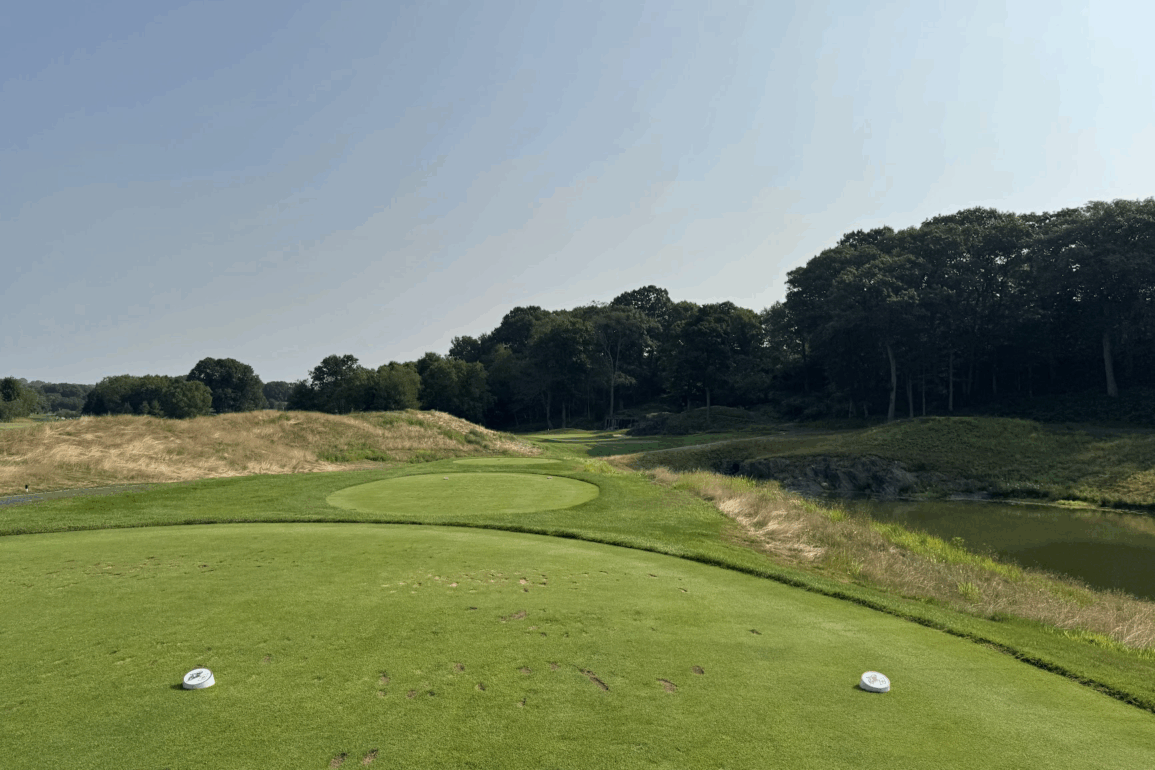
    Chris Bargas Golf Club at Whitney Farms is a public par-71 course measuring approximately 6,534 yards from the tips. The course was originally designed in 1982 by Hal C. Purdy and Malcolm M. Purdy and is located in Monroe, Connecticut.

    The property carries a storied lineage, beginning as Whitney family horse stables and dairy farmland before Chris Bargas Sr., a WWII veteran and real estate developer, acquired it in the mid-1970s with ambitions to construct a championship public facility. Construction spanned three years under both Purdy’s architectural vision and Bargas’s hands-on development, resulting in the 1982 opening. In 2024, the facility was renamed Chris Bargas Golf Club at Whitney Farms to honor the founder’s legacy, though it remains commonly referenced by its original designation. The course received the 2025 Walter Lowell Public Golf Course Distinguished Service Award from the Connecticut Section PGA, validating decades of consistent operation and community contribution. The layout occupies approximately 150 acres of rolling New England terrain featuring mature tree corridors, natural water features, and elevation shifts that create both visual interest and strategic variety. The routing philosophy balances wider opening holes with tighter wooded stretches on the interior nine, then returns to more open concluding holes, providing a rhythmic flow that builds challenge through the middle stretch. Ponds factor into decision-making on multiple holes, while original stone walls and the preserved barn facade near the clubhouse entrance maintain connections to the property’s agricultural heritage. The design demonstrates classic Purdy characteristics with undulating push-up greens that repel poorly struck approaches and demand precise distance control on chips and pitches. Players who appreciate tactical positioning over pure length, value consistent conditioning at accessible public facilities, and enjoy traditional parkland aesthetics within a classic New England setting will find considerable merit in the experience Whitney Farms delivers.

    Strategic Test

    HandicapCourse Strategy
    High Handicap (18+)From the Green tees at 5,704 yards (slope 126, rating 72.2 for women), the course provides manageable landing areas on most holes while still requiring intelligent navigation around water hazards and tree lines. The slope rating indicates that course difficulty escalates moderately for higher handicappers, meaning bogey golfers will face approximately 18 to 20 strokes over par under neutral conditions. Hole 6, a par-5 measuring 562 yards from the Blue tees but considerably shorter from forward markers, presents an ideal risk-reward scenario where players can choose between laying up short of hazards or attempting to reach in regulation based on driving distance and accuracy. The first-rated handicap hole demands strategic placement off the tee to set up favorable angles, and club selection depends entirely on whether the player opts for conservative three-shot strategy or attempts to reach the green in two.
    Mid Handicap (8-18)The White tees at 6,085 yards (slope 125, rating 69.3) provide balanced challenge requiring both length and accuracy across varied hole designs. Mid-handicappers should expect scores in the low-to-mid 80s under typical conditions, with the 125 slope suggesting the course plays fair but unforgiving to wayward shots. Hole 16, a 568-yard par-5 rated as the sixth-hardest hole, exemplifies the strategic depth available at this skill level, demanding a well-positioned drive to access birdie opportunities while penalizing aggressive mistakes with potential double-bogeys. From the Blue tees at 568 yards, driver placement becomes paramount as the hole’s design forces choices between taking on hazards or playing conservative angles that leave longer approach distances. Club selection for the second shot typically ranges from fairway wood or hybrid depending on drive success, with greenside contours requiring precision on the third shot regardless of chosen strategy.
    Low Handicap (0-8)Championship Blue tees at 6,534 yards (slope 127, rating 71.5) deliver a test that emphasizes ball-striking precision and green-reading skills over raw distance, though the sub-6,600-yard length means players must score when opportunities present themselves. Scratch golfers should anticipate even-par rounds under normal conditions, with the modest slope indicating that elite ball-strikers gain significant advantage through accuracy rather than length. Hole 18, a 442-yard par-4 rated as the second-hardest hole, serves as the ultimate examination of sustained quality as players navigate a demanding closing hole that requires both precision off the tee and exacting approach work to secure par. The yardage demands either a long iron or hybrid into an elevated or protected green complex, depending on tee shot execution, making this a true finishing test where mistakes compound quickly.

    Nearby Course Alternatives

    Tashua Knolls Golf Course in Trumbull, approximately 10 minutes southeast of Monroe, presents a compelling municipal alternative with 27 holes of public golf across two distinct layouts. The main Tashua Knolls course, designed by Al Zikorus and opened in 1976, stretches 6,540 yards from the championship tees with a par of 72, carrying a slope rating of 133 and course rating of 72.4 that indicates slightly more difficult playing conditions than Whitney Farms for equivalent-skill players. The facility added a nine-hole Tashua Glen course in 2004, designed by Michael Zikorus, offering a family-friendly executive layout. The terrain occupies former Tamtashua Indian farmland later owned by the Mallet family, creating a pastoral setting with mature trees, stone walls, and a 200-year-old church and cemetery visible from certain holes. Elevation changes appear more pronounced than Whitney Farms, with rolling hills creating uphill and downhill lies that add complexity to club selection and stance work. The greens earn consistent praise for being small, sloped, and severely contoured, demanding superior putting touch compared to many regional public facilities. Strategic value emerges through thoughtful bunkering, water features on approximately seven holes, and hole corridors that reward shaped shots over straight-ball trajectories. The facility’s pedigree includes hosting the 2017 CSGA Connecticut State Amateur Championship and multiple CSGA Women’s Amateur Championships, along with serving as the home site for CIAC State Girls High School Championships. Acreage appears consistent with typical municipal layouts, though the addition of the executive nine provides variety for players seeking quicker rounds. Players who prioritize dramatic elevation changes, severely undulating greens that create significant putting challenges, and the option to play either championship or executive-length golf would find Tashua Knolls more aligned with their preferences than Whitney Farms’ more consistent terrain and green contours.

    H. Smith Richardson Golf Course in Fairfield, located approximately 20 minutes south of Monroe, operates as another high-quality municipal option designed by Hal C. Purdy and later refined by architect Stephen Kay. The 18-hole championship layout measures 6,676 yards from the tips with a par of 72, carrying a slope of 126 and rating of 72.1 that positions it as marginally more challenging than Whitney Farms from comparable tees. Opening in 1972, the course has established itself as one of Fairfield County’s premier public facilities through decades of refined conditioning and strategic interest. The property occupies rolling terrain with mature tree coverage creating defined corridors, moderate water hazards including a notable pond by the eighth hole, and elevation shifts that produce both uphill and downhill approaches throughout the routing. The architect’s emphasis on large, undulating greens creates substantial putting challenges that reward superior green-reading ability, with break severity often exceeding visual appearance. Strategic architecture includes multiple doglegs requiring position-specific tee shots, medium-sized greens that demand accurate approach work, and sparse hazard placement that rewards aggressive play while still allowing recovery from marginal shots. The facility maintains a modest clubhouse with standard pro shop, locker facilities, and dining room offering post-round amenities without excessive formality. One distinguishing operational characteristic involves pace-of-play monitoring where groups receive cards indicating expected arrival times at each hole, creating accountability that appeals to efficiency-minded players. Smith Richardson’s pedigree as a Purdy design connects it architecturally to Whitney Farms, though the 1972 versus 1982 opening dates suggest potential differences in modern design philosophy implementation. Acreage appears consistent with traditional municipal layouts, providing ample space for separated hole corridors without excessive walking distances. Players who favor faster-paced play enforced by course management, prefer larger and more severely contoured greens that emphasize putting skill, and value the architectural continuity of experiencing different Purdy designs within the same geographic region would find Smith Richardson particularly appealing compared to Whitney Farms’ more moderate green complexes and self-regulated pace philosophy.

    Final Word

    Practice facilities at Chris Bargas Golf Club encompass a well-maintained driving range with mat stations allowing players to work on full-swing mechanics before rounds, complemented by dedicated putting and short-game practice areas where golfers can refine touch around the greens. The facility additionally operates an indoor Trackman simulator lounge, providing year-round practice opportunities and the ability to virtually play renowned courses worldwide, a feature uncommon among Connecticut public facilities at this tier. The clubhouse maintains its historic stone barn facade at the entrance, creating architectural continuity with the property’s agricultural past while housing modern pro shop amenities stocked with equipment and apparel from major manufacturers. Dining options include full restaurant service and bar facilities, with outdoor seating areas overlooking the golf course providing post-round relaxation spaces. The venue has developed into a significant regional event destination, hosting weddings, corporate functions, and private celebrations in the banquet facilities, evidenced by over 40,000 annual rounds and consistent utilization of the event spaces. Management’s family ownership structure, now spanning multiple generations of the Bargas family, creates operational continuity and long-term investment perspective uncommon in public golf facilities where ownership frequently changes hands. Recognition from Golf Digest, Connecticut Magazine, and Connecticut Golf Magazine validates the sustained quality standards across course conditioning, customer service, and facility maintenance. What distinguishes Whitney Farms from peer public facilities involves the intersection of championship-caliber design pedigree through the Purdy architectural lineage, consistent conditioning standards maintained across four decades of operation, practice amenities that exceed typical public facility offerings through the simulator addition, and event capabilities that create revenue diversification supporting continued course investment. The 2025 Walter Lowell Award recognition specifically honors public facilities demonstrating exceptional service, accessibility, and contributions to golf’s future, indicating that Whitney Farms operates beyond simple tee time provision to serve broader community golf development objectives. For golfers seeking a reliable, well-conditioned public course with legitimate architectural merit, comprehensive practice facilities, and professional event amenities within the accessible Connecticut public golf market, Whitney Farms proves its value through sustained operational excellence rather than singular standout characteristics.

  • Woodstock Golf Course

    Woodstock Golf Course

    [put_wpgm id=”2″ width=”100%” height=”770px” current_post_only=”true”]

    [letsreview]

    Woodstock Golf Course is a public par-35 course measuring approximately 2,397 yards from the tips. The course was originally designed in 1896 and is located in Woodstock, Connecticut.

    Woodstock Golf Course holds the distinguished title of Connecticut’s second-oldest golf course, with its roots stretching back to 1896 when the layout first welcomed players to its fairways. The architect of this historic nine-hole design remains unidentified, adding an air of mystery to a course that predates the widespread formalization of golf architecture as a profession. The facility originally operated as Woodstock Golf Course before later being associated with Roseland Park, and recent years have seen steady improvements to conditioning and maintenance, with particular attention paid to greens quality and strategic tree clearing that has enhanced playability without compromising the classic character. Spread across approximately 100 acres, the property encompasses not only the golf course but also a driving range and clubhouse facilities. The terrain presents modest rolling ground with just one notable hill, making for a walkable experience that appeals to players who appreciate routing that flows naturally through the landscape. The design exhibits the hallmarks of turn-of-the-twentieth-century architecture, where ground movement and green placement rather than artificial hazards create the strategic interest. Without a single bunker on the property, the course relies entirely on topographical features, elevated greens, and concealed putting surfaces to challenge shotmaking. Tree-lined corridors frame nearly every hole, with mature pines, firs, red oaks, sugar maples, and birches creating visual isolation between holes that is unusual for a nine-hole layout. The routing winds through what feels like an off-the-grid nature preserve, bounded by beautiful northern Connecticut timberland, with glimpses of nearby Roseland Lake adding to the serene setting. This is emphatically a thinking player’s course rather than a test of raw distance, with most holes playing considerably shorter than modern standards and demanding precision over power. The player who will most enjoy Woodstock is one who appreciates golf history, values strategic positioning and accurate iron play, and finds satisfaction in a relaxed pace of play that emphasizes the pure fundamentals of the game. Beginners and developing players benefit from the forgiving overall length, while experienced players must resist the temptation to overpower the layout and instead work the ball into ideal angles for approach shots to small, contoured greens that can punish poor positioning.

    Strategic Test

    HandicapCourse Strategy
    High Handicap (18+)High-handicap players will find Woodstock Golf Course remarkably approachable from the appropriate tees, with a course rating of 35.5 and slope rating of 113 that suggests scoring opportunities exist for those who keep the ball in play. The total yardage of 2,397 yards translates to an average hole length of approximately 266 yards, allowing higher handicappers to frequently reach greens in regulation with well-struck mid-irons or even fairway woods depending on conditions. The absence of bunkers eliminates one major penalty hazard from the equation, though the tree-lined fairways demand reasonable accuracy off the tee. The slope rating of 113 indicates this course plays only slightly more difficult than a standard scratch rating when factoring in obstacles and challenges faced by bogey golfers. The eighth hole at 385 yards presents the most enjoyable test for this skill level, serving as the longest par-4 on the course and requiring solid execution from tee to green. From the back tees, this hole plays as a genuine three-shot proposition for many higher handicappers, typically calling for a driver or fairway wood off the tee through a narrow corridor lined by dense mature trees, followed by a mid-iron or hybrid for the second shot, then a short iron or wedge to a small green. Club selection on the approach becomes critical as the green complex offers little margin for error, and the tightly framed fairway throughout means any significant miss will result in recovery shots from beneath tree canopy where advancement may be limited.
    Mid Handicap (8-18)Mid-handicap players will discover Woodstock presents exactly the type of strategic examination that rewards course management over aggressive play, with the 2,397-yard layout from the tips measuring short enough that greens-in-regulation become realistic goals yet challenging enough that poor positioning leads to difficult recoveries. The course rating of 35.5 plays nearly half a stroke under par, suggesting that solid ball-striking should yield scoring opportunities, while the 113 slope indicates the course defends par more through precision requirements than through overwhelming difficulty. Mid-handicappers will need to resist the temptation to attack drivable par-4s without first considering green locations and surrounding trouble, as several holes feature concealed putting surfaces set on rises or knolls where aggressive lines can lead to awkward recovery positions. The sixth hole at 275 yards offers the ideal strategic challenge for players in this handicap range, presenting a classic risk-reward scenario where the decision between aggressive and conservative play must be evaluated based on conditions and current scoring position. From the championship tees, this short par-4 plays downhill through a depression before rising to the green complex, with a tree guarding the left side that complicates the direct approach. Mid-handicap players face the choice of attempting to drive the green with a well-struck driver or three-wood, accepting the significant risk that comes with a small target and penal surroundings, or laying back with a mid-iron to the fairway depression and leaving a controlled wedge to the elevated green. The conservative play ensures a routine par opportunity, while the aggressive play could yield birdie but more commonly results in difficult up-and-downs from awkward positions around the green. Club selection depends entirely on pin position, wind conditions, and whether the player’s ball flight naturally works from right to left to avoid the sentinel tree.
    Low Handicap (0-8)Low-handicap players might initially dismiss Woodstock’s 2,397-yard length as insufficiently challenging, but this course demands precisely the skills that separate true students of the game from those who rely primarily on power and modern equipment advantages. The 35.5 course rating plays three full strokes under par for scratch players, creating immediate pressure to convert numerous birdie opportunities while avoiding the careless bogeys that result from overly aggressive play on a layout where precision trumps distance. The 113 slope rating suggests the course presents relatively straightforward challenges, yet the reality proves more nuanced as small greens, concealed putting surfaces, and strategic green sites demand exacting iron play and thoughtful approach angles. Accomplished players will need to manufacture different trajectories and ball flights to access tucked pin positions on greens that sit on knolls or behind rises, and the absence of bunkers means that recovery play around greens becomes a pure test of short game creativity rather than technical sand technique. The seventh hole named “The Ravine” at 211 yards provides the finest strategic test for scratch players, presenting a demanding long par-3 that plays semi-blind from the tee where only the flagstick remains visible as the green sits at the base of a small valley. From the back tee, this hole requires anywhere from a four-iron to a hybrid depending on wind conditions, with the critical challenge being club selection and trajectory control as the green sits well below the tee and any miss leaves an extremely difficult recovery. Low handicappers must commit to a smooth swing with sufficient club, resisting the urge to force a longer iron, as the ravine creates both visual intimidation and practical difficulty for approaches that come up short. The green sits well-guarded despite the absence of bunkers, with severe slopes surrounding the putting surface that reject marginal strikes and create tricky recovery chips. Successful play demands an accurate tee shot that finds the putting surface, as recovery from the ravine hollow or from beyond the green into the slope proves exceptionally difficult even for accomplished wedge players.

    Nearby Course Alternatives

    Connecticut National Golf Club in Putnam offers a dramatically different experience approximately 10 minutes northeast of Woodstock, presenting an 18-hole championship test that measures 6,935 yards from the tips with a 72.9 course rating and demanding 133 slope that ranks among the most challenging public tracks in the region. Originally opened in 1994 as Putnam Country Club by designers Mike and Sally Donovan, the course underwent a comprehensive redesign in 2007 by respected architect Mark Mungeam that transformed the layout into its current configuration featuring 33 new tee decks, 44 bunkers, improved drainage, and over 700 additional yards that created an entirely new strategic framework. The property spans substantial acreage with dramatic elevation changes throughout the routing, particularly on the front nine where sloping fairways and blind tee shots test decision-making, while the back nine transitions to a more links-influenced aesthetic with distinctive mounding, fescue-covered features, and water elements that demand precise shotmaking. Mungeam’s redesign emphasizes Cape-style strategic options on several holes, most notably the par-4 third at 389 yards where aggressive players can attempt to cut the corner over hazards while conservative routes remain available, and the finishing stretch includes multiple demanding long par-4s that require both distance and accuracy to access wildly undulating greens. The course plays over considerably more dramatic terrain than Woodstock, with elevation changes creating blind shots and downhill approaches that complicate club selection, and conditioning typically exceeds expectations with quick greens and well-maintained fairways that provide consistent roll. Players who will most enjoy Connecticut National over Woodstock are low-to-mid handicappers seeking a modern championship test that prioritizes length and strategic variety, those who appreciate the visual drama of elevation changes and links-style mounding, and anyone looking for an 18-hole experience that can occupy an entire morning or afternoon with more varied shot requirements than Woodstock’s compact nine-hole design.

    Raceway Golf Club in Thompson provides another compelling alternative approximately 15 minutes north of Woodstock, delivering an 18-hole parkland experience that measures 6,523 yards from the championship tees with a 71.1 course rating and moderate 119 slope that creates an accessible yet engaging test for players across the handicap spectrum. Designed by Donald Hoenig and opened in 1940, Raceway predates modern course architecture trends and instead offers a traditional tree-lined routing through rolling terrain that emphasizes accuracy and course management over raw power. The layout spans ample acreage with the majority of holes bordered by mature forest that frames landing areas and demands straight driving, and strategic interest derives from well-placed doglegs, three short par-5s that present legitimate birdie opportunities, and several holes where water hazards force carry decisions off the tee. The front nine features back-to-back par-5s including one distinctive double-dogleg hole where players must navigate over a pond to reach the green, creating risk-reward scenarios that rarely appear on courses from this era. Conditioning at Raceway typically registers as above average with particular attention to green quality, though the facility employs crushed stone rather than traditional sand in bunkers which creates a different recovery challenge that some players find initially disorienting. The course provides a more comprehensive practice facility than Woodstock with a driving range featuring target greens and both grass and mat hitting areas, plus a practice putting green, and the clubhouse includes a tavern that serves meals and provides a gathering space for post-round discussion. Players who will most enjoy Raceway over Woodstock are mid-to-high handicappers seeking a full 18-hole round at moderate length where scoring opportunities exist but not at the expense of strategic interest, those who prefer parkland aesthetics with substantial tree definition over open links-style designs, and anyone who values additional amenities like expanded practice facilities and dining options. The pace of play at Raceway can run slower than Woodstock during peak times due to higher player volume on a public track in an area with limited alternative options, but the overall experience provides excellent value for golfers seeking traditional tree-lined golf architecture at reasonable rates.

    Final Word

    Beyond the golf course itself, Woodstock provides several practice amenities that enhance the overall experience and allow players to prepare properly before venturing onto the historic layout. The facility maintains a driving range with two practice tees that feature updated targets and mat surfaces, allowing players to work through the bag and develop rhythm before their round, though the range operates with somewhat limited hours and may not always be available depending on seasonal conditions and maintenance schedules. A practice putting green sits near the clubhouse, providing essential preparation for the small, contoured greens that define strategic play on the course, and players would be wise to spend adequate time on this surface to develop feel for the speed and break they will encounter during their round. The clubhouse presents a modest but functional structure that houses the pro shop and provides basic amenities without pretense toward modern luxury, reflecting the course’s emphasis on pure golf rather than elaborate non-golf attractions. Ice cream service has become something of a tradition at the facility, offering a nostalgic touch that particularly appeals to families and younger players who appreciate the casual atmosphere. The property sits directly across from Roseland Park, a 203-acre public space that encompasses Roseland Lake, extensive forested land, sports fields, and shoreline access for boating and fishing, creating opportunities for families to enjoy a full day of outdoor recreation that extends beyond golf. While Woodstock does not offer additional amenities like tennis courts or swimming facilities on the golf property itself, the connection to Roseland Park and the broader recreational infrastructure effectively expands the overall experience. What makes Woodstock Golf Course genuinely special is its authentic preservation of nineteenth-century golf architecture in an era when so many historic layouts have been dramatically altered or lost entirely to development pressures. The course proves its enduring value not through championship yardage or elaborate hazards but through the timeless appeal of strategic golf played over natural terrain where ground movement, green placement, and thoughtful shotmaking create engaging challenges regardless of technological advances in equipment. The setting within northern Connecticut’s quiet corner provides genuine isolation from modern pressures, and the absence of crowds or forced pace allows players to experience golf as it existed during the sport’s formative American years. For those seeking connection to golf history, appreciation for strategic simplicity, and escape to a secluded natural setting where the game remains paramount, Woodstock delivers an experience that transcends its modest length and proves that great golf architecture need not rely on distance or artificial difficulty to create lasting enjoyment.

  • Woodhaven Country Club

    Woodhaven Country Club

    [put_wpgm id=”2″ width=”100%” height=”770px” current_post_only=”true”]

    [letsreview]

    Woodhaven Country Club is a public par-36 course measuring approximately 3,387 yards from the tips. The course was originally designed in 1968 by Al Zikorus and is located in Bethany, Connecticut.

    Woodhaven Country Club occupies a secluded woodland setting nestled deep in the forests of Bethany, where the layout has remained largely faithful to its original 1968 design by Al Zikorus, a respected ASGCA Fellow who specialized in New England courses throughout his career. The property is estimated to cover approximately 50 to 60 acres of rolling terrain carved through mature hardwoods, creating a sense of isolation on each hole that rewards strategic thinking over raw power. The course has experienced periods of varying ownership and maintenance standards over its five-plus decades, with recent ownership changes bringing renewed investment in conditioning and infrastructure improvements. As a compact regulation layout, Woodhaven presents itself as old-school golf in the truest sense, with bluegrass fairways, traditional bunkering, and greens that demand precision rather than brute force. The routing makes effective use of elevation change, particularly on the front nine, where several holes tumble downhill from elevated tees before climbing back toward pitched green complexes. This is a thinking person’s track that rewards course management and strategic positioning over distance, making it particularly appealing to players who appreciate Golden Age design principles adapted to a shorter yardage envelope. The player who will most enjoy Woodhaven is one who values shot-making variety, understands how to work the ball into different pin positions, and doesn’t equate quality golf with championship length.

    Strategic Test

    HandicapCourse Strategy
    High Handicap (18+)Players in this range should consider the white tees at 6,294 yards, which reduces the pressure on driving distance while maintaining the course’s strategic character. With a slope rating of 123 and course rating of 70.6 from these markers, the layout remains challenging but more forgiving for higher handicappers who struggle with consistency off the tee. The ninth hole, a 400-yard par-4 finisher, exemplifies the challenge this group faces as it requires a tee shot favoring the left side of a fairway that tilts right-to-left, demanding both accuracy and proper angle management. From the white tees at approximately 380 yards, a well-struck driver or fairway wood leaves a mid-iron approach to a green that accepts shots from multiple angles, though missing left or long introduces penalty. The elevated tee creates optical challenges that can lead to club selection errors, and the green’s subtle undulations make lag putting the priority for avoiding three-putts.
    Mid Handicap (8-18)This skill level should explore both the white and blue tees depending on current form, as the blue markers at 6,774 yards present a slope of 128 and rating of 72.6 that tests ball-striking without overwhelming the competent player. The strategic complexity emerges most clearly on holes where position trumps distance, particularly in managing approach angles to crowned or plateaued greens. The fourth hole, a substantial par-4 stretching to 435 yards from the blues, stands out as the most rewarding challenge for mid-handicappers who can execute a proper game plan. This hole features a rolling fairway that rewards a draw off the tee to maximize distance, followed by an approach to a green set upon a knoll that repels anything but the most precisely struck iron. From 410 yards at the white tees, the hole still demands two quality shots, with fairway bunkers at driving distance creating a risk-reward calculation on the tee. The green’s elevation and contour make club selection critical, as anything short will roll back off the false front while long shots face challenging recovery.
    Low Handicap (0-8)Accomplished players should play the course from the blue tees at 6,774 yards to experience the full strategic examination that Zikorus intended. While the overall yardage might seem modest by modern standards, the slope rating of 128 and course rating of 72.6 reveal that scoring demands precision rather than power, with narrow driving corridors and undulating greens that penalize wayward shots. The most engaging test for this caliber player comes at the sixth hole, a par-5 measuring 570 yards that presents legitimate risk-reward decisions throughout. From the championship tees, this three-shotter demands a strategic tee ball that avoids fairway bunkers while setting up the optimal angle for the second shot, which must navigate a fairway that narrows as it approaches the green. The green complex accepts running approaches but severely penalizes aerial shots that miss their mark, creating a genuine strategic dilemma about whether to lay back or attack with the second. Players capable of reaching in two must weigh the reward of birdie or eagle against the significant hazards guarding the green, while those playing conservatively face a demanding short game examination around a putting surface with multiple tiers.

    Nearby Course Alternatives

    The Golf Club At Oxford Greens in Oxford provides an entirely different architectural experience just 15 minutes northwest of Woodhaven, where Mark Mungeam’s 2004 design sprawls across 680 acres of former woodland west of Naugatuck State Forest. The championship layout measures 7,186 yards from the tips with a slope rating of 135 and course rating of 75.4, establishing it as one of Connecticut’s most demanding public tracks for accomplished players seeking a stern test. The neoclassical design philosophy embraces wide fairway corridors balanced by strategic bunkering and significant green undulation, with bentgrass surfaces throughout providing faster playing conditions than Woodhaven’s bluegrass. The property’s dramatic elevation changes create spectacular vistas and forced carries that are absent from Woodhaven’s more intimate woodland setting, while the generous acreage allows each hole to exist in isolation without parallel routing. Mungeam incorporated numerous risk-reward opportunities through reachable par-5s and drivable par-4s, though the course’s length and difficulty rating of 135 slope makes it significantly more penal for wayward shots than Zikorus’s design. Players who will prefer Oxford Greens to Woodhaven are those seeking modern championship golf that tests distance and trajectory control, particularly low-handicap competitors who want to measure themselves against a layout that has hosted major Connecticut amateur championships and features the kind of dramatic aesthetics that define contemporary course architecture.

    Laurel View Country Club in Hamden offers a Geoffrey Cornish design from 1969 approximately 12 minutes east of Woodhaven, presenting an 18-hole layout that measures 6,924 yards from the back tees with a slope of 127 and rating of 73.6. The course occupies roughly 125 acres of rolling terrain with mature tree-lined corridors and bentgrass playing surfaces on both fairways and greens, providing notably faster green speeds than Woodhaven’s more traditional setup. Cornish’s architectural approach emphasizes strategic bunkering and green contouring over water hazards, with several distinctive features including a massive double-green shared by the seventh and ninth holes that creates unusual putting challenges. The property features more pronounced elevation change than Woodhaven, particularly on the back nine where several holes climb and descend through wooded hillsides, rewarding players who can control trajectory and spin. The course’s reputation has grown steadily since its opening, with the facility recently rebranded as The Vue to reflect upgraded amenities and conditioning standards that exceed what family-operated courses like Woodhaven typically maintain. Players who favor Laurel View over Woodhaven are those seeking a full 18-hole round with greater variety in hole lengths and types, mid-to-high handicappers who benefit from more generous landing areas off the tee, and anyone who prioritizes consistently fast bentgrass greens over the more variable surfaces found on shorter municipal-style courses.

    Final Word

    Woodhaven Country Club maintains practice facilities including a driving range with mat hitting stations and a putting green, providing adequate warmup opportunities though lacking the extensive short-game areas found at larger facilities. The clubhouse offers basic amenities with a modest pro shop carrying essential equipment and apparel, plus a casual dining area that serves the course’s popular hot dog special which has become something of a local tradition among regular players. The family-owned operation maintains a welcoming atmosphere that prioritizes accessibility and pace-appropriate play over the country club formality found at higher-end facilities, creating an environment where golfers of all abilities feel comfortable learning the game or working on specific aspects of their strategy. The course does not offer swimming, tennis, or other recreational diversions beyond golf, keeping the focus squarely on the playing experience rather than attempting to compete with full-service clubs that require significant membership investment. What distinguishes Woodhaven in the regional golf landscape is its commitment to preserving Al Zikorus’s architectural vision across more than five decades, maintaining the strategic shot values and routing principles that defined quality golf course design in the late 1960s when emphasis was placed on clever use of terrain rather than manufactured difficulty. The course proves that championship yardage is not prerequisite for engaging golf, offering instead a masterclass in how thoughtful design can create variety and challenge within a compact footprint that rewards the thinking player’s approach to course management. For those who understand that great golf exists on many scales and who value strategic complexity over mere length, Woodhaven represents genuine old-school architecture that refuses to apologize for what it is or attempt to become something it was never meant to be.

  • Wintonbury Hills Golf Course

    Wintonbury Hills Golf Course

    [put_wpgm id=”2″ width=”100%” height=”770px” current_post_only=”true”]

    [letsreview]

    Wintonbury Hills Golf Course is a public par-70 course measuring approximately 6,711 yards from the tips. The course was originally designed in 2005 by Pete Dye with Tim Liddy and is located in Bloomfield, Connecticut.

    Wintonbury Hills represents Pete Dye’s inaugural championship design in New England, and the course has garnered significant acclaim since its opening, earning recognition from publications such as Golfweek and being ranked among the top municipal courses in the region. The routing was constructed on what had previously been an approximately 80-acre site encompassing wetlands and forested terrain, requiring extensive environmental permitting before construction could commence. The layout features three par fives and five par threes across its 18 holes, with several holes positioned near the Bloomfield reservoir, offering scenic water views. The front nine exhibits more links-style characteristics with open fairways and strategic bunkering, while the back nine transitions into a more traditional tree-lined parkland design. The terrain includes rolling fairways with moderate elevation changes that add visual interest without becoming overly severe. Strategic players who value course management, accurate approach play, and nuanced green reading will find the design particularly rewarding, as the 125 bunkers and undulating putting surfaces demand thoughtful shot selection rather than pure power.

    Strategic Test

    HandicapCourse Strategy
    High Handicap (18+)From the Yellow tees at 5,005 yards with a slope of 114 and rating of 64.0 for men, the course provides a manageable experience for developing players. The course rating suggests rounds will typically fall in the mid-80s to low-90s range. The generous fairway corridors on the front nine offer forgiveness off the tee, though accurate distance control becomes critical on approach shots to multi-tiered greens. The par-4 5th hole at 333 yards from the tips provides an excellent risk-reward opportunity for this player category. From the Yellow tees, this hole plays even shorter and offers a genuine birdie chance with a solid drive followed by a wedge approach. The elevated green complex demands accurate club selection, as missing long or short can leave difficult up-and-downs.
    Mid Handicap (8-18)The White tees at 5,678 yards with a slope of 121 and rating of 67.4 present a balanced test that allows mid-handicappers to utilize most clubs in the bag. Expected scoring typically ranges from the mid-70s to mid-80s depending on course conditions. From these tees, strategic positioning off the tee becomes paramount, as many fairways feature left-to-right slopes that can funnel drives into less desirable angles. The par-3 7th hole at 255 yards from the championship tees exemplifies Pete Dye’s philosophy regarding long par threes. From the White tees, this downhill one-shotter still demands a confident long iron or hybrid, rewarding proper club selection while punishing those who come up short in greenside bunkers.
    Low Handicap (0-8)From the Black tees at 6,711 yards with a slope of 129 and rating of 72.4, accomplished players face a comprehensive examination of shotmaking skills. Scoring expectations typically fall in the low 70s, though fast greens and tricky pin positions can push scores higher. The championship yardage requires controlled drives that find specific landing zones to set up optimal approach angles. The par-4 14th hole at 455 yards serves as the course’s signature test and plays as the number one handicap hole. This demanding two-shotter runs along the Tunxis Reservoir on the right side throughout its length, featuring a semi-blind tee shot to a fairway that slopes severely from left to right. Length alone proves insufficient here, as accuracy becomes paramount to avoid the water hazard. The approach shot plays to a small, well-protected green with a distinctive oak tree positioned directly behind the putting surface.

    Nearby Course Alternatives

    Timberlin Golf Club in Berlin offers a contrasting experience approximately 20 minutes south of Wintonbury Hills. This Al Zikorus design opened in 1970 and was subsequently refined by Stephen Kay and Doug Smith in 2006, with additional work by Ray Hearn in 2014. The par-72 layout stretches to 6,733 yards from the championship tees with a slope of 129 and rating of 72.2, playing slightly longer than Wintonbury while maintaining comparable difficulty metrics. Situated along the base of Ragged Mountain, Timberlin occupies terrain featuring more pronounced elevation changes than the Wintonbury property, with the back nine particularly showcasing raised green complexes and strategic fairway bunkering. The course sprawls across rolling farmland that provides expansive vistas of the surrounding countryside. While Timberlin lacks the Pete Dye pedigree, the layout compensates through thoughtful use of deep bunkers, elevated greens with rigorous putting surfaces, and strategically positioned hazards that reward course management over aggressive play. The execution-focused design philosophy favors disciplined players who prioritize accuracy over distance, making it an appealing alternative for mid-handicappers who appreciate traditional parkland architecture with ample fairway bunkering and moderate challenges rather than the more modern links-to-parkland hybrid styling at Wintonbury.

    Lyman Orchards Golf Club in Middlefield provides golfers with two distinct 18-hole championship courses roughly 25 minutes southeast of Bloomfield. The Robert Trent Jones Course, designed by the legendary architect in 1969, measures 7,011 yards from the tips with a par of 72, playing notably longer than Wintonbury. With a slope rating of 134 and course rating in the low-to-mid 70s, Jones Course demands length and strategic thinking across terrain that incorporates rolling hills on the front nine and water hazards on seven of nine holes on the back. The Jones design philosophy of risk-reward golf manifests through expansive bunkering, liberal use of water features, and green complexes that punish poorly positioned approaches. The Gary Player Course, opened later, stretches to 6,600 yards with a par of 71 and features deciduous trees, white pines, and routing through apple orchards with substantial elevation changes throughout. Set on the historic 1,100-acre Lyman Orchards property established in 1741, the facility occupies significantly more acreage than Wintonbury and provides exceptional practice facilities including a 40-bay driving range recognized among the nation’s top standalone hitting ranges. Both courses hold Audubon International Cooperative Sanctuary certification, demonstrating environmental stewardship. The combination of two championship layouts offers variety that single-course facilities cannot match, making Lyman Orchards particularly attractive to accomplished players seeking architectural diversity and those who value extended practice facilities, though the significantly greater length and slope ratings may prove more demanding for higher-handicap golfers.

    Final Word

    Wintonbury Hills provides comprehensive practice facilities including a full driving range, though players should note the range sits approximately half a mile from the clubhouse and requires automobile access with tokens purchased beforehand at the pro shop. The practice area behind the clubhouse features a spacious putting green where chipping is permitted, along with practice bunkers positioned adjacent to the green for short-game work. The facility utilizes GPS-equipped golf carts that provide yardage information and automated speed governing for environmental protection, though some players may find the cart restrictions limiting when navigating certain areas of the property. The Tap Inn restaurant offers dining throughout the season with an Irish pub atmosphere, serving breakfast on weekends and lunch and dinner selections with outdoor seating overlooking the course. The pro shop maintains professional stocking with modern equipment and apparel, while the instruction program features PGA professionals utilizing K-Vest 3D wireless technology for detailed swing analysis. Group and individual lessons are available with packages ranging from single sessions to comprehensive five-lesson series including video analysis and on-course instruction. The facility accommodates golf leagues and hosts outings for groups from 16 to 144 players with comprehensive event planning services. Wintonbury Hills distinguishes itself through the rare combination of Pete Dye architecture at a municipal facility, expertly maintained playing surfaces that rival private clubs, and a routing that seamlessly transitions from links-inspired openness to traditional tree-lined corridors. The layout’s walkability, with greens and tees positioned in close proximity, reflects the original design intention of creating an accessible championship venue for public play. Recognition from Golfweek and Golf Digest validates the course’s standing among Connecticut’s finest public facilities, while the environmental sensitivity demonstrated through Audubon certification and protection of Eastern Box Turtle habitat shows commitment beyond mere golf operations. For players seeking strategic architecture, exceptional conditioning, and a thoughtful examination of shotmaking skills without pretension, Wintonbury Hills delivers an experience that honors both the game’s traditions and the natural landscape.

  • Westwoods Golf Club

    Westwoods Golf Club

    [put_wpgm id=”2″ width=”100%” height=”770px” current_post_only=”true”]

    [letsreview]

    Westwoods Golf Club is a public par-61 course measuring approximately 4,407 yards from the tips. The course was originally designed in 1964 by Geoffrey S. Cornish and is located in Farmington, Connecticut.

    Westwoods Golf Club opened its doors in 1964 as one of prolific architect Geoffrey Cornish’s many contributions to accessible public golf in New England. The Canadian-born designer, who trained under the legendary Stanley Thompson and went on to design over 200 courses, created Westwoods with his characteristic philosophy of building playable, maintainable layouts that prioritized getting people on the course rather than creating monuments to ego. The facility appears to occupy roughly 80 to 100 acres in the southwestern corner of Farmington, nestled within a country setting that provides a respite from the surrounding suburban development. The routing demonstrates Cornish’s practical approach to working with available terrain, featuring modest elevation changes that add visual interest without creating punishing forced carries or exhausting climbs. The par-61 configuration includes just two par-5s and two par-4s, with the remaining 14 holes being par-3s of varying length, creating an unusual but strategically compelling examination of iron play and course management. This compressed format rewards precision over power, making it particularly appealing to players who value shot-making and creative scoring over brute force. The bent grass surfaces on both greens and fairways provide consistent playing conditions, while the straightforward design aesthetic emphasizes function over ornamentation, a hallmark of Cornish’s democratic approach to the game. Players who enjoy thinking their way around a course, mid-handicappers looking to work on their short game, and anyone seeking a quicker round without sacrificing strategic depth will find Westwoods offers compelling golf.

    Strategic Test

    HandicapCourse Strategy
    High Handicap (18+)From the forward Red tees at 3,597 yards with a course rating of 61.3 and slope of 104 for men, higher handicappers face a manageable challenge that still demands solid iron play. The slope rating suggests the course becomes moderately more difficult for less skilled players than the raw yardage indicates, as precision matters more than distance here. The 10th hole serves as an excellent strategic puzzle at 420 yards from the tips, playing as one of only two par-4s on the course. This hole rewards controlled tee shots with fairway wood or hybrid to avoid trouble, followed by a mid-iron approach that must find the proper tier on what is likely a multi-level green. The scoring opportunity exists for bogey golfers who can manage their expectations and play to the center of greens rather than hunting flags.
    Mid Handicap (8-18)Playing from the White tees at 4,407 yards yields a course rating of 60.8 with a slope of 93, indicating the layout plays relatively straightforward for competent players while still requiring tactical awareness. The compressed slope rating relative to par suggests that course management trumps raw skill differentials, meaning smart play gets rewarded more than pure ball-striking. The opening hole presents itself as the defining strategic challenge, a 494-yard par-5 that represents one of only two opportunities to reach a par-5 in regulation. Mid-handicappers must decide whether to challenge this reachable par-5 with driver off the tee or lay back, then navigate what likely amounts to a three-shot hole that demands precise distance control with mid-irons. The prevalence of par-3s throughout the round creates multiple birdie opportunities while also introducing potential disaster if iron play falters.
    Low Handicap (0-8)Championship tees at 4,407 yards with a 60.8 rating and 93 slope present a unique examination of precision play, as the relatively benign slope rating indicates that better players should navigate the layout comfortably if they execute properly. The scoring potential exists in abundance, with 14 par-3 holes offering birdie chances for players with dialed-in yardages and confidence in their iron game. The 9th hole at 235 yards from the tips provides the ultimate test of long-iron control, playing as the longest par-3 on the course and demanding a confident strike to find what is likely a well-protected green surface. Low handicappers who can control trajectory and spin will feast on the shorter par-3s while needing to convert the two par-5s to stay ahead of their handicap. The absence of length-induced difficulty shifts the entire strategic framework toward accuracy, green-reading, and wedge play within 100 yards.

    Nearby Course Alternatives

    Tunxis Country Club – White Course in Farmington presents the most obvious alternative for public golfers seeking a more traditional examination just minutes from Westwoods. Located approximately 5 minutes northeast along Town Farm Road, this Al Zikorus design from 1962 stretches 6,638 yards to a par of 72 with a course rating of 71.3 and slope of 124, occupying an estimated 150 acres along the Farmington River. The White Course represents New England public golf at its most strategic, featuring multiple island and peninsula greens that demand precise approach play with water constantly in play on the back nine. Where Westwoods emphasizes iron play through its par-3 heavy routing, Tunxis tests the complete arsenal with demanding tee shots along tree-lined corridors and approach shots to greens perched on or near water. The elevation changes prove more dramatic than Westwoods, with several holes playing significantly uphill or downhill, adding complexity to club selection. Zikorus brought a more manufactured aesthetic to his design compared to Cornish’s understated approach, incorporating more dramatic green complexes and hazard framing that heightens both risk and reward. The pedigree includes hosting numerous regional amateur events, establishing its reputation as one of Connecticut’s premier public facilities. Players who prefer longer clubs in their hands, enjoy navigating water hazards, and appreciate more dramatic green contours will gravitate toward Tunxis over Westwoods. The additional 2,200 yards and higher slope rating make it the clear choice for better players seeking a sterner examination, while the riverside setting provides more visual drama throughout the round.

    Rockledge Golf Club in West Hartford offers another compelling public option roughly 10 minutes southeast in the heart of Connecticut’s capital region. Designed by Al Zikorus and opened in 1940, this 6,436-yard par-72 layout carries a course rating of 71.1 with a slope of 129, making it the most difficult of the three courses discussed while occupying approximately 120 acres of the original estate property. The course’s history dates to 1924 when Yale alumnus Wilton W. Sherman created the initial 14-hole layout, with expansion to 18 holes coming in 1927 before the town acquired the property in 1960. Rockledge’s championship pedigree includes recognition as one of New England’s finest public courses and perennial honors from Hartford Magazine, with large, severely sloped greens presenting the primary defense alongside strategic bunkering. The bent grass surfaces and meticulous conditioning set it apart from many municipal facilities, with significant topographical variation creating both dramatic elevation changes and strategic interest throughout the round. Where Westwoods prioritizes shot-making within a compressed yardage framework and Tunxis emphasizes water hazard navigation, Rockledge demands length combined with precision, particularly on approach shots to greens that all slope predominantly front to back. The architectural pedigree and historical significance attract serious players seeking tournament-quality conditions and a layout that has stood the test of time. Players who value championship pedigree, appreciate testing green complexes, and prefer courses with significant elevation variation will find Rockledge offers the most complete examination, though at roughly 2,000 yards longer than Westwoods, it represents a notably different strategic challenge and time commitment.

    Final Word

    Beyond the 18 holes of golf, Westwoods provides a comprehensive practice facility anchored by a substantial 24,000-square-foot putting green that allows players to work on pace and break before their round or as a standalone practice session. The driving range features a mix of both artificial and natural grass hitting stations, offering flexibility for players who prefer either surface and enabling year-round operation even as weather deteriorates. A practice bunker allows for short game work, though the facility does not appear to offer an extensive short game complex with multiple greenside practice areas. Carol’s Lunchbox restaurant operates as the on-site dining option, providing both quick snacks and full meals with the kind of approachable menu that serves daily play rather than trying to be something it is not. The pro shop stocks necessary equipment and apparel while offering private instruction from PGA professionals for players looking to improve their games. Recent additions to the property include eight dedicated pickleball courts, a splashpad for family recreation, and a versatile pavilion for gatherings, demonstrating the facility’s evolution into a true community recreation center beyond pure golf. Youth camps and leagues run throughout the season, contributing to the next generation of golfers while creating a sense of community among regular players. The 2026 introduction of an expanded golf cart fleet signals ongoing investment in the player experience, while seven-day online tee time booking adds convenience for modern consumers. What makes Westwoods special among Connecticut public courses is its honest presentation of golf as a strategic endeavor divorced from artificial difficulty or excessive length, honoring Geoffrey Cornish’s vision of creating accessible layouts that reward thought over athleticism. The unusual par-61 configuration forces players to recalibrate their approach to course management, valuing precision iron play and conservative decision-making over aggressive driving and approach strategy. The facility proves its value not through championship pedigree or dramatic landscape features but through providing consistent conditioning, strategic interest within its constraints, and efficient pace of play for golfers who understand that great golf need not consume five hours or demand 7,000 yards to test skill and generate satisfaction.

  • Western Hills Golf Course

    Western Hills Golf Course

    [put_wpgm id=”2″ width=”100%” height=”770px” current_post_only=”true”]

    [letsreview]

    Western Hills Golf Course is a public par-72 course measuring approximately 6,356 yards from the tips. The course was originally designed in 1960 by William F. Gordon and is located in Waterbury, Connecticut.

    William F. Gordon established his independent practice in 1950 after working with the esteemed Toomey and Flynn firm and building courses for Donald Ross. Western Hills represents his sole public-access design in Connecticut, a notable counterpoint to his most celebrated work at The Stanwich Club in Greenwich, which has been ranked among the nation’s top 100 courses. The course opened for play in fall 1960 and underwent a thoughtful renovation in 2007 by architect Stephen Kay, whose work focused on strategic bunkering modifications and drainage improvements while respecting Gordon’s original design intent. The property encompasses approximately 150 acres of rolling terrain characteristic of western Connecticut’s glacially sculpted landscape. The routing follows a classic out-and-back configuration, threading through corridors framed by mature hardwoods and conifers that define strategic lines of play. Gordon’s design philosophy, heavily influenced by Robert Trent Jones principles, emphasizes precision from the tee and demanding approach shots into greens protected by strategic bunkering. The course presents a thinking player’s test rather than a overpowering one, rewarding position over distance and requiring careful club selection given the substantial elevation changes throughout. Players who appreciate strategic placement, elevation-dependent shot-making, and greens that demand respect for proper entry angles will find Western Hills an engaging examination of their complete skill set.

    Strategic Test

    HandicapCourse Strategy
    High Handicap (18+)From the forward tees at 5,237 yards with a rating of 68.8 and slope of 118, the course presents manageable length but demands accuracy through tree-lined corridors. The slope suggests high-handicap players will face scoring challenges primarily from elevation changes and green protection rather than pure distance. Strategic elements include avoiding forced carries over hazards and keeping drives within the generous but tree-bordered fairways. Hole 12, a par-4 measuring 314 yards from the championship tees, offers the ideal opportunity for success. This shorter two-shotter rewards course management, allowing mid-to-short irons off the tee to find position before attacking the green. The abbreviated length removes driver-related dispersion from the equation while still requiring solid iron play into a well-defended green complex.
    Mid Handicap (8-18)The white tees at 6,136 yards carry a rating of 69.5 and slope of 127, providing appropriate challenge for mid-handicap golfers who can work the ball both ways. Strategic elements include navigating Gordon’s preference for precision tee shots where fairway bunkers frame ideal landing zones. The elevated slope rating relative to par indicates that green complexes and undulating terrain create scoring difficulty beyond simple yardage. Players must balance aggressive lines with conservative bailout areas, particularly on holes where greens sit elevated or feature severe contours. Hole 8, measuring 397 yards from the tips, exemplifies mid-handicap examination. This demanding par-4 features the number one stroke index, requiring a controlled tee shot followed by a precise mid-iron approach to an elevated green protected by bunkers. The hole rewards thoughtful placement over power, with premium positioning in the fairway opening preferred angles into the putting surface.
    Low Handicap (0-8)From the championship tees at 6,356 yards with a rating of 70.5 and slope of 129, accomplished players face a layout that demands complete shot-making repertoire. Strategic elements center on Gordon’s design principle of precision driving, with narrow fairway corridors and strategic bunkering punishing wayward tee shots. The modest rating relative to par indicates that length alone provides no advantage without accuracy and precision iron play. Low-handicap players must manufacture shot shapes around doglegs, manage elevation-adjusted distances, and execute precise approaches into firm, contoured greens with severe false fronts. Hole 7, a par-5 measuring 540 yards, represents the quintessential strategic examination. This three-shot hole rewards aggressive but calculated play, with positioning off the tee critical to accessing favorable layup zones. The green complex features bunkers on both sides, demanding precise trajectory control and spin management on the approach. Accomplished ball-strikers can attack in two with proper wind assessment, while the lay-up game requires exacting distance control to avoid awkward wedge yardages.

    Nearby Course Alternatives

    The Golf Club at Oxford Greens in Oxford presents a compelling alternative approximately 15 minutes south of Western Hills. Designed by Mark Mungeam and opened in 2005, Oxford Greens stretches to 7,186 yards from the championship tees with a rating of 74.8 and slope of 135, positioning it as a significantly longer and more demanding test. The course occupies roughly 200 acres routed through woodland west of Naugatuck State Forest, featuring bent grass surfaces throughout and dramatic elevation changes that exceed those at Western Hills. Mungeam’s design philosophy pays homage to classical architecture on modern scale, incorporating template holes including a Redan par-3 at the 185-yard 13th. The strategic value lies in the course’s requirement for both power and precision, with narrow driving corridors through forest giving way to expansive fairway corridors in open meadowland. Notable architectural features include the 218-yard par-3 2nd, which plays fifty feet downhill with water and sand framing the left side, and the 170-yard 16th, both teeing area and green benched into a hillside demanding laser precision. The undulating terrain creates blind and semi-blind approach shots that reward course knowledge and aggressive line selection. Players who prioritize modern championship-caliber architecture, prefer dramatic elevation changes, and possess the length to handle 7,000-plus yards will find Oxford Greens more engaging than Western Hills’ comparatively restrained dimensions and traditional parkland character.

    Hop Brook Golf Course in Naugatuck offers a contrasting nine-hole experience located approximately 10 minutes southeast of Western Hills. This municipal layout measures 2,887 yards for 18 holes with a rating of 66.6 and slope of 112, presenting significantly reduced length but concentrated strategic interest on compact acreage of approximately 60 acres. Originally opened in 1923, the course features rolling terrain through the first five holes before flattening over the closing stretch, with pitched greens demanding precise trajectory control despite abbreviated yardages. The strategic value centers on exacting iron play rather than driver management, with the course rewarding players who flight wedges and short irons to specific quadrants of small, contoured putting surfaces. Notable holes include the par-4 8th at 402 yards, which features a rippling fairway and green concealed behind a substantial berm, and the par-5 6th at 490 yards, a legitimate three-shot hole with a dogleg right. The routing’s tumbling landscape through holes one through five creates substantial elevation change despite the abbreviated overall length, while several par-3s from elevated tees demand club-up precision. Historical significance includes the course being the home track of 1931 U.S. Open champion Billy Burke, lending architectural pedigree beyond its modest municipal classification. Players who value short-game examination over driver prowess, prefer walking-friendly layouts, and seek concentrated strategic interest in abbreviated playing time will find Hop Brook more appealing than Western Hills’ full-length examination and more expansive property.

    Final Word

    Western Hills maintains a complete practice facility including dedicated putting and chipping areas that provide adequate preparation before rounds, though no dedicated driving range exists on property. The indoor teaching facility allows for year-round instruction and club fitting services through the professional staff. Verdie’s restaurant and bar, housed within the clubhouse, has earned recognition as one of Connecticut’s superior 19th-hole destinations, offering full-service dining and banquet capabilities that extend the facility’s utility beyond pure golf operations. The pro shop maintains comprehensive inventory of equipment and apparel, while locker and shower facilities provide traditional country club amenities within the public-access framework. Tournament and outing infrastructure supports competitive play and group events, with the course hosting the annual Western Hills Open that draws regional participation. The property’s commitment to course conditioning, evidenced by Stephen Kay’s drainage-focused renovation work, ensures playability throughout Connecticut’s variable spring and fall seasons when lesser facilities struggle with wet conditions. What distinguishes Western Hills is its architectural pedigree as William F. Gordon’s only public-access design in Connecticut, offering everyday players exposure to the same design principles that established Stanwich Club’s national reputation. The routing’s natural elevation changes and strategic bunkering provide examination of complete shot-making skills without artificial difficulty or contrived hazards. For golfers seeking traditional parkland architecture emphasizing precision over power, Western Hills delivers sophisticated strategic interest within a municipal framework, proving that thoughtful design transcends green fee classifications.

  • Twin Hills Country Club

    Twin Hills Country Club

    [put_wpgm id=”2″ width=”100%” height=”770px” current_post_only=”true”]

    [letsreview]

    Twin Hills Country Club is a public par-71 course measuring approximately 6,210 yards from the tips. The course was originally designed in 1972 by George McDermott and is located in Coventry, Connecticut.

    Twin Hills Country Club opened in 1972 and has been owned and operated by the McDermott family since its inception, maintaining a welcoming, family-oriented approach to public golf in eastern Connecticut. The facility has undergone significant upgrades over recent years that have elevated the playing experience considerably. Around 2020, the course added considerable length to holes 3, 15, and 17, installed new bunkers on the 10th hole, and introduced a driving range to complement the existing practice facilities. These improvements prompted the Connecticut State Golf Association to re-rate the course in 2021, reflecting the enhanced strategic demands and improved conditions. The clubhouse underwent a complete renovation during this same period, expanding dining options and adding outdoor pavilion seating that overlooks the 9th and 18th greens. Sprawling across 130 acres of rolling countryside just 20 minutes from Hartford and 15 minutes from the University of Connecticut, the course occupies gently undulating terrain that provides natural movement without excessive elevation change. The routing flows naturally through corridors defined by mature trees and traditional New England stone walls, creating distinct playing corridors without feeling cramped. The layout incorporates three par 5s, five par 3s, and ten par 4s, offering variety in both club selection and strategic approach. The signature aesthetic feature arrives on the par-5 3rd hole, where players cross a picturesque stone bridge over water near the green, complemented by a covered wooden bridge elsewhere on the property. The design philosophy favors strategic positioning over raw power, with bent grass greens that tend toward generous dimensions and subtle internal contours. This is the type of course that rewards players who think their way around rather than simply try to overpower it, appealing to the thoughtful mid-handicapper who appreciates good angles and the occasional risk-reward decision without encountering punitive design elements on every hole.

    Strategic Test

    HandicapCourse Strategy
    High Handicap (18+)From the Gold tees at 5,055 yards with a slope of 108, the course presents an approachable test that emphasizes accuracy over length. High-handicap players will appreciate fairways that provide adequate landing areas and greens large enough to hold approach shots without requiring tour-level precision. The slope rating indicates a manageable challenge where bogey golf remains achievable with steady play. The par-5 3rd hole stands out as particularly engaging for this player, measuring 463 yards from the Gold tees. This hole features the signature stone bridge and strategic water hazard near the green. The key decision centers on whether to lay up short of the water with a mid-iron or attempt to carry the hazard with the second shot. Most high-handicappers should play a driver off the tee, followed by a fairway wood or hybrid for position, then assess whether conditions favor an aggressive approach or a conservative pitch-and-putt finish. The expansive green provides a generous target for the safer third-shot approach.
    Mid Handicap (8-18)Playing from the White tees at 5,788 yards with a 114 slope and 66.7 rating, mid-handicappers face a layout that requires consistent ball-striking and course management without overwhelming length. The moderate slope rating suggests that strategic errors prove more costly than wayward drives, as the design incorporates enough hazards and contours to punish poor decision-making. The par-5 5th hole, measuring 486 yards from the White tees, provides an excellent strategic test for this caliber player. Rated as the number 5 handicap hole, this relatively tight dogleg-left demands thoughtful navigation. The tee shot must find the fairway to set up a legitimate decision on the second shot. Players carrying drives 230-250 yards face the choice of laying up to a comfortable wedge distance or attempting to reach the green in two with a long iron or hybrid. The dogleg presents added complexity, as aggressive angles can shorten the hole but risk finding trouble left. Club selection proves critical, as overshooting layup zones or coming up short on go-for-it attempts leads to difficult recovery positions.
    Low Handicap (0-8)From the Blue tees at 6,210 yards with a slope of 118 and rating of 68.3, accomplished players encounter a course that emphasizes precision and local knowledge over championship length. The modest rating suggests scoring opportunities exist for those who execute properly, but the strategic elements and green complexes still demand respect. The par-4 7th hole, measuring 456 yards and rated as the number 1 handicap, represents the course’s most formidable challenge. This lengthy two-shotter requires a well-struck drive of 250-270 yards to leave an approachable angle into the green. The length alone makes par a solid score, but the hole’s difficulty stems from the combination of distance and the need to position the tee ball correctly to open up the green. Low-handicappers face a driver off the tee followed by anything from a 5-iron to a hybrid into the green, depending on wind and firmness. The key lies in avoiding the strategic bunkers and finding the proper tier on what becomes a tricky putting surface. Scoring well at Twin Hills from the tips requires excellent iron play and the ability to read subtle breaks on the large greens rather than relying on overpowering the course.

    Nearby Course Alternatives

    Tallwood Country Club in Hebron offers a slightly different proposition approximately 10 minutes southwest of Twin Hills. This public facility stretches to 6,523 yards from the championship tees with a par of 72, playing to a 71.2 rating and 126 slope. Designed by Michael and Karnig Ovian and opened in 1970, Tallwood occupies similar acreage but introduces more pronounced elevation changes throughout the routing. The course has earned recognition for hosting Connecticut State Golf Association championships, speaking to its strategic merit and conditioning standards. The design incorporates bent grass on both greens and fairways, providing a consistent playing surface that differs from Twin Hills’ bluegrass fairways. Tallwood features two substantial putting greens, a chipping area with bunker practice, and a large driving range, giving it one of the state’s most complete public practice facilities. The layout includes several memorable holes, including an island green par 3 on the 8th hole and strong finishing holes that create dramatic scoring swings. The slightly higher slope rating and championship pedigree make Tallwood more appealing to accomplished players seeking a stiffer test and those who prioritize tournament-caliber conditioning. Players who enjoy more dramatic terrain and greater elevation changes will find Tallwood’s topography more engaging than Twin Hills’ gentler contours.

    Manchester Country Club in Manchester, located approximately 15 minutes northwest of Twin Hills, represents a semi-private facility with an altogether different architectural heritage. This venerable layout measures 6,339 yards from the tips with a par of 72, rated at 70.6 with a slope of 128. Originally designed by Tom Bendelow and Devereux Emmet in 1917, the course received a substantial redesign from A.W. Tillinghast in 1935, giving it genuine Golden Age pedigree that distinguishes it from most public-access courses in the region. The routing exemplifies what enthusiasts call old New England design, utilizing the natural land with minimal earthmoving and incorporating subtle strategic elements that reward thoughtful play. Bent grass greens feature Tillinghast’s characteristic bunkering style, with well-placed hazards that frame approaches and create multiple angles of attack. The course sits adjacent to a reservoir, lending visual appeal and introducing water on several holes. Manchester enforces a dress code requiring collared shirts and prohibiting jeans, signaling a more traditional club atmosphere. The significantly higher slope rating indicates a more challenging test from similar yardages, with greater premium placed on accuracy and course knowledge. Architecture enthusiasts and students of Golden Age design will find Manchester’s Tillinghast bones far more compelling than Twin Hills’ workmanlike routing, while players seeking a more formal club experience within the public-access realm should investigate Manchester’s semi-private structure.

    Final Word

    Twin Hills Country Club supports its on-course experience with practice amenities that allow proper preparation before the round. The driving range, added during the recent improvement phase, provides ample space for working through the bag, complemented by a putting green where players can acclimate to the pace of the bent grass surfaces. A chipping area rounds out the short-game practice options, though the facility does not offer extensive bunker practice beyond the chipping zone. The renovated clubhouse creates an inviting gathering place with expanded food and beverage service featuring breakfast and lunch menus. The dining area overlooks the 9th and 18th greens, providing scenic views of the closing holes. Outdoor seating options include both a spacious pavilion and patio areas, allowing golfers to extend their time at the facility in pleasant weather. The 19th hole offers a casual environment for post-round refreshments and socializing. While Twin Hills does not include additional recreational amenities like tennis courts or a swimming pool at the public facility, the focus remains squarely on providing a quality golf experience. What distinguishes Twin Hills within the competitive public golf market in eastern Connecticut centers on the combination of the McDermott family’s genuine hospitality, the recent course improvements that have enhanced both playability and aesthetics, and the strategic interest embedded in a routing that rewards thinking over brute force. The stone bridge on the 3rd hole creates a memorable visual signature, but the true value proposition lies in consistent playing conditions, a welcoming atmosphere free of pretension, and a course that allows mid-handicappers to enjoy their round without constant punishment while still offering enough teeth to keep better players engaged. For golfers seeking an honest test of strategic golf in a relaxed, family-friendly environment, Twin Hills proves its merit through steady improvement and authentic hospitality.

  • Topstone Golf Course

    Topstone Golf Course

    [put_wpgm id=”2″ width=”100%” height=”770px” current_post_only=”true”]

    [letsreview]

    Topstone Golf Course is a public par-72 course measuring approximately 6,549 yards from the tips. The course was originally designed in 1997 by Al Zikorus and is located in South Windsor, Connecticut.

    Topstone opened in 1997 as one of Albert Zikorus’s later works, completed the same year the architect passed away. The layout was named after Connecticut’s historic Topstone cigar brand that once flourished in the tobacco-growing region. The 18-hole facility represents one half parkland and one half carved from forested terrain, with the property straddling the South Windsor and East Windsor border. Holes 14 through 17 and the 18th tee actually cross into East Windsor before returning to finish. The course occupies approximately 150 acres of rolling Connecticut countryside with expansive views of the Hartford area and distant Berkshire foothills. Zikorus crafted a straightforward yet strategically sound routing that embraces natural topography, with fairways that flow through valleys and over hillocks, greens positioned on plateaus and elevated sites, and extensive use of mounding to frame corridors. Railroad tracks add industrial character between holes four and five. The design philosophy emphasizes clean lines over complexity, favoring variety in hole length and corridor width rather than elaborate features. Golfers who appreciate firm-and-fast conditions, well-defended push-up greens, and thoughtful bunkering will find Topstone engaging, while those seeking dramatic water features or extreme elevation changes may find the presentation more understated.

    Strategic Test

    HandicapCourse Strategy
    High Handicap (18+)From the gold tees at 5,498 yards with a slope of 115 and rating of 65.8, high handicappers face a manageable yet challenging test that emphasizes accuracy over distance. The slope indicates less severe penalties for errant shots compared to longer tees, though greenside bunkering remains consistent throughout. Par threes average 173 yards and present reasonable targets, while two of the four par fives remain reachable with solid execution. The fifth hole, a par 5 playing approximately 495 yards from the gold markers, offers one of the most enjoyable experiences for this category. This hole bends gently uphill over undulating terrain toward a plateau green complex. The fairway corridor provides generous width for the tee shot, allowing players to focus on solid contact rather than precision placement. A second shot of 200 yards leaves a manageable approach, and while the green sits above grade with a central gaping bunker, the opening allows bump-and-run execution. The hole rewards patience and three quality strikes without overwhelming the player with forced carries or narrow landing zones. Club selection favors fairway woods off the tee and hybrids for approach work.
    Mid Handicap (8-18)The white tees at 6,199 yards present a slope of 121 and rating of 69.0, creating a balanced examination that tests every club in the bag. Mid-handicappers encounter meaningful decisions on dogleg holes where cutting corners requires risk assessment, and approach shots to elevated greens demand precise distance control. The absence of fairway bunkers shifts focus entirely to corridor management and green complex navigation. Scoring opportunities exist on shorter par fours, while the longer par fives at 507 and 520 yards require three-shot strategies. The 12th hole, a par 3 measuring approximately 167 yards from the white tees, exemplifies the strategic demands placed on this skill level. The hole plays downhill from an elevated tee to a green guarded by two frontal bunkers with wooded areas surrounding the putting surface. The visual from the tee box creates an intimidating carry, and the narrow opening between hazards requires committed execution. Club selection typically ranges from a six iron to a hybrid depending on wind conditions. Missing short leaves a difficult bunker recovery, while anything long finds trouble. The green slopes from back to front, so distance control becomes paramount. The hole epitomizes Zikorus’s approach of using simple but effective hazard placement to create tension.
    Low Handicap (0-8)From the blue tees at 6,549 yards with a slope of 124 and rating of 71.2, accomplished players confront a stern but fair challenge that rewards precision shotmaking and course management. The firmness and speed of the greens provide the primary defense, with many surfaces set on plateaus or above grade requiring aerial precision. Par fours range from drivable short holes to demanding 400-yard tests that dictate strategic tee shot positioning. The back nine’s hillier terrain and tighter corridors contrast with the more open front, creating variety in tactical approaches. Two par fives measure over 500 yards and present genuine three-shot propositions even for long hitters. The seventh hole, a par 4 playing approximately 415 yards from the championship tees, stands as the course’s signature examination. The hole demands three exceptional strikes to reach regulation. The tee shot must thread a narrow chute of trees immediately off the tee, requiring a dead-straight drive down the right-center of the fairway. The second shot plays to a green fronted by two massive bunkers, both deep-faced and requiring substantial carry. The green itself sits slightly elevated with firm conditions that resist anything but perfectly struck approaches. Distance control with mid-irons becomes critical, as the putting surface features subtle breaks and runs quick. The hole epitomizes strategic architecture where every shot carries consequence and where scrambling for par tests the complete skill set.

    Nearby Course Alternatives

    Rolling Meadows Country Club in Ellington sits approximately 15 minutes northeast of Topstone and offers a compelling alternative for those seeking more dramatic elevation changes and panoramic vistas. This 1997 Al Zikorus design stretches to 6,818 yards from the tips with a slope of 128 and rating of 72.5, making it slightly more demanding than Topstone. The routing occupies roughly 160 acres of rolling farmland bordered not by suburban development but by open fields and agricultural parcels. The front nine presents a pleasant blend of parkland and semi-links characteristics with gently rolling terrain and open corridors, while the back nine climbs an imposing hillside that delivers spectacular views of the Connecticut Valley and the Berkshire Mountains to the north. Strategic variety emerges through the mix of forest-lined holes, open expanses, and elevated tee shots. Water comes into play sparingly, most notably on the third, a 195-yard par three where a pond protects the frontal approach. The course features over 30 bunkers including some of Connecticut’s better short par fours at the seventh and longer two-shotters at the 430-yard 12th that plays uphill from the tee then downhill to the green. The 18th presents a links-style finisher testing driving accuracy and wedge control. Players who prioritize scenic beauty, more pronounced topographical movement, and slightly tighter fairway corridors will gravitate toward Rolling Meadows over Topstone. The course particularly suits mid-to-low handicappers who appreciate risk-reward decisions on approach shots to elevated greens and who enjoy the visual drama that comes with hillside golf. The conditioning rivals Topstone’s reputation for excellence, with zoysia fairways providing tight lies and firm playing surfaces.

    Manchester Country Club in Manchester provides another excellent public option approximately 20 minutes southwest of Topstone and represents a fascinating study in Golden Age architecture. At 6,339 yards from the championship tees with a slope of 128 and rating of 70.6, the course occupies approximately 120 acres and carries significant design pedigree through the contributions of Tom Bendelow and Devereux Emmet in 1917, with later redesign work by A.W. Tillinghast in 1935. The shorter overall yardage belies the strategic complexity embedded in the routing, where small, well-protected contoured greens and rolling fairways that utilize natural land character create a classic New England examination. The course features bent grass greens that run true and quick, and the layout emphasizes precision over power. Unlike Topstone’s post-1990s sensibility, Manchester delivers a more traditional aesthetic with tighter corridors, strategic bunkering that reflects Golden Age principles, and green complexes that reward creativity around the edges. The finishing hole, an uphill par three playing to a green near the clubhouse, ranks among Connecticut’s finest one-shotters. Players who value architectural history, compact routing that promotes walking, and the strategic demands of smaller targets will appreciate Manchester’s character. The course particularly appeals to mid-handicappers who can score well by playing position golf rather than relying on length, and to students of design who recognize the influence of three significant architects. The facility recently upgraded its practice area with an expanded driving range featuring 18 bays and improved short game facilities. While Topstone presents a more modern, wide-open challenge with emphasis on aerial approaches to plateau greens, Manchester offers tighter lies, more creative recovery options, and a window into early 20th century design philosophy.

    Final Word

    Topstone provides comprehensive practice facilities including putting greens and a chipping area, though full driving range services are available approximately one mile away at Willow Brook Golf Course. The clubhouse anchors the facility with a well-stocked pro shop carrying quality equipment and apparel, managed by a professional staff known throughout the Hartford area for exceptional customer service. The Grill Room serves lunch and dinner with a menu focused on classic clubhouse fare, offering both indoor dining and seasonal outdoor seating. A full-service banquet facility accommodates outings, tournaments, weddings, and corporate events, with the staff demonstrating particular expertise in tournament operations and large group management. The property maintains 5.5 miles of paved cart paths that ensure playability even during wet conditions, and the course’s exceptional drainage through sandy soils allows for year-round conditioning that rarely deteriorates. Pace of play remains reasonable with 10-minute tee time intervals, and the marshall system keeps rounds moving efficiently without creating pressure. The course closes seasonally from December through early spring. What makes Topstone special within Connecticut’s public golf landscape is its remarkable consistency of conditioning combined with strategic architecture that never overwhelms yet continuously engages. The firmness and speed of the greens, the quality of approach shot demands with plateau surfaces and push-up complexes, and the variety achieved through simple but effective design principles create a layout that rewards thoughtful play. Zikorus achieved something increasingly rare in modern public golf: a course that presents fair but meaningful challenges, maintains championship conditions throughout the season, and provides an enjoyable test for all skill levels without resorting to gimmicks or artificial difficulty. The combination of excellent turf management, professional staff, reasonable pace, and strategic design firmly establishes Topstone as one of Hartford County’s premier public facilities and a worthy example of late-career Zikorus architecture.

  • Timberlin Golf Club

    Timberlin Golf Club

    [put_wpgm id=”2″ width=”100%” height=”770px” current_post_only=”true”]

    [letsreview]

    Timberlin Golf Club is a public par-72 course measuring approximately 6,797 yards from the tips. The course was originally designed in 1970 by Al Zikorus and is located in Berlin, Connecticut.

    Timberlin Golf Club opened on a former farm at the base of Ragged Mountain in 1970, establishing itself as a municipal facility serving Berlin and the surrounding Hartford County communities. The original Al Zikorus routing took full advantage of the property’s natural rolling topography and views toward the surrounding farmland. In 2006, the Town of Berlin invested two million dollars in a comprehensive renovation overseen by architects Stephen Kay and Doug Smith, addressing all 62 bunkers through either complete redesign or reconstruction while adding strategic hazards throughout the layout. This work also included fairway recontouring and installation of a computerized irrigation system. Ray Hearn contributed additional refinements in 2014, continuing the evolution of the property. The course occupies approximately 120 to 140 acres along the eastern slope of Ragged Mountain, where the rolling terrain provides both visual interest and strategic variability across the routing. The layout presents as a parkland design with tree-lined corridors, generous landing zones, and push-up greens that reward approach precision. A stream intersects play on the eastern portion of the property, introducing water as a hazard element on several holes. The design philosophy emphasizes strategic placement over raw length, with fairway bunkering that creates alternate angles of attack and green complexes featuring sufficient defense through mounding, falloffs, and perimeter hazards. Players who value course management and execution over distance will find Timberlin particularly engaging, as the routing rewards thinking through positioning rather than relying on carry alone. The back nine features elevated greens and tighter corridors through wooded areas, creating a distinct contrast with the more open front side. This is a layout that suits cerebral golfers who appreciate shot variety and strategic flexibility across a full 18 holes.

    Strategic Test

    HandicapCourse Strategy
    High Handicap (18+)High handicappers will find appropriate challenge from the Yellow tees at 5,831 yards with a 120 slope and 67.3 rating, though many may prefer the Red tees at 5,472 yards (slope 120, rating 69.9 for men). From these distances, the slope ratings suggest that course management becomes more important than distance, as hazard avoidance and keeping the ball in play will have greater impact on scoring than attempting aggressive lines. The par-3 12th hole plays 169 yards from the Blue tees but reduces significantly from forward markers, presenting a straightforward mid-iron or hybrid across water to a green with room for bailout areas. This hole rewards commitment to the target line without demanding precision beyond most recreational players’ capabilities.
    Mid Handicap (8-18)Mid handicappers will engage most productively from the White tees at 6,361 yards (slope 128, rating 69.4), where length combines with tactical decision-making to create a complete examination. The slope rating indicates that mistakes will be punished but not catastrophically, allowing recovery opportunities through solid short game execution. These players will benefit from the fairway bunkering that Zikorus incorporated, as choosing proper angles into greens becomes paramount. The 12th hole at approximately 169 yards from Blues (shorter from Whites) demands commitment across the pond with a mid-to-short iron, presenting both risk and reward. The green’s contouring means that finding the putting surface is only the beginning of the challenge, as lag putting becomes critical to avoiding three-putts on this moderately sloped surface.
    Low Handicap (0-8)Low handicappers will find examination from the Blue tees at 6,797 yards with a slope of 129 and rating of 71.3, or can test themselves against the championship conditions at 6,858 yards (slope 130, rating 72.9 from different tee markers). These numbers suggest a course that provides resistance through strategic architecture rather than overwhelming length. The fairway bunkering, green defense through surrounds, and elevated putting surfaces on the back nine all demand precise ball-striking and sound decision-making. The 12th hole plays 169 yards from the tips, requiring accurate iron play over water to a green that accepts shots from specific entry angles. Better players will recognize that the pond short creates both visual intimidation and actual penal consequence, while the green’s internal movement means that proximity to the hole matters significantly for birdie opportunities. Club selection here varies from a smooth 7-iron to a punched 6-iron depending on conditions and pin position.

    Nearby Course Alternatives

    Hawk’s Landing Country Club in Southington presents an alternative public option approximately 15 minutes south of Timberlin via I-84. The Geoffrey Cornish and Bill Robinson design from 1967 plays to 5,944 yards from the tips as a par-70 or par-71 layout (sources vary) with a slope of 120 and rating of 68.6. The course occupies roughly 100 to 120 acres of moderately rolling terrain with a mix of elevation change and wooded corridors. Cornish’s architectural style emphasizes strategic variety through hole length diversity rather than overwhelming challenge, creating opportunities for scoring mixed with demanding examinations. The property features both risk-reward opportunities, including a driveable par-4, and penal holes where accuracy takes precedence over distance. Water hazards appear on multiple holes, adding visual drama and strategic consideration to club selection. The shorter overall yardage compared to Timberlin makes this layout more approachable from the forward tees while maintaining interest through green contouring and approach shot demands. Players who struggle with Timberlin’s length or prefer a parkland design with more pronounced elevation changes will find Hawk’s Landing suits their game, particularly mid-to-high handicappers seeking a complete round without the grind of longer yardages. The restaurant and banquet facilities provide additional amenities for outings and social golf, though course conditioning reports vary more widely than at Timberlin.

    Hunter Golf Club in Meriden offers another compelling public option approximately 20 minutes southeast of Timberlin. The course opened in 1933 and underwent significant transformation through work by Robert D. Pryde, Alfred H. Tull in 1968, and Al Zikorus in 1987, creating the current championship test. From the tips, Hunter measures 6,606 yards as a par-72 layout with a slope of 131 and rating of 71.6, presenting slightly more resistance than Timberlin based on the elevated slope number. The property encompasses approximately 130 to 150 acres of hilly terrain along trap rock ridges, providing dramatic elevation changes and views toward Castle Craig in Hubbard Park. The routing splits into distinct character between nines, with tighter tree-lined holes particularly prominent on the back nine from holes 13 through 16. Strategic defense comes through deep bunkers, well-protected greens, and fast putting surfaces with significant internal movement. Water hazards include ponds that affect play on multiple holes, most notably the par-3 11th where both water and bunkers surround the green. Hunter has earned recognition as a Connecticut top-10 public course by various publications, testament to its conditioning standards and architectural merit. Players seeking more dramatic elevation change, faster greens, and a hillier examination than Timberlin provides will gravitate toward Hunter, particularly low-to-mid handicappers who can manage the tighter driving corridors and elevated approach demands. The course has hosted significant amateur championships including the Connecticut Women’s State Amateur, indicating its championship credentials and tournament-quality conditioning.

    Final Word

    Beyond the golf course itself, Timberlin Golf Club maintains practice facilities appropriate to its municipal positioning, including a grass-tee driving range with mat stations, a practice putting green, and areas for short game work around the clubhouse. PGA professionals on staff provide instruction through individual lessons, group clinics, and specialized programming including the popular Women and Wine clinics that combine instruction with social elements. The facility supports one of Connecticut’s largest men’s club organizations along with active women’s, senior, and junior golf programs that create community around the game. Par For The Course restaurant operates as a full-service facility serving both golfers and the general public, offering daily lunch and dinner menus along with weekly specials and a bar area for post-round gatherings. The outdoor spaces provide views across the course toward Ragged Mountain. The pro shop carries essential equipment, apparel, and accessories while maintaining rental club availability. What distinguishes Timberlin within the competitive Connecticut public golf market is its commitment to conditioning standards that rival private facilities combined with strategic architecture that rewards thoughtful play over sheer power. The 2006 renovation elevated the property from serviceable municipal status to a layout that demands respect through its bunkering scheme, green complexes, and routing variety. The combination of accessible forward tees for recreational players and legitimate championship examination from the tips creates versatility across skill levels. The municipally-owned status ensures stable management and reinvestment in course improvements, evidenced by consistent conditioning reports and facility upgrades. For golfers seeking a cerebral challenge where course management matters more than distance, where fairway position dictates scoring opportunity, and where greens demand both precision in approach and skill in putting, Timberlin delivers exceptional value through strategic design rather than gimmickry or excessive length. The property proves that municipal golf can compete aesthetically and strategically with higher-end facilities when architecture, conditioning, and management align toward excellence.

  • The Windham Club

    The Windham Club

    [put_wpgm id=”2″ width=”100%” height=”770px” current_post_only=”true”]

    [letsreview]

    Windham Golf Course is a public par-70 course measuring approximately 6,450 yards from the tips. The course was originally designed in 1922 and is located in North Windham, Connecticut.

    The property began life as an exclusive private country club before undergoing a multi-million dollar transformation that returned this nearly century-old layout to public play. Originally conceived as a nine-hole facility, the course expanded to its current 18-hole championship configuration in the 1960s, completing a routing that has withstood the test of time through numerous ownership changes. Most recently, the facility has embarked on an ambitious renovation program beginning in 2023, which included extensive construction to accommodate a state-of-the-art driving range featuring Toptracer technology, necessitating temporary course modifications and the introduction of two new holes. The layout occupies approximately 120 acres of classic New England parkland terrain in Connecticut’s Quiet Corner, presenting a traditional aesthetic with mature oak corridors and undulating fairways characteristic of Golden Age sensibilities. The front nine opens up scoring opportunities across relatively generous landing areas, while the back nine tightens considerably and demands more precise execution, particularly as holes wind around three natural spring ponds that introduce genuine strategic penalties. The property features subtly contoured greens running smaller than modern standards, with shallow greenside bunkering placed strategically on 15 holes that echoes early 20th century design philosophy. Narrow fairway corridors bordered by hardwood stands create honest secondary shot angles, rewarding distance control over pure length. Players who appreciate cerebral shotmaking over overpowering length will find considerable merit in this routing, as will those drawn to facilities demonstrating genuine investment in infrastructure modernization while maintaining period architectural character.

    Strategic Test

    HandicapCourse Strategy
    High Handicap (18+)From the white tees at 4,778 yards with a rating of 63.2 and slope of 99, this configuration offers the most forgiving test on the property. The modest overall yardage keeps hole lengths manageable, though strategic bunker placement on 15 holes still demands attention to layup positioning. The 11th hole presents an ideal challenge at 478 yards from the championship tees, playing as a reachable par-5 that rewards sound course management. Players can comfortably navigate with fairway wood or long iron off the tee to establish position, then face a straightforward approach to a receptive green complex. The scoring opportunity exists for those laying up properly short of greenside protection, making this an excellent confidence builder that exemplifies the front nine’s more generous character before tackling the sterner back side examination.
    Mid Handicap (8-18)The green tees stretching 5,377 yards with a course rating of 65.7 and slope of 107 provide balanced examination for improving players developing shot repertoire. This yardage bracket tests club selection precision while maintaining playability, particularly as the routing transitions from the more open front side to the tighter, pond-influenced back nine where course knowledge becomes instrumental. The 12th hole offers representative strategic complexity at 454 yards from the championship markers, presenting a demanding par-4 that requires both distance and accuracy. The tee ball must find the narrow fairway corridor framed by mature hardwoods to set up a mid-to-long iron approach into a green complex defended by strategic bunkering. This hole exemplifies the property’s Golden Age influence through its premium on positional play rather than pure power, rewarding disciplined execution with birdie opportunities while penalizing loose shots with difficult recovery requirements.
    Low Handicap (0-8)The black tees measuring 5,847 yards with a rating of 68 and slope of 112 present a tactical puzzle emphasizing accuracy and creativity over overwhelming length. While the overall distance may appear modest compared to modern championship layouts, the combination of smaller push-up greens, strategic hazard placement, and narrow shot corridors demands exceptional precision. The 15th hole at 506 yards from the tips provides quintessential examination of strategic adaptability as a three-shot par-5 requiring intelligent positioning throughout. Driver placement must navigate the fairway’s natural contours while avoiding fairway bunkers, the layup demands precise distance control to establish the ideal wedge yardage, and the approach must account for green surface undulation and potential rear bunker protection. Accomplished players will recognize this as the type of hole where aggressive play carries genuine risk-reward implications, offering eagle potential for precise execution while threatening card-damaging numbers for miscalculation.

    Nearby Course Alternatives

    Connecticut National Golf Club in Putnam represents a compelling alternative located approximately 25 minutes northeast of Windham. This Mark Mungeam signature design stretches to 6,974 yards from the championship tees with a par-71 routing, presenting a significantly longer and more contemporary examination compared to Windham’s traditional Golden Age character. The course rating of 72.9 and slope of 133 immediately signals a more demanding test, particularly for mid-to-high handicappers who may find the additional 500-plus yards and elevated difficulty presenting genuine challenges. Established in 1994 as Putnam Country Club before undergoing Mungeam’s comprehensive redesign in 2007, the property now features generous playing corridors punctuated by 44 bunkers, extensive elevation changes including dramatic uphill and downhill par-5 holes bookending the round, and modern amenities within a 9,000-square-foot clubhouse housing restaurant and function facilities. The layout occupies substantially more acreage than Windham with five sets of tees accommodating all abilities, and the course consistently earns recognition among New England’s top public facilities, hosting USGA qualifiers and regional amateur championships. The design philosophy blends links and parkland aesthetics with mounding, fescue rough, and strategic corridors creating a contemporary examination that contrasts sharply with Windham’s more intimate, tree-lined traditionalism. Players seeking greater length, modern architectural features, and more dramatic elevation changes will gravitate toward Connecticut National, particularly accomplished golfers drawn to courses hosting competitive events and those willing to accept slower rounds on a layout requiring more substantial green-to-tee transitions.

    Skungamaug River Golf Club in Coventry offers a complementary experience approximately 20 minutes southwest of Windham. This compact facility measures 5,785 yards from the tips with a par-70 configuration, course rating of 69.4, and slope of 120, presenting a strategic examination that prioritizes shotmaking finesse over power. Originally designed with nine holes by Chet Jenkins in 1965, the property expanded with John Motycka’s additional nine in 1981, creating an 18-hole routing across undulating terrain that meanders around the Skungamaug River and through marshland passages bordered by woodlands. The opening six holes provide links-influenced openness with trees framing single fairway edges, while the inward nine demands greater precision through tighter corridors and four uphill par-3 holes requiring mid-irons or hybrids. The clubhouse occupies a converted 18th-century barn lending authentic period character, while the practice facility includes grass tees, putting green, practice bunker, and dedicated lesson area under PGA professional instruction. Despite modest overall yardage, the layout incorporates Donald Ross-influenced design touches including strategic green contours and clever hole routing that compresses considerable architectural merit into limited acreage. Players appreciating old-school design sensibilities, walkable terrain, and value-oriented experiences will find Skungamaug particularly appealing, especially mid-to-high handicappers who benefit from the manageable distances while still encountering legitimate strategic challenges through elevation changes and the five par-3 holes demanding accurate club selection across varied yardages and uphill presentations.

    Final Word

    Beyond the golf course proper, Windham has invested significantly in practice facilities that establish the property among Connecticut’s most modern public offerings. The recently completed 15-bay covered driving range incorporates cutting-edge Toptracer and Power Tee technology with automatic teeing systems, individual bay monitors, and a dedicated teaching bay for instruction, creating year-round practice capabilities previously unavailable at the facility. The range features both grass and mat hitting surfaces with target greens providing specific distance markers, while the overall complex includes tables and chairs for casual observation alongside concession offerings. Short game areas complement the range with dedicated putting surfaces, chipping greens, and practice bunkers allowing comprehensive warmup routines before rounds. The clubhouse underwent extensive renovation as part of the broader property transformation, combining original steel beam architecture with modern clean-lined spaces that honor traditional New England industrial aesthetics while meeting contemporary expectations. Multiple dining options include the renovated Fairways Bar and Grill serving chef-inspired cuisine alongside a 2,000-square-foot outdoor deck providing half-mile panoramic views across the golf course, creating attractive post-round gathering spaces. The facility also maintains substantial event capabilities with indoor-outdoor banquet spaces accommodating weddings, corporate tournaments, and special occasions within the historic structure. Recent course improvements extend beyond range construction to include upgraded tee boxes now offering four distinct tee locations accommodating all skill levels, extended playing surfaces, and tall fescue plantings introduced in 2024 that enhance both natural aesthetics and strategic definition along playing corridors. What distinguishes Windham from regional competitors is its successful integration of historic architectural bones with forward-thinking amenity investments, creating a destination where the century-old routing maintains its strategic integrity while surrounding infrastructure rivals newer facilities. The commitment to conditioning excellence paired with modern practice technology and elevated dining experiences positions the property as a comprehensive golf destination rather than merely a traditional daily-fee course, validating the significant capital investment through demonstrable quality improvements that honor the site’s heritage while meeting current golfer expectations.

  • The Orchards Golf Club – Milford

    The Orchards Golf Club – Milford

    [put_wpgm id=”2″ width=”100%” height=”770px” current_post_only=”true”]

    [letsreview]

    The Orchards Golf Course is a public par-32 course measuring approximately 1,625 yards from the tips. The course was originally designed in 1997 and is located in Milford, Connecticut.

    The Orchards opened in 1997 on land that was previously farmland, built by local engineer John R. Casey as a municipal facility owned by the Town of Milford. The course is currently managed by The Northeast Golf Company, having transitioned from earlier management by Tournament Turf Care. Most recently, a significant infrastructure upgrade has been undertaken with the installation of a state-of-the-art irrigation system by Falco Irrigation, completed during the 2025-2026 off-season to enhance course conditions and playability. The property occupies a compact footprint, estimated at approximately 25-30 acres, featuring remarkably flat topography that allows for easy walking. The routing reflects the constraints of fitting five par 4s and four par 3s onto a limited parcel, creating an executive-style layout that emphasizes precision over power. The design philosophy centers on accessible golf for beginners and intermediate players, with wide fairways and approachable green complexes that build confidence rather than intimidate. Players seeking a quick round, those working on their short game, and families looking to introduce younger golfers to the sport will find The Orchards particularly appealing.

    Strategic Test

    HandicapCourse Strategy
    High Handicap (18+)From the forward tees at 1,433 yards, the course offers a forgiving introduction to golf with generous landing areas and minimal hazards. The slope rating of 103 and course rating of 32.0 suggest that bogey golfers will add approximately 10-12 strokes to par for a typical round. The 9th hole, measuring 266 yards as a par 4, provides an excellent opportunity for high handicappers to experience success on a longer hole without overwhelming difficulty. This finishing hole features a wide fairway corridor with trees framing the sides around 200 yards, creating a visual funnel that helps with alignment off the tee. A hybrid or fairway wood will leave a short iron or wedge approach to a large, elevated green protected by bunkers short. The relatively straightforward nature of this hole allows players to finish their round with confidence.
    Mid Handicap (8-18)Playing from the white tees at 1,625 yards presents strategic interest despite the abbreviated yardages, with a slope of 101 and rating of 31.1 indicating that players in this range should shoot around 42-46. Club selection becomes paramount on this compact layout, as overpowering holes often leads to awkward distances. The 9th hole at 266 yards offers a legitimate risk-reward scenario for mid-handicappers, who must decide whether to attempt reaching the green with a driver while navigating the tree-lined corridor at 200 yards. Conservative players can lay back with a long iron to 150 yards, leaving a comfortable wedge to the elevated green. The push-up green surface demands precise distance control on approaches, and two greenside bunkers short punish anything less than a committed strike. This hole epitomizes the thinking player’s approach required throughout the layout.
    Low Handicap (0-8)For accomplished players, The Orchards serves primarily as a short game laboratory rather than a full examination, though the slope rating of 101 still suggests scoring opportunities must be earned. Single-digit handicappers should target scores in the mid-to-high 20s, requiring nearly all pars with selective birdies. The 9th hole, while only 266 yards, presents the layout’s most strategic decision point where driver becomes a viable option to reach the elevated green in one. The key challenge lies in threading the tee shot through the tree corridor around 200 yards while generating enough carry to clear the fronting bunkers and hold the firm putting surface. Alternatively, a tactical layup to 120 yards sets up a full wedge where spin and trajectory control become critical. The subtle green contours and back-to-front slope reward players who can flight their approaches properly and avoid the difficult downhill chips from over the green.

    Nearby Course Alternatives

    Tashua Knolls Golf Course in Trumbull presents a dramatically different test approximately 20 minutes northeast of The Orchards. The 27-hole facility features the championship Tashua Knolls layout stretching 6,540 yards from the back tees with a slope of 133 and rating of 72.4, alongside the family-friendly Tashua Glen nine-hole course. Designed by Al Zikorus in 1976 with the additional nine completed by his son Michael Zikorus in 2004, the property sprawls across rolling farmland once inhabited by the Tamtashua Indians. The main course occupies significantly more acreage than The Orchards, with elevation changes throughout that create both uphill and downhill lies. The strategic architecture incorporates mature trees, original stone walls, a 200-year-old church, and enough water to influence club selection on seven holes. Bent grass greens feature more slope and speed than The Orchards, creating additional putting challenges. The facility offers extensive practice amenities including a driving range with multiple tees, chipping areas, and bunker practice. Mid-to-low handicappers seeking a full championship test with traditional parkland characteristics and meaningful elevation will appreciate Tashua Knolls’ superior length and varied terrain over The Orchards’ abbreviated layout.

    Orange Hills Country Club in Orange provides another complete 18-hole experience roughly 15 minutes west of The Orchards. The Geoffrey Cornish design opened in 1927 as a nine-hole layout before expanding to its current 6,499-yard configuration in 1961, playing to a par of 71 with a slope of 130 and rating of 72.3 from the championship tees. The family-owned facility has operated for over 60 years, maintaining private-level conditioning on a public-access model while earning consistent 4-star recognition from Golf Digest. The course sits on considerably more property than The Orchards, featuring rolling hills, mature tree-lined fairways, and strategic water hazards that demand shot shaping and thoughtful course management. Blue grass fairways and well-contoured greens provide more varied lies and putting surfaces compared to The Orchards’ flatter terrain. Orange Hills emphasizes accuracy off the tee and precise iron play into smaller, more undulating green complexes. The property includes membership opportunities through Men’s and Women’s Golf Associations, professional instruction from PGA staff, and a family short course for beginners. Players who prefer traditional parkland golf with elevation changes, strategic variety across a full 18 holes, and the challenge of navigating tree-lined corridors will find Orange Hills more engaging than The Orchards’ straightforward executive layout.

    Final Word

    The Orchards complements its on-course experience with practical amenities suited to its role as an accessible community facility. A large practice putting green provides ample space for pre-round warmup and stroke refinement, though the facility lacks a driving range, instead offering a practice net for hitting balls. The clubhouse maintains a classic, unpretentious character with a fully stocked pro shop featuring name-brand equipment from Callaway along with apparel including polos, quarter-zips, hats, and shoes for both men and women. Club rentals are available for those who need equipment, and the facility accommodates golf outings and league play throughout the season. The pro shop staff provides friendly service and local knowledge, creating a welcoming atmosphere that encourages repeat visits. The Orchards distinguishes itself not through architectural pedigree or championship pedigree, but through its commitment to making golf accessible and enjoyable for the broadest possible audience. The recent irrigation system investment demonstrates ongoing dedication to improving playing conditions despite the modest scale. For players seeking an affordable venue to work on their short game, introduce family members to golf, or squeeze in a quick round during limited time windows, The Orchards delivers exactly what it promises: a well-maintained, friendly environment where the focus remains on enjoying the game rather than posting a score.

  • The Golf Club at Oxford Greens

    The Golf Club at Oxford Greens

    [put_wpgm id=”2″ width=”100%” height=”770px” current_post_only=”true”]

    [letsreview]

    The Golf Club at Oxford Greens is a public par-72 course measuring approximately 7,186 yards from the tips. The course was originally designed in 2004 by Mark Mungeam and is located in Oxford, Connecticut.

    The Golf Club at Oxford Greens opened its doors in 2004 as one of Connecticut’s newest championship facilities, carved from 680 acres of pristine woodland west of Naugatuck State Forest. Mungeam’s neoclassical design draws heavily from the template hole philosophy of C.B. Macdonald and Seth Raynor, incorporating interpretations of the Redan, Biarritz, Road, and other Golden Age concepts throughout the routing. The layout evolved within what would become a 55-and-over community, though the golf course operates as a public facility accessible to all players. The property’s isolation from parallel fairways creates a distinctive sense of corridor framing on each hole, with no two holes running alongside one another. Set across approximately 680 acres of rolling terrain that transitions between dense forest and open meadowland, the course features significant elevation changes that demand thoughtful club selection and strategic positioning. The routing navigates through this varied topography with a measured hand, allowing natural features to dictate play rather than imposing artificial difficulty. Players who appreciate architecture rooted in strategic decision-making rather than pure length will find the design particularly rewarding, as the template-inspired green complexes and well-positioned hazards create genuine strategic interest for those willing to study angles and options.

    Strategic Test

    HandicapCourse Strategy
    High Handicap (18+)From the Gold tees at 5,188 yards with a rating of 68.6 and slope of 117, higher handicappers face a manageable test that still demands accuracy. The slope differential of approximately 17 strokes suggests course management becomes paramount, particularly around the template green complexes that reject offline approaches. The par-3 16th hole, measuring 170 yards from the back tees, exemplifies the kind of challenge this group will encounter most successfully. Named Fortress for its benched green cut into a hillside that slopes right to left, the hole requires only a mid-iron but demands precision to hold the putting surface. The elevated tee provides clear visibility to the target, though the right-to-left ground movement complicates club selection for players who fade the ball naturally. Missing left leaves a difficult up-and-down, while anything right finds the slope and rolls away from the green. A conservative play to the center of the putting surface represents sound strategy, as the green’s relatively compact size makes two-putting from anywhere a reasonable outcome.
    Mid Handicap (8-18)Playing from the White tees at 6,324 yards yields a rating of 71.0 with a slope of 131, presenting mid-handicappers with a 13-stroke differential that rewards sound ball-striking while punishing significant mistakes. The elevated slope rating indicates that wayward shots face meaningful consequences, particularly on holes where the template green complexes demand specific angles of approach. The par-3 13th hole, called Redan after the famous template, plays 185 yards from the championship tees and showcases Mungeam’s interpretation of the classic design. While the green positioning and shape evoke the original concept, this version requires a precise mid-to-long iron to reach a putting surface that sits at an angle to the line of play. The front-right to back-left orientation of the green rewards draws that can release toward the hole location, though the absence of the traditional right-to-left cant found at North Berwick creates a different strategic calculation. Players who approach from the correct angle will find the green receptive, while those attacking from the wrong side face difficult recovery shots. The hole illustrates how mid-handicappers must think beyond simple yardage and consider angle of attack on the course’s template holes.
    Low Handicap (0-8)From the Black tees at 7,186 yards with a rating of 75.4 and slope of 135, accomplished players face a stern examination that stretches to championship length while maintaining strategic nuance. The 8.6-stroke differential between rating and par indicates the course plays considerably more difficult than its scorecard suggests, with length, angles, and green complexes combining to test every aspect of the game. The par-5 3rd hole represents the ultimate challenge on the property, measuring a formidable 630 yards and carrying the number-one handicap designation. This three-shot par five threads through a narrow corridor with no bunkers, relying instead on trees, terrain, and distance to create difficulty. The tee shot demands both length and accuracy to reach a fairway that narrows as it approaches the ideal landing zone, while the second shot must advance the ball without finding trouble that would eliminate any chance of reaching in regulation. The approach plays to a tiered green with a false front that can reject balls landing two yards short and send them 35 yards back down the fairway. Low handicappers must execute three quality shots in succession, as any miscalculation compounds into a difficult up-and-down or worse. The hole’s reputation as the toughest in Connecticut speaks to its ability to challenge elite players while maintaining strategic interest rather than relying solely on length.

    Nearby Course Alternatives

    Richter Park Golf Course in Danbury presents an attractive alternative approximately 20 minutes northwest of Oxford Greens for players seeking a different style of public championship golf. Designed by Edward C. Ryder and opened in 1971, the course stretches to 6,744 yards from the tips with a rating of 73.6 and slope of 139, playing over 180 acres of rolling terrain alongside West Lake Reservoir. The municipal facility has earned recognition as one of America’s finest public courses, with water coming into play on 14 of 18 holes and significant elevation changes creating blind shots and dramatic ground movement. Richter Park’s hilly topography contrasts sharply with Oxford Greens’ more gradual elevation transitions, featuring steeper climbs and more pronounced drops that add a different physical dimension to the round. The front nine plays around the reservoir with memorable lakeside holes, while the back nine navigates tighter, tree-lined corridors with greater elevation variance. Where Oxford Greens emphasizes template holes and strategic green complexes, Richter Park relies more heavily on water hazards and topographical movement to create challenge. The course occupies approximately 180 acres, considerably smaller than Oxford Greens’ 680-acre property, resulting in a more compressed feel with greater proximity between holes. Players who enjoy elevation changes and water hazards as primary strategic elements will find Richter Park particularly appealing, especially those who prefer visual intimidation and forced carries to the more subtle strategic demands of template architecture. The facility’s status as Danbury’s municipal course means conditioning can vary, though recent improvements have maintained the greens and bunkers at championship quality. Mid-handicappers who struggle with precise iron play into small targets may find Richter Park’s larger landing areas more forgiving off the tee, though the water hazards and elevation changes create their own set of challenges that can inflate scores quickly.

    Tashua Knolls Golf Course in Trumbull offers another compelling public option approximately 25 minutes south of Oxford Greens, situated on historic farmland once inhabited by the Tamtashua Indians. The original 18-hole layout by Al Zikorus opened in 1976 and plays 6,540 yards from the championship tees with a rating of 72.4 and slope of 133, later joined by a 9-hole Michael Zikorus design completed in 2004. The course occupies a more modest footprint than Oxford Greens’ expansive property, creating a classic New England parkland setting with mature trees, original stone walls, a 200-year-old church and cemetery adding historical character to the routing. The terrain rolls more gently than Oxford Greens, with fewer dramatic elevation changes and a more straightforward presentation that favors consistent ball-striking over creative shotmaking. While Oxford Greens incorporates template holes and Macdonald-Raynor concepts, Tashua Knolls presents a more traditional American parkland design with generous old-school fairways offset by small, heavily contoured greens that demand precision on approaches. Water influences play on seven holes, though not to the extent found at Richter Park, creating selective risk-reward opportunities rather than pervasive hazard presence. The 27-hole facility provides variety through its dual layouts, with the newer 9-hole Tashua Glen course offering family-friendly options at a shorter yardage. Tashua Knolls’ compact greens represent the primary defense, featuring significant slope and break that challenge putting even when approach shots find the putting surface. Players who excel at distance control and green-reading will find reward at Tashua Knolls, while those who struggle with precise iron play may face frustration trying to hold the small targets. The course particularly suits higher handicappers who prefer generous fairways and clear sight lines to targets, as the straightforward design eliminates much of the visual intimidation and strategic complexity found at Oxford Greens. The 27-hole configuration also allows for varied experiences within a single facility, giving players options to extend their day or mix longer and shorter formats based on time and energy levels.

    Final Word

    The practice facilities at Oxford Greens support serious game improvement with a full-length grass driving range extending 200 yards, allowing players to work through the bag with proper distances and trajectories rather than constraining practice to artificial mats alone. The short game area includes both putting and chipping greens cut to match on-course specifications, providing realistic preparation for the speed and contours players will encounter during their round. The practice putting surface particularly benefits those preparing to navigate the template-inspired green complexes throughout the routing, as the undulations mirror the strategic challenges awaiting on holes like the Redan 13th and Biarritz 2nd. Inside, the modern clubhouse provides a welcoming retreat with a fully stocked pro shop carrying equipment, apparel, and accessories for players seeking to outfit themselves properly for championship conditions. The on-site restaurant offers dining options for post-round meals and social gatherings, with patio seating overlooking the course providing views of the finishing holes. The facility’s status as part of a larger 55-and-over community means certain amenities cater to that demographic, though the golf operations welcome players of all ages and abilities. What distinguishes Oxford Greens from other Connecticut public facilities lies in its commitment to strategic architecture rooted in Golden Age principles, bringing template holes and classical design concepts to a modern championship layout accessible to all players. The course proves that public golf need not sacrifice architectural merit or strategic depth, demonstrating how thoughtful routing and green complex design can create enduring challenge without relying solely on length or penal hazards. For players who view golf as a thinking person’s game rather than simply a test of power, Oxford Greens rewards study, strategy, and precision over brute force. The routing’s isolation within 680 acres of varied terrain creates a peaceful, uncrowded experience even during peak times, with each hole offering its own distinct character and strategic puzzle. While conditioning concerns appear in various reviews, the fundamental architecture remains sound, and for those who appreciate strategic design and template holes, Oxford Greens represents an essential addition to any Connecticut golf itinerary.