Category: Directory

  • Canaan Country Club

    Canaan Country Club

    [put_wpgm id=”2″ width=”100%” height=”770px” current_post_only=”true”]

    [letsreview]

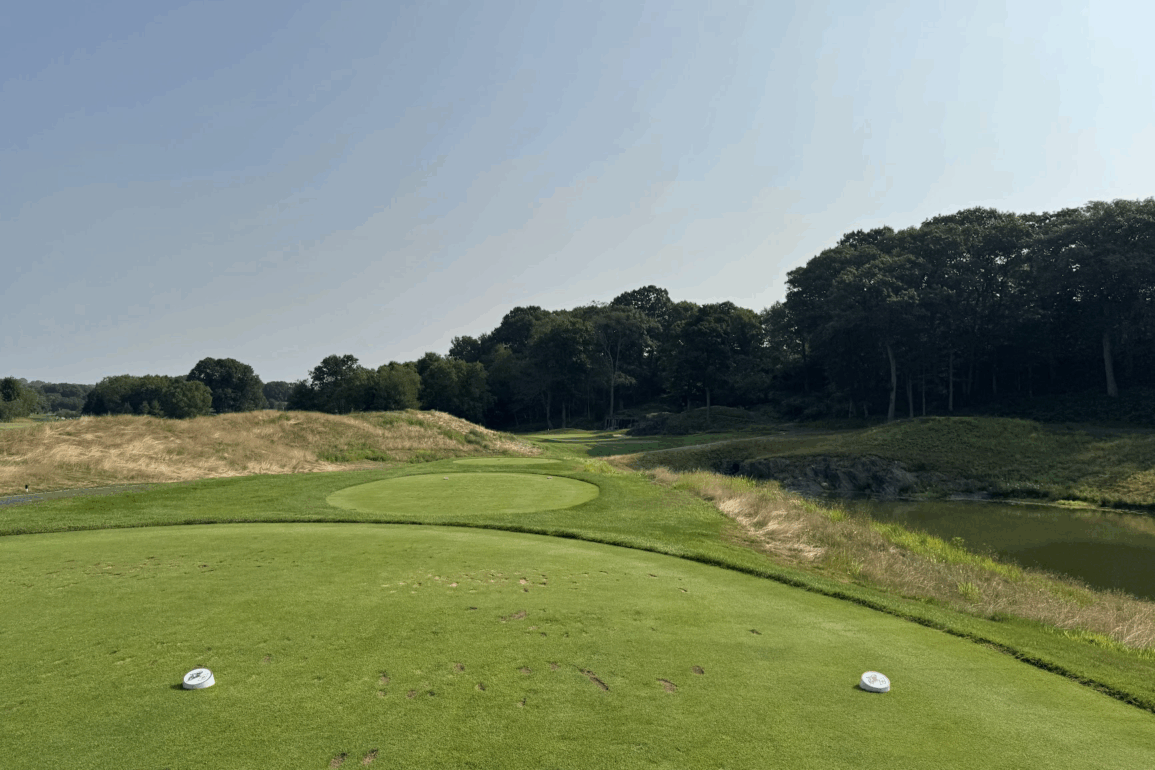
    Canaan Country Club is a public par-70 course measuring approximately 5,776 yards from the tips. The course was originally designed in 1931 and is located in Canaan, Connecticut.

    The history of Canaan Country Club traces back to the early 1930s when it was first established as a 9-hole layout on farmland beside the Blackberry River. While the original architect is not documented, the course reflects Golden Age design values of walkability and simplicity, with subtle challenges rather than penal hazards. In 2005, a new par-3 fifth hole was added, but otherwise the routing remains close to its original form. Over the decades, the club became a community hub for the northwest corner of Connecticut, hosting leagues, scrambles, and casual play. Ownership changed hands in 2021, with Joseph Quattrocchi investing in facility improvements and revitalizing the on-site restaurant. Hall of Fame professional Fran Marrello has long been associated with the club, offering instruction and lending his pedigree to the golf program. Despite its small scale, Canaan has earned loyal devotees who praise it as “a relatively complete test of your game” while still welcoming for beginners. The course has survived and thrived by embracing golf’s simpler traditions: modest scale, fair challenge, and a warm community spirit.

    The property spans just over 200 acres along the Blackberry River valley. Terrain here is largely flat meadows, with bordering wetlands and the river itself adding character to multiple holes. Routing is straightforward: a nine-hole loop beginning and ending at the clubhouse, played twice for 18 holes, with alternate tees used to vary angles and yardage. The design vibe is rustic parkland golf, emphasizing open fairways, small push-up greens, and hazards tucked just enough to demand thought. Tree lines, wetlands, and small creeks frame holes rather than dominate them. Four sets of tees accommodate a wide range of skill levels, from under 4,900 yards to nearly 5,800. The scale of the property means holes are tightly linked, lending excellent walkability and efficiency of routing. Players who enjoy classic, understated New England golf will find the setting appealing. The course suits a broad audience: newcomers benefit from wide landing areas and affordable access, while seasoned golfers are tested by tiny, firm greens and long par-3s. One reviewer summarized the setting as “relatively flat course with small greens [and] great scenery,” capturing its balance of charm and challenge.

    Strategic Test

    Strategically, Canaan Country Club leans on its greens and wetlands to defend par. Fairways are generally forgiving, meaning players feel comfortable pulling driver, but approaches are demanding due to the small target areas. On par-5s, bold hitters can attempt to reach in two, though out-of-bounds and river edges punish mistakes. Mid-length par-4s and long par-3s require exacting club selection; under-clubbing uphill shots on #3 and #8 is common, and both greens repel off-line strikes. As one visitor put it, “They will also test your short game around their undulating greens,” emphasizing that precision irons and deft recovery play are mandatory.

    The slope and rating tell the story: with a 114 slope and course rating under par at 67.5, the layout is more forgiving to bogey golfers than most, while still offering low-handicappers a chance to go low. High handicaps aren’t overwhelmed by forced carries or blind hazards, while scratch golfers can attack with wedges and see rewards. The balance ensures everyone has choices off the tee and into greens, with outcomes depending more on execution than brute strength.

    Accessibility for all handicaps is key. Beginners enjoy wide fairways and short total yardage, while better players find intrigue in the small, quick greens. The course is neither punishing nor toothless: its defense comes in the form of angles into greens, strategic risk-reward par-5s, and a handful of daunting one-shot holes. A slope of 114 means less deviation between scratch and bogey scores compared to tougher layouts, but still enough bite to make scoring under par an accomplishment.

    HandicapCourse Strategy
    High Handicap (18+)Use hybrids or fairway woods to stay in play. Treat long par-4s as three-shot holes and aim for green centers. Slope 114 means scores won’t balloon if mistakes are kept short.
    Mid Handicap (8–18)Driver is playable on most holes, but respect wetlands on #6 and #7. Club up on uphill par-3s. Rating 67.5 suggests birdies are available with smart management.
    Low Handicap (0–8)Attack short par-4s and reachable par-5s. Use length to set up wedges but respect tight green surrounds. Course rating below par means under-par scoring is achievable.

    The most memorable test comes at Hole 7, a 371-yard par-4 that doubles as the course’s signature. From the white tees, players face a corridor flanked by wetlands right and trees left, demanding a precise 230–250 yard tee shot down the middle. Longer hitters may take driver to leave only a wedge, but any push right is swallowed by marsh. Approaches play into a flat green ringed by bunkers, with the front-right trap particularly punishing. High handicaps fare best laying up and wedging on, mid handicaps aim center-green with mid-iron, and low handicaps try to stick short irons tight for birdie. The hole exemplifies the course’s philosophy: accessible yet testing, with one mistake enough to cost a stroke.

    Value

    Non-course amenities are modest but welcoming. The Belted Cow Tavern offers hearty food and drinks with patio views, while a small pro shop and practice putting green round out the facilities. Cart rentals are available, though most golfers walk the flat property. Weekend non-resident walking rates are currently $45 for 18 holes, with nine-hole play at $30. Pull carts and power carts are optional extras, and tee times can be booked via Chronogolf. These rates are competitive within Connecticut and align well with the course’s community-oriented vibe.

    Egremont Country Club in Great Barrington, Massachusetts lies 20 minutes north and provides an interesting comparison. Egremont is a full 18-hole, par-71 layout stretching over 6,036 yards on more rolling terrain. The front nine is open and flat with smaller greens, while the back nine climbs hills with larger, more complex greens. Its slope near 121 means a tougher test for bogey golfers, though scratch players see similar opportunities. Weekend rates hover around $45 for 18 walking, nearly identical to Canaan. Egremont offers a larger clubhouse and full practice range, but its walk is hillier and more demanding. For golfers seeking variety, Egremont delivers more yardage and elevation, though Canaan provides an easier stroll with equal value.

    Hotchkiss School Golf Course in Lakeville, Connecticut is another nearby public option, 15 minutes southwest. Designed in 1924 by Seth Raynor, this 9-hole course is par-35 at 3,043 yards and is renowned for its Golden Age template holes like the Redan and Biarritz. Played as 18, it stretches to about 6,000 yards with far more elevation change than Canaan. Hotchkiss is walk-only and more physically demanding, but architecturally it is exceptional, often ranked among the top 25 nine-hole courses in the U.S. Weekend fees are roughly $40 for 18 holes, slightly less than Canaan. The difference lies in feel: Hotchkiss offers bold architecture and hilly terrain, while Canaan emphasizes flat walkability and small greens. Together they showcase two very different but complementary styles of Connecticut golf.

    Final Word

    Canaan Country Club proves that great golf does not require great length. Its 1931 roots, small greens, and wetlands corridors create a layout that is approachable yet never dull. The community atmosphere, affordable rates, and tranquil Blackberry River valley setting make it more than just a round of golf – it’s an experience of New England charm. Whether you’re new to the game or a seasoned player chasing birdies, Canaan offers a test scaled to your skills. Its greatest distinction lies in balancing challenge and enjoyment, a reminder that golf can be fun, affordable, and memorable all at once.

  • Burning Tree Country Club

    Burning Tree Country Club

    [put_wpgm id=”2″ width=”100%” height=”770px” current_post_only=”true”]

    [letsreview]

    Burning Tree Country Club is a private par-72 course measuring approximately 6,902 yards from the tips. The course was originally designed in 1962 by Hal Purdy and is located in Greenwich, Connecticut.

    Burning Tree was founded in 1962 when prospective members were interviewed in the old Showboat Hotel, now the Delamar at Greenwich Harbor, and the front nine opened in 1963 with the back nine completed in 1965. Hal Purdy, who had previously worked with Robert Trent Jones, brought his practical construction experience to shape the routing across tight acreage. Over time, architects Robert McNeil and Tripp Davis refined the course through bunker renovations, practice area enhancements, and complete green rebuilds while preserving Purdy’s strategic intent. Unlike many older clubs in the region, Burning Tree emphasized family and inclusivity from its inception, layering in tennis, paddle, and swimming to match the golf experience. A major clubhouse rebuild in 2005 and upgrades to racquet and aquatic facilities deepened the family-oriented identity. The club has since hosted U.S. Open qualifying and regional amateur events, underscoring both its architectural credibility and its role as a community hub.

    The course stretches across approximately 160 acres, divided into two distinct halves. The front nine moves across open corridors with ponds and streams influencing play, giving a feeling of breadth but demanding precise placement near water edges. The back nine tightens considerably into dense hardwood forest, routed along Rockwood Lake Brook, where fairways narrow and doglegs turn sharply. This dual character ensures variety: the outward nine rewards strategic line selection around water, while the inward nine tests accuracy and shot-shaping through wooded corridors. The greens, once modest push-up surfaces, are now rebuilt to USGA specifications, providing more pinnable zones yet retaining quick speeds and subtle tilts. Players who enjoy precision, thoughtful angles, and alternate routes will find the design ethos rich and layered, while those relying on raw distance may find the corridors less forgiving. The course appeals to golfers who appreciate strategic nuance and mental challenge, demanding more calculation than brute force.

    Strategic Test

    Burning Tree consistently demands decision-making both off the tee and into the greens. Doglegs require judgment on whether to cut corners or play safe, and water features force a choice between attacking aggressive lines or bailing to wider areas. On par 5s, such as the 7th, length tempts a two-shot green attempt but hazards and slopes make laying up the smarter play for many. Even on shorter par 4s, players must decide whether to use less than driver to secure position. The routing ensures players are rarely on autopilot: each hole poses a fresh question of risk versus reward.

    The design rewards players who can shape shots and manage angles. Many fairways bend, and the ability to play a draw or fade to open approaches is critical. On the back nine, narrow corridors between trees severely punish wayward drives, demanding control over length as well as line. On the front nine, ponds and creeks dictate where tee shots can land to leave clean approaches. The greens, with their expanded pinnable surfaces, require precise trajectories and spin to access tucked flags. Straight ball-strikers can survive, but the golfer with a full shot-making repertoire is the one best positioned to score.

    From the championship tees the course rating of 74.1 and slope of 137 indicate a layout that challenges scratch players and heavily penalizes bogey golfers. The high slope means that high-handicap players will see their scoring differential widen if they play too far back, while a selection of forward tees reduces forced carries and makes the course accessible. Mid-handicap players who manage their game and avoid compounding mistakes can score near their index. Low-handicap players must demonstrate precision throughout the round, as even small errors can lead to bogeys. Burning Tree’s challenge scales well with tee choice, ensuring a fair but demanding test across levels.

    Handicap LevelEffect of Slope and Course Strategy
    High (18+)Must use forward tees to avoid unmakeable carries; scores rise quickly with errant shots; safest to play center of fairways and accept bogeys.
    Mid (8–18)Manageable if club selection is conservative; bogey-par golf possible by avoiding hazards and aiming for safer sections of greens.
    Low (0–8)Rating requires consistent precision; birdie chances exist only through accurate shaping; mistakes are amplified by narrow corridors and water.

    One hole that encapsulates the course’s character is the 18th, a par-3 playing 191 yards from the back tee, with 176 to the front and 203 to the back. A full pond fronts the green, forcing a committed carry, while bunkers left and long add equal peril. The bailout short-left leaves a delicate chip over sand to a green sloping away. Low-handicap players must take a long iron or hybrid directly at the center, trusting spin and distance control. Mid-handicaps should choose a club that easily clears the 176-yard front, playing for the fat of the green even if it leaves a long putt. High-handicaps are best served by using forward tees to minimize carry; if playing back, extra club and a safe aim point to the front-left margin are critical. The hole demands precision under pressure and provides a fittingly dramatic conclusion.

    Nearby Course Alternatives

    Beyond the championship golf experience, Burning Tree Country Club provides members with comprehensive practice facilities including a driving range for honing your long game, multiple putting greens for perfecting your stroke, and a dedicated short game practice area for working on those crucial up-and-down shots. The club’s impressive 158-acre property features a recently renovated aquatics center with a 25-meter competition pool and splash pad, paddle tennis courts, a state-of-the-art fitness center, and an elegant clubhouse offering refined dining experiences in the Grille Room, Founders Bar, and outdoor patio spaces. For Greenwich golfers seeking alternative private club experiences, two distinguished courses within the same community offer their own compelling blend of championship golf and Golden Age architecture.

    Round Hill Club in Greenwich, located approximately 10 minutes northeast in the mid-country area, presents a classic Walter Travis design that opened in 1924 and spans 200 acres of rolling Connecticut countryside. Measuring 6,525 yards from the tips with a par of 71, the course plays to a 71.3 rating and 127 slope, making it slightly more forgiving than Burning Tree’s 135 slope despite its deceptively strategic design. Travis’s original routing, enhanced by Robert Trent Jones Sr. in the 1960s and refined by Kenneth Dye in the late 1990s, showcases significant elevation changes throughout the property and features the architect’s trademark sweeping, undulating green complexes protected by thick rough. The course’s signature 11th hole, a dramatic 178-yard par-3 requiring a carry over a picturesque pond, exemplifies Jones’s enhancement work and stands as one of Greenwich’s most memorable one-shotters. Round Hill’s shorter overall length belies its strategic complexity, with three par-4s on the back nine playing under 350 yards and demanding precision over power. The club complements its historic golf pedigree with tennis and pickleball courts, a modern pool complex with a 25-meter lap pool, bocce courts, and an iconic clubhouse featuring an intimate fire pit seating area. Players who appreciate strategic placement over raw distance, enjoy dramatic topographical variation, and prefer Golden Age architecture with mid-century modern enhancements would find Round Hill a compelling alternative to Burning Tree’s more contemporary shotmaking demands.

    Tamarack Country Club in Greenwich, situated approximately 12 minutes northwest near the New York border, offers one of Charles “Steam Shovel” Banks’s finest solo designs from 1929, recently restored to its original glory through a comprehensive nine-month renovation by architect Brian Schneider. Playing 6,841 yards to a par of 71 with a 72.9 rating and 126 slope, Tamarack stretches slightly longer than Burning Tree while presenting a gentler slope rating, though its celebrated template holes demand thoughtful strategic play. Banks, a protégé of Golden Age masters C.B. MacDonald and Seth Raynor, incorporated dramatic architectural features throughout the routing including faithful renditions of the Eden (3rd), Redan (7th), Biarritz (12th), Cape (2nd), Alps (6th), and Road Hole (14th), creating what Golf Digest ranks among Connecticut’s top five courses. The architect’s signature “steep and deep” bunkering remains intact, most prominently at the sweeping 508-yard 17th where the enormous “Big Bertha” bunker guards an elevated green, and the innovative center-line hazards on the par-4 4th exemplify modern restoration work honoring Golden Age principles. Schneider’s recent work opened up tree-lined corridors and restored dramatic green-to-tee elevation changes, particularly visible on the spectacular run from holes 5 through 8 along the property’s southwestern boundary. The club’s 55,000-square-foot grand clubhouse commands the highest point on the property with panoramic views, while the recently constructed poolside bar and 13,000-square-foot pool deck, along with tennis courts and year-round dining venues, provide a complete country club experience. Architecture enthusiasts who appreciate Golden Age template holes, players seeking dramatic slopes and bold bunkering that reward strategic thinking, and those drawn to courses with championship pedigree and recent professional restoration work would find Tamarack’s cerebral challenges a refreshing contrast to Burning Tree’s more straightforward modern design philosophy.

    Final Word

    Burning Tree Country Club blends strategic golf with a family-focused atmosphere, delivering a course that asks questions of precision and placement while offering full recreational breadth. Its front nine of water and open corridors contrasts with the wooded back nine, creating variety and sustained engagement. With a long-standing tradition of inclusivity and modern amenities, it remains one of Greenwich’s most complete club experiences. Strategically demanding, socially vibrant, and historically rooted, Burning Tree proves its value by combining architectural substance with a welcoming club culture.

  • Brooklawn Country Club

    Brooklawn Country Club

    [put_wpgm id=”2″ width=”100%” height=”770px” current_post_only=”true”]

    [letsreview]

    Brooklawn Country Club is a private par-71 course measuring approximately 6,711 yards from the tips. The course was originally designed in 1930 by A.W. Tillinghast and is located in Fairfield, Connecticut.

    Founded in 1895 by Dr. I. DeVer Warner and Bridgeport’s power elite, Brooklawn Country Club became the USGA’s 15th member club on January 22, 1896, cementing its place among American golf’s founding institutions. The club began as part of an ambitious real estate development called “Brooklawn Park,” one of America’s earliest planned recreational communities, with members designing the original 9-hole layout for just $100. Gene Sarazen launched his legendary career here as assistant professional from 1918-1920, establishing the course record of 63 in 1938 that has been matched only once but never broken despite decades of equipment advances. The club expanded to 18 holes in 1911 before receiving its crown jewel redesign from A.W. Tillinghast in 1930, representing one of the master architect’s final works and showcasing his accumulated design wisdom. Brooklawn has hosted five USGA championships, including the 1979 U.S. Women’s Open won by Jerilyn Britz and the 1987 U.S. Senior Open captured by Gary Player, placing it among just 37 courses nationwide to host more major championships. The club’s tournament pedigree extends beyond USGA events, with historic exhibition matches featuring Willie Anderson, Harry Vardon, Ted Ray, Francis Ouimet, and Walter Hagen drawing hundreds of spectators in golf’s golden age. Notable members have included 1904 U.S. Women’s Amateur champion Georgianna Bishop, honorary member President William Howard Taft, and Fairfield native Julius Boros. Remarkably, only three superintendents have maintained the course since Tillinghast’s redesign opened in 1932, with current superintendent Peter Bly serving since 1980 and preserving the architect’s original drainage systems built on native rock foundations. This continuity of care has enabled Brooklawn to maintain its championship conditions while honoring Tillinghast’s architectural vision across nearly a century.

    Brooklawn’s 120 feet of elevation change creates what players describe as a “constantly shifting feel underfoot,” with the dramatic terrain showcased most memorably on back-to-back par fives where the seventh hole plunges 75 feet from tee to green while the eighth climbs 67 feet in the opposite direction. The course routing demonstrates Tillinghast’s mature understanding of strategic design, with 175,000 square feet of sand across 68 bunkers—53 greenside and 15 fairway hazards averaging 4-6 feet in depth—positioned to punish wayward shots while offering recovery options for skilled players. Tillinghast’s signature green complexes average 5,800 square feet but feature distinctive “narrowness across the waist” that prioritizes accuracy over size, with intensely contoured surfaces containing four high shoulders halfway back and false fronts that create putting challenges Arnold Palmer once described when calling the 119-yard 10th “the shortest par 4 in America.” The bentgrass playing surfaces, maintained at tournament speeds of 10-10.5 on the Stimpmeter, regularly produce putts with 2-3 feet of break on 30-foot attempts, demanding precise green reading throughout the round. Ron Forse’s two-decade restoration project from 1998-2018 has methodically implemented Tillinghast’s original bunker scheme while removing excessive tree plantings from the 1970s that had narrowed the strategic playing corridors. The course’s proximity to Long Island Sound, just three miles south, introduces wind variables that affect club selection and shot shaping, particularly on exposed holes along the property’s elevated sections. Rooster River crosses the seventh fairway, adding both strategic intrigue and natural beauty to Tillinghast’s routing through rolling Connecticut parkland. The restoration has returned the course to its original width while preserving putting surfaces that have remained “untouched” since 1929, creating what Golf Digest describes as “wonderful classic club with difficult greens” that “rewards intelligence and self-restraint.” The design philosophy emphasizes strategic decision-making over raw power, with 16 of 18 holes allowing running approach shots due to the absence of fronting bunkers, accommodating players who prefer ground-game tactics while challenging aggressive aerial approaches with deep greenside protection. This balance of challenge and playability, combined with consistently excellent maintenance and the course’s natural drainage advantages, creates what members and guests describe as “a perfect venue” that stands up to repeated play while revealing new strategic nuances with each round.

    Strategic Test

    Brooklawn Country Club presents exceptional strategic variety through its routing and green complexes, offering multiple decision points throughout the round that reward different playing styles and strategic approaches. Players face legitimate choices off the tee on most holes, with risk-reward opportunities like the aggressive line over fairway bunkers on the opening hole or conservative positioning that accepts longer approaches for safer angles. Tillinghast’s design consistently presents alternate angles of attack, particularly on approach shots where the absence of fronting bunkers on 16 holes allows both aerial and ground-game strategies to succeed. The course rewards precise players who can work the ball both ways, as tree-lined corridors and strategic bunkering often favor shaped shots over straight ball striking. Strategic variety extends to green reading, where Tillinghast’s contoured surfaces demand different putting approaches based on pin position and approach angle, creating tactical decisions that extend well beyond ball striking.

    Brooklawn’s accessibility varies significantly based on skill level, with the course rating of 73.3 and slope rating of 138 from the championship tees indicating substantial difficulty for higher handicappers while remaining fair for accomplished players. The slope rating measures the relative difficulty for bogey golfers compared to scratch players, with 113 representing average difficulty and Brooklawn’s 138 indicating the course plays approximately 25% more difficult for higher handicappers than the rating suggests. Course rating represents the expected score for a scratch golfer under normal conditions, with Brooklawn’s 73.3 rating indicating the layout plays 2.3 shots over par for skilled players. These ratings combine to create strategic implications where higher handicappers benefit significantly from playing forward tees, with the middle tees offering more reasonable approaches at 6,400 yards with a 71.8 rating and 132 slope that reduces the difficulty gap while maintaining strategic interest.

    The strategic examination intensifies throughout the round as Tillinghast’s design philosophy demands increasingly precise execution, particularly on approach shots to elevated green complexes surrounded by deep bunkers and severe slopes. Recovery play becomes a crucial strategic element, as players who miss greens face complex decisions about recovery angles, club selection for various lies, and risk assessment for aggressive recovery attempts versus conservative play back to safe areas. The course’s strategic merit lies in its ability to present different challenges for each skill level while maintaining coherent design principles that reward intelligent course management over raw power, creating what members describe as a layout that “never gets old” due to constantly changing wind conditions, pin positions, and seasonal playing conditions that alter optimal strategic approaches.

    HandicapCourse Strategy
    High Handicap (18+)Play forward tees (6,200 yards, rating 70.1/slope 128) for manageable approaches; emphasize fairway accuracy and avoid aggressive recovery shots from deep bunkers; focus on two-putt strategy on severely contoured greens
    Mid Handicap (8-18)Utilize middle tees (6,400 yards, rating 71.8/slope 132) for optimal balance; develop course management skills by laying up on par 5s and playing conservative lines away from trouble; practice lag putting for speed control on fast greens
    Low Handicap (0-8)Championship tees (6,711 yards, rating 73.3/slope 138) provide full strategic test; attack pins aggressively when approach angles allow but respect greenside bunkers; master green reading for scoring opportunities on this demanding layout

    The challenging 18th hole serves as the ultimate strategic examination, measuring 406 yards to a par 4 with a handicap rating of 8, demanding both physical execution and mental discipline as players navigate the uphill finishing test beneath the imposing clubhouse. The strategic complexity begins with the tee shot to a landing area 203 yards away, requiring precise placement in an extremely narrow, tree-lined corridor where dense forest coverage on both sides punishes even slight misses with unplayable lies or severely blocked recovery shots. The optimal driving zone sits just short of the fairway bunkers visible on the right side, leaving players with a 192-yard uphill approach that plays significantly longer due to elevation gain toward the elevated green complex positioned directly below the clubhouse. Strategic tee shot placement becomes critical as aggressive drives that challenge the right-side bunkers provide better approach angles but leave minimal margin for error, while conservative positioning to the left side of the fairway offers safety but creates longer, more difficult approach shots over the bunkers guarding the green’s front-right quadrant. The approach shot presents multiple strategic challenges, with the uphill trajectory disguising exact pin positions while the elevated green complex features surrounding bunkers that catch anything short or offline, demanding precise distance control and trajectory management. High handicappers benefit from playing conservative drives to the widest part of the fairway and accepting longer approach shots that avoid the greenside bunkers, while skilled players must weigh the risk-reward of aggressive driving lines that provide scoring opportunities against the severe penalty for missing the narrow fairway corridor in this dramatic tree-lined amphitheater setting.

    Nearby Course Alternatives

    Beyond the championship golf course, Brooklawn provides members with comprehensive practice facilities including a practice tee for range work, quality putting greens for speed and break practice, and a dedicated short-game area for honing those crucial scoring shots around the greens. The club’s storied 57,667-square-foot clubhouse, perched on the property’s highest point and opened in 1916, serves as the hub of club life with a well-stocked pro shop, formal dining room, casual grill room, ballroom for special events, and even an eight-lane bowling center for year-round entertainment. Additional recreational amenities include a tennis center with seven Har-Tru courts and its own clubhouse, three platform tennis courts with a warming hut, and a swimming pool complex with casual dining facilities, creating a comprehensive country club lifestyle. For members seeking to experience different architectural styles and design philosophies from the golden age of golf course architecture, Fairfield is uniquely blessed with three of Connecticut’s finest private clubs all situated within the same town, each offering distinct playing experiences shaped by legendary designers.

    Country Club of Fairfield in Fairfield, located just minutes from Brooklawn, presents one of Connecticut’s most unique and captivating golf experiences on an exclusive parcel of Long Island Sound shoreline. Originally designed by Seth Raynor in 1914 with significant modifications by A.W. Tillinghast in the 1930s and later work by Robert Trent Jones Sr., Geoffrey Cornish, and restoration architect Bruce Hepner, this 6,358-yard par 70 layout with a slope rating of 133 and course rating of 71.6 has evolved into what many consider a classic links-style course hidden on some of Connecticut’s most valuable coastal property. The club has undertaken an extensive tree removal program over the years, opening up spectacular vistas of Long Island Sound from nearly every tee shot and creating a more open, wind-influenced playing environment reminiscent of true seaside golf. The routing takes players around the property’s perimeter on the front nine before turning inland on the back, with the three-hole stretch from the fourth through sixth—including holes that play around and over lagoons—ranking among the finest consecutive holes in the state. The sixth hole, a par 4 demanding an accurate drive to a blind landing zone followed by a challenging mid-iron approach into a severely sloping green, exemplifies the strategic shotmaking required throughout the round. Players who appreciate links-style golf with dramatic water features, prefer courses with strong architectural pedigree and waterfront views, or enjoy the challenge of wind-affected shotmaking will find Country Club of Fairfield offers a completely different aesthetic and strategic experience compared to Brooklawn’s tree-lined, parkland design with its emphasis on elevation changes.

    The Patterson Club in Fairfield, also just minutes from Brooklawn in the Greenfield Hill section, delivers a Robert Trent Jones Sr. masterpiece that opened in 1947 with Bobby Jones and Gene Sarazen in the first official foursome. Playing 6,795 yards from the championship tees at par 71 with a slope rating of 134 and course rating of 72.8, this layout spread across 170 acres showcases Jones’s signature philosophy of “hard par but easy bogey” through strategic use of five artificial lakes, extensive bunkering, and dramatic elevation changes that define the routing. The course underwent a comprehensive renovation directed by Rees Jones’s senior design associate Greg Muirhead from 2009-2012, enhancing playability for all skill levels while maintaining Robert Trent Jones Sr.’s original vision through rebuilt tees, reconstructed bunkers, re-grassed greens, and redesigned sixth and eighteenth holes. Patterson has earned recognition as one of New England’s finest conditioned courses and has hosted the Connecticut State Open, Connecticut State Amateur, and numerous Metropolitan Golf Association events, testament to its championship credentials. The course makes captivating use of elevation changes throughout, including at the up-and-over finishing hole where a speed slot can add 40 yards to a well-placed drive, while the recently enhanced par 3s now stand out as particular highlights. Beyond golf, Patterson emphasizes a socially-driven country club lifestyle with exceptional racquet sports facilities including seven tennis courts, five platform tennis courts, and four pickleball courts, along with a neo-classic farmhouse clubhouse opened in 2010. Golfers who prefer Jones’s bold, strategic architecture with risk-reward opportunities, appreciate courses with significant elevation changes and dramatic topographical movement, or seek a more modern, manicured playing experience will find Patterson offers a distinct contrast to both Brooklawn’s golden-age Tillinghast design and Country Club of Fairfield’s links-inspired seaside character.

    Final Word

    Brooklawn Country Club stands as a testament to A.W. Tillinghast’s architectural mastery, offering members and guests a golf experience that has challenged and delighted players for nearly a century while maintaining its strategic relevance in the modern game. The course’s combination of historic pedigree, championship conditioning, and comprehensive club amenities creates exceptional value within Connecticut’s competitive private club landscape, making it an ideal choice for golfers who appreciate strategic design, tournament-tested challenges, and the timeless pleasure of walking a course where legends like Gene Sarazen honed their craft.

  • Buena Vista Golf Course

    Buena Vista Golf Course

    [put_wpgm id=”2″ width=”100%” height=”770px” current_post_only=”true”]

    [letsreview]

    Buena Vista Golf Course is a public par-31 course measuring approximately 1,832 yards from the tips. The course was originally designed in the 1960s by the Town of West Hartford and is located in West Hartford, Connecticut.

    Buena Vista Golf Course was built as a community-accessible venue in the postwar expansion era, intended to give juniors, seniors, and recreational golfers a place to play without intimidation. Its reputation as an executive layout belies the subtle sophistication in its routing and green complexes. Over the decades, it has served as an incubator for new players and a convenient practice ground for seasoned golfers, with its compact footprint ensuring rounds are quick and affordable. The course has long been part of the town’s recreational complex, adjoining other facilities like skating and swimming, further enhancing its role as a communal hub. Local leagues and after-work rounds have given it a loyal following, and despite its small size, it retains architectural interest in how it sequences shots and integrates terrain.

    Spread over approximately 40 acres, the course makes inventive use of moderately hilly terrain. The routing begins with a pair of doglegs that ask golfers to shape shots and consider angles, before settling into a run of mostly straight holes that emphasize distance control and accuracy. The design vibe is one of accessibility layered with subtle challenge: bunkers protect several greens, elevation changes influence club selection, and the finale introduces a demanding short par-4. This is not a course for the bomber, but rather for the thoughtful player who relishes mid-iron strategy, wedge precision, and reading greens with surprising contour. Juniors and high-handicap players will enjoy the forgiving scale, while low-handicappers can use it to sharpen scoring clubs and putting on subtly tilted surfaces.

    Strategic Test

    Buena Vista requires decision-making disproportionate to its yardage. The opening two doglegs immediately present choices about line and club: lay back safely or challenge the corner for a shorter approach. The prevalence of par-3s forces repeated tests of iron control, particularly when bunkers pinch greens or slopes reject imprecise shots. While the course is forgiving of wayward length, it is unforgiving of poor accuracy into greens. Different play styles are rewarded: conservative players can plot steady bogey-free rounds, while aggressive ones can chase birdies on short par-4s if they flirt with trouble.

    Course rating and slope quantify this balance. At 35.5/113 from the back tees, the numbers indicate a layout of average difficulty, particularly fair to bogey golfers. Slope of 113 is the USGA baseline, meaning a high-handicapper will find it neither punishing nor artificially easy. Low-handicaps, however, gain little leeway; to beat expectation, they must go under par. Thus, Buena Vista’s strategy is not about brute survival but about fine-tuned scoring.

    HandicapCourse Strategy
    High Handicap (18+)Use irons or hybrids off tees to stay straight and avoid bunkers. Slope 113 ensures typical scoring; keeping the ball in play avoids doubles. Focus on reaching greens in regulation conservatively.
    Mid Handicap (8–18)Weigh risks on doglegs and short par-4s. A 200-yard club into position leaves wedge approaches. Average slope means smart play equals handicap performance.
    Low Handicap (0–8)Attack aggressively; drivable par-4s are prime birdie chances. Slope offers no cushion, so under-par rounds are needed. Precision approaches and putting under pressure define scoring.

    The finishing hole at Buena Vista is a short par-4 measuring 239 yards from the back tee. Despite its modest length, the hole is tactically engaging. From the tee, players are presented with a narrow corridor framed by trees. At about 153 yards, the fairway begins to tighten, leaving an 83-yard approach into a green that is guarded by bunkers both short-left and right. The hole’s defense is psychological — it appears drivable, yet the precision required off the tee and on the approach make it far from automatic. High-handicap players should take a controlled iron of about 150 yards to the wide section of fairway, leaving a manageable wedge into the green. Two steady shots and a two-putt secure a bogey at worst and a chance at par. Mid-handicappers can take a fairway wood or long iron of 180–200 yards over the main landing area, leaving a wedge from under 60 yards with a good angle. Low-handicappers may attempt the green in one with driver or 3-wood, chasing eagle or birdie, though sand and trees punish misses. For tournament-minded players, a controlled long iron into the fairway still leaves a high-percentage scoring chance. This hole epitomizes Buena Vista’s ethos: short and seemingly gettable, yet demanding precision and strategy if you want to close with a birdie.

    Nearby Course Alternatives

    Beyond the course itself, Buena Vista offers a practice green for chipping and putting that helps golfers warm up or work on their short game before heading out for a round. The facility maintains a modest but functional pro shop stocked with basic equipment and essentials, while a small snack bar provides refreshments for those looking for a quick bite between nines. Golf clubs and both riding and pull carts are available for rental, making the course accessible for those without their own equipment. The setting shares space with the adjacent Cornerstone Pool complex, creating a family-friendly recreational atmosphere. While Buena Vista keeps things simple and focused on golf, those seeking alternatives within easy reach will find two excellent options that offer different experiences depending on skill level and preferred course length.

    Westwoods Golf Club in Farmington presents an appealing step up for golfers wanting more holes while maintaining an executive-style format that emphasizes iron play and scoring. Located approximately 10 minutes west of Buena Vista, this Geoffrey S. Cornish design opened in 1966 and stretches to 4,407 yards from the tips with a par of 61, course rating of 58.6, and slope of 85. The 18-hole layout sprawls across mature acreage in the southwestern corner of Farmington, featuring moderately rolling terrain that provides more strategic variety than Buena Vista’s compact footprint. Cornish’s design pedigree brings thoughtful routing and green complexes that reward precise approach shots, while the course’s reputation as a well-maintained municipal gem draws players from throughout Hartford County. The facility enhances the experience with Carol’s Lunchbox restaurant, a well-maintained driving range, eight pickleball courts, and even a splashpad for families. Mid-handicap players who appreciate Buena Vista’s quickness but crave additional holes and slightly more distance will find Westwoods offers double the golf in a similarly accessible format, while the on-site dining and practice facilities make it ideal for those wanting a fuller day at the course.

    Stanley Golf Course in New Britain delivers a more comprehensive experience with its distinctive 27-hole layout divided into three unique nine-hole courses – Red, White, and Blue – each offering different character and challenges. Situated approximately 15 minutes southeast of Buena Vista, Stanley’s original routing came from Robert J. Ross in 1958, with later renovations by Geoffrey S. Cornish and Ian Scott Taylor in 1999 adding strategic bunkering and refinements. The Red Nine plays to 3,222 yards (par 35, rating 35.7, slope 111), the White Nine measures 3,036 yards (par 35, rating 33.8, slope 112), and the Blue Nine extends to roughly 3,230 yards (par 36). This configuration allows players to mix and match nines for 18-hole rounds while experiencing varied topography across the property’s expansive acreage, from the rolling, open White Nine to the more tree-lined and strategic Red Nine. Stanley’s reputation as one of Connecticut’s best-value public facilities is bolstered by its state-of-the-art 19-station driving range powered by Toptracer Technology (with 10 covered, heated, and illuminated bays), full-service restaurant called The Back 9, and comprehensive practice facilities. Golfers who enjoy Buena Vista but want more variety, better practice amenities, and the ability to play different combinations of nines will appreciate Stanley’s flexibility and value proposition, particularly beginners and seniors looking to build their game on forgiving but strategic layouts that don’t overwhelm with excessive length.

    Final Word

    Buena Vista Golf Course proves that nine holes of modest length can still deliver an engaging, strategic test. Its hilly routing, mix of doglegs and par-3s, and subtle green contours keep architecture-minded golfers intrigued. Affordable pricing, quick pace, and a welcoming community atmosphere make it one of Connecticut’s best values for casual and serious players alike. While not a full-length course, it stands out as a place to practice, enjoy the walk, and finish on a high note at the picturesque 9th.

  • Blue Fox Run Golf Course – White/Blue

    Blue Fox Run Golf Course – White/Blue

    [put_wpgm id=”2″ width=”100%” height=”770px” current_post_only=”true”]

    [letsreview]

    Blue Fox Run Golf Course is a public par-72 course measuring approximately 6,644 yards from the tips. The course was originally designed in 1976 by Joseph Brunoli, with the White nine added in the mid-2000s by Stephen Kay and Doug Smith, and is located in Avon, Connecticut.

    Blue Fox Run’s story is tied to its evolution from a traditional 18-hole public course to one of Connecticut’s few 27-hole facilities. The original 18 (Red and Blue) opened in 1976, designed by Joseph Brunoli to make use of the Farmington River floodplain. In the mid-2000s, the White nine was added by Stephen Kay and Doug Smith, bringing a modern edge to the course with sharper bunkering and water hazards. This expansion allowed Blue Fox Run to offer three different 18-hole routings: Blue/Red, Red/White, and White/Blue. Among them, White/Blue has developed a reputation for being the strongest of the three, thanks to its blend of strategic variety and standout holes. This review focuses exclusively on the White/Blue routing. Separate posts analyze the other combinations.

    Spread over approximately 230 acres, the White/Blue routing captures two different design philosophies. The White nine uses bold bunkers and water hazards to force decisions, highlighted by its dramatic island-green closer. The Blue nine returns to Brunoli’s parkland ethos: wide corridors, long par-4s, and greens that subtly reward positioning. Together, the routing style alternates between target-golf precision and forgiving expanses, producing a rhythm that challenges both decision-making and execution. Players who enjoy variety will gravitate to White/Blue: higher handicaps can enjoy the spacious Blue nine, while advanced players can test themselves against the White nine’s risk-reward architecture. The design vibe is dynamic and contrasting, offering both intimidation and relief within the same round.

    Strategic Test

    White/Blue offers perhaps the boldest strategic questions of the three routings. The White nine is unapologetically modern, presenting hazards that pinch landing zones and putting water directly in play. Tee shots demand commitment, and approaches must navigate bunkers that cut into green entrances. The Blue nine then broadens out, rewarding players who take aggressive lines to shorten approaches but allowing safer routes as well. The net effect is a round where tempo shifts dramatically — players must survive the White nine’s demands, then take advantage of the scoring opportunities on the Blue. As one golfer wrote, “the White nine forces you to think on every shot, while the Blue gives you a little breathing room.”

    From the back tees, White/Blue plays to 6,644 yards with a rating of 72.1 and a slope of 126. From the middle tees around 6,100 yards, the rating drops to 70.0 and slope to 121, offering a fair but challenging test for bogey golfers. At forward tees, the yardage reduces to roughly 5,400 yards with slope in the low 110s, keeping the course accessible to beginners. The course rating and slope show that scratch golfers will find par achievable but only with careful management, while bogey golfers must manage hazards carefully to avoid big numbers. The design ensures that slope is felt most acutely on the White nine, where hazards magnify errors, while the Blue nine tempers those risks with broader corridors.

    The routing adapts differently to handicap levels. High handicaps must play conservatively on the White and build confidence on the Blue. Mid-handicaps face nuanced decisions, deciding when to take on carries and when to lay up. Low handicaps will look to separate themselves on the White nine, attacking pins on the Blue where birdie chances are more plentiful.

    HandicapCourse Strategy
    High Handicap (18+)Forward tees (~5,400 yds). Survive the White nine by playing away from water and laying up before bunkers. Use Blue nine’s open holes to regain rhythm.
    Mid Handicap (8–18)Middle tees (~6,100 yds) with slope ~121. Choose layups vs. carries carefully on White. On Blue, take advantage of wider fairways with driver to shorten approaches.
    Low Handicap (0–8)Back tees (6,644 yds) with slope 126. Aggressively attack White nine par-5s and short par-4s. On Blue, shape drives to set up angles into subtly contoured greens.

    The signature stretch of the White/Blue routing is unmatched at Blue Fox Run. Hole 7 on the White nine is a dogleg left over a pond, where bold players can cut off water for a shorter approach. Hole 9 on the White is a full pond carry par-3, demanding accuracy and nerve from all levels of golfer. Finally, the island-green par-3 (played as the 17th in this routing) is the course’s showstopper, roughly 170 yards from the back tees, where one swing decides success or disaster. Low-handicaps aim a precise mid-iron to the center, mid-handicaps often club up for safety, and high-handicaps benefit from a shorter forward-tee carry. This trio of holes defines White/Blue as the strongest routing, offering architectural drama, strategic choice, and unforgettable visuals.

    Nearby Course Alternatives

    The White/Blue combination at Blue Fox Run shares access to the same comprehensive practice facilities as the other layouts, including a driving range to work on your full swing, a quality putting green for speed and break practice, and an excellent chipping and short-game area that’s particularly valuable for dialing in those crucial scoring shots. After tackling the course’s championship yardage, Mulligans restaurant and bar in the clubhouse offers a welcoming environment to relax and recount your round over food and beverages, while the well-appointed golf shop provides equipment and accessories to keep your game sharp. For golfers who have mastered the White/Blue’s 7,025-yard challenge and seek variety in course architecture, conditioning, and playing experience, the greater Hartford area offers several outstanding municipal courses that showcase different design eras and philosophies.

    Rockledge Golf Club in West Hartford, situated just 10 minutes southeast of Blue Fox Run, stands as one of Connecticut’s premier municipal courses and a perennial selection in Golf Digest’s “Best Places to Play.” Originally designed by Al Zikorus in 1940, this 6,436-yard par 72 layout with a slope rating of 129 and course rating of 71.1 has earned recognition from Hartford Magazine as the area’s “Best Public Golf Course” through its combination of meticulous conditioning, strategic design, and hilly terrain that provides scenic vistas throughout the round. The course sprawls across 150 acres of rolling topography, featuring narrow fairways flanked by mature trees, strategic bunkering that rewards thoughtful course management, and notably large, undulating greens that universally slope back to front but incorporate subtle breaks that create challenging putting surfaces. While the routing includes a reasonable mix of hole lengths, Rockledge places particular emphasis on accuracy over distance, with several short par 4s that tempt aggressive play and excellent par 3s that can vary by 40 yards depending on tee and pin placement, making club selection crucial. The Rockledge Grille offers quality dining year-round, with an expansive deck known for the best view in town during warmer months, complementing the championship golfing experience. Players who appreciate classic golden-age architecture, enjoy strategic shot-making on large green complexes, or prefer courses where position and accuracy trump raw power will find Rockledge offers a more traditional parkland test compared to the varied styling and greater length of the White/Blue combination.

    Timberlin Golf Club in Berlin, located 24 minutes southeast of Avon along the base of Ragged Mountain, delivers another Al Zikorus design from 1970 that has been enhanced by subsequent renovations from Stephen Kay, Doug Smith, and Ray Hearn. Playing 6,733 yards from the championship tees at par 72 with a slope rating of 130 and course rating of 72.2, this municipal gem features rolling terrain and spectacular views of surrounding farmland that create a scenic backdrop for a demanding golf experience. The layout presents a relatively moderate yet fair challenge where strategic play outweighs pure power, with ample fairway bunkering—a feature many public courses lack—that rewards thoughtful positioning and adequate bailout areas on most holes that prevent the course from becoming overly penal. The front nine establishes the course’s character with demanding par 5s at the first and seventh holes (the #1 and #3 handicap indexes), while the back nine intensifies the challenge with a particularly brutal stretch at holes 13, 14, and 15 that can quickly derail a good round. Timberlin’s greens feature moderate slopes and are typically well-protected by mounding, bunkers, and falloffs that demand precise approach shots and thoughtful greenside play. The course hosts one of the largest men’s club organizations in Connecticut and offers comprehensive amenities including a fully stocked pro shop, PGA instruction, and Par For The Course, a full-service restaurant. Golfers who seek a fair but rigorous test where strategic positioning matters more than distance, appreciate courses with strong par 5s and excellent fairway bunkering, or prefer a more open playing environment with spectacular mountain views will find Timberlin offers a distinct alternative to Blue Fox Run’s river valley setting and slightly longer championship challenge.

    Final Word

    The White/Blue routing is Blue Fox Run’s most dramatic and best combination, pairing the White nine’s penal modernity with the Blue’s forgiving expanses. It demands adaptability, asking players to survive one nine and score on the other. The highlights — the dogleg left over the pond at White 7, the full pond-carry White 9, and the island-green White 17 — make this routing the most memorable of the three. At an affordable price point, with architectural variety that keeps each hole engaging, White/Blue delivers a round both challenging and rewarding. White/Blue demonstrates the enduring appeal of Blue Fox Run’s 27-hole design: a course where contrast defines character and signature moments set it apart.

  • Blue Fox Run Golf Course – Red/White

    Blue Fox Run Golf Course – Red/White

    [put_wpgm id=”2″ width=”100%” height=”770px” current_post_only=”true”]

    [letsreview]

    Blue Fox Run Golf Course is a public par-72 course measuring approximately 6,205 yards from the tips. The course was originally designed in 1976 by Joseph Brunoli, with the White nine added in the mid-2000s by Stephen Kay and Doug Smith, and is located in Avon, Connecticut.

    Blue Fox Run’s history reflects its gradual transformation into one of Connecticut’s few 27-hole public layouts. The original 18-hole course (Red and Blue nines) opened in 1976 and quickly became popular for its flat river-valley terrain and forgiving corridors. By the early 2000s, the club sought to expand, commissioning Stephen Kay and Doug Smith to design a third nine. This became the White nine, a more modern addition that injected contrast into the older, broader-stroked Brunoli design. The White nine introduced bold bunkering, tighter corridors, and even an island green to enhance variety. The Red/White combination is now one of the most frequently played routings at Blue Fox Run, pairing the classic, slightly wooded Red nine with the newer, more penal White nine. While Blue Fox Run has seen ownership changes and varying levels of conditioning over the years, it has remained a staple of Hartford-area public golf. This post focuses exclusively on the Red/White routing. Separate reviews will examine the Blue/Red and White/Blue combinations.

    The Red/White layout stretches across approximately 230 acres of river-valley ground along the Farmington River. The Red nine plays over the slightly more undulating sections of the property, using tree-lined corridors and angled greens to create interest. The White nine, by contrast, takes advantage of flatter land but adds sharper hazards: more penal bunkers, narrower driving corridors, and water features that force decisions. The routing style remains parkland, but the juxtaposition of the two nines creates a hybrid design vibe: half forgiving and broad, half modern and target-oriented. Players who enjoy contrast will find the Red/White routing particularly appealing. Beginners benefit from the Red’s wider fairways, while advanced players face true risk-reward challenges on the White. For those who like to test both length and precision, the Red/White blend provides a round of golf that never feels monotonous and highlights the flexibility of a 27-hole facility.

    Strategic Test

    The Red/White routing demands more decision-making than the Blue/Red combination. The Red nine still welcomes players with ample fairway width, but angled greens and subtle elevation changes reward accurate positioning. The White nine, however, forces choices more explicitly: water hazards guard layup zones, and several bunkers pinch landing areas, creating centerline hazards. A player’s round is often defined by how well they navigate the transition from the forgiving Red to the testing White. One reviewer remarked, “the White nine was clearly designed to be tougher — the fairways are narrower and the greens make you pay attention.” That difference in tone makes the routing strategically diverse, appealing to those who like shifts in tempo across a round.

    From the back tees, the Red/White combination plays to a course rating of roughly 73.0 and slope of 128, making it a stern but not overwhelming challenge. From middle tees at about 6,100 yards, the rating is around 70.0 with slope near 120, a playable but testing setup for bogey golfers. These numbers indicate that scratch players will find the course to play a stroke or two over par on average, while higher handicaps will feel the difficulty in recovery situations around the White nine’s bunkered greens. Slope, which measures how much more difficult the course plays for bogey golfers compared to scratch, being near 128 means higher handicaps must manage expectations: avoiding compounding errors is crucial. The rating and slope values show that Red/White is harder than Blue/Red, primarily due to the White nine’s hazards.

    The routing adapts differently to each handicap bracket. High handicaps are given wider margins for error on the Red but must approach the White cautiously. Mid-handicaps face the most nuanced test, as they have length to challenge hazards but must decide when to lay back. Low handicaps see the White nine as an opportunity to separate themselves with superior shot-making.

    HandicapCourse Strategy
    High Handicap (18+)Forward tees (~5,400 yds) minimize carries. Use Red nine to build confidence, then play conservatively on White. Safer plays off tee avoid bunkers and water.
    Mid Handicap (8–18)Middle tees (~6,100 yds) with slope near 120. Use driver for Red’s width, but club down on White where hazards pinch. Focus on smart layups and two-putt pars.
    Low Handicap (0–8)Back tees (~6,205 yds) with slope 128. Must attack select par-5s for birdies, accept bogey avoidance on White’s narrow par-4s. Accuracy into bunkered greens is decisive.

    A particularly memorable hole on the Red/White routing is the par-4 16th, a classic dogleg right, measuring 400 yards from the tips. From the back tee, a bunker sits 240 yards away just past the apex of the corner, dictating a choice: lay back short for a safe approach, or challenge the bunker line for a shorter wedge in. The prudent play leaves about 118 yards to the green, but strong hitters can gamble by cutting the corner entirely, flying the pond at roughly 281 yards to leave only a short pitch. For low-handicap players, the temptation is to take on the carry when conditions favor it, while mid-handicaps will often aim safely short of the bunker and trust their wedge game. High-handicaps should favor the wide left side, accepting a longer approach but eliminating the water and sand from play. This hole captures the essence of the Red/White routing: blending Brunoli’s openness with Kay’s strategic hazard placement, it demands both calculation and execution.

    Nearby Course Alternatives

    The Red/White combination shares the same excellent practice facilities as the other layouts at Blue Fox Run, featuring a driving range for distance work, a quality putting green to dial in your speed control, and a particularly well-regarded chipping and short-game practice area where you can master those delicate touch shots around the green. After your round, Mulligans restaurant and bar in the clubhouse provides a welcoming spot to review your scorecard over food and drinks, while the on-site golf shop carries essential equipment and apparel. For golfers seeking to test their skills against different architectural styles and more demanding championship layouts, Bloomfield—just northeast of Avon—is home to two of Connecticut’s premier public courses that represent distinctly different design philosophies.

    Wintonbury Hills Golf Course in Bloomfield, located just 13 minutes northeast of Blue Fox Run, stands as Pete Dye’s first and only championship design in New England and has earned recognition as the #2 course in Connecticut on Golfweek’s Best Courses You Can Play list. Playing 6,711 yards from the championship tees at par 70 with a slope rating of 141 and course rating of 72.3, this 2005 Tim Liddy and Pete Dye collaboration routed across 80 acres of environmentally sensitive terrain moves seamlessly through wetlands and forests adjacent to the Bloomfield reservoir. The layout features Dye’s signature design elements including pot bunkers, railroad ties, and subtly sloping greens that make chipping and pitch shots the most challenging aspect of play, combined with significant elevation changes that range from moderate slopes to some severe uphill climbs. The front nine presents a more open, links-inspired character while the back nine transitions into traditional tree-lined holes, creating a diverse playing experience that includes three par fives and five par threes. Designed specifically as a walking course with greens and tees positioned in close proximity, Wintonbury Hills rewards strategic thinking and precise shotmaking over pure distance, though the course’s length and difficulty from the back tees provides ample challenge for skilled players. Golfers who appreciate modern championship architecture, enjoy navigating dramatic elevation changes and pot bunker complexes, or seek a more demanding test with tournament-caliber greens and slope ratings will find Wintonbury Hills a significant step up in difficulty compared to the more forgiving Red/White combination at Blue Fox Run.

    Gillette Ridge Golf Club in Bloomfield, also positioned 13 minutes northeast of Avon, represents Arnold Palmer and Ed Seay’s only public design in the Northeast and sprawls across 229 acres of the Cigna headquarters campus. This bold 2004 layout plays 7,191 yards from the championship tees at par 72 with a slope rating of 133 and course rating of 72.2, capitalizing on the property’s dramatic natural features including mature forests of towering maples, oaks, and elms, multiple streams and lakes, and significant elevation changes throughout the routing. Palmer crafted a target-style design that demands accuracy and strategic course management, with water hazards coming into play on numerous holes, well-placed fairway bunkers that require precise tee shot placement, and several spectacular carries that showcase the property’s natural beauty. The course has hosted prestigious events including the LPGA Futures Tour Cigna Golf Classic from 2005-2008 and the PGA Tour Travelers Championship Qualifier from 2010-2012, testament to its championship credentials and conditioning. While some holes were redesigned after opening to increase playability for mid-handicappers, the course remains supremely challenging from the tips at over 7,000 yards, though multiple tee boxes allow golfers of all abilities to find an appropriate challenge. The 14th hole, a long par 4 playing along the town’s water retention reservoir, exemplifies the course’s dramatic aesthetic and demanding shotmaking requirements. Players who seek a true championship test with significant length, appreciate Palmer’s bold and daring architectural style with risk-reward opportunities, or prefer courses with tournament pedigree and dramatic visual appeal will find Gillette Ridge offers a more muscular challenge than Blue Fox Run’s shorter, more accommodating Red/White layout.

    Final Word

    The Red/White routing at Blue Fox Run offers perhaps the most strategically diverse 18-hole combination on the property. The Red’s forgiving corridors ease players in, while the White introduces bold hazards and architectural teeth. Together, they produce a round that shifts in tone and tempo, rewarding adaptability and thoughtfulness. Blue Fox Run’s value pricing and 27-hole flexibility strengthen its appeal, but it is the Red/White combination’s ability to test multiple aspects of a player’s game that makes it stand out. For golfers seeking a round that feels like two distinct design eras blended into one, Red/White is the routing to choose.

  • Blue Fox Run Golf Course – Blue/Red

    Blue Fox Run Golf Course – Blue/Red

    [put_wpgm id=”2″ width=”100%” height=”770px” current_post_only=”true”]

    [letsreview]

    Blue Fox Run Golf Course is a public par-72 course measuring approximately 7,025 yards from the tips. The course was originally designed in 1976 by Joseph Brunoli and is located in Avon, Connecticut.

    Blue Fox Run’s history is tied to the transformation of farmland in the Farmington Valley into a golf facility during the boom years of 1970s municipal expansion. The original design by Joseph Brunoli captured the open river plain with generous corridors and wide fairways, giving the course a reputation for being playable to all. The name derives from the Farmington River corridor, where wildlife like foxes and herons are often spotted, adding to the course’s pastoral feel. In 2004, Hartford Magazine named Blue Fox Run the best public golf course in Greater Hartford, a period when it was known for both conditioning and affordability. The course has since seen ownership changes, with new investment aimed at restoring greens and bunkers. A notable development came in the mid-2000s with the addition of a third nine (the White), designed by Stephen Kay and Doug Smith, which expanded the original Red and Blue layout into a 27-hole facility. This review focuses specifically on the Blue/Red routing combination, the most traditional 18-hole setup at Blue Fox Run.

    Spread across approximately 230 acres, Blue Fox Run sits on largely flat terrain shaped by the Farmington River floodplain, though the routing takes subtle advantage of rises near the Red nine. The routing is classic parkland: a loop that alternates between tree-lined corridors and open meadowland, with water coming into play in the form of creeks and the river itself. The design is generous from the tee, with broad fairways that invite a confident swing, but the greens are often push-up style and call for precise approaches. The corridors are generally parallel, which some critics feel creates repetition, but occasional shifts across the river lend variety and vistas. The design vibe is democratic: friendly to beginners, yet offering layered strategy for the thoughtful player who looks at alternate angles into greens. It’s a course that suits the player who values forgiveness off the tee but still wants to test shot-making skills. Long hitters enjoy the opportunity to take bold lines and chase par-5s in two, while control players find satisfaction in placing drives on the correct side of fairways to open up pin positions. High-handicap golfers benefit from minimal forced carries, while lower-handicaps will appreciate the moments of genuine risk-reward. In short, the course offers a balance of playability and intrigue, making it enjoyable both for casual weekend golfers and those who treat each round as a study in strategy.

    Strategic Test

    The strategic test at Blue Fox Run is less about punishing misses and more about rewarding the thoughtful line. Off the tee, many holes allow room, but positioning is critical for accessing greens with subtle contour. A well-placed drive to one side of the fairway often opens an approach to a receptive portion of the green, while shots from the wrong angle leave awkward pitches to tight hole locations. The course’s moderate bunkering provides interest rather than intimidation, serving as directional targets as much as hazards. As one golfer noted, “the Red-White layout features diverse hole designs with undulating greens that really make you think your way around.” This thinking quality is at the heart of Blue Fox Run: not all choices are obvious, and players who pay attention to angles and pin positions will outperform those who simply hit it straight.

    The course’s rating and slope numbers reflect this balance. From the back tees, the rating is around 73.8 with a slope of 126, making it a legitimate test for scratch golfers. From middle tees around 6,200 yards, the rating drops to 69.6 with slope near 120, creating a fair but challenging round for bogey golfers. Course rating measures what a scratch player is expected to score; slope measures how much harder the course plays for bogey players compared to scratch, with 113 being average. At Blue Fox Run, the slope in the 120s indicates that mistakes cost bogey golfers more heavily, often through three-putts or recovery shots from water’s edge. Yet the forgiving corridors keep rounds from spiraling, and the multiple tee options ensure accessibility. Reviews often highlight this balance: “Wide fairways, scenic river setting, but greens demand your full attention.”

    The strategic variety is evident in how the course adapts to different levels. High handicaps find safety in width and few forced carries; mid-handicaps face choices between aggressive and conservative plays; low-handicaps find a nuanced test of shot-making.

    HandicapCourse Strategy
    High Handicap (18+)Best to play forward tees (~5,400 yds) where slope falls near 110. Strategy is to avoid water and favor large landing areas. Keeping the ball in play yields manageable bogeys.
    Mid Handicap (8–18)Middle tees (~6,000 yds) with slope ~114. Strategy involves deciding when to attack par-5s or drive short par-4s. Playing to fat sides of greens and avoiding short-siding is key.
    Low Handicap (0–8)Back tees (~7,025 yds) with slope 126. Demands long iron accuracy into greens. Strategy revolves around aggressive lines when wind and pin location allow, balanced with prudent lag putting.

    The most memorable hole is the island-green par-3, often played as the 8th when doing the Blue/Red routing. From the championship tees it plays about 175 yards, requiring a full carry over water to a small circular green. For low-handicap players, the hole is a pure test of execution: a mid-iron to the center is the only sensible play, as chasing a tucked pin risks a watery penalty. Mid-handicaps face the classic choice: take on the shot with a longer iron or hybrid, or aim for the safe center and accept a long two-putt. High-handicaps benefit from forward tees that reduce the carry to about 120 yards, making a safe short-iron play possible. What elevates this hole is its psychological weight: the target feels tiny, and the penalty severe, making it a hole where nerves and commitment decide the outcome.

    Nearby Course Alternatives

    Beyond the fairways, Blue Fox Run provides solid practice facilities to help refine your game, including a driving range, a good putting area, and a notably strong chipping and short-game practice area that allows golfers to work on the finesse shots that can save strokes around the green. The 6,000-square-foot clubhouse features Mulligans restaurant and bar for post-round refreshments and casual dining, along with a well-stocked golf shop. For golfers in the Farmington Valley seeking variety or looking to experience different design philosophies and playing challenges, several excellent public courses sit within a short drive of Blue Fox Run.

    Simsbury Farms Golf Course in West Simsbury offers a classic Geoffrey Cornish design just 10 minutes north of Blue Fox Run that rewards precision and strategic thinking. Stretching 6,509 yards from the championship tees with a par of 72, a slope rating of 121, and a course rating of 70.3, this 1971 Cornish and Bill Robinson layout features rolling hills and dramatic elevation changes throughout its routing. The course sprawls across scenic terrain offering spectacular views of the Farmington Valley, particularly stunning during autumn, and is renowned for its large, undulating greens—some measuring up to 50 yards from front to back—that present stern putting tests when pin positions are tucked in challenging locations. The traditional parkland design incorporates mature trees, strategic water hazards including ponds that must be carried on select holes, and well-placed bunkers that demand thoughtful course management. Golfers who appreciate elevation changes, strategic shot-making around large green complexes, and a more traditional New England parkland aesthetic will find Simsbury Farms an excellent complement to the flatter, more varied styling of Blue Fox Run’s Blue/Red combination.

    Tunxis Country Club – Green Course in Farmington, located approximately 12 minutes southeast of Blue Fox Run, delivers a distinctive links-inspired experience as part of New England’s largest golf complex with 45 total holes. The Green Course plays 6,354 yards from the tips at par 70 with a slope rating of 120 and course rating of 70.0, designed by Al Zikorus with the original nine dating to 1962 and nine additional holes added in 1994 to create the current routing. This hybrid layout blends traditional parkland elements with UK-style architectural touches, featuring narrow fairways, extensive mounding throughout the property, and strategic bunkering that demands accurate tee shots and precise approach play. The course flows along portions of the scenic Farmington River and presents a more open, links-influenced character than many Connecticut courses, with liberal use of ground contours and fewer trees framing the holes. The Green Course’s design philosophy emphasizes strategic options and rewards creative shotmaking, with generous landing areas off the tee but smaller, well-protected greens that require thoughtful club selection. Players who enjoy links-style golf with firm conditions, prefer navigating mounds and ground game options, or seek a more open playing environment where wind and terrain dictate shot selection will particularly appreciate Tunxis Green as an alternative to Blue Fox Run’s more sheltered, tree-lined holes.

    Final Word

    Blue Fox Run proves its value as a course that blends generosity off the tee with nuanced greens and memorable moments like its island par-3. It is both a community course and a strategic test, capable of satisfying beginners and architecture enthusiasts alike. The combination of affordable fees, 27-hole variety, and a scenic river setting make it a staple of central Connecticut golf. Blue Fox Run endures because it delivers what matters most: a fun, fair, and thought-provoking round.

  • Blackledge Country Club – Gilead Highlands

    Blackledge Country Club – Gilead Highlands

    [put_wpgm id=”2″ width=”100%” height=”770px” current_post_only=”true”]

    [letsreview]

    Blackedge Country Club – Gilead Highlands is a public par-72 course measuring approximately 6,537 yards from the tips. The course was originally designed in 2000 by Mark Mungeam and is located in Hebron, Connecticut.

    Blackledge Country Club stands as a unique and valuable golfing resource in central Connecticut, distinguishing itself as a 36-hole public facility in the scenic countryside. This review focuses on the Gilead Highlands course, often referred to as “The New Course,” to differentiate it from the older, Geoffrey Cornish-designed Anderson’s Glen. Opened in the spring of 2000, Gilead Highlands represents a more contemporary architectural philosophy, offering a stark contrast to the classic design of its sibling course. The course has earned a formidable reputation, frequently hosting prestigious amateur events such as the CSGA Mid-Amateur Qualifier and the CT Women’s Amateur Championship, giving it a reputation that feels far more exclusive than its public status suggests. A major reason for this reputation is the facility’s standing as a nationally top-rated course for its conditioning, which further cements its standing as a premier golf destination that transcends the typical public golf paradigm. The club’s dual-course offering provides a diverse and complete golf experience, ensuring that players of all levels have a place to play and improve their game.

    The club’s entire property spans approximately 310 acres, with the Gilead Highlands course specifically occupying an estimated 60-acre site. The course’s terrain is characterized by lush, rolling fairways that seamlessly blend into the natural surroundings, with sweeping scenic views that are not merely decorative but are integral to the routing and playability of the course. Mungeam’s design philosophy is rooted in classic golf architecture, prioritizing elements like “visual appeal, player interest and ease of maintenance” to create thoughtful course routings that minimize costly earthmoving and are enjoyable to walk. The design vibe is one of strategic subtlety, catering to the player who appreciates nuance and thoughtful shot-making over brute force. It is a course that rewards careful consideration of lines and angles, providing a high-quality experience that maintains a distinct “private touch” for all who play it.

    Strategic Test

    The strategic test presented by Gilead Highlands is its most compelling feature, a direct result of Mark Mungeam’s design principles. The layout provides players with genuine choices from the tee and on the approach, forcing a conscious decision-making process on nearly every shot. The architect’s commitment to “classic risk and reward hazard placement” is evident in the strategic positioning of bunkers and other features that influence a player’s line of attack. For example, a well-placed fairway bunker or a subtle elevation change might compel a player to choose a longer, safer route rather than a direct, more aggressive line that promises a shorter approach shot. The course rewards players who can navigate these decisions with precision, placing a premium on thoughtful course management. This is not a one-dimensional course where the longest drive is always the best option; it is a test of intelligence and shot execution, demanding that players think through each hole.

    The course’s strategic depth does not come at the expense of accessibility for higher-handicap players. A thoughtfully designed course includes multiple tee sets, and Gilead Highlands excels in this regard, offering a scaled challenge for players of all skill levels. The course provides Gold tees at 6,537 yards, Blue tees at 6,129 yards, White tees at 5,714 yards, and Red tees at 4,951 yards. This tiered approach is fundamental to a well-designed public course, allowing a high-handicapper to play from a shorter distance that suits their game. By selecting the appropriate tees, a player can avoid forced carries and severely penalized areas, focusing on a more conservative game plan to manage their way around the course and have a positive experience. A player review notes, “The course’s thoughtful design provides enjoyable challenges that keep both seasoned golfers and beginners coming back for more”.

    A deeper understanding of the course’s strategic value is found by interpreting its Course Rating and Slope Rating. The Course Rating, a metric that indicates the expected score for a scratch golfer under normal conditions, is a solid 71.4 from the Gold tees. This suggests that a highly skilled golfer will likely finish their round slightly under par, a testament to a fair and challenging design. The Slope Rating, however, is a measure of the course’s relative difficulty for a bogey golfer compared to a scratch golfer. From the same Gold tees, the Slope Rating is a significant 130, well above the baseline value of 113. This numerical relationship indicates that while a scratch player might not find the course prohibitively difficult, a high-handicap player will find it disproportionately harder. This suggests that Mungeam’s design includes elements, such as strategic hazards and complex green complexes, that more severely penalize mistakes, directly influencing a player’s scoring potential and demanding a strategic approach tailored to their skill level.

    HandicapCourse Strategy
    High Handicap (18+)From the Red tees (approximately 4,951 yards), the focus is on conservative play and avoiding major hazards. With a slope of 122, errant shots are heavily penalized, making a strategy of playing for bogey and focusing on clean shots a necessity. This player should use hybrids or fairway woods from the tee to ensure a clean second shot and approach greens conservatively.
    Mid Handicap (8-18)From the White tees (approximately 5,714 yards), the course presents a balanced challenge. The 118 slope rating indicates a round that is manageable but requires thoughtful execution. The strategy involves hitting precise tee shots to establish optimal angles into the greens, utilizing the course’s natural contours and avoiding greenside trouble.
    Low Handicap (0-8)From the Gold tees (approximately 6,537 yards), a slope of 130 demands a strategic and aggressive game. The course requires precise ball striking and meticulous course management. The strategy is to attack the course’s risk-reward elements, using driver to shorten long par 4s and 5s and taking on alternate angles to gain an advantage. The high slope reflects the severe penalty for any strategic miscalculation.

    The 18th hole at Gilead Highlands provides a fitting conclusion to the round, offering a perfect example of the strategic elements at play throughout the course. This hole is a par 4 that requires a well-considered plan of attack, especially from the championship tees. Playing from the Pro tees at 370 yards, the low-handicapper is faced with a critical tee shot. A well-placed driver is necessary to leave a short iron approach, but a missed shot can easily lead to a difficult second. The strategic decision here is whether to aim for an aggressive line to open up the green or play a more conservative shot to a safe fairway position, accepting a longer, more challenging approach shot. A mid-handicapper playing from the Champ tees at 345 yards will find the hole more manageable, but the challenge remains. A well-struck tee shot is a must to set up an approach to a green that is subtly guarded. The high-handicapper, playing from the Mens tees at 321 yards, must choose their club carefully to ensure a clean tee shot, perhaps laying back with a hybrid or fairway wood to minimize the risk of a disastrous score. The true strategic merit of the hole is that it demands a different type of thought process from each player, ensuring a memorable finish regardless of skill level. One reviewer praised the course for its “exceptional greens that receive the ball beautifully, enhancing the overall playing experience”.

    Nearby Course Alternatives

    Blackledge Country Club features a brand new premier practice facility stretching 340 yards to accommodate even the longest hitters, with 40 hitting stations, target greens, practice bunkers, and a dedicated fairway bunker for long game work. The short game area includes a practice bunker and 7,500 square feet of putting green, while three putting greens are strategically located around the property for pre-round preparation. The facility employs qualified PGA staff including Director of Instruction Nicole Damarjian, offering private lessons and group clinics. The Blackledge River Tavern, voted Reader’s Choice Best Restaurant in Tolland County 2020 by Connecticut Magazine, serves as both a post-round gathering spot and special event venue. For golfers seeking different playing experiences in the greater Hartford area, two distinguished public courses within reasonable driving distance offer compelling alternatives to Gilead Highlands’ modern Mark Mungeam design.

    Tallwood Country Club in Hebron provides a notably easier test just minutes from Gilead Highlands in the same town. At 6,366 yards with a par of 72, course rating of 70.2, and slope of 119, Tallwood plays considerably more forgiving than Gilead Highlands’ 6,537-yard, slope 131 layout. Where Gilead Highlands represents cutting-edge design from 2000 with Mark Mungeam’s sophisticated strategic concepts, Tallwood reflects simpler 1970s design philosophy by Michael and Karnig Ovian emphasizing playability over complexity. Gilead’s signature features—trees intruding into fairways, greens with complex hard-to-read slopes, and bunkers positioned 20-30 yards from greens creating optical illusions—contrast sharply with Tallwood’s more straightforward presentation of tree-lined corridors and simpler green contours. Both courses occupy rolling farmland, but Gilead Highlands’ woodsy character and mounding around greens create more difficult recovery situations than Tallwood’s generous landing zones. Gilead’s standout par-fives (the adventurous seventh with 100-yard landing strip before the green, and the angular third hole) offer strategic complexity absent from Tallwood’s more conventional risk-reward holes. Mungeam’s preference for open front approaches allowing pitch-or-run decisions contrasts with Tallwood’s less varied green surrounds. Golfers who appreciate Gilead Highlands’ modern architectural sophistication but prefer significantly lower difficulty will find Tallwood ideal, particularly those who want rolling farmland scenery without Gilead’s demanding shot requirements, strategic optical illusions, or complex green-reading challenges that characterize contemporary course architecture.

    Timberlin Golf Club in Berlin offers closer difficulty comparison to Gilead Highlands than any Hartford-area public course, located approximately 34 minutes west. At 6,733 yards with a par of 72, course rating of 72.2, and slope of 129, Timberlin nearly matches Gilead Highlands in both length and challenge. However, the architectural philosophies differ significantly—where Gilead Highlands (2000) showcases modern design trends with Mark Mungeam’s innovative strategic concepts, Timberlin represents Al Zikorus’ 1970 original design updated through Stephen Kay and Doug Smith’s 2006 renovations. Gilead’s defining characteristics—trees occupying fairways rather than just bordering them, complex green slopes requiring careful reading, and deceptive bunkering creating Scottish-inspired optical illusions—contrast with Timberlin’s more traditional American parkland presentation along Ragged Mountain’s base. Both courses demand strategic thinking over pure length, but Gilead’s woodsy corridors with intrusive trees create narrower playing angles than Timberlin’s more open fairways with bailout areas. Gilead’s short par-fours at the fourth and ninth holes exemplify Mungeam’s risk-reward philosophy, while Timberlin’s consecutive difficult stretch (13-14-15) tests endurance differently than Gilead’s varied difficulty throughout. The greens differ substantially—Gilead’s surfaces feature Mungeam’s signature complex slopes and deep falloffs without excessive ridiculousness, contrasted with Timberlin’s more moderate undulations and traditional bunkering patterns. Players who appreciate Gilead Highlands’ modern strategic architecture and higher slope rating will find Timberlin offers comparable difficulty with more dramatic mountain elevation changes, particularly those seeking similar length and challenge without Gilead’s contemporary design elements like fairway-intruding trees, Scottish-inspired optical illusions, and the sophisticated green complexes that make Mungeam’s work distinctive among New England public courses.

    Final Word

    Gilead Highlands is a course that proves its value by offering a public experience that is anything but ordinary. It is an architectural achievement that successfully blends a contemporary design philosophy with the natural New England landscape. The course provides a rigorous, strategic challenge for skilled players while remaining thoughtfully accessible to beginners, a balance that is difficult to strike. From its immaculate conditioning and extensive practice facilities to its nationally recognized reputation, Gilead Highlands has established itself as a premier destination that provides a private-club-quality experience without the burdens of membership. The premium for a round at Blackledge is justified by the exceptional level of design, maintenance, and amenities, making it a valuable and rewarding play for the discerning golfer.

  • Blackhawk Country Club

    Blackhawk Country Club

    [put_wpgm id=”2″ width=”100%” height=”770px” current_post_only=”true”]

    [letsreview]

    Blackhawk Country Club is a private par-72 course measuring approximately 6,573 yards from the tips. The course was originally designed in 1973 by Desmond Muirhead and is located in Stratford, Connecticut.

    Blackhawk Country Club carries a fascinating transformation story that reflects both resilience and architectural evolution in Connecticut golf. Previously known as Oronoque Country Club until its 2022 acquisition by Alliance Point, the facility was originally founded in 1972 by prominent local businessmen who envisioned a world-class golf course and social gathering place for their community. They enlisted renowned golf course architect Desmond Muirhead, whose minimalist design philosophy prioritized strategic play over brute force, to bring their ambitious vision to life. Muirhead, known for his unconventional approach to golf architecture and later famous for symbolic hole designs, was still in his more traditional phase when he crafted this Connecticut layout. The course opened in 1973 during a period of unprecedented golf course construction across America, representing one of Muirhead’s early works before his collaboration with Jack Nicklaus at Muirfield Village. The facility weathered various ownership changes and economic challenges over five decades, maintaining its reputation as a challenging test of golf while serving the Oronoque Village residential community. Recent renovations under new ownership have modernized certain features while preserving Muirhead’s original strategic framework. The club’s rebranding as Blackhawk Country Club symbolizes a commitment to revitalizing the atmosphere and welcoming players of all skill levels. Historical tournament play and member championships have established the course’s competitive credentials within Connecticut golf circles. The facility’s survival and recent renaissance demonstrate the enduring appeal of thoughtful golf architecture in an increasingly crowded marketplace. Today’s Blackhawk represents both respect for Muirhead’s original vision and adaptation to contemporary golf expectations.

    The course encompasses approximately 150 acres of gently rolling Connecticut terrain that showcases classic parkland routing principles through residential corridor development. Muirhead utilized the natural topography skillfully, creating moderate elevation changes that enhance strategic interest without overwhelming recreational players. The routing follows traditional returning nines configuration, with the front nine playing through more open terrain while the back nine navigates tighter, tree-lined corridors that demand greater precision. Natural drainage patterns and existing wooded areas influenced the hole corridors, resulting in varied playing angles and diverse shot requirements throughout the round. The design aesthetic reflects Muirhead’s preference for subtle ground movement and strategic hazard placement rather than dramatic visual features or artificial earth moving. Fairway corridors range from generous landing areas that reward aggressive play to narrower passages that emphasize accuracy and course management. The putting surfaces feature significant internal contouring with multiple pin positions, creating three-dimensional challenges that extend beyond simple distance control. Water hazards appear strategically rather than decoratively, primarily affecting specific holes where risk-reward decisions become paramount. Mature tree coverage provides natural corridor definition while allowing sufficient sunlight penetration for healthy turf conditions. The overall terrain character suits players who appreciate strategic architecture and positional golf over purely physical challenges. Course conditioning varies seasonally but generally maintains standards appropriate for serious recreational and competitive play. The routing accommodates various skill levels through thoughtful tee placement and multiple route options on key holes. This design philosophy attracts thinking players who value strategic decision-making and course management skills. The terrain’s moderate difficulty makes it accessible to mid-handicap players while providing sufficient challenge for accomplished golfers.

    Strategic Test

    The strategic architecture at Blackhawk operates through Muirhead’s systematic placement of centerline hazards and corridor-defining features that create genuine decision points throughout the round. Players encounter multiple route options from tee to green, though several holes feature blind or semi-blind approach shots that require local knowledge for optimal execution. The course rewards different playing styles through varied hole lengths and strategic frameworks, from short par-4s that tempt aggressive drives to longer holes demanding careful position play. Green complexes feature significant slope and contour that reward precise approach angles, with false fronts, collection areas, and internal ridges creating multiple pin positions of varying difficulty.

    Course rating and slope ratings provide quantitative measures of strategic difficulty that directly impact scoring expectations across different skill levels. The course rating of 73.7 represents the expected score for a scratch golfer under normal playing conditions, indicating the course plays nearly two strokes above its par-72 designation for accomplished players. The slope rating of 131-133 measures how much more difficult the course becomes for bogey golfers compared to scratch players, with 113 representing a course of standard relative difficulty. Blackhawk’s slope rating significantly exceeds this standard, meaning higher handicap players face disproportionately greater challenges than single-digit golfers when navigating the strategic demands and hazard placements throughout the layout.

    Accessibility varies considerably based on tee selection and individual skill development, with forward tee positions reducing both distance and strategic complexity for developing players. The course provides sufficient challenge for accomplished golfers while remaining playable for higher handicaps who exercise appropriate course management and realistic expectations. Strategic decision-making opportunities occur frequently enough to maintain engagement, though some tactical options require local knowledge to execute effectively.

    HandicapCourse Strategy
    High Handicap (18+)Play forward tees (5,800-6,000 yards) where slope effect adds 8-12 strokes to expected score. Prioritize avoiding penalty areas and playing to largest landing areas rather than challenging strategic angles.
    Mid Handicap (8-18)Middle tees (6,200-6,400 yards) provide balanced challenge where slope adds 4-8 strokes. Strategic tee shot placement becomes critical for manageable approach angles into contoured greens.
    Low Handicap (0-8)Championship tees (6,573 yards) demand precise execution where slope adds minimal penalty. Must utilize optimal angles and distance control to score effectively against demanding pin positions.

    The signature 18th hole exemplifies Muirhead’s strategic design philosophy through a challenging par-4 measuring 391 yards from the black tees with a slight right dogleg that presents multiple playing strategies. The hole features a centerline bunker complex positioned at the 255-yard mark that creates a genuine strategic decision point for all skill levels. High handicappers should play conservatively with fairway wood or hybrid to a 150-yard position, avoiding the bunker system entirely and setting up a comfortable mid-iron approach to the elevated, push-up green complex. Mid handicappers can challenge the corner with driver placement to the 240-yard area, though this aggressive line requires precise execution to maintain the preferred angle for attacking the pin position. Low handicappers must thread driver past fairway bunkers to reach the optimal 80-yard position, where controlled wedge play can access difficult pin placements on the severely contoured putting surface that features false front collection and back-to-front slope of approximately three feet. The green’s internal ridges create four distinct quadrants, making approach angle selection critical for realistic birdie opportunities.

    Nearby Course Alternatives

    Blackhawk Country Club offers members comprehensive practice facilities including a brand new driving range and expanded short game practice area. The club features three PGA and LPGA professionals on staff who provide personalized instruction and custom club fitting. The recently modernized clubhouse includes renovated locker rooms and casual dining options. Strategic course redesigns have been completed to enhance playability for members of all skill levels across the 6,573-yard Desmond Muirhead layout. The facility’s convenient location less than ten minutes from I-95, Route 15, and Route 8 makes it easily accessible throughout Fairfield County. For golfers seeking different playing experiences, two distinguished private clubs within a short drive offer compelling alternatives to Blackhawk’s championship design.

    Brooklawn Country Club in Fairfield delivers one of Connecticut’s premier golden-age architectural experiences just 11 minutes west of Blackhawk. This championship 18-hole layout stretches to 6,711 yards from the tips with a par of 71, slope rating of 138, and course rating of 73.3. Founded in 1895, Brooklawn became one of the earliest members of the United States Golf Association in 1896 and maintains its position among the state’s most prestigious clubs. The course underwent a complete redesign in 1930 by legendary architect A.W. Tillinghast, with ongoing refinements by respected restoration architect Ron Forse preserving Tillinghast’s strategic brilliance while modernizing playing surfaces. Brooklawn’s pedigree is unmatched in the region, having hosted the U.S. Women’s Open, U.S. Senior Open, and three U.S. Senior Women’s Open championships, most recently in 2021. The layout exemplifies Tillinghast’s signature design elements including dramatically undulating greens that slope back to front, strategic bunkering that frames playing corridors, and clever use of elevation changes that challenge without exhausting. Gene Sarazen, inventor of the sand wedge, served as assistant professional at Brooklawn before his rise to prominence and still holds the course record of 63. Beyond the championship course, Brooklawn offers extensive family amenities including a seven-court tennis center, three paddle tennis courts, swimming complex, and eight-lane bowling alley housed in a magnificent 57,667-square-foot clubhouse opened in 1916. Players who appreciate architectural heritage, classic golden-age design principles, and courses with genuine championship pedigree will find Brooklawn’s Tillinghast masterpiece offers substantially more historical significance and strategic sophistication than Blackhawk’s more modern layout, making it ideal for accomplished golfers who value traditional shot values, demanding green complexes, and membership at a club deeply woven into American golf history.

    Mill River Country Club in Stratford provides a scenic alternative within the same town as Blackhawk, located just minutes away along the picturesque Housatonic River overlooking Long Island Sound. This 18-hole layout plays to 6,266 yards from the championship tees with a par of 70, slope rating of 129, and course rating of 70.3. Established in 1923 and designed by Tom Winton, Mill River expanded from nine to 18 holes in 1926 and has served as a beacon of golf and social camaraderie for over a century. The course occupies waterfront property that provides stunning views and a links-like coastal atmosphere rare in inland Connecticut, with holes routed through rolling terrain that takes advantage of natural elevation changes and water features. Mill River’s layout emphasizes strategic positioning over pure length, rewarding thoughtful course management and precise iron play rather than demanding maximum distance off the tee. The club maintains strong family-oriented programming with active social events, multiple recreational amenities beyond golf, and a vibrant membership culture focused on building lasting friendships and community connections. The clubhouse offers upscale dining options with panoramic views of the course and Long Island Sound, creating an ideal setting for both casual meals and special occasions. Golfers who prefer a shorter, more strategic test that emphasizes accuracy and course management over length will appreciate Mill River’s player-friendly design, particularly those who value spectacular water views, a strong sense of tradition and community, and membership at a club where social connections and family activities receive equal emphasis with competitive golf.

    Final Word

    Blackhawk Country Club succeeds as an accessible entry point into Connecticut private club golf that delivers authentic strategic architecture without the prohibitive costs associated with the state’s most exclusive facilities. Muirhead’s thoughtful design philosophy shines through intelligent routing and challenging green complexes that reward strategic thinking and precise execution over pure physical ability. The recent ownership transition and facility improvements demonstrate genuine commitment to competitive playing conditions while preserving the architectural integrity that makes this course intellectually engaging for serious golfers. For players seeking private club membership with legitimate design pedigree, Blackhawk proves its value through strategic substance and welcoming atmosphere rather than ostentatious amenities or social exclusivity.

  • Black Hall Club

    Black Hall Club

    [put_wpgm id=”2″ width=”100%” height=”770px” current_post_only=”true”]

    [letsreview]

    Black Hall Club is a private par-71 course measuring approximately 6,625 yards from the tips. The course was originally designed in 1967 by Robert Trent Jones Sr. and is located in Old Lyme, Connecticut.

    Black Hall Club stands as a testament to classical golf course architecture, carved from 160 acres of heavily wooded terrain less than a mile inland from Long Island Sound. The club was incorporated in 1965 when founding members signed a contract with Trent Jones to create the first championship-caliber course in the lower Connecticut Valley. Construction began in February 1962, and the routing opened for play on July 8, 1967, establishing what would become the top-rated private club in southeastern Connecticut. The course has hosted numerous state championships, multiple Connecticut Opens, and several USGA qualifiers, cementing its reputation as a serious test of championship golf. Jones’s design philosophy shines through the corridor-style routing, where each hole exists as an isolated challenge within towering hardwood canopies that create what one reviewer describes as a “Pine Valley-esque aura that this golf club aims to create, making almost every hole a standalone challenge.” The absence of tee times and walk-on tradition maintains an unhurried atmosphere reminiscent of golf’s golden age. Black Hall has consistently been recognized as the premier private facility in southeastern Connecticut, with Golf Digest ranking it 16th in the state among all courses. The club’s commitment to pure golf experience without extensive non-golf amenities reflects the founding vision of creating a golf club in the truest sense.

    The 160-acre property utilizes every available square foot of its constrained footprint, creating an intimate yet challenging experience that maximizes strategic design elements within natural constraints. The heavily forested terrain features gentle elevation changes and strategic water hazards positioned throughout the routing, with Long Island Sound’s maritime influence moderating the coastal Connecticut climate and creating ideal conditions for bentgrass surfaces. Jones’s masterful routing weaves through mature specimen trees, creating visual isolation between holes that one architecture critic noted “ensures that few other golfers will be present during a given round.” The design philosophy strongly favors precision over power, as one reviewer observed: “Short Hitters paradise! A long drive is not favored here, but short irons and wedges truly are, especially with the green undulations.” This strategic emphasis makes the course particularly appealing to accomplished golfers who appreciate cerebral shot values and course management over pure distance. Players must work the ball both ways around corridor trees while managing trajectory under canopy coverage, creating what reviewers describe as “target golf all the way.” The walkable routing and absence of real estate development preserve the course’s timeless character while focusing purely on the golf experience. Course conditioning remains exceptional year-round on bentgrass surfaces, with the grounds crew implementing a tree removal program to improve turf health while maintaining the claustrophobic character that defines the Black Hall experience. As one member noted, “The bones of this course are outstanding and it is always well maintained.” The design rewards thinking players who can execute precise shots under pressure while severely punishing tactical errors and wayward ball striking.

    Strategic Test

    Black Hall presents a comprehensive strategic examination that rewards intelligent course management while severely punishing wayward shots through its corridor-style design philosophy. The Robert Trent Jones Sr. layout centers on precision placement rather than raw distance, with centerline hazards and strategic tree placement creating multiple decision points throughout the round. Players face genuine strategic choices on nearly every tee shot, as Jones incorporated alternate playing angles that favor different approach trajectories into the elevated, push-up green complexes. The putting surfaces, consistently flanked by strategic bunkering, require careful club selection and precise distance control to access optimal pin positions, particularly given the bentgrass greens’ speed and undulation. One reviewer captured the strategic essence perfectly: “You will work your entire bag here.” High-handicap players will find the course demanding but fair, provided they select appropriate tees and resist the temptation to overpower the design’s strategic framework.

    Course rating and slope provide quantitative measures of difficulty that directly impact strategic decision-making for players of all skill levels. The course rating represents the expected score for a scratch golfer under normal conditions, while the slope rating measures how much more difficult the course plays for a bogey golfer compared to a scratch player. Black Hall’s 73.2 rating from the tips indicates that even scratch players should expect to shoot approximately 2.2 strokes over par under normal conditions, reflecting the premium placed on accuracy and course management. The 141 slope rating significantly exceeds the standard baseline of 113, indicating the course becomes progressively more difficult as handicap increases. This differential means that strategic decisions become increasingly critical as player skill decreases, with the severe tree-lined corridors and small target areas magnifying the penalty for tactical errors exponentially. The slope rating particularly impacts higher handicappers, where each stroke differential from the course rating translates to approximately 5.3 additional strokes for an 18-handicap player compared to a scratch golfer. This mathematical relationship explains why course management becomes paramount at Black Hall, where aggressive play often yields diminishing returns regardless of skill level. The elevated greens, surrounded by collection areas and strategic bunkering, demand precise approach trajectories that reward conservative positioning over heroic attempts. Understanding these ratings allows players to develop appropriate strategies that match their skill level with the course’s strategic demands.

    Strategic elements vary significantly across handicap levels, requiring different tactical approaches to optimize scoring potential while minimizing penalty strokes. The course’s multiple tee complexes allow players to select appropriate starting positions that match their skill level with the strategic challenges presented by Jones’s design philosophy.

    HandicapCourse Strategy
    High Handicap (18+)Play from gold tees measuring approximately 5,800-6,000 yards where slope rating drops to 119-126. Focus entirely on keeping ball in play through tree corridors rather than maximizing distance off tees. The high slope differential means course management becomes absolutely critical, with laying up short of doglegs and playing to center of greens yielding significantly better scoring than aggressive lines. Conservative club selection prevents penalty strokes that compound quickly due to limited recovery options. Expect 8-10 additional strokes beyond handicap due to penalty areas and forced carries.
    Mid Handicap (8-18)Blue and white tees measuring 6,200-6,400 yards with slope ratings of 130-132 provide optimal challenge-to-playability ratio. Strategic tee shot placement becomes crucial on dogleg holes where tree placement creates preferred approach angles into elevated greens. Course rating suggests playing 1-2 strokes over handicap with proper club selection and conservative green-side strategy around push-up putting surfaces. Working ball flight patterns becomes essential for accessing pins tucked behind strategic bunkering.
    Low Handicap (0-8)Championship black tees measuring 6,625-6,691 yards with slope rating of 138-141 demand complete shot-making arsenal and aggressive strategic choices. Must work ball both ways around corridor trees while managing spin rates and trajectory on elevated greens with severe run-off areas. Course rating of 73.2 indicates even scratch players face significant challenge, particularly on fast, undulating bentgrass surfaces that require precise speed control and green reading skills. Risk-reward decisions on reachable par-5s and short par-4s become critical for scoring.

    The signature hole at Black Hall is the par-5 14th, a strategic masterpiece that epitomizes Jones’s design philosophy through genuine risk-reward decision-making and multiple playing options. This dogleg-left measures 507 yards from the championship tees but tempts aggressive players to cut significant yardage by challenging the corner carry over mature tree cover. The optimal aggressive driving line requires carrying approximately 250 yards over dense woodland to reach the fairway’s left side, leaving a short iron approach of 110-130 yards to the elevated green complex. Conservative players can work down the right side with a controlled 200-yard layup using hybrid or long iron, accepting a longer approach of 160-180 yards into a green surrounded by strategic bunkering on all sides. High handicappers should play safely right with hybrid or fairway wood, avoiding the corner-cutting temptation entirely and accepting a wedge approach from 120-140 yards that provides the best angle into the putting surface. Mid-handicappers face the strategic dilemma of risk versus reward, with the ability to attempt the corner carry using driver if conditions favor their typical ball flight, but must prepare for recovery shots if the carry attempt fails short or right. Low handicappers confront the genuine strategic question of whether cutting 40 yards off the approach justifies the potential penalty, particularly when pin positions are tucked behind greenside bunkers that require precise angle control and spin rate management to access successfully. The green itself slopes from back to front with subtle breaks that reward approach shots from the preferred left side, making the risk-reward calculation even more complex for accomplished players.

    Nearby Course Alternatives

    Black Hall Club provides members with comprehensive practice facilities including a state-of-the-art driving range, putting green, and short game area where golfers can refine all aspects of their game under professional instruction. As a golf-only property, the club maintains its singular focus on delivering an exceptional golf experience without the distractions of other recreational amenities, distinguishing itself from multi-sport country clubs in southeastern Connecticut. The clubhouse, constructed in 1980, offers elegant dining facilities with panoramic views of the surrounding landscape and serves as the venue for member events, tournaments, and special occasions. The club has undertaken an ongoing strategic tree removal program designed to improve shot options, enhance turf conditioning, and allow more sunlight to reach fairways and greens, addressing the challenges inherent in the heavily wooded 160-acre Robert Trent Jones Sr. design. These improvements preserve the course’s tight, target-golf character while opening up playing corridors and improving overall course health. For golfers seeking different architectural styles or playing experiences, two distinguished private clubs within a short drive offer compelling alternatives to Black Hall’s demanding woodland layout.

    Great Neck Country Club in Waterford presents a classic golden-age design experience just 13 minutes northeast of Black Hall. This 18-hole layout stretches to 6,450 yards from the championship tees with a par of 71, slope rating of 127, and course rating of 71.2. Originally designed by William G. Robinson, ASGCA, and opened in 1925, Great Neck underwent thoughtful restoration work by renowned architects Ron Forse and Mark Mungeam in 2003, which modernized certain elements while preserving the timeless strategic principles of 1920s course design. The layout features more open playing corridors than Black Hall’s woodland setting, with strategically placed bunkers and natural terrain features defining holes rather than dense tree lines. Great Neck’s bent grass fairways and blue grass greens provide firm, fast playing conditions that reward creativity and ground game approaches. The course occupies gently rolling terrain that creates natural elevation changes without the extreme slopes found on some hillier layouts, making it an excellent walking course for members who appreciate traditional, unhurried golf. Players who prefer a more open, strategic style of golf over Black Hall’s tight, target-oriented layout will appreciate Great Neck’s emphasis on angles, positioning, and thoughtful course management, particularly those who enjoy visible hazards and width off the tee that allows for multiple routes to greens based on skill level and playing conditions.

    Clinton Country Club in Clinton offers a challenging Geoffrey S. Cornish design approximately 13 minutes west of Black Hall, with the current 18-hole configuration playing to 6,501 yards from the back tees at par 72, carrying a slope rating of 130 and course rating of 71.6. The club traces its origins to 1895, though the present course opened in 1958 and was expanded from nine to 18 holes in 1968, all designed by the prolific New England architect Geoffrey S. Cornish. Recent renovation work by A. John Harvey in 2017 has updated bunkers and refined certain strategic elements while maintaining Cornish’s original design intent. Clinton Country Club’s layout spreads across more varied terrain than Black Hall’s tightly treed property, featuring a mix of open holes and wooded sections that provide greater variety in shot selection and playing strategy. The course demands accuracy but offers slightly wider playing corridors than Black Hall, with bentgrass greens that blend poa annua and perennial rye providing interesting putting surfaces with subtle undulations. Clinton’s superintendent maintains the course in excellent condition year-round, with particular attention paid to the driving range, putting green, and chipping green that support the club’s active instruction programs. Golfers who appreciate Black Hall’s tree-lined challenge but desire slightly more length and a traditional par-72 layout will find Clinton an ideal alternative, especially players who favor courses where accuracy matters but forgiveness exists for the occasional wayward shot, and those who enjoy the architectural legacy of Geoffrey Cornish’s thoughtful, member-friendly designs.

    Final Word

    Black Hall Club represents the pinnacle of strategic golf course architecture in Connecticut, where Robert Trent Jones Sr.’s masterful routing creates an examination of precision and course management that remains timelessly relevant in the modern game. The course proves its value through the purity of the golf experience, stripping away contemporary distractions to focus entirely on the strategic challenge that has tested Connecticut’s finest players for over half a century. Every element from the corridor-style tree framing to the elevated bentgrass greens reflects an unwavering commitment to championship golf that justifies the premium membership investment for serious golfers seeking authentic strategic challenges. Black Hall stands as definitive proof that when design excellence meets impeccable conditioning and traditional club culture, the resulting experience transcends simple recreation to become a genuine examination of golf mastery that rewards intelligent play and punishes poor decisions in equal measure, creating lasting memories and improvement opportunities that justify its position as southeastern Connecticut’s premier private golf destination.

  • Birchwood Country Club Golf Course

    Birchwood Country Club Golf Course

    [put_wpgm id=”2″ width=”100%” height=”770px” current_post_only=”true”]

    [letsreview]

    Birchwood Country Club is a private par-36 course measuring approximately 3,157 yards from the tips. The course was originally designed in 1946 by Orrin Smith and is located in Westport, Connecticut.

    Birchwood’s history reflects the changing social landscape of mid-20th century America, when returning World War II veterans purchased the dormant Westport Country Club property in 1946 and created an inclusive haven for those previously excluded from area establishments. The original 18-hole Westport Country Club had been squeezed onto the same 83-acre property before laying fallow during the war years. Smith was tasked with creating a challenging 9-hole layout to replace the old, restricted course, transforming overcrowded routing into strategic brilliance. The club gained national recognition when Sports Illustrated ranked it among the Top 10 Nine Hole Golf Courses in the United States in 1997. The course’s commitment to premium conditioning includes rare velvet bent grass greens, a strain typically found much farther north but thriving in Birchwood’s microclimate due to careful maintenance and favorable site conditions. Smith’s routing incorporated mature specimen trees and natural elevation changes to create strategic interest within compact dimensions. The club’s transformation from exclusionary institution to welcoming community reflects broader social progress while maintaining championship-caliber golf standards.

    The 83-acre layout demonstrates masterful use of limited space, with Smith’s routing creating strategic variety through thoughtful incorporation of natural terrain contours and elevation changes. The course features tree-lined corridors that frame landing areas without creating penal restrictions, allowing skilled players to work the ball in both directions while providing clear targets for higher handicappers. Push-up green complexes reward precision approach shots while offering collection areas for slightly mishit balls, creating strategic interest at multiple skill levels. The design philosophy emphasizes shot value over raw length, requiring players to think strategically about club selection and course management rather than relying purely on distance. Elevated tee positions provide strategic preview of each hole’s challenges, allowing players to formulate attack plans based on pin positions and playing conditions. The course appeals to analytical players who appreciate nuanced short game requirements, varied approach angles, and green complexes that reward precise execution. Players who enjoy walking golf and strategic decision-making will find Birchwood’s intimate scale and walkable routing particularly appealing, especially those seeking quality golf experiences within time-efficient formats.

    Strategic Test

    Birchwood’s architectural merit lies in its ability to present genuine strategic choices despite compact dimensions, with Smith’s routing creating meaningful decision points off multiple tees where players must weigh risk versus reward based on pin positions and playing conditions. The course rewards different playing styles through varied approach angles into green complexes, with some holes favoring draws while others benefit from fades, though the tree-lined corridors require precise execution regardless of shot shape preference. Push-up green sites create natural collection areas that can assist slightly off-target approaches while also providing challenging pin positions on elevated sections, offering strategic flexibility for players who can execute different trajectory shots. The design particularly excels in accommodating different skill levels through multiple tee options and strategic flexibility in club selection, though higher handicappers must exercise course management discipline to avoid penalty areas and difficult recovery positions.

    Course rating and slope provide quantitative measures of difficulty relative to scratch golfers and bogey players respectively, serving as standardized metrics for strategic planning and score expectations. Birchwood’s 37.3 course rating indicates that a scratch golfer would be expected to shoot approximately 37.3 for nine holes, or about 1.3 strokes over par, suggesting that even skilled players will find strategic challenges throughout the routing. The 131 slope rating measures the relative difficulty for bogey players compared to scratch golfers, with 113 being average for all courses nationwide. At 131, Birchwood plays moderately more difficult for higher handicappers than for scratch players, indicating that strategic precision and course management become increasingly important as handicaps rise. This slope differential suggests that players who rely primarily on distance without strategic positioning will struggle more than those who emphasize accuracy and smart decision-making, particularly around the challenging green complexes that define Smith’s architectural approach.

    HandicapCourse Strategy
    High Handicap (18+)Forward tees around 2,400-2,600 yards provide appropriate challenge while maintaining playability. Slope impact suggests conservative strategy essential, prioritizing fairway position over distance and accepting bogeys as good scores while avoiding penalty areas that can lead to large numbers.
    Mid Handicap (8-18)Middle tees around 2,800-2,900 yards balance challenge with strategic interest. Course rating suggests par remains achievable with solid course management, favoring center-line approaches over aggressive angles and emphasizing two-putt strategies on undulating green complexes.
    Low Handicap (0-8)Championship tees at 3,157 yards utilize full strategic potential through shot-shaping capabilities and aggressive lines. Course rating indicates scoring opportunities exist with precise iron play, allowing strategic positioning off tees to create optimal approach angles for birdie chances on push-up greens.

    The course’s signature 9th hole exemplifies Smith’s architectural philosophy through its 499-yard par-5 design that demands strategic navigation rather than raw power, serving as the ultimate test of course management skills. The hole plays as a legitimate three-shot par-5 for most players, with the opening tee shot favoring the right side to open up the ideal approach angle for the subsequent layup and approach sequence. From the 150-200 yard range, players face the hole’s critical strategic decision: lay up left of the dominant guardian tree to ensure clear access to the green complex, or attempt to challenge the tree line with a right-side approach that provides more direct access to certain pin positions. High handicappers should employ conservative strategy by playing left on all three shots, accepting the longer final approach in exchange for avoiding the penal tree and potential recovery problems. Mid-handicappers can challenge the right side off the tee but should prioritize safe layup positioning left of the tree, using wedges from 80-100 yards for their approach shots. Low handicappers possess the precision to challenge the tree with mid-irons from 140-160 yards, creating genuine birdie opportunities when executed properly while risking bogey or worse if the strategic gamble fails.

    Nearby Course Alternatives

    Birchwood Country Club offers members excellent practice facilities including a driving range, pitching and chipping area, and putting green to refine all aspects of their short game. Beyond golf, the club features seven Har-Tru tennis courts, two lighted paddle tennis courts, and three recently added pickleball courts that have quickly become member favorites. The swimming pool complex includes both a main pool and kiddie pool, providing year-round recreational opportunities for families. The clubhouse has undergone recent renovations and enlargements, with the restaurant earning particular acclaim as one of Westport’s finest dining establishments, now featuring an expanded menu focused on organic and sustainable options. These facility improvements have positioned Birchwood as an increasingly attractive venue for both member events and private functions. For golfers seeking different playing experiences, two distinguished private clubs within a short drive offer compelling alternatives to Birchwood’s compact nine-hole layout.

    Shorehaven Golf Club in East Norwalk provides a dramatically different golf experience just 10 minutes east of Birchwood. This championship 18-hole layout stretches to 6,548 yards from the tips with a par of 71, slope rating of 132, and course rating of 72.2. Designed by the renowned Robert White and Willie Park Jr. in 1924, Shorehaven occupies a spectacular waterfront setting along Long Island Sound, offering genuine links-style golf rarely found in Connecticut. The course has earned Golf Digest recognition as the 11th-best course in Connecticut for 2025-26, a testament to its architectural merit and conditioning. Shorehaven’s greatest distinction lies in its collection of par-3s, particularly the signature 17th hole that plays long into prevailing winds with water views throughout. The property’s coastal location creates firm, fast playing conditions with strategic bunkering and wind patterns that demand thoughtful club selection and creative shot-making. Players who appreciate traditional links golf, dramatic water vistas, and courses with genuine championship pedigree will find Shorehaven offers substantially more length and strategic complexity than Birchwood’s nine-hole layout, making it ideal for accomplished players seeking a full 18-hole test in a scenic coastal setting.

    Silvermine Golf Club in Norwalk presents a versatile 27-hole facility approximately 10 minutes north of Birchwood, straddling the Wilton town line. The main 18-hole Sier Hill course plays to 6,077 yards with a par of 70, slope rating of 107, and course rating of 65.0, designed by John E. Warner and opened in 1954. The layout features numerous dog-leg holes, small elevated greens, and strategic water hazards that demand precise iron play and course management. Complementing the main course is the nine-hole Sier Crest executive layout, measuring 1,984 yards at par 31, which provides a quick-play option similar in concept to Birchwood’s format. Established in 1959, Silvermine has cultivated a reputation as one of Fairfield County’s most active private clubs with strong family-oriented programming. The club’s 27 holes spread across more acreage than Birchwood’s property, offering greater variety in hole design and playing conditions. The main course’s undulating terrain provides more pronounced elevation changes than Birchwood’s relatively flat layout. Golfers who value having both a challenging 18-hole championship course and a shorter executive nine for quick rounds or family play will appreciate Silvermine’s dual-course setup, particularly players seeking more dramatic elevation changes and those who enjoy the flexibility of choosing between serious competitive golf and casual family rounds at the same facility.

    Final Word

    Birchwood Country Club proves that architectural excellence transcends mere acreage through thoughtful routing, strategic variety, and impeccable conditioning standards. Smith’s masterful design demonstrates how nine holes can provide complete strategic testing while maintaining playability across skill levels, particularly through the rare velvet bent grass surfaces that create superior putting conditions year-round. The club’s transformation from exclusionary institution to welcoming community reflects broader social progress while preserving championship-caliber golf in an intimate, walkable format that respects both tradition and modern sensibilities. For discerning players seeking strategic depth over raw length, Birchwood offers exceptional value through its unique combination of architectural merit, conditioning excellence, and genuine nine-hole character that remains increasingly rare in contemporary golf.

  • Aspetuck Valley Country Club

    Aspetuck Valley Country Club

    [put_wpgm id=”2″ width=”100%” height=”770px” current_post_only=”true”]

    [letsreview]

    Aspetuck Valley Country Club is a private par-71 course measuring approximately 6,600 yards from the tips. The course was originally designed in 1967 by Hal C. Purdy and is located in Weston, Connecticut.

    Aspetuck Valley Country Club sits on 210 acres of rolling, wooded terrain along the Aspetuck River, established when a group of committed Westonites realized their vision for a first-class country club in 1965. The course opened its doors in 1967 as a Hal Purdy design, embodying the golden age sensibilities of strategic bunkering and natural corridor routing. What makes this property particularly compelling from an architectural standpoint is the recent comprehensive renovation undertaken by Lester George, beginning in 2017 with the first phase completed in 2021. George’s master plan addresses the functional deficiencies that had plagued certain holes while enhancing the strategic elements that define thoughtful golf course architecture. The most significant transformation occurred on the former thirteenth hole, which George describes as having been “universally considered the worst hole on the course” due to its narrow fairway, poor drainage, and blind approach to an elevated green positioned forty feet above the fairway. George’s solution involved clearing the hillside, widening the fairway, and repositioning the green to create a strategic 310-yard par-four with genuine strategic options. The club maintains Audubon International Certified Cooperative Sanctuary status, reflecting its commitment to environmental stewardship across its wooded acreage. This layout rewards players who understand positional golf, with its bent grass surfaces providing consistent playing conditions throughout the routing that weaves through mature Connecticut woodland. The course appeals most to golfers who appreciate strategic subtlety over visual intimidation, where success depends more on course management and precision than raw distance.

    Strategic Test

    Aspetuck Valley presents a compelling strategic examination that rewards cerebral approaches to course management while remaining accessible across skill levels. The routing philosophy emphasizes positional play, where optimal angles into greens become paramount rather than simply advancing the ball as far as possible. George’s renovation work has enhanced these strategic elements, particularly through the introduction of what he terms “bolder bunker styles” that create more definitive risk-reward scenarios off the tee. The course demands tactical thinking through its corridor design, where tree-lined fairways create natural penalty areas that punish wayward shots without requiring artificial hazards.

    The strategic accessibility stems from multiple tee options and generous bailout areas, though the slope rating of 132 indicates meaningful challenge progression as one moves toward the tips. The course rating of 72.5 suggests scoring opportunities exist for well-positioned approaches, while the slope differential indicates that course knowledge and strategic awareness become increasingly important as difficulty escalates. Push-up greens and subtle internal contouring reward approach shots played from preferred angles, while penalizing poorly positioned drives with difficult recovery situations.

    For higher handicap players, the strategic framework becomes more about course management and avoiding the severe penalties that tree-lined corridors impose on wayward shots. The slope rating of 132 means that course difficulty increases disproportionately for players who miss fairways consistently. Mid-handicap players find the optimal balance where strategic decision-making becomes paramount, with the course rating suggesting that solid course management can lead to scoring opportunities. Low-handicap players face a test where the higher slope rating rewards precision and strategic awareness, particularly in working ball flight and attacking from optimal angles while severely punishing slight misses.

    HandicapCourse Strategy
    High Handicap (18+)Play from forward tees (5,800-6,000 yards), focus on keeping ball in play rather than aggressive lines. Slope rating means course becomes disproportionately difficult when missing fairways.
    Mid Handicap (8-18)Middle tees (6,200-6,400 yards) offer optimal strategic balance. Course rating suggests par is achievable with solid course management and avoiding penalty situations created by tree-lined corridors.
    Low Handicap (0-8)Back tees (6,600+ yards) demand precision and strategic awareness. Higher slope rating rewards players who can work ball flight and attack from optimal angles while punishing slight misses more severely.

    The renovated thirteenth hole exemplifies the course’s strategic philosophy, transformed from George’s described “forced carry to an extremely small green” into a driveable 341-yard dogleg-left par-four with genuine strategic options. Long hitters can attempt to drive the green but must contend with George’s repositioned bunkering that guards the putting surface. The strategic alternative involves laying back to the optimal approach distance, typically 80-100 yards, leaving a controlled wedge shot from the preferred angle. This hole particularly challenges mid-handicappers who might be tempted by the aggressive line but lack the precision to execute consistently, while rewarding low-handicap players who can shape shots around George’s corridor framing. High handicappers benefit from the widened fairway and forward tee positioning that makes the hole more accessible without removing its strategic interest, but must avoid the centerline bunker complex that George strategically positioned to force genuine decision-making rather than straightforward execution.

    Nearby Course Alternatives

    Aspetuck Valley Country Club offers members comprehensive practice facilities including a driving range and putting green to hone their skills before venturing onto the club’s challenging 210-acre layout. Beyond golf, the club features eleven tennis courts equipped with night lighting for extended play, a swimming pool with diving tank, and three paddle tennis courts surrounding a warming hut—ensuring year-round recreation for the entire family. The clubhouse, renowned for its world-class dining program, serves as the social centerpiece of this family-oriented community. Recent major improvements have significantly enhanced the member experience, including the completion of a state-of-the-art 10,000-square-foot maintenance facility, upgraded driving range, an underground golf cart garage, and a modernized water supply distribution system. These capital investments underscore the club’s commitment to maintaining premier conditions while preserving the intimate, informal atmosphere that has defined Aspetuck Valley since its founding in 1965. For members exploring alternatives in Fairfield County’s private club landscape, two distinguished courses merit consideration.

    Rolling Hills Country Club in Wilton, just seven minutes northeast of Aspetuck Valley, presents a compelling alternative for those seeking a championship-caliber test with slightly more bite. Playing to 6,737 yards from the tips with a formidable slope of 139 and rating of 73.1—both steeper than Aspetuck’s 132 slope and 72.5 rating—this Alfred H. Tull original (1960) underwent comprehensive bunker renovations in 2023 by acclaimed architect Tripp Davis following Roger Rulewich’s 2002 restoration. The tree-lined layout traverses rolling terrain similar to Aspetuck’s topography, though with marginally more demanding approach shots to undulating greens that reward precision over power. One of only two Connecticut clubs to have hosted the CT Amateur, CT Open, Palmer Cup, CT Senior Amateur, and CT Women’s Open, Rolling Hills carries significant tournament pedigree. The club’s 2009 clubhouse renovation delivers resort-like amenities including a six-lane swimming pool, eight tennis courts, three paddle courts with a modern warming hut, and a 300-seat ballroom overlooking the property. Players who appreciate Aspetuck’s hilly character but desire a course with more severe strategic demands—particularly low-handicappers who relish shot-making into complex green sites—will find Rolling Hills’ elevated difficulty and competitive heritage especially appealing.

    The Patterson Club in Fairfield, fifteen minutes south of Aspetuck Valley, offers an altogether different architectural experience rooted in golden-age pedigree. Stretching 6,824 yards across 170 acres with a slope of 132 and rating of 73.0—dimensions remarkably similar to Aspetuck’s measurements—this Robert Trent Jones Sr. design from 1947 carries historical gravitas unmatched in the region, having opened with Bobby Jones and Gene Sarazen playing in the inaugural foursome. Rees Jones’ 2010 renovation honors his father’s original vision while incorporating modern playability standards, most notably opening vistas through strategic tree removal that reveals the course’s captivating use of elevation changes and five man-made lakes winding through the rolling, wooded property. The signature closing hole features an uphill approach where a well-placed drive can utilize a “speed slot” that adds forty yards—the type of risk-reward option RTJ Sr. favored. The magnificent 2010 clubhouse overlooks an expansive amenity package including seven tennis courts, five paddle courts, four pickleball courts, and a complete aquatics complex with heated pools and diving boards. Players who prioritize architectural lineage, tournament-tested conditioning (the course hosts the CT State Open and Amateur), and a more open, strategic layout with heroic water carries will find Patterson’s golden-age character a refreshing contrast to Aspetuck’s densely wooded, heavily contoured terrain—particularly appealing to mid-handicappers who prefer visible hazards and defined landing areas over blind tee shots.

    Final Word

    Aspetuck Valley Country Club represents a compelling case study in how thoughtful renovation can elevate existing architecture without sacrificing its essential character. Lester George’s strategic interventions have transformed what were once problematic holes into genuine strategic examinations, while Hal Purdy’s original corridor routing through mature Connecticut woodland remains the foundation of the experience. The course’s topographical complexity, described by Golf Digest as a “very hilly course,” creates natural strategic frameworks that reward course management over raw execution. This combination of architectural integrity, Audubon-certified environmental stewardship, and strategic design philosophy creates a rare commodity in modern golf: a thinking person’s course that proves its value through substance rather than spectacle. For members who appreciate strategic subtlety and positional play, Aspetuck Valley delivers an authentic test of golf intelligence that justifies its place among Connecticut’s premier private clubs.