Category: Directory

  • Elmridge Golf Club – North Course

    Elmridge Golf Club – North Course

    [put_wpgm id=”2″ width=”100%” height=”770px” current_post_only=”true”]

    [letsreview]

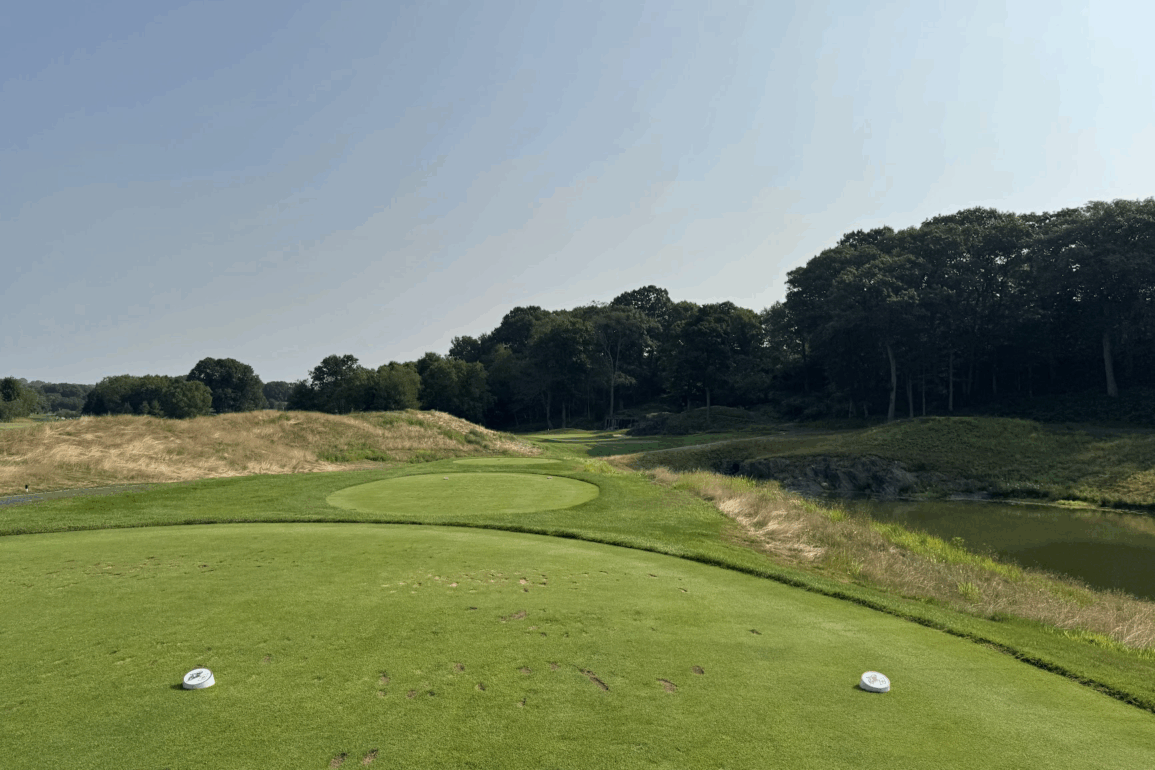
    Elmridge Golf Course – North is a public par-36 course measuring approximately 3,271 yards from the tips. The course was originally designed in 1967 by Joseph Rustici and Charles Rustici and is located in Pawcatuck, Connecticut.

    The North course at Elmridge represents one-third of a thoughtful expansion that transformed a family dairy farm into a respected 27-hole public facility. Joseph and Charles Rustici, brothers who inherited their family’s 250-acre property in southeastern Connecticut, began converting the land from agricultural use to golf in the mid-1960s. The facility opened initially with nine holes in 1967, expanded to 18 holes, and eventually grew to its current 27-hole configuration when the North course was added in 1998. The Rustici family had owned and operated the land as a working dairy farm since the 1920s, and remnants of that agricultural heritage remain visible throughout the property, including a 40-foot grain silo near one of the first tees. The brothers’ design philosophy emphasized working with the natural topography rather than imposing artificial features, allowing the rolling Connecticut hillside to dictate routing and shot values. Over the decades, the facility has maintained its semi-private status while remaining accessible to daily-fee players, and course conditioning has improved significantly in recent years with investments in drainage systems and turf management programs that have yielded consistently firm fairways and true putting surfaces.

    The North nine occupies approximately 90 acres of the facility’s hilltop setting, sharing the elevated terrain that provides cooling breezes during summer rounds and panoramic views of the surrounding woodland. The routing follows a moderately hilly out-and-back pattern that uses elevation changes to create variety in shot selection and visual interest. Joseph Rustici’s design approach on the North demonstrates a clear preference for using natural landforms to shape hole corridors, with fairways that roll and tumble across the property’s slopes rather than following flat, manufactured planes. The course appeals most strongly to players who appreciate strategic positioning over pure length, as the relatively compact yardage from the back tees rewards accuracy and course management rather than raw distance. Mid-handicappers find the layout particularly engaging because the moderate length creates legitimate birdie opportunities while the undulating terrain and well-placed hazards punish wayward shots appropriately. The North integrates seamlessly with either the South or West nines to create varied 18-hole experiences, with most players rotating through different combinations over multiple visits. Tree-lined corridors frame nearly every hole, creating defined playing areas that feel secluded despite the property’s proximity to Interstate 95, and the predominantly bentgrass playing surfaces provide consistent turf conditions from tee to green throughout the season.

    Strategic Test

    The North course presents a compelling examination of precision-based golf where strategic positioning frequently trumps aggressive play. The design philosophy emphasizes accuracy and intelligent course management, with the architects using the natural topography to create holes where optimal angles of approach become critical for accessing pin positions. The moderately hilly terrain introduces both uphill and downhill lies that complicate club selection, particularly on approach shots where the visual deception created by elevation changes can lead to costly misjudgments. Most holes reward players who can work the ball both directions, as the rolling fairways and elevated green complexes often favor shaped shots over straight trajectories. The green sites showcase thoughtful design, with many surfaces built into hillsides or perched on plateaus that demand aerial approaches and punish ground-game strategies. Several holes feature strategic width off the tee, allowing longer hitters to challenge hazards for better approach angles while offering shorter hitters safer routes that accept less favorable positions. The par-3 holes test a range of clubs and shot shapes, from short irons to mid-long irons depending on tee selection, and the green complexes on these holes tend to be smaller and more contoured than those on the par-4s. High-handicap players benefit from generous landing areas on most holes and find the forward tees positioned to create manageable carry distances over hazards, though the elevated greens and undulating fairways can complicate recovery shots for those prone to offline drives.

    Course rating and slope provide quantitative measures of difficulty that help players understand what to expect before teeing off. The rating represents the score a scratch golfer should shoot under normal conditions, while slope measures the relative difficulty for bogey golfers compared to scratch players, with 113 representing a course of standard difficulty. At Elmridge North, the Blue tees carry a rating of 70.5 and a slope of 117 from the men’s tees at 3,271 yards. These numbers indicate a course that plays slightly easier than standard difficulty for bogey golfers but presents a respectable challenge for low-handicappers, particularly when factoring in the elevation changes and small, contoured greens that demand precise iron play. The slope rating of 117 suggests that higher-handicap players won’t find the course overly punishing, as hazards are generally well-telegraphed and alternate routes exist on most holes. This combination of modest rating and slope makes the North an excellent choice for mixed-ability groups, where scratch golfers can score well if they execute properly while double-digit handicappers can post competitive Stableford points without feeling overwhelmed. The strategic implications become clear when considering that a 117 slope means the course doesn’t balloon in difficulty for higher handicappers, suggesting that while the design rewards skill, it doesn’t overly penalize imperfect execution through excessive length, penal hazards, or severely undulating greens.

    HandicapCourse Strategy
    High Handicap (18+)Players in this range should favor the White tees at approximately 2,900 yards, which reduces forced carries and makes the par-36 target more realistic. The slope of 115-117 means bogey players can expect to shoot in the mid-to-upper-40s on this nine, as the rating suggests adding roughly 12-15 strokes to par depending on individual handicap. Strategic emphasis should focus on keeping drives in play rather than maximizing distance, as the tree-lined corridors punish offline tee shots severely. On approach shots, high-handicappers benefit from aiming for the center of greens rather than attacking pins, especially on the smaller par-3 surfaces where missing the target often results in difficult up-and-downs. The elevation changes throughout the course mean club selection becomes critical, and players should err toward taking more club on uphill approaches and less on downhill shots.
    Mid Handicap (8-18)Mid-handicappers playing from the White or Gold tees (2,900-3,100 yards) find the North offers an ideal balance of scoring opportunities and defensive requirements. These players should target scores in the low-40s, as the course rating suggests scratch golfers shoot around 35 from comparable tees. Strategic decision-making centers on risk-reward calculations, particularly on holes where aggressive lines off the tee can set up shorter approaches but introduce hazards or trouble. The undulating fairways reward players who can work the ball with the slopes, while the elevated and contoured greens demand precise distance control and trajectory management. Mid-handicappers should identify which par-4s offer legitimate birdie chances based on their driving distance and which holes require defensive strategies to protect against big numbers.
    Low Handicap (0-8)Single-digit players tackling the Blue tees at 3,271 yards and rating 70.5 should aim for scores near par or 1-2 over, as the relatively short yardage creates multiple birdie opportunities for those who can control trajectory and spin. The strategic challenge for better players lies in capitalizing on scoring chances while avoiding the occasional double bogey that can derail a good round. Length off the tee matters less than accuracy and positioning, as many of the par-4s play in the 330-400 yard range where aggressive drivers can reach or nearly reach greens but face significant trouble if missing fairways. Low-handicappers should study green complexes carefully, as the smaller surfaces and subtle contours reward precise iron play and distance control. The key to scoring involves converting birdie opportunities on the shorter par-4s and par-3s while avoiding mistakes on the longer, more defensive holes where par represents a good score.

    The eighth hole on the North exemplifies strategic golf design at its most effective, measuring 396 yards from the Blue tees as a par-4 that plays significantly longer than its yardage suggests. This hole climbs uphill throughout its entire length, with an approach shot to a raised, plateau green that sits approximately 15-20 feet above the fairway. The drive requires precision more than power, as a fairway bunker guards the right side of the landing area while trees encroach from the left, creating a corridor that demands a straight tee shot for optimal positioning. From the fairway, players face a blind or semi-blind approach to the elevated green, where judging the correct yardage becomes critical given both the uphill climb and the raised putting surface. High-handicappers playing from forward tees around 330-350 yards find this hole particularly challenging, as the uphill nature and elevated green typically require a driver followed by a fairway wood or hybrid, with the raised green making it difficult to hold the surface from distance. Mid-handicappers from the 370-yard range face a similar challenge of needing two strong shots to reach the green in regulation, though their better ball-striking ability gives them a fighting chance at holding the elevated surface with a mid-iron approach. Low-handicappers from the 396-yard championship tees can reduce the hole to a drive and short-to-mid iron, but the elevated green still demands precise distance control and adequate height to hold the putting surface, with shots coming up short often rolling back down the slope fronting the green.

    Nearby Course Alternatives

    Lake of Isles – North Course in North Stonington presents a dramatically different golf experience just 8 miles west of Elmridge, representing a quantum leap in both conditioning and architectural ambition. The Rees Jones design opened in 2005 as the public course at Foxwoods Resort Casino’s golf complex, sprawling across 900 acres of heavily wooded terrain surrounding a 90-acre lake that comes into play on multiple holes. From the championship tees, the layout extends to 7,252 yards with a par of 72, carrying a formidable slope rating of 146-147 and a course rating of 76.7 that immediately signals championship-caliber difficulty. The North Course features elevation changes that dwarf anything at Elmridge, with several holes dropping or climbing 40-60 feet from tee to green, creating dramatic vistas and demanding precise distance control on approach shots. The property encompasses approximately 900 acres compared to Elmridge’s 250-acre footprint, giving Lake of Isles a more expansive, resort-scale feel with wider corridors and longer walks between holes. Jones’ design pedigree brings PGA Tour-caliber strategic elements including forced carries over wetlands, island greens, heavily bunkered corridors, and undulating putting surfaces that test even single-digit handicappers. Players who prefer championship-length tests with premium conditioning, significant elevation changes, and high-end amenities will find Lake of Isles worth the 15-minute drive west from Elmridge, though green fees typically run two to three times higher and the course’s length and difficulty can overwhelm high-handicappers who might score better at Elmridge’s more manageable layout.

    River Ridge Golf Course in Griswold offers an intriguing alternative approximately 20 minutes northwest of Elmridge, designed by the same Joseph and Charles Rustici team that created Elmridge and sharing similar architectural DNA. This public 18-hole layout opened in May 1999 and stretches to 6,871 yards from the gold tees with a par of 72, carrying a slope rating of 124 and playing across former orchard land that has matured into a challenging parkland test. The first three holes occupy relatively open terrain that was once an apple orchard, while the remaining 15 holes wind through rolling hills and wooded corridors that echo Elmridge’s tree-lined aesthetic. River Ridge benefits from a comprehensive irrigation system and careful maintenance that keeps tees, fairways, and greens in consistently good condition throughout the season, with bent grass greens that typically roll true and at moderate speeds. The course sits atop a scenic hilltop location similar to Elmridge, providing sweeping views of southeastern Connecticut’s countryside and catching the same cooling breezes that make summer golf tolerable. At approximately 200 acres, River Ridge occupies a slightly smaller footprint than Elmridge but concentrates its design on a single 18-hole routing rather than splitting acreage among three nines. Players who enjoy Elmridge’s strategic, positioning-based golf will find River Ridge offers similar values at full 18-hole length, with the Rustici brothers’ characteristic use of natural topography to create variety and their preference for strategic width over penal tightness. River Ridge appeals most to mid-handicappers who want more golf in a single round than Elmridge’s nine-hole loops provide while maintaining a similar architectural philosophy and price point, though Elmridge’s 27-hole configuration offers more variety for regular players who rotate through different nine-hole combinations.

    Final Word

    The practice facilities at Elmridge support player development with a grass driving range that allows full swings with all clubs, giving golfers the opportunity to warm up properly before rounds or work on specific swing issues between loops. A dedicated putting green sits adjacent to the clubhouse, providing space to read breaks and dial in speed before heading to the first tee. The facility lacks a dedicated short-game area or practice bunker, which represents the primary gap in the practice amenities for players looking to work on wedge play or sand technique. The clubhouse anchors the property with a full-service restaurant and lounge that welcomes both golfers and non-golfers, serving lunch and dinner with indoor seating and an outdoor patio that overlooks portions of the course. The pro shop carries a reasonable selection of equipment, apparel, and accessories appropriate for a mid-sized public facility, with staff available for club fitting and lessons by appointment. Cart rental is available for those who prefer riding, though the course remains walkable despite its moderately hilly terrain, and pull carts can be rented for players who want to walk but prefer not to carry their bags.

    The North course at Elmridge proves its value through intelligent strategic design that rewards thoughtful play across a manageable distance, making it accessible to a wide range of abilities while still challenging better players who must execute precise iron shots to score well. The Rustici brothers’ decision to work with rather than against the property’s natural topography created a routing that feels organic and site-specific, with elevation changes and landforms that introduce variety and visual interest without resorting to artificial features or manufactured difficulty. The course’s integration into a 27-hole facility provides exceptional flexibility for regular players, who can rotate through different nine-hole combinations to keep the golf experience fresh over multiple visits while maintaining relationships with playing partners who prefer shorter rounds. Conditioning has improved markedly in recent years, with fairways that run firm and fast during dry periods and greens that roll true at moderate speeds conducive to both aggressive putting and careful lag strokes. The combination of Joseph Rustici’s local knowledge, his family’s multi-generational stewardship of the land, and the course’s evolution from dairy farm to respected golf facility creates a sense of place and authenticity that distinguishes Elmridge from many modern public courses built purely as real estate amenities. For players in southeastern Connecticut seeking strategic golf at public rates within a scenic, well-maintained setting that emphasizes shot-making over pure length, the North course delivers consistent satisfaction and represents genuine value in a region where golf can be expensive.

  • Ellington Ridge Country Club

    Ellington Ridge Country Club

    [put_wpgm id=”2″ width=”100%” height=”770px” current_post_only=”true”]

    [letsreview]

    Ellington Ridge Country Club is a private par-72 course measuring approximately 6,936 yards from the tips. The course was originally designed in 1959 by Geoffrey Cornish and is located in Ellington, Connecticut.

    Established in 1959, Ellington Ridge Country Club has a rich history of hosting high-level competitive golf. The club has been the venue for numerous prestigious events, including the Traveler’s Championship Qualifier, Connecticut PGA Championships, and various CSGA and CWGA tournaments. This tournament pedigree has helped it earn a consistent ranking among the top five courses in the state. Beyond its championship credentials, the club cultivates a reputation as a friendly, family-oriented community. It is particularly recognized for having one of the premier Junior golf programs in Connecticut. The course itself is set on a picturesque ridgeline that offers scenic views overlooking the Connecticut River valley. This classic New England setting contributes significantly to the club’s distinguished character. The design has undergone several major improvements over the past fifty years to maintain its challenge and pristine condition. Its ability to test the best players while remaining welcoming to families is a core part of its identity. The club’s long-standing presence in the state’s golf scene makes it a respected and sought-after destination.

    The course is laid out over a sprawling 179-acre property, providing a sense of space and seclusion. Architect Geoffrey Cornish was a proponent of traditional design, known for laying a course gently upon the natural landscape rather than moving millions of yards of earth. This philosophy is evident at Ellington Ridge, where the routing takes full advantage of the property’s rolling terrain. The fairways flow naturally with the contours of the land, creating a variety of lies and strategic angles. This classic parkland design vibe emphasizes thoughtful play over sheer power. The course features ninety bunkers strategically placed throughout the fairways and around the greens, along with water hazards that come into play on three holes. The greens are known to be firm, fast, and treacherously sloped, making them the primary defense of the course. With seven sets of tees, the layout is made accessible to a wide range of players. Ultimately, Ellington Ridge will be most enjoyed by the thinking golfer who appreciates subtle strategic challenges and the reward of a well-executed shot. The design demands course management and precision, testing every aspect of a player’s game.

    Strategic Test

    The strategic examination at Ellington Ridge begins on the first tee and rarely relents. Cornish, for whom the opening hole was a personal favorite, immediately asks for a decision on a dogleg right where finding the fairway is paramount to setting up the approach. Throughout the round, the player is consistently presented with real choices. Risk-reward scenarios are most evident on the par 5s, such as the second hole with its cluster of layup-zone bunkers and the thirteenth, which features a pond guarding the green. However, the more subtle strategic questions arise from the course’s nuanced features. Fairways that tilt left-to-right (Hole 9) or right-to-left (Hole 10) require players to shape tee shots to hold the fairway and gain the ideal line of attack. The primary strategic challenge is not simply hazard avoidance but rather the constant need to think one shot ahead. The green complexes are the heart of the course’s defense; described as treacherous, deceptively sloped, and difficult to read, they place an immense premium on the angle of the approach shot, forcing the player to work backwards from the pin to identify the optimal position in the fairway.

    For the higher-handicap player, the course remains accessible and enjoyable primarily due to the extensive teeing options. With forward tees playing as short as 5,383 yards, the question of length is largely removed from the equation. While the course features ninety bunkers and several water hazards, Cornish’s design generally provides ample room to navigate around trouble, avoiding the long, forced carries that can frustrate less-skilled players. The challenge for the bogey golfer is less about heroic ball-striking and more about prudent course management. The key to a successful round is respecting the severity of the green complexes. This involves playing to the center of greens regardless of the pin position, leaving straightforward two-putts, and accepting that a bogey is often a very good score. The design rewards intelligent play and punishes greedy or ill-conceived shots, a fair test for any level of golfer.

    A deeper understanding of the course’s strategic demands can be found by interpreting its USGA Course and Slope Ratings. The Course Rating predicts the average score of a scratch golfer, while the Slope Rating measures the relative difficulty for a bogey golfer compared to a scratch golfer, with 113 representing a course of average difficulty. From the championship Black tees, Ellington Ridge has a Course Rating of 73.5 and a Slope of 138. The 73.5 rating indicates that a scratch player is expected to shoot 1.5 strokes over par, a clear sign of the course’s stoutness. The Slope of 138 is significantly higher than average and reveals a crucial aspect of the course’s character: it is disproportionately more difficult for a higher-handicap player. The features that create the challenge—the severe green contours, the rolling terrain producing awkward lies, and the strategically placed bunkers—are more likely to compound errors for a bogey golfer, turning a single mistake into a double or triple bogey. For the scratch player, these are difficult but manageable tests of skill. For the bogey player, they are formidable obstacles that demand a conservative and respectful strategic approach.

    This strategic variance across different skill levels is best managed by selecting the appropriate tees and adopting a realistic game plan.

    HandicapCourse Strategy
    High Handicap (18+)Play from the Gold (5,543 yds) or Green (5,383 yds) tees. The primary goal is to avoid fairway bunkers and position the ball for a straightforward third shot on par 5s. Focus on hitting the center of the greens, ignoring pin positions, to minimize three-putts on the severe surfaces. The high slope rating will significantly lower your net score, so playing for bogey can be a winning strategy.
    Mid Handicap (8-18)Play from the White (6,036 yds) or Gray (6,260 yds) tees. Tee shot placement becomes more critical to set up preferred angles into greens. Must make conscious risk-reward decisions on holes like the 13th. The slope of 126-129 still provides a cushion, but poor course management will be penalized.
    Low Handicap (0-8)Play from the Blue (6,507 yds) or Black (6,936 yds) tees. This is a pure test of course management and shot-making. The course rating of 73.5 from the tips indicates it plays over a stroke and a half harder than par. Strategy involves shaping shots off the tee to attack specific pin quadrants and using the course’s contours to your advantage.

    The strategic rigor of Ellington Ridge is perfectly encapsulated in its finishing hole. The 18th is a formidable, uphill par 4 that has rightfully determined the outcome of numerous championships. Playing to 473 yards from the Black tees, it is relentless from tee to green and serves as the ultimate examination of a player’s nerve and execution. For the low-handicap player, the hole is a true two-shotter requiring a powerful and accurate drive, followed by a long iron or hybrid into a well-defended green. From the Blue tees at 433 yards, it remains a stern test, where par is an excellent score. For the mid-handicapper playing from the White or Gray tees at 378 yards, the significant uphill grade makes the hole play well over 400 yards, demanding two solidly struck shots to reach the putting surface in regulation. The high-handicap player, even from the forward tees around 315 yards, is wise to treat the hole as a three-shot par 4. A conservative tee shot, a simple advance of the ball up the hill, and a wedge onto the green is the prudent path to securing a bogey and avoiding the kind of high score that can ruin a round. As one reviewer noted, the finish is among the “Toughest finishing holes around,” making the 18th a memorable and fitting conclusion to a profound strategic test.

    Nearby Course Alternatives

    Tumble Brook Country Club in Bloomfield offers a compelling 27-hole alternative approximately 30 minutes southwest of Ellington. Since its founding in 1922, the club has evolved through three distinct architectural eras that create exceptional routing variety. The original nine holes, designed by Willie Park Jr. and opened in 1924, established the foundation for what would become one of Connecticut’s most respected private facilities. Orrin Smith added nine holes in 1949, followed by George Fazio’s third nine in 1970, with Mark McCumber orchestrating a comprehensive renovation in 2005 that unified the three nines while preserving their individual character. Playing to approximately 6,760 yards from the championship tees with a slope rating of 124 and course rating of 72.6, the facility presents considerable strategic depth across its varied terrain. The property’s elevation provides commanding views of Talcott Mountain to the west and downtown Hartford to the south, with the topography creating natural amphitheaters around several green complexes. Players who prioritize routing diversity and appreciate the opportunity to experience multiple architectural philosophies within a single round would find Tumble Brook’s three-nine format particularly engaging. The club’s elevated setting also appeals to those who value dramatic vistas as part of the golf experience, as the property’s sightlines extend across much of the Hartford region. Beyond the golf, Tumble Brook maintains exceptional practice facilities, five Har-Tru tennis courts, pool amenities, and dining options that reflect its full-service country club model.

    The Hartford Golf Club in West Hartford presents another distinguished private option 29 minutes southwest of Ellington, with a pedigree extending back to 1896 as the area’s oldest club devoted to the game. The 27-hole facility showcases the combined genius of Donald Ross and Devereux Emmet, architects whose work has shaped countless championship venues across the Northeast. Playing approximately 6,610 yards for 18 holes with a slope rating around 134 and course rating of 70.4, the course threads through rolling terrain that creates strategic interest through natural elevation change rather than artificial manipulation. The club relocated to its current West Hartford property in 1955, with five new holes integrated into the existing layout and an additional nine built west of the clubhouse to complete the 27-hole configuration. The undulating property demands thoughtful club selection and favors players who can work the ball both ways, as many holes present fairway corridors that reward shaped tee shots. Recent bunker renovations have enhanced the hazard complex while maintaining the integrity of the Ross design philosophy, emphasizing strategic positioning over penal architecture. Golfers who appreciate classical Golden Age architecture and enjoy courses where local knowledge compounds with experience would find Hartford Golf Club particularly rewarding. The three-nine format allows for six different 18-hole combinations, creating variety that keeps the course fresh even for frequent play. Members benefit from the club’s longstanding tradition, comprehensive practice facilities including putting and chipping areas, plus full country club amenities spanning tennis, squash, platform tennis, pool, and distinguished dining facilities.

    Final Word

    Ellington Ridge Country Club distinguishes itself through thoughtful amenity integration that extends well beyond its Geoffrey Cornish championship layout. The practice facilities demonstrate genuine commitment to member development, with a six-acre driving range providing ample space for full swing work, complemented by two dedicated putting greens that allow players to work on speed control across different surface conditions. The short game area addresses the scoring zone specifically, giving members the opportunity to refine their wedge play and bunker technique in a dedicated environment rather than competing for space on the course. Indoor AboutGOLF simulators extend the season through Connecticut’s challenging winter months, allowing year-round engagement with the game while providing detailed launch monitor data that supports serious improvement. The tennis program features traditional clay courts that maintain the club’s connection to country club heritage, while the pool complex creates a social hub during summer months that strengthens the family-oriented atmosphere the club actively cultivates. The clubhouse functions as the facility’s living room, with dining options that balance casual post-round gatherings with more formal occasions, all delivered through a service model that emphasizes approachability over formality. Perhaps most impressive is the club’s commitment to junior golf, with programming that has earned statewide recognition and creates a pipeline of developing players who maintain connection to the game. The club’s shoe service, provided twice weekly, represents the kind of thoughtful touch that elevates the member experience without ostentation. What ultimately makes Ellington Ridge special is how the Cornish design philosophy aligns with the club’s identity, creating a layout that challenges accomplished players from 7,000 yards while remaining genuinely playable for higher handicaps through multiple tee options. The course rewards strategic thinking over brute force, with green complexes that accept well-conceived approach shots regardless of distance. This democratic approach to shot values, combined with conditioning standards that consistently rank among the state’s finest and a membership culture that prioritizes inclusion over exclusivity, proves the club’s value proposition extends far beyond the scorecard.

  • Eastwood Country Club

    Eastwood Country Club

    [put_wpgm id=”2″ width=”100%” height=”770px” current_post_only=”true”]

    [letsreview]

    Eastwood Country Club is a public par-36 course measuring approximately 2,933 yards from the tips. The course was originally designed in 1962 and is located in Torrington, Connecticut.

    Eastwood Country Club emerged during the early 1960s golf boom when municipal and public facilities began proliferating across Connecticut’s Litchfield County. The course opened its doors in 1962 on rolling hillside terrain off Route 8, serving the Northwest Hills region as an accessible option for recreational golfers. The original designer remains unknown, though the routing demonstrates a clear understanding of the natural topography with holes that ascend and descend through wooded corridors. Over its six decades of operation, the facility has undergone periodic maintenance improvements, with the most significant enhancement program occurring within the past several years. Recent capital investments have focused on infrastructure renewal, including the construction of new tee complexes, comprehensive bunker restoration, and systematic fairway reconditioning. These renovations have elevated playing conditions considerably, with observers noting marked improvements in surface quality and presentation compared to the course’s condition five years ago. The greens have received particular attention, with updated maintenance practices yielding consistent roll and true putting surfaces that rank among the best in the facility’s history.

    The property encompasses an estimated 60 to 75 acres situated within the Litchfield Hills, exhibiting the moderate elevation changes characteristic of northwestern Connecticut’s glacial terrain. The routing employs an out-and-back configuration with fairways generally oriented parallel to one another, creating a compact footprint that maximizes playability while minimizing walking distance. Mature pine trees define most playing corridors, establishing both aesthetic appeal and strategic significance through their positioning along fairway edges. Ground movement ranges from gentle undulation to more pronounced slopes, with several holes featuring blind or semi-blind tee shots that reward local knowledge. The design philosophy reflects a traditional, straightforward approach without elaborate strategic complexity, making the course particularly appealing to recreational players, seniors seeking a manageable walking experience, and juniors developing their games. The layout favors accuracy over distance, with the premium placed on keeping the ball in play rather than generating maximum yardage. Players who appreciate classic parkland golf in an unpretentious setting will find Eastwood’s honest, no-frills character refreshing. The facility’s nine-hole format also suits those with limited time or players looking to complete 18 holes by playing the course twice, with slightly different tee positions available for variety on the second loop.

    Strategic Test

    The strategic demands at Eastwood Country Club reflect its modest length and straightforward design philosophy, presenting decision-making opportunities that scale appropriately to player skill level. From the championship tees at 2,933 yards, most holes do not require drivers, instead emphasizing positional play with fairway woods and long irons to navigate the tree-lined corridors. The two par-5s incorporate severe doglegs that create distinct route options, with longer hitters able to challenge the corners while shorter players must accept layup positioning. However, the narrow fairway widths and abundant tree encroachment limit aggressive angles of approach, often relegating strategic choices to club selection rather than alternative lines. The short par-4 fifth hole, measuring approximately 285 yards, presents the clearest risk-reward scenario, potentially driveable for stronger players but protected by hazards that punish overly aggressive attempts. Greenside bunkers appear selectively rather than systematically, with trees posing the primary penalty for wayward approaches. The putting surfaces exhibit subtle to moderate contouring without severe undulation, requiring thoughtful speed control on sloping terrain but rarely demanding heroic recovery from extreme positions. For high-handicap players, the compressed yardage eliminates forced carries beyond their capabilities, while the relatively modest slope rating of 113 suggests manageable scoring potential with sensible course management. Mid-handicappers will find adequate variety to maintain engagement across 18 holes, though the repetitive tree-lined aesthetic may lack the architectural diversity some players seek.

    The course rating of 33.9 against par 36 indicates that a scratch golfer would be expected to shoot approximately two under par over nine holes, reflecting the layout’s relative ease for accomplished players. The slope rating quantifies the proportional difficulty increase for bogey golfers compared to scratch players, with Eastwood’s 113 falling slightly above the neutral baseline of 113 that represents average difficulty. This numerical relationship reveals that while the course poses minimal challenge to low-handicap competitors who can consistently strike quality shots, it maintains sufficient difficulty for recreational players whose less-consistent ball-striking produces more frequent tree encounters and missed greens. The combination of forgiving length and moderate slope creates an accessible environment where course management skills prove more valuable than raw distance. Understanding these metrics helps players calibrate expectations and select appropriate strategies matched to their capabilities.

    HandicapCourse Strategy
    High Handicap (18+)Players should utilize the forward tees measuring approximately 2,550 yards with a course rating around 64.5 for 18 holes. From these markers, the emphasis shifts to consistent contact and keeping the ball in play rather than pursuing distance. The slope rating near 112-113 suggests high handicappers will add roughly 18-25 strokes to par over a full round depending on exact index. Strategy should prioritize hybrid clubs and fairway woods off tees on longer holes, accepting that reaching greens in regulation represents success rather than expectation. The narrow corridors demand conservative aim points favoring fairway centers over aggressive lines near tree edges. Short game proficiency becomes crucial, as missed greens occur frequently, making practice on the putting green before the round a worthwhile investment.
    Mid Handicap (8-18)Mid-handicap players should consider the middle tees near 2,700 yards with a course rating approximating 67.0 for 18 holes. This group will add between 8-18 strokes to par typically, with the slope rating indicating that course management significantly influences scoring outcomes. Strategic choices emerge on the two par-5s, where decisions between laying up and attempting to reach in two depend on tee shot quality. Driver becomes playable on several holes but requires discipline to avoid the tree-lined edges. Approach shot club selection merits careful attention, as the elevated and sloped green complexes penalize both short and long misses. Pin placement influences strategy, with back positions requiring aggressive carries while front flags allow ground game options. Mid-handicappers benefit from plotting conservative routes during the first nine and potentially becoming more aggressive on the second loop once they understand green speeds and pin positions.
    Low Handicap (0-8)Low handicappers playing the back tees at 2,933 yards with a 33.9/113 rating should expect to shoot 70-78 for 18 holes depending on conditions and second-nine adjustments. The short yardage removes distance as a competitive advantage, shifting emphasis to precision iron play and putting performance. Strategic interest centers on the par-5 opportunities, where birdie represents the expectation rather than bonus. The narrow fairways still demand accuracy despite generous distance margins, as offline tee shots beneath tree canopies eliminate aggressive flag attacks. The course rewards tactical conservatism, with pars accumulated through fairways and greens rather than spectacular shot-making. Single-digit players may find limited strategic variety, with most holes playing as straightforward propositions. Scoring depends heavily on putting efficiency and avoiding the occasional tree encounter that produces bogey or worse.

    The ninth hole stands as the course’s signature strategic examination, a lengthy par-5 measuring approximately 470 yards that incorporates both water hazards and severe dogleg geometry. From the championship tee, players face a demanding tee shot where an imposing oak tree positioned at the dogleg’s apex creates a central hazard that influences drive positioning. The fairway splits into two strategic corridors, with the outside route providing a safer but longer path, while the inside line flirts with hazard areas but shortens the remaining distance substantially. A small pond appears in the landing zone approximately 92 yards from the tee, providing a bit of psychological pressure. After navigating the tee shot successfully, players must traverse a bridge over another water feature before approaching the green complex. The putting surface sits partially obscured from typical second-shot positions, creating a semi-blind approach that rewards familiarity with precise yardages and green dimensions. High handicappers should employ a three-shot strategy, laying up with a fairway wood or hybrid around 180 yards, then positioning a mid-iron to approximately 100 yards, and finishing with a controlled wedge to the green. This conservative routing eliminates catastrophic penalty strokes while maintaining reasonable par opportunities. Mid-handicappers face the central strategic dilemma, deciding whether second-shot positioning for a wedge third merits the risk of challenging the dogleg more aggressively. The ideal approach involves a 210-yard fairway wood that reaches the optimal wedge distance while avoiding both water hazards. Low handicappers should seriously consider reaching the green in two shots with a well-executed drive followed by a long iron or hybrid from approximately 220 yards, though the blind nature of the approach and green-front bunkering makes this gambit less appealing than on more open par-5s. The hole epitomizes Eastwood’s honest character, rewarding thoughtful execution without requiring spectacular shot-making, while still providing enough variables to maintain strategic engagement across multiple skill levels.

    Nearby Course Alternatives

    Green Woods Country Club in Winsted presents a compelling alternative roughly 10 minutes north via Route 8, offering a semi-private facility that welcomes public play on a 10-hole layout measuring 2,980 yards from the championship tees with a slope rating of 129 and course rating of 69.0. Designed by Al Zikorus and established in 1903, Green Woods occupies a distinctive position as one of Connecticut’s oldest continuously operating facilities, sitting on approximately 70 to 90 acres of moderately sloped terrain in Litchfield County. The course exhibits more pronounced elevation changes than Eastwood, with several holes climbing and descending hillsides that add strategic complexity through stance variations and forced carries. The facility has earned recognition for exceptional conditioning standards, with immaculately groomed fairways, consistently fast greens, and meticulously maintained bunkers that reflect substantial investment in agronomy. The elevated slope rating compared to Eastwood indicates greater challenge for recreational players, stemming from tighter landing areas, more severe green complexes, and aggressive hazard placement. Green Woods offers superior practice facilities including a driving range and expansive putting surfaces, along with a modern clubhouse featuring a full-service restaurant and banquet capabilities. The tenth hole, a par-5 threading through dense woodland, ranks among Connecticut’s most memorable nine-hole offerings. Players seeking a more refined presentation with heightened strategic demands and superior amenities will find Green Woods worth the brief drive north, particularly mid-handicappers who appreciate courses that reward thoughtful execution. The increased difficulty and slightly higher green fees position it as an upgrade experience compared to Eastwood’s recreational focus, though single-digit handicappers may still find the overall yardage insufficient for sustained challenge.

    Stonybrook Golf Course in Litchfield offers another public nine-hole option approximately 8 minutes southwest on Route 202, measuring 2,996 yards from the back tees with a slope rating of 125 and course rating of 35.1 for par 35. Also designed by Al Zikorus and opened in 1966, Stonybrook occupies an estimated 60 to 75 acres carved into the rolling Litchfield Hills topography with more dramatic elevation changes than either Eastwood or Green Woods. The routing incorporates significant uphill and downhill holes that create variety in stance and approach angles, with the par-4 fifth playing steeply uphill to a shallow green perched above a fronting bunker. The narrow seventh hole, measuring 385 yards through a tree-lined corridor, earns distinction as the course’s most demanding test. Stonybrook maintains a reputation for excellent playing conditions, with bentgrass fairways and greens receiving high marks from regular competitors. The facility includes a putting green but no driving range, limiting pre-round preparation options. The clubhouse features a full-service restaurant known for quality food that enhances the overall experience beyond pure golf. The higher slope rating compared to Eastwood reflects tighter fairways, more aggressive green contouring, and forced carries that punish mishits more severely. Players who enjoy pronounced topography and the visual interest created by elevation changes will appreciate Stonybrook’s varied terrain, particularly those with strong short games capable of navigating the undulating putting surfaces. Mid-to-high handicappers seeking a scenic round with memorable hole corridors and quality dining afterward should consider the slightly longer drive to Litchfield, though the increased slope rating means scoring may prove more challenging than Eastwood’s forgiving layout. The course rewards position play and accurate iron work, making it ideal for players whose games emphasize precision over power.

    Final Word

    Beyond the golf course itself, Eastwood Country Club provides fundamental practice and preparation facilities including a driving range with mat hitting areas and a dedicated putting green where players can calibrate speed before their rounds. The clubhouse functions as a straightforward gathering space featuring a pro shop stocked with essential equipment and apparel, along with a restaurant and bar offering casual dining options for post-round meals and beverages. The facility offers club repair services through its golf professional, addressing equipment needs without requiring trips to off-site vendors. Cart availability supports those preferring to ride, though the compact routing and manageable terrain make walking a viable option for most fitness levels. The course accommodates league play and tournament outings, with the staff demonstrating flexibility in scheduling and event coordination. While the amenities portfolio lacks the elaborate fitness centers, swimming pools, or tennis courts found at full-service country clubs, this streamlined approach aligns with Eastwood’s mission as a no-frills public facility prioritizing affordable access over comprehensive recreation. The emphasis remains squarely on the golf experience rather than peripheral attractions.

    What distinguishes Eastwood Country Club within Connecticut’s crowded public golf landscape is its unpretentious commitment to providing accessible golf at reasonable rates without sacrificing playability or basic maintenance standards. The recent infrastructure improvements demonstrate ownership’s dedication to elevating course conditions while maintaining the facility’s welcoming character for players across all skill levels. The honest, straightforward routing rewards fundamental skills without requiring heroic shot-making or extensive local knowledge, making it particularly valuable for recreational players, seniors, and juniors building their games. The tree-lined corridors create visual definition and strategic parameters without becoming punitive for those with occasional wayward shots. The nine-hole format serves multiple constituencies effectively, from lunch-break executives seeking quick rounds to retirees playing 18 holes at a measured pace. Eastwood’s value proposition extends beyond the scorecard, encompassing its role as Torrington’s only golf course and its function as a community gathering point for league play and casual rounds among friends. While the course may not satisfy accomplished players seeking championship-caliber examination or architectural sophistication, it fulfills its intended purpose admirably by delivering solid conditions, fair challenges, and genuine hospitality. The facility proves that compelling golf experiences need not require elaborate length, extensive acreage, or premium pricing. For those seeking honest golf in a pleasant setting without pretense or unnecessary complications, Eastwood Country Club delivers consistent satisfaction.

  • East Mountain Golf Course

    East Mountain Golf Course

    [put_wpgm id=”2″ width=”100%” height=”770px” current_post_only=”true”]

    [letsreview]

    East Mountain Golf Course is a public par-70 course measuring approximately 6,076 yards from the tips. The course was originally designed in 1932 by Wayne Stiles and is located in Waterbury, Connecticut.

    East Mountain Golf Course opened for play in 1932 as one of Wayne Stiles’s classic Golden Age designs, embodying the strategic routing principles and natural integration that defined his work during this era. The original layout carried a par of 67 until 2007, when golf architect Stephen Kay undertook a comprehensive renovation that increased the par to 70 by converting what was previously a long par-3 second hole into a risk-reward par-4 of approximately 270 yards. The Kay renovation respected the Stiles DNA while enhancing playability and strategic interest across the property. Over the decades, various architects including William and David Gordon, along with Doug Smith, have contributed modifications that maintained the course’s traditional character while addressing modern maintenance and playability standards. The clubhouse underwent a significant interior renovation in recent years, preserving architectural elements from the original structure while upgrading amenities and the pro shop. Throughout its nine-decade history, East Mountain has remained a municipal facility accessible to the walking player, a testament to Stiles’s thoughtful routing that works with rather than against the natural topography. The course reflects the design philosophy of its era, where strategic bunkering and green contouring created challenge without requiring excessive yardage or artificial earthmoving.

    The course occupies an elevated hillside setting with an estimated footprint of 110 to 130 acres, situated prominently above the eastern edge of Waterbury. The routing follows a somewhat labyrinthine pattern characteristic of Stiles designs, where holes change direction frequently and tree-lined corridors create distinct playing experiences on each hole rather than an open parkland feel. The terrain features gradual rolling movements rather than severe elevation changes, making the course accessible to walkers despite its hillside location. The design vibe emphasizes strategic shot values over length, with fairways that allow players to work the ball in different directions and greens protected by deep, strategically-placed bunkers that demand precision on approach shots. The layout rewards the thinking player who can position tee shots for optimal angles into greens, particularly on the standout par-4s at the sixth and seventh holes. Players who enjoy traditional Golden Age architecture with subtle contouring, strategic bunkering, and variety in hole design will find East Mountain particularly satisfying. The course suits golfers who value shot-making and course management over sheer power, as the modest yardage from most tees encourages creative play rather than simply overwhelming the layout with distance.

    Strategic Test

    The strategic architecture at East Mountain presents players with nuanced decision-making opportunities rooted in angle-based positioning rather than forced heroic carries or penal hazards. From the tee, most holes offer generous landing areas but reward specific trajectories that open up preferred approach angles, particularly on dogleg holes like the first and sixth where drawing the ball shortens the approach and provides better sight lines to elevated or contoured greens. The course rarely mandates one specific play style, instead accommodating both power players who can carry strategic bunkers and positioning players who work the ball around hazards through intelligent routing choices. Green complexes feature subtle internal contouring with false fronts and falloffs that require precision in distance control, while greenside bunkers tend toward traditional depth and strategic placement rather than purely aesthetic mounding. High-handicap players will find the course approachable due to reasonable fairway widths and the absence of forced carries except on the signature thirteenth hole, though recovery shots from wayward positions can prove challenging given the tree-lined nature of most holes. The routing provides natural breathing room between difficult stretches, as the demanding par-4s at six and seven give way to more manageable scoring opportunities, creating rhythm that prevents the layout from becoming relentlessly punishing.

    Slope rating quantifies the relative difficulty a course presents to bogey golfers compared to scratch players, with 113 representing standard difficulty and each point above or below indicating proportionally greater or lesser challenge for higher handicaps. Course rating represents the expected score for a scratch golfer under normal conditions, providing context for how a par-70 layout with ratings ranging from 65.5 to 68.7 plays significantly easier than its par suggests for skilled players. The combination of modest slope values between 111 and 119 from the men’s forward and middle tees indicates East Mountain does not disproportionately penalize higher handicappers, as the differential between scratch and bogey scoring expectations remains moderate. From the back tees at 119 slope and 68.7 rating, the course presents genuine challenge without overwhelming skilled players, suggesting strategic complexity rather than pure difficulty through length. These metrics reveal a design where positioning and precision matter more than power, as the rating sits well below par while slope values indicate the course defends itself adequately against errant shots through strategic bunkering and green contouring rather than severe hazards or extreme length.

    HandicapCourse Strategy
    High Handicap (18+)Players in this range should consider the yellow tees at 5,444 yards with a 111 slope and 65.5 rating, which reduces the course rating by 4.5 strokes below par and suggests achievable scoring for improving players. The moderate slope indicates missed shots face consequences but recovery remains possible, as strategic bunkers punish wayward approaches more than tee shots straying into wider landing zones. Green-in-regulation percentage matters less than avoiding big numbers, so playing conservatively to the center of greens eliminates many three-putt situations caused by chasing tucked pins behind steep falloffs. The signature thirteenth hole demands a carry over the deep pit but plays as a mid-iron for most from the forward tees, making par achievable with sound execution. Focus on course management rather than heroics pays dividends, particularly on the longer par-4s where laying back off the tee to a comfortable approach distance proves wiser than forcing driver into trouble.
    Mid Handicap (8-18)The blue tees at 5,806 yards with 115 slope and 67.2 rating, or the 6,012-yard blue tees at 118 slope and 68.6 rating, provide appropriate challenge for this range, with course ratings just 2 to 3 strokes below par indicating scoring opportunities exist through solid ball-striking. The increased slope from the longer blue tees reflects how additional yardage exposes weakness in driving distance and accuracy, as longer approach shots into undulating greens magnify mishits. Strategic value emerges on holes like the sixth and seventh where drawing the tee shot shortens approaches into greens defended by falloffs and deep bunkers that severely penalize misses. The par-3 collection at East Mountain tests club selection and distance control, particularly the 200-yard eighth playing downhill to an undulating surface and the 190-yard thirteenth demanding precise carry over the abyss. Scoring hinges on capitalizing on the shorter par-4s and par-5s while managing bogey on the tougher two-shotters, as the layout rewards players who think strategically about angles rather than simply bombing driver on every hole.
    Low Handicap (0-8)The black tees stretching 6,076 yards with 119 slope and 68.7 rating challenge accomplished players to score below the 68.7 expected mark through precise execution and strategic routing choices. The modest yardage by modern standards shifts emphasis toward accuracy and angle optimization, as the par-4s at six and seven demand both distance control off the tee and precise approach trajectories to greens with severe consequences for misses. Birdie opportunities exist on the risk-reward par-4 second hole at approximately 270 yards and the short par-5 ninth at 483 yards where aggressive play from optimal angles can yield scoring. The strategic bunker placement and green contouring require shot-shaping ability, particularly on holes where specific ball flights open up preferred quadrants of greens with challenging internal slopes. Scrambling ability matters significantly given the penal nature of missing greens into deep bunkers or severe falloffs, as getting up and down from these positions separates elite rounds from mediocre ones. The stretch from holes six through nine and again from twelve through fifteen represents where rounds are made or broken, demanding sustained precision on a collection of the layout’s most compelling holes.

    The thirteenth hole at East Mountain stands as perhaps the most distinctive one-shotter in Connecticut, demanding a 190-yard carry from the black tees over an enormous brushy pit with a playable area at the bottom that few players wish to discover. The hole plays as a forced carry to an elevated green proportioned appropriately for the length, with the abyss creating both visual intimidation and strategic consequence that transforms club selection from routine to critical. High handicappers from forward tees face roughly 150 to 160 yards, making the hole accessible with a hybrid or fairway wood but still requiring commitment to the shot given the severe penalty for coming up short. Mid handicappers from the blue tees encounter a full mid to long iron depending on wind, with the elevated green and depth perception across the pit complicating distance judgment and often leading to over-clubbing or deceleration through impact. Low handicappers must execute a precise mid-iron with the confidence to take dead aim rather than bailing toward safer areas, as the green features subtle contouring that rewards aggressive lines while punishing conservative plays with difficult two-putt scenarios. The strategic interest emerges not from options but from execution demands, as players must fully commit to the carry while managing the psychological pressure of the pit looming directly in the line of play. Missing the green long or to the sides leaves challenging recovery shots to a surface running away from those angles, turning what should be routine pars into scrambling opportunities that test short game prowess.

    Nearby Course Alternatives

    Western Hills Golf Course in Waterbury, located approximately 5 minutes west of East Mountain along Park Road, offers a longer and more demanding test at 6,356 yards from the tips with a par-72 rating of 70.5 and slope of 129. Originally designed by William F. Gordon in 1960 on approximately 140 acres of rolling terrain, the course received a Stephen Kay renovation in 2007 that enhanced bunkering and drainage while improving strategic playability. The layout features more pronounced elevation changes than East Mountain, with several holes playing significantly uphill or downhill and creating visual drama particularly on the standout par-3 sixteenth that climbs some 20 feet from tee to green. Western Hills rewards accurate ball-striking and sound course management, as the tighter tree-lined fairways and heavily bunkered green complexes penalize misses more severely than East Mountain’s somewhat more forgiving design. The strategic architecture emphasizes accuracy over distance, with the higher slope rating reflecting how wayward shots face more severe consequences from the bunkering and topography. Players who enjoy testing their iron play into elevated greens and navigating demanding par-5s like the thirteenth and fifteenth will find Western Hills particularly engaging. The course suits mid to low handicappers who can control trajectory and work the ball around hazards, while higher handicappers may struggle with the combination of length, elevation, and strategic bunkering that punishes mishits.

    Crestbrook Park Golf Course in Watertown sits approximately 10 minutes north of East Mountain and presents a significantly longer examination at 6,930 yards from the tips with a par-71 rating of 73.6 and slope of 132. Designed by Geoffrey Cornish and opened in 1962 on an estimated 160 to 180 acres, the course features two distinctly different nines that create variety in both strategic demands and aesthetic character. The routing incorporates more water hazards than East Mountain, most notably on the par-5 sixth where a creek bisects the fairway and forces strategic decision-making on the second shot regarding whether to lay up or attempt to carry the hazard. The elevated par-4 fifteenth showcases perhaps the boldest green complex on the property, with severe contouring that rewards accurate approach trajectories while punishing misses with difficult recovery situations. The substantially higher slope rating of 132 compared to East Mountain’s 118 reflects how the additional yardage, water hazards, and demanding green complexes compound difficulty for bogey golfers attempting to navigate the layout. The course demands consistent driving distance to reach par-4s and par-5s in regulation, as shorter hitters from inappropriate tees will face long approaches that expose weakness in iron play. Players who enjoy longer, more modern challenges with significant water features and prefer riding to walking will find Crestbrook Park compelling. The layout particularly suits low handicappers and strong mid handicappers who can manage the length while navigating the strategic hazards, though higher handicappers should strongly consider the forward tees to maintain pace and enjoyment.

    Final Word

    Beyond the golf course itself, East Mountain provides essential practice facilities including a practice putting green which allows golfers to acclimate to the speed and subtle breaks characteristic of the course’s surfaces, an important preparation given the internal contouring found throughout the green complexes. The recently renovated clubhouse represents a thoughtful blend of preserving the original building’s architectural character while modernizing amenities for contemporary players. The pro shop stocks necessary equipment and apparel, with knowledgeable staff available to provide local knowledge about course conditions and strategic insights. The nineteenth hole facilities allow players to relax after their rounds in comfortable surroundings, though the venue maintains a municipal atmosphere rather than private club amenities. Walking is encouraged and practical given the generally rolling rather than severely hilly terrain, making the course accessible to players who prefer to experience the layout on foot as Stiles originally intended. The facility operates as part of the Waterbury municipal golf system, providing public access to quality golf architecture at reasonable rates while maintaining conditions that generally rate as good to very good for a municipal operation.

    East Mountain Golf Course proves its enduring value through the quality of Wayne Stiles’s original routing and the integrity of subsequent renovations that respected rather than contradicted the foundational design principles. The course demonstrates how strategic architecture can create engaging golf without requiring excessive length, as the modest yardages from most tees emphasize positioning and precision over sheer power. The variety in hole design keeps the round interesting, from the risk-reward par-4 second to the dramatic forced carry on thirteen to the demanding par-4s at six and seven that test both distance control and trajectory management. The layout rewards multiple play styles while remaining accessible to higher handicappers who play smart rather than aggressive golf, creating a democratic experience where thinking matters as much as ball-striking. As one of the few Wayne Stiles designs accessible to the public in Connecticut, East Mountain offers golfers the opportunity to experience Golden Age architecture that has stood the test of nine decades while remaining relevant to contemporary play. The course occupies a unique position in the region’s public golf landscape, providing traditional strategic values at a municipal price point with conditions that exceed expectations for the category. Players seeking a break from modern target golf with excessive length will find East Mountain a refreshing return to fundamentals, where angles, contouring, and strategic bunkering create the challenge rather than forced carries or penal rough. The facility demonstrates that quality golf architecture transcends yardage, as Stiles’s routing continues to engage and test players nearly a century after its creation.

  • East Hartford Golf Club

    East Hartford Golf Club

    [put_wpgm id=”2″ width=”100%” height=”770px” current_post_only=”true”]

    [letsreview]

    East Hartford Golf Club is a public par-72 course measuring approximately 6,253 yards from the tips. The course was originally designed in 1930 by Orrin Smith and is located in East Hartford, Connecticut.

    East Hartford Golf Club possesses a rich and layered history, reflecting the evolution of municipal golf in America. Originally established in 1930 as the nine-hole Long Hill Country Club, the initial layout was the work of architect Orrin Smith. The course was later expanded to its current 18-hole configuration by Al Zikorus, a prolific New England designer. For decades, it served the local community as a private club before the Town of East Hartford purchased the property in 1974 to preserve it as a public recreational asset. After a period of financial struggle and deteriorating conditions under various management structures, the course’s fortunes turned in 2013 when the town partnered with the management company Billy Casper Golf. This new partnership spurred a significant reinvestment, including a nearly $1 million capital infusion from the town for equipment and clubhouse renovations. The effort culminated in the course receiving the “Most Improved Golf Course” award in 2014, a testament to its successful rebirth. This story of resilience, from a distressed property to a celebrated community gem, is central to the club’s identity. It stands today as a successful example of a municipal turnaround, providing a quality golfing experience rooted in a commitment to public access.

    The course occupies a compact 105-acre parcel of land characterized by the gently rolling terrain suggested by its former “Long Hill” moniker. This topography creates subtle but significant elevation changes throughout the round, influencing club selection on both tee shots and approaches. The routing is that of a classic American parkland course, with holes running parallel and in close proximity, demanding a certain level of precision to avoid straying into adjacent playing corridors. Its defining architectural feature is the dense framing of mature, deciduous trees that line nearly every fairway. These trees are not merely aesthetic; they are the primary strategic element, creating narrow chutes that place a premium on accuracy from the tee. The design vibe is traditional and understated, forgoing dramatic, man-made features in favor of a naturalistic presentation that feels rooted in its landscape. The greens are notably small, a hallmark of its classic-era roots, and many are slightly elevated, push-up style surfaces that repel errant approach shots and favor an aerial attack. This combination of tight, tree-lined fairways and diminutive greens creates a test that favors the thoughtful shot-maker over the long-ball hitter. While its modest length makes it accessible for higher-handicap players, the constant demand for precision ensures that it remains a formidable challenge for the more accomplished golfer. It is a course that rewards control, strategy, and a well-honed iron game above all else.

    Strategic Test

    The strategic examination of East Hartford begins on the tee, where the course presents a clear and consistent challenge: navigating the well-defined playing corridors. The mature trees that line nearly every hole are the primary lateral hazards, creating a framework that demands accuracy. The strategic question is less about finding heroic, alternate angles into greens and more about securing a position in the fairway from which a clear approach is possible. On many holes, the optimal line is simply the one that offers an unobstructed view of the small putting surfaces. This places a premium on a player’s ability to shape the ball and control its starting line, as a tee shot finding the wrong side of the fairway can easily be stymied by an overhanging limb or a sentinel tree guarding a corner. The approach shot is where the course’s architectural defenses are most pronounced. The small greens, a hallmark of classic-era design, are diminutive targets that require exceptional distance and trajectory control. Many of the green complexes appear to be of the push-up variety, slightly elevated from their surroundings, which effectively repels shots that are not struck with precision and proper spin. This design element largely negates the effectiveness of a low, running approach, forcing players to rely on their aerial game. The bunkering is strategic rather than penal, often guarding the fronts and sides of greens to further shrink the effective landing area. A player who can consistently control their iron and wedge play will find opportunities to score, while those who struggle with approach accuracy will face a constant battle to save par from just off the putting surfaces.

    This design philosophy creates a balanced test that is accessible to a wide range of players. The high-handicap golfer is not overwhelmed by forced carries or excessive length, allowing them to advance the ball and enjoy their round. However, the course’s subtle challenges effectively separate scores among more skilled players. The narrowness of the corridors and the exacting demands of the small greens mean that par is a well-earned score. The course thus rewards sound strategy and execution over raw power, making it a fair and engaging examination of a player’s complete game.

    A quantitative analysis of the course’s difficulty is provided by its USGA Course and Slope Ratings. It is essential to understand these two distinct metrics. The Course Rating predicts the average score of a scratch golfer; from the championship Black tees, East Hartford has a Course Rating of 71.2. Since this is below the par of 72, it indicates that the course’s length and hazards are not expected to pose an overwhelming scoring challenge to an elite player. The Slope Rating, however, measures the relative difficulty for a bogey golfer compared to a scratch golfer, with 113 being the standard. East Hartford’s Slope Rating from the Black tees is a formidable 138. This significantly high number reveals the core strategic nature of the course: its challenges disproportionately affect the higher-handicap player. While a scratch player may manage the narrow corridors and small greens, a bogey golfer, who misses more fairways and greens, will find recovery exceedingly difficult, leading to higher scores. The high slope confirms that precision is paramount and that mistakes are punished severely.

    HandicapCourse Strategy
    High Handicap (18+)Play from the White (6,076 yards) or Red (5,072 yards) tees. The high slope of 138 means mistakes are heavily penalized; focus on finding the fairway over maximizing distance. Aim for the center of the small greens, as recovery from misses will be difficult.
    Mid Handicap (8-18)The Blue tees (6,208 yards) offer a fair test. The slope rating indicates your course handicap will be higher than your index; play conservatively. Strategic layups on par-5s to preferred wedge distances are critical to avoid trouble around the small greens.
    Low Handicap (0-8)Play from the Black tees (6,253 yards). The course rating of 71.2 suggests birdie opportunities exist, but the slope demands precision. Success depends on shaping shots to gain optimal angles into small greens and avoiding being blocked out by the mature trees.

    The 18th hole serves as a fitting microcosm of the course’s strategic character. A par-5 measuring 505 yards from the Blue tees, it offers a compelling risk-reward proposition to conclude the round, all under the watchful eyes of those on the clubhouse deck. For the low-handicap player, the hole is reachable in two shots, but the decision is fraught with peril. The tee shot must find the fairway to even present the option. From there, the second shot requires a long, accurate strike to a small green that is undoubtedly protected by bunkers or challenging surrounds. For the mid- and high-handicap player, the hole is a true three-shot par-5. The strategy shifts from aggression to positioning. The tee shot must still find the fairway, and the second shot becomes a critical layup, with the player needing to determine the ideal yardage to leave for a comfortable wedge approach. Leaving the ball 100 yards out in the center of the fairway is a far better play than a failed heroic attempt that finds trouble, demonstrating that here, as on the rest of the course, strategic thinking is the key to success.

    Nearby Course Alternatives

    Keney Park Golf Course in Hartford presents an intriguing architectural alternative just 11 minutes west of East Hartford Golf Club. The layout stretches 6,449 yards from the championship tees with a par of 70, carrying a course rating of 68.2 and a slope of 118. Devereux Emmet crafted the front nine in 1927, establishing a Golden Age pedigree that resonates through the entire property, while Robert Jack Ross completed the back nine in 1931. The property occupies an expansive 693.6 acres within one of New England’s largest municipal parks, providing exceptional breathing room between holes that creates a sense of isolation uncommon for urban golf. Matthew Dusenberry oversaw a comprehensive renovation in 2016 that honored the original design intent while modernizing infrastructure and adding strategic bunkering. The routing incorporates classic template holes including a well-executed Redan at the par-3 sixth and a more accessible Road hole interpretation at the ninth. The greens feature bold contours with tumbling ridges and multiple interior plateaus that reward precision while punishing wayward approach shots. A player seeking more dramatic elevation changes and assertive green complexes would find Keney Park particularly appealing, as the property’s natural topography creates constant stance variations and the putting surfaces demand careful study. The course represents a significant step up in architectural sophistication compared to East Hartford’s more straightforward presentation, making it ideal for those who prioritize strategic variety and Golden Age design principles over pure convenience.

    Rockledge Golf Club in West Hartford shares a fascinating connection with East Hartford Golf Club, located just 10 minutes west and designed by the same architect, Al Zikorus, who opened this layout in 1940. The course plays to 6,436 yards from the tips at par 72, with a course rating of 71.1 and a slope of 129, making it a notably more challenging test than its East Hartford sibling. Spread across 150 acres of rolling terrain, Rockledge showcases Zikorus’s evolution as a designer through more sophisticated green complexes and strategic bunkering schemes. The municipal course benefits from excellent maintenance standards and strong community support, regularly earning recognition as Hartford Magazine’s Best Public Golf Course. The property’s gently rolling topography creates more dynamic hole corridors than East Hartford’s flatter presentation, with mature tree-lined fairways framing approach shots and several ponds contributing both strategic interest and visual appeal. The greens tend smaller in scale with pronounced internal movement, demanding precise distance control and thoughtful club selection. Rockledge offers comprehensive practice facilities including a driving range and putting greens, along with a full-service clubhouse featuring dining options and a well-stocked pro shop. A player who values superior conditioning, more pronounced elevation changes, and tighter shot values would gravitate toward Rockledge, particularly those seeking a course that rewards ball-striking precision over recovery skills. The shared architectural DNA between these Zikorus designs provides an interesting comparative study in how the same designer approached different sites two decades apart.

    Final Word

    The practice facilities at East Hartford Golf Club provide essential pre-round preparation with a driving range offering adequate space for full-swing work and a putting green that allows players to dial in green speeds before teeing off. The clubhouse anchors the entire facility with a well-stocked pro shop carrying contemporary apparel and equipment from major brands, while the friendly staff stands ready to assist with last-minute needs like gloves, balls, or rental clubs. The One Wood Pub elevates the post-round experience considerably beyond typical municipal course fare, serving handmade eight-ounce burgers, slow-cooked pulled pork, homemade meatloaf, and surprisingly popular Hummel Brothers hot dogs that sell by the case on busy days. The pub operates extensive hours throughout the week and creates a genuine community gathering space where locals congregate regardless of whether they played that day. The expanded outdoor deck provides additional seating with pleasant views of the grounds, making it an ideal spot to decompress after navigating those small greens. The facility hosts outings and tournaments regularly, demonstrating the operational capacity to handle group events while maintaining everyday public access.

    What distinguishes East Hartford Golf Club within the crowded Hartford area golf market is its unpretentious commitment to accessible, straightforward golf that respects both the player’s time and wallet. The Al Zikorus design may lack the architectural pedigree of nearby Golden Age layouts or the dramatic topography of more celebrated venues, but the tree-lined corridors and compact green complexes create a legitimate examination of ball-striking fundamentals that never feels contrived or overreaching. The small putting surfaces demand approach shot precision that translates directly to lower scores elsewhere, while the classical routing keeps pace moving without artificial bottlenecks or awkward transitions. The combination of solid conditioning, genuine challenge from the back tees, and the welcoming atmosphere of The One Wood Pub creates a complete golf experience that punches well above its municipal course classification. For the Hartford area player seeking a reliable home course with character, consistent conditions, and a strong sense of community, East Hartford Golf Club delivers exactly what it promises without pretense or apology.

  • E. Gaynor Brennan Golf Course

    E. Gaynor Brennan Golf Course

    [put_wpgm id=”2″ width=”100%” height=”770px” current_post_only=”true”]

    [letsreview]

    E. Gaynor Brennan Golf Course is a public par-71 course measuring approximately 5,931 yards from the tips. The course was originally designed in 1921 by Maurice McCarthy Sr. and is located in Stamford, Connecticut.

    E. Gaynor Brennan Golf Course represents a fascinating century-long evolution from exclusive private club to beloved municipal facility, maintaining its strategic integrity throughout multiple ownership transitions. Originally established as Hubbard Heights Golf Club in 1922, the course emerged from land purchased from Mrs. Sallie Roosevelt and Miss Emily Hubbard, reflecting the prestigious Stamford families of the era. Maurice McCarthy Sr., the original architect, was not merely a designer but an accomplished amateur golfer who finished behind Bobby Jones in the 1930 U.S. Amateur Championship and designed prestigious layouts including Knickerbocker Country Club and Milton Hershey’s Pennsylvania course in 1928. The course opened as nine holes in 1922 and expanded to its full 18-hole configuration by 1925 under the supervision of club professional Michael Began. The exclusive private era ended during the economic challenges of 1949 when the City of Stamford purchased the bankrupt facility for $165,826, opening it to public play on April 1, 1949. The course retained its original Hubbard Heights name until 1978, when it was renamed to honor E. Gaynor Brennan Sr., the city official instrumental in the municipal acquisition. The facility gained Hollywood recognition when scenes from the 1947 film “Boomerang” starring Dana Andrews were shot on the grounds during its private club days. The course underwent significant modernization with a 2020 re-alignment project that created two new holes while preserving McCarthy’s original design philosophy. Despite these updates, longtime players still refer to the facility as “The Heights,” acknowledging its enduring character and community significance. The layout maintains its traditional parkland atmosphere with Zody’s 19th Hole Restaurant providing the classic post-round gathering space that has defined the facility for over a century. Recent improvements include enhanced tee complexes and improved course drainage that have elevated playing conditions significantly. The course offers various membership and frequent player options for both residents and non-residents, with Stamford residents receiving substantial discounts through annual golf permits. Special programs include complimentary play for active military personnel and discounted rates for seniors and juniors, reflecting the course’s community-focused municipal mission.

    E. Gaynor Brennan occupies a compact 70-acre footprint that demands creative routing and precise strategic bunkering to maximize challenge within spatial constraints. McCarthy’s design philosophy emphasized integration with natural terrain rather than artificial earth-moving, creating a layout that rewards precision and course management over pure distance. The parkland-style routing incorporates mature tree-lined corridors that function as primary hazards, creating narrow playing windows that demand accurate tee shots and strategic club selection throughout the round. The course presents a thinking player’s test through small, undulating greens that require precise approach shots and careful distance control. Many approaches feature blind elements that add psychological complexity to shot selection, forcing players to rely on yardage books and course knowledge rather than visual references. The design targets mid-to-high handicap golfers while providing sufficient challenge for accomplished players through demanding lies and strategic decision points on every hole. McCarthy’s background as a playing professional influenced the strategic elements, creating multiple risk-reward scenarios that reward aggressive play but severely punish poor execution. The recent re-alignment project enhanced course conditions without compromising the original strategic intent, improving drainage and upgrading tee complexes while maintaining the classic corridor-style routing. The bentgrass greens and fairways require precise ball-striking, particularly on approaches where small targets and subtle contouring punish marginal shots. The layout’s compact nature creates natural flow between holes while utilizing elevation changes effectively to provide both uphill and downhill shots that add variety to the strategic equation. Water features appear selectively but meaningfully throughout the routing, requiring strategic consideration without overwhelming the natural parkland character. The course demands thoughtful club selection off tees, often favoring accuracy over distance as players navigate tree-lined fairways that offer little forgiveness for errant shots. This design approach creates a traditional golf experience that emphasizes shot-making ability and strategic thinking over modern power-based golf. The course appeals most to golfers who appreciate strategic complexity and precise execution over pure distance and athletic ability.

    Strategic Test

    E. Gaynor Brennan demands strategic decision-making on virtually every shot through its emphasis on corridor golf and small green targets that reward precise club selection and penalize marginal execution. The course’s slope ratings of 120-124 across different tee combinations indicate moderate additional difficulty for higher handicappers while remaining accessible to skilled players who understand strategic positioning. Players face genuine choices off most tees between aggressive driver lines that set up shorter approaches versus conservative positioning that ensures fairway contact but lengthens subsequent shots. The narrow fairway corridors create centerline hazard situations where tree lines function as primary obstacles, forcing players to select optimal angles based on approach shot requirements rather than maximum distance. Course management becomes paramount as recovery shots from rough or tree trouble often require lateral movement rather than advancement toward the green.

    The design rewards different playing styles through multiple strategic options on most holes, though precision-oriented players generally fare better than power-focused golfers who struggle with accuracy demands. Course rating differentials between tee boxes (68.6 from whites to 70.0 from blues) indicate that additional yardage creates proportionally greater challenge than pure distance suggests, reflecting the strategic complexity embedded in hole designs. Slope ratings ranging from 120-124 demonstrate that course difficulty increases significantly for higher handicap players who struggle with accuracy requirements, particularly off tees where wayward shots face severe penalties from tree-lined rough areas. The strategic test escalates throughout the round as players must maintain precision under pressure while managing course knowledge requirements for optimal approach angles and green reading.

    High handicap players benefit from conservative tee shot strategies that prioritize fairway contact over distance optimization, often requiring fairway woods or hybrids on holes where driver accuracy proves challenging. Approach shot club selection becomes critical as small green targets demand precise distance control, typically requiring one additional club to ensure solid contact rather than aggressive pin-hunting strategies. Mid handicap golfers face the greatest strategic complexity as they possess sufficient skill to attempt aggressive lines but lack consistency to execute demanding shots under pressure, creating risk-reward scenarios that define scoring potential. Low handicap players can exploit strategic advantages through precise tee shot positioning that optimizes approach angles, though even skilled players face genuine challenge from demanding green complexes and strategic bunkering.

    HandicapCourse Strategy
    High Handicap (18+)Play from white tees (5,542 yards, 68.6/120) focusing on fairway position over distance. Conservative club selection off tees using fairway woods and hybrids to ensure playable lies. Accept longer approach shots to avoid tree trouble and rough penalties. Target center portions of greens rather than attacking pin positions.
    Mid Handicap (8-18)Utilize blue tees (5,931 yards, 70.0/124) with selective aggression based on hole design. Mix drivers and fairway woods depending on corridor width and hazard positioning. Focus on approach shot accuracy to small greens, using one extra club to ensure solid contact. Study green contours for proper ball positioning.
    Low Handicap (0-8)Attack from blue tees with strategic tee shot placement to optimize approach angles. Use driver selectively on wider holes while maintaining precision on narrow corridors. Target specific quadrants of greens based on pin positions and green contouring. Capitalize on scoring opportunities through aggressive but calculated shot selection.

    The opening hole presents a 360-yard par-4 from the blue tees that exemplifies McCarthy’s strategic design philosophy while creating immediate psychological pressure as diners at Zody’s 19th Hole observe play from the restaurant terrace. The relatively short distance masks the precision required to navigate tree-lined fairway corridors that offer little margin for error, demanding strategic tee shot selection particularly for players prone to accuracy issues under opening-hole nerves. Low handicap players can attack with driver or strong 3-wood positioning that leaves short iron approaches to a receptive green complex, with the key strategic element involving proper approach angle selection based on pin position. Mid handicap players benefit from conservative fairway wood or hybrid selection off the tee, accepting longer approach shots in exchange for guaranteed fairway position and avoiding unforgiving rough and tree lines. High handicap golfers should prioritize course management through short iron or hybrid tee shots that ensure fairway contact, even requiring mid-iron approaches rather than short iron precision, while the green’s subtle contouring demands careful approach club selection and precise distance control regardless of handicap level.

    Nearby Course Alternatives

    Oak Hills Park Golf Course in Norwalk presents a compelling alternative approximately 15 minutes northeast of Brennan for those seeking a test against more pronounced topography and a higher slope rating. Stretching to 6,407 yards from the championship tees with a par of 71, the layout carries a substantial slope rating of 133 and a course rating of 70.3, representing a noticeably more demanding examination than what Brennan provides. Designed by Alfred Tull in 1969 as one of his final works with the renowned Devereux Emmet practice, Oak Hills features classic hilly New England terrain that defines the character of the opening sequence, where the first six holes wind through tight, tree-lined corridors that reward precision and course management. The routing transitions effectively at the turn, opening up on the back nine to present a different strategic challenge with more generous landing areas and longer approach angles. The facility supports serious practice with two putting greens equipped with chipping areas, while the clubhouse restaurant offers full banquet capabilities and a halfway house services players at the 10th tee. Oak Hills particularly suits the player who values shot-making through elevation changes and appreciates the tactical dimension that contoured fairways bring to tee ball placement, offering a more rigorous slope-adjusted challenge than Brennan’s flatter, tighter corridors.

    Longshore Golf Course in Westport offers a distinctly different strategic proposition roughly 20 minutes northeast of Brennan, appealing to players who prioritize precision into small targets over raw length. Measuring 5,895 yards from the tips with a par of 69, the course presents a slope of 121 and rating of 68.3 that suggests scoring opportunities exist for the accurate player despite the compressed yardage. Orrin E. Smith’s 1922 original design, refreshed by A. John Harvey’s 2007 renovation, transformed former onion farm acreage into what regulars consider among the most strategic short courses in Fairfield County, earning Golf Digest recognition in 2008 as one of the best places to play. The flat topography eliminates elevation as a variable, instead emphasizing approach shot precision into heavily bunkered, diminutive greens where aerial accuracy determines scoring potential more than any other factor. Longshore’s tree-lined, Augusta-inspired entrance corridor establishes an aesthetic that carries through the routing, while Long Island Sound views provide distinctive visual character that separates it from inland layouts. The facility includes the Inn at Longshore for post-round dining. This venue particularly appeals to the strategic thinker who enjoys iron play challenges and doesn’t require extensive yardage to find intellectual engagement, as the premium on accuracy into small greens creates decision points that longer courses often resolve through sheer distance.

    Final Word

    Beyond the fairways, E. Gaynor Brennan provides essential practice infrastructure through its putting green and chipping area, allowing players to calibrate their short game before heading to the first tee, though the facility does not maintain a driving range for full-swing preparation. The pro shop stocks necessary equipment and apparel for both casual and committed players, while GPS units installed on all carts provide precise yardage information that aids in club selection across the tight, strategic layout. Zody’s 19th Hole Restaurant anchors the clubhouse experience with a full menu featuring pizza, pasta, and classic bar fare, complemented by a terrace that overlooks the course and creates an ideal setting for post-round analysis or casual dining. The restaurant also accommodates private events and provides catering services, expanding the venue’s utility beyond daily play. Located on 70 acres near downtown Stamford, the facility benefits from convenient access while maintaining a parkland character that separates it from urban surroundings. The course’s 2020 re-alignment project, which introduced two new holes, demonstrates ongoing commitment to evolving the layout and enhancing the playing experience for the thousands who visit annually. What distinguishes Brennan is its ability to deliver substantive strategic challenge within a compact footprint, where narrow fairways and well-defended greens create genuine consequences for wayward shots despite modest yardage. The routing demands thoughtful club selection and course management rather than relying on length to generate difficulty, rewarding local knowledge and precision over raw power. For players seeking an authentic test of accuracy and strategy in a convenient municipal setting with nearly a century of golf history embedded in its character, Brennan continues to serve as a valuable public asset that proves architectural merit need not correlate with excessive length or elaborate amenities.

  • Fairchild Wheeler Golf Course – Red

    Fairchild Wheeler Golf Course – Red

    [put_wpgm id=”2″ width=”100%” height=”770px” current_post_only=”true”]

    [letsreview]


    D. Fairchild Wheeler Golf Course – Red is a public par-72 course measuring approximately 6,568 yards from the tips. The course was originally designed in 1934 by Robert White and is located in Fairfield, Connecticut.

    The Red Course at D. Fairchild Wheeler shares the same remarkable Depression-era heritage as its sibling Black Course, emerging from the ambitious Works Progress Administration project that transformed rocky farmland into Connecticut’s first municipal 36-hole complex. Park commissioner D. Fairchild Wheeler donated the land that once housed his family’s paper mill to the city of Bridgeport, and Scottish architect Robert White orchestrated the transformation alongside more than a thousand WPA workers who cleared and shaped the terrain through 1934. The facility originally operated as four distinct nine-hole courses capable of accommodating nearly a thousand players during busy weekends, democratizing access to golf during an era when the game remained largely the province of country club members. Over subsequent decades, the layout was reorganized into two full 18-hole courses, with the Red Course representing the more forgiving and open alternative to the tighter Black routing. While the Black Course received significant bunker renovations in 2024, the Red Course has undergone its own series of improvements focused on conditioning and playability enhancements. The course has benefited from upgraded fairway maintenance practices and greens improvements that have elevated the playing experience, though it retains a more rustic character compared to premium municipal facilities in the region.

    The Red Course occupies an estimated 150 to 175 acres adjacent to the Black Course, featuring a routing that emphasizes wider corridors and more open playing areas across former farmland terrain. The topography presents a distinct personality compared to its sibling layout, with both nines beginning and ending with pronounced elevation changes while the middle sections play across relatively flat plains that once served agricultural purposes. This creates an interesting strategic dynamic where wind becomes the primary defensive element on the flatter holes, while the elevated bookend holes introduce club selection challenges and dramatic elevation shifts. The routing follows a straightforward out-and-back configuration that allows golfers to attack with driver on approximately seven of nine holes per side, rewarding distance while still demanding accuracy to avoid the tree lines that frame the generous fairways. The design philosophy emphasizes accessible golf for mid-to-high handicap players who seek room to swing freely without constant fear of lost balls, while the undulating greens provide sufficient challenge to prevent the layout from playing too easily. Players who prioritize scoring opportunities and prefer open sightlines will appreciate the Red Course more than those seeking tight tree-lined challenges, as the wide fairways encourage aggressive play while the green complexes defend par through internal contour and break complexity. The walking experience proves manageable for players of reasonable fitness, with the elevation changes at holes one, nine, ten, and eighteen representing the primary cardiovascular demands while the flatter middle sections allow for recovery between climbs.

    Strategic Test

    The Red Course presents strategic examination primarily through green reading and iron play precision rather than positional warfare off the tee. The wider fairways create fewer meaningful decisions about club selection from the tee boxes, as most players can confidently reach for driver without significant risk of penalty beyond recovering from rough or tree lines. Instead, the course defends itself through approach shot demands and putting complexity, where the undulating greens require careful attention to break and speed to avoid three-putt scenarios. The open nature of the layout introduces wind as a significant variable on the flatter middle holes, forcing players to account for both distance control and trajectory management when the prevailing breezes pick up across the exposed plain. The green complexes display appropriate internal movement without crossing into extreme undulation, rewarding players who can flight irons to specific quadrants while punishing those who miss on the wrong tier. High handicap players will find the Red Course more forgiving than the Black Course due to the generous landing areas and reduced penalty for wayward drives, though the putting surfaces still demand respect and careful green reading. The course rating and slope metrics illuminate how the Red Course challenges different skill levels and influences scoring patterns across the handicap spectrum.

    The course rating represents the expected score for a scratch golfer under normal conditions, while the slope rating measures relative difficulty for bogey golfers compared to scratch players on the standard 55 to 155 scale. The Red Course carries a rating of 71.3 and a slope of 124 from the championship tees, indicating the layout plays slightly more difficult than its par 72 suggests for accomplished players while presenting moderate challenges for higher handicappers. The slope of 124 sits modestly above the standard 113 benchmark, reflecting the course’s balanced difficulty that doesn’t escalate dramatically for players who struggle with consistency. This relatively modest slope compared to championship-caliber designs indicates the strategic emphasis on scoring rather than survival, where position matters less than pure ball-striking and green reading skills. High handicap players encounter genuine scoring opportunities throughout the round thanks to the forgiving fairways and multiple risk-reward positions, though the green contours can inflate scores through three-putt bogeys if approach shots leave difficult reads. Mid-handicap players face interesting strategic calculations about when to attack pins and when to play to safe zones, as the wide fairways encourage aggressive driving while the undulating greens punish careless approach play. Low handicap players must respect the putting surface complexity and wind management demands despite the forgiving driving corridors, as scoring well requires precise iron play and confident putting on surfaces that can run away from the hole when missed on the wrong side.

    HandicapCourse Strategy
    High Handicap (18+)From the white tees at approximately 6,126 yards with a slope of 122 and rating near 70, the course offers manageable distance and generous landing areas that reduce penalty for offline drives. Focus on keeping the ball in play with reliable fairway woods or hybrids rather than forcing driver on every hole, though the wide corridors make aggressive play more viable than on tighter layouts. Approach shots should target the center of greens to avoid dealing with severe tier changes and breaking putts, accepting two-putt pars as excellent outcomes on this layout. The flat middle sections on both nines provide legitimate birdie opportunities when wind conditions cooperate, while the elevated holes at one, nine, ten, and eighteen demand extra club and careful distance management. Expect the slope to add approximately 4 to 6 strokes to the base rating, resulting in target scores in the low-to-mid 90s for golfers playing to their handicap.
    Mid Handicap (8-18)Playing from the white or blue tees between 6,126 and 6,568 yards provides appropriate challenge while maintaining scoring potential on the flatter sections. The slope of 122 to 124 indicates the course will play roughly 3 to 5 strokes more difficult than the rating suggests for mid-handicap players, making green reading and approach shot precision crucial for competitive scores. Strategic decisions center on pin locations and wind conditions rather than tee shot positioning, as the wide fairways minimize driving penalties and allow players to focus mental energy on iron play. The par-5s become reachable in two for longer hitters, introducing genuine risk-reward calculations about whether to attack or lay up for controlled third shots. Wind management becomes critical on the exposed flat sections, where club selection errors can leave difficult two-putt scenarios on the undulating greens. Target scoring for this range should cluster around 82 to 92 depending on handicap level and putting performance.
    Low Handicap (0-8)The championship tees at 6,568 yards with a slope of 124 and rating of 71.3 create a scoring opportunity layout that rewards aggressive play and confident putting. The wider fairways remove driving anxiety and allow players to attack with driver on most holes, shifting strategic focus entirely to approach shots and green reading. Birdie opportunities emerge consistently throughout the round for players who can control iron trajectory in wind and read the break complexity on the undulating greens. The elevation changes at holes one, nine, ten, and eighteen require precise distance control and club selection to account for uphill and downhill plays. Wind management separates good scores from great ones on the exposed flat sections, where trajectory control and proper club selection become paramount. Expect rounds in the low-to-mid 70s range with competitive scores in the high 60s to low 70s achievable when putting well and managing wind effectively.

    The 18th hole encapsulates the Red Course’s strategic philosophy and serves as a fitting conclusion that tests elevation management and precise approach play. This closing par-4 plays as one of the bookend elevation holes, featuring a significant uphill climb from tee to green that affects both distance perception and club selection throughout. The tee shot plays to a relatively wide fairway corridor that encourages aggressive driving, with trees framing both sides approximately 30 to 40 yards off the centerline but minimal punishment for slight misses into the light rough. Players who position drives in the fairway face an uphill approach of approximately 150 to 190 yards depending on tee position, where the elevation change can affect club selection by two to three clubs and requires confident commitment to reach the putting surface. The green complex sits elevated and exposed to wind, with internal contours that reward approaches landing in the correct quadrant while punishing players who miss on the wrong tier. High handicap players should focus on finding the fairway with a reliable fairway wood or hybrid, accepting that the uphill approach may require a full wood or hybrid to reach the green and recognizing that par represents an excellent finishing score. Mid-handicap players face the decision of whether to attack aggressively off the tee for a shorter uphill approach or lay back to a comfortable distance, with the safe play often yielding better outcomes than forcing a heroic drive. Low handicap players must execute a precise drive to the ideal fairway position and flight a controlled mid-iron uphill while accounting for wind exposure, as aggressive pins become difficult to attack without proper position and trajectory control. The hole’s design emphasizes the Red Course’s accessible character while still demanding respect for elevation change and green reading, making it a strategic examination that rewards thoughtful play without excessive punishment for imperfect execution.

    Nearby Course Alternatives

    H. Smith Richardson Golf Course in Fairfield delivers one of the premier municipal golf experiences in southwestern Connecticut, located just five minutes to the south of D. Fairchild Wheeler along Morehouse Highway. Designed by Hal Purdy and later refined by architect Stephen Kay, the course opened in 1972 and stretches to 6,676 yards from the championship tees for a par-72 layout with a rating of 72.1 and slope of 126. The property occupies approximately 175 acres of rolling terrain that features more dramatic elevation changes than the Red Course, with distinct personality differences between the front and back nines that test every club in the bag. The front nine plays tighter through tree-lined corridors that demand accuracy off the tee, while the back nine opens up with wider fairways but introduces significantly more elevation change that affects club selection and creates visually intimidating approaches to elevated green complexes. The conditioning typically runs a notch higher than D. Fairchild Wheeler, with bentgrass greens that roll faster and truer throughout the season and maintained at speeds that challenge even accomplished putters. The strategic architecture emphasizes thoughtful course management over raw distance, with large undulating greens that reward proper approach angles and punish players who leave themselves on the wrong tier. Players who prefer tighter tree-lined challenges and faster green speeds will find H. Smith Richardson more appealing than the open Red Course, particularly low-to-mid handicap golfers who appreciate precision demands and elevation variety. The facility also benefits from superior practice amenities including a well-maintained driving range and teaching programs led by accomplished PGA professionals.

    Longshore Golf Course in Westport offers a distinctly different experience approximately 20 minutes west along the Connecticut coastline, emphasizing strategic short-game demands over length. Originally designed by Orrin E. Smith in 1922 and renovated by architect John Harvey in 2007, this compact layout measures just 5,895 yards from the championship tees for a par-69 test with a rating of 68.3 and slope of 121. The property occupies roughly 125 acres of relatively flat terrain that was transformed from an onion farm into what many consider the most sporting sub-6,000-yard course in Fairfield County. The routing features tree-lined fairways reminiscent of Augusta National’s entry corridor, with extensive bunkering around well-contoured greens that demand precision on approach shots despite the shorter distances. Recent renovations included significant bunker reconstruction that enhanced both drainage and aesthetic appeal, though some traditionalists lament the removal of native sea grass that once gave the property more coastal character. The course sits adjacent to Long Island Sound and features scenic water views from several holes, adding to the overall experience without bringing water directly into play as a hazard. Strategic interest derives primarily from the well-bunkered green complexes and the premium placed on accurate iron play, as players who miss greens face challenging recoveries from tight lies around firm putting surfaces. The course occupies a unique niche as a walkable, strategic layout that emphasizes precision over power, making it ideal for players who enjoy positional golf and creative shot-making rather than lengthy carries and heroic drives. Players seeking a shorter, more technical challenge will find Longshore’s premium on iron play and green reading more satisfying than the Red Course’s wide-open scoring opportunities, though the compact yardage makes it less suitable for players who prioritize driver usage and distance-oriented play.

    Final Word

    Beyond the two championship courses, D. Fairchild Wheeler offers practice amenities that support player development and pre-round warmup routines. The facility features a spacious grass driving range that accommodates full swings with every club, allowing players to work on distance control with driver through short irons in an open environment without the constraints typical of mat-based ranges. The range operates with automated ball-dispensing machines that accept both cash and credit cards, though availability can vary during peak weekend mornings when leagues and tournaments restrict access. A practice putting green sits adjacent to the pro shop and provides adequate space for reading breaks and working on stroke mechanics before heading to the first tee, though the surface sometimes runs at different speeds than the course greens themselves. The facility also maintains relationships with respected teaching professionals including LPGA instructor Liz Gentile and PGA professionals who conduct clinics and individual lessons throughout the season. The pro shop stocks essential equipment and apparel for players who need last-minute items, though the selection remains modest compared to higher-end private facilities. Post-round dining options center around Vazzy’s 19th Hole and Tommy’s Grill, which serve as the social hub for golfers finishing their rounds and provide a welcoming atmosphere for reviewing scorecards over reasonably priced food and beverages. The grille room features multiple flat-screen televisions and offers happy hour pizza specials that attract both golfers and area residents, while the full menu provides more substantial dining options for those seeking complete meals. The facility also serves as the home base for the First Tee of Connecticut program, which introduces junior golfers to the game and emphasizes character development alongside swing mechanics, adding a community-oriented dimension to the property’s mission.

    The Red Course at D. Fairchild Wheeler proves its worth as an accessible scoring opportunity layout that honors its Depression-era democratic origins while providing genuine challenge through green complexity and wind exposure. What distinguishes this layout from its tighter Black sibling is the emphasis on approach shot precision and putting skill rather than positional warfare and driving accuracy. The routing flows naturally across varied terrain that presents wide corridors for aggressive play while defending par through undulating greens that punish careless iron play and poor green reading. The open nature of the layout creates a welcoming environment for higher handicappers seeking room to swing freely while still providing sufficient teeth through green contours to keep accomplished players engaged and thinking throughout the round. The combination of generous fairways, wind exposure on flat sections, and elevation changes at key bookend holes creates strategic variety without resorting to artificial difficulty or excessive penalty for offline shots. The combination of reasonable rates, quicker pace of play than the Black Course, and scoring opportunities makes this a compelling option for golfers in southwestern Connecticut who appreciate accessible golf that emphasizes ball-striking and green reading over positional strategy. The Red Course may not possess the elite conditioning or dramatic aesthetics of higher-priced private clubs, but it delivers authentic scoring golf that rewards aggressive play and punishes three-putt carelessness in appropriate measure. For players who understand that great golf experiences don’t require pristine conditions or country club amenities, D. Fairchild Wheeler’s Red Course offers a thoroughly satisfying round that proves municipal golf can still provide genuine enjoyment and memorable scoring opportunities worth pursuing repeatedly.

  • Fairchild Wheeler Golf Course – Black

    Fairchild Wheeler Golf Course – Black

    [put_wpgm id=”2″ width=”100%” height=”770px” current_post_only=”true”]

    [letsreview]

    D. Fairchild Wheeler Golf Course – Black is a public par-71 course measuring approximately 6,559 yards from the tips. The course was originally designed in 1934 by Robert White and is located in Fairfield, Connecticut.

    The Black Course at D. Fairchild Wheeler emerged from one of the most ambitious municipal golf projects undertaken during the Great Depression era. Born from economic necessity and civic vision, the facility stands as a testament to the Works Progress Administration relief efforts that transformed a rocky farmland tract into Connecticut’s first 36-hole municipal golf complex. Park commissioner D. Fairchild Wheeler donated the land that once housed his family’s paper mill to the city of Bridgeport, and under the guidance of Scottish architect Robert White, more than a thousand WPA workers cleared the terrain through 1934. The facility originally featured four nine-hole courses that could accommodate nearly a thousand players on busy weekends, making golf accessible to the working class during an era when the game remained largely exclusive to country club members. Over the decades, the layout was reorganized into two distinct 18-hole courses, with the Black Course representing the more challenging of the pair. Recent years have brought significant improvements to the playing surfaces, most notably a comprehensive bunker renovation project completed in 2024 under the direction of architect Mark Mungeam and executed by Turco Golf. This modern intervention addressed all bunkers on holes 10 through 16 and 18, installing capillary concrete bases and re-edging the hazards to enhance both drainage and aesthetic appeal while maintaining the historical character of White’s original design philosophy.

    The Black Course occupies an estimated 150 to 175 acres of rolling Connecticut landscape that transitions from relatively flat farmland corridors to pronounced elevation changes throughout the routing. The terrain features natural contours that White incorporated into his strategic framework, with fairway corridors winding through mature tree stands and across modest stream crossings that introduce water hazards on several holes. The routing follows a classic out-and-back configuration with a distinct personality shift at the turn, as the back nine presents more dramatic topography and narrower landing zones. The design philosophy emphasizes position golf over sheer power, rewarding players who can work the ball both ways and navigate the strategic bunker placements that define proper angles into greens. Mid-to-high handicap players who appreciate course management over bomb-and-gouge tactics will find the Black Course particularly engaging, as the layout consistently offers bailout areas for conservative play while also presenting risk-reward opportunities for those willing to challenge the hazards. The elevation changes add another dimension to club selection and require thoughtful consideration of how uphill and downhill lies affect distance control. Players seeking a walking experience will appreciate the natural flow of the routing, though the hilly terrain on the back nine demands a reasonable fitness level.

    Strategic Test

    The Black Course presents a balanced strategic examination that rewards tactical thinking without demanding heroic carries or overly penal consequences for wayward shots. Decision-making opportunities emerge consistently throughout the round, particularly on the par-4s where alternate angles of attack create meaningful choices off the tee. Several holes feature centerline hazards that force players to commit to one side of the fairway or the other, establishing preferred approach angles into green complexes. The recently renovated bunkers enhance these strategic elements by framing corridors more distinctly and presenting clearer visual cues about ideal positioning. The green sites themselves display appropriate internal contour without crossing into excessive undulation, requiring players to understand how putting lines will break while still allowing for reasonable recovery from missed approaches. The layout demonstrates accessibility for higher handicappers through generous fairway widths on most holes and multiple teeing grounds that scale the challenge appropriately. The course rating and slope metrics provide essential context for understanding how the Black Course tests different skill levels and influences scoring expectations.

    The course rating represents the score a scratch golfer should shoot under normal conditions, while the slope rating measures the relative difficulty for bogey golfers compared to scratch players on a scale from 55 to 155. The Black Course carries a rating of 71.5 and a slope of 123 from the championship tees, indicating a layout that plays slightly more difficult than its par suggests for accomplished players while presenting moderate challenges for higher handicappers. The slope of 123 sits just above the standard benchmark of 113, meaning the course difficulty doesn’t escalate dramatically for players who miss fairways or greens with regularity. This relatively modest slope compared to other championship layouts reflects the strategic rather than punitive nature of the design, where position matters more than pure distance and recovery options exist around most green complexes. High handicap players will encounter genuine scoring opportunities on the shorter par-4s and accessible par-5s, though the elevation changes and greenside bunkering require solid iron play to avoid inflated numbers. Mid-handicap players face the most interesting strategic decisions, as they possess sufficient length to reach many of the risk-reward positions while still needing to think carefully about when to attack pins and when to play to safe zones. Low handicap players must respect the precision demands around the greens and the importance of driving accuracy on the tighter back nine holes, where wayward tee shots can lead to blocked approaches and difficult up-and-down situations.

    HandicapCourse Strategy
    High Handicap (18+)From the white tees at 6,254 yards with a slope of 122 and rating of 70.5, the course offers manageable distance but demands consistent contact and course management. Focus on keeping the ball in play off the tee rather than pursuing maximum distance, as the fairway bunkers and tree lines punish errant drives more than the rough itself. Approach shots should target the center of greens rather than challenging tucked pins, accepting two-putt pars as excellent outcomes. The par-5s at holes 8, 9, and 16 provide legitimate birdie opportunities when played conservatively in three shots, while the shorter par-4s like hole 5 at 330 yards and hole 14 at 317 yards offer scoring chances with accurate mid-irons. Expect the slope to add approximately 4 to 6 strokes to the base rating, resulting in target scores in the low-to-mid 90s for golfers playing to their handicap.
    Mid Handicap (8-18)Playing from the white or blue tees between 6,254 and 6,454 yards provides an appropriate balance of challenge and scoring potential. The slope of 122 to 126 indicates the course will play roughly 3 to 5 strokes more difficult than the rating suggests for mid-handicap players, making course management crucial for posting competitive scores. Strategic decisions emerge on holes where driver might reach bunkers or narrow sections, requiring disciplined club selection to position approaches from preferred distances. The par-5s become reachable in two for longer hitters, introducing genuine risk-reward calculations about whether to attack with fairway woods or lay up for wedge third shots. The renovated greenside bunkers demand respect and proper technique, so players should avoid short-sided positions where possible and prioritize leaving uphill putts. Target scoring for this range should cluster around 82 to 92 depending on handicap level and tee selection.
    Low Handicap (0-8)The championship tees at 6,454 yards with a slope of 126 and rating of 71.7 create a stern test that requires precision in all aspects. The back nine’s narrower corridors and elevated greens demand excellent ball-striking and distance control, particularly on approach shots where missing on the wrong side creates difficult recovery situations. Par-5 strategy involves aggressive second-shot decisions on holes 8 and 9, where reaching in two is possible but brings water and bunkers into play. The par-3s average 175 yards and require accurate club selection to account for elevation changes and wind exposure. The course’s strategic architecture rewards players who can shape shots and work the ball into pins from preferred angles, while the modest slope indicates scoring potential remains strong for accomplished players who avoid mental errors. Expect rounds in the mid-70s to low-80s range with competitive scores in the low-to-mid 70s achievable when ball-striking is sharp.

    The 18th hole encapsulates much of what makes the Black Course memorable and serves as a fitting conclusion to the round. This par-4 measures 404 yards from the championship tees and plays as a straightaway test with elevation changes that affect both distance perception and club selection. The tee shot presents a relatively wide landing area but features strategic bunkering approximately 240 to 260 yards from the back tees that catches aggressive drives and narrows the optimal zone. Players who position drives left-center gain the preferred angle into a green complex that slopes from back to front and features pronounced bunkers guarding both sides. The approach typically plays 150 to 180 yards depending on tee position and requires accurate distance control to a putting surface that repels shots missing long or short into collection areas. High handicap players should focus on splitting the fairway with a reliable fairway wood or hybrid, leaving a manageable mid-iron approach and accepting bogey as a solid score to finish. Mid-handicap players face the decision of whether to challenge the fairway bunkers with driver for a short-iron approach or lay back to a full wedge, with the safe play often yielding better scoring outcomes. Low handicap players must execute a precise drive to the left-center zone and flight a controlled mid-iron that respects the green’s firmness and slope, as aggressive pins become difficult to attack without proper position. The hole’s design philosophy emphasizes positional golf and reward for tactical patience rather than pure power, making it a strategic examination that separates thoughtful play from reckless aggression.

    Nearby Course Alternatives

    H. Smith Richardson Golf Course in Fairfield delivers one of the premier municipal golf experiences in southwestern Connecticut, located just five minutes to the south of D. Fairchild Wheeler along Morehouse Highway. Designed by Hal Purdy and later refined by architect Stephen Kay, the course opened in 1972 and stretches to 6,676 yards from the championship tees for a par-72 layout with a rating of 72.1 and slope of 126. The property occupies approximately 175 acres of rolling terrain that features more dramatic elevation changes than the Black Course, with distinct personality differences between the front and back nines that test every club in the bag. The front nine plays tighter through tree-lined corridors that demand accuracy off the tee, while the back nine opens up with wider fairways but introduces significantly more elevation change that affects club selection and creates visually intimidating approaches to elevated green complexes. The conditioning typically runs a notch higher than D. Fairchild Wheeler, with bentgrass greens that roll faster and truer throughout the season and maintained at speeds that challenge even accomplished putters. The strategic architecture emphasizes thoughtful course management over raw distance, with large undulating greens that reward proper approach angles and punish players who leave themselves on the wrong tier. Players who enjoy elevation changes and prefer faster green speeds will find H. Smith Richardson more appealing than the Black Course, particularly mid-to-low handicap golfers who can take advantage of the scoring opportunities on the more open back nine while navigating the precision demands of the tighter front side. The facility also benefits from superior practice amenities including a well-maintained driving range and teaching programs led by accomplished PGA professionals.

    Longshore Golf Course in Westport offers a distinctly different experience approximately 20 minutes west along the Connecticut coastline, emphasizing strategic short-game demands over length. Originally designed by Orrin E. Smith in 1922 and renovated by architect John Harvey in 2007, this compact layout measures just 5,895 yards from the championship tees for a par-69 test with a rating of 68.3 and slope of 121. The property occupies roughly 125 acres of relatively flat terrain that was transformed from an onion farm into what many consider the most sporting sub-6,000-yard course in Fairfield County. The routing features tree-lined fairways reminiscent of Augusta National’s entry corridor, with extensive bunkering around well-contoured greens that demand precision on approach shots despite the shorter distances. Recent renovations included significant bunker reconstruction that enhanced both drainage and aesthetic appeal, though some traditionalists lament the removal of native sea grass that once gave the property more coastal character. The course sits adjacent to Long Island Sound and features scenic water views from several holes, adding to the overall experience without bringing water directly into play as a hazard. Strategic interest derives primarily from the well-bunkered green complexes and the premium placed on accurate iron play, as players who miss greens face challenging recoveries from tight lies around firm putting surfaces. The course occupies a unique niche as a walkable, strategic layout that emphasizes precision over power, making it ideal for players who enjoy positional golf and creative shot-making rather than lengthy carries and heroic drives. High-to-mid handicap players seeking a more manageable length will find Longshore less intimidating than the Black Course while still encountering strategic challenges around the greens, though the faster green speeds and tighter lies demand solid short-game technique to score well.

    Final Word

    Beyond the two championship courses, D. Fairchild Wheeler offers practice amenities that support player development and pre-round warmup routines. The facility features a spacious grass driving range that accommodates full swings with every club, allowing players to work on distance control with driver through short irons in an open environment without the constraints typical of mat-based ranges. The range operates with automated ball-dispensing machines that accept both cash and credit cards, though availability can vary during peak weekend mornings when leagues and tournaments restrict access. A practice putting green sits adjacent to the pro shop and provides adequate space for reading breaks and working on stroke mechanics before heading to the first tee, though the surface sometimes runs at different speeds than the course greens themselves. The facility also maintains relationships with respected teaching professionals including LPGA instructor Liz Gentile and PGA professionals who conduct clinics and individual lessons throughout the season. The pro shop stocks essential equipment and apparel for players who need last-minute items, though the selection remains modest compared to higher-end private facilities. Post-round dining options center around Vazzy’s 19th Hole and Tommy’s Grill, which serve as the social hub for golfers finishing their rounds and provide a welcoming atmosphere for reviewing scorecards over reasonably priced food and beverages. The grille room features multiple flat-screen televisions and offers happy hour pizza specials that attract both golfers and area residents, while the full menu provides more substantial dining options for those seeking complete meals. The facility also serves as the home base for the First Tee of Connecticut program, which introduces junior golfers to the game and emphasizes character development alongside swing mechanics, adding a community-oriented dimension to the property’s mission.

    The Black Course at D. Fairchild Wheeler proves its worth as a strategic public golf experience that honors its Depression-era origins while embracing modern improvements that enhance playability. What distinguishes this layout from countless other municipal tracks across the region is its commitment to thoughtful positional golf rather than relying on length or artificial difficulty to challenge players. The routing flows naturally across varied terrain that presents genuine strategic decisions without resorting to gimmicks or overly penal hazards, rewarding course management and precision over pure power. The recent bunker renovations demonstrate the ownership’s commitment to maintaining and improving the facility while respecting Robert White’s original design intent, ensuring the course continues to test contemporary golfers with relevant strategic frameworks. The accessibility to players of all skill levels makes this a welcoming environment for higher handicappers seeking to improve their game while still providing enough teeth to keep accomplished players engaged and thinking throughout the round. The combination of reasonable rates, walkable terrain, and strategic interest creates a compelling value proposition for golfers in southwestern Connecticut who appreciate architecture that emphasizes thinking over athleticism. The Black Course may not possess the elite conditioning or dramatic aesthetics of higher-priced private clubs, but it delivers authentic strategic golf that rewards intelligent play and punishes carelessness in appropriate measure. For players who understand that great golf architecture doesn’t require pristine conditions or country club amenities, D. Fairchild Wheeler’s Black Course offers a thoroughly satisfying experience that proves municipal golf can still provide genuine strategic examination and memorable holes worth playing repeatedly.

  • Crestbrook Park Golf Course

    Crestbrook Park Golf Course

    [put_wpgm id=”2″ width=”100%” height=”770px” current_post_only=”true”]

    [letsreview]

    Crestbrook Park Golf Course is a public par-71 course measuring approximately 6,930 yards from the tips. The course was originally designed in 1962 by Geoffrey S. Cornish and is located in Watertown, Connecticut.

    Originally established as a 9-hole private club in 1962, Crestbrook Park underwent transformation when purchased by the Town of Watertown in 1975, then expanded to its current 18-hole configuration in 1980. Geoffrey Cornish, a renowned functional architect and past president of the American Society of Golf Course Architects, designed over 240 courses throughout his career with particular focus on accessible public golf. His design philosophy at Crestbrook emphasized natural terrain integration rather than massive earth movement, creating traditional New England parkland character that rewards strategic thinking without excessive punishment for average players. The course showcases Cornish’s commitment to honest, straightforward golf architecture, utilizing existing rolling hills and natural water features including streams and scenic Merriman Pond. Notable design elements include the signature par-3 7th hole requiring a forced carry over water to an elevated green, and the strategic par-5 6th where a small stream bisects the fairway creating risk-reward decisions for players attempting to reach the green in two. The layout features multiple elevation changes throughout, demanding accurate distance calculation and club selection while maintaining playability across skill levels. Additional unique characteristics include fast, sloping bent grass greens that provide challenge while remaining fair, and strategic bunker placement that penalizes poor course management without being punitive. The course’s transformation from private to municipal facility represents Cornish’s vision of quality public golf, maintaining architectural integrity while serving the broader community.

    Built on 236 acres of rolling Litchfield County terrain, Crestbrook Park showcases classic New England parkland routing that follows natural land contours. The estimated acreage provides ample space for strategic hole variety, incorporating wooded areas, elevation changes, and water features without feeling cramped or artificial. The terrain consists of rolling hills with significant elevation changes that affect both visual presentation and strategic decision-making, particularly on approach shots where distance calculation becomes critical. Cornish’s routing philosophy emphasized natural flow rather than forced dramatic features, creating a course that feels organic to its setting while providing diverse strategic challenges. The design vibe reflects traditional functional architecture focused on accessibility and enjoyment for players of all abilities, with four tee sets ranging from 4,232 to 6,930 yards accommodating scratch players through high handicappers. The target player demographic encompasses the entire spectrum of public golf, from serious tournament competitors seeking championship-level challenge to recreational golfers wanting quality conditioning and fair strategic tests. The course successfully balances length demands with strategic positioning requirements, featuring average par-3 distances of 205 yards that test accuracy while maintaining achievable targets for appropriate skill levels. Dense woods and strategic water hazards create natural penalties for wayward shots without resorting to artificial difficulty, embodying Cornish’s philosophy that great golf architecture should reward good play rather than simply punish mistakes. The overall design atmosphere emphasizes traditional golf values of course management, strategic positioning, and precision execution within a scenic New England setting that enhances the playing experience without overwhelming the strategic elements.

    Strategic Test

    The strategic architecture at Crestbrook emphasizes positional play rather than forced carries or extreme hazards, creating a course where thinking golfers can plot their way around using various approaches depending on skill level and risk tolerance. Players face genuine strategic decisions on several holes where aggressive lines over or near hazards can yield shorter approaches but require precise execution, while conservative routes provide safer pathways at the cost of longer subsequent shots. The course rewards those who understand how to work the ball both directions, as several doglegs and green complexes favor specific shot shapes, though straight hitters can certainly score well by playing to the proper sides of fairways. Green approaches demand careful attention to pin positions and hole locations, with the back-to-front slopes and occasional side-to-side cant meaning that missing on the wrong side can leave difficult up-and-downs. The variety in hole lengths keeps players engaged, with drivable par fours mixing with lengthy tests, reachable par fives balanced by three-shotters, and par threes ranging from short irons to long clubs. Cornish’s green complexes, though not as elaborately contoured as Golden Age designs, present subtle challenges that become more apparent over multiple rounds as players learn where to miss and which putts break more than expected. The bunker placement follows classical principles of rewarding center-line approaches while catching wayward shots, though some have noted that the hazards could benefit from more defined edging and steeper faces to increase their strategic impact. Course management becomes increasingly important as handicaps rise, with higher-handicap players needing to resist the temptation to attack pins tucked behind hazards or on severe portions of greens where two-putt pars become unlikely.

    Slope and rating provide quantitative measures of a course’s difficulty, with slope rating indicating how much harder a course plays for bogey golfers compared to scratch players, while course rating represents the expected score for a scratch golfer under normal conditions. A slope rating of 113 represents a course of standard difficulty, with higher numbers indicating increasingly challenging conditions for higher-handicap players relative to expert players. Crestbrook’s slope ratings range from 118 on the forward tees to 132 from the championship tees, suggesting that the course becomes progressively more demanding as length increases, particularly for players who struggle with distance control or consistent ball-striking. The course rating of 74.2 from the tips indicates that scratch golfers should expect to shoot approximately three over par on a well-played round, while the 70.3 rating from the white tees suggests that moving up one set of tees brings the course closer to par for skilled players. These metrics inform strategic decisions about tee selection, with players ideally choosing tees that align with their driving distances and allow them to reach par fours in regulation with short to mid irons rather than hybrids or fairway woods. The differential between slope ratings also reveals that Crestbrook’s length and green complexes create proportionally greater challenges for higher-handicap players on the back tees, where longer forced carries and approach shots from distance amplify the consequences of less-than-precise strikes.

    HandicapCourse Strategy
    High Handicap (18+)Playing from the White tees at 6,098 yards with a slope of 122 and rating of 70.3 provides the most appropriate challenge, keeping most holes within comfortable yardages while maintaining strategic interest. Focus on keeping the ball in play off the tee even if that means using fairway woods or hybrids on longer par fours, as accuracy matters more than distance when recovering from rough or trees adds strokes. Target the fat parts of greens rather than attacking tucked pins, understanding that two-putting from the center provides better scoring opportunities than short-siding yourself in difficult positions. Manage expectations on the longer par fours, recognizing that making bogey on 440-yard holes represents solid play when driver-hybrid-chip represents the realistic sequence. Take advantage of the shorter par fives where good drives leave opportunities for reaching in two or setting up comfortable wedge third shots.
    Mid Handicap (8-18)The Gold tees at 6,492 yards with a slope of 126 and rating of 72.0 offer an ideal balance of challenge and accessibility, stretching the course enough to require solid driving while keeping approaches within the wheelhouse of single-digit to mid-handicappers. Strategic decisions become more meaningful at this yardage, as aggressive lines over hazards become viable with well-struck shots while conservative approaches remain available for risk-averse plays. Green-reading skills and distance control with approach irons separate good scores from mediocre ones, particularly on holes where back-to-front slopes demand hitting below the hole for makeable birdie attempts. Work on shaping tee shots to set up optimal approach angles on dogleg holes, understanding that a fade around a corner or draw that follows the fairway’s natural curve yields better results than straight drives that run through fairways. Par-five strategy shifts from three-shot holes to legitimate birdie opportunities when execution clicks, rewarding aggressive second shots while punishing those who force low-percentage plays.
    Low Handicap (0-8)Championship Blue tees at 6,930 yards with a slope of 132 and rating of 74.2 demand consistent ball-striking and thoughtful course management, as the additional length brings more hazards into play and requires precise approaches from challenging distances. Scoring requires converting birdie opportunities on the par fives and shorter par fours while minimizing mistakes on the longer two-shotters where pars represent good holes. Green complexes reveal their subtleties at this level, with players needing to understand how different approach trajectories interact with slopes and how various sections of greens respond to incoming shots. Distance control becomes paramount, particularly on approach shots where the difference between fifteen feet and thirty-five feet dramatically impacts putting percentages and overall scoring. Manage the longer par fours by accepting that hitting greens in regulation matters more than attacking pins, understanding that center-green approaches followed by two putts builds scores more reliably than aggressive plays that risk short-siding or missing greens entirely. Work the ball both ways depending on hole design and pin positions, using fades and draws to set up the best angles rather than relying solely on straight shots that may leave awkward positions.

    The par-five 15th hole, measuring 527 yards from the championship tees, exemplifies the strategic architecture that makes Crestbrook engaging across skill levels while rewarding thoughtful decision-making over mindless aggression. A creek bisects the fairway in the driving zone, creating an immediate strategic decision point where players must choose between laying up short of the hazard or attempting to carry it depending on their confidence and driving distance. High-handicappers playing from forward tees at approximately 450-470 yards should focus on hitting a comfortable tee shot that finds the fairway short of the creek, leaving a mid-iron or hybrid for the second shot and setting up a straightforward wedge into the green. Mid-handicappers from the gold tees at approximately 490 yards face a more nuanced decision, as longer hitters can potentially carry the creek with driver while others benefit from laying up with a controlled three-wood or long iron, then deciding whether the second shot should attack the green or lay up for a full wedge approach. Low-handicap players from the tips encounter the hole at its full strategic complexity, with those possessing 280-plus-yard drives potentially flying the hazard to leave long iron or hybrid approaches of 220-240 yards into the green, while others must decide whether laying up short leaves them with an optimal yardage or whether advancing past the creek but short of green-reach distance provides better scoring opportunities. The green complex itself demands precision, as approaches that miss the putting surface on the wrong side create difficult chips where the back-to-front slope funnels missed shots away from the hole. Pin positions alter the strategic calculus further, with back pins rewarding aggressive plays that get close to the green for simple chips while front pins punish those who come up short. The hole plays to a seven handicap, indicating it ranks among the more challenging on the course but remains accessible to players who execute their game plan without forcing shots beyond their capabilities. Yardages from various tees create distinctly different strategic profiles, with the red tees at approximately 425 yards potentially reachable in two for strong players while shorter hitters face a comfortable three-shot approach, the white tees around 470 yards push the boundaries of reachability for mid-handicappers, and the gold and blue tees increasingly demand three shots from all but the longest hitters who must still execute precisely to capitalize on their length advantage.

    Nearby Course Alternatives

    Fairview Farm Golf Course in Harwinton, located approximately fifteen minutes northwest of Crestbrook Park, represents one of the premier public golf experiences in the Litchfield Hills region with a par-72 layout measuring 6,619 yards from the championship tees. The course opened in 2000 under the design of Dick Christian and Bob Ferrarotti on a spectacular 180-acre property that capitalizes brilliantly on dramatic elevation changes and rolling terrain that exceed what Crestbrook offers. With a slope rating of 128 and course rating of 71.7 from the blues, Fairview Farm plays to similar difficulty as Crestbrook while presenting a distinctly modern architectural style that emphasizes bold contouring and strategic mounding around fairways and greens. The routing takes exceptional advantage of the natural topography, with holes tumbling down into valleys and climbing steep hillsides that create visually stunning vistas and demand thoughtful club selection throughout the round. Large putting surfaces with significant internal movement reward players who understand green-reading and can control distance precisely, while greenside slopes and swales create difficult short-game tests for those who miss greens on the wrong sides. The course features fewer trees than Crestbrook, creating a more open feel that allows wind to become a factor and provides better sightlines but offers less corridor definition on tee shots. Players who particularly enjoy elevation changes and dramatic visual presentation will favor Fairview Farm over Crestbrook’s more understated traditional parkland character, while those who appreciate modern design elements like extensive mounding and bold green complexes will find Ferrarotti’s work more engaging than Cornish’s functional approach. Mid-to-low handicappers seeking a sterner test from the tips will appreciate Fairview’s additional length and more penal hazards, though higher-handicap players benefit from generous forward tees that bring the course down to manageable distances while maintaining strategic interest.

    Pequabuck Golf Club in Terryville, approximately twenty minutes east of Crestbrook Park, provides an intriguing comparison as another Geoffrey Cornish design that predates Crestbrook by six decades, having opened in 1902 before Cornish performed renovation work that shaped the current layout. The par-69 course measures just 6,015 yards from the tips with a slope rating of 123 and course rating of 70.2, creating a distinctly different strategic profile that emphasizes accuracy and short-game proficiency over raw length. Operating as a semi-private facility that welcomes public play, Pequabuck occupies approximately 120 acres of rolling terrain with significant elevation changes that create dramatic holes, particularly on the back nine where several tee shots overlook Bristol’s reservoirs and provide spectacular views. The routing includes five par threes and only two par fives, creating a balanced-par layout that rewards precise iron play more than driving distance and features exceptional short holes that set standards for public-access courses in Connecticut. Pequabuck’s greens exhibit similar back-to-front slopes and subtle movements characteristic of Cornish’s work, though the smaller acreage creates tighter corridors on several holes where trees encroach more severely on landing areas than at Crestbrook. The course’s character leans more intimate and quirky than Crestbrook’s straightforward parkland presentation, with several blind or semi-blind shots that require either course knowledge or faith in tee markers to execute properly. Players who value length and prefer longer par fours will find Crestbrook more satisfying, while those who enjoy shorter courses that demand shotmaking creativity and precise distance control will appreciate Pequabuck’s unique character. High-handicap players often score better at Pequabuck due to the reduced length, though the tight fairways and elevated greens create their own challenges that can inflate scores for those struggling with accuracy. Low-handicap players seeking a pure test of scoring ability rather than a length examination will find Pequabuck’s shorter yardages and variety of hole lengths engaging, particularly if they possess strong wedge games and can capitalize on the accessible par fives while avoiding mistakes on the demanding par threes.

    Final Word

    Crestbrook Park provides comprehensive practice facilities that allow players to prepare thoroughly before venturing onto the course, with a full-length driving range occupying five acres where golfers can work on all clubs from driver through wedges. Three distinct practice putting greens offer opportunities to acclimate to the speed and grain of the bent grass surfaces before teeing off, allowing players to dial in their stroke and understand how putts will roll on the course proper. The practice areas include a short-game facility where chipping and pitching can be refined, particularly valuable given the back-to-front slopes on many greens that require precise touch around the putting surfaces. Inside the clubhouse, the pro shop stocks current equipment and apparel from major manufacturers, with PGA professionals available to provide club-fitting services, swing analysis, and lessons for players seeking to improve their games. The facility offers both group and private instruction packages with experienced teaching professionals who work with golfers of all skill levels, from beginners learning fundamentals to single-digit handicappers refining specific aspects of their games. A restaurant and snack shack provide food and beverage options before, during, and after rounds, with the dining area offering views of the course and creating a comfortable space for post-round meals or casual socializing. The clubhouse itself maintains a welcoming atmosphere appropriate for a municipal facility, balancing functionality with comfort without attempting to replicate the elaborate amenities found at high-end private clubs. Crestbrook hosts various leagues and tournaments throughout the season, creating community among regular players while providing competitive opportunities for those who enjoy structured events and the camaraderie of organized golf. The facility’s commitment to accessible public golf extends to reasonable pace-of-play standards and ranger monitoring that help keep rounds moving without creating undue pressure on recreational players.

    Crestbrook Park Golf Course earns its reputation as one of Connecticut’s hidden gems through honest design values, playable architecture, and a commitment to maintaining quality conditions at public-access rates. The course proves that Geoffrey Cornish’s functional approach to golf course architecture creates enduringly engaging layouts that reward strategic thinking and solid execution across multiple decades without requiring constant renovation or modern updates. Players discover that good golf design transcends era and fashion, with routing that makes effective use of natural terrain and green complexes that reveal their subtleties over repeated plays rather than announcing themselves through extreme features or manufactured drama. The variety between the front and back nines keeps the experience fresh throughout eighteen holes, while the range of hole lengths and strategic profiles ensures that no single club or shot type dominates scoring. Crestbrook demonstrates its value most clearly in how it challenges players across the handicap spectrum appropriately, providing stern tests from the championship tees while remaining accessible and enjoyable from forward markers, a balance that many courses attempt but few achieve as successfully. The course’s municipal status ensures broad accessibility without the exclusivity or initiation fees associated with private clubs, allowing dedicated golfers to play repeatedly and develop the course knowledge that enhances both scoring and appreciation for the design’s nuances. For those seeking a traditional parkland experience in the scenic Litchfield Hills where strategic golf and natural beauty combine without pretension or excessive difficulty, Crestbrook Park delivers consistent satisfaction that justifies return visits throughout the season.

  • Country Club of Waterbury

    Country Club of Waterbury

    [put_wpgm id=”2″ width=”100%” height=”770px” current_post_only=”true”]

    [letsreview]


    Country Club of Waterbury is a private par-69 course measuring approximately 6,301 yards from the tips. The course was originally designed in 1928 by Donald Ross and is located in Waterbury, Connecticut.

    The origins of organized golf in Waterbury date back to 1896 when Arthur Fenn laid out rudimentary holes along the Naugatuck River for the Waterbury Golf Association, though the club was not formally incorporated until 1899. By the turn of the century, membership had grown to 200 golfers playing what became known as the golf lots near present-day Colonial Plaza. In 1906, the club purchased 200 acres on Oronoke Road at fifty dollars per acre and officially became the Country Club of Waterbury. Following a devastating Naugatuck River flood in 1908, the club constructed a nine-hole course, clubhouse, and four tennis courts on the new property. The layout was extended to eighteen holes in 1919, but it was not until 1927 that the club acquired additional acreage and commissioned Donald Ross to design a proper championship layout. Ross dispatched Charles Baskin to supervise construction, and by the end of 1928, the current routing came into play. In recent years, the club has undertaken a thoughtful restoration under the guidance of architect Matt Dusenberry, who has worked with master plan consultant Bradley Klein since 2015 to recapture Ross’s original design intent while sensitively modernizing certain elements for contemporary play.

    Occupying roughly 200 acres of undulating Connecticut terrain, the Country Club of Waterbury navigates a routing that makes intelligent use of the property’s natural topography and rocky outcroppings. The course unfolds across hilly ground with significant elevation change, creating a three-dimensional puzzle that rewards strategic thinking and precise execution. Ross routed the layout to showcase dramatic downhill openers, plateaued greens with false fronts, and corridors framed by specimen hardwoods and native fescue. The design aesthetic reflects Ross’s golden age philosophy of penal yet fair golf, where misses are punished but recovery remains possible for those who manage their angles properly. Players who appreciate cerebral golf will find abundant satisfaction here, as the par-69 format forces difficult decisions about club selection and risk assessment from the first tee to the eighteenth green. The course particularly suits better players who can work the ball both ways and possess the imagination to navigate Ross’s strategic architecture, though recent tree removal has opened sight lines and made the experience more accessible to mid-handicappers willing to play conservatively.

    Strategic Test

    The strategic merit of the Country Club of Waterbury stems from its unusual par-69 configuration, which eliminates the traditional balance of four par-threes, four par-fives, and ten par-fours in favor of five par-threes, one par-five, and twelve par-fours. This composition fundamentally alters tactical calculus throughout the round, as players cannot rely on par-five scoring opportunities to offset mistakes elsewhere. The preponderance of par-fours ranging from 307 yards to 456 yards creates constant variety in approach requirements, demanding everything from wedges to hybrids into greens of wildly different character. Several holes present genuine strategic alternatives off the tee, particularly on the shorter par-fours where aggressive drives can shorten approaches but introduce hazards, while conservative play leaves longer second shots to greens protected by Ross’s characteristic false fronts and pushed-up surfaces. The doglegs turn both directions, rewarding players who can shape drives to match the hole’s geometry rather than relying on a single stock shot. Green complexes feature substantial internal contour and frequent false fronts that reject anything less than committed approaches, creating constant tension about club selection and carry distances. The solitary par-five ninth hole becomes disproportionately important in scoring, as it represents the only realistic birdie opportunity without perfect execution, forcing players to balance aggression with the knowledge that bogeys on the lengthy par-fours will quickly derail rounds. Recent restoration work has reintroduced perpendicular fairway bunkering that had been filled over decades, restoring strategic choices about angles of approach that had been lost to homogenized maintenance practices.

    The course rating and slope provide essential context for understanding how Waterbury’s strategic demands scale across skill levels. Course rating represents the score a scratch golfer would shoot under normal conditions, while slope measures the relative difficulty for bogey golfers compared to scratch players, with 113 representing standard difficulty and higher numbers indicating disproportionate challenges for higher handicappers. Waterbury’s 71.0 rating from 6,301 yards reflects that scratch players would expect to shoot two over par, meaning the par-69 layout plays approximately as difficult as a par-71 course from similar yardage. The 133 slope rating indicates above-average difficulty for higher handicappers, suggesting the course penalizes wayward shots and imprecise distance control more severely than typical layouts. For practical purposes, this means that while accomplished players can navigate the strategic options and occasionally score well, mid-to-high handicappers will find scoring difficult without exceptional ball-striking and sound course management. The elevated slope relative to rating signals that Waterbury’s hazards, green complexes, and forced carries create disproportionate trouble for players who cannot consistently execute precise shots, making strategic restraint more valuable than aggressive play for those without tour-level control.

    HandicapCourse Strategy
    High Handicap (18+)High handicappers should play the forward tees measuring approximately 5,500-5,800 yards with a rating around 68-69 and slope near 125-128, which adjusts expected scores to the low-90s for an 18-handicapper. From these tees, the strategic emphasis shifts entirely to course management rather than aggressive play, as the lengthy par-fours remain formidable and the solitary par-five becomes critical for avoiding catastrophic scores. Laying back off tees to avoid fairway bunkers and forced carries makes mathematical sense even when leaving 180-200 yard approaches, as penalty strokes from hazards cost more than an extra club into greens. The false-front greens require particular attention, as short approaches frequently roll 30-40 yards back down slopes, turning makeable pars into difficult up-and-downs. Playing to the fat of greens rather than attacking pins positioned near hazards or severe slopes preserves realistic par opportunities and prevents the doubles and triples that balloon scores.
    Mid Handicap (8-18)Mid handicappers playing the middle tees at approximately 5,900-6,100 yards face a rating around 69.5-70.5 and slope of 130-132, producing expected scores in the low-to-mid-80s for a 13-handicapper. From this yardage, several shorter par-fours between 300-380 yards come into range for driver followed by wedge, creating legitimate birdie chances that must be exploited to offset inevitable bogeys on the demanding long par-fours. Strategic decisions center on risk-reward calculations at the doglegs, where cutting corners can reduce approach distance by 20-30 yards but introduces fairway bunkers and rough that complicate subsequent shots. The par-three holes require precise club selection given their length and green complexes that reject anything short, making disciplined pre-round yardage assessment essential. Playing away from hole locations tucked behind false fronts or severe slopes becomes increasingly important, as two-putt pars from safe areas score better than aggressive approaches that miss slightly and create impossible up-and-downs.
    Low Handicap (0-8)Low handicappers from the championship tees at 6,301 yards face the full strategic test Ross intended, with the 71.0 rating and 133 slope indicating that even scratch players will struggle to break par without excellent ball-striking and intelligent decision-making. The course rewards shaping drives to match hole geometry, particularly on the doglegs where holding the correct side of the fairway opens preferred angles into greens and avoids cross-hazards. Several par-fours ranging from 410-456 yards demand hybrids or fairway woods into elevated greens with severe false fronts, requiring precise distance control and committed swings to clear the hazards. The pushed-up green complexes create constant tension about spin rates and trajectory, as anything less than optimal contact risks the ball rolling back off putting surfaces. Aggressive players can attack the shorter par-fours with drivers and take advantage of the reachable ninth hole, but the margin for error remains razor-thin given the penal bunkering and OB that frames several holes.

    The second hole epitomizes the strategic architecture that has earned Waterbury its reputation among golden age enthusiasts, with five-time Connecticut State Amateur champion Dick Siderowf calling it the best par-four in the state. At 412 yards from the championship tees, the hole presents as a sweeping dogleg left that climbs approximately 20-30 feet in elevation from tee to green. The tee shot must navigate a right-to-left sloping fairway pinched by mature hardwoods and native fescue along both margins, with the fairway bending decisively left at roughly 270 yards where a fairway bunker guards the inside corner. High handicappers playing from forward tees around 330-360 yards face a genuine dilemma about whether to challenge the dogleg with driver or lay back with a fairway wood to 180-200 yards, leaving a mid-iron approach that plays uphill to an elevated green complex. Mid handicappers from 380-390 yards can reasonably reach the ideal landing area at 240-260 yards with solid drives, but must shape the tee ball right-to-left to match the fairway’s natural cant and avoid the rough that complicates approach angles. Low handicappers from 412 yards need both length and precision, as drives exceeding 280 yards that hold the left-center portion of the fairway provide the shortest and most favorable angle into a green that sits 15-20 feet above fairway level. The approach shot from any distance must contend with a prominent false front that extends 8-10 yards onto the putting surface, combined with greenside bunkers positioned at ground level that catch anything marginally short. The green itself slopes subtly back-to-front, meaning approach shots that carry too far risk rolling off the back edge, while anything short faces the prospect of trickling back down the false front. Strategic merit comes from the hole’s insistence that players earn their pars through two excellent shots rather than relying on recovery skills, as the elevated green and false front make scrambling exceptionally difficult for all skill levels.

    Nearby Course Alternatives

    Shuttle Meadow Country Club in Kensington represents the closest private course alternative, located approximately 25 minutes northeast of Waterbury through rolling central Connecticut terrain. Designed by two-time British Open champion Willie Park Jr. and opened in 1916-1917, Shuttle Meadow occupies nearly 400 acres of dramatically contoured land that creates even more pronounced elevation change than Waterbury. The course measures approximately 6,300 yards from the championship tees to a par of 71, with a slope rating of 127 and course rating of 71.0 that indicates marginally less difficulty for higher handicappers than Waterbury’s 133 slope. Park’s routing showcases his Scottish sensibilities through bold fairway contours, semi-blind shots over natural ridges, and pushed-up greens that demand precise approach play from all angles. The par-three collection proves particularly memorable, with holes playing both dramatically uphill and downhill across natural amphitheaters. Recent work by architect Bruce Hepner in the 1990s updated certain infrastructure elements while preserving Park’s strategic architecture and distinctive green complexes. The course particularly appeals to players who prize dramatic topography over modern shot values, as several holes feature blind or semi-blind elements that require local knowledge or faith in yardage books. Shuttle Meadow’s emphasis on ground game options and rumpled fairways creates a more linksy playing experience than Waterbury’s parkland character, making it ideal for traditionalists who appreciate strategic architecture that predates the modern aerial game.

    Country Club of Farmington in Farmington provides another compelling alternative approximately 26 minutes northwest of Waterbury, representing one of Connecticut’s most historic golfing venues. Founded in 1892 and redesigned in the 1920s by Devereux Emmet, the course measures 6,453 yards from the championship tees to a par of 71, with a slope of 133 and rating of 71.8 that suggests slightly longer and more demanding than Waterbury from the tips. Emmet’s routing unfolds along the Farmington River through less dramatic terrain than Waterbury, though the ground retains sufficient movement to create interesting playing angles and strategic variety. Recent restoration work by architect Matt Dusenberry in collaboration with superintendent Scott Ramsay has gradually recovered Emmet’s idiosyncratic bunkering and expanded several green complexes that had shrunk through decades of conservative mowing practices. The course showcases several drivable par-fours and reachable par-fives that create more traditional scoring opportunities than Waterbury’s par-69 format, making it somewhat more accessible to mid-handicappers who struggle with the relentless par-four examination at Waterbury. Emmet’s green complexes feature severe internal contour and significant back-to-front slopes that demand precise distance control on approaches, with several putting surfaces dropping 13 feet or more from back to front. The property’s riverside setting provides aesthetic appeal through mature specimen trees and water features that frame the beginning of the back nine. Players seeking a more diverse examination that balances strategic par-fours with legitimate scoring opportunities on shorter holes and reachable par-fives will find Farmington’s variety refreshing compared to Waterbury’s singular focus on par-four play, while those who appreciate the subtle genius of early-20th-century architecture will recognize Emmet’s distinctive design philosophy throughout the routing.

    Final Word

    Practice facilities at the Country Club of Waterbury provide adequate but not extensive options for pre-round preparation, with a regulation driving range that accommodates full swings with all clubs and allows players to work on trajectory control and distance gaps. A practice putting green positioned near the first tee offers relatively faithful speed and contour representation of the course’s pushed-up Ross greens, though members should recognize that on-course surfaces often feature more severe slopes than the practice area. Short game facilities include a dedicated chipping area that allows players to rehearse the delicate pitches and bump-and-run shots that prove essential for navigating the false fronts and collection areas surrounding many greens. The fleet of approximately 60 golf carts ensures adequate availability even during busy member play periods, though the club’s traditional walking culture means that many accomplished players still prefer to experience the routing on foot with caddies or pull carts. Beyond golf, the club maintains six tennis courts that receive regular maintenance and host both casual member play and organized league competition during warmer months. The pool complex provides family-oriented recreation throughout the summer season, creating a social gathering point that complements the golf experience. The clubhouse itself reflects the traditional country club aesthetic established when the current facility opened in 1929, featuring comfortable dining areas that accommodate both casual after-round meals and formal evening functions. The property’s compact 200-acre footprint creates an intimate club atmosphere where members frequently encounter one another throughout their rounds, reinforcing the social fabric that has sustained the membership for more than a century.

    The Country Club of Waterbury ultimately distinguishes itself through its uncompromising commitment to Donald Ross’s strategic philosophy and its willingness to preserve an unusual par-69 routing that defies modern scoring expectations. The course rewards players who think carefully about angles, commit to shots with appropriate conviction, and possess the patience to grind out pars on demanding par-fours rather than expecting birdie opportunities at every turn. Recent restoration efforts under Matt Dusenberry’s guidance have sensitively enhanced Ross’s original architecture without fundamentally altering the character that has earned the layout recognition as one of Connecticut’s finest private courses, now ranked eighth in the state by Golf Digest for 2025-2026. The dramatic elevation changes and rocky outcroppings that define the middle portion of the routing create memorable holes that linger in players’ minds long after rounds conclude, while the demanding opening and closing stretches provide proper tests that bookend the experience. For accomplished golfers who appreciate golden age architecture and relish the challenge of scoring on layouts that refuse to yield easy birdies, Waterbury delivers an authentic examination of shot-making skills and strategic thinking. The course proves that compelling golf architecture need not stretch beyond 6,500 yards to challenge even the best players, instead relying on thoughtful routing, creative green complexes, and strategic bunkering to create difficulty through angles and precision rather than simple length. Members and fortunate guests will find that Waterbury’s charms deepen with repeated play, as familiarity with Ross’s strategic demands transforms an initially frustrating examination into an addictive puzzle that rewards patient learning and skillful execution.

  • Country Club of Farmington

    Country Club of Farmington

    [put_wpgm id=”2″ width=”100%” height=”770px” current_post_only=”true”]

    [letsreview]

    Country Club of Farmington is a private par-71 course measuring approximately 6,501 yards from the tips. The course was originally designed in the 1920s by Devereaux Emmet and is located in Farmington, Connecticut.

    The Country Club of Farmington was established in 1892, making it one of the oldest clubs in Connecticut, beginning as a countryside retreat with a rudimentary nine-hole course. In the 1920s, the club acquired additional land and commissioned Devereaux Emmet, a prolific Golden Age architect, to design the course that forms the core of the modern layout. Unfortunately, most records of Emmet’s original work have been lost over time. The course has undergone a significant evolution, shaped by both necessity and thoughtful restoration. The growth of Route 10 from a quiet path to a major road necessitated rerouting in the late 1940s, a task undertaken by Geoffrey Cornish. Cornish’s work included splitting Emmet’s original finishing par-five into the current 17th and 18th holes. Decades later, in 1998, architect Ron Prichard was brought in to conduct a “fine tuning” of the course, respectfully restoring Emmet’s vision by rebuilding deteriorated bunkers, removing trees, and making the challenging 2nd and 18th greens more playable while retaining their character.

    The course is routed over good rolling terrain, a landscape that Emmet used to create a classic parkland test of strategy and precision. The design vibe is one of timeless, strategic golf, evoking a “Scottish links” feel with its undulating, well-bunkered green complexes that demand a thoughtful approach. It is a course that appeals to the thinking golfer, rewarding skilled iron players and creative short-game artists over those who rely solely on power. The routing is notable for being intersected by a public road, a remnant of its long history and adaptation to the surrounding town’s growth. This layout, while not exceptionally long by modern standards, presents a “sporty yet challenging” experience that has been enjoyed by members for generations. The course is a testament to an architectural philosophy where clever design, not sheer distance, provides the primary challenge.

    Strategic Test

    The strategic examination at The Country Club of Farmington is a compelling study in classic design, where modest length is rendered largely irrelevant by the sheer quality of the architectural questions posed. At just over 6,500 yards, the course derives its formidable challenge not from penal water hazards or forced carries, but from the brilliant placement of hazards and the masterful design of its green complexes. Players are consistently presented with meaningful choices. A prime example is the 6th hole, a par-5 where a stream and a copse of trees create a centerline dilemma off the tee. The conservative player can aim left, accepting a three-shot approach, while the aggressive player must challenge a narrow corridor down the right to earn a chance at reaching the elevated, well-protected green in two. This theme repeats throughout the round; fairways offer preferred sides, and approach shots demand precision to find the correct quadrant of the green. The course’s primary defense is its collection of “devilishly small, sloped yet fair greens,” which require a player to “read the greens before chipping,” indicating that the ground game and recovery shots are paramount.

    The course is remarkably accessible to a wide range of players, provided they approach it with the correct mindset. Its lack of extreme length ensures that shorter hitters are not unfairly penalized and can still reach greens in regulation if they play intelligently. The design rewards multiple styles of play, favoring the skilled iron player and creative short-game artist over the one-dimensional power hitter. For the high-handicap player, the course is manageable from the forward tees, with the Red tees measuring a comfortable 5,547 yards. The primary challenge for this player is not length but discipline. The strategic bunkering and contoured greens mean that missed shots are magnified not by lost balls, but by difficult recovery situations. As one reviewer aptly noted, it is a “Great course with a challenging layout but not punishing. Greens are fast and well kept”. This balance of challenge and playability is the hallmark of a well-conceived member’s course.

    To fully appreciate the strategic nuance of Farmington, one must understand the metrics of Course Rating and Slope Rating. The Course Rating represents the expected score for a scratch golfer; Farmington’s Blue tee rating of 72.2 indicates a scratch player will likely shoot just over one stroke above par. The Slope Rating, however, measures the relative difficulty for a bogey golfer compared to a scratch golfer, on a scale of 55 to 155. Farmington’s formidable Blue tee slope of 139 is the quantitative proof of its strategic nature. This high number signifies that the course is disproportionately more difficult for the average player than for the expert. This is a direct consequence of Emmet’s design philosophy. The scratch player’s precision allows them to navigate the small targets and avoid trouble, while the bogey golfer’s wider dispersion of shots brings the penalizing aspects of the sharp-edged bunkers and complex green surrounds into play far more often, causing scores to inflate rapidly.

    HandicapCourse Strategy
    High Handicap (18+)Play from the Red (5,547 yards) or White (6,088 yards) tees. The 132 slope from the White tees is still very high; focus on advancing the ball safely and avoiding greenside bunkers. Your score will be determined by your ability to get up and down. Playing for bogey is a sound strategy.
    Mid Handicap (8-18)The White (6,088 yards, 70.1/132) or Blue (6,501 yards, 72.2/139) tees are viable options. From the White tees, focus on positioning for approach shots. From the Blues, the challenge increases significantly. The high slope means that course management is critical; avoid being aggressive to sucker pins and play to the center of the greens.
    Low Handicap (0-8)The Blue tees (6,501 yards, 72.2/139) present the full architectural test. The challenge is not overpowering the course, but dissecting it. Strategy involves working the ball to create ideal angles into the small, firm greens and using the ground contours. Scoring well requires a masterclass in iron play and short game.

    Perhaps no hole better encapsulates the club’s layered history and strategic character than the 18th. A long, downhill par-3 playing 209 yards from the championship tee, it is a rare and demanding finishing hole that places immense pressure on a player’s long-iron game. The hole’s story is the story of the course in miniature: it was born from a piece of Emmet’s original finishing par-5, then transformed by Geoffrey Cornish into a par-3 that was plagued by drainage issues. After an ill-advised member alteration created an unplayable “toad stool” green, it was finally rescued by Ron Prichard, who rebuilt it into a playable yet formidable challenge. For the low-handicapper, the shot requires a perfectly struck long iron or hybrid, controlling trajectory and spin into the receptive green. The mid-handicapper, facing a 188-yard shot from the White tees, must play intelligently, favoring the side of the green with the most room to avoid a big number. For the high-handicapper, the wisest strategic choice may be to lay up short of the trouble, trusting their short game to secure a bogey and end the round on a positive note.

    Nearby Course Alternatives

    Wampanoag Country Club in West Hartford sits approximately 10 minutes east of Farmington and represents one of the premier Donald Ross designs in Connecticut. This 6610-yard, par-72 layout carries a slope of 133 and rating of 72.5 from the championship tees, establishing it as a worthy strategic counterpart to Farmington’s Emmet design. The course underwent a comprehensive restoration in 2022-23 by architects Tyler Rae and Kyle Franz, working alongside Ross historian Brad Klein, which doubled the bunker square footage and restored the characteristic diagonal hazard positioning that defines Ross’s strategic vocabulary. The property glides gracefully through the wooded suburbs of West Hartford, featuring restored cops and chiseled bunkering rotated at angles into the fairway corridors to establish set-piece strategies on the approach. The 2023 renovation earned fourth place among Golf Digest’s Best Renovations, testament to how thoroughly the restoration recaptured Ross’s original vision from 1924. Golfers who appreciate Golden Age architecture with an emphasis on ground game options and rumpled, strategic bunkering will find Wampanoag particularly rewarding, especially those who value the interplay between diagonal hazards and green complexes that reward both creative thinking and precision execution. The emphasis on elevated greens and skyline ridges, particularly visible on holes like the par-3 11th, creates a different visual and strategic proposition than Farmington’s more linksy ground contours. Players drawn to courses with significant recent restoration work that honor original architectural intent while accommodating modern maintenance practices will recognize Wampanoag as essential Connecticut golf.

    TPC River Highlands in Cromwell lies roughly 20 minutes southeast of Farmington and presents a distinctly contemporary design philosophy shaped by Pete Dye’s 1982 redesign and Bobby Weed’s subsequent 1989 modifications. Measuring 6841 yards with a par of 70, slope of 131, and rating of 73.0, the course spreads across 148 acres of gently rolling terrain above the Connecticut River, framed by mature corridors of maple, oak, sycamore, and eastern white pine. The property’s parkland aesthetic contrasts sharply with Farmington’s links-inspired ground game, instead emphasizing a more aerial test through strategic water positioning, most dramatically evident in the four-acre lake that governs the celebrated finishing stretch from holes 15 through 18. The course’s pedigree as host of the PGA Tour’s Travelers Championship since 1984 speaks to its ability to challenge elite players while remaining accessible to members through multiple tee configurations. Recent bunker renovations in 2016, informed by ShotLink data, further refined the strategic framework to emphasize risk-reward decision-making throughout the round. Players who prefer a more contemporary architectural vocabulary with pronounced water hazards, defined fairway corridors, and tournament-caliber conditioning will gravitate toward River Highlands over Farmington’s more subtle, ground-oriented challenges. The property rewards aggressive play and aerial precision rather than creative ground approaches, making it particularly appealing to stronger ball-strikers who thrive on visual clarity and straightforward strategic demands. Golfers seeking the combination of championship-level design, Tour-quality maintenance standards, and the prestige of playing where professionals compete annually will find River Highlands delivers an experience fundamentally different from the historical, links-adjacent character of Emmet’s work at Farmington.

    Final Word

    The Country Club of Farmington offers members a comprehensive complement of amenities beyond the championship golf course, establishing itself as a full-service private club rather than a golf-only facility. The clubhouse serves as the social and dining hub for the membership, featuring both formal and casual dining options available throughout the year, with the club hosting traditional holiday celebrations including Easter, Mother’s Day, and Father’s Day gatherings that anchor the social calendar. Special events such as patio parties, wine tastings, live music performances, and craft nights provide varied opportunities for member engagement beyond golf, creating a vibrant community atmosphere that extends across generations. The facility functions as both event space and workspace for members, recognizing the evolving needs of contemporary private club life where flexibility and utility matter alongside tradition and leisure. While the course itself receives the lion’s share of architectural attention, these auxiliary amenities ensure that Farmington delivers value across multiple dimensions of membership experience, from family dining to business entertaining to social networking. The club’s position as one of Connecticut’s oldest institutions, established in 1892, creates a sense of historical continuity that permeates both the golf and non-golf aspects of membership, connecting current members to more than a century of tradition. What distinguishes Farmington most profoundly is the ongoing commitment to architectural restoration under Matt Dusenberry’s guidance, evidenced not only in the golf course itself but in thoughtful additions like the new putting course alongside the Farmington River, demonstrating how historical respect and contemporary amenity enhancement can coexist productively. The combination of Devereux Emmet’s distinctive strategic design, characterized by ground contours and green complexes that reward cerebral play, with the breadth of social and recreational programming creates a club that appeals simultaneously to serious students of golf architecture and families seeking a well-rounded private club experience. The restoration work positions Farmington not merely as a historical artifact but as a living, breathing golf course that continues to challenge and delight in equal measure, proving that thoughtful stewardship of Golden Age architecture remains relevant and compelling in the modern era. For those who appreciate strategic subtlety over visual obviousness, ground game options over forced aerial routes, and historical authenticity over manufactured difficulty, Farmington stands as a testament to what makes classic American golf architecture enduringly special.

  • Country Club of New Canaan

    Country Club of New Canaan

    [put_wpgm id=”2″ width=”100%” height=”770px” current_post_only=”true”]

    [letsreview]

    Country Club of New Canaan is a private par-70 course measuring approximately 6,620 yards from the tips. The course was originally designed in 1895 by Willie Park, Jr. and is located in New Canaan, Connecticut.

    The Country Club of New Canaan traces its origins to 1893, when it was first founded as the Oenoke Field Club. By 1897, members migrated to the present property and commissioned Scottish architect Willie Park Jr. to lay out a strategic nine‑hole course across former farmland with push‑up greens and diagonal bunkering. In the early 1920s, the club engaged Walter J. Travis to plan a second nine and modernize the original holes, but the project paused during the economic headwinds of the late 1920s and 1930s. After World War II, Alfred H. Tull oversaw the completion to a full 18 in 1947, blending Travis’s corridor concepts with his own green‑site preferences. Through the 1950s–1970s, the club incrementally updated tees, rebuilt select bunkers, expanded irrigation, and refined mowing lines as equipment advanced. Occasional tree programs opened sightlines and restored original playing widths, while agronomic upgrades improved firmness and green speed. Robert Trent Jones Sr. consulted on targeted safety and playability adjustments, and later maintenance practices emphasized short‑grass surrounds to keep recovery options in play. In the late 2010s, the club adopted a multi‑year golf master plan led by Andrew Green to restore Golden Age intent: recentering fairways, rebuilding and repositioning bunkers with modern liners and drainage, reclaiming green edges, and improving tee variety. The most recent phase addressed the closing corridor and practice grounds to enhance safety, sightlines, and traffic flow while preserving the classic look. Throughout, the club has maintained its identity as a members’ course—walkable, intimate, strategy‑first—where improvements are meant to accentuate Park/Travis/Tull fingerprints rather than overwrite them.

    Situated on approximately 208 acres of rolling Connecticut terrain, the course occupies land characterized by moderate elevation changes and mature tree growth that frames corridors without overwhelming the playing experience. The property sits atop Smith Ridge, providing the course with natural drainage advantages and occasional long-range views across Fairfield County. Park’s routing follows a traditional out-and-back structure that makes efficient use of the available acreage, with holes flowing naturally across the land rather than forcing dramatic elevation changes or artificial earth movement. The design vibe reflects Park’s Scottish heritage filtered through early American golf course development, emphasizing strategic positioning over penal hazards and rewarding thoughtful club selection throughout the round. Players who appreciate classic Golden Age architecture without excessive difficulty will find the course most satisfying, particularly those who value accuracy and course management over pure distance. The layout appeals to members seeking a walkable experience where the strategic interest comes from subtle green contours, well-placed hazards, and holes that offer risk-reward decisions without overwhelming less accomplished players. Unlike more modern designs that feature dramatic visual statements, New Canaan presents its challenges through understated sophistication that reveals itself over repeated play.

    Strategic Test

    The course presents genuine strategic decisions throughout the round, though the architectural vocabulary leans toward positional golf rather than dramatic alternate routes or heroic carries. Park designed during an era when driving distance averaged considerably less than modern standards, meaning his original strategic concepts centered on approach shot angles and green complex defense rather than tee shot intimidation. From the tee, players encounter situations where the direct line may not yield the best approach angle, particularly on holes where green orientations favor approaches from specific sides of the fairway. The green complexes feature subtle undulations and roll-offs that punish approach shots missing to incorrect quadrants, rewarding players who study pin positions and select appropriate angles. Several holes offer width off the tee but then demand precise approach play to access certain pin positions, creating a strategic hierarchy where accuracy trumps distance. The course rewards players who can shape shots both ways, as some approach angles clearly favor draws while others benefit from fades. Course conditions play a significant role in strategic decisions, with firm and fast conditions emphasizing ground game options while softer conditions allow for more aerial assault. The relatively modest overall yardage means that strategic interest derives more from angles, green contours, and hazard placement rather than sheer length, making this a thinking person’s course where club selection and execution matter more than raw power.

    For higher handicappers, the course presents a balanced challenge that remains accessible through intelligent tee placement and reasonable corridor width on most holes. The slope rating represents the relative difficulty for bogey golfers compared to scratch players, calculated through a complex formula that accounts for effective playing length, obstacle factors, and psychological obstacles like forced carries. Course rating indicates the expected score for a scratch golfer playing the course under normal conditions, providing a baseline against which all golfers measure their performance. At Country Club of New Canaan, the Black tees present a slope of 135 and rating of 72.1, suggesting that bogey golfers will find the course approximately 7-8 strokes harder than their handicap would indicate at a course with a slope of 113. The availability of multiple tee options dramatically affects playability for different skill levels, with the spread from 6,620 yards down to 4,948 yards essentially offering different courses for different abilities. Strategic implications of slope and rating become apparent when considering approach shots, as higher handicappers facing longer clubs into greens encounter exponentially greater difficulty holding surfaces designed for shorter irons. The relatively wide fairways and absence of extreme penal hazards keep the course from punishing weaker players excessively, though the green complexes demand reasonably solid short games. Understanding how slope affects expected scoring helps players set realistic goals and make appropriate strategic decisions about when to play aggressively versus conservatively.

    HandicapCourse Strategy
    High Handicap (18+)From the Green tees at 4,948 yards with a slope of 117 and rating of 64.3, the course becomes significantly more manageable for players still developing fundamental skills. These golfers should prioritize finding fairways over distance, willingly using hybrids or long irons off tees on holes where driver introduces unnecessary trouble. The 117 slope indicates approximately 12-13 additional strokes above handicap needed to achieve expected score, making course management and penalty stroke avoidance paramount to posting respectable numbers. Strategic focus should center on avoiding big numbers through conservative play, accepting bogeys rather than chasing difficult pars that often lead to doubles or worse.
    Mid Handicap (8-18)The White tees at 5,847 yards offer a slope of 131 and rating of 68.4, presenting meaningful strategic decisions on longer par 4s where reaching in regulation requires both distance and accuracy. These golfers face roughly 8-10 strokes above handicap to reach expected score, making smart decisions about when to attack pins versus playing to fat parts of greens critically important. This skill level benefits most from studying approach angles and understanding which misses the course forgives versus those that lead to difficult recovery situations. The yardage allows mid-handicappers to reach most par 4s in regulation with solid contact, making green-reading and short game execution the primary scoring differentiators. Strategic emphasis should balance aggressive play on scoring opportunities with conservative approaches on difficult holes where pars represent victories.
    Low Handicap (0-8)From the Blue tees at 6,340 yards with a slope of 133 and rating of 70.9, accomplished players encounter authentic strategic decisions where approach angles and pin positions dictate optimal tee shot positioning. The Black tees stretch to 6,620 yards with a slope of 135 and rating of 72.1, adding meaningful length to already demanding holes without fundamentally altering strategic principles. Low handicappers should focus intensely on approach club selection and green reading, as the subtle putting surfaces separate scores more dramatically than driving distance advantages. The modest overall slope for accomplished players suggests that while the course tests all aspects of the game, it rewards steady play more than spectacular shotmaking. Strategic decisions for scratch golfers often involve weighing birdie opportunities against bogey risks, particularly on shorter par 4s where aggressive driving lines can yield wedges but also introduce trouble.

    The 18th hole exemplifies Park’s strategic philosophy, playing as a 340-yard par 4 from the championship tees with a handicap rating of 12, making it the 12th most difficult hole on the course. This relatively modest length creates immediate strategic questions for all skill levels, as the hole falls into that dangerous middle distance where it plays too short for comfortable two-shot execution yet too long for most players to comfortably reach with driver. High handicappers playing from forward tees around 260-280 yards should treat this as a straightforward two-shot hole, hitting fairway wood or long iron off the tee to a comfortable layup distance, then executing a mid-iron approach without concerning themselves with heroics. Mid handicappers face the most interesting decisions, as many in this range possess sufficient length to reach the green with driver while lacking the consistency to justify the aggressive play, creating tension between conservative strategy and the temptation to finish strong. Low handicappers from 340 yards must evaluate wind, pin position, and personal form to determine whether driver makes sense or whether laying back to a precise yardage yields better birdie opportunities through wedge proximity. The hole’s moderate handicap rating suggests it features hazards or a demanding green complex that punish wayward attempts at reaching the green, making position more valuable than raw distance. Club selection spans the full spectrum from wedge layups to driver attempts depending on conditions, with scratch players potentially hitting anything from 5-iron layup to aggressive driver based on pin position and match situation, while 15-handicappers benefit from conservative fairway wood followed by controlled mid-iron rather than attempting risky drives that introduce penalty strokes.

    Nearby Course Alternatives

    Woodway Country Club in Darien offers a compelling alternative approximately 10 minutes southeast of New Canaan, presenting another Willie Park Jr. design that predates New Canaan by nearly two decades. Opening in 1916, Woodway plays to 6,716 yards from the championship tees with a par of 71, slope of 139, and rating of 72.8, indicating a notably more demanding test than its sister Park course. The property occupies similar rolling wooded terrain on approximately 150 acres, though Woodway features more dramatic elevation changes and tighter corridors through mature tree growth. Recent restoration work by Mark Mungeam and Roger Rulewich has emphasized recovering Park’s original architectural intent, opening playing corridors through selective tree removal while restoring green contours and bunker edges to period-appropriate styling. The course maintains Golf Digest recognition as one of Connecticut’s finest layouts, with the putting surfaces representing its primary defensive mechanism through significant undulation and speed. Strategic interest comes from demanding approach shots into elevated greens with severe fall-offs, creating genuine risk-reward decisions on whether to attack pins or play conservative to accessible portions of putting surfaces. Players who prefer stern challenges and enjoy courses where green complexes dictate strategy will favor Woodway over the more forgiving New Canaan layout. The higher slope rating particularly affects mid-to-high handicappers, making Woodway best suited for accomplished players who relish demanding golf and possess the short game skills to handle quick, contoured greens.

    Brooklawn Country Club in Fairfield represents a different architectural pedigree located approximately 20 minutes southwest of New Canaan, showcasing A.W. Tillinghast’s design genius from his 1930 complete redesign. Measuring 6,617 yards from the tips with a par of 71, slope of 135, and rating of 72.5, Brooklawn presents similar statistical difficulty to New Canaan while offering dramatically different strategic concepts. The club founded in 1895 holds historical significance as one of the earliest USGA member clubs, having hosted both a U.S. Women’s Open and U.S. Senior Open, demonstrating the layout’s championship pedigree. Tillinghast’s characteristic bold bunkering and dramatic green contours create visual intimidation and genuine penal consequences for wayward shots, contrasting with Park’s more understated hazard placement. The course navigates varied terrain with several memorable uphill approaches that enhance strategic interest without creating an exhausting walk, maintaining walkability while incorporating meaningful elevation changes. Recent restoration work by Ron Forse has enhanced Tillinghast’s original design features, removing later modifications that had softened the architect’s intended challenge. Players who appreciate classic American Golden Age architecture with dramatic green complexes and bold visual statements will favor Brooklawn’s personality over New Canaan’s quieter strategic approach. The course particularly rewards accurate ball-strikers who can work shots into specific quadrants of greens, making it ideal for accomplished players who enjoy courses where architectural features clearly communicate strategic intentions.

    Final Word

    Beyond the golf course itself, the Country Club of New Canaan provides comprehensive practice facilities that allow members to work on all aspects of their game throughout the season. The 20-station driving range includes both natural grass hitting surfaces and mat alternatives, accommodating year-round practice even when turf conditions limit grass availability. A dedicated short game practice area features a practice bunker and multiple chipping surfaces, enabling members to refine their scoring shots under realistic course conditions. The putting green offers ample space for stroke work and green-reading practice, maintaining the same bentgrass surfaces and speeds found on the course itself. The club underwent a major facility expansion completed in 2019 that dramatically enhanced the clubhouse experience while respecting the property’s historical character. New dining spaces include an updated bar and informal member dining areas that encourage casual interaction, plus expanded banquet facilities for member events and functions. The pool complex represents a complete reimagining of the aquatic facilities, featuring a main pool, diving well, kiddie pool, changing rooms, and covered snack bar dining area designed to accommodate families throughout the summer season. Seven Har-Tru tennis courts and four pickleball courts round out the athletic amenities, creating a true country club environment where members can pursue multiple recreational interests beyond golf.

    What distinguishes the Country Club of New Canaan is its sustained commitment to preserving Willie Park Jr.’s strategic design principles while thoughtfully modernizing facilities to meet contemporary member expectations without compromising the golf experience. The course rewards intelligent play and steady execution without punishing higher handicappers through excessive difficulty or penal hazards, creating an environment where all skill levels can enjoy the strategic questions Park posed over a century ago. Multiple renovations by distinguished architects including Travis, Tull, Trent Jones, Forse, and Nagle demonstrate the club’s willingness to invest in the golf course while maintaining respect for the original design intent that makes the layout historically significant. For members seeking a traditional private club experience with a walkable championship course that emphasizes strategy and shotmaking over brute force, New Canaan delivers consistent quality in both course conditioning and overall club atmosphere. The combination of Park’s architectural legacy, comprehensive practice facilities, and recently renovated clubhouse amenities creates a compelling member experience that balances golf tradition with modern comfort. Players who value strategic interest over visual intimidation, appreciate classic Golden Age architecture, and enjoy courses that reveal their subtleties through repeated play will find New Canaan particularly satisfying. The layout stands as testament to Park’s enduring design principles, proving that thoughtful routing, strategic hazard placement, and demanding green complexes create lasting golf interest independent of excessive length or artificial difficulty.