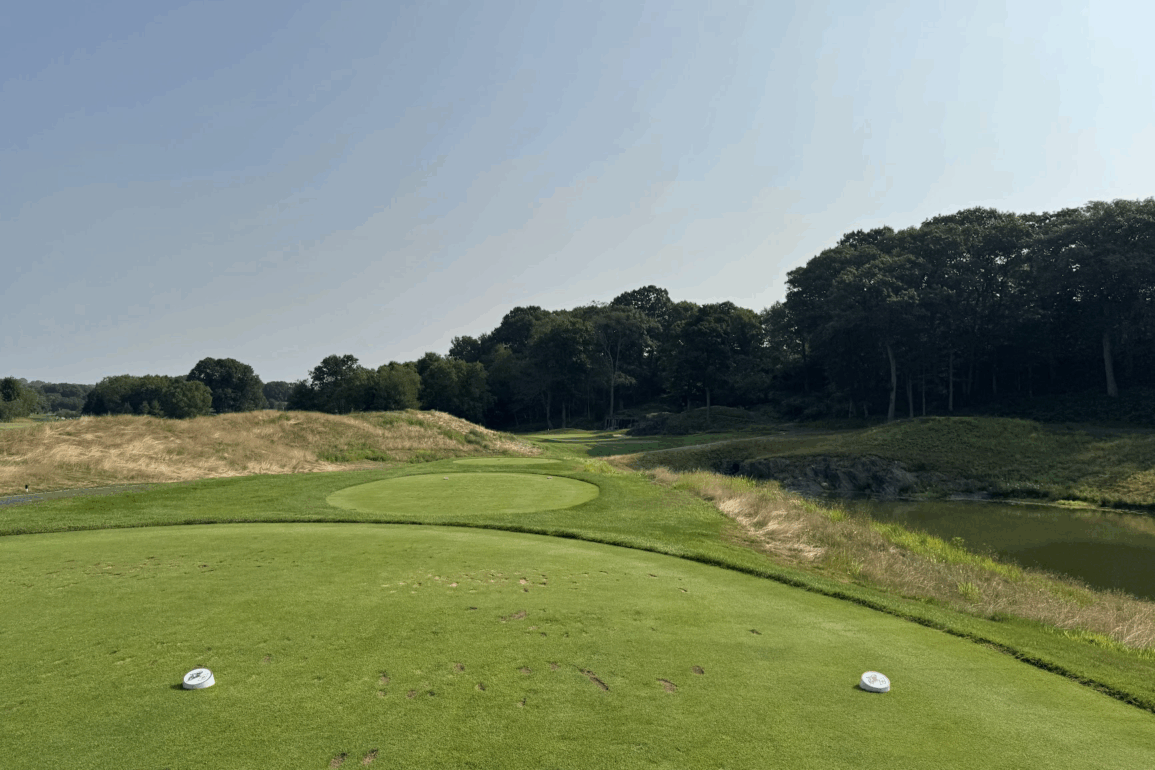
Category: Directory

  • Tunxis Country Club – White

    Tunxis Country Club – White

    [put_wpgm id=”2″ width=”100%” height=”770px” current_post_only=”true”]

    [letsreview]

    Tunxis Country Club – White is a public par-72 course measuring approximately 6,638 yards from the tips. The course was originally designed in 1962 by Al Zikorus and is located in Farmington, Connecticut.

    Tunxis Country Club has operated as New England’s largest championship golf complex since its establishment in 1962, when Al Zikorus laid out both the original Red nine-hole track and the White Course along the banks of the Farmington River. The facility has expanded over the decades to encompass 45 holes across three distinct layouts, with the White Course remaining the signature test. While the original design has remained largely intact, the course has seen periodic updates to bunkers and greens over its six-decade lifespan to maintain competitive standards. The property sprawls across approximately 200 acres of rolling terrain in the Farmington Valley, positioned between the river corridor and surrounding hillsides that provide scenic backdrops throughout the round. The routing follows a traditional out-and-back configuration with the front nine working away from the clubhouse and the back nine returning, though several holes meander along water features that add strategic complexity. The design philosophy emphasizes accuracy over distance, with the signature element being multiple peninsula greens that demand precise approach play and thoughtful club selection. Players who appreciate strategic shot-making and water hazards as genuine design features rather than manufactured difficulty will find considerable merit here. The layout rewards thinking golfers who can flight their ball and work different trajectories, though higher handicappers may find the water-guarded targets punitive without strategic bail-out areas.

    Strategic Test

    HandicapCourse Strategy
    High Handicap (18+)From the forward Gold tees at 5,362 yards with a 121 slope and 67.0 rating for men, higher handicappers face a manageable challenge that can yield enjoyable scores with sound course management. The reduced yardage brings most greens within reach in regulation, though the peninsula green complexes still demand respect. Hole 10, a short par-4 measuring 347 yards from the tips but considerably less from forward tees, exemplifies the strategic opportunities available to this player profile. The hole presents a straightforward drive-and-pitch scenario, with water guarding the green everywhere except the front approach. Higher handicappers should focus on positioning the tee shot to the center of the fairway, accepting the full wedge approach rather than attempting to cut yardage, then playing conservatively to the front portion of the green where a safe landing area exists. The slope rating suggests this player will give back approximately 21 strokes over par, making strategic par-saving more valuable than aggressive birdie hunting.
    Mid Handicap (8-18)Playing from the White tees at 6,036 yards with a 127 slope and 68.7 rating, mid-handicappers encounter a balanced examination that rewards improving ball-striking without overwhelming. This yardage brings driver-and-mid-iron approaches into play on most par-4s, creating opportunities for aggressive scoring while maintaining enough challenge to expose swing flaws. The 127 slope indicates this player profile will typically shoot in the low-to-mid 80s, making every hole a legitimate scoring opportunity with disciplined execution. Hole 12, a par-4 stretching 376 yards from the championship tees, stands as one of the layout’s premier tests and offers excellent strategic variety for this skill level. The hole culminates at a cleverly contoured peninsula green that demands precise distance control and proper entry angle. Mid-handicappers must commit to full approach shots with mid-irons, respecting the green’s surrounding hazards while being aggressive enough to access pin positions. The hole rewards players who can shape approach shots and understand how to use the green’s contours.
    Low Handicap (0-8)From the championship Blue tees at 6,638 yards with a 121 slope and 71.0 rating, accomplished players find a course that emphasizes precision and strategic thinking over raw power. The relatively modest yardage allows skilled ball-strikers to attack with short-to-mid irons on many approaches, but the peninsula greens and water hazards create genuine strategic decisions on nearly every shot. The 71.0 rating suggests scratch golfers should break par with solid execution, making this an excellent venue for competitive play where course management outweighs distance advantages. Hole 12, the 376-yard par-4, presents itself as perhaps the course’s finest strategic hole for accomplished players. The approach must be flown onto a peninsula green featuring sophisticated internal contouring that creates multiple pin positions and demands precise club selection. Low handicappers can attack this green with confidence, using 7- or 8-iron approaches that allow for proper trajectory control. The green’s design rewards players who can work the ball and understand how to use slope breaks to their advantage. Birdie opportunities exist for those who execute, but the hazards surrounding the target make three-putt bogeys equally possible with imprecise play.

    Nearby Course Alternatives

    Rockledge Golf Club in West Hartford offers a compelling alternative approximately 10 minutes east of Tunxis, presenting a distinctly different strategic test on similar yardage. The Al Zikorus design from 1940 measures 6,436 yards from the tips with a slope of 129 and rating of 71.1, creating a slightly more demanding examination than Tunxis White despite nearly identical length. The course sprawls across approximately 140 acres of rolling terrain, utilizing mature trees and strategic bunkering as the primary defensive elements rather than water hazards. The elevated green sites and significant slope changes create a different strategic challenge, rewarding players who can judge distances on uneven lies and flight approach shots into plateau targets. The higher slope rating stems from tighter corridors and more severe penalties for wayward shots, as mature vegetation creates defined playing corridors with less recovery room than Tunxis’s more open design. Rockledge’s reputation as one of Connecticut’s finest municipal facilities rests on its meticulous conditioning and the sophisticated green complexes that feature considerable internal movement. Players who prefer parkland golf with elevation change and value ball-striking precision over water-hazard management will find Rockledge more appealing than Tunxis. The course particularly suits mid-to-low handicappers who enjoy working the ball through tree-lined corridors and can appreciate subtle green contouring that rewards proper approach angles.

    Timberlin Golf Club in Berlin provides another Al Zikorus design approximately 20 minutes south of Tunxis, offering a significantly different playing experience on a longer, more demanding layout. The 1970 design measures 6,733 yards from the championship tees with a slope of 129 and rating of 72.2, establishing itself as a more challenging test than Tunxis White across all skill levels. The course occupies approximately 180 acres along the base of Ragged Mountain, utilizing dramatic elevation changes and rolling terrain to create strategic variety absent from Tunxis’s flatter river valley setting. A major renovation in 2006 by Stephen Kay and Doug Smith modernized the bunkering scheme, adding 12 new hazards and redesigning 50 existing bunkers to create more defined strategic options off the tee. The layout rewards powerful, controlled driving as the extra yardage and elevation changes demand confidence with longer clubs into greens. The spectacular mountain views and more dramatic topography create a distinctly different aesthetic experience, with the course playing firm and fast due to superior drainage on sloped terrain. Players who value length, elevation variety, and prefer their strategic challenges to come from topography rather than water hazards will find Timberlin more satisfying. The course particularly appeals to accomplished ball-strikers who can work the ball on uphill and downhill lies while managing the mental challenge of elevated approach shots that play one or two clubs differently than the measured yardage suggests.

    Final Word

    Beyond the golf course itself, Tunxis Country Club maintains comprehensive practice facilities including a driving range with three practice tees that accommodate players of all skill levels, though the range orientation and yardage options are standard rather than exceptional. The facility features adequate putting surfaces for pre-round preparation, though the practice greens could benefit from more sophisticated contouring to better replicate the challenges found on the peninsula greens throughout the course. Short game practice areas exist but remain somewhat basic compared to more modern facilities, limiting opportunities for players to hone greenside technique before their rounds. The clubhouse complex has received renovations in recent years, particularly to the Tunxis Tavern restaurant which now serves breakfast, lunch, and dinner with a full menu in a comfortable setting. The pro shop maintains adequate inventory for daily golf needs, and the staff provides welcoming service that reflects the facility’s public-access mission. The property’s extensive event infrastructure, including a ballroom and the renovated outdoor Pavilion that accommodates up to 300 guests among towering pines, speaks to Tunxis’s role as more than just a golf destination. What distinguishes Tunxis White from competitors is the commitment to strategic, thinking-person’s golf through the peninsula green concept that runs throughout the routing. The course proves that precision and shot-making variety can create compelling golf without excessive length or manufactured difficulty. For players who value approach shot strategy and appreciate how water hazards can enhance rather than merely punish, the White Course delivers an engaging examination that rewards intelligence and execution. The facility’s status as New England’s largest public golf complex ensures accessibility and pace of play management that premium private clubs cannot match, while the mature design by a respected New England architect provides architectural legitimacy often absent from municipal facilities.

  • Tunxis Country Club – Red Nine

    Tunxis Country Club – Red Nine

    [put_wpgm id=”2″ width=”100%” height=”770px” current_post_only=”true”]

    [letsreview]

    Tunxis Country Club – Red Nine is a public par-35 course measuring approximately 3,219 yards from the tips. The course was originally designed in 1962 by Al Zikorus and is located in Farmington, Connecticut.

    The Red Nine holds the distinction of being the original course at Tunxis Country Club, first opened to the public in 1962 as part of what was then the Green Course. In 1994, Mike Zikorus added nine new holes to expand the Green Course, and the original nine holes were reconfigured to become the standalone Red Course. This 45-acre routing traces its path along the picturesque Farmington River, offering a tranquil parkland setting that contrasts with the more expansive layouts of its sister courses. The terrain features relatively flat to gently rolling fairways framed by mature hardwoods, with strategic corridor framing that demands accuracy over length. The design philosophy leans traditional, emphasizing shot placement and course management rather than raw power. Players who appreciate classic parkland architecture and prefer a thinking person’s test will find the Red Nine particularly satisfying. The course suits golfers seeking an efficient round without sacrificing strategic interest, making it popular among time-pressed players, seniors valuing walkability, and those warming up before tackling the White or Green courses. The modest yardage belies legitimate challenge, as the routing includes several demanding par fours and uphill par threes that require proper club selection.

    Strategic Test

    HandicapCourse Strategy
    High Handicap (18+)Players from the forward tees face approximately 2,725 yards, though slope and rating data varies by tee selection. The course presents manageable distances but demands accuracy given the tree-lined corridors and river proximity. Hole 7, a mid-length par 4 at 362 yards from the tips, emerges as particularly engaging for this skill level. This hole features a large pond protecting the left side of the fairway off the tee, creating a clear strategic choice between aggressive lines and safer bail-out options to the right. The hole rewards thoughtful positioning, as the approach must navigate to an elevated green complex. From forward tees, this becomes a driver or fairway wood followed by a mid to short iron, making it accessible yet interesting. The pond creates a visual and strategic focal point that higher handicappers can navigate by playing away from trouble.
    Mid Handicap (8-18)Mid-handicap players from the white tees encounter roughly 3,000 yards with moderate slope ratings in the low 120s. This presents an ideal balance of challenge and playability, as the course demands consistent ball-striking without overwhelming length requirements. The strategic emphasis shifts to precision approach play and green reading on the moderately contoured putting surfaces. Hole 7 at 362 yards becomes a genuine strategic puzzle for this group, as longer hitters can consider cutting the corner over the water hazard with an aggressive tee ball, while more conservative players work the ball right to maximize their angle into the green. The mid-iron approach requires careful attention to pin placement, as the elevated green features subtle undulations. This hole exemplifies the course’s architectural merit for mid-handicappers, offering multiple routes to success based on individual capabilities and risk tolerance.
    Low Handicap (0-8)From the championship tees at 3,219 yards, accomplished players face a 70.8 rating with 123 slope, creating a surprisingly robust test despite modest yardage. The premium lies on wedge control, creative shotmaking around the greens, and aggressive scoring on the par fives and reachable par fours. Low handicappers must resist complacency, as several holes present tight driving corridors where accuracy supersedes distance. Hole 7 at 362 yards transforms into a strategic exercise in risk-reward calculation, as the carry over the pond from an aggressive angle measures perhaps 200-220 yards, leaving only a short iron or wedge into the green for those who execute. However, the elevated green complex demands precise distance control, and any miscalculation with the approach can leave difficult up-and-downs. Accomplished players can realistically target birdie here with proper execution, though the hole punishes wayward tee balls severely. The strategic interest comes from weighing the aggressive water carry against the safer route and subsequent longer approach.

    Nearby Course Alternatives

    Rockledge Golf Club in West Hartford offers an 18-hole municipal alternative approximately 15 minutes southeast of Tunxis. This Al Zikorus design from 1940 presents 6,436 yards from the tips with a 71.1 rating and 129 slope, making it a step up in difficulty compared to the Red Nine. The parkland layout occupies similar acreage to a full 18-hole facility and features rolling terrain with mature tree definition. Rockledge has earned recognition as one of Connecticut’s finest public courses, noted for its immaculate conditioning and championship pedigree. The architect’s routing creates thoughtful shot values with well-protected greens that slope predominantly back to front, generating considerable challenge on approach play. The course features a nice variety of hole lengths, though some consider it to lack the extreme distance required to truly test low handicappers from the tips. The par threes showcase particular architectural merit, with multiple teeing grounds that can alter playing distance by 40 yards depending on setup. Mid-handicap players who enjoy strategic positioning and green-reading challenges will find Rockledge particularly rewarding, as the large putting surfaces demand precision on approach shots to avoid lengthy two-putts. The facility includes proper practice areas with driving range, putting greens, and a full-service restaurant.

    Wintonbury Hills Golf Course in Bloomfield presents Pete Dye’s first New England championship design, located approximately 20 minutes northeast of Tunxis. This municipal facility stretches 6,711 yards from the back tees with a formidable 72.3 rating and 130 slope, establishing it as one of Connecticut’s most demanding public tests. The par-70 routing occupies considerably more acreage than compact Tunxis, utilizing dramatic elevation changes and a distinctive split personality between nines. The front nine displays classic Dye links-style characteristics with wide fairways, bold mounding, and significant topographical movement, while the back nine transitions to traditional tree-lined corridors with water hazards framing multiple holes. Wintonbury has garnered national recognition, appearing in various best-of rankings for public courses and consistently drawing praise for outstanding conditioning. The design features characteristic Dye elements including strategic bunkering, complex green contours, and holes like the 255-yard seventh par three that challenges low handicappers to hit long irons. Accomplished players seeking a true championship examination will prefer Wintonbury’s additional length and architectural sophistication, though the course remains playable from forward tees for higher handicappers. The practice facility includes a five-station driving range, and the clubhouse provides full dining options in a comfortable setting.

    Final Word

    The Tunxis facility provides comprehensive practice amenities befitting New England’s largest public golf complex, including a multi-tee driving range with target greens that allow players to work on full swings with proper feedback. Dedicated short-game areas give golfers the opportunity to hone their wedge play and greenside technique, while spacious putting greens offer quality preparation surfaces before rounds. The newly renovated Tunxis Tavern serves as the clubhouse restaurant, offering full breakfast, lunch, and dinner menus in a comfortable atmosphere suitable for post-round gatherings or casual dining. The facility also maintains two distinct event venues for weddings and special occasions, with the outdoor Pavilion accommodating up to 300 guests beneath towering pine trees, and an indoor ballroom featuring Old World charm. These amenities create a complete golf destination rather than simply a place to play nine holes, establishing Tunxis as a community gathering place beyond the typical daily-fee operation. What distinguishes the Red Nine is its role as both an accessible entry point for the 45-hole complex and a legitimate strategic test in its own right, avoiding the common pitfall of executive-length courses that sacrifice architectural merit for brevity. The Al Zikorus routing respects classic design principles while maintaining playability across skill levels, and the Farmington River setting provides natural beauty without overwhelming the golf experience. The course proves its enduring appeal through consistent popularity and excellent maintenance standards that match those of the championship White and Green courses, demonstrating that compact layouts can deliver satisfying golf when properly conceived and maintained.

  • Tumble Brook Country Club – West/North

    Tumble Brook Country Club – West/North

    [put_wpgm id=”2″ width=”100%” height=”770px” current_post_only=”true”]

    [letsreview]

    Tumble Brook Country Club is a private par-72 course measuring approximately 6,760 yards from the tips. The course was originally designed in 1924 by Willie Park Jr. and is located in Bloomfield, Connecticut.

    Tumble Brook Country Club was founded in 1922 and has evolved through three distinct architectural phases spanning nearly a century of golf in Connecticut. Willie Park Jr., the two-time British Open champion and pioneering golf architect, crafted the original nine holes that opened for play in 1924, establishing the foundation of what would become one of New England’s most respected private facilities. In 1949, architect Orrin E. Smith added a second nine-hole layout, expanding the club’s offerings during the post-war golf boom. The property reached its current 27-hole configuration in 1970 when George Fazio, known for his strategic design philosophy and collaboration with his nephew Tom, completed the third nine. In 2005, Mark McCumber and Associates undertook a comprehensive renovation of all 27 holes, modernizing the playing surfaces and refining the strategic elements while respecting the architectural heritage of each nine. Spread across approximately 229 acres of rolling Connecticut terrain northwest of Hartford, the course occupies elevated ground that provides panoramic views of downtown Hartford to the south, Talcott Mountain to the west, and the Berkshires to the north. The three nine-hole layouts can be combined into different 18-hole configurations, each offering a distinct strategic examination with the Red/Blue combination serving as the championship routing. The terrain features moderate elevation changes, bent grass playing surfaces throughout, and strategic bunkering that reflects the evolving architectural philosophies across seven decades. The design aesthetic blends classic golden age principles from Park’s original work with mid-century strategic concepts from Smith and Fazio’s more aggressive modern style. The course appeals to traditionalists who appreciate architectural variety and strategic shot-making, with particular emphasis on approach play to undulating greens that demand precise distance control and proper angle selection.

    Strategic Test

    HandicapCourse Strategy
    High Handicap (18+)High handicap players should strongly consider the Green tees at 5,826 yards with a slope of 123 and rating of 71.5, which provides a more manageable examination while still presenting strategic interest. The shorter yardage reduces the frequency of forced carries and allows for more aggressive play around the greens. The slope rating indicates that while the course rewards good play, it does not impose excessive penalty for wayward shots typical of developing players. Hole 16, a par-4 measuring 343 yards from these tees, exemplifies ideal risk-reward architecture for this skill level, offering the option to lay up safely or attempt to challenge the green with a well-struck fairway wood. The moderate length allows higher handicappers to reach the green in regulation with two solid strikes, while the strategic bunkering still demands thoughtful club selection and proper angle awareness.
    Mid Handicap (8-18)Mid handicappers will find excellent challenge from the White tees at 6,481 yards with a slope of 128 and rating of 74.5, which balances strategic demands with scoring opportunities. This yardage creates genuine decision-making on par-5s while keeping most par-4s within range of mid-iron approaches. The elevated slope rating reflects sophisticated green complexes and well-placed hazards that punish imprecise approach angles. Hole 16, stretching to 440 yards from these markers, presents the quintessential mid-handicap examination as the number one handicap hole. The length demands two substantial strikes just to reach the putting surface, likely requiring driver followed by a mid to long iron. The hole’s strategic merit lies in its requirement for position off the tee to establish proper approach angles, rewarding players who can shape tee shots and select appropriate landing areas while penalizing those who rely solely on distance.
    Low Handicap (0-8)Low handicap players should embrace the Black tees at 6,760 yards with a slope of 124 and rating of 72.6, which provides appropriate length while emphasizing precision over pure power. The relatively moderate slope rating indicates that superior ball-striking is rewarded more than scrambling ability, favoring consistent players who can control trajectory and spin. The McCumber renovation enhanced the strategic demands through green contours and pin positions that require specific approach angles and precise distance control. Hole 16, measuring 440 yards and ranked as the most difficult hole, exemplifies championship-caliber architecture by demanding both length and precision. The hole requires driver to establish position for a demanding long-iron or hybrid approach that must navigate strategic hazards while factoring in green contours that reject offline shots. The absence of bail-out areas forces accomplished players to commit to aggressive lines and execute under pressure.

    Nearby Course Alternatives

    Wampanoag Country Club in West Hartford offers a contrasting single-routing private club experience just 10 minutes south of Tumble Brook. The Donald Ross design, originally opened in 1924 and recently renovated, measures 6,610 yards from the championship tees with a slope of 133 and rating of 72.3. Spread across a more compact routing than Tumble Brook’s 229 acres, Wampanoag features quintessential Ross characteristics including crowned fairways, strategic cross-bunkers, and severely contoured push-up greens that demand creative approach play and sophisticated green reading. The course occupies rolling terrain adjacent to the Hartford Reservoir with moderate elevation changes throughout, creating natural corridors that frame the playing angles. The architectural pedigree emphasizes positional play over length, with fairway bunkers placed to influence tee shot strategy and approach angles dictated by green slopes rather than hazard proximity. The recent renovation restored original Ross design elements while modernizing agronomic practices, resulting in firm, fast playing conditions that reward ground game tactics and aerial precision. Wampanoag appeals most to low and mid-handicap players who prize shot-shaping demands and nuanced approach play over raw distance, particularly those who enjoy reading complex green contours and appreciate how classic golden age architecture creates strategic variety through subtle ground features rather than manufactured hazards. Players seeking a pure Donald Ross experience with more severe green complexes and tighter strategic corridors than Tumble Brook’s more forgiving modern design will find Wampanoag particularly appealing.

    The Hartford Golf Club in West Hartford presents another distinguished private alternative located approximately 15 minutes southeast of Tumble Brook. The club features three nine-hole courses designed by Donald Ross and Devereux Emmet, with the original Red nine dating to 1896 and subsequent nines added in the early 20th century, creating various 18-hole combinations that can stretch beyond 6,500 yards from the championship markers. The Red/Blue combination offers slope ratings in the 125-135 range with course ratings reflecting championship examination. Situated on expansive acreage with mature tree-lined corridors, the property features classic parkland architecture with strategic bunker placement, water hazards on select holes, and green complexes that showcase both Ross’s characteristic crowned surfaces and Emmet’s more receptive designs. The architectural variety across three distinct nines provides strategic diversity that parallels Tumble Brook’s multi-nine configuration, though Hartford’s designs reflect earlier golden age principles with more emphasis on ground game options and less reliance on aerial demands. The facility offers old-world country club ambiance with extensive non-golf amenities including tennis facilities, swimming, and an elegant English manor-style clubhouse that speaks to its century-plus history. Hartford Golf Club appeals most to players who value architectural heritage and traditional country club atmosphere, particularly mid to high handicappers who appreciate more forgiving landing areas and ground game options compared to Tumble Brook’s modern renovation that emphasizes aerial precision and manufactured strategic elements through contemporary bunkering and green contouring.

    Final Word

    Tumble Brook Country Club provides comprehensive practice facilities that support serious game improvement and pre-round preparation across all aspects of the short game. The practice area includes a driving range with mat stations that accommodate extended practice sessions throughout the season, though the synthetic surfaces may not perfectly replicate fairway conditions for accomplished players seeking precise trajectory feedback. A dedicated putting green allows members to study green speeds and practice stroke mechanics on surfaces maintained to match on-course conditions, while a separate chipping green and practice bunker area enable focused work on greenside recovery shots and sand technique. The facility also includes indoor practice options for year-round instruction with the professional staff, who offer individual lessons and group clinics for members of all ages and abilities. Beyond golf, the club delivers substantial recreational amenities including five Har-Tru tennis courts that support active programming for competitive and social play, two paddle tennis courts for winter recreation, and a heated 25-yard swimming pool with adjacent kiddie pool and play area that serves as a social hub during summer months. The clubhouse features multiple dining venues ranging from casual options to more formal settings, providing versatile spaces for everyday member interaction and special events. Tumble Brook’s distinctive value proposition lies in its rare 27-hole configuration that provides extraordinary playing variety and access, allowing members to experience three architecturally distinct nine-hole courses without leaving the property. The strategic diversity across Willie Park Jr.’s classic routing, Orrin Smith’s mid-century design, and George Fazio’s more aggressive modern layout creates an architectural timeline that few facilities can match. The Mark McCumber renovation successfully unified agronomic standards while preserving the individual character of each nine, resulting in consistently excellent playing conditions that rival any private facility in Connecticut. Combined with the panoramic views, exceptional pace of play, and comprehensive family amenities, Tumble Brook proves its value not through any single architectural masterpiece but through the breadth of strategic examinations and the depth of recreational opportunities that keep members engaged across generations.

  • Tumble Brook Country Club – North/East

    Tumble Brook Country Club – North/East

    [put_wpgm id=”2″ width=”100%” height=”770px” current_post_only=”true”]

    [letsreview]

    Tumble Brook Country Club is a private par-72 course measuring approximately 6,610 yards from the tips. The course was originally designed in 1922 by Willie Park Jr. and is located in Bloomfield, Connecticut.

    The initial nine-hole loop established the club’s identity before Orrin Smith expanded the property to eighteen holes in 1948, with George Fazio later adding a third nine in 1970 to create the current twenty-seven hole configuration. Recent renovation work has focused on restoring the classic geometric intent of the early design while modernizing the bunkering to account for the distances of the contemporary game. Occupying roughly 200 acres of rolling Hartford County terrain, the routing utilizes the natural undulations of the land to create a diverse mix of uphill and downhill approaches. The design vibe leans heavily into the Golden Age philosophy, where wide corridors offer generous off-tee targets but demand specific angles to access tucked pin positions on push-up green complexes. Players who appreciate traditional parkland aesthetics and sophisticated green-side contouring will find the layout particularly engaging. The routing is clever in its use of the local creek, which acts as a lateral hazard and a diagonal crossing on several key holes, forcing players to commit to clear strategic decisions.

    Strategic Test

    HandicapCourse Strategy
    High Handicap (18+)Navigating the 129 slope rating requires a conservative approach that avoids the deep fescue and thick primary rough. Playing from the white tees at 5,910 yards allows these players to avoid many of the forced carries over water and wetlands. On the 350-yard par four 6th hole of the North course, the priority is a straight drive to avoid the water on the left, followed by a mid-iron to a green that slopes significantly toward the hazard.
    Mid Handicap (8-18)The 71.3 rating from the blue tees suggests that managing the challenging green complexes is the key to maintaining a respectable score. Mid-handicappers must account for the subtle breaks and the firm surfaces that can repel indifferent approach shots. The 6th hole provides a classic risk-reward scenario where a well-placed 220-yard drive leaves a short iron in, but the narrow landing area and the proximity of the water demand precise execution over raw power.
    Low Handicap (0-8)From the championship markers at 6,610 yards with a 72.3 rating, the course tests the ability to shape shots into specific quadrants of the greens. The 6th hole on the North nine, playing 355 yards from the back, represents a tactical chess match where a long iron or hybrid is often the superior choice to ensure a flat lie for a wedge. Deep bunkers and the water hazard framing the left side penalize overly aggressive lines, making par a reflection of disciplined course management.

    Nearby Course Alternatives

    Wampanoag Country Club in West Hartford is located approximately ten minutes south of Tumble Brook. This Donald Ross masterpiece plays to 6,610 yards from the championship tees with a slope of 134 and a rating of 72.4. Set on a sprawling acreage that emphasizes the natural flow of the land, the course is renowned for its intricate green complexes and strategic bunkering that are hallmarks of the Ross pedigree. The elevation changes are subtle yet impactful, requiring players to constantly adjust their yardage calculations for uphill and downhill trajectories. Its reputation as a premier competitive venue is bolstered by a routing that lacks any weak holes and demands a high degree of shot-making. This course would be particularly enjoyed by the low-handicap player who relishes the historical significance of a Ross design and prefers a dense, high-stakes strategic environment. The connectivity of the holes and the emphasis on the ground game provide a different but complementary challenge to the Bloomfield area.

    Hartford Golf Club in West Hartford is situated roughly twelve minutes south of the original course. Featuring twenty-seven holes with the primary eighteen measuring over 6,700 yards from the tips, it carries a slope of 132 and a rating of 72.8. The course was designed by Donald Ross and later refined by Devereux Emmet, offering a rich architectural heritage across its diverse terrain. The layout utilizes significant elevation shifts and large, undulating greens to create a stern test of both physical execution and mental fortitude. Known for its immaculate conditioning and classic parkland framing, the course provides a sense of grandeur and scale. The strategic value is found in the varied tee angles and the requirement to carry several deep ravines and water features. This destination would appeal most to the mid-to-high handicap player who enjoys dramatic vistas and a variety of hole styles within a single outing.

    Final Word

    The club provides an expansive practice environment featuring a full-length driving range and a dedicated short-game area designed for honing bunker play and pitching. A sprawling practice putting green mirrors the speed and undulations found on the course, ensuring players are well-prepared for the technical challenges of the round. Beyond the fairways, the facility includes a grand clubhouse that serves as the social hub, complemented by a premier tennis complex and a swimming pool for summer recreation. These amenities create a comprehensive private club experience that caters to a lifestyle focused on sport and community. What makes this property truly special is the seamless integration of three distinct nines that maintain a cohesive architectural language while offering varied tactical puzzles. The commitment to preserving the Willie Park Jr. influence while evolving for the modern game demonstrates a deep respect for the sport’s traditions. It is a venue that proves its value through consistent quality and a layout that remains engaging after countless rounds.

  • Tashua Knolls Golf Course – Knolls

    Tashua Knolls Golf Course – Knolls

    [put_wpgm id=”2″ width=”100%” height=”770px” current_post_only=”true”]

    [letsreview]

    Tashua Knolls Golf Course is a public par-72 course measuring approximately 6,540 yards from the tips. The course was originally designed in 1976 by Al Zikorus and is located in Trumbull, Connecticut.

    The original 18-hole championship layout occupies picturesque farmland once inhabited by the Tamtashua Indians and later the Mallet family, establishing a historical foundation that adds character to the property. In 2004, the facility expanded when Al Zikorus’s son, Michael Zikorus, completed the family-friendly Tashua Glen nine-hole layout, bringing the complex to 27 total holes. The course underwent a significant bunker renovation project at the end of 2013, modernizing hazard placement and conditioning throughout. This municipal facility has earned considerable recognition in the Connecticut golf community, hosting the 2017 Connecticut State Golf Association Amateur Championship as the first exclusively public course to do so in the organization’s 115-year history. The property also hosted the CIAC Girls Golf Championship multiple times and received the 2017 Walter Lowell Public Golf Course Distinguished Service Award from the Connecticut Section PGA. Spanning an estimated 200 acres, the Tashua Knolls layout features classic New England terrain characterized by rolling hills, mature tree corridors, and original stone walls that create natural definition throughout. Water comes into play on approximately seven holes, presenting manageable strategic challenges rather than punitive hazards. The routing takes advantage of elevation changes to create visual interest and tactical diversity, with the back nine particularly showcasing dramatic grade shifts. A 200-year-old church and cemetery add historical texture to the landscape, while frequent wildlife sightings enhance the pastoral atmosphere. The course rewards position golf over pure power, with doglegs and elevation-influenced approach angles testing course management skills. Mid-handicappers who appreciate shot variety and strategic routing will find the most satisfaction, though multiple tee boxes accommodate players from 5,050 yards up to the championship 6,540 yards, ensuring accessibility across skill levels.

    Strategic Test

    HandicapCourse Strategy
    High Handicap (18+)From the green tees at 5,050 yards with a slope of 119 and rating of 65.1 for men, the course presents manageable distances that keep scoring opportunities realistic while maintaining enough challenge to build skills. The shorter yardages reduce the penalty for mishits, though the elevated, undulating greens still demand precision on approaches. The slope rating suggests approximately 5-6 additional strokes compared to a scratch player’s expected score on this layout. Hole 7 offers an ideal test at 436 yards, playing as a reachable par 5 that encourages aggressive play while providing ample bailout room for those choosing the three-shot approach. The brook crossing before the green creates a clear decision point on the second shot, with layup areas available to set up a manageable pitch. Club selection off the tee should favor accuracy over distance, as finding the fairway eliminates forced carries and allows straightforward approach angles to the elevated green complex.
    Mid Handicap (8-18)Playing from the white tees at 5,656 yards presents a slope of 124 and rating of 67.9 for men, adding approximately 3-4 strokes to par compared to a scratch player’s baseline. This yardage creates genuine risk-reward scenarios without overwhelming shot requirements, particularly on the par 5s that become reachable with two quality strikes. The course demands thoughtful club selection on tee shots, as several doglegs and elevation changes reward positioning over maximum distance. Hole 7 measures 480 yards from these markers, transforming into a legitimate three-shot par 5 for most players in this handicap range. The brook placement requires calculating whether the second shot can safely clear the hazard or whether laying up short maintains better control. Hitting driver off the tee followed by a controlled mid-iron layup to approximately 130 yards sets up an ideal approach angle to the elevated green, where the back-to-right slope creates difficulty for long approaches but rewards properly positioned wedge shots.
    Low Handicap (0-8)The championship black tees stretch 6,540 yards with a course rating of 72.4 and slope of 133, indicating approximately 2 strokes above par as the expected score differential. The elevated slope rating reflects the precision demanded by firm, sloped greens and strategic hazard placement that penalizes marginal execution. Water hazards on seven holes create genuine strategic tension, particularly where carries influence club selection and risk calculation. Hole 7 plays 501 yards as the number one handicap, presenting a classic strategic par 5 that rewards calculated aggression. The fairway narrows approaching the brook that crosses approximately 270-290 yards from the tee, creating a legitimate decision on whether to lay back or challenge the hazard with driver. Most low handicappers will take driver, then face a 200-220 yard approach that must consider the elevated green complex where the back half slopes down and right. The hole exemplifies proper risk-reward architecture, offering birdie opportunities to players executing two quality shots while providing recovery options for those choosing conservative angles. Club selection from the tee should consider wind and carry requirements to the brook, with approach shots demanding precise distance control to avoid the difficult back pin positions.

    Nearby Course Alternatives

    H. Smith Richardson Golf Course in Fairfield presents a compelling alternative approximately 15 minutes south of Tashua Knolls. The Hal Purdy-designed municipal layout stretches 6,704 yards from the championship tees with a slope of 126 and rating of 72.1, offering similar length but distinctly different terrain characteristics. Opened in 1972, Smith Richardson occupies an estimated 150 acres of rolling Fairfield County landscape with noticeably more dramatic elevation changes than Tashua Knolls, particularly on the back nine where grade shifts significantly influence club selection and stance. The course has received Stephen Kay renovation work that modernized strategic elements while preserving the original Purdy routing principles. The greens feature more severe undulation than Tashua, with virtually no flat putts creating additional short game challenge that rewards precision iron play. Four different tee configurations accommodate various skill levels, though the forward tees still present considerable challenge at 5,773 yards. The property showcases mature tree definition and strategic bunkering that demands accuracy over distance, with penalties for wayward drives more severe than at Tashua. Players who prioritize elevation-based shotmaking and prefer tighter corridor definition over Tashua’s more open fairway character will find Smith Richardson particularly engaging. The course maintains excellent conditioning with bent grass fairways and greens, supported by a well-regarded practice facility and the Shebeen restaurant. High to mid-handicappers who struggle with sidehill lies and elevation-adjusted yardages may find Tashua’s flatter front nine more forgiving, while low handicappers seeking maximum short game challenge will appreciate Smith Richardson’s severely contoured green complexes.

    Chris Bargas Golf Club at Whitney Farms in Monroe offers a contrasting experience approximately 12 minutes northeast of Tashua Knolls. Designed by the Hal and Malcolm Purdy team and opened in 1982, the championship layout measures 6,628 yards with a slope of 130 and rating of 72.4, presenting slightly more difficulty than Tashua’s 133 slope. Built by developer Chris Bargas Sr. on former Whitney family farmland, the course integrates ponds, rolling terrain, and natural wildlife corridors across approximately 180 acres of residential golf community property. The routing features more water hazards than Tashua, with strategic pond placement influencing club selection on multiple holes, particularly early in the round where the opening three holes immediately test players with substantial length requirements. The front nine opens with consecutive par 4s exceeding 400 yards, establishing an aggressive tone that contrasts with Tashua’s more gradual difficulty progression. Whitney Farms’ greens showcase significant mounding and undulation with fewer straight putts than Tashua, creating additional short game complexity. The course plays tighter through wooded corridors than Tashua’s open character, rewarding accuracy over distance and penalizing wayward tee shots more severely. Five tee configurations ranging from 5,832 to 6,628 yards provide flexibility, though even the forward tees maintain challenge through strategic design rather than pure length. Players who prefer residential course aesthetics with more dramatic water features and tighter shotmaking demands will gravitate toward Whitney Farms, while those valuing Tashua’s historical character, open sightlines, and municipal accessibility may find the former more appealing. Mid to high handicappers who benefit from visual confidence and recovery options will appreciate Tashua’s forgiveness, whereas low handicappers seeking target golf with multiple forced carries will find Whitney Farms more demanding of precise execution.

    Final Word

    Tashua Knolls provides comprehensive practice facilities that support player development and pre-round preparation. The driving range features multiple hitting stations with both mat and grass options, allowing full swing work with all clubs. Two dedicated putting greens offer varied contours and speeds that closely replicate on-course conditions, enabling proper green-reading practice. The chipping and short game area includes bunker practice, essential given the course’s recent bunker renovation that emphasizes quality sand conditions and strategic hazard placement. Locker facilities for both men and women provide convenience for regular players and tournament participants alike. The full-service pro shop stocks contemporary equipment and apparel with knowledgeable staff available for fitting consultations and purchase guidance. The facility houses restaurant and banquet operations that serve both golfers and event attendees, providing dining options from casual post-round meals to formal occasion hosting. The Academy at Tashua Knolls, directed by Connecticut Section PGA Teacher of the Year Dave Bove, offers instruction programs ranging from beginner clinics to advanced coaching with modern technology including launch monitors and video analysis. The junior golf program has earned national recognition, ranking among the top 50 youth programs and regularly hosting LPGA Girls Golf Club activities and CIAC state championships. What distinguishes Tashua Knolls from comparable municipal facilities is its demonstrated commitment to championship-caliber conditioning and tournament hosting despite public access and moderate pricing structures. The course proves its architectural merit through thoughtful shot values that reward strategic thinking over pure athleticism, with the Al Zikorus routing creating genuine risk-reward scenarios through natural terrain manipulation rather than artificial difficulty. The historical character provided by century-old stone walls, the preserved church and cemetery, and the farmland heritage creates authentic sense of place that transcends typical municipal development. Tashua Knolls succeeds by balancing accessibility for recreational players through multiple tees and forgiving fairway widths while maintaining enough strategic complexity and conditioning quality to host state amateur championships, validating its position as one of Connecticut’s premier public golf destinations.

  • Tashua Knolls Golf Course – Glen

    Tashua Knolls Golf Course – Glen

    [put_wpgm id=”2″ width=”100%” height=”770px” current_post_only=”true”]

    [letsreview]

    Tashua Knolls Golf Course – Tashua Glen is a public par-33 course measuring approximately 2,184 yards from the tips. The course was originally designed in 2004 by Michael Zikorus and is located in Trumbull, Connecticut.

    Tashua Glen represents the culmination of nearly two decades of planning by the Town of Trumbull, opening in 2005 as the second course at the Tashua Knolls facility. The design was entrusted to Michael Zikorus, son of Al Zikorus who created the adjacent 18-hole Tashua Knolls championship course in 1976. The terrain for this layout presented unique challenges that Michael transformed into a family-friendly gem, earning recognition as Connecticut’s first designated Family Course by the National Golf Course Owners Association. The Glen underwent a significant bunker renovation at the end of 2013, further refining the strategic elements throughout the routing. Sitting on a modest footprint estimated at under 50 acres, the course makes efficient use of its compact parcel through thoughtful routing that incorporates rolling elevation changes, tree-lined corridors, and small push-up greens. The layout follows a mostly looping pattern with minimal backtracking, featuring six par-4s, two par-3s, and a single reachable par-5 that serves as the climactic ninth hole. Players seeking a classic New England experience will find the Glen’s tight fairway corridors, mature hardwood framing, and subtle elevation shifts particularly engaging. The course favors those who value precision over power, rewarding proper club selection and strategic positioning rather than brute distance. Beginners and high-handicap players appreciate the absence of forced carries and relatively generous landing areas, while accomplished players find ample challenge through demanding green complexes that feature pronounced slopes and minimal flat putting surfaces.

    Strategic Test

    HandicapCourse Strategy
    High Handicap (18+)From the forward tees at 1,664 yards with a rating of 65.1 and slope of 119, high-handicap players will find the Glen exceptionally accommodating. The modest total yardage and slope suggest rounds should finish within 10-12 strokes of gross par for bogey golfers, though the small, sloped greens introduce variable scoring potential. Hole 9 provides the ideal strategic examination at 404 yards from these tees, playing as a reachable par-5 with a dogleg left configuration. The tee shot allows for conservative placement with a hybrid or fairway wood down the right side, avoiding overhanging tree limbs on the left corner. A mid-iron approach of roughly 150-170 yards remains, with the green sitting slightly elevated and angled left-to-right. Players should favor a bail-out short-right rather than challenging the left side, which rejects errant shots.
    Mid Handicap (8-18)Playing from the middle tees at 1,851 yards with a rating of 67.9 and slope of 124, mid-handicap players encounter a proper test that demands accurate iron play and disciplined course management. The increased slope rating reflects the greens’ undulation and strategic hazard placement, suggesting rounds should trend 8-10 strokes over par. Hole 9 at 432 yards becomes particularly engaging from this distance, requiring a driver or strong fairway wood off the tee to reach the dogleg apex. The decision point arrives on the second shot: lay up to 80-100 yards for a full wedge or attempt to reach the elevated green with a long iron or hybrid from 180-200 yards. The green’s left-to-right cant punishes anything short or left, making club selection critical. Players who shape their tee shots left-to-right gain an advantage by opening up the ideal approach angle.
    Low Handicap (0-8)From the championship tees at 2,184 yards with a rating of 72.4 and slope of 133, low-handicap players face a deceptively stern examination. The elevated slope rating indicates the course plays considerably more difficult than its modest yardage suggests, with expected scores hovering 2-4 strokes over par for single-digit handicaps. Hole 9’s full 460-yard distance transforms it into the layout’s most tactically rich challenge. The opening shot presents a risk-reward proposition: take an aggressive line over the left tree corner for a more direct angle, or play conservatively down the right for safer positioning. Bold players who execute the optimal drive can reach the green in two with a hybrid or long iron carrying 220-plus yards, but the elevated green’s pronounced slope and greenside mounding punish anything short. Conservative players lay up to 50-80 yards, accepting a wedge approach to a receptive angle while avoiding potential trouble from overambitious play.

    Nearby Course Alternatives

    H. Smith Richardson Golf Course in Fairfield offers a substantially different experience approximately 10 minutes south of Tashua Glen. This 18-hole municipal championship layout stretches 6,704 yards from the tips with a par-72 rating of 72.1 and slope of 126, presenting nearly three times the yardage and a full-length test. Originally designed by Hal Purdy and Malcolm Purdy in 1972, with subsequent refinements by Stephen Kay, the course occupies considerably more acreage than the Glen and features significant elevation changes throughout its routing, particularly on the back nine where dramatic uphill and downhill holes create a distinctly different playing experience. The terrain produces large, severely undulating push-up greens that demand confident reads and aggressive strokes, contrasting sharply with the Glen’s more modest green complexes. Richardson’s strategic value emerges through its thoughtful risk-reward architecture, incorporating numerous doglegs where players can take on as much as they dare while navigating tree-lined corridors that punish errant drives more severely than Tashua Glen. The course has earned recognition as one of Fairfield County’s premier municipal layouts, drawing praise for conditioning that rivals private clubs despite its public accessibility. Players seeking a more rigorous physical test with substantial elevation climbs and longer approach shots will find Richardson particularly appealing, as will accomplished ball-strikers who relish the challenge of holding firm, contoured greens. The facility includes a driving range, putting areas, and the Shebeen restaurant, though the locker room amenities lag behind the course’s overall quality.

    Chris Bargas Golf Club at Whitney Farms in Monroe provides another compelling alternative roughly 12 minutes northwest of Tashua Glen. This 18-hole public facility measures 6,628 yards from the championship tees with a par-72 rating of 72.4 and slope of 130, designed by Hal Purdy and Malcolm Purdy and opened in 1982 through the vision of developer Chris Bargas Sr. The routing occupies significantly more acreage than the Glen, incorporating the property’s natural ponds, scenic views, and native wildlife into a challenging parkland design that blends aesthetic beauty with strategic demand. Whitney Farms announces its intentions immediately through a stern opening stretch featuring a 426-yard par-4, a second par-4 exceeding 400 yards, and a 526-yard par-5, establishing a tone considerably more demanding than Tashua Glen’s gentle introduction. The course’s architectural pedigree shows in its thoughtful use of elevation changes, multiple forced carries over water, and tight corridors through wooded areas that require precision off the tee. The layout favors players who can shape shots both directions, with several doglegs rewarding proper ball flight while punishing those who cannot work the ball. The greens feature substantial mounding and slope, demanding accurate approaches to avoid difficult recovery situations. Originally built with a surrounding residential community of over 300 homes, Whitney Farms maintains a polished country club atmosphere despite its public accessibility, with above-average food service and well-maintained practice facilities. Players who prefer a more traditional championship test with greater length, more pronounced water hazards, and tighter driving corridors will gravitate toward Whitney Farms, particularly mid-to-low handicappers seeking to test their complete game rather than work on specific skills as they would at the developmental Tashua Glen.

    Final Word

    Tashua Glen complements its strategic routing with comprehensive practice amenities that elevate it above typical nine-hole executive layouts. The facility features a full driving range with multiple tee positions, allowing players to work on distance control with various clubs before their round. Two putting greens provide ample space for pre-round practice, both maintained to match the speed and firmness of the course greens. Most notably, the Glen includes a dedicated chipping and short-game area, a rarity among Connecticut public courses that proves invaluable for players seeking to develop their scoring touch. The practice bunker allows for sand play rehearsal, while the varied lies around the chipping green simulate real course conditions. These facilities reflect the course’s designation as Connecticut’s first Family Course, providing the infrastructure necessary for skill development rather than merely serving experienced players. The clubhouse houses the Eagles Nest Grille, offering full restaurant service and a banquet facility suitable for weddings and events. The pro shop stocks essential equipment and apparel, while the facility maintains locker rooms for both men and women. Indoor training facilities operated by experienced PGA professionals, including Director of Golf Bobby Brown, provide year-round instruction opportunities that complement the outdoor practice areas. What distinguishes Tashua Glen from similar nine-hole layouts is its dual mission: serving as both a legitimate strategic test for accomplished players seeking a quick round and a development tool for beginners building foundational skills. The course’s compact routing allows for walkability, with most green-to-tee transitions requiring minimal steps and creating an intimate connection to the layout’s strategic elements. The small push-up greens, tight tree-lined corridors, and thoughtful use of elevation provide architectural interest without overwhelming newer players. For families introducing children to golf, the designated family tees at even shorter yardages create accessible entry points while maintaining the routing’s integrity. The Glen proves its value not through championship credentials or architectural pedigree, but through its sustained popularity with area golfers who appreciate a well-conditioned course that respects both their time and skill level while delivering genuine strategic interest across all nine holes.

  • Tunxis Country Club – Green

    Tunxis Country Club – Green

    [put_wpgm id=”2″ width=”100%” height=”770px” current_post_only=”true”]

    [letsreview]

    Tunxis Country Club – Green Course is a public par-70 course measuring approximately 6,446 yards from the tips. The course was originally designed in 1962 by Al Zikorus and is located in Farmington, Connecticut.

    The Green Course at Tunxis has undergone a significant evolution since its debut, particularly during the 1990s when Mike Zikorus, son of original architect Al Zikorus, added nine new holes to the layout. This renovation split the original eighteen holes, with nine becoming the standalone Red Course along the Farmington River while nine holes were retained and combined with the new construction to form the current Green Course. The resulting parkland-links hybrid occupies an estimated 100 to 120 acres of rolling terrain that feels surprisingly removed from Farmington’s suburban character, offering a rural sense of isolation enhanced by mature tree stands and strategic mounding. The routing presents a fascinating dichotomy between an open front nine with wide corridors and a tighter, more wooded back nine running from the 13th through 16th holes, though recent tree clearing near the first hole has created greater continuity across the layout. The design philosophy leans toward strategic rather than penal golf, with water hazards positioned to threaten rather than dominate, generous bailout areas, and multiple angles of approach that reward thoughtful course management. The player who thrives here appreciates cerebral shotmaking over pure power, enjoys working the ball both directions off the tee, and values green complexes that demand precision without feeling contrived. The slope rating of 129 from the blue tees indicates this layout requires more than raw distance to score well, as the mounding, fairway bunkers, and undulating putting surfaces create challenges that favor the player who thinks two shots ahead.

    Strategic Test

    HandicapCourse Strategy
    High Handicap (18+)From the red tees at 5,327 yards with a slope of 121 and rating of 68.4 for women, higher handicappers will find the Green Course offers playability without sacrificing interest. The white tees at 6,036 yards provide a comfortable challenge for men in this range, with a 127 slope and 68.7 rating translating to roughly 15 to 20 strokes over par for most players. The 15th hole exemplifies the ideal test for this demographic, playing 325 yards from the blues as a short par-4 that rewards accuracy over ambition. A driver or fairway wood down the middle leaves a short iron or wedge approach to a green fronted by water, creating a risk-reward scenario where the conservative tee shot with a hybrid or long iron eliminates danger and still leaves a makeable score. The generous width on most holes accommodates the occasional errant tee ball, and the mounding provides visual guidance rather than severe punishment.
    Mid Handicap (8-18)Mid-handicappers should consider the white tees at 6,036 yards or the gold tees at 5,362 yards, depending on whether they’re trending toward single digits or still building consistency. The 127 slope from the whites will add approximately 8 to 14 strokes to par for most in this category, while the gold tees at 121 slope and 67.0 rating create a more manageable scoring environment. The 17th hole provides the ideal examination for this skill level, measuring 531 yards from the blues as a par-5 that opens up possibilities for those who can hit two quality shots. The hole plays relatively open with minimal trouble fronting the green, making it reachable in two for longer hitters while still offering a strategic three-shot approach for those playing conservatively. Club selection off the tee determines whether the second shot can attack or must lay up, and the ability to shape shots around the course’s natural contours becomes increasingly valuable as handicaps drop through this range.
    Low Handicap (0-8)Accomplished players will want the blue tees at 6,446 yards, where the 129 slope and 70.3 rating create a proper championship test that should yield scores in the low-to-mid 70s for scratch golfers. The demanding par-3 5th hole at 205 yards serves as one of the layout’s signature challenges, requiring a long iron or hybrid to a well-protected green complex where distance control proves critical. Missing the putting surface leaves difficult up-and-downs, and the green’s contours punish approaches that fail to match pin position with proper trajectory. The course rewards players who can work the ball both ways, particularly on holes like the 2nd and 4th where draws set up better angles, and the 5th and 6th where fades provide optimal positioning. Low handicappers will appreciate how the 13th through 16th hole stretch demands both power and precision through tighter corridors, and how the slope rating accurately reflects a course that favors thoughtful strategy over aerial assault.

    Nearby Course Alternatives

    Gillette Ridge Golf Club in Bloomfield sits approximately 15 minutes northwest of Tunxis and represents an entirely different architectural philosophy. Arnold Palmer and Ed Seay designed this 7,191-yard par-72 test that opened in 2004 on approximately 200 acres of dramatically rolling terrain. From the black tees, the slope rating reaches a formidable 141 with a 75.4 course rating, establishing Gillette Ridge as one of Connecticut’s more demanding public layouts. The course features significant elevation changes that Tunxis lacks, with several holes requiring substantial carries over wetlands and forced carries that eliminate the ground game options available at the Green Course. The design emphasizes target golf with tree-lined corridors, strategic lake placements, and greens that demand precise approach work rather than the run-up options Tunxis provides. The conditioning typically runs a notch above most municipal facilities, with bentgrass fairways and greens maintained to stimulate faster surfaces. Players who gravitate toward modern American golf architecture and enjoy elevated tee boxes with expansive views will find Gillette Ridge provides more visual drama and length-dependent challenges compared to Tunxis’s subtler strategic puzzles. The aggressive slope ratings mean higher handicappers should seriously consider playing forward tees, making this better suited for low-to-mid handicappers who appreciate courses that demand both distance and accuracy off the tee.

    Stanley Golf Course in New Britain offers a completely different experience just 15 minutes east of Tunxis, presenting 27 holes of classic parkland golf on a compact municipal property. The facility features three nine-hole courses designed by Robert J. Ross and Geoffrey Cornish, with various 18-hole combinations ranging from 6,378 to 6,443 yards with slopes between 111 and 124. The Red and White nines opened in 1930, while the Blue nine came along in 1955, creating a layout with genuine Golden Age bones that contrast with Tunxis’s more contemporary routing patterns. The course occupies flatter terrain with less dramatic mounding, relying instead on mature tree placement, strategic bunkering, and modest greens to create interest. The slope ratings in the low-to-mid 120s indicate a more forgiving test than either Tunxis Green or Gillette Ridge, making Stanley particularly attractive to mid-to-high handicappers seeking a walkable course with historical character. The facility maintains solid conditioning for a municipal operation and offers genuine variety through its 27-hole configuration, allowing regulars to mix up their routing. Players who value classic design principles, prefer walking to riding, appreciate shorter yardages that emphasize accuracy over power, and enjoy the accessibility and straightforward nature of traditional municipal golf will find Stanley provides excellent variety in their regular rotation alongside Tunxis’s more strategic demands.

    Final Word

    Beyond the golf itself, Tunxis Country Club provides a comprehensive practice facility with a driving range featuring mat stations that allow year-round practice opportunities when weather and daylight permit. The putting greens offer ample space for pre-round preparation, and the short game area gives players the opportunity to work on pitch shots and bunker play. The facility houses a well-stocked pro shop with current equipment and apparel options, ensuring players can address any equipment needs before their rounds. The clubhouse anchors the property with the renovated Tunxis Tavern serving breakfast, lunch, and dinner with a full menu that elevates the dining experience beyond typical turn shack fare. An elegant ballroom with old-world architectural details accommodates weddings and corporate events, while the impressive indoor-outdoor Pavilion provides space for up to 300 guests among towering pines for larger gatherings. Two snack bars positioned on the property keep players fueled during their rounds without requiring a return to the main clubhouse. The 45-hole complex operates as a true golf destination rather than merely a place to play eighteen holes, with the variety between the Green, White, and Red courses giving regular players legitimate reason to return frequently. What distinguishes the Green Course specifically within the Tunxis portfolio is its balance between accessibility and strategic depth, occupying a middle ground where thoughtful architecture rewards course management without punishing recreational players who simply want an enjoyable afternoon. The course has remained relevant for over six decades precisely because it never mistakes difficulty for quality, instead offering a thinking person’s layout where strategic choices matter more than raw power, and where multiple tee options ensure everyone from beginners to accomplished players can find an appropriate challenge that matches their current skill level while maintaining architectural integrity.

  • Tumble Brook Country Club – East/West

    Tumble Brook Country Club – East/West

    [put_wpgm id=”2″ width=”100%” height=”770px” current_post_only=”true”]

    [letsreview]

    Tumble Brook Country Club is a private par-72 course measuring approximately 6,760 yards from the tips. The course was originally designed in 1924 by Willie Park Jr. and is located in Bloomfield, Connecticut.

    Tumble Brook’s storied development unfolded across three distinct phases spanning nearly five decades. Willie Park Jr.’s original nine holes opened in 1924 on what had been a 155-acre farm, establishing the club’s foundation with classic Golden Age principles. Orrin Smith expanded the property in 1949 with nine additional holes that introduced different strategic considerations. George Fazio completed the triumvirate in 1970 with a third nine, creating the 27-hole configuration that exists today. Mark McCumber and Associates undertook a comprehensive renovation of all 27 holes in 2005, modernizing conditioning standards and bunker complexes while respecting the architectural heritage of each designer’s work. The property spans approximately 229 acres of rolling Connecticut terrain that offers panoramic vistas toward downtown Hartford, the Berkshire Mountains, and Talcott Mountain. The routing style reflects the piecemeal development, with each nine possessing its own character rather than forming a seamless 18-hole journey. The East/West combination pairs the Smith nine with elements of either the Park or Fazio nines depending on daily setup. Undulating topography creates natural amphitheaters around greens and demands thoughtful club selection on approaches. Players who appreciate strategic variety and design pedigree will find considerable satisfaction here, particularly those who value historically significant architecture updated to modern maintenance standards. The course rewards course management over pure power, with green complexes that penalize imprecise approaches regardless of distance achieved off the tee.

    Strategic Test

    HandicapCourse Strategy
    High Handicap (18+)High handicappers face manageable distance from the white tees at 6,481 yards with a 128 slope and 74.5 rating, though the rating indicates scoring will run approximately four strokes above par for a bogey golfer. Strategic priority centers on positioning rather than maximum distance, particularly on holes where the routing creates diagonal hazards or angled green complexes. The 16th hole serves as an exemplary test, playing 440 yards from the championship tees with the number one handicap designation. This lengthy two-shotter demands accuracy off the tee to establish an approach angle, then requires precise distance control into a green complex that punishes misses. Higher handicappers playing forward should focus on reaching the green in regulation from approximately 370-390 yards, likely requiring driver followed by a mid to long iron depending on conditions.
    Mid Handicap (8-18)Mid-handicappers encounter strategic complexity from the green tees at 5,826 yards, where the 123 slope and 71.5 rating suggest scores near four over par. The course rewards tactical thinking over aggressive play, particularly where Mark McCumber’s renovation introduced modern bunkering schemes around classical green sites. From this distance, decision-making becomes paramount on risk-reward opportunities where attempting to challenge hazards may yield minimal advantage. The 16th hole continues to test decisively, demanding driver followed by mid-iron approach from approximately 340-360 yards for players in this bracket. The length alone creates pressure, but the green’s contours and surrounding bunker complex make execution the primary challenge. Players must commit fully to approach shots while accepting that three-putt territory lurks for anything landing on the wrong tier.
    Low Handicap (0-8)Accomplished players from the black tees confront 6,760 yards at 124 slope and 72.6 rating, suggesting a stroke or two over par for scratch golfers. The course architecture demands precision rather than overwhelming distance, with green complexes that expose minor execution flaws through severe penalty. McCumber’s renovation enhanced strategic options by restoring angles and introducing modern bunker complexes that frame approach corridors without dictating singular paths. The 16th hole at 440 yards represents the ultimate examination, requiring 280-300 yards off the tee to establish ideal angle, then demanding pinpoint accuracy with approach clubs ranging from 5-iron to 7-iron depending on conditions and tee position. The green’s undulations create multiple quadrants where proximity to specific pin positions determines realistic birdie chances versus par protection mode.

    Nearby Course Alternatives

    Wampanoag Country Club in West Hartford stands as Connecticut’s preeminent Donald Ross design, located approximately 10 minutes south of Tumble Brook. The championship layout measures 6,610 yards from the blue tees with a formidable 133 slope rating and 72.5 course rating, presenting one of the most demanding tests in the region. Ross crafted the original 18 holes beginning in 1924, with the course opening for play in 1926, making it a near contemporary of Tumble Brook’s Park nine. The property occupies approximately 150 acres of rolling terrain that Ross expertly incorporated into his routing, creating natural corridors framed by mature hardwoods. Characteristic Ross features dominate the landscape, including crowned greens with falloffs, strategic fairway bunkering that creates preferred angles of approach, and green complexes that demand aerial precision. Stephen Kay undertook bunker restoration work in recent decades to restore Ross’s original intent where decades of maintenance had softened edges. The course favors thinking players who can shape shots and control trajectory, with green speeds that rank among the fastest in the state. Players who prioritize architectural pedigree and appreciate severe green contours will find Wampanoag more intellectually stimulating than Tumble Brook, though the singular designer creates greater routing cohesion compared to Tumble Brook’s three-architect composition. Mid to low handicappers who relish the challenge of reading severe slopes and executing under pressure will particularly appreciate Wampanoag’s demands.

    The Hartford Golf Club in West Hartford represents Connecticut’s oldest golf institution, situated approximately 12 minutes southwest of Tumble Brook. This exclusive 27-hole facility features three distinct nines that can be combined for different 18-hole experiences, with the Red/Blue combination measuring approximately 6,589 yards with a 135 slope and 72.0 rating. Devereux Emmet and Donald Ross collaborated on the original design work beginning in 1914, with subsequent additions and refinements extending through 1950. Recent restoration work by Stephen Kay in 1996 and Ron Forse with Bruce Hepner in 2017 has honored the historical architecture while updating infrastructure. The property sprawls across more than 200 acres of gently rolling parkland that offers less dramatic elevation change than either Tumble Brook or Wampanoag. The multi-designer heritage creates varied strategic presentations across the three nines, with Ross’s characteristic crowned greens appearing alongside Emmet’s more receptive surfaces. Conditioning standards rank exceptionally high, with bentgrass fairways and greens maintained to championship specifications throughout the season. The course rewards accuracy and course management over distance, with tree-lined corridors that punish wayward drives severely. Players seeking traditional country club ambiance with less severe green contours than Wampanoag will find Hartford Golf Club more forgiving while still presenting legitimate challenge. Higher handicappers who struggle with severely undulating greens but appreciate classic parkland architecture will likely prefer Hartford Golf Club’s more accessible green complexes, though the narrow fairways demand precision that may frustrate less consistent ball-strikers.

    Final Word

    Tumble Brook’s practice facilities include a grass driving range, practice putting green, dedicated bunker practice area, and short game facility that allows members to work on all aspects of their game. The 40,000-square-foot clubhouse anchors the property with full-service golf and tennis pro shops, multiple dining options ranging from casual to formal, private meeting spaces, and a grand ballroom accommodating up to 300 guests for events. Five Har-Tru tennis courts provide year-round playing opportunities for racquet sports enthusiasts, complemented by two platform tennis courts for cold weather recreation. Aquatic amenities include a 25-yard heated pool for lap swimming and family recreation, plus a separate kiddie pool with adjacent play area for younger members. The social calendar features active men’s and women’s golf programs with varied tournament formats throughout the season, plus mixed events, senior competitions, junior development programs, and interclub matches that create regular member interaction. What distinguishes Tumble Brook ultimately stems from its unique architectural provenance, presenting three distinct design philosophies unified through McCumber’s sensitive renovation work. The 27-hole configuration provides strategic variety rarely available in traditional 18-hole facilities, allowing members to experience different tests without leaving the property. Conditioning standards rank consistently among New England’s finest, with bentgrass surfaces maintained to exacting specifications that reward precision while punishing carelessness. The panoramic vistas toward Hartford’s skyline and surrounding mountains create memorable backdrops throughout the round. Tumble Brook proves its enduring value through architectural significance that honors Golden Age principles while meeting contemporary expectations for playability and conditioning.

  • Stanley Golf Course – White/Blue

    Stanley Golf Course – White/Blue

    [put_wpgm id=”2″ width=”100%” height=”770px” current_post_only=”true”]

    [letsreview]

    Stanley Golf Course is a public par-71 course measuring approximately 6,393 yards from the tips. The course was originally designed in 1931 by Robert J. Ross with the White Nine added in 1958 by Orrin E. Smith and is located in New Britain, Connecticut.

    Stanley Golf Course has served the greater Hartford area for nearly a century, with the original Red and Blue nines opening in 1931 as part of Hartford engineer Robert J. Ross’s municipal design portfolio. Ross, who created several layouts in the Hartford region, produced parkland-style courses tailored for public play rather than grand statements. The White Nine arrived in 1958 through Orrin E. Smith’s work, expanding the facility to its current 27-hole configuration. The property underwent renovation work in 1999 when Ian Scott Taylor refined Ross’s original features, and Geoffrey Cornish contributed design input on aspects of the course as well. The facility spans an estimated 150 acres of gently rolling terrain along Hartford Road, with each nine-hole layout offering distinct topographic character. The White/Blue combination presents classic parkland design vocabulary with tree-lined corridors, strategic water features on several holes, and modest elevation changes that create visual variety without punishing walkability. Players seeking traditional municipal golf architecture will find an honest, straightforward test that rewards accuracy over power, with well-positioned fairway bunkering and medium-sized greens that demand proper distance control. The modest yardage from most tees makes this a player-friendly venue for mid-to-high handicappers, while the championship layout provides adequate length to challenge accomplished players when played from the tips.

    Strategic Test

    HandicapCourse Strategy
    High Handicap (18+)From the Gold tees at 5,640 yards with a 117 slope and 67.5 rating, higher handicappers face a manageable layout that keeps bogey golf within reach while presenting strategic interest. The slope-to-rating differential suggests relatively contained trouble areas, meaning errant shots rarely lead to catastrophic scores. The 15th hole, a par-4 measuring 418 yards from the Gold tees, exemplifies the challenge at this level with adequate fairway width but demands a well-struck tee ball to set up a mid-iron approach to an elevated green complex, requiring two solid strikes to find the putting surface in regulation.
    Mid Handicap (8-18)Playing from the White tees at 6,026 yards with a 120 slope and 69.4 rating provides proper balance for mid-handicap players who can reach most par-4s in regulation while facing legitimate three-shot par-5s. The course rating suggests that a scratch golfer would shoot approximately 69-70, indicating genuine strategic content throughout. The 5th hole presents an excellent mid-handicap test at 424 yards, playing as the number-2 handicap hole where the tee shot must navigate fairway bunkering before players face a demanding long-iron or hybrid approach to a well-protected green, making par a genuine accomplishment.
    Low Handicap (0-8)From the Blue tees at 6,393 yards with a 123 slope and 71.2 rating, accomplished players encounter sufficient length combined with strategic bunkering and water features that demand thoughtful course management. The rating near par indicates that scoring requires precision rather than simply overpowering the layout. The 5th hole again stands as the signature challenge at 445 yards from the tips, playing as a genuine three-shot hole for most where the drive must find the fairway between strategic bunkers, followed by a precise layup or risky long approach, with the elevated green complex demanding exact distance control on the final shot.

    Nearby Course Alternatives

    Timberlin Golf Club in Berlin sits approximately 15 minutes south of Stanley Golf Course and offers a markedly different experience through Al Zikorus’s 1970 design across rolling terrain at the base of Ragged Mountain. The par-72 layout stretches to 6,733 yards from the championship tees with a 130 slope and 72.9 rating, providing greater length and elevation change than Stanley’s relatively flat routing. Spanning approximately 140 acres with significant topographic movement, Timberlin features dramatic elevation changes throughout the routing, particularly on the back nine where several holes climb and descend across the property’s natural contours. Zikorus employed deep fairway bunkering and raised green complexes as the primary strategic elements, with numerous holes demanding precise tee ball placement to avoid punishing centerline hazards. The course underwent renovations by Stephen Kay in 2006 and Ray Hearn in 2014 to modernize its strategic content while preserving Zikorus’s original design intent. Timberlin carries considerable reputation as one of Connecticut’s premier municipal facilities, with membership programs and a full-service restaurant complementing the championship layout. Players who prefer bold elevation changes, dramatic green complexes, and a more physically demanding walk would favor Timberlin over Stanley’s gentler parkland routing, particularly accomplished players seeking greater length from the back tees and more severe consequences for wayward shots.

    Rockledge Golf Club in West Hartford provides another quality public option approximately 10 minutes west of Stanley, featuring Al Zikorus’s 1940 design that has evolved into one of Connecticut’s most recognized municipal layouts. The par-72 course measures 6,436 yards from the championship tees with a 129 slope and 71.1 rating, presenting similar length to Stanley but with distinctly different strategic content. Rockledge occupies a former 120-acre gentleman’s estate originally developed by Yale alumnus Wilton Sherman in 1924, with the Town of West Hartford acquiring the property in 1960 to create the municipal facility that has since earned Hartford Magazine’s Best Public Golf Course recognition for twelve consecutive years. The routing features uniformly large greens with predominantly back-to-front slopes, creating deceptively difficult approach play despite the layout’s modest yardage. Zikorus employed strategic fairway bunkering throughout the design, with multiple short par-4s demanding accuracy over power and a strong collection of par-3s that can play forty yards longer depending on tee and pin placements. The facility includes practice areas, a driving range with Trackman technology, and the Rockledge Grille restaurant with expansive views across the 18th fairway. Players seeking a shorter, tighter routing with emphasis on precision iron play and green-reading skills would prefer Rockledge, particularly those who value consistent course conditioning and comprehensive practice facilities alongside their round.

    Final Word

    Stanley Golf Course provides comprehensive practice facilities including a state-of-the-art 19-bay driving range powered by Toptracer Technology, with ten covered and heated bays allowing year-round practice regardless of weather conditions. The range features multiple target greens at varying distances, enabling players to work on every club in the bag with immediate feedback on ball flight and distance. Adjacent to the range sits a quality putting green and short-game area where players can refine their scoring touch before heading to the first tee. The clubhouse houses a well-stocked pro shop staffed by PGA professionals who offer individual and group instruction through the facility’s Teaching Academy, providing players at all skill levels with professional guidance to improve their games. The Back Nine restaurant operates throughout the season, offering full food and beverage service with both quick snacks and full meals available, creating a comfortable spot to gather before or after rounds. The facility’s 27-hole configuration represents its greatest strategic advantage, allowing management to rotate nines for maintenance while always providing 18-hole play, which contributes significantly to the consistently strong course conditions praised by regular players. What distinguishes Stanley among Hartford-area municipal facilities is the authentic municipal golf architecture from the Ross and Smith era, preserved through thoughtful modern updates that maintain the strategic intent while improving playability. The three distinct nines create variety across multiple rounds, with the White/Blue combination offering the championship test while Red/Blue and White/Red rotations provide different strategic emphases and yardage options. For public golfers seeking traditional parkland design with honest strategic content, consistent maintenance standards, accessible practice facilities, and the flexibility of three nine-hole layouts, Stanley Golf Course delivers genuine value through quality course architecture rather than manufactured difficulty or forced aesthetics.

  • Stanley Golf Course – Red/White

    Stanley Golf Course – Red/White

    [put_wpgm id=”2″ width=”100%” height=”770px” current_post_only=”true”]

    [letsreview]

    Stanley Golf Course is a public par-71 course measuring approximately 6,378 yards from the tips. The course was originally designed in 1931 by Robert J. Ross with the White nine added in 1958 by Orrin E. Smith and is located in New Britain, Connecticut.

    Stanley Golf Course represents a fascinating study in municipal course evolution, with its 27-hole layout offering multiple routing combinations that showcase distinct design philosophies across nearly a century of development. The Red and Blue nines date to Ross’s 1931 original work, while Smith’s 1958 White nine brought a complementary but architecturally distinct character to the property. The facility underwent significant renovation work in 1999 under Ian Scott Taylor, with Geoffrey Cornish also contributing to course improvements over the years, and the Red nine was extensively renovated and reopened in 2015. Spanning an estimated 180 acres of rolling central Connecticut terrain, the course occupies a parkland setting just minutes from Hartford off Interstate 84. The Red/White combination at 6,378 yards with a 70.8 rating and 124 slope from the championship tees presents a thoroughly walkable test that emphasizes strategic positioning over brute force. Each of the three nines possesses its own topographical character, with the Red course featuring notably more elevation change than its flatter counterparts. The design philosophy skews toward classic American parkland architecture with tree-lined corridors, modest but strategically positioned bunkering, and greens that tend toward the larger side with subtle internal contours. The Blue grass fairways and bent grass putting surfaces provide excellent year-round conditioning for a public facility. Players who appreciate variety within a single venue, those seeking a course that rewards course management over distance, and golfers looking for legitimate challenge without intimidating forced carries will find Stanley particularly appealing. The facility’s multiple nine-hole combinations allow for different strategic emphases depending on which 18-hole pairing is selected, making repeat play worthwhile for students of routing and design evolution.

    Strategic Test

    HandicapCourse Strategy
    High Handicap (18+)From the forward tees measuring approximately 5,600 yards with a slope around 116, higher handicappers face a manageable yet engaging test that prioritizes accuracy over distance. The relatively modest slope rating suggests penalty strokes remain contained for players who keep the ball in play, with generous landing areas accommodating less precise ballstriking. The par-3 second hole on the White nine at 101 yards from the tips provides an excellent confidence-building opportunity, requiring only a short iron or wedge to a receptive green that won’t severely punish slightly offline approaches. For this player profile, success hinges on avoiding three-putts on the larger greens and selecting appropriate tees that keep par-4s reachable in regulation, with driver often proving unnecessary on tighter holes where fairway woods or hybrids ensure position.
    Mid Handicap (8-18)The middle tees at approximately 6,000 yards with ratings in the 69-70 range and slopes around 120-122 present the sweet spot for this player profile, offering sufficient challenge while maintaining scorability. Strategic elements come into focus at this yardage, where positioning off the tee becomes critical on holes with fairway contours that influence approach angles. The combination of water hazards on several holes and fairway bunkering positioned at typical driving distances for this handicap level demands thoughtful club selection and risk assessment. The par-5 fifth hole on the White nine at 423 yards from the championship tees plays shorter from the middle markers, creating legitimate birdie opportunities for well-executed three-shot strategies while punishing overly aggressive attempts to reach in two. This player should focus on green-in-regulation percentages rather than forced heroics, utilizing the course’s relatively mild rough and recovery-friendly surrounds to scramble effectively when missing greens.
    Low Handicap (0-8)From the championship tees at 6,378 yards with a 70.8 rating and 124 slope, accomplished players encounter a course that tests precision and variety rather than overwhelming with length or hazard density. The relatively moderate slope suggests the design favors complete shot-making over any single dominant skill, with successful scoring requiring a blend of controlled driving, approach accuracy to well-defended greens, and lag putting on large, subtly contoured surfaces. Strategic bunkering becomes more relevant from the back tees, where fairway hazards positioned 30 yards from greens catch both pushed drives and imprecise layups, demanding careful distance control and angle management. The par-4 third hole on the White nine at 358 yards from the tips exemplifies the strategic variety, where accomplished players must decide whether to challenge the green with driver or lay back to preferred wedge distance, with the green complex’s fronting bunkers and internal contours rewarding precise distance control over brute force. Advanced players should focus on aggressive greens-in-regulation conversion while managing the few legitimate birdie opportunities against the steady diet of testing par-4s that demand thoughtful execution rather than yielding easy looks.

    Nearby Course Alternatives

    Tunxis Country Club in Farmington offers another outstanding public facility option located approximately 15 minutes west of New Britain. The 45-hole complex designed by Al Zikorus opened in 1962 and underwent nine-hole expansion in 1994, providing the Green course measuring 6,354 yards from the tips with a 70.0 rating and 120 slope, the White course at 6,638 yards with a 71.0 rating and 121 slope, and the Red nine at 3,219 yards as a supplementary option. Spanning substantially more acreage than Stanley, Tunxis occupies rolling terrain along the scenic Farmington River with several signature island greens that demand precise approach work. The design philosophy emphasizes target golf with narrow fairways, extensive mounding throughout the property, and water hazards integrated into multiple holes on the White course. The strategic value differs considerably from Stanley’s more traditional parkland routing, as Tunxis requires more aerial precision and rewards aggressive play to well-defined landing areas. The course’s reputation as one of Connecticut’s premier public facilities stems from its excellent conditioning, challenging but fair design, and comprehensive practice facilities including a large driving range. Players who favor modern target-style architecture with more dramatic elevation changes, those seeking a lengthier test from the championship tees, and golfers who enjoy risk-reward decision-making around hazards will find Tunxis particularly compelling compared to Stanley’s more straightforward strategic demands. The facility’s pedigree through Zikorus, who designed numerous Connecticut courses, and its continued investment in conditioning and infrastructure make it a worthy alternative for accomplished players seeking slightly more rigorous examination.

    Rockledge Golf Club in West Hartford provides another excellent public option located approximately 12 minutes southwest of New Britain in a mature residential setting. The 18-hole layout designed by Al Zikorus opened in 1940 and measures 6,436 yards from the championship tees with a 71.1 rating and notably challenging 129 slope rating. Occupying a more compact footprint than Stanley’s 27-hole spread, Rockledge features gently rolling terrain with mature tree-lined fairways and several water features integrated throughout the routing. The course’s strategic emphasis differs from Stanley through its smaller, more severely contoured greens that demand exceptional approach accuracy and lag putting skills, with most greens exhibiting significant front-to-back tilt that affects club selection and shot trajectory. The design’s vintage character retains classic strategic elements including well-positioned fairway bunkering, multiple par-3s with considerable distance variation between tee and pin placements, and recovery areas that reward creative short-game execution. Rockledge’s reputation as Hartford Magazine’s Best Public Golf Course stems from its exceptional year-round conditioning, friendly professional staff, comprehensive practice facilities, and full-service restaurant with multiple dining areas. The course provides GPS-equipped carts and maintains a walkable layout despite the rolling terrain, appealing to traditionalists who value classic design principles. Players who appreciate vintage American parkland architecture with emphasis on approach play and green-reading, those seeking a slightly more challenging slope rating that tests course management, and golfers who value exceptional municipal course conditioning and amenities will find Rockledge particularly appealing compared to Stanley’s more varied nine-hole combinations. The facility’s proximity to West Hartford’s residential areas and its long-standing reputation within Connecticut’s public golf community make it an essential comparison point for central Connecticut golfers.

    Final Word

    Stanley Golf Course complements its three nine-hole layouts with comprehensive practice facilities anchored by a state-of-the-art 19-bay driving range powered by Toptracer technology. The range features 10 covered, heated, and illuminated bays that extend operating hours and provide year-round practice opportunities, with the facility opening at 6:30 AM daily and maintaining bay lighting until 9:00 PM. A well-maintained putting green adjacent to the clubhouse allows players to dial in their speed control before rounds, while chipping and short-game practice areas provide space for wedge work. The golf shop carries a complete selection of equipment and apparel, staffed by knowledgeable professionals who can arrange custom club fittings. Teaching services are available through the facility’s Golf Academy, with expert instructors offering individual lessons and group clinics for players of all skill levels. The on-site restaurant, known as The Back 9, serves breakfast and lunch with multiple seating options overlooking the course, providing a comfortable environment for post-round meals and tournament gatherings. The facility’s location just off Interstate 84 and Route 9 makes it exceptionally accessible for Hartford-area golfers, with ample parking adjacent to both the range and clubhouse. The property operates as a municipal course under New Britain’s recreation department, offering resident and non-resident memberships alongside daily-fee play. What distinguishes Stanley among Connecticut’s public courses is its uncommon 27-hole configuration that allows three distinct 18-hole combinations, providing variety and reducing repetition for frequent players while accommodating high-volume play during peak seasons. The thoughtful architectural evolution across three generations of design—from Ross’s Depression-era routing through Smith’s mid-century expansion to Taylor’s millennial-era renovation—creates a living timeline of American public golf course development. This layered history, combined with the facility’s commitment to modern practice amenities and consistent playing conditions, proves that municipal courses can honor their heritage while embracing contemporary expectations. Stanley succeeds not through dramatic terrain or championship length, but through honest strategic examination, intelligent routing variety, and dedication to providing accessible, well-maintained golf that rewards thoughtful play.

  • Silvermine Golf Club – Nine-Hole Course

    Silvermine Golf Club – Nine-Hole Course

    [put_wpgm id=”2″ width=”100%” height=”770px” current_post_only=”true”]

    [letsreview]

    Silvermine Golf Club is a private par-31 course measuring approximately 2,105 yards from the tips. The course was originally designed in 1959 by John E. Warner and is located in Norwalk, Connecticut.

    Silvermine Golf Club opened in 1959 as a nine-hole layout before expanding to accommodate 27 holes, giving the club unusual flexibility in routing options. The executive nine-hole course, often referred to as the Pro Shop Nine, represents Warner’s original design vision before the club expanded its footprint. While some sources reference a 1954 opening date for portions of the property, the club officially established itself in 1959 and celebrated its 50th anniversary in 2009. The executive nine has maintained its original character as a compact yet complete test of golf skills. The layout consists of five par 3s and four par 4s, playing to a par of 31 from the back tees at just over 2,100 yards. The course occupies roughly 25 to 30 acres within the larger 150-acre property that encompasses all 27 holes. The terrain features rolling elevation changes typical of southern Connecticut’s glacially sculpted landscape, with several holes playing through natural corridors framed by mature hardwoods. The routing follows a straightforward out-and-back configuration, maximizing the available land while maintaining strategic interest through green complexes and approach angles. This course appeals to multiple player profiles including beginners developing their skills, juniors learning course management, seniors seeking a quicker round, and accomplished players working on scoring or enjoying a practice loop. The club has positioned this nine-hole course as an ideal training ground and low-pressure environment, keeping it open year-round weather permitting with no tee time restrictions for members.

    Strategic Test

    HandicapCourse Strategy
    High Handicap (18+)Players in this range should consider the forward tees at approximately 1,600 to 1,700 yards, though the executive nine’s minimal slope rating indicates that scoring should remain manageable even for developing players. The short overall distance removes driver decisions on most holes, allowing higher handicappers to focus on iron play and short game execution without the intimidation factor of lengthy forced carries. The par 3 holes ranging from roughly 110 to 180 yards present realistic birdie opportunities when executing mid-to-short iron shots properly, while the par 4s in the 250 to 350 yard range typically allow for a conservative layup followed by a wedge approach. The layout’s forgiving nature means that high handicappers can complete a round in under two hours while working specifically on course management skills and building confidence. Most enjoyable would be one of the shorter par 4s that rewards accuracy over distance and provides a legitimate scoring opportunity.
    Mid Handicap (8-18)From the middle tees at approximately 1,850 to 1,950 yards, mid-handicap players face interesting club selection dilemmas despite the abbreviated yardages. The strategic value lies in determining which par 4s invite aggressive lines versus which reward position play. With several par 4s measuring between 280 and 320 yards, these players must decide whether to attack with driver or position with irons to preferred wedge distances. The par 3s offer proper variety in club selection and target acquisition. The executive nine’s utility for this cohort centers on scoring practice and tempo maintenance during peak season when the main 18 is crowded. These players can work on specific weaknesses like lag putting or bunker play while still tracking score in a legitimate competitive setting. The most strategic hole for mid-handicappers would be a par 4 in the 300-yard range that presents genuine birdie potential with good execution but can yield bogey or worse with careless play.
    Low Handicap (0-8)Playing the back tees at approximately 2,105 yards presents an entirely different test than the yardages suggest. Accomplished players quickly realize that execution matters far more than power on this compact layout. The course rating of 31.0 with minimal slope indicates that par should be the baseline expectation, but scoring opportunities demand precision rather than length. The strategic interest for single-digit handicappers emerges from green complexes, which according to course descriptions follow Warner’s preference for elevated and often smaller target areas. With several par 4s reachable with long irons or hybrids off the tee, these players face constant risk-reward calculations about attacking pins versus playing to centers. The par 3s require proper distance control and trajectory management when greens feature run-off areas or backstops. Low handicappers often use the executive nine for focused practice rounds, working on specific scoring scenarios or maintaining sharpness during periods when time doesn’t permit a full 18. Any of the longer par 3s in the 170 to 180-yard range would provide the most challenge, demanding precise iron play and proper green reading.

    Nearby Course Alternatives

    Woodway Country Club in Darien offers a distinctly different experience for members seeking traditional championship golf approximately 10 minutes east of Silvermine. Willie Park Jr. designed Woodway in 1916, creating a classic layout that has earned consistent recognition as one of Connecticut’s premier private clubs. The course stretches to 6,716 yards from the championship tees with a course rating of 72.8 and slope of 139, presenting significantly more length and challenge than Silvermine’s executive nine while still maintaining a similar par-71 configuration on the main 18-hole course. The property encompasses approximately 150 to 175 acres of rolling, wooded terrain that Park routed with remarkable efficiency, creating what many consider a seamless flow through elevation changes that range from subtle to pronounced. Bruce Hepner’s recent restoration work has enhanced the original design intent by removing invasive tree growth and reestablishing proper playing corridors. Strategic elements include small, elevated greens with complex contours, multiple forced carries over natural hazards, and precise approach angle requirements that reward course knowledge. The club’s reputation centers on conditioning excellence and architectural pedigree from one of golf’s pioneering designers. Players who value traditional shot-making over distance and prefer courses where local knowledge provides significant advantage would find Woodway more satisfying than Silvermine’s straightforward executive nine. The longer format and demanding green complexes particularly suit accomplished players who want a fuller strategic test within the same geographic area.

    Wee Burn Country Club in Darien presents another compelling alternative approximately 12 minutes southeast of Silvermine for members interested in championship-caliber golf with significant tournament history. Devereaux Emmet designed this 1896 layout around a stream that Andrew Carnegie named Wee Burn in honor of Scottish nomenclature, and the routing has earned consistent top-five rankings among Connecticut courses. The championship tees measure approximately 7,034 yards with a course rating of 75.1 and slope of 146, making it substantially longer and more demanding than Silvermine while offering a proper championship test. The course occupies roughly 180 to 200 acres of varied terrain that combines parkland aesthetics with strategic water features and thoughtful bunkering. Recent tree removal programs have restored sight lines and playing corridors closer to Emmet’s original vision while improving turf quality through enhanced sunlight and air circulation. Strategic architecture includes multiple par 4s with optional driving lines, par 3s that require various trajectories and clubs across the set, and par 5s that present genuine three-shot challenges even for long hitters. Wee Burn has hosted multiple USGA championships including three U.S. Women’s Amateur Championships, establishing its credentials as a venue capable of testing elite amateur players. The club’s reputation emphasizes both architectural significance and conditioning standards that rival any facility in Fairfield County. Players who enjoy tree-lined corridors, value historical pedigree, and seek courses where strategy and execution matter more than power would find Wee Burn more rewarding than Silvermine’s abbreviated format. Low-handicap players particularly benefit from the full strategic experience and championship-level conditioning that Wee Burn delivers consistently throughout the season.

    Final Word

    Beyond the golf course itself, Silvermine Golf Club offers comprehensive practice facilities that support member development across all skill levels. The driving range features mat stations with distance markers and target greens, allowing players to work on full swing fundamentals and specific distance control. A dedicated putting green near the pro shop provides ample space for stroke work and green reading practice, essential for scoring well on the elevated and often tricky green complexes found throughout the property. Chipping and short game areas allow members to practice various lies and trajectories, developing the versatile wedge game required on both the executive nine and the championship 18. The clubhouse maintains seasonal operations from April through November, featuring dining facilities with patio seating that overlooks the golf course and provides Long Island Sound views from certain vantage points. Members can enjoy breakfast, lunch, and dinner service during the active season, with the facility serving as a social hub for the membership. The club emphasizes family-oriented programming with junior golf clinics, parent-child tournaments, and family fun days that leverage the executive nine’s accessibility. Head Professional Stuart Waack has earned recognition as a two-time recipient of the Met PGA Junior Leader Award, highlighting the club’s commitment to youth development. Tennis courts and swimming facilities round out the recreational offerings, though these amenities remain secondary to the golf-focused mission. What makes Silvermine’s executive nine-hole course particularly special is its role as both training ground and legitimate scoring opportunity within a club that values inclusive golf access. The decision to maintain a separate nine-hole course with flexible tee time policies demonstrates foresight in serving diverse member needs, from juniors developing fundamentals to experienced players seeking efficient practice rounds. The course proves its value not through length or tournament pedigree but through consistent utility across multiple member segments throughout the entire golf season.

  • Stanley Golf Course – Blue/Red

    Stanley Golf Course – Blue/Red

    [put_wpgm id=”2″ width=”100%” height=”770px” current_post_only=”true”]

    [letsreview]

    Stanley Golf Course is a public par-70 course measuring approximately 6,119 yards from the tips. The course was originally designed in 1931 by Robert J. Ross and is located in New Britain, Connecticut.

    Stanley Golf Course represents one of Connecticut’s most storied municipal facilities, first opening nearly a century ago as part of New Britain’s commitment to public recreation. The original Blue and Red nines were conceptualized by Ross in the early Depression era, offering accessible golf to the working-class community. In 1958, the property expanded with the addition of the White Nine, designed by Orrin E. Smith, transforming Stanley into a 27-hole complex. The facility underwent a comprehensive renovation in 1999 under the direction of Ian Scott Taylor, a Welsh architect known for his work on historical course restorations. Taylor’s modifications included reshaping greens, repositioning bunkers to create more strategic angles, and reimagining several holes entirely. The Red Nine received particular attention, with Taylor introducing fairway bunkering patterns that distinguish it from typical municipal designs. Estimated at approximately 120 acres across the three nines, the property features undulating terrain with each nine presenting distinct topographical character. The Blue Nine showcases elevated tees and tree-lined corridors that demand accuracy off the tee, while the Red Nine incorporates more pronounced elevation changes and water features across five holes. This parkland layout favors the strategic thinker who values course management over pure distance, with medium-sized greens presenting subtle undulations that reward precise approach play. The Blue-Red combination provides a thoughtful examination for players who appreciate classical routing principles and understand how properly positioned hazards create risk-reward decisions throughout a round.

    Strategic Test

    HandicapCourse Strategy
    High Handicap (18+)From the White tees, the Blue-Red combination measures 5,970 yards with a course rating of 68.9 and slope of 121, creating a playable yet engaging test for developing golfers. The moderate slope indicates that bogey golfers will face challenges but won’t encounter excessive penalty for imperfect shots. Hole 5 on the Blue Nine exemplifies the ideal challenge for this skill level, playing 407 yards as a par 4 from the Whites. This straightaway hole features a manageable drive zone flanked by mature trees, with a mid-iron approach to a receptive green protected by fronting bunkers. The strategic element involves club selection off the tee, as longer hitters might consider laying back to a comfortable wedge distance rather than pressing driver toward the narrowing landing area. The hole rewards careful planning over aggressive tactics.
    Mid Handicap (8-18)The Blue tees present 6,368 yards at a 70.8 rating with a 124 slope, creating legitimate scoring opportunities while punishing loose shots with genuine consequences. This combination’s slope differential suggests that shot dispersion becomes increasingly costly as one approaches scratch level. Hole 15 on the Red Nine (hole 6 from the turn) stands as the defining examination, measuring 424 yards as a par 4 from the Blue tees. This demands a precise tee ball threaded through a tree-lined chute, followed by a mid to long-iron approach to an elevated green complex. The primary hazard presents as a fairway bunker positioned approximately 240 yards from the tee on the right side, catching pushed drives and forcing a difficult recovery. The approach must account for the elevated putting surface, which rejects thin strikes and rewards proper trajectory control. This hole encapsulates the course’s demand for both power and precision.
    Low Handicap (0-8)While the course measures 6,368 yards from the tips with a rating of 70.8 and slope of 124, accomplished players will recognize that scoring depends less on overwhelming length and more on surgical accuracy and green-reading acumen. The relatively modest yardage allows single-digit players to be aggressive with scoring clubs, though the course defends par through green contours and strategic bunkering rather than pure distance. Hole 5 on the Blue Nine remains the most architecturally interesting, playing 445 yards as the number one handicap. From the championship tees, this hole requires a drive of 250 yards to clear the corner of the dogleg and access the ideal angle into a well-defended green. The putting surface features sufficient undulation to complicate two-putt efforts even from the fairway, while greenside bunkers positioned on both flanks punish imprecise approaches. The strategic dimension involves weighing the risk of cutting the corner against laying back to the center of the fairway, accepting a longer approach but eliminating the possibility of blocked shots through the trees.

    Nearby Course Alternatives

    Rockledge Golf Club in West Hartford presents a compelling alternative approximately 15 minutes northwest of Stanley. This Al Zikorus design opened in 1940 and measures 6,436 yards from the back tees with a course rating of 71.1 and slope of 129, creating a slightly more demanding test than Stanley from an overall difficulty perspective. The course occupies gently rolling terrain estimated at roughly 140 acres, featuring mature, tree-lined fairways that create distinct playing corridors. Several ponds and brooks introduce water hazards absent from most of Stanley’s routing, adding an element of forced carries and lateral penalties. The greens tend toward the smaller side, which compounds the approach game challenge and rewards precise iron play. Rockledge offers a full-service restaurant with three dining areas and a mid-course snack bar, along with two practice greens and a driving range. The facility maintains bent grass throughout, both on greens and fairways, providing consistent playing surfaces. Hartford Magazine has recognized Rockledge as Best Public Golf Course, and Golf Digest includes it among Connecticut’s Best Places to Play. The course favors players who value accuracy over distance and who appreciate traditional parkland architecture with strategic bunkering. Mid to high-handicap players seeking a walkable, well-maintained municipal experience with slightly more elevation change than Stanley will find Rockledge particularly appealing, as the rolling topography creates more visually interesting holes while remaining accessible to those who prefer to walk.

    Timberlin Golf Club in Berlin offers another worthy comparison roughly 20 minutes southeast of Stanley. Designed by Al Zikorus in 1970, with subsequent renovations by Stephen Kay, Doug Smith, and Ray Hearn, Timberlin measures 6,733 yards from the championship tees with a course rating of 72.2 and slope of 129. The course nestles along the base of Ragged Mountain, providing spectacular views of surrounding farmland and elevated vantage points throughout the routing. The property spans rolling terrain that creates more dramatic elevation changes than either Stanley or Rockledge, particularly on the back nine where several holes play to elevated greens. The inward nine features a particularly demanding stretch from holes 13 through 15, with back-to-back-to-back long, challenging holes that can quickly derail a good round. Water comes into play more prominently than at Stanley, including a large pond at the par-3 12th hole that adds visual intimidation and strategic consequence. Timberlin provides adequate fairway bunkering, a feature often lacking at municipal facilities, creating legitimate strategic decisions off the tee. The course includes a fully stocked golf shop, instruction from PGA professionals, and a full-service restaurant called Par For The Course. Low to mid-handicap players who appreciate a more rigorous test with significant elevation change and who don’t mind tackling a course that defends par through both length and topographical variation will find Timberlin more engaging than Stanley’s relatively flatter terrain and shorter overall distance.

    Final Word

    Stanley Golf Course distinguishes itself among Connecticut municipal facilities through its comprehensive practice amenities and commitment to player development. The facility features a state-of-the-art driving range powered by Toptracer Technology, with 19 covered bays that are heated and illuminated, allowing for year-round practice regardless of weather conditions. This represents a significant investment in player improvement infrastructure, unusual for a municipal operation. The range opens daily at 6:30 am, providing early-morning practice opportunities before rounds. Adjacent to the main clubhouse sits both a putting green and a chipping area where players can work on their short game, essential practice stations that many public facilities overlook. The golf shop maintains a complete selection of equipment, apparel, and accessories, staffed by knowledgeable professionals including PGA instructors available for lessons. A restaurant operates on-site, offering both quick-service options and full dining, with particular praise directed toward the Back 9 bar and grill area. The pro shop staff, particularly Howie, Jim, and Ben, receive consistent recognition for their professionalism and customer service. The facility offers various membership structures including junior, women’s, senior, and one of the state’s largest men’s club organizations, fostering a genuine golf community. Being city-owned and managed by New Britain, Stanley maintains democratic access while delivering conditions that rival private facilities. What ultimately distinguishes Stanley is its successful execution of the 27-hole concept, allowing management to rest nines while maintaining 18 holes in play, distributing wear patterns more evenly than typical 18-hole layouts. This operational advantage translates directly into superior turf conditions, particularly on greens that consistently roll true at medium speeds. The combination of three distinct nines, exceptional practice facilities, and community-oriented management proves that municipal golf can deliver both quality and accessibility without compromise.