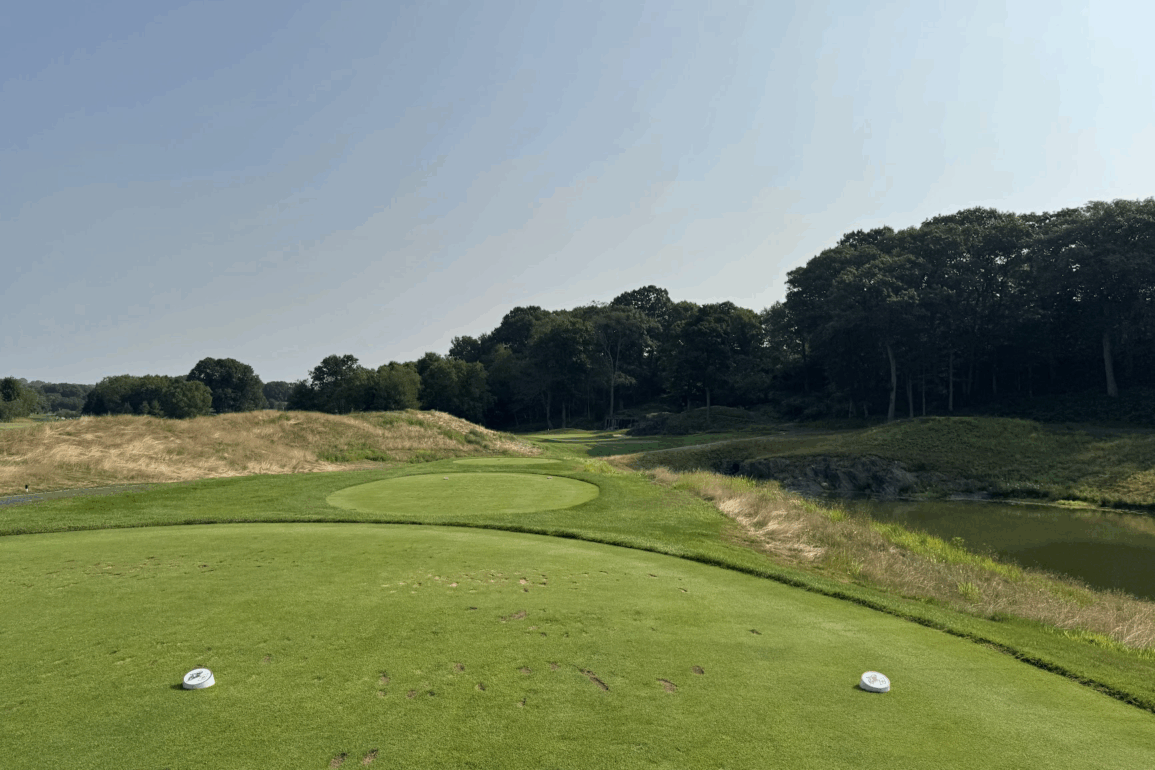
Category: Directory

  • Silvermine Golf Club – Main Course

    Silvermine Golf Club – Main Course

    [put_wpgm id=”2″ width=”100%” height=”770px” current_post_only=”true”]

    [letsreview]

    Silvermine Golf Club is a private par-70 course measuring approximately 5,301 yards from the tips. The course was originally designed in 1959 by John E. Warner and is located in Norwalk, Connecticut.

    Silvermine Golf Club opened in 1959 as a nine-hole layout before expanding to its current 27-hole configuration, with the main course consisting of 18 holes formed from the Woods Nine and Barn Nine combinations. The facility was designed by John E. Warner, whose work created a layout that sits compactly on the northern edge of Norwalk along the Wilton town line. Over the decades, the course has remained relatively true to Warner’s original design philosophy, with refinements focused on maintaining conditioning standards and updating infrastructure rather than wholesale architectural changes. The club celebrated its 50th anniversary in 2009, marking a half-century of private golf in Fairfield County. The facility occupies an estimated 90 to 100 acres of undulating terrain that features significant elevation changes and mature tree coverage throughout. The routing makes efficient use of the available land, creating a relatively short but demanding test where accuracy supersedes distance. The course incorporates numerous water hazards and pushup greens with substantial contours, many of which sit elevated above fairway grade. Warner’s design philosophy emphasizes target golf over bombers’ paradise, with narrow landing corridors that penalize wayward drives and force thoughtful club selection. The Barn side of the property offers glimpses of Long Island Sound in the distance, adding visual interest to several holes. This layout appeals most to the strategic player who values course management and precision over pure length, making it particularly suitable for mid-handicappers who can score well through smart positioning and those who appreciate classic northeastern parkland design where thinking outweighs power.

    Strategic Test

    HandicapCourse Strategy
    High Handicap (18+)Players in this range should consider the Forward tees at 4,743 yards (rating 66.5, slope 114 for men). The manageable yardage and moderate slope rating suggest that high-handicappers can avoid severe score inflation, with the slope indicating they might add approximately 5 to 7 strokes above their handicap on an average day. The shorter forced carries and reduced emphasis on distance control make this an accessible option. The 17th hole, a par 5 measuring 485 yards from the back tees, offers an excellent scoring opportunity from the forward markers where it plays considerably shorter. This hole provides the chance to reach in regulation or set up a comfortable wedge approach, with generous width off the tee before the fairway narrows approaching the green. High-handicappers should favor accuracy over distance on the tee shot and resist the temptation to force a risky second shot, instead laying up to their comfortable wedge distance.
    Mid Handicap (8-18)The Middle tees at 5,116 yards (rating 68.2, slope 117) provide an ideal challenge for this skill level, offering manageable length while still requiring strategic thought. The slope rating suggests mid-handicappers will add approximately 4 to 5 strokes to their handicap, making this a fair test without overwhelming difficulty. The course’s design rewards players who can work the ball both directions and execute approach shots to elevated greens. The 17th hole at 485 yards from the championship tees plays somewhat shorter from the middle markers while maintaining its risk-reward profile. As the number two handicap hole, it demands respect with its length and typically requires a solid drive followed by a fairway wood or hybrid for most mid-handicappers. The approach must be judged carefully given the green’s elevation, and club selection becomes critical in reading the uphill distance. This hole exemplifies Silvermine’s emphasis on strategic positioning rather than brute force.
    Low Handicap (0-8)Low-handicappers should embrace the Back tees at 5,301 yards (rating 66.4, slope 122), which presents a unique challenge for accomplished players. While the yardage is modest by contemporary standards, the slope of 122 indicates the course still has teeth, with scoring dependent on accuracy and short game prowess rather than distance. Better players might expect to shoot 1 to 2 strokes under their handicap on a good day, though the elevated greens and water hazards can quickly turn a round if ball-striking falters. The 17th hole, stretching 485 yards as a par 5, becomes a genuine three-shot hole for many scratch players who must navigate narrow landing areas twice before executing a precise approach to an elevated green. The hole’s ranking as the second-hardest suggests it yields few birdies even to accomplished players. The tee shot requires a controlled draw or fade to maximize distance while staying in the fairway, followed by a strategic layup that avoids fairway bunkers and positions the ideal angle into the green. The approach demands precise distance control given the elevation change and green contours.

    Nearby Course Alternatives

    Shorehaven Golf Club in East Norwalk offers an intriguing comparison just 5 minutes east of Silvermine. Measuring 6,548 yards from the championship tees, Shorehaven plays to a par 71 with a substantially higher slope rating of 136 and course rating of 72.4, making it a notably more challenging examination than Silvermine’s 122 slope. Designed by Robert White and opening in 1924, Shorehaven predates Silvermine by 35 years and occupies approximately 100 acres along the Connecticut coastline with spectacular water views of Long Island Sound. The course features a traditional links-style layout on its back nine holes, where coastal winds and visual intimidation from water hazards create memorable moments. The routing incorporates tree-lined fairways on the front nine before transitioning to more open, wind-swept holes near the water, demanding versatility in shot-making. Shorehaven’s reputation includes hosting numerous Met and Connecticut championships, with particular acclaim for what many consider the finest collection of par 3s in the region, including the signature 17th hole that often plays directly into prevailing winds. The terrain offers moderate elevation changes, less dramatic than Silvermine but sufficient to create strategic interest. This course appeals most to the accomplished mid-to-low handicapper who seeks a longer, more demanding test and appreciates links-influenced design elements combined with traditional parkland characteristics. Players who struggle with long forced carries or fighting wind conditions might find Silvermine’s more protected, wooded environment preferable.

    Birchwood Country Club in Westport provides a fascinating contrast located just 10 minutes south of Silvermine. This nine-hole facility measures 3,332 yards from the tips with a par of 36, though the course’s true character emerges in its remarkable slope rating of 132 when played twice around for 18 holes, rating 37.3 for nine holes. Originally designed by Orrin E. Smith and opening in 1900, Birchwood represents one of the oldest continuously operating courses in Connecticut, occupying approximately 35 to 40 acres in downtown Westport. The layout was recognized by Sports Illustrated in 1997 as one of the top ten nine-hole courses in the United States, earning acclaim for its supremely maintained velvet bent greens that are rarely found this far south. The course’s architectural pedigree includes subsequent work by Stephen Kay and Doug Smith, who have refined the original routing while preserving its character. The terrain features significant elevation changes with several dramatic uphill and downhill holes, including a memorable finishing par 5 that plays to 483 yards with strategic positioning requirements on both the drive and layup. The compact property creates an intimate experience where mature trees frame tight corridors and protect greens, demanding accuracy off the tee despite modest yardages. Birchwood appeals most to players who appreciate strategic nine-hole layouts and those seeking a traditional country club experience that emphasizes green contours and approach play over length. High-handicappers who prefer a shorter, more manageable test might gravitate toward Birchwood, while players who desire full 18-hole variety and distance might find Silvermine’s main course more satisfying.

    Final Word

    Silvermine Golf Club provides members with comprehensive practice facilities including a driving range with limited-flight balls for quick warm-ups, a dedicated short-game area for wedge work and bunker practice, and multiple putting greens that prepare players for the contoured surfaces they will encounter on the course. The Pro Shop 9, an executive nine-hole layout with five par 3s and four par 4s totaling approximately 1,984 yards, offers an excellent option for quick rounds, junior play, and beginners throughout the year with no tee time restrictions, operating weather permitting even during winter months. The clubhouse serves as a comfortable gathering space open daily for dining from April through November, featuring casual fare and a patio that overlooks the course with views toward the Barn side. The club maintains a family-oriented atmosphere with robust junior programming led by award-winning PGA professionals, including Head Professional Stuart Waack who has twice received the Met PGA Junior Leader Award for his commitment to youth golf development. Members enjoy an active tournament schedule for both men and women, with options ranging from competitive stroke play events to social formats that encourage participation across skill levels. Tennis and swimming amenities complement the golf offerings, though the primary focus remains squarely on the game itself. What makes Silvermine Golf Club special is its ability to present a legitimate strategic challenge on modest acreage without relying on excessive length, proving that thoughtful architecture and course management can create engaging golf regardless of total yardage. The club’s commitment to conditioning, particularly the elevated push-up greens that demand precise approach play, demonstrates how a golden-age design can remain relevant for contemporary players. For members who value shot variety, strategic positioning, and the thinking person’s game over pure distance, Silvermine delivers an authentic private club experience that rewards skill and intelligence rather than simply power.

  • Quarry View Golf Course

    Quarry View Golf Course

    [put_wpgm id=”2″ width=”100%” height=”770px” current_post_only=”true”]

    [letsreview]

    Quarry View Golf Course is a public par-31 course measuring approximately 1,576 yards from the tips. The course was originally designed in 2002 and is located in East Canaan, Connecticut.

    Established at the turn of the millennium, this facility occupies land adjacent to a historic limestone quarry, providing a unique geological backdrop for an executive routing. The site has seen thoughtful updates since its inception, including the addition of new grass tee boxes on the opening hole to provide varied verticality and distance. Spanning a compact acreage that emphasizes walkable corridors, the terrain features a compelling juxtaposition of open, fescue-lined fairways and dense New England timber. The routing utilizes the natural Litchfield County topography to create significant elevation changes, particularly on the par three assignments. A distinct design vibe emerges through the integration of tall fescue buffers and small, push-up style greens that demand precision. Strategic bunkering is employed sparingly but effectively to protect specific landing zones and green complexes. The layout is particularly rewarding for the thinking player who enjoys navigating undulating surfaces and firm playing conditions.

    Strategic Test

    HandicapCourse Strategy
    High Handicap (18+)Focusing on the forward tees at approximately 1,532 yards reduces the forced carries over the fescue buffers. The 91 slope rating reflects a fair challenge where the primary objective is navigating the significant elevation drops from the teeing grounds. Hole 7, a 350-yard par five, offers the widest corridor for the high-handicap player to advance the ball toward the limestone views. Success on this signature hole requires a disciplined three-shot approach to avoid the surrounding woods. Club selection should favor high-lofted woods to clear the initial rise in the fairway before approaching the elongated green.
    Mid Handicap (8-18)This player should utilize the championship markers at 1,575 yards to test their iron play against the prevailing Litchfield winds. The course rating of 29.4 suggests that scoring well requires keeping the ball below the hole on the slanted green surfaces. On the 350-yard 7th hole, the mid-handicapper faces a double dogleg that requires precise positioning rather than pure distance. The challenge lies in the second shot, where one must negotiate a sloping fairway that tends to kick balls away from the ideal line. A mid-iron approach is typically required to hold the elevated green which is protected by a sand trap on the left.
    Low Handicap (0-8)For the low-handicap player, the strategic test shifts toward attacking the small, postage-stamp greens with exacting wedge play. While the 1,575-yard distance seems modest, the steep slope and rating indicate that proximity to the pin is heavily defended by topography. Hole 7 serves as the ultimate tactical puzzle, as big hitters may attempt to reach the green in two by cutting the corners of the double dogleg. However, the elongated green and rear-side woods make any aggressive long-iron or fairway wood shot extremely risky. Accurate yardage assessment is critical here, as an over-clubbed approach into the back woods will result in a difficult recovery.

    Nearby Course Alternatives

    Canaan Country Club in Canaan is a semi-private facility located just 5 minutes west of the original course. It offers a 9-hole routing that plays to approximately 3,000 yards for 18 holes with a par of 35 per side. The course features a rating of 34.1 and a slope of 115, providing a slightly more traditional parkland test compared to the quarry-side layout. The acreage here is characterized by the meandering Blackberry River, which introduces significant water hazards and strategic corridor framing. The pedigree of the design emphasizes mature tree lines and well-manicured fairways that reflect a classic New England aesthetic. Players who prefer a flatter terrain with a focus on navigating water features and traditional hazards would enjoy this course over the original. The reputation of the greens as being consistently true and fast makes it a favorite for those seeking a more conventional country club experience. It is a very short drive through the center of town to reach this alternative.

    Undermountain Golf Course in Copake is a public course located roughly 20 minutes northwest of East Canaan. This 9-hole executive course measures 2,757 yards from the back tees with a par of 35 and carries a rating of 33.5 and a slope of 113. Set at the base of the Berkshire Mountains, the site offers expansive views and significant elevation changes that rival the limestone cliffs of the original course. The strategic value is found in the narrow corridors and the requirement for accurate club selection on the undulating par fours. Architecturally, the course is known for its rural charm and the way the routing follows the natural folds of the mountain foothills. A player who appreciates a larger acreage and more par four opportunities while maintaining a scenic, rugged vibe would find this a compelling alternative. The journey takes golfers across the New York state line through a series of picturesque winding roads.

    Final Word

    The practice facilities are a cornerstone of the experience, featuring a 275-yard driving range that offers both natural grass and synthetic mat options. A dedicated short-game area includes a practice putting green and a specifically designed bunker for sand play refinement. Beyond the course itself, the golf center serves as a hub for player development, including a specialized area for junior golfers. The site provides a clubhouse that caters to the post-round needs of the local golfing community. The integration of the limestone quarry history into the signature views creates a unique sense of place that is rare in the region. This geological connection serves as a constant reminder of the land’s industrial past while providing a serene environment for sport. The course proves its value by offering a strategic and accessible routing that rewards technical skill over raw power. The combination of fescue-lined fairways and elevated greens ensures that every round requires a thoughtful approach. It remains a cherished destination for those who appreciate the intersection of natural beauty and deliberate golf design.

  • Sharon Country Club

    Sharon Country Club

    [put_wpgm id=”2″ width=”100%” height=”770px” current_post_only=”true”]

    [letsreview]

    Sharon Country Club is a private par-36 course measuring approximately 3,162 yards from the tips. The course was originally designed in 1895 and is located in Sharon, Connecticut.

    Originally established in 1895 as a rudimentary layout, the grounds underwent a significant transformation when the club hired Wayne Stiles and John Van Kleek to modernize the site during the golden age of golf design. The architects utilized the rugged New England landscape to create a nine hole routing that emphasizes natural landforms rather than artificial features. In 2002, the club expanded the routing briefly before ultimately deciding to convert two holes into a comprehensive practice facility in 2010 to better serve the membership. Occupying a picturesque parcel characterized by ancient stone walls and dense stands of oak and maple, the course spans an estimated eighty acres of rolling terrain. The routing style is intimate yet demanding, utilizing constant changes in grade to challenge a player’s ability to manage uneven lies and vertical transitions. With its push up greens and strategic corridor framing, the design vibe reflects a classic Brookline era aesthetic that rewards precision and thoughtful approach angles. Players who appreciate old school shot making and the nuances of small, sloping green complexes will find this layout particularly engaging.

    Strategic Test

    HandicapCourse Strategy
    High Handicap (18+)Players at this level should focus on navigating the 2886 yard Sharon tees, where the 119 slope rating reflects the primary challenge of managing significant elevation changes. The strategic priority is avoiding the dense timber and stone walls that frame the corridors, as recovery shots from the thick fescue can be punishing. Hole 4, a par 3 playing 133 yards, is the most enjoyable test for this group as it requires a confident short iron over a valley to a green that demands proper distance control. Club selection is critical here, typically ranging from an eight iron to a wedge depending on the wind, as anything short leaves a difficult uphill recovery.
    Mid Handicap (8-18)Mid handicap golfers typically utilize the white tees at 3033 yards, where a 124 slope indicates that navigating Stiles’ deceptive green movement is the key to scoring. The strategy revolves around finding the correct side of the fairway to open up looks at the small putting surfaces which often slope aggressively from back to front. Hole 2 is a standout par 4 at 422 yards that requires a precise drive to set up a long iron or hybrid into a guarded green complex. Players must account for the uphill grade on the approach, often necessitating one extra club to reach the putting surface safely.
    Low Handicap (0-8)Playing from the blue tees at 3162 yards with a 128 slope, the low handicap player must respect the subtle internal contours and centerline obstacles that dictate play. The strategy demands working the ball both ways to navigate the rolling topography and ensure approaches are hit below the hole on the quick, undulating greens. Hole 7 is a premier par 5 at 435 yards that presents a high risk reward opportunity where a powerful drive can leave a mid iron into the green for an eagle look. The challenge lies in the tight approach window, where any miss left or right is severely penalized by the natural terrain and bunker placement.

    Nearby Course Alternatives

    Bull’s Bridge Golf Club in South Kent is located approximately twenty minutes south of Sharon Country Club. This private championship layout measures 7012 yards from the tips with a slope of 144 and a rating of 74.2, offering a significantly larger scale and more modern architectural profile. Designed by Tom Fazio and opened in 2004, the course occupies a sprawling site with dramatic elevation changes and expansive vistas of the Berkshire foothills. The strategic value is high, with wide fairways often leading to complex greenside bunkering and large, tiered putting surfaces. While the original course is intimate and historic, Bull’s Bridge provides a rugged, mountainous experience with more forced carries and a greater demand for power. A low handicap player who enjoys bold, modern bunkering and panoramic views would likely prefer this destination. The pedigree of the Fazio design ensures a high level of maintenance and a sophisticated routing that moves through diverse forest and meadow environments.

    Torrington Country Club in Goshen is situated about twenty-five minutes east of the Sharon grounds. This private course features a classic routing measuring 6665 yards with a slope of 133 and a rating of 72.5. Originally designed by Orrin Smith in 1929, the layout shares a similar golden age lineage but offers a full eighteen hole experience. The terrain is characterized by gentle rolls and mature tree lines, providing a consistent strategic test that emphasizes accuracy over pure distance. The course is widely recognized for its exceptional green conditions and traditional bunkering that forces players to think through every approach shot. Compared to the Sharon layout, Torrington offers a more conventional length while maintaining the quiet, rural atmosphere typical of northwestern Connecticut. A mid handicap player who appreciates a historic parkland setting with a balanced mix of long and short par fours would find this course highly rewarding.

    Final Word

    The practice facilities at the club are among the most comprehensive for a boutique private environment, featuring a 250 yard driving range with both synthetic mats and a dedicated grass tee for iron work. Adjacent to the range is a specialized short game area that includes a deep bunker, a thirty yard apron, and a practice green designed with significant internal movement to replicate on course conditions. The clubhouse serves as a central social hub, having been recently rebuilt in 2020 to provide modern comforts while maintaining the classic character of the property. Additional amenities include tennis and platform tennis courts, which round out the recreational offerings and foster a vibrant community atmosphere. The routing remains special because it preserves the architectural integrity of Wayne Stiles while adapting to the needs of the modern golfer through its elite practice grounds. There is a distinct sense of tranquility found within the ancient stone walls and rolling hills that defines the experience here. The club proves its standing by offering a refined, thoughtful test of golf that celebrates the natural beauty of the region. It is a place where the history of the game and the quiet charm of the countryside exist in perfect harmony.

  • Twin Lakes Golf Course

    Twin Lakes Golf Course

    [put_wpgm id=”2″ width=”100%” height=”770px” current_post_only=”true”]

    [letsreview]

    Twin Lakes Golf Course is a public par-27 course measuring approximately 835 yards from the tips. The course was originally designed in the 1950s by Marshall Williams and is located in North Branford, Connecticut.

    Twin Lakes Golf Course has served the North Branford community for over seven decades, establishing itself as a family-friendly short-game facility built during the mid-century expansion of American golf. The property underwent a comprehensive renovation in 2014 under new management, with particular attention paid to rebuilding all nine greens to modern specifications while preserving the original routing laid out by Williams. The complete overhaul introduced contemporary green complexes that elevated the strategic demands of what had previously functioned primarily as a beginner-friendly pitch-and-putt venue. Situated on a compact parcel of approximately 50 acres, the layout occupies a landscape defined by rolling topography and significant elevation shifts. The routing utilizes the natural contours of the land to create varied looks, often requiring players to negotiate uphill approaches or downhill tee shots that play shorter than the measured distance. Historical development of the site suggests a focus on providing a walkable yet technically demanding experience within a smaller footprint, emphasizing shot-making over raw power. The design vibe leans toward a classic New England meadow style where tree-lined corridors frame the narrow fairways. Strategic interest is generated through small, often tiered green complexes that demand precise vertical distance control to avoid difficult recovery shots. Players who appreciate a quick, concentrated test of their wedge play and short-game creativity will find the layout particularly engaging. The terrain movement ensures that even short holes provide a level of visual intimidation and physical engagement rarely found on larger, flatter properties.

    Strategic Test

    HandicapCourse Strategy
    High Handicap (18+)Players at this level should utilize the forward tees measuring 1,480 yards to mitigate the steep slope rating of 113. The emphasis is on staying between the timberlines and managing the dramatic elevation changes that can significantly alter ball flight. Hole 3 is an ideal test at 115 yards because it requires a confident carry over a valley to a green perched on a hillside. Success depends on selecting an extra club to account for the uphill incline while avoiding the dense foliage flanking the right side.
    Mid Handicap (8-18)Golfers in this tier will find the middle tees at 1,875 yards provide a balanced challenge against the 30.2 rating. Strategy involves disciplined club selection on short par fours where center-of-the-fairway placement is prioritized over distance to set up favorable angles into guarded greens. Hole 7 stands out as a premier strategic challenge at 235 yards from the championship tees. This short par four demands a precise long iron or hybrid off the tee to navigate a narrow corridor, followed by a delicate pitch to a green that slopes aggressively from back to front.
    Low Handicap (0-8)The championship tees at 2,130 yards offer a rating of 31.1, requiring the scratch player to master trajectory control and spin rates on undulating surfaces. Scoring hinges on the ability to hit high-launching approaches that stop quickly on push-up greens that often fall away at the edges. Hole 7 is the most compelling strategic puzzle for the low handicapper as it offers a tempting but dangerous opportunity to drive the green. Choosing a 3-wood requires navigating a tight chute of trees, while a conservative iron play must contend with awkward lies created by the natural pitch of the fairway.

    Nearby Course Alternatives

    Alling Memorial Golf Club in New Haven is situated approximately 20 minutes southwest of the original course. This municipal layout offers a traditional 18-hole experience across roughly 160 acres of land, featuring a total yardage of 6,248 from the back tees. With a slope of 120 and a rating of 71.9, the course presents a more expansive strategic test characterized by wider fairways and large, classic green complexes designed by architect Robert D. Pryde. The property is known for its parkland pedigree and a routing that winds through mature hardwoods and gentle hills. Players will find a greater emphasis on long-iron accuracy and navigating well-placed fairway bunkers compared to the tighter confines of Twin Lakes. The reputation of the site is built on its accessibility and historical significance as a staple of New Haven golf. A golfer who prefers a full-scale championship length and more traditional bunkering patterns would likely favor this alternative. It provides a standard par-72 configuration that rewards those who enjoy the rhythm of a longer, more walking-intensive round.

    Wheeler Family Traditions Golf Club in Wallingford is located about 15 minutes northwest of the property. This 18-hole public facility covers approximately 140 acres and stretches to 6,057 yards from the championship markers. It carries a slope of 134 and a rating of 70.0, offering a layout that blends meadow-style holes with more secluded, wooded corridors. The design incorporates significant water hazards and strategic doglegs that force players to commit to specific yardages off the tee. Originally built in 1981 by Ted Manning, the course has a reputation for well-maintained surfaces and a challenging back nine that utilizes the natural wetlands of the region. The elevation changes here are more gradual than the original course, providing a different kind of topographical challenge focused on lateral hazards. This venue is better suited for the mid-handicap player who enjoys navigating a variety of hazard types and appreciates a course that demands every club in the bag. It serves as a comprehensive counterpoint to the more vertical and compact nature of the North Branford site.

    Final Word

    The facility offers a concentrated practice environment including a dedicated putting green and a chipping area designed to sharpen the short game required on the course. While it lacks a full-scale driving range, the proximity of the practice green to the first tee allows for efficient pre-round preparation. The clubhouse serves as a functional hub for golfers, providing a comfortable space for post-round analysis and social interaction. Additional amenities focus on the core golf experience, ensuring that the primary draw remains the tactical challenge of the holes themselves. The atmosphere is welcoming and emphasizes a shared appreciation for the intricacies of a technical layout. What makes this course special is its ability to pack a high degree of shot variety and topographical interest into a smaller footprint. It proves its value by offering a rigorous mental and physical test that rewards precision and thoughtful play over sheer force. The property stands as a testament to the idea that strategic depth is not dependent on total yardage. It remains a charming destination for those who value the classic elements of New England golf.

  • Washington Golf Club

    Washington Golf Club

    [put_wpgm id=”2″ width=”100%” height=”770px” current_post_only=”true”]

    [letsreview]

    Washington Golf Club is a private par-71 course measuring approximately 5,481 yards from the tips. The course was originally designed in 1903 by David Johnson and is located in Washington, Connecticut.

    Established in 1889 as the Washington Field Club, the organization represents one of the oldest golfing entities in the United States. The golf section eventually merged with the Washington Club in 1914, solidifying its place in the Litchfield Hills community. The current nine hole configuration was developed through several land acquisitions in the early 1960s, which expanded the property by approximately thirty-seven acres to accommodate the current routing. The estimated acreage allows for a layout that capitalizes on the classic rolling topography of Litchfield County, featuring significant elevation changes and pastoral vistas. The routing utilizes a shared fairway and alternate tee system to provide an eighteen hole experience that emphasizes precision over sheer distance. The design vibe is that of an understated New England classic, where small, push-up green complexes and natural corridor framing dictate the strategy. Players who appreciate a walk through history and a cerebral approach to shot making will find the grounds particularly rewarding.

    Strategic Test

    HandicapCourse Strategy
    High Handicap (18+)Players at this level should focus on navigating the 5,481 yards by playing to the fat of the corridors to avoid the dense framing of the hillsides. With a slope rating of 127 and a course rating of 68.3 from the back markers, the primary challenge is managing the severe elevation changes that can significantly impact club selection and total score. Hole 4, a par 5 playing 430 yards, offers the most accessible path for a higher handicap to utilize the natural slopes. The challenge here involves avoiding the lateral trouble while positioning for a safe third shot into a green that demands a high, soft approach to hold the surface.
    Mid Handicap (8-18)Mid handicap players must respect the internal contours of the small green complexes and the strategic placement of bunkers that guard the primary lines of charm. The slope of 127 suggests that a disciplined approach to yardage management is essential, especially when playing the second loop with adjusted angles. Hole 4 provides a significant birdie opportunity at 430 yards if the player successfully navigates the initial corridor and avoids the greenside hazards. A conservative play with a fairway wood or hybrid for the second shot sets up a comfortable wedge into a green that requires precise distance control to avoid a difficult three putt.
    Low Handicap (0-8)The low handicap player will find the strategic test lies in the nuance of the short par 4s and the demand for precise ball striking into tiny targets. Despite the modest total yardage, the 127 slope indicates that errant shots are penalized by the difficult lies found on the undulating terrain. Hole 4 at 430 yards is a reachable par 5 that rewards a bold centerline drive with a chance to reach the surface in two. The challenge for the scratch player is hitting a precise long iron or hybrid into a green that is well protected and features subtle internal breaks that can frustrate aggressive putting.

    Nearby Course Alternatives

    Lake Waramaug Country Club in New Preston is a private nine hole facility located approximately ten minutes west of Washington. The course measures 6,210 yards from the championship tees with a par of 70, a course rating of 70.0, and a slope of 121. Designed with a focus on its namesake lake, the layout features dramatic elevation changes and a variety of parkland and hillside holes. The property covers a compact acreage that emphasizes the natural beauty of the Litchfield Hills, featuring strategic bunkering and medium sized greens. The course is known for its immaculate conditions and a pedigree that dates back to the early 20th century. Players who enjoy panoramic water views and a slightly longer test of their long iron game would find this an excellent alternative. The routing is particularly engaging for those who appreciate a course that feels isolated from the surrounding residential areas. High handicap players who prefer a scenic, tranquil atmosphere with generous fairways will enjoy this experience over the tighter corridors of Washington.

    Litchfield Country Club in Litchfield is a private nine hole course located roughly fifteen minutes northeast of Washington. The layout measures 5,618 yards from the tips with a par of 70, carrying a course rating of 68.0 and a slope of 117. Established in 1916, the course is set upon the White Memorial nature preserve, offering a landscape defined by the meandering Bantam River which comes into play on six holes. The terrain is relatively flat compared to its neighbors, but it utilizes the river as a prominent centerline and lateral hazard to create a high level of strategic value. The greens are small and require precise approach play, consistent with the golden age design style prevalent in the region. The course has a reputation for being a hardy walker’s track, though it lacks the severe verticality of other area clubs. A player who values water hazards and a more traditional parkland feel with fewer blind shots would likely prefer this layout. It is particularly suited for the mid handicap golfer who enjoys navigating lateral hazards rather than managing extreme elevation shifts.

    Final Word

    The clubhouse at the Washington Club serves as a focal point for the membership, offering a historic and intimate setting that overlooks the surrounding hills. The practice facilities are surprisingly comprehensive for a classic nine hole club, featuring a dedicated driving range with both grass and matted teeing areas. The short game complex includes two putting greens and a chipping area, allowing players to refine the precise touches required on the course. Beyond the links, the club provides a wide array of amenities including tennis and racquet facilities located near the local school campus. The club also maintains a private beach on Lake Waramaug, offering seasonal activities such as sailing and swimming that complement the golf experience. The combination of these non-golf features creates a community atmosphere that extends well beyond the final green. What makes this course truly special is its preservation of a bygone era of golf architecture, proving that strategic depth does not require massive yardage. The course stands as a testament to the enduring appeal of the thinking person’s game in a serene and historic setting.

  • Roseland Golf Club

    Roseland Golf Club

    [put_wpgm id=”2″ width=”100%” height=”770px” current_post_only=”true”]

    [letsreview]

    Roseland Golf Course is a public par-68 course measuring approximately 4,862 yards from the tips. The course was originally designed in 1896 and is located in Woodstock, Connecticut.

    Roseland Golf Course stands as the second oldest golf course in Connecticut, having first opened its fairways in 1896 when it was initially known as Woodstock Golf Course. The facility underwent a significant transition in 2020 when new management took over the lease and rebranded the course as Roseland Golf Course, bringing fresh standards of operation while preserving its historic character. The layout originally featured 18 holes but was reduced to its current nine-hole configuration at some point in its long history. The course spreads across approximately 100 acres of gently rolling terrain in the rural historic town of Woodstock, situated in Connecticut’s “Last Green Valley” region. The routing embodies early American golf design principles with its straightforward hole corridors, natural landforms, and absence of bunkers. The terrain features modest but strategic elevation changes that create natural amphitheaters and interesting sight lines without overwhelming the golfer. This is classic parkland golf distilled to its essence, where tree-lined fairways demand accuracy over power and where ground contours influence ball movement more than artificial hazards. The design philosophy favors placement and course management over brute force, making it particularly appealing to players who appreciate strategic shot-making, those seeking an uncrowded round in a peaceful setting, and golfers who value historic layouts that have maintained their authentic character through more than a century of play.

    Strategic Test

    HandicapCourse Strategy
    High Handicap (18+)From the red tees at 4,010 yards with a slope of 108 and rating of 63.2 for men, this course presents an approachable test that rewards consistent play over heroic shotmaking. The absence of water hazards and bunkers simplifies strategic decisions and allows developing players to focus on fundamentals rather than navigating hazard complexes. Hole 2, measuring 265 yards from the blue tees, exemplifies the strategic opportunities available when players can potentially drive the green on this short par-4, though tree placement along the fairway corridor demands accuracy with the driver or fairway wood. For most high handicappers playing from forward tees, this becomes a straightforward mid-iron followed by a wedge approach, emphasizing the two-shot strategy that defines proper course management. The slope rating suggests that while the course is forgiving, elevation changes and green contours still create scoring variance for players who struggle with distance control.
    Mid Handicap (8-18)Playing from the blue tees at 4,862 yards with a slope of 96 and rating of 63.3, mid-handicappers face a layout where iron play and short game execution determine scoring potential more than driving distance. The relatively modest slope indicates consistent scoring opportunities for players who avoid mistakes rather than those who manufacture birdies through aggressive play. Hole 8, the number one handicap hole at 385 yards from the blue tees, represents the course’s most complete examination of shotmaking skills with its length requiring two quality strikes to reach the green in regulation. The hole likely plays as a driver followed by a mid-iron approach, where positioning off the tee becomes critical to finding the proper angle into what is presumably an elevated or contoured green complex. This hole particularly suits the mid-handicapper who can manage their game through strategic tee shot placement rather than relying on raw power, as accurate positioning trumps distance when navigating tree-lined corridors that punish wayward drives.
    Low Handicap (0-8)From the blue tees, accomplished players face a course where scoring depends entirely on execution precision and mental discipline rather than physical challenge. The 63.3 rating indicates that par should be readily achievable for single-digit handicappers, shifting the competitive focus toward converting birdie opportunities on shorter holes while avoiding careless bogeys. Hole 8 at 385 yards demands respect as the most difficult hole, where even skilled players must execute two quality shots to reach the green, likely requiring a controlled drive to find the optimal approach angle followed by a precise mid-iron. The strategic interest lies in the risk-reward calculus presented by drivable par-4s and reachable par-5s balanced against the need for course management on tree-lined holes where accuracy outweighs distance. Low handicappers who excel at controlling trajectory, managing uneven lies created by natural terrain, and reading subtle green contours will find the course rewards thoughtful play over aggressive shotmaking, with scoring determined more by short game proficiency around push-up greens than by birdie conversion rates.

    Nearby Course Alternatives

    Harrisville Golf Course in Woodstock, just two miles north of Roseland, offers a complementary nine-hole experience that shares geographic proximity while presenting distinctly different strategic challenges. Designed by Aimee Salvas and opened in 1929, the course stretches 2,814 yards from the back tees with a par of 35, featuring a course rating of 35.0 and slope of 113. Harrisville occupies approximately 90 acres of rolling Connecticut terrain, with significantly more pronounced elevation changes than Roseland that create dramatic uphill and downhill shots throughout the round. The routing showcases several short par-4s that tempt aggressive play while featuring quality par-3s and par-5s that elevate the slope rating above average for nine-hole layouts. The architectural pedigree includes careful refinements over the decades that have enhanced strategic interest while maintaining the vintage character that defines early 20th-century New England golf. Course conditions typically run to excellent standards with well-maintained greens that roll true at medium speeds and manicured fairways that reflect ownership’s commitment to presentation. The elevation changes create visually compelling holes framed by mature trees, with the property’s natural contours producing more dramatic shot values than Roseland’s gentler topography. Harrisville particularly appeals to the mid-to-low handicap player who appreciates strategic variety and enjoys the physical challenge of walking hilly terrain, as the pronounced elevation creates both demanding uphill approaches and exciting downhill tee shots that reward well-executed shots while punishing miscues more severely than Roseland’s forgiving landscape.

    Connecticut National Golf Club in Putnam, approximately 10 miles southeast of Roseland and roughly 15 minutes by car, represents a significant step up in scale, challenge, and architectural sophistication. Originally opened in 1994 as the private Putnam Country Club, the facility underwent a complete Mark Mungeam renovation in 2007 that transformed it into one of New England’s premier public golf experiences. The par-71 layout measures 6,935 yards from the championship tees with a demanding course rating of 72.9 and slope of 133, playing across substantial acreage that accommodates a links-parkland hybrid design philosophy. The architecture blends open, windswept corridors reminiscent of links golf with tree-framed parkland holes that create strategic variety throughout the 18-hole routing. Mungeam’s design features dramatic elevation changes throughout the property, with holes cascading down hillsides and climbing back up through forested corridors that frame heroic risk-reward opportunities. The course includes memorable holes like the 604-yard sixth, a three-shot par-5 that tests decision-making across multiple landing zones, and a collection of demanding par-3s that average over 185 yards and require precise iron play. Connecticut National operates as a semi-private facility with excellent conditioning standards, fast and true greens, and comprehensive practice facilities including a driving range with multiple practice tees. The strategic architecture rewards thoughtful course management while providing sufficient challenge to test accomplished players, with five tee boxes ensuring appropriate difficulty levels across skill ranges. Connecticut National particularly appeals to the low-handicap player seeking a stern examination of all aspects of their game, as the elevated slope rating, significant length, and rugged terrain create a comprehensive test that demands both power and precision, making it ideal for skilled players who find Roseland’s modest yardage and gentle contours insufficient challenge.

    Final Word

    Roseland Golf Course provides a complete practice facility anchored by a driving range with both mat and grass hitting areas, allowing players to warm up before their round regardless of conditions. The property includes a dedicated putting green where golfers can calibrate their speed control, along with a practice bunker for short game work, though the absence of sand hazards on the course itself makes this facility more useful for general skill development than specific course preparation. The historic clubhouse serves as the operational hub, housing the pro shop that carries essential golf supplies and offering basic food and beverage service for post-round refreshments. The facility’s connection to adjacent Roseland Park creates a unique recreational campus, with the 203-acre park featuring forested land, manicured lawns, sports fields, and extensive shoreline along the 90-acre Roseland Lake where visitors can enjoy boating, fishing, and other water activities. The clubhouse grounds are available for event rentals including weddings, birthday parties, reunions, and corporate outings, with the historic Victorian setting providing an elegant backdrop for special occasions. Professional instruction is available through PGA teaching professionals, offering lessons for golfers seeking to improve their skills in a relaxed environment. What makes Roseland Golf Course genuinely special is its successful preservation of early American golf design principles within a historic trust framework that prioritizes community access and heritage conservation over commercial development. The course proves its enduring value through its role as Connecticut’s second oldest golf facility that continues operating as an affordable public amenity, offering authentic vintage golf where strategic shot-making matters more than technology-driven distance gains, where peaceful surroundings enhance the experience as much as the golf itself, and where each round connects players to more than a century of golf history played across the same ground.

  • Vineyards Valley Golf Club

    Vineyards Valley Golf Club

    [put_wpgm id=”2″ width=”100%” height=”770px” current_post_only=”true”]

    [letsreview]

    Vineyard Valley Golf Club is a public par-36 course measuring approximately 3,033 yards from the tips. The course was originally designed in 1985 by Gus Loos and is located in Pomfret Center, Connecticut.

    Vineyard Valley occupies approximately 70 acres of land that once served as a working vineyard for Hamlet Hill Winery, producing award-winning red, white, and rose wines between 1972 and 1990. Local businessman Gus Loos initially designed the first five holes in 1985 as a private retreat for family and friends, with play conducted in two directions on four holes to create a temporary nine-hole layout. The configuration proved limiting, with only twelve players permitted on course simultaneously to prevent wayward shots from reaching other groups. By 1990, the property transitioned to private club status with the completion of a proper nine-hole routing that spans the property’s dramatic elevation changes. The terrain is defined by steep slopes that range between 700 and 850 feet in elevation, creating one of the most vertically dramatic layouts in Connecticut. Three holes run straight uphill or downhill along the hillside, while the remaining six traverse laterally across the slope, generating constant sidehill lies and stance adjustments. The routing style emphasizes visual drama, with panoramic views of the northern Connecticut countryside that few courses in the region can match. A castle positioned between the sixth green and seventh tee at the property’s highest point serves as a distinctive landmark. Players seeking a thinking person’s challenge will appreciate how the modest yardage disguises genuine difficulty through elevation, persistent breezes, and greens that demand precise trajectory control. This is golf for those who value shotmaking over distance, where course management and club selection trump raw power.

    Strategic Test

    HandicapCourse Strategy
    High Handicap (18+)High handicap players will find the White tees at 5,678 yards with a slope of 114 provide an accessible but honest examination of fundamental skills. The slope rating indicates approximately 14 strokes above par for this player category, making bogey golf a realistic target when navigating the elevation properly. The second hole, a par-3 measuring 164 yards from the championship tees, represents an ideal challenge for developing ball strikers. This mid-length one-shotter requires a controlled mid-iron into a tiered green with substantial contouring, testing the ability to hold a target on an elevated surface. From the appropriate forward tees, this hole demands commitment to the yardage while rewarding those who trust their club selection over the visual intimidation of the uphill climb.
    Mid Handicap (8-18)Mid handicap competitors benefit from the Blue tees at 6,046 yards with a slope of 119, suggesting approximately 8-10 strokes above par for dialed-in course management. The rating of 68.4 indicates that while length is manageable, precision becomes paramount when dealing with uneven lies and firm, contoured greens. The sixth hole, a par-5 stretching 448 yards from the tips, offers genuine risk-reward strategy for players in this range. Playing straight uphill from tee to green, the hole tempts longer hitters to reach the putting surface in two shots if willing to carry fairway wood or hybrid shots through the rising terrain. Conservative play layering three controlled shots remains viable, but the bold line rewards those who can manage trajectory and carry distances up the incline.
    Low Handicap (0-8)Accomplished players face legitimate challenge from the championship Blue tees despite modest overall yardage, as the 119 slope reflects how elevation, wind, and green complexity can neutralize distance advantages. Expect to play near par when executing proper trajectory control and committing to aggressive lines. The ninth hole, a par-3 ranging from 120 to 160 yards depending on tee position, represents the layout’s signature strategic test. Gus Loos conceived this finisher as northeastern Connecticut’s answer to the island green at TPC Sawgrass, with the putting surface fronted by a watery marsh that has destroyed countless rounds. From the back tee at 160 yards, the hole demands a confident mid-iron struck with precise distance control, as the forced carry eliminates any bailout options. The green sits slightly elevated above the water hazard, requiring players to account for the uphill trajectory while managing adrenaline on what may be a card-defining shot.

    Nearby Course Alternatives

    Connecticut National Golf Club in Putnam presents the strongest public alternative approximately 15 minutes northeast of Vineyard Valley. Mark Mungeam’s 2007 renovation transformed the original Putnam Country Club into a par-71 layout measuring 6,974 yards from the tips with a slope rating of 133 and course rating of 72.9. The design blends links and parkland elements across a property that has hosted USGA qualifiers and premier regional amateur competitions. Connecticut National stretches across considerably more acreage than Vineyard Valley, with generous playing corridors that contrast sharply with the tighter, hillside routing. The course features dramatic elevation changes including an uphill par-5 opener and downhill par-5 closer that bookend the round with scoring opportunities. Mungeam’s architecture emphasizes strategic positioning off the tee, with well-placed fairway bunkers and hazards creating preferred angles into moderately contoured greens. The renovation added over 700 yards, 33 tee decks, and 44 bunkers while installing dual-row irrigation and expanding playable areas by five acres. The facility includes a 9,000 square foot clubhouse with full-service restaurant and bar, plus a comprehensive driving range with target greens. Mid-to-low handicap players who prefer longer, more open designs with dramatic elevation and strategic bunkering will find Connecticut National offers greater variety and championship pedigree compared to Vineyard Valley’s intimate, quirky character.

    Raceway Golf Club in Thompson provides another compelling public option roughly 20 minutes north of Vineyard Valley. Don Hoenig’s 1940 design plays as a par-71 or par-72 layout measuring approximately 6,412 to 6,663 yards depending on tee selection, with a slope rating of 111-124 and course rating near 70. The parkland-style routing features tree-lined fairways with moderate elevation changes and incorporates water hazards on several holes, including back-to-back par-5s on the front nine where one presents a double-dogleg challenge requiring a carry over a pond to reach the green in two. The course occupies traditional Connecticut countryside terrain without the severe slopes that define Vineyard Valley, offering more conventional lies and gentler transitions between holes. Raceway’s conditioning typically receives positive marks for playable fairways and true-rolling greens, though bunkers feature crushed pebbles rather than sand. The facility provides a driving range with grass and mat hitting areas, practice bunker, and full clubhouse amenities including restaurant service. High handicap players seeking more forgiving terrain with fewer awkward stances will appreciate Raceway’s accessible design, while those who enjoy risk-reward strategy on shorter par-5s and varied hole routing will find legitimate interest throughout the 18-hole experience at a fraction of Vineyard Valley’s elevation-induced difficulty.

    Final Word

    Vineyard Valley supplements its nine-hole layout with practice facilities that include a driving range and two practice putting greens, allowing players to calibrate distance control and green reading before confronting the course’s elevation-dependent shotmaking demands. The range location adjacent to the first hole provides convenient warmup access, though players should remain aware of range balls occasionally reaching the opening fairway. The clubhouse maintains an unpretentious atmosphere consistent with the property’s former private club origins, offering pro shop essentials and post-round refreshments without elaborate amenities. The modest facility scale reflects a golf-first philosophy where the emphasis remains on the playing experience rather than peripheral services. Some reviews mention the clubhouse as basic but functional, with friendly staff creating a welcoming environment despite limited infrastructure. The property lacks extensive short game practice areas or elaborate locker room facilities, positioning itself as a straightforward golf venue rather than a full-service country club experience. What ultimately distinguishes Vineyard Valley is the combination of genuine topographical drama with manageable yardage that creates strategic interest regardless of skill level. The routing extracts maximum value from 70 acres through intelligent use of natural elevation, delivering holes that reward creative shotmaking while punishing those who fail to commit to proper club selection and trajectory control. The panoramic views between the sixth green and seventh tee, combined with the dramatic island green finish, provide memorable visual moments that transcend the course’s modest length. For players who appreciate golf as a thinking person’s game rather than a power contest, Vineyard Valley delivers authentic design character where local knowledge and course management separate compelling rounds from frustrating ones.

  • Whitney Farms Golf Club

    Whitney Farms Golf Club

    [put_wpgm id=”2″ width=”100%” height=”770px” current_post_only=”true”]

    [letsreview]

    Chris Bargas Golf Club at Whitney Farms is a public par-71 course measuring approximately 6,534 yards from the tips. The course was originally designed in 1982 by Hal C. Purdy and Malcolm M. Purdy and is located in Monroe, Connecticut.

    The property carries a storied lineage, beginning as Whitney family horse stables and dairy farmland before Chris Bargas Sr., a WWII veteran and real estate developer, acquired it in the mid-1970s with ambitions to construct a championship public facility. Construction spanned three years under both Purdy’s architectural vision and Bargas’s hands-on development, resulting in the 1982 opening. In 2024, the facility was renamed Chris Bargas Golf Club at Whitney Farms to honor the founder’s legacy, though it remains commonly referenced by its original designation. The course received the 2025 Walter Lowell Public Golf Course Distinguished Service Award from the Connecticut Section PGA, validating decades of consistent operation and community contribution. The layout occupies approximately 150 acres of rolling New England terrain featuring mature tree corridors, natural water features, and elevation shifts that create both visual interest and strategic variety. The routing philosophy balances wider opening holes with tighter wooded stretches on the interior nine, then returns to more open concluding holes, providing a rhythmic flow that builds challenge through the middle stretch. Ponds factor into decision-making on multiple holes, while original stone walls and the preserved barn facade near the clubhouse entrance maintain connections to the property’s agricultural heritage. The design demonstrates classic Purdy characteristics with undulating push-up greens that repel poorly struck approaches and demand precise distance control on chips and pitches. Players who appreciate tactical positioning over pure length, value consistent conditioning at accessible public facilities, and enjoy traditional parkland aesthetics within a classic New England setting will find considerable merit in the experience Whitney Farms delivers.

    Strategic Test

    HandicapCourse Strategy
    High Handicap (18+)From the Green tees at 5,704 yards (slope 126, rating 72.2 for women), the course provides manageable landing areas on most holes while still requiring intelligent navigation around water hazards and tree lines. The slope rating indicates that course difficulty escalates moderately for higher handicappers, meaning bogey golfers will face approximately 18 to 20 strokes over par under neutral conditions. Hole 6, a par-5 measuring 562 yards from the Blue tees but considerably shorter from forward markers, presents an ideal risk-reward scenario where players can choose between laying up short of hazards or attempting to reach in regulation based on driving distance and accuracy. The first-rated handicap hole demands strategic placement off the tee to set up favorable angles, and club selection depends entirely on whether the player opts for conservative three-shot strategy or attempts to reach the green in two.
    Mid Handicap (8-18)The White tees at 6,085 yards (slope 125, rating 69.3) provide balanced challenge requiring both length and accuracy across varied hole designs. Mid-handicappers should expect scores in the low-to-mid 80s under typical conditions, with the 125 slope suggesting the course plays fair but unforgiving to wayward shots. Hole 16, a 568-yard par-5 rated as the sixth-hardest hole, exemplifies the strategic depth available at this skill level, demanding a well-positioned drive to access birdie opportunities while penalizing aggressive mistakes with potential double-bogeys. From the Blue tees at 568 yards, driver placement becomes paramount as the hole’s design forces choices between taking on hazards or playing conservative angles that leave longer approach distances. Club selection for the second shot typically ranges from fairway wood or hybrid depending on drive success, with greenside contours requiring precision on the third shot regardless of chosen strategy.
    Low Handicap (0-8)Championship Blue tees at 6,534 yards (slope 127, rating 71.5) deliver a test that emphasizes ball-striking precision and green-reading skills over raw distance, though the sub-6,600-yard length means players must score when opportunities present themselves. Scratch golfers should anticipate even-par rounds under normal conditions, with the modest slope indicating that elite ball-strikers gain significant advantage through accuracy rather than length. Hole 18, a 442-yard par-4 rated as the second-hardest hole, serves as the ultimate examination of sustained quality as players navigate a demanding closing hole that requires both precision off the tee and exacting approach work to secure par. The yardage demands either a long iron or hybrid into an elevated or protected green complex, depending on tee shot execution, making this a true finishing test where mistakes compound quickly.

    Nearby Course Alternatives

    Tashua Knolls Golf Course in Trumbull, approximately 10 minutes southeast of Monroe, presents a compelling municipal alternative with 27 holes of public golf across two distinct layouts. The main Tashua Knolls course, designed by Al Zikorus and opened in 1976, stretches 6,540 yards from the championship tees with a par of 72, carrying a slope rating of 133 and course rating of 72.4 that indicates slightly more difficult playing conditions than Whitney Farms for equivalent-skill players. The facility added a nine-hole Tashua Glen course in 2004, designed by Michael Zikorus, offering a family-friendly executive layout. The terrain occupies former Tamtashua Indian farmland later owned by the Mallet family, creating a pastoral setting with mature trees, stone walls, and a 200-year-old church and cemetery visible from certain holes. Elevation changes appear more pronounced than Whitney Farms, with rolling hills creating uphill and downhill lies that add complexity to club selection and stance work. The greens earn consistent praise for being small, sloped, and severely contoured, demanding superior putting touch compared to many regional public facilities. Strategic value emerges through thoughtful bunkering, water features on approximately seven holes, and hole corridors that reward shaped shots over straight-ball trajectories. The facility’s pedigree includes hosting the 2017 CSGA Connecticut State Amateur Championship and multiple CSGA Women’s Amateur Championships, along with serving as the home site for CIAC State Girls High School Championships. Acreage appears consistent with typical municipal layouts, though the addition of the executive nine provides variety for players seeking quicker rounds. Players who prioritize dramatic elevation changes, severely undulating greens that create significant putting challenges, and the option to play either championship or executive-length golf would find Tashua Knolls more aligned with their preferences than Whitney Farms’ more consistent terrain and green contours.

    H. Smith Richardson Golf Course in Fairfield, located approximately 20 minutes south of Monroe, operates as another high-quality municipal option designed by Hal C. Purdy and later refined by architect Stephen Kay. The 18-hole championship layout measures 6,676 yards from the tips with a par of 72, carrying a slope of 126 and rating of 72.1 that positions it as marginally more challenging than Whitney Farms from comparable tees. Opening in 1972, the course has established itself as one of Fairfield County’s premier public facilities through decades of refined conditioning and strategic interest. The property occupies rolling terrain with mature tree coverage creating defined corridors, moderate water hazards including a notable pond by the eighth hole, and elevation shifts that produce both uphill and downhill approaches throughout the routing. The architect’s emphasis on large, undulating greens creates substantial putting challenges that reward superior green-reading ability, with break severity often exceeding visual appearance. Strategic architecture includes multiple doglegs requiring position-specific tee shots, medium-sized greens that demand accurate approach work, and sparse hazard placement that rewards aggressive play while still allowing recovery from marginal shots. The facility maintains a modest clubhouse with standard pro shop, locker facilities, and dining room offering post-round amenities without excessive formality. One distinguishing operational characteristic involves pace-of-play monitoring where groups receive cards indicating expected arrival times at each hole, creating accountability that appeals to efficiency-minded players. Smith Richardson’s pedigree as a Purdy design connects it architecturally to Whitney Farms, though the 1972 versus 1982 opening dates suggest potential differences in modern design philosophy implementation. Acreage appears consistent with traditional municipal layouts, providing ample space for separated hole corridors without excessive walking distances. Players who favor faster-paced play enforced by course management, prefer larger and more severely contoured greens that emphasize putting skill, and value the architectural continuity of experiencing different Purdy designs within the same geographic region would find Smith Richardson particularly appealing compared to Whitney Farms’ more moderate green complexes and self-regulated pace philosophy.

    Final Word

    Practice facilities at Chris Bargas Golf Club encompass a well-maintained driving range with mat stations allowing players to work on full-swing mechanics before rounds, complemented by dedicated putting and short-game practice areas where golfers can refine touch around the greens. The facility additionally operates an indoor Trackman simulator lounge, providing year-round practice opportunities and the ability to virtually play renowned courses worldwide, a feature uncommon among Connecticut public facilities at this tier. The clubhouse maintains its historic stone barn facade at the entrance, creating architectural continuity with the property’s agricultural past while housing modern pro shop amenities stocked with equipment and apparel from major manufacturers. Dining options include full restaurant service and bar facilities, with outdoor seating areas overlooking the golf course providing post-round relaxation spaces. The venue has developed into a significant regional event destination, hosting weddings, corporate functions, and private celebrations in the banquet facilities, evidenced by over 40,000 annual rounds and consistent utilization of the event spaces. Management’s family ownership structure, now spanning multiple generations of the Bargas family, creates operational continuity and long-term investment perspective uncommon in public golf facilities where ownership frequently changes hands. Recognition from Golf Digest, Connecticut Magazine, and Connecticut Golf Magazine validates the sustained quality standards across course conditioning, customer service, and facility maintenance. What distinguishes Whitney Farms from peer public facilities involves the intersection of championship-caliber design pedigree through the Purdy architectural lineage, consistent conditioning standards maintained across four decades of operation, practice amenities that exceed typical public facility offerings through the simulator addition, and event capabilities that create revenue diversification supporting continued course investment. The 2025 Walter Lowell Award recognition specifically honors public facilities demonstrating exceptional service, accessibility, and contributions to golf’s future, indicating that Whitney Farms operates beyond simple tee time provision to serve broader community golf development objectives. For golfers seeking a reliable, well-conditioned public course with legitimate architectural merit, comprehensive practice facilities, and professional event amenities within the accessible Connecticut public golf market, Whitney Farms proves its value through sustained operational excellence rather than singular standout characteristics.

  • Woodway Country Club

    Woodway Country Club

    [put_wpgm id=”2″ width=”100%” height=”770px” current_post_only=”true”]

    [letsreview]

    Woodway Country Club is a private par-71 course measuring approximately 6,687 yards from the tips. The course was originally designed in 1916 by Willie Park Jr. and is located in Darien, Connecticut.

    Woodway Country Club traces its lineage back to 1916 when a group of members from nearby Wee Burn sought to establish a full 18-hole facility and acquired the Woodway Farm property. Walter Travis initially appraised the land and reportedly called it one of the finest sites he had encountered, though the club ultimately selected Willie Park Jr., a two-time British Open champion and accomplished architect, to design the layout. Park’s routing was approved in 1917, and by June 1918, Woodway opened as Connecticut’s longest golf course at 6,470 yards. The course gained international recognition in 1921 when George Duncan, fresh from his Open Championship victory, declared Woodway the best course he encountered during his American tour, placing it above venues like Merion, Myopia Hunt, and The Country Club. Throughout its history, the course has undergone several modifications, including a 1936 clubhouse expansion that relocated the 18th green, and a 1999 clubhouse reconstruction that necessitated the creation of a new 9th hole. More recently, Bruce Hepner led a thoughtful restoration beginning in 2019, working alongside superintendent Anthony Garzia to restore playing corridors, thin tree lines, and reestablish original green sizes to better reflect Park’s architectural intent. The property encompasses approximately 184 acres of rolling terrain with the Noroton River threading through the layout, creating natural movement and strategic complexity. Park’s routing capitalizes on a central ridge line and the winding water feature to establish memorable green complexes, particularly the tabletop-style push-up greens that have long defined the course’s character. The terrain provides moderate elevation changes throughout, with the front and back nines following nearly identical par sequences through the first eight holes before diverging at their conclusions. This is a thinking player’s course that rewards strategic positioning and demands precision around intricate green complexes, making it ideal for golfers who appreciate architectural nuance and routing that maximizes natural landforms.

    Strategic Test

    HandicapCourse Strategy
    High Handicap (18+)From the green tees at 5,786 yards with a slope of 129 and rating of 68.0, high handicappers encounter a layout that demands course management over distance. The modest yardage helps keep holes within reach, though the deceptive greens and strategic bunkering still present substantial challenges. The slope rating indicates approximately 11 strokes above par for this player, making target selection and avoiding penalty areas critical to scoring. The 5th hole, a par-5 measuring 575 yards from the black tees but considerably shorter from the forward markers, offers the most engaging opportunity for this golfer. With its status as the number one handicap hole, it provides a legitimate birdie chance when played intelligently, requiring a solid drive followed by careful layup positioning to set up an approachable wedge into a large, undulating green that rewards accurate distance control.
    Mid Handicap (8-18)Playing from the white tees at 6,302 yards with a slope of 135 and rating of 70.7, mid-handicappers face a balanced test that emphasizes strategic thinking. The rating suggests rounds approximately 7 strokes above par, with the elevated slope indicating that green reading and approach shot accuracy become paramount. The varied hole lengths and routing create opportunities to use most clubs in the bag. The 16th hole serves as an excellent proving ground for this caliber player, stretching to 428 yards from the championship tees as a strong par-4. The tee shot plays over a seasonal brook with bunkers positioned both right and left, demanding accuracy off the tee. The approach requires a precise long iron or hybrid to a green elevated 18 feet above the fairway, previously surrounded by trees but now more open following recent restoration work. The large green features a diagonal ridge dividing the surface into distinct tiers, with subtle undulations adding complexity even when finding the correct level.
    Low Handicap (0-8)From the black tees measuring 6,687 yards with a demanding slope of 140 and rating of 74.0, accomplished players face a stern examination. The rating projects rounds approximately 4 over par, with the elevated slope reflecting the difficulty posed by Park’s green complexes and strategic hazard placement. The course requires precision with mid and long irons, as many approach shots must navigate elevation changes and find specific quadrants of multi-tiered surfaces. The 3rd hole, a par-3 of 213 yards from the tips, exemplifies the architectural challenge throughout. As the 15th handicap hole, it might appear straightforward, but the combination of distance and green complexity demands a committed strike with a long iron or hybrid. The putting surface likely features the tabletop styling characteristic of Park’s work, with subtle breaks that become evident only through careful green reading, making two-putt pars a solid outcome and highlighting how Willie Park Jr. used green contouring as the primary defense rather than overwhelming length.

    Nearby Course Alternatives

    Wee Burn Country Club in Darien sits approximately 5 minutes northeast of Woodway and represents one of Connecticut’s most storied layouts. The course measures 7,039 yards from the championship tees with a slope of 146 and rating of 75.1, making it notably more challenging than Woodway from a pure length and difficulty perspective. Designed by Devereux Emmet in 1925 on 230 acres after the club relocated from its original nine-hole property, the routing artfully follows the wee burn, a stony brook that Andrew Carnegie suggested naming after its Scottish counterpart. The course occupies gently rolling parkland terrain with tree-lined fairways and strategic bunkering protecting narrow approach corridors. Tom Fazio has undertaken significant renovation work in recent years, including extensive stream and lake bank restoration exceeding three thousand yards of shoreline, while the club has also removed considerable tree growth to restore playing corridors and improve turf conditions. The architectural pedigree and conditioning standards rival any private facility in the state, with the course consistently ranked among Connecticut’s top five layouts. The property features elevation changes particularly notable on holes 9, 10, and 18, which play toward, away from, and back to the clubhouse on pronounced slopes. Low-handicap players seeking greater length and more pronounced terrain movement would find Wee Burn’s additional yardage and strategic water features more engaging than Woodway’s comparatively flatter and shorter test.

    Country Club of Darien in Darien stands approximately 3 minutes south of Woodway and offers a distinctly different architectural experience. Originally designed by Alfred H. Tull in 1958 on Edgar S. Auchincloss’s 200-acre gentleman’s farm, the course has undergone extensive transformation under Michael Hurdzan’s guidance over nearly two decades. The layout currently measures 6,912 yards from the tips with a slope of 131 and rating of 73.1, presenting slightly more length than Woodway but with a more modest slope rating. Hurdzan’s comprehensive renovation included routing adjustments such as flipping the nines, building new practice facilities that necessitated hole modifications, expanding greens with collection areas, adding fescue rough, and improving drainage throughout. The property occupies relatively flat, landlocked terrain within an affluent suburb, lacking the dramatic topography and natural water features that define Woodway. However, the modern championship conditioning and tournament-ready infrastructure have enabled it to host prestigious events including the Connecticut State Open, PGA Met Match Play Championship, and IKE MGA Stroke Play. The course emphasizes length and contemporary green complexity with collection areas, representing a more modern strategic approach compared to Park’s classical push-up greens at Woodway. Mid-to-high handicap players who prefer wider fairways, more forgiving modern green complexes, and championship-caliber practice facilities including two ranges and multiple short game areas would likely find Country Club of Darien more accommodating than Woodway’s tighter, more architectural demanding layout.

    Final Word

    Beyond the golf course itself, Woodway Country Club provides comprehensive practice facilities that include a driving range, putting green, and chipping areas that allow members to refine their skills before rounds. The vibrant caddie program adds a traditional element to the golf experience, with knowledgeable loopers who understand the nuances of Park’s green complexes and can provide invaluable course management guidance. The 19th Hole grill offers a casual gathering space adjacent to the pro shop where members can decompress after their rounds. Head Professional Michael Crawford, the 2008 Met Section Merchandiser of the Year, leads a full-service golf operation that includes group clinics, individual instruction, a comprehensive junior program, and an active tournament schedule featuring multi-day member competitions, mixed summer twilights, and specialized events for both men and women. The main clubhouse underwent a significant renovation coinciding with the club’s 100th anniversary in 2016, modernizing dining facilities and member spaces while maintaining the property’s traditional character. The pool and tennis complex features ten Har-Tru clay courts along with a swimming pool and viewing pavilion, while a separate paddle tennis facility provides year-round racquet sports. Woodway Beach Club on Shippan Point in Stamford extends the club’s recreational offerings seasonally with waterfront access, two Deco Turf tennis courts, beach activities, and dining overlooking Long Island Sound. The club has earned recognition from the National Audubon Society as the first golf course designated as a bird sanctuary, reflecting its commitment to environmental stewardship across the 184-acre property. What ultimately distinguishes Woodway is the combination of Willie Park Jr.’s timeless architectural merit, the recent restoration work that has revealed the routing’s original strategic intent, and the comprehensive member experience that extends well beyond the golf course. For those who value classical design, strategic complexity derived from green contouring rather than excessive length, and a club culture that honors tradition while maintaining championship conditioning standards, Woodway proves its enduring relevance among Connecticut’s finest private clubs.

  • Woodstock Golf Course

    Woodstock Golf Course

    [put_wpgm id=”2″ width=”100%” height=”770px” current_post_only=”true”]

    [letsreview]

    Woodstock Golf Course is a public par-35 course measuring approximately 2,397 yards from the tips. The course was originally designed in 1896 and is located in Woodstock, Connecticut.

    Woodstock Golf Course holds the distinguished title of Connecticut’s second-oldest golf course, with its roots stretching back to 1896 when the layout first welcomed players to its fairways. The architect of this historic nine-hole design remains unidentified, adding an air of mystery to a course that predates the widespread formalization of golf architecture as a profession. The facility originally operated as Woodstock Golf Course before later being associated with Roseland Park, and recent years have seen steady improvements to conditioning and maintenance, with particular attention paid to greens quality and strategic tree clearing that has enhanced playability without compromising the classic character. Spread across approximately 100 acres, the property encompasses not only the golf course but also a driving range and clubhouse facilities. The terrain presents modest rolling ground with just one notable hill, making for a walkable experience that appeals to players who appreciate routing that flows naturally through the landscape. The design exhibits the hallmarks of turn-of-the-twentieth-century architecture, where ground movement and green placement rather than artificial hazards create the strategic interest. Without a single bunker on the property, the course relies entirely on topographical features, elevated greens, and concealed putting surfaces to challenge shotmaking. Tree-lined corridors frame nearly every hole, with mature pines, firs, red oaks, sugar maples, and birches creating visual isolation between holes that is unusual for a nine-hole layout. The routing winds through what feels like an off-the-grid nature preserve, bounded by beautiful northern Connecticut timberland, with glimpses of nearby Roseland Lake adding to the serene setting. This is emphatically a thinking player’s course rather than a test of raw distance, with most holes playing considerably shorter than modern standards and demanding precision over power. The player who will most enjoy Woodstock is one who appreciates golf history, values strategic positioning and accurate iron play, and finds satisfaction in a relaxed pace of play that emphasizes the pure fundamentals of the game. Beginners and developing players benefit from the forgiving overall length, while experienced players must resist the temptation to overpower the layout and instead work the ball into ideal angles for approach shots to small, contoured greens that can punish poor positioning.

    Strategic Test

    HandicapCourse Strategy
    High Handicap (18+)High-handicap players will find Woodstock Golf Course remarkably approachable from the appropriate tees, with a course rating of 35.5 and slope rating of 113 that suggests scoring opportunities exist for those who keep the ball in play. The total yardage of 2,397 yards translates to an average hole length of approximately 266 yards, allowing higher handicappers to frequently reach greens in regulation with well-struck mid-irons or even fairway woods depending on conditions. The absence of bunkers eliminates one major penalty hazard from the equation, though the tree-lined fairways demand reasonable accuracy off the tee. The slope rating of 113 indicates this course plays only slightly more difficult than a standard scratch rating when factoring in obstacles and challenges faced by bogey golfers. The eighth hole at 385 yards presents the most enjoyable test for this skill level, serving as the longest par-4 on the course and requiring solid execution from tee to green. From the back tees, this hole plays as a genuine three-shot proposition for many higher handicappers, typically calling for a driver or fairway wood off the tee through a narrow corridor lined by dense mature trees, followed by a mid-iron or hybrid for the second shot, then a short iron or wedge to a small green. Club selection on the approach becomes critical as the green complex offers little margin for error, and the tightly framed fairway throughout means any significant miss will result in recovery shots from beneath tree canopy where advancement may be limited.
    Mid Handicap (8-18)Mid-handicap players will discover Woodstock presents exactly the type of strategic examination that rewards course management over aggressive play, with the 2,397-yard layout from the tips measuring short enough that greens-in-regulation become realistic goals yet challenging enough that poor positioning leads to difficult recoveries. The course rating of 35.5 plays nearly half a stroke under par, suggesting that solid ball-striking should yield scoring opportunities, while the 113 slope indicates the course defends par more through precision requirements than through overwhelming difficulty. Mid-handicappers will need to resist the temptation to attack drivable par-4s without first considering green locations and surrounding trouble, as several holes feature concealed putting surfaces set on rises or knolls where aggressive lines can lead to awkward recovery positions. The sixth hole at 275 yards offers the ideal strategic challenge for players in this handicap range, presenting a classic risk-reward scenario where the decision between aggressive and conservative play must be evaluated based on conditions and current scoring position. From the championship tees, this short par-4 plays downhill through a depression before rising to the green complex, with a tree guarding the left side that complicates the direct approach. Mid-handicap players face the choice of attempting to drive the green with a well-struck driver or three-wood, accepting the significant risk that comes with a small target and penal surroundings, or laying back with a mid-iron to the fairway depression and leaving a controlled wedge to the elevated green. The conservative play ensures a routine par opportunity, while the aggressive play could yield birdie but more commonly results in difficult up-and-downs from awkward positions around the green. Club selection depends entirely on pin position, wind conditions, and whether the player’s ball flight naturally works from right to left to avoid the sentinel tree.
    Low Handicap (0-8)Low-handicap players might initially dismiss Woodstock’s 2,397-yard length as insufficiently challenging, but this course demands precisely the skills that separate true students of the game from those who rely primarily on power and modern equipment advantages. The 35.5 course rating plays three full strokes under par for scratch players, creating immediate pressure to convert numerous birdie opportunities while avoiding the careless bogeys that result from overly aggressive play on a layout where precision trumps distance. The 113 slope rating suggests the course presents relatively straightforward challenges, yet the reality proves more nuanced as small greens, concealed putting surfaces, and strategic green sites demand exacting iron play and thoughtful approach angles. Accomplished players will need to manufacture different trajectories and ball flights to access tucked pin positions on greens that sit on knolls or behind rises, and the absence of bunkers means that recovery play around greens becomes a pure test of short game creativity rather than technical sand technique. The seventh hole named “The Ravine” at 211 yards provides the finest strategic test for scratch players, presenting a demanding long par-3 that plays semi-blind from the tee where only the flagstick remains visible as the green sits at the base of a small valley. From the back tee, this hole requires anywhere from a four-iron to a hybrid depending on wind conditions, with the critical challenge being club selection and trajectory control as the green sits well below the tee and any miss leaves an extremely difficult recovery. Low handicappers must commit to a smooth swing with sufficient club, resisting the urge to force a longer iron, as the ravine creates both visual intimidation and practical difficulty for approaches that come up short. The green sits well-guarded despite the absence of bunkers, with severe slopes surrounding the putting surface that reject marginal strikes and create tricky recovery chips. Successful play demands an accurate tee shot that finds the putting surface, as recovery from the ravine hollow or from beyond the green into the slope proves exceptionally difficult even for accomplished wedge players.

    Nearby Course Alternatives

    Connecticut National Golf Club in Putnam offers a dramatically different experience approximately 10 minutes northeast of Woodstock, presenting an 18-hole championship test that measures 6,935 yards from the tips with a 72.9 course rating and demanding 133 slope that ranks among the most challenging public tracks in the region. Originally opened in 1994 as Putnam Country Club by designers Mike and Sally Donovan, the course underwent a comprehensive redesign in 2007 by respected architect Mark Mungeam that transformed the layout into its current configuration featuring 33 new tee decks, 44 bunkers, improved drainage, and over 700 additional yards that created an entirely new strategic framework. The property spans substantial acreage with dramatic elevation changes throughout the routing, particularly on the front nine where sloping fairways and blind tee shots test decision-making, while the back nine transitions to a more links-influenced aesthetic with distinctive mounding, fescue-covered features, and water elements that demand precise shotmaking. Mungeam’s redesign emphasizes Cape-style strategic options on several holes, most notably the par-4 third at 389 yards where aggressive players can attempt to cut the corner over hazards while conservative routes remain available, and the finishing stretch includes multiple demanding long par-4s that require both distance and accuracy to access wildly undulating greens. The course plays over considerably more dramatic terrain than Woodstock, with elevation changes creating blind shots and downhill approaches that complicate club selection, and conditioning typically exceeds expectations with quick greens and well-maintained fairways that provide consistent roll. Players who will most enjoy Connecticut National over Woodstock are low-to-mid handicappers seeking a modern championship test that prioritizes length and strategic variety, those who appreciate the visual drama of elevation changes and links-style mounding, and anyone looking for an 18-hole experience that can occupy an entire morning or afternoon with more varied shot requirements than Woodstock’s compact nine-hole design.

    Raceway Golf Club in Thompson provides another compelling alternative approximately 15 minutes north of Woodstock, delivering an 18-hole parkland experience that measures 6,523 yards from the championship tees with a 71.1 course rating and moderate 119 slope that creates an accessible yet engaging test for players across the handicap spectrum. Designed by Donald Hoenig and opened in 1940, Raceway predates modern course architecture trends and instead offers a traditional tree-lined routing through rolling terrain that emphasizes accuracy and course management over raw power. The layout spans ample acreage with the majority of holes bordered by mature forest that frames landing areas and demands straight driving, and strategic interest derives from well-placed doglegs, three short par-5s that present legitimate birdie opportunities, and several holes where water hazards force carry decisions off the tee. The front nine features back-to-back par-5s including one distinctive double-dogleg hole where players must navigate over a pond to reach the green, creating risk-reward scenarios that rarely appear on courses from this era. Conditioning at Raceway typically registers as above average with particular attention to green quality, though the facility employs crushed stone rather than traditional sand in bunkers which creates a different recovery challenge that some players find initially disorienting. The course provides a more comprehensive practice facility than Woodstock with a driving range featuring target greens and both grass and mat hitting areas, plus a practice putting green, and the clubhouse includes a tavern that serves meals and provides a gathering space for post-round discussion. Players who will most enjoy Raceway over Woodstock are mid-to-high handicappers seeking a full 18-hole round at moderate length where scoring opportunities exist but not at the expense of strategic interest, those who prefer parkland aesthetics with substantial tree definition over open links-style designs, and anyone who values additional amenities like expanded practice facilities and dining options. The pace of play at Raceway can run slower than Woodstock during peak times due to higher player volume on a public track in an area with limited alternative options, but the overall experience provides excellent value for golfers seeking traditional tree-lined golf architecture at reasonable rates.

    Final Word

    Beyond the golf course itself, Woodstock provides several practice amenities that enhance the overall experience and allow players to prepare properly before venturing onto the historic layout. The facility maintains a driving range with two practice tees that feature updated targets and mat surfaces, allowing players to work through the bag and develop rhythm before their round, though the range operates with somewhat limited hours and may not always be available depending on seasonal conditions and maintenance schedules. A practice putting green sits near the clubhouse, providing essential preparation for the small, contoured greens that define strategic play on the course, and players would be wise to spend adequate time on this surface to develop feel for the speed and break they will encounter during their round. The clubhouse presents a modest but functional structure that houses the pro shop and provides basic amenities without pretense toward modern luxury, reflecting the course’s emphasis on pure golf rather than elaborate non-golf attractions. Ice cream service has become something of a tradition at the facility, offering a nostalgic touch that particularly appeals to families and younger players who appreciate the casual atmosphere. The property sits directly across from Roseland Park, a 203-acre public space that encompasses Roseland Lake, extensive forested land, sports fields, and shoreline access for boating and fishing, creating opportunities for families to enjoy a full day of outdoor recreation that extends beyond golf. While Woodstock does not offer additional amenities like tennis courts or swimming facilities on the golf property itself, the connection to Roseland Park and the broader recreational infrastructure effectively expands the overall experience. What makes Woodstock Golf Course genuinely special is its authentic preservation of nineteenth-century golf architecture in an era when so many historic layouts have been dramatically altered or lost entirely to development pressures. The course proves its enduring value not through championship yardage or elaborate hazards but through the timeless appeal of strategic golf played over natural terrain where ground movement, green placement, and thoughtful shotmaking create engaging challenges regardless of technological advances in equipment. The setting within northern Connecticut’s quiet corner provides genuine isolation from modern pressures, and the absence of crowds or forced pace allows players to experience golf as it existed during the sport’s formative American years. For those seeking connection to golf history, appreciation for strategic simplicity, and escape to a secluded natural setting where the game remains paramount, Woodstock delivers an experience that transcends its modest length and proves that great golf architecture need not rely on distance or artificial difficulty to create lasting enjoyment.

  • Woodhaven Country Club

    Woodhaven Country Club

    [put_wpgm id=”2″ width=”100%” height=”770px” current_post_only=”true”]

    [letsreview]

    Woodhaven Country Club is a public par-36 course measuring approximately 3,387 yards from the tips. The course was originally designed in 1968 by Al Zikorus and is located in Bethany, Connecticut.

    Woodhaven Country Club occupies a secluded woodland setting nestled deep in the forests of Bethany, where the layout has remained largely faithful to its original 1968 design by Al Zikorus, a respected ASGCA Fellow who specialized in New England courses throughout his career. The property is estimated to cover approximately 50 to 60 acres of rolling terrain carved through mature hardwoods, creating a sense of isolation on each hole that rewards strategic thinking over raw power. The course has experienced periods of varying ownership and maintenance standards over its five-plus decades, with recent ownership changes bringing renewed investment in conditioning and infrastructure improvements. As a compact regulation layout, Woodhaven presents itself as old-school golf in the truest sense, with bluegrass fairways, traditional bunkering, and greens that demand precision rather than brute force. The routing makes effective use of elevation change, particularly on the front nine, where several holes tumble downhill from elevated tees before climbing back toward pitched green complexes. This is a thinking person’s track that rewards course management and strategic positioning over distance, making it particularly appealing to players who appreciate Golden Age design principles adapted to a shorter yardage envelope. The player who will most enjoy Woodhaven is one who values shot-making variety, understands how to work the ball into different pin positions, and doesn’t equate quality golf with championship length.

    Strategic Test

    HandicapCourse Strategy
    High Handicap (18+)Players in this range should consider the white tees at 6,294 yards, which reduces the pressure on driving distance while maintaining the course’s strategic character. With a slope rating of 123 and course rating of 70.6 from these markers, the layout remains challenging but more forgiving for higher handicappers who struggle with consistency off the tee. The ninth hole, a 400-yard par-4 finisher, exemplifies the challenge this group faces as it requires a tee shot favoring the left side of a fairway that tilts right-to-left, demanding both accuracy and proper angle management. From the white tees at approximately 380 yards, a well-struck driver or fairway wood leaves a mid-iron approach to a green that accepts shots from multiple angles, though missing left or long introduces penalty. The elevated tee creates optical challenges that can lead to club selection errors, and the green’s subtle undulations make lag putting the priority for avoiding three-putts.
    Mid Handicap (8-18)This skill level should explore both the white and blue tees depending on current form, as the blue markers at 6,774 yards present a slope of 128 and rating of 72.6 that tests ball-striking without overwhelming the competent player. The strategic complexity emerges most clearly on holes where position trumps distance, particularly in managing approach angles to crowned or plateaued greens. The fourth hole, a substantial par-4 stretching to 435 yards from the blues, stands out as the most rewarding challenge for mid-handicappers who can execute a proper game plan. This hole features a rolling fairway that rewards a draw off the tee to maximize distance, followed by an approach to a green set upon a knoll that repels anything but the most precisely struck iron. From 410 yards at the white tees, the hole still demands two quality shots, with fairway bunkers at driving distance creating a risk-reward calculation on the tee. The green’s elevation and contour make club selection critical, as anything short will roll back off the false front while long shots face challenging recovery.
    Low Handicap (0-8)Accomplished players should play the course from the blue tees at 6,774 yards to experience the full strategic examination that Zikorus intended. While the overall yardage might seem modest by modern standards, the slope rating of 128 and course rating of 72.6 reveal that scoring demands precision rather than power, with narrow driving corridors and undulating greens that penalize wayward shots. The most engaging test for this caliber player comes at the sixth hole, a par-5 measuring 570 yards that presents legitimate risk-reward decisions throughout. From the championship tees, this three-shotter demands a strategic tee ball that avoids fairway bunkers while setting up the optimal angle for the second shot, which must navigate a fairway that narrows as it approaches the green. The green complex accepts running approaches but severely penalizes aerial shots that miss their mark, creating a genuine strategic dilemma about whether to lay back or attack with the second. Players capable of reaching in two must weigh the reward of birdie or eagle against the significant hazards guarding the green, while those playing conservatively face a demanding short game examination around a putting surface with multiple tiers.

    Nearby Course Alternatives

    The Golf Club At Oxford Greens in Oxford provides an entirely different architectural experience just 15 minutes northwest of Woodhaven, where Mark Mungeam’s 2004 design sprawls across 680 acres of former woodland west of Naugatuck State Forest. The championship layout measures 7,186 yards from the tips with a slope rating of 135 and course rating of 75.4, establishing it as one of Connecticut’s most demanding public tracks for accomplished players seeking a stern test. The neoclassical design philosophy embraces wide fairway corridors balanced by strategic bunkering and significant green undulation, with bentgrass surfaces throughout providing faster playing conditions than Woodhaven’s bluegrass. The property’s dramatic elevation changes create spectacular vistas and forced carries that are absent from Woodhaven’s more intimate woodland setting, while the generous acreage allows each hole to exist in isolation without parallel routing. Mungeam incorporated numerous risk-reward opportunities through reachable par-5s and drivable par-4s, though the course’s length and difficulty rating of 135 slope makes it significantly more penal for wayward shots than Zikorus’s design. Players who will prefer Oxford Greens to Woodhaven are those seeking modern championship golf that tests distance and trajectory control, particularly low-handicap competitors who want to measure themselves against a layout that has hosted major Connecticut amateur championships and features the kind of dramatic aesthetics that define contemporary course architecture.

    Laurel View Country Club in Hamden offers a Geoffrey Cornish design from 1969 approximately 12 minutes east of Woodhaven, presenting an 18-hole layout that measures 6,924 yards from the back tees with a slope of 127 and rating of 73.6. The course occupies roughly 125 acres of rolling terrain with mature tree-lined corridors and bentgrass playing surfaces on both fairways and greens, providing notably faster green speeds than Woodhaven’s more traditional setup. Cornish’s architectural approach emphasizes strategic bunkering and green contouring over water hazards, with several distinctive features including a massive double-green shared by the seventh and ninth holes that creates unusual putting challenges. The property features more pronounced elevation change than Woodhaven, particularly on the back nine where several holes climb and descend through wooded hillsides, rewarding players who can control trajectory and spin. The course’s reputation has grown steadily since its opening, with the facility recently rebranded as The Vue to reflect upgraded amenities and conditioning standards that exceed what family-operated courses like Woodhaven typically maintain. Players who favor Laurel View over Woodhaven are those seeking a full 18-hole round with greater variety in hole lengths and types, mid-to-high handicappers who benefit from more generous landing areas off the tee, and anyone who prioritizes consistently fast bentgrass greens over the more variable surfaces found on shorter municipal-style courses.

    Final Word

    Woodhaven Country Club maintains practice facilities including a driving range with mat hitting stations and a putting green, providing adequate warmup opportunities though lacking the extensive short-game areas found at larger facilities. The clubhouse offers basic amenities with a modest pro shop carrying essential equipment and apparel, plus a casual dining area that serves the course’s popular hot dog special which has become something of a local tradition among regular players. The family-owned operation maintains a welcoming atmosphere that prioritizes accessibility and pace-appropriate play over the country club formality found at higher-end facilities, creating an environment where golfers of all abilities feel comfortable learning the game or working on specific aspects of their strategy. The course does not offer swimming, tennis, or other recreational diversions beyond golf, keeping the focus squarely on the playing experience rather than attempting to compete with full-service clubs that require significant membership investment. What distinguishes Woodhaven in the regional golf landscape is its commitment to preserving Al Zikorus’s architectural vision across more than five decades, maintaining the strategic shot values and routing principles that defined quality golf course design in the late 1960s when emphasis was placed on clever use of terrain rather than manufactured difficulty. The course proves that championship yardage is not prerequisite for engaging golf, offering instead a masterclass in how thoughtful design can create variety and challenge within a compact footprint that rewards the thinking player’s approach to course management. For those who understand that great golf exists on many scales and who value strategic complexity over mere length, Woodhaven represents genuine old-school architecture that refuses to apologize for what it is or attempt to become something it was never meant to be.

  • Wintonbury Hills Golf Course

    Wintonbury Hills Golf Course

    [put_wpgm id=”2″ width=”100%” height=”770px” current_post_only=”true”]

    [letsreview]

    Wintonbury Hills Golf Course is a public par-70 course measuring approximately 6,711 yards from the tips. The course was originally designed in 2005 by Pete Dye with Tim Liddy and is located in Bloomfield, Connecticut.

    Wintonbury Hills represents Pete Dye’s inaugural championship design in New England, and the course has garnered significant acclaim since its opening, earning recognition from publications such as Golfweek and being ranked among the top municipal courses in the region. The routing was constructed on what had previously been an approximately 80-acre site encompassing wetlands and forested terrain, requiring extensive environmental permitting before construction could commence. The layout features three par fives and five par threes across its 18 holes, with several holes positioned near the Bloomfield reservoir, offering scenic water views. The front nine exhibits more links-style characteristics with open fairways and strategic bunkering, while the back nine transitions into a more traditional tree-lined parkland design. The terrain includes rolling fairways with moderate elevation changes that add visual interest without becoming overly severe. Strategic players who value course management, accurate approach play, and nuanced green reading will find the design particularly rewarding, as the 125 bunkers and undulating putting surfaces demand thoughtful shot selection rather than pure power.

    Strategic Test

    HandicapCourse Strategy
    High Handicap (18+)From the Yellow tees at 5,005 yards with a slope of 114 and rating of 64.0 for men, the course provides a manageable experience for developing players. The course rating suggests rounds will typically fall in the mid-80s to low-90s range. The generous fairway corridors on the front nine offer forgiveness off the tee, though accurate distance control becomes critical on approach shots to multi-tiered greens. The par-4 5th hole at 333 yards from the tips provides an excellent risk-reward opportunity for this player category. From the Yellow tees, this hole plays even shorter and offers a genuine birdie chance with a solid drive followed by a wedge approach. The elevated green complex demands accurate club selection, as missing long or short can leave difficult up-and-downs.
    Mid Handicap (8-18)The White tees at 5,678 yards with a slope of 121 and rating of 67.4 present a balanced test that allows mid-handicappers to utilize most clubs in the bag. Expected scoring typically ranges from the mid-70s to mid-80s depending on course conditions. From these tees, strategic positioning off the tee becomes paramount, as many fairways feature left-to-right slopes that can funnel drives into less desirable angles. The par-3 7th hole at 255 yards from the championship tees exemplifies Pete Dye’s philosophy regarding long par threes. From the White tees, this downhill one-shotter still demands a confident long iron or hybrid, rewarding proper club selection while punishing those who come up short in greenside bunkers.
    Low Handicap (0-8)From the Black tees at 6,711 yards with a slope of 129 and rating of 72.4, accomplished players face a comprehensive examination of shotmaking skills. Scoring expectations typically fall in the low 70s, though fast greens and tricky pin positions can push scores higher. The championship yardage requires controlled drives that find specific landing zones to set up optimal approach angles. The par-4 14th hole at 455 yards serves as the course’s signature test and plays as the number one handicap hole. This demanding two-shotter runs along the Tunxis Reservoir on the right side throughout its length, featuring a semi-blind tee shot to a fairway that slopes severely from left to right. Length alone proves insufficient here, as accuracy becomes paramount to avoid the water hazard. The approach shot plays to a small, well-protected green with a distinctive oak tree positioned directly behind the putting surface.

    Nearby Course Alternatives

    Timberlin Golf Club in Berlin offers a contrasting experience approximately 20 minutes south of Wintonbury Hills. This Al Zikorus design opened in 1970 and was subsequently refined by Stephen Kay and Doug Smith in 2006, with additional work by Ray Hearn in 2014. The par-72 layout stretches to 6,733 yards from the championship tees with a slope of 129 and rating of 72.2, playing slightly longer than Wintonbury while maintaining comparable difficulty metrics. Situated along the base of Ragged Mountain, Timberlin occupies terrain featuring more pronounced elevation changes than the Wintonbury property, with the back nine particularly showcasing raised green complexes and strategic fairway bunkering. The course sprawls across rolling farmland that provides expansive vistas of the surrounding countryside. While Timberlin lacks the Pete Dye pedigree, the layout compensates through thoughtful use of deep bunkers, elevated greens with rigorous putting surfaces, and strategically positioned hazards that reward course management over aggressive play. The execution-focused design philosophy favors disciplined players who prioritize accuracy over distance, making it an appealing alternative for mid-handicappers who appreciate traditional parkland architecture with ample fairway bunkering and moderate challenges rather than the more modern links-to-parkland hybrid styling at Wintonbury.

    Lyman Orchards Golf Club in Middlefield provides golfers with two distinct 18-hole championship courses roughly 25 minutes southeast of Bloomfield. The Robert Trent Jones Course, designed by the legendary architect in 1969, measures 7,011 yards from the tips with a par of 72, playing notably longer than Wintonbury. With a slope rating of 134 and course rating in the low-to-mid 70s, Jones Course demands length and strategic thinking across terrain that incorporates rolling hills on the front nine and water hazards on seven of nine holes on the back. The Jones design philosophy of risk-reward golf manifests through expansive bunkering, liberal use of water features, and green complexes that punish poorly positioned approaches. The Gary Player Course, opened later, stretches to 6,600 yards with a par of 71 and features deciduous trees, white pines, and routing through apple orchards with substantial elevation changes throughout. Set on the historic 1,100-acre Lyman Orchards property established in 1741, the facility occupies significantly more acreage than Wintonbury and provides exceptional practice facilities including a 40-bay driving range recognized among the nation’s top standalone hitting ranges. Both courses hold Audubon International Cooperative Sanctuary certification, demonstrating environmental stewardship. The combination of two championship layouts offers variety that single-course facilities cannot match, making Lyman Orchards particularly attractive to accomplished players seeking architectural diversity and those who value extended practice facilities, though the significantly greater length and slope ratings may prove more demanding for higher-handicap golfers.

    Final Word

    Wintonbury Hills provides comprehensive practice facilities including a full driving range, though players should note the range sits approximately half a mile from the clubhouse and requires automobile access with tokens purchased beforehand at the pro shop. The practice area behind the clubhouse features a spacious putting green where chipping is permitted, along with practice bunkers positioned adjacent to the green for short-game work. The facility utilizes GPS-equipped golf carts that provide yardage information and automated speed governing for environmental protection, though some players may find the cart restrictions limiting when navigating certain areas of the property. The Tap Inn restaurant offers dining throughout the season with an Irish pub atmosphere, serving breakfast on weekends and lunch and dinner selections with outdoor seating overlooking the course. The pro shop maintains professional stocking with modern equipment and apparel, while the instruction program features PGA professionals utilizing K-Vest 3D wireless technology for detailed swing analysis. Group and individual lessons are available with packages ranging from single sessions to comprehensive five-lesson series including video analysis and on-course instruction. The facility accommodates golf leagues and hosts outings for groups from 16 to 144 players with comprehensive event planning services. Wintonbury Hills distinguishes itself through the rare combination of Pete Dye architecture at a municipal facility, expertly maintained playing surfaces that rival private clubs, and a routing that seamlessly transitions from links-inspired openness to traditional tree-lined corridors. The layout’s walkability, with greens and tees positioned in close proximity, reflects the original design intention of creating an accessible championship venue for public play. Recognition from Golfweek and Golf Digest validates the course’s standing among Connecticut’s finest public facilities, while the environmental sensitivity demonstrated through Audubon certification and protection of Eastern Box Turtle habitat shows commitment beyond mere golf operations. For players seeking strategic architecture, exceptional conditioning, and a thoughtful examination of shotmaking skills without pretension, Wintonbury Hills delivers an experience that honors both the game’s traditions and the natural landscape.