Category: Directory

  • Country Club of Fairfield

    Country Club of Fairfield

    [put_wpgm id=”2″ width=”100%” height=”770px” current_post_only=”true”]

    [letsreview]

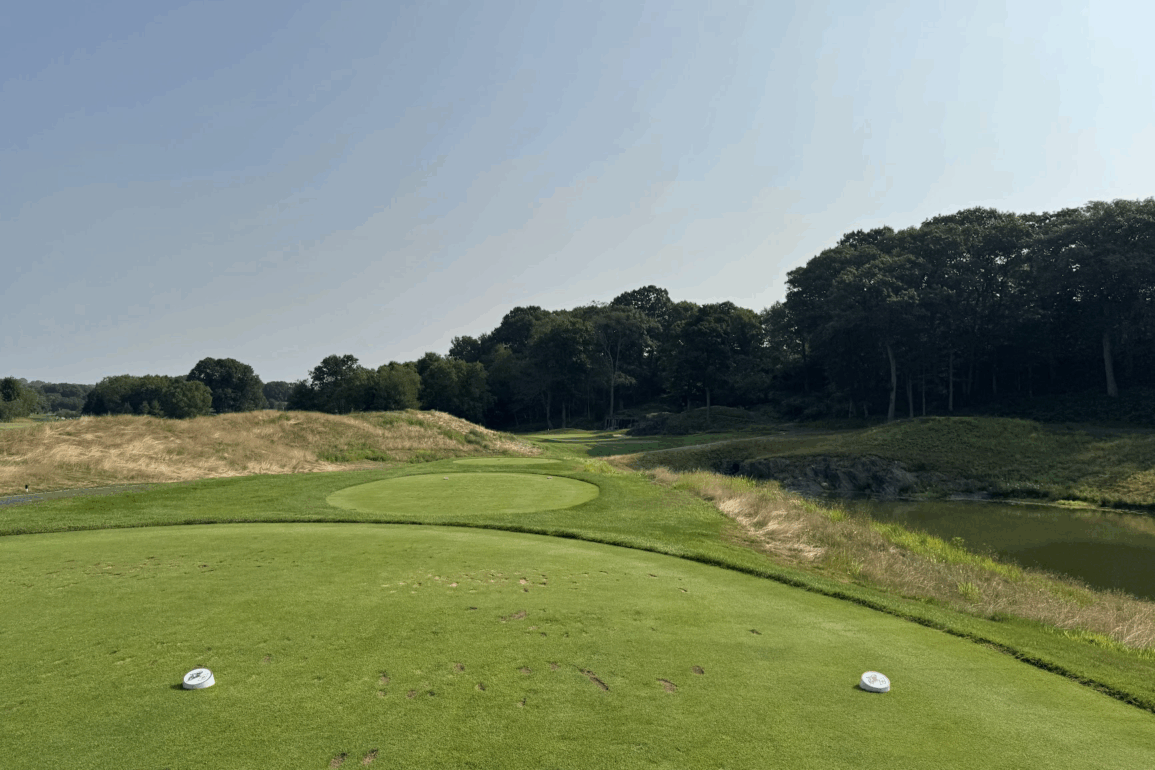
    Country Club of Fairfield is a private par-70 course measuring approximately 6,358 yards from the tips. The course was originally designed in 1914 by Seth Raynor and is located in Fairfield, Connecticut.

    Founded by Oliver Gould Jennings in 1914 on land nicknamed “Mosquito Hill,” the club required an enormous landfill operation to transform onion fields and tidal marshes into playable terrain. Seth Raynor, protégé of Charles Blair Macdonald, created one of his first solo design projects here, implementing his signature template hole philosophy adapted from Scottish and English classics. Construction lasted several years with fill brought by barge from Long Island and through dredging Southport Harbor to overcome the challenging high water table. The course officially opened in 1921 with Hall of Fame golfer Walter Hagen in attendance, though it featured a “topsy-turvy design history” as the clubhouse was never built where Raynor intended. In the mid-1920s, legendary architect A.W. Tillinghast visited and sketched new fourth through sixth holes around the natural lagoon, creating one of golf’s most distinctive three-hole stretches. Robert Trent Jones Sr. was hired in 1960 to install a practice range and accommodate the final clubhouse location on Sasco Hill, sacrificing Raynor’s original par-4 18th. The club’s forward-thinking 1992 Master Plan signaled the need for restoration, making them pioneers in the Golden Age restoration movement. Tom Doak was commissioned in the early 2000s to re-establish Raynor’s original aesthetic, ultimately turning restoration work over to his associate Bruce Hepner. The course has consistently ranked among Connecticut’s top three courses, with Golf Digest previously including it in the nation’s Second 100 Greatest. After three hurricanes hit Connecticut’s shoreline in 1954, the club finalized keeping the clubhouse on higher Sasco Hill ground rather than the original beachside location. Recent decades have seen over 100 trees removed to restore original seaside views and wind exposure critical to Raynor’s strategic design philosophy. The challenging 133 slope rating and 71.6 course rating reflect how coastal winds and strategic bunkering create difficulty that transcends pure yardage. As Dan Jenkins observed: “Seth Raynor’s best work is the Country Club of Fairfield in Connecticut… It’s short but covered up with charm.” The course represents an irreplaceable opportunity to experience authentic template hole strategy in a spectacular seaside setting.

    The course spans approximately 158 acres of flat coastal terrain at sea level along Long Island Sound, creating authentic links-style conditions rarely found in American golf. Raynor’s routing brilliantly maximizes wind variability with the front nine running counter-clockwise around the property perimeter and the back nine clockwise within that loop, similar to renowned links courses like Muirfield. The design philosophy emphasizes strategic positioning over pure length, with wide fairways typically measuring 40-50 yards combined with centerline hazards that create narrowed landing zones demanding precise positioning. Template holes including the Redan (9th), Cape (6th), Bottle (3rd), Eden (14th), and Double Plateau (15th) showcase Raynor’s mastery of adapting British Isles strategic concepts to American terrain. Green complexes range from 7,000-9,000 square feet with subtle internal contours maintained in firm, fast conditions that promote traditional ground game approaches. The nine-acre tidal lagoon integrated into holes 4-6 represents Tillinghast’s masterful adaptation, creating what experts describe as “unlike anything else you’ll see anywhere.” Geometric rectangular bunkering and push-up green complexes demonstrate Raynor’s engineering background and strategic principles throughout the layout. The course appeals to thinking players who appreciate strategic depth, architectural history, and links-style conditions where wind reading and course management trump pure power. Recent tree removal has restored original coastal exposure, while bunker restoration has re-established Raynor’s geometric aesthetic and strategic positioning principles. The “shepherds approach” maintenance philosophy maintains randomness in rough areas and firm conditions that reward traditional strategic approaches. Players seeking authentic Golden Age architecture combined with spectacular coastal views will find this course unmatched in the Connecticut region. The design rewards intelligent course management and precise execution while remaining accessible to players who understand strategic positioning principles. Members consistently praise the course’s ability to challenge without relying on tricks or excessive length, embodying Raynor’s philosophy of strategic excellence. The links character becomes more pronounced in windy conditions, when the course reveals its true strategic demands and architectural brilliance.

    Strategic Test

    The strategic architecture at Country Club of Fairfield rewards thoughtful decision-making across the spectrum of handicaps, though the course presents different challenges depending on player skill level. From the championship tees, length proves less important than accuracy and positioning, as the 6,442-yard measurement belies a layout where angles of approach and understanding green complexes determine scoring. The template holes demand recognition of proper entry points, while the flat terrain eliminates elevation as a mitigating factor, placing premium value on club selection and trajectory control. Wind variability introduces an additional strategic layer, as prevailing breezes off the Sound can transform club selections by multiple clubs and fundamentally alter hole strategy from round to round.

    The course rating of 71.0 against par 70 indicates that scratch golfers face roughly one stroke of difficulty beyond par, while the slope of 132 signals above-average challenge for bogey golfers when measured against courses of similar rating. Slope quantifies the relative difficulty difference between scratch and bogey players, with 113 representing average and each point roughly corresponding to one stroke for higher handicaps. A slope of 132 suggests that bogey-level players will find this course approximately two strokes more difficult than an average course with the same rating, primarily due to the penal nature of water hazards, the precision required for approach shots into Raynor’s template greens, and the premium placed on avoiding the strategic bunkering complexes that guard optimal angles.

    HandicapCourse Strategy
    High Handicap (18+)Forward tees measuring 5,405 yards (Green) provide manageable length with a slope of 129 and rating of 71.1, though the differential still indicates roughly 18-20 strokes above par for the typical 18-handicapper. The strategic imperative centers on course management rather than aggressive play, as the water hazards on holes 4-6 and the lagoon crossings require conservative club selection to avoid penalty strokes. The firm, fast greens demand running approaches for players without consistent ability to control trajectory, and the template green complexes reward those who study breaks and play to safe portions rather than attacking pins.
    Mid Handicap (8-18)The White tees at 5,760 yards offer appropriate challenge with a slope of 126 and rating of 69.0, suggesting rounds typically ranging from 85-95 for this player category. These golfers possess sufficient length to reach most greens in regulation but must recognize that the course demands precision over power. Strategic decisions emerge on holes like the par-4 sixth, where position off the tee determines whether the approach can safely challenge the pin or must play to the fat portion of the green. The drivable par-4 seventh presents a genuine risk-reward proposition, while the short par-3 fourth over water requires committed swings with mid-irons.
    Low Handicap (0-8)Championship tees at 6,442 yards present authentic challenge despite modest length, as evidenced by the 71.0 rating and 132 slope. Scratch golfers should expect to shoot around par, with scoring opportunities balanced by demanding two-shot holes requiring precise approaches. The strategic emphasis shifts to angle management, as understanding optimal approach corridors into the template greens proves essential for birdie opportunities. The water-influenced stretch from holes 4-6 demands aggressive yet controlled play, and the three-hole finishing stretch beginning at 16 requires precise iron play and steady putting to protect scores. Wind introduces significant variability, potentially adding 5-8 strokes to expected scoring on blustery days.

    The sixth hole exemplifies the course’s strategic architecture and stands as arguably the finest in Connecticut. This 429-yard par-4 Cape hole plays as the number one handicap, requiring an accurate drive to a blind landing zone along the lagoon’s edge. From this position, approximately 150-180 yards remain to a narrow, severely sloped green that falls left-to-right toward the water. High handicappers playing from forward tees at 350-370 yards should play conservatively off the tee with fairway wood or long iron to ensure finding the fairway, then accept bogey as a solid score by playing their approach to the green’s right portion away from the water hazard. Mid-handicappers from the White tees at 375-390 yards face the strategic choice of challenging the inside corner bunker to shorten the approach or playing safely left, accepting a longer second shot but from a superior angle. The green’s severe contouring penalizes misses left and short, making the percentage play a controlled mid-to-long iron aimed at the green’s center. Low handicappers from 429 yards must execute a precise drive favoring the left center of the fairway to open the ideal approach angle, then flight a controlled mid-iron that accounts for the wind and the green’s firm surface, potentially using the slope to feed shots toward back-left pins while avoiding the severe falloffs that make recovery nearly impossible.

    Nearby Course Alternatives

    Brooklawn Country Club in Fairfield sits approximately five minutes south of the Country Club of Fairfield along Algonquin Road. This A.W. Tillinghast design measuring 6,617-6,711 yards to a par 71 features a course rating of 72.5-73.3 and slope of 135-138 on approximately 120 acres of rolling parkland terrain. Tillinghast completed the full redesign in 1930, and recent restoration work by Ron Forse has emphasized the architect’s characteristic undulating greens and strategic bunkering. Unlike Fairfield’s flat, links-influenced layout, Brooklawn presents significant elevation changes throughout the routing, with uphill par-4s like the third and sixth that showcase Tillinghast’s skill in working with challenging topography without making holes feel like a physical grind. The club hosted the U.S. Women’s Open and U.S. Senior Open, establishing its pedigree as a championship venue, and Gene Sarazen holds the course record of 63. The design philosophy emphasizes approach shot precision into severely contoured greens, with the long par-4 fourth featuring one of Tillinghast’s finest putting surfaces in the region. Players who prefer variety in elevation and enjoy the challenge of uphill and downhill lies will find Brooklawn more engaging than the flatter terrain at Country Club of Fairfield, while those seeking less walking and greater emphasis on wind and angles would favor the latter.

    The Patterson Club in Fairfield’s Greenfield Hill section lies approximately ten minutes north along Cross Highway. Robert Trent Jones Sr. designed this 6,795-6,824 yard par-71 layout in 1947, with subsequent work by Stephen Kay, Roger Rulewich, Greg Muirhead, and Rees Jones refining the design across its 170-acre property. The course features a rating of 72.8-73.0 and slope of 132-134 on rolling terrain that makes captivating use of elevation changes, including a distinctive up-and-over finishing hole where a speed slot can add 40 yards to well-positioned drives. Recent tree removal programs have opened sight lines and enhanced dramatic vistas across the property, while updated par-3 complexes now represent particular design highlights. The routing style differs fundamentally from Country Club of Fairfield, as Patterson emphasizes elevation changes, varied hole corridors, and the characteristic length associated with Robert Trent Jones Sr. courses. Having hosted Connecticut State Open and Amateur championships along with Metropolitan Golf Association events, Patterson offers championship credentials similar to Fairfield but in a parkland rather than links setting. Players who appreciate longer courses with significant elevation changes and enjoy testing their games on uphill and downhill lies would prefer Patterson, while those seeking a links experience with greater emphasis on wind, firm conditions, and template holes would gravitate toward Country Club of Fairfield.

    Final Word

    Practice facilities include a driving range that Robert Trent Jones Sr. installed during his 1960 renovation, along with putting greens that allow members to refine their touch on surfaces mirroring the firm, fast conditions found on the course proper. The clubhouse occupies a commanding position overlooking Long Island Sound, providing panoramic views across Southport Harbor and the Connecticut coastline. Dining facilities offer refined service for members and guests, while the club maintains a traditional private club atmosphere emphasizing golf as the primary recreational focus. The property’s location adjacent to Sasco Beach provides a unique coastal setting that few clubs in the region can match.

    What distinguishes Country Club of Fairfield is the convergence of architectural pedigree, strategic design, and dramatic seaside setting that creates an experience unlike any other Connecticut course. The layered history featuring Raynor, Tillinghast, and Robert Trent Jones Sr. provides architectural credibility, while recent restoration work has ensured the design philosophy remains coherent despite the various contributors. The course challenges better players through strategic complexity rather than excessive length, rewards thoughtful course management across all skill levels, and provides an authentic links experience rare in American golf. For those fortunate enough to receive an invitation, the combination of firm, fast playing conditions, coastal winds, template hole designs, and spectacular water views creates a golfing experience that validates the club’s position among Connecticut’s elite courses.

  • Copper Hill Golf Club

    Copper Hill Golf Club

    [put_wpgm id=”2″ width=”100%” height=”770px” current_post_only=”true”]

    [letsreview]

    Copper Hill Golf Club is a public par-36 course measuring approximately 3,039 yards from the tips. The course was originally designed in 1952 by Allen Bissette and is located in East Granby, Connecticut.

    The history of Copper Hill is a compelling story of community dedication and revival. Founded by local farmer Allen Bissette on former tobacco fields, the course served the local population for decades with a straightforward, enjoyable layout. After a period in the late 1990s and 2000s under different ownership, where it was renamed Fox Run at Copper Hill, the course faced potential closure due to declining conditions. The narrative shifted dramatically in 2009 when PGA Professional Paul Banks and his family took over operations, eventually purchasing the property in 2010 and restoring the original name. They embarked on a significant revitalization project, focusing on the core architectural assets. This included rebuilding and redesigning several greens to improve drainage and strategic interest, adding fairway bunkers to create risk-reward scenarios, and undertaking a thoughtful tree management program. Their efforts transformed the course from a neglected track into a revitalized and cherished local hub for golf, preserving a classic New England design for a new generation. The club’s focus on junior golf and community events has further cemented its status as a vital local asset.

    The course is routed over a compact and intimate parcel of approximately 82 acres. The terrain is best described as gently rolling parkland, with subtle but ever-present elevation changes that influence both tee shots and approaches. The routing is a traditional nine-hole loop that begins and ends at the clubhouse, making it an exceptionally pleasant walk. Its design vibe is that of a classic, mid-century American course, where the architecture works in harmony with the landscape rather than dominating it. Mature trees provide corridor framing on most holes, defining the lines of play without being overly punitive. This is a design that appeals to the thinking golfer, the player who values precision and strategy over raw power. It will be most enjoyed by those who appreciate the challenge of shaping shots to access specific pin locations and who find satisfaction in a well-executed approach to a small, contoured green. The course does not demand heroic carries but instead asks for consistent control and intelligent course management.

    Strategic Test

    The strategic examination at Copper Hill is one of subtlety and precision, consistently rewarding thoughtful play over brute force. Off the tee, the player is frequently presented with real choices; the doglegs and tree-lined corridors demand careful consideration of position. A driver is not always the correct play, and the golfer who can successfully work the ball to the advantageous side of a fairway will find much clearer angles for their approach shots. The addition of fairway bunkers by the current ownership has introduced critical risk-reward decisions on several holes, further enhancing the strategic depth. The course is not designed to favor one particular shot shape, instead asking the skilled player to demonstrate a versatile command of their ball flight to navigate the routing effectively.

    From an accessibility standpoint, the course is quite welcoming to the high-handicap player. The fairways are generally wide enough to accommodate some inaccuracy, and there are very few forced carries over significant hazards. The primary challenge for the less-skilled player will be the small, push-up greens. The architecture allows for ground-game approaches on many holes, enabling players who struggle with aerial shots to run the ball onto the putting surface. This design choice makes the course playable and enjoyable for a wide range of abilities, ensuring that a bogey golfer can navigate the layout without undue punishment while still finding the challenge rewarding. As one reviewer aptly states, “A great course to walk. Not overly difficult, but you must hit your shots.”

    Understanding the course’s challenge is clarified by the USGA Slope and Rating system. The Course Rating indicates the expected score for a scratch golfer (0 handicap), while the Slope Rating measures the relative difficulty for a bogey golfer (around an 18 handicap) compared to a scratch player. A standard course has a Slope of 113. At Copper Hill, the back (Blue) tees have a 9-hole rating of 35.4 and a Slope of 121. For an 18-hole round, this would roughly equate to a rating of 70.8 and a Slope of 121. The rating being below par (72) suggests a scratch golfer is expected to score slightly under par, while the Slope of 121 indicates the course presents a slightly more difficult challenge for the bogey golfer than a course of average difficulty. This data confirms the strategic test: the course is gettable for the skilled player but has enough architectural nuance to challenge the average amateur.

    HandicapCourse Strategy
    High Handicap (18+)Playing from the White (2,737 yards) or Gold (2,552 yards) tees is recommended. The Slope of 111 from the White tees is below average difficulty, meaning the course will play fairly and predictably. The strategy should focus on keeping the ball in play, utilizing the open fronts of greens for run-up shots, and aiming for the center of the small putting surfaces to avoid tricky chips.
    Mid Handicap (8-18)The Blue (3,039 yards) or White tees offer a suitable test. The 121 Slope from the Blue tees requires more precise ball striking. The key will be navigating the doglegs to set up ideal approach angles. Players should identify which holes favor their natural shot shape off the tee and be prepared to use less than driver to ensure they remain in the fairway.
    Low Handicap (0-8)The Blue tees provide the sternest test. At just over 3,000 yards for nine holes, the course demands elite iron play and distance control. The strategy revolves around aggression to the correct side of fairways to create birdie opportunities. The low-handicap player must challenge the corners of doglegs and attack pins, as the course’s shorter length will yield scoring chances if approaches are played from the proper position.

    This emphasis on positioning is perfectly illustrated on the closing hole. The 9th hole, a 402-yard par 4 from the back tees, is the longest two-shotter on the course and serves as a memorable finale. Its primary strategic feature is a fairway that slopes distinctly from left to right, demanding a tee shot that favors the high left side to avoid being funneled into a poor position. For the low-handicap player, the ideal shot is a driver started down the left tree line, using the slope to find the center, setting up a mid-iron approach. The mid-handicapper might opt for a 3-wood to ensure accuracy, understanding that a shot to the right side will likely result in a blocked or sidehill approach to the elevated green. The high-handicapper should focus simply on a solid strike down the left-center, accepting a longer third shot in exchange for a better angle and avoiding the trouble on the right.

    Nearby Course Alternatives

    Airways Golf Course in West Suffield presents a straightforward examination of Geoffrey Cornish’s talent for extracting maximum strategic value from modest properties. Located just seven minutes northwest of Copper Hill, this family-owned 18-hole layout stretches 5,845 yards to a par 71 from the tips, with a course rating of 66.0 and slope of 106. Cornish, who designed more than 240 courses across New England during his prolific career, built Airways in 1973 on former farmland, employing his signature lay-of-the-land philosophy that emphasized strategic placement over manufactured difficulty. The routing features fourteen well-positioned bunkers and several ponds that, combined with thoughtful green contours and periodic ground movement through the fairways, generate adequate resistance without resorting to artifice. The tree-lined corridors provide definition without excessive punishment, though errant drives will find trouble when the long game misfires. Most notably, Cornish achieves meaningful challenge through green complexes that feature sufficient tilt and internal contour to test short game precision, particularly at signature holes like the par-4 twelfth, where a rolling fairway bisected by a large tree leads to an aggressively bunkered putting surface. The player who prefers a longer examination over 18 holes with less elevation change than Copper Hill’s rolling terrain will find Airways a worthy companion, particularly those who appreciate the democratic, functional architecture that characterized mid-century New England golf design and value a layout that rewards strategic thinking over pure power.

    Simsbury Farms Golf Course in West Simsbury demonstrates how Geoffrey Cornish adapted his minimalist design principles to more dramatic topography, creating one of Hartford County’s most respected municipal facilities approximately twenty minutes south of Copper Hill. This 6,509-yard, par-72 layout occupies 235 rolling acres of the former Orkil Farms apple orchard, which Simsbury officials purchased in the late 1960s with recreational development in mind. Opening in 1971, the Cornish and Bill Robinson design stretches from the tips with a 70.3 rating and slope of 129, significantly more demanding than most comparable public venues. The routing takes full advantage of natural elevation changes throughout the property, incorporating the old orchard’s remaining apple and pear trees into strategic positions that frame corridors and complicate approach angles. Several holes play against the backdrop of West Mountain, which can confound distance calculation on approaches, while the putting surfaces themselves represent the layout’s primary defense—some greens stretch nearly 50 yards front to back, and others pitch so severely from back to front that leaving the ball above the hole virtually guarantees three putts. The par-5s measure under 490 yards from the combo tees on three of four holes, offering reachable birdie opportunities for longer hitters who can navigate the tree-lined fairways. As part of an extensive municipal sports complex that includes tennis courts, an enclosed hockey rink, and a swimming pool, Simsbury Farms maintains exceptional conditions through municipal oversight and benefits from high-volume play that keeps maintenance standards elevated. The player seeking more dramatic elevation changes, longer yardage, and a fuller 18-hole test with championship tournament pedigree—Simsbury Farms has hosted the Connecticut State Women’s Amateur, State High School Championship, and Connecticut Senior Open—will find this layout more engaging than Copper Hill’s gentler nine-hole examination, particularly those who relish hilly New England golf at its most scenic during autumn peak foliage.

    Final Word

    The practice facilities at Copper Hill exemplify the property’s comprehensive approach to golfer development, anchored by a full-service Golf Academy that PGA professional Paul Banks established in 1994, sixteen years before purchasing the course itself. The academy features a 3,500-square-foot pitching and chipping green adjacent to the driving range, providing substantial space for short game refinement that separates this facility from typical nine-hole operations. Banks’ two decades of teaching experience inform instruction programs that span multiple skill levels and age groups, from entry-level juniors aged 5-8 through champion-level competitors aged 9-16, with the facility proudly serving as a First Tee of Connecticut host site since 2004. The nine life skills fundamental to First Tee programming—honesty, integrity, sportsmanship, respect, courtesy, judgment, confidence, responsibility, and perseverance—permeate not just junior instruction but staff training throughout the operation. The recently refurbished clubhouse houses The Grill at Copper Hill, where the outdoor patio has earned recognition as one of the area’s finest dining venues, offering rotating tap selections and what locals consider the best wings in the Granbys. Beyond traditional golf, the property has expanded recreational opportunities to include FootGolf, volleyball courts, and cornhole, transforming the facility into a genuine social hub for northern Connecticut rather than merely a golf destination. The 2012 Walter Lowell Public Golf Course Distinguished Service Award, presented to honor Copper Hill as the model public course serving Connecticut and Western Massachusetts, validates the facility’s commitment to accessibility and community engagement. This recognition, which the Connecticut Section PGA inaugurated in 2001 to acknowledge courses that exemplify public golf’s responsibility to provide playing opportunities for everyone seeking to learn and enjoy the game, speaks to how thoroughly Banks has realized his vision. What distinguishes Copper Hill in an increasingly competitive public golf marketplace is this holistic integration of quality golf, comprehensive instruction infrastructure, community programming depth, and genuine hospitality—a combination that transforms a 1952 Allen Bissette design into something considerably more valuable than its modest nine-hole footprint might suggest, proving that scale matters far less than intention when cultivating an authentic golf community.

  • Country Club of Darien

    Country Club of Darien

    [put_wpgm id=”2″ width=”100%” height=”770px” current_post_only=”true”]

    [letsreview]

    Country Club of Darien is a private par-71 course measuring approximately 6,800 yards from the tips. The course was originally designed in 1958 by Alfred H. Tull and is located in Darien, Connecticut.

    The Country Club of Darien emerged from Edgar S. Auchincloss’ vision to transform his family’s 200-acre gentleman’s farm, known as Keewaydin after a reference from Longfellow’s “The Song of Hiawatha,” into a membership club. The Auchincloss family acquired the property in 1905 as a vacation retreat, and by 1956, Edgar and his widowed mother Catherine Agnew Auchincloss converted the land into club grounds. Alfred H. Tull, a design partner of Devereux Emmet and construction engineer for legendary architect A.W. Tillinghast, laid out the original routing that opened with nine holes in 1957 and expanded to eighteen by spring 1958. In 2007, Dr. Michael Hurdzan, architect of U.S. Open host Erin Hills, undertook a comprehensive modernization that earned the Renovation of the Year award in 2010 from Golf, Inc. Hurdzan’s work over nearly two decades included routing adjustments, new tees, expanded greens, fescue introduction, and improved drainage, essentially rebuilding the course while respecting Tull’s original structure and creating a championship test capable of hosting premier amateur and professional tournaments.

    Occupying approximately 200 acres of relatively level terrain in lower Fairfield County, the course benefits from Hurdzan’s modern strategic principles applied to suburban Connecticut topography. The routing style reflects both practical constraints of the landlocked property and intentional design choices that create variety through green complex architecture rather than dramatic elevation changes. The front nine features a more straightforward corridor style with tree-lined fairways playing in alternating directions, while the back nine introduces greater strategic diversity through more varied green complexes, collection areas, and undulation. The design philosophy emphasizes precision and course management over raw distance, with fast bent grass greens featuring significant internal contours that reward proper approach angles and punish wayward positioning. Players who value tournament-caliber conditioning, strategic decision-making, and modern green complexes with collection areas will find the course particularly appealing, while those seeking dramatic elevation changes or classic Golden Age architectural features might find the routing more workmanlike than inspiring. The course suits players who think their way around a layout and appreciate subtle strategic elements over visual intimidation, making it ideal for students of the modern game who value shot execution and green reading over power.

    Strategic Test

    The strategic examination at Country Club of Darien centers on green complex navigation and approach angle selection rather than dramatic risk-reward scenarios off the tee. Hurdzan’s renovation work created varied green surfaces with collection areas and false fronts that demand precise distance control and proper angle selection, rewarding players who think ahead to back-pin locations or avoid short-sided positions. The tree-lined corridors provide clear definition but limit alternate angles on most holes, meaning strategic decisions manifest primarily in club selection and target selection rather than aggressive lines off the tee. The course rewards consistency and accuracy over length, with several holes featuring forced carries or tight driving corridors where position trumps distance, creating a test that emphasizes iron play and wedge precision. High-handicap players will find the course accessible from forward tees but challenging when attempting to play beyond their capabilities, as the penal rough and greenside collection areas penalize mis-hits more severely than wider, more forgiving designs. The layout provides sufficient width for developing players while maintaining teeth through green speed and contour rather than oppressive length or centerline hazards.

    Understanding slope and rating proves essential for strategic planning at Country Club of Darien. The course rating measures the difficulty for a scratch golfer, with the 73.4 rating indicating a layout playing approximately 2.4 strokes over par for elite players from the back tees. The slope rating of 137 measures relative difficulty for bogey golfers compared to scratch players, with the scale ranging from 55 to 155, where 113 represents standard difficulty. A slope of 137 sits firmly in the challenging category, meaning the course plays significantly harder for higher handicappers relative to low handicappers due to factors like green speed, rough severity, green contours, and limited recovery areas. This elevated slope suggests that while skilled players can score through precise ball-striking, recreational players will struggle with the demanding green complexes and tight margins for error, making proper tee selection and course management paramount for maximizing enjoyment and minimizing frustration.

    HandicapCourse Strategy
    High Handicap (18+)Forward tees measure approximately 5,800-6,200 yards with rating around 70.0 and slope near 125, creating a more manageable examination that still demands accuracy. Strategic focus should emphasize keeping the ball in play off the tee with fairway woods or hybrids, laying up short of trouble rather than attempting heroic carries, and prioritizing two-putt approaches on the undulating greens. The slope of 125 means these players will typically shoot 18-25 strokes over their course handicap, so accepting bogeys and occasional doubles while capitalizing on shorter par-5s proves crucial. Avoid short-siding approaches into collection areas, favor center-green targets, and recognize that scrambling from tight lies around these greens requires skills beyond most recreational players.
    Mid Handicap (8-18)Middle tees stretch approximately 6,200-6,500 yards with rating around 71.5 and slope near 130, presenting a balanced test that rewards good decision-making. Strategic decisions center on knowing when to attack pins versus playing to fat portions of greens, understanding which holes demand driver versus which favor position with long irons, and managing expectations around fast, contoured putting surfaces. The slope of 130 indicates these players typically shoot 15-20 strokes over their handicap, meaning pars require well-executed shots while bogeys remain acceptable scores on demanding holes. Focus on approach angle selection rather than always attacking flags, recognize that some back-pin locations require bump-and-run approaches, and develop a reliable miss pattern that avoids collection areas.
    Low Handicap (0-8)Championship tees measure 6,800-6,900 yards with rating 73.4 and slope 137, creating a stern examination where par represents good scoring. Strategic elements include understanding subtle green contours that affect both approach shots and putts, recognizing which holes offer genuine birdie opportunities versus requiring defensive pars, and managing the faster green speeds that punish aggressive play. The slope of 137 means even accomplished players will find scoring difficult when missing greens, as recovery shots from collection areas demand touch and creativity. Attack par-5s that yield to well-placed drives, respect long par-4s where bogey isn’t disastrous, and invest time understanding green speeds and break patterns that separate good rounds from great ones.

    The 18th hole serves as an appropriate finishing examination that encapsulates the course’s strategic principles and demands both power and precision under competitive pressure. Measuring approximately 440 yards from the championship tees as a par-4, the closer plays as one of the more demanding tests on the property, requiring a well-positioned drive that avoids trees pinching the landing area from both sides. The drive must favor the right side of the fairway to open the optimal angle into a green complex that features significant undulation and collection areas short and left, punishing approaches that come up short or miss to the wrong side. The green slopes from back to front with subtle breaks that become increasingly difficult to read as the round progresses and green speeds accelerate, meaning even well-struck approach shots can leave challenging two-putt scenarios if positioned on the wrong tier. Low handicappers must commit to an aggressive line off the tee that challenges the right-side trees to open the best angle, then execute a mid-iron approach that accounts for green firmness and pin position, with back-left pins proving particularly difficult due to the false front that feeds balls into the collection area. Mid handicappers should favor the center-left of the fairway with their tee shot, accepting a slightly longer approach in exchange for avoiding the tighter right side, then play for the center-right portion of the green to avoid short-siding themselves and creating recovery situations their short game might not handle. High handicappers benefit from using a fairway wood or hybrid off the tee to ensure finding the short grass, then focusing on a two-shot strategy that prioritizes getting the ball somewhere on the putting surface rather than forcing a heroic approach that risks finding collection areas and turning a potential bogey into a double or worse.

    Nearby Course Alternatives

    Wee Burn Country Club in Darien offers one of Connecticut’s finest and most historically significant golf experiences just five minutes north of the Country Club of Darien. The 7,040-yard, par-72 layout presents a rating of 75.1 with a slope of 146 from the championship tees, making it among the more demanding tests of golf in the region. Devereux Emmet routed the course in 1925 across 230 acres of rolling terrain, artfully weaving the layout around Stony Brook, which Andrew Carnegie himself suggested be called a wee burn in homage to Scottish nomenclature. The club’s storied tournament pedigree includes hosting three USGA Women’s Amateur Championships, and recent tree removal combined with Tom Fazio’s renovations have allowed the course to breathe and play closer to Emmet’s original vision. The property features pronounced elevation changes throughout, particularly on the closing stretch where holes 9, 10, and 18 play toward, away from, and back to the clubhouse on significant slopes. Strategic positioning off the tee proves paramount given the narrow approach corridors and well-protected greens, with many holes rewarding placement over pure distance. Players who value shot variety, classical Golden Age architecture, and terrain that demands precise distance control will find Wee Burn’s challenges more appealing than the Country Club of Darien’s relatively flatter topography and modern strategic principles.

    Tamarack Country Club in Greenwich presents a markedly different architectural philosophy fifteen minutes south of the Country Club of Darien, sprawling across 170 acres of northwest Greenwich property. The 6,841-yard, par-70 course carries a rating of 72.9 and slope of 126, offering a slightly more approachable examination from the scorecard perspective. Charles Banks designed the layout in 1929, earning his moniker Steam Shovel Charley through his affinity for using machinery to create the massive, undulating push-up greens protected by steep-faced bunkers that remain his calling card. The course features a comprehensive collection of template holes inherited from Banks’ mentors Seth Raynor and Charles Blair Macdonald, including a Redan at the 7th, Eden at the 3rd, Biarritz at the 12th, Alps at the 6th, Road Hole at the 14th, and Cape at the 2nd, all executed at scale befitting the property’s generous acreage. Recent restoration work by Ron Forse, Mike DeVries, and Brian Silva has emphasized tree removal to restore corridor width and enhance the visual connectivity across the property, allowing players to appreciate the architectural theater from the elevated clubhouse. The template holes provide variety and strategic interest through their geometric precision and studied angles, contrasting with the Country Club of Darien’s emphasis on contemporary shot values and hazard placement. Golfers who appreciate architectural history, enjoy decoding classic template strategies, and prefer brawny, wide-open playing corridors where recovery remains possible despite wayward strikes will gravitate toward Tamarack over more tightly-framed modern designs.

    Final Word

    The practice facilities at Country Club of Darien reflect the club’s commitment to player development and year-round improvement, anchored by dual practice ranges that accommodate varying shot shapes and practice needs. Two dedicated chipping greens allow members to refine their short game with multiple pin positions and varying green speeds, while the main putting surface provides an accurate simulation of the course’s green complexes for pre-round preparation. The crown jewel of the practice area remains the indoor Golf Performance Studio, which ensures members can maintain their games through Connecticut’s challenging winters with climate-controlled hitting bays, comprehensive swing analysis technology, and professional instruction regardless of weather conditions. Beyond golf, the club delivers a comprehensive country club experience with eight pristine Har-Tru tennis courts that host competitive play and social round-robins, complemented by five platform tennis courts with a dedicated paddle hut that transforms the facility into a winter sports destination. The aquatics program centers on a six-lane competition pool designed for serious lap swimming alongside a protected baby pool for young families, creating multigenerational appeal throughout the summer months. Two distinct restaurant venues provide dining options ranging from casual post-round meals to formal event settings, while the fitness center rounds out the amenities with modern equipment and programming. The club’s ability to host significant tournaments including the 2018 PGA Met Match Play Championship, 2019 Westchester Open, 2021 Connecticut State Open, and 2022 Ladies MET Open speaks to the course’s competitive caliber and conditioning standards that extend well beyond member play. What distinguishes the Country Club of Darien within the crowded landscape of lower Fairfield County private clubs is its successful marriage of Dr. Michael Hurdzan’s strategic design excellence with comprehensive family-oriented amenities, creating a destination where serious golfers can test themselves on a demanding, tournament-proven layout while their families enjoy world-class tennis, paddle, swimming, and dining experiences under one membership umbrella.

  • Connecticut National Golf Club

    Connecticut National Golf Club

    [put_wpgm id=”2″ width=”100%” height=”770px” current_post_only=”true”]

    [letsreview]

    Connecticut National Golf Club is a public par-71 course measuring approximately 6,935 yards from the tips. The course was originally designed in 1994 by Mike and Sally Donovan and is located in Putnam, Connecticut.

    Connecticut National Golf Club originally opened in 1994 as the private Putnam Country Club, designed by Mike and Sally Donovan as a modest 6,169-yard layout that barely resembled the championship test golfers experience today. The course underwent a dramatic transformation in 2007 when new owners Jim Dandeneau and Brad Rabitor purchased the property and hired renowned golf course architect Mark Mungeam to completely redesign and expand the course. This extensive renovation added over 700 yards to the layout, bringing it to nearly 7,000 yards, while simultaneously converting it from a private to public facility accessible to all golfers. Mark Mungeam’s 2007 redesign created what Golf Digest describes as “one of the better public courses in the state,” featuring generous playing corridors that replaced the overly tight original design. The comprehensive transformation included the addition of 33 new tee decks, 44 strategically placed bunkers, a complete dual-row irrigation system, extensive drainage improvements, and 5 additional acres of fairway and rough. A new 9,000 square foot clubhouse was constructed, housing a well-stocked pro shop, full-service restaurant and bar, and a 200-seat function hall that serves as a premier wedding and tournament venue in New England. The course has achieved remarkable recognition since its renovation, consistently ranking among the top public courses in New England with Golf Advisor rankings of number one in Connecticut in 2021, number two in 2018 and 2024, and number 20 among all New England courses in 2017. Connecticut National has established itself as a premier tournament venue, having hosted USGA qualifiers and top regional amateur events that showcase its championship-caliber design and conditions. Located in the rural northeast corner of Connecticut near the Rhode Island and Massachusetts borders, the course occupies a unique position serving golfers from Providence, Worcester, Boston, and Hartford areas as an exceptional value destination. The rugged terrain with significant elevation changes creates what reviewers call “one of the hidden jewels in the area” with course conditions consistently described as “pristine” and offering “plenty of challenge for the mid-handicapped golfer.” Notable signature holes include the uphill opening par-5, the Cape-style 3rd hole described as a “fantastic dogleg left,” and the spectacular downhill par-5 18th hole that finishes directly in front of the clubhouse with a scenic backdrop of forested hills. Golf publications and players have praised Connecticut National extensively, with Worldgolfer describing it as “one of the better public options in all of New England and easily the best course in Northeastern Connecticut,” while TripAdvisor reviewers consistently note the “quick smooth greens,” “well-kept fairways,” and exceptional maintenance standards that make it a must-play destination for serious golfers throughout the region.

    Connecticut National Golf Club spans approximately 150-175 acres of meticulously maintained grounds built on dramatically rolling terrain with significant elevation changes throughout, particularly on the front nine where the rugged, hilly topography almost mandates the use of golf carts. The property features forested hills, natural hollows, rocky outcroppings, and scenic vistas of the Connecticut countryside, with multiple water features including ponds and streams integrated into Mark Mungeam’s routing that weaves fairways back and forth between natural and created earthforms. Mungeam’s redesign reflects his signature philosophy of utilizing natural site characteristics to determine course style, incorporating quirky design features that make use of natural terrain rather than artificial manipulation, with strategic placement of hazards in natural land formations that create both visual appeal and strategic challenge. The course presents a unique blend of links and parkland style golf that creates a distinctive European feel, with the front nine exhibiting more traditional parkland characteristics featuring forest-lined fairways and dramatic elevation changes, while the back nine incorporates links-style elements with rolling fairways, distinctive mounding, and open playing corridors enhanced by extensive fescue grasses. Connecticut National attracts serious golfers seeking a championship-level test, having hosted PGA qualifiers and top regional amateur events, with multiple tee options including five sets ranging from 5,002 to 6,974 yards that accommodate players of all skill levels while particularly appealing to skilled players who appreciate strategic design and precision shot-making. The challenging green complexes feature multiple tiers, severe slopes, and false fronts that demand precise approach shots, while the sophisticated bunker designs incorporate deep, fescue-filled hazards and artistic mounding that reflect influences from classical British links courses combined with American parkland elements. The par-71 layout features strategic variety with 4 par-3s, 10 par-4s, and 4 par-5s, creating excellent pace and rhythm with memorable holes that include classic template-inspired designs such as the Cape-style 3rd hole and Redan-like green complexes throughout the routing. Course conditions are maintained at exceptional standards with quick, smooth greens, premium bent grass fairways, and strategic fescue rough areas, supported by modern dual-row irrigation and drainage infrastructure that ensures year-round playability. The design incorporates spectacular architectural elements including the overlook views from the 8th hole of state forest, water hazards that affect strategy on multiple holes, and the dramatic downhill finish on the 18th hole that provides a scenic mountain backdrop for one of the most memorable closing holes in New England. Signature design features showcase Mungeam’s ability to balance playability with strategic challenge while maintaining environmental sensitivity and natural beauty, creating what golf architecture enthusiasts recognize as one of the most successful course renovations in the region. The course consistently earns recognition as a Top 3 public course in Connecticut and Rhode Island, establishing Connecticut National as a destination that offers both the strategic complexity sought by accomplished players and the accessibility needed for developing golfers to enjoy a premium championship experience.

    Strategic Test

    Connecticut National Golf Club presents a sophisticated strategic examination that rewards thoughtful course management while punishing careless execution, with the course’s 72.9/133 rating from the championship tees reflecting a stern but fair test that demands precision over power. The design philosophy emphasizes multiple strategic options from each tee, with generous fairway corridors that encourage aggressive driving lines for skilled players while providing safe routes for conservative approaches, though the true course defense lies in the multi-tiered greens featuring severe slopes that make flat lies difficult to find and two-putting a constant challenge. Mark Mungeam’s strategic bunkering and hazard placement creates natural decision points throughout the round, with the course’s significant elevation changes requiring constant club selection adjustments that can turn routine approach shots into demanding precision tests, while the deep fescue rough becomes particularly punitive during summer months when keeping the ball in the fairway becomes paramount for scoring opportunities.

    The course’s accessibility spans all skill levels through its five tee options, with the forward tees at 5,002 yards providing an enjoyable experience for developing players while the championship tees at 6,935 yards offer a legitimate test for accomplished golfers, though the slope ratings ranging from 111 to 133 indicate that course management becomes increasingly critical as players move to longer tees. Slope rating measures the relative difficulty of a golf course for bogey golfers compared to scratch golfers, with higher numbers indicating greater challenge for average players, while course rating represents the expected score for a scratch golfer under normal conditions. The strategic elements remain consistent across all tee selections, with risk-reward opportunities on holes like the driveable par-4 8th and the Cape-style 3rd hole providing scoring chances for aggressive players while offering conservative routes that minimize disaster, making Connecticut National an ideal venue for mixed-ability groups and tournament play. The course’s reputation for hosting PGA qualifiers and top amateur events demonstrates its ability to provide tour-level strategic challenges, with professional reviews noting that “the putting surfaces are the true defense on the round” due to their complex slopes and multiple tiers that demand precise distance control and green reading skills.

    Course rating and slope work together to create meaningful handicap adjustments, with Connecticut National’s wide range from 68.2/111 on the forward tees to 72.9/133 from the tips illustrating how the same strategic framework affects different skill levels, where higher handicap players face proportionally greater scoring challenges due to forced carries, precise approach requirements, and complex green reading that can add 8-12 strokes beyond normal handicap expectations from the longest tees.

    HandicapCourse Strategy
    High Handicap (18+)Gold/Red tees (5,002-4,815 yards), prioritize safe routes and avoid deep bunkers, focus on two-putting complex greens, lay up on long par-4s like 427-yard 16th, slope impact creates 8-12 stroke difference from tips
    Mid Handicap (8-18)White/Blue tees (5,913-6,321 yards), emphasize fairway accuracy over distance, conservative approach on water holes like 560-yard 6th, play away from hazards on challenging 399-yard 14th, slope differential adds 4-8 strokes versus forward tees
    Low Handicap (0-8)Black/Blue tees (6,935-6,321 yards), take aggressive lines on risk-reward holes like 333-yard 8th and Cape-style 389-yard 3rd, attack pins on scoreable holes while respecting severe green slopes, slope rating differential creates 2-4 stroke challenge increase

    The par-5 18th hole exemplifies Connecticut National’s strategic complexity, playing 588 yards from the championship tees as a dramatic downhill closer that demands both power and precision to navigate the tree-lined fairway corridor. High handicap players should use conservative club selection off the tee to find the generous landing area, then lay up to comfortable yardage for their third shot to the two-tiered green, avoiding the principal’s nose bunker complex positioned 130 yards from the putting surface. Mid handicap players can attempt to reach the green in two shots by taking advantage of the downhill terrain, but must carefully consider pin position and green slope when deciding between aggressive attack and strategic positioning for an easier up-and-down opportunity. Low handicap players face the full risk-reward challenge of cutting optimal distance off the tee while maintaining accuracy through the narrowing fairway, then executing precise distance control on their approach to access specific areas of the severely sloped green complex, where missing in the wrong location creates difficult recovery shots despite the hole’s reachable length, making strategic decision-making more important than raw power for successful scoring.

    Nearby Course Alternatives

    River Ridge Golf Course in Griswold, a drive of about 20 minutes to the south, offers a compelling alternative with a distinct character. This 18-hole, par-72 championship course, designed by Charles Rustici and opened in 1999, plays to a total of 6,698 yards from the back tees. The routing begins with three holes set in a former apple orchard, creating a unique and memorable start to the round before transitioning to a landscape defined by rolling hills and picturesque vistas. This topography introduces significant elevation changes, creating a variety of lies and strategic challenges for golfers of all abilities. Water hazards come into play on two of the back nine holes, and the course provides scenic views of the Quinebaug River. Players who appreciate a course that tests their ability to handle uneven lies and rewards creative shot-making will find River Ridge to be a particularly engaging experience. The design presents a number of holes that play longer than their yardage due to uphill approaches, demanding careful club selection and execution.

    Harrisville Golf Course in Woodstock, a quieter, more traditional New England golf experience, is located about a 15-minute drive to the northwest. This charming 9-hole, par-36 course, designed by Aimee Salvas, dates to 1929 and offers a glimpse into the classic era of golf course architecture. The course plays to 2,915 yards for a nine-hole loop and 5,830 yards for an 18-hole round, with a nine-hole course rating of 34.1. Its well-maintained conditions and classic design features provide an enjoyable and engaging round for those who appreciate the subtleties of older courses. Harrisville would appeal to the golfer who enjoys a more intimate setting and a course that favors precision over power. While not as long as more modern designs, its smaller, nuanced green complexes demand accurate approach shots and a deft touch on and around the greens. The strategic value of the course lies in its subtlety, rewarding players who can shape their shots and think their way around the layout.

    Final Word

    Connecticut National offers a comprehensive set of amenities to complement the on-course experience. The practice facility is particularly noteworthy, featuring a revamped driving range with target greens and both grass and synthetic teeing areas. In addition to the range, there are two practice greens for honing putting skills and a dedicated short-game area for chipping and bunker play. These facilities allow players to fully prepare for their round and work on all aspects of their game. The 9,000-square-foot clubhouse serves as the central hub of the club, containing a well-stocked pro shop, a restaurant and bar for post-round relaxation, and a function hall capable of hosting events for up to 200 guests. The availability of both indoor and outdoor spaces for private groups adds to the versatility of the clubhouse as a venue.

    The transformation of a private club into a top-tier public facility is what truly sets Connecticut National apart. The thoughtful and strategic redesign by Mark Mungeam elevated the course, introducing a level of architectural interest and challenge that appeals to the discerning golfer. The routing’s blend of links-style openness with traditional parkland holes provides a varied and engaging round that never feels repetitive. The club’s commitment to providing excellent practice facilities further enhances the overall experience, demonstrating a dedication to the game and the players who enjoy it. Connecticut National proves its value by offering a complete and memorable day of golf, standing as a testament to the power of a well-conceived architectural vision to create a special golfing destination.

  • Clinton Country Club

    Clinton Country Club

    [put_wpgm id=”2″ width=”100%” height=”770px” current_post_only=”true”]

    [letsreview]

    Clinton Country Club is a private par-72 course measuring approximately 6,518 yards from the tips. The course was originally designed in 1968 by Geoffrey S. Cornish and is located in Clinton, Connecticut.

    Established in 1895, Clinton Country Club has a rich history, relocating to its current 110-acre property, a former dairy farm, in 1957. Architect Geoffrey S. Cornish was tasked with crafting the course, first designing nine holes in 1958 and completing the full 18-hole layout in 1968. The result is a classic parkland design that embodies the Cornish philosophy of creating strategic, engaging, and enjoyable tests of golf that are playable for a diverse membership. The routing makes excellent use of the gently rolling terrain, presenting a course that favors the thinking golfer who values precision and course management over sheer power. It is a true “Gem of the Shoreline,” known for its consistently excellent conditioning and a welcoming, unpretentious atmosphere dedicated to the game.

    Strategic Test

    The strategic examination of Clinton Country Club begins with a compelling question: how does a course measuring a modest 6,518 yards from its championship tees command a slope rating of 135? The answer lies not in brute strength but in the sophisticated and layered challenges presented by its architecture. This is a course where the scorecard’s yardage is a poor indicator of its true difficulty. The primary defense is not length but the demand for precision from tee to green. Cornish’s design consistently asks the player to make strategic decisions, often presenting a wide fairway that subtly favors one side over the other to create the optimal angle of approach into the green. The recent bunker renovation project has undoubtedly amplified this characteristic, creating what one architect described as more “visual drama and enhanced play”. These hazards are not merely penal; they are strategically positioned to dictate play, functioning as centerline hazards or guarding the ideal line into a putting surface. As one reviewer noted, it is a “Challenging course that always is in superior condition”.

    To fully appreciate the strategic test, one must understand the language of the USGA Course and Slope Rating system. The Course Rating, 71.6 from the Black tees, predicts the average score of a scratch golfer on a par-72 layout; in this case, it suggests the course is slightly less difficult than par for an elite player under normal conditions. The Slope Rating, however, tells a more revealing story. This number reflects the relative difficulty for a bogey golfer (an 18-handicap) compared to a scratch player. With a national average of 113, Clinton’s 135 slope is exceptionally high for its length, indicating that mistakes are magnified and the scoring gap between the skilled and average player will be significant. The course effectively mitigates this challenge and ensures playability for all skill levels through a well-conceived system of five distinct teeing grounds, ranging from 4,967 to 6,518 yards. This allows players to select a yardage appropriate to their ability, yet the core strategic questions posed by the architecture remain relevant from every tee.

    The design at Clinton is a testament to the principle that a great course should reward all styles of play, not just the power game. A player who relies on length alone will find themselves frequently out of position, facing awkward angles into well-protected greens. The course instead favors the tactician who can shape shots, manage distances, and think one or two strokes ahead. The corridors, while not overly narrow, demand that the player select the correct line from the tee to set up the approach. The green complexes, some of which are classic push-up designs, require a deft touch and a creative short game. A feature like the original Geoffrey Cornish double-green serving the 6th and 8th holes, which was recently enlarged, underscores the club’s commitment to preserving and enhancing these unique strategic elements that reward thoughtful play over brute force.

    HandicapCourse Strategy
    High Handicap (18+)The primary goal is hazard avoidance. Playing from the White (5,761 yards, 125 slope) or Gold (5,212 yards, 122 slope) tees is recommended. The slope indicates that errant shots will be punished, so the focus should be on keeping the ball in play with conservative club selection off the tee, accepting that bogey is a good score on most holes.
    Mid Handicap (8-18)The focus shifts to strategic positioning and course management. The Blue tees (6,156 yards, 132 slope) offer a robust challenge. Success requires playing to specific sides of fairways to open up better angles into greens and avoiding the three-putt by leaving approach shots on the correct side of the hole.
    Low Handicap (0-8)The game becomes a chess match of creating scoring opportunities. From the Black tees (6,518 yards, 135 slope), players must challenge fairway bunkers to gain optimal lines of play. Trajectory control and spin are critical for attacking specific pin locations on the contoured and well-guarded greens.

    The par-5 11th hole serves as a superb microcosm of the course’s overall strategic character. Playing to 482 yards from the Black tees and 437 from the White, its challenge is derived from thoughtful design rather than sheer length. The hole is visually distinguished by a handcrafted stone wall on the tee, a 2011 addition that lends a sense of place and permanence. For the low-handicap player, the hole is reachable in two, presenting a clear risk-reward decision. An aggressive tee shot must be placed perfectly to set up a long-iron or hybrid into a renovated green complex that is likely well-defended. For the mid-handicap player, it becomes a classic three-shot hole where the second shot is paramount. The player must strategically lay up to a specific yardage, leaving a full swing with a preferred wedge into the green while navigating any fairway hazards. For the high-handicap player playing from the 394-yard forward tees, the hole is about control and discipline. The optimal strategy is to break the hole into three distinct and manageable shots—perhaps a hybrid, a mid-iron, and a wedge—focusing solely on finding the fairway to set up a simple approach and a potential par.

    Nearby Course Alternatives

    Madison Country Club in Madison occupies a flat, compact property along the Long Island Sound just four minutes to the west of Clinton. The Willie Park Jr. original design from 1900 stretches to 6,069 yards from the tips with a par of 70, carrying a 70.3 rating and 123 slope that belies the strategic demands of the layout. Orrin Smith added nine holes in 1930, and Brian Silva completed a comprehensive renovation in 2015 that introduced three new holes while preserving Park’s architectural intentions. The property threads through forested lands punctuated by ponds, streams, and salt-fresh water marshes that create both visual interest and strategic complications. The routing demonstrates remarkable efficiency given the limited acreage, with the front nine playing tighter and quirkier while the back nine opens up with more pronounced elevation changes and coastal exposures. Madison earned recognition as the 25th-ranked course in Connecticut for its clever use of well-placed bunkers and tricky elevated greens that defend par despite the modest yardage. This golf-only facility maintains a traditional members’ club atmosphere and particularly suits players who value precision over power, as angles of approach into shallow, diagonal greens matter far more than brute distance. The ever-present coastal wind adds another strategic layer that rewards the thinking player who understands how to work the ball in varying conditions and use the firmness of the playing surfaces to their advantage.

    Black Hall Club in Old Lyme presents a contrasting architectural philosophy approximately twelve minutes to the east of Clinton. Robert Trent Jones Sr. carved this 6,625-yard par 71 layout through 160 acres of heavily wooded terrain in 1967, creating the first championship-caliber course in the lower Connecticut Valley. The tips play to a formidable 73.2 rating with a 141 slope that reflects both the demanding shot values and the premium Jones placed on accuracy through tree-lined corridors. The routing showcases classic Jones characteristics with elevated greens flanked by bunkers, numerous doglegs that force careful positioning off the tee, and fast undulating putting surfaces that require exceptional green reading skills. Despite playing shorter than modern championship layouts, Black Hall compensates through tightness and the strategic necessity of managing angles around mature tree lines that define playing corridors and limit recovery options. The club has maintained its golf-first mentality and regularly hosts Connecticut state championships, with membership drawn from serious players who appreciate target golf and the mental demands of navigating a layout where the driver often stays in the bag. Black Hall earned ranking as the 16th-best course in Connecticut and appeals most to players who favor accuracy and finesse over distance, particularly those who enjoy the challenge of working approach shots into well-protected greens where short irons and wedge play determine scoring outcomes more than any other aspect of the game.

    Final Word

    The practice facilities at Clinton Country Club provide members with comprehensive resources for game improvement and pre-round preparation. The driving range offers ample space for full swings and distance work, while the putting green allows players to dial in speed and read before heading to the first tee. The pro shop operates under the direction of award-winning PGA Professional Sean Busca, who delivers personalized instruction alongside top-tier equipment services including club repair and custom fitting. Beyond golf, the facility maintains a pool that serves as a central gathering point during summer months, particularly for families seeking relief from the Connecticut heat. The tennis courts have been thoughtfully converted to pickle ball courts, reflecting member preferences and the growing popularity of the sport while maximizing the utility of existing amenities. The clubhouse anchors the entire operation with a full bar and dining spaces that accommodate both casual rounds and formal occasions, with all rooms oriented to provide unobstructed views across the golf course. The club maintains two substantial cart sheds that protect member equipment and rental fleets from the elements, a practical consideration given the extended playing season along the Connecticut shoreline. What distinguishes Clinton Country Club within the competitive southeastern Connecticut market stems from the careful balance between tradition and accessibility that pervades the entire operation. The Cornish design heritage connects members to the golden age of American golf architecture while subsequent work by Bill Robinson and A. John Harvey has ensured the course remains relevant for contemporary play without sacrificing the strategic principles that make the routing engaging across skill levels. The location just off Route 1 provides convenient access from surrounding shoreline communities while the property itself feels removed from commercial development, creating the sense of sanctuary that defines successful private clubs. For players seeking a complete club experience with strong practice amenities, varied social opportunities beyond golf, and an architecturally sound course that rewards strategic thinking over raw power, Clinton Country Club delivers consistent value within a welcoming membership culture that has sustained the club through multiple generations of Connecticut golfers.

  • Connecticut Golf Club

    Connecticut Golf Club

    [put_wpgm id=”2″ width=”100%” height=”770px” current_post_only=”true”]

    [letsreview]

    Connecticut Golf Club is a private par-72 course measuring approximately 7,150 yards from the tips. The course was originally designed in 1966 by Geoffrey Cornish and is located in Easton, Connecticut.

    Conceived by Lawrence A. Wien as a golf-only sanctuary, the club was built on a rugged site of ledge, dense woodland, and elevation changes that many thought unfit for golf. Cornish and Robinson reshaped the landscape through blasting, rerouting streams, and careful routing, producing one of Cornish’s most acclaimed designs. From the beginning, the course distinguished itself by greens of exceptional variety and boldness: small push-up surfaces on certain holes contrast with sprawling, multi-tiered complexes, none more dramatic than the par-4 16th, whose green stretches nearly 70 yards deep across four distinct levels. The layout emphasizes strategy and shot placement over brute force, a theme that has helped cement the club’s reputation as a stern but fair examination. In the early 2000s, Brian Silva introduced selective enhancements, lengthening holes and refining bunkering while retaining Cornish’s essential rhythm. More recently, in the late 2010s and early 2020s, Joel Weiman directed a comprehensive modernization that rebuilt bunkers with the Better Billy system, added new tees to scale the course for varying abilities, expanded approaches and fairways to restore ground-game options, and removed trees to reveal rock outcrops and interior vistas. The result is a course that remains faithful to its 1966 vision yet is sharpened for modern play—an uncompromising New England test with world-class conditioning and strategic depth.

    The routing unfolds across hundreds of wooded acres in rolling Easton countryside. Elevation is a defining motif: nearly every par 3 plays from a raised tee, while several par 4s and par 5s climb or descend dramatically, shifting effective yardages and placing a premium on trajectory control. Doglegs appear often, bending around trees or outcroppings that require players to choose between bold carries and conservative lines. Streams and ponds, some natural and others constructed during development, provide forced carries at key junctures, amplifying the risk-reward character. Despite being conceived in the cart era, the routing remains reasonably walkable, with nines returning near the clubhouse and shaded corridors connecting holes. Isolation is another hallmark: fairways are separated by thick woodland, giving each hole its own stage. The par set is balanced and varied—short par 4s that tempt aggression, long par 4s that demand discipline, par 5s mixing reachable opportunities with genuine three-shotters, and par 3s spanning from wedge finesse to long-iron fortitude. Throughout, accuracy and shot-shaping are rewarded, while misjudgments are magnified by sloping fairways, angled approaches, and firm, tiered greens. It is a layout that never feels repetitive, constantly challenging players to think their way through the terrain. In sum, Connecticut Golf Club delivers a pure, strategic, and visually striking golf experience—an archetype of New England private golf at its most uncompromising.

    Strategic Test

    Connecticut Golf Club is one of the sternest strategic tests in Connecticut, demanding both execution and decision-making. From the Wien championship tees, it stretches to 7,150 yards with a rating of 76.2 and slope of 149, making it a formidable challenge even for scratch players. Low handicaps must not only hit precise drives to secure the correct angle into greens but also manage their putting on multi-tiered surfaces where leaving the ball on the wrong tier often means three putts. Mid handicaps face a different balance: the course is playable from intermediate tees of about 6,200 yards, but the slope of ~140 ensures inflated scores. Strategy for this group revolves around taking the conservative route, laying back from bunkers, and aiming for the wider landing zones. Smart course management, such as accepting bogey on longer par 4s, is often the key to keeping the round enjoyable and avoiding disaster.High handicaps will find the forward tees, between 5,400 and 5,800 yards, still present a daunting experience. The slope remains near 129, meaning bogey golfers will add strokes quickly if they attempt aggressive carries or fail to use bailouts. For this group, the best strategy is survival: keeping the ball in play, advancing steadily, and playing every par 5 as a three-shot hole. Patience and conservative choices are essential to finishing the round confidently.

    HandicapCourse Strategy
    Low (0–8)Play ~7,100 yards. Requires precision into multi-tiered greens, slope 149 magnifies mistakes, par 5s offer risk-reward eagle chances.
    Mid (8–18)Play ~6,200 yards. Strategy focuses on safe lines, slope ~140 inflates scores, aiming for bogey is often smart golf.
    High (18+)Play ~5,400–5,800 yards. Forced carries remain challenging, slope ~129 still difficult, conservative play and avoiding hazards are essential.

    The 15th hole, known as Consequence, epitomizes the course’s philosophy. At 360 yards from the Wien tees, it dares low handicaps to attempt driving the green, a heroic play that can yield eagle or double bogey depending on execution. Mid handicaps often choose a long iron or hybrid layup of about 200 yards, leaving a wedge into the green and avoiding the creek and trees that punish misses. High handicaps should always play the layup, advancing safely and relying on a short approach for bogey or par. The green itself is well bunkered and subtly contoured, rewarding thoughtful approaches and penalizing recklessness. This hole illustrates Cornish’s genius in offering multiple strategic routes that adapt to each golfer’s ability.

    Nearby Course Alternatives

    Aspetuck Valley Country Club in Weston presents an intriguing contrast just 19 minutes northwest of Connecticut Golf Club. The layout stretches 6,611 yards from the tips with a par of 71, carrying a course rating of 72.5 and slope of 132. Hal Purdy designed the course in 1966, the same year Connecticut Golf Club opened, creating a fascinating contemporary comparison between two Mid-Atlantic parkland designs. The property encompasses rolling, wooded acreage along the picturesque Aspetuck River, establishing a more naturalistic corridor environment than Connecticut Golf Club’s blasted terrain. Where Connecticut Golf Club leverages dramatic elevation changes created through extensive rock removal and earth movement, Aspetuck Valley works with the natural river valley topography to create a layout that emphasizes pronounced uphill and downhill approaches rather than the manufactured severity found at Connecticut Golf Club. The course presents as notably hilly throughout, requiring strategic club selection on approaches where elevation masks true distances. Family-oriented amenities extend beyond golf to include tennis courts, pool facilities, and restaurant services, positioning the club as a comprehensive recreational destination. A player who prefers gentler, more organic routing principles and values traditional river valley golf architecture over manufactured terrain would find Aspetuck Valley more appealing, particularly those who appreciate multiple recreational options beyond the course itself. The layout rewards course management and precise distance control on elevation-influenced approach shots, making it well-suited to players who prioritize strategic positioning over power.

    The Patterson Club in Fairfield offers blue-chip architectural pedigree 15 minutes south of Connecticut Golf Club. Robert Trent Jones Sr. designed the course in 1947, routing the layout across 170 acres of former farm property, and his son Rees Jones completed a comprehensive renovation in 2009 that modernized the design while preserving the original strategic intent. The course measures 6,824 yards from the championship tees with a par of 71, posting a rating of 73.0 and slope of 132. Jones Sr. incorporated five man-made lakes throughout the routing, creating strategic hazard placement that influenced both tee shot positioning and approach angle selection. The property features rolling, wooded terrain that provides natural corridor definition, though the elevation changes prove less severe than those at Connecticut Golf Club. Patterson Club has hosted the Connecticut State Open and Amateur championships, establishing its reputation as a tournament-caliber test. The course’s historical significance includes an inaugural foursome featuring Bobby Jones and Gene Sarazen, connecting the layout to golf’s golden age despite its post-war construction date. The 2009 renovation addressed contemporary distance demands while refining bunker complexes and green contours to enhance strategic interest. A player who values established tournament pedigree, classic Robert Trent Jones strategic principles, and preference for water hazards over manufactured rock features would favor Patterson Club. The layout particularly appeals to those who appreciate architectural lineage and courses that have proven themselves through competitive championship play, offering a more traditional country club test than Connecticut Golf Club’s engineered severity.

    Final Word

    Connecticut Golf Club provides standard practice facilities that support member development beyond the eighteen holes. The driving range includes dedicated short game practice areas for approach shots, pitch work, and bunker play. A putting green offers varied contours and multiple hole locations for preparation on the complex multi-tiered greens found throughout the layout. A limited membership of fewer than 250 maintains uncrowded conditions on both the course and practice areas. Yet a profound negative tempers the value: the club maintains a men-only membership and limits women’s access to a designated day each week. In 2025, this stands starkly apart from most clubs in Connecticut and America. Connecticut law (Conn. Gen. Stat. § 52-571d) explicitly prohibits sex-based discrimination at country clubs and allows legal action against violators, so while the club’s private status has insulated it to date, the policy places it in cultural conflict with state standards. By contrast, elite peers have modernized; Pine Valley, long considered the top course in the world, voted in April 2021 to admit women and end gender-restricted tee blocks. Augusta National admitted its first female members in 2012, and Portmarnock in Ireland followed suit in 2021. The overwhelming trend has been toward inclusion, making Connecticut Golf Club’s position anachronistic. While the golf itself is superb, prospective members must reconcile whether an outdated cultural policy is worth the trade.

  • Chippanee Country Club

    Chippanee Country Club

    [put_wpgm id=”2″ width=”100%” height=”770px” current_post_only=”true”]

    [letsreview]

    Chippanee Country Club is a private par-70 course measuring approximately 6,310 yards from the tips. The course was originally designed in 1923 and is located in Bristol, Connecticut.

    Chippanee was founded in the early 1920s by a group of local enthusiasts who converted a hilltop estate into a golf course and clubhouse. It began as a 9-hole layout before expanding to a full 18 in the mid-century, with much of the shaping and construction completed by members themselves. This unusual development story gives the course a distinctive, almost hand-crafted feel that remains today. The site’s elevation, nearly 900 feet above sea level, provides a commanding position over the surrounding landscape. Over time, the course has become a hub of community life, blending golf with swimming, tennis, and dining. Its greens are small and fast, its fairways tree-lined, and its layout designed to reward thoughtful play rather than sheer length. Generations of golfers have found the course to be an intimate, challenging, and rewarding experience, combining traditional charm with a competitive edge.

    The course is laid out over approximately 150 acres of rolling Connecticut countryside. It follows a two-loop routing that returns to the clubhouse after each nine, a classic feature of Golden Age designs. The terrain consists of moderate elevation changes, creating a rhythm of uphill, downhill, and sidehill lies that influence club selection and stance. Mature corridors of trees frame most holes, giving each fairway a defined target zone. The design is compact but highly strategic, with push-up greens that repel indifferent approaches. It embodies a classic New England parkland style: shorter in length than modern resort layouts, but demanding in precision and decision-making. Players who enjoy accuracy, placement, and short game creativity will thrive here. Those who rely on raw distance may find themselves constrained, while those who embrace shot-making will find the course deeply satisfying.

    Strategic Test

    Chippanee emphasizes placement over power. Off the tee, players face repeated choices between playing conservatively for position or trying to cut corners for a shorter approach. Several holes allow for aggressive driver lines, but risk comes in the form of tree-lined rough, fairway bunkers, and narrowing corridors. Into the greens, the challenge heightens. Small, slightly elevated putting surfaces require accurate iron play; approaches must be judged not only for line but also for trajectory, since a ball arriving on the wrong angle often fails to hold. While the course rewards creativity and shot-shaping, it remains forgiving enough that players can find playable lies if they opt for safer lines.

    High-handicap golfers will find the course accessible provided they choose the forward tees. The relatively modest yardage helps, but the tree corridors demand straight hitting. The greens, while quick, are fair and can be navigated with good lag putting. Mid-handicaps will enjoy the balance of reward and punishment: there are opportunities to gamble on tighter lines, but the course rarely requires brute force. Low-handicap players will find a subtle but engaging challenge. To score well, they must manage angles, use controlled tee shots rather than simply hitting driver, and display precision with wedges and short irons.

    The course rating of approximately 70.5 and slope of 129 illustrate the test. A scratch golfer can expect to shoot near level par, but bogey golfers will struggle to keep pace. The higher slope indicates that misses are punished more severely than at an average course, which makes smart course management essential.

    HandicapCourse Strategy
    High Handicap (18+)Play the forward tees around 5,600 yards. Focus on keeping the ball in play by favoring hybrids or fairway woods. Aim for the widest fairway zones and play to the center of greens. Expect a score above your handicap due to narrow corridors and small targets.
    Mid Handicap (8–18)Middle tees around 6,000 yards provide balance. Choose driver carefully; laying up to comfortable yardages is often smarter than overextending. Use strategy to avoid blow-up holes and accept that bogeys will come. A solid short game keeps scores near handicap.
    Low Handicap (0–8)Back tees at 6,310 yards reveal the full design intent. Use three-wood or long iron off tees where accuracy trumps distance. Attack when safe but play conservatively when angles are poor. To beat the course rating, low handicaps must excel in placement and wedge control.

    A standout hole is the par-5 4th, stretching to about 540 yards from the back tees. Off the tee, accuracy is paramount, as the fairway pinches between trees. High handicaps should lay up short and play the hole in three shots, using a wedge to carry the water in front of the green. Mid handicaps face a choice: lay up to 100 yards or attempt to carry in two. The lay-up is usually wiser unless conditions are perfect. Low handicaps may attempt the heroic second shot with a fairway wood, but only with an ideal lie. The green is small and slightly raised, so even those who succeed in reaching must execute a precise approach. This hole embodies Chippanee’s philosophy: options for every level, but no easy birdies without risk.

    Nearby Course Alternatives

    Shuttle Meadow Country Club in Kensington offers members a distinguished alternative approximately 15 minutes southeast of Chippanee. Willie Park Jr designed this 6,329-yard par 71 layout in 1917, bringing his renowned strategic sensibility to 400 acres of dramatically rolling terrain. The two-time Open champion famously declared that a man who can putt is a match for anyone, and his design philosophy here reflects that conviction through boldly contoured greens and thoughtfully positioned hazards. The slope rating of 127-130 and 71.0 course rating suggest a layout that demands precision over pure length, with the famed 18th green rising six feet across three distinct tiers. Bruce Hepner’s 1996 renovation work preserved Park’s original strategic intent while modernizing playing surfaces. The property showcases significant elevation changes across its expansive acreage, creating a sense of scale that surpasses Chippanee’s more intimate 150-acre footprint. The course has earned recognition as one of Connecticut’s finest private layouts, having hosted numerous Connecticut State Golf Association championships and U.S. Amateur qualifying rounds. Players who appreciate strategic complexity and dramatic topographical variety will find Shuttle Meadow particularly compelling, as the routing exploits natural elevation shifts that create blind approach shots and require careful course management rather than relying solely on distance. The golfer seeking a more cerebral test with bolder green complexes and greater vertical movement will find this Willie Park Jr design offers distinct character from Chippanee’s traditional members layout.

    Farmington Woods Golf Club in Avon presents another private alternative roughly 23 minutes northeast of Chippanee. Desmond Muirhead crafted this 6,577-yard par 72 course in 1970 during his period of traditional design work, before his later ventures into symbolic architecture. The layout plays approximately 270 yards longer than Chippanee from the tips, with a slope rating of 134 and course rating of 72.4 indicating a stern examination of ball-striking ability. Muirhead’s background in master-planned communities informed his thoughtful routing through the residential development, creating distinct playing corridors that maintain strategic integrity despite surrounding homes. The bent grass surfaces throughout reward precision off the tee and on approach shots, with accuracy proving more valuable than length across most holes. Several holes incorporate out-of-bounds markers and elevation changes that require strategic course management, though the property lacks the extreme vertical movement found at other regional layouts. Reviews consistently note that the course favors the accurate player who can shape shots and find specific landing areas rather than the long hitter who relies on distance. The golfer who prioritizes a longer test with modern conditioning and demands for positional play will appreciate Farmington Woods’ challenge, particularly those who enjoy Muirhead’s methodical approach to integrating golf architecture with residential settings. Players seeking a more substantial yardage examination with emphasis on course management over the tight, traditional character of Chippanee’s golden-age inspired design will find Farmington Woods delivers a distinctly different strategic proposition within convenient driving distance.

    Final Word

    Beyond the golf course itself, Chippanee Country Club maintains comprehensive practice facilities that allow members to refine their skills before venturing onto the layout. The driving range provides ample space for working through the bag, while a dedicated practice putting green enables members to dial in their speed control on surfaces similar to those they will encounter during their round. The Olympic-size swimming pool stands as a centerpiece of warm-weather recreation, complemented by a separate kiddie pool that makes the facility genuinely multigenerational in its appeal. Tennis enthusiasts benefit from Har-Tru courts, the distinctive green-colored crushed stone surface that plays similarly to clay and offers a unique alternative to standard hard courts. The full-service restaurant and dining facilities accommodate up to 200 guests for both casual meals and special events, providing members with quality culinary options and banquet capabilities. These amenities collectively transform Chippanee from merely a golf destination into a complete country club experience where families can spend entire days without exhausting the available activities. The elevated location at 900 feet above sea level contributes to the property’s distinctive character, offering views and climate conditions that set it apart from lower-elevation facilities in the region.

    What ultimately distinguishes Chippanee is its commitment to maintaining the intimate, traditional character of a members course while steadily enhancing the overall experience. The relatively compact 150-acre footprint creates a walkable layout where members frequently encounter one another across the round, fostering the social connections that form the foundation of private club life. The modest 6,310-yard playing length from the tips might suggest an easy afternoon, yet the combination of small greens, strategic bunkering, and tight fairways ensures that scoring requires thoughtful execution rather than simply overpowering the course. This design philosophy aligns perfectly with members who appreciate golf as a game of angles and strategy rather than a pure test of athleticism. The 1923 vintage of the original nine holes places Chippanee firmly within the golden age of golf architecture, even if architect Herb Lagerblade remains less celebrated than contemporaries working during that era. By preserving these fundamental design principles across both the original front nine and the 1950 addition on the back, the club delivers consistency of character that rewards repeated play and intimate course knowledge. For members seeking a private club experience emphasizing tradition, walkability, and strategic interest over championship length and modern flash, Chippanee Country Club provides exactly that combination in a setting that has served Bristol families for over a century.

  • Chanticlair Golf Club

    Chanticlair Golf Club

    [put_wpgm id=”2″ width=”100%” height=”770px” current_post_only=”true”]

    [letsreview]

    Chanticlair Golf Club is a public par-70 course measuring approximately 5,983 yards from the tips. The course was originally designed in 1972 by Hymie Stoloman and is located in Colchester, Connecticut.

    Chanticlair Golf Club opened in 1972 as the vision of Hymie and Anita “Gigi” Stollman, who not only founded the facility but personally designed and built the entire course themselves. Hymie Stollman was a Renaissance man who previously served as first violinist with the Hartford Symphony Orchestra at age 18 before becoming a successful poultry farmer and then golf course proprietor. The course has remained a true family operation for over five decades, originally run by Hymie and Gigi and now operated by their sons Dave and Carey Stollman. This family continuity has maintained the original character and intimate, community-focused atmosphere that defines the Chanticlair experience. The facility has undergone continuous improvements over the years while preserving its founder’s architectural vision. The course’s most distinctive feature is its famous island green on the 4th hole, which creates a psychological challenge that can make or break a scorecard. Chanticlair hosts regular competitive golf with a 100-member men’s league and active Monday evening Ladies League. The course represents an important piece of Connecticut’s public golf history as one of the state’s quality 9-hole regulation facilities. Multiple weekly leagues operate throughout the season, including Sunday Morning Men’s Club, Tuesday Evening Men’s League, Wednesday Morning Jr. League, and Thursday Morning Mixer’s League. The facility has consistently served as a community cornerstone for over 50 years. Corporate events and tournaments are regularly hosted, establishing Chanticlair as a reliable venue for Connecticut golf gatherings. Tournament hosting capabilities accommodate various group sizes and competitive formats. The course has maintained its original design integrity while adapting to modern maintenance standards and player expectations.

    The course utilizes approximately 100 acres of scenic New England countryside to create a traditional parkland-style layout that maximizes strategic interest within its compact footprint. The terrain features both elevated tees and downhill approaches, with natural elevation changes adding complexity to club selection throughout the round. Water features are integrated strategically, including a pond that comes into play on multiple holes and creates both visual appeal and scoring challenges. The routing incorporates the natural topography with the 6th hole playing notably downhill into the green. Bent grass greens are maintained year-round and considered among Connecticut’s better playing surfaces for public courses. Winter rye fairways provide consistent playing conditions across seasons while sand bunkers are positioned strategically to catch wayward shots. The design philosophy emphasizes accuracy and course management over raw distance, making it accessible to players of varying skill levels. The 3rd hole features a notably wide 60-yard fairway that provides generous landing areas for developing swings. Multiple tee options accommodate different playing abilities, with the red tees measuring 5,001 yards compared to 5,983 from the white tees. The course targets golfers seeking an affordable, accessible daily-fee option that provides genuine strategic challenges. The compact routing allows for efficient maintenance while creating varied playing experiences through different pin positions. Players appreciate the comfortable mom-and-pops atmosphere that welcomes both casual rounds and competitive league play. The target demographic includes local Connecticut golfers and beginners transitioning to regulation golf. The design integrates natural hazards effectively without creating overly penal conditions that frustrate higher handicap players.

    Strategic Test

    Strategic decision-making at Chanticlair centers on precision and course management rather than power, with the 9-hole layout repeated creating unique variety as players adapt to different pin positions and tee placements. Water hazards demand risk assessment throughout the round, while strategically positioned bunkers require thoughtful club selection and approach angles. The signature island green on the 4th hole represents the ultimate strategic test, offering no bailout areas and demanding precise execution under pressure. Elevation changes add complexity to distance control, particularly on the downhill 6th hole where club selection becomes critical for approach shots.

    Course accessibility varies significantly based on tee selection, with forward red tees at 5,001 yards providing manageable distances for developing players while white tees at 5,983 yards present legitimate challenges for accomplished golfers. The bent grass greens feature contouring that rewards accurate approach shots while penalizing wayward attempts, making green-in-regulation statistics crucial for scoring success. Multiple strategic decision points arise on each hole, from tee shot placement to approach angles, encouraging repeated play to master the nuances. Higher handicap players benefit from the course’s forgiving width on several holes, while lower handicappers must navigate strategic hazard placement to score effectively.

    Slope rating measures the relative difficulty for bogey golfers compared to scratch players, while course rating indicates the expected score for a scratch golfer under normal conditions. The white tees carry a slope rating of 121 and course rating of 68.0, indicating moderate difficulty that becomes more challenging for higher handicap players. The red tees feature a slope rating of 111 and course rating of 68.4, providing more manageable challenges while maintaining strategic interest. These ratings directly influence handicap calculations, with higher slope ratings meaning bogey golfers receive more strokes relative to scratch players, while course ratings establish realistic scoring expectations for tournament and casual play.

    HandicapCourse Strategy
    High Handicap (18+)Play red tees (5,001 yards) for manageable distances, focus on keeping ball in play rather than attacking pins, use conservative club selection on island green with higher lofted club for better trajectory, prioritize avoiding penalty strokes over aggressive scoring
    Mid Handicap (8-18)Choose white tees (5,983 yards) for appropriate challenge, develop specific strategies for island green and elevation changes, work on distance control for downhill shots, begin attacking accessible pins while respecting dangerous positions
    Low Handicap (0-8)Attack white tees aggressively, use island green as birdie opportunity with precise distance control, optimize course management for different wind conditions and pin positions, focus on scoring on the shorter par-4s and accessible par-3s

    The 4th hole’s island green represents Chanticlair’s signature strategic challenge, playing 138 yards from the white tees and 103 yards from the red tees to a completely water-surrounded target. The hole demands precise club selection and confident execution, as the small green offers no recovery options for missed shots. From the championship tees, players typically face a smooth 8 or 9-iron depending on conditions, but psychological pressure can affect club selection and swing tempo. High handicap players benefit from taking an extra club to ensure sufficient carry distance while focusing on smooth tempo rather than pin hunting. Mid-handicap golfers should prioritize hitting the center of the green regardless of pin position, as missing the target results in penalty strokes that quickly inflate scores. Low handicap players can attack pin positions aggressively, using elevated green position and spin control to their advantage. Wind direction assessment becomes crucial for proper club selection, while pin position evaluation determines risk-reward calculations. The green features subtle breaks that reward course knowledge, making multiple rounds valuable for understanding putting nuances. Strategic elements include mental preparation and commitment to the selected club, as tentative swings often result in coming up short in the water hazard.

    Nearby Course Alternatives

    Blackledge Country Club in Hebron, located approximately 15 minutes north, presents a larger-scale public golf experience with its 36 holes of parkland golf. The facility features two distinct layouts, including the Geoffrey Cornish-designed Anderson’s Glen course, which opened in 1963 and is a prime example of his work from that era. Playing to a formidable 6,787 yards from the tips with a slope of 127 and a rating of 72.4, it offers a traditional test on a much grander property than Chanticlair. The strategic value is derived from navigating mature tree lines, doglegs that demand proper shot placement, and Cornish’s characteristically subtle yet challenging bunkering. Its pedigree as a well-regarded regional facility provides a more comprehensive, 18-hole challenge that unfolds over a more expansive acreage. A player who prefers a full day of golf with more variety, longer holes, and the rhythms of a classic championship-style design would find Blackledge to be a compelling and satisfying alternative. The club’s reputation for quality conditions and its dual-course offering make it a destination for those seeking a more robust golfing day.

    Portland Golf Course in Portland, situated about 25 minutes west of Chanticlair, is another respected Geoffrey Cornish design that opened to the public in 1974. This par-71 layout stretches to 6,213 yards from its back tees, carrying a slope of 127 and a rating of 70.5, numbers that speak to its challenging nature. The course’s reputation is built on its exceptional routing through the rolling hills of the Connecticut River Valley, creating significant and memorable elevation changes that define the round. This topography is the core of its strategic identity, demanding thoughtful club selection and the ability to execute a wide variety of shots from uneven lies to often-elevated green complexes. Its most unique features are the scenic vistas afforded by the high points on the property and the constant variety in elevation from tee to green. Golfers who enjoy a layout where the land itself is a primary feature and who appreciate the cerebral challenge of navigating dramatic terrain would find Portland Golf Course a highly enjoyable option. It appeals to the shot-maker who values creativity over pure power.

    Final Word

    The club provides the essential amenities required to support a comfortable and complete day of golf. A well-stocked pro shop is available on-site, offering not only necessary supplies and apparel but also a welcoming first stop for players. For those looking to warm up or dedicate time to honing their skills, the facility includes a designated practice area, allowing golfers to work on their full swing and short game. After the round, golfers can relax and recount their game in the clubhouse, which serves as the social heart of the facility. These offerings provide the core non-course features expected at a dedicated golf facility, ensuring players have what they need before, during, and after tackling the course itself. The focus remains squarely on the game, with these amenities providing the necessary support structure for a rewarding experience.

    What makes Chanticlair special is its masterful and efficient use of a nine-hole footprint to deliver a complete and genuinely strategic golf experience. It proves its value not by trying to be a sprawling championship venue, but by excelling at its intended purpose: being a thoughtful, well-designed course that is both accessible for new players and engaging for the more experienced. The famous island green on the 4th hole provides a memorable moment of high-stakes drama and architectural flair rarely found on a local, public nine-hole course. This single hole elevates the entire round, creating a talking point and a challenge that brings players back. Ultimately, the courseas a testament to the idea that a great golf experience does not require immense acreage, but rather clever design and a commitment to providing a fun, engaging round for its community.

  • Cedar Ridge Golf Course

    Cedar Ridge Golf Course

    [put_wpgm id=”2″ width=”100%” height=”770px” current_post_only=”true”]

    [letsreview]

    Cedar Ridge Golf Course is a public par-54 course measuring approximately 3,025 yards from the tips. The course was originally designed in 1964 and is located in East Lyme, Connecticut.

    Opened in 1964, Cedar Ridge Golf Course has carved out a specific and valuable niche in the Connecticut golf landscape. It is a true 18-hole executive course, a format that offers a complete golfing experience in a fraction of the time, typically between two and a half to three hours. This distinction is central to its identity, providing a full round with a beginning, middle, and end, unlike many shorter nine-hole layouts. The course has long been known for its relaxed and welcoming atmosphere, making it a popular choice for beginners, families, and those looking for a less intimidating introduction to the game. Over the years, reviews on conditioning have been mixed, with some golfers praising the grounds while others have noted periods of neglect. However, the course’s website notes it is under new management, suggesting a renewed focus on the quality of the facility. The core appeal of Cedar Ridge remains its straightforward, unpretentious approach to the game, focusing on playability and accessibility for a wide spectrum of golfers.

    The course occupies a compact footprint, defined by its all-par-3 design. The terrain incorporates “lots of elevation changes,” which adds a significant layer of interest and challenge to the otherwise short holes. The routing is the star of the show, presenting players with a remarkable variety of shot lengths that test one’s entire iron game and more. Holes range from just over 100 yards to a formidable 250 yards, demanding everything from a delicate wedge to a precisely struck fairway wood or even a driver. The design vibe is open and functional; one reviewer noted there is “not much tree line protection,” creating wide playing corridors. This openness, combined with a minimal use of hazards—one source mentions few sand traps and another notes water on only four holes—makes the course forgiving for the errant shot. It is a design that will be most enjoyed by players who appreciate a pure test of ball-striking, those looking to hone their iron play, and anyone seeking a legitimate 18-hole round without the five-hour commitment of a championship course.

    Strategic Test

    The strategic examination at Cedar Ridge is a pure and direct interrogation of a player’s ball-striking and distance control. With no par-4s or par-5s, the concept of setting up the next shot is removed; every tee shot is an approach shot. The primary strategic decision a player makes is on the teeing ground, where selecting the correct club is paramount. The course presents a remarkable variety of lengths, with holes ranging from the 103-yard 4th to the formidable 250-yard 12th. This spread ensures that a player will likely use everything from a wedge to a driver or fairway wood, making it a comprehensive test of iron and hybrid play. The strategy is not about finding alternate angles or challenging a centerline hazard, but rather about executing a precise shot of a known distance to a specific target.

    With every shot being a question of hitting the green, the architectural integrity rests heavily on the green complexes themselves. The design features a minimal number of bunkers and water hazards, with one source noting water on only four holes. This places the burden of defense on the size, shape, and contour of the greens. The challenge is not punitive avoidance but rather one of precision; can the player find the putting surface from 190 yards, and can they place the ball in a position to make a putt? The quality of conditioning, which some reviews have noted as inconsistent, becomes a critical factor in whether this strategic intent is fully realized. When the greens are in good condition, the course provides a fair and engaging test of shotmaking. For the high-handicap player, Cedar Ridge is exceptionally accessible. The open nature of the playing corridors and the general lack of forced carries or penal hazards mean that lost balls are infrequent. The relaxed atmosphere further contributes to a welcoming environment for those new to the game.

    The primary difficulty for the novice is not survival but scoring. The longer par-3s will realistically play as two-shot holes, making bogey a very good score. This dynamic is perfectly reflected in the course’s USGA Slope and Rating, which provides a mathematical fingerprint of its strategic character. A thorough understanding of these numbers is essential to appreciating the course’s design. The Course Rating indicates the expected score for a scratch golfer, while the Slope Rating measures the relative difficulty for a bogey golfer compared to that scratch player, with 113 being the national average. While some databases erroneously list Cedar Ridge with a 70.0 Rating and 113 Slope—figures that are mathematically incongruous for a 3,025-yard, par-54 course—the correct and officially registered values are a Course Rating of 53.5 and a Slope of 80 for men. The 53.5 rating indicates a scratch player is expected to score just under the par of 54, which is logical. The exceptionally low Slope of 80 confirms that the course does not become disproportionately more difficult for a higher handicap player, reinforcing its accessibility.

    HandicapCourse Strategy
    High Handicap (18+)The single set of tees at 3,025 yards is manageable. The very low slope of 80 means your Course Handicap will be significantly lower than your Handicap Index, resulting in fewer strokes. Focus on playing the five holes over 200 yards as two-shot holes; a bogey is a good score. The main goal is to avoid big numbers by keeping the ball in play.
    Mid Handicap (8-18)The 3,025-yard tees provide a stern test of mid-to-long iron play. The 53.5 rating means a well-played round should be close to or under par. The challenge is converting birdie opportunities on the shorter holes (like #4 at 103 yards and #18 at 127 yards) to offset the difficult pars on the longer holes (#12 at 250 yards, #15 at 218 yards).
    Low Handicap (0-8)The course rating of 53.5 indicates a scratch player is expected to shoot under par. This is a scoring course. The strategy is aggressive: attack pins on the shorter holes and use precision long irons to secure pars on the longer ones. The low slope means there are few “disaster” areas; the challenge is pure execution and converting putts.

    This strategic philosophy is beautifully encapsulated in the course’s finishing hole. The 18th hole is a delicate 127-yard par-3. For the low-handicap player, this is a scoring opportunity; the 127-yard shot is a comfortable wedge or short iron, and the primary thought is attacking the flag to set up a birdie putt, with the water being a minor obstacle to be carried with ease. For the mid-handicapper, the hole demands discipline; the correct play is to aim for the center of the green, ignoring a tucked pin position to ensure a safe par and take the water out of play. For the high-handicapper, the hole presents a significant mental challenge where the water hazard is the only feature that matters. The strategy is simply to take enough club to guarantee that the ball carries the hazard, even on a slight mishit, making bogey an entirely acceptable result.

    Nearby Course Alternatives

    Shennecossett Golf Course in Groton is located about 15 minutes east and offers a journey into the Golden Age of golf architecture. As the only publicly accessible Donald Ross design in Connecticut, Shennecossett presents a comprehensive examination of the game that stands in contrast to Cedar Ridge’s specialized focus. This par-71 layout measures 6,562 yards from the championship tees, with a course rating of 71.7 and a slope of 124. Founded in 1898, its pedigree is impeccable, featuring the strategic bunkering and subtly contoured green complexes that are hallmarks of Ross’s work. The course occupies a more expansive property with a routing that incorporates stunning views of the Thames River and Long Island Sound, particularly on the newer holes designed to complement the Ross originals. A player who seeks a traditional championship test, values architectural history, and wishes to engage with a more complex set of strategic questions involving all facets of the game would find Shennecossett to be a compelling alternative.  

    Fenwick Golf Course in Old Saybrook, situated approximately 20 minutes to the west, provides an entirely different, yet equally historic, public golf experience. As Connecticut’s oldest public course, established in 1896, Fenwick is a 9-hole, par-34 layout that embodies the spirit of early American links golf. Playing to 2,867 yards for nine holes, the course is set on a flat, easily walkable peninsula where the Connecticut River meets the Sound. Its primary strategic challenge is not length or elevation, but the capricious coastal winds that sweep across the property. The design is elemental and charmingly rustic, with small greens that demand surgical iron play. Fenwick would be most enjoyed by the player who appreciates historical significance, the unique ground-game challenges of links golf, and an immersive coastal setting. It offers a quicker, more elemental round for the purist who enjoys battling the course and the weather in equal measure.  

    Final Word

    The amenities at Cedar Ridge are tailored to support its core function as a place to play golf. The pro shop is equipped with golf supplies, and both club and cart rentals are available for players. While there is no driving range located on the immediate property, the course is affiliated with the 100 Acres Driving Range in the neighboring town of Old Lyme for those seeking to warm up before a round. The facility also offers opportunities for instruction through its golf academy, providing resources for players looking to improve their game.  

    What makes Cedar Ridge a special and vital part of its local golf ecosystem is its unwavering dedication to the 18-hole, all-par-three format. It is not an abbreviated version of a larger course, but a complete and thoughtfully designed facility that isolates and tests one of the most critical skills in golf: iron play. The course proves its value by catering to a diverse cross-section of the golf community, from novices taking their first swings to accomplished players sharpening their scoring clubs. It provides an accessible, time-efficient, and genuinely enjoyable way to engage with the game, cementing its role as a valuable and enduring community asset.

  • Cedar Knob Golf Course

    Cedar Knob Golf Course

    [put_wpgm id=”2″ width=”100%” height=”770px” current_post_only=”true”]

    [letsreview]

    Cedar Knob Golf Course is a public par 72 course measuring approximately 6,734 yards from the tips. The course was originally designed in 1963 by Geoffrey S. Cornish and is located in Somers, Connecticut.

    Cedar Knob emerged during Geoffrey Cornish’s independent practice years when the Canadian-born architect was establishing his reputation for creating accessible public courses throughout New England. Cornish, who designed over 240 courses during his career, applied his “functional” design philosophy emphasizing minimal earth movement while maximizing strategic interest. The course represents mid-20th century public golf architecture at its finest, built during the post-war golf boom to democratize the game for Massachusetts-Connecticut corridor golfers. Cornish’s agronomic background influenced every design decision, creating a layout that balances challenge with maintainability across approximately 130 acres of rolling Connecticut terrain. The routing winds through mature cedar forests utilizing natural elevation changes, pronounced swales, and existing landforms to create strategic corridors. Cornish’s signature oversized bunkers, styled after British Isles sand hazards, serve as both visual intimidation and strategic punishment for poorly positioned approach shots. The design philosophy emphasizes accuracy and course management over distance, with water hazards deployed sparingly but decisively on holes 10, 11, and 18. Green complexes feature mild contouring with characteristic back-to-front slopes, requiring approaches to stay below pin positions. The course maintains its original 1963 design integrity under current owner/superintendent John Gale, preserving Cornish’s vision of affordable, strategic public golf.

    Cedar Knob exemplifies the architect’s commitment to creating “honest” golf courses that reward thoughtful play while remaining accessible to golfers of all skill levels. The mature forest setting creates dramatic cedar backdrops throughout the round, with the namesake evergreens serving as both aesthetic enhancement and strategic framing elements. Course conditions consistently earn praise from players who appreciate the balance between challenge and playability that Cornish embedded in his design. The layout demands precision over power, making it an ideal test for golfers who value course management and strategic thinking over raw distance.

    Strategic Test

    Cedar Knob presents a sophisticated strategic examination that rewards course management while punishing reckless aggression. The Geoffrey Cornish design philosophy creates multiple decision points throughout the round, where players must weigh risk against reward on both tee shots and approaches. The course’s slope rating of 129 from the championship tees indicates significant strategic complexity, while the 72.4 course rating suggests scoring opportunities exist for players who navigate the design intelligently.

    The slope rating represents the relative difficulty of a course for bogey golfers compared to scratch players, measured on a scale from 55 to 155. A slope rating of 129 places Cedar Knob in the “moderately difficult” category, meaning higher handicap players will find the course proportionally more challenging than low handicappers. The course rating of 72.4 represents the expected score for a scratch golfer under normal playing conditions, indicating the course plays slightly more difficult than its par 72 suggests.

    Strategic decision-making opportunities present themselves consistently throughout the round, particularly on holes where Cornish employed his signature risk-reward design principles. The architect’s use of centerline hazards, alternate approach angles, and corridor framing creates multiple playing options that favor different skill sets and playing styles. Players who embrace conservative positioning often find themselves rewarded with easier approach angles, while aggressive players face heightened consequences for marginal execution.

    HandicapCourse Strategy
    High Handicap (18+)Focus on course management from forward tees (5,920 yards, 67.2/121 rating). The lower slope rating reduces penalty severity while maintaining strategic interest. Emphasize accuracy over distance, targeting fairway centers and green centers to minimize big numbers.
    Mid Handicap (8-18)Play from white tees (6,298 yards, 70.3/125 rating) to balance challenge with scoring opportunity. Strategic positioning becomes crucial, with calculated risks on holes offering clear reward for precise execution. Course management skills directly correlate with scoring improvement.
    Low Handicap (0-8)Championship tees (6,734 yards, 72.4/129 rating) demand precision and strategic sophistication. The elevated slope rating punishes marginal shots severely, requiring consistent execution and advanced course management to score effectively.

    The 18th hole exemplifies Cedar Knob’s strategic sophistication, serving as a demanding closer that epitomizes Cornish’s risk-reward philosophy. This 405-yard par 4 features a severe dogleg left with a forced water carry over the pond from the 10th hole. The narrow landing zone at the dogleg’s apex creates intense pressure, while stately evergreens frame both tee shot options and approach angles. High handicappers must accept conservative center-fairway placement, avoiding water and trees while accepting a 150+ yard approach. Mid handicappers can position strategically right of centerline to open the approach angle, though club selection becomes critical due to the downhill lie. Low handicappers face the ultimate risk-reward decision: aggressive corner-cutting over small trees to shorten the approach, but only precise execution yields reward. The hole’s architectural brilliance lies in its escalating penalty structure, where even conservative play demands two quality shots while aggressive angles offer reward only through precise execution.

    Nearby Course Alternatives

    Keney Park Golf Course in Windsor, located approximately 25 to 30 minutes south of Somers, offers a compelling alternative with a deep historical pedigree. A public facility measuring 6,449 yards from its back tees to a par of 70, Keney Park carries a course rating of 70.6 and a slope of 127. The course’s origins date to 1927 with an original nine holes designed by Devereux Emmet, a celebrated architect of golf’s “Golden Age”. A recent and highly acclaimed restoration by Matthew Dusenberry has revived the classic features of the design, including bold green complexes and strategic bunkering. While Cedar Knob is an excellent example of mid-century parkland design, Keney Park provides a journey further back in architectural history. A player who prioritizes Golden Age character, with its often more dramatic and naturalistic features, and who enjoys the unique challenge of a par-70 layout would likely find Keney Park to be a fascinating and rewarding experience.  

    Topstone Golf Course in South Windsor presents a more modern public alternative, located a convenient drive from Somers. Opened in 1997, this Al Zikorus design is a par-72 championship layout that stretches to 6,546 yards from the tips, with a course rating of 70.9 and a slope of 124. Built more than three decades after Cedar Knob, Topstone reflects a different era of design, often utilizing more pronounced shaping and taking advantage of its “rolling hills” to create more significant elevation changes throughout the round. The course is known for its excellent conditions and presents a strong, modern test of golf. With a slightly lower slope rating than Cedar Knob, it may prove marginally more forgiving for the average golfer. The player who enjoys a more contemporary aesthetic, appreciates varied topography with uphill and downhill shots, and seeks a layout representative of late 20th-century architecture would find Topstone Golf Course to be an excellent choice.  

    Final Word

    Beyond the 18 holes, Cedar Knob provides a well-rounded and accommodating golf experience. The facility includes an on-site driving range, allowing players a proper space to warm up before a round or to work on their game. The club also offers professional instruction for those seeking to improve their skills. Off the course, the clubhouse serves as a comfortable hub for players. It features a fully stocked pro shop to handle equipment needs and a restaurant and banquet facility that has been beautifully renovated, providing a pleasant atmosphere for post-round relaxation and social functions.  

    What makes Cedar Knob Golf Course a special and enduring place is its commitment to the core principles of enjoyable golf. It does not rely on dramatic vistas or modern contrivances to prove its merit. Instead, it offers the quiet confidence of a soundly designed course by a respected architect, set on a mature landscape that rewards strategy and precision. The challenge is straightforward but not simple, engaging the mind as much as the swing. It proves its value by providing a consistently fair, strategic, and pleasant test of golf that has stood for over half a century and remains a distinguished public asset for the golfers of north central Connecticut.

  • Candlewood Valley Country Club

    Candlewood Valley Country Club

    [put_wpgm id=”2″ width=”100%” height=”770px” current_post_only=”true”]

    [letsreview]

    Candlewood Valley Country Club is a public par-71 course measuring approximately 6,388 yards from the tips. The course was originally designed in 1955 and is located in New Milford, Connecticut.

    Opening for play in 1960, Candlewood Valley has matured into a staple of public golf at the gateway to the Litchfield Hills. The course has evolved over the decades, establishing a well-earned reputation as a tale of two distinct nines. This defining characteristic presents a round of great variety and strategic progression. The front nine offers a more open, traditional parkland feel with wider corridors that give players room to operate. As the round progresses, the course undergoes a dramatic shift in character. The back nine tightens considerably, demanding greater precision as it winds through dense forest and natural marshland, transforming the strategic challenge from one of positioning to one of pure accuracy.

    Situated on a 175-acre property, the course utilizes its relatively flat landscape to create a subtle but engaging strategic challenge. The routing is straightforward, with a classic design vibe that favors thoughtful shot-making and intelligent course management over sheer power. Because the challenge is derived from the routing and hole design rather than dramatic elevation changes, it presents a pure and honest test of golf. This classic parkland layout is highly accessible and enjoyable for a wide spectrum of players, from the recreational golfer seeking a pleasant round to the skilled player looking for a fair examination of their game. Its appeal is broadened by four sets of tees, ensuring that every golfer can find a comfortable and appropriate challenge.

    Strategic Test

    The strategic examination at Candlewood Valley is subtle yet effective, rewarding thoughtful course management over raw power. The primary strategic choices are presented through angles of approach and club selection from the tee. On the more forgiving front nine, the wider corridors give the player options; a drive down the left side of a fairway might open up a better angle to a right-side pin, while a more conservative play to the center leaves a straightforward, if less advantageous, approach. The strategic question is not simply about hitting the fairway, but about positioning the tee shot to create the optimal second shot. This changes on the back nine, where the corridors narrow. Here, the strategic emphasis shifts from optimizing position to simply securing it. Finding the fairway becomes the paramount objective, as errant shots are more likely to be penalized. This deliberate contrast in design prevents the round from becoming monotonous and tests a player’s adaptability.

    The course is highly accessible to players of all abilities, a strength reinforced by its four sets of tees that range from 6,388 yards down to a manageable 4,758 yards. This flexibility allows high-handicap players to enjoy the layout without being overwhelmed. The strategic challenge can be quantified through its Course Rating and Slope Rating. A Course Rating represents the expected score for a scratch golfer; from the back tees, Candlewood Valley’s rating is 72.1, indicating a challenge slightly above its par of 71 for an expert player. The Slope Rating measures the relative difficulty for a bogey golfer compared to a scratch golfer, with 113 being the national average. The back-tee slope of 127 signifies that the course is substantially more difficult for the average player than for the elite one, a characteristic likely driven by the precision required on the back nine where misplaced shots can lead to compounding errors.

    HandicapCourse Strategy
    High Handicap (18+)Play from the Gold (4,998 yards) or Red (4,758 yards) tees. The primary goal is fairway management, especially on the tighter back nine. The slope of 112/113 from these tees suggests a more manageable challenge, where avoiding major trouble will lead to a score close to their handicap.
    Mid Handicap (8-18)Play from the White tees (6,032 yards). This yardage requires more strategic club selection off the tee to set up preferred angles. The slope of 122 indicates that mistakes will be punished more severely than on a course of average difficulty, placing a premium on course management.
    Low Handicap (0-8)Play from the Blue tees (6,388 yards). The challenge is to score, not just survive. This requires shaping shots to attack pin positions and taking calculated risks. The 72.1 rating and 127 slope demand precision on approach shots to score well relative to par.

    The 18th hole serves as a memorable and fitting conclusion to the round. A par 4 playing 402 yards from the Blue tees, it demands two well-executed shots to finish on a high note. For the high-handicap player teeing off from the 259-yard forward marker, the hole is a short par 4 where a fairway wood or hybrid followed by a wedge is the prudent play. The mid-handicap player faces a 385-yard challenge from the White tees, where a solid drive is required to set up a mid-iron approach; the key decision is how aggressively to attack a potentially guarded pin. From the 402-yard Blue tees, the low-handicap player is tested fully. A well-placed drive is essential to leave a manageable second shot into the green. A closing par here is a rewarding achievement, capping off the strategic examination posed by the demanding back nine.

    Nearby Course Alternatives

    Richter Park in Danbury is a highly regarded public facility located approximately 20 minutes south of Candlewood Valley. Designed by Edward Ryder, this par-71 course measures 6,547 yards from its championship tees and presents a formidable challenge, with a Course Rating of 72.3 and a Slope Rating of 135. Unlike the more understated parkland setting of Candlewood Valley, Richter Park is known for its dramatic terrain and penal design, with water coming into play on 14 of the 18 holes. It has a strong competitive pedigree, having hosted numerous state and regional championships. A player who seeks a rigorous, championship-level test with significant water carries and a reputation for difficulty would likely prefer Richter Park’s unrelenting examination of their game.

    Oxford Greens in Oxford, about 30 minutes to the southeast, offers a completely different style of public golf. This is a modern, large-scale design from architect Mark Mungeam that opened in 2005. The course is a par-72 behemoth, stretching to 7,186 yards from the tips with a demanding 75.4 Course Rating and 135 Slope. Set on a vast 794-acre property, the layout features holes that never run parallel, creating a sense of isolation and grandeur on a scale that Candlewood Valley does not attempt. Its architectural character is defined by its length and its neo-classical green complexes, which pay homage to the work of early American architects like C.B. Macdonald and Seth Raynor. Golfers who enjoy modern architecture, appreciate a course that demands the use of every club in the bag, and seek a grand, championship experience would find Oxford Greens more to their liking.

    Final Word

    The club’s amenities are tailored to support the on-course experience. For practice, the facility includes a chipping and putting area for golfers to use before their round. A notable feature is the absence of a full public driving range; the range that exists is reserved exclusively for private instruction with the Head Golf Professional. While this limits pre-round warm-up options for long clubs, it places an emphasis on the importance of the short game. Off the course, the clubhouse contains a banquet facility with picturesque views, positioning the club as a venue for weddings, outings, and other social events. The presence of active golf leagues further cultivates a strong sense of community among its regular players.

    What makes Candlewood Valley Country Club a special place is its commitment to a balanced and engaging design that has stood the test of time. The course proves its merit not through overwhelming difficulty or architectural celebrity, but through a thoughtful routing that presents a distinct and memorable strategic narrative. The contrast between the open, inviting front nine and the precise, demanding back nine provides a varied challenge that keeps a player intellectually engaged for the entire round. In a region with more punishing and larger-scale alternatives, Candlewood Valley offers a refreshing and consistently enjoyable test of classic parkland golf, securing its place as a cherished staple for public players in Connecticut.

  • Candlewood Lake Club

    Candlewood Lake Club

    [put_wpgm id=”2″ width=”100%” height=”770px” current_post_only=”true”]

    [letsreview]

    Candlewood Lake Club is a private par-30 course measuring approximately 1,775 yards from the tips. The course was originally designed in 1935 by Ted Farley and is located in Brookfield, Connecticut.

    The origins of Candlewood Lake Club trace back to 1929 when the Farley Organization, led by Robert Farley and his sons Calvin and Theodore, purchased the White Farmhouse overlooking the newly created Candlewood Lake. The golf course evolved in phases across two decades, with the first five holes along the flats completed in 1937 during the Depression era when funding constraints limited the original vision. Two additional holes followed in 1948, and the course reached its current configuration in 1950 with the completion of the final two holes. Ted Farley, the principal architect and driving force behind the club’s development, devoted most of his life to the property before retiring to Florida in 1978. The club has since maintained the course’s original character while making incremental improvements to the playing surfaces and adding practice facilities including a driving range.

    The course occupies an estimated 40 to 50 acres of rolling terrain along the eastern shore of Candlewood Lake, Connecticut’s largest lake. The routing takes advantage of natural elevation changes and lakeside vistas, with the early holes nicknamed the flats playing across more level ground before the layout transitions into hillier topography. The design philosophy reflects a compact, efficient use of land that prioritizes strategic shot values over distance, featuring bent grass greens and fairways that demand precision over power. Players who appreciate thinking their way around a course rather than overpowering it will find considerable merit in this layout, particularly those comfortable with a more intimate scale where course management and accurate iron play determine scoring. The lakeside setting and mature tree-lined corridors create a peaceful environment well-suited to members seeking a relaxed pace of play without the time commitment of longer layouts.

    Strategic Test

    The strategic depth at Candlewood Lake Club reveals itself through green complexes and approach angles rather than tee shot decisions, given the abbreviated yardages that place most holes within mid-iron or wedge range off the tee. With an average hole length under 200 yards, the premium sits squarely on precision approach play and green reading, where undulating putting surfaces penalize wayward iron shots more severely than the scorecard might suggest. The course lacks an official USGA rating in many databases, though one source indicates a rating of 29.8 with a slope of 96 from the white tees, numbers that reflect the abbreviated distance while acknowledging the challenge of navigating small, contoured greens. Course rating measures the expected score for a scratch golfer under normal conditions, while slope rating assesses the relative difficulty for bogey golfers compared to scratch players on a scale from 55 to 155, with 113 representing standard difficulty. When played twice to constitute 18 holes, these figures translate to approximately 59.6/96, positioning the layout as highly accessible for mid-to-high handicappers while still requiring low handicappers to execute precise iron play to score well.

    The absence of significant length democratizes play across skill levels, though the course rewards different abilities in distinct ways. High handicappers benefit from forgiving tee shots that eliminate the driver and reduce opportunities for wild misses, allowing them to focus on consistent contact and green-finding rather than distance management. Mid-handicappers face an interesting test where bogey-free golf becomes an achievable target if approach distances are well-managed, yet the short yardages remove the advantage typically held by longer hitters, placing greater emphasis on wedge play and putting touch. Low handicappers must demonstrate exceptional precision to separate themselves from the field, as birdie opportunities abound but only for those who can consistently attack pins on greens where subtle breaks and firmness dictate scoring outcomes.

    HandicapCourse Strategy
    High Handicap (18+)Playing from forward tees around 1,400 to 1,500 yards removes intimidation factor and allows focus on contact quality and green-finding percentage without distance pressure, with the modest slope suggesting enough green complexity to prevent easy scoring
    Mid Handicap (8-18)Middle tees from 1,600 to 1,700 yards emphasize precision iron play where course management becomes critical in club selection to avoid running through greens, with slope indicating enough defense to challenge but not overwhelm this skill level
    Low Handicap (0-8)Championship tees at 1,775 yards demand surgical iron accuracy to generate birdies on a layout where par represents solid execution, with the relatively modest slope suggesting scoring opportunities exist for those who consistently hit small targets

    The ninth hole encapsulates the course’s strategic philosophy through its role as a closer that demands both distance control and accuracy. While specific championship yardages remain difficult to confirm across sources, this par-3 finishing hole appears to play in the range of 170 to 190 yards to an elevated green with pronounced fall-offs that reject anything but pure strikes. High handicappers should consider club-up and aim for the center of the putting surface, accepting a two-putt par as a solid finish rather than flirting with trouble by attacking pins near edges. Mid handicappers face a genuine decision about aggression level based on wind direction and pin position, where a well-struck mid-iron can set up birdie but a slight miss leaves a challenging up-and-down from slopes around the green. Low handicappers must execute a precise iron to a specific quadrant of the green based on pin location, as the hole rewards those who can flight their ball to the correct tier and avoid the three-putt possibilities created by the green’s internal contours.

    Nearby Course Alternatives

    Ridgewood Country Club in Danbury offers an 18-hole private alternative approximately 10 minutes west that provides a dramatically different experience through its 6,570-yard, par-71 layout with a course rating of 72.5 and slope of 138 from the championship tees. Originally designed by Devereaux Emmet in 1920 with later renovations by Roger Rulewich, this course unfolds across approximately 120 to 140 acres of rolling terrain marked by significant elevation changes and tree-lined corridors that demand accuracy off the tee. The higher slope rating and greater yardage create strategic complexity absent at Candlewood Lake Club, with Ridgewood’s design pedigree and larger scale appealing most to accomplished players seeking a traditional parkland test where length management and shot shaping separate quality scores from mediocre rounds. Players who value dramatic elevation transitions and prefer to work their driver throughout a round will find Ridgewood’s demands more aligned with championship-style golf than the precision iron focus at Candlewood.

    Brooklawn Country Club in Fairfield presents a compelling alternative 25 minutes southeast that represents Connecticut private club golf at its most prestigious, featuring an A.W. Tillinghast design from 1930 across 18 holes measuring 6,711 yards with a course rating of 73.3 and slope of 138 from the championship tees. Occupying approximately 150 acres in one of the state’s most established communities, Brooklawn’s championship pedigree includes hosting five USGA championships and traces its lineage to 1895, making it one of the earliest USGA members. The course showcases Tillinghast’s signature undulating greens and strategic bunkering, recently refined by architect Ron Forse to restore classic design elements while maintaining tournament-caliber conditioning. Members seeking the most complete traditional country club experience with deep golf heritage, championship tournament history, and Tillinghast’s architectural brilliance would find Brooklawn’s combination of prestige and playability particularly compelling. Players who appreciate Golden Age architecture and the cachet of club membership at a facility where Gene Sarazen once served as assistant professional will value Brooklawn’s historical significance and architectural merit over Candlewood’s more modest scale.

    Final Word

    Beyond the golf course, Candlewood Lake Club provides members with practice facilities including a driving range and putting green that support game development, alongside a fully stocked pro shop under the direction of Head PGA Professional Alex Bardani who oversees a comprehensive junior golf program for members’ children starting at age five. The historic clubhouse, originally the White Farmhouse purchased in 1929, serves as the social hub for the residential community and offers dining options that transition from formal dinners to casual gatherings, creating spaces where members gather beyond golf rounds. Tennis courts with organized ladies and mens play, a private beach accessible to all community residents, marina access on Candlewood Lake, and recreational fields round out the amenities, positioning the property as a comprehensive residential country club environment where golf represents one component of a broader lakeside lifestyle. The integrated nature of the golf course within this residential community creates a distinctive dynamic where the layout serves members who reside on property and value convenient access to familiar holes over constantly changing playing experiences.

    What distinguishes Candlewood Lake Club within Connecticut’s golf landscape lies not in architectural innovation or championship credentials but in its unpretentious execution of a compact layout that delivers genuine shot values despite abbreviated yardages. Ted Farley’s design, developed across two decades as resources permitted, reflects a pragmatic approach to routing that maximizes the available terrain while maintaining strategic integrity through green complexes that demand respect regardless of approach distances. The course proves its value through consistent conditioning of bent grass surfaces, efficient pace of play that respects members’ time commitments, and a scale that encourages frequent play without the physical or temporal investment required by longer layouts. For members seeking a walking-friendly course where precision iron play and putting touch determine scores more than driving distance, Candlewood Lake Club delivers a distinctly New England golf experience that prioritizes accessibility and playability without sacrificing the strategic elements that make repeated rounds continually engaging.