Category: Directory

  • Milbrook Club

    Milbrook Club

    [put_wpgm id=”2″ width=”100%” height=”770px” current_post_only=”true”]

    [letsreview]

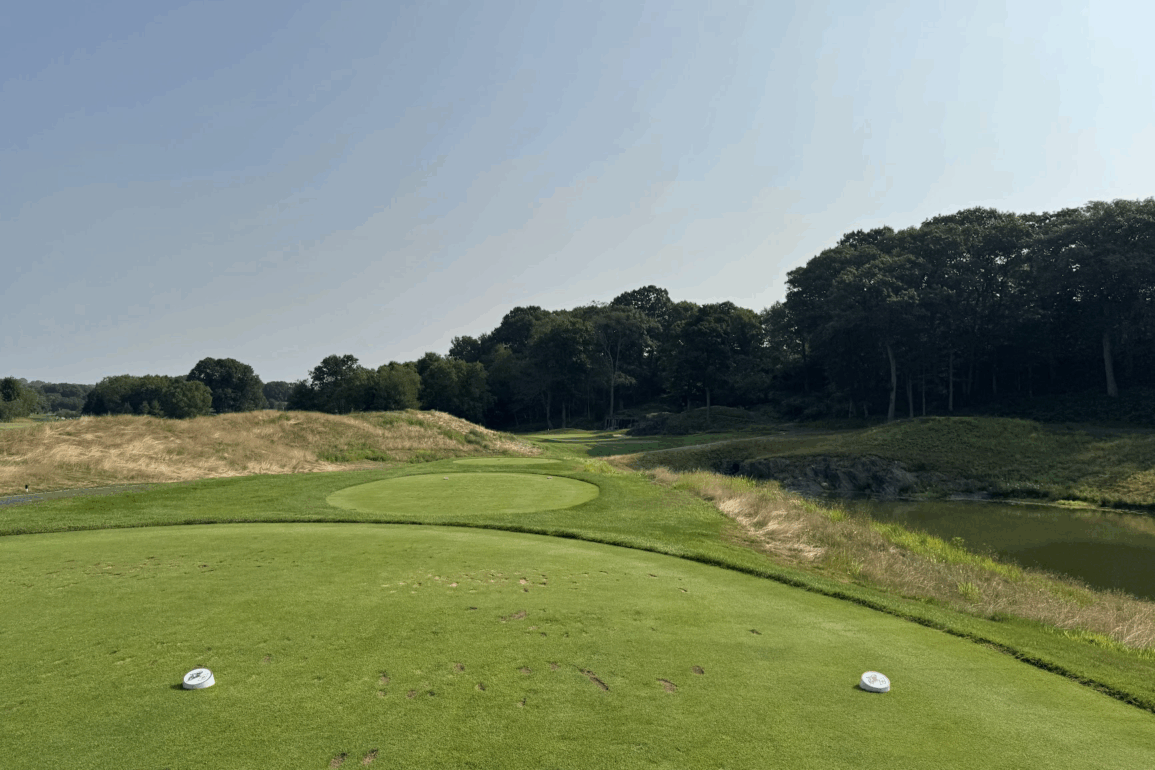
    Milbrook Club is a private par-70 course measuring approximately 6,287 yards from the tips. The course was originally designed in 1923 by Geoffrey S. Cornish and is located in Greenwich, Connecticut.

    Milbrook Club occupies a significant place in Connecticut golf history, having opened in 1923 as the centerpiece of a revolutionary planned community. Real estate developers led by Arthur Waterman purchased 300 acres from the historic Milbank Estate, which had previously been owned by the widow of William Boss Tweed, the infamous New York City mayor. Landscape architect Armand Tibbitts designed the surrounding neighborhood, creating what is recognized as America’s first planned community centered around a country club. The course underwent renovations in recent years focusing on infrastructure improvements, with architect A. John Harvey developing a master plan in 2008 that has been progressively implemented. Harvey redesigned greens on the third and sixth holes in 2020, addressing slope issues and creating more fair pin placements while maintaining the strategic character of the original design. Additional improvements have included extensive drainage work, bunker renovations, and green resurfacing that has elevated playing conditions across the nine-hole layout. Milbrook occupies approximately 300 acres within a gated residential community and features rolling parkland terrain that encourages strategic play. The routing exhibits efficiency within its compact footprint, with the nine holes playing to different yardages from dual tees to create variety for the 18-hole rated experience. The tree-lined layout demands precision over power and rewards players who embrace positional golf over aggressive tactics. The design philosophy reflects Cornish’s trademark emphasis on strategic options and fair challenge rather than visual intimidation. Players who appreciate traditional parkland architecture, value shot-making over distance, and enjoy a walkable layout suited for multiple rounds will find considerable appeal in Milbrook’s refined test.

    Strategic Test

    HandicapCourse Strategy
    High Handicap (18+)High handicappers benefit from playing the forward Yellow/Red tees at 5,356 yards, where the slope rating of 130 and course rating of 73.2 create a manageable challenge that still requires thoughtful execution. The opening hole, a par-5 measuring 509 yards from the Blue tees but significantly shorter from forward markers, offers an excellent opportunity to begin the round with confidence as a reachable par 5 that rewards steady progression down the fairway. Club selection on this hole becomes critical after the drive, with mid-to-long irons setting up a comfortable approach rather than forcing players to attack the green prematurely. The elevated terrain throughout the course means accurate distance control matters more than raw power, particularly on approach shots where missing greens leaves challenging recovery situations. Strategic layup positions on longer par 4s help higher handicappers avoid penalty areas and maintain forward momentum.
    Mid Handicap (8-18)Mid handicappers find their optimal challenge from the White/Blue combination at 6,287 yards, where the slope of 127 and rating of 71.1 create scoring opportunities balanced against demanding tests of accuracy. The 18th hole, a par-3 measuring 211 yards from the championship tees, exemplifies the precision required throughout the round and serves as an exacting finisher that can define the score. This closing hole demands a confident long iron or fairway wood struck purely to hold the green, with any miss leaving a delicate recovery to save par. The dual-tee system allows mid handicappers to experience different angles and shot values on each nine, fundamentally altering strategic decisions and club selections. Accurate driving becomes paramount given the tree-lined corridors, where finding fairways sets up manageable approach distances and avoids scrambling from trouble. Understanding when to attack pins versus playing to safe zones on the greens separates good rounds from great ones.
    Low Handicap (0-8)Low handicappers face a refined strategic examination from the Blue tees at 6,324 yards, where the course reveals its architectural sophistication through demanding shot values and green complexes that penalize imprecision. The sixth hole, recently redesigned by A. John Harvey, showcases the modern restoration work that has enhanced Milbrook’s strategic options while maintaining classical design principles throughout the routing. Working the ball both ways becomes advantageous on several holes where tree placement and green orientations favor shaped approaches over straight-line attacks. The elevated, contoured greens demand exceptional distance control and proper trajectory, as any approach leaving the ball above the hole creates three-putt scenarios even for accomplished players. Harvey’s renovations introduced more pronounced internal green movement while preserving receptive surfaces, rewarding precise iron play. Course management skills distinguish scoring rounds, particularly when playing the layout twice from different tees where the strategic calculus shifts dramatically based on angle of approach and distance remaining.

    Nearby Course Alternatives

    Stanwich Club in Greenwich offers a dramatically different experience located approximately 10 minutes north of Milbrook and represents one of Connecticut’s most demanding championship tests. The William and David Gordon design from 1964, substantially renovated by Tom Fazio and his associates including Tom Marzolf beginning in 2005, stretches to 7,445 yards from the tips with a slope rating of 144 and course rating of 76.0. The 18-hole par-72 layout occupies rolling terrain that generates significantly more elevation change than Milbrook’s gentler contours, creating dramatic shot values and vistas throughout the round. Stanwich’s pedigree as a frequent tournament host has shaped its architectural character, with demanding length from the back tees, lightning-fast greens among the fastest in the region, and penal bunkering that punishes wayward shots severely. The course sprawls across more acreage than Milbrook, allowing for wider playing corridors and more expansive green complexes that test every aspect of the game. Recent renovations addressed playability from forward tees while maintaining championship difficulty for accomplished players, particularly evident in the completely reimagined first hole and five rebuilt green complexes. Low handicap players seeking a stern examination and tournament-caliber conditions will find Stanwich’s elevated difficulty and pristine maintenance standards compelling, though the course demands more physical stamina given its hillier terrain and greater length. Mid handicappers comfortable playing championship yardages will appreciate the variety and strategic options despite the intimidating rating numbers, while higher handicappers should carefully consider tee selection given the course’s demanding nature.

    Innis Arden Golf Club in Old Greenwich presents an intriguing alternative approximately 5 minutes southeast that emphasizes shotmaking over power in a more compact footprint. The 18-hole par-70 layout measures 6,307 yards from the championship tees with a slope of 134 and rating of 71.7, created through the collaborative work of multiple architects including J. Kennedy Tod, A.W. Tillinghast, Ken Dye, and Robert Trent Jones Sr. across different eras. Established in 1899 and occupying its current Tomac Avenue location since 1908, the course expanded from nine to eighteen holes in 1925 under Tillinghast’s design guidance. Ken Dye’s 2008 renovation modernized infrastructure while respecting the Golden Age routing, creating a layout featuring narrow, tree-lined fairways and small, well-protected greens that reward precision. Water hazards factor prominently on all but one hole, introducing strategic considerations absent from Milbrook’s drier terrain and requiring accurate carry distances throughout the round. The course occupies less acreage than Milbrook but still delivers considerable variety through its parkland setting with mature specimen trees framing each hole. Innis Arden’s architectural pedigree traces to Tillinghast’s influential design principles, evident in the strategic bunkering and thoughtful green complexes that create multiple routes to success. Players who value classic architecture from the Golden Age, enjoy managing water hazards as integral strategic elements, and appreciate courses where accuracy consistently trumps distance will find Innis Arden particularly satisfying. The similar yardage and slope rating to Milbrook make Innis Arden an excellent comparison for mid and low handicappers seeking a different design philosophy within the same difficulty range.

    Final Word

    Milbrook Club provides comprehensive practice facilities that enhance the member experience, including a driving range with multiple practice tees allowing players to work on various shot trajectories and distances. The putting green offers ample space for pre-round preparation and dedicated practice sessions, while a short game area enables members to refine chipping and bunker play. The recently renovated Tudor-style clubhouse represents the social heart of the club, featuring formal dining in the elegant Lakeview Room that overlooks two scenic lakes and dramatic waterfalls visible from the dining room. The Overlook Grill provides more casual dining options with views of the 18th green, while an expansive seasonal outdoor patio becomes the central gathering space during warmer months with a la carte dining and family-friendly barbecues. Six Har-Tru tennis courts complement the golf facilities, along with three paddle tennis courts housed in a renovated paddle hut that enables year-round racquet sports. The 25-meter outdoor pool serves as a summer focal point with a robust youth aquatics program including swim team, diving, synchronized swimming, and water polo. Multiple dining venues accommodate different occasions, from intimate fine dining to casual poolside cafe service, ensuring members have appropriate settings for various social functions. Summer camps for children ages 4-10 provide structured programming that keeps younger members engaged while parents enjoy club facilities. What distinguishes Milbrook from larger championship clubs in the area is its deliberate emphasis on family-centered community rather than architectural intimidation or tournament pedigree. The nine-hole format enables efficient rounds that can be completed in reasonable timeframes, appealing to busy professionals who value course access without sacrificing entire days to golf. The dual-tee system provides sufficient variety across eighteen holes while maintaining a compact, walkable footprint that many members navigate on foot. The strategic architecture rewards thoughtful play over brute force, creating an environment where improving players can genuinely develop course management skills rather than simply trying to overpower designed challenges. The extensive recent infrastructure improvements demonstrate sustained commitment to maintenance standards and playing conditions that rival larger, more publicized facilities in Fairfield County.

  • Manchester Country Club

    Manchester Country Club

    [put_wpgm id=”2″ width=”100%” height=”770px” current_post_only=”true”]

    [letsreview]

    Manchester Country Club is a public par-72 course measuring approximately 6,285 yards from the tips. The course was originally designed in 1917 by Tom Bendelow and Devereux Emmet and was partially redesigned in 1935 by A.W. Tillinghast and is located in Manchester, Connecticut.

    Manchester Country Club represents a remarkable convergence of Golden Age design pedigree spanning nearly two decades of architectural evolution. The original 1917 layout by Bendelow and Emmet established the foundational routing, which capitalized on the property’s natural terrain along the reservoir. Tillinghast’s 1935 intervention refined certain elements, particularly bunkering schemes that remain evident on holes like the par-3 5th, where strategic sand placement forces precision with mid-irons. The facility has maintained its historical integrity while modernizing practice areas, most notably with a comprehensive upgrade completed in 2025 that expanded the driving range to 18 bays with sculpted target greens and added a 3,000-square-foot short game green. Situated on approximately 140 acres of gently rolling terrain, the course occupies land that was once part of the town’s agrarian landscape, with routing that threads through mature hardwoods and alongside water features. The design philosophy represents what contemporary observers call “old New England design,” prioritizing strategic variety over length, with small, contoured greens averaging roughly 4,000 square feet that demand thoughtful approach work. Wide fairway corridors accommodate players across skill levels, though premium angles reward those who work the ball to optimal positions. This is emphatically a thinking player’s course where course management trumps raw power, appealing particularly to golfers who appreciate subtlety in green complexes, strategic bunkering, and the challenge of reading natural contours rather than manufactured features.

    Strategic Test

    HandicapCourse Strategy
    High Handicap (18+)From the white tees at 6,095 yards with a 69.4 rating and 127 slope, the layout provides manageable length while still presenting scoring challenges. The slope rating indicates that inconsistent ball-strikers will face difficulty with approach shots into the small, elevated greens that characterize the design. Strategic elements center on fairway placement rather than distance, as the wide corridors offer generous landing areas but reward center-right or center-left positions depending on green contours. The par-4 7th hole at 341 yards from the blues provides an ideal strategic test for this cohort, playing as a short two-shotter where a fairway wood or hybrid off the tee followed by a short iron approach emphasizes control over power.
    Mid Handicap (8-18)The blue tees at 6,285 yards with a 70.8 rating and 125 slope create a balanced examination of all facets of the game without overwhelming competent strikers. At this yardage, the course reveals its architectural nuances, particularly in green complexes where internal contours create distinct quadrants for pin positions. Strategic considerations include working the ball to avoid greenside bunkers placed at angles that penalize straight-line approaches. The par-4 6th hole measuring 411 yards serves as the number one handicap and exemplifies the challenge, playing as a dogleg right to an elevated green complex. From the blue tee, driver or 3-wood must navigate the corner while avoiding left-side trouble, leaving a mid-iron approach of 150-180 yards that must carry fronting bunkers to reach a crowned putting surface.
    Low Handicap (0-8)The championship tees at 6,285 yards might appear modest by modern standards, but the 70.8 rating and 125 slope reflect the premium placed on precision rather than length. Low-handicappers will find scoring opportunities through superior ball-striking and course management, particularly on risk-reward par-5s at the 3rd (514 yards) and 4th (507 yards) that present reachable targets in two shots. The critical strategic element involves green reading on Tillinghast-influenced surfaces that feature subtle breaks and tier structures. The par-3 18th at 189 yards provides a fitting closer and exceptional test for accomplished players, requiring a mid-to-long iron carry to a green situated adjacent to the clubhouse with pronounced back-to-front slope, where any approach beyond the hole creates a treacherous downhill putt and mishits leave difficult up-and-downs.

    Nearby Course Alternatives

    Tallwood Country Club in Hebron offers public golfers a comparable experience approximately 15 minutes south of Manchester. The 18-hole layout measures 6,366 yards from the championship tees with a par of 72, rated 70.2 with a 119 slope. Designed by the Ovian brothers (Michael and Karnig) and opened in 1970, Tallwood occupies roughly 150 acres of rolling Connecticut countryside characterized by tree-lined fairways and strategic water features on multiple holes. The course reputation rests on consistent conditioning and a layout that balances accessibility with challenge, particularly through the middle stretch from holes 10-13 where elevation changes become more pronounced. Notable design elements include the par-4 15th where water threatens along the left side of the fairway and approach, and the par-3 17th featuring an island green element that demands precise distance control. The architectural pedigree lacks the Golden Age provenance of Manchester, but the routing compensates with more dramatic terrain movement and modern green contouring that can present faster putting surfaces. Strategic emphasis places premium value on position off the tee rather than distance, with fairway bunkers at key decision points. Mid-handicap players who enjoy courses with more topographical variety and water hazards integrated into the strategic fabric would find Tallwood particularly appealing, as the elevation changes provide visual interest and demand adjusted club selection on uphill and downhill approaches.

    Blackledge Country Club in Hebron provides public access to 36 holes approximately 20 minutes southeast of Manchester, with the Anderson’s Glen course representing the premier test. Anderson’s Glen measures 6,787 yards from the tips with a par of 72, rated 72.0 with a 128 slope, originally designed by Geoffrey Cornish in 1964 and later refined by Brian Silva and Mark Mungeam. The course occupies approximately 180 acres per 18 holes with significant tree coverage creating defined corridors throughout. Cornish’s architectural philosophy emphasized Canadian-influenced strategic design with Scottish undertones, resulting in fairway bunkering patterns that create alternate angles of approach and green complexes featuring pronounced contouring with false fronts and interior tiers. The facility reputation stands among Connecticut’s finest public offerings, consistently ranking in state top-10 lists for conditioning and design merit. Strategic elements include green sites that reward aerial approaches from specific fairway zones while severely penalizing misses, particularly evident on holes like the par-4 7th where approach angles determine whether putts break toward or away from the hole. The companion Gilead Highlands course, opened in 2000, measures 6,537 yards with a 71.6 rating and steeper 131 slope, emphasizing a more modern design aesthetic with additional manufactured mounding. Low-handicap players seeking a more rigorous examination of iron play and course management nuance would gravitate toward Blackledge, particularly Anderson’s Glen, as the green complexes demand superior short game skills and the architectural sophistication exceeds Manchester’s more straightforward design approach.

    Final Word

    Manchester Country Club maintains comprehensive practice facilities that underwent significant enhancement in 2025, establishing the venue as one of central Connecticut’s better-equipped public facilities for pre-round preparation. The expanded driving range features 18 hitting bays with mat surfaces available weekdays and grass tees on weekends, complemented by sculpted target greens at various distances that provide visual aiming points for dialing in approach distances. The short game area includes a dedicated 3,000-square-foot practice green with contours mirroring on-course putting surfaces, plus a separate chipping area with multiple pin positions allowing golfers to rehearse various trajectory options around the green. Indoor simulator bays operate year-round Tuesday through Sunday from 9am to 9pm, providing launch monitor data and virtual course play during Connecticut’s winter months. The Waterview Café serves as the 19th hole destination, offering lunch and dinner service with views overlooking the course, while banquet facilities accommodate tournament groups and private events. The clubhouse maintains locker room facilities and pro shop stocked with essential equipment and apparel, plus staff providing bag service from vehicle to cart. Manchester Country Club distinguishes itself through the rare convergence of three significant Golden Age architects contributing to a single public-access facility, a pedigree that alone warrants attention from design enthusiasts. The architectural DNA remains legible despite century-long evolution, particularly in Tillinghast’s bunker work and the fundamental routing that respects natural landforms rather than imposing artificial features. What elevates the experience beyond historical curiosity is how the design principles remain relevant to contemporary play, rewarding strategic thinking over brute force and offering scoring opportunities to players who execute proper course management. The small, contoured greens create genuine interest on approach shots while remaining fair rather than penal, a delicate balance that modern architecture often fails to achieve. Combined with above-average conditioning standards, reasonable pace of play, and recent practice facility investments, Manchester Country Club proves that thoughtful Golden Age design endures as both strategically sound and thoroughly enjoyable nearly 110 years after inception.

  • Madison Country Club

    Madison Country Club

    [put_wpgm id=”2″ width=”100%” height=”770px” current_post_only=”true”]

    [letsreview]

    Madison Country Club is a private par-70 course measuring approximately 6,069 yards from the tips. The course was originally designed in 1900 by Willie Park Jr. and is located in Madison, Connecticut.

    Established at the turn of the century, Madison Country Club stands among Connecticut’s oldest golf courses, having operated continuously for over 125 years along the northern shores of Long Island Sound. The original nine holes by Willie Park Jr., the two-time British Open champion who crafted over 170 courses worldwide including Olympia Fields and Maidstone, established the foundation for what would become a cherished shoreline layout. Orrin Smith expanded the facility to 18 holes in 1930, and architect Brian Silva completed a comprehensive renovation in 2015 that introduced three new holes while respecting Park’s strategic intentions and preserving the essential character that defines the routing. The course occupies approximately 90 acres of compact property threading through forested lands punctuated by ponds, streams, and salt-fresh water marshes that create both visual interest and strategic complications. The terrain demonstrates remarkable efficiency in routing, with the front nine playing tighter and quirkier through more confined corridors while the back nine opens up with pronounced elevation changes and coastal exposures that bring Long Island Sound breezes into play. The design philosophy favors precision and strategic positioning over pure distance, making it an ideal test for the thinking golfer who values shot-making angles, course management decisions, and the subtle interplay between green contours and approach angles. Players who appreciate Golden Age architecture, compact routing that creates a genuine walking experience, and courses where local knowledge compounds with each round will find Madison particularly rewarding.

    Strategic Test

    HandicapCourse Strategy
    High Handicap (18+)From the white tees at 6,027 yards with a 69.0 rating and 121 slope, the course provides manageable distances while maintaining strategic interest through well-placed hazards and green complexes that reward accurate positioning. The slope rating suggests that while scoring potential exists for steady play, the penalty for wayward shots through tree-lined corridors and around water features accumulates quickly for players still developing consistency. The 12th hole represents an ideal strategic challenge at 411 yards from the whites, demanding a carefully positioned drive to set up the approach to a green that slopes back left to front right and sits in a natural hollow flanked by bunkers, requiring precise distance control with a mid-iron that likely tests the full extent of a higher handicapper’s approach game while offering legitimate par opportunities for well-executed shots.
    Mid Handicap (8-18)The blue tees at 6,446 yards carry a 70.9 rating and 125 slope that creates a balanced examination where strategic decision-making becomes increasingly important as approach angles tighten and green contours demand more precise trajectory control. The modest increase in slope from the forward tees reflects how the additional yardage compounds the premium on accuracy through Park’s corridor framing and Silva’s green complexes that become more challenging when approached from longer distances. The signature 6th hole offers a fascinating strategic puzzle, playing as a double dogleg that demands thoughtful club selection and route management rather than aggressive pursuit of maximum distance, with a very shallow diagonal green surrounded by tight collection areas that punish approaches lacking proper angle, making this an ideal test of risk assessment and execution where a well-played par feels like a victory.
    Low Handicap (0-8)From the championship tees at 6,520 yards with a 70.3 rating and 123 slope, the course demands precise execution despite relatively modest length, as the tight tree-lined corridors, small green targets, and Park’s emphasis on angles into greens create a strategic examination where positioning trumps power. The modest slope rating belies the course’s ability to defend par through strategic complexity rather than brute difficulty, with the ever-present coastal wind adding a variable element that requires constant recalibration of club selection and trajectory. The back-to-back short par fours at holes 7 and 8 exemplify the risk-reward decision-making that defines championship play at Madison, with both holes offering genuine birdie opportunities for players willing to challenge driver off the tee while punishing aggressive misses with recovery situations that can quickly turn birdies into bogeys, making this stretch an ideal examination of competitive nerve and strategic discipline.

    Nearby Course Alternatives

    Clinton Country Club in Clinton presents a contrasting architectural philosophy approximately four minutes to the west of Madison. Geoffrey Cornish crafted this 6,518-yard par-72 layout from the championship tees with a 71.6 rating and 130 slope across 110 acres of gently rolling former dairy farm terrain. Cornish first designed nine holes in 1958 before completing the full 18-hole routing in 1968, with subsequent work by Bill Robinson and A. John Harvey ensuring the course remains strategically relevant for contemporary play. The property features classic parkland characteristics through mature tree-lined corridors that require accurate tee ball placement, with subtle undulations throughout that favor players who value precision over power. The elevation changes remain modest throughout but sufficient to create variety in stance and lie, while the green complexes demonstrate Cornish’s philosophy of creating engaging strategic tests accessible to diverse membership skill levels. Clinton stretches approximately 400 yards longer than Madison while occupying nearly 20 additional acres, providing more generous landing zones and slightly less compact routing that creates a different walking rhythm. The player who values traditional parkland aesthetics, straighter holes with fewer doglegs, and a design that emphasizes consistent fundamentals over quirky angles will likely prefer Clinton’s more conventional strategic framework over Madison’s tighter, more angular approach.

    Black Hall Club in Old Lyme presents a formidable Robert Trent Jones Sr. design approximately 12 minutes to the east of Madison. Jones carved this 6,625-yard par-71 championship layout through 160 acres of heavily wooded terrain in 1967, creating the first championship-caliber course in the lower Connecticut Valley. The tips play to a demanding 73.2 rating with a 141 slope that reflects Jones’s emphasis on shot values and the premium placed on accuracy through tree-lined corridors, elevated greens flanked by bunkers, and fast undulating putting surfaces. The routing showcases classic Jones characteristics including numerous doglegs that force careful positioning off the tee, strategic bunkering that narrows ideal landing zones, and green complexes that require exceptional approach precision and green-reading skills. Despite playing shorter than modern championship layouts, Black Hall compensates through tightness and the necessity of managing angles around mature tree lines that define playing corridors and severely limit recovery options. The property features significantly more land movement than Madison’s flatter coastal terrain, with elevation changes that create dramatic downhill tee shots and uphill approaches that amplify the challenge of distance control. The player who seeks a stern examination of ball-striking, prefers tree-lined parkland corridors over coastal quirk, and values the prestige of playing a Jones design that has hosted numerous state championships and USGA qualifiers will find Black Hall’s traditional championship test more appealing than Madison’s compact strategic puzzle.

    Final Word

    Madison Country Club functions as a golf-only facility, with members embracing the purity of focus that defines the club’s identity and distinguishes it from larger multi-sport operations along the Connecticut shoreline. The practice facilities reflect the compact property constraints, consisting of a small short game area that provides adequate space for wedge work and putting while acknowledging the limited acreage available beyond the 18-hole routing. The modest practice amenities encourage members to treat the course itself as the primary laboratory for improvement, with the walkable layout and relatively quick pace of play facilitating multiple loops that build course knowledge and strategic understanding through repetition. The clubhouse maintains an unpretentious atmosphere that complements the course’s understated character, providing dining options and social spaces without the expansive facilities that define larger shoreline clubs. The absence of tennis courts, swimming pools, and other recreational amenities reinforces the golf-centric mission that has guided the club since its founding, attracting members who prioritize playing time, course conditioning, and strategic golf over broader country club programming. The 2015 Brian Silva renovation represents the club’s commitment to maintaining architectural relevance while preserving the essential character that Park established over a century ago, with the investment in course improvements demonstrating forward-thinking stewardship. What distinguishes Madison within the competitive southeastern Connecticut private club market stems from the authentic Golden Age pedigree combined with Silva’s thoughtful modernization, creating a layout that rewards repeated play through accumulated local knowledge while remaining engaging across varied skill levels. The course proves its value through strategic complexity rather than intimidating length, tight but fair corridors that demand accuracy without being punitive, and green complexes that create genuine excitement around scoring opportunities while defending par through subtle contours and intelligent bunkering that make two-putt pars feel earned.

  • Lyman Orchards Golf Club – Apple Nine

    Lyman Orchards Golf Club – Apple Nine

    [put_wpgm id=”2″ width=”100%” height=”770px” current_post_only=”true”]

    [letsreview]

    Lyman Orchards Golf Club – Apple Nine is a public par-29 course measuring approximately 1,600 yards from the tips. The course was originally designed in 2012 by Mark Mungeam and is located in Middlefield, Connecticut.

    The Apple Nine opened in 2012 as the third course at the historic Lyman Orchards property, complementing the property’s Robert Trent Jones Sr. and Gary Player championship layouts. Mungeam’s design earned immediate recognition, receiving the American Society of Golf Course Architects’ inaugural Design Excellence award in its debut year. The layout has been consistently ranked as Connecticut’s top par-3 course and placed 10th overall in New England by New England Golf Monthly. The course occupies a compact footprint within the larger 1,100-acre Lyman Orchards property, which has been under continuous family ownership since 1741. The routing centers around the Golf Range Association of America’s Top 50 Public Practice Facility, creating an integrated learning environment. The nine-hole layout features seven par-3s and two par-4s, with holes ranging from approximately 76 to 314 yards across four tee sets. The bent grass surface provides consistent playing conditions throughout the season. The terrain is relatively gentle compared to the property’s championship courses, though Mungeam incorporated strategic undulation into several green complexes. The course appeals to multiple player types: juniors developing fundamentals, higher handicappers building confidence, experienced players working on scoring zones, and time-constrained golfers seeking quality repetitions in under two hours. The design philosophy emphasizes approachability without sacrificing strategic interest, offering genuine golf architecture scaled to executive length.

    Strategic Test

    HandicapCourse Strategy
    High Handicap (18+)From the forward tees at 1,211 yards, the course provides an accessible introduction to golf architecture without overwhelming length. The slope rating of 87 indicates relatively forgiving scoring potential, though green complexes demand developing touch around the putting surfaces. Players face predominantly wedge and short iron selections, with the two par-4s offering opportunities to deploy fairway woods or hybrids. The key strategic element involves club selection discipline, as distance control trumps maximum distance on these compact holes. The third hole, measuring 188 yards from the championship tees, exemplifies the strategic variety, playing as a demanding mid-to-long iron that requires carry over bunkering to an elevated, well-defended green complex.
    Mid Handicap (8-18)From the middle tees at approximately 1,400 yards, the layout presents scoring opportunities while testing precision. The 28.2 course rating and 87 slope create realistic birdie chances for players who execute quality approach shots. Strategic emphasis shifts toward aggressive flag hunting, as the compact yardages permit direct attacks on tucked pins. The two par-4s become legitimate scoring holes when drives find optimal angles. Course management revolves around reading green speeds and contours accurately, as Mungeam designed several putting surfaces with significant internal movement. The third hole at 188 yards becomes a true test of commitment, requiring full swings with mid-irons while managing the psychological challenge of forced carries to elevated targets surrounded by hazards.
    Low Handicap (0-8)From the championship tees at 1,556-1,600 yards, accomplished players face a precision examination that punishes wayward execution. The layout demands exact distance control across the wedge-through-middle-iron range, with minimal room for imprecise contact. Strategic interest emerges through green complex architecture rather than fairway routing, as Mungeam incorporated subtle undulations and false fronts that reject poorly flighted approaches. Scoring depends on converting birdie opportunities on shorter holes while avoiding mistakes on the longer par-3s. The two par-4s, particularly the second hole at approximately 261 yards, create risk-reward tension between aggressive driver lines and conservative positioning. The third hole at 188 yards exemplifies the test, requiring controlled trajectory with long irons or hybrids to hold a green complex that penalizes both short and long misses through strategic bunkering and contour.

    Nearby Course Alternatives

    Gainfield Farms Golf Course in Southbury presents another executive option approximately 30 minutes southwest of Lyman Orchards in Connecticut’s Naugatuck River Valley. This Al Zikorus design, opened in 1994, plays to 1,384 yards across nine holes at par-28, featuring eight par-3s and a single par-4. The layout occupies former farmland with moderate elevation changes that add strategic dimension beyond its compact yardage. Gainfield’s conditioning has earned particular praise, with green complexes maintained to standards approaching private facilities. The course routing incorporates strategic bunkering and undulating putting surfaces that elevate the design above typical pitch-and-putt facilities. Individual holes range from 86 to 261 yards, with the third hole’s 188-yard uphill challenge standing as the layout’s signature examination. The property’s parkland setting provides mature tree corridors that frame holes distinctly. Players seeking more dramatic elevation changes and a slightly more traditional executive layout length will appreciate Gainfield’s topographical variety. The course particularly suits developing players who want genuine strategic challenges without overwhelming length, as well as experienced golfers focused on short-game refinement in a relaxed atmosphere. The absence of official course rating data reflects its executive classification, though the design offers substantive architectural interest through green complex design and strategic hazard placement.

    Westwoods Golf Club in Farmington delivers an 18-hole par-61 experience approximately 25 minutes northwest of Lyman Orchards in Hartford County’s southwestern corner. Geoffrey S. Cornish designed this 1966 layout, which plays to 4,407 yards from the championship tees with a 58.6 course rating and 85 slope rating. The routing features predominantly par-3 holes interspersed with strategic par-4s and a signature par-5, creating a full-length executive test that demands varied shot-making. Westwoods occupies rolling terrain with elevation changes throughout, offering dimensional variety that differs markedly from Lyman’s gentler topography. The bent grass surfaces and mature tree corridors establish distinct hole identities within the parkland setting. Cornish’s design philosophy emphasized strategic options from multiple tee positions, with the layout accommodating play from 3,597 to 4,407 yards. The property includes comprehensive practice facilities, including a driving range with both mat and grass tees, plus a 24,000-square-foot practice green. The municipal ownership structure provides accessible public golf with maintained conditioning standards. Players seeking longer playing distances and more varied par configurations will find Westwoods offers traditional stroke-play architecture scaled to executive length. The course particularly appeals to mid-handicappers who want routing complexity and distance variety beyond short-course formats, as well as low-handicappers using the layout for focused iron and wedge work within competitive stroke-play structure. The 18-hole configuration also accommodates players preferring full rounds over nine-hole circuits.

    Final Word

    The Apple Nine’s integration with the broader Golf Center creates a comprehensive improvement ecosystem rare among short courses. The 40-bay driving range, recognized nationally for its quality, provides both mat and grass hitting stations alongside dedicated short-game areas including practice bunkers, chipping greens, and expansive putting surfaces totaling 20,000 square feet. The facility’s instructional programming includes the largest ladies program in New England and the region’s most extensive PGA Jr. League operation, establishing the site as a development hub rather than merely a casual play venue. Indoor golf simulators extend year-round access when weather limits outdoor practice. The 1741 Pub & Grill offers full-service dining with course views, while the Apple Barrel Farm Market provides the property’s agricultural connection through seasonal produce and award-winning baked goods. The Lyman Homestead, listed on the National Register of Historic Places, adds event venue capability to the golf operations. These amenities position the Apple Nine within a destination framework that transcends typical executive course offerings. What distinguishes this layout is Mungeam’s architectural integrity applied to short-form golf, creating genuine strategic interest scaled appropriately to executive length. The course proves its value through thoughtful green complex design, strategic variety across multiple tee positions, and exceptional conditioning standards that mirror championship course expectations. The American Society of Golf Course Architects Design Excellence recognition validates the design’s architectural merit, while the New England Golf Monthly rankings confirm player appreciation. For juniors, developing players, time-constrained golfers, and experienced players seeking quality practice rounds, the Apple Nine delivers substantive golf architecture in an accessible format.

  • Longshore Golf Club

    Longshore Golf Club

    [put_wpgm id=”2″ width=”100%” height=”770px” current_post_only=”true”]

    [letsreview]

    Longshore Golf Club is a public par-69 course measuring approximately 5,895 yards from the tips. The course was originally designed in 1922 by Orrin E. Smith and is located in Westport, Connecticut.

    Longshore Golf Club sits on land that was once an onion farm before being transformed into one of Fairfield County’s most distinctive municipal golf facilities during the mid-1920s. The original design by Orrin E. Smith, who worked as a construction superintendent for renowned architect Willie Park Jr., established the course’s fundamental routing and character. A significant renovation in 2007 brought the course into the modern era under the guidance of architect A. John Harvey, part of a comprehensive restoration effort that addressed bunker positioning, green complexes, and overall playability while maintaining the historic integrity of the layout. The course occupies approximately 110 acres of gently rolling terrain adjacent to Long Island Sound, with mature maple trees framing corridors throughout the property. The relatively flat topography and compact routing create an accessible walking experience that appeals particularly to players who appreciate efficient movement between holes and the ability to complete a round in under four hours. The design philosophy emphasizes precision over power, with corridor control and greenside execution serving as primary scoring determinants rather than driving distance. Players who value strategic bunker placement, well-defended small greens, and the challenge of shotmaking within defined parameters will find considerable merit in the layout, particularly those seeking a playable municipal experience that rewards course management over aggressive play.

    Strategic Test

    HandicapCourse Strategy
    High Handicap (18+)From the forward Orange tees at 4,475 yards with a slope of 118 and rating of 67.5, high-handicap players encounter a manageable strategic test that emphasizes fairway position over distance. The abbreviated yardage allows these golfers to reach greens with mid-irons on par fours and hybrids on longer holes, though the well-bunkered green complexes remain the primary defense. Hole 11, a par 3 measuring 177 yards from these tees, presents an ideal challenge for this skill level as it demands nothing more than a well-struck hybrid or long iron to a receptive green surface, with bunkers positioned to penalize wayward strikes without creating undue difficulty for those who commit to center-green targets.
    Mid Handicap (8-18)The White tees at 5,632 yards with a slope of 117 and rating of 67.0 provide mid-handicap players with appropriate length while maintaining the course’s strategic emphasis on accuracy. These players will use a full range of clubs throughout the round, facing decisions about when to challenge bunker lines and when to play conservatively to larger landing areas. Hole 11 plays 207 yards from this set of tees, requiring a confident long iron or hybrid to carry the entire distance to a green defended by strategic bunkering. The hole rewards committed swings and punishes indecision, making club selection and pre-shot routine critical for players in this handicap range who must execute under the pressure of length combined with precision demands.
    Low Handicap (0-8)Championship Blue tees stretch to 5,895 yards with a slope of 121 and rating of 68.3, creating a test where accomplished players must demonstrate complete command of distance control and trajectory management. While overall length remains modest by contemporary standards, the small, undulating greens and strategic bunker placement force skilled golfers to work the ball into specific quadrants rather than simply attacking flags. Hole 11 from 207 yards represents a quintessential strategic par 3 for accomplished players, demanding a precise long iron that must carry the full distance while accounting for wind off Long Island Sound. Low-handicap players will likely choose between a smooth 4-iron and a committed 5-iron depending on conditions, with the penalty for missing short or right being significantly more severe than bailing left or long, making the hole an excellent test of both execution and course awareness.

    Nearby Course Alternatives

    Oak Hills Park Golf Course in Norwalk provides a compelling alternative approximately 10 minutes northeast of Longshore for players seeking a more substantial strategic examination. Designed by Alfred H. Tull and opened in 1969, Oak Hills measures 6,407 yards from the championship tees with a slope rating of 133 and course rating of 70.3, representing a considerably more demanding test than Longshore’s abbreviated layout. The course occupies approximately 150 acres of rolling New England terrain, with the opening holes playing through tight, tree-lined corridors that require accurate tee shots before the routing opens up on the back nine. Tull, who partnered with the renowned Devereux Emmet before continuing independently, brought his classical design sensibility to the property with naturally contoured holes that integrate seamlessly with the existing topography rather than imposing artificial earthwork. The green complexes at Oak Hills feature more severe internal contouring than Longshore, with undulations that demand careful read execution and confident strokes on surfaces that routinely run faster than most municipal facilities in the region. Elevation changes throughout the property add a dimensional element absent from Longshore’s flat routing, creating uphill and downhill approaches that require adjusted club selection and trajectory control. The par-71 layout presents a more traditional examination for accomplished players who seek additional length and variety, particularly those who enjoy working with elevation and prefer courses where superior ball-striking receives greater reward. Mid-to-low handicap players who find Longshore’s abbreviated yardage insufficiently challenging will discover Oak Hills offers a comprehensive test of all aspects of the game while maintaining the accessibility and conditioning standards expected from premier municipal facilities.

    H. Smith Richardson Golf Course in Fairfield presents another distinguished municipal alternative approximately 15 minutes east of Longshore for golfers drawn to strategic complexity and varied shot requirements. The course measures 6,704 yards from the back tees with a slope of 126 and rating of 72.1, designed by Hal Purdy and Malcolm Purdy and opened in 1972 on approximately 180 acres of rolling Connecticut landscape. The design features significant elevation changes throughout the routing, with the front nine playing through tighter, hillier terrain before the back nine opens into more expansive corridors with greater visual breathing room. The Purdys created a layout where positional play off the tee dictates approach angles, with doglegs and strategic fairway contouring rewarding players who can shape tee shots to optimal landing areas rather than simply maximizing distance. Green complexes at Smith Richardson exhibit pronounced undulation and internal movement, requiring careful distance control on approaches to avoid leaving difficult two-putt scenarios or challenging up-and-downs. The course features multiple risk-reward opportunities where aggressive lines over trouble can shorten holes significantly, though conservative routes remain viable for players who prefer steady accumulation of pars. Players who appreciate courses demanding thoughtful club selection on every shot will find Smith Richardson particularly engaging, as the varied elevation, directional variety, and green complexity create situations requiring different ball flights and trajectories throughout the round. High-handicap players seeking more dramatic terrain and visual interest than Longshore’s flat routing will discover Smith Richardson offers a more dynamic experience, though the additional length and difficulty may prove challenging for those still developing consistent ball-striking patterns.

    Final Word

    Longshore Golf Club provides a complete practice facility ecosystem that begins with a five-tee driving range positioned along the waterfront with views of Long Island Sound, creating an inspiring warm-up environment where players can work through their bag while observing maritime activity. The practice putting greens offer sufficient space for stroke work and distance control exercises, allowing players to dial in speed before their rounds on the course’s similarly paced surfaces. The facility maintains a modest but functional pro shop stocked with essential equipment and apparel, managed by a knowledgeable staff who can provide local course knowledge and instruction arrangements. Beyond golf operations, Longshore Club Park functions as a comprehensive recreational complex featuring nine Har-Tru tennis courts with lighting for evening play, two platform tennis courts for winter activity, a swimming pool complex with accessible facilities, and the E.R. Strait Marina providing boating access to Long Island Sound. The Inn at Longshore offers overnight accommodations in a historic building adjacent to the first tee, while La Plage restaurant provides waterfront dining with a coastal menu emphasizing seafood and casual fare suitable for post-round gatherings. What distinguishes Longshore is its fundamental accessibility combined with thoughtful strategic design that rewards precision without demanding excessive length, creating an environment where efficient pace of play coexists with genuine shotmaking challenges. The course proves its enduring value through its ability to serve multiple constituencies simultaneously, from accomplished players seeking a quick walkable round that still demands attention to every shot, to developing golfers who can navigate the layout without feeling overwhelmed while still encountering strategic decisions on virtually every hole, all within a setting that captures the essence of coastal New England golf in a public facility framework.

  • Litchfield Country Club

    Litchfield Country Club

    [put_wpgm id=”2″ width=”100%” height=”770px” current_post_only=”true”]

    [letsreview]

    Litchfield Country Club is a private par-70 course measuring approximately 5,618 yards from the tips. The course was originally designed in 1898 by Tom Bendelow and is located in Litchfield, Connecticut.

    The club traces its lineage to 1892 when the Litchfield Country Club formally incorporated, evolving from the Litchfield Lawn Club established in 1878. A six-hole course was added in 1896 near North Street, but by 1898, disputes over golf investment led to a split, with golf enthusiasts forming the Bantam River Golf Club with a new nine-hole layout. The clubs ultimately merged in 1916, relocating to the current White Memorial Foundation property where the course opened on Independence Day 1917. The Bendelow layout remains largely intact, a testament to early American golf architecture from one of the era’s most prolific designers, often credited with democratizing the game across small towns nationwide. The course occupies approximately 80 acres of rolling terrain within the White Memorial nature preserve, where the Bantam River winds through six of the nine holes, creating a distinctive water-influenced routing. Playing as 18 by utilizing four sets of tees per green, the layout emphasizes position play over the Bantam’s meanders, with elevation changes throughout that reward the strategic thinker. The bent grass surfaces and varied topography appeal to members who appreciate traditional golf architecture and walkable conditioning, though the second-nine tees alter angles and distances enough to provide distinct experiences. Players seeking cerebral golf with constant river interaction and natural corridor definition will find this design philosophy particularly engaging, especially those who value architectural heritage over modern length.

    Strategic Test

    HandicapCourse Strategy
    High Handicap (18+)From the forward tees at 3,632 yards with a rating of 60.4 and slope of 101, higher handicappers face a manageable test that emphasizes course management over distance. The abbreviated yardage reduces the penalty for shorter drives while maintaining strategic interest through the Bantam River’s presence on six holes. The par-4 7th hole, playing approximately 390 yards from the blue/white tees but shortened considerably from forward markers, exemplifies the routing’s accessibility. This hole requires a controlled tee shot that respects the fairway corridor, followed by a mid-to-short iron approach that must account for green contours. The river proximity throughout demands spatial awareness more than heroic carries, making course navigation the primary skill development opportunity. Club selection becomes predictable: driver or fairway wood from tees, followed by mid-irons on par 4s and short irons on par 3s. The slope rating below 105 indicates that bogey golfers can score close to their handicap with solid execution, as Bendelow’s design philosophy prioritized playability alongside challenge.
    Mid Handicap (8-18)The white tees at 5,873 yards present a rating of 68.6 and slope of 121, offering mid-handicappers a balanced examination that rewards strategic thinking over pure power. Course management decisions multiply here, particularly regarding when to challenge the Bantam River versus playing away from water hazards. Elevation changes create uneven lies that require thoughtful club selection and trajectory control. The par-5 9th hole, measuring 548 yards from championship tees, becomes the signature challenge for this cohort. The hole demands a disciplined tee shot to establish position, followed by a layup decision that weighs risk against the green’s defensive characteristics. Mid-handicappers typically face a fairway wood or long iron for the second shot, then a wedge approach where precision matters more than distance control. The slope increase to 121 reflects how positional errors compound, particularly when the river enters play on consecutive holes. This group benefits most from understanding how Bendelow routed holes to create natural corridors between elevated and low-lying sections.
    Low Handicap (0-8)From the championship tees at 5,618 yards (par 70) with a rating of 68.0 and slope of 117, accomplished players encounter a finesse examination that prioritizes accuracy and green-reading over distance management. The modest yardage by modern standards shifts emphasis to approach shot precision and scoring zone conversion, where par becomes a competitive target rather than a protective baseline. The par-4 8th hole at 437 yards represents the layout’s most demanding non-par-5 challenge, requiring a controlled driver or 3-wood from the tee to establish optimal approach positioning. The second shot typically demands a mid-iron (5-7 iron depending on conditions) to a green complex where contour reading determines birdie opportunities. Low-handicappers must resist the temptation to overpower the course, as Bendelow’s routing places premium value on angle creation and approach shot trajectory control. The relatively modest slope rating of 117 suggests that skilled ball-strikers can exploit scoring opportunities, though the river’s tactical presence and green firmness prevent reckless aggression. This demographic appreciates how the double-tee system creates 18 distinct holes despite utilizing nine greens, with alternate angles revealing strategic nuances.

    Nearby Course Alternatives

    Lake Waramaug Country Club in Washington operates as a private 9-hole facility playing to 3,128 yards and par 35, with a course rating of 35.0 and slope of 124 for a full 18-hole round. Built in 1916, the club sits approximately 15 minutes northwest of Litchfield along scenic Route 202, nestled within rolling hills overlooking its namesake lake. The routing occupies roughly 50-60 acres of lakeside terrain, offering dramatic elevation changes and water views that distinguish it from Litchfield’s river-influenced corridors. The architecture emphasizes short game precision over distance, with green complexes that demand thoughtful approach angles despite modest yardages. The course’s pedigree centers on New England country club tradition rather than notable designer attribution, though recent maintenance standards reflect membership investment in playing surfaces. Players who thrive on significant elevation change and prefer even shorter walking distances than Litchfield will gravitate toward Lake Waramaug, particularly mid-to-high handicappers seeking a confidence-building layout that rewards accuracy over power. The facility’s lakeside setting provides photogenic backdrops throughout, appealing to members who value aesthetic experience alongside competitive golf. The steeper terrain creates more dramatic downhill and uphill shots compared to Litchfield’s more moderate elevation changes, offering variety for players seeking topographical diversity in northwestern Connecticut’s private club landscape.

    Watertown Golf Club in Watertown presents a full 18-hole private test measuring 6,638 yards from the championship tees with a par of 71, course rating of 71.5, and slope of 128. Located 16 minutes southeast of Litchfield via Route 63, the club traces its origins to 1915 with major expansions in 1931 and 1971-1973, when Geoffrey Cornish and Bill Robinson redesigned nine holes across rolling Litchfield County hillsides. The course occupies approximately 150 acres, providing spacious hole corridors and strategic variety that modern full-length layouts afford. Bent grass throughout maintains consistency with regional standards, while the routing’s Cornish influence brings mid-century strategic principles including diagonal hazards and variable angles of approach. The 128 slope rating indicates a more demanding test than Litchfield for equivalent handicaps, with length and hazard placement requiring both power and precision. Players seeking a contemporary 18-hole private club experience with more substantial yardage and Cornish architectural pedigree will find Watertown appealing, particularly low-to-mid handicappers who can capitalize on scoring opportunities through well-executed driver play. The club’s expanded acreage allows for greater hole-to-hole separation and variety in shot values compared to Litchfield’s more intimate nine-hole double-tee system. Members who prioritize traditional full-round 18-hole experiences over the efficiency of nine-hole routing, and who value the ability to test themselves against par-71 championship layouts, will gravitate toward Watertown’s offering despite the slightly longer commute from Litchfield proper.

    Final Word

    Litchfield Country Club complements its golf offering with practical amenities focused on playability rather than extensive practice infrastructure, reflecting the facility’s intimate scale and membership priorities. The practice area provides adequate space for pre-round preparation without the expansive range facilities found at larger clubs, maintaining the property’s emphasis on course play over extensive training zones. Four Har-Tru tennis courts position the club as a multi-sport facility where golf represents one dimension of recreational membership, a traditional country club model that predates modern golf-centric facilities. The outdoor swimming and wading pools anchor summer family programming, extending the club’s appeal beyond golf to create multi-generational activity centers during peak season. Paddle tennis and pickleball courts reflect evolving member interests, demonstrating facility adaptability without compromising golf course integrity. The clubhouse provides dining and social space appropriate to a member-run organization, maintaining comfortable gathering areas without excessive formality. The property’s position within White Memorial Foundation land creates extraordinary natural surroundings that enhance every visit, with conservation acreage bordering holes and providing corridor definition through native vegetation. What distinguishes Litchfield most powerfully is its architectural continuity, preserving a Bendelow routing from golf’s formative American era while maintaining relevance through thoughtful conditioning and subtle refinements that respect original design intent. The Bantam River’s presence on two-thirds of holes creates strategic coherence rarely found in nine-hole layouts, establishing water as a constant tactical consideration rather than occasional hazard. The club proves that intimately scaled golf, when executed with architectural integrity and maintained with member devotion, provides competitive satisfaction and aesthetic pleasure that transcends raw yardage measurements, offering northwestern Connecticut golfers a window into early 20th-century design principles that prioritized strategic variety within constrained acreage.

  • Lake Waramaug Country Club

    Lake Waramaug Country Club

    [put_wpgm id=”2″ width=”100%” height=”770px” current_post_only=”true”]

    [letsreview]

    Lake Waramaug Country Club is a private par-70 course measuring approximately 6,210 yards from the tips. The course was originally designed in 1916 by Seth Raynor and is located in New Preston, Connecticut.

    The club traces its origins to a four-hole golf course established in 1898 on property that contained the old Hitchcock race track, remnants of which remain visible near the second and third holes today. The course expanded to nine holes in 1903 before the Lake Waramaug Golf Club merged with the Lake Waramaug Yacht Club in 1916 to form the Lake Waramaug Country Club. During World War II, the facility was abandoned as gasoline rationing and wartime measures reduced membership to just six persons, allowing the greens to be destroyed and fairways to revert to hayfields. Two original club families reorganized the effort in 1944, refinancing and rebuilding the course as the war ended. Seth Raynor’s architectural influence shaped the initial design to harmonize with the natural terrain, though the course underwent reconstruction following its wartime closure. The layout plays across approximately 60 acres of rolling terrain in the Litchfield Hills, with the nine-hole routing beginning and ending near the clubhouse. The property features varied fairway corridors ranging from tight to open, with medium-sized greens that run fast. The course presents a traditional examination of shot placement rather than overwhelming length, rewarding players who think their way around the property. Low handicappers will appreciate the strategic demands and green complexes, while higher handicappers benefit from playable yardages that don’t overwhelm. The setting along the shores of Lake Waramaug provides scenic backdrops, particularly at the par-three fourth hole where the lake serves as a stunning visual terminus beyond the green.

    Strategic Test

    HandicapCourse Strategy
    High Handicap (18+)From the forward tees at 5,349 yards with a rating of 72.5 and slope of 127 for women, higher handicappers face a manageable yet engaging test that rewards consistency over distance. The slope rating indicates approximately 6-7 additional strokes above the course rating for a bogey golfer. The par-five fifth hole at 391 yards offers an excellent scoring opportunity, playing as a reachable three-shotter where proper positioning off the tee sets up a short iron approach or wedge into the green. The hole demands accuracy rather than power, making it ideal for players building confidence in course management.
    Mid Handicap (8-18)Playing from the middle tees, mid-handicappers navigate approximately 5,800-6,000 yards with strategic considerations throughout. The blue tees carry a slope of 121 and rating of 70, suggesting roughly 4-5 strokes above rating for this skill level. The course rewards intelligent play over brute force, with narrow corridors punishing wayward drives and fast greens testing precision on approaches. The varied hole lengths create natural rhythm changes that keep mid-handicappers engaged, with several drivable par-fours balanced by testing longer two-shotters that demand solid ball-striking.
    Low Handicap (0-8)From the championship tees measuring 6,210 yards as an 18-hole double loop, scratch players face tight driving corridors and quick greens that penalize misses. The rating of 70 with slope 121 suggests a fair but not overwhelming test, where par represents solid execution rather than heroics. The fourth hole, a par-three playing approximately 170 yards downhill, stands as perhaps the finest hole on the property. The tee shot plays to a green protected by bunkers on either side, with Lake Waramaug visible beyond creating both visual drama and psychological pressure. Club selection becomes critical as the downhill angle and potential wind off the water can affect distance calculation. The green’s flanking bunkers demand precise iron play, and any miss leaves a delicate recovery with limited margin for error.

    Nearby Course Alternatives

    Bull’s Bridge Golf Club in South Kent sits approximately 15 minutes northwest of Lake Waramaug and represents one of Tom Fazio’s few New England designs. This private 18-hole layout measures 6,992 yards from the tips with a par of 72, sprawling across significant acreage in the isolated Berkshire foothills. The course rating and slope reflect a championship-caliber test with dramatic elevation changes throughout. Fazio routed the course with the clubhouse positioned on high ground, sending each nine down hillsides before climbing back up, creating memorable downhill tee shots that showcase the tumbling terrain. The opening holes immediately establish the property’s character with significantly downhill shots framing expansive backdrops. The course features bent grass fairways and greens with strategic bunkering and considerable elevation variation that leaves players with frequent uneven lies. The dramatic topography makes this a strenuous walk, though the visual rewards justify the effort, particularly during autumn when the surrounding hills display peak foliage. Players who prioritize dramatic vistas and significant elevation changes over the more intimate scale of Lake Waramaug will find Bull’s Bridge compelling, particularly low-handicap players seeking a longer, more physically demanding examination.

    Washington Golf Club in Washington sits approximately 5 minutes south of Lake Waramaug, making it the nearest alternative nine-hole private facility. The course measures 5,535 yards from the tips with a par of 71, carrying a rating of 67.7 and slope of 122. Designed by David Johnson and dating to 1914, the layout plays across bent grass greens and bluegrass fairways with a reputation for particularly difficult putting surfaces. The course occupies a compact routing that some consider among the most challenging greens in Connecticut despite the modest overall yardage. The club formed in 1890 with the course officially opening in 1903, making it one of the region’s earliest golf facilities. The property’s smaller scale and significantly shorter yardage compared to Lake Waramaug create a different strategic puzzle, where precision iron play and putting dominate scoring more than driving prowess. The course sits approximately 800 yards shorter per nine than Lake Waramaug, shifting the emphasis toward approach shot accuracy and short game performance. Players who enjoy testing their iron play and putting on demanding greens without extensive walking distance will appreciate Washington Golf Club’s concentrated challenge, particularly mid-to-high handicappers who may find the reduced length more manageable while still facing legitimate strategic questions.

    Final Word

    Lake Waramaug Country Club provides members with a driving range featuring two practice tees where players can work on their long game before heading to the first tee. The practice facilities allow for adequate warm-up sessions to dial in distances and establish rhythm. Beyond golf, the club maintains tennis courts for members seeking racquet sports and operates a private beach on Lake Waramaug itself, providing summer recreation options that extend the club’s appeal beyond the fairways. The clubhouse serves as the social hub, offering dining facilities where members gather after rounds. The facility hosts various social events throughout the year, including holiday parties and member tournaments that foster community among the membership. The integration of multiple recreational options, from golf to tennis to waterfront access, creates a well-rounded country club experience rather than a golf-only facility. What makes Lake Waramaug special is its combination of genuine architectural pedigree from Seth Raynor, dramatic natural setting with lake views, and intimate scale that feels personal rather than sprawling. The course survived near-destruction during World War II through member dedication, emerging as a testament to community commitment. The fourth hole’s downhill shot to a green framed by Lake Waramaug represents Connecticut golf at its scenic best, offering a moment that lingers in memory long after the round concludes. The routing’s varied corridors and fast greens provide legitimate strategic interest despite modest championship yardage, proving that thoughtful design trumps pure length in creating engaging golf.

  • Lake of Isles – North Course

    Lake of Isles – North Course

    [put_wpgm id=”2″ width=”100%” height=”770px” current_post_only=”true”]

    [letsreview]

    Lake of Isles – North Course is a public par-72 course measuring approximately 7,279 yards from the tips. The course was originally designed in 2005 by Rees Jones and is located in North Stonington, Connecticut.

    Lake of Isles North Course opened in 2005 alongside its private sibling, the South Course, both owned and operated by the Mashantucket Pequot Tribal Nation at Foxwoods Resort Casino. The facility represents one of the most ambitious golf developments in southern New England, transforming previously wooded terrain into a resort destination. Since its opening, the North Course has consistently earned recognition as one of Connecticut’s premier public courses, ranking in the top five public facilities in the state according to Golfweek and placing 19th overall in Golf Digest’s Connecticut rankings. The course occupies approximately 90 acres of a larger 900-acre property, with both courses routing around a central lake that gives the facility its name. The terrain features significant elevation changes throughout, with several dramatic downhill tee shots that showcase the property’s natural topography. The routing takes full advantage of rocky outcroppings, wetlands, and dense Connecticut woodland, creating a sequence of holes that each present unique visual and strategic challenges. This is quintessential Rees Jones design work, emphasizing penal hazards, forced carries, and precise shot execution. The design philosophy reflects Jones’s reputation as “The Open Doctor,” demanding ball-striking precision while rewarding aggressive play from those willing to take calculated risks. Players who appreciate demanding championship-caliber golf with severe consequences for errant shots will find Lake of Isles particularly satisfying, though higher handicappers should carefully select appropriate tees to avoid excessive frustration. The course rewards strategic thinking over pure distance, with numerous holes offering alternate angles of attack for those who can shape shots or lay back to preferred yardages.

    Strategic Test

    HandicapCourse Strategy
    High Handicap (18+)High handicappers should play from the Copper tees at 5,387 yards with a slope rating of 135 and course rating of 72.4. These forward tees significantly reduce forced carries while maintaining the strategic character of the design. The slope rating remains elevated even from these tees, reflecting the penal nature of the hazards and the demanding green complexes throughout. High handicappers will face their biggest challenges on holes with water hazards and forced carries, particularly on the par threes. The signature second hole, a par 3 playing 136 yards from the Copper tees, provides a manageable introduction to the island green concept while still requiring accurate club selection. This downhill one-shotter to an island green demands only a short iron or wedge from these tees, making it playable while preserving the hole’s dramatic visual character. Missing the green results in a water penalty, so club selection becomes paramount. Higher handicappers should focus on keeping the ball in play off the tee, accepting bogeys on the more difficult holes, and taking advantage of the shorter par fours and par fives where reaching greens in regulation becomes realistic.
    Mid Handicap (8-18)Mid handicappers should consider the Silver tees at 6,005 yards with a slope of 132 and rating of 70.2, or the Gold tees at 6,757 yards with a slope of 138 and rating of 73.4, depending on length preference and conditions. These tee boxes provide an appropriate balance between challenge and playability for improving players. The Gold tees introduce more substantial forced carries while the Silver tees offer a more forgiving experience. The par-3 second hole plays 162 yards from the Silver tees and 184 yards from the Gold tees, requiring a mid to long iron to carry the water to the island green. From these distances, players must commit to their yardage while accounting for the downhill trajectory and potential wind. The bunker positioned right of the green adds a secondary hazard for pushed shots. Mid handicappers will find scoring opportunities on the reachable par fives and shorter par fours, but must carefully manage their games around the water hazards that come into play on fourteen holes. Course management becomes critical, with strategic layups often proving wiser than aggressive lines that bring water into play.
    Low Handicap (0-8)Low handicappers should play from the Black tees at 7,279 yards with a daunting slope rating of 147 and course rating of 76.7. These championship markers represent one of the most demanding tests in Connecticut public golf. The elevated slope rating reflects not just the length but the precision required to navigate forced carries, water hazards, and severely contoured greens. The iconic second hole plays 184 yards from the tips, presenting a downhill shot to a narrow island green with minimal bailout area. The hole requires a confident mid-iron strike with distance control being paramount, as the green offers little margin for error. The bunker right punishes any miss in that direction, while long, short, or left all find water. Accomplished players will appreciate the strategic variety throughout the round, particularly on holes like the 460-yard sixth, which demands a 235-yard carry just to reach the fairway from an elevated tee. Low handicappers must bring their full arsenal of shot shapes and trajectory control, as many holes reward or require specific ball flights. Scoring opportunities exist for aggressive players willing to challenge hazards, but conservative play around the numerous water features often proves the wiser strategy for posting a competitive number.

    Nearby Course Alternatives

    Great River Golf Club in Milford offers a contrasting design philosophy approximately 45 minutes west of Lake of Isles. Designed by Tom Fazio and opened in 2001, Great River measures 7,060 yards from the tips with a slope rating of 146 and course rating of 74.6, placing it on par with Lake of Isles in terms of difficulty. The course occupies approximately 160 acres along a narrow property corridor, with the majority of holes running north-south rather than the varied routing found at Lake of Isles. While both courses feature bent grass greens and fairways with similar conditioning standards, Great River presents a more traditional parkland aesthetic with less dramatic elevation changes. The front nine routes alongside the Housatonic River, providing scenic views but less aggressive terrain than Lake of Isles. The back nine moves through wooded upland areas with more undulation. Strategic elements include bold, deep bunkering and water features on several holes, though the hazards feel less penal than the island greens and forced carries at Lake of Isles. Great River serves as the home course for Sacred Heart University and has earned recognition as Golfweek’s third-best public course in Connecticut. Players who prefer a more traditional Fazio parkland experience with slightly less visual intimidation off the tee will find Great River a worthy alternative. The course suits mid-to-low handicappers who appreciate precision iron play into well-defended greens, though the narrower property creates more repetitive hole corridors compared to Lake of Isles’ varied presentation.

    Mohegan Sun Golf Club in Baltic provides another casino-affiliated option approximately 20 minutes northwest of Lake of Isles. Originally designed by Geoffrey Cornish in 1960 as Pautipaug Country Club before being purchased and renovated by Mohegan Sun Casino in 2007, the course underwent substantial modifications by Robert McNeil in 2011. From the championship tees, Mohegan Sun plays 6,790 yards with a slope rating of 133 and course rating of 73.3, making it notably shorter and less demanding than Lake of Isles. The course occupies approximately 200 acres of rolling Connecticut terrain with less dramatic elevation changes than its southern neighbor. Mohegan Sun’s strategic character differs significantly from the Rees Jones test at Lake of Isles, featuring more tree-lined corridors, smaller greens with severe back-to-front slopes, and less water in play. While Lake of Isles emphasizes forced carries and precision through hazards, Mohegan Sun rewards accuracy and local knowledge of green contours. The course includes several quirky design elements from its various renovation periods, creating a less cohesive but occasionally charming playing experience. Conditioning has historically been inconsistent compared to the resort-level maintenance at Lake of Isles, though recent efforts have improved standards. Players seeking a less intimidating round with fewer forced carries and more traditional tree-lined hole corridors will find Mohegan Sun more forgiving off the tee. High handicappers particularly may prefer Mohegan Sun’s shorter length and reduced water hazards, though the severe green slopes present their own challenges. The course offers an interesting Geoffrey Cornish experience for architecture enthusiasts, though it lacks the cohesive design vision and conditioning standards that define Lake of Isles.

    Final Word

    Lake of Isles North Course provides exceptional practice facilities befitting its resort designation, including a natural grass driving range with 60,000 square feet of teeing area, multiple practice greens, dedicated chipping and bunker practice areas, and four indoor teaching studios equipped with modern technology including TrackMan, Toptracer, and video analysis systems. The range operates year-round, with the indoor facilities ensuring instructional availability during New England winters. Practice balls are included with green fees, a valuable amenity given the premium pricing structure. The clubhouse blends Native American architectural influences reflecting the Mashantucket Pequot Tribal Nation’s ownership, creating a distinctive aesthetic that differentiates it from traditional New England golf clubs. Matches Tavern provides onsite dining with views overlooking the course and lake, offering everything from casual post-round meals to upscale dining options. The facility also features a well-stocked pro shop with contemporary equipment and apparel. As part of the Foxwoods Resort Casino complex, golfers have access to extensive resort amenities including multiple hotel options, spa services, entertainment venues, and gaming facilities, making Lake of Isles an ideal centerpiece for a comprehensive golf getaway. The proximity to the casino creates convenient stay-and-play package opportunities, with shuttle service connecting the course to various hotel properties. What distinguishes Lake of Isles North within Connecticut’s public golf landscape is the combination of championship-caliber design, resort-level conditioning, and comprehensive amenities typically reserved for private clubs. The course proves that public golf in southern New England can deliver an experience rivaling exclusive private facilities, provided players are willing to embrace the demanding test that Rees Jones crafted. For accomplished players seeking legitimate championship-quality golf in a resort setting, Lake of Isles North represents the pinnacle of public golf in Connecticut.

  • Keney Park Golf Course

    Keney Park Golf Course

    [put_wpgm id=”2″ width=”100%” height=”770px” current_post_only=”true”]

    [letsreview]

    Keney Park Golf Course is a public par-70 course measuring approximately 6,449 yards from the tips. The course was originally designed in 1927 by Devereux Emmet with the back nine added in 1931 by Robert Ross and is located in Hartford, Connecticut.

    The genesis of Keney Park Golf Course traces back to 1916 when discussions began about alleviating congestion at Hartford’s only public course, Goodwin Park. The front nine, crafted by Golden Age architect Devereux Emmet, opened in October 1927 at the modest fee of 35 cents for nine holes. City engineer Robert Ross completed the back nine in 1931, creating a full 18-hole layout within the expansive 693-acre Keney Park designed by the Olmsted Brothers firm. After decades of decline and mismanagement in the late 20th century, the City of Hartford terminated its existing management contract in 2013 and partnered with the Connecticut Section PGA to orchestrate a comprehensive restoration. Matt Dusenberry led the renovation work that concluded in May 2016, investing close to six million dollars to restore bunker complexes, rebuild greens, widen fairways, and add practice facilities including a full grass driving range. The project earned recognition by tying for first place in Golf Inc.’s 2016 Public Course Renovation list. The course occupies approximately 120 acres within the larger park, threading through rolling terrain with substantial elevation changes across both nines. The routing follows a traditional back-and-forth pattern, particularly on the closing holes of each nine, but the topography prevents monotony. This is classic parkland architecture that rewards thinking players who understand angle of attack and green complex defense. The severely contoured putting surfaces represent the primary strategic element, with undulations more pronounced than nearly any public course in Connecticut. Mid-handicappers who can manage their expectations around the greens will find this layout engaging, while scratch players face a stern examination of wedge precision and lag putting. The course suits the cerebral golfer who values strategic interest over brute length, as controlling trajectory into elevated greens and reading multi-tiered surfaces becomes paramount to scoring.

    Strategic Test

    HandicapCourse Strategy
    High Handicap (18+)From the White tees at 5,629 yards with a slope of 121 and rating of 66.5, higher handicappers face a manageable yardage but must contend with the course’s severe green complexes that can inflate scores through three-putts. The slope suggests approximately 21 strokes over par for an 18-handicapper under normal conditions. The par-4 5th hole at 428 yards from the Gold tees plays as the number one handicap, demanding a solid drive followed by a mid-to-long iron approach to an elevated green that rejects anything but precise trajectories. This hole exemplifies Keney’s challenge for this player category, requiring length management off the tee while leaving an approachable angle into a push-up green complex that slopes severely from back to front. Club selection becomes critical as anything missed short faces a steep collection area.
    Mid Handicap (8-18)The Blue tees at 6,046 yards provide appropriate challenge with a slope of 124 and rating of 68.6, translating to roughly 13 strokes over par for a mid-handicapper. This player benefits from improved distance control but must carefully navigate the green complexes that feature false fronts and severe contouring. The par-5 2nd hole at 509 yards from Gold tees offers an excellent risk-reward opportunity, playing as a reachable three-shotter with strategic bunkering framing the landing zones. The hole demands a well-placed drive avoiding fairway bunkers, followed by either a layup to the ideal wedge distance or an aggressive second attempting to carry bunkers protecting the green entrance. The approach requires precision as the green features distinct tiers that can leave awkward two-putts when landing on the wrong level.
    Low Handicap (0-8)From the Gold tees at 6,449 yards with a slope of 127 and rating of 70.6, scratch players encounter a course that defends par through green complexity rather than length. The rating suggests even par represents solid scoring, with the elevated slope indicating the course plays more difficult than its yardage suggests. The par-4 7th hole at 455 yards exemplifies the precision required, playing as a demanding two-shotter where aggressive lines must be tempered by the consequences of missing narrow fairways bordered by mature trees. The approach demands exacting distance control into a green complex with significant front-to-back slope, where the margin for error measures in feet rather than yards. Players must flight their approaches correctly to hold the putting surface, as running shots often reject off false fronts while anything long faces severe downhill recovery chips.

    Nearby Course Alternatives

    Wintonbury Hills Golf Course in Bloomfield sits approximately 15 minutes northwest of Keney Park and represents Pete Dye’s first championship design in New England. The course stretches 6,711 yards from the back tees to a par of 70, playing to a slope of 125 and rating of 70.8 from the primary tees. Designed in 2005 with the collaboration of Tim Liddy, the layout occupies roughly 80 acres and moves through wetlands adjacent to the Bloomfield reservoir, requiring extensive environmental permitting during construction. The property features a blend of links-style holes and traditional tree-lined corridors, with three par-5s and five par-3s creating variety in the strategic test. Dye’s characteristic architectural flourishes appear throughout, including church pew bunkers, railroad tie accents, and severely contoured greens that rival Keney’s in difficulty. The course presents more dramatic elevation changes than Keney, particularly on the brutally uphill par-4 11th that climbs 433 yards with no respite. Course conditioning remains exceptional under Troon management, with bentgrass surfaces maintained to standards approaching private club quality. The player who values modern architecture with pronounced visual intimidation and manufactured hazards will gravitate toward Wintonbury over Keney’s more subdued Golden Age aesthetic. This facility particularly suits the long hitter who can capitalize on drivable par-4s while possessing the shotmaking repertoire to handle Dye’s strategic demands.

    Rockledge Golf Club in West Hartford lies just 10 minutes south of Keney Park and offers a contrasting municipal experience on rolling terrain. The Al Zikorus design from 1940 plays 6,436 yards from the Blue tees to a par of 72, with a slope of 129 and rating of 71.1 indicating slightly more resistance than its yardage suggests. Spread across approximately 150 acres, the course features expansive fairways with less penal rough than Keney, creating a more forgiving driving environment for players prone to wayward tee shots. The green complexes at Rockledge uniformly slope back to front, creating a predictable but challenging putting examination that rewards lag putting over green reading complexity. The course routing includes several short par-4s that provide scoring opportunities, though the overall length tests contemporary equipment less severely than Keney’s more compact design. Conditioning under town management remains solid, with true greens maintained at moderate speeds that roll consistently. The facility includes a substantial driving range below the parking lot and dual putting greens adjacent to the clubhouse. Hartford Magazine has recognized Rockledge as the region’s best public course in past years, testament to its consistent maintenance and accessibility. The higher handicapper who struggles with Keney’s severe green contours and demands for precision will find Rockledge’s more straightforward design appealing, particularly those who value consistent conditions and a brisk pace of play over architectural intensity.

    Final Word

    The practice facilities at Keney Park reflect the comprehensive nature of the 2016 restoration, with a grass driving range occupying approximately 10,000 square feet of natural turf supplemented by 1,200 square feet of artificial surface for year-round use. The range looks out over the area historically known as Sheep’s Meadow within the broader park complex, providing an expansive feel uncommon at municipal facilities. A rebuilt practice putting green stretches nearly 7,000 square feet adjacent to the clubhouse terrace, featuring sufficient undulation to prepare players for the challenges awaiting on the course proper. A dedicated chipping and short-game area allows for wedge work and bunker practice, essential preparation given the green complexes’ demands. The clubhouse, designed by Hartford firm Smith and Bassette, underwent full restoration concurrent with the course renovation, preserving its Tudor Revival architectural character while modernizing amenities. The Tavern at Keney Park operates within the clubhouse, offering casual American fare with both indoor dining and an expansive patio overlooking the first tee and practice green. The pro shop maintains a well-curated selection of equipment and apparel, with staff providing knowledgeable service that elevates the experience beyond typical municipal offerings. GPS-equipped carts enhance course management, though the layout’s walkability and moderate distance between greens and tees make it an excellent walking venue for those inclined. What distinguishes Keney Park as a municipal treasure lies in its successful restoration of Golden Age architectural principles to a course that could have been lost to neglect. The Dusenberry renovation honored Emmet’s strategic vision while elevating conditioning and playability to contemporary standards, creating a layout that challenges accomplished players through green complexity rather than artificial length. The severely contoured putting surfaces demand precision and creativity in equal measure, rewarding the player who can flight approaches accurately and read subtle breaks. Combined with the historic clubhouse, comprehensive practice facilities, and Hartford’s commitment to maintaining the property as a civic asset, Keney Park proves that municipal golf can achieve architectural sophistication and conditioning standards that rival private clubs when properly stewarded.

  • Innis Arden Golf Club

    Innis Arden Golf Club

    [put_wpgm id=”2″ width=”100%” height=”770px” current_post_only=”true”]

    [letsreview]

    Innis Arden Golf Club is a private par-70 course measuring approximately 6,307 yards from the tips. The course was originally designed in 1908 by A.W. Tillinghast and is located in Old Greenwich, Connecticut.

    The club’s origins trace to 1899 when J. Kennedy Tod organized Innis Arden Golf Club on his 147-acre estate, establishing one of Connecticut’s earliest golf facilities. Tod initially built a nine-hole course on land that had begun accumulating since 1887, inviting 64 charter members to join what was then known as Sound Beach. After a brief interruption in 1904 when Tod closed his original course, the membership reorganized and eventually moved to the current Tomac Avenue location in 1908, where Tillinghast crafted a nine-hole layout that would later expand to 18 holes in 1925. The course underwent significant evolution with Robert Trent Jones Sr. consulting work in 1960, and most recently, Ken Dye completed renovation work in 2008 that modernized playing surfaces while respecting the Tillinghast bones. Spread across an estimated 120 acres of gently rolling terrain along Old Greenwich’s coastal landscape, the routing demonstrates classic early-twentieth-century design principles with relatively modest yardage but strategic bunkering and small, defended greens. Water features factor into play on all but one hole, creating recurring visual and strategic pressure throughout the round. The compact, walkable property appeals to traditionalists who value shot-making precision over raw distance, rewarding those who can work the ball both ways and exhibit touch around tightly contoured greens. Players seeking a thinking person’s test rather than an overpowering track will find Innis Arden’s strategic demands particularly satisfying.

    Strategic Test

    HandicapCourse Strategy
    High Handicap (18+)From the forward tees measuring 5,114 yards with a course rating of 68.2 and slope of 117 for men, the layout presents manageable distances but demands consistency in execution. The slope differential suggests that course management rather than recovery shots will determine scoring outcomes, as hazards remain in play despite shorter yardages. The 11th hole exemplifies the strategic architecture that higher handicappers will encounter throughout their round, playing as a par-5 measuring 537 yards from the championship tees but significantly shorter from forward markers. This hole presents a genuine three-shot opportunity where staying in the fairway corridor and avoiding water along the left side becomes paramount. The green complex features small, defended putting surfaces that penalize offline approaches, encouraging high handicappers to play conservatively for the center rather than chasing flags. Club selection becomes critical on the approach, typically requiring a mid-iron or short-iron after two quality shots, where distance control matters more than raw power.
    Mid Handicap (8-18)The white tees at 5,652 yards deliver a course rating of 69.2 with a slope of 131 for men, creating scoring opportunities balanced against genuine strategic challenges. This yardage range forces mid-handicap players to execute quality iron play rather than relying on driver dominance, as five par-4s exceed 400 yards from the tips but play shorter from these markers. The elevated slope rating indicates that misses become increasingly costly as players navigate narrow corridors and contend with pervasive water hazards. The 11th hole, stretching 537 yards from the blue tees, becomes a decisive scoring opportunity where sound strategy can produce birdie chances. Playing as a legitimate par-5, the hole requires a decision off the tee between aggressive positioning that opens up the green in two versus conservative placement that ensures a comfortable pitch for the third shot. Mid-handicappers must balance risk and reward, as water influences play along the left side while bunkers guard the green complex. A well-struck hybrid or fairway wood off the tee, followed by another fairway metal advancing the ball toward scoring range, sets up a wedge approach where precision trumps power.
    Low Handicap (0-8)From the championship blue tees measuring 6,307 yards with a rating of 71.7 and slope of 135, Innis Arden presents a stern examination of iron play and short game finesse. The rating differential suggests that quality ball-strikers can score, but the elevated slope indicates that recovery shots and mistakes compound quickly given the tight corridors and defended greens. With five par-4s exceeding 400 yards, low handicappers face legitimate driver-to-mid-iron or long-iron approaches where trajectory control and spin management become essential. The 11th hole at 537 yards offers a reachable par-5 that rewards aggressive, precise execution while punishing marginal decision-making. Low handicappers must evaluate risk tolerance off the tee, as a well-positioned drive of 280-290 yards can leave a legitimate opportunity to attack the green in two with a long-iron or hybrid. However, water along the left side and strategic bunkering around the green complex demand that the approach shot possess both distance control and proper trajectory. Most accomplished players will favor a conservative drive favoring the right center, followed by a layup to preferred wedge distance, typically leaving 80-100 yards where touch and spin allow for aggressive flag-hunting. The hole rewards disciplined execution over heroic attempts, embodying the strategic philosophy that defines Tillinghast’s finest work.

    Nearby Course Alternatives

    Tamarack Country Club in Greenwich represents one of Charles Banks’s finest achievements in Golden Age architecture, stretching 6,841 yards to a par-71 with a rating of 72.9 and slope of 126 from the championship tees. Located approximately 15 minutes north of Innis Arden in Greenwich’s back country, Tamarack sits on approximately 160 acres of dramatic, rolling terrain that showcases Banks’s characteristic use of template holes and bold, sculptural bunkering. The routing features celebrated renditions of the Redan, Biarritz, and Punchbowl concepts, executed at a scale far grander than Innis Arden’s more intimate dimensions. Recent restoration work by Brian Schneider in 2023 has returned the course to Banks’s original vision through extensive tree removal and bunker restoration, revealing stunning vistas across the property. The course displays significant elevation change throughout, particularly on holes like the par-5 5th that descends through a valley before climbing back upward, and the audacious Redan 7th with its massive putting surface. While Innis Arden rewards precision and finesse on relatively flat terrain, Tamarack demands both power and strategic acumen on a canvas where terrain features create natural amphitheaters. A low-to-mid handicap player who appreciates bold, muscular architecture and dramatic topography would find Tamarack particularly compelling, as the course’s scale and strategic template holes provide a comprehensive examination of shotmaking abilities across varied stances and lies. The course’s recent recognition as Connecticut’s fourth or fifth-ranked layout reflects the architectural significance and conditioning standards that distinguish it within the region’s competitive private club landscape.

    Wee Burn Country Club in Darien stands as Connecticut’s oldest golf club and showcases Devereux Emmet’s masterful routing around the namesake Stony Brook, playing 7,039 yards to a par-72 with a rating of 75.1 and slope of 146 from the championship tees. Positioned approximately 20 minutes northeast of Innis Arden, the club occupies roughly 145 acres where the burn weaves throughout the property, creating recurring strategic dilemmas and aesthetic appeal. Emmet’s design demonstrates remarkable routing principles that maximize the site’s natural features, with holes flowing naturally across varied terrain that includes both tree-lined corridors and more open parkland characteristics. The course earned designation as Connecticut’s first organized golf club, with lineage dating to 1896, and has maintained championship-level conditioning while hosting the US Women’s Amateur Championship in 1939, 1958, and 1970. Recent tree removal initiatives have opened up corridors and revealed more of Emmet’s original strategic intent, allowing the terrain and burn to function as primary hazards. Where Innis Arden presents pervasive water hazards on nearly every hole with compact proportions, Wee Burn features more selective water integration alongside significantly greater length and elevation variance. The substantially higher slope rating indicates that Wee Burn punishes wayward shots more severely, making course management paramount even for accomplished players. A scratch to low-single-digit handicap player who values championship-caliber length, authentic Golden Age pedigree, and the challenge of navigating elevation changes and strategic water features would find Wee Burn particularly rewarding, as the course demands both distance and precision across a diverse range of shots that test every aspect of one’s game.

    Final Word

    Innis Arden Golf Club maintains comprehensive practice facilities that support player development and pre-round preparation. The driving range features both Turfhound mats and approximately 50 yards of natural grass hitting areas, accommodating varied practice preferences while protecting turf quality during high-use periods. Multiple target greens across the range allow players to work on trajectory control and distance management with specific visual markers for different shot shapes. The practice putting green provides ample space for stroke work and speed calibration, essential given the course’s defended, contoured greens where lag putting and short-game precision determine scoring outcomes. Beyond golf amenities, the club offers comprehensive family-oriented facilities including tennis courts and an inviting swimming pool that serve as social hubs during summer months. The clubhouse delivers both intimate fine dining experiences and casual family-friendly atmosphere, with culinary standards that reportedly rival Greenwich’s finest restaurants according to member testimonials. Multiple PGA professionals staff the golf operation, offering private instruction, group clinics, and structured player development programs that cater to members across skill levels. The club’s commitment to maintaining professional tournament-quality conditioning while preserving its neighborhood-club atmosphere distinguishes it within Connecticut’s competitive private club landscape. What ultimately makes Innis Arden special is its successful marriage of Tillinghast’s strategic architecture with a renovation approach that respects historical integrity while meeting contemporary playing expectations. The course proves its enduring value through design principles that reward thoughtful play over raw power, creating a thinking person’s test where local knowledge and strategic acumen trump distance advantages, embodying the best traditions of Golden Age architecture in a setting that remains both challenging and thoroughly enjoyable round after round.

  • Indian Springs Golf Club

    Indian Springs Golf Club

    [put_wpgm id=”2″ width=”100%” height=”770px” current_post_only=”true”]

    [letsreview]

    Indian Springs Golf Club is a public par-36 course measuring approximately 2,961 yards from the tips. The course was originally designed in 1964 by Al Zikorus and is located in Middlefield, Connecticut.

    Indian Springs Golf Club opened its gates in 1964 when founder Alan S. Parmelee brought his vision to life on a scenic parcel in central Connecticut. Al Zikorus, an American Society of Golf Course Architects member who built his reputation on designing many of the top-ranked courses throughout Connecticut, crafted the original layout that has stood the test of time for over six decades. The Parmelee family has maintained continuous stewardship of the property, with Alan’s children Jen and John assuming management responsibilities in 2000. Since taking over operations, the siblings have undertaken a series of thoughtful improvements that have elevated the facility without compromising the integrity of the original design. These enhancements included updating the driving range, overhauling the first tee area, and installing a putting green behind the clubhouse. In 2013, the family completed a comprehensive clubhouse renovation that added a bar and an inviting back patio overlooking the course. The routing occupies approximately 60 to 70 acres of rolling, tree-covered terrain that takes full advantage of the natural topography. The design philosophy embraces classic strategic principles with wide corridors on several holes balanced by demanding accuracy requirements on others, particularly where blind shots test course knowledge and commitment. Twopar fives provide distinctly different challenges, with the second climbing over a scenic hilltop before dropping to a trapped green, while the fifth features a sharp dogleg right that plummets steeply downhill. The layout rewards shot-making ability and course management over pure distance, making it accessible to players across the handicap spectrum while still presenting a legitimate test for accomplished ball-strikers. Players who appreciate strategic variety, immaculate conditioning, and the opportunity to navigate elevation changes within a nine-hole format will find Indian Springs particularly satisfying.

    Strategic Test

    HandicapCourse Strategy
    High Handicap (18+)High handicappers will find appropriate challenge from the red tees at 2,616 yards, producing a course rating of 33.4 and slope of 113. These measurements suggest that bogey golfers should expect to shoot approximately 9 to 11 over par for their round, translating to scores in the mid-to-upper 40s. The wider fairways on holes like the opening par four provide margin for error off the tee, while the large, well-maintained greens offer generous landing areas for approach shots. The second hole, measuring 446 yards as a par five from the championship tees and likely in the 380-400 yard range from the reds, presents an ideal risk-reward scenario. Players can comfortably lay up with a fairway wood or hybrid to avoid the severe elevation changes, then attack the green with a mid-iron knowing that three greenside bunkers demand respect but the putting surface itself offers recovery options. The uphill tee shot establishes position, the layup avoids the dramatic downslope, and the approach requires only solid contact rather than precise distance control.
    Mid Handicap (8-18)Mid handicappers playing from the white tees at approximately 2,800 yards face a slope rating around 116 with a course rating near 34.5, suggesting rounds in the low-to-mid 40s represent solid performance. These players benefit from Indian Springs’ emphasis on positioning and angle management, as the routing consistently rewards strategic thinking over raw power. The fifth hole, stretching 552 yards from the tips as a par five, likely plays around 500-520 yards from the white markers and represents the most complete examination of this skill level’s repertoire. The tee shot must navigate a fairway that skirts mature woods along the left side, demanding either a controlled draw or disciplined aim toward the right edge to establish optimal position. The second shot presents a critical decision point, as players must gauge whether they can carry enough distance to reach the dogleg apex or should lay back to a more comfortable yardage. The sharp dogleg right then drops steeply downhill to a green backed by trees, making club selection for the approach shot particularly nuanced. Mid handicappers who can flight their tee ball 220-240 yards, position their layup intelligently, and commit to a descending wedge or short iron will find this hole both challenging and fair.
    Low Handicap (0-8)Low handicappers attacking from the blue tees at 2,961 yards encounter a slope of 116 and rating of 34.5, numbers that might appear modest but reflect the precision required to score at a nine-hole facility where every shot matters. These accomplished players will appreciate how Zikorus incorporated strategic interest through green contouring, hazard placement, and the routing’s intelligent use of elevation. The second hole at 446 yards offers scratch golfers an aggressive birdie opportunity that demands commitment and execution. From the championship tees, longer hitters can attempt to drive the ball 260-280 yards up and over the scenic hilltop, potentially leaving only a short iron or wedge into the elevated green. This line requires accepting the challenge of a semi-blind tee shot and navigating the downslope on the far side of the crest, where ball flight and trajectory become critical factors. Players who pull the tee shot will face deep rough or worse, while those who bail right sacrifice the preferred angle into a green guarded by three bunkers. The approach demands precise distance control to handle the sidehill lie and elevated target, with the large putting surface offering multiple pin positions that can shift the hole’s difficulty substantially. Low handicappers who commit to the aggressive line and execute with both power and precision can make birdie, while those who miss their spots will struggle to save par.

    Nearby Course Alternatives

    Lyman Orchards Golf Club in Middlefield, located just 3 miles northwest and approximately 7 minutes from Indian Springs, presents one of Connecticut’s premier public golf destinations with three distinct layouts totaling 45 holes. The Jones Course, designed by Hall of Fame architect Robert Trent Jones Sr. in 1969 and stretching 7,011 yards from the tips with a slope of 129 and rating of 73.2, represents the flagship championship test. This par 72 layout occupies approximately 150 acres and features dramatically rolling hills on the front nine before transitioning through woodlands and wetlands on the back, where water comes into play on seven holes and more than 40 bunkers guard severely sloped greens. The Player Course, crafted by Gary Player in 1994 at 6,725 yards with a slope of 133 and rating of 72.7, delivers a deceptively challenging par 71 examination despite being 300 yards shorter than its sibling. This layout routes through apple orchards across gently rolling terrain, employing over 30 strategically placed bunkers and small, contoured greens to demand precision over power. The architectural pedigree alone distinguishes Lyman from Indian Springs, as both Jones and Player rank among golf’s most celebrated designers, and their philosophies emphasize risk-reward strategic principles that test ball-striking ability and course management at the highest level. Mid-to-low handicap players seeking a longer, more demanding championship experience with tournament-caliber conditioning and architectural pedigree will find Lyman’s offerings substantially more challenging than Indian Springs’ compact nine holes. The Jones Course in particular appeals to accomplished players who want to test themselves against a layout that has hosted numerous regional and state championships, while still offering four sets of tees to accommodate various skill levels.

    Timberlin Golf Club in Berlin, situated approximately 10 miles southwest and about 15 minutes from Indian Springs, delivers a similarly designed Al Zikorus layout but expanded to a full 18-hole championship configuration. Opened in 1970 and measuring 6,733 yards from the championship tees at par 72, Timberlin carries a slope of 129 and rating of 72.2, positioning it as a more substantial test than Indian Springs while maintaining the same architectural sensibility. Nestled along the base of Ragged Mountain, the course occupies approximately 140 acres of rolling terrain with spectacular views of surrounding farmland, employing Zikorus’s characteristic wide fairway corridors balanced by strategic bunkering and elevation changes to reward positioning. The layout features bent grass greens and fairways maintained to high standards, with moderately sloped putting surfaces that demand precise distance control and solid short game execution. Recent renovations by architects Stephen Kay, Doug Smith, and Ray Hearn have modernized the course while respecting Zikorus’s original strategic concepts, particularly enhancing drainage and updating greenside bunkering to contemporary standards. Timberlin provides full practice facilities including a six-station driving range, two putting greens, and a chipping area, along with a full-service restaurant called Par For The Course that offers dining and catering options. Players who appreciate Indian Springs’ Al Zikorus design philosophy but desire a longer, full 18-hole round with more varied strategic challenges will find Timberlin an excellent complement. High handicappers may actually prefer Timberlin’s additional length and wider corridors on certain holes, as the 18-hole format allows for better score recovery and the multiple tee options provide appropriate yardages for all skill levels, while the similar slope ratings suggest comparable difficulty when adjusted for length.

    Final Word

    Indian Springs Golf Club distinguishes itself through comprehensive practice facilities and family-friendly amenities that extend well beyond the nine holes of golf. The property features a well-maintained driving range with multiple hitting stations, allowing players to work on their full swing before venturing onto the course. Behind the clubhouse, a practice putting green provides an opportunity to acclimate to the speed and undulation of the greens, which have earned recognition as among the finest in Connecticut. A dedicated short-game area enables golfers to hone their chipping and pitching techniques, addressing the wedge play that proves critical on a layout where precision around the greens often determines scoring success. The renovated clubhouse, completed in 2013, serves as the facility’s social hub with comfortable indoor spaces and a well-appointed bar area perfect for post-round refreshments. The Fairweather Cafe operates throughout the golf season, offering lunch and dinner service with both indoor seating and an expansive back patio that provides sweeping views of the golf course and surrounding countryside. The seasonal nature of the cafe, which closes during winter months, reflects the property’s Connecticut climate reality while ensuring that during prime playing season, visitors can enjoy quality food and beverage service. Perennial flower gardens throughout the property add aesthetic appeal and demonstrate the family’s attention to detail in maintaining not just the playing surfaces but the entire guest experience. What elevates Indian Springs above typical nine-hole facilities is the consistent family stewardship that has maintained ownership for over six decades, allowing for patient, thoughtful improvements rather than short-term profit maximization. The course’s recognition as Connecticut Magazine’s Best Public Golf Course for both 2024 and 2025 validates this approach, confirming that golfers value the combination of strategic design, immaculate conditioning, and welcoming atmosphere. The relatively compact footprint and manageable length make Indian Springs an efficient option for golfers with time constraints, while the two-tee system allows those seeking 18 holes to experience varied angles and challenges on their second nine. This layout proves its value not through championship yardage or architectural celebrity, but through the fundamental principle that great golf emerges from thoughtful design, meticulous maintenance, and genuine hospitality, all of which the Parmelee family has delivered consistently across three generations.

  • Indian Hill Country Club

    Indian Hill Country Club

    [put_wpgm id=”2″ width=”100%” height=”770px” current_post_only=”true”]

    [letsreview]

    Indian Hill Country Club is a private par-72 course measuring approximately 6,513 yards from the tips. The course was originally designed in 1899 by John Duncan Dunn and is located in Newington, Connecticut.

    The club traces its origins to nine holes opened in 1899, expanding to fifteen holes in 1912 when members reorganized as the New Britain Golf Club after purchasing leased property from the Welles family. In 1920, the acquisition of 15.7 acres from E. Welles Eddy enabled the expansion to eighteen holes by 1921, and the property became Sequin Country Club in 1929. Following the Great Depression’s financial pressures, Fuller Brush Company founder Alfred C. Fuller assumed the club’s debts in 1932 and renamed it Indian Hill Country Club. Robert J. Ross redesigned the layout in 1924, creating the routing that defines the course today, with additional work by Robert D. Pryde in 1912. Recent improvements include selective tree removal to restore strategic sight lines and playing corridors. The course occupies approximately 120 acres of rolling New England terrain characterized by meandering fairways, native grasses, and elevation changes throughout the property. The routing takes advantage of natural contours to create variety in shot presentations and strategic decision-making. This layout appeals to traditionalists who appreciate golden-age design principles, players who value shot-making over distance, and members seeking consistent playing conditions with average round times under four hours.

    Strategic Test

    HandicapCourse Strategy
    High Handicap (18+)From the Green tees at 5,145 yards with a slope of 110 and rating of 65.1, the course presents manageable distances while still requiring accurate placement. The shorter yardage reduces the penalty for modest driving distance, allowing these players to reach regulation greens with mid-irons on many holes. The slope rating suggests that course management becomes more important than raw power, with precision off the tee valued over length. Strategic routing provides multiple bailout areas around greens, though undulating putting surfaces still demand respect. Higher handicappers will find particular enjoyment on holes where straightforward approaches reward solid contact and smart club selection over heroic carries.
    Mid Handicap (8-18)The White tees at 5,867 yards present a slope of 121 and rating of 69.7, creating scoring opportunities through intelligent course management rather than overwhelming length. At this yardage, risk-reward calculations become more nuanced, with several holes offering alternate angles of attack depending on tee shot placement. The routing demands varying shot shapes and trajectory control, particularly on approach shots to elevated or guarded greens. Mid-handicappers will appreciate holes that reward strategic positioning over pure distance, where placement in the proper fairway zones opens up preferred angles into green complexes. The moderate slope indicates that course knowledge and shot execution separate scores more than pure ball-striking ability.
    Low Handicap (0-8)From the Black tees at 6,500 yards with a slope of 128 and rating of 71.4, the examination becomes about precision and strategy rather than brute force. The average par-3 distance of 198 yards demands quality iron play and proper club selection in varying wind conditions. Low handicappers face decisions on whether to challenge fairway hazards for optimal approach angles or play conservatively to guaranteed positions. The relatively modest slope suggests that scoring well requires consistent execution and smart decisions rather than heroic recovery shots. Greens with significant contour reward players who can control spin and trajectory to specific quadrants. These players will most appreciate holes where multiple strategic options exist off the tee, with preferred angles rewarding bold play while conservative routes remain viable.

    Nearby Course Alternatives

    Wethersfield Country Club in Wethersfield sits approximately 10 minutes south of Indian Hill and represents one of Connecticut’s historic private layouts. Designed by Robert D. Pryde in 1916, the course measures 6,559 yards from the championship tees with a par of 71, carrying a slope of 124 and rating of 72.4. The property occupies similar acreage to Indian Hill and features bent grass fairways and greens maintained to excellent standards. The strategic value lies in the placement of hazards and green complexes that reward thoughtful positioning rather than overpowering length. The relatively flat terrain provides a different test than Indian Hill’s elevation changes, with water features and bunker placement creating the primary defensive elements. Pryde’s design philosophy emphasized strategic angles and green contours that remain relevant for modern play. The course reputation centers on small, undulating greens that demand exceptional short game skills and precise approach work. Players who prefer gentler terrain and enjoy testing their precision on smaller putting surfaces will find Wethersfield particularly appealing compared to Indian Hill’s more varied topography.

    Shuttle Meadow Country Club in Kensington lies approximately 15 minutes northwest and delivers one of Connecticut’s most distinctive private club experiences. Willie Park Jr. designed this layout in 1916 across nearly 400 acres, with the course measuring 6,260 yards from the tips at par 71, carrying a slope of 122 and rating of 70.4. The property showcases dramatic elevation changes and natural features that Park incorporated into his golden-age routing. Strategic elements include semi-blind approach shots, fast-tilting greens, and holes that play significantly longer or shorter than their measured distances due to topography. The course earned recognition from architecture enthusiasts for maintaining Park’s original design intent while incorporating period-appropriate conditioning standards. Notable features include par-3s that play both uphill and downhill, creating memorable visual experiences and varied club selection challenges. The extensive acreage allows for generous spacing between holes and protection of strategic corridors through mature tree management. Players who relish dramatic elevation changes, traditional architecture, and the mental challenge of semi-blind shots will prefer Shuttle Meadow over Indian Hill’s more straightforward presentation and flatter routing corridors.

    Final Word

    Indian Hill Country Club offers comprehensive practice amenities that support game improvement and pre-round preparation. The grass driving range features multiple practice tees and ample target areas for working on all aspects of the long game. A dedicated practice putting green with varied contours allows members to experience green speeds and break tendencies similar to those found on the course. The clubhouse provides full-service dining through Casa Mia, which manages the restaurant operations and recently renovated the bar area with an improved menu selection. Locker room facilities include shoe service and storage options for members. The pro shop carries a fully stocked inventory and offers certified club fitting services through PGA professionals on staff. Storage options include golf club storage and push cart storage for member convenience. The banquet facility accommodates events for more than 225 guests, with a member lounge and card room providing additional social spaces. What distinguishes Indian Hill is the commitment to pure golf without distractions, evidenced by average round times consistently under four hours despite full membership. The bent grass fairways and greens receive meticulous attention that members consistently praise as among the best putting surfaces in Connecticut. The course strikes an ideal balance between challenge and playability, where Robert J. Ross’s routing creates strategic interest without resorting to artificial difficulty. For members seeking a traditional private club experience centered on golf rather than ancillary amenities, Indian Hill delivers exceptional conditioning, thoughtful architecture, and efficient pace of play that validates its century-plus reputation as a premier Hartford-area facility.