Category: Directory

  • Hunter Golf Club

    Hunter Golf Club

    [put_wpgm id=”2″ width=”100%” height=”770px” current_post_only=”true”]

    [letsreview]

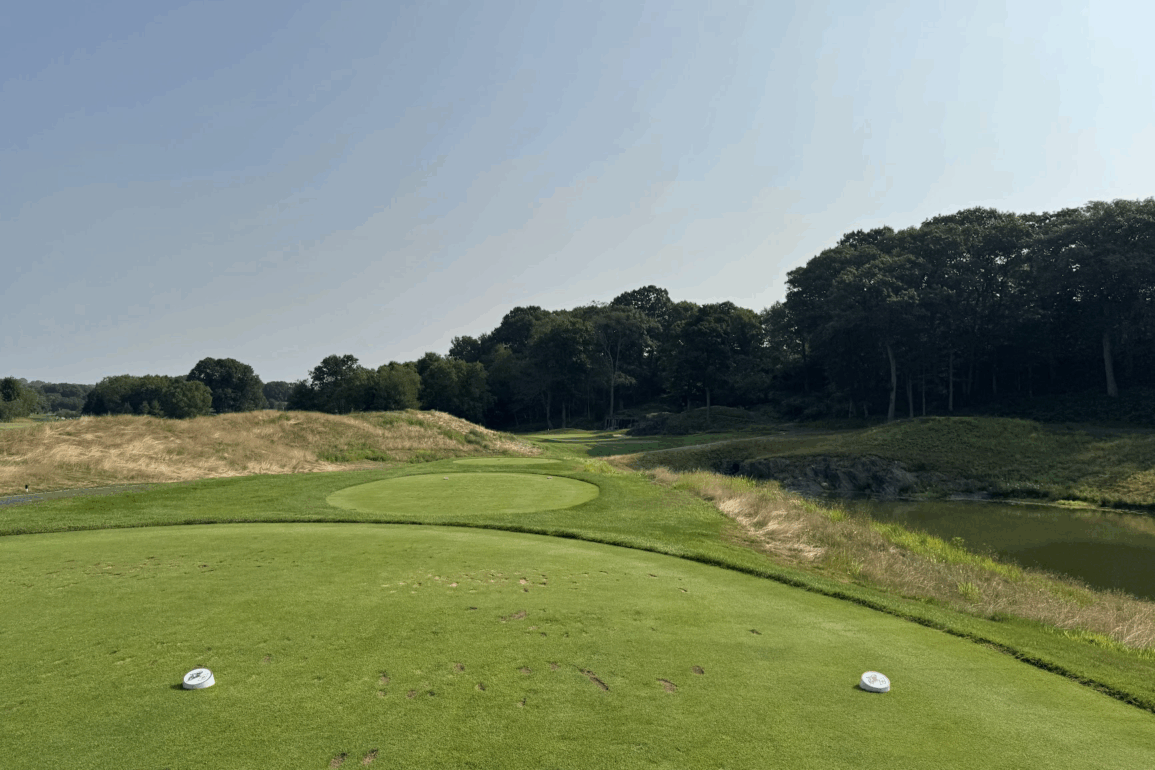
    Hunter Golf Club is a public par-72 course measuring approximately 6,606 yards from the tips. The course was originally designed in 1929 by R.J. Ross and is located in Meriden, Connecticut.

    Hunter Golf Club originated as the Meriden Municipal Golf Course on property formerly known as the Grulich farm, formally opening in late September 1929. Financial constraints from the Great Depression limited the original design to only nine holes, with R.J. Ross serving as principal architect and a distant cousin of legendary designer Donald Ross. The course expanded to eighteen holes in 1935 through work by V. Ardsley Flood and Depression-era relief workers hired by the city. After the death of longtime professional George Hunter, the course was renamed George Hunter Memorial Golf Course in 1967. Alfred Tull performed minor redesign work between 1968 and 1970, but the transformative makeover occurred from 1986 to 1988 when Albert Zikorus completely redesigned the layout with Moore Golf Inc. handling construction. Zikorus, who trained under Donald Ross, created a modern design that showcased his mentor’s influence particularly in the greens complexes. Since the 1988 reopening, the facility has undergone multiple renovations including bunker redesign in 2010, removal of several fairway bunkers between 2001 and 2010, installation of a new irrigation system in 2012, addition of forward tees from 2010 to 2015, and clubhouse restoration following a 2014 fire. Situated on approximately 150 acres in the northeast quadrant of Meriden, the course features rolling terrain with the front nine relatively flat and the back nine presenting more dramatic elevation changes. The routing style moves north-to-south with generally straight fairways and limited doglegs, though tree-lined corridors and strategically narrowing landing areas create plenty of tactical interest. Zikorus favored downhill tee shots throughout the design, with nine holes offering elevated teeing grounds that create dramatic visual presentations. The course rewards players who value strategic positioning over raw distance, with well-protected greens featuring Donald Ross-inspired slopes and contours that demand precise approach play. This layout particularly appeals to mid-handicappers who enjoy a fair but testing examination that emphasizes course management and shot-making versatility rather than overwhelming length or penal hazards.

    Strategic Test

    HandicapCourse Strategy
    High Handicap (18+)From the Gold tees at 5,666 yards with a rating of 67.8 and slope of 123, high-handicap players face a manageable yet engaging test that emphasizes accuracy over distance. The slope rating indicates approximately 2.5 additional strokes per round compared to a scratch player, making bogey golf an achievable target. Strategic elements include taking conservative lines away from creek hazards on holes 1, 15, 16, and 18, laying up short of fairway bunkers to ensure position rather than attempting heroic carries, and favoring the center of greens rather than attacking tucked pins near falloffs. The fourth hole serves as an ideal example at 354 yards from the tips, presenting a short par-4 where a fairway wood or long iron from the tee leaves a manageable pitch to an elevated green, removing driver accuracy concerns while still providing a legitimate birdie opportunity through smart positional play.
    Mid Handicap (8-18)The White tees at 6,156 yards with a rating of 69.2 and slope of 128 provide mid-handicappers with strategic variety that rewards both power and precision. The slope indicates roughly 3 additional strokes beyond scratch play, positioning par as a respectable achievement. These players must navigate decisions around carrying the stream at 220 yards on the opener, managing tree-lined corridors on holes 13 through 16, and reading the moderate to severe green contours that characterize Zikorus designs. The tenth hole exemplifies the strategic demands at either 380 yards as a par-4 or 587 yards as a par-5 depending on tee placement, requiring players to either execute a strong drive and mid-iron approach or manage a three-shot hole with water hazards in play and an elevated green complex that punishes poorly positioned layups.
    Low Handicap (0-8)From the championship Blue tees at 6,606 yards with a rating of 71.0 and slope of 132, low-handicap players encounter a layout that tests every aspect of their game. The slope rating suggests approximately 3.5 strokes above scratch play for a bogey golfer, but more importantly, the course defends par through green protection rather than pure length. Strategic demands include working the ball both directions to access optimal angles, especially navigating the narrowing fairways on 13, 15, and 16, managing distance control into small, elevated greens with false fronts, and reading the Ross-influenced putting surfaces that feature subtle breaks and significant slope. The seventh hole stands as one of Connecticut’s finest par-4s, playing 431 yards as a tight driving examination where trees compress the landing area from both sides, demanding either a controlled fade to hold the right side or a draw that avoids the dense left-side timber, followed by a precise mid-iron to a well-bunkered elevated green that severely penalizes misses.

    Nearby Course Alternatives

    Timberlin Golf Club in Berlin offers another stellar Al Zikorus municipal design located approximately 12 minutes northwest of Hunter. This 1970 layout stretches 6,733 yards from the championship tees with a par of 72, rating of 72.2, and slope of 129 on its bent grass surfaces. Situated on roughly 160 acres along the base of Ragged Mountain, Timberlin features more pronounced rolling terrain throughout compared to Hunter’s relatively flat front nine, with elevation changes that create dramatic shot values and spectacular views of surrounding farmland. The course received design updates from Stephen Kay and Doug Smith in 2006 plus Ray Hearn in 2014, maintaining Zikorus’s original strategic framework while modernizing conditions and playability. Timberlin’s greens slope more aggressively than Hunter’s with thicker greenside rough creating additional recovery challenges, while liberal fairway bunkering provides a visual intimidation factor often lacking at other Connecticut public courses. The architectural pedigree matches Hunter’s quality, as both courses showcase Zikorus’s training under Donald Ross through green complexes that reward precision and punish carelessness. Players who prefer more extreme topographical variety and enjoy testing their short game from demanding lies around greens will find Timberlin’s terrain more engaging than Hunter’s moderate undulations, though the course plays slightly longer and more demanding from comparable tee boxes for mid-handicappers who struggle with uphill and downhill lies.

    Lyman Orchards Golf Club – Jones Course in Middlefield presents a championship-caliber test from Robert Trent Jones Sr. located approximately 15 minutes east of Hunter. This 1969 design stretches 7,011 yards from the tips with a par of 72, rating of 73.2, and slope of 129, offering a dramatically different experience than Hunter’s traditional parkland routing. Situated on approximately 300 acres of former farmland along the Connecticut River, the course features severely rolling hills on the front nine and a back nine routed through woodlands and wetlands with water affecting seven holes. The Jones pedigree brings signature architectural elements including innovative bunkering with more than 40 sand hazards, liberal water hazards that encourage risk-reward decision making, and severely sloped greens that demand precise distance control. The course received redesign work from Roger Rulewich in 1969 and Mungeam-Cornish Golf Design in 2009, maintaining Jones’s hard par but easy bogey philosophy while updating agronomic standards. The facility spans significantly more acreage than Hunter with superior conditioning typical of Troon-managed properties, though the strategic demands skew toward aerial golf rather than Hunter’s emphasis on ground game options. Advanced players seeking a legitimate championship examination with modern amenities and pristine conditions will favor the Jones Course’s length and dramatic hazard placement, particularly those who excel at controlling trajectory and working the ball to access specific quadrants of large, contoured greens that punish imprecise approach play more severely than Hunter’s smaller, more accessible putting surfaces.

    Final Word

    Hunter Golf Club distinguishes itself through a comprehensive practice facility that includes a driving range with five hitting stations, a large putting green positioned behind the ninth green, and dedicated chipping and sand bunker practice areas that allow players to sharpen all aspects of their short game before heading to the first tee. The range features both mat and grass hitting options depending on seasonal conditions, providing year-round practice opportunities that many municipal courses cannot match. Beyond golf, the facility’s crown jewel remains Violi’s Restaurant, an Italian dining destination that transcends typical clubhouse fare through an extensive menu, course-side views from a semi-circular glass-enclosed dining room, and outdoor patio seating during warm weather months. Violi’s operates as both a daily lunch and dinner venue and a banquet facility capable of hosting wedding receptions, anniversary celebrations, retirement parties, and corporate events, creating a true destination atmosphere rather than merely serving as a nineteenth-hole watering spot. The restaurant’s reputation extends beyond the golf community as evidenced by its stand-alone following among local diners who appreciate fine Italian cuisine in a picturesque setting. The pro shop offers fully stocked merchandise and PGA professional instruction for players seeking to improve their games, while the facility maintains active men’s and women’s club organizations that rank among Connecticut’s largest and most vibrant golf communities. What makes Hunter special lies in its successful transformation from a Depression-era municipal layout into a modern championship-caliber test that has hosted the Connecticut Women’s State Amateur and Senior New England Public Links Championship while remaining accessible and welcoming to players of all abilities. The Zikorus redesign proved visionary in creating strategic interest through routing, green complexes, and hazard placement rather than relying on artificial difficulty or excessive length, resulting in a layout that rewards thinking players who emphasize course management over brute force. The course’s consistent recognition as a Connecticut Top Ten public facility and number seven ranking by Pub Links magazine validates its architectural merit and conditioning standards, while reasonable pace of play and professional marshaling ensure an enjoyable experience from first tee to final putt.

  • Hotchkiss School Golf Course

    Hotchkiss School Golf Course

    [put_wpgm id=”2″ width=”100%” height=”770px” current_post_only=”true”]

    [letsreview]

    Hotchkiss School Golf Course is a public par-35 course measuring approximately 3,043 yards from the tips. The course was originally designed in 1924 by Seth Raynor and is located in Lakeville, Connecticut.

    Golf at Hotchkiss traces its lineage to 1897 with a rudimentary six-hole layout, which was expanded to nine holes in 1911 by Robert Pryde. The transformative moment arrived in 1924 when Seth Raynor completely redesigned the course, creating what would become a pivotal chapter in golf architecture history. During construction, Raynor forged a friendship with Charles Banks, an English teacher at the school, who became so captivated by the design process that he abandoned teaching to join Raynor in partnership. Their collaboration lasted until Raynor’s untimely death in 1926, after which Banks completed over 30 unfinished Raynor courses and returned to Hotchkiss in the 1930s to reconfigure several holes when a road was rerouted through the property. In 2002, noted Raynor expert George Bahto installed a new green at the fourth hole as part of ongoing preservation efforts. The course occupies approximately 50 acres of the school’s 827-acre campus, winding through the heart of the boarding school with views of Lake Wononscopomuc and the Berkshire-Taconic mountains. The routing exhibits classic Raynor principles with dramatic elevation changes, blind and semi-blind approach shots, and plateau greens defended by strategically placed bunkers. The terrain is consistently undulating with no flat stretches anywhere, creating a links-like playing experience despite the mountainous setting. This layout appeals to the thinking golfer who appreciates Golden Age architecture, template holes, and strategic demands that reward precision over power. Players who enjoy walking courses with historical pedigree and don’t mind crossing a road three times during the round will find Hotchkiss particularly engaging.

    Strategic Test

    HandicapCourse Strategy
    High Handicap (18+)From the forward tees at 2,448 yards, high-handicap players face a course rating of 68.8 and slope of 119, which creates a manageable challenge that rewards smart positioning over aggressive play. The gentle slope rating suggests that bogey golfers won’t be overwhelmed by penalty strokes, though the severe green contours and elevation changes demand respect. The fifth hole, a downhill par-3 measuring 138 yards from the tips, becomes an ideal target for this player. From forward tees, this hole offers a shorter carry with spectacular lake views, requiring nothing more than a smooth mid-iron to a relatively receptive green. The downhill nature of the shot helps struggling ball-strikers get the ball airborne, and while bunkers guard the putting surface, the generous width of the green complex provides margin for error. This hole exemplifies how Raynor’s design rewards thoughtful club selection without demanding Tour-level execution.
    Mid Handicap (8-18)The white tees at 3,019 yards present mid-handicappers with a slope of 119 and rating of 69.7, creating a balanced test that rewards course management without punishing minor mistakes. These players benefit most from the wide fairway corridors that allow aggressive driving without severe penalty, though the perched greens demand precise approach work. The third hole, a 391-yard par-4 from the championship tees, becomes a strategic puzzle for this group. This Alps-style template plays slightly uphill as a dogleg left with an entirely blind approach until the final 100 yards. Mid-handicappers must commit to the blind carry over a hidden crossbunker that guards the front of a small, shallow green with significant back-to-front slope. The decision point centers on whether to lay back for a full wedge with better visual information or press forward to shorten the approach while accepting the blind nature of the shot. Club selection from 280 yards out requires confidence, as the hidden bunker punishes anything short while the sloped green repels anything long.
    Low Handicap (0-8)Championship tees at 3,043 yards may appear short, but the course rating of 34.4 and slope of 117 belie the strategic complexity that challenges accomplished players. The combination of blind shots, severe green contours, plateau putting surfaces, and dramatic elevation changes creates scoring opportunities alongside disaster holes. The opening hole, a 415-yard par-4 designed by Charles Banks in the 1930s, immediately establishes the examination format. This demanding opener plays every inch of its yardage with continuous uphill elevation to a left-to-right sloped, elevated green. Dense tree corridors flank both sides, eliminating recovery options while forcing a committed drive of 250-270 yards to reach the optimal approach angle. The second shot plays at least one club extra to a perched green guarded by bunkers left and a steep falloff right, where anything missed in the wrong quadrant leaves a pitch back across the slope. Low handicappers must stripe a driver up the narrow chute, then execute a precise mid-iron approach while accounting for extra yardage, crosswind exposure on the elevated target, and the green’s tilt. Par represents an excellent start and bogey remains a realistic outcome even after two quality strikes.

    Nearby Course Alternatives

    Richter Park Golf Course in Danbury sits approximately 45 minutes southwest of Hotchkiss and represents one of Connecticut’s premier municipal facilities. Designed by Edward C. Ryder and opened in 1971, this 18-hole layout stretches to 6,744 yards from the championship tees with a par of 72, course rating of 73.6, and slope of 139. The course sprawls across more than 180 acres of gently rolling terrain along the West Lake Reservoir, where water hazards influence play on 14 holes. The front nine features memorable holes circling the reservoir with dramatic elevation changes ranging from subtle to severe, while the tighter, tree-lined back nine presents blind shots and steep hills that test every aspect of shot-making. Richter Park’s conditioning rivals private clubs, with well-maintained fairways and true-rolling greens that compensate for the heavy play typical of top-ranked municipal courses. The signature par-5 12th hole, bordered by Boggs Pond, demands a blind second shot followed by a water carry to a bunkered peninsular green. The facility includes a clubhouse with restaurant, practice green, and short-game area, though the driving range sits at a separate location. This course appeals most to the mid-to-high handicapper seeking elevation variety and water features within a traditional parkland setting, particularly those who appreciate having 18 holes rather than nine and don’t mind the additional distance from northwest Connecticut.

    Wintonbury Hills Golf Course in Bloomfield lies approximately 60 minutes southeast of Hotchkiss and stands as Pete Dye’s only design in New England. This municipal championship layout measures 6,711 yards to a par of 70, with a course rating of 70.8 and slope of 125 from the championship tees. Opened in 2005 after extensive environmental permitting, the course traverses 80 acres of wetlands and forest with three par-fives and five par-threes creating an unconventional par structure. The routing combines links-style open corridors with traditional tree-lined holes, featuring Dye’s signature use of railroad ties, severe bunkering, and dramatically contoured greens that create both strategic interest and visual intimidation. Notable holes include the drivable 327-yard fifth, the downhill 255-yard seventh that forces long-iron execution, and the brutish 433-yard uphill 11th that accepts no compromise. The facility maintains exceptional conditioning across all elements with lush rough protected from cart traffic, along with a full-service clubhouse, practice green, and grass driving range located off-site. The course occupies approximately 200 acres and benefits from Troon management, ensuring private-club standards at public rates. Wintonbury appeals most to the accomplished player seeking Pete Dye’s strategic philosophy and pristine conditioning, particularly those drawn to modern championship design rather than Golden Age architecture and willing to travel farther east from Lakeville for an 18-hole experience with greater overall yardage and more varied terrain.

    Final Word

    The amenities at Hotchkiss reflect its boarding school setting with functional simplicity rather than luxurious appointments. A modest pro shop adjacent to the first tee provides the essentials under the management of Head Professional Jim Kennedy, whose encyclopedic knowledge of classic architecture and passion for golf history enriches the experience beyond the transactional. Practice facilities consist of a small putting green near the first hole, adequate for pre-round preparation though lacking the scale of dedicated practice areas found at larger facilities. No driving range exists on property, and the intimate clubhouse serves primarily as an operational hub rather than a gathering space. The course circles the campus, creating a unique visual character as play weaves through the school grounds with views of stately Georgian architecture, the Main Building, and the Music Center. Players routinely encounter students crossing fairways en route to Lake Wononscopomuc, adding a distinctive atmosphere that reinforces the course’s integration into campus life rather than existing as a separate entity. The Forrest E. Mars Jr. Athletic Center, while not directly golf-related, demonstrates the school’s overall commitment to athletic excellence. What elevates Hotchkiss above its modest amenity package is the singular quality of the golf itself, where nearly every hole presents strategic interest through Raynor and Banks design principles. The course earned recognition in Golfweek’s Best Courses You Can Play list and Golf World’s ranking as the 22nd best nine-hole course in America, accolades that speak to sustained architectural merit rather than modern conveniences. The privilege of walking the same ground where Charles Banks first discovered his calling in golf design, where template holes like the Alps third and the demanding closing par-5 ninth demonstrate Golden Age principles in compact form, and where every undulation carries intentional strategic purpose creates an experience that transcends the sum of its parts. For the golfer who values design pedigree, historical significance, and strategic golf over amenity-driven comfort, Hotchkiss delivers exceptional value through the universal language of great architecture.

  • Hop Meadow Country Club

    Hop Meadow Country Club

    [put_wpgm id=”2″ width=”100%” height=”770px” current_post_only=”true”]

    [letsreview]

    Hop Meadow Country Club is a private par-72 course measuring approximately 6,915 yards from the tips. The course was originally designed in 1961 by Geoffrey Cornish and is located in Simsbury, Connecticut.

    Established in 1961 by local residents in the heart of the Farmington Valley, Hop Meadow Country Club has evolved through thoughtful stewardship over its six decades of operation. The course sits on approximately 150 acres and features the distinctive characteristics of Geoffrey Cornish’s practical yet demanding design philosophy. Over the years, the membership has committed to comprehensive improvement programs that have enhanced key areas of the golf course, with architect Bill Love later contributing refinements that softened certain elements while preserving the championship character. The terrain presents significant elevation change that defines the routing strategy, with the clubhouse positioned in a valley and holes traversing upward to ridgeline positions before descending again. This creates a routing that climbs substantial elevation on both nines, offering panoramic views of the Farmington Valley but demanding thoughtful club selection and stamina. The bent grass fairways and greens are maintained to championship standards, with the course consistently rated among Connecticut’s finest private facilities. Players who appreciate classical strategic architecture, value precise iron play, and enjoy courses that test every club in the bag will find Hop Meadow particularly rewarding. The design favors thinking golfers who can shape shots and manage elevation effectively, with multiple par fours exceeding 450 yards that demand both length and accuracy. This is a course that reveals its strategic depth through repeated play, with subtle green complexes and well-positioned hazards that reward local knowledge and penalize careless execution.

    Strategic Test

    HandicapCourse Strategy
    High Handicap (18+)Playing from the White tees at 6,134 yards with a slope of 128 and rating of 70.8, high handicappers face approximately 8-10 additional strokes beyond their handicap due to slope impact. The strategic focus should be on course management and avoiding the penalty areas that guard many approach zones. The shorter par fours like the 311-yard 5th hole from the championship tees provide scoring opportunities when playing from forward tees, though the elevated and canted green complexes throughout demand careful distance control. Hole 10 at 350 yards from the tips presents an ideal challenge for this player, measuring approximately 320 yards from the White tees. This relatively short par four requires a controlled tee shot to navigate fairway contours, followed by a short iron or wedge to a green that accepts well-struck approach shots. Club selection off the tee might be a fairway wood or long iron to ensure position, leaving a comfortable 100-120 yard approach that allows focus on accuracy rather than distance. The elevation changes throughout make club selection particularly important, as downhill and uphill shots play dramatically different from their measured yardages.
    Mid Handicap (8-18)From the Blue tees at 6,531 yards, mid handicappers encounter a slope of 132 and rating of 72.3, adding approximately 5-7 strokes to expected scores. This tee placement brings the strategic architecture into full relief, with risk-reward decisions on par fives and demanding approach angles on the longer par fours. The course’s three par fours over 450 yards from the tips become genuine three-shot holes from the Blue tees for many players in this category. Strategic positioning off the tee becomes paramount, as Cornish’s design features fairway corridors that tilt and cant, rewarding draws and fades to specific landing zones. Hole 8 at 458 yards from the championship tees offers excellent strategic interest for mid handicappers, playing approximately 435 yards from the Blue tees. This uphill par four demands a well-positioned drive that avoids fairway undulations and sets up a mid to long iron approach to an elevated green. Players must decide whether to challenge the optimal angle with an aggressive tee shot or play conservatively and accept a longer approach from a safer position. Club selection might involve driver or 3-wood off the tee depending on conditions and confidence, followed by a 5 or 6-iron approach that must account for the uphill climb and green firmness.
    Low Handicap (0-8)Championship players from the Green tees at 6,915 yards face a slope of 136 and rating of 73.9, demanding precision and strategic acumen throughout. The course reveals its architectural sophistication at this length, with multiple holes exceeding 450 yards that test driving accuracy and approach shot quality. The green complexes, averaging substantial size with back-to-front slopes characteristic of Cornish’s work, require careful consideration of pin position and approach trajectory. Par is earned rather than given, with several forced carries and strategic bunkering that punishes marginal shots. The elevation changes add complexity to club selection on nearly every hole, particularly on the uphill stretches where multiple clubs may be required. Hole 11 at 452 yards serves as an exceptional test for accomplished players, ranking as the number 2 handicap hole. This lengthy par four plays its full yardage with elevation factors potentially adding or subtracting distance depending on the day’s pin position. The tee shot must find the fairway to leave any reasonable angle for the approach, which likely requires a long iron or hybrid into a green that demands precision. Strategy centers on whether to take on the direct line or work the ball to the ideal approach angle, with club selection potentially ranging from driver and 4-iron in favorable conditions to 3-wood and 3-iron when playing into wind or to a back pin. The green’s contours make distance control as important as direction.

    Nearby Course Alternatives

    Tumble Brook Country Club in Bloomfield offers a distinctly different private club experience approximately 15 minutes northeast of Hop Meadow. The 27-hole facility provides multiple combination options from its Red, Blue, and Green nines, with the most common rotation measuring approximately 6,600 yards from the championship tees. The course evolved in three distinct phases, with Willie Park Jr. designing the original Red nine in 1924, Orrin Smith adding the Blue nine in 1949, and George Fazio completing the Green nine in 1971, before Mark McCumber orchestrated a comprehensive renovation in 2005. This multi-generational development creates fascinating architectural variety, with the older Park nine displaying golden age design principles while the later additions reflect mid-century and modern sensibilities. The routing occupies approximately 140 acres with more moderate elevation change compared to Hop Meadow’s dramatic topography, making it somewhat more walkable despite its length. The course presents a different strategic challenge with panoramic views of downtown Hartford and rolling terrain that rewards strategic positioning but offers more forgiving landing areas. Tumble Brook’s slope rating varies by combination but generally falls in the 130-135 range, slightly less demanding than Hop Meadow’s championship layout. Players who prefer variety through multiple nine-hole configurations and appreciate the historical evolution of golf architecture will find Tumble Brook compelling. The course particularly suits players who enjoy examining how different architectural eras approached similar terrain, and those who value a slightly less severe physical test while maintaining championship strategic demands. Mid-to-low handicap players who appreciate architectural pedigree and historical context may find Tumble Brook’s multi-generational design more intellectually engaging.

    Ellington Ridge Country Club in Ellington presents another Geoffrey Cornish design approximately 25 minutes northeast of Hop Meadow, offering an interesting comparison in how the architect approached different sites just two years apart. The course measures approximately 7,057 yards from the championship tees with a slope of 133 and rating of 73.8, making it slightly longer but marginally less difficult than Hop Meadow by the numbers. Designed in 1959 and occupying roughly 160 acres, Ellington Ridge sits atop a ridgeline with expansive views of the Connecticut River valley, creating a more open, windswept character compared to Hop Meadow’s valley-to-ridge routing. The course consistently ranks among Connecticut’s top private facilities and has hosted numerous prestigious state championships including the Travelers Championship qualifier, Connecticut PGA events, and CSGA tournaments. The design features Cornish’s characteristic long par fours with seven holes exceeding 400 yards and multiple approach shots demanding long irons or hybrids. The finishing stretch from holes 15 through 18 is particularly renowned for its difficulty and has determined many championship outcomes. Ellington Ridge offers superior practice facilities including a six-acre driving range, dual practice putting greens, and dedicated short game area. The course plays firmer and faster than Hop Meadow due to its ridgetop exposure, with approximately 90 bunkers strategically positioned throughout the routing. Players who prefer more consistent elevation rather than dramatic climbs and descents will appreciate Ellington Ridge’s ridgetop character. The course particularly appeals to accomplished players who relish championship conditions and a brutal closing stretch that separates scores in competitive play.

    Final Word

    Hop Meadow Country Club offers comprehensive practice facilities that support serious game improvement and pre-round preparation. The driving range features mat stations with adequate space for full swings and trajectory evaluation, complemented by a practice putting green that reflects the speed and true roll of the course greens. A dedicated short game area allows members to work on pitch shots, chips, and greenside bunker play under conditions that mirror on-course situations. Beyond golf, the club provides eight Har-Tru tennis courts maintained to high standards, with several illuminated for evening play, alongside two platform paddle tennis courts that extend racquet sports into winter months. The Olympic-sized swimming pool serves as a summer focal point for families, featuring dedicated lanes for lap swimming and a separate children’s pool area. The recently expanded outdoor patio and bar area, representing a substantial investment in member amenities, creates seamless flow between the golf course, tennis courts, and pool while providing panoramic views across the property. The clubhouse offers multiple dining spaces that accommodate both casual rounds and formal events, with the covered deck overlooking the course providing an ideal setting for post-round analysis. These comprehensive amenities position Hop Meadow as a true full-service family club rather than simply a golf facility. What makes this course particularly special is how Geoffrey Cornish’s practical yet demanding architecture has matured over six decades into a refined strategic test that rewards thoughtful play while remaining accessible to members of varying abilities. The dramatic elevation changes that define the routing create both challenge and spectacular views, with the course revealing increasing complexity through repeated play. The commitment to championship conditioning paired with the family-oriented club culture demonstrates how private facilities can maintain serious golf standards while fostering inclusive community. For players who value strategic architecture over manufactured difficulty and appreciate courses that demand every club while remaining playable from multiple tees, Hop Meadow represents an exemplary Connecticut private club that has stood the test of time.

  • Hop Brook Golf Course

    Hop Brook Golf Course

    [put_wpgm id=”2″ width=”100%” height=”770px” current_post_only=”true”]

    [letsreview]

    Hop Brook Golf Course is a public par-36 course measuring approximately 2,887 yards from the tips. The course was originally designed in 1910 and is located in Naugatuck, Connecticut.

    Hop Brook Golf Course carries the distinction of being the home course where 1931 U.S. Open champion Billy Burke first learned the game as a teenage caddie. Burke, born William Burkowski in nearby Naugatuck, went on to win that historic 144-hole championship at Inverness Club, becoming the first player to win a major with steel-shafted clubs. The course opened in 1910 as Naugatuck Golf Club and was later renamed Hop Brook. While some sources indicate the current routing dates to a 1923 redesign, recent improvements have added length through deeper tee boxes on nearly every hole, addressing modern equipment distance gains. Strategic bunker additions on holes three and eight have sharpened the design over the past decade, demonstrating thoughtful stewardship that honors the layout’s century-plus heritage. Spanning roughly 40 acres of parkland terrain in a semi-isolated setting near Hop Brook Lake, the nine-hole layout presents a classic river valley configuration with notable elevation changes on the opening five holes before transitioning to flatter corridors along holes six through nine. The property features tree-lined fairways framed by mature hardwoods, bluegrass surfaces throughout, and water hazards including a pond and creek that factor into three holes. This municipal track rewards accuracy and course management over distance, making it particularly appealing to mid-handicappers who appreciate strategic variety and players seeking an authentic early 20th-century parkland experience without the pretensions of modern championship length.

    Strategic Test

    HandicapCourse Strategy
    High Handicap (18+)High handicappers find excellent value in the forward tees, which present the nine holes at approximately 2,500 yards. The slope rating of 109 and course rating of 33.9 result in a manageable differential that typically adds 6-8 strokes to their standard handicap when playing the full 18-hole double loop. The opening hole, a 474-yard par 5, represents both the number one handicap and the most enjoyable challenge for this player segment. This three-shot hole allows generous recovery room off the tee before presenting a risk-reward pond crossing at approximately 75-100 yards from the green. The decision whether to lay up short of the water or attempt to carry it with a mid-iron creates genuine strategic interest. High handicappers benefit from the straightforward nature of most approach angles and the relatively compact green complexes that, while not oversized, accept running shots when necessary.
    Mid Handicap (8-18)Mid-handicappers playing from the middle tees around 2,650 yards encounter the design’s most compelling strategic elements. At these distances, several par 4s become reachable in regulation with solid drives, while the par 5 sixth hole at 490 yards presents genuine birdie opportunities when threading a draw around the dogleg right corner. The eighth hole, a 402-yard par 4, emerges as a favorite test for this cohort. This dogleg features scattered sentinel trees along its fairway corridor, creating a shot values equation where positioning off the tee matters more than pure distance. The approach plays to a well-defended green concealed behind a pronounced berm, demanding precision with a mid-to-short iron. Mid-handicappers appreciate how the undulating fairways and thoughtfully placed hazards require creative shotmaking rather than relying solely on overpowering length. The slope of 112 typically adds 4-6 strokes above their handicap for the 18-hole round.
    Low Handicap (0-8)From the tips at 2,887 yards, accomplished players face a different examination focused on scoring efficiency and precision wedge play. The course rating of 66.6 and slope of 112 for the double round create a par-equivalent around 70-71 for scratch players, demanding consistent execution to achieve their expected scoring. The number one handicap hole, the opening 474-yard par 5, provides the most strategic depth from the championship tees. The drive must find the proper angle in the rolling fairway to set up the critical second shot, which either challenges the pond crossing at 150-180 yards out or lays back to leave a full wedge. Better players attempting to reach in two must commit fully to clearing the water, as anything tentative finds the hazard. The small, elevated green rewards precise distance control. Low handicappers recognize that birdie opportunities cluster on the par 5s, while scrambling ability proves essential on the demanding par 3s and tighter par 4s where even well-struck approaches can find trouble.

    Nearby Course Alternatives

    The Golf Club at Oxford Greens in Oxford offers a dramatically different proposition approximately 15 minutes southwest of Hop Brook. This Mark Mungeam design opened in 2005 across 680 acres carved from the Naugatuck State Forest, presenting a modern championship test that stretches to 7,186 yards from the tips with a slope of 134 and rating of 75.4. The bentgrass playing surfaces from tees through greens represent a significant conditioning upgrade over typical municipal offerings, while the neoclassical design philosophy creates isolated corridors where each hole unfolds independently within pristine woodland. Dramatic elevation changes course throughout, with breathtaking vistas rewarding the climb to several elevated tees. The strategic architecture incorporates template holes including a Redan-influenced par 3 13th, along with push-up greens that demand aerial precision rather than ground game creativity. This layout suits better players seeking a legitimate test that can humble single-digit handicaps, particularly those who value modern course conditioning, aggressive bunkering schemes, and the challenge of reading undulating bentgrass greens. The scale and difficulty make Oxford Greens less forgiving than Hop Brook, but players who appreciate contemporary golf architecture and don’t mind the premium will find it among the finest public tracks in the state.

    Richter Park Golf Course in Danbury provides another compelling comparison roughly 30 minutes west of Hop Brook. This Edward Ryder design opened in 1971 on 180 rolling acres donated to the city and has earned recognition as one of the country’s better municipal layouts, stretching 6,744 yards with a slope of 139 and rating of 73.6. The property’s defining characteristic is water, with the West Lake Reservoir bordering seven holes on the front nine and Boggs Pond featuring prominently on the signature par 5 12th with its peninsula green. The bent/poa mix greens roll truer and faster than typical public course standards, while 49 recently renovated bunkers frame the undulating bluegrass and ryegrass fairways. The dramatic elevation changes range from subtle to severe, creating blind shots that demand multiple plays to fully understand club selection. The hilly back nine tests ball-striking more consistently than the scenic front, culminating in a stern 438-yard closing par 4 that plays steadily uphill. This layout appeals most to mid-to-low handicappers who relish strategic water management, players comfortable navigating significant terrain variations, and those seeking an authentic championship atmosphere at municipal rates. While Richter Park demands more length and aerial precision than Hop Brook’s ground-oriented strategic elements, both courses reward thoughtful play over raw power.

    Final Word

    Beyond the golf course itself, Hop Brook provides functional practice amenities including a putting green located near the first tee, though the facility lacks a driving range for extended warmup sessions. The modest clubhouse serves the essential pre- and post-round functions with a pro shop stocked with basics and a friendly staff that reflects the municipal course’s community-oriented mission. No significant ancillary amenities like swimming pools or tennis courts distract from the golf-focused experience, which maintains the authentic character of an early 20th-century municipal layout. What ultimately distinguishes Hop Brook is its successful navigation of preservation and thoughtful evolution. The facility has resisted the temptation to fundamentally alter a routing that works, instead making incremental improvements like extended tees and strategic bunker additions that sharpen the challenge without compromising the original character. The connection to Billy Burke provides historical resonance that few nine-hole municipals can claim, while the consistent conditioning and well-maintained bluegrass playing surfaces demonstrate proper stewardship. For players seeking an honest examination of their short game and course management skills in a compact format, Hop Brook delivers exceptional value through strategic variety that belies its modest yardage. The rolling terrain, water elements, and elevation changes create genuine interest across the nine holes, rewarding placement over power in ways that modern courses often abandon. Hop Brook proves that a century-old nine-holer can remain relevant by honoring its heritage while adapting thoughtfully to contemporary expectations.

  • Harry R. Brownson Country Club

    Harry R. Brownson Country Club

    [put_wpgm id=”2″ width=”100%” height=”770px” current_post_only=”true”]

    [letsreview]

    Brownson Country Club is a private par-70 course measuring approximately 5,784 yards from the tips. The course was originally designed in 1960 by Al Zikorus and is located in Shelton, Connecticut.

    Established in 1959 and opened for play in 1960, Brownson Country Club has occupied a special place in the Fairfield County golf landscape for over six decades. The original Al Zikorus layout was later refined by the award-winning architectural firm of Cornish, Silva & Mungeam, whose renovation work maintained the character of the property while enhancing strategic interest and playability. The course occupies an estimated 80 to 100 acres of rolling Connecticut terrain just off the picturesque village green in the Huntington section of Shelton. The routing exhibits classic parkland characteristics with elevation changes that define the playing corridors and create a compelling visual rhythm throughout the round. With water coming into play on eleven holes and well-bunkered green complexes throughout, the layout requires thoughtful course management rather than pure distance. The property features both wide-open corridors on the front nine and tighter, tree-lined fairways on the back nine, creating distinct strategic profiles for each half. Push-up green complexes with subtle undulation reward precision on approach shots, while the elevated tee boxes provide commanding views of the landscape and clear sight lines for shot planning. This is an ideal track for the player who values strategic positioning over sheer power, where placement from the tee and accuracy with approach shots proves more valuable than raw distance.

    Strategic Test

    HandicapCourse Strategy
    High Handicap (18+)High-handicap players will find generous landing areas on the front nine from the forward tees, which play to approximately 4,800 yards with a slope rating of 117. The course rating of 65.5 suggests scoring opportunities exist when played from appropriate tees, though water hazards on eleven holes demand attention to course management rather than aggressive play. The elevated tees throughout the layout provide clear visual cues for target identification, helping less experienced players navigate the property. The opening hole presents the layout’s most challenging test, a 211-yard par 3 playing uphill from the blue tees, though forward markers significantly reduce this distance. For high handicappers, this hole exemplifies the importance of club selection and accepting bogey when appropriate, as the raised green complex and flanking bunkers punish short misses. The member bailout area just over the right trap offers a safer play than attacking the pin directly. From the whites, this hole plays closer to 190 yards, making a hybrid or long iron the smart choice rather than forcing a wood.
    Mid Handicap (8-18)Mid-handicap players benefit from the white tees, which stretch to approximately 5,300 yards with a course rating of 71.3 and slope of 134. This combination creates a balanced test where par becomes a solid score rather than an expectation. The narrowing fairways on the back nine reward accurate driving, while the small, well-protected green complexes demand precise distance control with mid to short irons. Water hazards along eleven holes create genuine risk-reward decisions, particularly on approach shots where aggressive lines offer shorter putts but flirt with penalty areas. The course’s 134 slope indicates that scoring differentials will be magnified for players in this handicap range, making course management and avoiding big numbers essential. The first hole remains a formidable challenge at 211 yards from the blues or 190 from the whites, requiring a hybrid or fairway wood played with extra club to account for the uphill climb. The green accepts shots that carry to the front portion, but anything short finds trouble. Smart play involves aiming for the center of the green rather than chasing pins tucked near bunkers.
    Low Handicap (0-8)Low-handicap competitors face a genuine examination from the back tees at 5,784 yards with a course rating of 69.3 and slope of 134. While the yardage appears modest, the combination of small greens, strategic bunkering, and eleven water hazards creates scoring resistance through precision demands rather than length requirements. The push-up green complexes reject marginal approach shots, and the undulating putting surfaces require careful study to avoid three-putts. The back nine’s tighter corridors demand accuracy off the tee, as recovery shots from tree-lined rough significantly complicate approach angles. Accomplished players will find scoring opportunities on the front nine’s more open layout, but the back nine typically plays harder as fatigue sets in and the course tightens. The opening hole provides an immediate test of nerve and execution, a 211-yard par 3 that plays uphill to an elevated, well-bunkered green. The hole ranks as the most difficult on the property for good reason, as even solid strikes that miss the target area leave challenging up-and-downs. From the tips, a controlled long iron or hybrid aimed at the center of the green represents sound strategy, as the putting surface slopes from back to front and any ball above the hole creates a treacherous downhill putt.

    Nearby Course Alternatives

    Race Brook Country Club in Orange sits approximately 10 minutes southeast of Brownson and represents one of the finest private facilities in southern Connecticut. The main 18-hole course measures 6,403 yards from the championship tees with a par of 71, course rating of 71.9, and slope of 131, designed by Scottish architect Robert D. Pryde and opened in 1913. The property encompasses multiple courses, including the championship layout and the unique O’Sullivan nine-hole course nested inside the main routing, providing members with varied playing experiences throughout the season. Race Brook occupies roughly 145 acres of rolling New England terrain with mature tree-lined fairways and medium-width playing corridors that demand accuracy from the tee. The course showcases large greenside bunkers that protect well-contoured putting surfaces, with several holes featuring particularly challenging green complexes that test short-game creativity. The architectural pedigree runs deep here, as the layout has hosted numerous championships including the New England Amateur Championship and Connecticut PGA Championship, testament to the course’s strategic merit and conditioning standards. The player who prefers a longer, more traditional test with greater emphasis on approach-shot precision and bunker play would find Race Brook more suited to their game than Brownson’s water-focused challenge. Race Brook’s tree-lined corridors and premium placed on driving accuracy make it particularly appealing to the accomplished ball-striker who enjoys shaping shots around doglegs and managing risk through position rather than power.

    Oronoque Country Club in Stratford provides another compelling private option approximately 8 minutes southwest of Brownson along the Housatonic River corridor. This Desmond Muirhead design opened in 1972 and plays to 6,573 yards from the back markers with a par of 72, course rating of 73.0, and slope of 125. The course occupies an estimated 150 acres overlooking the Housatonic River and Long Island Sound, with the routing taking advantage of natural elevation changes and water features throughout the property. Muirhead’s architectural signature appears in the green complexes, which feature dramatic contouring and bowl-shaped surfaces that demand precise approach shots to access certain pin positions. The fairways present moderate width with strategic bunkering that forces consideration of angles into the greens rather than simply finding the short grass. Oronoque prides itself on fast, true putting surfaces that reward skilled lag putting while punishing aggressive play from poor positions. The course maintains a balanced test without extreme length requirements, making it accessible to a wide range of player abilities while still defending par through clever design rather than raw yardage. Players who appreciate distinctive green complexes with significant internal movement and prefer a course where putting represents as important a skill as ball-striking would find Oronoque’s challenge more aligned with their interests than Brownson’s emphasis on water carries and elevated approach shots. The player seeking longer playing distances and more dramatic elevation changes from tee to green would favor Oronoque over Brownson’s more compact layout.

    Final Word

    Brownson Country Club provides members with a complete practice facility that includes a driving range with multiple target areas at varying distances and elevations, allowing players to work on trajectory control and specific yardage gaps rather than simply hitting balls. The putting green offers ample space for stroke work and lag putting practice, while the chipping and short-game area permits members to refine their touch around the greens before heading to the course. The property recently invested in a state-of-the-art Trackman simulator located inside the clubhouse, extending practice opportunities through the winter months and providing data-driven feedback for serious players working on their games. The clubhouse underwent recent renovations to the locker rooms, creating modern, comfortable spaces that honor the club’s traditional character while meeting contemporary expectations. An Olympic-sized swimming and diving pool complex with a separate kiddie pool serves families throughout the summer season, complementing the golf amenities with aquatic recreation. Multiple dining venues exist within the clubhouse, from formal dining rooms that can accommodate up to 200 guests for weddings and special events to the casual lounge and grillroom for smaller gatherings after a round. The covered deck overlooks both the pool complex and golf course, providing an ideal setting for seasonal gatherings and casual meals. What sets Brownson apart in the crowded Fairfield County private club landscape is the intentional cultivation of a family-friendly atmosphere where social programming receives equal attention to golf operations. The club hosts comprehensive junior golf and youth swim programs, building the next generation of members through quality instruction and competitive opportunities. This commitment to family engagement, combined with a challenging golf course that rewards strategic thinking over raw power, creates an environment where members return not just for the golf, but for the complete club experience that honors both tradition and community.

  • Guilford Lakes Golf Course

    Guilford Lakes Golf Course

    [put_wpgm id=”2″ width=”100%” height=”770px” current_post_only=”true”]

    [letsreview]

    Guilford Lakes Golf Course is a public par-27 course measuring approximately 1,319 yards from the tips. The course was originally designed in 1999 by Al Zikorus and is located in Guilford, Connecticut.

    The history of Guilford Lakes stretches back nearly a century, beginning in 1928 when the Land and Lake Development Company first promoted the Guilford Lakes Estate. In the early 1930s, Gardner Wheeler, a 16-year-old high school student, transformed a rudimentary two-hole pitch and putt into a nine-hole layout with the landowner’s permission. The course operated under various management structures through the mid-century until the clubhouse burned in the early 1960s and the facility eventually closed in the mid-1980s. After a 1996 town referendum approved a reconstruction bond, renowned Connecticut architect Al Zikorus was hired to reimagine the property, though he passed away during construction and his son Michael completed the work. The completely renovated course reopened to the public on July 28, 1999, followed by the construction of the current 1,500-square-foot clubhouse in 2001. Recent improvements have included upgrades to tees on holes one, three, four, five, six, and eight to address width and leveling issues. Occupying approximately 140 acres adjacent to the 600-acre Timberlands Preserve, the property features three ponds and borders wetlands and protected land, creating a naturally constrained routing with abundant wildlife. The terrain presents varied elevation changes across its compact footprint, with push-up greens featuring false fronts, terracing, and significant internal contours that demand precise distance control and creative short-game shotmaking. This is strategic architecture distilled to its essence, where players who value precision over power find themselves constantly engaged by club selection decisions and green-reading challenges. The layout appeals most to golfers seeking an efficient round that emphasizes iron play, course management, and putting while developing skills directly transferable to larger championship venues.

    Strategic Test

    HandicapCourse Strategy
    High Handicap (18+)From the forward tees at 739 yards with no official slope rating, higher handicap players find an accessible environment to develop fundamental iron skills without the intimidation factor of long forced carries. The strategic emphasis shifts toward simply finding greens and avoiding three-putts on the terraced surfaces. The 88-yard eighth hole from the blue tees provides an ideal confidence-building opportunity, requiring only a wedge or short iron to a receptive green. This hole rewards solid contact and teaches green-reading fundamentals without punishing marginal strikes severely. Club selection becomes straightforward, allowing players to focus on tempo and strike quality rather than complex trajectory calculations.
    Mid Handicap (8-18)The white tees at 1,031 yards present the optimal challenge for mid-handicap players, offering sufficient variety in distance while maintaining the strategic emphasis on precision. With a course rating of 26.4 and no slope designation, players in this range can expect to score in the mid-to-high 30s for nine holes. The 220-yard sixth hole from the blue tees becomes the defining examination, demanding a hybrid or fairway wood to reach a green protected by water and requiring commitment to an aggressive line. Missing left brings water into play while bailing right leaves a difficult recovery from rough terrain. Club selection oscillates between confident 7-iron and tentative 4-iron depending on tee placement, pin position, and wind conditions. This hole separates players who understand risk-reward calculus from those still learning course management principles.
    Low Handicap (0-8)From the blue tees at 1,319 yards, the slope rating of 113 and course rating of 35.5 suggest scratch players should navigate the layout comfortably, yet the challenge lies in optimizing scoring through precise distance control and green-reading acumen. Advanced players often find themselves between clubs on approach shots, with the green complexes punishing marginal misses through false fronts and collection areas. The 220-yard sixth hole demands full commitment, requiring either a 3-wood or long iron struck purely to carry the water hazard and hold a firm putting surface. Pin positions on the back portion demand extra club and perfect strike, while front locations present the temptation to go directly at the flag despite minimal margin for error. The strategic tension between aggressive targeting and intelligent miss positioning keeps accomplished players mentally engaged throughout.

    Nearby Course Alternatives

    Alling Memorial Golf Course in New Haven presents a dramatically different test approximately 15 minutes southwest of Guilford Lakes. This 18-hole championship layout measures 6,283 yards from the tips with a par of 72, slope rating of 120, and course rating of 71.9, occupying significantly more acreage with room to stretch its legs across varied terrain. Designed by Robert D. Pryde and originally opened in 1932, the course underwent a comprehensive million-dollar renovation completed in 2005 that enhanced bunker positioning, installed new tees, and refined the overall presentation while maintaining the original routing concepts. The strategic architecture emphasizes natural terrain integration over manufactured difficulty, with multiple blind approach shots adding local knowledge advantage. The opening hole immediately establishes the championship credentials with a 480-yard dogleg par 4 featuring water hazards in play off the tee. Long par 3s exceeding 200 yards test both club selection and ball-striking under pressure, while the undulating greens demand sophisticated putting skills. Players who thrive at Guilford Lakes but seek more variety in club usage and longer approach shots will find Alling Memorial compelling, particularly mid-handicap golfers ready to test themselves against more demanding strategic architecture without the accessibility concerns of true championship venues. The municipal facility offers excellent conditioning for its price point, though the pace of play can slow considerably during peak times.

    Lyman Orchards Golf Club in Middlefield delivers championship-caliber golf approximately 25 minutes northwest of Guilford, operating two distinct 18-hole layouts plus a nine-hole short course on over 1,100 acres of rolling farmland. The Robert Trent Jones-designed Jones Course measures 7,011 yards from the championship tees with a par of 72, course rating of 73.2, and slope of 129, featuring dramatically rolling hills on the front nine and a routing through woodlands and wetlands on the back where water influences play on seven holes. The Gary Player-designed Player Course stretches to 6,725 yards with a par of 71, course rating of 72.7, and slope of 133, winding through apple orchards with significant elevation changes throughout and 34 bunkers protecting relatively small greens. Both courses carry the pedigree of architects in the World Golf Hall of Fame and consistently rank among Connecticut’s finest public facilities, with bent grass greens and championship conditioning maintained year-round. The Jones Course opened in 1969 while the Player Course debuted in 1994, and both have hosted numerous Connecticut Golf Association and PGA events. For players who appreciate Guilford Lakes’ strategic emphasis on precision and green-reading but seek dramatically more yardage, varied shot values, and signature design elements from legendary architects, Lyman Orchards provides the natural progression. The Player Course particularly suits mid-to-low handicap golfers seeking a stern test with spectacular views from the 11th and 13th holes overlooking southern Connecticut’s landscape.

    Final Word

    Guilford Lakes provides essential practice infrastructure including a putting green and driving nets that allow players to warm up thoroughly before their round. The 1,500-square-foot clubhouse, constructed in 2001, houses a modest pro shop offering rental clubs, snacks, and beverages, creating a functional if unpretentious base of operations. The facility operates with a clear focus on golf rather than ancillary amenities, reflecting its municipal roots and mission to provide accessible golf to the community. PGA Class A professional Ryan Quinn has partnered with the course since earning his full membership in 2008, offering lessons and clinics for players of all ages and skill levels, bringing legitimate instructional credibility to the operation. The property’s location adjacent to the Timberlands Preserve ensures that development pressure will never compromise the natural setting, with red hawks, rabbits, deer, ducks, foxes, and coyotes frequently observed during rounds. Each tee features carefully maintained flower beds with daffodils, tulips, ornamental grasses, and flowering shrubs, demonstrating attention to aesthetic details that transcend mere course conditioning. The course consistently earns recognition as Connecticut’s premier par-3 facility and has been nicknamed “Guilford’s Little Augusta” for its impeccable maintenance standards and strategic green complexes. What makes Guilford Lakes genuinely special is its ability to distill golf architecture to its purest elements without the distractions of extreme length or manufactured difficulty, creating a venue where every player regardless of ability confronts authentic strategic decisions and develops skills that transfer directly to championship courses. The course proves its value through deliberate design intelligence, meticulous conditioning, and a routing that maximizes interest within severe spatial constraints, offering a complete examination of short-game creativity and green-reading acumen in approximately 90 minutes of efficient play that respects both the game’s traditions and contemporary players’ time demands.

  • Highland Greens Golf Course

    Highland Greens Golf Course

    [put_wpgm id=”2″ width=”100%” height=”770px” current_post_only=”true”]

    [letsreview]

    Highland Greens Golf Course is a public par-27 course measuring approximately 1,398 yards from the tips. The course was originally designed in 1967 by Al Zikorus and is located in Prospect, Connecticut.

    Highland Greens sits on historically significant property once owned by Revolutionary War Captain Ambrose Hine Jr., who served with General Washington’s Continental Army in the Battle of Long Island and later defended the Hudson River. His stonewalls remain visible throughout the property, and his home still stands as the red house across from the 3rd tee. The course occupies approximately 40 acres of rolling terrain and was conceived from its inception as Connecticut’s only full-length par-3 facility with lighting for night play. Zikorus, a locally renowned architect, set out to design a layout that would test every iron in a golfer’s bag and potentially a fairway wood or two. His signature green complexes feature subtle reverse slopes and yawing bunkers crafted from native materials. The routing takes advantage of natural elevation changes, creating a mix of hilly and flat fairways that add dimension to what might otherwise be a straightforward short-game venue. This is an ideal facility for players seeking to sharpen their iron play in a relaxed but purposeful environment. The golfer who enjoys focused practice on approach shots, appreciates thoughtful green complexes, and values the ability to complete a round in under two hours will find Highland Greens particularly satisfying. The lighted evening rounds add a distinctive element not available elsewhere in Connecticut.

    Strategic Test

    HandicapCourse Strategy
    High Handicap (18+)These players will find Highland Greens an excellent venue for building confidence with mid and short irons without the intimidation factor of long par-4s or par-5s. From the white tees at 1,398 yards with a slope of 90 and rating of 36.0, the relatively gentle slope rating means bogeys are achievable on most holes without excessive penalty. The 3rd hole stands out as particularly instructive for this group. At 115 yards, it is the shortest on the course but demands precision over two deep greenside bunkers. The hole teaches trajectory control and the importance of accepting the center of the green rather than chasing pins. Club selection here typically ranges from a pitching wedge to an 8-iron depending on conditions and individual carry distances. The modest slope rating ensures that even with a few double bogeys mixed in, scores remain manageable and rounds feel productive rather than punishing.
    Mid Handicap (8-18)Mid-handicappers will appreciate the nuanced challenges Highland Greens presents despite its modest yardage. The slope of 90 and rating of 36.0 mean that solid ball striking will produce scores near par, but wayward shots into Zikorus’s carefully positioned hazards will accumulate strokes quickly. The 7th hole, measuring 157 yards from the tips, exemplifies the strategic depth available here. This signature hole plays over water to a green fronted by the course’s distinctive black-water pond, dredged nearly 30 feet deep along the left side. The hole demands a confident mid-iron strike with sufficient carry to clear the hazard while avoiding the tendency to bail out right. In firm conditions, a 7-iron or 6-iron is typical from the back tee, while downwind a soft 8-iron might suffice. The green’s subtle slopes mean distance control is paramount. This player profile will find the course rewards consistent iron play and exposes any tendency to miss directionally.
    Low Handicap (0-8)Accomplished players will discover that Highland Greens offers more resistance than its yardage suggests, primarily through green complexes and strategic hazard placement. The rating of 36.0 and slope of 90 indicate that while distance is not the challenge, precision and creativity around the greens become the differentiators. Several holes stretch beyond 185 yards, requiring long irons or hybrids and presenting legitimate par opportunities rather than easy birdie chances. The reverse slopes in many greens create situations where the wrong quadrant leaves difficult two-putts. The 7th hole at 157 yards becomes a scoring opportunity for this group, but only with proper execution. A well-struck 8-iron or soft 7-iron that carries the water hazard approximately 145 yards and lands on the front portion of the green is ideal. Missing long can be as costly as coming up short in the water. Low handicappers seeking birdie on every hole must manage their aggression, as the course rewards the player who understands when to attack pins versus when to accept center-green locations.

    Nearby Course Alternatives

    Gainfield Farms Golf Course in Southbury offers another Al Zikorus design just 20 minutes west of Highland Greens via I-84. This par-28 layout stretches 1,384 yards from the tips across approximately 30 acres of former farmland. Zikorus applied similar design wisdom here, creating genuine challenges within the executive format rather than oversimplified holes. The course features eight par-3s and one par-4, providing slightly more variety in hole types than Highland Greens’ all-par-3 routing. Gainfield Farms occupies rolling terrain with several elevated greens that add complexity to club selection, particularly on the 3rd hole, a steeply uphill par-3 of 188 yards from the back tees with an impressively defended green. The conditioning at Gainfield Farms is notably strong, with greens approaching country club standards and featuring devilish slopes that test putting finesse. The facility caters particularly well to junior golfers and developing players due to its abbreviated length, though the design contains enough rigor to engage accomplished ball strikers. A high-handicap player seeking additional variety in hole types and perhaps slightly less emphasis on carry over hazards would find Gainfield Farms an appealing alternative, while players specifically wanting to work exclusively on par-3 execution might prefer Highland Greens’ singular focus.

    Guilford Lakes Golf Course in Guilford presents a comparable par-3 experience approximately 40 minutes southeast of Highland Greens. This par-27 facility measures 1,319 yards from the championship tees with a slope rating of 113 and course rating of 35.5. Also designed by Al Zikorus and opened in 1999, Guilford Lakes features bent grass greens and rye grass fairways spread across scenic property with varied topography. The course incorporates uphill and downhill holes as well as several water features, with the longest hole stretching to 180 yards, allowing younger players to occasionally employ drivers. The elevated slope rating of 113 compared to Highland Greens’ 90 indicates that Guilford Lakes presents more scoring difficulty relative to par, likely due to tighter corridors and more severe penalty areas. The routing includes memorable elevation changes that create visual interest and add a dimension of club selection beyond simple yardage calculation. Located just minutes off I-95 near Connecticut’s shoreline, Guilford Lakes offers excellent accessibility for coastal travelers. A mid-handicap player who values dramatic terrain changes and prefers a course with slightly more bite in its slope rating would gravitate toward Guilford Lakes, while those seeking gentler topography and evening lighting opportunities would find Highland Greens more suitable to their preferences.

    Final Word

    Highland Greens Golf Course provides practice facilities appropriate to its mission as a short-game venue, including areas for warming up before rounds and working on specific skills. The facility maintains a welcoming clubhouse atmosphere where players can relax after completing their rounds, with staff offering a friendly environment that encourages repeat visits. The course’s distinction as Connecticut’s only lighted par-3 facility extends playing hours into the evening during summer months, a unique amenity that allows golfers with daytime commitments to enjoy a full round after work. This evening play option, combined with the quick pace of play possible on the 1,398-yard routing, makes Highland Greens particularly valuable for time-constrained golfers who still want meaningful practice or recreational rounds. What makes this course special is its thoughtful design within the par-3 format, avoiding the common pitfall of creating monotonous short holes by instead crafting strategic variety through Zikorus’s green complexes and hazard placement. The historical property adds character beyond what the golf alone provides, connecting players to the Revolutionary War heritage embedded in the stonewalls and structures surrounding the course. Highland Greens proves its value by serving multiple constituencies simultaneously: beginners building skills without intimidation, accomplished players maintaining sharp iron play, and anyone seeking an efficient yet engaging golf experience. The facility delivers on its stated philosophy of being the best par-3 course in Connecticut by respecting both the game and the golfer’s time, creating an environment where improvement and enjoyment coexist naturally.

  • Highland Golf Club

    Highland Golf Club

    [put_wpgm id=”2″ width=”100%” height=”770px” current_post_only=”true”]

    [letsreview]

    Highland Golf Club is a private par-68 course measuring approximately 5,175 yards from the tips. The course was originally designed in 1900 by Frank G. Gates and is located in Shelton, Connecticut.

    Highland Golf Club stands as one of Connecticut’s longest continually operating private golf clubs, having opened for play in 1900 with design work from Frank G. Gates, whose family was among the region’s prominent benefactors. The course has maintained its original nine-hole layout throughout its 125-year history, with members playing the course twice from different tee boxes to create an 18-hole round. In November 2024, a devastating fire destroyed the club’s historic clubhouse that had stood for over a century, leaving only a stone chimney standing. The membership demonstrated remarkable resilience, constructing a temporary clubhouse within four months to open for the 2025 season while simultaneously breaking ground on a permanent replacement expected to be completed in spring 2026. The course occupies a compact footprint estimated at approximately 50-60 acres nestled within an urban setting just minutes from downtown Shelton. The routing features rolling hills and target greens with bent grass putting surfaces and bluegrass fairways, creating a traditional parkland character that emphasizes precision over distance. The design philosophy revolves around accuracy to small, elevated greens defended by strategic bunkering and natural terrain movement. Players who appreciate shotmaking, course management, and the challenge of repeatedly playing the same holes from varied perspectives will find Highland particularly engaging, as the dual-tee system fundamentally alters playing angles and club selections for each hole on the back nine.

    Strategic Test

    HandicapCourse Strategy
    High Handicap (18+)High handicappers will find the most enjoyment from the forward tees, which measure approximately 2,585 yards for nine holes with a course rating of 33.4 and slope of 116. The moderate slope rating suggests that bogey golfers face a reasonable challenge without overwhelming penal elements. The relatively short overall yardage allows higher handicappers to reach greens in regulation more frequently, though the elevated and contoured putting surfaces demand solid short game execution. The par-5 2nd hole at 490 yards presents an excellent scoring opportunity, playing downhill and offering legitimate chances to reach the green in two strokes with well-struck fairway metals or long irons. This reachable par-5 provides the best opportunity for high handicappers to post a birdie or comfortable par, making it the most enjoyable hole for this skill level.
    Mid Handicap (8-18)Mid-handicappers playing from the white tees will encounter approximately 2,585 yards for nine holes, while the blue tees extend to 2,590 yards with a course rating of 67.2 and slope of 125 for the full 18-hole experience. The increased slope rating reflects how the elevated greens and tighter approach angles create more pronounced scoring differentials for players in this handicap range. Course management becomes paramount, as the compact layout punishes wayward drives with limited bailout areas and recovery options. The par-5 12th hole at 495 yards from the blue tees offers an engaging strategic decision point, requiring either aggressive play with a long second shot toward an elevated green or conservative positioning for a controlled wedge approach. Mid-handicappers will appreciate how this hole rewards strategic thinking over raw power, with club selection ranging from driver-3wood-wedge to driver-layup iron-short iron depending on conditions and confidence level.
    Low Handicap (0-8)Low handicappers playing the championship white-blue combination will face the full test of 5,175 yards with a course rating of 67.0 and slope of 124. The relatively modest total yardage might suggest a straightforward examination, but the elevated target greens, precise approach requirements, and subtle contouring demand exceptional iron play and distance control. Better players must continuously adjust their mental approach to each hole as tee boxes shift and greens change for the back nine, testing their ability to execute different trajectories and manage varying wind angles. The par-4 3rd hole at 400 yards serves as the number one handicap hole and provides low handicappers with their most compelling strategic challenge. This demanding two-shotter requires an accurate drive to set up a mid-to-long iron approach to an elevated, well-defended green where par represents a solid score. Club selection typically involves driver or 3-wood off the tee depending on accuracy that day, followed by anything from a 5-iron to 7-iron into a green complex that rejects mishits and rewards precise shotmaking.

    Nearby Course Alternatives

    Brownson Country Club in Shelton offers a contrasting experience located just minutes to the west within the same municipality, approximately 3 miles from Highland. This private facility features a full 18-hole championship layout measuring 5,713 yards from the tips with a par of 70, course rating of 70.0, and slope rating of 134. The original Albert Zikorus design opened in 1960 and received significant enhancement from the award-winning firm of Cornish, Silva, and Mungeam, elevating the strategic complexity considerably. Brownson occupies a larger property estimated at 100-plus acres with rolling elevation changes more pronounced than Highland’s terrain. Water hazards come into play on eleven holes, creating a wet-land strategic component entirely absent from Highland’s routing. The small, well-bunkered green complexes demand similar precision to Highland, but the additional 500-plus yards of length and higher slope rating make Brownson a more demanding examination of ball-striking. Players who enjoy navigating water hazards, prefer variety in hole types beyond what nine repeated holes can provide, and seek a more modern strategic architecture aesthetic would favor Brownson over Highland. Mid-to-low handicappers looking for greater length and a more severe scoring spread will find Brownson’s elevated difficulty more satisfying than Highland’s comparatively gentle rating of 67.2. The club features a family-oriented atmosphere with a pool complex, multiple dining venues, and comprehensive tournament programming that mirrors Highland’s community-focused membership model.

    Oronoque Country Club in Stratford provides another distinctive private club alternative approximately 6 miles southeast of Highland, roughly 12 minutes by car. This Desmond Muirhead design opened in 1972 and plays to 6,573 yards from the championship tees with a par of 72 (73 for women), course rating of 73.0, and slope rating of 125. The layout sprawls across approximately 140 acres within the Oronoque Village retirement community, offering significantly more land and length than Highland’s compact footprint. Muirhead’s architectural signature includes characteristically bold green contouring described by Golf Digest panelists as upturned bowls that create diabolical putting surfaces far more severe than Highland’s traditional target greens. The course features four par-3s, ten par-4s, and four par-5s, providing greater variety in hole types and testing different clubs throughout the bag more comprehensively than Highland’s limited nine-hole set. Oronoque’s most distinctive element lies in its unique membership structure that eliminates separate men’s and women’s organizations in favor of a unified Member’s Golf Association with mixed-gender scramble formats. Players who prefer modern green complexity, enjoy longer courses exceeding 6,500 yards, and appreciate dramatic putting challenges would find Oronoque more compelling than Highland. The course particularly suits low handicappers who can score on demanding greens and players who value innovative membership models promoting gender equality in club governance and tournament play.

    Final Word

    Highland Golf Club offers members a well-maintained practice putting green that provides adequate preparation for the elevated target greens encountered throughout the round, though the facility lacks a dedicated driving range due to its compact urban setting. The club’s temporary clubhouse, constructed rapidly following the November 2024 fire, provides essential locker room facilities, pro shop services, and a functional bar and grille area overlooking the course. Members can look forward to the permanent clubhouse opening in spring 2026, which will feature a relocated bar room on the west side offering panoramic views of the entire golf course from both interior spaces and adjoining patios, as designed by Newman Architects and Langan Engineering. The club demonstrates remarkable community engagement through annual charitable events like the J&B Auto Hoodie Tournament benefiting the Boys and Girls Clubs of Lower Naugatuck Valley, reflecting the membership’s commitment to the local region. Highland’s PGA Professional Mike Martin exemplifies the club’s competitive spirit, having qualified for the 2026 PGA Professional Championship at Bandon Dunes after finishing fifth in the Connecticut PGA Section Championship, with previous accomplishments including participation in two U.S. Opens. What makes Highland Golf Club genuinely special extends beyond its historic 125-year pedigree to encompass the resilience demonstrated in rebuilding after catastrophic loss while maintaining operations and member satisfaction. The nine-hole format, though limiting in total variety, creates an intimate knowledge of each hole that rewards strategic thinking and course management over multiple rounds, as players learn subtle reads, optimal angles, and conditional adjustments that deeper understanding provides. The club proves its value through pristine conditioning standards, a family-more-than-club membership culture, and the distinctive challenge of mastering a compact routing that demands precision and creativity rather than raw distance.

  • Harrisville Golf Course

    Harrisville Golf Course

    [put_wpgm id=”2″ width=”100%” height=”770px” current_post_only=”true”]

    [letsreview]

    Harrisville Golf Course is a public par-72 course measuring approximately 5,830 yards from the tips. The course was originally designed in 1929 and is located in Woodstock, Connecticut.

    Harrisville presents as a textbook example of Golden Age design principles adapted to northeastern Connecticut terrain. Built in 1929, the facility has undergone periodic refurbishments while maintaining its original character, most notably updates to several greens and the recent refurbishment of the ninth hole. The architect of record is listed as Aimee Salvas, though historical documentation suggests the original designer remains uncertain, a common occurrence for many Connecticut layouts from this era. The course occupies approximately 100 acres of rolling terrain in the quiet northeast corner of the state, featuring aggressive elevation changes on all but one hole. The routing showcases classic Scottish design influence, with holes bearing resemblance to template concepts including an Eden-style second, a Road Hole interpretation at the third, a switchback sixth, and a Redan-inspired ninth. The terrain alternates between heathland and parkland characteristics, incorporating natural ground movement, strategic bunkering, and well-defined corridors framed by mature conifers and deciduous trees interspersed with copses. The layout rewards the thinking player who values position over distance, making it particularly appealing to mid-handicappers who appreciate strategic architecture and golfers seeking a pure test of shot-making without artificial complications. The course features two par fives that remain reachable yet penalize errant shots severely, three demanding par threes, and four short par fours that require precision rather than power.

    Strategic Test

    HandicapCourse Strategy
    High Handicap (18+)Playing from the red tees at 4,830 yards with a rating of 63.5 and slope of 112 for men provides an accessible yet engaging test. The generous fairway widths on both par fives offer bailout options, though high grass penalties remain present. The most enjoyable hole for this player would be the fifth, a 430-yard par four that demands a carry over a pond off the tee before doglegging right. From the forward tees, this hole plays shorter but still requires course management, with options to lay up short of the water or attempt the carry with a fairway wood. The relatively flat green lacks bunkers, rewarding players who navigate the strategic tee shot successfully. This hole exemplifies risk-reward decision-making without overwhelming difficulty.
    Mid Handicap (8-18)The white tees stretch to 5,450 yards with a rating of 69.8 and slope of 120, presenting a balanced examination of all aspects of the game. Course strategy centers on positioning off the tee to set up optimal approach angles, particularly on the quartet of short par fours where accuracy trumps distance. The fifth hole again proves most engaging at 430 yards, requiring a confident carry over the pond with a driver or hybrid, followed by a mid to short iron approach to a receptive but elevated green. Players who can shape their tee ball around the dogleg gain significant advantage, while conservative players can use the fairway width to play safely right and accept a longer approach. The green’s subtle contours demand precise distance control on the approach.
    Low Handicap (0-8)From the blue tees at 5,830 yards with a rating of 67.6 and slope of 117, the course challenges accomplished players through strategic complexity rather than sheer length. The slope rating of 117 reflects genuine difficulty despite modest yardage, stemming from demanding shot values and penalty areas. The fifth hole plays to its full 430 yards, presenting a risk-reward scenario where aggressive players can drive over the pond and around the dogleg to reach a wedge distance, while conservative approaches lay back with fairway metals. The elevated green, despite lacking bunkers, requires precise trajectory control and spin to hold the surface. This hole epitomizes the strategic demands throughout the routing, where premium shot-making and course management prove more valuable than raw power.

    Nearby Course Alternatives

    Connecticut National Golf Club in Putnam offers a contrasting modern championship experience approximately 12 minutes southeast of Harrisville. This Mark Mungeam signature design stretches to 6,974 yards from the tips with a par of 71, a rating of 72.9, and a slope of 133. Originally opened in 1994 as Putnam Country Club, the facility underwent complete redesign in 2007, adding over 700 yards, 33 tee decks, and 44 bunkers while incorporating extensive earth movement that created dramatic elevation changes throughout the property. The course spans approximately 175 acres and blends links and parkland styles, featuring wide playing corridors bordered by fescue rough, strategic bunkering, and push-up style green complexes. Connecticut National has earned Top 25 rankings among New England public courses and regularly hosts USGA qualifiers and regional amateur championships. The uphill par five opener and downhill par five closer provide memorable bookends to the round. Players seeking a more physically demanding test with greater length and elevation extremes would find Connecticut National compelling, particularly mid to low handicappers who can capitalize on the generous fairways but must navigate the penal rough and green-side hazards. The superior conditioning, particularly the fairway turf quality that provides teed-up lies, represents a step up in maintenance standards, though the routing lacks the intimate Golden Age charm that defines Harrisville.

    Raceway Golf Club in Thompson provides classic New England parkland golf approximately 10 minutes north of Harrisville. Designed by John Hoenig and his son Donald J. Hoenig, PGA, the original nine holes opened in 1947 on the family’s dairy farm property, with the second nine added in the early 1960s. The course measures 6,523 yards from the championship tees with a par of 72, a rating of 71.1, and a slope of 119. Raceway occupies approximately 150 acres of rolling terrain featuring tree-lined fairways, historic stone walls, and traditional New England push-up greens, with the sixteenth green remaining from the original 1940s construction. The layout includes back-to-back par fives on the front nine, with one presenting a double-dogleg over water to reach the green. The course maintains its heritage character while offering modern conditioning standards, though the crushed pebble bunkers rather than sand present a unique challenge. Adjacent to Thompson Speedway Motorsports Park, Raceway provides full practice facilities including an extensive driving range with both turf and grass stations. Players who appreciate greater length and enjoy a more traditional parkland routing with mature tree definition would favor Raceway over Harrisville, particularly those seeking additional yardage challenges and a full 18-hole experience. The facility appeals to golfers who value classic New England design aesthetics combined with contemporary maintenance practices, though it sacrifices some of the strategic complexity and Scottish design influences that distinguish Harrisville.

    Final Word

    Harrisville maintains a well-equipped practice facility featuring a putting green that allows players to familiarize themselves with the pace of the bent grass surfaces. The pro shop stocks a comprehensive inventory of equipment and apparel, earning recognition as one of the most complete golf supply operations in northeastern Connecticut. The clubhouse structure provides a comfortable gathering space with an attractive interior and exterior presentation, including a fireplace for cooler weather rounds. While the facility focuses primarily on golf operations without extensive non-golf amenities such as tennis courts or swimming facilities, this singular focus ensures resources remain dedicated to course maintenance and playing conditions. The staff demonstrates consistent professionalism and hospitality, with Director of Golf Alex Hetherman overseeing operations and available for instruction and outing coordination. Membership in the Tri State Golf Company provides reciprocal playing privileges at Raceway Golf Club in Thompson and Melody Hill Country Club in Harmony, Rhode Island, extending value for frequent players. What distinguishes Harrisville within the Connecticut public golf landscape is its authentic preservation of Golden Age design principles without succumbing to modern trends toward excessive length or artificial difficulty. The routing rewards strategic thinking over athletic ability, features natural ground movement rather than manufactured hazards, and maintains playability across skill levels while offering genuine challenge through shot values and green complexes. The course achieves that rare balance of being welcoming to developing players while remaining engaging for accomplished golfers, a testament to thoughtful design and careful stewardship. For the player who appreciates the intellectual dimension of golf architecture and values position over power, Harrisville represents exceptional public golf in a serene rural setting.

  • Hartford Golf Club – Blue/Green

    Hartford Golf Club – Blue/Green

    [put_wpgm id=”2″ width=”100%” height=”770px” current_post_only=”true”]

    [letsreview]

    Hartford Golf Club is a private par-72 course measuring approximately 6,675 yards from the tips. The course was originally designed in 1914 by Donald Ross and Devereux Emmet and is located in West Hartford, Connecticut.

    Founded in 1896 as one of Connecticut’s first golf clubs, Hartford Golf Club moved to its current West Hartford location in 1914 when Ross and Emmet collaborated on the initial 18-hole layout. In 1945, the club expanded northward with additional holes designed in the Ross style, creating the three-nine configuration that exists today. A 1996 renovation by Stephen Kay and work by Ron Forse helped maintain the Golden Age character, while the most significant recent intervention came in 2017 when architect Bruce Hepner completed a comprehensive bunker renovation that rebuilt all 132 sand hazards, constructed 16 new tees, and expanded greens and fairways. The property encompasses approximately 150 acres of rolling parkland terrain with mature deciduous trees framing corridors throughout. The Blue and Green combination creates one of the club’s preferred 18-hole rotations, offering a classic parkland routing that flows naturally across moderate elevation changes. The course rewards strategic positioning and precise iron play over raw distance, making it particularly engaging for players who appreciate cerebral shotmaking and understand how to work the ball into various pin positions on large, undulating greens. The design philosophy embraces width in the fairways while demanding accuracy on approaches, with the 2017 bunker work having restored clarity to hazard placement and reintroduced classic centerline and flanking bunker schemes that define optimal angles into greens.

    Strategic Test

    HandicapCourse Strategy
    High Handicap (18+)From the white tees at 6,281 yards with a course rating of 69.7 and slope of 131, higher handicappers face a demanding but fair test that requires patience and course management. The slope rating indicates that the course plays roughly 5-6 strokes harder than a standard course for this category, primarily due to the firm, undulating greens and strategic bunkering that penalizes wayward approaches. Players in this range should prioritize keeping the ball in play off the tee and focusing on two-putt opportunities rather than aggressive pin hunting. The par-3 8th hole on the Blue nine, playing approximately 181 yards from the white tees, offers an ideal strategic challenge for this group. The hole plays uphill with a generous green complex that accepts run-up shots, allowing players to use anything from a hybrid to a mid-iron depending on conditions. The key is accepting the center of the green and letting the ball feed toward the hole location, as aggressive play toward tucked pins can result in difficult recovery situations from the surrounding bunkers.
    Mid Handicap (8-18)Middle handicappers playing from the white or blue tees at 6,281 to 6,529 yards will find excellent scoring opportunities balanced against genuine strategic decisions. The combination of relatively modest length and sophisticated green complexes creates a layout where course management trumps power. With ratings between 69.7 and 70.7 and slopes from 119 to 131 depending on nine-hole combinations, players must navigate the nuanced approach angles that Hepner’s bunker work has restored. Precision with mid-irons becomes paramount, particularly on holes where centerline hazards force commitment to one side or the other from the tee. The 7th hole on the Blue nine, a par-4 playing 388 yards from the tips, exemplifies the architectural values that engage this handicap range. The hole features a cape-style design with a pronounced right-to-left fairway cant and green orientation. Players must decide whether to challenge the corner or play conservatively to the wider landing area, with the reward being a significantly shorter approach from an aggressive line. A well-struck driver leaves a wedge or 9-iron into a green that slopes from back to front, demanding proper distance control to avoid leaving difficult lag putts.
    Low Handicap (0-8)From the blue tees at 6,529 yards with a rating of 70.7 and slope of 121, accomplished players will appreciate the subtlety and variety that Hartford demands. While the yardage might seem modest by modern standards, the course defends itself through green complexity, strategic hazard placement, and the premium it places on controlling ball flight and trajectory. The relatively flat slope rating for low handicappers indicates that the course’s challenges are primarily architectural rather than penal, rewarding creative shotmaking and precise execution. Low handicappers must master the art of working approaches into specific quadrants of greens to set up realistic birdie opportunities. The par-5 9th hole on the Blue nine, measuring 503 yards from the championship tees, presents the strategic complexity that defines quality Golden Age architecture. The hole climbs steadily uphill throughout, with an ideal drive requiring a draw to maximize rollout down the cant of the fairway. Players who can carry their tee ball 270-280 yards face a critical decision on the second shot, whether to attack the green with a long iron or fairway wood or lay back to a preferred wedge distance. The putting surface sits elevated and features multiple tiers, making three-putt a genuine possibility for approaches that finish above the hole. Low handicappers relish this risk-reward calculus and the demand for precise distance control on the approach.

    Nearby Course Alternatives

    Wampanoag Country Club in West Hartford, located approximately 10 minutes north of Hartford Golf Club, presents another distinguished Donald Ross design that underwent comprehensive restoration in 2022-2023 by architects Tyler Rae and Kyle Franz. The course measures 6,610 yards from the championship tees with a rating of 72.3 and slope of 133, playing across approximately 130 acres of gracefully rolling terrain. Ross completed the original design in 1924, and the property possesses the natural gliding contours that characterize his finest Connecticut work. The recent restoration doubled bunker square footage while reintroducing lost hazards and strategic short top-shot bunkers that create visual confusion, earning the project fourth place in Golf Digest’s 2023 Best Renovation awards. Wampanoag’s greens are notably more severe than Hartford’s, featuring complex internal contours and lightning-fast speeds that can humble even accomplished players. The architecture emphasizes aerial approaches and rewards players who understand how to use slope and tier positions to feed the ball toward pins. Mid-to-low handicappers who enjoy the mental challenge of reading complex greens and appreciate restoration work that honors Golden Age principles will find Wampanoag particularly engaging, especially those who value shot variety and nuanced short game demands over pure length.

    TPC River Highlands in Cromwell, positioned approximately 25 minutes south of Hartford Golf Club, offers a completely different architectural experience as the permanent home of the PGA Tour’s Travelers Championship. The course measures 6,841 yards from the championship tees with a rating of 73.0 and slope of 131, playing across 148 acres of mature parkland along a bluff overlooking the Connecticut River. Originally built in 1928 as Middletown Golf Club, the property received a comprehensive Pete Dye redesign in 1982 followed by additional work by Bobby Weed in 1989 and 2016. The layout exemplifies modern TPC architecture with its target golf philosophy, water features prominently integrated throughout, and tournament-caliber conditioning. The finishing stretch from holes 15-18, particularly the sequence around the four-acre lake, provides genuine PGA Tour drama and memorable risk-reward scenarios. While recent bunker renovations have drawn criticism from architecture enthusiasts for introducing steep-faced, flat-bottomed hazards that feel incongruous with the property, the course remains immaculately conditioned and offers a legitimate professional tournament test. Players who appreciate modern course setup, pristine conditioning, and the opportunity to experience holes exactly as they play during televised events will gravitate toward TPC River Highlands, particularly those who enjoy water hazards and the visual intimidation that comes with championship-level bunkering.

    Final Word

    Hartford Golf Club maintains extensive practice facilities including a driving range with multiple target greens and distance markers, a dedicated short-game practice area that was fully renovated as part of the 2017 project, and expansive putting greens adjacent to the first tee. The short-game facility features representative bunker styles matching those on the course, allowing members to practice the specific sand shots they will encounter during play. Beyond golf, the club offers a full complement of amenities including five platform tennis courts, swimming facilities with both a main pool and separate children’s pool, clay tennis courts, and a recently renovated clubhouse that serves as the social center of the membership. The clubhouse features multiple dining spaces including formal and casual options, a well-appointed men’s and women’s locker rooms, and function spaces that accommodate weddings and private events. The property’s location in the heart of West Hartford provides convenient access while maintaining the private, exclusive atmosphere that has defined the club since its 1896 founding. What distinguishes Hartford Golf Club within Connecticut’s private club landscape is its commitment to architectural integrity and strategic golf across 27 holes that can be combined in various rotations. The Blue/Green combination exemplifies this philosophy, offering members a consistently engaging round that rewards course knowledge and precise execution without requiring excessive length. The 2017 Hepner renovation successfully restored clarity to the hazard scheme while maintaining the property’s Golden Age character, proving that thoughtful stewardship can enhance both playability and architectural significance. For members who value classic parkland golf, sophisticated green complexes, and the ability to play multiple distinct 18-hole experiences from a single facility, Hartford Golf Club delivers a compelling package that honors its storied history while remaining relevant for contemporary play.

  • Silo Point Country Club

    Silo Point Country Club

    [put_wpgm id=”2″ width=”100%” height=”770px” current_post_only=”true”]

    [letsreview]

    Silo Point Country Club is a private par-71 course measuring approximately 6,241 yards from the tips. The course was originally designed in 1967 by Al Zikorus and is located in Southbury, Connecticut.

    The property’s history dates to the 1800s when it operated as farmland owned by Alfred Kruger, inventor of the Scotch Tape dispenser. His barn, constructed in the 19th century with its signature silo, was converted into the clubhouse and pro shop during the mid-1960s. In 2020, Alliance Management acquired the facility and rebranded it from Heritage Village Country Club to Silo Point Country Club, a strategic move to shed the misconception that it was a 55-and-over community. The course underwent significant infrastructure improvements at that time, including updated locker rooms and installation of a first-rate irrigation system. The layout occupies roughly 120 acres of rolling terrain carved through foothills and along the Pomperaug River in the Pomperaug Valley. Sixteen of the eighteen holes feature curved fairways that meander through the landscape rather than straightaway corridors. The routing style embraces natural topography with elevation changes that reward strategic positioning off the tee. Bent grass greens and fairways define the playing surfaces, with push-up green complexes that demand precision on approach shots. The course appeals to players who value accuracy over raw distance, as directional changes and elevated greens create optical challenges that require thoughtful club selection and local knowledge.

    Strategic Test

    HandicapCourse Strategy
    High Handicap (18+)From the gold tees at 5,595 yards with a rating of 67.7 and slope of 118, high handicap players face a manageable test that rewards straight ball striking. The slope differential of approximately 18 strokes suggests scoring opportunities exist for those who avoid penalties. The 13th hole plays as a 429-yard par-4 from the blue tees, making it the number one handicap hole and likely the most demanding test on the property. For higher handicappers playing forward, this becomes a two-shot proposition requiring a solid drive followed by a mid to long iron approach to an elevated green. The hole’s difficulty stems from the approach angle and green reception rather than length alone. Club selection on the second shot proves critical, as missing the putting surface leaves a challenging up-and-down.
    Mid Handicap (8-18)The white tees stretch 6,041 yards with a rating of 69.9 and slope of 124, presenting a balanced examination for middle-tier players. The 23-stroke differential between course rating and par suggests opportunities to score near handicap exist with solid execution. The 13th hole at 429 yards demands a precisely placed tee ball to set up the preferred angle into an elevated green. Mid handicappers typically face a 220-plus yard approach after a quality drive, making this hole a true three-shot challenge where par represents a victory. Strategic layup positioning becomes paramount when driver finds the fairway in less than ideal spots. The elevated green complex penalizes anything short or offline, requiring commitment to the approach shot.
    Low Handicap (0-8)From the championship blue tees at 6,241 yards with a rating of 70.7 and slope of 126, accomplished players encounter a course that tests precision more than power. The 25-stroke slope differential indicates the course defends par through angles and green complexes rather than brute length. The 13th hole’s 429-yard distance seems benign by modern standards, but its status as the number one handicap reveals its architectural complexity. Low handicappers face a driver and mid iron, but the real test arrives at the green where elevated surfaces and internal contours demand specific entry points. Missing in the wrong spot leads to three-putt scenarios or difficult recovery shots. The hole epitomizes the layout’s philosophy that strategic positioning matters more than distance, rewarding those who understand corridor framing and green reception angles.

    Nearby Course Alternatives

    Watertown Golf Club in Watertown sits approximately 15 minutes northwest of Silo Point, offering an 18-hole private facility spanning 6,638 yards from the back tees with a par of 71, course rating of 71.5, and slope of 128. The course opened in 1915 as nine holes on Taft School grounds before expanding to eighteen holes between 1971 and 1973 under the design guidance of Geoffrey Cornish and Bill Robinson. The property occupies rolling hills in lower Litchfield County with elevation changes more pronounced than Silo Point’s terrain. The layout features bent grass greens and fairways across approximately 150 acres of established landscape, with mature tree lines defining playing corridors. Strategic bunkering and green complexes characteristic of Cornish’s design philosophy create visual and actual challenges that reward thoughtful shot-making. The facility provides full practice amenities including a driving range and short game area, plus extensive social programming with family events throughout the season. Players who prefer more dramatic topography and slightly longer holes will find Watertown’s additional yardage and elevation shifts appealing compared to Silo Point’s shorter, more subtle routing.

    Rock Ridge Country Club in Newtown lies roughly 12 minutes southeast of Silo Point and presents a unique nine-hole private facility that plays to different yardages from alternating tee boxes, creating an 18-hole experience totaling approximately 6,061 yards at par-70 with a course rating of 68.6 and slope of 133. Designed by Alfred H. Tull and opened in 1954, the course evolved from a backyard hobby layout into one of Connecticut’s premier nine-hole facilities over its 70-year history. The property sits in northern Fairfield County’s hilly countryside across roughly 80 acres, featuring some of the state’s fastest bent grass greens that demand precise speed control. The slope rating of 133 indicates significant challenge despite modest yardage, as elevated greens and strategic hazard placement create difficulty for all skill levels. The facility offers a five-star driving range with both mat and grass tees, plus dedicated putting and chipping areas with bunker practice. The hillier terrain and quicker green speeds suit players who enjoy testing their short game against firm, fast surfaces. Mid-to-low handicappers seeking a different nine-hole experience with more severe green speeds and pronounced elevation will appreciate Rock Ridge’s distinctive character compared to Silo Point’s 18-hole traditional routing.

    Final Word

    Practice facilities at Silo Point include a driving range with mat surfaces conveniently walkable from the parking area to the first tee, with all members receiving unlimited range access as part of their membership. A practice putting green sits adjacent to the clubhouse, providing space for pre-round warmup and short game work. The property’s centerpiece remains the converted 19th-century barn featuring its distinctive white silo, now serving as the clubhouse and pro shop with 15-foot cathedral ceilings, original exposed beams, and floor-to-ceiling windows overlooking multiple holes and the Pomperaug Valley. The 1850 House restaurant operates on property as part of the Chabot Hospitality Group, offering full dining service with a covered patio providing views across the golf course. The menu features contemporary American cuisine utilizing fresh local ingredients, with service available for lunch, dinner, weekend brunch, and happy hour. The facility maintains locker room amenities for both men and women, plus bag storage for members. Alliance Management’s ownership structure provides reciprocal playing privileges at sister facilities Oxford Greens and Tunxis Country Club, expanding access for members throughout Connecticut. What distinguishes Silo Point from comparable private clubs is the strategic routing philosophy emphasizing angles and elevation over length, creating a layout where precision trumps power and where understanding the architecture yields scoring advantages regardless of handicap level. The bent grass playing surfaces consistently receive high marks for conditioning, with fairways described as plush carpet and greens running at stimpmeter readings around 9-10 throughout the season. This combination of strategic design elements, quality conditioning, distinctive architectural character in the converted barn clubhouse, and access to multiple Alliance Management facilities demonstrates the facility’s value proposition within Connecticut’s private club landscape.

  • Hawk’s Landing Country Club

    Hawk’s Landing Country Club

    [put_wpgm id=”2″ width=”100%” height=”770px” current_post_only=”true”]

    [letsreview]

    Hawk’s Landing Country Club is a public par-71 course measuring approximately 5,944 yards from the tips. The course was originally designed in 1967 by Geoffrey Cornish and Bill Robinson and is located in Southington, Connecticut.

    The facility traces its origins to the mid-1960s when prolific New England architect Geoffrey Cornish partnered with associate Bill Robinson to create an 18-hole layout on property nestled within the lush central Connecticut River valley. Cornish, who would eventually design over 200 courses throughout his career, brought his characteristic lay-of-the-land philosophy to this Southington tract. The course sits on an estimated 100 to 120 acres of rolling terrain at the base of the surrounding hills, featuring a routing that incorporates both woodland corridors and more open sections with panoramic valley views. The front nine presents a parkland character with substantial elevation changes and several water hazards, most notably at the demanding par-3 ninth, while the back nine unfolds with a slightly different personality featuring tree-lined fairways and strategic bunkering. The layout appeals to thinking players who value course management over pure length, as the relatively compact yardage belies a genuine strategic challenge. Players who enjoy classic New England architecture with moderate elevation shifts and hazards that reward precision over power will find this Cornish design particularly engaging.

    Strategic Test

    HandicapCourse Strategy
    High Handicap (18+)Players from the Gold tees at 4,570 yards face a course rating of 63.3 with a slope of 109, making this an approachable test that still demands accurate iron play. The slope rating indicates that while the course won’t punish bogey golfers as severely as championship layouts, water hazards and elevated greens still add strokes to the uninitiated. The ninth hole serves as the ideal representative challenge at 235 yards from the Blue tees but playing significantly shorter from forward markers. This forced carry over water to a plateau green exemplifies the course’s preference for accuracy over distance. High handicappers will appreciate the generous landing areas on many holes but must learn to lay back from hazards and respect the green complexes.
    Mid Handicap (8-18)From the White tees measuring 5,375 yards with a 66.3 rating and 114 slope, mid-handicappers encounter a balanced examination of all facets. The slope differential from the Blues indicates that the course difficulty scales appropriately with tee selection. At this level, the ninth hole from approximately 200-210 yards becomes a defining moment, requiring either a confident long iron or hybrid to clear the fronting water and reach the elevated putting surface. Club selection proves critical as anything short finds the hazard while long shots face a difficult up-and-down from over the green. The hole rewards committed swings and punishes tentative play, serving as a microcosm of the strategic demands throughout the round.
    Low Handicap (0-8)Championship golf from the Blue tees at 5,944 yards presents a 68.6 rating with 120 slope, creating a subtle strategic test where angles and position matter more than raw power. Accomplished players must resist the temptation to overpower the layout and instead embrace the precision requirements. The ninth hole at 235 yards exemplifies the cerebral challenge, demanding either a confident long iron or fairway wood to a target 30 to 40 feet above the tee box. The plateau green accepts well-struck shots but offers minimal bailout area, with steep falloffs and a pond fronting the surface. Better players will recognize opportunities to attack when conditions favor but must show restraint when wind or pin positions defend par.

    Nearby Course Alternatives

    Timberlin Golf Club in Berlin offers a contrasting experience approximately 10 minutes northeast of Hawk’s Landing. This Al Zikorus design opened in 1970 on roughly 140 acres along the base of Ragged Mountain and measures 6,733 yards from the tips with a 72.2 rating and 129 slope. The municipal facility presents more yardage and elevation change than Hawk’s Landing, with rolling terrain that takes full advantage of the natural topography. Timberlin’s strategic value emerges through adequate fairway bunkering and precisely guarded greens that demand accurate approach play, characteristics that many public courses in the region sacrifice. The course received updates from Stephen Kay and Doug Smith in 2006 and Ray Hearn in 2014, maintaining its reputation as one of central Connecticut’s finest municipal offerings. Players who prefer a longer, more physically demanding test with greater elevation changes and risk-reward opportunities will gravitate toward Timberlin over the more compact Hawk’s Landing. The additional 800 yards and higher slope rating attract single-digit handicappers seeking a stern examination, while the expansive layout provides strategic options that reward course management skills.

    Stanley Golf Course in New Britain provides a unique 27-hole municipal experience approximately 15 minutes north of Southington. The facility features three nine-hole courses named Blue, White, and Red, with the original White and Red nines designed by Robert J. Ross opening in 1930 and 1931, with Geoffrey Cornish later involved in renovations. The Blue nine, designed by Orrin E. Smith in 1955, added a third routing option. Playing Blue/White yields 6,393 yards with a 71.2 rating and 123 slope, while White/Red measures 6,378 yards at 70.8/124. The property spans approximately 150 acres of varied terrain, with each nine presenting distinct character due to different topography and surrounding environments. Stanley’s greatest appeal lies in its variety and accessibility, offering multiple 18-hole combinations that prevent repetition while accommodating high volume play. The facility recently invested in a state-of-the-art Toptracer-equipped driving range with 19 heated and covered bays, demonstrating commitment to player development. Golfers who value the option to experience different layouts on return visits and appreciate well-maintained municipal golf at reasonable accessibility will prefer Stanley’s three-course variety over Hawk’s Landing’s single 18-hole routing. The extra yardage and slightly elevated slope ratings also appeal to better players seeking championship-caliber tests from public facilities.

    Final Word

    Hawk’s Landing Country Club supports the complete golf experience with a grass tee driving range featuring mat stations, providing space for full warm-up sessions before rounds. Practice facilities include both putting and chipping areas where players can dial in short game touch before heading to the first tee. The property features the BellaVista banquet facility, a glass-fronted room with cathedral wooden ceiling that accommodates up to 250 guests and hosts more than 50 weddings annually overlooking the golf course. For smaller gatherings, the Fairway Room seats 50 people with access to a private paver patio. The Bunkers restaurant and bar operates as a full-service establishment offering brick-fired pizza, burgers, appetizers, and daily specials, with an outdoor deck featuring twinkle lights, a waterfall, and views across the grounds. Entertainment includes trivia on Tuesday evenings, drink specials midweek, and live music on Friday and Saturday nights, creating a social atmosphere that extends beyond golf. The combination of Cornish’s strategic design with modern amenities demonstrates how classic architecture can coexist with contemporary expectations. What distinguishes Hawk’s Landing among central Connecticut public courses is its commitment to the Geoffrey Cornish design principles that prioritize strategic interest over manufactured difficulty, allowing the natural terrain to shape play while maintaining accessibility for various skill levels. The layout proves that courses need not stretch beyond 6,000 yards to challenge accomplished players when hazards are positioned thoughtfully and greens demand precision.