Category: Directory

  • Rolling Hills Country Club

    Rolling Hills Country Club

    [put_wpgm id=”2″ width=”100%” height=”770px” current_post_only=”true”]

    [letsreview]

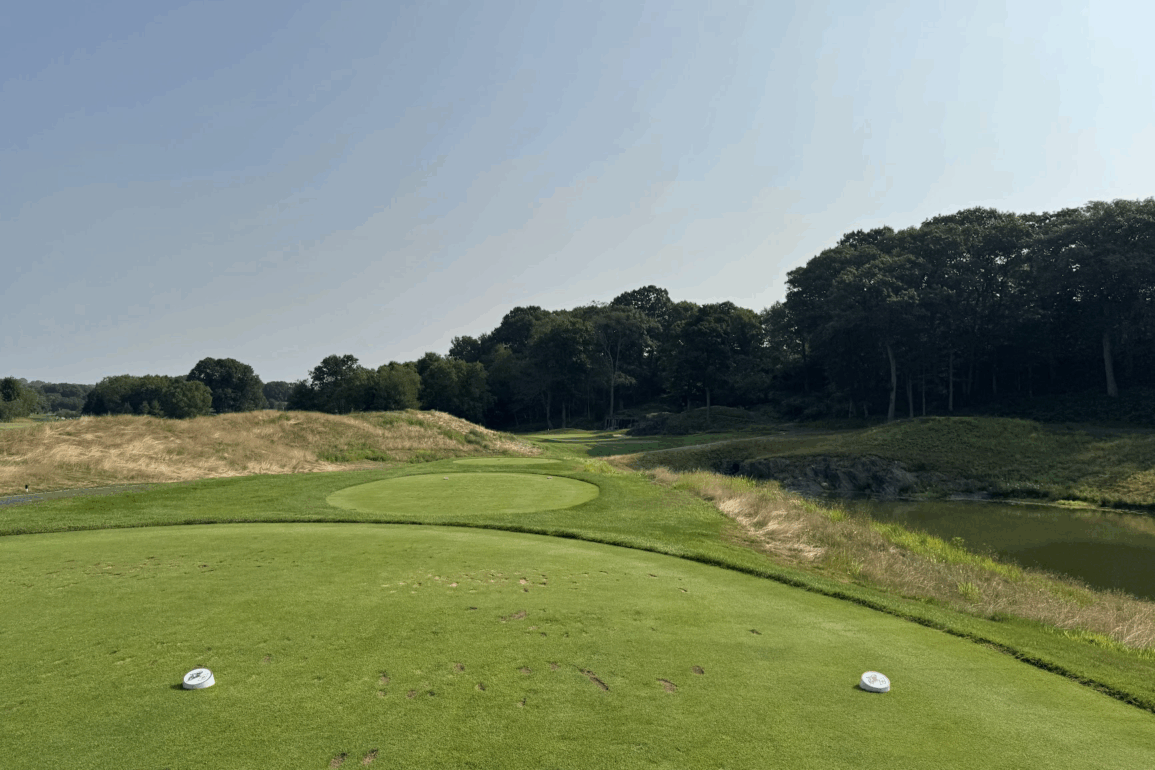
    Rolling Hills Country Club is a private par-71 course measuring approximately 6,737 yards from the tips. The course was originally designed in 1960 by Alfred H. Tull and is located in Wilton, Connecticut.

    Rolling Hills Country Club was founded in 1960 by a group of members from Longshore Country Club in Westport after the Town of Westport purchased that facility and converted it to public access. These golfers sought a private country club environment to serve residents of Wilton, Westport, Weston, and Norwalk, as well as New York City weekenders who maintained homes in Fairfield County. The property was acquired from Ambler Farm, and the rocky, hilly landscape presented significant construction challenges during the early 1960s, with golfers famously carrying buckets during rounds to clear stones from the emerging fairways. The first nine holes opened in 1962, with the full eighteen completed shortly thereafter, and the club formally celebrated its 50th anniversary in 2011, the same year it received the Distinguished Club Award from the Connecticut State Golf Association. Roger Rulewich undertook a comprehensive renovation in 2002, followed by Tripp Davis conducting bunker renovations in 2016 and again in 2023. The course occupies approximately 160 wooded acres of classic southern Connecticut topography, featuring pronounced elevation changes, mature tree corridors, and rolling terrain that defines the strategic character of the layout. The routing philosophy reflects mid-century design sensibilities with natural corridor framing and topographical variety that rewards placement over power. Players who appreciate thoughtful course management, precise iron play to elevated and undulating greens, and strategic decision-making on tee shots will find Rolling Hills particularly engaging.

    Strategic Test

    HandicapCourse Strategy
    High Handicap (18+)From the Silver tees at 5,454 yards with a slope of 128 and rating of 68.1, the course presents a manageable examination that emphasizes accuracy over distance. The elevation changes can affect club selection significantly, particularly on approach shots where an extra club may be required on uphill holes. The fourth hole, a par 4 measuring approximately 340 yards from the Silver tees, serves as the signature hole where the tee sits atop a hill offering panoramic views of the surrounding landscape. This downhill tee shot rewards those who can navigate the tree-lined corridor, with a mid-iron or hybrid off the tee followed by a short iron or wedge into the green, though the elevated putting surface and right-to-left sloping fairway demand precision on the second shot.
    Mid Handicap (8-18)The White tees at 6,019 yards with a slope of 136 and rating of 70.8 provide an appropriate challenge that tests all aspects of the game while remaining accessible. The slope rating indicates that the course plays more difficult than its yardage suggests, primarily due to the narrow tree-lined corridors, elevated greens, and strategic bunkering throughout. The tenth hole, a par 4 measuring approximately 360 yards from the White tees, exemplifies the course’s demand for accurate positioning, as the tree-lined fairway requires a controlled drive that favors the right side to account for the right-to-left sloping terrain, followed by a mid-iron approach to a front-to-back sloping green where the second shot must be played to the front third for optimal birdie opportunity.
    Low Handicap (0-8)From the Black tees at 6,777 yards with a formidable slope of 139 and rating of 73.3, Rolling Hills presents one of the most challenging tests in Fairfield County, ranking among the top ten most difficult courses in Connecticut based on course rating. The high slope rating reflects the precision required off the tee, the demanding approaches to small elevated greens with significant internal contouring, and the premium placed on strategic positioning throughout the round. The seventeenth hole, a par 5 measuring 493 yards from the championship tees, demands three precise shots with the tee shot requiring left-side positioning to open the approach angle, followed by a long iron or hybrid layup to approximately 120 yards, and finally an uphill wedge that plays at least one club longer due to elevation gain, where misjudging the approach leaves difficult two-putt opportunities on the undulating putting surface.

    Nearby Course Alternatives

    Aspetuck Valley Country Club in Weston, approximately five minutes west of Rolling Hills, offers a compelling alternative for those seeking a similarly challenging private club experience with distinct architectural character. Measuring 6,594 yards from the tips with a par of 71, slope of 129, and rating of 73.7, Aspetuck Valley presents a slightly shorter but equally demanding examination designed by Hal C. Purdy in 1967, with comprehensive renovations undertaken by Lester George beginning in 2017 and completed in 2021. The course occupies approximately 210 rolling, wooded acres along the Aspetuck River, featuring elevation changes that Golf Digest described as a very hilly layout requiring careful club selection and course management. George’s renovation work addressed functional deficiencies while enhancing strategic elements through bunker repositioning and green complex modifications, creating a thinking person’s test that rewards precision over power. The Connecticut State Golf Association ranks Aspetuck among the top ten most difficult courses in the state, and the club has hosted numerous CSGA, MGA, and MET PGA championships, demonstrating its tournament-caliber conditioning and strategic merit. Players who prioritize dramatic elevation changes, environmental stewardship through Audubon certification, and golden-age architectural principles will find Aspetuck Valley’s renovated design particularly appealing, especially those who enjoy a course where topographical complexity creates natural strategic frameworks.

    Silvermine Golf Club in Norwalk, roughly ten minutes south of Rolling Hills on the Wilton town line, provides an interesting contrast as a 27-hole private facility designed by John E. Warner in 1959. The main Sier Hill 18-hole course measures 6,077 yards from the tips with a par of 70, slope of 107, and rating of 65.0, playing considerably shorter and more accessible than Rolling Hills while maintaining private club conditioning and amenities. The layout features numerous doglegs, small elevated greens, and multiple water hazards that demand a wide range of shotmaking skills, with narrow landing areas that prioritize accuracy over distance throughout the round. The signature first hole on the Sier Hill course, a par 4, establishes the tone for a layout that rewards strategic thinking and precise execution despite its modest yardage. The facility’s third nine, the Sier Crest executive course at 1,984 yards and par 31, provides additional playing opportunities with five par 3s and four par 4s, remaining open year-round weather permitting with no tee time restrictions for members, juniors, adults, and beginners. Players who prefer a more compact layout with less severe elevation changes, those seeking additional playing options through the executive nine, and golfers who appreciate the convenience of 27 holes for maximizing playing opportunities will find Silvermine’s shorter, more forgiving design appealing compared to Rolling Hills’ championship-caliber examination.

    Final Word

    Rolling Hills Country Club provides comprehensive practice facilities including a driving range and short game area with putting green, enabling members to work on all aspects of their game before and after rounds. The 45,000-square-foot clubhouse underwent an extensive renovation in 2009, modernizing the facility with multiple dining venues that showcase both casual and formal options for members and their guests. The club features eight tennis courts, four paddle tennis courts with a warming hut, and a six-lane swimming pool with diving well, creating a full-service family-oriented country club environment that extends well beyond golf. The taproom, expanded in recent capital improvements, serves as a popular gathering space for members, while the 300-seat ballroom provides elegant event space for weddings, member functions, and tournaments. The club’s professional staff includes PGA professionals offering instruction and custom club fitting services through the pro shop, complementing the high-level conditioning maintained by the grounds crew throughout the season. Rolling Hills distinguishes itself as one of only two Connecticut clubs to have hosted the state’s Amateur Championship, Open Championship, Palmer Cup, Senior Amateur, and Women’s Open, demonstrating its capacity to present championship-caliber golf while maintaining exceptional playing conditions. The combination of Alfred Tull’s thoughtful original routing through 160 acres of rolling, wooded terrain, the strategic enhancements implemented through renovations by Roger Rulewich and Tripp Davis, and the club’s commitment to hosting significant competitive events creates a rare commodity in Fairfield County. Rolling Hills proves its value through architectural integrity that rewards thoughtful play, tournament pedigree that validates its championship credentials, and a comprehensive amenity package that serves the entire family throughout the year, making it a distinguished private club option for those seeking both competitive golf and complete country club lifestyle in southern Connecticut.

  • Rolling Greens Golf Course

    Rolling Greens Golf Course

    [put_wpgm id=”2″ width=”100%” height=”770px” current_post_only=”true”]

    [letsreview]

    Rolling Greens Golf Course is a public par-70 course measuring approximately 6,000 yards from the tips. The course was originally designed in 1973 by Geoffrey S. Cornish and is located in Rocky Hill, Connecticut.

    Rolling Greens opened in 1973 as one of prolific New England architect Geoffrey Cornish’s many Connecticut designs, part of a regional portfolio that demonstrates his functional, lay-of-the-land design philosophy. The course occupies an estimated 60 acres nestled within a residential area along Cold Spring Road, though most holes maintain a sense of seclusion from the surrounding development. The routing unfolds across rolling terrain with significant elevation changes throughout, a defining characteristic that gives the layout its name and strategic complexity. The property features mature tree-lined corridors framing tight fairways that demand accuracy over distance, bent grass greens set on elevated plateaus, and selective water hazards near the second and sixth greens. The design philosophy emphasizes positioning and shot-making rather than raw power, with doglegs at the first and sixth holes creating alternate angles of attack and forcing decisions off the tee. This woodland-style layout attracts thinking players who appreciate elevation-driven strategy, precise approach requirements to raised putting surfaces, and a course that rewards course management. The compact nine-hole format allows for brisk pace of play while presenting genuine architectural interest through varied shot requirements and dramatic topographical features that rarely appear on courses of this length.

    Strategic Test

    HandicapCourse Strategy
    High Handicap (18+)From the forward tees measuring approximately 5,227 yards with a rating of 71.7 and slope of 130, higher handicappers face significant challenges primarily from the course’s elevation changes and push-up green complexes that demand full carries. The slope rating indicates these architectural features disproportionately impact scoring for developing players who struggle with consistent distance control and trajectory management. Hole 3 plays as a 191-yard uphill par 3 from the championship tees, requiring club selection consideration for the uphill shot to a narrow green perched on a plateau. The elevated target surface rejects anything short while the slope adds approximately one club to standard yardage calculations. For higher handicappers, this translates to mid-hybrid or fairway wood depending on individual carry distances, with the key strategic element being acceptance of bogey when the green proves elusive rather than attempting heroic recoveries from the steep falloffs.
    Mid Handicap (8-18)The white and blue tees at 6,000 yards present rating of 69.6 and slope of 127, positioning the course as moderately challenging for mid-handicappers who possess consistent ball-striking but lack elite precision. The slope differential suggests that course management decisions around the doglegs and elevated greens separate good scores from mediocre rounds. Hole 6 measures approximately 347 yards as a downhill dogleg right that plummets 80 feet from tee to fairway, creating dramatic visual intimidation and strategic complexity. The optimal play requires a controlled draw around corner trees positioned at the 200-yard mark, leaving approximately 100 yards to the green. Mid-handicappers must choose between aggressive driver lines that could cut distance but risk trees, or conservative fairway wood placement that ensures position but lengthens the approach. The elevation masks true playing distance, with the downhill slope effectively reducing the hole by 15-20 yards.
    Low Handicap (0-8)From the championship tees at 6,074 yards with rating 67.4 and slope 126, accomplished players find scoring opportunities balanced against precision requirements that prevent casual dismantling of the layout. The relatively modest slope indicates that elite ball-strikers neutralize many architectural challenges, though the elevated green complexes and tight corridors still demand execution. Hole 1 stretches 365 yards as a dogleg left playing 50 feet uphill to an elevated green, establishing the tone for the round with its combination of length, turning angle, and vertical climb. The narrow tree-lined fairway restricts driver lines, forcing low handicappers to shape controlled fades that hold the right side while avoiding the left rough. The approach plays one to two clubs longer than standard yardage due to elevation, typically requiring a mid-iron from 150-160 yards that must carry fully onto the plateau green complex. Anything landing short rejects down the slope, while the narrow green dimensions demand precise distance control and trajectory management that separates birdie opportunities from scrambling situations.

    Nearby Course Alternatives

    Rockledge Golf Club in West Hartford offers a contrasting 18-hole municipal experience approximately 15 minutes north of Rolling Greens. The layout stretches 6,436 yards from the tips with a par of 72, carrying a 71.1 rating and 129 slope that positions it as slightly more demanding than Rolling Greens despite similar slope characteristics. Designed by Al Zikorus and opening in 1940, Rockledge occupies significantly more acreage with a routing that flows across gentler rolling terrain rather than dramatic elevation changes, creating a more traditional parkland experience. The strategic value centers on relatively open fairways balanced against small, undulating greens that require precise approach play, with multiple ponds and brooks introducing water elements absent from Rolling Greens. The bent grass surfaces throughout maintain consistent conditions, and the mature tree-lined corridors frame holes without the claustrophobic tightness found at Rolling Greens. Rockledge features full practice facilities including a large driving range and two putting greens, along with GPS-equipped carts and a full-service restaurant. The architectural pedigree includes subsequent work by various renovators, though the fundamental Zikorus routing preserves its historical character. Mid-handicap players seeking longer par 4s, more generous landing areas, and less severe elevation demands would find Rockledge more forgiving while still presenting legitimate scoring challenges through its subtle green complexes and strategic water placement.

    Timberlin Golf Club in Berlin presents another municipal alternative approximately 20 minutes northwest of Rolling Greens with a more substantial championship layout. The Al Zikorus design from 1970 measures 6,733 yards from the championship tees with par 72, rated at 72.2 with a slope of 129, establishing it as considerably longer and more rigorous than Rolling Greens while maintaining similar slope characteristics. The course occupies approximately 150 acres nestled along the base of Ragged Mountain, utilizing rolling farmland terrain that creates elevation interest without the extreme vertical movement characterizing Rolling Greens. Strategic value derives from adequate fairway bunkering rarely found at public facilities, precise greenside protection through mounding and bunkers, and moderate green speeds that demand accurate lag putting. The layout includes demanding par 5s at holes 1 and 7 that test length and strategy, along with back-to-back-to-back challenging holes from 13-15 that can derail rounds for players lacking consistent execution. The bent grass greens and fairways maintain superior conditioning compared to Rolling Greens, while practice amenities include a six-station driving range, multiple practice greens, and full professional instruction from PGA staff. Recent renovation work by Stephen Kay, Doug Smith, and Ray Hearn has updated elements while preserving the fundamental Zikorus architecture that emphasizes fair, strategic golf over punitive design. Low handicap players seeking greater length, superior conditioning, championship-caliber bunkering, and a full 18-hole test would prefer Timberlin’s more substantial examination, particularly its demanding closing stretch that rewards complete shot-making skills over the compact, quirky challenges presented at Rolling Greens.

    Final Word

    Rolling Greens provides basic golf amenities appropriate to its nine-hole municipal format, with a pro shop stocked with essential equipment and accessories for daily play. The facility lacks a dedicated driving range or formal practice area, limiting pre-round warmup opportunities to on-course play or putting practice if available. The signature amenity remains Casa Mia on the Green, an Italian-American restaurant situated on the property that serves lunch, dinner, drinks and appetizers, creating a post-round gathering space that distinguishes the facility from bare-bones municipal operations. The restaurant provides full outdoor dining options during favorable weather, extending the golf experience beyond the course itself. Cart service includes standard golf carts without GPS technology, appropriate for the compact routing that presents minimal navigational challenges. Distance markers consist of 150-yard fairway sticks supplemented by yardage plaques affixed to trees lining fairways, a creative if unconventional approach to course management information. The facility maintains modest infrastructure reflecting its scale and municipal heritage, focusing resources on course maintenance rather than elaborate clubhouse amenities. What makes Rolling Greens special within the greater Hartford public golf ecosystem is its distinctive topographical drama compressed into nine holes, delivering elevation changes and strategic interest that challenge players to think beyond standard municipal golf expectations. The Geoffrey Cornish design philosophy shines through in routing decisions that maximize natural terrain features rather than imposing artificial earth movement, creating memorable holes like the plunging sixth and uphill first that linger in memory. The course proves its value by offering legitimate architectural interest at a scale that accommodates quick rounds without sacrificing strategic complexity, serving players who appreciate thoughtful design over championship length and understand that genuine golf architecture transcends hole count.

  • Rockrimmon Country Club

    Rockrimmon Country Club

    [put_wpgm id=”2″ width=”100%” height=”770px” current_post_only=”true”]

    [letsreview]

    Rockrimmon Country Club is a private par-72 course measuring approximately 6,868 yards from the tips. The course was originally designed in 1947 by Robert Trent Jones and is located in Stamford, Connecticut.

    The origins of Rockrimmon Country Club trace back to 1947, when a group of prospective members acquired the Ayers Farm property spanning 218 acres across the Connecticut and New York border. Robert Trent Jones, fresh off his redesign work at Augusta National and midway through designing Peachtree, was retained to craft the initial nine holes, which opened for play in 1949. The second nine was completed in 1955 after additional land was acquired from an adjoining estate, bringing Jones’s vision to full fruition. Roger Rulewich performed renovation work in 1999, and more recent efforts have included redesigns of the 1st and 10th greens. The club has also been working with David Fleury of Rulewich & Fleury Golf Design on a master plan that includes ongoing improvements to tee complexes and bunker arrangements. Lake Calmon was constructed adjacent to the 5th fairway to provide irrigation for the course. Spread across more than 200 acres of former farmland, the routing exhibits characteristic Jones design elements including elevated, tilted greens defended by penal bunkering and demanding precise angle-based approach play. The terrain features rolling New England topography that Jones expertly incorporated into a traditional out-and-back routing style. Players who appreciate strategic shot-making, understand the value of playing to the correct side of fairways, and possess the course management skills to navigate heavily bunkered green complexes will find Rockrimmon especially rewarding. The fast, undulating putting surfaces demand both technical skill and careful reading.

    Strategic Test

    HandicapCourse Strategy
    High Handicap (18+)High-handicap players should strongly consider the Gold tees at 5,365 yards (66.4/119), which provide a more manageable test while still demanding solid execution. The slope rating of 119 suggests that bogey golfers will add approximately 19 strokes over par, making a respectable round achievable without undue frustration. The signature 9th hole plays as a short par-3 at 153 yards from the Gold tees, requiring a controlled mid-iron across Ayers Lake to a two-tiered elevated green. The primary challenge lies in club selection and committing to the carry, as the water hazard punishes anything short. Players should focus on conservative course management, avoiding Jones’s strategic bunker placements and accepting safer angles even if it means longer approach shots.
    Mid Handicap (8-18)Mid-handicappers will find the White tees at 6,497 yards (71.9/128) provide an excellent balance of challenge and playability. The 128 slope suggests adding roughly 13-14 strokes for a bogey golfer trending toward single digits. The 8th hole, a par-4 measuring 423 yards from the White tees, exemplifies the course’s risk-reward philosophy. This hole demands a strategic decision off the tee between aggressive positioning for a shorter approach or playing safely away from fairway bunkers. The green complex features characteristic Jones bunkering, rewarding precise iron play that finds the proper tier. Mid-handicappers should work the ball toward favorable angles, particularly on approach shots where the tilted greens can reject poorly flighted shots.
    Low Handicap (0-8)Low-handicappers must test themselves from the Blue tees at 6,868 yards (73.7/131), where the course reveals its championship pedigree. The combination of length, firm conditions, and severely contoured greens creates a demanding examination that has hosted USGA and MGA competitions. The 8th hole stretches to 466 yards from the championship tees, presenting a genuine three-shot challenge with multiple strategic options. The tee shot must be placed carefully to set up an approach angle that accounts for the green’s tilt and surrounding bunkers. Better players should focus on driving accuracy over distance, as Jones designed the course to penalize wayward tee shots severely while rewarding precise ball placement. The lightning-fast greens require exceptional speed control and the ability to work the ball to specific quadrants.

    Nearby Course Alternatives

    Stanwich Club in Greenwich offers a championship test approximately 15 minutes south of Rockrimmon that presents a dramatically different challenge. Measuring 7,450 yards from the tips with a slope rating of 144 and course rating of 76.0, Stanwich plays substantially longer and more difficult than Rockrimmon. Originally designed by William F. Gordon in 1963, the course has undergone extensive modifications by Tom Fazio and his design team over the past two decades, including a complete reimagining of the first hole and rebuilding of multiple green complexes. Spread across over 200 acres of rolling terrain, the layout features elevated, heavily defended greens that demand strong and accurate driving combined with precise approach play. The conditioning at Stanwich is exceptional, with putting surfaces that are consistently mentioned as among the fastest and finest in the Metropolitan area. The course rewards powerful, accurate ball-striking and punishes even minor misses around the green complexes. Players seeking a more severe test of their game, particularly those with high swing speeds and the ability to hit long, controlled approaches into elevated targets, will find Stanwich more demanding than Rockrimmon. The architectural variety is somewhat less pronounced through the middle holes, though the finishing stretch on the back nine provides memorable strategic challenges. Low-handicap players looking to test themselves against one of Connecticut’s most difficult championship venues will appreciate Stanwich’s uncompromising design.

    Wee Burn Country Club in Darien sits approximately 20 minutes southeast of Rockrimmon and delivers a completely different architectural experience steeped in Golden Age design principles. Measuring 7,040 yards from the back tees with a 75.1 rating and 146 slope, Wee Burn ranks among Connecticut’s most historic and prestigious clubs, having hosted three USGA Women’s Amateur Championships. Designed by Devereux Emmet in 1925, the layout artfully incorporates the Stony Brook stream that Andrew Carnegie himself suggested naming the wee burn in honor of Scottish tradition. The course occupies approximately 230 acres of classic parkland terrain with tree-lined fairways and strategic bunkering that rewards thoughtful positioning over raw power. Recent work by Tom Fazio and Ron Forse has included significant tree removal that has restored playing corridors closer to Emmet’s original vision, along with extensive stream and lake bank renovations. The course presents numerous scoring opportunities for players who execute properly, though the narrow approaches to well-protected greens demand precision. Players who value architectural pedigree, appreciate Golden Age design aesthetics, and prefer a course that emphasizes angles and positioning over brute length will find Wee Burn more appealing than Rockrimmon. The historic clubhouse, extensive additional amenities including paddle tennis and skeet shooting, and the course’s reputation for pristine conditioning make it particularly attractive to those seeking a complete country club experience rooted in traditional values.

    Final Word

    Rockrimmon Country Club maintains comprehensive practice facilities that include a driving range with mat stations, dedicated putting and chipping areas that allow members to fine-tune their short game before rounds. The practice amenities support the demands of Jones’s design, which requires precise iron play and exceptional putting to score well. The clubhouse underwent a major renovation in 1996, followed by a substantial facilities upgrade completed recently that added approximately 3,500 square feet of new patio space including covered and uncovered dining areas with fire features. The renovation created a new grill room and bar totaling approximately 2,000 square feet, responding to member preferences for more casual dining options and social spaces. The pools were completely replaced and the poolscape reimagined to enhance the family-friendly atmosphere. The tennis complex was expanded from three to four Har-Tru courts, with plans for additional pickleball courts in development. The front lobby was renovated to improve accessibility with an ADA-compliant elevator, while the main dining room, lounge, and card rooms received contemporary updates. What distinguishes Rockrimmon is its successful balance between championship-caliber golf and relaxed, family-oriented country club culture. The Robert Trent Jones design has matured into one of the region’s finest tests of strategic golf, hosting numerous USGA, MGA, and WGA competitions including USGA Amateur Sectional Qualifiers and US Open Sectional Qualifiers. The course proves its value through conditioning that consistently earns praise for immaculate maintenance, architectural integrity that has been thoughtfully preserved and enhanced through selective improvements, and playing interest that rewards thoughtful course management while still accommodating players across the handicap spectrum.

  • Rockledge Golf Club

    Rockledge Golf Club

    [put_wpgm id=”2″ width=”100%” height=”770px” current_post_only=”true”]

    [letsreview]

    Rockledge Golf Club is a public par-72 course measuring approximately 6,440 yards from the tips. The course was originally designed in 1940 by Al Zikorus and is located in West Hartford, Connecticut.

    The history of Rockledge traces back to 1924 when Yale alumnus Wilton Sherman established a 14-hole layout on his 120-acre estate, which expanded to 18 holes by 1927 and hosted tournaments for decades. Following Sherman’s death in 1959, the Town of West Hartford acquired the property and transformed it into the municipal facility it remains today, with Al Zikorus redesigning the routing in 1940 to create the current championship test. While the course has maintained its bones, infrastructure improvements continue, most notably the recent enhancement of practice facilities and ongoing maintenance programs that keep Rockledge competitive with top-tier Connecticut tracks. The property sits on roughly 120 acres of gently rolling terrain, with the routing flowing across modest elevation changes that provide strategic interest without exhausting walkers. The design philosophy leans traditional parkland with tree-lined corridors framing most holes, though fairways remain generous enough to accommodate higher handicappers while demanding precision from accomplished ball-strikers. Players who appreciate thinking their way around a course rather than overpowering it will find satisfaction here, as Zikorus incorporated subtle contours and back-to-front sloping greens that reward calculated approaches and penalize mindless aggression. The course appeals most to mid-handicappers seeking a fair but thorough examination of their complete skillset, though championship yardage and green complexes provide enough teeth to challenge single-digit players.

    Strategic Test

    HandicapCourse Strategy
    High Handicap (18+)From the White tees at 5,722 yards with a slope of 126 and rating of 72.3, high handicappers face a manageable test that rewards course management over heroics. The slope impact means that an 18-handicap player will need approximately 18 strokes above par to shoot their expected score, making bogey golf the target for steady play. The third hole exemplifies the strategic demands these players will encounter: a 435-yard par-4 from the championship tees that plays closer to 385 yards from the Whites, rated as the number one handicap hole on the course. The length alone requires two quality strikes to reach the green, with out-of-bounds right and fairway positioning critical to setting up a manageable approach angle. For high handicappers, hitting driver then hybrid or fairway wood will be the likely play, with acceptance of laying up short if the tee shot strays to avoid compounding errors with forced carries into large, sloping greens.
    Mid Handicap (8-18)The Gold tees at 6,049 yards provide mid-handicappers an ideal balance of challenge and playability, with a slope of 130 and rating of 74.1 creating scoring opportunities while demanding solid execution. A player at 13 handicap should expect to shoot around 87, requiring strategic navigation of Rockledge’s varied hole lengths and green complexes. The third hole from these tees stretches to approximately 410 yards, presenting a legitimate three-shot hole for many in this group while tempting longer hitters to reach in regulation. Driver is the appropriate club off the tee to maximize distance down the generous fairway, leaving anywhere from a long iron to hybrid for the approach depending on the quality of the drive. The key strategic element lies in avoiding the tendency to force approaches into a green that slopes severely front-to-back, as missing long leaves nearly impossible two-putt situations. Mid-handicappers who play conservatively to front hole locations and accept par as a victory on this demanding test will score better than those chasing birdies.
    Low Handicap (0-8)From the Blue tees at 6,440 yards with a slope of 125 and rating of 70.4, low handicappers will find Rockledge plays shorter than modern championship standards yet demands precision throughout. A scratch player expects to shoot even par here, though the large, undulating greens with consistent back-to-front tilt create scoring variance even for accomplished ball-strikers. The third hole at 435 yards represents the course’s stiffest challenge, a straightaway par-4 where length combines with accuracy demands to produce the highest stroke index. Low handicappers will attack this hole with driver, looking to carry 260-280 yards to the optimal landing area that leaves a mid-iron approach of 155-175 yards. The approach strategy revolves entirely around green reading and distance control, as the putting surface accepts well-struck shots but punishes anything landing beyond the hole with treacherous downhill comebackers. Smart low handicappers will favor front pin positions and aim for the heart of the green on back placements, knowing that Rockledge’s architectural strength lies not in brute length but in the subtlety of green contours that can humble even single-digit players.

    Nearby Course Alternatives

    Keney Park Golf Course in Hartford sits approximately 10 minutes north of Rockledge and represents one of Connecticut’s most significant restoration success stories. Measuring 6,449 yards from the tips with a slope of 118 and rating of 68.2, Keney plays as a par-70 layout across roughly 140 acres of rolling parkland terrain. The front nine was designed by Devereux Emmet in 1927, with Robert Ross completing the back nine in 1931, and Matthew Dusenberry led a comprehensive 2016 restoration that returned template holes including a Redan and Road hole while reintroducing strategic bunkering that had been lost to decades of neglect. The course features significant elevation changes throughout, with greens displaying tumbling ridges and internal contours that demand creativity in the short game. Keney’s architectural pedigree exceeds Rockledge’s straightforward design, offering golden-age enthusiasts the opportunity to experience genuine template holes and church pew bunkers within a municipal setting. Players who prioritize architectural interest and don’t mind firm, fast conditions that reward ground game approaches will find Keney more intellectually stimulating than Rockledge. The course appeals most to low and mid handicappers who appreciate classical design principles and can navigate heavily contoured greens, though higher handicappers may struggle with the green complexes that represent both Keney’s greatest strength and most significant scoring challenge.

    Wintonbury Hills Golf Course in Bloomfield offers a dramatically different experience approximately 15 minutes northwest of Rockledge. The Pete Dye design opened in 2005 and stretches to 6,711 yards from the championship tees with a slope of 141 and rating of 78.4, making it one of Connecticut’s most demanding public tests. The par-70 layout unfolds across roughly 200 acres, with the front nine presenting links-style open expanses and the back nine transitioning to tree-lined traditional holes through elevation changes of up to 80 feet. Dye’s trademark railroad ties, dramatic bunkering, and strategic mounding create a visual intimidation factor that matches the difficulty, though multiple tee boxes allow customization for different skill levels. The course earned consistent recognition as Connecticut’s top municipal facility and ranks among Golfweek’s best courses you can play in the state. Players seeking a true championship examination with modern design aesthetics and significant elevation drama will prefer Wintonbury over Rockledge’s more understated parkland presentation. Low handicappers and adventurous mid handicappers who embrace risk-reward decisions and don’t mind losing golf balls to Dye’s penal hazard placement will find Wintonbury worth the slightly higher engagement, while the dramatic terrain and memorable holes create a bucket-list quality experience absent from Rockledge’s workmanlike routing.

    Final Word

    Rockledge’s practice facilities have evolved considerably in recent years, with the most significant enhancement being the new driving range featuring 17 covered bays including two state-of-the-art teaching simulation bays equipped with radar-based swing analysis technology. The modernized range facility includes restrooms, a snack service area, and ball washing station, transforming what was previously a utilitarian practice area accessed by cart into a destination facility rivaling private club amenities. Two practice putting greens of different sizes allow players to work on different length putts and read various breaks, while a practice sand bunker provides greenside simulation for short game work. The clubhouse underwent renovations in 1995 and again in 2017, now housing a well-stocked pro shop staffed by PGA professionals and the Rockledge Grille restaurant. The Grille operates year-round with small plates and full meals in the tavern atmosphere, while spring through fall months feature an expansive outdoor deck overlooking the 18th fairway that locals consider among West Hartford’s finest views. Beyond golf-specific amenities, Rockledge serves the community during winter months when three marked walking trails of varying length transform the course into a recreation area for hiking, cross-country skiing, and snowshoeing. What distinguishes Rockledge in Connecticut’s competitive municipal landscape is the combination of meticulous conditioning that rivals private clubs, an approachable yet strategic design that rewards thoughtful play, and 12 consecutive years earning Hartford Magazine’s Best Public Golf Course designation. The course proves its value not through architectural pyrotechnics or championship length but through consistent delivery of a first-rate golf experience that welcomes players of all abilities while maintaining standards that satisfy accomplished ball-strikers, all within a setting that feels far removed from the municipal course stereotype.

  • Rock Ridge Country Club

    Rock Ridge Country Club

    [put_wpgm id=”2″ width=”100%” height=”770px” current_post_only=”true”]

    [letsreview]

    Rock Ridge Country Club is a private par-70 course measuring approximately 5,938 yards from the tips. The course was originally designed in 1954 by Alfred H. Tull and is located in Newtown, Connecticut.

    Rock Ridge Country Club occupies an intriguing niche in Connecticut golf history, having transformed from what began as a modest three-hole backyard layout into a refined member facility over its seven-decade existence. The property’s evolution reflects both careful stewardship and an understanding of what a nine-hole course can offer when properly executed. Set on approximately 40 acres in the hilly Dodgingtown section of northern Fairfield County, the layout takes advantage of natural topography without overwhelming players with excessive elevation change. Alfred Tull, whose partnership with Devereux Emmet and subsequent solo career produced numerous courses throughout the Northeast, brought his characteristic understanding of strategic variety to the design. The routing follows a traditional out-and-back configuration that makes efficient use of the available acreage while incorporating enough movement and angle variation to keep play engaging across two loops. Major improvements over the decades have included a comprehensive irrigation system installation and periodic refinements to maintain Tull’s original design intent. The course features separate tee boxes for both nines, allowing for distinct yardage experiences on the second loop and creating an 18-hole round that measures nearly 6,000 yards from the championship tees. Players seeking a walkable course with strategic interest will find Rock Ridge particularly appealing, as the combination of bentgrass surfaces, well-placed hazards, and varied hole lengths rewards thoughtful club selection and course management over pure power.

    Strategic Test

    HandicapCourse Strategy
    High Handicap (18+)From the White/Red tees at 5,146 yards with a 120 slope and 65.0 rating, higher handicappers face a fair but demanding examination that rewards accuracy over distance. The shorter yardage makes most holes reachable in regulation, though the bentgrass greens can run quickly and require careful speed control. Hole 8, the par-5 measuring 519 yards from the Blue/Gold tees, provides an excellent strategic challenge for this group. The hole’s length makes it a genuine three-shot proposition for most players in this range, requiring two solid fairway strikes followed by a short iron approach. The number five handicap designation indicates manageable difficulty, and the strategic decision revolves around whether to lay back to a preferred wedge distance or attempt to reach the front edge depending on pin placement. This hole exemplifies the course’s architecture by rewarding strategic positioning rather than forcing carries that exceed most high handicappers’ capabilities.
    Mid Handicap (8-18)Mid-handicappers playing the White/Red layout will find opportunities to score while still being tested on execution, particularly on approach shots into elevated or contoured greens. With a 120 slope, the course plays slightly easier than its Blue/Gold configuration but still demands consistent ball-striking. The same hole 8 presents a different calculus for this skill level, as stronger players in this range might reach the green in two shots with favorable conditions. From 519 yards, a solid drive of 230-240 yards followed by a fairway metal or hybrid of 210-220 yards puts the green within range. However, the decision point centers on whether the risk of missing the target with a long approach justifies the reward versus laying up to a comfortable wedge distance. The hole’s design encourages players to evaluate their current form and conditions rather than automatically attempting the aggressive line.
    Low Handicap (0-8)From the Blue/Gold tees at 5,938 yards with a 129 slope and 68.6 rating, scratch players and low single-digit handicappers encounter a layout that tests precision and creativity rather than overwhelming length. The course rating indicates a setup that plays approximately 3.4 shots over par for a scratch golfer, suggesting strategic complexity rather than brute difficulty. Hole 7, the number one handicap hole playing 410 yards as a par-4, represents the course’s toughest test. This length demands a quality tee shot that finds the fairway, likely requiring driver or strong 3-wood for most players. The approach shot, typically a mid to long iron from 160-180 yards, must be executed with precision given the hole’s difficulty ranking. The strategic element likely involves navigating fairway angles to set up the optimal approach corridor, and green complexes that penalize misses. This hole epitomizes the Tull design philosophy of creating challenge through strategic positioning and demanding execution on scoring clubs rather than simply extending yardage.

    Nearby Course Alternatives

    Ridgewood Country Club in Danbury offers an interesting contrast approximately 15 minutes southwest of Rock Ridge. The course measures 6,570 yards from the championship tees with a 138 slope and 72.5 rating, making it a more demanding test than Rock Ridge from both length and rating perspectives. Originally designed by Devereux Emmet in 1920, Ridgewood received subsequent renovations from Geoffrey Cornish in 1966 and Roger Rulewich in 2002, creating a layered architectural pedigree that reflects multiple eras of design thinking. Set on rolling parkland terrain that exceeds Rock Ridge’s acreage substantially, the course features significant elevation changes that add both visual interest and strategic complexity. The routing incorporates classic Emmet elements including strategic bunkering, stone walls as hazards, and doglegs that reward aggressive lines for skilled players while offering bailout options for those playing conservatively. With 18 holes of varied par-3s, par-4s, and par-5s, Ridgewood provides a more comprehensive architectural examination across different hole types. Players who prefer dramatic elevation changes, appreciate Golden Age design elements, and seek a longer, more physically demanding walk would find Ridgewood more suitable than Rock Ridge. The additional yardage and higher slope rating particularly benefit low handicappers seeking a stern test that puts premium on both length and precision.

    The Redding Country Club in West Redding presents another private alternative located approximately 20-24 minutes southeast of Rock Ridge. Measuring 6,317 yards from the tips with a 138 slope and 71.9 rating, Redding occupies a middle ground between Rock Ridge’s compact layout and Ridgewood’s championship length. The course’s architectural history adds considerable intrigue, beginning as Ed Ryder’s nine-hole design in 1968 before Rees Jones transformed it into an 18-hole layout in 1978, with subsequent refinements by Keith Evans, Stephen Kay, and Doug Smith. Jones’s design philosophy of incorporating natural water features across 12 holes and utilizing dramatic elevation changes creates a distinctive character that differs markedly from Rock Ridge’s more modest topography. Despite measuring only 6,277 yards in some configurations, the course plays substantially longer due to significant uphill and downhill holes that affect club selection dramatically. Set on larger acreage that allows for more expansive hole corridors and dramatic vistas, Redding features enhanced seasonal aesthetics with mountain laurel and dogwood displays that complement the natural streams and ponds. Players seeking more pronounced elevation changes, water hazards as strategic elements, and a course that rewards creativity in reading how slopes affect ball flight would favor Redding over Rock Ridge. Mid handicappers who excel at managing elevation adjustments and enjoy risk-reward decisions around water hazards will find Redding particularly appealing.

    Final Word

    Rock Ridge Country Club distinguishes itself through exceptional practice facilities that support member improvement and enjoyment. The driving range features both mat and grass hitting areas, providing year-round practice options regardless of weather conditions. A high-quality putting green allows members to refine their stroke on surfaces that closely match the course’s fast bentgrass putting surfaces, while a dedicated chipping area complete with practice bunker enables focused short game work. The comprehensive bag storage facility adjacent to the pro shop adds convenience for regular players, and the maintenance building houses a modern fleet of golf carts. Beyond golf, Rock Ridge offers a complete country club experience with four Har-Tru tennis courts that feature a forgiving quasi-clay surface designed to reduce joint stress while resisting cracking. The tennis program includes competitive ladders, interclub matches, and extensive junior instruction. The heated swimming pool complex features an L-shaped main pool, separate kiddie pool, diving area, and dedicated lap lane for fitness swimming, with recently renovated cabana facilities and expanded seating areas. The competitive swim team utilizes starting blocks for training and competition. The recently constructed clubhouse serves as the social hub, hosting member tournaments, monthly social events, and holiday celebrations throughout the season. What makes Rock Ridge genuinely special within Connecticut’s private club landscape is its commitment to intimacy and accessibility within a thoughtfully scaled environment. The nine-hole layout with separate tees creates an 18-hole experience without the time commitment or physical demands of larger courses, while the 133 slope rating demonstrates that strategic interest need not correlate with excessive length. The Tull design has aged gracefully, and the club’s ongoing commitment to conditioning is evident in the consistently praised greens and fairways. For members seeking a family-oriented atmosphere where golf excellence, tennis, swimming, and social connection coexist without pretension, Rock Ridge delivers authentic country club values at human scale.

  • River Ridge Golf Course

    River Ridge Golf Course

    [put_wpgm id=”2″ width=”100%” height=”770px” current_post_only=”true”]

    [letsreview]

    River Ridge Golf Course is a public par-72 course measuring approximately 6,871 yards from the tips. The course was originally designed in 1999 by Joseph Rustici and Charles Rustici and is located in Griswold, Connecticut.

    River Ridge opened for play in May 1999 as one of southeastern Connecticut’s premier public championship facilities. The course occupies an estimated 150 acres of rolling terrain with a defining split personality. The opening three holes traverse what was formerly an apple orchard, presenting relatively open playing corridors that ease players into the round. From the fourth hole forward, the routing transitions into classic New England hill country, where the remaining fifteen holes tumble through wooded corridors with significant elevation changes and scenic vistas overlooking the Quinebaug River valley. The facility features a state-of-the-art tee-to-green irrigation system that maintains playing surfaces in championship condition throughout the season. Four distinct tee placements on each hole accommodate skill levels ranging from 5,393 yards off the forward tees to the demanding 6,871-yard championship layout. The design philosophy emphasizes strategic positioning over pure distance, with fairway bunkers placed at key decision points and green complexes that reward precision over brute force. This layout particularly appeals to the thoughtful player who values course management and understands how to use terrain and wind to their advantage, though the dramatic elevation shifts and undulating terrain can prove challenging for those who struggle with uneven lies or prefer flatter, more forgiving layouts.

    Strategic Test

    HandicapCourse Strategy
    High Handicap (18+)From the White tees at 6,142 yards with a 126 slope and 69.3 rating, high handicappers should expect to add approximately 15-18 strokes to their index. The elevated terrain demands accurate distance control, particularly on approach shots where misjudging the slope can cost two or three strokes per nine. Hole 8 presents an ideal challenge for this player group, described as the easiest hole on the course and a short par 3 where the deep green accepts mid-iron approaches and rewards smart club selection. Managing the second cut rough, which plays significantly longer than the fairways, becomes critical to keeping the round under control. The routing’s dramatic elevation changes require conservative club selection on uphill approaches, while downhill holes demand controlled swings to avoid running through fairways into trouble.
    Mid Handicap (8-18)Playing from the Blue tees at 6,474 yards with a 127 slope and 71.0 rating, mid-handicappers can expect to play close to their index with intelligent course management. The slope differential suggests that course knowledge becomes increasingly valuable, particularly in understanding where fairway bunkers come into play off the tee. Hole 6 provides an excellent test for this caliber player as a par 5 where very long hitters may reach in one but most will need strategic positioning with a long iron off the tee to set up a short iron approach. The two mounds fronting the green demand precise yardage calculation. Strategic decisions around risk-reward scenarios define the experience, with multiple holes offering alternate routes depending on wind conditions and confidence level. The premium bent grass surfaces roll true at stimpmeter readings around 11-12, requiring touch around elevated and sloped green complexes.
    Low Handicap (0-8)From the Gold tees at 6,871 yards with a 129 slope and 73.0 rating, accomplished players face a stern examination that emphasizes ball-striking precision over power. The narrow fairway corridors through tree-lined sections punish wayward drives, while the elevated and push-up green complexes demand high-trajectory iron play. Hole 17 exemplifies the challenge, featuring water in play with downhill approach demands and the necessity to avoid going long into trouble beyond the green. The combination of forced carries, strategic bunkering, and green contouring creates scoring opportunities for players who can execute under pressure. The bentgrass playing surfaces throughout provide tour-quality conditions when the superintendent has them running hot, with fairways offering excellent lies that reward proper technique. Low-handicappers who can control trajectory and work the ball both ways will find multiple route options throughout the round, though the course’s length and demands off the tee make par a respectable achievement.

    Nearby Course Alternatives

    Lake of Isles North Course in North Stonington, approximately 20 minutes southeast of River Ridge, represents the pinnacle of public golf in Connecticut and occupies nearly 900 acres of dramatic terrain adjacent to Foxwoods Resort Casino. Designed by renowned architect Rees Jones and opened in 2005, this championship layout measures 7,252 yards from the tips with a slope rating of 146 and course rating of 76.7, establishing it as significantly more demanding than River Ridge. The North Course features extensive water hazards throughout, including the signature downhill par-3 second hole playing to an island green that immediately announces the property’s premium on ball-striking accuracy. The routing winds through densely wooded corridors with numerous forced carries off elevated tees, creating a penal design philosophy that rewards precision over creativity. The facility includes a natural grass driving range and comprehensive practice areas, plus the Lake of Isles Academy with four indoor teaching studios. Course conditions consistently rank among the finest in the region, with bentgrass fairways and greens maintained to resort standards. The elevation changes exceed anything found at River Ridge, with several holes featuring drops of 50 feet or more from tee to fairway. Low to mid handicappers seeking a championship test that demands technical excellence and mental fortitude will find Lake of Isles more compelling than River Ridge, particularly those comfortable with forced carries and penal design elements. The acreage and routing scale dwarf River Ridge’s more intimate setting, creating a resort golf experience versus River Ridge’s traditional public course character.

    Norwich Golf Course in Norwich, approximately 15 minutes northeast of River Ridge, offers a compelling contrast as a classic municipal layout with deep architectural pedigree. Designed by Tull & Tull and opened in 1926, this par-71 championship course measures 6,228 yards from the back tees with a slope of 131 and rating of 70.0, making it slightly less demanding than River Ridge from a pure numbers perspective. The facility occupies an estimated 120 acres of undulating terrain characterized by mature tree-lined fairways and small, elevated green complexes that reflect golden age design principles. Norwich’s routing emphasizes strategic positioning over distance, with the shorter overall length offset by narrow corridors and severely contoured greens that demand precise approach play. The rye grass playing surfaces offer a different aesthetic than River Ridge’s bentgrass, with fairways that provide excellent lies but require different spin characteristics around the greens. The property’s mature landscaping creates intimate playing corridors with a parkland feel, while elevation changes remain moderate compared to River Ridge’s more dramatic hill country character. Municipal management keeps conditioning strong without reaching resort standards, though recent facility investments have significantly elevated maintenance quality. High handicappers who prefer shorter length and more forgiving driving areas will find Norwich less intimidating than River Ridge’s back fifteen holes, while shotmakers who value precision over power and appreciate classic routing principles may prefer Norwich’s understated elegance to River Ridge’s modern conditioning and dramatic terrain.

    Final Word

    River Ridge Golf Course provides comprehensive practice facilities that include a grass-surface driving range with multiple target greens, a dedicated putting area with significant slope to prepare players for the greens’ undulation, and a short game area for dialing in wedge distances. The range’s natural grass tees are maintained alongside the course proper, offering realistic practice conditions rather than mats. The clubhouse features Tulli’s Tap House Craft Kitchen & Beer, a full-service restaurant and lounge with indoor seating and an outdoor patio overlooking scenic New England countryside. The facility offers open access to the public for both lunch and dinner service throughout the week except Mondays, serving as both a 19th-hole destination and a standalone dining option for the local community. River Ridge maintains comprehensive outing capabilities for groups of all sizes, with professional staff coordinating everything from charity events to corporate tournaments to bachelor parties. The pro shop stocks quality equipment and apparel, while the facility offers membership options designed to provide value for frequent players without the country club price tag. What distinguishes River Ridge from competitors is the intelligent routing that creates genuine strategic interest across multiple skill levels within a compact property footprint. The opening three holes through the former orchard provide accessible golf that builds confidence, while the back fifteen through hill country demand thoughtful navigation and reward local knowledge. The combination of championship-caliber conditioning, dramatic natural terrain, and sophisticated green complexes creates a public facility that competes with private clubs in terms of playing experience. For golfers seeking a course that emphasizes strategy over raw power and rewards repeat play with increasing appreciation for subtle design elements, River Ridge validates itself as southeastern Connecticut’s most complete daily-fee option.

  • Ridgewood Country Club

    Ridgewood Country Club

    [put_wpgm id=”2″ width=”100%” height=”770px” current_post_only=”true”]

    [letsreview]

    Ridgewood Country Club is a private par-71 course measuring approximately 6,860 yards from the tips. The course was originally designed in 1920 by Devereux Emmet and is located in Danbury, Connecticut.

    Ridgewood Country Club traces its origins to the Golden Age of golf course architecture, with construction beginning shortly after the club’s founding in 1920. The original nine holes opened for play in 1921, with the second nine completed in 1922. The property’s development required extensive stone wall removal, a painstaking process that took several years using only crowbars, horses, and stone boats. The course has undergone several significant renovation phases to preserve its playability and strategic integrity. Geoffrey Cornish conducted renovations in 1966, followed by work from Robert Trent Jones Sr. in 1959, and most recently Roger Rulewich in 2002. These successive architects have maintained the naturalistic routing principles established by Emmet while updating infrastructure and agronomic standards for contemporary play. The property encompasses approximately 170 acres of rolling Connecticut terrain, featuring natural elevation changes, meadows, and mature tree corridors that define playing corridors. The routing follows Emmet’s naturalist philosophy, integrating bold landforms rather than flattening them, resulting in sight lines that are often diminished by natural contours and greens that flow from their natural grade. The course appeals to players who appreciate Golden Age architecture and strategic shot-making, particularly those who value authentic terrain integration over manufactured features. Players seeking a classic private club experience with championship-level conditions and a traditional test of golf will find Ridgewood particularly rewarding.

    Strategic Test

    HandicapCourse Strategy
    High Handicap (18+)From the Gold tees at 5,593 yards with a slope of 126 and rating of 68.0, the course presents a manageable challenge that emphasizes course management over pure power. The shorter yardages allow players to compete with fairway woods and hybrids off many tees, though accuracy remains paramount given the tree-lined corridors. The slope rating suggests bogey golfers will shoot approximately 13-14 strokes over par. The par-3 10th hole at 181 yards from these tees offers an accessible test with a mid-iron, typically requiring a 7-iron or 6-iron depending on wind conditions. This hole provides a genuine scoring opportunity when the player finds the putting surface, as the green’s contours reward accurate approach play without overwhelming higher handicappers with severe undulation.
    Mid Handicap (8-18)From the White tees at 6,094 yards with a slope of 133 and rating of 70.0, the course demands improved ball-striking and strategic thinking. The increased yardage brings fairway bunkers and hazards into play on tee shots, while approach shots require precise distance control to navigate push-up greens with back-to-front tilt. The slope rating indicates these players will score approximately 10-11 strokes over par. The par-3 10th hole at 181 yards requires a confident mid-iron, typically a 5-iron or 6-iron for most players in this range. The hole’s strategic value lies in green reading and club selection based on pin position, as the front-to-back slope can make distance control more critical than direction, particularly when the pin sits in back positions.
    Low Handicap (0-8)From the Black tees at 6,860 yards with a slope of 138 and rating of 73.5, the course reveals its championship character through length, strategic complexity, and premium demands on execution. The elevated slope rating reflects the compound difficulty of narrow tree-lined fairways, precise approach angles, and undulating greens that penalize marginal misses. These players should expect to shoot approximately 3-5 over par. The par-3 10th hole at 181 yards from these tees appears modest in yardage but demands exceptional accuracy with a 7-iron or 8-iron, as the green’s subtle contours and surrounding hazards punish anything but centered strikes. The hole exemplifies Emmet’s design philosophy of extracting maximum strategic value from modest yardages through green contouring and hazard placement, forcing low handicappers to commit to a precise line and distance rather than rely on length alone.

    Nearby Course Alternatives

    Brooklawn Country Club in Fairfield presents another distinguished private option located approximately 25 minutes south of Ridgewood Country Club. The 18-hole championship course measures 6,711 yards from the tips with a slope of 138 and rating of 73.3, playing to a par of 71 over approximately 120 acres of classic Connecticut parkland terrain. Originally founded in 1895, Brooklawn became one of the earliest members of the United States Golf Association when admitted in 1896, establishing immediate championship pedigree. The course underwent complete redesign in 1930 by the legendary A.W. Tillinghast, with more recent restoration work by Ron Forse and Jim Nagle preserving the architect’s original strategic intentions while updating agronomic standards. Tillinghast’s design exhibits the geometric bunkering, dramatic green contours, and tier transitions characteristic of his uncompromising design philosophy, creating a more visually dramatic and strategically complex presentation than Ridgewood’s naturalistic approach. The course has hosted five USGA championships, including the U.S. Women’s Open and U.S. Senior Women’s Open, cementing its status among Connecticut’s elite championship venues. Low handicap players seeking the ultimate architectural and competitive test in Fairfield County will find Brooklawn’s difficulty and championship history particularly appealing, as the narrow fairways, strategic hazards, and predominantly back-to-front sloping greens demand exceptional ball-striking and course management. Mid-to-high handicappers may find Brooklawn’s severe demands less forgiving than Ridgewood’s more balanced presentation, though players who value architectural significance and the opportunity to experience a Tillinghast masterwork will prioritize Brooklawn over courses with more manufactured features.

    The Patterson Club in Fairfield offers another exceptional private alternative approximately 30 minutes south of Ridgewood Country Club. The par-71 championship course measures 6,824 yards from the tips with a slope of 132 and rating of 73.0, routed over 170 acres of rolling terrain featuring five man-made lakes and dramatic elevation changes. The club traces its origins to 1929 when General Electric Company employees established a dining and social club, with the Robert Trent Jones Sr. designed golf course opening in 1947 after extensive clearing of woodlands and farm property. Jones’s design showcases bold, geometric bunkering that presents clear visual information while demanding precise execution, with green complexes exhibiting the dramatic contours and strategic complexity characteristic of his championship philosophy. The course has hosted the Connecticut State Open, Connecticut State Amateur, and numerous Metropolitan Golf Association events, establishing strong competitive credentials. More recent renovation work by Greg Muirhead, Rees Jones, Stephen Kay, and Roger Rulewich has opened up vistas by removing trees while preserving the original strategic framework, creating a more visually dynamic presentation than in previous decades. The routing makes captivating use of elevation changes throughout the property, most notably at the finishing hole where a speed slot can add 40 yards to a well-placed drive over a ridge. Players who enjoy dramatic elevation changes, water features in play, and Jones’s more geometric presentation will prefer Patterson over Ridgewood’s flatter, more naturalistic routing, while those seeking the ultimate challenge in tree-lined corridor definition might find Ridgewood’s tighter playing corridors more demanding. The course plays slightly more accessible for mid-handicappers due to more forgiving landing areas despite similar championship yardage, making it an excellent choice for players who appreciate Robert Trent Jones Sr. architecture and championship-level conditioning without the severe demands of Tillinghast’s Brooklawn.

    Final Word

    Ridgewood Country Club provides members with comprehensive practice facilities including a driving range with multiple practice tees, allowing players to work on all aspects of their game before the round. The putting green offers ample space for short game preparation, essential for navigating the subtle breaks and slopes characteristic of push-up greens throughout the layout. Beyond golf, the club maintains exceptional amenities that support the full country club lifestyle envisioned at its founding over a century ago. The tennis facility features multiple courts for members seeking competitive or recreational play during the summer season. The swimming pool and recreational complex create a family-oriented atmosphere where multiple generations can enjoy the property simultaneously. The clubhouse itself exemplifies traditional country club architecture and hospitality, providing elegant dining facilities, locker rooms, and social spaces where members can relax and entertain. These amenities combine to create the comprehensive private club experience that has defined Ridgewood since 1920, supporting the camaraderie and fellowship that remain central to the club’s identity. What distinguishes Ridgewood Country Club is its authentic preservation of Golden Age design principles through Devereux Emmet’s naturalistic routing, maintained and enhanced through successive generations of thoughtful renovation work. The course proves its enduring value through championship conditioning, strategic complexity that rewards thinking players, and a routing that integrates rather than dominates the natural Connecticut landscape, creating an experience that honors both architectural history and contemporary playability standards.

  • Richter Park Golf Course

    Richter Park Golf Course

    [put_wpgm id=”2″ width=”100%” height=”770px” current_post_only=”true”]

    [letsreview]

    Richter Park Golf Course is a public par-71 course measuring approximately 6,547 yards from the tips. The course was originally designed in 1971 by Edward C. Ryder and is located in Danbury, Connecticut.

    The genesis of Richter Park traces to 1968 when Stanley and Irene Richter donated 230 acres to the city of Danbury for recreational use, with Edward Ryder’s golf course opening in 1972 as the centerpiece of what became the Stanley L. Richter Memorial Park. Over the decades, the facility has maintained its championship pedigree by hosting the American Junior Golf Association championships four times, the Met Public Links Championship in 2013, and the Connecticut Pub Links Championship in 2009. A significant bunker renovation occurred in 2008, redesigning and rebuilding all 49 sand hazards to modernize their strategic impact. The course occupies approximately 180 acres of rolling terrain nestled between West Lake Reservoir and Boggs Pond, with water influencing play on 14 holes. The routing showcases Ryder’s skill at working with natural topography, dividing the property across Aunt Hack Road with the front nine featuring dramatic lakeside corridors and the back nine climbing through tighter, hillier woodland. The design philosophy emphasizes variety through elevation change and strategic water placement rather than length, with the layout offering four tee options ranging from 4,922 to 6,547 yards. Players who appreciate thinking their way around a course will find reward in the shot values and risk-reward opportunities, particularly those who can work the ball and manage distance control on undulating Bent/Poa greens. The tree-lined fairways create corridor framing that reaches peak visual splendor during fall foliage season, while mature hardwoods throughout the property demand position and accuracy over pure power.

    Strategic Test

    HandicapCourse Strategy
    High Handicap (18+)From the Red tees at 4,922 yards with a slope of 124 and rating of 70.7 for women, the course still presents considerable challenge with water hazards on 14 holes demanding careful club selection and conservative strategy. The slope rating suggests approximately 12-15 additional strokes above the course rating for this player profile, making bogey golf a realistic target. The par-3 5th hole at 174 yards from the Blue tees exemplifies the water-carry challenges throughout, requiring a mid to long iron over West Lake Reservoir to a back-to-front sloped green defended by bunkers on both sides. For higher handicaps playing forward tees, this becomes a manageable mid-iron that still tests nerve and execution. The hole rewards accuracy and club selection discipline over attempting to overpower hazards, making it an ideal strategic test where smart play trumps aggressive tactics.
    Mid Handicap (8-18)From the White tees measuring 6,119 yards with a slope of 134 and rating of 70.8, the layout presents a balanced examination of all facets while keeping scoring opportunities within reach for solid ball-strikers. The slope indicates roughly 8-12 strokes above rating for this group, making pars on the easier holes critical while minimizing damage on the more demanding tests. The signature par-5 12th hole at 527 yards from the Blue tees presents the quintessential risk-reward scenario for mid-handicappers, playing as a hard dogleg right with the tee shot climbing uphill toward a tight tree-lined fairway that bends sharply right around 195 yards out. Length off the tee earns little advantage due to tall trees guarding the corner, often forcing layback with a 3-wood or long iron. The second shot navigates narrow, undulating fairway before the approach plays to a peninsula green surrounded on three sides by Boggs Pond with a single bunker long. The hole demands strategic thinking on every shot, rewarding patience and precision while heavily penalizing aggressive mistakes, making it the ideal showcase for course management skills.
    Low Handicap (0-8)From the championship Blue tees at 6,547 yards with a slope of 137 and rating of 73.2, the examination requires precise distance control, creative shotmaking, and mastery of sloped lies on both fairways and greens. Single-digit players can expect 4-6 additional strokes beyond the rating based on slope, making the pursuit of par a legitimate challenge. The 18th hole at 438 yards rates as the number 2 handicap and provides a fitting closer, playing as a dogleg right with out-of-bounds threatening down the right side throughout. The drive must navigate around the dogleg at approximately 230 yards with trees right and a bunker left pinching the landing zone, leaving a mid to long iron approach that climbs steadily uphill to a back-to-front sloped green defended by a bunker left. Length alone provides no advantage as position becomes paramount, and even well-struck approaches can run off the back-to-front slope if distance control wavers. The hole epitomizes how Ryder designed strategic pressure into every shot, demanding both power and finesse while punishing the slightest mental or execution lapse.

    Nearby Course Alternatives

    Oak Hills Park Golf Course in Norwalk provides an excellent complement to Richter Park approximately 25 minutes southeast down Route 7 through lower Fairfield County. The Alfred Tull design opened in 1969 and stretches 6,407 yards from the tips for a par of 71, playing to a rating of 70.3 and slope of 133 from the championship tees. Tull, who served as design partner to renowned architect Devereux Emmet before continuing the practice independently, created a classic hilly New England landscape that sprawls across a naturally varied property. The course occupies roughly 150 acres of rolling terrain with mature tree corridors framing tighter fairways than Richter Park, particularly through the demanding opening stretch where the first six holes wind through heavily wooded hillside requiring accuracy over length. The routing showcases strong par-3 holes throughout while the greens complexes feature Tull’s characteristic subtle undulations and strategic bunkering. Oak Hills maintains a reputation as one of Fairfield County’s premier public facilities with consistently fast, true-rolling putting surfaces that many consider among the area’s finest. The architectural pedigree connecting Tull to Emmet lends Golden Age strategic sensibilities despite the later construction date. Players who prefer tighter, more heavily tree-lined corridors with less water but more elevation change will find Oak Hills an ideal contrast, particularly mid-to-high handicappers who value defined holes and clear strategic options over the more open, water-dominated challenges at Richter Park.

    Ridgefield Golf Course in Ridgefield offers another compelling public option about 20 minutes east of Richter Park along Route 7 through central Fairfield County. The George and Tom Fazio father-son collaboration opened in 1974 and measures 6,444 yards from the Blue tees for a par of 71, with a course rating of 70.9 and slope of 123. The Fazios crafted a parkland-style layout over rolling hills with tree-lined fairways, strategic pond placements, and challenging green complexes that reward precise approach play. The approximately 150-acre routing divides philosophically between nines, with the front playing more open tee-to-green while featuring severely undulating greens, and the back demanding greater accuracy off the tee through tighter corridors while offering somewhat more receptive putting surfaces. The design showcases the Fazio tendency toward visual intimidation balanced with playability, creating memorable risk-reward scenarios without excessive penal features. Bentgrass greens and bluegrass fairways provide excellent turf conditions when properly maintained, while 31-40 bunkers protect scoring zones throughout. The course earned recognition for interesting architecture particularly on the back nine where elevation changes, carved woodland passages, and narrow landing areas create distinctly different character than the front. Players seeking a more straightforward strategic challenge with less water hazard pressure but more emphasis on green complex reading and approach shot precision will appreciate Ridgefield, particularly lower handicappers who can take advantage of the wider driving corridors to attack pins. The Fazio pedigree brings name recognition and proven design principles that contrast nicely with Ryder’s more water-dependent strategic framework at Richter Park.

    Final Word

    Richter Park provides comprehensive practice amenities with a 20-bay driving range offering full-service instruction and warm-up opportunities, complemented by dedicated putting and chipping practice areas adjacent to the first tee. The pro shop maintains a fully stocked inventory of equipment and apparel while the staff delivers professional service and course knowledge. Beyond golf, the 230-acre park complex enriches the overall experience through marked hiking trails, tennis courts, winter recreation including cross-country skiing and sledding, and the Richter Arts Association center hosting year-round exhibitions and performances. Summer brings Musicals at Richter, Connecticut’s longest-running outdoor theater presenting Broadway productions under the stars, while the annual Juried Art Show each autumn attracts regional artists competing for prizes. Cafe on the Green Restaurant consistently earns recognition from dining critics for its Italian cuisine, ambiance, and panoramic views, offering both fine dining and the more casual Grill Room with patio seating for post-round refreshment. The facility operates year-round when weather permits, with locker rooms available though shower facilities are not provided. Individual and group instruction programs serve adults and juniors through PGA professionals, while the course regularly hosts tournaments and charitable events including the long-running Danbury Amateur which has donated over a quarter million dollars to local causes. What distinguishes Richter Park from typical municipal operations stems from the Richter Park Authority’s autonomous governance structure allowing focused investment and maintenance standards that rival many private clubs. The course has accumulated impressive accolades including the 2015 PGA Walter Lowell Distinguished Public Golf Course Service Award, rankings among Connecticut’s top public courses by multiple publications, and recognition as a top-25 public facility nationally by Golf Digest. The strategic examination Edward Ryder crafted remains relevant and challenging across all skill levels through intelligent routing, varied hole designs, and green complexes that demand thought and precision. Water hazards create visual drama and strategic pressure without becoming unfairly penal, while elevation changes throughout add dimension and interest. The mature landscaping and seasonal beauty particularly during autumn foliage provide aesthetic reward alongside the competitive challenge. For players seeking championship-caliber public golf that tests every club and rewards course management, Richter Park delivers an experience that validates its sterling reputation and proves that municipal golf can achieve excellence when given proper resources and stewardship.

  • Redding Country Club

    Redding Country Club

    [put_wpgm id=”2″ width=”100%” height=”770px” current_post_only=”true”]

    [letsreview]

    Redding Country Club is a private par-71 course measuring approximately 6,267 yards from the tips. The course was originally designed in 1974 by Ed Ryder and expanded in 1978 by Rees Jones and is located in West Redding, Connecticut.

    The property began as a modest nine-hole layout in 1974 when Ed Ryder crafted the initial routing on what would become one of Fairfield County’s distinctive private club properties. Four years later, Rees Jones undertook a comprehensive transformation, converting the original nine into a full eighteen-hole championship layout that remains largely intact today. Jones’s intervention represents one of only four Connecticut courses in his extensive portfolio, a distinction that underscores the thoughtful routing decisions and strategic positioning evident throughout the design. The estimated 175-acre property occupies rolling terrain characterized by precipitous elevation changes, natural streams appearing on twelve holes, and dense woodland framing. The routing style reflects a parkland sensibility with distinct elevation shifts that create deceptive playing distances throughout the round. Jones incorporated push-up greens with subtle internal contours rather than severe undulation, maintaining strategic interest without resorting to manufactured difficulty. The design philosophy emphasizes accurate positioning from the tee boxes, with corridor framing through native hardwoods demanding intentional shot shaping on numerous holes. Players who appreciate cerebral golf built into natural topography rather than forced manufactured features will find considerable strategic merit here. The course rewards local knowledge particularly in club selection, as the dramatic elevation changes create playing distances that differ substantially from yardage book numbers. Mid-handicap players capable of controlling trajectory and those comfortable playing uphill and downhill lies will derive the most satisfaction from the tactical decisions required throughout the round.

    Strategic Test

    HandicapCourse Strategy
    High Handicap (18+)From the Green tees measuring 5,780 yards with a 121 slope and 67.9 rating, higher handicap players face approximately 13 strokes above their handicap in scoring. The abbreviated yardage substantially reduces the carry requirements on forced hazard crossings, though the elevation changes remain equally demanding for club selection. The 161-yard par-3 4th hole with its 15 handicap ranking provides an accessible challenge from the forward tees, requiring nothing more than a mid-iron to a receptive green surface. Strategic priorities center on course management around the twelve water features and selecting appropriate landing zones that account for elevation-adjusted distances. The course’s 67.9 rating suggests scoring opportunities exist when avoiding penalty strokes, though the slope of 121 indicates that errant shots still encounter significant trouble.
    Mid Handicap (8-18)The White tees at 5,780 yards present a 122 slope and 71.3 rating, adding approximately 10 strokes to the mid-handicapper’s scoring baseline. This player cohort benefits from understanding how Jones layered strategic options through alternate angles of approach based on driving distance and accuracy. The 440-yard par-4 15th hole, rated as the 2nd most difficult on the course, exemplifies the demands placed on this skill level with a driver and mid-to-long iron approach navigating both elevation change and greenside protection. Successful navigation requires recognizing when the steep terrain creates effective playing distances 15-20 yards different from stated yardages. The bentgrass playing surfaces reward proper spin control on approaches, while the corridor-style tree framing punishes wayward drives into recovery positions. Mid-handicap strategy centers on identifying which holes offer birdie opportunities versus damage control mentality on the more demanding tests.
    Low Handicap (0-8)From the Black tees measuring 6,267 yards with a 138 slope and 71.7 rating, accomplished players face a course that adds approximately 7 strokes to scratch scoring expectations. The combination of limited overall distance with substantial slope rating reveals Jones’s architectural intention of creating strategic complexity through positioning requirements rather than brute length. The 531-yard par-5 3rd hole, rated as the 3rd most difficult, demands precise execution with driver followed by a long approach, likely a fairway wood or hybrid, to reach a green complex elevated significantly above the fairway landing zone. Low handicap players must recognize centerline hazard positioning that creates distinct advantages for attacking from specific corridor positions off the tee. The 6,267-yard length allows aggressive players opportunities to overpower certain holes with driver, yet the 138 slope indicates severe penalty for missing intended landing zones. Strategic mastery comes from understanding where Jones built in alternate routes based on tee shot placement and recognizing which approach angles yield optimal spin and trajectory control into the push-up green complexes.

    Nearby Course Alternatives

    Rock Ridge Country Club in Newtown offers a distinct nine-hole experience approximately 15 minutes northeast of Redding Country Club. Designed by Alfred H. Tull in 1954, the facility operates as an 18-hole venue through two loops of the nine-hole routing measuring 5,938 yards from the Blue/Gold tees with a 133 slope and 68.6 rating. The property spans considerably less acreage than Redding, creating a more intimate feel with tighter corridors through the northern Fairfield County hillside terrain. Rock Ridge features some of the fastest bentgrass putting surfaces in Connecticut according to regional assessment, with greens maintenance standards receiving consistent acclaim from membership. The course occupies rolling topography similar to Redding though with slightly less severe elevation changes, making it more walkable for players who prioritize pedestrian rounds. Tull’s original design predates modern strategic architecture theory, resulting in a more traditional shot values emphasis rather than the layered options Jones incorporated into Redding’s routing. The nine-hole format with varied tee placements for the second nine creates different strategic puzzles than full eighteen-hole layouts, offering variety for members who play frequently. Players who prefer traditional golden age design principles, shorter overall yardage demands, and immaculate green conditions over extensive acreage and dramatic elevation will find Rock Ridge’s focused architectural statement appealing compared to the more expansive Redding property.

    Ridgewood Country Club in Danbury presents another established private option approximately 20 minutes northwest of Redding Country Club. Originally designed by Devereaux Emmet in 1920 with subsequent renovations by Geoffrey Cornish and Roger Rulewich in 2002, the 18-hole championship layout measures 6,570 yards from the tips with a 138 slope and 72.5 rating. The property encompasses more extensive acreage than Redding, allowing for broader corridors while maintaining strategic tree-lined fairway definition throughout the routing. Ridgewood’s design pedigree spans nearly a century of architectural evolution, incorporating classic Emmet bones with modern Rulewich refinements that balance preservation with contemporary playability expectations. The course features a meandering stream intersecting multiple holes similar to Redding’s water integration, though with less severe elevation change creating more traditional sight lines and distance perception. Ridgewood’s 72.5 rating from similar yardage to Redding suggests a slightly more demanding test of ball striking ability, while the matching 138 slope indicates comparable penalty for wayward execution. The Danbury location provides slightly different climate characteristics and seasonal playing conditions compared to Redding’s microclimate. Players who value architectural heritage, broader landing areas with traditional hazard placement, and slightly more demanding scoring expectations from comparable yardage will find Ridgewood’s blend of classic design with modern conditioning appealing when compared to Redding’s Jones-era strategic layering and more dramatic terrain features.

    Final Word

    Beyond the championship eighteen holes, Redding Country Club maintains comprehensive practice facilities including a full driving range with mat stations, a practice bunker for short game refinement, and dedicated putting surfaces allowing pre-round preparation. The recent addition of a short game area provides members with proper facilities for developing the scoring zone skills that prove essential on the elevated and contoured green complexes throughout the routing. The 13,500 square foot clubhouse underwent significant interior renovations in recent years, enhancing both casual dining in the grill room and formal dining room accommodations that seat 150 for member events and celebrations. Four Har-Tru tennis courts and two platform tennis courts expand the athletic programming beyond golf, supporting the family-oriented membership culture that distinguishes the property. The aquatics center features a 25-yard five-lane competition pool along with a separate zero-entry wading pool, children’s playground, and poolside cafe with dining terrace, creating comprehensive summer recreation options. A recently constructed three-season outdoor veranda and bar with wind walls and heating extends al fresco dining into spring and fall months, taking advantage of the hilltop setting and countryside views. What ultimately distinguishes Redding Country Club is Jones’s architectural restraint in working with dramatic natural topography without over-manipulating the property into artificial difficulty, creating a course that plays substantially longer than its modest yardage suggests through intelligent routing rather than manufactured hazards. The combination of only four Rees Jones designs in Connecticut, substantial elevation change unique in Fairfield County, and water features naturally integrated on twelve holes rather than artificially constructed creates genuine strategic interest that rewards repeated play and local knowledge. For families seeking comprehensive country club amenities anchored by a thoughtfully designed golf course that emphasizes strategy and shot values over pure distance, the Redding property delivers authentic club experience in the wooded Connecticut countryside.

  • Raceway Golf Club

    Raceway Golf Club

    [put_wpgm id=”2″ width=”100%” height=”770px” current_post_only=”true”]

    [letsreview]

    Raceway Golf Club is a public par-72 course measuring approximately 6,663 yards from the tips. The course was originally designed in 1947 by Donald Hoenig and is located in Thompson, Connecticut.

    Raceway Golf Club carries a fascinating origin story as one of the more unusual golf facilities in New England, sharing its property with Thompson Speedway Motorsports Park since its inception. The course was designed and built by John Hoenig and his son Donald J. Hoenig in the mid-1940s, with the original nine holes opening in 1947 on what had been the Hoenig family dairy farm. The original 1700s family farmhouse still stands adjacent to the 16th green, providing a tangible connection to the property’s agricultural heritage. During the early 1960s, the second nine holes were constructed to complete the current 18-hole layout. Over subsequent decades, the facility has undergone numerous green, tee, sand trap, and fairway renovations, along with the addition of comprehensive irrigation. Notably, the 16th green remains the last surviving original from the 1940s construction, built in true New England push-up style. The course now operates under the ownership of Tri-State Golf Company, which also manages Melody Hill Country Club and Harrisville Golf Course. Spanning an estimated 140 acres of rolling terrain characteristic of northeastern Connecticut, Raceway presents a classic New England parkland routing with tree-lined corridors, old growth hardwoods, and historic stone walls defining the playing areas. The layout favors strategic positioning over raw distance, with multiple risk-reward opportunities on the back-to-back par-5s on the front nine, including one double-dogleg hole that requires carrying water to reach the green. The design philosophy emphasizes corridor golf through mature trees, rewarding accuracy and thoughtful course management. Players who appreciate traditional New England golf architecture, interesting ground movement, and a walkable layout will find Raceway an engaging test that doesn’t rely on excessive yardage or artifice.

    Strategic Test

    HandicapCourse Strategy
    High Handicap (18+)From the white tees at 6,154 yards with a slope of 120 and rating of 69.3, higher handicappers face a manageable yet honest examination that requires accuracy over power. The slope differential indicates moderate penalty areas and recovery options, making course management essential for avoiding big numbers. Hole 5, the par-5 measuring 536 yards from the whites, provides an excellent scoring opportunity as a reachable three-shotter where keeping the tee ball left-center avoids the massive tree on the right side. The generous fairway width on this hole allows for positional play, and a well-executed second shot leaves a short approach to a long green complex. Club selection might include driver, fairway wood or long iron for position, then wedge to the green. This hole exemplifies the strategic accessibility built into Raceway’s design, offering clear visual targets and reward for smart decision-making rather than punishing minor execution errors.
    Mid Handicap (8-18)Playing from the white tees or blue tees (6,663 yards, slope 124, rating 71.6), mid-handicappers encounter the course at its most strategically interesting. The increased slope rating from the tips reflects tighter corridors and more demanding angles off the tee, particularly on the longer par-4s where tree encroachment narrows landing zones. Hole 10, a 522-yard par-5 from the blues, serves as an excellent strategic canvas where players must decide whether to challenge the fairway’s architecture for advantageous approach angles. The hole rewards aggressive but controlled tee shots that set up potential eagle or birdie opportunities. From the whites at 486 yards, mid-handicappers can reach this green in two with proper execution, making club selection critical—typically driver, mid-iron or hybrid, then precision wedge work around the green complex. The hole’s design creates genuine decision points about risk versus reward, particularly regarding the second shot’s trajectory and landing area.
    Low Handicap (0-8)From the championship blue tees at 6,663 yards with a 124 slope and 71.6 rating, scratch golfers face a course that demands precision shotmaking and strategic sophistication. The rating indicates a stern test that plays above its yardage due to tight tree-lined corridors and cleverly positioned hazards. Hole 8, a substantial par-4 measuring 423 yards from the tips, represents the course’s most demanding strategic challenge. This hole requires a well-positioned tee shot that avoids trouble while setting up an optimal angle for the approach into what is typically a firm, contoured green complex. The length combined with accuracy demands means low handicappers must execute driver or strong 3-wood off the tee, followed by mid to long iron approach requiring both distance control and directional precision. The green’s subtleties reward players who can shape shots and control trajectory, making this hole an ideal examination of complete game management. Strategic players who can work the ball both ways and adjust trajectory will find scoring opportunities that straight hitters might miss.

    Nearby Course Alternatives

    Connecticut National Golf Club in Putnam offers a distinctly different architectural experience approximately 8 minutes southeast from Raceway, presenting one of the region’s premier daily-fee options. Measuring 6,935 yards from the championship tees with a slope of 133 and rating of 72.9, Connecticut National represents a significant step up in difficulty and modern design philosophy. The course underwent complete transformation in 2007 under architect Mark Mungeam’s vision, evolving from the original 1994 Putnam Country Club layout into a links-parkland hybrid spanning approximately 180 acres. The routing showcases dramatic elevation changes, expansive fairway corridors bordered by native fescue, and large undulating greens that reward precise approach play. The par-5 opener climbs significantly uphill before the layout descends through varied terrain, culminating in a dramatic downhill closing par-5. Mungeam added over 700 yards to the original design, installed 44 bunkers, created 33 tee complexes, and implemented sophisticated shaping throughout. The course has consistently earned top-25 rankings among New England public courses and regularly hosts USGA qualifiers and regional amateur championships. Players who seek modern strategic architecture, prefer generous playing corridors with recovery options over tree-lined tunnels, and enjoy courses with significant elevation variation will favor Connecticut National over Raceway. The conditioning typically runs a notch higher with pristine fairway lies and faster green speeds averaging 11-12 on the stimpmeter. Mid to low handicappers particularly appreciate the multiple strategic angles available on approach shots and the premium placed on three-dimensional shotmaking around complex green surrounds.

    Harrisville Golf Course in Woodstock provides an intimate alternative approximately 10 minutes northwest, offering a completely different scale and character as a 9-hole layout. Measuring 2,814 yards for 18 holes (par-70) with a slope of 113 and rating of 35.0 per nine, Harrisville presents classic New England short-course architecture designed by Aimee Salvas in 1929. The routing occupies roughly 60 acres of rolling terrain with dramatic elevation changes uncommon for courses of this length, creating a British inland aesthetic with heathland and parkland characteristics blended throughout. The design incorporates template holes reminiscent of strategic golden-age principles, including an Eden-inspired second hole and a risk-reward par-4 sixth measuring just 275 yards that tempts aggressive play toward an elevated green complex. The property features mature conifers and deciduous trees framing corridors without creating the claustrophobic tree-tunnel effect found at some northeastern layouts. Recent ownership under Tri-State Golf Company has elevated conditioning standards dramatically, with bentgrass greens running true at medium speeds and well-maintained fairways providing excellent lies. The seventh hole, known as The Ravine, offers a semi-blind par-3 where only the flagstick is visible from the tee, creating one of the region’s most memorable short holes. Players who value strategic variety over length, appreciate golden-age design principles, prefer walking golf on undulating terrain, and enjoy the pace and intimacy of nine-hole facilities will favor Harrisville. Higher handicappers particularly benefit from the manageable yardages combined with sophisticated green complexes that teach proper approach play and short game execution without punishing distance limitations.

    Final Word

    Raceway Golf Club maintains solid practice amenities befitting a traditional daily-fee facility, anchored by an extensive driving range featuring both grass and mat hitting stations along with target greens for distance control work. The range accommodates players seeking pre-round warmup or extended practice sessions, complemented by a regulation putting green and short-game area allowing players to dial in their scoring clubs. The facility’s unique positioning adjacent to Thompson Speedway Motorsports Park creates an atmosphere unlike any other golf venue in the region, where the sounds of racing occasionally provide ambient energy during summer weekends. The Raceway Restaurant and Banquet Hall serves as the social hub, having provided quality food and beverage service to the northeast Connecticut, Rhode Island, and Massachusetts communities for over 70 years. The restaurant operates from 7am to 7pm daily, offering breakfast, lunch, dinner, and full bar service in a comfortable atmosphere that welcomes both golfers finishing their rounds and motorsports enthusiasts from the adjacent track. The banquet facility accommodates groups up to 300 guests, making it a popular venue for golf outings, corporate events, weddings, and private functions. Bogey’s Ice Cream stand adds family-friendly appeal with over 30 flavors available, creating an additional amenity rarely found at public golf facilities. The pro shop stocks essential equipment and apparel while offering instruction through PGA professionals, including private lessons, junior programs through PGA Junior League, and summer camps for developing players. What distinguishes Raceway as particularly valuable within Connecticut’s competitive public golf market is its unpretentious commitment to providing authentic New England golf character without manufactured difficulty or excessive grooming demands. The routing’s inherent strategic interest, born from the original Hoenig family’s thoughtful use of existing farmland topography, creates genuine decision-making on nearly every hole while remaining accessible to players across the skill spectrum. The 16th hole’s surviving push-up green stands as architectural testimony to a bygone construction era, offering modern players a tangible connection to post-war American golf design philosophy. For players seeking traditional New England golf values where shot placement trumps power, where stone walls and mature trees define playing corridors naturally rather than artificially, and where a round concludes with quality food and genuine hospitality, Raceway Golf Club delivers an experience that honors its seven-decade heritage while serving contemporary golfers’ needs.

  • Race Brook Country Club

    Race Brook Country Club

    [put_wpgm id=”2″ width=”100%” height=”770px” current_post_only=”true”]

    [letsreview]

    Race Brook Country Club is a private par-71 course measuring approximately 6,502 yards from the tips. The course was originally designed in 1913 by Robert D. Pryde and is located in Orange, Connecticut.

    Race Brook Country Club stands as one of Connecticut’s oldest private clubs, having celebrated its centennial in 2012. The original 18 holes opened on July 14, 1913, on 145 acres, designed by Scottish-born Robert D. Pryde, who served as the first golf coach at Yale University. Pryde’s design philosophy emphasized well-kept fairways, splendid greens, and fascinating hazards that tested golfers without becoming unreasonably difficult. In 1926, the club expanded to 36 holes with an additional 125 acres, becoming the first 36-hole country club in New England. During World War II, financial pressures forced the closure of the second 18 holes, but nine of those holes reopened in 1951 as the inside nine. This unique layout, now called the O’Sullivan Course after legendary Connecticut amateur Pat O’Sullivan, provides an additional par-35 option for members and spans approximately 2,874 yards. The clubhouse underwent a comprehensive renovation in 2002, with further improvements to the golf shop in 2010 by Procraft Heritage Creations. The property now encompasses 287 acres across the main championship 18, the O’Sullivan nine, practice facilities, and ancillary structures. The championship routing follows a traditional out-and-back configuration across mildly rolling terrain that remains walkable despite meaningful elevation changes. Tree-lined fairways define corridor play, with strategic bunkering concentrated around landing zones and green complexes. The course appeals to players who appreciate classical design principles, strategic positioning, and the mental challenge of managing elevation changes and green contours.

    Strategic Test

    HandicapCourse Strategy
    High Handicap (18+)From the White Tees at 5,877 yards (par 71, rating 68.7, slope 127), the course offers manageable distances while still demanding careful course management. The slope rating indicates that higher handicappers will find this approximately 8-9 strokes more difficult than the average course. Hole 15, a par-3 measuring 155 yards from the White Tees, exemplifies the challenge these players face. Playing entirely over a pond to a 28-yard-deep green with severe front-to-back and right-to-left slopes, the hole demands accurate club selection. A mid-iron that carries the water represents success, with conservative players aiming for the middle or front portion of the green to avoid the treacherous downhill putts. Missing left creates nearly impossible recovery positions.
    Mid Handicap (8-18)The Blue Tees at 6,177 yards (par 71, rating 70.1, slope 129) provide a balanced examination that rewards strategic thinking without requiring heroic length. The slope of 129 suggests mid-handicappers will score roughly 9-10 strokes above their handicap. Hole 11, a par-3 of 184 yards from the Blue Tees, plays severely uphill and typically requires one-and-a-half to two clubs more than the yardage indicates. The 30-yard-deep green slopes right-to-left and back-to-front, with any tee shot missing left resulting in an unplayable lie. Mid-handicappers must calculate the elevation change, select a long iron or hybrid with confidence, and favor the right side of the green to avoid disaster.
    Low Handicap (0-8)From the Black Tees at 6,502 yards (par 71, rating 71.9, slope 131), the course presents a comprehensive strategic test that has hosted five Connecticut State Amateurs and six State Opens. The relatively modest slope of 131 indicates that course management, not brute force, determines scoring. Hole 11 from the Black Tees stretches to 184 yards but plays closer to 210 due to the severe uphill climb. Better players must commit to a mid-iron or even fairway wood depending on conditions, accounting for swirling winds that frequently complicate club selection. The narrow green complex punishes any miss left while demanding precise distance control to the correct tier. Skilled players attack front pins with controlled fades to maximize birdie opportunities while respecting the green’s severity.

    Nearby Course Alternatives

    Yale Golf Course in New Haven, located approximately 10 minutes southeast of Race Brook, represents the pinnacle of Golden Age architecture in Connecticut. Designed by Charles Blair Macdonald, Seth Raynor, and Charles Banks, this private course opened in 1926 and measures 6,749 yards from the tips with a par of 70, rating of 72.9, and slope of 132. The course sprawls across 700 acres of rugged terrain cleared from the Griest Estate, featuring massive green complexes with severe internal contours, deep Banks-style bunkers, and dramatic elevation changes throughout. Template holes like the famous Biarritz par-3 9th showcase the architects’ commitment to strategic variety and shot values. Players who prioritize architectural pedigree, bold green contours, and challenging terrain will find Yale superior to Race Brook, particularly low-handicap players who can appreciate the nuanced strategic demands and Golden Age design philosophy. The course recently underwent a Gil Hanse restoration to return it to 1920s splendor. Yale suits players who value architectural history and don’t mind blind shots, accepting that the course’s scale and ambition create occasional awkward moments in exchange for memorable golf.

    Grassy Hill Country Club in Orange, situated approximately 5 minutes north of Race Brook, offers a contrasting experience at a more approachable scale. Originally designed in 1927 and now operating as a public facility despite its country club designation, Grassy Hill measures 6,208 yards from the tips with a par of 70, rating of 70.5, and slope of 122. The course plays across gentler rolling hills than Race Brook, with wider fairways and less severe green complexes, though fast surfaces and thick rough provide adequate defense. The property lacks the acreage and routing ambition of Race Brook but compensates with excellent conditioning and accessibility for players at all skill levels. Three tee boxes accommodate different abilities, and the forgiving layout encourages aggressive play without severe penalties. High-handicap players seeking confidence-building rounds and mid-handicappers wanting fast greens without intimidating carries or blind shots will prefer Grassy Hill to Race Brook. The club offers year-round golf when conditions permit, quality practice facilities including a driving range and simulator, and maintains private-level conditions at public-accessible rates. Players valuing playability over prestige will appreciate Grassy Hill’s straightforward challenge.

    Final Word

    Race Brook Country Club provides comprehensive practice facilities that support serious player development and pre-round preparation. The driving range accommodates distance work with restricted flight balls to protect neighboring properties, with posted daily yardage limits typically ranging from 200 to 240 yards depending on conditions. A dedicated putting green and practice green allow members to work on short game fundamentals, with pitching, chipping, and sand shots permitted exclusively toward the practice area. The 23,000-square-foot clubhouse, completely renovated in 2002, features formal and casual dining spaces, a restored wooden crest dating to the 1950s mounted in the Grille Room, and expansive views across the property. The Halfway House, renovated in 2010, provides convenient refreshment at the turn with updated facilities. The club maintains an active social calendar with member events throughout the season, fostering the fellowship that has characterized Race Brook since its founding. What distinguishes Race Brook is its commitment to preserving Robert D. Pryde’s original design intent while maintaining championship-caliber conditions across 27 holes. The course rewards strategic positioning, accurate iron play, and confident putting on greens that demand respect without crossing into unfair territory. The addition of the O’Sullivan nine-hole course provides variety and accommodates different skill levels within the membership. Race Brook proves its value through consistent conditioning, architectural integrity, and the kind of challenging yet fair examination that encourages members to return again and again, always finding new strategic wrinkles in a design that has tested Connecticut golfers for over a century.

  • Quinnatisset Country Club

    Quinnatisset Country Club

    [put_wpgm id=”2″ width=”100%” height=”770px” current_post_only=”true”]

    [letsreview]

    Quinnatisset Country Club is a private par-72 course measuring approximately 6,503 yards from the tips. The course was originally designed in 1903 by Norman Ream and is located in Thompson, Connecticut.

    The origins of Quinnatisset stretch back to 1901 when financier Norman B. Ream began construction of a nine-hole facility near his summer estate on Thompson Hill. Unable to build at Newport due to health conditions, Ream settled in northeastern Connecticut and imported over 200 Italian craftsmen to clear 100 acres of woodland and construct the magnificent stone walls that remain a defining characteristic of the property today. The original course opened in 1903 and operated by invitation only until the late 1940s when a group of local businessmen leased the property for one dollar annually. Following Marion Ream Vonsiatsky’s death in 1963, her will devised the golf course acreage to the newly organized Quinnatisset Country Club. The facility underwent a significant renovation in 1967 by Geoffrey Cornish and Bill Robinson, but the most dramatic transformation came between 2004 and 2005 when Roger Rulewich completely overhauled the original nine holes after the club purchased an additional 55 acres of adjacent land. The course now sits on approximately 155 acres of rolling, heavily wooded terrain in Connecticut’s Quiet Corner. The routing presents two distinct personalities, with Rulewich’s renovated front nine featuring a more traditional parkland character focused around a central pond, while the back nine retains Cornish’s earlier work with tree-lined corridors and significant elevation changes. Players who appreciate strategic variety, quick greens running in the 12 to 12.5 range, and the challenge of elevated green complexes will find Quinnatisset particularly rewarding.

    Strategic Test

    HandicapCourse Strategy
    High Handicap (18+)From the Blue tees at 5,361 yards with a slope of 116 and rating of 66.4, higher handicappers face a manageable yet thoughtful examination. The slope differential of roughly 2.8 strokes above par indicates that while the course presents challenges, it does not overwhelm developing players who keep the ball in play. The 11th hole, a 412-yard par 4 carrying the number two handicap, exemplifies the strategic considerations throughout the round. From the Blue tees, this hole likely plays around 360-370 yards and demands a controlled tee shot through tree-lined fairway before an approach to an elevated green. Club selection becomes critical as the uphill nature means a player hitting driver and 7-iron from the Gold tees might face driver and hybrid from shorter markers, requiring accurate distance management rather than heroic shot attempts.
    Mid Handicap (8-18)The White tees at 5,974 yards present an excellent test for mid-handicappers, with a slope of 122 and rating of 69.4 creating approximately 3.4 strokes of difficulty above par. This setup demands accurate driving and precise approach play while still offering opportunities for birdies on the shorter par 4s and reachable par 5s. The signature 3rd hole over water becomes particularly engaging from this distance, requiring a committed mid-iron strike rather than a safe layup. The 11th hole at its full championship length of 412 yards becomes the course’s most formidable challenge, demanding a quality drive to establish an optimal angle into the elevated green complex. From the White tees, this hole likely measures around 375-385 yards, requiring a solid drive followed by a mid to short iron, but the elevation change and green severity punish anything less than precise execution.
    Low Handicap (0-8)Championship play from the Gold tees at 6,503 yards with a slope of 127 and rating of 71.6 creates roughly 5.6 strokes of separation from par, presenting accomplished players with a stern but fair examination. The relatively moderate slope suggests that while the course rewards precise shot-making, it does not feature excessive forced carries or penal design elements that disproportionately punish near-miss execution. The 11th hole at 412 yards serves as the number two handicap and epitomizes championship-caliber strategic architecture. The tee shot must navigate tree-lined corridors while establishing position for the approach, which plays uphill to an elevated green with significant surrounding contours. Club selection typically ranges from driver and 6 or 7-iron for longer hitters to 3-wood and 5-iron for those prioritizing accuracy, but the green’s elevation and severe surrounds demand not just distance control but proper trajectory and spin to hold the surface.

    Nearby Course Alternatives

    Cohasse Country Club in Southbridge, Massachusetts offers an intimate Donald Ross design located approximately 25 minutes northwest of Quinnatisset. The private facility features a classic nine-hole layout encompassing 3,061 yards per nine for a total of 6,026 yards when played twice from different tees, with a slope of 127 and rating that mirrors its understated challenge. Established in 1916, Cohasse occupies a more compact footprint than Quinnatisset but delivers quintessential Ross design elements including elevated greens with false fronts, subtle breaks that test green-reading skills, and strategic bunkering that frames preferred angles of approach. The course sits on relatively flat to gently rolling terrain compared to Quinnatisset’s more dramatic elevation changes, and the nine-hole format creates a different pace and rhythm that some members prefer for quick twilight rounds. The conditioning receives consistent praise, with bentgrass fairways and greens maintained to excellent standards despite the facility’s modest scale. Players who value architectural pedigree and prefer Ross’s strategic subtlety over modern earth-moving will appreciate Cohasse’s historic character. The club’s restaurant remains open to the public, and the simple but elegant clubhouse provides a more traditional country club atmosphere than Quinnatisset’s purposefully understated facilities. Mid to high handicappers who enjoy walking and appreciate courses where position matters more than length will find Cohasse particularly appealing, as will architectural enthusiasts seeking to experience a well-preserved Ross layout in excellent condition.

    Ledgemont Country Club in Seekonk, Massachusetts presents a completely different challenge approximately 45 minutes southeast of Quinnatisset near the Rhode Island border. Designed by Alfred Tull and established in 1949, this private facility plays to 6,801 yards from the championship tees with a formidable slope of 134 and rating of 75.2, making it notably more challenging than Quinnatisset from the back markers. The course occupies approximately 140 acres of rolling terrain with the front nine playing through wooded corridors while the back nine opens slightly with several water hazards coming into play. Ledgemont’s length and slope create a more demanding test off the tee, requiring consistent drives of 250-plus yards to establish reasonable approaches on the longer par 4s. The green complexes feature more internal contouring than Quinnatisset’s elevated platforms, rewarding precise iron play and punishing anything off-line with difficult recovery positions. The club benefits from its location near Providence, drawing membership from both Massachusetts and Rhode Island, and the expansive 40,000-square-foot clubhouse with both upstairs and downstairs dining areas, full bar, saltwater pool, and three clay tennis courts provides significantly more extensive amenities than Quinnatisset’s simple clubhouse. Course conditioning receives high marks for both fairways and greens, though some reviews note that bunker maintenance can be inconsistent. Lower handicap players who prefer championship-length layouts and enjoy the challenge of a higher slope rating will favor Ledgemont, as will members seeking more comprehensive country club amenities beyond golf. The course rewards power and precision in equal measure, making it ideal for accomplished ball-strikers who want to test themselves against a layout that pushes back more forcefully than the relatively moderate slope at Quinnatisset.

    Final Word

    Quinnatisset provides members with a well-equipped practice facility including a driving range with six practice tees, though players should note that range balls are complementary and the range extends approximately 225 yards uphill. The property features both putting and chipping areas allowing members to work on all aspects of their short game before their rounds. The club operates with a walk-on system rather than formal tee times, a traditional approach that has served the membership well and creates a relaxed pace where players simply work their way into the rotation. The clubhouse remains intentionally simple and understated, reflecting the facility’s golf-focused identity rather than country club formality. Importantly, the club does not maintain a liquor license, so members seeking post-round beverages must make alternative arrangements at nearby establishments. This no-frills approach extends throughout the property, with the emphasis placed squarely on golf course quality and conditioning rather than expansive social amenities. The massive stone walls constructed by Italian craftsmen in 1901-1903 wind throughout the property and alongside the first tee, creating a unique aesthetic element that distinguishes Quinnatisset from every other facility in the region. The club’s location in Connecticut’s Quiet Corner provides exceptional seclusion, with minimal extraneous noise and a sense of playing in a private forest preserve. What makes Quinnatisset special is the successful marriage of historical elements with modern strategic architecture, where Roger Rulewich’s renovated front nine showcases contemporary design principles while the back nine retains the character of earlier golf architecture eras. The commitment to consistently fast greens running between 12 and 12.5 on the stimpmeter elevates the challenge and demands precision around the greens, proving that championship conditions need not require excessive length or artificial difficulty. For golfers who value course conditioning, strategic variety, and the pure test of golf over extensive clubhouse amenities, Quinnatisset proves its worth as one of northeastern Connecticut’s finest private club experiences, where every round unfolds as an engaging strategic puzzle across terrain shaped more than a century ago.