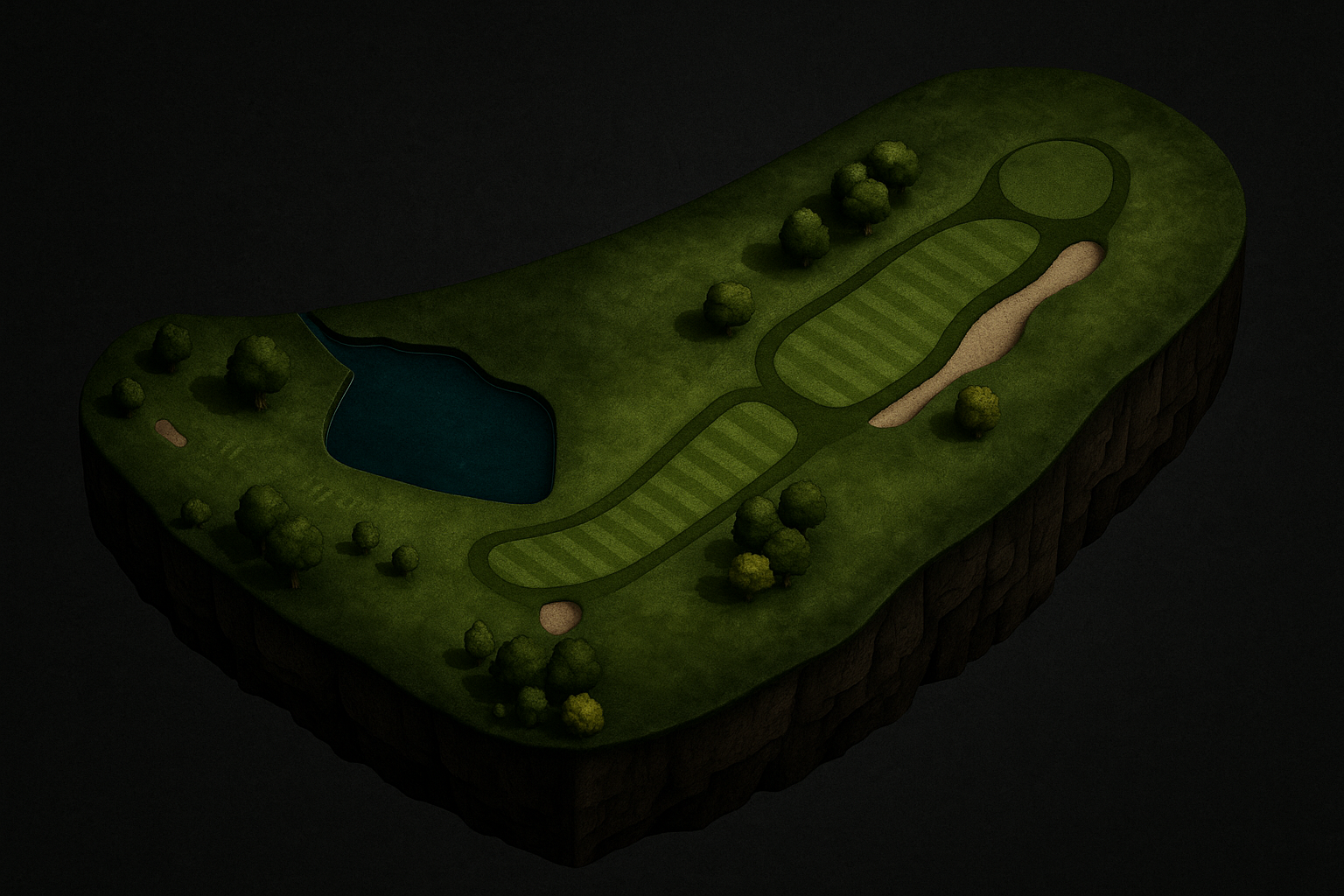
Category: Courses

  • Chris Bargas Golf Club at Whitney Farms Review

    Chris Bargas Golf Club at Whitney Farms Review

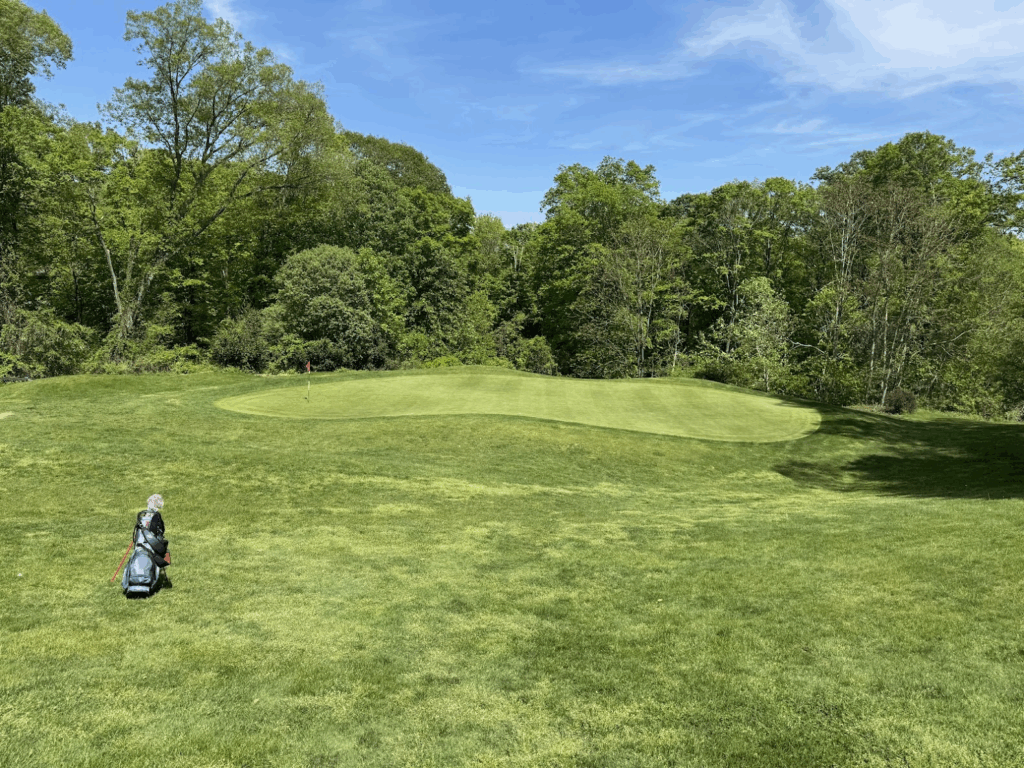
    Whitney Farms is a public par-71 course measuring approximately 6,534 yards from the tips. The course was originally designed in 1981 by Hal Purdy and is located in Monroe, Connecticut.

    Set on roughly 160 acres of gently rolling, wooded terrain in western Connecticut, Whitney Farms weaves through forest corridors, water hazards, and a handful of residential edges. The routing is relatively tight, with short green-to-tee transitions that help maintain a steady walking rhythm. While it doesn’t overwhelm with scale, the course delivers a steady mix of hole shapes, distances, and green complexes. Whether you’re walking nine or playing a full loop, Whitney Farms rewards placement, patience, and well-timed ambition.
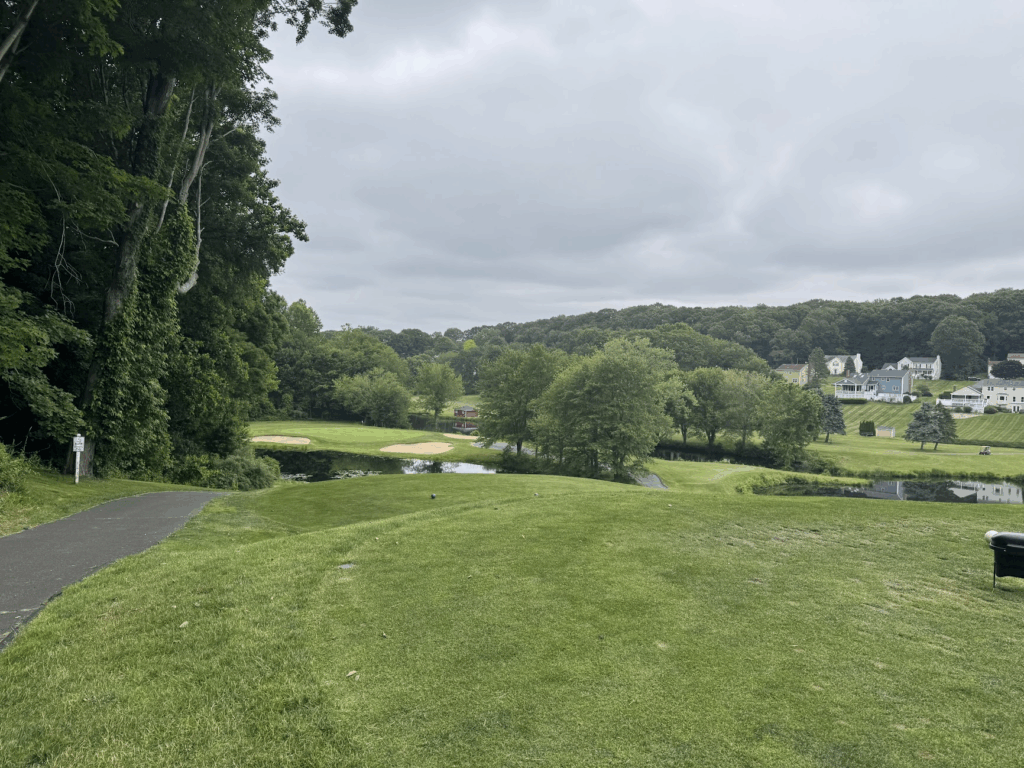
    Hole 15 [Par 3, 183 yards]

    Walkability

    Whitney Farms is mostly walkable, aided by a compact routing and gentle elevation changes. Most green-to-tee walks are short, and only a few holes dip into more secluded parts of the property. Terrain slopes gradually, with only occasional climbs such as on holes 12. Players carrying bags or pushing carts should have minimal difficulty traversing the course. The middle of the round, especially holes 10–13, offers a particularly smooth and shaded walk.

    • Pro: Holes 10–13 form an enjoyable loop in the southeast corner of the routing. Hole 10 (365 yards) plays flat and transitions directly into the par-5 11th (552 yards), then a short par 3 (150 yards) and a mid-length par 4 (368 yards). This section stays close to one axis of the property and is shaded, quiet, and flows beautifully underfoot.
    • Con + Fix: Hole 17 (363 yards) is a confusing walk and an awkward hole. Despite being a dogleg right, it’s jammed between tee boxes and doesn’t present clear visual cues from the tee. Many players are unsure whether to lay up 240-250 yards to the left or aim longer down a narrow corridor. The spatial squeeze disrupts rhythm. Clearing some peripheral trees, repositioning teeing grounds, and adding a fairway aiming post or shallow centerline bunker would clarify intent.

    Strategic Test

    While not long, Whitney Farms demands smart decisions. Doglegs, water hazards, and well-placed bunkers create multiple moments where club selection and angle trump brute strength. Even the shorter par 4s require you to think ahead.

    • Pro: Hole 18 (442 yards) is a strategic masterclass. From the elevated tee, players must decide between a bold carry over a pond to set up a short wedge approach or a conservative layup right of the pond to about 192 yards. The heroic line brings the pond into play and sets up a potential birdie chance, but the reward is complicated by a fronting bunker that makes controlling spin tricky. The safe layup avoids both the water and the bunker but leaves a substantially longer second shot with a more awkward angle. This classic risk-reward puzzle means that even seasoned players second-guess their strategy. It’s one of my all-time favorite holes for in-round debates—I remember yelling with friends, beers in hand, daring each other to go for it. That kind of emotional pull, rooted in solid architecture, is rare.
    • Con + Fix: Hole 4 (174-yard par 3) is flat, featureless, and uninspired. With only basic front bunkering and a simple green, it lacks teeth or nuance. To add interest, the green could be re-contoured with a subtle false front and rear shelf, and the bunkers could be shifted to pinch both sides at mid-depth, forcing aerial precision.

    Playability

    The course is generally playable for mid- to high-handicappers. Wide fairways and simple green surrounds help limit big numbers. Trouble is present but usually visible, and most forced carries are manageable.

    • Pro: Hole 7 (225-yard par 3) is daunting in distance but plays slightly downhill and features a forgiving front apron. High-handicappers can run shots up or miss right without severe penalty. It’s a long-iron test that feels fair, offering bailout space and a big target.
    • Con + Fix: Hole 2 (405 yards) has a difficult forced carry of roughly 220 yards to reach an ideal landing zone. Many shorter players will struggle. Installing a forward tee at 300 yards and mowing a right fairway extension could give short hitters a playable path without watering down the hole’s challenge.

    Atmosphere

    Whitney Farms has a serene, wooded New England feel. The course is surrounded by mature trees and occasional water views, giving it a peaceful, tucked-away character. The routing flows through varied terrain without ever feeling disjointed.

    • Pro: Hole 15 (183-yard par 3) is one of the most beautiful shots I’ve seen. From a high tee box, you launch over a pond to a green flanked by bunkers. The adjacent pond on Hole 16 adds depth to the view. It’s cinematic golf—a true visual centerpiece.
    • Con + Fix: Holes 1 and 2 don’t make a strong visual statement. They feel like transitional corridors, lacking memorable shaping or sightlines. Light tree clearing to open longer views, plus redesigned fairway bunkering to frame drives, could elevate the start and better set the tone.

    Final Word

    Whitney Farms is a course that rewards intellect over brawn. With tight corridors, sloped greens, and strategic hazards, it’s designed to make you think your way around. While it doesn’t stretch to great lengths, it consistently asks smart questions of the player—and rarely lets you coast.

    Among its Fairfield County peers, Whitney Farms compares well in both scale and substance. Tashua Knolls offers a 27-hole layout stretching over 220 acres, with a large practice facility and a broader parkland feel. The Tradition at Oak Lane, by contrast, is an 18-hole course on a more compact 160-acre site known for walkability, tree-lined fairways, and consistently maintained greens. Whitney Farms also spans about 160 acres with 18 holes, but differentiates itself with more demanding angles, tighter driving zones, and green complexes that reward precise thinking. Its 6,534-yard routing is neither overpowering nor forgiving—it simply asks for well-planned execution.

    For public-access golf in Fairfield County, Whitney Farms is an easy recommendation. It’s scenic, challenging, and thoughtfully built. I’ll absolutely be back—and I suspect many players who appreciate strategic golf will feel the same way.
  • Tashua Glen Golf Course Review

    Tashua Glen Golf Course Review

    Tashua Glen is a public par-33 course measuring approximately 2,183 yards from the tips. The course was originally designed in 1976 by Al Zikorus and is located in Trumbull, Connecticut.

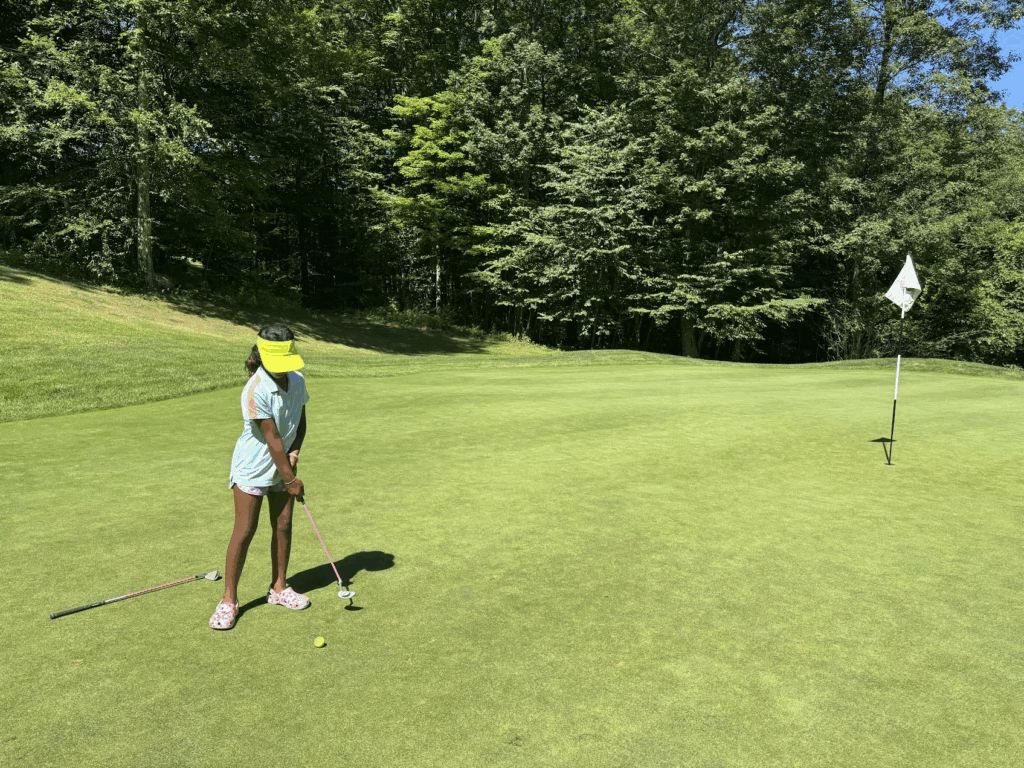
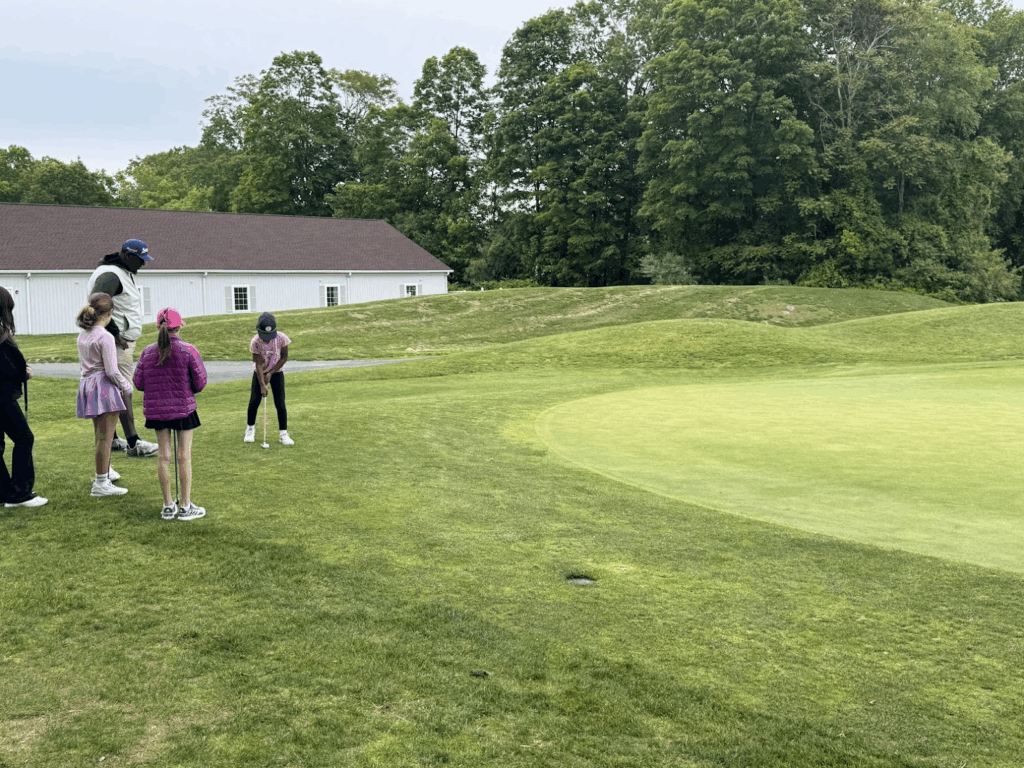
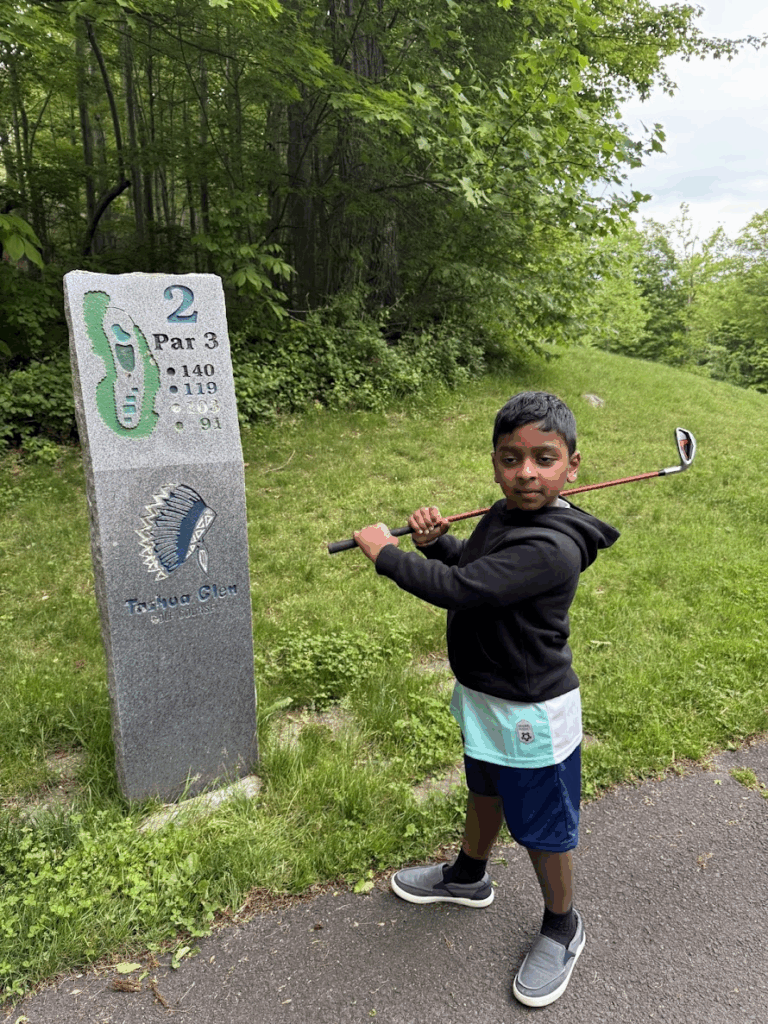
    Tucked within the larger Tashua Knolls complex, Tashua Glen is a compact, well-maintained nine-hole layout that punches above its weight for charm and variety. The routing makes efficient use of a relatively tight parcel, incorporating short par 4s, a reachable par 5, and a few testy par 3s. Elevation changes, small push-up greens, and tight tree-lined corridors create an engaging experience for players of all ages. I especially love playing this place with my kids—the Glen serves as both a proving ground and a casual walkable loop for a quick nine. My kids have been learning the game here, and it’s one of the few public courses in Connecticut with a dedicated chipping area, which makes a big difference in skill development. The putting green is also excellent—smooth, well-kept, and large enough for varied practice.

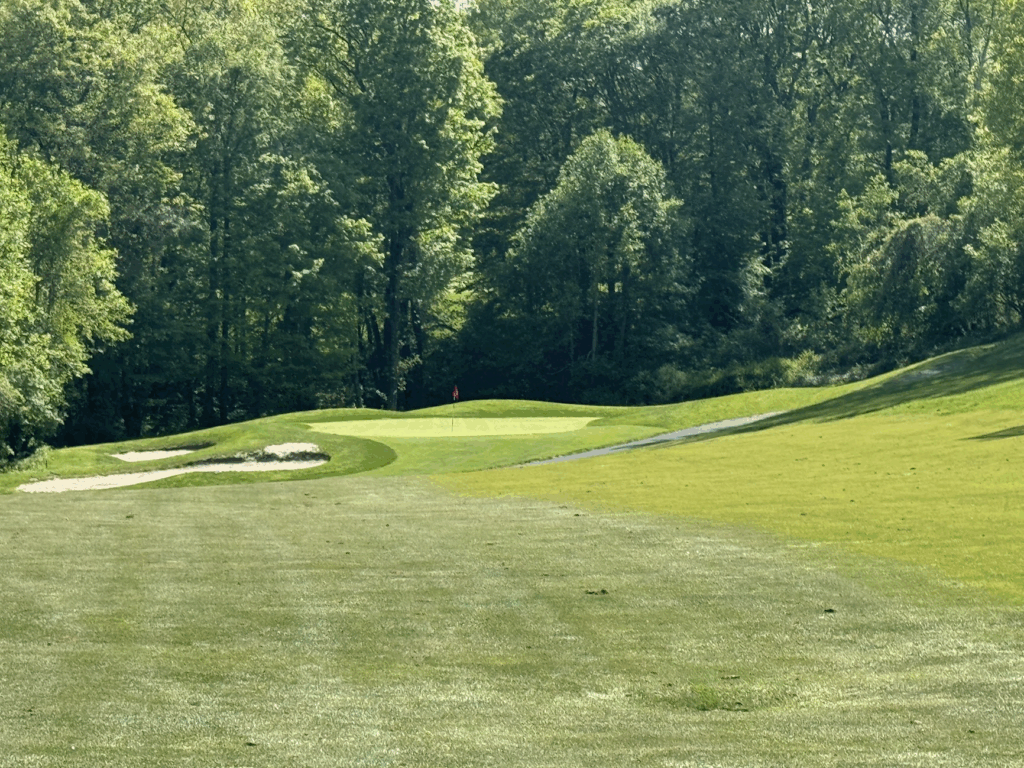
    Many gentle slopes

    Walkability

    Tashua Glen sits on a modest footprint—under 50 acres—and routes its nine holes with efficiency and just enough elevation change to keep things interesting. While most green-to-tee transitions are brief, the mild climbs on Holes 3 and 8 can offer a bit of a workout. Tree-lined corridors frame most of the layout and buffer the player from adjacent traffic and holes. The routing follows a mostly looping pattern with minimal backtracking.

    • Pro: The opening stretch of 1 through 3 forms a tight, breezy walk—especially 2 and 3, which are reachable with short irons and funnel naturally into one another. Hole 2’s walkable 140-yard distance and quick segue to 3 makes it ideal for a family loop.
    • Con + Fix: The greens for Holes 1 and 6 sit unusually close together, which can be confusing for newer players or kids still learning green etiquette. While it doesn’t interrupt the flow, it does create a convergence that could be eased by adding subtle ground contouring or signage to signal direction more clearly. That said, if the course is empty, I actually enjoy taking another loop from 6 back to 1 for bonus swings.
    Great for juniors

    Strategic Test

    The Glen isn’t meant to be Pine Valley, but for a nine-hole course under 2,200 yards, there are genuine decision points to navigate. Several holes provide optionality through risk-reward club selection and small push-up greens that challenge wedge distance control. The routing doesn’t just alternate par types—it alters angles. Fairways bend both directions, and there’s an emphasis on positional awareness, not just raw distance.

    • Pro: Hole 9 is the most tactically rich of the bunch. At 460 yards, this par 5 is reachable in two for longer hitters, but it demands disciplined execution. The tee shot presents a subtle left-to-right dogleg with overhanging limbs left that can knock down overdrawn balls. A bold line over the left corner opens up a more direct second shot, but the risk of tree trouble is high. A fairway wood played straight at the 200-yard mark leaves a downhill lie and a tempting decision: carry the ball 220+ with a hybrid or lay up short of the green-side mounding and pitch in. The green itself is modestly elevated and slightly angled, with a left-to-right slope that rejects short or left approaches. Bail-out areas short-right provide a safe landing but leave a fiddly uphill chip. The hole becomes a mirror on your commitment and ball control. Players who shape shots left-to-right off the tee and right-to-left into the green gain a strategic edge, but poor placement invites bogey or worse.
    • Con + Fix: Hole 4, a 140-yard par 3, feels like a missed opportunity. It plays similar in shape and yardage to Hole 2 and lacks defining hazards or contour features. A front-right bunker or slightly raised rear shelf could enhance the shot value and create visual separation.

    Playability

    This is where Tashua Glen really shines. The course is incredibly playable for beginners, high-handicap players, and those looking to improve their short game in a stress-free environment. Nearly every hole gives a fair chance at a clean shot—even when teeing off with limited carry distance. There are no forced carries, the fairways are relatively generous, and the rough is kept playable. Greens are small but mostly accessible via low-running or aerial approaches, making recovery options reasonable for those who miss.

    • Pro: Hole 7, a 300-yard par 4, is an excellent example of how shorter holes can still provide a fair and rewarding test without intimidation. A slight downhill grade and wide landing area off the tee encourage aggressive driving, but a shallow green framed by subtle mounding places a premium on wedge control. Players who miss long will find themselves in a tricky recovery position, while those who leave the ball short have a straightforward pitch. There’s no water or forced carry, and the hole allows both bombers and bunters to find a strategy that suits their game. It balances confidence with consequence in a way that welcomes repeat attempts.
    • Con + Fix: Hole 5 at 325 yards plays a bit uphill and tends to collect short tee shots in thick grass along the right. For shorter hitters, especially those who can’t carry beyond 150 yards, this becomes a frustrating barrier. Widening the fairway corridor slightly on that side or trimming the primary cut rough into a gentle apron at the 130–160 yard zone could maintain challenge without punishing less powerful players.
    Greens are very forgiving

    Atmosphere

    The setting is peaceful and suburban, with enough elevation changes and forested buffers to give it an immersive feel. Maintenance is consistent year-round, and while the Glen doesn’t have the architectural pedigree of its big brother (Tashua Knolls), it has a welcoming vibe all its own.

    • Pro: Hole 8 stands out. It’s a 110-yard par 3 with a green perched on a bluff that doesn’t look dramatic from satellite view, but in person the elevation is real. Teaching kids to chip uphill or flight a short iron to an elevated target is one of the joys of this hole. It’s scenic, quiet, and always memorable.
    • Con + Fix: Holes 2 and 4 mirror each other in look and feel, which creates some visual monotony. Adding a small pond or mounding near the green on one of them would not only diversify aesthetics but also reinforce different shot shapes.
    Superb teaching staff and great putting/chipping area

    Final Word

    Tashua Glen fills an important niche in Connecticut public golf. It’s not quite as beginner-oriented or breezy as Carl Dickman Par 3, where I can zip through nine holes in under an hour, but it offers a more complete test and an essential stepping stone before moving up to a full-length course like Longshore. It’s a course where you can start to introduce real club selection decisions, shaping shots off the tee, and learning how to adjust to elevation. The practice facilities—especially the dedicated chipping area—are better than what most public tracks offer, and the conditioning remains reliable throughout the season. I’ve walked this loop more times than I can count, and it continues to offer value both as a training ground and a relaxing round. I’ll keep coming back.

  • Longshore Golf Course Review

    Longshore Golf Course Review

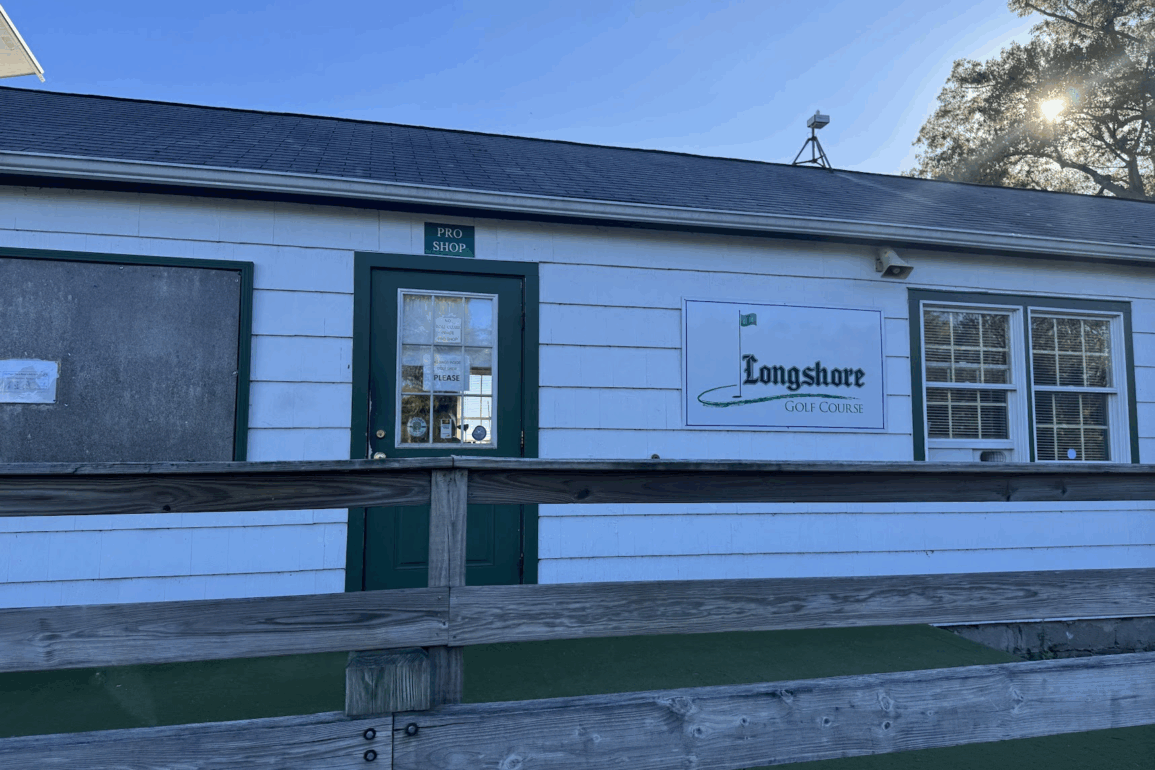
    Longshore Golf Course is a public par-69 course measuring approximately 5,895 yards from the tips. The course was originally designed in 1922 by Orin Smith and is located in Westport, Connecticut.

    Set beside the Long Island Sound, the course is routed through a compact seaside property with modest elevation changes and consistent turf conditions. It favors players who enjoy short walks between holes and the occasional ocean breeze. Fairways are mostly open, while mature trees and water hazards shape strategy across the routing. The course appeals to casual walkers and lower handicaps alike thanks to its balance of playability and coastal charm.

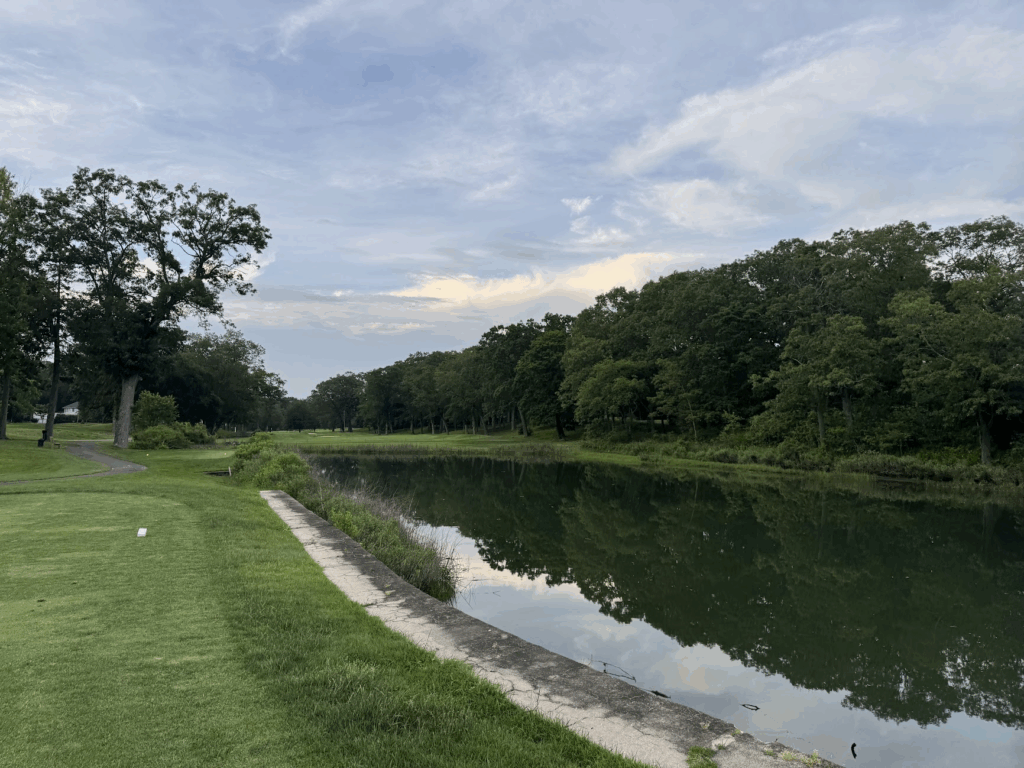
    Hole 17 is very pretty with water in front and harbor in back

    Walkability

    Longshore plays across a relatively flat and compact footprint, making it one of the more walker-friendly public tracks in Connecticut. The course likely occupies less than 120 acres, and green-to-tee transitions are mostly under 50 yards. There’s a pleasing rhythm to the routing, especially from holes 6 through 9 and again on the back nine. With the exception of a few minor climbs—most notably to the elevated 3rd tee—the terrain is forgiving. The proximity to the Sound keeps things breezy and tranquil, adding to the comfort of the walk.

    • Pro: The transition from the 2nd green to the 3rd tee provides a satisfying change in elevation and delivers one of the course’s most scenic moments. Holes 6 through 9 loop efficiently in an open area with smooth terrain and minimal crowding. The walk to the 10th tee continues the momentum seamlessly, encouraging players to play on foot without fatigue.
    • Con + Fix: Holes 3 through 6 are routed tightly together, with parallel fairways and minimal buffers. This congestion can lead to cross-traffic and a loss of individual hole identity. Planting staggered native rough between corridors or selectively relocating tees—especially on 4 and 6—could help reclaim breathing room without sacrificing routing efficiency.

    Strategic Test

    While Longshore isn’t layered with Golden Age deception or MacKenzie-esque flourishes, it still delivers a respectable test for the thoughtful golfer. Several holes feature subtle angle biases, narrow fairway corridors, and crosswinds that force commitment to shot shape. Greens are modest in size, which elevates the importance of precise approach play. Water comes into play on key holes, especially on the back nine, where the routing begins to open up. Players with a reliable fade can find advantages on several tee shots, while those who drive it long but erratic may struggle with constrained landing zones.

    • Pro: Hole 12, a 289-yard par 4, is a microcosm of modern short hole strategy. The tee shot presents a classic dilemma: take the bait and go for the green over water with driver, or lay up safely short-left to a narrow landing pad. The aggressive line—typically a baby fade with a 3-wood or driver—requires carrying a pond and avoiding a bunker right that punishes bailout misses. A successful bold play can yield an eagle putt. Meanwhile, the conservative route (4-iron to 200 yards) yields a wedge, but the shallow angle into the green magnifies spin and trajectory control. The green itself slopes gently away, making back pins deceptively hard to access. Wind off the Sound makes club selection unpredictable. This hole rewards creativity, shotmaking, and confidence in both bold and cautious players.
    • Con + Fix: Hole 8, a 131-yard par 3, is straightforward to the point of forgettable. The green is flat, the hazard set benignly short-left, and the angle is dead-on from the tee. There’s no real option or forced decision, and even mishits tend to gather toward the center. To introduce nuance, the tee box could be rotated 20 degrees left and lowered slightly, turning the hazard into a true carry and encouraging players to play a fade into the heart of the green. A back-right tier would create a second line of defense.

    Playability

    Longshore is highly playable, with forgiving fairways, limited forced carries, and minimal elevation stress for high-handicappers. Most holes provide clear visuals from the tee and few surprises en route to the green. The lack of thick rough and abundance of open approaches make recovery possible for all skill levels. At under 5,900 yards, the length is comfortable without being trivial. The course feels welcoming without sacrificing integrity.

    • Pro: Hole 5, at 304 yards, is a fantastic example of fun and fair play. It’s short enough for juniors and seniors to reach in two but still offers strategic interest with subtle bunkering and an angled green. A well-placed tee shot of 180–200 yards rewards players with a clean look at the pin and takes the front bunker out of play. It’s a hole that builds confidence while retaining architectural interest.
    • Con + Fix: Hole 6 can be punitive for shorter hitters, especially into the prevailing wind. Although it’s listed at 417 yards, it plays longer due to the orientation and subtle uphill approach. A forward tee in the 275–300 range would allow more players to approach the green in regulation and maintain flow without slowing the group pace.

    Atmosphere

    The course leans heavily on its coastal setting, and the ambiance is most powerful when the Sound is visible. Gentle breezes, open skies, and the occasional gull call lend Longshore a relaxed, inviting vibe. Tree lines on the front nine are mature but trimmed back enough to frame rather than choke. The back nine opens up even more, with views extending to the water from multiple vantage points.

    • Pro: Hole 3 is the emotional high point of the round. Set atop an elevated tee box, the fairway unfurls below in dramatic fashion, framed by distant water and open sky. The hole plays 396 yards but feels like it could go a million. There’s a liberating sensation to the drive, made more memorable by the unobstructed sightline and subtle tailwind. It’s a moment that makes you pause, exhale, and appreciate where you are.
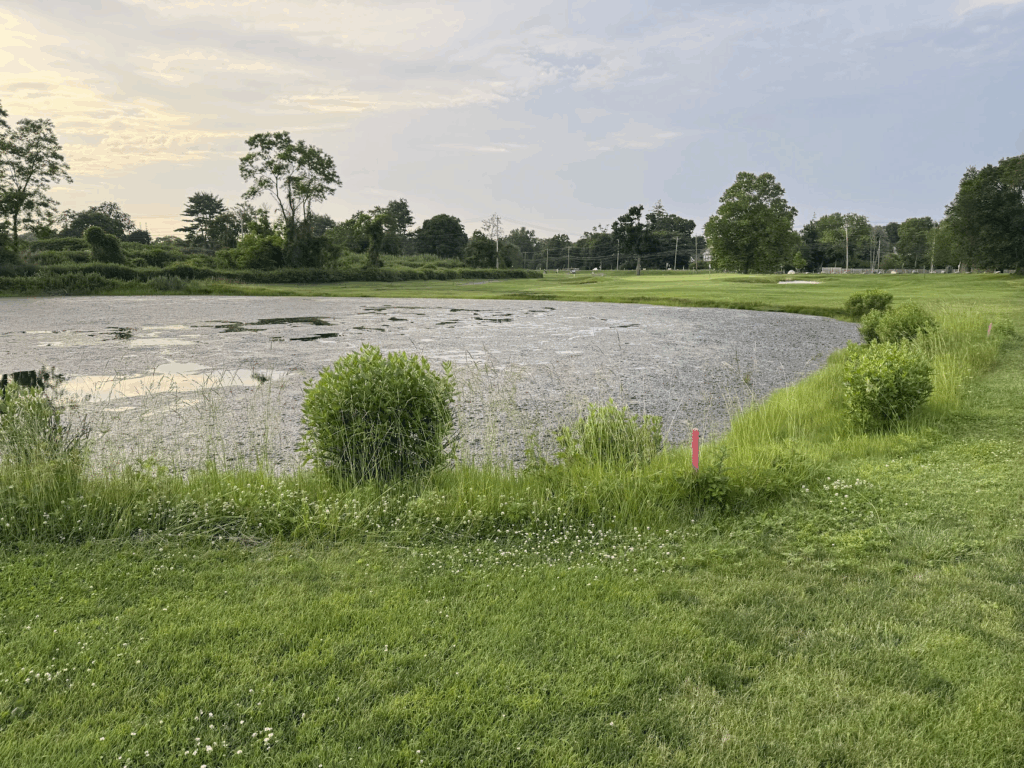
    • Con + Fix: Holes 4 through 6, despite being functionally solid, suffer from repetition and a lack of visual drama. They are routed side-by-side with similar shaping and little to distinguish one from the next. A simple recontouring of fairway lines, added mounding, or tree removal along key sightlines could create stronger hole identity and elevate the sensory engagement. Also, what’s going on with hole 13? This could be a beautiful par 3 (and certainly looks like it on aerial maps), but after going there in person, one would rather carry the ball over the fetid water to get away from the stench than anything else.
    Hole 13 is exceptionally odiferous

    Final Word

    Longshore doesn’t try to be more than it is—and that’s its greatest strength. It’s a coastal municipal course that offers clean routing, a walkable footprint, and a few genuinely memorable holes. It stacks up favorably against nearby Smith Richardson, which shares a similarly short footprint but suffers from more awkward transitions and a less coherent front nine. Compared to Fairchild Wheeler, Longshore offers far greater variety in green complexes and a more scenic routing, despite having fewer total holes. The back nine at Longshore—especially holes 12 through 14—offers more strategy and a stronger connection to the landscape than anything found at either municipal alternative. For golfers who appreciate compact, well-routed golf with flashes of coastal charm, Longshore is an easy recommendation.

  • Carl Dickman Par 3 Course Review

    Carl Dickman Par 3 Course Review

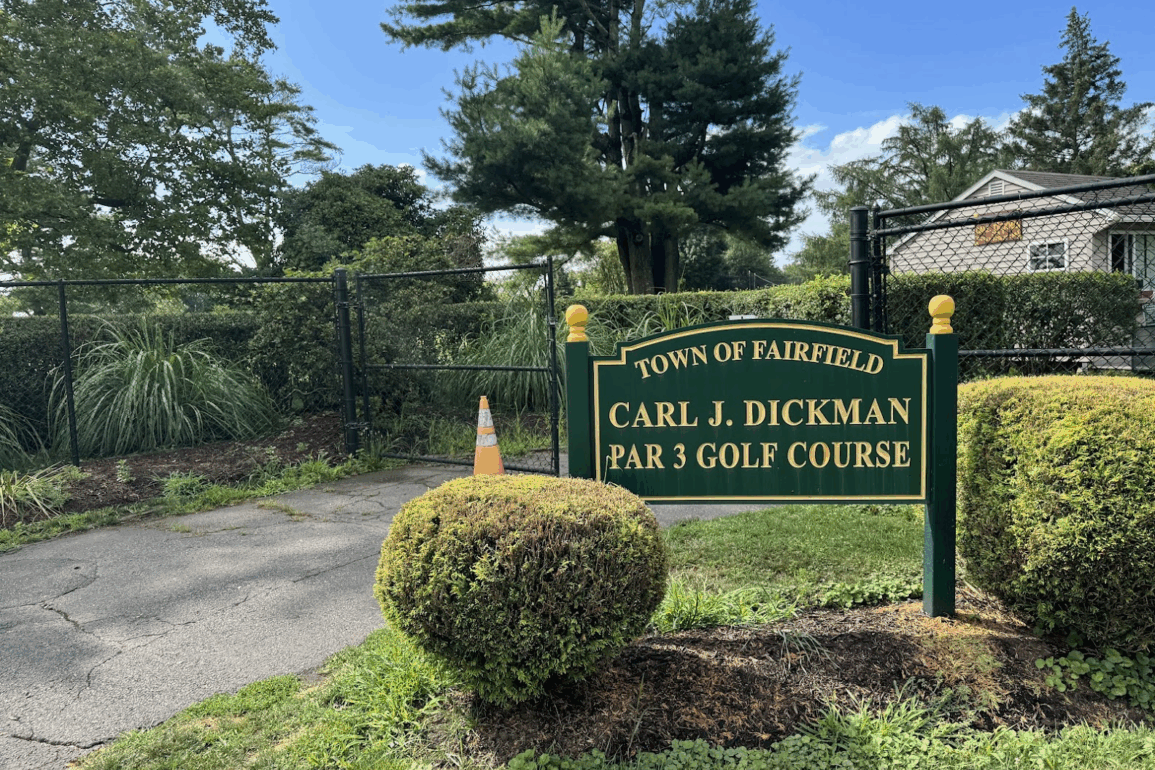
    Carl Dickman Par 3 Golf Course is a public par-27 course measuring approximately 1,050 yards. The course was originally designed in 1961 by Geoffrey Cornish and is located in Fairfield, Connecticut. Set beside the marshes of Long Island Sound, the terrain is flat and breezy with open sightlines and a relaxed, community-focused vibe. With holes ranging from 70 to 140 yards, it’s an ideal course for beginners, juniors, or anyone sharpening their short irons and wedges. Walkable, welcoming, and wonderfully understated, Carl Dickman rewards feel, tempo, and creativity around the greens.

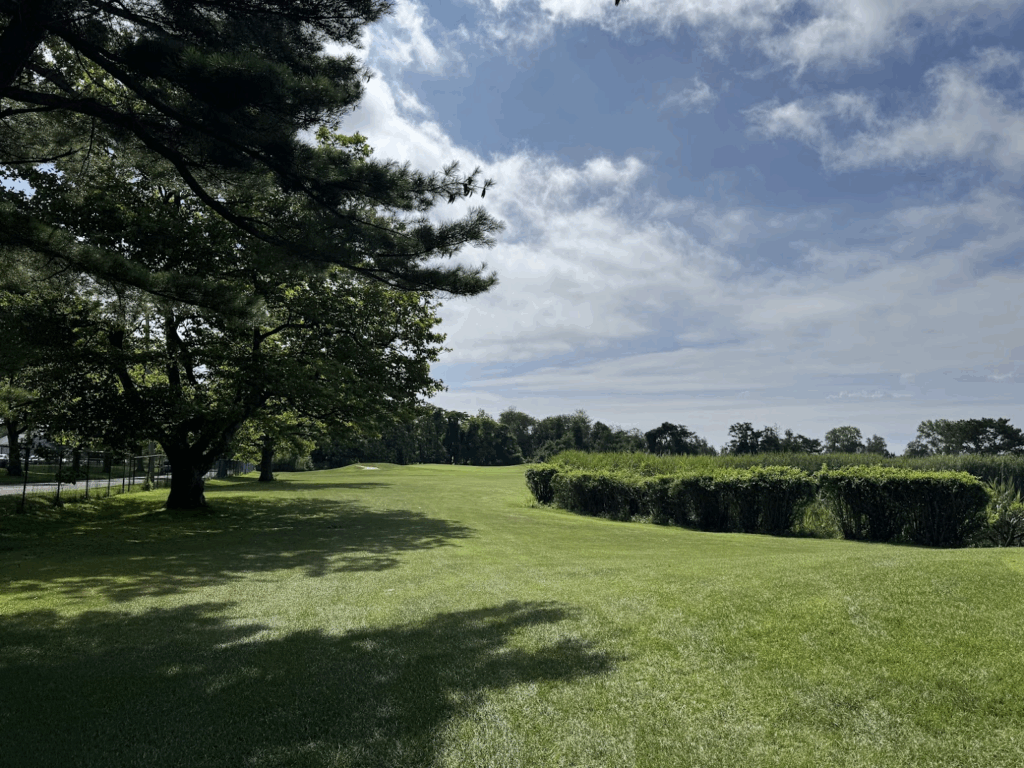
    Great gentle fairway contours

    Walkability

    Carl Dickman is a model of walkable design. Nestled into South Pine Creek, its footprint is tight and efficient, with no hole feeling isolated or awkwardly stitched to the next. The longest hole clocks in at 187 yards, and even that sits directly beside the preceding green. Tee-to-green transitions are short and intuitive. The terrain is pancake-flat, giving players of all ages and abilities the confidence to walk it easily. Green-to-tee adjacency helps maintain pace of play, even on busy afternoons.

    • Pro: The routing is so tight and rhythmic that walking it feels meditative. Starting with 142 and 144 yard holes at 1 and 2, then gradually stretching out to 165 and 152 at 4 and 5, players are subtly tested while always within reach of the next tee. It’s especially ideal for looping with kids or seniors who can keep up with minimal fatigue. On quiet evenings, the walk between 6 and 9 feels like a slow stroll through a town park.
    • Con + Fix: The only walkability issue isn’t terrain or routing—it’s navigation. After finishing hole 4, both the tee boxes for hole 5 and hole 7 are visible from the green. Because hole 7’s tee is more directly in view and aligned with the player’s exit from the green, it’s easy for first-timers to mistakenly walk to 7 instead of doubling back slightly to 5. A modest directional cue, like a small wooden signpost or discreet ground arrow, would smooth this moment of decision and help newer players maintain flow.

    Strategic Test

    For a par-3 course of this size, Carl Dickman offers more shot variety than you’d expect, though rarely true strategic dilemma. There are no alternate angles or fairway widths to exploit, but players must frequently vary club selection. The hole distances oscillate meaningfully, forcing conscious decision-making between short iron or wedge, and wind plays a meaningful role near the water.

    • Pro: Hole 8 is the most cerebral challenge: a 187-yard test where wind swirls unpredictably off the creek and trees shield parts of the approach corridor. Bold players might opt for a hybrid or long iron, aiming for a high draw to hold the putting surface. This route flirts with a steep left drop-off and long carry. More conservative players might lay up short-left and try to run one on, but a subtle upslope can deaden the bounce, leaving a delicate chip. Crosswinds complicate both strategies, making distance control and trajectory paramount. The green is slightly pitched, rewarding well-struck mid-irons but punishing anything long or wide. The hole also subtly narrows at the front, adding pressure to shape the ball precisely. The absence of bunkering might seem lenient, but it instead heightens the mental game—players are left to manage contours and wind without visual aiming aids. Pin positions tucked front-left shrink the margin for error, turning this hole into a psychological gauntlet. It plays especially tough late in the day, when shadows stretch and visibility narrows. This hole encapsulates the most advanced decision-making on the property.
    • Con + Fix: Hole 3, just 120 yards with a broad green and zero hazards, feels overly passive. There’s no risk-reward. Adding a small front bunker pinched left would create depth perception challenges and invite a fade or high carry to access back-right flags. A low mound right of the green could redirect slightly errant shots toward short grass, adding nuance.

    Playability

    Carl Dickman excels as a teaching ground. Nearly every hole allows for a ground or air approach, and there are minimal forced carries or penal rough. Shorter hitters can bunt their way around without being punished, and faster players can complete a full round in under an hour. The short tees are forgiving and flow naturally into the design.

    • Pro: Hole 6, just 117 yards, is perfectly tuned for new golfers. Its flat entry, receptive green, and open front allow any high-handicapper to feel successful with a clean contact. Even thinned shots can roll up. It’s also an ideal hole to practice low chips or bump-and-runs, which are rare opportunities on more demanding designs.
    • Con + Fix: Hole 4 stretches to 165 yards without much visual depth, and there’s little margin for players who can’t carry that full yardage. It also runs so close to the road that any slight push or shank can send a ball rattling into the tree line or chain-link fence along the right side. Installing a small protective netting or planting a staggered hedge line could buffer safety without making the hole feel walled-in.
    Love the shade on hole 4 for sunny days

    Atmosphere

    While not naturally grand, the course has a quiet, suburban charm. On late afternoons, golden-hour sun bounces off the surrounding trees, and you can hear kids laughing from the adjacent baseball field. The vibe is calm, friendly, and low-pressure. However, the flat terrain and open sightlines limit immersion. A few holes blend into each other without strong visual differentiation.

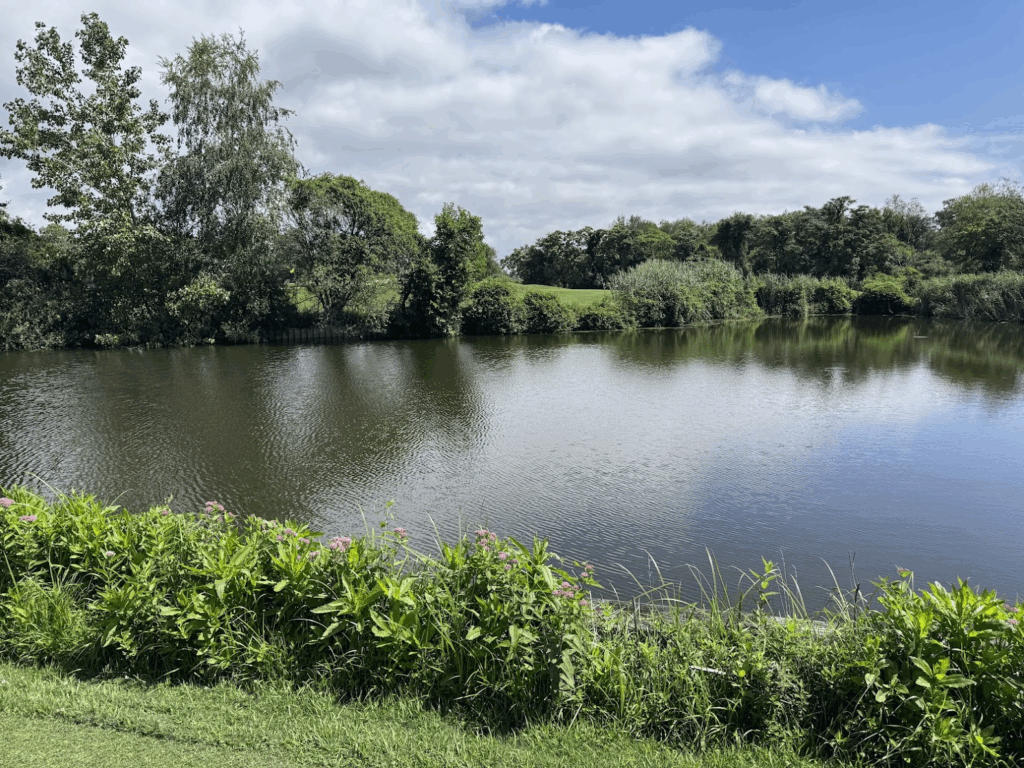
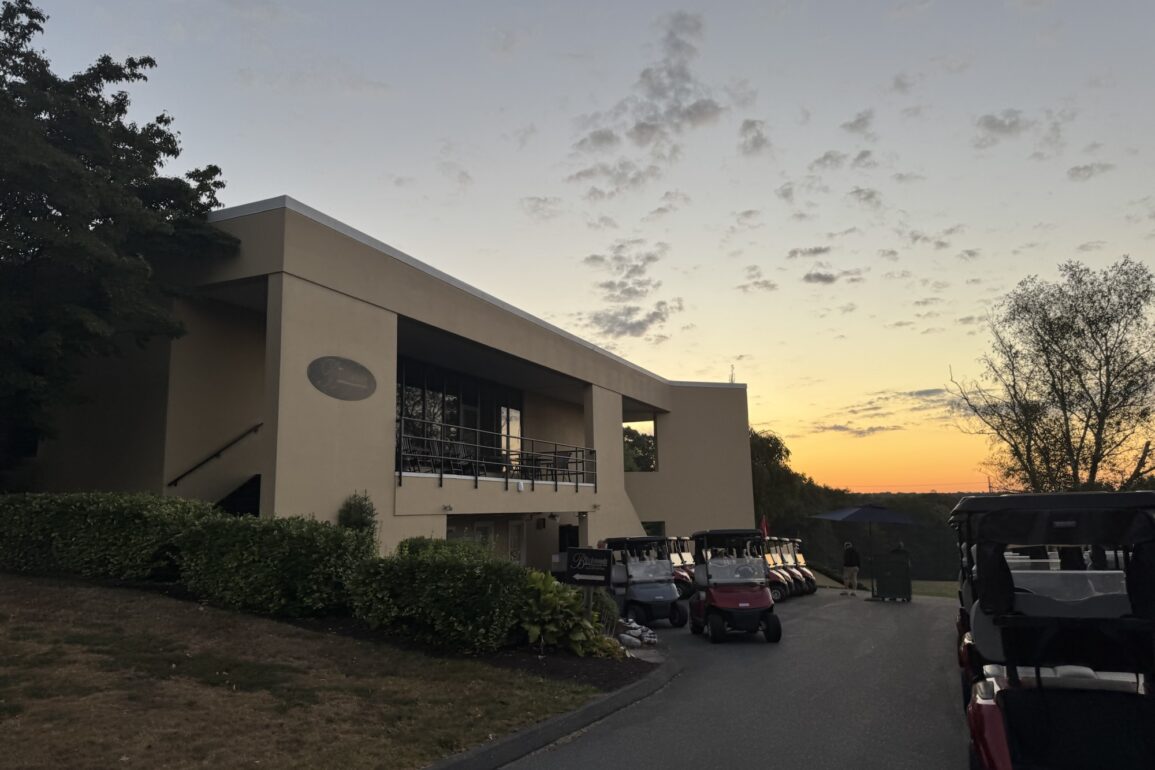
    • Pro: Hole 9 is the most atmospheric finisher: a 90-yard shot across a narrow pond that dares players to take on the full carry with the clubhouse and parking lot just beyond. For such a short hole, it holds real emotional weight—especially with an audience. That final swing can decide your match or just become a personal triumph as the sun dips and the pond glimmers.
    • Con + Fix: Hole 4 and hole 5 blur together in tone and appearance. Both stretch over 150 yards with little in the way of framing or defining features. Adding a low berm or reshaped mound along the right of 5 could distinguish its profile, while a greenside bunker short-left on 4 would further differentiate the hole’s character and shot demand.
    Beautiful forced over-water carries

    Final Word

    Carl Dickman is the perfect primer for architectural curiosity. It’s a course that embraces simplicity without sacrificing joy. It invites learning, fosters community, and remains incredibly playable at all skill levels. Compared to other munis like H. Smith Richardson (which offers more strategic elevation shifts) or Fairchild Wheeler (which has more variety and better maintenance), Dickman holds its own thanks to pace, accessibility, and familial charm. It’s where golf becomes habit—and habit becomes love. I adore walking it with my kids at day’s end, when shadows lengthen and nobody’s in a rush.

  • The Tradition Golf Club Course Review

    The Tradition Golf Club Course Review

    The Tradition Golf Club at Oak Lane is a public par-70 course measuring approximately 6,680 yards. The course was originally designed in 1960 by Geoffrey Cornish and is located in Woodbridge, Connecticut. The layout winds through gently rolling woodland, with tree-lined fairways and a peaceful, parkland setting that emphasizes straight drives and precise approaches. Greens are compact and subtly contoured, rewarding touch and course management. Ideal for players who value strategy over raw distance, the course offers a fair test for all skill levels.


    Walkability

    The routing here flows gracefully across gentle terrain, with no awkward climbs or distance gaps between green and tee. Despite being nearly 6,700 yards from the tips, the layout feels intimate and digestible on foot, likely occupying under 130 acres. The back-to-back transitions from Holes 5 to 6 and again from 8 to 9 are especially efficient. The paths are logical and understated, rarely forcing players to cross traffic or cart paths.

    • Pro: I actually loved walking the course so much that I looped the front nine twice on a lazy, rainy day. The loop from Holes 1 through 9 clocks in at 3,325 yards—ideal for an unhurried two-hour stroll. Each hole flows naturally into the next, particularly the 3–4–5 stretch, where a long par 4 is followed by a short iron par 3 and another strong mid-length two-shotter. Each hole flows naturally into the next, particularly the 3–4–5 stretch, where a long par 4 is followed by a short iron par 3 and another strong mid-length two-shotter.
    • Con: Some sections—particularly between Holes 14 and 15—feature wide, paved cart paths that run too close to the playing corridor and visually disrupt the experience. On foot, the walker is occasionally nudged onto hardscape where a grass path could easily suffice. At several junctions—particularly between Holes 14 and 15—cart paths could be rerouted slightly farther from the fairway corridors and given distinct walker-friendly spurs. Using crushed gravel for the pedestrian portion and adding low split-rail fences to visually and functionally separate cart and foot traffic would preserve the routing’s calm and improve flow. This minor realignment would reduce visual clutter and make the walk more immersive.

    Strategic Test

    Old Tradition won’t overwhelm you with drama, but there’s depth beneath its surface. Most holes offer two viable routes—especially the par 5s and the longer par 4s. Some fairways feature subtle crownings that favor one half of the corridor and challenge players to commit to an ideal angle. Still, a handful of holes would benefit from added incentive to take on risk.

    • Pro: Hole 9 is a standout in terms of strategic architecture. This 490-yard par 5 bends gently to the left and sets up a meaningful decision from the moment you reach the tee. While the fairway is slightly crowned and tilts to the right, the real drama unfolds on the second shot. A creek cuts across the fairway about 50 yards short of the green, creating a pivotal decision point for all players. For the long hitter, a bold drive of around 260 yards sets up a tempting chance to go for the green in two. But to do so, the player must carry the creek with a high, controlled fairway wood or hybrid—typically 220+ yards—onto a slightly raised green protected by a false front. It’s a high-risk, high-reward play. A successful shot offers eagle chances, but a mishit brings water or a tricky recovery into play. For most players, the smarter move is to lay up short of the creek with a mid-iron or hybrid, leaving a third shot from roughly 90–110 yards. This approach demands distance control and spin, as the green’s contouring makes holding the surface a challenge if you’re out of position. The safest route avoids disaster but asks for consistent execution on the third shot to have any look at birdie. The brilliance of this hole lies in how it forces each player to weigh confidence against prudence. There’s no single “correct” path—just the one that fits your game and mindset at that moment. Whether you’re attacking or laying back, success depends on understanding your own tendencies and executing accordingly. That’s the essence of great strategy: choices that are fair, tempting, and consequential.
    • Con: Hole 13—a 350-yard par 4—offers minimal strategic tension and plays almost entirely as a test of execution. It’s straight, flat, and largely devoid of visual shaping or positional nuance. The fairway is wide enough to remove concern off the tee, and the green complex does little to reward precise angles. A small center or offset fairway bunker and subtle contouring around the green—such as a swale or false edge—would introduce decisions and depth. Even a slight offset in the teeing ground to create a new visual line could force players to think differently. As it stands, success here is more about solid mechanics than intelligent play.

    Playability

    Old Tradition is broadly playable for high-handicap golfers, particularly due to its general lack of forced carries and ample fairway widths. The course design tends to favor straightforward lines and open entries into greens, allowing room for recovery and advancing the ball. However, inconsistency in green surrounds and rough management can create abrupt spikes in difficulty. Some holes appear designed with better players in mind and don’t provide alternate paths for shorter hitters or beginners.

    • Pro: Hole 5—a 400-yard par 4—stands out as especially friendly to high-handicap players. The tee shot benefits from a wide corridor and gently sloped fairway that gathers shots back into play. The green is open in front and flanked by short grass, allowing bump-and-run or putter-based recovery for those who miss short. Its lack of lateral hazards means most misses are playable. It’s a well-paced breather that invites confidence.
    • Con: Hole 16—a 430-yard par 4 from the back tees—is a grind for high-handicap players, even from the closest tees, which still measure 370 yards. It plays uphill into a narrow, tree-lined chute that magnifies the psychological pressure and physical toll. For shorter hitters, it takes two well-struck shots of 170+ yards just to reach the green fringe. There are no layup zones, no gathering contours—just a straight ask to hit two long, precise shots in succession. The green complex, slightly elevated and firm, offers little reward for a conservative approach, and players are often left scrambling just to stay on pace. There’s little opportunity for creativity or alternative play routes, which can feel stifling and demoralizing. The solution is modest: advance the forward tees to around 330 yards and shape the left side of the fairway into a shallow collection area to help gather weak drives. A low-profile fairway bunker 150 yards from the green could act as both visual target and strategic checkpoint. These changes would still require skill, but allow high-handicap players to experience flow rather than fatigue.

    Atmosphere

    Old Tradition’s setting is tranquil and occasionally charming, evoking a sense of calm more than spectacle. The property flows through tree-lined corridors with a low profile, allowing nature to frame rather than dominate the experience. Thoughtful touches—like mulch beds, mature maples, and softly graded tee surrounds—contribute to a cohesive aesthetic. You won’t find grand vistas, but you’ll find serenity.

    • Pro: Hole 4—a 140-yard par 3—is a moment of true beauty and composure within the round. The tee shot plays across a still pond, requiring a full carry over water to a green framed by tall reeds and shaded tree canopy. On sunny mornings, the reflections of the flagstick and surrounding maples shimmer across the surface, making the scene feel almost theatrical. The soundscape—birds, breeze, and light ripples—invokes a meditative calm that contrasts wonderfully with the tension of the carry. What makes the hole especially memorable is how it combines aesthetic serenity with a touch of heroic drama. It’s a brief test of nerve, but one that rewards poise rather than power. In a course defined more by rhythm than spectacle, Hole 4 stands out as a visual and emotional anchor.
    • Con: Some portions of the course—especially in the central corridor around Holes 2 and 13—can feel visually repetitive, as they share similar yardages and mostly straight or gently curving shapes with limited elevation variation. While the conditioning is strong, the visual language across these holes leans heavily on uniform tree-lined corridors without enough distinguishing features to make each hole feel distinct. The result is a segment of the round that fades in memory. To elevate these quieter moments, the course could benefit from site-sensitive architectural touches that enhance variety without disrupting cohesion. Consider low stacked stone walls behind a few greens, or shallow turf depressions flanking tee boxes to add rhythm. Split-rail fencing between transitions or vintage-style tee markers could lend nostalgic character. Adding native grasses and seasonal flower beds near walk-ons or green surrounds would inject subtle pops of color and ecological interest. Even a single signature element—like a sculptural tree or custom bench at a key turn—could serve as a visual anchor. These additions would make each hole feel more curated and intentional, helping the round unfold like a story rather than a sequence.

    Final Word

    Old Tradition occupies a thoughtful middle ground in the local golf landscape. It doesn’t deliver the heroic scale of Great River or the raw challenge of Shorehaven, but it quietly outpaces both in terms of routing logic and walkable charm. The course presents a compelling puzzle without relying on gimmicks—ideal for repeat play. While its flat terrain limits visual drama, the subtle slopes and strategic nuances reward players who plan rather than bash. Compared to Great River, which dazzles but can feel disconnected hole-to-hole, Old Tradition feels more cohesive and human-scaled. And unlike Shorehaven, which punishes off-days with relentless precision demands, Old Tradition gives players room to breathe and recover. It’s not a destination track, but it is a connoisseur’s loop—a place to sharpen your craft and settle your thoughts. I’ll return, not to chase a number, but to enjoy the rhythm of smart golf in a serene setting.