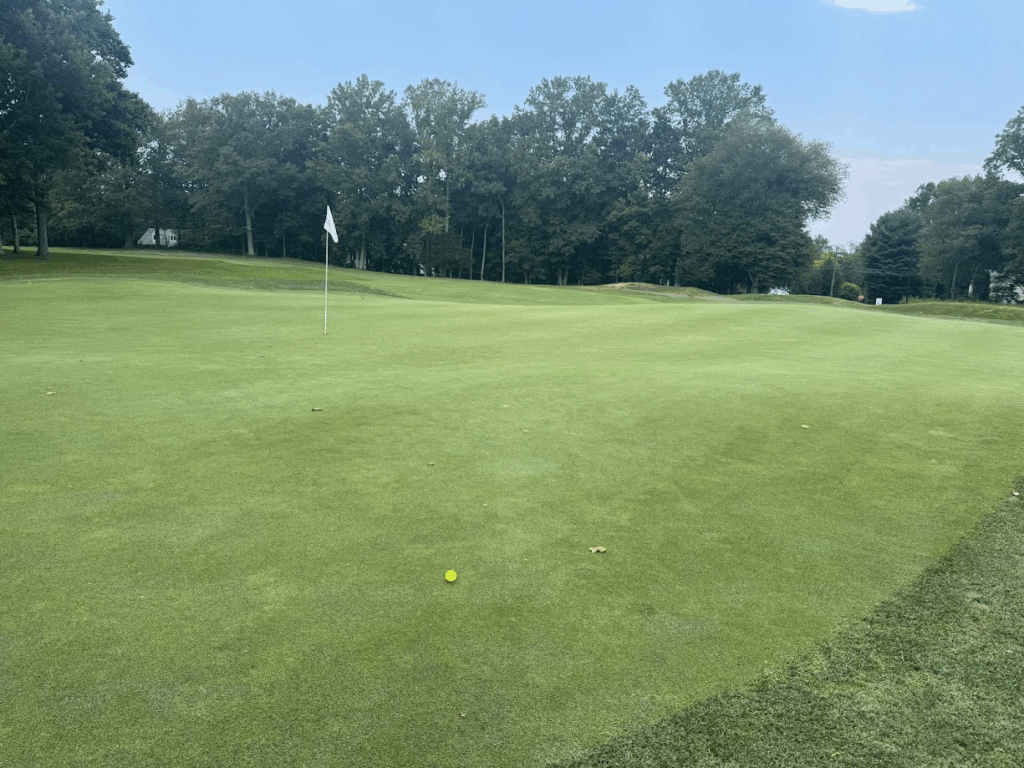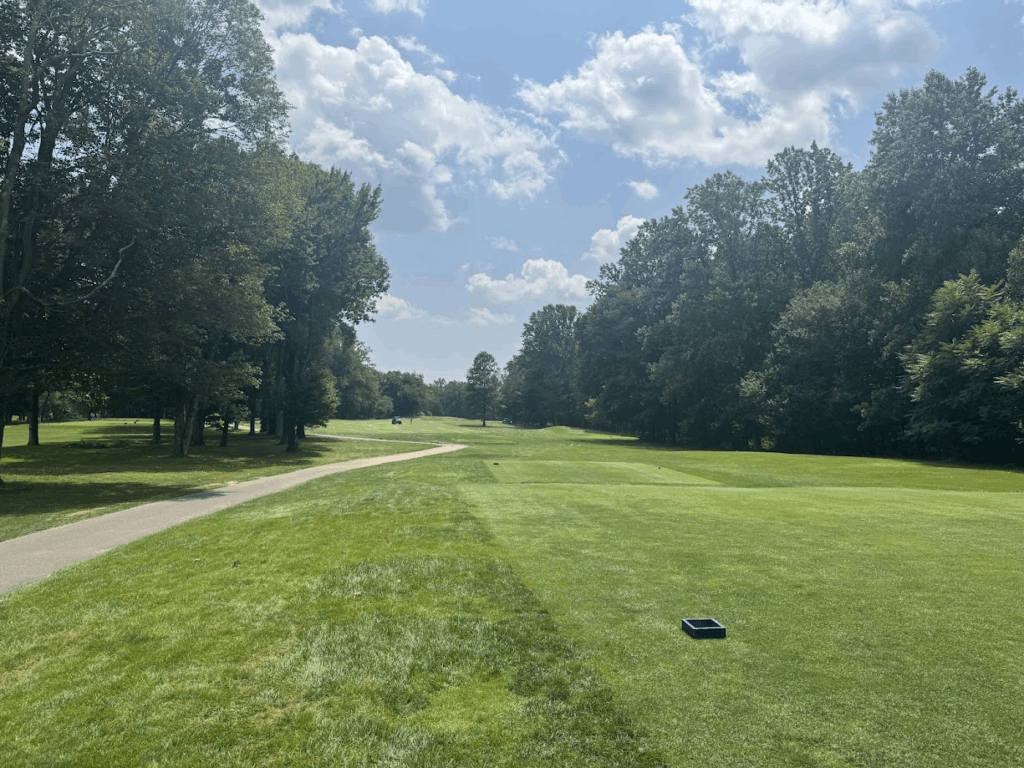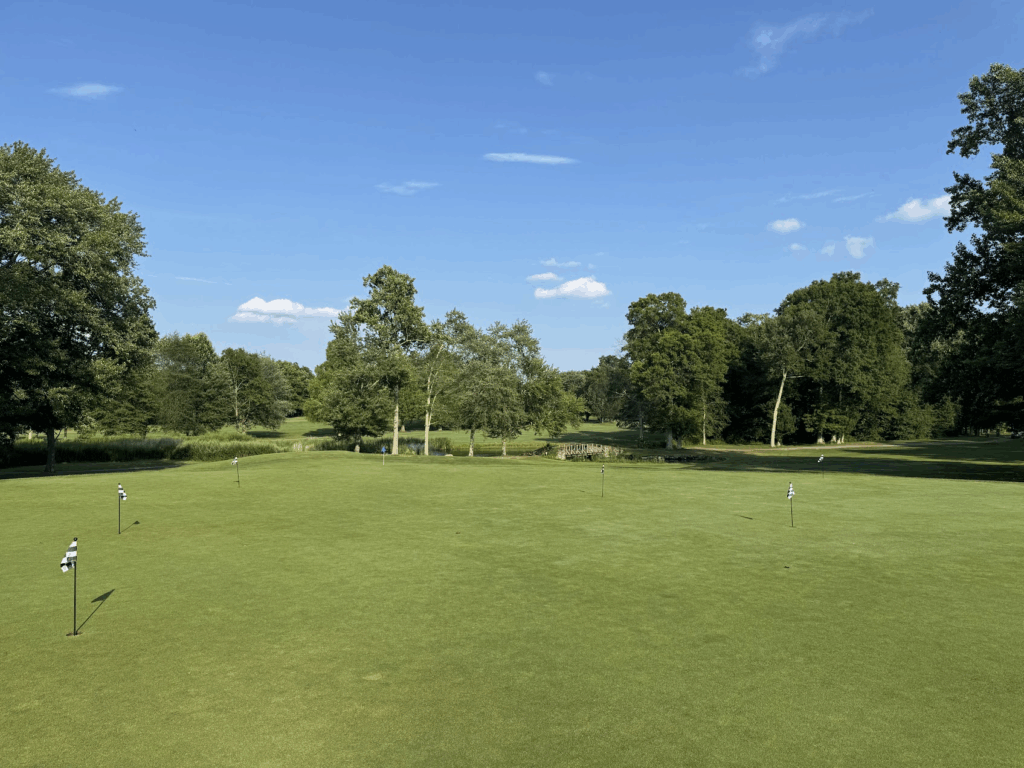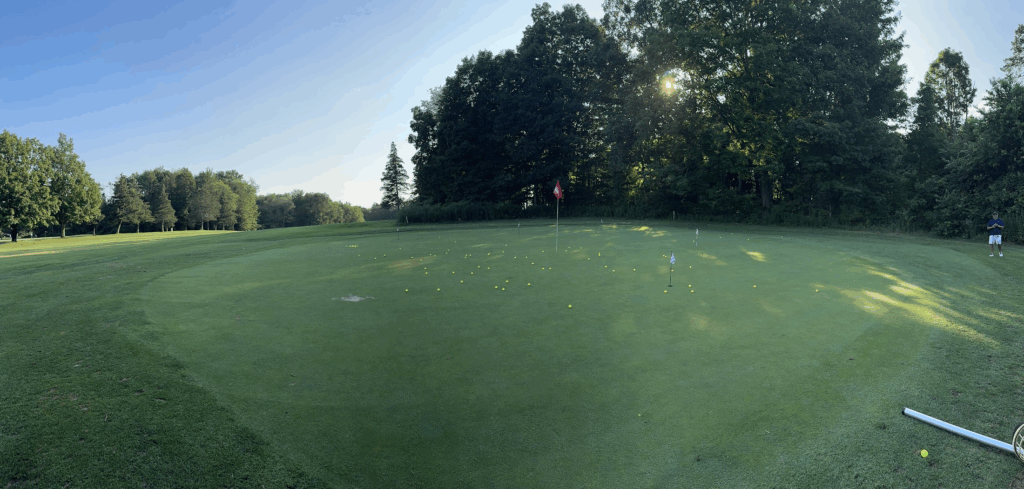
Category: Courses

  • Pelham Bay Golf Course Review

    Pelham Bay Golf Course Review

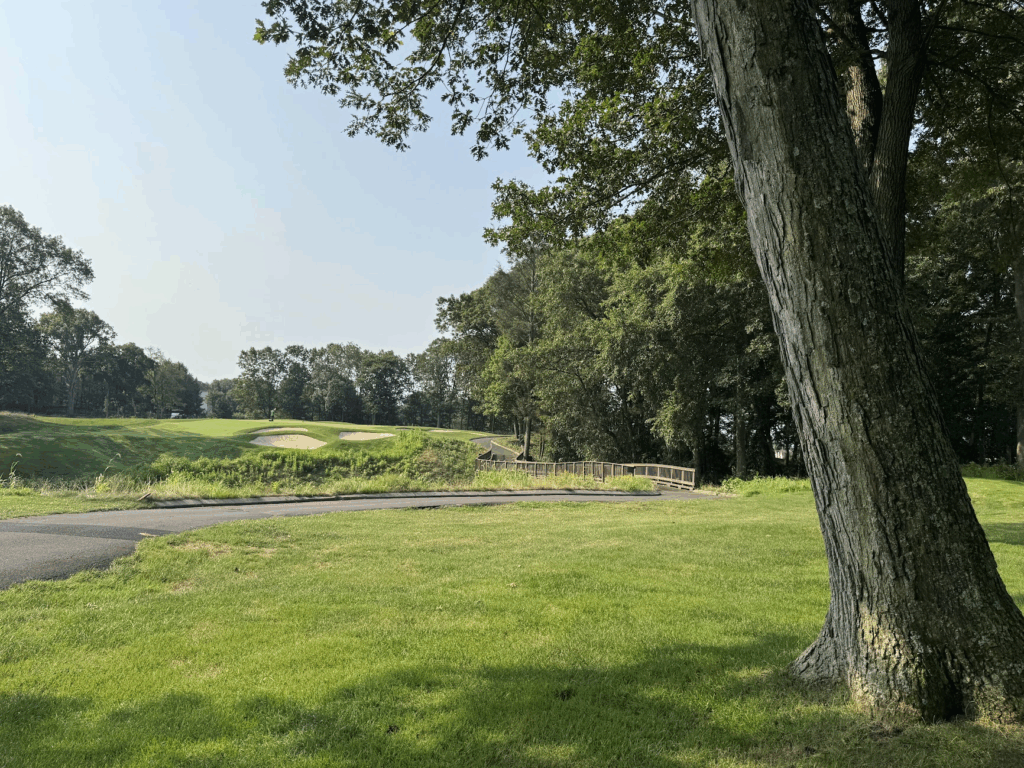
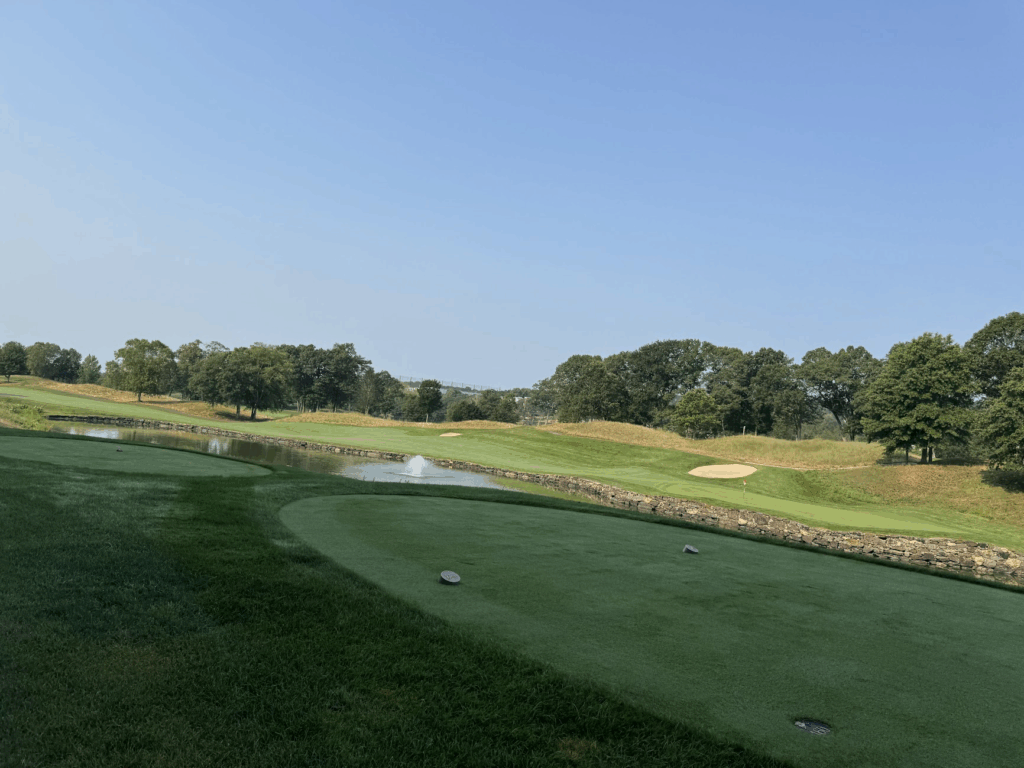
    Pelham Bay & Split Rock Golf Courses is a public 36-hole facility featuring two distinct 18-hole layouts: Split Rock, a par-70 measuring approximately 6,682 yards from the tips (rating 72.0, slope 129), and Pelham Bay, a par-71 measuring approximately 6,480 yards (rating 69.8, slope 118). Both courses were originally designed in 1935 by John Van Kleek and are located in the Bronx, New York.
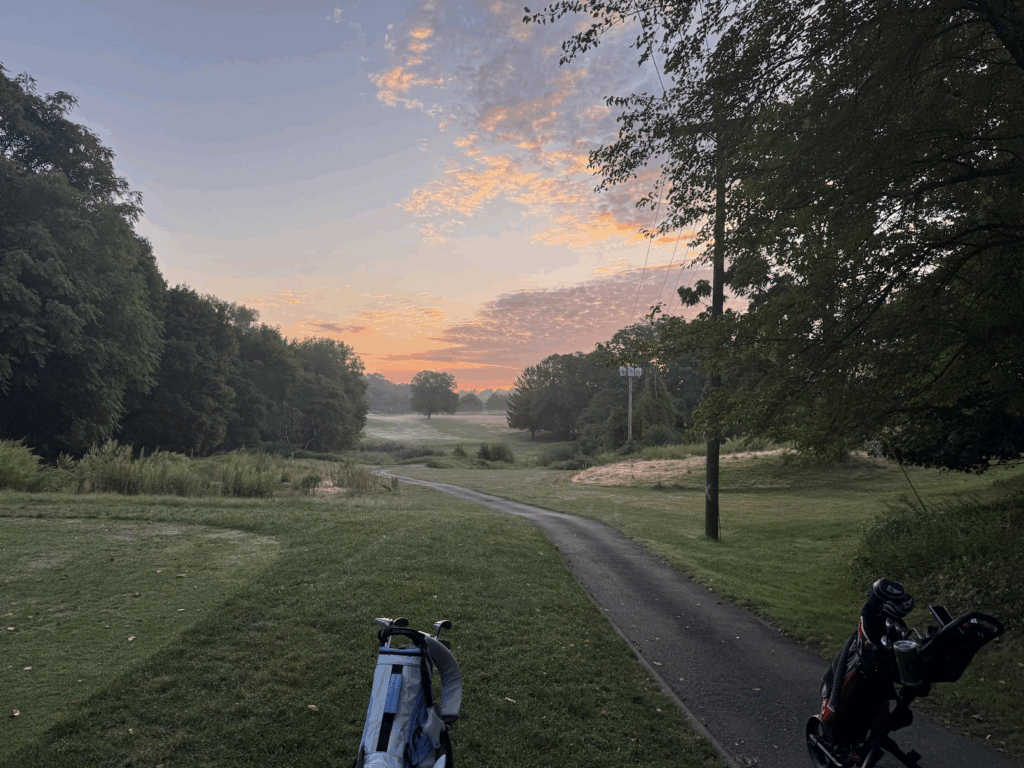
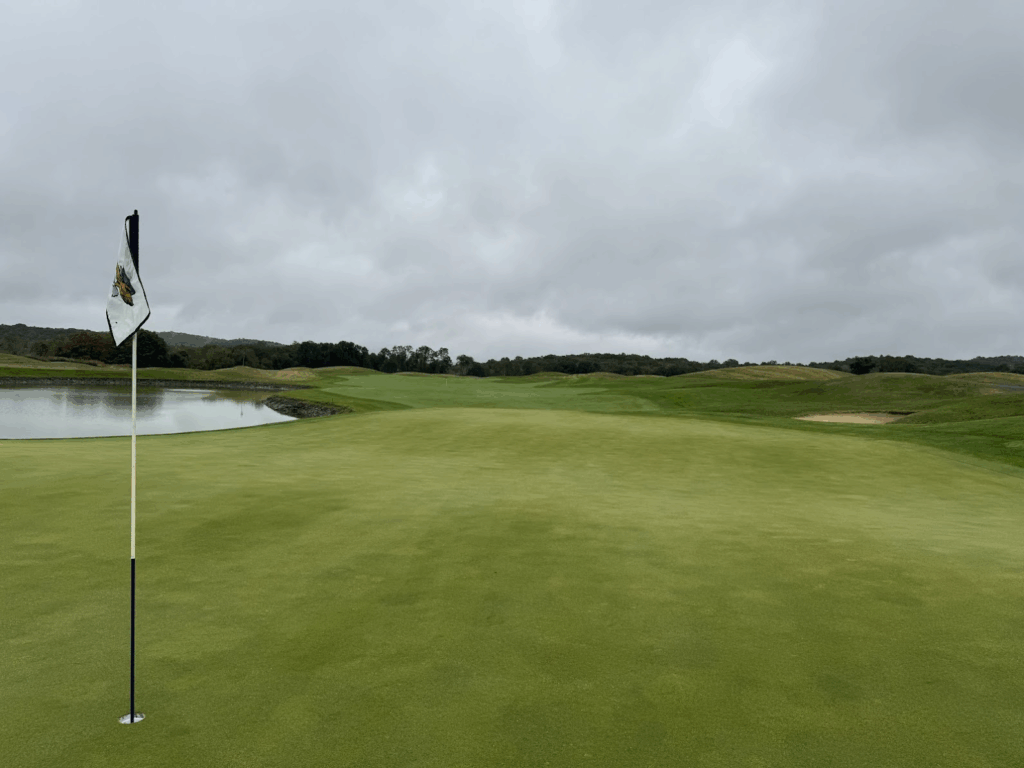
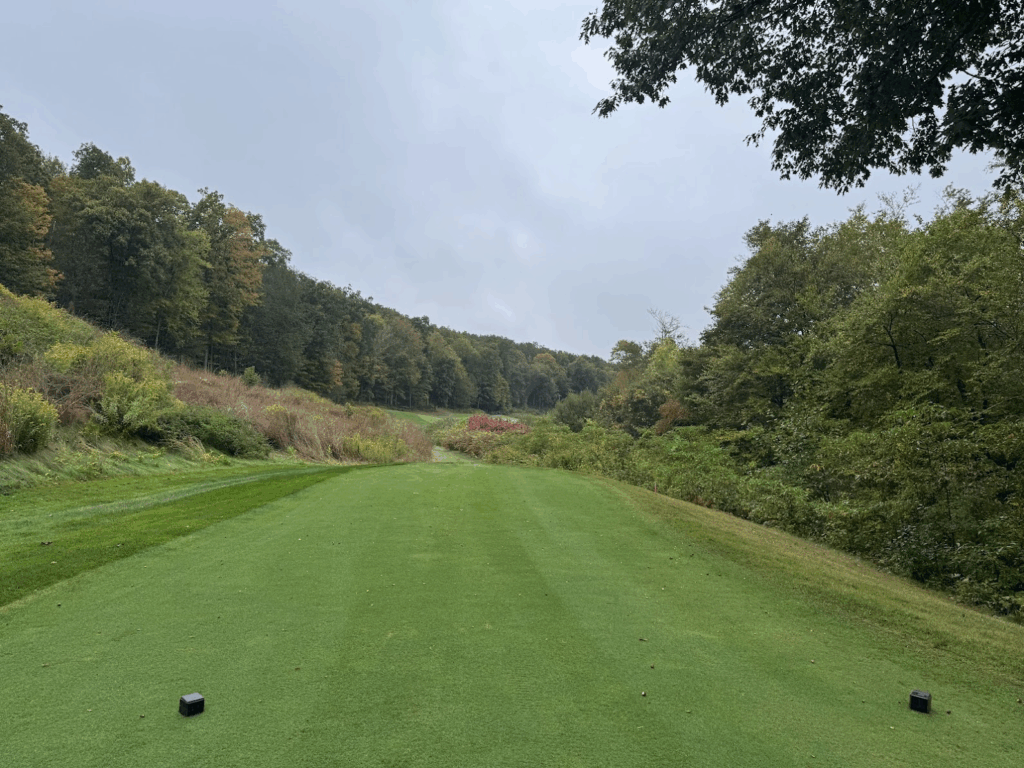
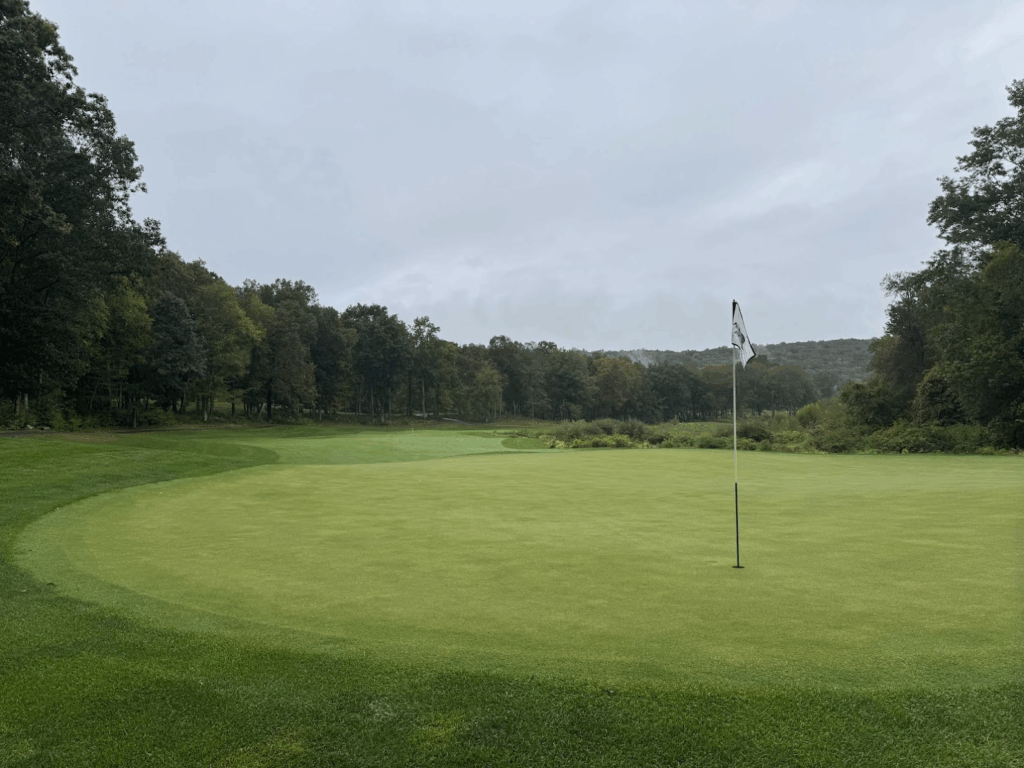
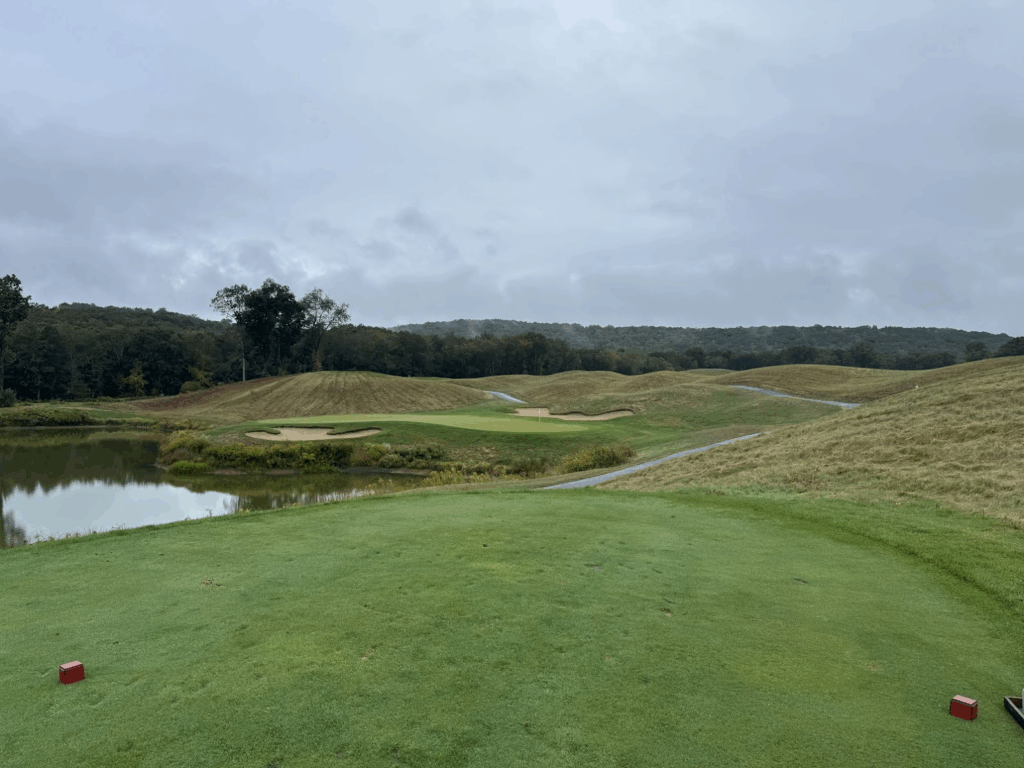
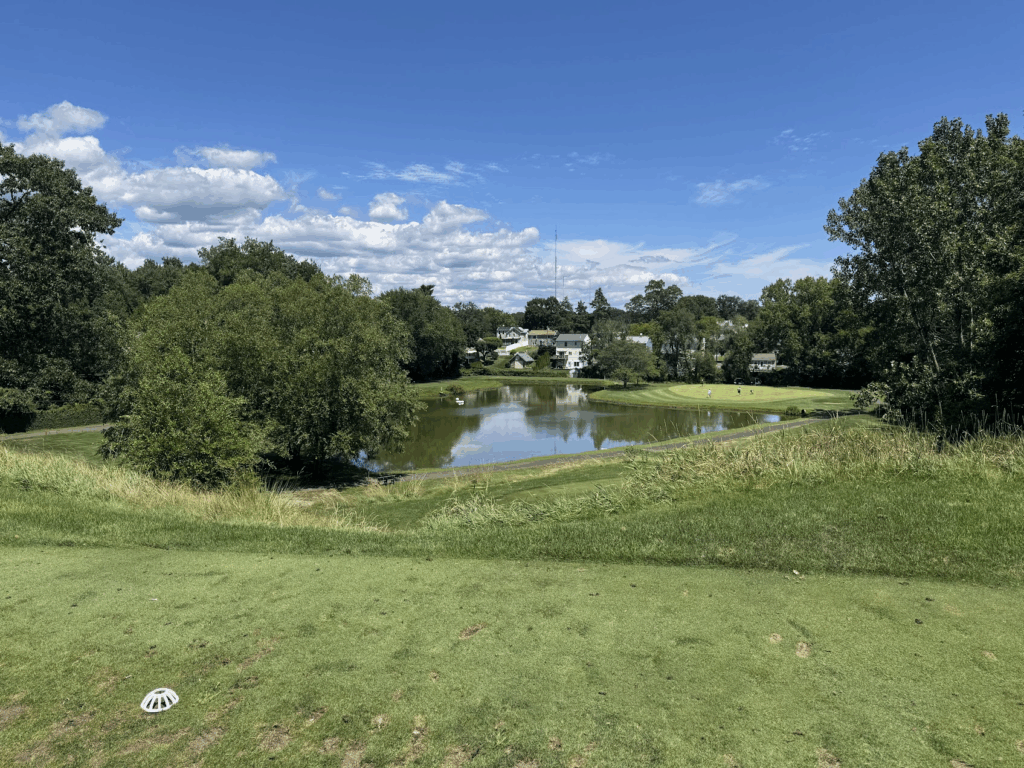
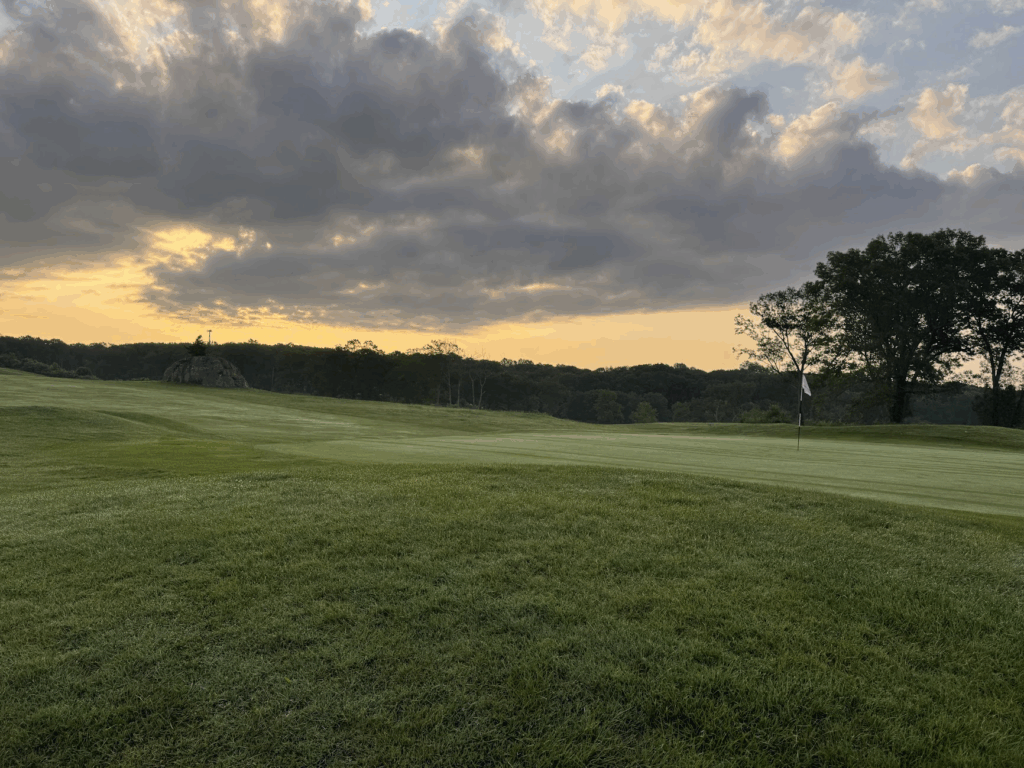
    Quiet mornings away from all the noise and fury of NYC

    I came to this facility out of necessity as much as curiosity. It was early spring, and most Connecticut courses were still closed for the season — the exceptions being Fairchild Wheeler, Alling Memorial, and The Vue — and the few that were open, like Traditions at Oak Lane in Woodbridge, weren’t taking tee times before 9am. Pelham Bay & Split Rock, just 20 minutes from Greenwich in light early-weekend traffic, was the obvious answer.

    I arrived with restrained expectations for a New York City municipal experience — something navigable but architecturally ordinary. What I found was considerably more interesting. Pelham Bay has existed in some form since 1901, when it opened as the nine-hole Pell Golf Course, making it one of the earliest public golf venues in the United States. Split Rock arrived three decades later as a Works Progress Administration project under Parks Commissioner Robert Moses, opening in 1936 alongside a fully redesigned Pelham Bay, with John Van Kleek shaping both layouts into their current 18-hole forms.

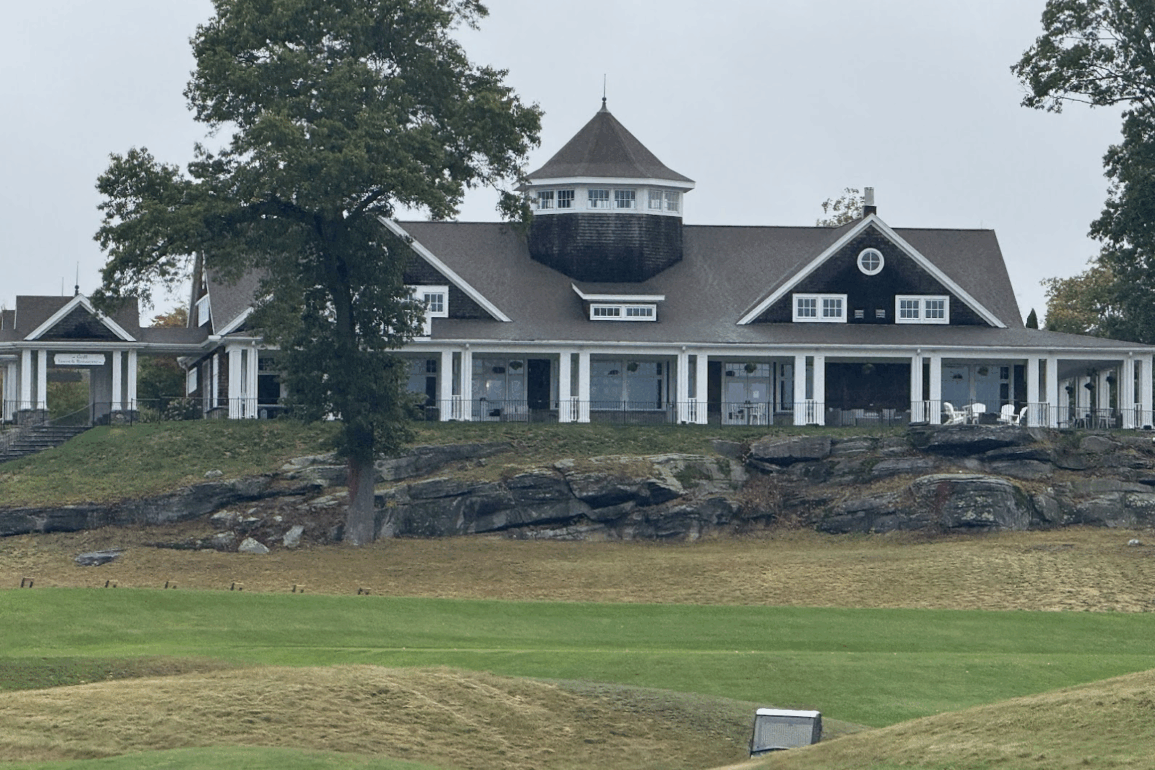
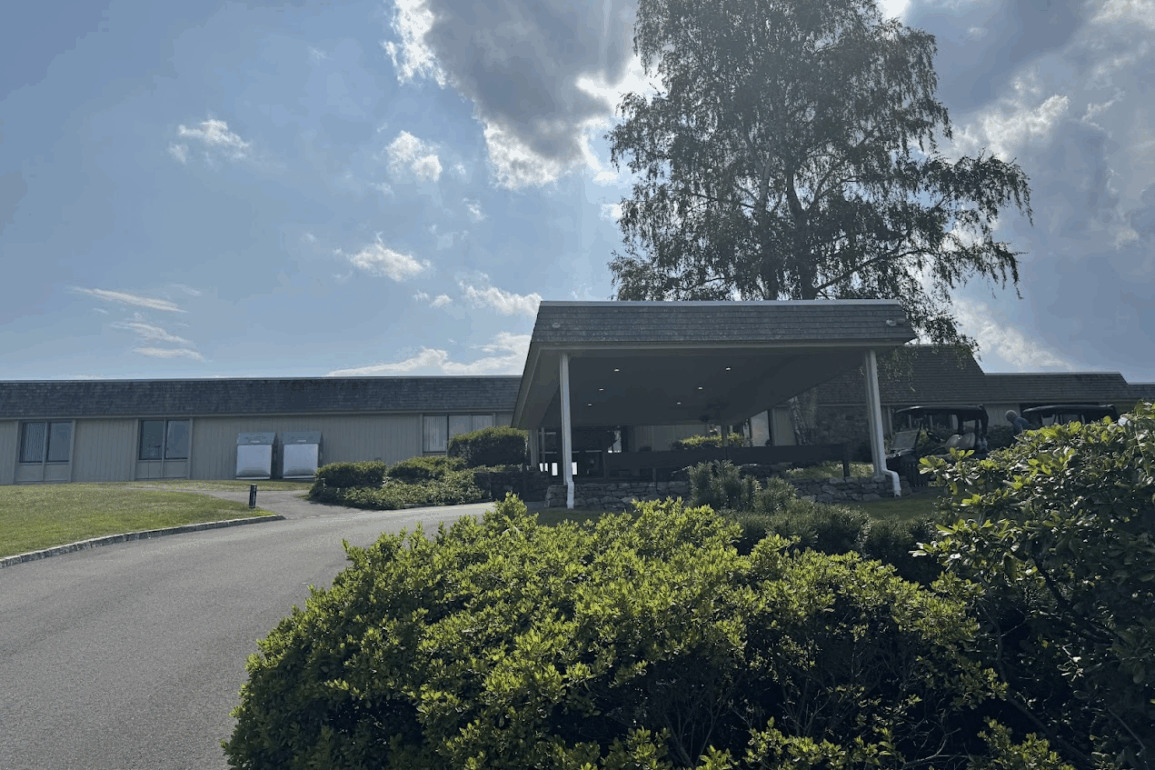
    The facility drew national attention almost immediately — Bobby Jones toured both courses shortly after opening and was particularly taken with Split Rock. Since 1983, American Golf Corporation has managed both courses on behalf of New York City Parks. The landmark Greek Revival clubhouse, designed in 1936 by architects John Matthews Hatton and Aymar Embury II, underwent a comprehensive restoration in the 2000s under architect Page Ayres Cowley.

    The 36-hole complex occupies approximately 300 acres of Pelham Bay Park — a 2,772-acre property and the largest municipal park in New York City — providing a natural buffer of forested corridors that effectively separates the golf experience from the surrounding borough. Split Rock is the topographically assertive layout of the two, threading tight, tree-lined fairways through hilly terrain that demands spatial awareness and shot-shaping. Pelham Bay plays wider and more open, with a links-influenced character that still offers enough green complexity and bunkering to engage the thinking golfer. The player who will find Split Rock most rewarding is the shotmaker — someone drawn to push-up greens, strategic centerline bunkering, and the satisfaction of executing a well-judged approach under tree pressure.
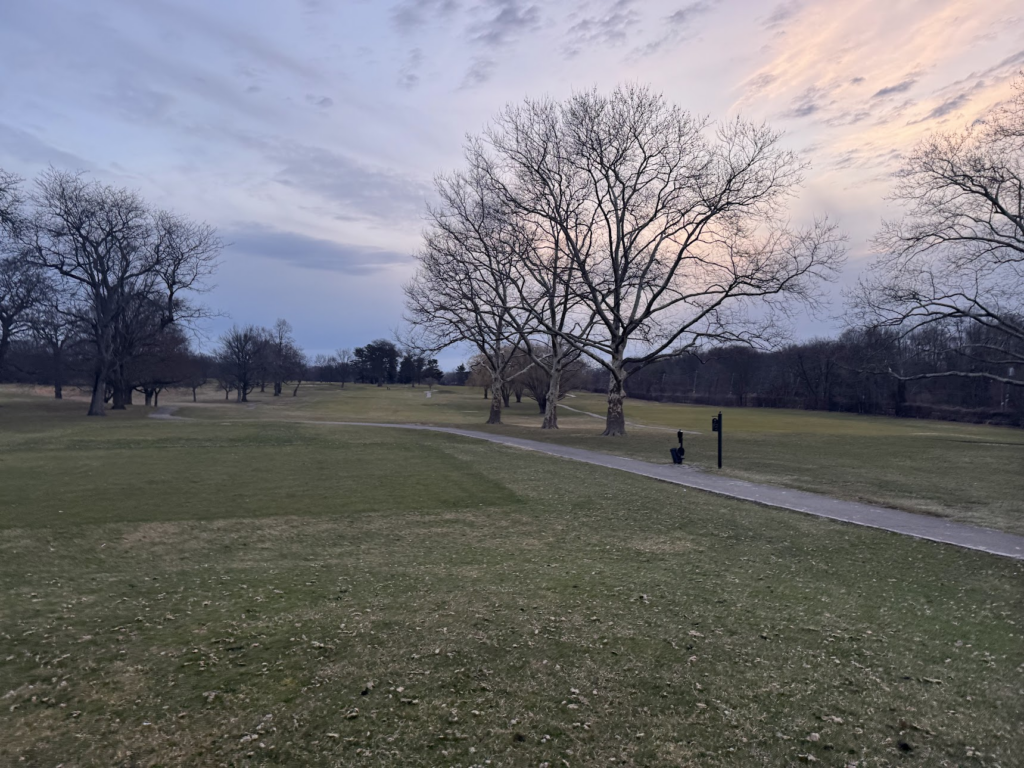
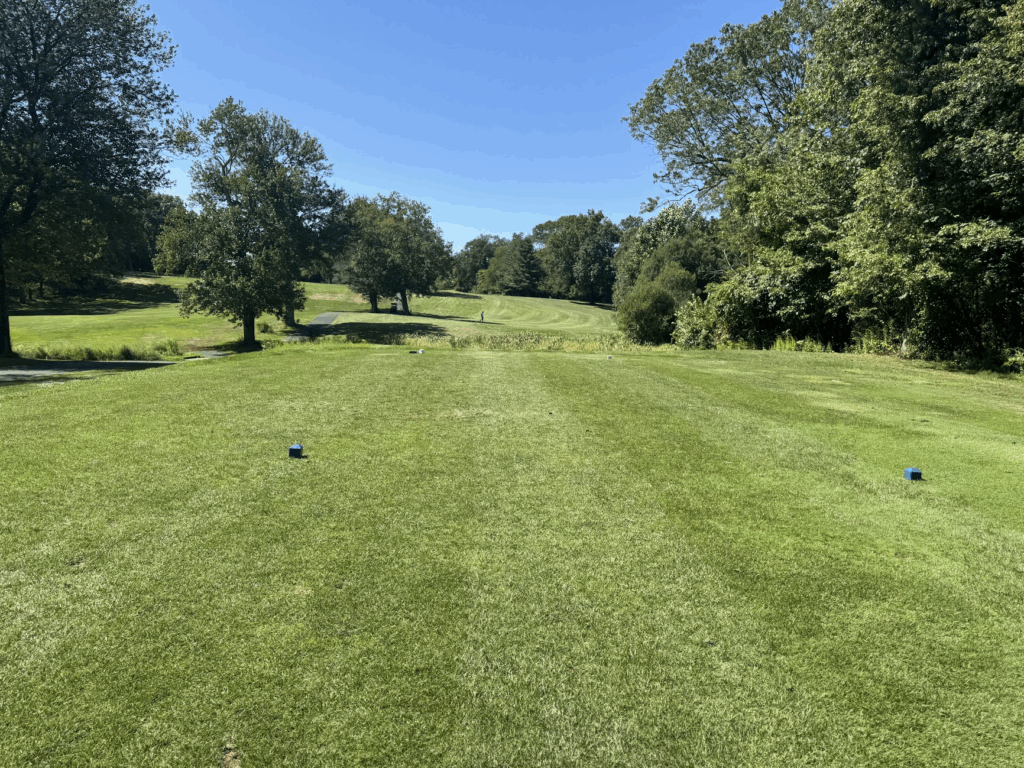
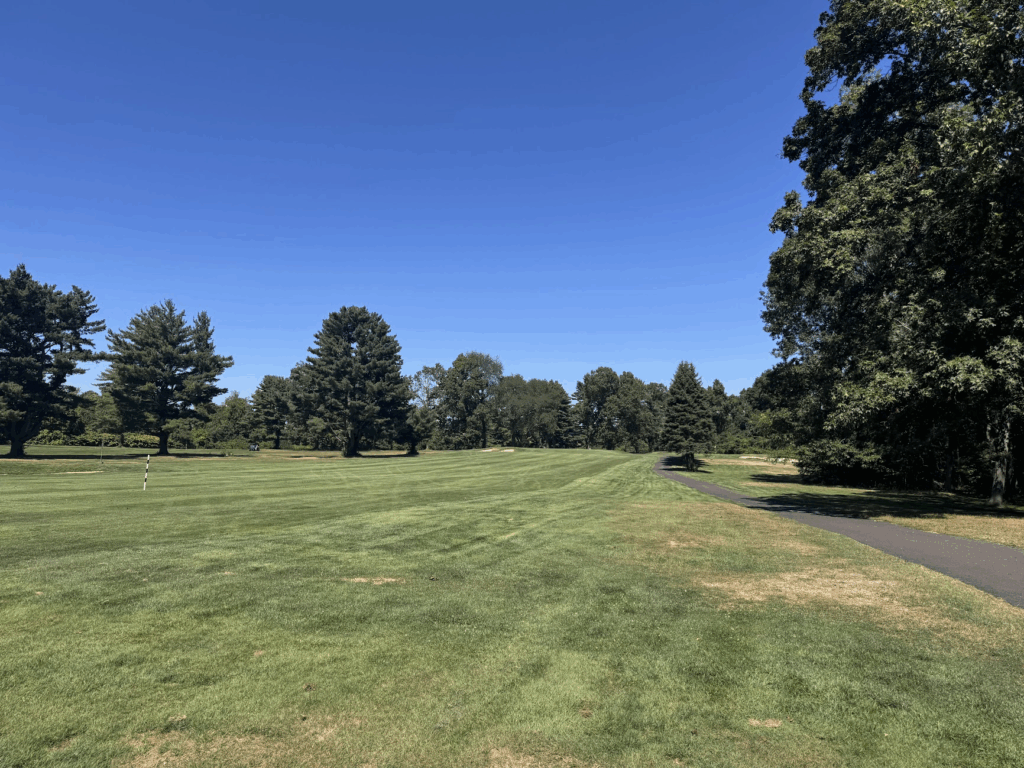
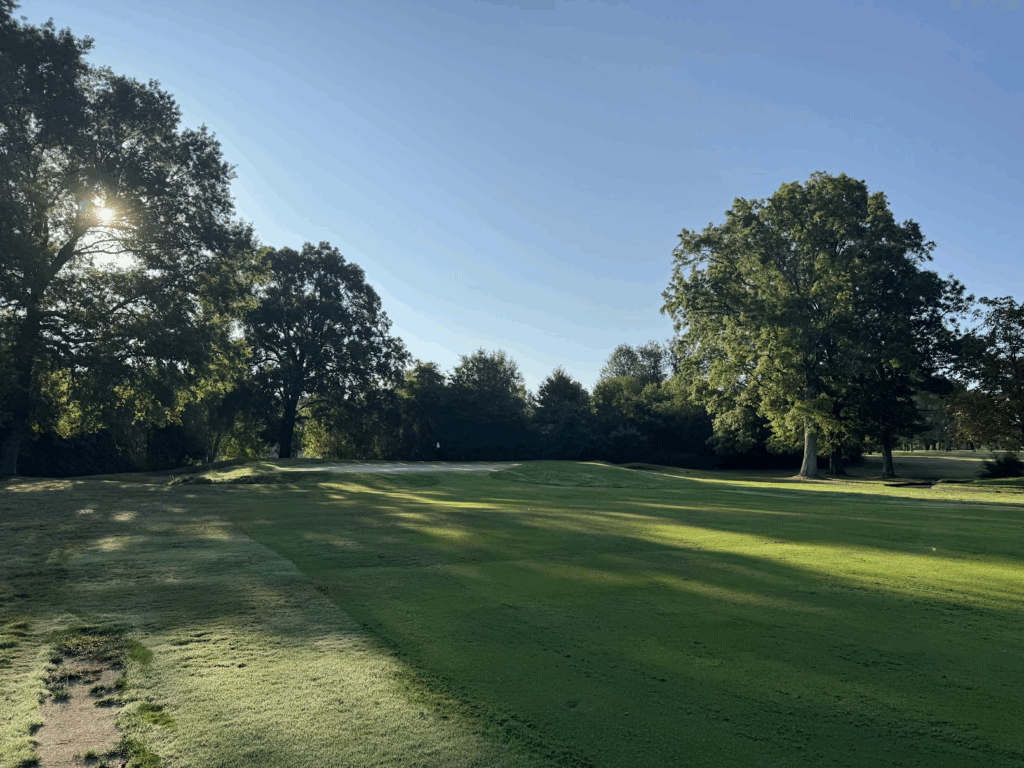
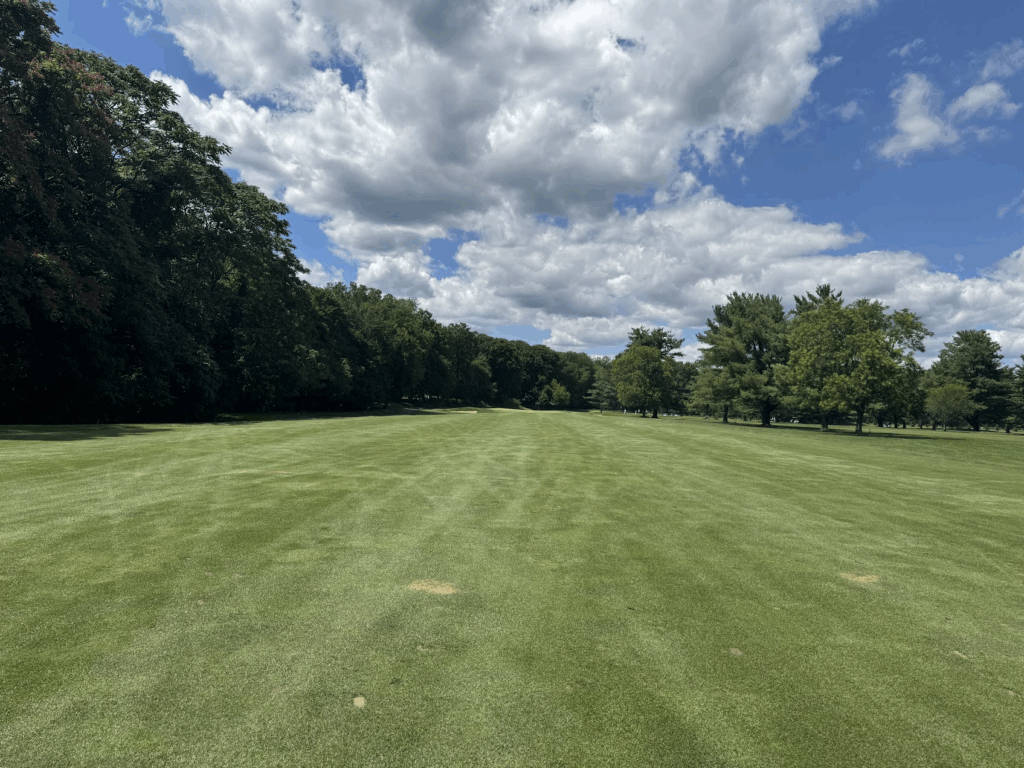
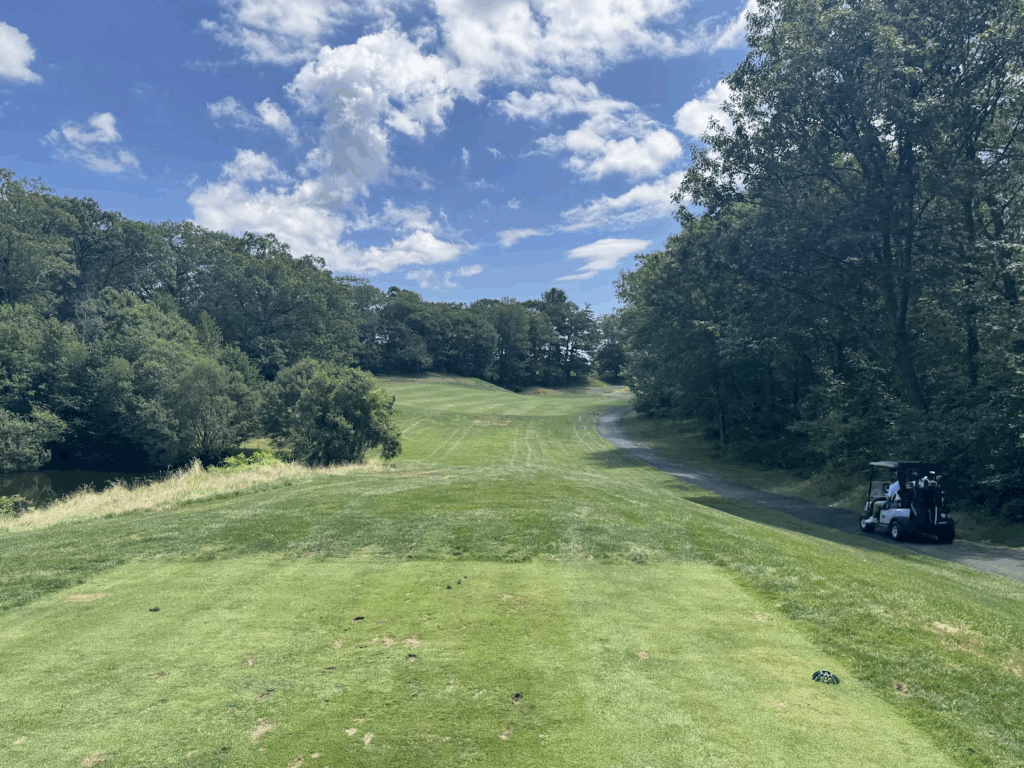
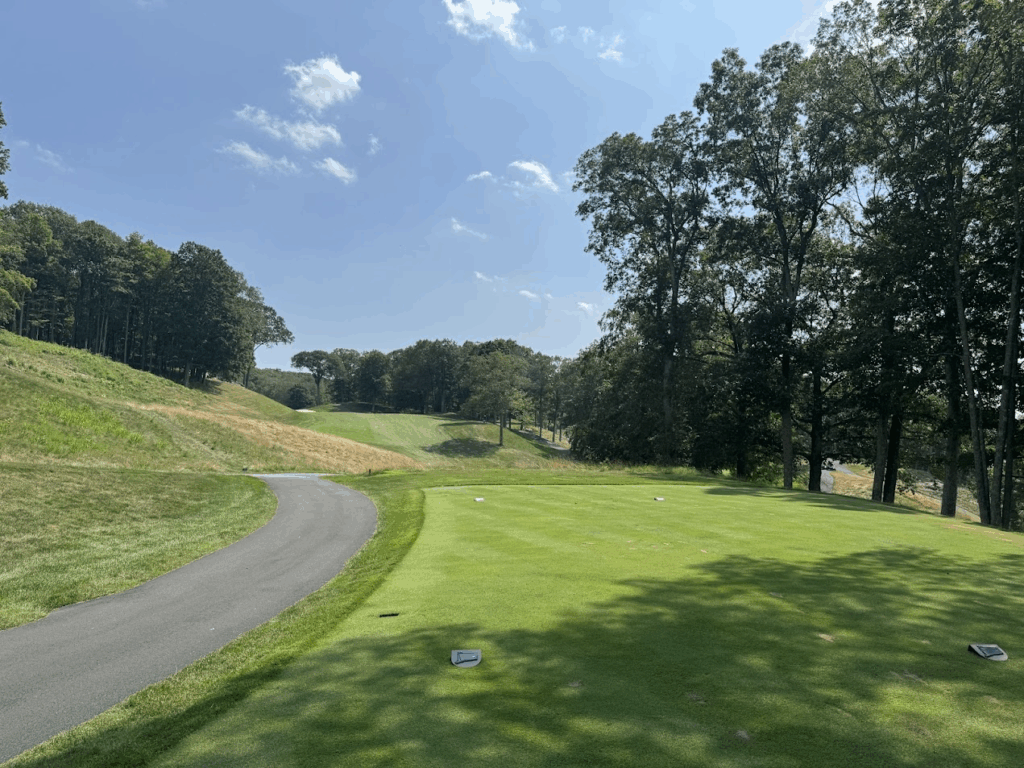
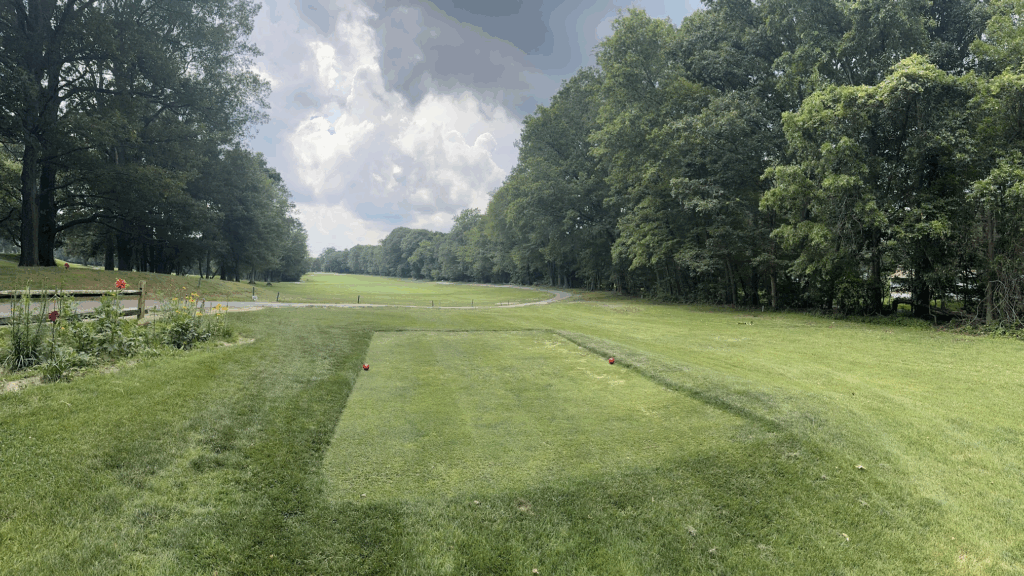
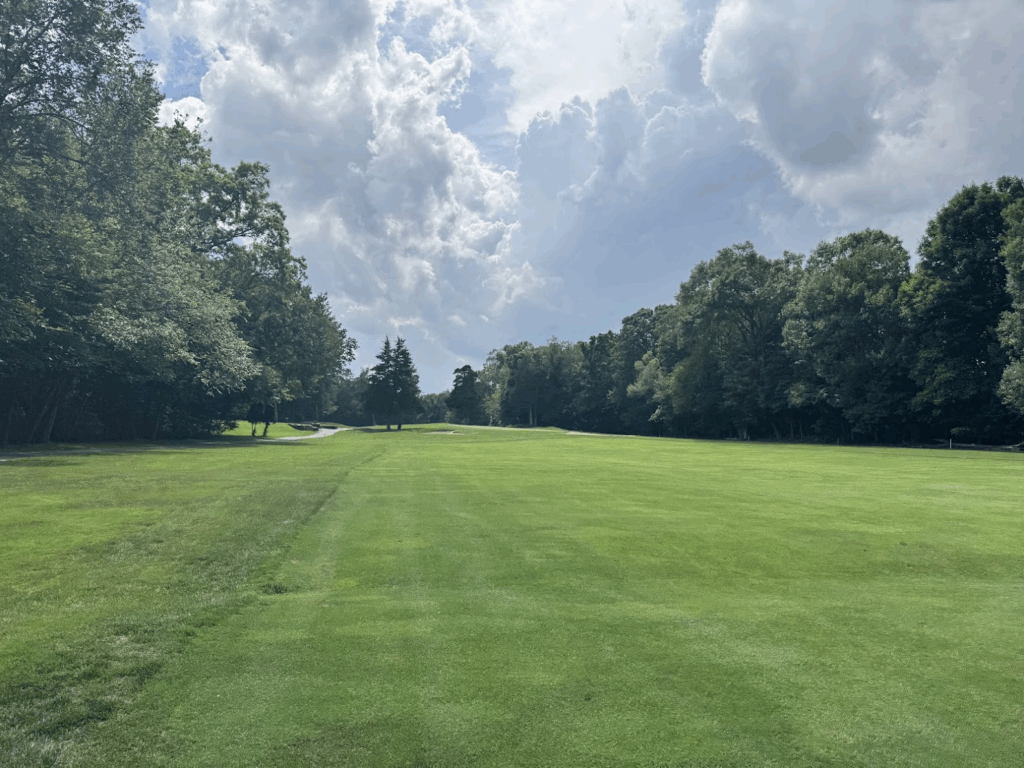
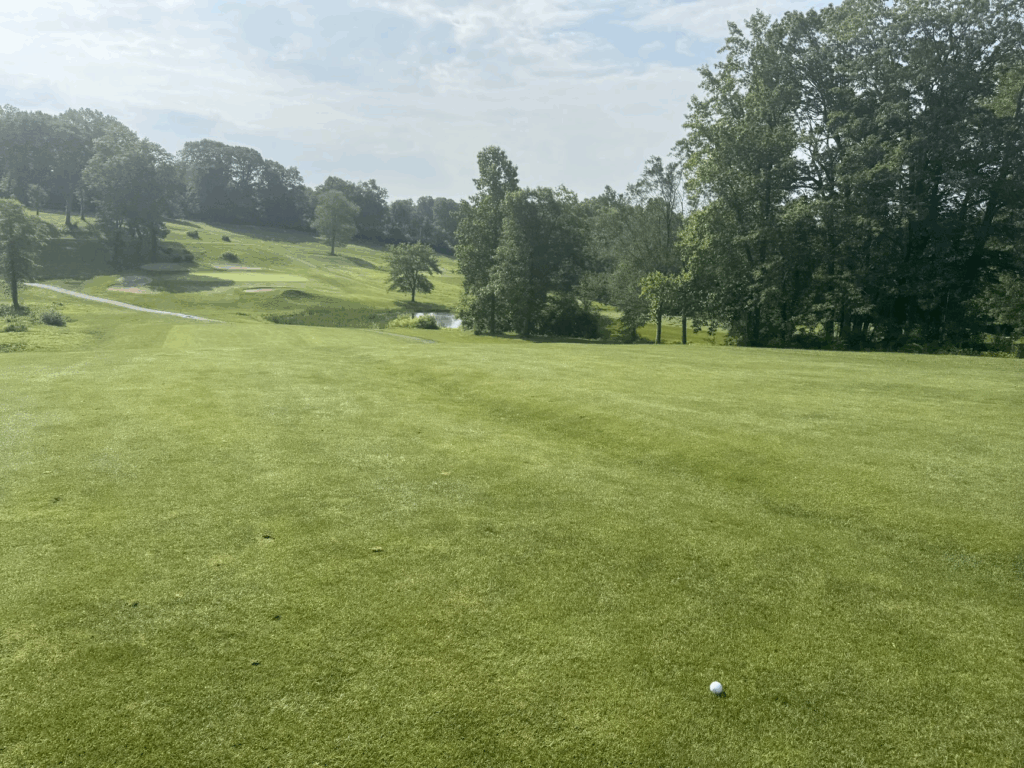
    Wide open fairways

    Walkability

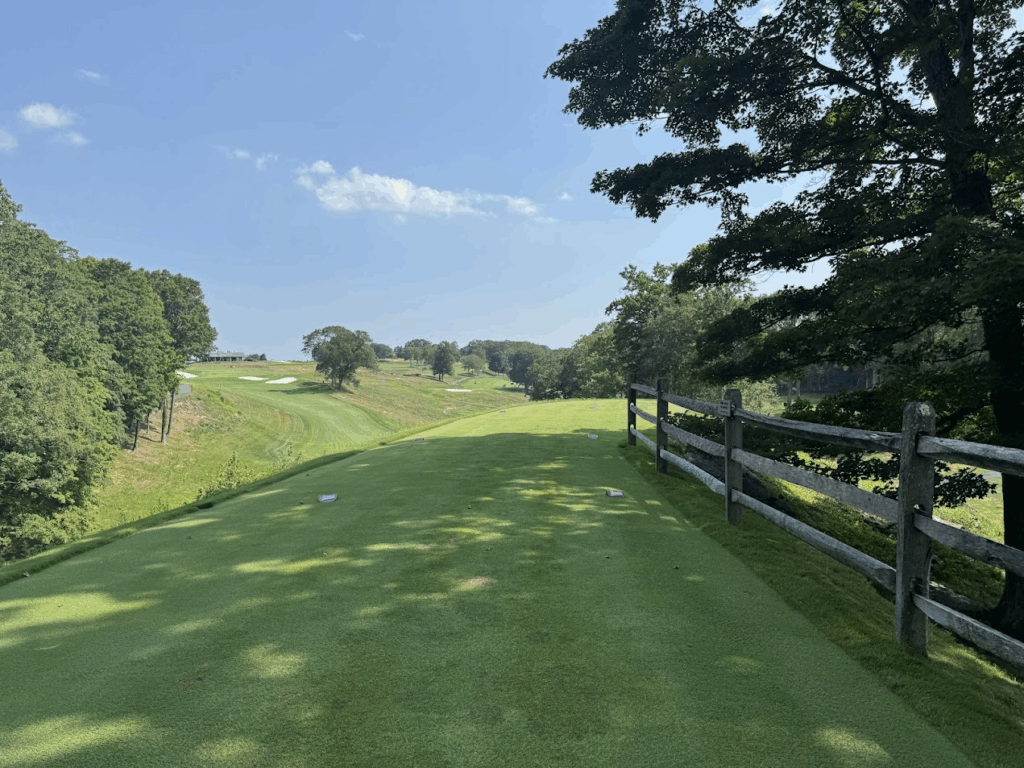
    Split Rock occupies a rolling, forested portion of the 300-acre golf property and is a moderately walkable course with important caveats. Several green-to-tee transitions involve meaningful elevation change, and walkers who underestimate the cumulative physical demand do so at their own expense.

    The front nine is the more demanding half on foot. The opening three holes — the 432-yard 1st, the semi-blind 410-yard 3rd, and the 515-yard par-5 5th — establish an immediate rhythm of sustained corridor walking without significant rest. The climb to the 6th tee, a 220-yard par 3 playing fully uphill, is a significant transition arriving when energy reserves are already partially drawn. The notorious Amen Corner sequence from holes 5 through 8 compounds this, with back-to-back elevation shifts across four consecutive demanding holes — the 515-yard 5th, the 220-yard 6th, the 447-yard 7th (number-one handicap), and the 441-yard 8th. Walkers should budget for a physically engaged round, not a stroll.
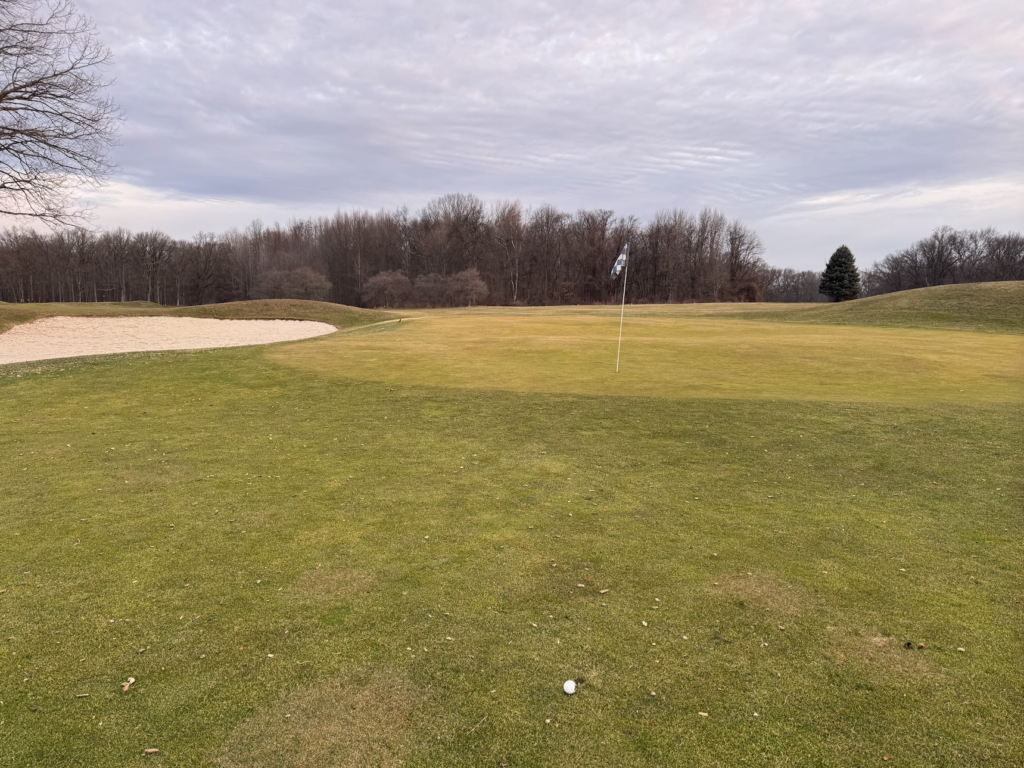
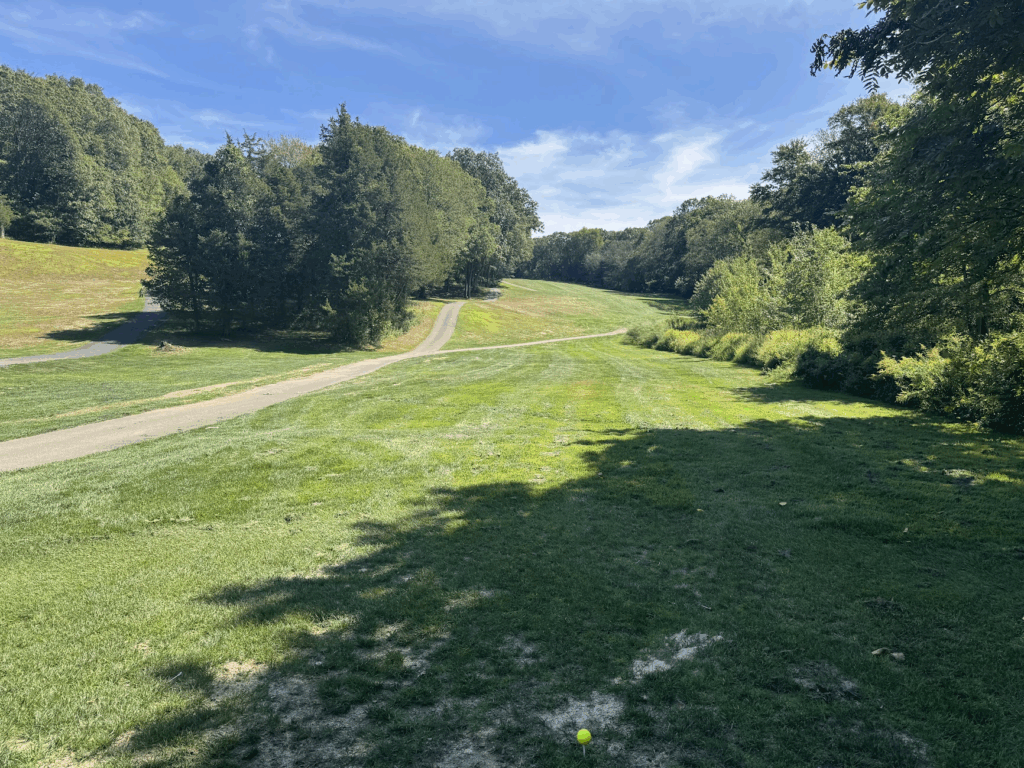
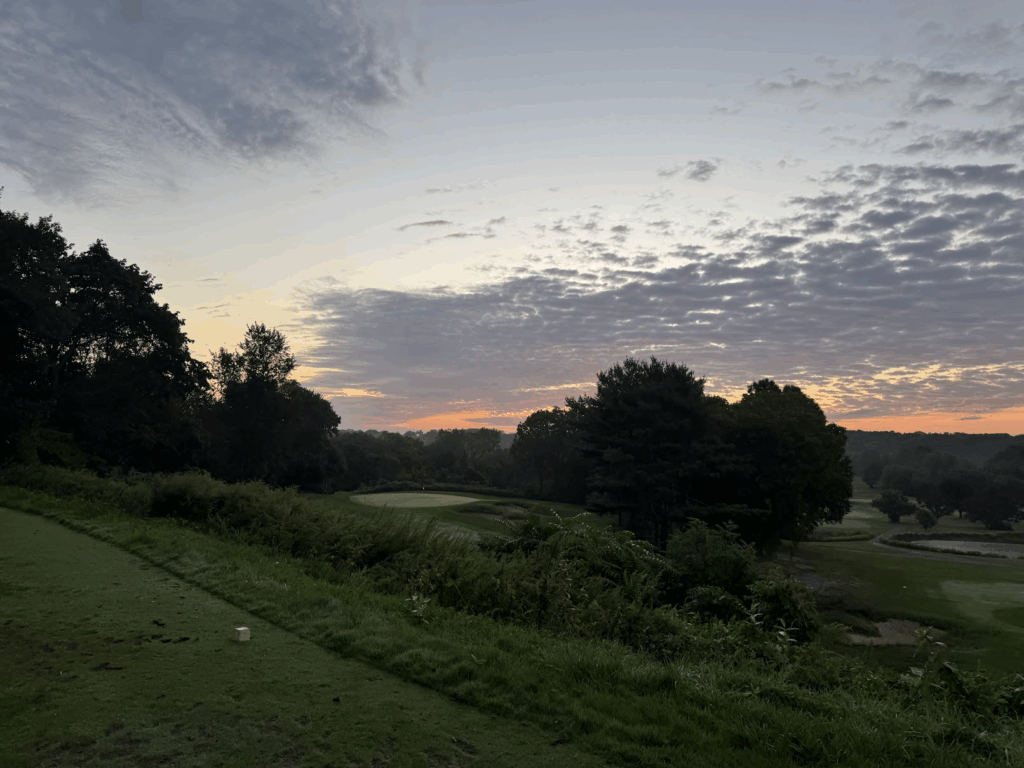
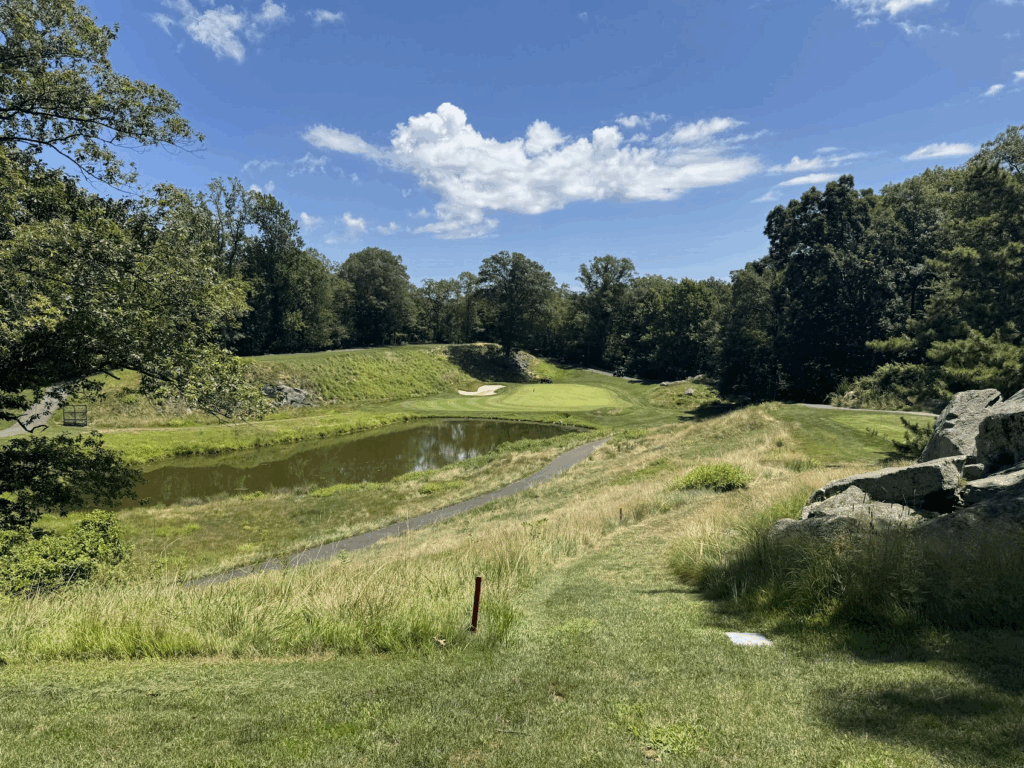
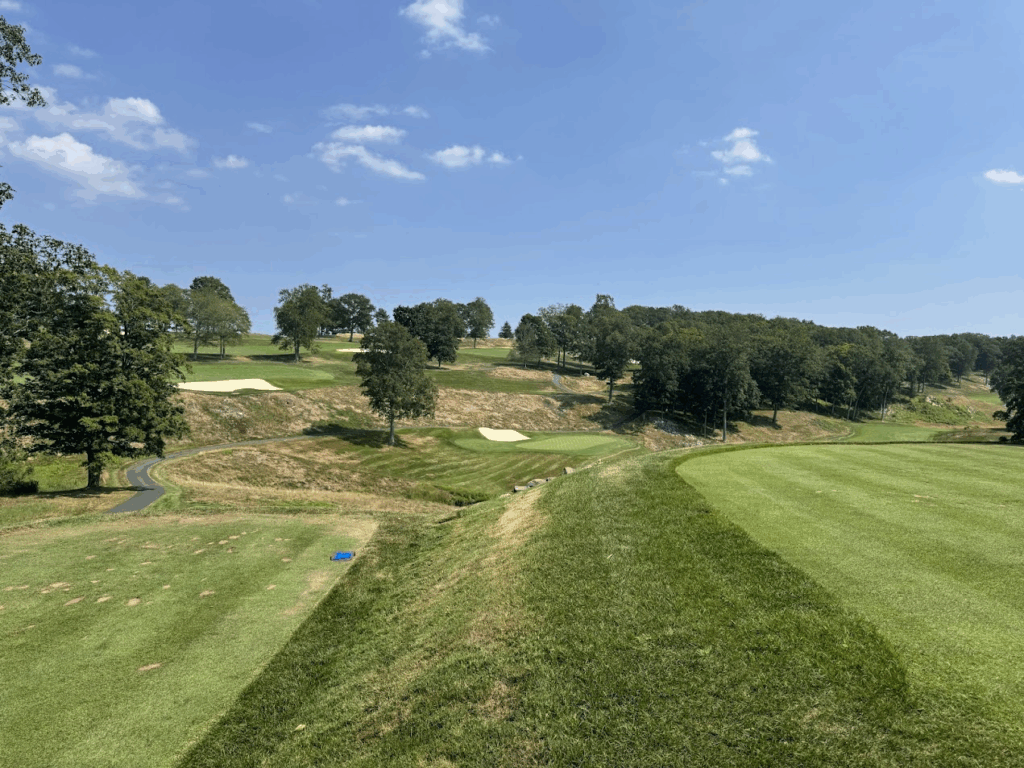
    Love the rolling topography

    The back nine eases slightly in topographic severity. The routing near the highway around the 13th — a 496-yard par 5 pressing close to Route 95 — briefly breaks the park immersion. The 14th, a 372-yard slight dogleg left, plays markedly longer than its card distance suggests due to uphill grade and firm conditions, adding mental fatigue to an already demanding stretch. The green-to-tee transition between the 15th and 16th involves a notable elevation drop that resets the legs for the closing stretch.

    Pelham Bay, set on the lower, more open portion of the property with gentler grades across its approximately 150 acres of routing, is the more comfortable walking experience. For walkers taking on Split Rock, an early tee time is strongly recommended both for pace of play and to beat the weekend crowds.

    Strategic Test

    Split Rock is genuinely stratified by risk appetite throughout the round — the hallmark of Van Kleek’s design philosophy here. The front nine demands corridor management above all else, where positioning off the tee is more consequential than raw distance. The 7th hole at 447 yards culminates in a small double-plateau green with front-left and back-right tiers defended by bunkers on both sides. Par here is not taken for granted at any handicap level.
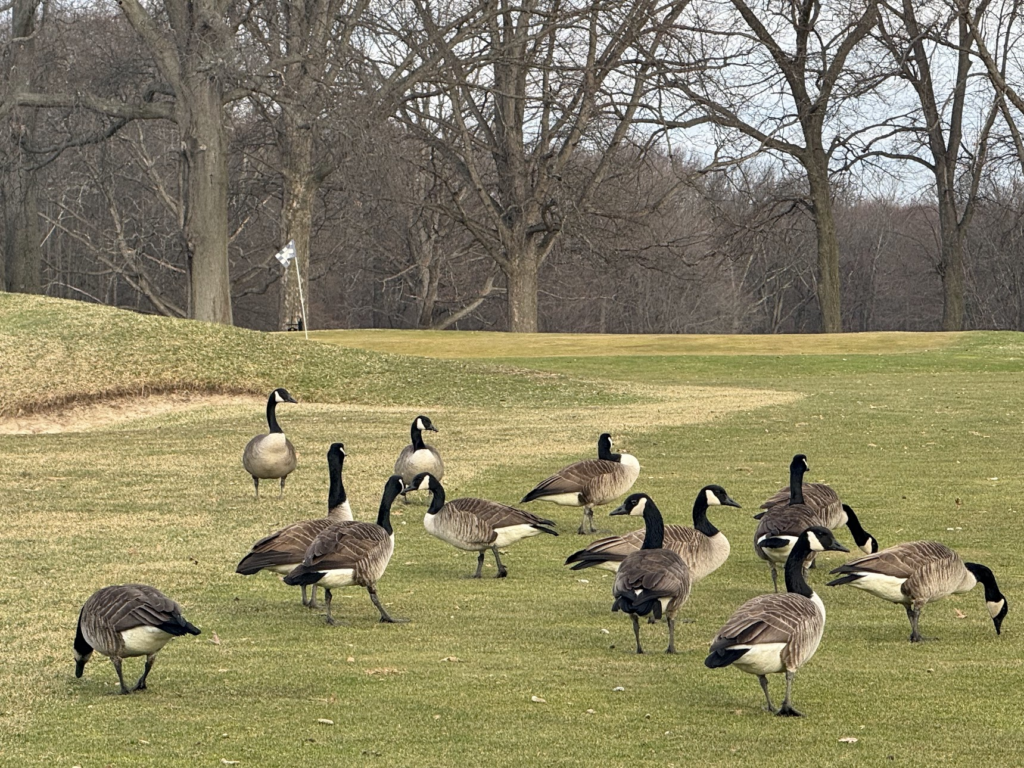
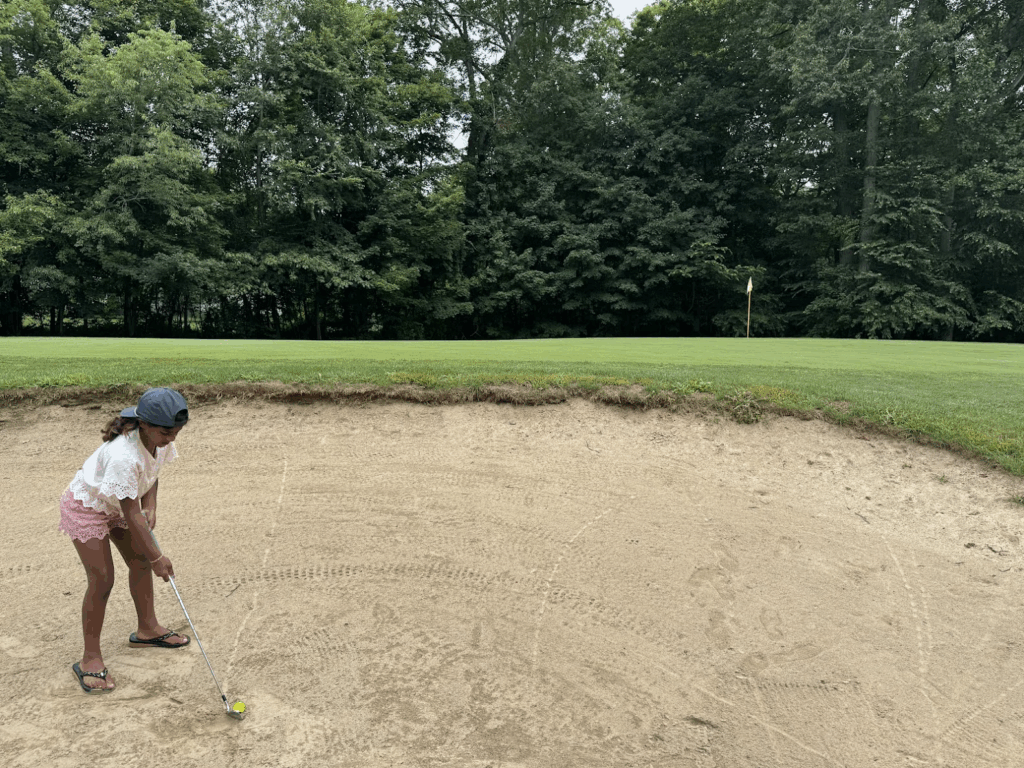
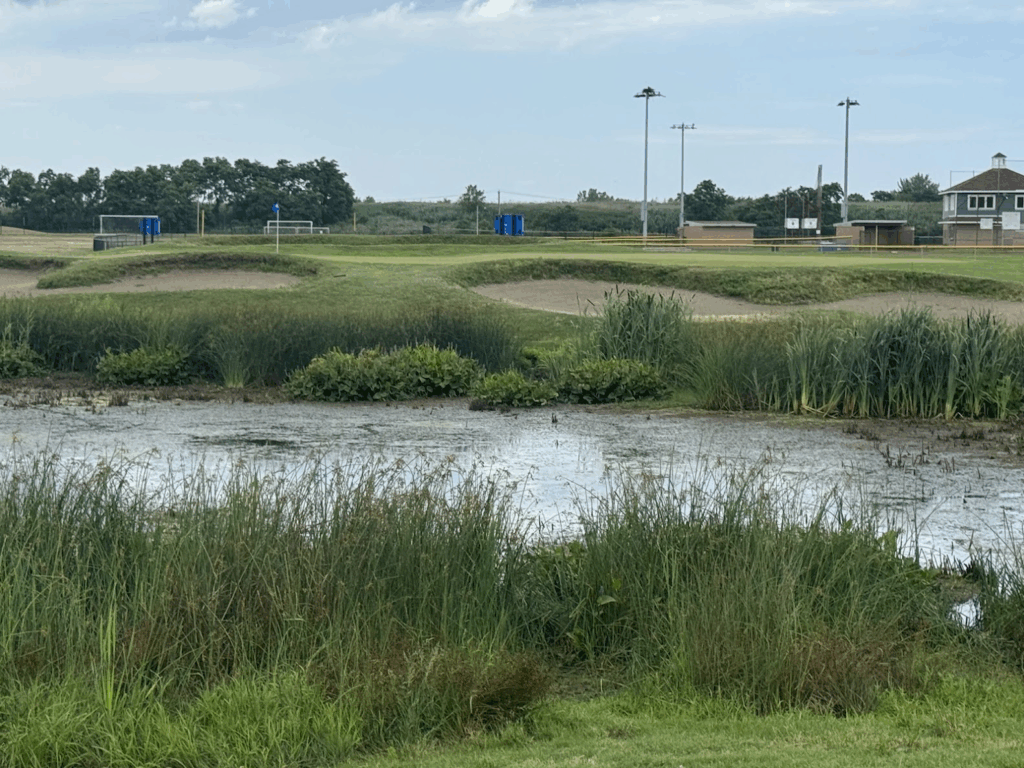
    A bunker and geese obstructing an easy chip shot

    The downhill 11th, a 439-yard par 4 with a crossbunker at approximately 310 yards and a knob-laden back-to-front green, is Van Kleek at his most architecturally compelling — a hole that recalls Macdonald-Raynor sensibility and rewards the player who reads the contour and lands the approach in the correct green sector.

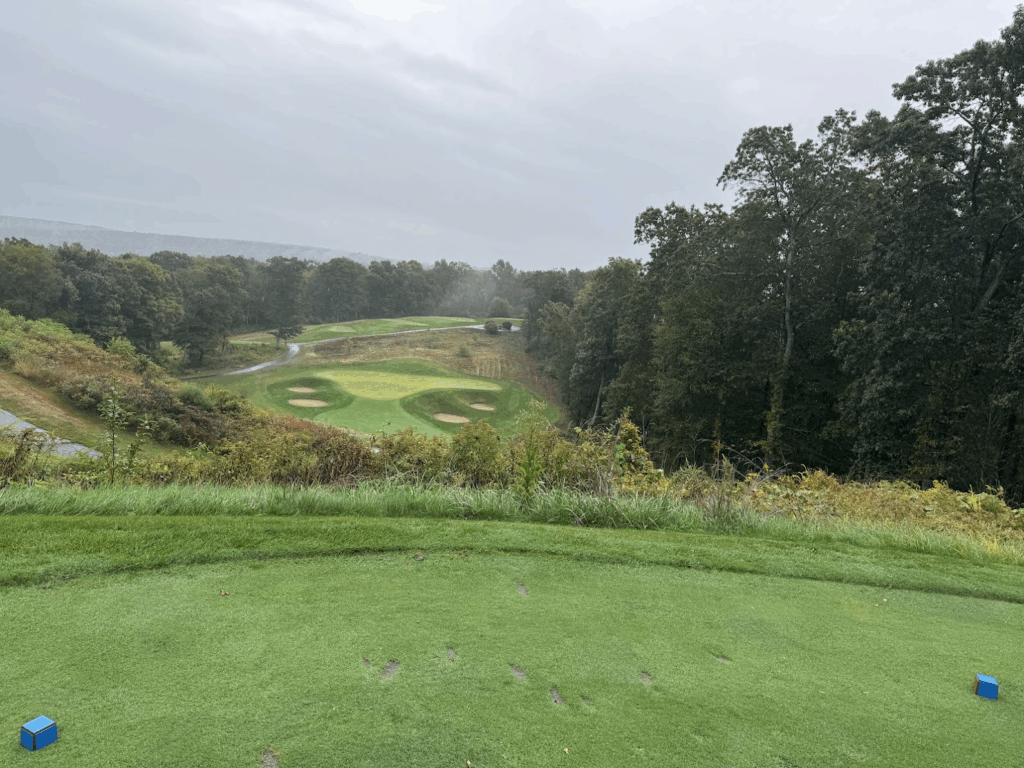
    The 8th hole is the course’s most instructive strategic case study. Playing 441 yards as a tight dogleg left, the tee shot is semi-blind toward a fairway bending left at approximately 220 yards, flanked by large bunkers at the apex. The hole then runs downhill over a creek to a back-to-front sloped green guarded by a moat-like bunker on the right.

    The aggressive play calls for a driver drawn at the left tree corridor — carry the apex bunkers at 220 yards and cut the corner to set up a downhill 8- or 9-iron from an ideal angle into the green. The reward is a clear look at birdie; the risk is a plugged bunker lie or a blocked recovery from the trees. The conservative play — a 3-wood or hybrid to the right-center fairway before the bend — avoids the tee-shot bunkers but leaves 195-plus yards downhill over the creek, demanding a 4- or 5-iron from a comfortable lie. A slightly short iron finishes in the hazard; a quality strike still demands a composed putt to avoid a three-putt. Big numbers follow modest errors from either strategic line.

    Playability

    Split Rock plays to a course rating of 72.0 and a slope of 129 from the Blue tees at 6,682 yards — a legitimate championship test that demands respect from every handicap tier. A scratch golfer is expected to match the course at even par; a 10-handicap player is looking at approximately 82; a 20-handicap player at the low 90s. The White tees at 6,304 yards (rating 70.4, slope 124) offer a more manageable challenge for mid-handicappers, and the Gray tees at 5,249 yards (rating 70.3, slope 117) bring the course into realistic scoring range for higher-handicap players. Pelham Bay, with its rating of 69.8 and slope of 118 from the tips, plays approximately three to four shots easier than Split Rock for any given handicap level — a meaningful difference that makes it the natural starting point for those new to the property.

    Pelham Bay’s wider fairways, more forgiving rough, and gentler topography make it the more accessible of the two layouts. The two-course format is one of the property’s most player-friendly structural features, allowing groups of mixed ability to find the right challenge without leaving the grounds.

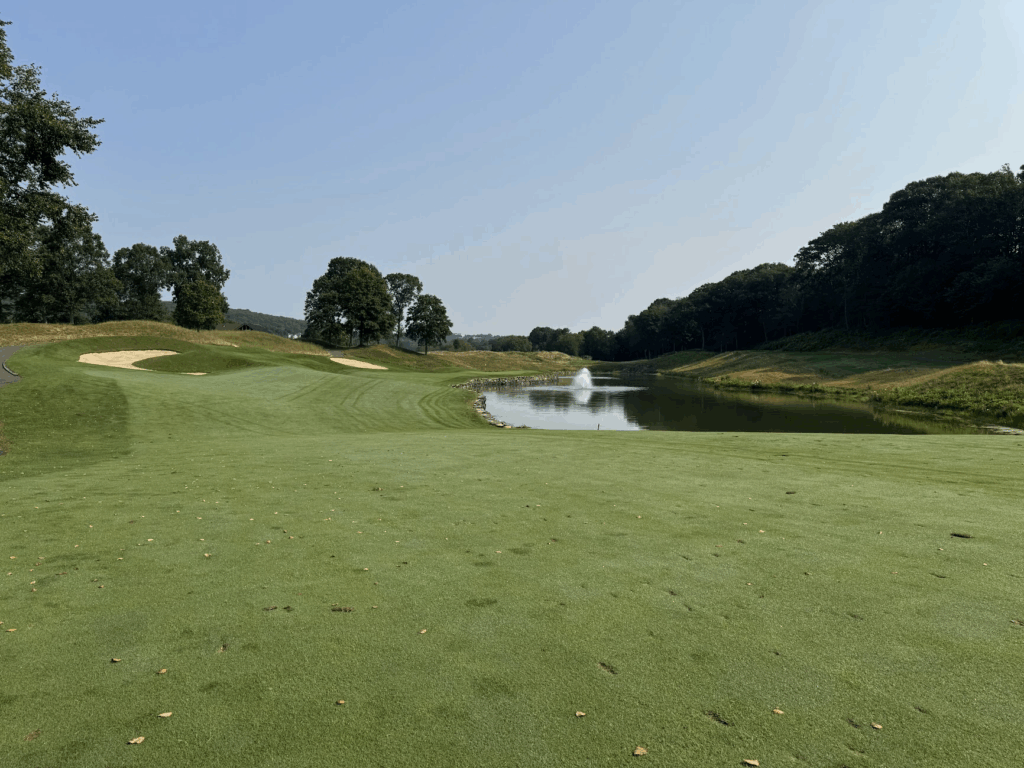
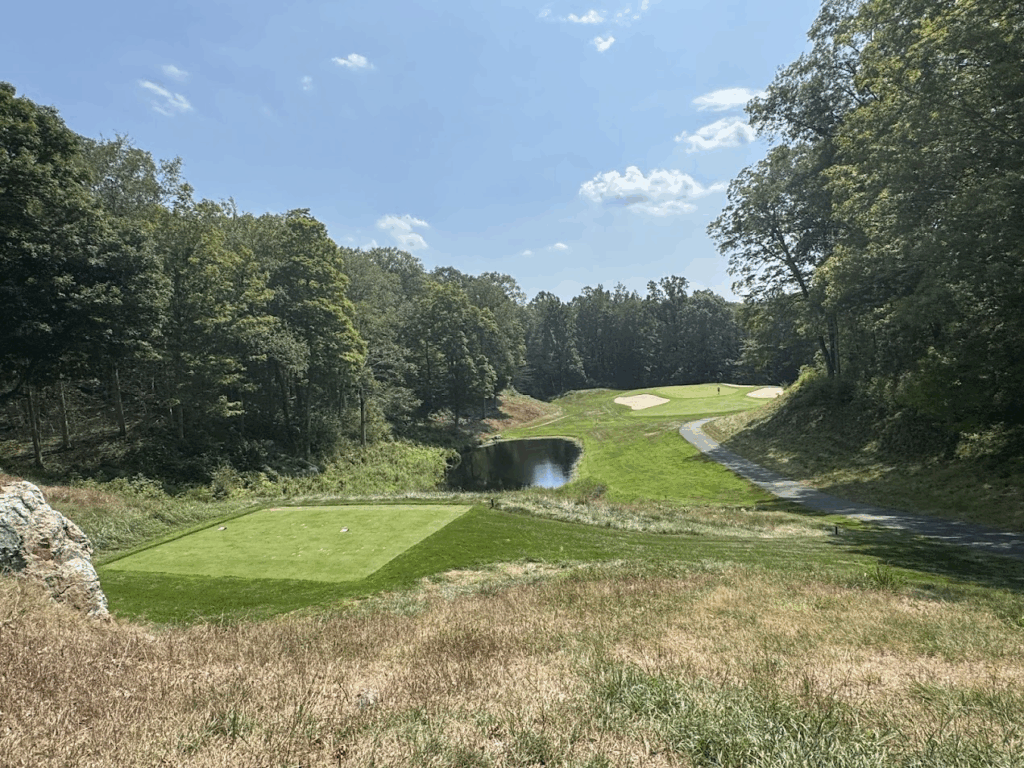
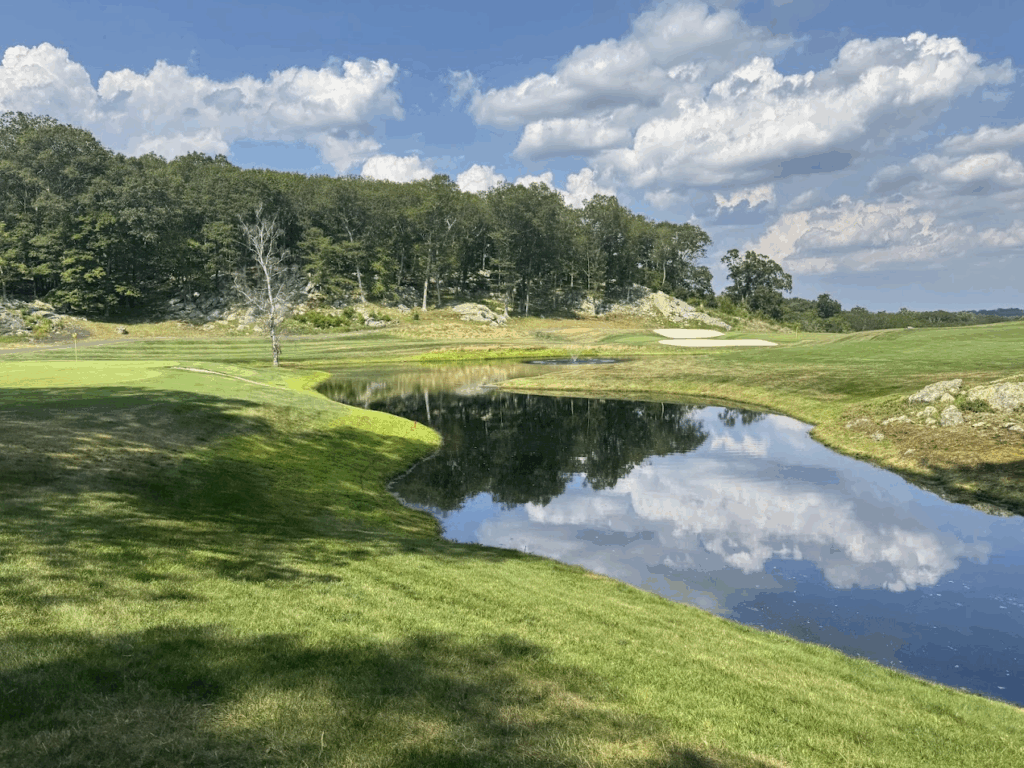
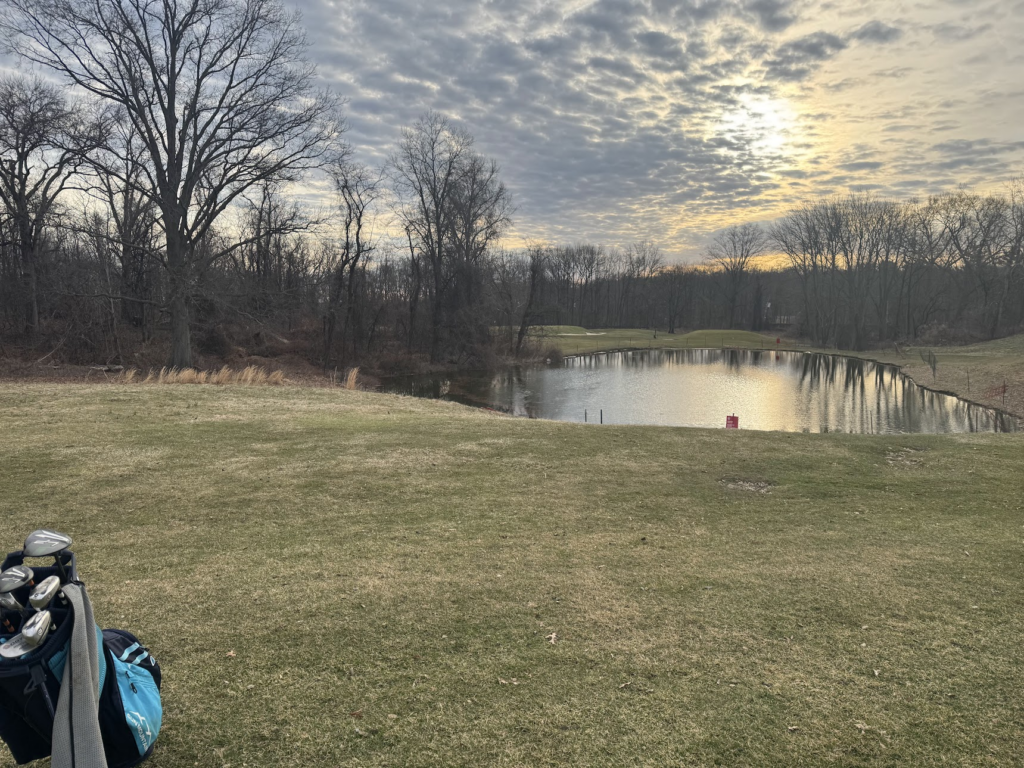
    On Split Rock, the 15th hole provides a welcome change of register for higher-handicap players. At 347 yards — the shortest par 4 on the course — the hole plays as a slight dogleg right with a forced water carry from the tee that adds genuine visual drama. A well-struck 7- or 8-iron clearing the hazard leaves a short wedge into a green featuring a prominent knob on the front left and deep bunkers on either side.

    A bogey 5 is entirely attainable for the high-handicapper with a clean tee shot. Mid-handicappers will see a legitimate birdie opportunity from inside 100 yards; lower-handicap players will find that the green complexities punish anything short of a precise approach. It is the kind of hole that delivers a satisfying and differentiated experience regardless of ability level.
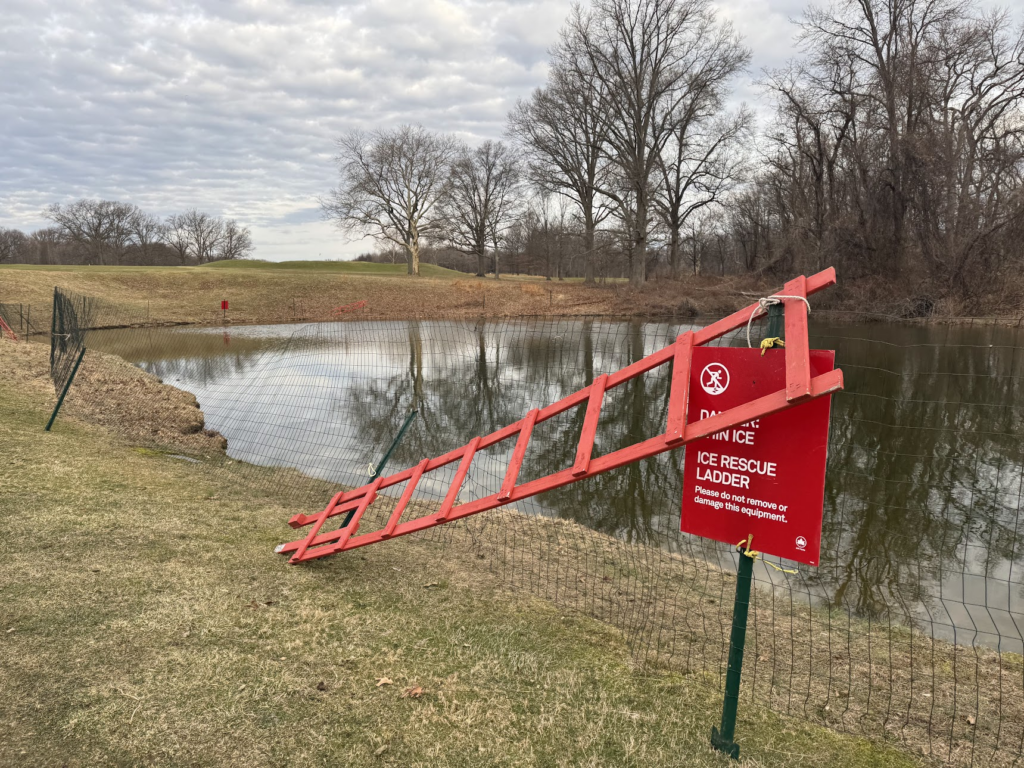
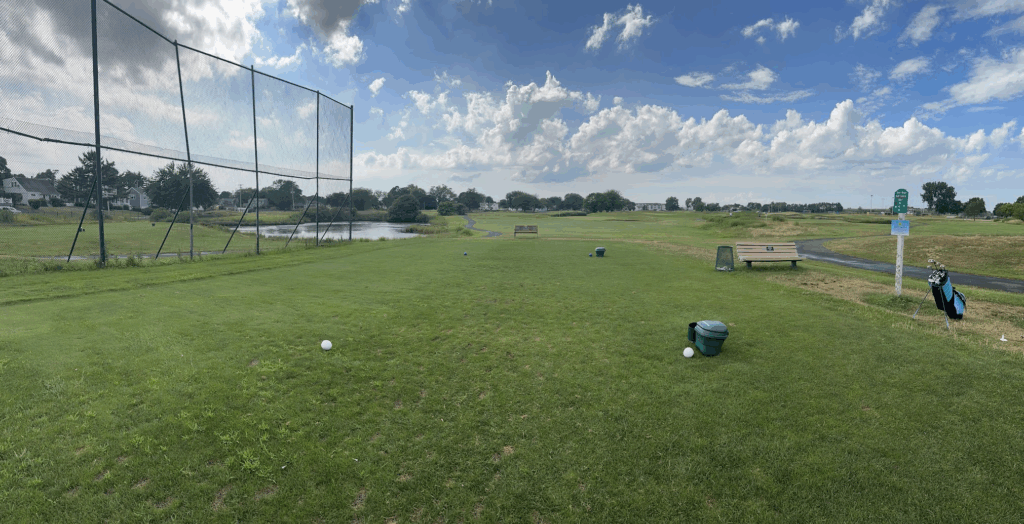
    Never seen one of these on a course before

    Atmosphere

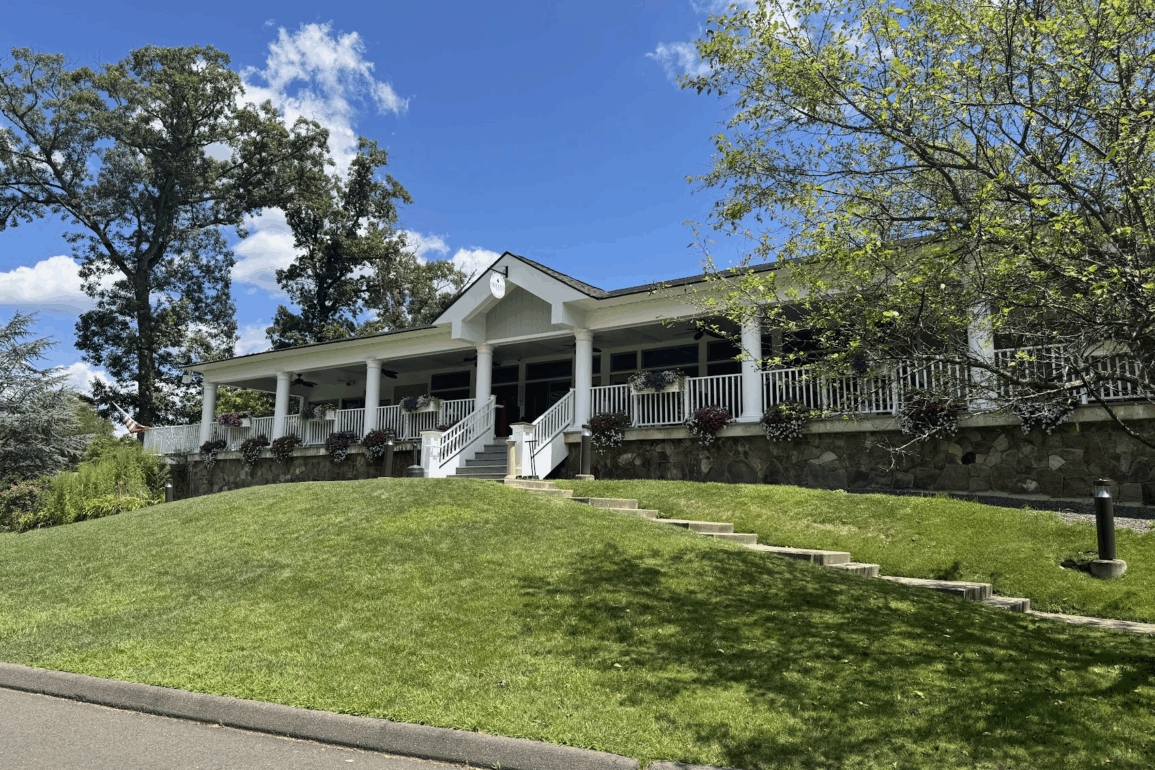
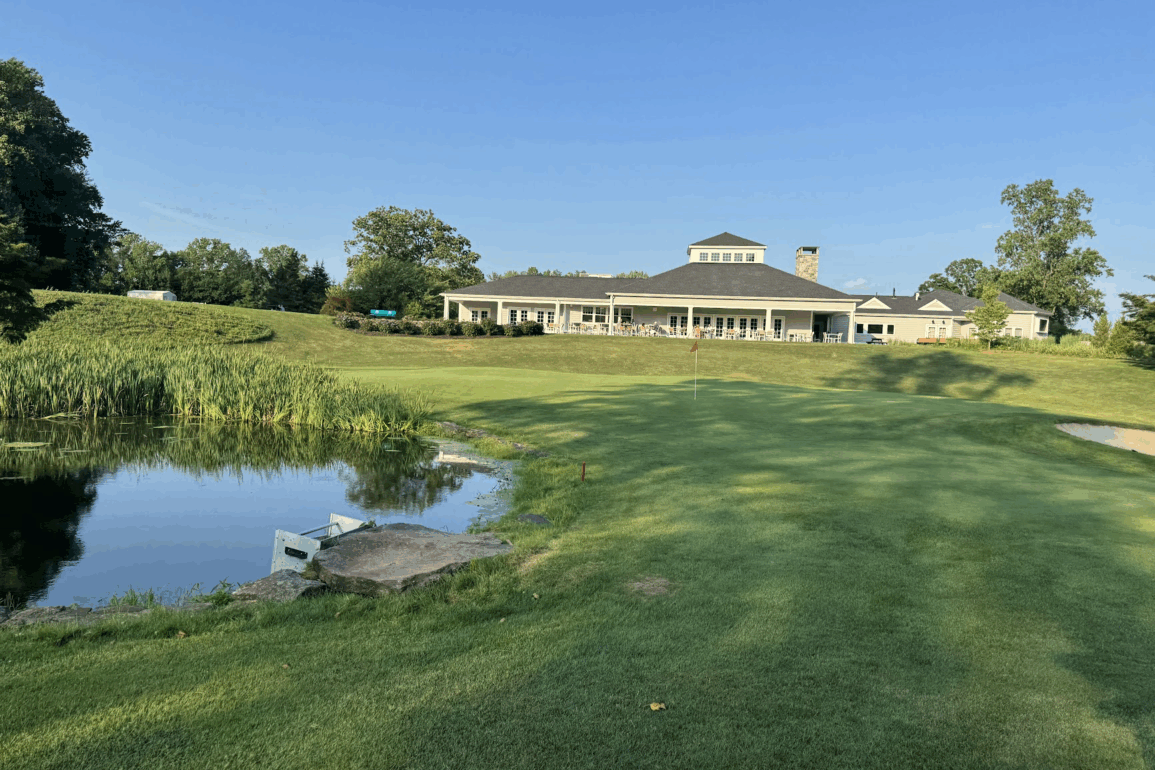
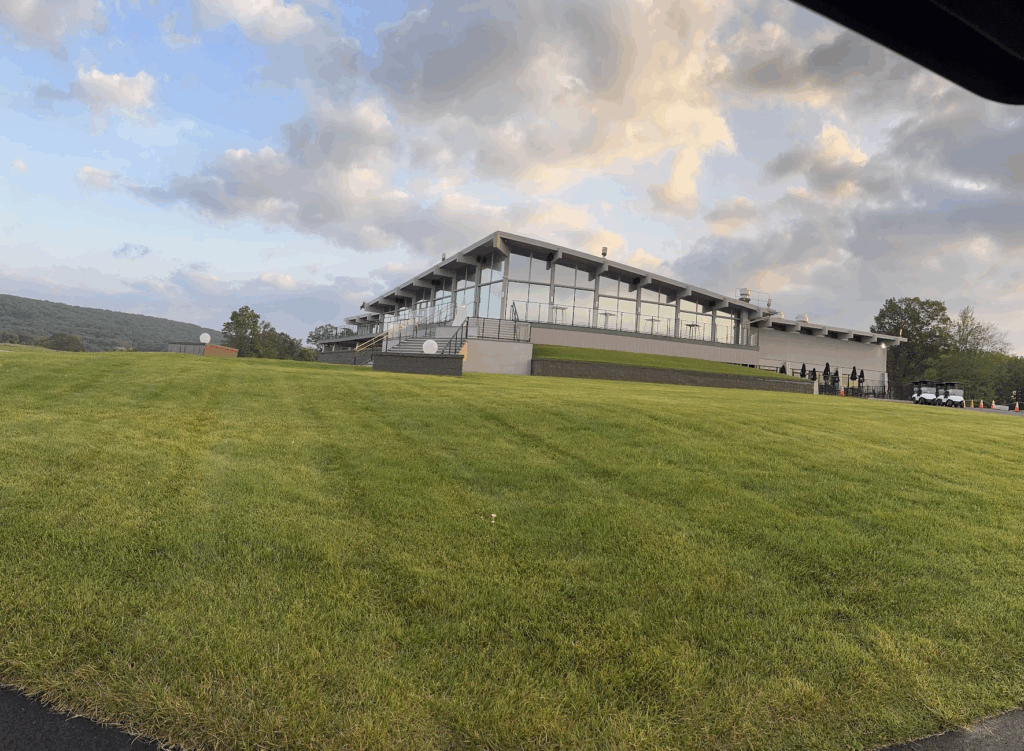
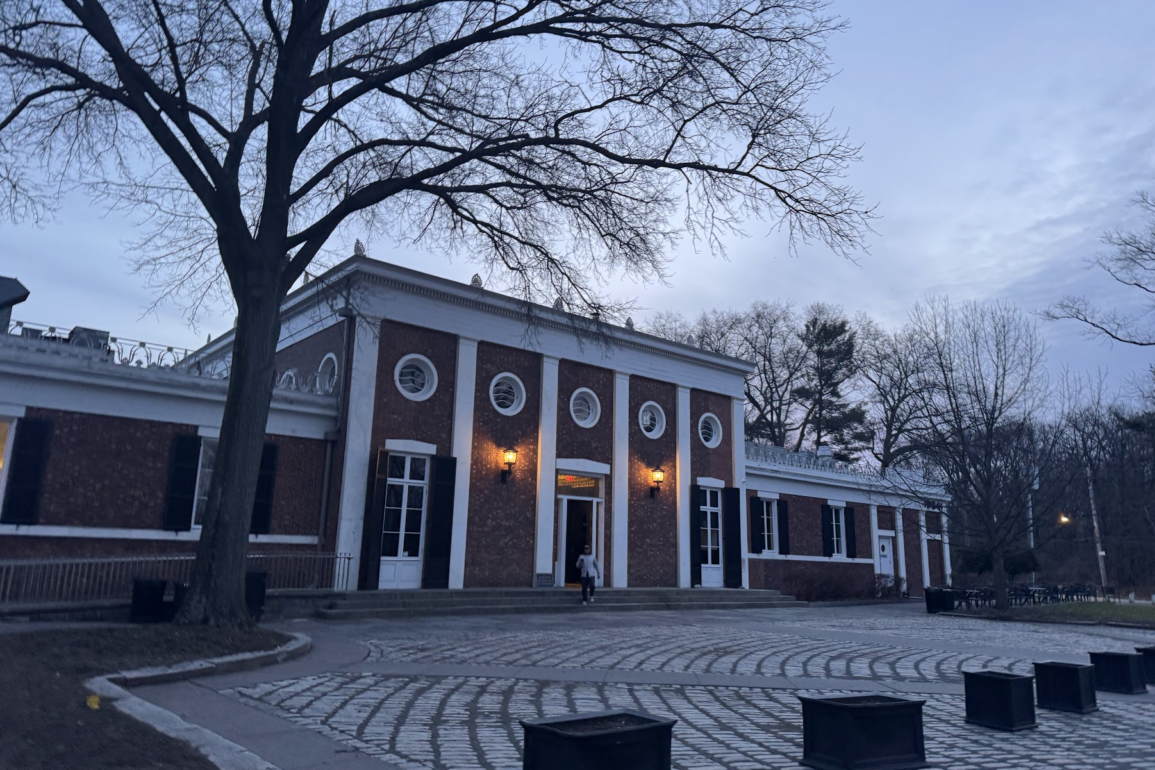
    Split Rock consistently produces a sense of escape that would surprise first-time visitors. Set within the forested acreage of Pelham Bay Park, the course’s tree-lined corridors effectively screen the surrounding borough — on holes where the canopy closes in, the ambient quality approaches that of a private inland parkland course. The Greek Revival clubhouse, perched above the shared practice area, anchors the property with architectural presence, its white columns and stone terrace a visible reminder of the New Deal era in which it was built.

    Longtime visitors often remark that the property carries the feel of a country club rather than a municipal facility, and the combination of mature tree cover, varied topography, and a well-maintained routing gives that perception considerable legitimacy.
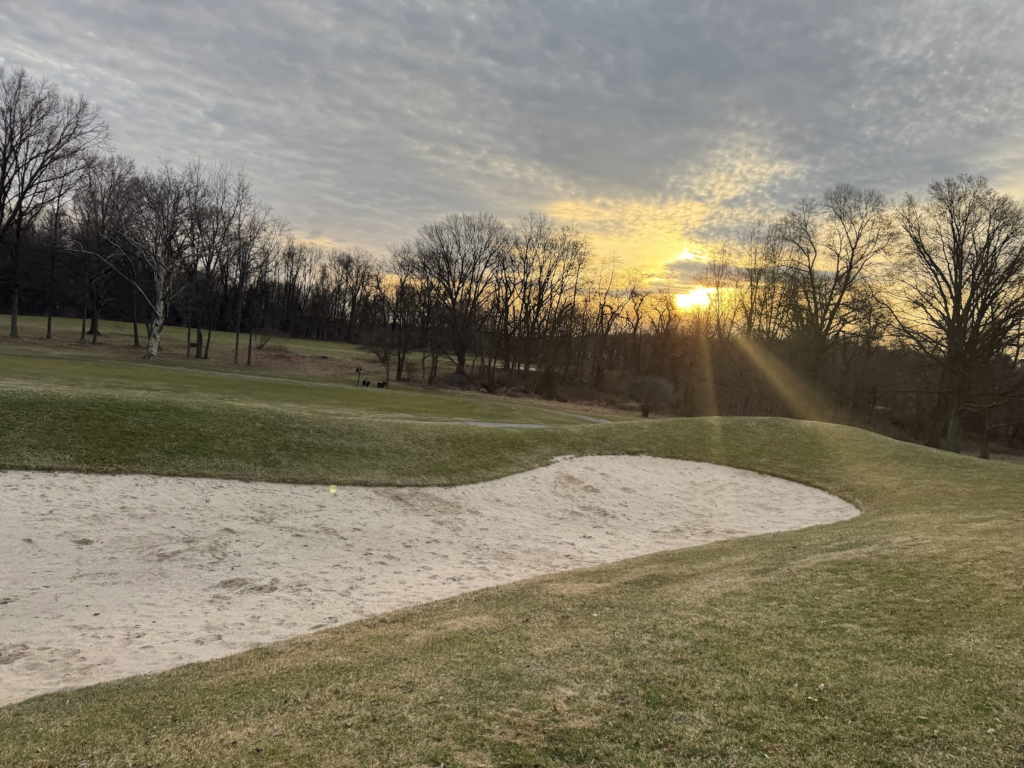
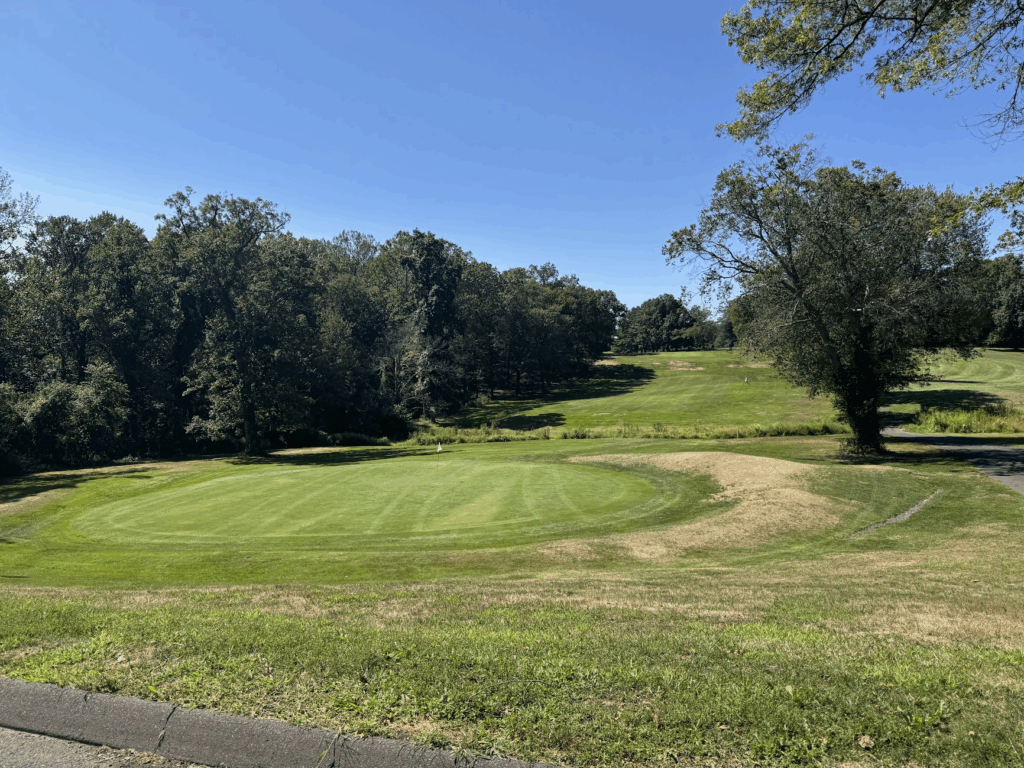
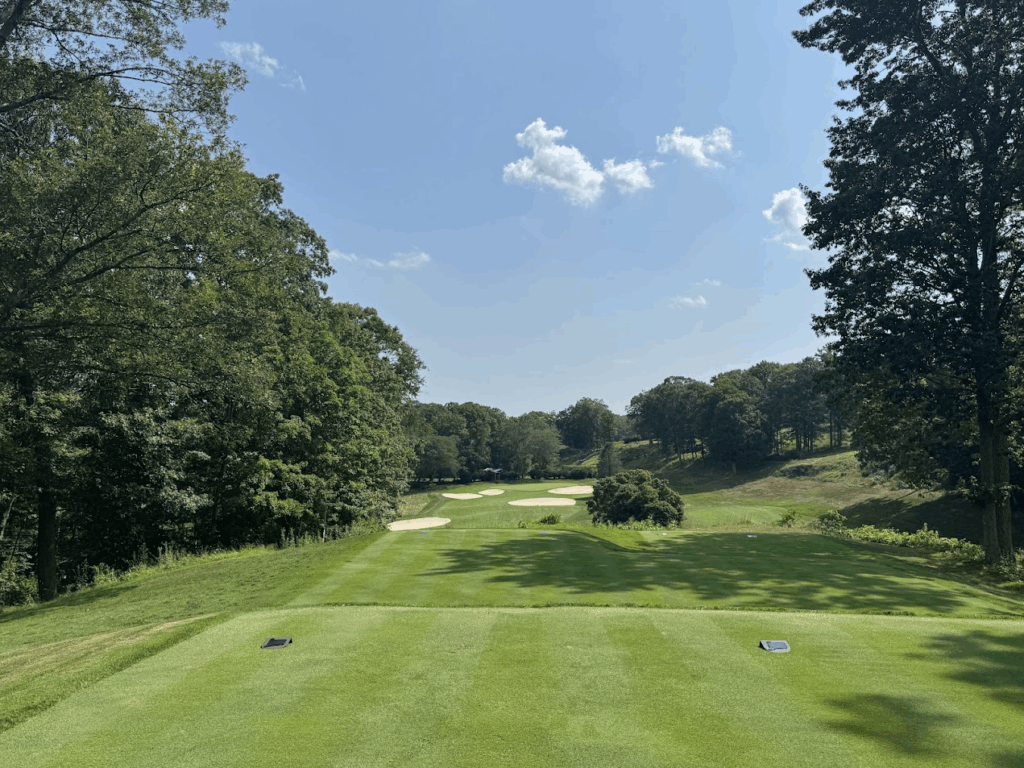
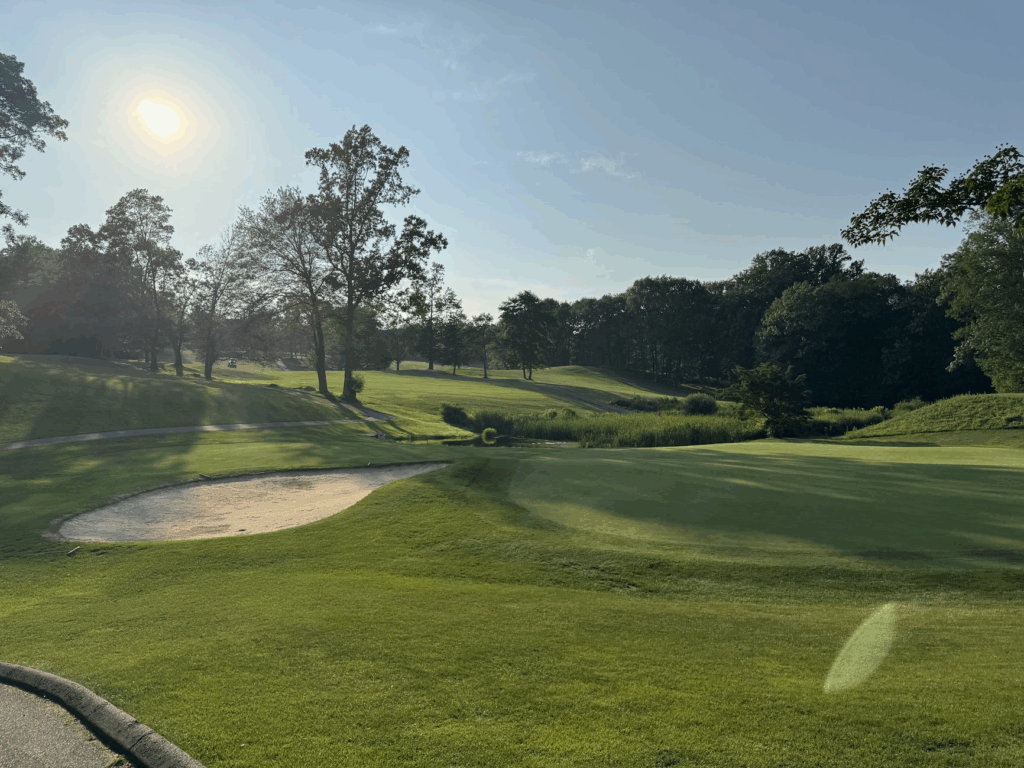
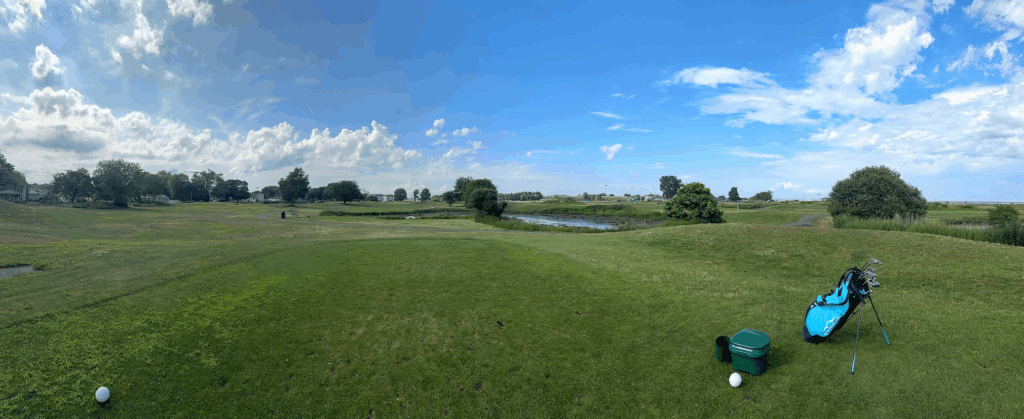
    Bunker placement in back 9 is very strategic

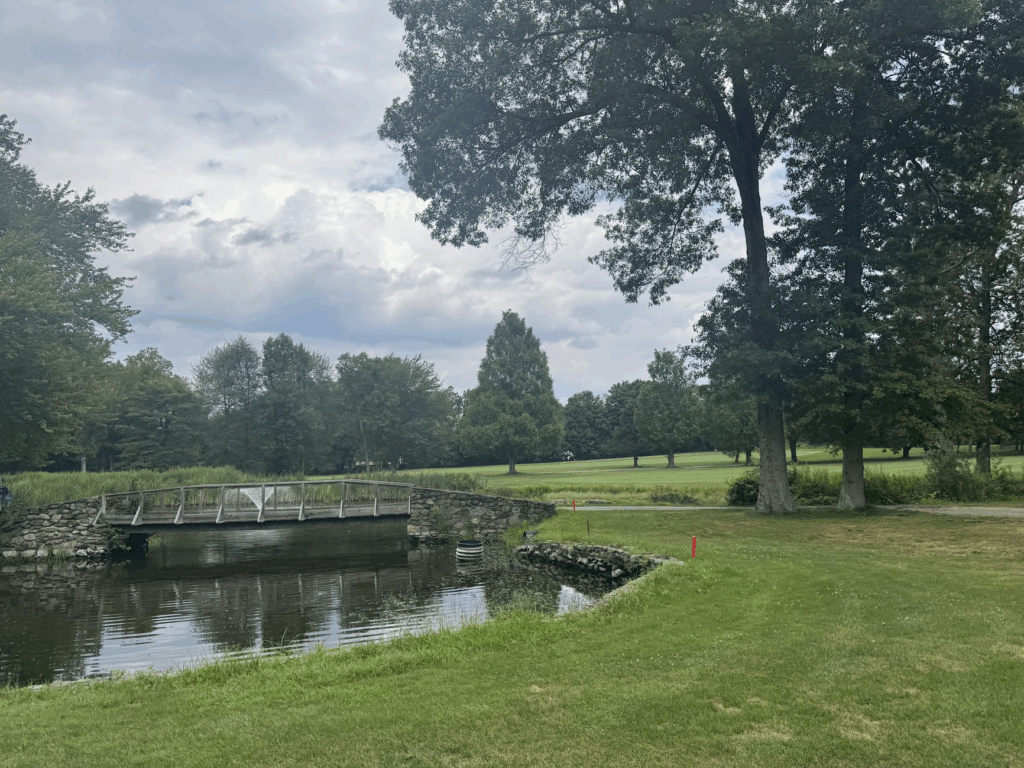
    Among the most atmospherically resonant stretches on the course is the 13th hole — a 496-yard par 5 that plays along the outer edge of the property beside a natural creek. The sound and presence of moving water adds a sensory dimension to what is, in purely design terms, a tight OB-flanked corridor with bunkers positioned at 300 yards on either side. The creek runs as a peripheral feature rather than a forced carry, but its proximity to the fairway line focuses the mind on every shot.

    In early spring, when the canopy is thin and the creek runs at full volume, the ambient sound of the water against bare tree lines gives the hole a quiet, contemplative character. It is one of those stretches where the environment does as much work as the architecture itself, and that combination lingers well after the round is complete.

    Nearby Course Alternatives

    Van Cortlandt Park Golf Course in the Bronx is approximately 15 minutes southwest of Pelham Bay & Split Rock. As the oldest public municipal golf course in the United States — opened in 1895 on a 1,146-acre park and originally laid out by Tom Bendelow — Van Cortlandt carries enormous historical weight. It operates as an 18-hole, par-70 layout measuring 6,002 yards from the tips, with a rating of 68.5 and a slope of 119. Architect Stephen Kay renovated the course in 2008, introducing seven new greens, updated tee boxes, and substantially improved drainage across the course’s approximately 150-acre routing. The front nine features engaging hilly topography with blind shots and elevated greens that give it genuine strategic character; the back nine is flatter and more open. Van Cortlandt lacks the bunkering sophistication and multi-tiered green complexity of Split Rock, and the distance between several holes makes the walk more arduous. The golfer who would prefer it over Split Rock is the historically inclined player — or the higher-handicapper who wants topographic variety in a shorter, less punishing package.

    Dunwoodie Golf Course in Yonkers is approximately 20 minutes north of Pelham Bay & Split Rock. A Westchester County-managed public facility dating to 1903, Dunwoodie occupies approximately 126 acres atop Dunwoodie Heights and is characterized by dramatic topography, steep slopes, and a layout that alternates between narrow tree-lined front-nine corridors and a more open, flatter back nine. The course plays 5,830 yards from the tips as a par 70, with a slope of 123 and a rating of 68.1 — a notably more scoring-friendly test than Split Rock, playing roughly four shots easier for any given handicap. There is no water on the course, and while the design lacks Van Kleek’s bunkering drama and green complexity, the topographic interest of the front nine — including a challenging 386-yard uphill par 4 at the 4th and a compelling downhill 373-yard par 4 at the 3rd — creates an engaging sequence for players who enjoy hillwork in a compressed setting. Practice facilities include a lighted driving range, chipping area, and putting green — a meaningful edge over Split Rock’s limited pre-round options. The player who would most enjoy Dunwoodie is typically the mid-to-high handicapper who appreciates elevation drama without the scorecard penalty of every offline tee shot.

    Final Word

    I know this isn’t a Connecticut course, but at roughly 45 minutes from Fairfield County, it’s close enough to warrant the trip — and walking Split Rock, I kept finding myself thinking of Fairchild Wheeler back in Bridgeport, my home course. The parallels are hard to ignore: both are WPA-era Van Kleek designs, both lean on tight tree-lined corridors, tilted push-up greens, and strategic bunkering, and both deliver a parkland intimacy that feels disproportionate to their municipal pedigree. If Fairchild Wheeler is in your regular rotation, Split Rock will feel like a natural extension of that vocabulary.

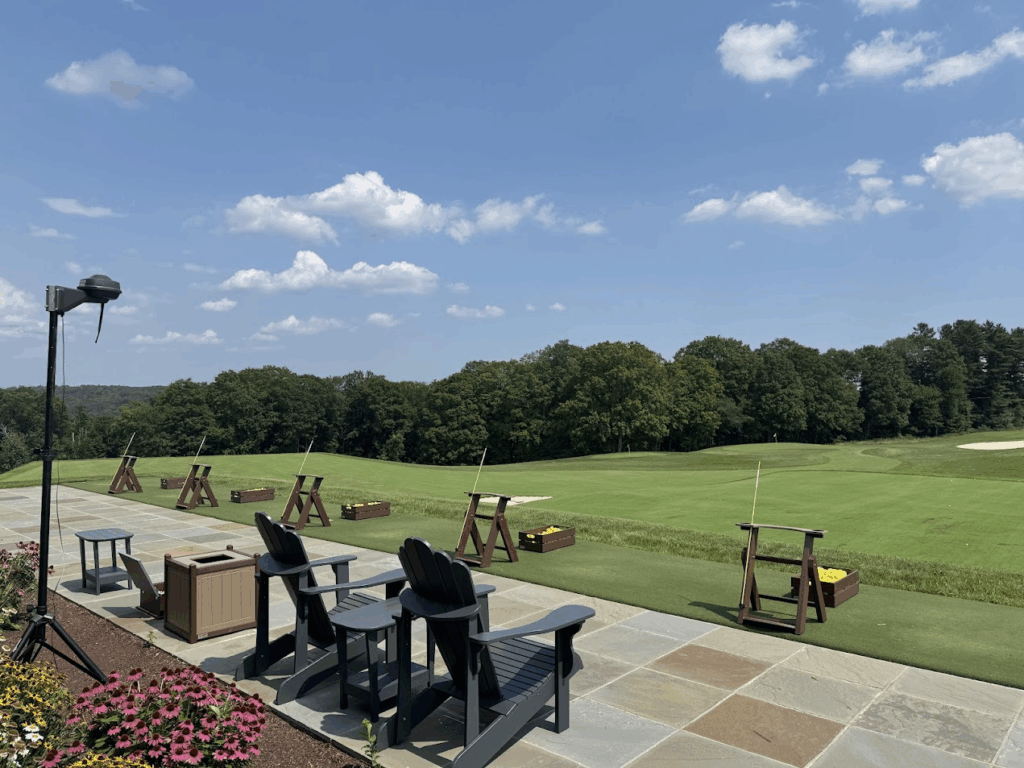
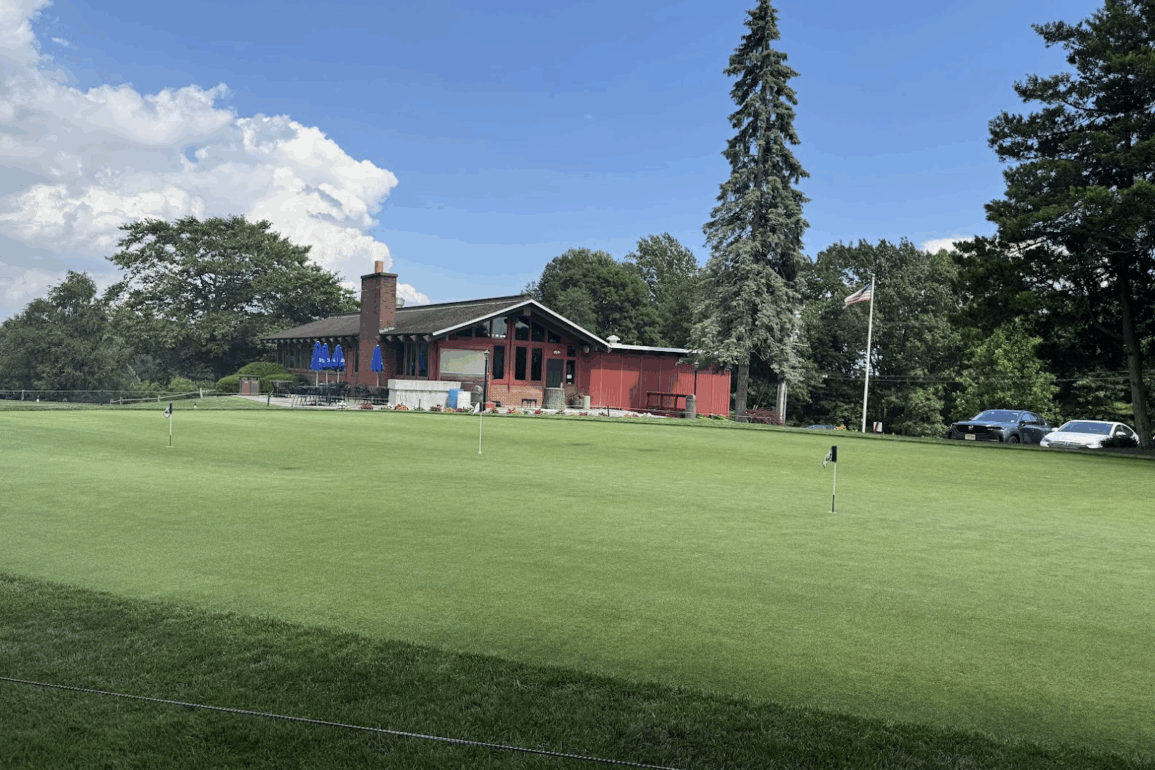
    On the practice side, there is no driving range at the facility, so players should arrive with their swing already warmed up. The putting and chipping green adjacent to the clubhouse is a solid pre-round option but does not fully substitute for range work. The restored Greek Revival clubhouse houses a full-service restaurant, a well-stocked pro shop, and event venues — including a glass-enclosed pavilion — capable of accommodating up to 220 guests.
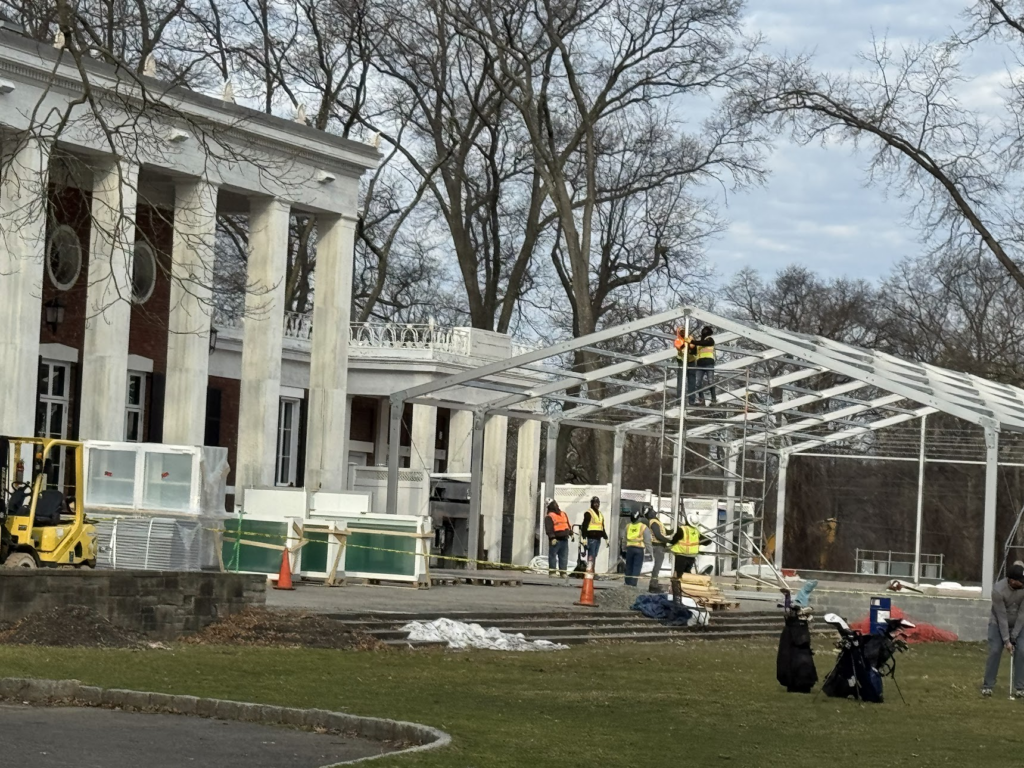
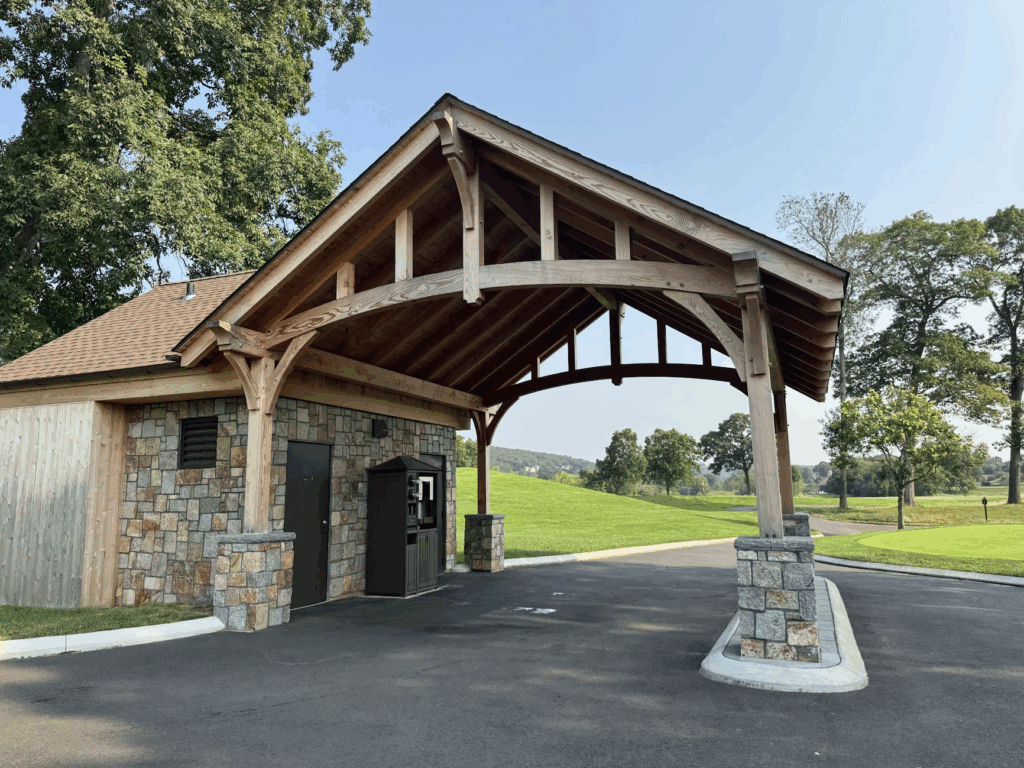
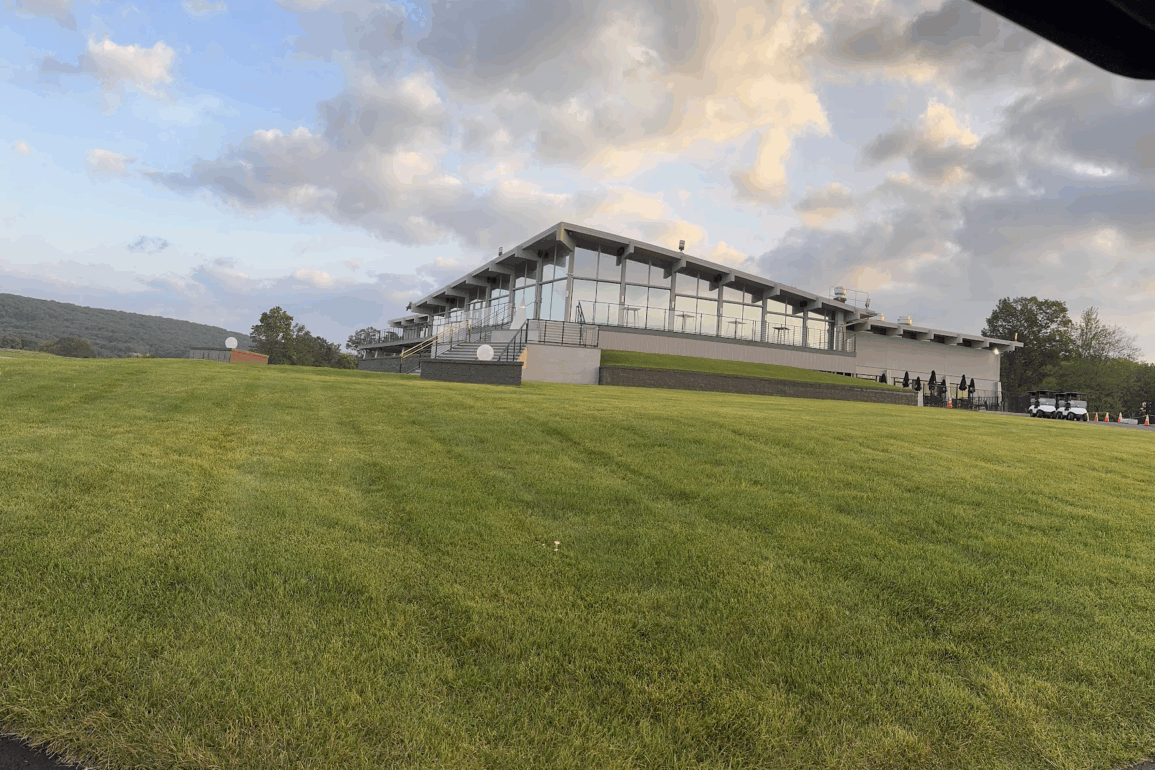
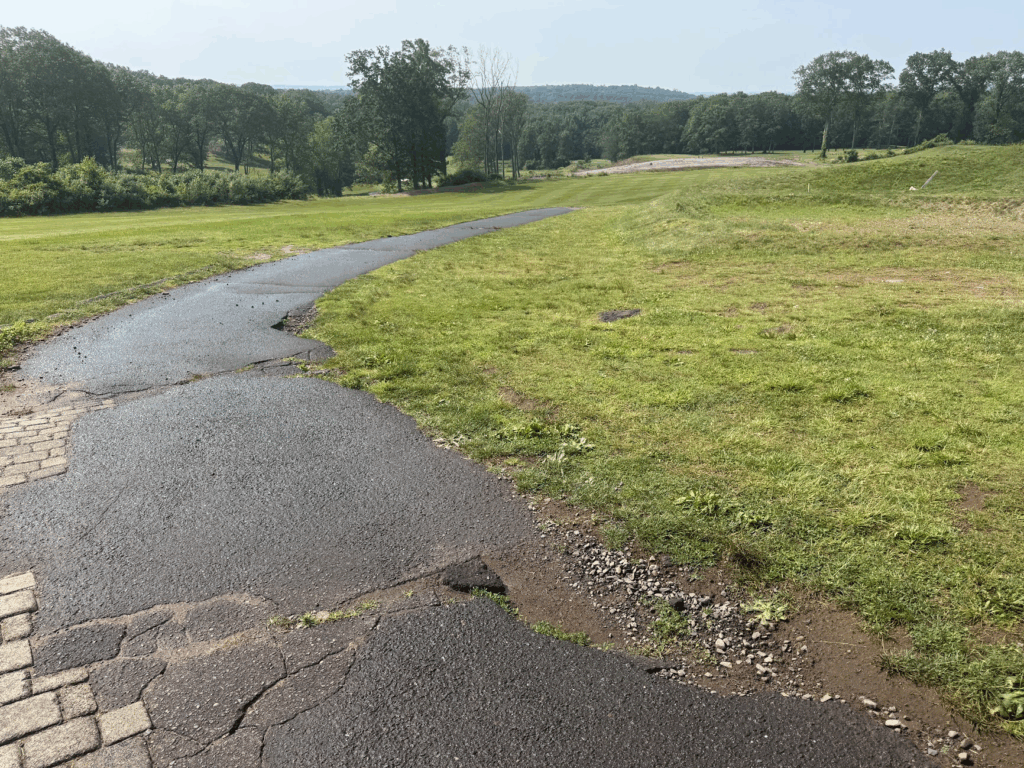
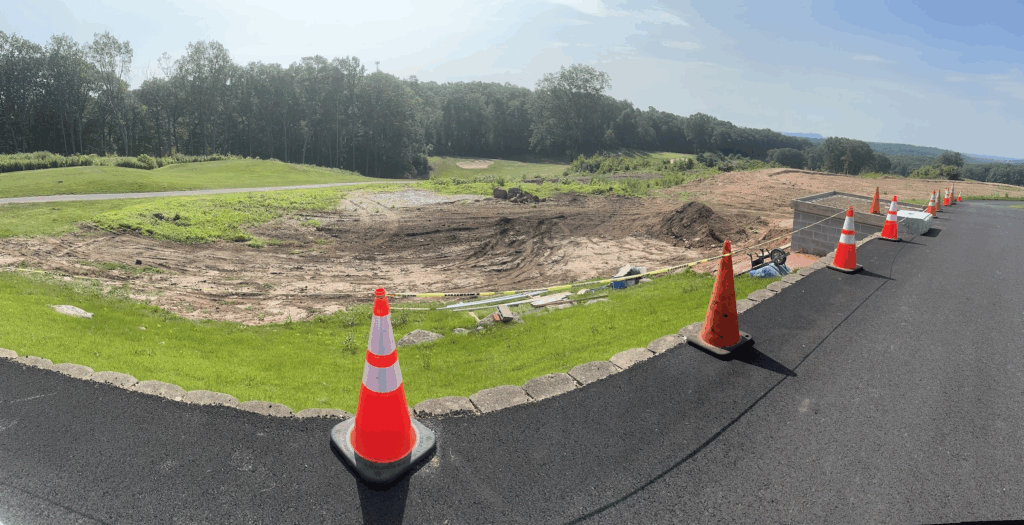
    Summer pavilion still under construction

    Golfers visiting in early spring should plan accordingly: March rounds may encounter incomplete seasonal setup, including the possible absence of tee box distance markers and bunker rakes not yet in the sand. A visit later in the season ensures the course presents at full strength. Nearby alternatives worth considering include Van Cortlandt Park Golf Course for a historically grounded, more forgiving challenge 15 minutes to the west, and Dunwoodie Golf Course in Yonkers for a shorter, topographically compelling round with a full practice facility attached.

    What elevates Pelham Bay & Split Rock above the average New York City muni is the rare alignment of authentic Van Kleek architecture, a WPA-era clubhouse of genuine civic merit, and the natural scale of Pelham Bay Park as a setting — all within a 36-hole format that ensures golfers of every ability level find a proportionate and memorable challenge. Few public facilities in the metropolitan area can match what this property delivers.
  • Fairchild Wheeler Golf Course Review

    Fairchild Wheeler Golf Course Review

    Fairchild Wheeler Golf Course is a public 36-hole facility with the Black Course playing to par 71 and the Red Course to par 72, each measuring approximately 6,450 yards from the tips. The courses were originally designed in 1934 by Robert W. White and are located in Fairfield, Connecticut.

    Many fun downhill par-3s [Black course, Hole 7]

    Fairchild Wheeler represents one of Connecticut’s most historically significant public golf facilities, conceived during the depths of the Great Depression as a Works Progress Administration project that employed over 1,000 unemployed workers to clear rocky farmland and transform the former Wheeler family paper mill property into New England’s first 36-hole municipal golf course. Robert W. White, the first president of the PGA of America and founding member of the American Society of Golf Course Architects, brought his agronomic expertise and democratic design philosophy to create accessible championship golf for the public. The property is owned by the City of Bridgeport but located in Fairfield, creating an unusual jurisdictional arrangement that has influenced the facility’s management and investment over the decades. White originally conceived the property as four distinct nine-hole courses that could be combined in various configurations, though today it operates as two traditional 18-hole layouts distinguished by the Black and Red nomenclature. The facility experienced periods of neglect in the 1990s and early 2000s, but recent stewardship has brought renewed attention to course conditioning and infrastructure. Between 2023 and 2024, architect Mark Mungeam oversaw comprehensive bunker renovations that restored strategic intent while modernizing drainage and sand quality, with work focusing initially on the Black Course holes 10-16 and 18 before expanding to additional areas. The bunker project represents the most significant architectural intervention since the original construction, carefully balancing historical preservation with contemporary playability standards. The facility maintains year-round operations, distinguishing it from many Fairfield County courses that close greens seasonally, creating a unique winter golf culture that attracts dedicated players throughout Connecticut’s shoulder seasons. Both courses feature rye grass greens rather than the bent grass common at premium facilities, a practical choice given the municipal budget constraints and heavy play volume the facility accommodates. Future renovation discussions have centered on tee box reconstruction, irrigation system upgrades, and potential tree management to restore strategic sight lines that have been obscured by decades of growth.

    Expansive routings with wide fairways

    Sprawling across roughly 280 acres of rolling Connecticut piedmont terrain, Fairchild Wheeler presents two dramatically different design philosophies on a single property that reflects both White’s original vision and subsequent evolution through heavy public use. I found myself drawn to the Black Course’s hillside routing, which exploits natural elevation with strategic purpose—constant movement up and down the property’s contours creates a rhythmic challenge where drive positioning determines approach difficulty and green complexes reward precise angle management. The Black Course occupies the more dramatic topography, featuring pronounced elevation changes, tree-lined corridors that frame strategic decisions, and green sites positioned to maximize natural terrain advantages. White’s Depression-era routing philosophy emphasized walking efficiency within challenging terrain, though modern cart dependence has shifted how most players experience these transitions. The Red Course occupies flatter terrain with a more straightforward, driver-friendly character that prioritizes width and accessibility over strategic complexity, though the opening and closing holes on each nine introduce significant elevation that creates memorable bookend moments. The property’s Connecticut woodland character comes through in mature tree canopy, understory vegetation, and seasonal color transitions, though power line corridors and visible industrial infrastructure remind players of the developed setting. Players seeking thoughtful shotmaking, varied shot shapes, and strategic architecture will gravitate toward the Black Course’s intellectual demands and dramatic Long Island Sound views from elevated tees. Those prioritizing ease of play, scoring opportunities through generous landing areas, and faster pace will appreciate the Red Course’s forgiving corridors and three back-nine par 5s that create realistic birdie chances. The facility serves serious golfers wanting a strategic home course for repeated play, recreational foursomes requiring accessible design, junior programs through First Tee partnerships, and winter golf enthusiasts taking advantage of the year-round operations that maintain full greens when competitors close.

    Walkability

    The Black Course presents significant walkability challenges due to its aggressive use of elevation. This hillside routing constantly moves golfers up and down the property’s natural contours, with several transitions between holes demanding cardiovascular commitment. The opening stretch establishes this pattern immediately, and by the time players reach the mid-section around holes 4-8, the terrain has declared its intentions. Black Course hole 4 climbs upward from the tee, forcing golfers to earn their approach angle through elevation gain. The walk from the Black Course 7th green to the 8th tee continues this theme—players have just finished a lovely downhill par 3 that plays shorter than its 221-yard card distance, only to face an uphill grind on the 423-yard 8th, a par 4 that feels every bit of its #5 handicap rating when walking. Reviews consistently emphasize that carts are strongly recommended due to varied terrain, with multiple players noting the course features beautiful winding hills but requires mechanical assistance to maintain reasonable pace.

    Uphill climbs are brutal in Connecticut summers

    The most unusual routing quirk appears on the Black Course 2nd hole, where a blind tee shot necessitates a bell system—the group ahead rings to signal they’ve cleared the landing area. This safety feature adds time but speaks to the dramatic terrain shifts that define the Black’s character. From the Black Course 10th tee, players are rewarded with distant Long Island Sound views, standing on one of the property’s highest points. The walk down from this elevated tee and the subsequent return uphill on Black Course hole 16 to an elevated green exemplifies the course’s vertical ambitions. Black Course hole 13 delivers another dramatic elevation moment—an elevated tee requiring a 230-yard forced carry to a fairway below, with the approach playing back uphill to a well-defended green complex. The finishing Black Course hole 18 plays uphill, leaving many golfers ready to collapse in Vazzy’s 19th Hole rather than contemplate another nine. Despite these elevation demands, Golf Digest panelists praised the property as having great land with fun routing, suggesting the transitions flow naturally within the hillside terrain rather than fighting it arbitrarily. The routing takes advantage of topography to create strategic interest rather than imposing elevation for its own sake, though the cumulative effect tests walking stamina severely.

    The Red Course offers better walkability for roughly 70% of the round, but front-loads and back-loads its challenges in a peculiar pattern. Web reviews specifically note that both nines on the Red begin and end with steep elevation changes while the holes in between are relatively flat. Red Course hole 1 immediately tests resolve with a steep uphill opener—a questionable design choice for a course ostensibly built for accessibility. Players battle elevation again on the Red Course 9th, a dramatic dogleg left that drops significantly from tee to green with a creek positioned 165 yards from the tee box, though the downhill trajectory makes club selection deceiving. The middle section of each nine flattens out considerably, providing merciful relief and faster pace, with one evening player reporting a lovely walk on the Red Course front nine. Then Red Course hole 10 returns to elevation challenges before the back nine settles into flatter terrain until Red Course hole 18 closes with another uphill finale. The flat sections expose players to persistent wind across open terrain, with reviews noting that wind is the main variable to keep in mind atop the flat plain. This creates a different walking challenge—mental rather than physical—as exposed conditions test club selection and ball flight control. Overall, the Red walks easier than the Black for the majority of holes, but those bookend elevation moments shouldn’t be underestimated, particularly for players expecting uniformly gentle terrain on the easier course.

    Strategic Test

    The Black Course demands constant strategic recalibration. White’s routing forces players to manufacture different shot shapes based on hole orientation and green complex angles. Black Course hole 12, a 359-yard dogleg left, requires a draw off the tee or comfortable aim-left play to access the optimal approach angle. Missing right off the tee results in tree corridor blockage, forcing a punch out rather than attack. Black Course hole 14 reverses this demand, rewarding a drawn hybrid or fairway wood on its short 327-yard length—the aggressive line requires commitment to that right-to-left shape. The Black Course 18th hole punishes anyone unable to produce a fade, with reviewers noting the uphill approach from a push-fade position leaves a dramatically easier angle than the hooked ball that rolls left into trouble. This architectural principle—using natural and manufactured features to reward specific shot shapes—elevates the Black beyond mere target golf. Web reviews emphasize the importance of positioning, noting that players must position their ball on certain parts of the fairway or risk losing 20-50 yards due to slopes, and hilly terrain punishes wayward shots severely.

    Plenty of holes have lateral hazards bisecting the course

    The Black Course hole 13 breakdown reveals the course’s strategic centerpiece and most compelling risk-reward proposition. This 424-yard par 4 plays from an elevated tee with a forced carry of approximately 230 yards to reach the fairway safely below. Reviews consistently identify this as a favorite hole, with detailed local analysis noting the elevated tee box requiring a substantial carry to reach optimal position.

    • Bold strategy: The long hitter pulls driver, aims at the left-center of the fairway, and commits to the full carry. If executed properly with a slight draw, the player is left with 150-170 yards to a receptive green from the preferred angle. From this position, a 7 or 8-iron allows working the ball into the green’s contours, attacking back-left pins. The aggressive play yields legitimate birdie chances—this hole ranks as the #2 handicap, suggesting scoring opportunities exist for those who execute properly—but demands precise distance control on the tee ball. Coming up short results in hazard, while overcutting right finds trees.
    • Safe strategy: The conservative player hits 3-wood or long iron, intentionally laying back to 200-210 off the tee for guaranteed fairway position. This leaves a longer approach of 190-210 yards, likely requiring a 4 or 5-iron into a green that doesn’t receive long irons kindly. From this position, the player aims for the middle of the green regardless of pin position, accepting par and moving on. The strategic penalty for safety here isn’t severe—no strokes are added, just the realistic birdie chance is removed. This represents excellent strategic architecture: rewarding boldness with scoring opportunity while not punishing conservative play with bogey likelihood.

    The Black Course’s strategic variety extends to club selection philosophy that shifts hole-to-hole. Black Course hole 5 explicitly demands leaving driver in the bag according to local player strategy—aggressive play creates more problems than it solves on this tighter, shorter par 4 where position matters more than distance. Then immediately on Black Course hole 6, a 445-yard brute ranked #1 handicap, players need every yard of driver distance, with local advice emphasizing maximum aggression. This whipsaw effect—strategic restraint followed by maximum aggression—prevents rhythmic, repetitive play. Black Course hole 10 tempts with its dramatic Sound views and wide fairway, but left-side fairway bunkers positioned at typical driver distance create a centerline hazard requiring either perfect execution or strategic layback. The recently renovated bunkers throughout, designed by Mark Mungeam in 2023-2024, enhance visual intimidation while adding genuine strategic consequences—the bright sand catches the eye and forces more precise tee ball planning, with reviews praising the excellent sand quality post-renovation. Alternative approaches exist based on drive placement, as the hillside routing creates multiple angles into greens—a shot from an uphill lie plays completely differently than the same yardage from flat or downhill terrain. The course rewards players who think multiple shots ahead, understanding how drive position dictates approach angles and how green contours receive different shot trajectories. This isn’t power golf or precision target golf exclusively—it’s thinking person’s golf where strategy compounds across multiple shots.

    Love the downhill carry on Red hole 9

    Playability

    The Red Course serves high-handicap players considerably better than its hillside sibling. The fundamental design philosophy here prioritizes width over penal architecture, with seven or more holes inviting driver off the tee into generous landing areas. Where the Black Course narrows corridors with trees and strategic angles, the Red Course opens them up, reducing the penalty for wayward drives. Reviews emphasize long, wide fairways with challenging length but forgiving tee shots. A 15-handicapper can miss fairways by 15-20 yards and still have a clear shot to the green on most holes. The course designer understood that recreational players need forgiveness off the tee to maintain pace and enjoyment, and the Red Course delivers this consistently through its middle sections. The trade-off comes at the greens—tough putting surfaces that make most golfers double and triple check breaks, according to reviews. These small, quick greens provide the course’s primary challenge. Players can succeed off the tee with less-than-perfect drives, but approach shot distance control and putting become critical. This creates an interesting balance: forgiving on the way to the green, demanding once arriving.

    Striped poles in fairway show yardage from green

    With a slope rating of 124 from the middle tees and course rating of 71.0, the Red Course sits squarely in the challenging but fair for average players range. For context: a 10-handicap should shoot around 81 on an average day, a 20-handicap around 91, and a 30-handicap around 101. These aren’t intimidating numbers for recreational players, especially given the wide fairways and three par 5s on the back nine—Red Course holes 10, 17, 18—that offer realistic birdie chances. The Black Course plays slightly tougher with a slope of 126-128 and rating of 71.7, though the difference appears modest on paper—the real difficulty gap emerges in the tighter corridors and forced strategic decisions rather than raw numbers. The shortest hole, Red Course hole 12 at just 111 yards, provides another clear scoring opportunity even for high-handicappers—though the small, elevated green demands accurate distance control that can humble anyone. The long par 4s on the Red—Red Course hole 6 at 417 yards ranked #1 handicap and Red Course hole 13 at 425 yards ranked #2 handicap—will challenge higher handicappers’ distance capabilities, but the generous fairways mean players can advance the ball in three reasonable shots without disaster. This differs dramatically from the Black Course’s tighter corridors where a pushed drive on a long par 4 means pitching out sideways rather than advancing toward the green.
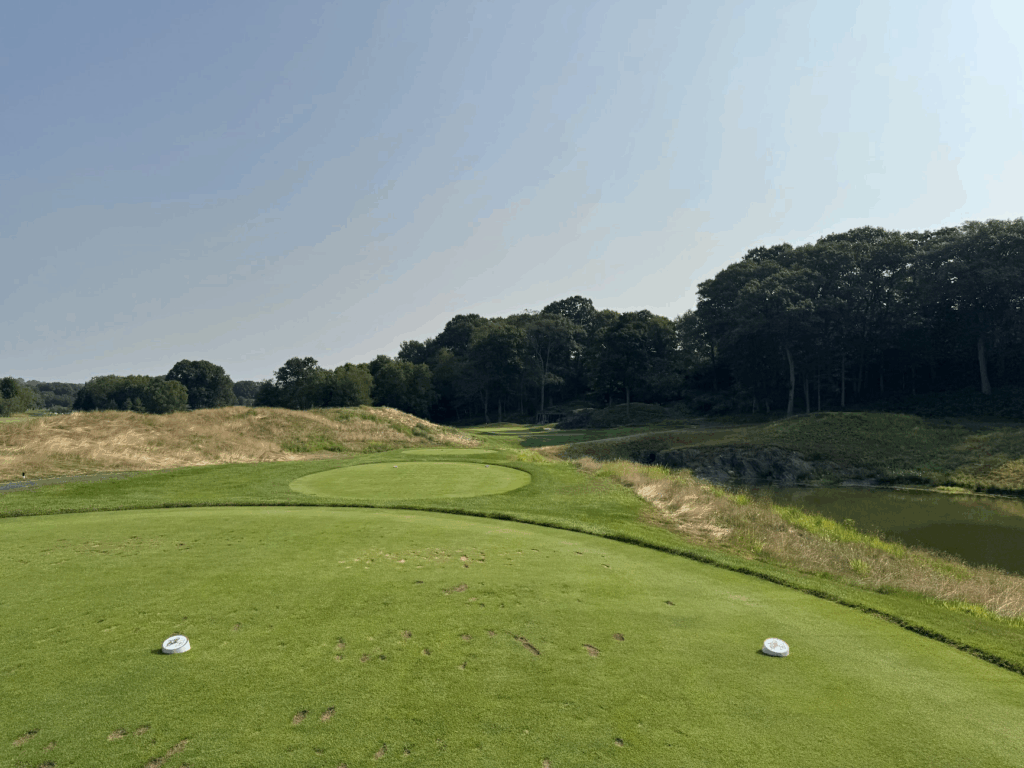
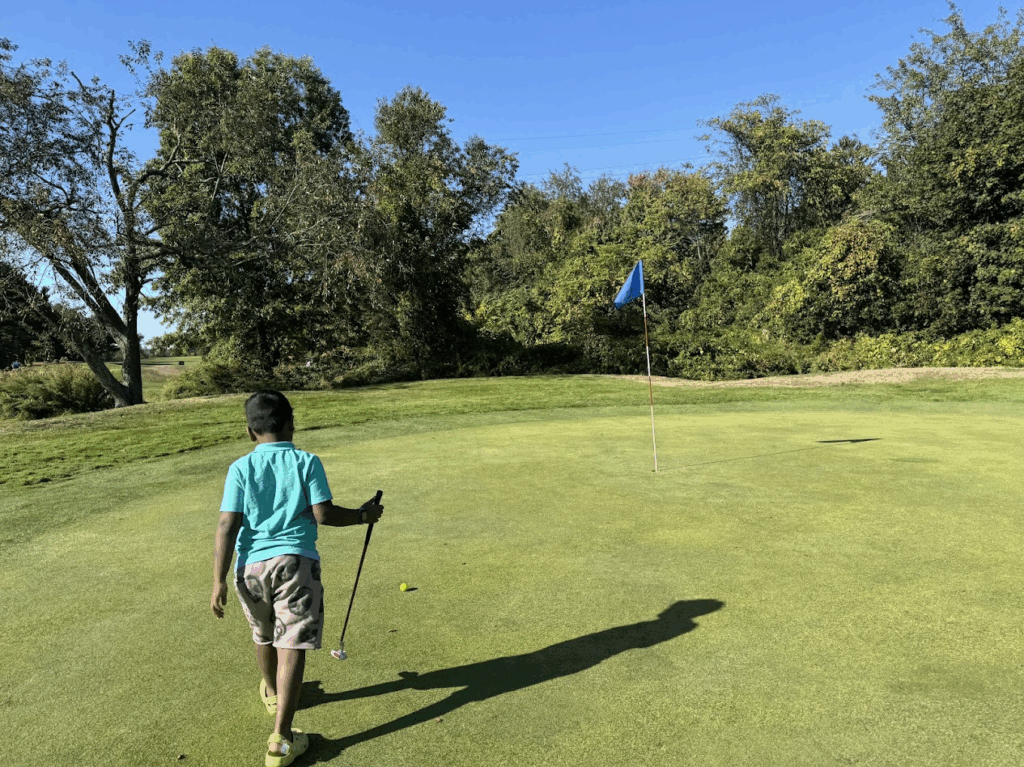
    Front tees are very junior friendly

    Red Course hole 12 exemplifies high-handicap-friendly architecture despite its quirks. At 111 yards, this short par 3 removes the distance anxiety that plagues many recreational players on longer one-shotters. The green sits slightly elevated, providing a clear visual target, and while it’s small and contoured, the short distance means most players are hitting comfortable wedges rather than uncertain long irons. The psychological benefit here can’t be overstated—high-handicappers standing on this tee actually believe they can make par, and that confidence tends to produce better swings. The hole occasionally backs up with slower groups, but that’s partly because even struggling players take the time to finish properly rather than picking up in frustration. The surrounding area offers reasonable recovery options for mishits, unlike some short par 3s that surround the green with severe penalties. This represents thoughtful design for the intended audience: challenge without cruelty, difficulty without unfairness. The Red Course consistently applies this philosophy, making it the clear choice for recreational foursomes, corporate outings, and families introducing new players to the game. However, condition concerns detract from the experience—multiple reviews specifically cite tee box issues on the Red Course, with one noting severely torn up dirt tee boxes that undermine the accessibility message the design attempts to convey.
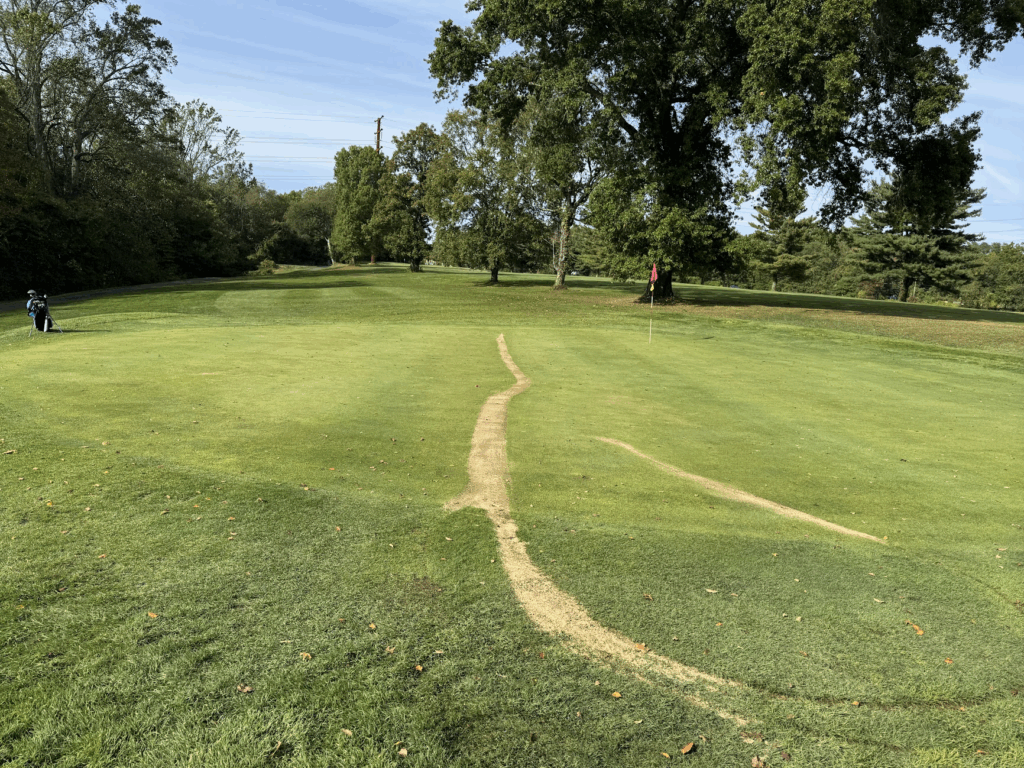
    Sad to see greens on Red 8 trashed by golf-cart donuts

    Atmosphere

    The Black Course’s atmosphere builds through a combination of natural beauty, strategic intrigue, and memorable elevated moments that separate it from typical municipal fare. The hillside routing creates intimate, enclosed corridors on some holes while opening dramatic vistas on others—this variety keeps the visual experience engaging throughout the round. Players are never quite sure what awaits around the next corner, which generates anticipation absent from more predictable flat-land designs. The tree-lined fairways create definition without feeling claustrophobic, and the natural Connecticut woodland character comes through in the understory vegetation and seasonal color changes. Recent bunker renovations enhanced the visual appeal significantly, with bright white sand and clean lines that photograph beautifully while signaling strategic danger. Reviews note the course offers beautiful winding hills and great scenic views throughout. The course maintains a serious golfing atmosphere—this isn’t a casual track where nobody keeps score. Players here are engaged with the strategic challenge, reading angles, discussing club selection, genuinely competing against the course and themselves. The facility’s year-round operations create unique ambiance during shoulder seasons, with Golf Digest noting it as one of the few courses in Fairfield County to stay open with full greens much of the year, creating a great winter golf scene.

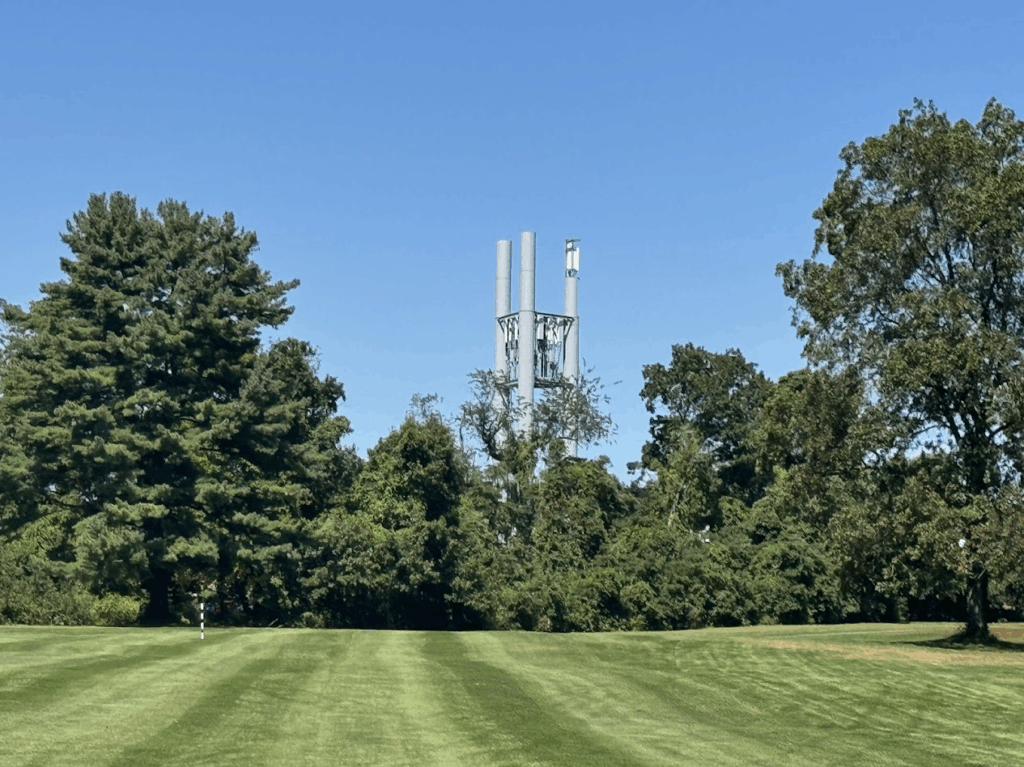
    Fair amount of real estate developments and power lines around course

    The standout atmospheric moment arrives on Red Course hole 9, despite that course’s generally more prosaic character. This 536-yard par 5 dogleg left drops significantly from an elevated tee, with a creek positioned approximately 165 yards out. The downhill trajectory compresses distance perception—what looks like an easy carry becomes psychologically menacing when accounting for the elevation drop potentially bringing a pulled shot into the hazard. Standing on that tee, players are forced to commit to a line and trust their swing, knowing the consequences of indecision. The hole bends left around the dogleg with the creek continuing to threaten the aggressive second shot, while the green sits well below the fairway level, requiring precise distance control on the approach. The elevation change throughout creates a sense of journey—players start high with expansive views, descend through the landing area and fairway, then finish at the green feeling they’ve traversed genuine terrain rather than walked across a field. This kind of topographical drama elevates the hole beyond its strategic merits into memorable golfing theater. The combination of visual drama, genuine strategic challenge, and emotional resonance makes this a favorite hole on the property.

    Black Course hole 7 delivers atmospheric excellence through pure elevation play on a par 3. At 221 yards from the tips with shorter plays from forward tees, this long one-shotter features a pronounced downhill trajectory that alters club selection by 2-3 clubs depending on wind and pin position. The tee shot plays from an exposed, elevated position where players are vulnerable to wind—there’s a sensation of being on stage that focuses concentration. The downhill flight path creates visual drama as players watch their ball descend toward the green, hopefully arriving softly despite the long carry. Local reviews identify this as part of a very tough stretch of holes, with groups occasionally backing up on the difficult par 3. The green complex sits in a more protected bowl, contrasting with the exposed tee. Unfortunately, the tee box lacks adequate tree protection from the adjacent Black Course fairway, creating a safety concern when players hook drives from that adjacent hole—this design flaw mars what should be a pure atmospheric highlight. Despite this weakness, the hole’s elevation drama and shot values make it memorable. The immediate contrast with the uphill grind of Black Course hole 8 that follows creates strategic and atmospheric whiplash that defines the Black Course’s character: relentless terrain variety forcing constant adjustment. Black Course hole 17 earns praise as the prettiest hole on both courses—a beautiful par 3 hitting over tall cattail—adding another memorable visual moment to the closing stretch.

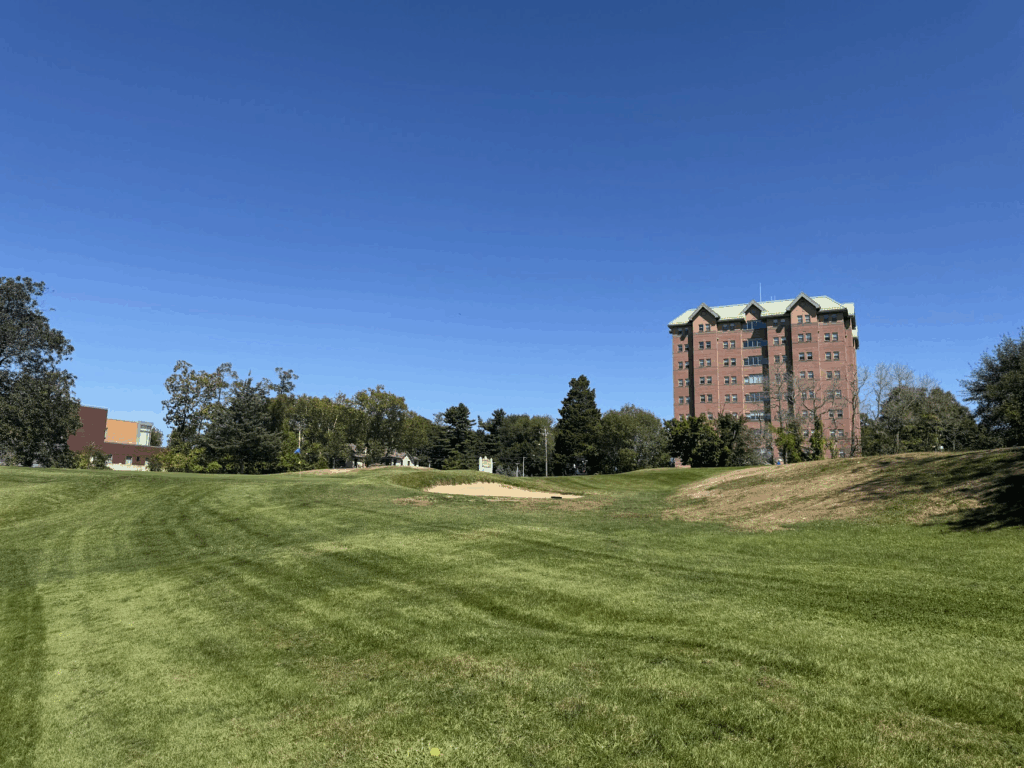
    Industrial buildings can be a little distracting

    Nearby Course Alternatives

    H. Smith Richardson Golf Course in Fairfield, located approximately 15 minutes southwest, provides the most direct comparison to Fairchild Wheeler within the immediate area. Richardson’s par 71 layout stretches to 6,404 yards from the tips with a slope rating of 130 and course rating of 71.8, playing slightly shorter but considerably more difficult than either Fairchild Wheeler course. The course occupies roughly 165 acres of even more dramatic elevation than Fairchild Wheeler’s Black Course, with constant uphill and downhill holes creating a cardiovascular test that makes Fairchild Wheeler seem gentle by comparison. Richardson’s signature characteristic involves bent grass greens rather than Fairchild Wheeler’s rye grass, providing faster, truer putting surfaces that appeal to accomplished players seeking premium conditioning. The Orrin Smith design lacks the historical pedigree of Robert White’s Depression-era work but delivers more consistent modern conditioning and strategic coherence across all eighteen holes. Richardson’s reputation ranks it among Fairfield County’s elite public options, though tee time availability runs tighter than Fairchild Wheeler’s walk-up accessibility. Players who prioritize conditioning consistency, bent grass greens, and don’t mind more restrictive booking requirements will prefer Richardson, while those seeking better spontaneous availability and 36-hole variety should choose Fairchild Wheeler. The Black Course matches Richardson’s strategic interest and elevation drama while offering the added benefit of the Red Course alternative for variety.

    Richter Park Golf Course in Danbury, approximately 35 minutes northeast, represents Connecticut’s pinnacle of municipal golf and serves as the aspirational benchmark against which all public courses measure themselves. This par 72 championship layout extends to 6,741 yards from the tips with a slope rating of 134 and course rating of 73.3, playing substantially longer and more difficult than Fairchild Wheeler’s offerings. Edward Ryder’s 1971 design sprawls across 185 acres of rolling terrain, though with less severe elevation than Fairchild Wheeler’s Black Course—the challenge here comes from length, water hazards on twelve holes, strategic bunkering, and immaculate bent grass playing surfaces maintained to near-private club standards. Richter Park’s reputation as Connecticut’s best public course brings intense demand, with tee times requiring advance booking well ahead of play dates. The course rewards power players who can carry hazards and reach par 5s in two, contrasting with Fairchild Wheeler’s more strategic, position-oriented philosophy where shorter hitters can compete through intelligence. Richter Park’s modern championship design philosophy emphasizes tournament-ready conditions and parallel fairway routing that lacks the quirky, terrain-dictated character of White’s Depression-era work. Players seeking consistent championship conditioning, bent grass greens, longer yardage, and don’t mind the drive or advance planning requirements will prefer Richter Park. Those valuing strategic variety over pure length, preferring walkable nine-hole loops, appreciating historical architecture, and wanting more spontaneous tee time access should choose Fairchild Wheeler’s Black Course. The Red Course doesn’t compete in this comparison—it serves a different recreational audience entirely.

    Final Word

    The facility offers full-service practice areas including driving range, putting green, and short game practice areas serving both courses. Vazzy’s 19th Hole provides clubhouse dining and beverage service with casual, welcoming atmosphere reflecting municipal character—no pretense, reasonable pricing, and regulars-heavy crowd creating genuine community feel. The pro shop stocks essential equipment and apparel without overwhelming selection, focusing on practical needs rather than premium retail experience. First Tee programs operate from the facility, providing junior instruction introducing young players to the game through structured programming. The facility hosts PGA Junior Golf Camps during summer months, leveraging the two-course setup to accommodate varying skill levels simultaneously. These amenities complement golf experiences without attempting to compete with country club luxury, staying true to accessible public golf missions that have defined Fairchild Wheeler since Depression-era origins.

    When considering regional alternatives like H. Smith Richardson’s superior conditioning or Richter Park’s championship pedigree, Fairchild Wheeler distinguishes itself through two distinct 18-hole experiences, easier tee time access, and genuine architectural merit on the Black Course holding its own against far more manicured options. I play Fairchild Wheeler regularly when off work, and it’s become my default venue for solo rounds in late morning or early afternoon when I need to decompress and work on my game. The tee sheet accessibility for walk-ups makes this remarkably convenient—I can decide at 10:30am to play nine holes and be teeing off by 11:00 without drama. This operational efficiency matters enormously for working golfers who can’t commit to weekend tee times weeks in advance. The Black Course has earned genuine affection through repeated play, revealing strategic nuances that aren’t apparent in single rounds. I lose balls with frustrating regularity on the Black—hillside terrain and strategic angles punish imprecision relentlessly—but that’s precisely what separates good architecture from mere acreage. What makes Fairchild Wheeler special isn’t any single element but rather the synthesis of historical significance, architectural pedigree, dual-course variety, and spontaneous accessibility in a region where advance planning typically dominates. Robert White’s Depression-era vision of democratic, accessible championship golf remains relevant nearly a century later, proving that thoughtful design transcends era and budget. Recent bunker renovations demonstrate intelligent stewardship—modernizing playability while respecting historical character rather than chasing contemporary trends that quickly date. Despite infrastructure quirks like persistent power lines, visible water tower and industrial structures, frustrating cart GPS systems lacking yardage and triggering speed restrictions prematurely, and conditioning inconsistencies particularly on Red Course tee boxes, I keep returning because core golf experience delivers authentic strategic challenge with remarkable convenience.

  • Alling Memorial Golf Course Review

    Alling Memorial Golf Course Review

    Alling Memorial Golf Course is a public par-72 course measuring approximately 6,248 yards from the tips. The course was originally designed in 1930 by Robert D. Pryde and is located in New Haven, Connecticut.

    Perfect hazard/bunker placement on hole 15

    I first encountered Alling Memorial on a crisp autumn morning, drawn by its reputation as one of Connecticut’s most strategically compelling municipal tracks. The course occupies roughly 160 acres of rolling terrain that creates constant elevation changes throughout the routing. What struck me immediately was the variety—no two holes feel remotely similar, from the demanding 480-yard opener with water in play to the tempting 256-yard drivable fifth. This is golden-age architecture at municipal prices, a Robert D. Pryde design that rewards thoughtful shot-making over raw power. The thinking golfer who appreciates risk-reward decisions, proper angles into greens, and strategic variety will find this course endlessly engaging.

    Walkability

    Alling Memorial presents a moderate to difficult walking challenge across its approximately 160-acre property. The routing features significant elevation changes that test both your game and your cardiovascular fitness. Multiple holes require walks up substantial hills to reach elevated tees or greens, particularly noticeable on the back nine where holes 10 and 14 feature dramatic elevation shifts. One player reported completing a walking round in three hours, calling the walk “a beast” but managing the twilight rate of just thirteen dollars made it worthwhile.

    The green-to-tee transitions occasionally create confusion, with several intersections where three or four tee boxes meet and cart paths diverge in multiple directions. The walk from the fourteenth green to the fifteenth tee proves particularly awkward—it’s easy to wander toward the wrong fairway before catching yourself and correcting course. Without proper signage or local knowledge, players can easily head to the wrong hole. The routing doesn’t always flow naturally from one hole to the next, suggesting some longer walks between holes that add to the physical demands. The uneven topography means you’re rarely standing on level ground—fairways slope significantly, adding fatigue even when you’re not climbing hills.

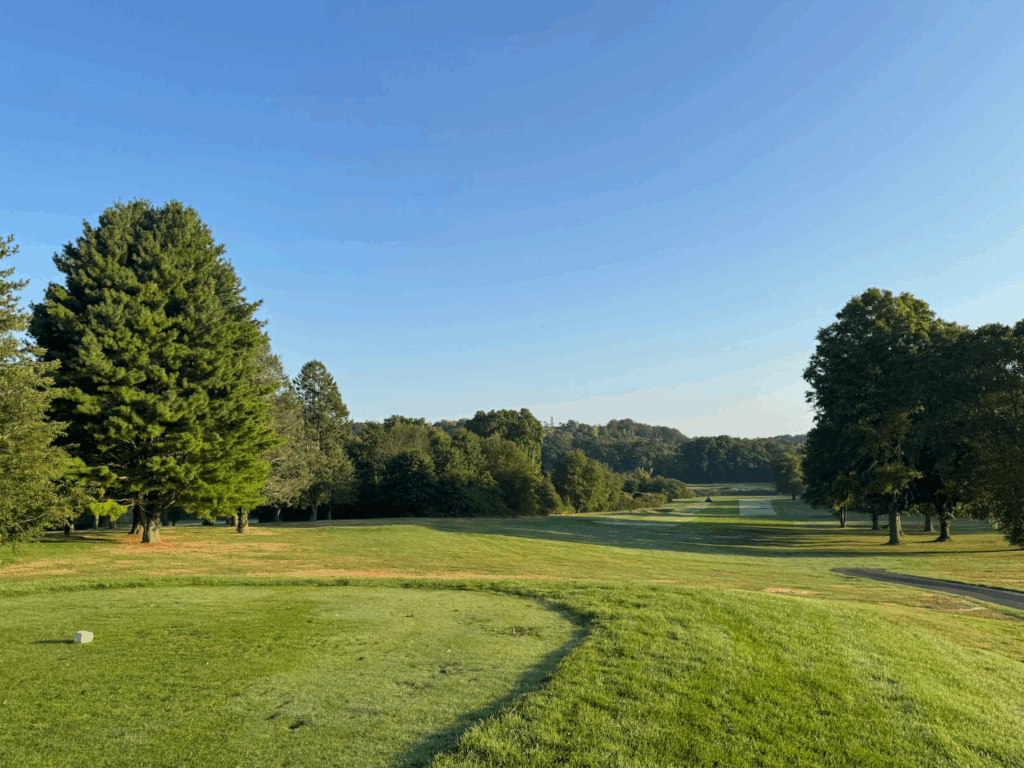
    Beautiful wide-open fairways

    For fit golfers who regularly walk courses, Alling Memorial remains manageable and the elevation changes create memorable moments worth the physical effort. The dramatic tee shot from the elevated 10th tee and the blind drive on 14 provide visual rewards for those willing to hoof it. However, this is decidedly not a flat, easy municipal walk. Carts are advisable in hot weather, for afternoon rounds when fatigue accumulates, or for anyone with mobility concerns. The three-hour pace for walkers is reasonable, but expect to feel it in your legs by the time you reach the clubhouse.

    Strategic Test

    The genius of Pryde’s routing lies in forcing genuine decision-making on virtually every hole. Each of the eighteen holes presents what reviewers describe as distinct puzzles to solve, with none feeling routine or formulaic. The course demands you shape shots both ways—draws and fades—to navigate trouble and score well. From the back tees at 6,248 yards, the course plays to a 132 slope, but length isn’t the primary defense. Instead, strategic variety creates the challenge through elevation changes, false-front greens, blind approaches, and constantly shifting risk-reward equations. The tempting 256-yard fifth hole epitomizes risk-reward architecture—driver might reach the green for an eagle opportunity, but disaster lurks for the mishit.

    Many blind shots like this one on hole 11

    Consider the strategic variety across the back nine’s most memorable holes. The eleventh hole, a 490-yard par 5, exemplifies the course’s use of blind shots—you can’t see the flag from the fairway, but local knowledge teaches you to aim at the middle tree as your target. The gentle elevation change masks the difficulty of judging your approach distance. The thirteenth hole presents a genuine beast for beginners: a dogleg left where the flag remains invisible from the tee, followed by an uphill slog that punishes any tee shot that doesn’t clear the corner. Even successful drives leave a demanding uphill approach to an unseen target.

    The fourteenth hole delivers the round’s most exhilarating moment. This 430-yard par 4 demands commitment from the elevated tee—you need at least a 200-yard forced carry to reach the fairway beyond the downhill slope. Success rewards you with a spectacular feeling as your ball soars over the abyss, but anything short tumbles down the face. It’s the kind of shot that stays with you, win or lose. The fifteenth continues the blind shot theme dramatically: at 510 yards total, your tee shot travels 408 yards before encountering a blind hazard, leaving just over 100 yards to a flag you can’t see from anywhere on the hole. This creates a unique experience where trust and course knowledge matter more than raw distance—you’re essentially playing two separate shots with no visual connection between them.

    Very thick rough throughout course make it critical to stay in fairways

    Playability

    Despite its strategic demands, Alling Memorial achieves that rare balance of challenging accomplished players while remaining accessible to higher handicappers. The slope ratings tell the story: 132 from the back tees, dropping to 127 from the middle tees (5,877 yards), and just 115-118 from the forward tees (5,191 yards). This seventeen-point slope differential between championship and forward tees illustrates how proper tee selection can transform the playing experience. The fairways prove notably generous—wide enough to accommodate the occasional wayward drive while still rewarding accuracy with better angles into greens.

    Hole 10 is very playable for beginners but still preserves strategic suspense

    The third hole exemplifies this dual nature perfectly. From the back tees, it’s a demanding par 4 requiring a precise drive to avoid water and set up the approach. High-handicappers playing appropriate tees find the same hole much more forgiving, with the water hazard out of range and a shorter approach that doesn’t require a perfect strike. The rough throughout the course stays playable—you can find your ball and advance it toward the target, though recovery requires some skill. Multiple players report dramatic score improvements on their second round as they learn the sight lines for blind shots and proper angles into greens.

    The par 3s present the stiffest challenge for higher handicappers, averaging 194 yards with two holes exceeding 200 yards—the 204-yard twelfth and the 211-yard seventeenth. That seventeenth hole features the most penal rough on the entire course—miss the green here and you’re facing a genuine challenge just to find your ball, let alone advance it effectively. From forward tees, these distances become more manageable, but they still demand solid ball-striking. The key for higher handicappers is accepting that bogey represents a good score on these longer one-shotters. Meanwhile, the two sub-500-yard par 5s (the 490-yard eleventh and 486-yard eighteenth) offer legitimate birdie opportunities for anyone who can drive the ball 240-250 yards, providing crucial scoring chances to offset the demanding par 4s.

    Atmosphere

    The playing surfaces at Alling Memorial create a genuinely attractive golf experience, particularly on the back nine which multiple reviewers praise as surprisingly picturesque. The natural terrain provides constant visual interest through elevation changes, sloping fairways that add character, and varied topography that makes each hole feel distinct. Water features, patches of heather, and mature trees frame the fairways, creating a relaxing backdrop for the round. The grounds crew maintains the actual golf course in solid condition—lush fairways, well-watered despite August heat, and quick, true greens that hold approach shots while rewarding good strikes with appropriate spin

    Have never seen such high foliage hiding the green, but it looks amazing!

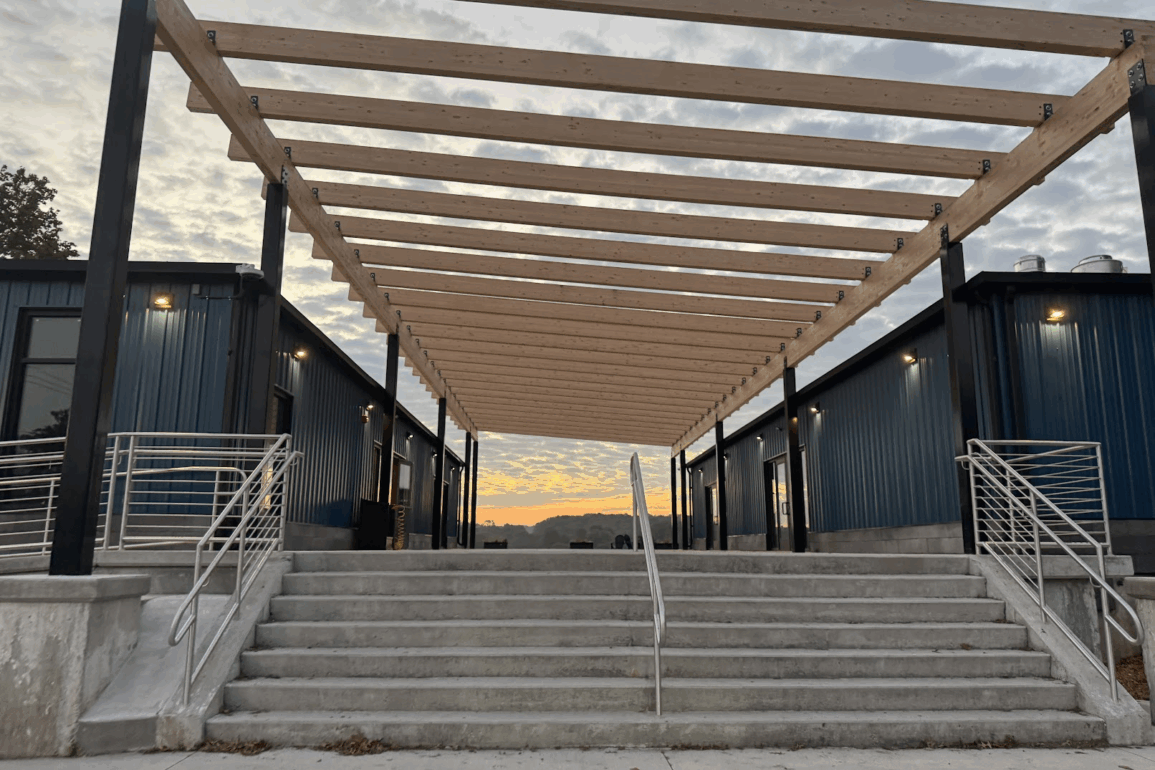
    The facility recently underwent a major transformation with a brand new clubhouse that opened its restaurant in late September 2025. The modern structure features an impressive open-air design with exposed wooden beams creating a pergola effect, flanked by contemporary buildings with corrugated metal siding and warm lighting. This dramatic architectural upgrade signals a new era for Alling Memorial, though some remnants of the old facility remain—the perimeter fencing still appears sketchy in places, suggesting the renovation is ongoing. The contrast between the striking new clubhouse and the older elements creates an interesting transitional moment for the course.

    The eighteenth hole encapsulates both the course’s scenic qualities and its exciting transformation. This 486-yard par 5 plays slightly downhill, offering a panoramic view across the property from the elevated tee. The fairway sweeps left around a grove of mature oaks, with the green complex visible in the distance—a genuinely attractive finishing hole that tempts aggressive players to go for the green in two. Walking off the final green toward the impressive new clubhouse provides a fitting conclusion. The modern structure’s open-air design frames views back across the course, creating a welcoming atmosphere that finally matches the quality of the golf. With the restaurant now open and the facility clearly investing in its future, Alling Memorial feels like a course on the rise rather than one in decline.

    Final Word

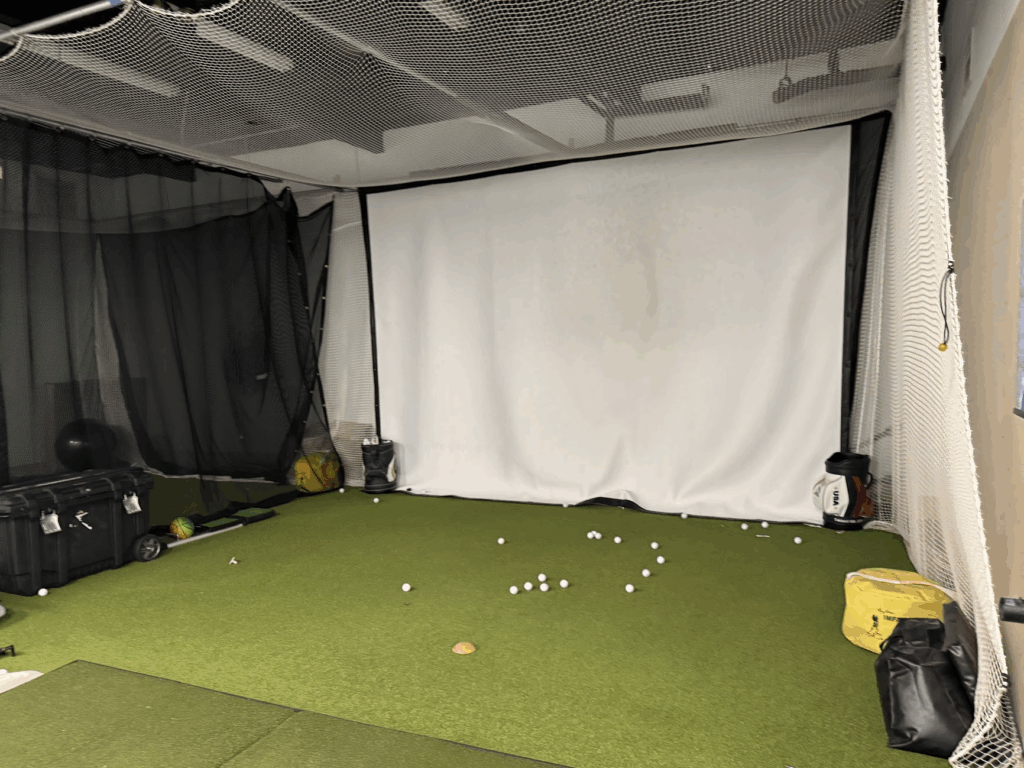
    I’ll be honest—when I first pulled into Alling Memorial’s parking lot and saw the sketchy perimeter fencing, I had mixed expectations. But then I walked through the stunning new clubhouse with its soaring pergola design and modern aesthetic, and realized this course is in the midst of an exciting transformation. The September 2025 restaurant opening signals serious investment in the facility’s future, not to mention the brand new Trackman simulator. Also, with exception of the VUE in Hamden, this place offers some of the earliest tee times in Connecticut, which is perfect for those with busy weekends. This is authentic golden-age architecture at its finest, a thinking golfer’s course where every shot matters and no two holes play the same. The strategic variety rivals courses charging three times the price—from blind shots on holes 11 and 15 where you’re aiming at trees and hoping, to the exhilarating forced carry on 14 that demands a 200-yard commitment shot over a dramatic slope.

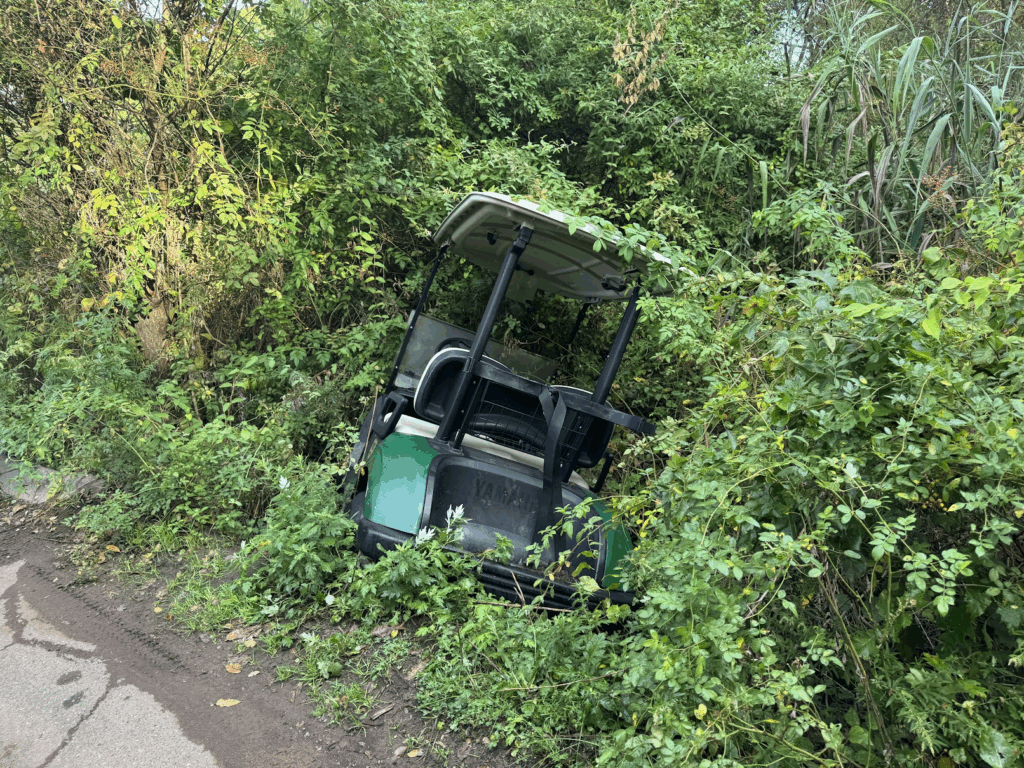
    Hole 14 decline was clearly too much for whoever was driving this cart

    Compared to other Connecticut publics, Alling Memorial offers more strategic interest than the conditioning-focused Tradition at Oak Lane down in Woodbridge, and significantly more character than the straightforward Orange Hills Country Club just fifteen minutes away. What sets Alling apart is its refusal to apologize for what it is—a municipal course with championship pedigree that hosted numerous USGA and Connecticut Golf Association events. Robert D. Pryde, who learned his craft at Scotscraig near St. Andrews before designing courses throughout New England, created something special here in 1930. The bones remain exceptional, and now with the new clubhouse, the facility is finally getting the investment it deserves.

    The combination of legitimate architecture, brand new amenities, and municipal pricing makes this an exceptional value. I found myself completely lost walking from 14 to 15, struggled through the thick rough on 17, and cursed the blind shots on 11, 13, and 15—yet I can’t wait to return. That’s the mark of a course worth playing repeatedly—it reveals itself slowly, rewarding local knowledge and thoughtful play over bomb-and-gouge golf. With the new clubhouse adding a touch of class to go with the classic architecture, Alling Memorial is transforming from hidden gem to legitimate destination. Just remember to aim for that tree on 11, commit fully to the carry on 14, and bring an extra ball for the jungle rough on 17.

  • Fox Hopyard Golf Club Review

    Fox Hopyard Golf Club Review

    Fox Hopyard Golf Club is a private par-71 course measuring approximately 6,912 yards from the tips. The course was originally designed in 2001 by Roger Rulewich and is located in East Haddam, Connecticut.

    Impressive elevation changes on hole 4 [172-yd par-3]

    Sprawling across 530 acres of quintessential New England terrain, Fox Hopyard presents a masterful study in routing through diverse topography that includes rolling hills, dense forest, wetlands, and dramatic rock outcroppings. Rulewich’s design philosophy shines through in every corridor, emphasizing precision and strategic thinking over brute force—a refreshing departure from the bomb-and-gouge mentality that plagues modern championship courses. The routing seamlessly weaves through varied ecosystems, creating what feels like multiple courses within one round, from mountain-style elevated tees to lowland marsh crossings. This is a thinking golfer’s paradise that rewards course management and punishes the careless, making it ideal for players who appreciate cerebral shot-making over pure distance.

    Walkability

    Fox Hopyard’s 530-acre footprint presents an invigorating walking experience that, while physically demanding, rewards ambitious pedestrians with an intimate journey through some of New England’s most spectacular golf terrain. The dramatic elevation changes that define the course’s character—most notably the breathtaking 90-foot plunge on the signature 4th hole—create a dynamic vertical adventure that transforms a simple round of golf into a hiking expedition through diverse ecosystems. The front nine’s series of climbs on holes 2 and 3, where the par-4 second plays significantly longer than its 383-yard measurement due to the sustained uphill grade, followed immediately by the similarly elevated par-5 third, provides an exhilarating sense of accomplishment as players conquer the property’s most challenging terrain.

    Beautiful combination of woodlands and meadows

    What truly elevates the walking experience are the course’s thoughtfully crafted bridges and passageways that guide players through the natural landscape with both functionality and aesthetic beauty. These lovely structural elements—ranging from rustic wooden bridges spanning babbling brooks to stone pathways navigating wetland areas—transform potentially challenging transitions into memorable moments of connection with the property’s natural features. The routing efficiency showcases Rulewich’s mastery in creating flowing corridors that feel like discovered paths rather than imposed walkways. Green-to-tee transitions, while involving substantial elevation changes, unfold as a series of scenic reveals, with the walk from the elevated 4th green down to the 5th tee offering particularly stunning vistas of the surrounding Connecticut River valley.

    Plenty of beautiful well-maintained water features

    The course’s integration with wetlands and natural rock formations creates walking routes that follow natural contours, turning what could be mere functional transitions into mini-adventures through varied terrain. The back nine offers more manageable elevation changes while maintaining the property’s scenic character, providing welcome relief after the front nine’s mountain-style challenges. Even when cart path restrictions during wet conditions require additional walking, the well-maintained bridges and pathways ensure safe, comfortable passage while enhancing the overall experience of moving through this remarkable landscape. For those who choose to walk Fox Hopyard, each step reveals new perspectives on one of Connecticut’s most thoughtfully designed golf environments.

    Strategic Test

    Fox Hopyard excels in presenting genuine strategic dilemmas rather than artificial hazard placement, with nearly every hole offering meaningful choices that reward both bold and conservative play styles. The course’s design philosophy centers on what Rulewich himself describes as “precision over power,” creating scenarios where angle of approach matters as much as distance. Multiple corridor widths and varied green complexes ensure that different handicap levels can find appropriate risk-reward ratios, while the prevalence of forced carries—particularly over wetlands—adds consequence to poor execution without becoming unfair.

    Fantastic blind narrow corridor on hole 12

    Hole 12 exemplifies the course’s strategic depth, presenting players from the championship tees with a beautiful risk-reward proposition involving a carry over dense, autumn-foliaged wetlands. Conservative players can bail out to the right side of the fairway, accepting a longer approach but eliminating the hazard from play entirely. This strategy typically leaves a 7 or 8-iron to a relatively open green complex. However, bold players who challenge the wetlands with a left-center tee shot—requiring precise distance control and perhaps a controlled draw to follow the fairway’s natural curve—are rewarded with a much more favorable approach angle and a shorter club, often just a wedge or 9-iron. The punishment for missing left is severe (penalty stroke and difficult recovery), while missing right merely leaves a longer second shot from a less advantageous position.

    Massive greens are more challenging than they initially appear

    The strategic complexity deepens on approach shots, where green contours and pin positions create secondary decisions. Hole 5’s massive, undulating putting surface presents multiple target areas depending on flag placement, with approaches that miss in the wrong sections leaving virtually impossible two-putt scenarios. The course consistently rewards players who think two shots ahead, particularly around the green complexes where recovery shots require as much strategic consideration as full swings. This emphasis on sequential decision-making, combined with the course’s varied elevation changes and natural hazards, creates a strategic test that remains engaging across multiple rounds rather than becoming predictably repetitive.

    Playability

    Fox Hopyard brilliantly demonstrates how championship-caliber design can embrace rather than exclude players of varying abilities, with its 74.1/136 rating from the tips telling only part of the story. The course features exceptionally well-conceived multiple tee options on most holes, with forward tees positioned to provide optimal angles and distances that create genuine strategic interest rather than simply shortened versions of the same challenges. This design philosophy reaches its pinnacle on hole 8, where the red tees are positioned just 78 yards from a green protected by two bunkers and a water hazard. Far from creating a token short hole, this setup provides shorter hitters with a perfectly scaled strategic challenge that mirrors the decision-making faced by longer players—club selection becomes genuinely critical as players must carry both hazards while navigating a green-side bunker complex that rewards precision over power.

    Hole 8 is fantastic from the red tees

    The course’s fundamental emphasis on precision over power creates a welcoming environment for higher-handicap players who understand course management, even if they lack significant distance. Fairway corridors, while often dramatically framed by trees and natural features, provide generous landing areas for those who keep their tee shots in play, and the strategic hazard placement consistently offers multiple routes of attack depending on player capability and risk tolerance. Forced carries, rather than feeling punitive, are scaled appropriately from each tee position and often provide thrilling moments of accomplishment when successfully navigated—particularly on holes like the 2nd, where conquering the wetland crossing from any tee creates a genuine sense of achievement.

    The sophisticated green complexes, while featuring significant undulations and slopes that reward precision, are maintained at speeds that emphasize strategic putting over pure difficulty. This approach allows players of all abilities to appreciate the subtleties of Rulewich’s green designs without being overwhelmed by lightning-fast surfaces that punish even well-struck putts. The thoughtful pin placement options and absence of artificially penal features mean that patient, strategic play consistently yields rewarding results for players who select appropriate tees and manage their expectations realistically. Fox Hopyard succeeds brilliantly in the challenging balance of providing a stern test for accomplished players while remaining genuinely enjoyable for those still developing their games.

    Atmosphere

    Fox Hopyard achieves a rare atmospheric consistency across its diverse terrain, creating an immersive New England golf experience that feels both wild and refined. The course’s 530-acre canvas encompasses virtually every landscape element that defines the region—from dense hardwood forests and meandering brooks to expansive wetlands and dramatic granite outcroppings—yet Rulewich’s routing ensures these elements feel cohesive rather than disparate. The overall effect is of a course that grew organically from its surroundings rather than being imposed upon them, with each hole corridor feeling like a natural clearing discovered rather than carved from the landscape.

    Gorgeous views abound at the course

    The visual progression throughout the round maintains consistent excellence, with particularly stunning moments where the routing takes advantage of elevation changes to create dramatic reveals. Hole 17 exemplifies this approach, offering serene water views that provide both visual beauty and strategic complexity as players navigate the final stretch toward the clubhouse. The course’s integration with Devil’s Hopyard State Park creates a sense of playing through protected wilderness, with the sounds of running water and dense forest providing a natural soundtrack that enhances the experience of escaping into the New England countryside.

    Hole 4 stands as the course’s atmospheric masterpiece, combining dramatic elevation change with strategic challenge to create an unforgettable golf moment. The 90-foot descent from the elevated tee complex—which resembles a layer cake with its multiple tee options—provides a breathtaking panorama of the surrounding landscape while presenting one of Connecticut’s most visually striking golf shots. The green, nestled in a natural amphitheater and protected by four strategically placed bunkers, creates a target that feels both inviting and intimidating. This hole encapsulates Fox Hopyard’s ability to marry natural beauty with thoughtful design, creating moments that linger in memory long after the round concludes. The transition from this dramatic downhill experience to the subsequent uphill challenges demonstrates the course’s dynamic range and its commitment to providing varied emotional experiences throughout the round.

    Final Word

    Fox Hopyard stands as Roger Rulewich’s crowning design achievement, masterfully balancing world-class strategic complexity with stunning natural beauty and exceptional playability across all skill levels. The course’s recent elevation to private status has enabled meticulous conditioning and refined attention to detail that transforms an already outstanding architectural foundation into a facility that rivals New England’s most prestigious golf destinations. What distinguishes Fox Hopyard from respected regional competitors like Ridgewood Country Club in Danbury or TPC River Highlands in Cromwell is its extraordinary harmony with natural terrain and its sophisticated emphasis on strategic variety over manufactured difficulty. While TPC River Highlands relies on water hazards and forced carries for challenge, Fox Hopyard employs elevation change, natural corridors, and brilliantly conceived green complexes to create a more nuanced and rewarding test of golf skills and decision-making.

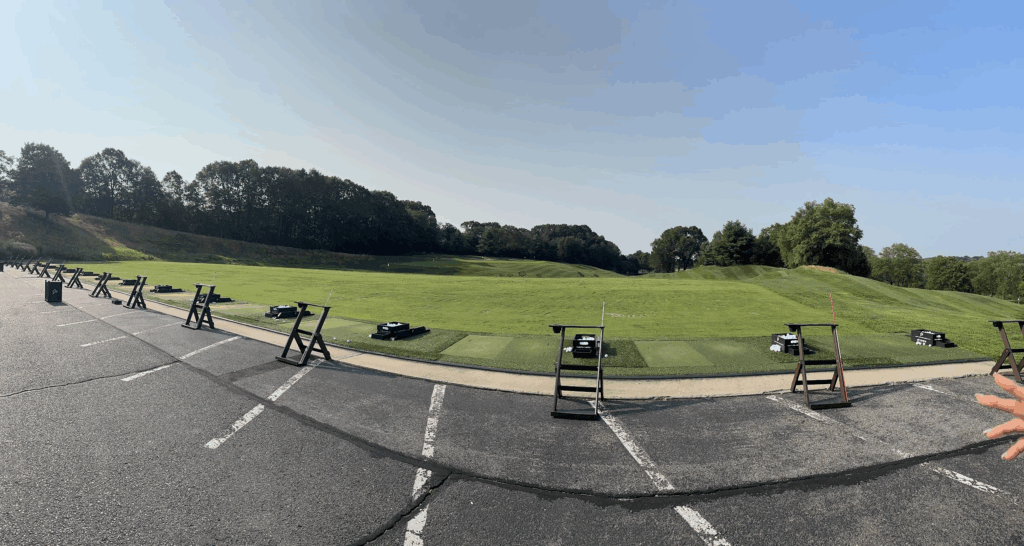
    Excellent grass driving range and short-game/putting area

    The course’s inspired routing through Connecticut’s diverse ecosystems creates what feels like a curated journey through multiple distinct golf experiences, from the exhilarating mountain-style elevated tees of the opening stretch to the contemplative lowland wetland crossings that define the middle portion of the round. This remarkable variety, enhanced by Rulewich’s unwavering commitment to precision over power, ensures that Fox Hopyard delivers fresh discoveries and renewed challenges across countless rounds while consistently rewarding thoughtful course management and strategic thinking. The exemplary attention to detail—particularly evident in areas like the inclusive design of hole 8’s red tees and the lovely bridges and pathways throughout—demonstrates a rare commitment to providing exceptional experiences for every golfer rather than simply creating an elite test that excludes average players. Fox Hopyard achieves that most elusive goal in championship golf design: a course that thoroughly challenges accomplished players while genuinely welcoming and rewarding those who approach it within their capabilities, creating memorable experiences that transcend mere scorekeeping.

  • Great River Golf Club Review

    Great River Golf Club Review

    Great River Golf Club is a semi-private par-72 course measuring approximately 7,060 yards from the tips. The course was originally designed in 1999 by Tom Fazio and is located in Milford, Connecticut.

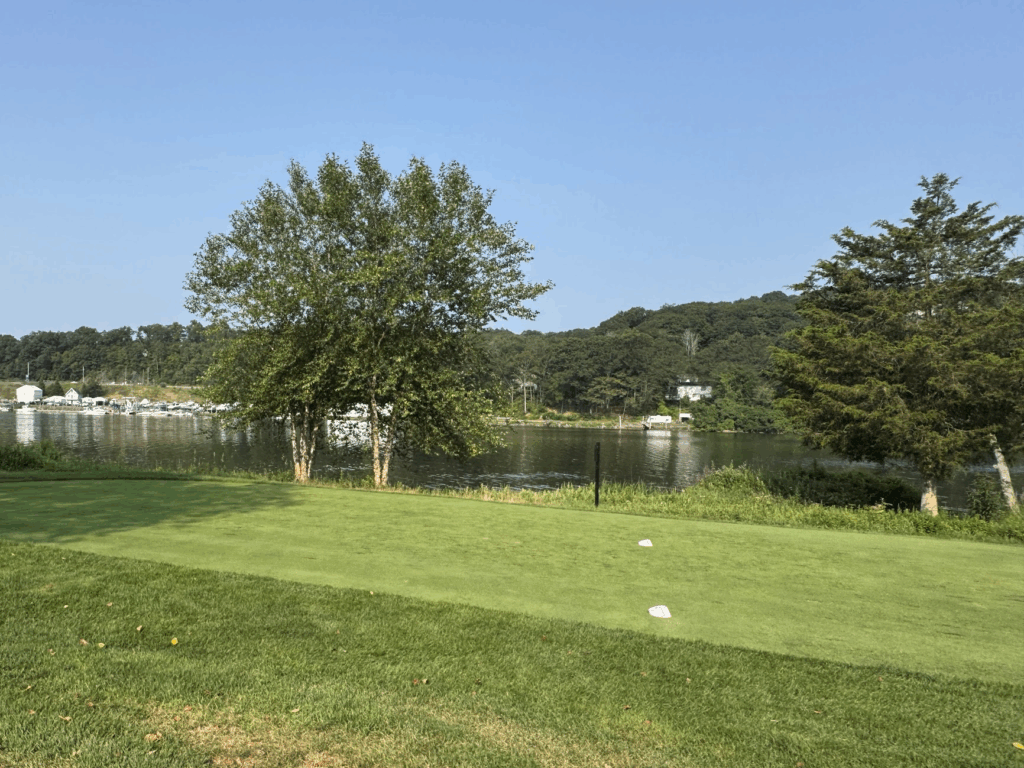
    Gorgeous river views

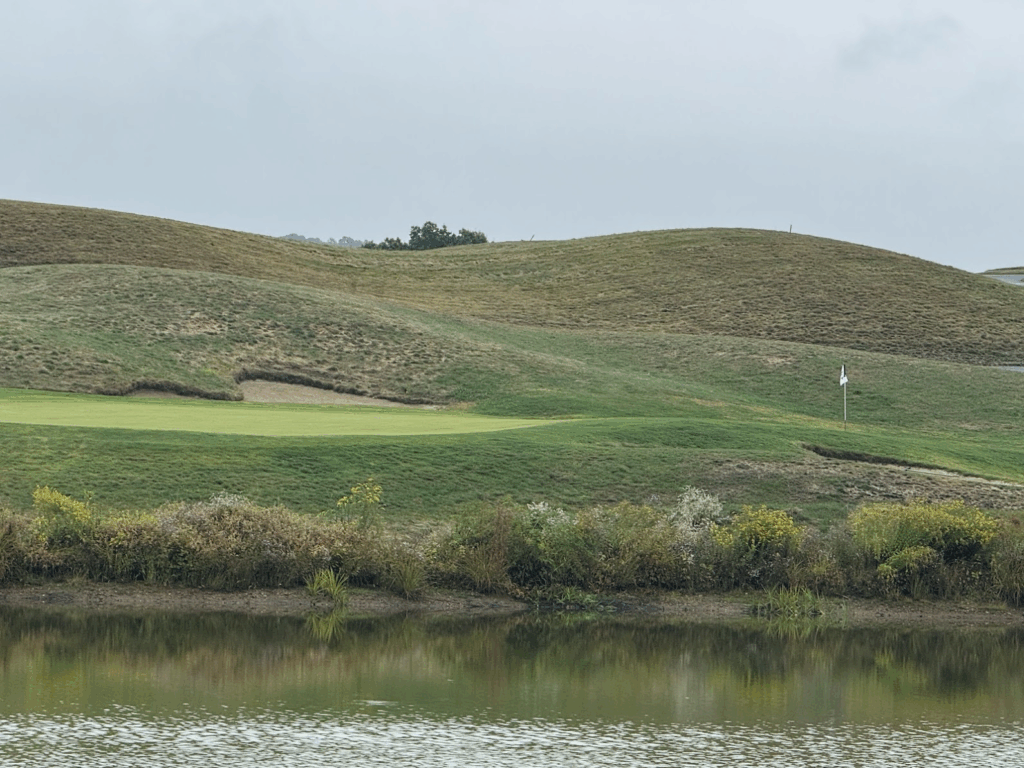
    Set on roughly 190 acres along a 1.5-mile stretch of the Housatonic River, the routing is constrained by the property’s narrow geometry, resulting in seventeen of eighteen holes running predominantly north-south. This creates parallel corridors with recurring water interplay, particularly on the front nine where six holes play along the river. The terrain is mostly gentle river plain, with engineered elevation around select push-up greens—notably the third and twelfth—that add defensive contour and visual interest. The design vibe blends penal water edges with calculated angles into tiered greens, creating an accuracy-first test that rewards shotmakers who understand trajectory control and spin management into back tiers. Players who enjoy solving approach problems, working the ball into correct quadrants, and choosing between conservative and aggressive fairway lines will find the strategic bones compelling.

    Beautiful elevated greens

    Great River opened in 2001 as an ambitious high-end daily-fee facility with a reported construction investment exceeding $40 million, but original ownership struggled with debt service despite the property’s quality. Sacred Heart University acquired the course in late 2015, transforming it into the home course for their Division I men’s and women’s golf programs while maintaining semi-private public access. Under university stewardship, conditioning has improved significantly, with Superintendent Curtis bringing experience from Darien Country Club to maintain championship-caliber bentgrass surfaces. The facility now hosts the LPGA Epson Tour Hartford Healthcare Women’s Championship and multiple USGA qualifying events, lending tournament credibility to the layout. One significant operational change reversed the original nine designations—what was initially the back nine now serves as the front, eliminating an awkward opening par-3 and creating more conventional pacing. Strategic Monday closures for maintenance and outings protect agronomic quality while the course remains open six days weekly for public play.

    Walkability

    Great River’s walkability stands out as a signature strength for a 7,060-yard championship layout. The compact 190-acre footprint ensures green-to-tee transitions remain short and logical, with both nines returning to the clubhouse for convenient pacing and hydration. The predominantly flat river-plain terrain minimizes elevation gain across most holes, with only the climbs to the elevated third and twelfth greens introducing cardiovascular effort without straining stamina. Mature tree lines provide generous shade along many corridors, making summer walking comfortable. The routing flow encourages steady rhythm, never forcing awkward detours or long cart-path marches that interrupt concentration. Even during busy play, the layout prevents major congestion points, though the eighth-to-ninth transition along the water’s edge can create brief bottlenecks when groups pause to admire the fountain at nine.

    Gentle elevation make the course friendly for walkers

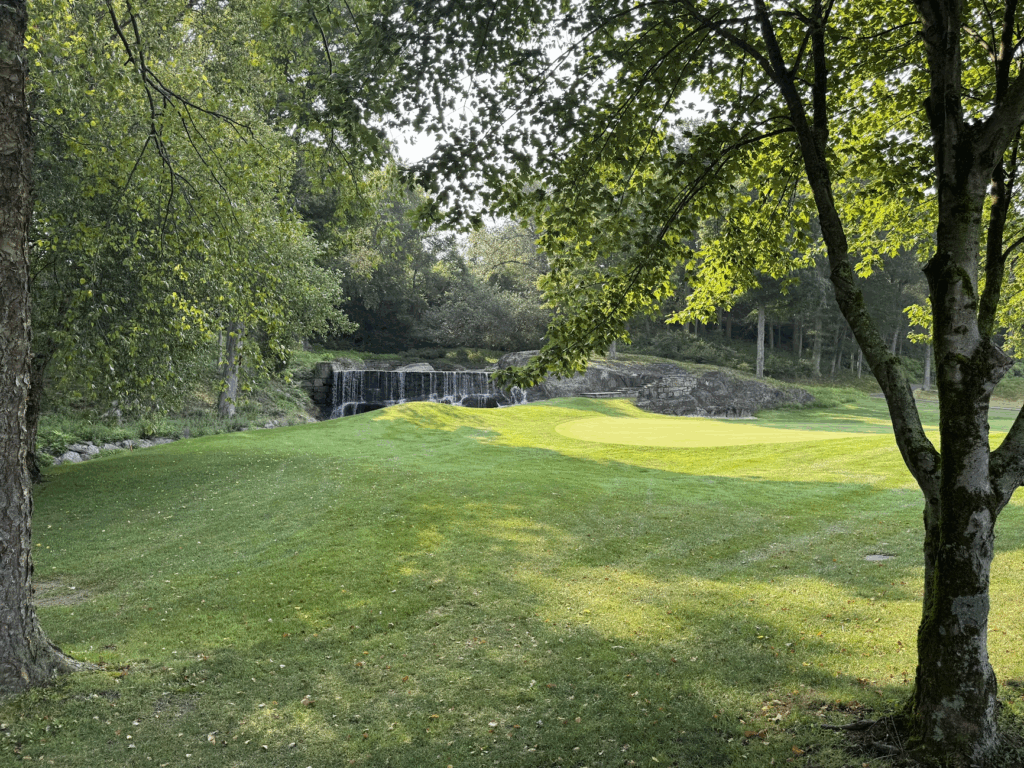
    The opening stretch from holes one through four establishes walker-friendly character immediately. The first is a mid-length 352-yard par-4 with water influence right; the second sits just steps away, framed by a thirty-foot waterfall next to the green that creates both visual drama and functional bridge-crossing to the putting surface. The third hole, a demanding 498-yard par-5, returns slightly inland to an elevated green, making you feel subtle topography changes that engage the legs without taxing stamina. The fourth shifts play laterally without requiring a long walk, demonstrating efficient routing that respects energy budgets. This loop benefits from shade along fairway edges and minimal cart-path interaction, preserving natural flow. By the fourth green, you’re warmed mentally and physically without feeling hurried or fatigued—a rhythm that continues through the round, making walking the optimal way to experience the course’s strategic subtleties.

    Halfway house offers refreshments at the turn

    Strategic Test

    Great River presents a thinking player’s course through consistent questions of line and angle, making club selection and ball placement paramount. Hazards are positioned with intent, often dictating not just direction but trajectory. On many holes, the ideal landing zone changes with pin location, forcing adaptability rather than allowing robotic execution. The stretch from three to eight is particularly strong, blending reachable par-5s with demanding par-3s and par-4s where shot shape matters significantly. The river’s proximity influences wind on certain holes, adding subtle complexity to club selection. Bunkering appears well-placed rather than ornamental, making avoidance a strategic priority. Angled greens often reward approaches from one side of the fairway while punishing the opposite angle with reduced visibility or tricky slopes. The design rewards discipline but still allows boldness when execution matches confidence, creating robust strategic dimension that challenges low handicaps while offering clear options for higher-handicap players.

    Wide fairways can be deceptive

    The sixth hole, a 518-yard par-5, serves as the strategic centerpiece. From the back tee, a 190-yard carry over water feeds into a fairway drifting left along the river. Aggressive players can attack the tight turning line with driver, bringing the hazard into play but setting up a mid-iron or hybrid second shot at the ideal approach angle—this route rewards precise execution with eagle chances but punishes the slightest pull with watery penalty. Conservative players can choose 3-wood to the fairway’s center-right, keeping the hazard out of play entirely. From there, they face a second decision: push past the large fairway bunker to leave a comfortable wedge, or lay up further back for a fuller view into the green. The green itself is guarded by water left and bunkers right, making pin location dictate strategy—a front pin from the aggressive line is a green light, while a back-right pin requires a high, spinning shot or clever bump-and-run. Wind from the river adds unpredictability, forcing constant adjustments in trajectory and club selection. This hole embodies the risk-reward balance that defines Fazio’s work here, remaining compelling for all skill levels.

    Easy to hook shots into water for multiple holes

    Playability

    While built to tournament specifications with a slope rating of 146 from the Black tees (74.6 rating), Great River maintains accessibility through thoughtful tee placement and open green fronts. The course offers five tee options: Black (7,060 yards, 74.6/146), Blue (6,707 yards, 72.8/142), White (6,313 yards, 70.2/135), and Red (4,997 yards, 70.5/127). These differentials mean a 15-handicapper from the Whites faces similar scoring expectations as a 5-handicapper from the Blacks—the course scales appropriately across abilities. Fairways are generous enough to receive well-struck drives without being so wide as to remove accuracy requirements. Forward tees are positioned to remove or shorten forced carries on several holes, allowing newer golfers to play without intimidation. Greens are large, well-conditioned, and receptive to various shot types, from high approaches to bump-and-run recoveries. The conditioning—firm fairways, smooth greens, consistent bunker sand—contributes significantly to playability, while visual intimidation from water or bunkers is often tempered by actual safe bailout zones.

    Multiple forward tees available

    The second hole, a 214-yard par-3 from the back but approximately 150 yards from forward tees, exemplifies inclusive design philosophy. From the tips, it’s a long-iron or hybrid over water with the waterfall adding psychological pressure. From the forward tees, it becomes an inviting mid-iron that feels achievable without being a pushover. The green is generous in its middle and front sections, receiving shots with enough forgiveness to keep mid- and high-handicappers engaged. Misses short remain playable in fairway-height grass, and right-side chipping areas are maintained at fairway height for recovery variety. The hole introduces players early to the course’s conditioning quality—smooth bentgrass surfaces and firm-but-receptive greens. Visually, the waterfall creates a memorable backdrop that’s welcoming for beginners from forward tees yet nerve-wracking for accomplished players attempting back-pin locations. This balance ensures players of all abilities start their round with confidence rather than frustration, setting the tone for a challenging but fair examination.

    Atmosphere

    The atmosphere at Great River blends polished refinement with genuine riverfront beauty. The course feels secluded despite its compact routing, with many holes offering isolation framed by mature trees and water. Sound plays a significant role—the rush of the river near certain greens, the soft splash of the waterfall at the second, and the rustle of leaves along shaded corridors enhance immersion. Conditioning adds atmospheric weight, with vibrant bentgrass fairways contrasting against deep greens of the tree line and soft tan fescue. Stone walkways, walls, and bridges on holes two, four, seven, ten, and twelve through eighteen accentuate charm while serving functional purposes. Tournament history, including hosting the LPGA Epson Tour Hartford Healthcare Women’s Championship, adds prestige without creating pretension. Social energy comes from active senior and women’s leagues, yet the course remains tranquil during casual weekday rounds. It’s a place where the environment enhances focus and enjoyment rather than distracting from the game.

    Pretty waterfall on hole 2

    The fifteenth hole stands as the emotional high point of the round. This 155-yard par-3 is framed by the river, featuring a walkway and bridge that turn the journey to the green into an experience of its own. From the tee, the visual composition—water in the foreground, mature trees framing the sides, and the green perched just beyond—creates anticipation. The bridge itself offers a moment of pause, allowing you to absorb the setting before stepping onto the putting surface. During tournaments, this hole often serves as a hole-in-one contest location, adding extra excitement. The sounds of the river and sense of isolation from other holes amplify the atmosphere. It’s the kind of hole that sticks in memory not just for design quality but for the complete sensory package it delivers—even players who struggle here tend to leave with smiles, having experienced one of Connecticut’s most photogenic and well-crafted moments in golf architecture.

    Hole 15 is one of the most beautiful in CT

    Nearby Course Alternatives

    Lake of Isles North Course in North Stonington, approximately 50 minutes east of Great River, offers Connecticut’s most dramatic public golf experience. Designed by Rees Jones and opened in 2005, this championship layout stretches to 7,279 yards from the tips with a slope rating of 147 and course rating of 76.4. Set on roughly 90 acres adjacent to Foxwoods Resort Casino, the course occupies less acreage than Great River but uses vertical rather than horizontal space to create separation and drama. Where Great River relies on water interplay and strategic angles on relatively flat terrain, Lake of Isles North attacks through relentless elevation changes, island greens, and rocky outcroppings. The signature second hole—a downhill par-3 to an island green surrounded entirely by water—establishes theatrical character immediately. The back nine winds aggressively through Connecticut woodland with numerous holes requiring precise distance control on elevated approaches. Lake of Isles consistently ranks as Connecticut’s best public course, earning its reputation through tournament conditioning, memorable architecture, and challenge that separates accomplished players from weekend warriors. Players who enjoy dramatic elevation changes, visually stunning holes, and a test demanding every club in the bag will prefer Lake of Isles North over Great River’s more measured examination.

    Gillette Ridge Golf Club in Bloomfield, approximately 45 minutes north of Great River, presents Arnold Palmer’s design philosophy in the only public Palmer course in the Northeast. Opening in 2004, the course measures 7,191 yards from the Black tees with a slope rating of 140 and course rating of 74.5—comparable to Great River in length and difficulty but achieving its challenge through different architectural means. Set on the Cigna headquarters campus and managed by Arnold Palmer Golf Management, the course occupies more expansive acreage and uses that space to create wider corridors and more generous landing areas. Where Fazio emphasized precision and angles at Great River, Palmer’s design prioritizes strategic variety through terrain manipulation: tree-lined fairways, spectacular forced carries over wetlands and streams, and natural obstacles derived from mature forests of maple, oak, and elm. Wetlands come into play on nearly half the holes, requiring thoughtful club selection without the constant water presence that defines Great River’s front nine. The second hole, a true risk-reward par-5, showcases Palmer’s philosophy of offering multiple routes to success. Gillette Ridge excels for players who appreciate more forgiving fairways off the tee but still want demanding approach play into well-defended greens. High-handicappers who prefer tree-lined definition over water hazards will find Gillette Ridge the more enjoyable test.

    Final Word

    I’ve played Great River multiple times since Sacred Heart University’s acquisition, and each visit reinforces why this property deserves its reputation as one of Connecticut’s premier semi-private facilities. The practice infrastructure immediately impresses: two indoor teaching bays with simulator technology under longtime instructor Tom Rosati’s guidance, a beautifully maintained chipping area, and a true-rolling putting green that encourages thorough pre-round warmup. The driving range offers both grass and mat hitting areas with distance markers for focused practice. Inside, spacious locker rooms with recently renovated showers and a shoe-shine station reflect attention to detail, while the full-service restaurant and private ten-person dining room elevate the experience beyond typical public golf. Chef Eddie’s grab-and-go counter has earned particular reputation for breakfast sandwiches worth arriving early to secure. Large ballrooms accommodate corporate meetings and tournament banquets, while 15-day advance tee-time booking provides planning flexibility without dawn wake-up calls for weekend slots.

    Large putting green with fountain in background

    Where Great River distinguishes itself from Lake of Isles North and Gillette Ridge is the seamless integration of championship golf with genuine hospitality infrastructure. Lake of Isles offers superior dramatic terrain and resort-casino convenience but lacks Great River’s refined clubhouse depth. Gillette Ridge delivers Palmer pedigree and potentially better playability but operates more as a daily-fee facility without Great River’s tournament hosting credentials or professional amenities. Great River occupies ideal middle ground—accessible enough to book and play without membership hassles, yet polished enough to feel like a private club experience from arrival to departure. The course itself provides ample challenge from the tips with its strategic sixth, memorable fifteenth, and demanding par-3 collection, while remaining playable from forward tees. The riverfront setting, mature landscaping, and championship conditioning create an atmosphere where every element reinforces quality without ostentation. For thinking players who appreciate strategic golf wrapped in refined amenities, Great River proves its value every round.

    Fantastic driving range with grass hitting areas
    Two indoor hitting bays with training aids
    Full service restaurant
    Well-furnished locker rooms

  • Oak Hills Park Golf Course Review

    Oak Hills Park Golf Course Review

    Oak Hills Park Golf Course is a public par-71 course measuring approximately 6,317 yards from the tips. The course was originally designed in 1969 by Alfred H. Tull and is located in Norwalk, Connecticut.

    Set across a compact property—likely under 130 acres—Oak Hills punches above its weight with terrain that moves meaningfully, especially on the front nine. The routing winds through tight wooded corridors, gradually relaxing into more open ground on the back. The course asks for precision early and rewards width and power later, favoring players who can adapt to changing demands. This is not a bomb-and-gouge course, but rather a thinking player’s test, one that prizes club selection, positional awareness, and ground-game creativity. Tull’s signature elements—pot bunkers, chipping-friendly surrounds, and just punishment for imprecise play—are all present here.

    Scenic woodland views

    Walkability

    Oak Hills is very walkable—an increasingly rare and welcome trait among public courses. The compact nature of the routing minimizes travel between holes, and while the front nine features moderate elevation shifts, it remains physically manageable for most players. Holes 1 through 6 play over hilly terrain with modest but noticeable climbs. The transition from green to tee on several holes—most notably from Hole 1 to Hole 2, and Hole 6 to 7—can be disorienting without a map. The back nine flattens considerably and is far easier on the legs. The walk is fluid, with minimal backtracking or excessive cart path sprawl. The course feels honest to the land, and Tull’s ground-first design philosophy lends itself beautifully to walking.

    • Pro: The opening loop (1–6) is a classic Tull showcase of terrain use. Hole 5 is a standout: a heroic par 3 over water, framed by wildflowers and guarded by intelligent pot bunkering. The walk here feels immersive and well-paced. Hole 1’s twin greens, sitting adjacent and framed by gentle slopes, immediately signal a creative and non-formulaic layout. The transitions on the back nine, especially from 10 through 13, are exceptionally efficient, encouraging a brisk pace.
    • Con + Fix: The routing from Hole 1 green to Hole 2 tee runs counterintuitively against flow and risks player confusion. Similarly, Hole 6 to 7 involves a disjointed shift with blind crossings that could use clearer signage or a small footpath extension. Better directional markings—or reorienting the Hole 2 tee slightly downhill toward the cart path—would solve the issue without altering hole integrity.
    Shared fairways create safety risk

    Strategic Test

    Tull’s routing at Oak Hills encourages thoughtful decision-making, especially where elevation and bunkering create angles of consequence. Shot values differ dramatically between holes, and many fairways narrow or bend at key landing areas. The mix of doglegs, blind shots, and elevation shifts keeps players calculating from tee to green. This is not a place where driver is always the right choice—club selection must account for elevation, fairway cant, and green orientation.

    • Pro: Hole 7 is a wonderfully complex short par 4 with a blind tee shot over a rise. Longer hitters might attempt a draw over the left corner to catch the downslope, leaving only a wedge in. Conservative players may aim center-right with a 3-wood or long iron, staying short of hidden bunkers but leaving a longer uphill second to a green that slopes back to front. The elevation change on approach requires precise distance control—miss long and you’re left with a delicate downhill chip. The green itself is angled slightly left-to-right, favoring those who approach from the left half of the fairway. Tull brilliantly uses this hole to contrast decision-making philosophies: take on the blind risk for position or play to safety and accept a tougher angle. Adding to the complexity, players can’t see the pin from the tee or even their own landing zone, forcing commitment to a shape and strategy without visual reassurance. This is strategic golf of the highest order—multi-dimensional, site-integrated, and evolving with repeat play.
    • Con + Fix: Hole 3 offers little in the way of strategic tension—a straight 147-yard par 3 with minimal shaping or hazard intrigue. Consider reshaping the green with a subtle diagonal axis and adding a central bunker front-right to create club selection anxiety and vary pin accessibility. Elevating the rear of the green slightly would also punish long misses and reward a high-spinning shot with more precision.
    Pretty terrain with water, slope

    Playability

    Oak Hills offers a fair test to mid- and high-handicappers, especially on the back nine where landing zones widen and green entrances allow for run-up shots. The course’s length is moderate, and most forced carries are avoidable with smart play. However, a few tee shots on the front can be penal to players without carry distance or shaping ability. There are minimal awkward lies in fairways, and greens generally offer accessible front openings.

    • Pro: Hole 14, a 205-yard par 3, is intimidating in yardage but generous in width and green depth. From the forward tees (~135 yards), the hole remains visually dramatic but entirely manageable. Short hitters can chase a ball up the slope, and the wide green accepts low-trajectory approaches. Holes like 10 and 11 also provide clear lines of play without overbearing hazards—ideal for learning or returning players.
    • Con + Fix: Hole 9, the 456-yard par 4, is a brute for short hitters even from the front tees. It plays slightly uphill and into prevailing wind, with a narrow approach guarded by bunkers. Introducing a fairway cut 60–80 yards from the green and repositioning a forward tee to reduce total length to 390–400 yards would add playability without compromising the hole’s stature. Additionally, a small bailout apron right of the green could offer recovery options for those laying up.
    Generous fairways aid beginners

    Atmosphere

    Oak Hills exudes local charm with a mix of natural tranquility and municipal bustle. The course is framed by mature woodland and dotted with wildflowers that soften the visual edges. While a few holes back up against community infrastructure, most of the property feels secluded enough to create moments of peaceful immersion. I particularly love the pond next to the clubhouse—it adds serenity to the turn and an anchoring focal point to the property. The wallflowers near the 5th green and again near the 12th tee create unexpected visual rewards.

    Wildflowers add visual charm
    • Pro: Hole 5 is perhaps the most picturesque on the course. The pond crossing is substantial but fair, with pot bunkers sculpting the green surround and colorful wallflowers lining the water’s edge. It’s a visual and emotional crescendo early in the round. As players ascend to the tee box, the water feature unveils itself through a natural clearing in the trees. The soundscape shifts to birds and breeze, and the view across the pond is punctuated by the artful contrast of dark pines, glinting water, and tight fairway. Even the cart path is tastefully routed well off to the right, leaving the composition uncluttered. It’s a moment that transcends municipal expectations and feels worthy of a private sanctuary.
    • Con + Fix: The atmosphere is slightly marred by power lines that crisscross parts of the property, breaking immersion. Additionally, many homes are visible from multiple vantage points—especially on the back nine—which can detract from the otherwise naturalistic vibe. More aggressive screening with tree planting or subtle mounding could restore a sense of seclusion. The corridor behind Hole 13 is particularly exposed and could benefit from environmental buffers.
    Distracting power lines

    Final Word

    Oak Hills Park delivers a strong municipal golf experience shaped by the clever mind and feet of Alfred H. Tull. The course rewards patience, positional awareness, and creative recovery play. I especially admired how the routing evolves from tight, tree-lined corridors into a more expressive and scoreable back nine—mirroring the rhythm of a symphony. The wildflowers, heroic carries, and elevation shifts on the front are emotionally resonant, while the back allows players to chase scores and swing more freely.

    Homes disrupt secluded feel

    Compared to other public options nearby—Sterling Farms in Stamford or Longshore in Westport—Oak Hills offers a more rugged, compact, and cerebral test. Where Sterling Farms feels flatter and more open, Oak Hills feels denser and more elemental. Where Longshore leans toward wide corridors and water, Oak Hills leans into elevation and strategic bunkering. Tull’s influence is particularly noteworthy—his ability to route intuitively without topographic maps lends the course a certain organic inevitability.

    This is a course I will absolutely return to—not for the scorecard, but for the rhythm, the solitude between tree lines, and the satisfying mental puzzle Tull has left behind. It’s a course that improves with each visit, not because it reveals new features, but because it reasserts the value of old ones: the right line off the tee, the depth of a green, and the humility of playing one’s game instead of someone else’s.

  • Connecticut Golf Club Review

    Connecticut Golf Club Review

    Connecticut Golf Club is a private par-71 course measuring approximately 6,900 yards from the tips. The course was originally designed in 1966 by Geoffrey Cornish and underwent a major renovation in 2023 by Ben Crenshaw, and is located in Easton, Connecticut.

    Dramatic downhill tee shot

    Set across roughly 140 acres of dramatically rolling southwestern Connecticut terrain, Connecticut Golf Club showcases the strategic restraint and natural routing philosophy that defines Crenshaw’s recent renovation work. The property’s extreme topography required extensive dynamiting during construction to carve fairway corridors through hillsides—a construction methodology now prohibited under contemporary environmental regulations, lending the course an irreplicable character. Multiple doglegs thread through the landscape, while all four par threes demand carries over water hazards that define the course’s tactical identity. The routing capitalizes on severe elevation shifts, with uphill and downhill holes creating constant club selection puzzles. This is a layout for the golfer who values positional discipline over power, who appreciates reading terrain and managing trajectory rather than simply overpowering a design. With only 250 members and limited regular play, the property maintains an unhurried, golf-focused atmosphere.

    Striking par-3 over water

    Founded by Lawrence A. Wien, a lawyer and real estate investor, Connecticut Golf Club opened in 1966 with the mission of providing a golf retreat within a stunning New England landscape, far removed from daily life’s bustle. Geoffrey Cornish’s original design established the routing through the property’s rugged, undeveloped terrain, working within the constraints of dramatic topography that required hillside blasting to establish playable corridors. In 2002, Brian Silva—Cornish’s longtime partner—returned to update and improve the course design while respecting the original routing plan, strengthening par three complexes including rebuilt greens at the 5th and 10th, dramatically improving the landing area on the 3rd hole, and transforming the 15th into a driveable short par four. The 2023 Crenshaw renovation brought modern strategic concepts while honoring the bones of Cornish’s original work, refining green contours, bunker placement, and corridor width to create multiple angles of attack. The course operates Tuesday through Sunday with 7am starts, with Monday rounds beginning at 3pm, and maintains a season running from the last Friday in March through the first Saturday in December.

    Walkability

    Connecticut Golf Club presents one of the more demanding walks in Connecticut private golf, earning its reputation as “a hard walk” through sustained elevation changes and strenuous green-to-tee transitions. Spread across approximately 140 acres, the property’s routing takes full advantage—some would say ruthless advantage—of the topography’s vertical relief. The dynamited hillside corridors create dramatic climbs and descents that test fitness throughout the round. Hole 14 exemplifies the challenge, marching steadily upward through a fairway that gains elevation from tee to green, demanding a sustained uphill push that arrives at a difficult moment in the back nine when legs are already fatigued.

    Rolling elevation across fairways

    The downhill plunge on hole 16 provides welcome relief, tumbling downward in a satisfying release that temporarily eases the physical burden before the closing stretch. These elevation-driven transitions dominate the walking experience more than horizontal distances between greens and tees, which remain reasonably compact given the property’s acreage. The front nine offers slightly more forgiving terrain than the back, though all eighteen holes feature some degree of vertical movement that accumulates over the round. Walkers in strong physical condition will find the effort rewarding, as the elevation creates compelling strategic and visual moments impossible to appreciate fully from a cart.

    The club’s modest 250-member roster and light regular play ensure walkers maintain comfortable pace without pressure from backed-up groups. Tee sheets rarely become congested, allowing those on foot to enjoy the property’s tranquility without rushing. The course rewards the walking experience with scenic highlights including the water vista at hole 7—a memorable opening of the landscape—and the appealing character of hole 6, frequently cited as one of the layout’s finest. A small red house positioned strategically on the course provides charming visual punctuation, while the fountain-maintained water features add movement and sound without the stagnant quality that plagues some regional courses. For golfers in robust condition who value the traditional walking game, Connecticut Golf Club offers a worthwhile but demanding examination that makes the physical effort feel earned rather than gratuitous.

    Strategic Test

    Connecticut Golf Club delivers strategic depth through elevation manipulation, multiple doglegs, and green complexes that demand precise distance control. The 2023 Crenshaw renovation emphasized width off the tee while creating distinct advantage zones for players willing to challenge angles or work the ball toward preferred sides. Fairways provide generous landing areas that accommodate various trajectories, but premium positions exist for those who shape tee shots strategically. The green complexes feature Crenshaw’s characteristic subtlety, with internal contours and runoff areas that reward proper trajectory and spin management, particularly on approaches where dramatic elevation change complicates club selection.

    Multiple tee boxes offer strategic variety

    The course’s multiple doglegs present constant decision points, rewarding players who can shape tee shots to shorten approaches or find better angles. Uphill holes like 14 demand committed swings with extra club, while downhill tests require finesse and distance management to avoid running through greens into collection areas. The water hazards on all four par threes create forced carry pressure that eliminates bail-out options, demanding confident execution. The dynamited terrain creates natural corridor framing effects where fairways play through compressed spaces flanked by elevated edges that influence wind patterns and visual perception.

    Consider hole 17, a mid-length par four that exemplifies the layout’s tactical complexity and quirky character. The hole presents an immediate dilemma from the tee, with the aggressive line requiring a controlled draw to shorten the approach but threatening the golf pro house that sits uncomfortably close to the ideal driving corridor—an architectural oddity that creates genuine strategic tension. A bold player might attempt a driver or 3-wood with draw spin, starting the ball down the left-center and working it back toward the right side of the fairway, accepting the risk that a pushed or blocked shot could find the pro house while potentially setting up a short iron approach from 130-140 yards with an ideal angle into the green. The conservative route plays safely away from the structure with a fade or straight ball using a 5-iron or hybrid off the tee, finding the right-center fairway with minimal risk but leaving a longer approach—likely a 5-iron or 4-iron from 175-190 yards—and forcing the player to attack the green from a less advantageous angle where contours are less receptive to the incoming trajectory. The hole rewards conviction and execution in either direction but severely punishes indecision or poor contact, creating the type of meaningful strategic pressure that defines thoughtful architecture. Throughout the round, players face similar choices that reward course knowledge, trajectory control, and disciplined positioning over raw power.

    Playability

    Connecticut Golf Club maintains accessibility for higher-handicap players while preserving substantial challenge for accomplished golfers, a balance Crenshaw achieves through generous landing areas, multiple teeing grounds, and green complexes that accept well-struck approaches from various angles. The course’s slope rating of 144 from the championship tees with a course rating of 74.4 indicates a demanding layout that tests all aspects of the game. For low-handicap players (0-5 index), the course demands precision iron play, trajectory control on approaches with significant elevation change, and thoughtful positioning to score well. The forced water carries on all four par threes eliminate easy pars, while the uphill and downhill holes create constant club selection puzzles.

    Bunkers tightly guard the green

    Mid-handicappers (6-15 index) will find the course manageable from appropriate tees, though the elevation changes demand solid distance control and the ability to adjust club selection for uphill and downhill shots. The wide fairways provide room for less-than-perfect drives, but recovery from missed fairways requires negotiating elevation and often blocked sightlines. High-handicap golfers (16+ index) benefit from the fairway width that accommodates various ball flights, though the forced water carries on par threes and the sustained elevation on holes like 14 create genuine difficulty even from forward tees.

    Hole 6, frequently praised as one of the course’s finest, likely succeeds in part because it provides an engaging test without demanding heroic execution. For a 20-handicapper, this hole probably plays as a manageable mid-length par four where a solid drive finds a receptive fairway, followed by a mid-iron or hybrid approach to a green complex that accepts various trajectories without severely punishing misses. The hole rewards steady play with clear strategic intent while avoiding the penal characteristics that frustrate higher-handicap players. The green likely features readable contours that allow confident putting without the severe breaks or excessive pace that lead to three-putts.

    The course’s playability extends to its exceptional conditioning and maintenance standards. Water hazards are kept clean through fountain aeration systems that prevent the stagnant, algae-filled conditions common at less meticulously maintained facilities in the region. Fairways maintain excellent turf quality despite Connecticut’s challenging climate, and greens run true at moderate speeds that allow higher-handicappers to putt confidently. The limited play volume—a direct function of the modest 250-member roster—ensures the course avoids the wear patterns and inconsistent conditions that plague busy facilities, maintaining pristine standards throughout the season.

    Atmosphere

    Connecticut Golf Club exudes quiet elegance and natural tranquility, favoring understated beauty over manufactured spectacle. The course winds through mature hardwood forests and rugged terrain that create a sense of enclosure and privacy, with fairway corridors framed by dense tree lines and dramatic elevation that establish distinct playing spaces. The atmosphere feels purposefully golf-focused and contemplative, a quality reinforced by the club’s limited membership and restrained play volume. With only 250 members and many playing infrequently, the property maintains an uncrowded, unhurried character that allows for thoughtful golf without external pressure.

    Water adds beauty and contrast

    The aesthetic cohesion stems from Crenshaw’s minimalist design philosophy combined with Cornish’s original respect for natural landforms. The dynamited hillsides create organic-looking elevation changes that feel indigenous to the property rather than artificially imposed, while green complexes sit naturally within their surroundings without excessive framing or forced visual statements. A small red house positioned strategically on the course provides charming New England architectural character, adding human scale without overwhelming the natural landscape. The fountain-maintained water features add subtle movement and sound to certain holes while preventing the visual and olfactory unpleasantness of stagnant water that mars less carefully managed properties.

    Hole 7 delivers one of the course’s signature atmospheric moments, where the fairway opens to reveal an expansive water view that contextualizes the property within Connecticut’s broader landscape. This vista provides a welcome release from the enclosed woodland corridors that dominate much of the routing, creating a memorable visual breath midway through the front nine. The elevation drop on hole 16 offers another emotionally resonant experience, where the dramatic downhill plunge creates a sense of acceleration and liberation after the sustained uphill grind of hole 14. These elevation-driven moments—possible only because of the aggressive hillside dynamiting undertaken during original construction—give the course topographical drama that separates it from flatter Connecticut layouts. The overall atmosphere rewards golfers who value serenity, natural beauty, and golf-focused simplicity over flashy resort-style amenities or manufactured drama.

    Nearby Course Alternatives

    Aspetuck Valley Country Club in Weston, approximately 5 minutes north of Connecticut Golf Club, offers a Hal Purdy design that emphasizes rolling wooded terrain along the Aspetuck River. Opening in 1967, the course measures approximately 6,600 yards from the championship tees with a par of 71, occupying roughly 150 acres of naturally undulating property. The slope rating sits around 129-132 with a course rating near 72.4-73.7, indicating a moderately challenging layout that rewards accuracy without overwhelming players. Purdy’s design features the hilly character common to western Fairfield County, though with less severe elevation changes than Connecticut Golf Club’s dynamited corridors. The course maintains a family-oriented, informal atmosphere with comprehensive amenities including 11 tennis courts, pool facilities, and restaurant services. Aspetuck Valley’s golf pedigree is less architecturally significant than Crenshaw’s recent work, but the conditioning remains excellent and the membership culture emphasizes social engagement alongside golf. The course appeals most to players who prioritize a balanced country club lifestyle with strong non-golf amenities, families seeking a welcoming atmosphere, and golfers who prefer moderately hilly terrain over Connecticut Golf Club’s more strenuous walking challenge. Those who prefer Aspetuck over Connecticut Golf Club likely value the more relaxed social environment, the comprehensive family amenities, and terrain that provides interesting elevation without the extreme vertical relief that defines its neighbor.

    Rolling Hills Country Club in Wilton, approximately 15 minutes northwest of Connecticut Golf Club, represents one of Fairfield County’s most accomplished private facilities with a tournament pedigree that includes hosting the Connecticut Amateur, Connecticut Open, Palmer Cup, Connecticut Senior Amateur, and Connecticut Women’s Open. Measuring approximately 6,737 yards from the championship tees with a par of 71, the course was originally designed by Alfred Tull in 1960, renovated by Roger Rulewich in 2002, and refined again by Tripp Davis in 2023. The slope rating approaches 139 with a course rating near 73.1, indicating a stern examination that demands precise ball-striking. The layout occupies historic property once part of Ambler Farm, featuring tree-lined fairways on rolling terrain with less extreme elevation than Connecticut Golf Club but greater internal green contouring. The course’s tournament history reflects consistent championship conditioning and a membership culture oriented toward competitive golf. Rolling Hills offers a more traditional parkland aesthetic with mature tree framing and strategic bunkering, contrasting with Connecticut Golf Club’s more rugged, dynamited hillside character. The club provides comprehensive amenities and an active tournament schedule that appeals to serious golfers. Rolling Hills appeals most to accomplished players who value tournament-caliber conditioning, golfers who appreciate traditional tree-lined parkland architecture, and members who prioritize competitive golf culture with regular events. Those who prefer Rolling Hills over Connecticut Golf Club likely favor the less strenuous walk, the established tournament tradition, and the challenge of tree-lined corridors over dramatic elevation changes.

    Final Word

    Beyond the golf course, Connecticut Golf Club provides essential practice facilities including a driving range and putting area that support member skill development in a focused environment. The clubhouse offers traditional amenities centered on member comfort and dining, maintaining the club’s golf-focused identity without extensive non-golf recreational offerings. The 2023 Crenshaw renovation concentrated resources on the course itself, establishing the golf experience as the primary membership draw rather than diversifying into comprehensive country club amenities. One significant drawback worth noting is the club’s gender-restricted tee times—an outdated policy that feels particularly absurd for members who have wives and daughters who enjoy playing golf and wish to experience the course together as families.

    Grass range with robot mowers

    When considering nearby private club alternatives, both Aspetuck Valley Country Club and Rolling Hills Country Club present compelling but distinct experiences. Aspetuck offers a family-oriented environment with extensive non-golf amenities and moderately hilly terrain in a casual atmosphere, while Rolling Hills attracts competitive players through its tournament pedigree, championship conditioning, and traditional tree-lined parkland character. Connecticut Golf Club establishes its own identity through dramatic elevation achieved via historic dynamiting, Crenshaw’s strategic restraint, and a deliberately golf-focused culture with minimal distractions.

    What makes Connecticut Golf Club special is its combination of irreplicable topography, thoughtful strategic architecture, and intimate scale in an era when such qualities have become increasingly rare. The course proves its value through the exceptional quality and variety of the golf experience rather than through extensive amenities or manufactured difficulty. The limited 250-member roster ensures pristine conditions and uncrowded play, the 2023 Crenshaw renovation provides timeless strategic interest that rewards thinking over power, and the dynamited terrain creates elevation drama impossible to replicate under current environmental regulations. This is a club for golfers who prioritize the purity of the game over social distractions, who value positional strategy over distance, and who appreciate having discovered a Connecticut gem that refuses to compromise its golf-first character for broader country club trends.

  • H. Smith Richardson Golf Course Review

    H. Smith Richardson Golf Course Review

    H. Smith Richardson is a public par-72 course measuring approximately 6,734 yards from the tips. The course was originally designed in 1972 (renovated in 2018) and is located in Fairfield, Connecticut.

    The property spans a modest footprint, likely under 200 acres, nestled in a mix of suburban woodland and mild rolling terrain. The routing follows a two-loop pattern with front and back nines returning to the clubhouse. A variety of hole lengths and directional changes offer a steady rhythm for players who appreciate strategic interest without overbearing difficulty. Ideal for public golfers seeking a test that rewards both shot placement and course management, H. Smith Richardson leans more traditional than modern minimalist.

    Beautiful rolling meadows

    Walkability

    Routing throughout the course is fairly efficient with terrain that’s mild and generally walkable, though a few transitions stand out for their awkwardness. Elevation is subtle across the property, with no severe climbs, and the corridors remain reasonably tight without long hauls between holes. However, the transition from the green at Hole 6 to the tee at Hole 7 can cause confusion — the intended tee is obscured short left behind trees, while the more visible tee on the right belongs to Hole 11. The cart path adds to the disorientation, especially for first-time walkers.

    • Pro: The front nine offers a cohesive and balanced walk. The opening stretch from Holes 1–5 flows intuitively, with Hole 3 — a par 3 at 180 yards — forming a central anchor. The transition from 3 to 4 is aided by a picturesque bridge and wooden steps, elevating the walking experience visually and practically.
    • Con + Fix: The 6-to-7 walk could be improved by pruning the tree cluster that hides the 7th tee and by rerouting the cart path to more clearly define the flow. Simple wooden directional signs or a small gravel spur could drastically improve clarity without altering routing integrity.
    Lovely bridge with fountain next to hole 3

    Strategic Test

    H. Smith Richardson presents a classic strategic test rooted in angle management and restraint. Many par 4s dogleg slightly, encouraging thoughtful positioning rather than brute force. Hazards are placed with intention, though the back nine could benefit from a greater variety of approach demands.

    • Pro: Hole 9 is an excellent example of elegant strategy. At 500 yards, it’s a long par 4 that plays as a soft dogleg right. Players have two main options: a 230–240 yard layup to the corner, leaving a long iron to a green protected left and right by bunkers, or a bold 300+ yard attempt to cut the corner, demanding both precision and power. For low handicappers, a high draw with driver over the right tree line may leave a short iron or even wedge in hand, but the risk of blocking into the trees or rolling out too far into the rough is high. Mid-handicappers are better off playing a 3-wood or long hybrid to the elbow and accepting a long iron into the green — the key being favoring the left side of the fairway for a more open approach. High handicappers should aim for a reliable 200–210 yard tee shot that stays in play, followed by a fairway wood or hybrid just short of the green — letting the short game handle the rest. The green slopes modestly back-to-front, rewarding those who leave an uphill look. This hole perfectly demonstrates how club selection and courage intersect, with shot-shaping, distance control, and angle management all factoring in. Of note, this was my personal favorite hole of the course, and have great memories of a buddy trying and failing to cut the corner.
    • Con + Fix: The back-to-back long par 4s at Holes 13 (550 yards) and 14 (426 yards) fall into a redundancy trap. Both feature bunkers pinched left and right just off the green. Reimagining Hole 14 with a centerline bunker 30 yards short would break up visual monotony and force a decision: lay back and fly it, or challenge it with a lower-flight shot that might run out. It would reinject risk-reward nuance into the stretch.
    Undulating greens make it easy to 3-putt

    Playability

    Overall, the course is quite playable for higher handicaps. Fairways are generous and roughs, while present, are not punishingly thick. There is room to recover from most tee shot misses, and forced carries are rare from the forward tees. However, some tee box orientations and hazard placements disproportionately affect weaker players.

    • Pro: Hole 3 is an ideal mid-round breather for less experienced players. At 180 yards from the back but playing significantly shorter from forward tees, it’s a manageable par 3 with a large, receptive green and minimal surrounding trouble. High handicappers can run a low iron or hybrid up the center without fearing heavy rough or water, while better players can aim at a center pin with a mid- to short-iron. The bunkers flanking either side are set far enough back to avoid punishing all but the most offline shots. It’s a hole that builds confidence and keeps the round moving.
    • Con + Fix: Hole 5 (410 yards) has a tee box that’s slightly misaligned for slicers, encouraging misses into the adjacent Hole 4 fairway. Reorienting the tee box slightly leftward and planting a staggered row of wispy fescue or native grasses right of the tee line could both visually cue the intended line and catch errant shots before they cross into danger.
    Wide fairways great for beginners

    Atmosphere

    H. Smith Richardson carries a calm, community-oriented ambiance that belies its strategic chops. It’s a classic Connecticut muni: well-kept but not flashy, subtle but not boring. The property feels more expansive than it is, thanks to good use of tree corridors and the occasional elevation drop.

    • Pro: Hole 7 is the round’s most memorable moment. From the elevated tee, the par-3 view opens to a lush valley floor framed by dense tree lines and a large sloping green. You can feel the hush of the woods and the height from which you’re hitting, giving the hole a mini-mountain-course vibe. The combination of drama and playability makes this a signature moment.
    • Con + Fix: Holes 13 through 15 lack distinctive features. They blur together in tone and structure. Adding a water hazard or even just a fescue-framed waste area to one of these holes would help distinguish them visually and thematically, and might enhance the sense of journey on the back nine.

    Final Word

    Pace of play was stellar during our visit — a rarity at many public tracks. The starter provides a pacing guide that lets you know exactly where you should be at various times based on tee time. It creates subtle accountability and it works. Rangers were active, respectful, and effective. The bridge near Hole 3 adds a charming and serene architectural flourish that elevates the front nine’s walkability and aesthetic.

    Excellent putting green next to Hole 1
    Hidden chipping area across from driving range

    The facility as a whole is excellent. The clubhouse has a refined but welcoming feel, with a proper restaurant (not just a grill hut), a separate chipping area, an excellent driving range and a large putting green. Compared to nearby options like the more confined Carl Dickman Par-3 or the large-scale, flatter Fairchild Wheeler, H. Smith Richardson strikes the right balance of challenge, pace, and flow. It’s not showy, but it’s smart. Not everything lands — the late back nine is visually bland and there are no great water features like Longshore or Whitney Farms — but there’s a backbone of good architecture here that anchors the experience. Of note, it’s very difficult to get a tee time here, but once you do, it is a great experience. Highly recommend.

  • Orchards Golf Course Review

    Orchards Golf Course Review

    The Orchards Golf Course is a public par-32 course measuring approximately 1,625 yards from the white tees. The course was originally designed in 1997 by John R. Casey Sr. and is located in Milford, Connecticut.

    Occupying what feels like fewer than 25 acres, The Orchards is a compact course routed through flat suburban land. The terrain is uniformly level, and the routing style relies heavily on abrupt doglegs and proximity between greens and tees. The design vibe is utilitarian—with minimal shaping or contouring—but there are hints of thoughtful green complexes and basic strategic intent. Players who enjoy short loops, working on wedges, or introducing juniors to the game will find plenty to like. Those seeking architectural sophistication or spatial variety will likely be disappointed.

    Tee boxes could use some TLC

    Walkability

    Walkability is one of The Orchards’ strongest assets. With no elevation change across the entire property and yardages that rarely exceed 220, it’s a supremely comfortable course to walk. Green-to-tee transitions are immediate, and the total loop flows in tight sequence—ideal for beginners, kids, or twilight solo rounds.

    • Pro: The entire routing is under 1,700 yards, which makes for a breezy 75-minute loop even with a pushcart. Holes 6, 7, 8, and 9 form a compact internal square that makes the finish particularly fluid and efficient to navigate.
    • Con + Fix: Routing confusion mars the opening tee shot. From the 1st tee, the green for Hole 2 appears directly ahead, creating a misleading visual that caused my group to delay for several minutes. The actual green for Hole 1 is hidden sharply to the left, behind a blind dogleg. To improve orientation and visual clarity, the club should plant a screen of arborvitae or tall pines between tee box 1 and green 2. Several of the sharp, acute-angle doglegs—notably Holes 1 and 5—require circuitous tee-to-green transitions that break the flow and disorient first-time players.

    Strategic Test

    Strategic interest at The Orchards is limited by its compressed footprint, but flashes of intentionality appear—especially around the green complexes of Holes 6 and 7. These holes ask players to select specific trajectories and manage distance precisely. However, most tee shots lack options or depth.

    • Pro: Hole 7 (167 yards) is the standout. This par 3 plays slightly uphill and into a modestly elevated green that’s flanked by thick rough on both sides and slopes from back to front. It calls for a precise mid-iron shot that lands soft, particularly if the pin is on the back shelf. A player hitting a high draw will be rewarded, as the right-to-left shot shape helps hold the putting surface. A fade can work too, but needs to carry all the way to avoid rolling off the right collar. A front pin brings the short miss into play, but leaves a delicate uphill chip with little margin for spin misjudgment. There’s no room for bailout long or right, and even a safe center-of-green play can leave a tricky two-putt from 40 feet if the pin is tucked. What elevates the hole is how many decisions hinge on wind, shot shape, and landing trajectory. If you underclub and spin it too much, you’re short. If you get aggressive and go long, you’re dead. It forces you to pick a number, a shape, and a miss zone—all from a flat lie. On a course with so few true decision-making moments, this is one of the rare places where better players will pause and think.
    • Con + Fix: Hole 2 offers no such tension. At 93 yards with 79 to the front, the shot is a simple flick wedge into a flat green with no bunkers or meaningful contours. The hole could be dramatically improved by repositioning the green slightly back and left, introducing a front-left bunker and narrowing the collar to force better contact and directional control.
    Adding bunker to hole 2 may be helpful

    Playability

    The Orchards excels in accessibility for newer players. High handicappers won’t lose balls here, and the short yardages make it possible to play with just a handful of clubs. Tee boxes are flat, and greens are receptive, encouraging positive early experiences in the game.

    • Pro: Hole 6 is a model of fair challenge. At 120 yards, it’s short enough for all players but introduces a deep cross-bunker that frames the green beautifully. The back-to-front slope allows low shots to run on, while high balls can hold their landing spot. It’s honest and rewarding.
    • Con + Fix: Hole 5 is arguably the worst offender on the course. At 217 yards, it features a disorienting dogleg left that turns almost 90 degrees. Most players lay up blindly to the corner, then pitch over a bunker to a raised green. The angle is so sharp that poor tee shots can veer into neighboring holes. This should be rebuilt as a 135-yard par 3 with the existing green and a new teeing corridor.
    Minimal undulations on most greens

    Atmosphere

    The Orchards has a welcoming, low-key ambiance typical of well-loved municipal courses. There’s a strong community element, and efforts to include junior programming and family-friendly features are evident. While the natural setting is limited, the course retains a humble charm.

    • Pro: The presence of a robust kids’ program, a surprisingly large practice green, and courteous staff contribute to a positive environment. It’s clearly designed to bring more people into the game without intimidation.
    • Con + Fix: Visually, many holes blend together with few standout vistas or landscape features. The 9th attempts to close strong with a corridor framed by tall trees, but it feels more like a tight alley than a signature moment. Introducing native plantings, ornamental grasses, or small-scale water features near Holes 3 and 9 would add needed character.

    Final Word

    I came to The Orchards with modest expectations and left with mixed feelings. On one hand, it’s a perfectly functional course for what it’s trying to be—a space where juniors and beginners can learn the game. On that front, it succeeds. The conditions are solid, the greens roll true, and the staff is welcoming. But from an architectural and routing standpoint, it’s a deeply flawed design. Holes 1 and 5, in particular, need reimagining if the course ever wants to appeal to more serious players.

    The layout tries to force too much program into too little acreage. Several tee-to-green transitions—especially the sharp angular ones—create unnecessary confusion for first-time players and limit any natural rhythm to the round.

    When compared to nearby 9-holers like Carl Dickman in Fairfield, which leans more into strategic variety with a more spacious routing and stronger hole identity, or Tashua Glen in Trumbull, which manages to inject elevation changes and thoughtful angles into a compact footprint, The Orchards feels constrained and overly forced. Yet, there’s a place for it—a course with community value and a low barrier to entry. If I were tasked with renovating it, I’d lean into its par-3 identity, eliminate the weak doglegs, and let the greens shine. There’s a good course in here—it’s just hiding in plain sight.

  • Orange Hills Country Club Review

    Orange Hills Country Club Review

    Orange Hills Country Club is a public par-71 course measuring approximately 6,511 yards from the tips. The course opened in 1921 and is located in Orange, Connecticut, just inland from New Haven.

    Sitting on what feels like roughly 150-175 acres, Orange Hills features rolling inland terrain, a traditional out-and-back routing on the front nine, and a more varied loop on the back. Players will encounter classic parkland framing, a mix of elevated and flat greens, and a few spots where the land creates compelling shot challenges. This is a course that suits players who enjoy alternating between driver-heavy strategy and more precise, positional play. It leans more toward the casual walker and high-handicapper than a tournament-ready layout, but rewards good shotmaking in subtle ways.

    Beautiful wildflowers near tee boxes

    Walkability

    Orange Hills plays well on foot, especially for a property of its size and layout age. Most green-to-tee transitions are short and intuitive, especially on the front nine, where the loop has a pleasant rhythm. The course uses the terrain’s gentle undulations to create flow, with only minor elevation climbs, making it comfortable for walkers with either a pushcart or carry bag.

    • Pro: The opening stretch from 1 through 6 moves fluidly across the terrain, with greens and tees nestled in natural spots. The transition from the 6th green to the 7th tee (about 40 yards) is shaded and pleasant, and holes 10 through 13 are similarly compact. The back nine offers a nice mix of elevation and rest, especially as players turn into the closing stretch.
    • Con + Fix: The transition from hole 8 to hole 9 is a bit disjointed—players must cross a small lane and visually realign to a tee tucked behind trees. A modest clearing or better signage would ease the transition. Similarly, from 13 to 14, the tee is tucked behind brush and not visible from the green. Trimming back foliage and adding a directional post would solve the issue without architectural changes.
    Easy to ignore dangerous fairways when they look as good as this

    Strategic Test

    Orange Hills is deceptively complex. The front nine is a friendly warm-up, with holes like 1 (404 yards) and 3 (164 yards par 3) offering straightforward scoring chances. But once players hit the back, the routing tightens, trees narrow the corridors, and fairway orientation becomes more important. While not a course with aggressive centerline bunkering or multi-option tee shots, Orange Hills challenges players to control their angles and shot shapes. Greens are mostly modest in contour, but placement and slope often force thoughtful approach play.

    • Pro: Hole 15 (357 yards) is one of the most underrated strategic tests on the course. The tee shot plays slightly uphill to a fairway that bends right-to-left, with thick tree lines pinching both edges at around the 220-yard mark. The temptation is to hit driver and clear the left bend to leave a flip wedge in, but that line is narrow and risky. The fairway falls off slightly left toward tree jail, while the right side leaves a blocked angle due to a protruding oak. Savvy players will lay back with a 3-wood or hybrid to about 220 yards, favoring the inside right edge. From there, the ideal approach is a 120-130 yard wedge that can carry the front false edge and hold a narrow, slightly elevated green. The green itself is pitched subtly back-to-front and left-to-right, adding to the precision required. In match play, it becomes a decision hole—do you press with a bold tee ball or hang back and out-execute? It embodies risk-reward without requiring forced carries or hazard-heavy gimmicks.
    • Con + Fix: Hole 12 (383 yards) lacks definition and strategic complexity. The landing area is wide, the green is large and mostly flat, and there is minimal hazard or shaping incentive to play one side over the other. Introducing a centerline bunker or flanking fairway bunker on the left side would create a decision point off the tee, rewarding those who can shape shots and penalizing overaggression. A green expansion to the rear left could also enhance pin diversity. Contouring the putting surface to introduce tiers or falloffs could deepen the mental game required on approaches.

    Playability

    For higher-handicap players, Orange Hills offers a mostly fair test. Yardages are moderate, and most greens are receptive to run-up shots. Outside of a few rough patches and tight tree corridors, the course avoids major punishment.

    • Pro: Hole 10 (215 yards) may appear long, but the downhill slope and open-front green make it approachable for shorter hitters. There’s a gentle bailout short-right, and a tee shot that flies 170 yards can easily run up to the putting surface. This hole provides a strong sense of challenge without overt penalization.
    • Con + Fix: Hole 4 (464 yards) and 5 (365 yards) share a wide, unprotected fairway corridor, making it easy for a mis-hit from one to enter the other. This can be confusing and dangerous, especially for less experienced players. Installing a staggered tree line or low rough berm between the two would clarify directionality and reduce cross-play. Holes 17 and 18, while solid tests, finish the round with consecutive long par 4s (435 and 472 yards), which can feel like a slog for shorter hitters. Adding forward tees under 350 yards for each would make the closing stretch more inviting.
    Front nine holes has very forgiving fairways

    Atmosphere

    Orange Hills presents as a modest, local gem with a grounded vibe. There are views of inland Connecticut woods throughout, with most holes framed by hardwoods and quiet surroundings. That said, upkeep and small maintenance issues can break immersion. I especially loved the flowers that were planted throughout the course—bright annuals near tee boxes, flowering bushes behind greens, and pops of color that made even transitional areas feel tended to. The end of Hole 5 stands out as a picturesque highlight: the green is nestled in a quiet glade, surrounded by mature trees with filtered light breaking through the canopy—truly one of the most beautiful corners of the course.

    • Pro: Hole 2 (501 yards) is a lovely tree-lined par 5 with a slight descent and natural framing. It winds through a wooded corridor that feels secluded and immersive. Players walk downhill into a quiet basin before turning uphill again—a rewarding and memorable journey.
    • Con + Fix: Some carts contain heavy ash residue and overall cleanliness can vary, detracting from the round’s feel. In wooded areas like 2 and 14, midges and black flies can be problematic. Simple fixes include more consistent cart cleaning protocols and adding citronella torches or repellant dispensers at tee boxes in high-bug areas.
    Well-maintained planter boxes

    Final Word

    I came into Orange Hills not expecting much, but found a thoughtful layout with a clear rhythm. The front nine invites a relaxed pace with wider corridors and scoreable opportunities. The back nine demands more precision, especially from holes 13 onward where the trees tighten and the greens shrink. Despite some rough edges in cart upkeep and routing quirks, there is an undeniable charm to this course.

    Compared to nearby layouts like The Vue (longer but more repetitive) and Orchards Golf Course (shorter but less strategic), Orange Hills hits a rare sweet spot. It plays like a home course you want to learn and master over time, especially if you enjoy walking and thinking your way through a round. For $40-60 range public golf, it rewards repeat play and offers a balanced test for both casual and serious players. I’d love to see a few minor tweaks to improve strategic interest and tee variety, but it’s already one of the most compelling semi-hidden tracks in New Haven County.


    Significant course history
  • Stratford Short Beach Golf Course Review

    Stratford Short Beach Golf Course Review

    Stratford Short Beach Golf Course is a public par-27 course measuring approximately 1,359 yards from the tips. The course was originally designed in 1988 by Geoffrey Cornish and Brian Silva and is located in Stratford, Connecticut.

    It sits on fewer than 30 acres of dead-flat terrain adjacent to Long Island Sound. The routing is compressed and linear, with holes playing in tight succession across a constrained municipal site. Instead of dunes or native vegetation, the borders are framed by chain-link fences and homes on raised lots that peer down on the course. The design relies almost entirely on yardage variation, not strategic nuance. This is a venue for beginners or casual swings, not for players who appreciate centerline hazards, alternate angles, or well-shaped push-up greens.


    Walkability

    Short Beach is flat, compact, and physically effortless to walk. The routing flows quickly, and most green-to-tee distances are under 30 yards. With no elevation changes and few physical challenges, players can move through a loop in under an hour. But that simplicity comes with a cost. The walk lacks rhythm, progression, or moments of anticipation, and you’re always within view of surrounding homes, fences, or roads.

    • Pro: The site’s flatness makes walking easy, and the low profile of the routing eliminates any strain between holes. However, that same flatness exposes the course’s sunken positioning, as nearly every neighboring house rises above it. From the fairways, you’re constantly looking upward at split-level colonials and vinyl-sided homes, which breaks immersion and creates a strange fishbowl effect. Holes 1 through 6 form a reasonably cohesive loop, with transitions of less than 30 yards and little directional confusion. This stretch is quick to walk and rarely crowded, making it suitable for beginners, older players, and families with kids. The terrain may lack inspiration, but the pace it enables is one of the few highlights.
    • Con + Fix: After finishing the green at Hole 7, the routing completely breaks down. You’re forced to walk 50 yards laterally, then 80 yards backward against the routing direction to reach the tee box for Hole 8. This is not just a minor inconvenience—it’s spatially incoherent. The experience is worsened by the imposing 30-foot industrial black fencing left of the 8th tee, a structure that looks more like a theme park containment wall than golf course protection netting. Presumably it exists to block shanks from 7, but its visual impact is extreme and jarring. A full rerouting of 7 and 8 is required to resolve this. I would reverse the orientation of 8 and reposition the 7th green to allow a more direct flow and eliminate the need for protective fencing entirely.
    Is there a T-Rex in the tee box for hole 8? Why is this fencing so high?!

    Strategic Test

    Strategic engagement is minimal to nonexistent across the course. The majority of holes present centerline tee shots into moderately sized greens with little contour variation or positional advantage. Hazards are visible but rarely challenge decision-making. There are no meaningful angles of approach, no directional bunkers, and no incentive to shape a shot or adjust trajectory. The routing asks for no decisions beyond distance control.

    • Pro: Hole 3, measuring approximately 100 yards, is the only hole that flirts with legitimate strategy. The tee shot is completely blind due to a curtain of reeds that blocks the view to the green. That green is shallow and defended by bunkers short-left, short-right, and long. The entire front edge slopes off severely, and the internal contours divide it into three distinct tiers sloping right to left. From the tee, a weak but heroic carry over the scum-filled pond is required just to reach the surface. A bold player might take a lob wedge and fly it to the back shelf, flirting with the long bunker and hoping for spin. A safer player might attempt a bump-and-check shot to the front tier, aiming for an uphill two-putt. While the shot demands touch and elevation control, the surrounding visuals—rotting pond scum, patchy turf, and a backdrop of chain-link—undercut what could otherwise be a strong short hole. With proper maintenance and tee visibility, Hole 3 could be a standout. As is, it remains a rough sketch of potential.
    • Con + Fix: Hole 2 is a template for monotony. It plays 164 yards with a single bunker left of the green and a straight corridor from tee to target. There is no differentiation from Hole 1 aside from length. The green orientation is identical. The fairway is just as flat. The hazard is in the same position. Walking up to the tee, I expected a subtle test to evolve from the opening hole. Instead, I was met with a carbon copy—only longer and more tiring. To remedy this, I would move the tee box 25 yards to the right, regrade the fairway to introduce a false front, and orient the green at a 45-degree angle from the tee. A single bunker set diagonally 20 yards short-left of the green would force players to choose a high shot over sand or a safer low shot to the right.
    Hole 3 has one of the worst maintained ponds I’ve ever seen

    Playability

    Short Beach is playable in the literal sense. You can swing freely without fear of losing balls or facing unplayable lies. The course doesn’t overwhelm with distance, and most targets are visible. But there’s a difference between accessibility and quality. Several holes actively confuse the player with poor sightlines, ambiguous hazards, and obstacles that create doubt rather than guidance.

    • Pro: Hole 1 offers a gentler introduction to the round. It plays 135 yards with minimal hazard—the bunker right is shallow and easy to avoid. The green is broad, slopes gently from back to front, and holds shots well. It’s not a great hole, but it doesn’t punish inexperience and serves as the kind of simple target that beginners or juniors can approach with confidence.
    • Con + Fix: Hole 6 is almost cruel in its confusion. A metal bench is positioned directly in front of the tee box, obscuring the ideal line. I’m not sure if vandals moved it or if it was placed there by design, but either way, it’s inexcusable. A pond guards the left side and suggests a forced carry, but the actual green is off to the right, beyond a tangle of cart paths and indifferent turf. The visual message implies one shot, but the actual line rewards a different one. Beginners are likely to misread the hole entirely and either chunk into the pond or bounce off concrete. To fix this, I would remove the bench, clean up the hardscape, and reorient the green to sit behind the pond. With that single shift, the hole would become a true forced carry, requiring a clean strike but rewarding it clearly.
    I’m sure the best place to sit is front of the hole 6 tee box

    Atmosphere

    For a course positioned just yards from the Long Island Sound, Short Beach offers almost none of the sensory pleasure one would expect. Instead of ocean breezes and coastal charm, you get chain-link fencing, invasive weeds, and the smell of pond sludge. The setting is a reminder that proximity to beauty is meaningless without proper stewardship.

    • Pro: Hole 4 is the lone exception—a glimpse of what could have been. The hole plays parallel to the water, with a raised green that catches sunlight and a small moment of sky that feels expansive. You can hear the waves, smell salt in the air, and see beyond the clutter. For one brief stretch, the routing opens up and reminds you that you are near the coast. But it’s fleeting. The next tee box quickly restores the course’s visual and sensory clutter.
    • Con + Fix: Hole 9 is the most disappointing hole on the property, and perhaps the most heartbreaking. On paper, it looks like a perfect closer—125 yards, framed by three bunkers (one short-front, one short-right, and one behind), with a pond bisecting the tee shot and a wide green that invites different approaches. In reality, the pond was nearly dry and smelled foul. The bunkers were unkempt, and the green site was surrounded by decay. The air reeked, the turf was cracked, and I hit my ball into the bunker and walked off without even finishing the hole. This was the hole I had looked forward to the most after seeing aerials. It could have been an exclamation point to the round. A center-cut 9-iron or a feathery wedge would be ideal, depending on the wind, with the best line slightly left to avoid the right trap. The carry over the pond offers a visual test and would frame the green beautifully if the water level were maintained. Restoring this hole could restore the course’s finish—but right now, it’s a final note of frustration.
    Hole 9 looks amazing but the pond is dried up and stinks to high heaven.

    Final Word

    I came to Short Beach with measured expectations and left deeply disappointed. The course has all the bones of something special—short distances, a coastal setting, and a compact footprint—but it squanders every opportunity to offer a memorable or enjoyable round. Instead, it presents disjointed routing, decaying infrastructure, and architecture that ranges from indifferent to incoherent.

    There was trash scattered around the property, including a crushed Doritos bag near one tee and a half-buried Snickers wrapper by a green. These weren’t one-off anomalies—they were symptoms of broader neglect. It’s rare to see a public course this close to the ocean, with architectural lineage from Cornish and Silva, in such visual and conceptual disrepair.

    By comparison, nearby options like the Carl Dickman or Tashua Glen are lightyears ahead in both design and conditioning. Those courses offer decision points, clean turf, and visuals that invite play. Short Beach offers none of that. It is, sadly, the worst maintained and most disappointing executive course I’ve played.

    If I owned this property, I would level it and rebuild a minimalist short course with sand-based greens, fescue rough, and an aesthetic rooted in the site’s coastal identity. Until that happens, this is a case study in missed opportunity. I won’t be back until someone hits it with a bulldozer.

  • The VUE Golf Club Review

    The VUE Golf Club Review

    The VUE Golf Club is a public par‑72 course measuring approximately 6,924 yards from the tips. The course was originally designed by Geoffrey S. Cornish in 1969 and is located in Hamden, Connecticut.

    The VUE sits on roughly 140 acres of gently rolling parkland—enough to accommodate strategic routing without sprawling extravagantly. The layout meanders through open corridors and wood-edged holes, with moderate elevation shifts adding visual interest and subtle strategic nuance. With recent clubhouse and range upgrades completed, the course now feels like a hybrid of classic Cornish design and modern amenity-driven experiences. It suits players who enjoy a thoughtful challenge—fairway positioning, green defenses, and a few elevated tee shots—and especially appeals to those who appreciate a well‑appointed clubhouse and high-end cart tech. The routing winds through parkland terrain with moderate elevation change, punctuated by water hazards and some strong green complexes. The course seems suited to intermediate and advanced players who appreciate a challenge off the tee and can work the ball both directions.


    Walkability

    Walkability at The VUE is functional but flawed. The front nine plays through fairly gentle terrain with a compact routing and limited elevation change, though there’s some awkward overlap between holes. Most green-to-tee connections are reasonable, and players walking the course will appreciate the relative flatness on holes 1 through 6. However, visual distractions and routing congestion detract from the experience.

    • Pro: Holes 1 through 6 provide an enjoyable rhythm for walkers. The transitions are short, terrain is friendly, and the sequence of pars—particularly the long par 5 at 4 into the short 331-yard par 4 at 6—creates a nice pacing contrast that keeps you moving.
    • Con + Fix: Hole 9 shares a fairway with another hole, which interrupts flow and feels chaotic. This routing decision introduces safety issues and delays. A permanent fix could include tree planting or staggered mounding to create more visual and spatial separation, reinforcing a proper corridor and preserving pace-of-play integrity.

    Strategic Test

    Strategically, The VUE has its moments—particularly when elevation, hazard placement, and angles converge to reward thoughtful play. Not every hole meets that standard, but when it does, the course reveals surprising depth.

    • Pro: Hole 6 is a standout. It plays just 331 yards from the tips but features an elevated tee with a dense row of trees guarding the sightline to the fairway. There are bunkers right off the fairway landing zone, and the green is protected by bunkers left and long. The pond short-left introduces visual tension. Aggressive players may attempt a bold line with a driver over the tree corner, risking water and sand. Conservative players might opt for a long iron or hybrid up the left-center to take trouble out of play, but they then face a tricky wedge to a green that runs away. It’s an excellent example of risk-reward balance on a short par 4.
    • Con + Fix: Holes 15 and 16 are particularly weak from a strategic standpoint. Both holes play straightforwardly with little incentive to choose one shot shape or angle over another. The bunkering on 16 feels like an afterthought, not integrated into any decision-making process, and the overall topography lacks contour or interest. To make matters worse, the area right of 16 is visually unappealing, with unmanaged waste and exposed dirt that diminishes the focus required for shot planning. A redesign here could incorporate a staggered bunker pattern, movement in the fairway to encourage positioning, and a green that rewards approaches from one side of the fairway more than the other—restoring both strategic and aesthetic value.

    Playability

    VUE sits on the tougher side for higher-handicap players. The course’s lack of visual clarity in places and its use of blind tee shots can create confusion, especially for newer players. However, there are enough short and scorable holes to keep the experience from feeling overly punishing.

    • Pro: Hole 13, at just 286 yards from the tips, is accessible and fun. The wide landing area and short length give high-handicappers a rare opportunity to go driver-wedge, or even play it as a two-shot iron layup with no pressure. It promotes confidence and offers a legitimate birdie chance without artificial difficulty.
    • Con + Fix: Hole 6 again presents issues—but this time from a playability lens. The blind tee shot makes it nearly impossible to know whether the fairway is clear, requiring players to run ahead to scout or wait longer than necessary. Adding a centerline aiming pole, widening the tree gap slightly, and elevating the rear of the fairway landing zone would create better visuals and speed up play.

    Atmosphere

    The setting at The VUE feels like a course in the middle of transition. While certain features shine—particularly the advanced cart tech and clubhouse presentation—other aspects like maintenance, visual polish, and design cohesion lag behind.

    • Pro: The clubhouse experience is exceptional. The burger and fries are arguably among the best in Connecticut public golf, and the club cars feature next-gen GPS that tracks not just distance to the pin, but to hazards and bunker edges. These details create a premium feel off the tee. Hole 11 is a beauty. A demanding par 5 that narrows midway, it opens up dramatically at about 200 yards out. The pond guarding the right of the green catches your eye, and the green nestles invitingly against the backdrop of hole 13’s water carry. The visual reveal creates anticipation and satisfaction.
    • Con + Fix: Across the course, however, disrepair undermines immersion. Waste bunkers are unmaintained. Hole 3’s tee box is torn up. Wheelbarrows, rakes, and tools are visible on several holes. Worst of all, widespread tree removal has left dozens of stumps exposed. Like Morikawa’s recent critique of Oakmont’s deforestation, the removal here is demoralizing without proper restoration. Replacing stumps with sod or replanting selected canopy trees would go a long way toward repairing both aesthetic and strategic integrity. Regrading the terrain, reshaping the green complexes, and reintroducing bunkers that frame actual decision-making would elevate this segment.

    Final Word

    I came to The VUE with tempered expectations and left with a mixed bag of impressions. The bones of the course show promise: thoughtful routing on a decent footprint, with a few holes (like 6 and 11) that reflect legitimate architectural interest. The carts and clubhouse are elite-tier for a public facility, and small touches like hazard-aware GPS elevate the overall experience. One underrated strength is scheduling—The VUE offers some of the earliest tee times in Connecticut, opening at 5:30 AM on weekends and 6:00 AM on weekdays. For dawn patrol golfers or those with family obligations, that’s a huge perk.

    But it’s also a course caught in limbo. The tree removal is excessive and poorly handled, with no effort to restore aesthetics. Hole 10, which mirrors the dogleg par-4 9th at Tradition Oak Lane, replaces its counterpart’s creek with an unattractive drainage ditch—apt metaphor for the course’s current condition. The VUE feels like a budget-conscious cousin to Tradition: similar terrain, weaker polish, occasional flashes of potential.

    I’ve always had a soft spot for courses designed by Geoffrey Cornish—his work across New England showcases a great sense of routing and subtle challenge. Which is why it’s such a shame to see The VUE in this state. Until the renovations are completed and the grounds are better maintained, it’s hard to recommend The VUE as a destination round. For locals, there are reasons to play it once—just don’t expect the kind of finish that leaves you eager to return.