Tag: golf performance

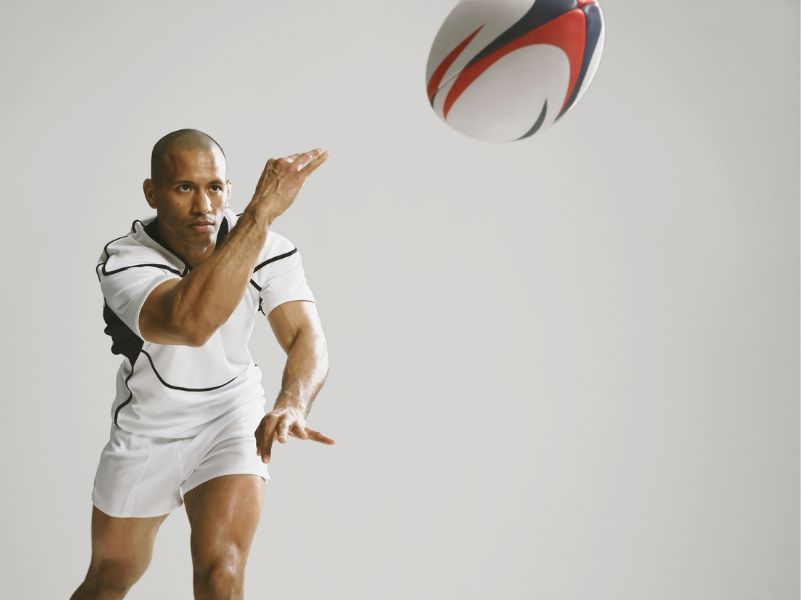
  • Medicine Ball Throws for Faster Clubhead Speed

    Medicine Ball Throws for Faster Clubhead Speed

    Clubhead speed is the single largest predictor of driving distance in golf. Every 1 mph increase in clubhead speed produces approximately 2.5 to 3 yards of additional carry distance. For most amateur golfers swinging between 85 and 95 mph, a 5 mph gain translates to 12 to 15 yards—the difference between hitting a 7-iron into a green versus a 6-iron, or reaching a par-5 in two versus laying up.

    The fastest way to increase clubhead speed is not more range time or swing changes. It’s rotational power training. Research published in the Journal of Strength and Conditioning Research demonstrates that golfers who incorporate medicine ball throws into their training programs improve clubhead speed by 3 to 7 mph over 8 weeks—gains that persist when training continues. The mechanism is straightforward: the golf swing is a rotational power movement, and medicine ball throws train the exact kinematic sequence (hips → thorax → arms → implement) required to generate maximum clubhead velocity.

    This article breaks down the five essential medicine ball exercises that produce measurable clubhead speed gains, with detailed execution cues, programming guidelines, and common mistakes to avoid. These are not theory. These are evidence-based drills validated in peer-reviewed research and used by tour-level strength coaches. For more on the role nutrition plays in supporting strength training adaptations, see our complete guide to nutrition essentials for golfers.

    1. Why Medicine Ball Throws Work: The Science of Rotational Power

    The golf swing operates in the transverse plane—rotation around the vertical axis of the body. Unlike sagittal-plane movements (squats, deadlifts) or frontal-plane movements (lateral raises, side lunges), transverse-plane rotation requires coordinated activation of the obliques, glutes, lats, and hip rotators to generate torque through the kinetic chain.

    Kinematic sequencing research using 3D motion capture has established that elite golfers generate clubhead speed through a proximal-to-distal sequence: the pelvis initiates rotation, followed by the thorax, then the lead arm, and finally the club. Peak angular velocities occur sequentially, with each segment reaching maximum speed slightly after the segment below it. This creates a ‘whip effect’ where energy transfers from larger, slower segments (hips) to smaller, faster segments (hands and club).

    Medicine ball throws replicate this exact sequence. A rotational medicine ball throw begins with hip rotation, transfers force through the torso, and releases through the arms—the same kinematic chain as the golf downswing. Research by Lephart et al. (2007) demonstrated that an 8-week golf-specific exercise program including medicine ball throws improved clubhead speed by an average of 5.2 mph in recreational golfers. Torres-Ronda et al. (2011) reviewed the literature and concluded that rotational strength and power are critical determinants of clubhead speed, with medicine ball training being one of the most effective modalities for developing these qualities.

    The physiological adaptation is twofold: (1) neural—improved rate of force development and motor unit recruitment in the rotational musculature, and (2) structural—hypertrophy of the obliques, glutes, and lats, which increases the force-producing capacity of the kinetic chain. Both adaptations translate directly to faster clubhead speed.

    2. The 5 Essential Medicine Ball Exercises for Clubhead Speed

    Exercise 1: Rotational Wall Throw (Bilateral Stance)

    This is the foundational drill. It teaches proper hip-initiated rotation and torso-to-arm sequencing without requiring single-leg stability, making it appropriate for beginners.

    Execution:

    • Setup: Stand perpendicular to a solid wall, feet shoulder-width apart, holding a 6-10 lb medicine ball at chest height. Position yourself 3-4 feet from the wall.
    • Wind-up: Rotate away from the wall (loading phase), shifting weight onto the back foot. Allow the hips to rotate first, followed by the torso. Keep arms relatively quiet—do not pull the ball back with the arms.
    • Throw: Explosively rotate toward the wall, initiating with the hips. As the hips rotate, the torso follows, then the arms extend to release the ball into the wall. Catch the rebound and repeat.
    • Cue: Think ‘hips → chest → arms → throw.’ The ball should leave your hands as a consequence of full-body rotation, not arm extension alone.

    Exercise 2: Rotational Side Throw (Bilateral Stance)

    Similar to the wall throw but releases the ball into open space, which allows for maximum velocity development and more closely mimics the golf release.

    Execution:

    • Setup: Stand in athletic position (slight knee bend, weight on balls of feet), holding a 6-10 lb medicine ball. Face perpendicular to your throwing direction.
    • Wind-up: Rotate away from the throwing direction, loading the back hip and allowing the torso to coil. Arms stay connected to the torso—do not separate the ball from the body during the load.
    • Throw: Explosively uncoil, driving through the hips first. Allow the torso to whip through, then release the ball at maximum velocity. Follow through fully, finishing with weight on the front foot.
    • Cue: ‘Fast hips, whip the torso, throw through the target.’ Do not decelerate the rotation after release.

    Exercise 3: Step-and-Throw (Single-Leg Finish)

    Adds a dynamic weight shift, which increases power output and more closely replicates the weight transfer in the golf swing.

    Execution:

    • Setup: Begin in a staggered stance (back foot slightly behind front foot), holding the medicine ball.
    • Step and load: Step back with the trail leg while simultaneously rotating away from the throwing direction. Weight shifts fully onto the back leg.
    • Drive and throw: Explosively drive off the back leg, stepping forward and rotating through. The step initiates the kinetic chain, followed by hip rotation, torso whip, and arm release.
    • Cue: ‘Step, drive, rotate, release.’ The step should be explosive, not passive.

    Exercise 4: Overhead Rotational Slam

    Trains the downswing pattern more specifically by starting from an elevated position and slamming the ball through the ground. Emphasizes deceleration strength and full-body integration.

    Execution:

    • Setup: Hold medicine ball overhead, arms extended, feet shoulder-width apart.
    • Wind-up: Rotate the ball overhead to the trail side (right side for right-handed golfers), loading the back hip.
    • Slam: Explosively rotate and slam the ball into the ground in front of the lead foot. The motion should mimic a golf downswing: hips fire first, torso rotates through, arms follow.
    • Cue: ‘Throw the ball through the ground.’ Maximum velocity at impact, not at the start.

    Exercise 5: Partner Rotational Toss (Reactive)

    Introduces a reactive element, where the athlete must catch and immediately redirect a thrown ball. This trains rate of force development and improves stretch-shortening cycle efficiency in the rotational musculature.

    Execution:

    • Setup: Stand perpendicular to a partner, 8-10 feet apart, in athletic stance.
    • Catch: Partner throws medicine ball to your chest. Catch it while rotating slightly in the direction of the throw (eccentric loading).
    • Throw: Immediately reverse direction and throw the ball back to your partner with maximum velocity. The transition from catch to throw should be as brief as possible—minimize ground contact time.
    • Cue: ‘Catch and explode.’ The faster the reversal, the greater the power output.

    Supporting Video Resources

    Medicine Ball Rotation Throw | Nuffield Health

    Find out how to perform a medicine ball rotation throw correctly with support from highly trained Nuffield Health Personal Trainers.

    How to Properly Execute Rotational Med Ball Throws | CrossFit Invictus

    Building explosive rotational power is an often overlooked yet highly important component of athleticism and is used in many sports as well as creates a balanced and injury-reduced athlete.

    3. Programming Guidelines: Sets, Reps, Load, and Frequency

    Rotational power training is neurally demanding. The goal is maximum velocity on every rep, which means sets and reps must be kept low to avoid fatigue-induced speed decrements.

    Training Parameters

    • Load: 6-10 lbs for most golfers. Heavier loads (12-15 lbs) can be used for strength-focused phases, but speed of movement decreases. Lighter loads (4-6 lbs) maximize velocity but reduce force output. The optimal load is one that allows maximum intent without compromising technique.
    • Sets and reps: 3-5 sets of 3-5 reps per side. Each rep should be maximum effort. Rest 2-3 minutes between sets to allow full neurological recovery. If velocity decreases across sets, end the session.
    • Frequency: 2-3 sessions per week. Space sessions at least 48 hours apart to allow recovery. Medicine ball training can be performed on the same day as lower-body strength training but should precede it (perform power work before strength work).
    • Progression: Week 1-2: Learn the patterns with lighter loads (4-6 lbs), focusing on sequencing. Week 3-4: Increase load to 8-10 lbs and emphasize velocity. Week 5-8: Maintain load and volume, continue pushing maximum velocity. Reassess clubhead speed at Week 8.

    Sample Training Week

    Monday: Rotational medicine ball throws (Exercises 1, 2, and 3), 3 sets of 4 reps per side, followed by lower-body strength training (squats, deadlifts).

    Wednesday: Reactive medicine ball work (Exercise 5), 4 sets of 3 reps per side, followed by upper-body strength training (bench press, rows).

    Friday: Overhead slams (Exercise 4) and step-and-throw (Exercise 3), 3 sets of 5 reps per side, followed by golf-specific mobility work.

    On-course practice: 2-3 sessions per week, focusing on transferring increased speed into controlled ball striking. TrackMan or similar launch monitor data is essential for validating speed gains.

    4. Common Mistakes That Limit Results

    Mistake 1: Arm-Dominant Throwing

    The most common error. Golfers with poor rotational sequencing will initiate the throw by extending the arms rather than rotating the hips. This produces a ‘push throw’ instead of a rotational throw. The ball velocity will be low, and the training effect will be minimal.

    Fix: Deliberately slow down the wind-up phase. Focus entirely on hip initiation. Think ‘hips move first, everything else follows.’ If necessary, perform the drill without releasing the ball—just rotate through and hold the finish position. Once sequencing is correct, add the throw.

    Mistake 2: Inadequate Rest Between Sets

    Power training is not conditioning. Performing medicine ball throws with short rest intervals (30-60 seconds) turns the drill into a metabolic challenge, which compromises velocity. If velocity drops across sets, the training stimulus is lost.

    Fix: Rest 2-3 minutes between sets. Use this time to reset mentally, not to perform other exercises. Track velocity using a radar gun or video analysis if possible. If velocity drops by more than 10% from set 1 to set 3, end the session.

    Mistake 3: Using Too Heavy a Load

    A 20 lb medicine ball will produce high force output, but velocity will be low. The golf swing is a high-velocity movement (clubhead speed exceeds 100 mph for many amateurs). Training needs to be velocity-specific, not just force-specific.

    Fix: Use loads that allow maximum velocity. For most golfers, 6-10 lbs is optimal. If the ball feels ‘slow’ off the hands, reduce the weight.

    Mistake 4: No Transfer Work

    Medicine ball training improves rotational power, but the improvement must transfer to the golf swing. Some golfers train explosively in the gym but swing conservatively on the range, which limits transfer.

    Fix: After medicine ball sessions, perform 10-15 swings with a speed training aid (overspeed stick, light club, or driver) at maximum intent. This creates a neuromuscular bridge between gym training and on-course performance.

    5. Measurable Performance Expectations and Validation

    Based on peer-reviewed research and practical coaching experience, golfers who consistently perform rotational medicine ball training should expect the following gains over an 8-week training block:

    MetricBaseline (Typical Amateur)8-Week Gain (Expected)
    Clubhead Speed85-95 mph+3-7 mph
    Ball Speed125-140 mph+4-10 mph
    Carry Distance220-240 yards+10-18 yards
    Rotational Med Ball Throw VelocityBaseline (measure Week 1)+15-25%

    Validation is essential. Use TrackMan, FlightScope, or another launch monitor to measure clubhead speed at baseline (Week 0), midpoint (Week 4), and endpoint (Week 8). Gains should be progressive. If clubhead speed stalls or decreases, reassess training volume, rest intervals, and technique.

    Medicine ball throw velocity can be measured using a radar gun (Stalker, Pocket Radar) pointed at the ball during release. Increases in medicine ball velocity typically precede increases in clubhead speed by 1-2 weeks, making it a useful leading indicator of training efficacy.

    The research is consistent: properly programmed rotational power training produces measurable, transferable gains in clubhead speed. Lephart et al. (2007) reported an average increase of 5.2 mph over 8 weeks. Alvarez et al. (2012) observed similar improvements in low-handicap golfers following an 18-week strength and power program that included medicine ball work. The adaptations are neural first (improved motor unit recruitment and rate coding), followed by structural (hypertrophy of rotational musculature) if training continues beyond 8-12 weeks.

    Final Word

    Medicine ball training is not a substitute for sound swing mechanics or consistent practice. But for golfers who already move well and are looking for the next marginal gain, rotational power training is the highest-ROI investment you can make. Three sessions per week, 20 minutes per session, for 8 weeks will produce measurable increases in clubhead speed—gains that translate directly to additional carry distance and lower scores.

    The five exercises outlined here—rotational wall throws, side throws, step-and-throws, overhead slams, and reactive partner tosses—cover the full spectrum of rotational power development. Start with bilateral stance drills to learn sequencing, progress to dynamic weight-shift drills to increase power output, and incorporate reactive work to maximize rate of force development.

    Track your progress. Measure clubhead speed every two weeks. Record medicine ball throw velocities. If the numbers aren’t moving, adjust the variables: load, rest, frequency, or technique. The research validates the method. Your job is to execute it consistently and measure the outcome. For Connecticut golfers with simulator access, there’s no excuse not to validate these gains in real time by incorporating these 6 proven exercises to increase golf clubhead speed.

    Sources: Lephart SM, Smoliga JM, Myers JB, Sell TC, Tsai YS. An eight-week golf-specific exercise program improves physical characteristics, swing mechanics, and golf performance in recreational golfers. Journal of Strength and Conditioning Research. 21:860–869, 2007. | Torres-Ronda L, Sanchez-Medina L, Gonzalez-Badillo JJ. Muscle strength and golf performance: a critical review. Journal of Sports Science and Medicine. 10:9–18, 2011. | Alvarez M, Sedano S, Cuadrado G, Redondo JC. Effects of an 18-week strength training program on low-handicap golfers’ performance. Journal of Strength and Conditioning Research. 26:1110–1121, 2012.

  • How Caffeine Affects Golf Performance: The Complete Guide

    How Caffeine Affects Golf Performance: The Complete Guide

    Walk into any PGA Tour locker room on tournament morning and you’ll find coffee everywhere. Not because tour players need help waking up—they’ve been awake for hours. They drink coffee because caffeine works. It improves performance in measurable, repeatable ways that translate directly to lower scores. The question isn’t whether caffeine helps golfers. The question is how much to take, when to take it, and whether the tradeoffs are worth it.

    Two recent comprehensive reviews on nutrition and golf—one from Sports Medicine (2024) and another from Nutrients (2023)—synthesized the available research on caffeine and golf performance. Both reviews identified caffeine as one of only two supplements with peer-reviewed evidence supporting its use in golf (the other being creatine monohydrate). The data is compelling: caffeine improves total score, driving distance, putting performance, and subjective energy levels during competitive rounds.

    This article consolidates that research into a practical guide: what caffeine does, how it works, the optimal dosing protocol, and the situations where caffeine may hurt more than it helps.

    What the Research Shows: Caffeine Improves Golf Performance

    The strongest evidence for caffeine and golf comes from a 2016 study by Mumford et al., published in Medicine & Science in Sports & Exercise. The study examined caffeine supplementation during a 36-hole competitive tournament—12 male golfers with handicaps between 3 and 10, double-blind placebo-controlled design, conducted over two consecutive days of competition.

    Participants consumed approximately 1.9 mg/kg caffeine 25 to 35 minutes before starting the round, then a second dose after completing 9 holes. Total caffeine intake per round averaged 3.8 mg/kg body weight. For a 75 kg golfer, that’s roughly 285 mg total—equivalent to about 2.5 to 3 cups of coffee spread across the round.

    The results were statistically significant across multiple performance metrics:

    Performance MetricPlaceboCaffeine (3.8 mg/kg)
    Total Score (strokes)79.4 ± 9.176.9 ± 8.1
    Greens in Regulation6.9 ± 4.68.7 ± 3.4
    Drive Distance (meters)233.3 ± 32.5239.9 ± 33.8
    Self-Reported Energy (mid-round)LowerSignificantly higher (p = 0.025)

    A 2.5-stroke improvement over 18 holes is meaningful. In a professional tournament, that’s often the difference between making the cut and missing it, or finishing top-10 versus top-30. Driving distance increased by approximately 6.6 meters (7.2 yards)—not dramatic, but consistent. Greens in regulation improved by nearly two per round, which is substantial for approach shot accuracy.

    Critically, caffeine did not improve every measured variable. Fairways hit, putts per round, sand shots, and first putt distances showed no significant differences between conditions. This suggests caffeine’s primary benefit is reducing fatigue-related performance decline, not enhancing peak technical execution. The golfers who benefited most were those who reported feeling tired or mentally fatigued during the placebo condition.

    Caffeine and Putting: Evidence from Simulated Golf

    A 2009 study by Stevenson et al., published in Applied Physiology, Nutrition, and Metabolism, tested a carbohydrate-caffeine sports drink in 20 male amateur golfers during a simulated 18-hole round. The drink contained 1.6 mg/kg caffeine plus 0.64 g/kg carbohydrate, consumed as a bolus before play and then at holes 6 and 12.

    Putting performance improved significantly with caffeine-carbohydrate compared with placebo:

    • 2-meter putting success rate (final 6 holes): 70% versus 50% in placebo
    • 5-meter putting success rate (final 6 holes): 40% versus 25% in placebo
    • Total successful putts (18 holes): Significantly higher in caffeine-carbohydrate condition

    The study could not isolate caffeine’s effect from carbohydrate, as both were present in the intervention. However, the improvement was most pronounced in the final six holes—the period when fatigue typically accumulates and blood glucose declines. This supports the hypothesis that caffeine’s primary mechanism in golf is fatigue mitigation, not skill enhancement.

    A related study by Bristow (2016) found no improvement in overall golf performance during an 18-hole round with caffeine at 3 mg/kg, but did observe significant improvements in ball speed and total distance when hitting drives on a golf simulator. This suggests caffeine may enhance explosive power output during maximal efforts, even if the effect doesn’t consistently translate to on-course scoring.

    How Caffeine Works: Mechanisms Relevant to Golf

    Caffeine is an adenosine receptor antagonist. Adenosine is a neurotransmitter that accumulates in the brain during prolonged wakefulness and physical activity, promoting drowsiness and reducing arousal. Caffeine blocks adenosine receptors, preventing this fatigue signal from registering. The result is increased alertness, reduced perception of effort, and enhanced cognitive function.

    Several mechanisms are relevant to golf performance:

    1. Reduced Perceived Exertion

    Caffeine lowers the subjective feeling of effort during physical activity. In golf, this means the walk between shots, the repetitive swinging during practice, and the cumulative fatigue of a 4- to 5-hour round feel less taxing. Mumford et al. reported that golfers in the caffeine condition felt significantly more energetic at the midpoint of the round compared with placebo, even though objective workload was identical.

    2. Enhanced Cognitive Function

    Golf requires sustained attention, rapid decision-making (club selection, shot strategy), and fine motor control (putting). Caffeine improves reaction time, vigilance, and executive function—particularly under conditions of sleep deprivation or mental fatigue. For golfers playing early morning rounds or competing over multiple consecutive days, caffeine helps maintain cognitive sharpness when it would otherwise decline.

    3. Increased Motor Unit Recruitment

    Caffeine enhances neuromuscular activation, allowing for greater force production during explosive movements. This is why Bristow’s simulator study observed increased ball speed and driving distance with caffeine, even though on-course performance was unchanged. The effect is modest—Mumford et al. reported approximately 6.6 meters (7 yards) additional driving distance—but measurable.

    4. Delayed Onset of Mental Fatigue

    Mental fatigue impairs golf performance by reducing focus, increasing decision-making errors, and degrading motor skill execution. Caffeine delays the onset of mental fatigue, which is why the performance benefits in both Mumford’s and Stevenson’s studies were most pronounced in the later holes of the round.

    Supporting Video Resources

    How Caffeine Affects Your Golf Game | Golf Digest

    In this influential experiment, three golfers of varying skill levels hit a series of golf shots while caffeinating between each round to see how caffeine affects their golf game.

    Does Drinking Caffeine Means Better Golf?

    In this video, we dive into the role of caffeine in golf how it might affect your energy, focus, and overall game.

    The Optimal Caffeine Protocol for Golf

    Based on the available research, here is the evidence-based protocol for caffeine use in golf:

    Dose

    3 to 5 mg per kilogram body weight is the effective range. For a 75 kg golfer, this is 225 to 375 mg total. A 90 kg golfer would target 270 to 450 mg. Doses below 3 mg/kg may be subtherapeutic; doses above 6 mg/kg increase side effects (jitteriness, gastrointestinal distress) without additional performance benefit.

    Practical caffeine sources:

    • Coffee (8 oz / 240 mL): 80–100 mg per cup
    • Espresso (1 shot): 60–80 mg
    • Caffeine tablet: 100–200 mg per tablet
    • Energy drink (8 oz): 70–100 mg
    • Pre-workout supplement: 150–300 mg per serving (check label)

    Timing

    Caffeine reaches peak plasma concentration 45 to 60 minutes after ingestion. Consume the first dose 30 to 60 minutes before your tee time. If playing 18 holes or more, consider a second dose at the turn (after hole 9). Mumford’s protocol—split dosing with half the caffeine pre-round and half at the turn—produced the best results in competitive settings.

    Frequency

    Caffeine tolerance develops with chronic use. Habitual caffeine consumers (those who drink coffee daily) require higher doses to achieve the same ergogenic effect compared with caffeine-naïve individuals. However, the literature suggests that even habitual users benefit from strategic caffeine timing around competition. If you drink coffee daily, do not increase your baseline intake dramatically on competition days—this risks gastrointestinal distress and anxiety. Instead, time your usual intake strategically to align with performance windows.

    Delivery Method

    Coffee, caffeine tablets, and energy drinks all work. The key variable is total caffeine dose, not delivery method. However, liquid caffeine (coffee, energy drinks) is absorbed slightly faster than tablets. For Connecticut golfers with sensitive stomachs, caffeine tablets may cause less gastrointestinal distress than coffee, which contains additional compounds (chlorogenic acid, oils) that can irritate the gut.

    Combining with Carbohydrate

    Stevenson’s study used a combined caffeine-carbohydrate drink and observed improved putting performance. The synergy between caffeine and carbohydrate makes physiological sense: caffeine enhances alertness and reduces fatigue perception, while carbohydrate maintains blood glucose and prevents hypoglycemia-related cognitive decline. For golfers, consuming caffeine with a carbohydrate source (sports drink, energy gel, banana) is likely optimal, particularly during longer rounds.

    When Caffeine Hurts Golf Performance

    Caffeine is not universally beneficial. Several scenarios exist where caffeine may impair performance or create unacceptable tradeoffs:

    1. Afternoon or Evening Tee Times

    Caffeine has a half-life of 3 to 5 hours. Consuming caffeine after 2 PM increases the likelihood of sleep disruption that night. Sleep quality is a stronger predictor of next-day performance than caffeine. If you have an afternoon tee time and are playing again the following day, the performance cost of poor sleep likely exceeds the benefit of acute caffeine supplementation. Avoid caffeine after early afternoon if sleep quality matters.

    2. Caffeine-Naïve Players

    Individuals who do not regularly consume caffeine are more sensitive to its side effects: jitteriness, increased heart rate, gastrointestinal distress, and anxiety. These effects can impair fine motor control (putting) and decision-making. If you do not drink coffee regularly, do not experiment with caffeine during competition. Trial it during practice rounds first to assess tolerance.

    3. Pre-Existing Anxiety

    Caffeine increases arousal and can exacerbate anxiety symptoms. Golfers who experience performance anxiety, particularly on the first tee or during pressure situations (putting to win, playing in front of crowds), may find that caffeine worsens anxiety rather than improving focus. If you are prone to nervousness on the course, caffeine may be counterproductive.

    4. Excessive Doses

    Doses above 6 mg/kg body weight increase side effects without additional performance benefit. For a 75 kg golfer, 6 mg/kg is 450 mg—equivalent to roughly 4 to 5 cups of coffee. At this dose, tremor, palpitations, and gastrointestinal distress become likely. The performance-enhancing window is narrow: 3 to 5 mg/kg is optimal. More is not better.

    Caffeine and Multi-Day Tournaments

    Professional and elite amateur golfers often compete over consecutive days. Mumford’s study tested caffeine during a 36-hole tournament (two consecutive days, 18 holes each day) and observed benefits on both days. However, the study did not measure sleep quality or next-day alertness.

    Theoretical concern: if caffeine consumed on Day 1 disrupts sleep, Day 2 performance may be impaired despite acute caffeine supplementation. The research does not provide clear guidance here, but general sleep hygiene principles apply: avoid caffeine within 6 hours of bedtime, prioritize sleep duration and quality, and monitor subjective recovery between rounds.

    For tournaments lasting 3 to 4 days (standard PGA Tour format), caffeine can be used strategically on the final two days when fatigue is highest, while minimizing use on Days 1 and 2 to preserve sleep quality. This is speculative—no golf-specific studies have tested multi-day caffeine protocols—but it aligns with caffeine pharmacology and sleep science.

    Practical Caffeine Protocol: Summary Table

    VariableRecommendationRationale / Evidence
    Dose3–5 mg/kg body weightMumford et al. used 3.8 mg/kg and observed 2.5-stroke improvement
    Timing30–60 min before tee time, second dose at turnPeak plasma concentration at 45–60 min; split dosing maintains levels
    SourceCoffee, tablets, energy drink (any)Total dose matters more than delivery method
    Combine with CHOYes, if round >3 hoursStevenson et al.: caffeine + CHO improved putting vs. placebo
    Avoid if…Afternoon tee time, caffeine-naïve, anxiousSleep disruption and side effects outweigh benefits
    Max dose<6 mg/kg body weightHigher doses increase side effects without added benefit

    Final Word

    Caffeine is not a substitute for skill, practice, or course management. But for golfers who already have those fundamentals in place, caffeine is one of the few legal, safe, evidence-based interventions that measurably improves performance. The effect size—2 to 3 strokes over 18 holes, 6 to 7 yards of additional driving distance, improved putting success rate in the final holes—is modest but real.

    The key is protocol: 3 to 5 mg per kilogram body weight, consumed 30 to 60 minutes before the round, with a potential second dose at the turn. Combine with carbohydrate during longer rounds. Avoid afternoon use if sleep matters. Trial during practice before implementing in competition.

    Most importantly, caffeine’s benefit is not universal. If you’re caffeine-naïve, anxious, or playing in the evening, the tradeoffs may not be worth it. But for the majority of golfers—particularly those competing over long rounds, in hot conditions, or when mentally fatigued—caffeine is a tool worth using. To ensure your physical boost translates into better results, you can pair your routine with precise data by understanding the measurement accuracy of the Blast Motion Golf sensor.

    Sources: Mumford PW, Tribby AC, Poole CN, et al. Effect of Caffeine on Golf Performance and Fatigue during a Competitive Tournament. Medicine & Science in Sports & Exercise. 48(1):132–138, 2016. | Stevenson EJ, Hayes PR, Allison SJ. The effect of a carbohydrate-caffeine sports drink on simulated golf performance. Applied Physiology, Nutrition, and Metabolism. 34(4):681–688, 2009. | O’Donnell A, Murray A, Close GL. Nutrition and Golf Performance: A Systematic Scoping Review. Sports Medicine. 54:3081–3095, 2024.