Bobby Jones once said, “You swing your best when you have the fewest things to think about.” That sentiment felt especially true yesterday morning at The Vue in Hamden. Winter golf strips the game down to its essentials. There are no crowds, no noise, and no distractions—just you and the course.
LFG
It is rare to find a place to play this time of year in Connecticut, but The Vue is one of the few local courses, along with Fairchild Wheeler and Alling Memorial, that stays open through the season. I arrived for an 8:00 AM tee time and found the place nearly empty. The first hole was a beautiful start to the day; the fairway was wide and welcoming in the morning light, and I managed to make a par right out of the gate. It was the perfect way to settle in.
I typically prefer to walk, but I decided to take a cart this time, mostly to have a place to stash my heavy coat if I got too warm. I had even come prepared with a pair of Callaway mittens designed to hold hand warmers, expecting the usual biting New England cold. But the weather was surprisingly gentle, and I never even had to reach for them. It was just so nice to be out in the fresh air.
First one to pick up balls after course re-opened
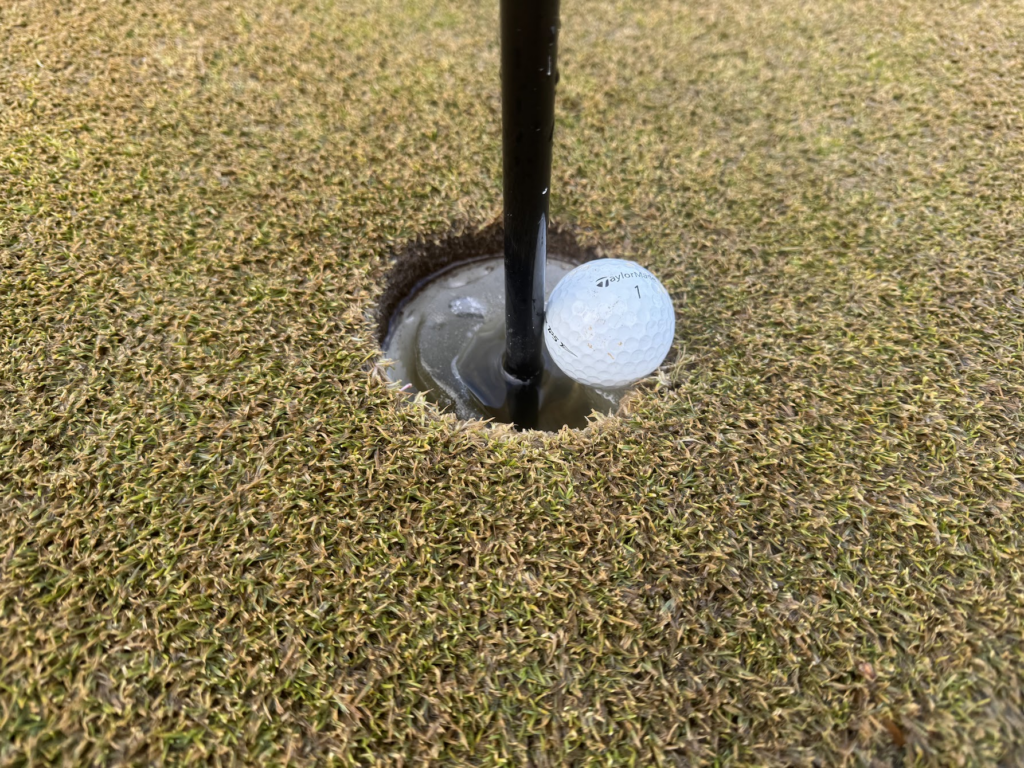
Because the course had just reopened after a recent snowstorm, the conditions were a mix of pristine quiet and winter quirks. I spent some time “Easter egging”—the art of hunting for lost golf balls in the woods that haven’t been picked over yet. The harvest was excellent, and I even managed to find a Pro V1 to restock my bag. The hazards, however, were a different story. The bunkers were frozen solid, meaning my ball skidded across the sand like a hockey puck rather than checking up, and on one green, the cup was so frozen with ice that sinking the putt was physically impossible.
Hole 70 yards away but ball on snow. PW or SW?
As the morning went on, the ground thawed and became a bit damp. While I probably should have adjusted my game for the softer conditions, I was just happy to be swinging. I was definitely a little rusty, but my driver felt dialed in. I had taken a lesson at Chelsea Piers in the city recently, and it was satisfying to see those adjustments working well on a real course.
Does this count?
It was a meditative experience that completely cleared my mind. I loved the solitude of it, and best of all, I finished quickly and was back home in plenty of time for the kids’ weekend activities. I will definitely be back.
I’ll admit it—I’m a tinkerer. Over the years, I’ve spent countless hours on the range obsessing over swing plane, wrist hinge, hip rotation, and every other mechanical detail you can imagine. My head was so full of swing thoughts that I could barely get the club back without analyzing three different positions. Sound familiar? Then I listened to the Wicked Smart Golf podcast featuring John Novosel Jr., co-creator of Tour Tempo, and the concept intrigued me enough to give it a shot. I bought the Tour Tempo app for $25—which honestly feels a bit overpriced for what’s essentially a sophisticated metronome—but at least there’s no subscription fee. I’ve only been using it for a few days, so it’s early, but I’m curious to see how this plays out. So far, I think it provides more value than some of my other training aids that are collecting dust in the garage.
The Core Concept
John Novosel analyzed frame-by-frame video footage of professional golfers and noticed a pattern: nearly every great golfer throughout history—from Ben Hogan to Tiger Woods, Jack Nicklaus to Scottie Scheffler—shares the same tempo ratio of 3:1 (backswing to downswing). Some pros swing faster and others slower, but virtually all of them maintain that 3:1 ratio. Wyndham Clark swings at 18:6, Adam Scott at 21:7, and Scottie Scheffler at 24:8—all maintaining the same 3:1 tempo despite different overall speeds. Scientists at Yale University later conducted an independent study and confirmed Novosel’s findings, publishing their results in “A Biomechanical Understanding of Tempo in the Golf Swing.”
Tour professionals swing with elapsed times between 0.93 to 1.20 seconds from takeaway to impact, while amateurs typically range from 1.3 to 3.0 seconds. Most recreational golfers swing considerably slower, often influenced by the old “low and slow” mantra that’s been passed down for generations. According to the theory, when the tempo is right, there isn’t time left over for the club to do all the inefficient things it usually does during bad swings—like pausing, hitching, wandering in loops, or coming over the top. The app plays three tones that guide your swing: start your backswing on the first beep, reach the top of your backswing on the second beep, and make impact on the third beep. If you choose the voice option, you’ll hear “Swing, set, through”—swing means start your backswing, “set” is when you set the club at the top, and “through” is your finish.
Understanding Long Game vs. Short Game Ratios
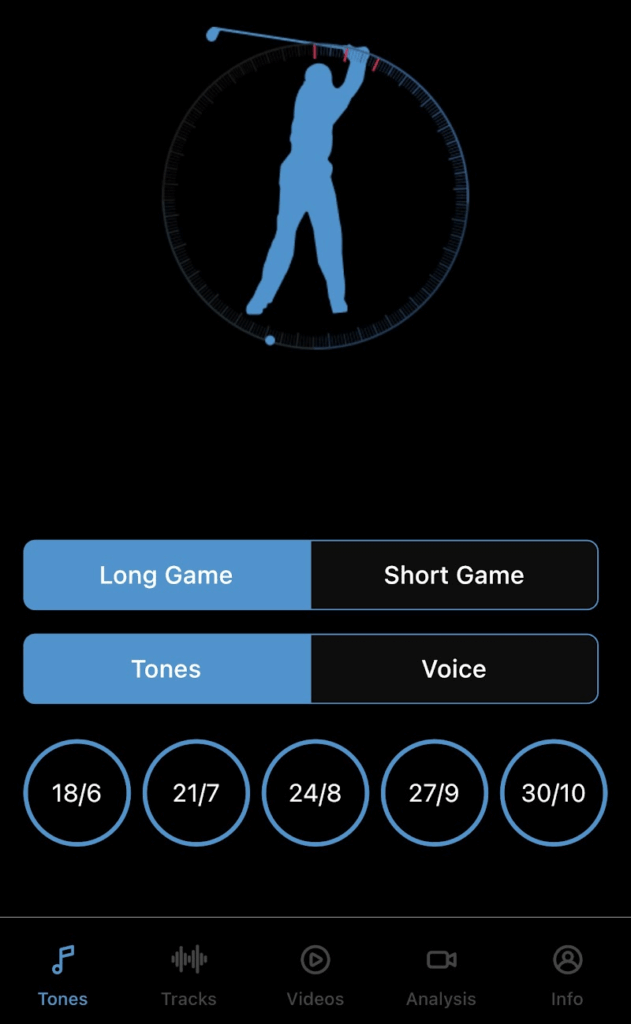
The Tour Tempo app separates your game into two distinct categories, each with its own optimal tempo ratio. For your long game—driver through mid-irons—the app uses the 3:1 ratio with frame options of 18/6, 21/7, 24/8, 27/9, and even 30/10 for those still working on speeding up their tempo. These numbers represent video frames at 30 frames per second, so a 21/7 tempo means 21 frames (0.70 seconds) for your backswing and 7 frames (0.23 seconds) for your downswing, totaling just 0.93 seconds from takeaway to impact. Most golfers are surprised when they realize how fast tour pros actually swing—it only looks smooth and effortless on TV because of the consistent tempo ratio.
The Long Game mode displays the 3:1 ratio options (18/6, 21/7, 24/8, 27/9, 30/10)
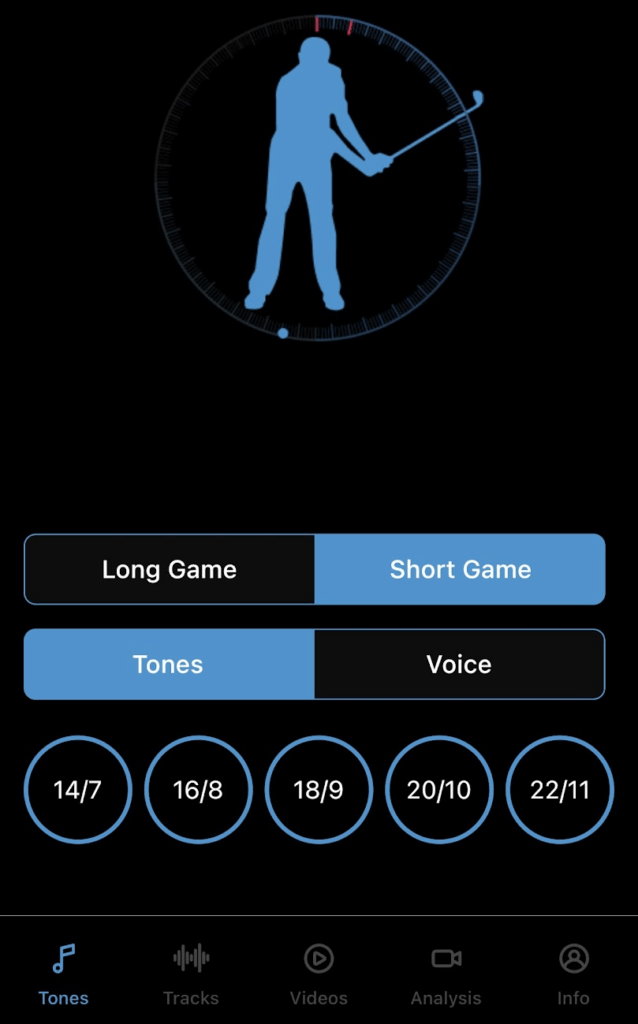
For your short game—pitching, chipping, and putting—the app shifts to a 2:1 ratio with options like 14/7, 16/8, 18/9, 20/10, and 22/11. John Novosel discovered this after studying the short game swings of top touring pros and found that virtually all of them employ a different tempo around the greens than they do with full swings. This makes intuitive sense: you need more control and feel on delicate shots, and the 2:1 ratio provides that while still maintaining the consistency that comes from having a set tempo. You can switch between long game and short game modes in the app depending on what you’re practicing, and the tones automatically adjust to guide you through the appropriate ratio.
The Tour Tempo app in Short Game mode showing the 2:1 ratio options (14/7, 16/8, 18/9, 20/10, 22/11)
How to Choose Your Ideal Tempo (Accuracy vs. Distance vs. Dispersion)
One of the most common questions is: which tempo should I use? The answer isn’t one-size-fits-all, and understanding the tradeoffs between the different ratios will help you make the right choice for your game. Generally speaking, faster tempos (18/6, 21/7) tend to produce more distance because you’re generating more clubhead speed, but they can also lead to wider dispersion patterns if you’re still developing the consistency. Think of players like Rory McIlroy who swing at 21/7—they bomb it, but they need elite hand-eye coordination to keep it in play. Mid-range tempos (24/8, 27/9) offer the best balance between distance and accuracy for most amateur golfers. Tiger Woods has played at both 27/9 and 21/7 at different points in his career, and Fred Couples built a Hall of Fame career on a 24/8 tempo. These tempos give you enough speed to be competitive while providing a slightly longer window to square the clubface and make solid contact.
Slower tempos (27/9, 30/10) maximize accuracy and tightness of dispersion at the expense of some distance. If you’re fighting a big slice or pull-hook, starting with a slower tempo can help you find the center of the clubface more consistently before graduating to a faster tempo. Many golfers report that their “money tempo” is faster than they initially think—though I’m still in the early stages of figuring out what works best for me. The app recommends experimenting: spend a practice session trying each tempo option with the same club and track your results. Use a launch monitor if you have access to one, or simply note your carry distances and where your misses go. The idea is that a faster tempo might actually reduce dispersion because it eliminates the “extra time” where swing faults can creep in—though I haven’t been using it long enough to confirm that from personal experience.
It’s also worth noting that your ideal tempo might change based on the situation. The theory is that you could use a faster tempo like 21/7 for full swings when you need distance, but dial it back to 24/8 on tight driving holes where accuracy is paramount. For short game work, the app suggests experimenting with different 2:1 ratios to find what feels right. I’m still early in the process of figuring out my preferences, but the app makes it easy to switch between ratios on the fly once you settle on what works.
What You Should Be Doing on Each Tone (Including Footwork and Hip Movement)
Here’s a practical breakdown of what happens on each of the three tones, including the critical lower-body movements that create power and consistency:
Tone
What You Should Be Doing
First Tone (Start)
Begin your takeaway immediately. The club should start moving away from the ball smoothly and naturally. Don’t overthink it—just respond to the tone and let your body initiate the backswing. This is your trigger to go. Your weight begins shifting to your trail foot (right foot for right-handers), and your hips start turning naturally. For short game shots, this is when you begin your backswing motion with minimal lower body movement—it’s much more arms and shoulders around the greens.
Second Tone (Top/Set)
You should be at the top of your backswing, with the club fully set. This is the critical transition point where power is created. On this tone, your lead foot (left foot for right-handers) should stomp or replant firmly into the ground—think of it as an active “plant and push” move that loads the ground for explosive power. Your hips should be coiled and ready to fire, with your weight loaded into the inside of your trail foot. When you match this tone, your transition happens automatically without conscious effort. This isn’t a pause—it’s the moment where your lower body starts driving toward the target while your upper body is still completing the backswing, creating that powerful separation. For short game shots, there’s minimal foot action—just a subtle weight shift.
Third Tone (Through/Impact)
This is when you make contact with the ball and follow through. Your hips should be firing explosively through impact—they started the downswing motion at tone 2 and are now fully rotated toward the target by tone 3. Your club should be striking the ball precisely on this tone, with your lead foot firmly planted and pushing against the ground for leverage. Your trail heel will naturally lift as your hips clear and your weight transfers completely to your lead side. The momentum from the proper tempo carries you through to a balanced finish. You’re not trying to “hit” at impact—the tone guides you through impact naturally as part of one continuous motion driven by your lower body rotation. For short game shots, the hip rotation is much more subtle—you’re using mostly your upper body with just a slight weight shift through the ball.
Key Insight: The point isn’t hitting each position perfectly—it’s surrendering to the rhythm and letting the tones guide your body through one fluid motion. When you sync with the tempo, those mechanical positions you’ve been obsessing over tend to happen naturally. The left foot stomp at tone 2 and the hip fire through tone 3 happen instinctively when you’re not trying to control every aspect of the swing. This is especially true for the long game—your lower body becomes the engine that drives the swing, while the tones ensure everything happens in the right sequence and at the right speed.
Why This Might Clear Mental Clutter (Early Impressions)
Here’s what’s interesting about Tour Tempo, and what John Novosel Jr. emphasized in the podcast: it theoretically eliminates the need for mechanical swing thoughts. When you’re focused on matching three simple tones, there’s no mental bandwidth left for “keep your left arm straight,” “maintain lag,” “don’t come over the top,” or any of the hundreds of other instructions we torture ourselves with. The tempo is supposed to create the correct mechanics naturally—at least that’s the theory. As one user put it: “This is the best product out there to help with tempo and get your mind free of swing thoughts.” A teaching pro shared how he used it with his father, who was a victim of over-thinking and over-coaching with a painfully slow swing. After introducing the Tour Tempo tones, the next five balls were laser straight and long. Those are compelling testimonials, though I’m cautious about putting too much stock in individual success stories.
I’ve only been using the app for a few days now, so I can’t claim any dramatic transformation yet. But I will say that having something to focus on besides my usual mental checklist has been interesting. Instead of standing over the ball running through seven different swing thoughts, I now take my setup, hear the tones in my head (or through my earbuds during practice), and try to match the rhythm. It’s a different approach, and I’m genuinely curious to see if this holds up over time or if it’s just the novelty effect. The goal—if this actually works long-term—is to reach the point where the tempo becomes automatic, the way tour pros don’t think about it because it’s deeply embedded in their muscle memory. But I’m only a few range sessions in, so we’ll see.
Is $25 steep for what amounts to an advanced metronome? Probably. You can find basic metronome apps for free or a couple of bucks. But to Tour Tempo’s credit, there’s no monthly subscription trying to nickel-and-dime you, and it does offer more structure than a generic metronome with the frame ratios, voice guidance, and video analysis tools. Compared to some of the training aids I’ve bought over the years that promised the world and delivered nothing, this at least feels like it’s grounded in actual research. The app also includes training tracks for focus and practice routines that I haven’t fully explored yet. The Titleist Performance Institute’s 3D research data, culled from analyzing tour pro swings, confirms that Tour Tempo is the only golf training aid validated by an independent scientific study. This isn’t just feel-good instruction—it’s based on measurable, repeatable data from the world’s best players. Whether that translates to better golf for the average amateur is the question I’m hoping to answer over the coming weeks.
If you’re someone who struggles with too many swing thoughts, inconsistent ball-striking, or a slow and labored swing tempo, Tour Tempo is an interesting concept worth considering. For the price of a couple sleeves of golf balls, you get access to a training method based on what tour pros actually do—not what someone thinks they should do. As one MyGolfSpy reviewer put it, they gave Tour Tempo a perfect score, writing: “Tour Tempo is scientifically proven, it’s easy to use, and it will help you in every facet of the game.” That’s high praise, though I’m always a bit skeptical of perfect scores for anything.
For now, I’ll say this: it’s an interesting concept, the research behind it seems solid, and after a few days of experimenting, I’m looking forward to seeing how it plays out. Three tones, one ratio, potentially less mental clutter. We’ll see if it delivers.
Have you tried Tour Tempo? What’s your experience with tempo training? Drop a comment below—I’d love to hear your thoughts!
For years, I struggled to increase my golf swing speed. I was practicing regularly—hitting the range, working on mechanics, staying generally fit—but the launch monitor numbers just wouldn’t budge. My shots felt clean, but they lacked power. On long par 4s, I was always reaching for more club while my playing partners pulled out wedges. I knew I needed more clubhead speed to make the game more fun, but hiring a coach or joining a high-end golf gym just wasn’t realistic for me.
So I set out to answer a simple question: What are the best exercises to increase clubhead speed in golf? Using Google Scholar, PubMed, and ChatGPT, I reviewed dozens of peer-reviewed studies on golf performance, rotational power, and strength training. I wasn’t looking for random tips—I wanted science-backed answers. Over and over again, the data pointed to six specific movement patterns that elite and amateur golfers alike benefit from: hip extension, trunk rotation, vertical force production, ground reaction timing, upper body sequencing, and total-body explosiveness.
The six best exercises to train those traits? Based on the literature, they’re the trap bar deadlift, backward overhead medicine ball throw, landmine rotation, countermovement jump, barbell push press, and overspeed training with a speed stick. These moves appeared repeatedly in studies that showed strong correlations with increased swing velocity and driver distance. So I built my own 3-day-per-week program using just those exercises—two per day, focused on intent and efficiency. I’m still early in the process, but for the first time, I feel like I’m training for golf, not just working out. And if you’re a busy amateur like me looking for a way to swing faster without wasting time, I hope this plan gives you a clear, proven place to start.
Weekly Plan Overview
Day
Focus & Exercises
Monday
Trap Bar Deadlift + Backward Overhead Med Ball Throw
Why: Builds foundational hip and knee extension strength, which is a key driver of clubhead speed. According to multiple studies, hip power output correlates strongly with increased driving distance. In a study by Suhara et al. (2023), golfers with higher hip extension torque showed significantly greater clubhead speed (r = 0.66).
How: Stand inside the trap bar with feet hip-width apart. Grip the handles, brace your core, and hinge at your hips. Lift the bar by pushing through your heels and extending your hips and knees simultaneously. Perform 3–5 reps per set at 70–90% of your one-rep max. Emphasize controlled lowering and an explosive lift. Rest 1–2 minutes between sets.
What to Think: Imagine jumping through the floor. Keep your chest up, spine neutral, and drive your hips forward. You’re not just lifting weight—you’re teaching your body how to fire the same muscles used to launch a golf ball off the tee.The trap bar deadlift is your foundation for developing raw lower body strength. It targets your glutes, hamstrings, and quads—the same muscles that generate power in your downswing. Unlike a traditional straight-bar deadlift, the trap bar keeps the load centered and minimizes spinal stress, making it ideal for golfers focused on longevity. Perform each rep with controlled tension on the way down and explosive intent on the way up. Drive through your heels and think of standing up fast, as if trying to jump with the weight. Keep your spine neutral and avoid rounding at the bottom. Use straps if grip is limiting. The goal here is not to bodybuild—it’s to become a more powerful athlete. Use 70–90% of your one-rep max for sets of 3–5 reps. Focus on quality over volume. This lift develops the hip extension strength that has been directly linked to higher clubhead speed in peer-reviewed studies.
2. Backward Overhead Med Ball Throw (BOMB Throw)
Why: This throw has been identified in multiple studies as one of the strongest predictors of clubhead speed. It emphasizes triple extension (hips, knees, ankles), trunk extension, and vertical force—biomechanics that mirror the sequencing of a golf swing. A 2023 study by Suhara et al. showed a strong correlation (r = 0.63–0.75) between hip/trunk extension and swing velocity, with backward overhead throws outperforming side tosses and slams in predictive value.
How: Start in an athletic stance, feet shoulder-width apart, with a light (4–6 lb) med ball held at chest height. Hinge your hips backward, lower your body slightly, and explosively extend your hips, knees, and ankles while simultaneously launching the ball overhead and behind you. Let the movement come from your legs and core—not just your arms. Perform 3–4 throws per set, resting 30–60 seconds between throws. Aim for max distance, and reset between reps for consistency.
What to Think: Visualize driving off the tee with everything you’ve got. Feel the ground through your heels, explode through your hips, and release all your stored tension into the throw. This is not just a drill—it’s a full-speed rehearsal for generating power through the kinetic chain. The more aggressive your intent, the greater the neural and muscular adaptation for speed. the golf swing’s kinetic chain, starting from the ground and traveling through your hips, spine, and shoulders. It’s one of the best drills for reinforcing explosive triple extension while teaching your body to coordinate that power into a single, ballistic movement. Start by standing with feet shoulder-width apart, holding the medicine ball at chest level. Hinge at the hips and load your glutes, then launch the ball overhead as far behind you as possible. Your goal is max distance, not control. Be aggressive. Let your arms fully extend and your hips snap forward. Land softly and reset each rep. Do 3–4 throws per set. This exercise activates both core and lower-body power generators and has been shown in research to strongly correlate with swing speed improvements.
Day 2
1. Barbell Push Press
What to Think: Think of your legs starting the lift and your arms finishing it. Feel the drive come from the ground, through your hips, into your shoulders. This isn’t a strict press—it’s about transferring force through your whole body the way a golf swing does. The smoother the chain, the faster the club.This hybrid lift is a sneaky good exercise for golfers because it integrates leg drive, hip extension, and upper body force transfer. Start with the bar at shoulder height or bands anchored under your feet. Dip your knees slightly, then drive the weight overhead in one continuous motion. The force should come from the legs and hips first—your arms simply finish the press. This builds coordination across the kinetic chain. Don’t grind reps; focus on fast, clean execution. Push presses help develop the “snap” and finish needed in a driver swing, especially when power is applied late in the motion. Use moderate load aim for 4 sets of 4–6 reps.
2. Speed Stick Overspeed Swings
Why: Overspeed training accelerates your swing mechanics by increasing neural recruitment and breaking through velocity plateaus. A 2021 review showed that golfers using overspeed tools (like speed sticks) experienced swing speed increases of 5–8 mph after 6–8 weeks of training, translating to 15–25 yards of added driver distance.
How: Use a lightweight speed stick or similar shaft. Take 3–4 sets of 5 max-intent swings with your dominant hand and 5 with your non-dominant hand. Alternate hands to build symmetrical coordination and balance. Focus on full-body movement and sequence—don’t just swing with your arms. Perform these on flat ground, preferably with a radar to track speed. Rest 30–60 seconds between sets.
What to Think: This is your green light drill. Swing as hard as you can while staying in control. Feel your feet gripping the ground and your hips firing first. You’re not grooving mechanics—you’re building speed. Let go of perfection and focus on output. Speed begets speed.Speed training with a lightweight stick or shaft is one of the most golf-specific tools for raising swing velocity. Overspeed swings train your nervous system to move faster by exaggerating swing tempo and intent. Begin with your normal stance and grip. Use a light speed stick or even a cut-down driver shaft if needed. Swing with maximum effort, both right- and left-handed. Focus on balance, rhythm, and most importantly—intent. You’re training speed, not mechanics here. Rest 30–45 seconds between sets. Perform 3–4 sets of 5 reps each side. This kind of neural speed training has shown up to 10–15% swing speed gains in under two months. Avoid getting lazy or turning this into a technical drill. Let loose. Swing hard. The radar gun should show it.
Day 3
1. Barbell Landmine Rotations
Why: This move builds rotational strength, trunk stability, and sequencing—essential components of a powerful and consistent swing. A 2020 golf biomechanics study showed that elite players produced higher rotational velocities in the trunk and pelvis than amateurs, and rotational power output had a strong association with driving distance (r = 0.72).
How: Load one end of a barbell into a landmine or secure corner. Hold the other end with both hands. In an athletic stance, rotate the barbell in a wide arc from hip to hip. Pivot the back foot and allow your hips to follow the bar. Keep your core braced and movement explosive but smooth. Perform 3–4 sets of 6–8 reps per side. Add light weight as you progress.
What to Think: Imagine coiling like a spring and uncoiling with speed. This isn’t about control—it’s about developing rotational intent. Use your hips to drive the motion, not your arms. Feel the twist from the ground up, just like in a real swing. Landmine rotations combine anti-rotation control with aggressive trunk and hip turn. You’ll anchor one end of a barbell in a landmine attachment or a corner and hold the free end with both hands. From an athletic stance, rotate the bar in a rainbow arc from side to side, pivoting your rear foot as you move. Focus on generating the movement from your core and hips—not just your arms. Brace your abs and keep a firm grip. This builds stability while reinforcing explosive torso rotation, which is critical for a powerful swing. Do 6–8 reps per side for 3–4 sets. Add small weight plates as needed but maintain explosive tempo. The movement pattern mimics the coil and release of your golf swing, making this one of the best transfers to rotational sports like golf.
2. Countermovement Jump (Onto Jump Box)
Why: The countermovement jump is a validated test and training tool for lower-body explosive power. A 2019 study found that peak vertical power in this jump strongly correlates with clubhead speed (r = 0.70), especially among amateur golfers. It reflects how well you can generate ground reaction force and transfer it upward—just like the jump-like motion in your downswing.
How: Stand with feet shoulder-width apart. Quickly dip into a quarter squat, then explode upward using your arms and legs to project yourself onto the box. Choose a height (12–24″) that lets you land softly without strain. Stick the landing with bent knees and step down under control. Perform 3–5 reps per set, focusing on jump height and fluidity. Rest 60–90 seconds between sets.
What to Think: Think “springy,” not grindy. You want to feel like your legs are launching you, not muscling you up. This drill teaches your body to accelerate from the ground—just like the best swings start from the ground up. Feel the floor, fire through your legs, and own the landing.Jumping onto a box may seem like a basic move, but when done explosively, it’s one of the purest indicators of power potential. The countermovement jump reflects how much force you can rapidly produce from the legs and core. Start by standing upright, then dip quickly into a quarter squat before launching upward. Swing your arms for maximum lift. Land softly on the box, knees bent, and step down one foot at a time. The box height should challenge but not intimidate—aim for 18″ if you’re decently athletic. Focus on upward velocity, not just getting onto the box. This movement taps into your body’s fast-twitch capabilities and conditions your neuromuscular system to respond faster—exactly what you want when trying to accelerate through impact.
Final Thoughts
This program is still in the early stages for me, but the foundation feels strong. After years of feeling stuck at a low clubhead speed, I needed a plan that made sense—not just technically, but logistically. I wanted something that fit around work and family life, something rooted in evidence, and something I could actually stick to. This 3-day, 2-exercise approach gives me the structure and focus I’ve been missing.
What’s helping me stay on track is the SmartGym app on my Apple Watch and iPhone. It lets me build and repeat workouts, track reps and sets, and see how my training aligns with my daily activity and recovery. When life gets chaotic, having a plan already loaded and ready means I don’t skip sessions or waste time. It’s been a quiet form of accountability—and an underrated part of staying consistent.
Right now, my weekly rhythm looks like this: I train Monday, Wednesday, and Friday. I try to hit the outdoor range or my indoor simulator twice a week, usually with short 30-minute sessions. Once a week, usually on a post-call day, I’ll walk 9 holes on a local par-3. If I’m making clean contact but feeling slow, I lean into the gym work. If my strike quality dips, I shift toward the range and tempo drills. It’s not a perfect system, but it’s mine—and I hope it gives you a model for building your own momentum.
References
Uthoff et al. (2021). Effects of Resistance Training Methods on Golf Clubhead Speed and Hitting Distance: A Systematic Review. J Strength Cond Res, 35(9), 2651–2660.
Suhara et al. (2023). Relationship of Clubhead Speed With Explosive Power and Muscle Strength of the Hip and Trunk Joints of Elite Golfers. J Strength Cond Res, 37(4), 859–865.
Choi et al. (2011). Effects of Specific Golf Swing Medicine Ball Training on Club Head Speed. Journal of Sports Science and Medicine.
Doan et al. (2006). Effects of a 12-week Resistance Training Program on Club Head Speed. International Journal of Sports Physiology and Performance.
Driggers & Sato (2019). The Effects of a Combined Strength and Power Training Program on Collegiate Golfers. Journal of Strength and Conditioning Research.
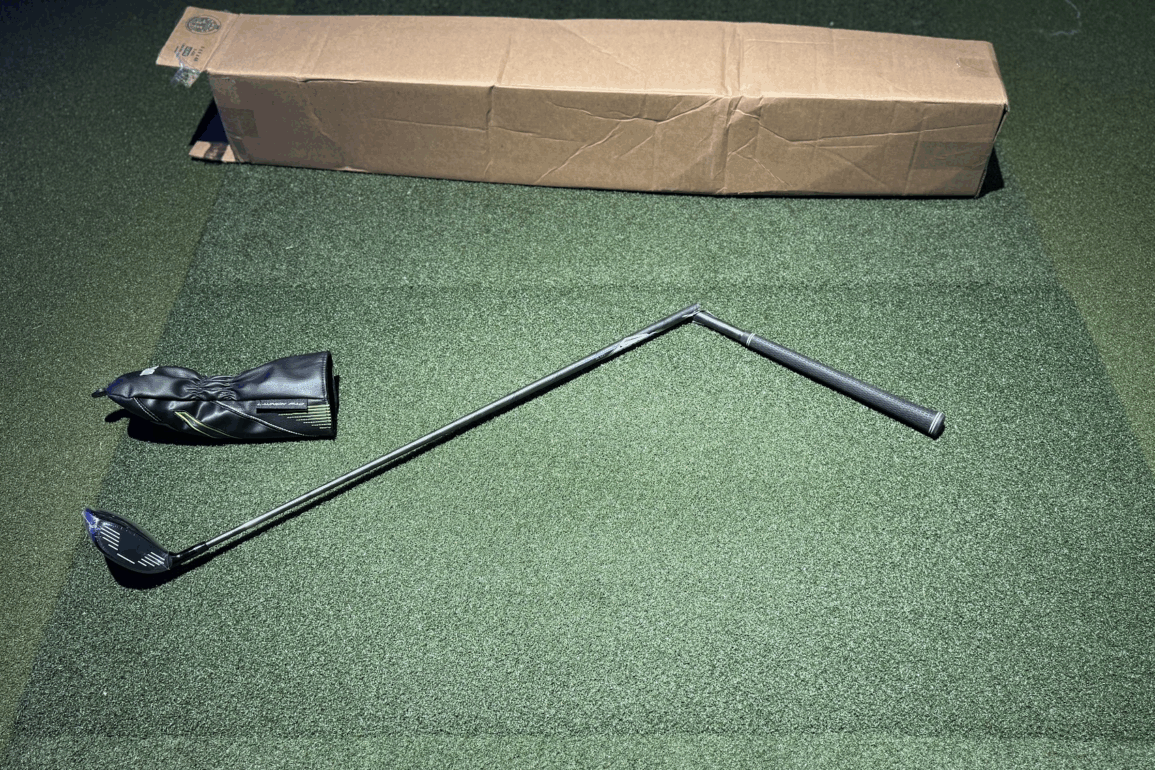
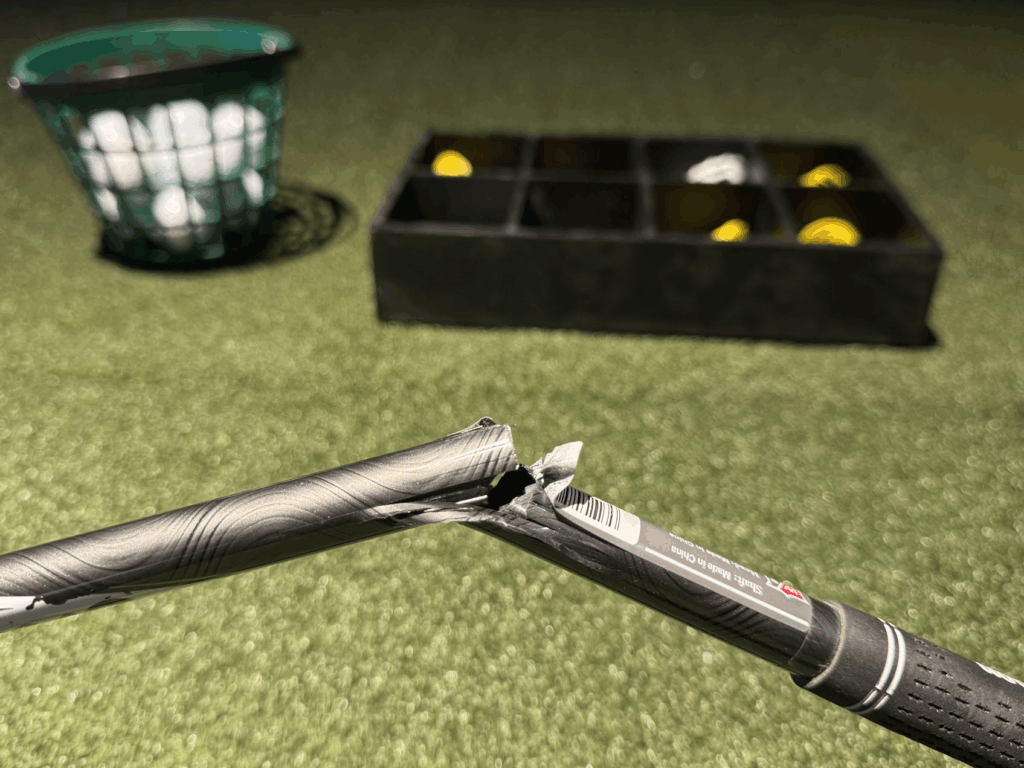
I’ve always thought of golf clubs as pretty sturdy—designed to handle mishits, turf interaction, and the occasional bad swing. So I never really considered that one could be damaged during shipping. But when my Wilson Launch Pad 2 fairway wood arrived, I opened the box to find the graphite shaft completely fractured at mid-point, bent sharply before it had ever seen a single swing. The outer packaging looked perfectly fine, which made the internal damage even more surprising.
what the . . .
Clinically speaking, the club presented with a complete, closed transverse fracture of the graphite shaft at the junction of the proximal and mid-third. The break exhibited apex lateral angulation of approximately 80–90 degrees, with clear evidence of fiber delamination and splintering along the fracture margins—consistent with compression-based failure under axial load. There was no comminution, but the clean displacement suggested a single high-force event rather than progressive stress. The hosel remained firmly seated, and the clubhead showed no rotation or torsional misalignment, confirming that the fracture was isolated to the shaft structure without secondary damage to adjacent components. This was a textbook shaft failure under crush force—rare, but mechanically plausible during mishandled shipping.
To the credit of the shop owner, the response was immediate and professional. Without any hesitation, they offered free return shipping and a full reshafting at no charge. There was no red tape, no blame game, and no drawn-out claims process—just a quick, solution-focused fix. It’s exactly the kind of service you hope for when you’re trying to gear up for the Connecticut golf season, where every decent weather day counts.
We’ll report back once the club is restored and ready to rejoin the bag. But for now, it stands as a reminder that even the most forgiving fairway woods aren’t immune to freak injuries—and that great customer service can heal even the worst of breaks. Whether you’re teeing it up at Smith Richardson or chasing par at Longshore, it’s good to know there’s still support when things snap.
There’s something addicting about flushing a golf shot—when you don’t even feel the strike, but the ball floats on air right at your target. For me, the best way to chase that feeling is by heading to Golf Lab CT in Fairfield before work, putting on some beats, and getting lost in the rhythm of crisp iron shots. It’s become a routine: music, TrackMan, and swing after swing of fine-tuning until I hit that perfect sound and feel. But to do it consistently, you can’t just guess. You need data. That’s where TrackMan’s Optimizer View becomes your best friend. With the right feedback, you can work smarter—not harder—and dial in the variables that truly affect contact, distance, and accuracy.
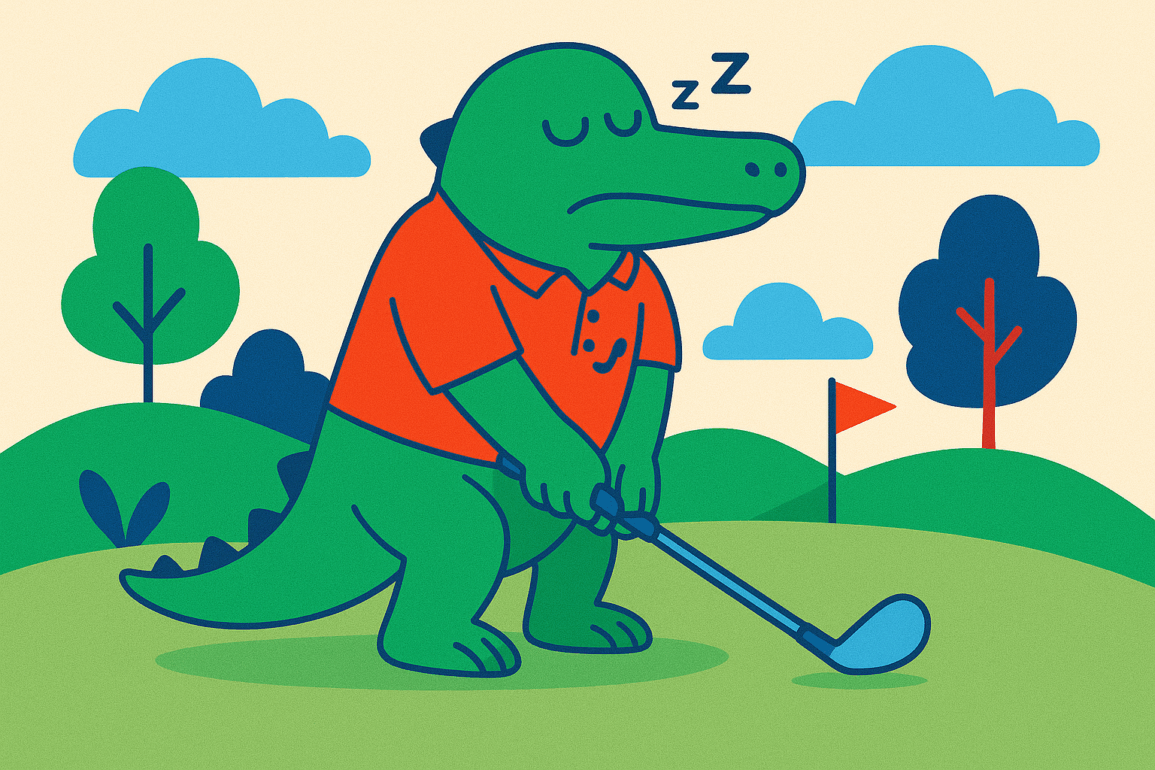
Enter the best iron-specific golf acronym ever: “Lazy Alligators Don’t Spin, Smash Balls Fast & Carry!”
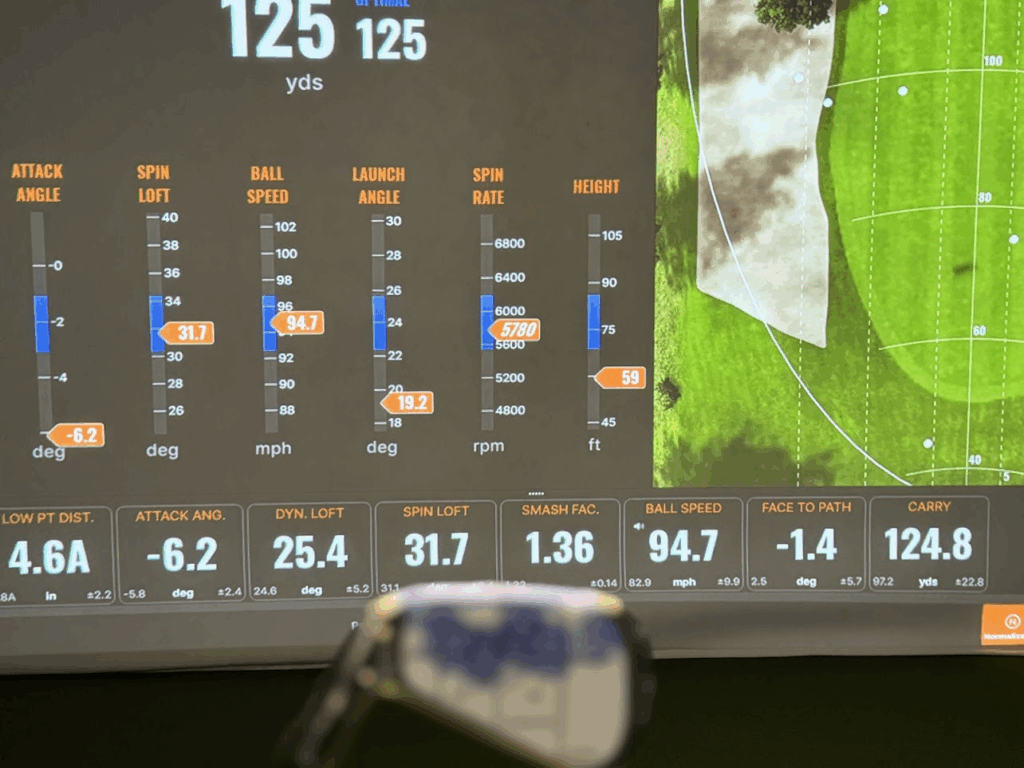
Each letter stands for a key metric in TrackMan’s Optimizer that, when tuned together, will help you strike the ball flush, maximize carry, and keep your aim true. Here are the eight metrics you need to master:
Summary Table of Flushing Metrics
Acronym
Metric & Description
Lazy (L)
Low Point Distance: Measures how far in front of or behind the ball your swing bottoms out. Essential for crisp, ball-first contact.
Alligators (A)
Attack Angle: Shows if you’re hitting up or down at the ball. Controls turf interaction and shot compression.
Don’t (D)
Dynamic Loft: Indicates how much loft is delivered at impact. Affects launch height, spin, and trajectory control.
Spin (S)
Spin Loft: Difference between Attack Angle and Dynamic Loft. Determines spin rate and ball compression.
Smash (S)
Smash Factor: Ratio of Ball Speed to Club Speed. Reflects strike efficiency and centeredness of contact.
Balls (B)
Ball Speed: Speed of the ball after impact. Tied to contact quality, clubhead speed, and face control.
Fast (F)
Face-to-Path: Difference between clubface and swing path direction. Major influence on ball flight curvature.
Carry (C)
Carry Distance: Distance ball travels through the air. Final proof of whether your strike and mechanics are working together effectively.
Reach this screen by going to: Trackman > Shot Analysis > Shot Optimizer
Understanding the Core Metrics
Before we break down each individual part of the acronym, it’s important to understand how they fit together. These eight metrics represent different but overlapping domains of swing and ball data—from how you deliver the club to how the ball responds. Think of them as puzzle pieces: the more of them you fit into place, the closer you get to that pure, effortless shot. With that in mind, let’s dive into each one.
L = Low Point Distance
Low Point is the lowest part of your swing arc relative to the ball. This is the foundational metric. When your low point is consistently 5–10 cm ahead of the ball, you’re striking it ball-first, compressing it properly, and then taking turf. It’s so crucial that I’ve set TrackMan to speak this number out loud after each swing. If your low point is behind the ball, you’re likely hitting fat shots or blading them thin. Too far forward can make the strike too steep, risking a dig. Consistently forward low point leads to ball-first, turf-second contact—the holy grail for iron play.
A = Attack Angle
Attack Angle tells you if your club is traveling up or down at impact. With irons and wedges, you want a negative angle between -3° to -6°. A shallow negative angle allows for clean, compressive contact. Too shallow, and you may catch it thin or top it. Too steep and you risk digging into the turf. This number reflects your body tilt, shaft lean, and swing arc all working in sync.
D = Dynamic Loft
Dynamic Loft is the amount of loft presented at impact, based on your shaft angle and hand position. For a 7-iron, it should typically be between 20° and 25°. Higher than this usually means you’re flipping the wrists or adding loft, resulting in weak high shots. Too low, and you’re likely delofting excessively, which can lead to low bullets with less control. Dynamic loft helps explain why two shots with the same club speed can fly completely differently.
S = Spin Loft
Spin Loft is calculated by subtracting Attack Angle from Dynamic Loft. For mid-irons, the ideal range is 10° to 15°. Too much spin loft, and you’re not compressing the ball well, leading to glancing strikes and high spin. Too little spin loft may reduce control and cause unpredictable flight. It’s one of the most insightful numbers for gauging how effectively you’re squeezing the ball.
S = Smash Factor
Smash Factor measures how efficiently you transfer energy to the ball. It’s the Ball Speed divided by Club Speed. For a well-struck 7-iron, a Smash Factor of 1.30 to 1.35 is excellent. If it’s lower, your contact is probably off-center. A high smash means solid compression, centered face contact, and great energy transfer.
B = Ball Speed
Ball Speed is how fast the ball is traveling immediately after impact. For a 7-iron, expect values around 110–125 mph. Lower than that? You’re losing speed due to inefficient strike or slow swing. Higher than that? You’re compressing the ball well with good energy transfer. It’s a direct reflection of how well everything came together at impact.
F = Face-to-Path
Face-to-Path tells you how open or closed your clubface is relative to the swing path. The goal is a number close to 0° to ±2° for neutral, straight shots. A higher positive number creates slices; a high negative produces hooks. Even with great contact, poor face-to-path leads to directional misses. Combine this number with strike location to truly understand your shot shape.
C = Carry Distance
Carry Distance is how far the ball travels in the air. For a 7-iron, typical carry is around 140–160 yards. Shorter carry may point to weak contact, excess loft, or low ball speed. Longer carry usually indicates optimal delivery. It’s the outcome of all the above metrics working in unison.
Final Word
If you’re serious about flushing your irons consistently, mastering the key TrackMan metrics is the fastest way to get there. “Lazy Alligators Don’t Spin, Smash Balls Fast & Carry!” isn’t just a fun acronym—it’s a complete roadmap to understanding strike quality, energy transfer, and launch dynamics.
At Golf Lab CT, I rely on these metrics to keep my sessions focused. But even when I’m not in the TrackMan studio, I always fall back on one number: Ball Speed. It’s the ultimate outdoor feedback tool. When I’m at the Toptracer range at H. Smith Richardson in Fairfield, I use Ball Speed to gauge how solid my contact really is. Lower than expected? I know I missed the center or added loft. Higher than usual? That’s the flush feeling confirmed. In the video below with Bryson DeChambeau and Grant Horvath, you can see that that is the sole metric that they focus on.
So whether you’re training inside or out, pay attention to the numbers that tell the full story of your strike. Start with Low Point, Attack Angle, and Smash Factor—but never ignore how far and fast that ball is flying. Your scorecard—and your swing—will thank you.