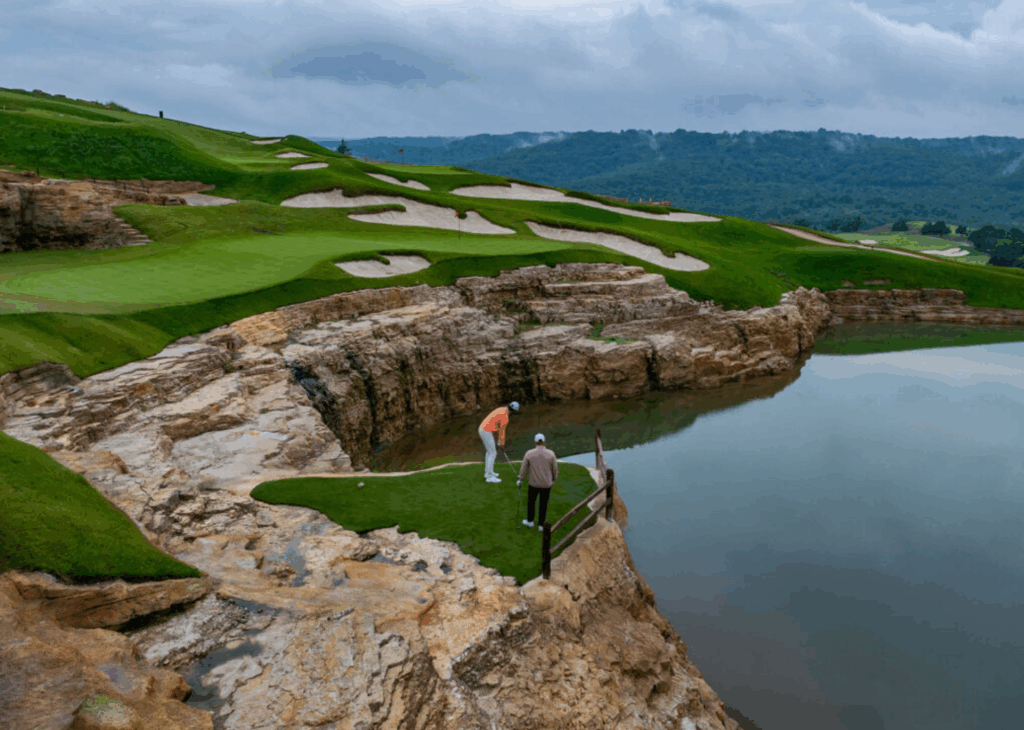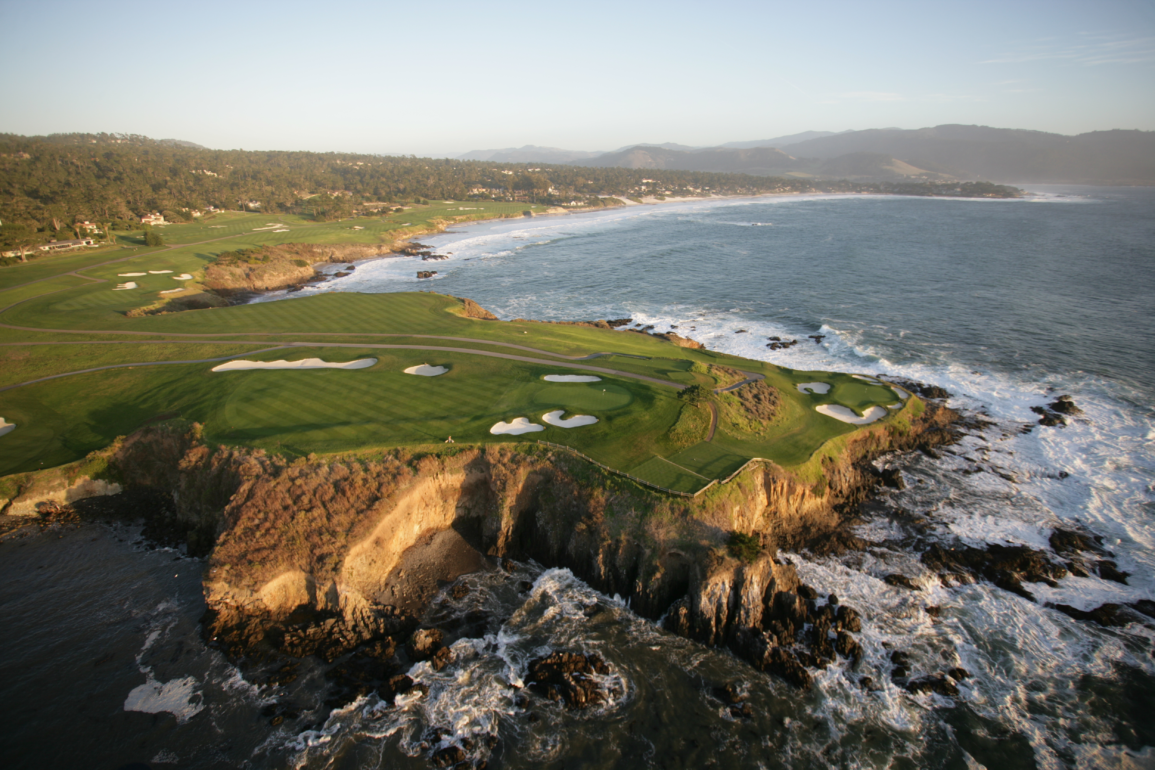
Category: Golf Trips

  • Worth It? NYC to Pebble Beach Golf

    Worth It? NYC to Pebble Beach Golf

    It’s been unusually cold in Connecticut this winter—snow banks lining every street, ice on the driveway, and every golf course in the state locked up tight until at least March. I’ve been grinding rounds at XGolf and GSPro, playing Pebble Beach virtually more times than I can count, but there’s something about staring at a simulator screen that makes you want the real thing even more. Then a coworker mentions that there’s a webcam on the first tee of Pebble Beach and suddenly I’m looking at flights, checking tee times, and convincing myself that now is the time. I want to shank a ball off the tee myself, not watch others do it!
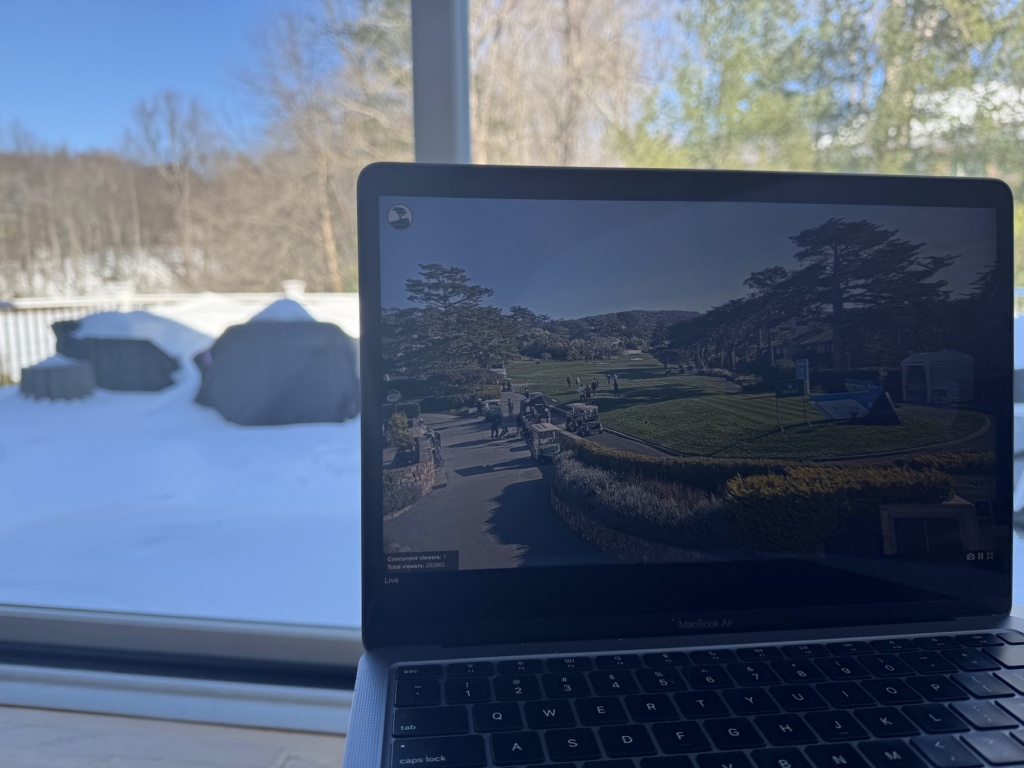
    Get me out of the snow!

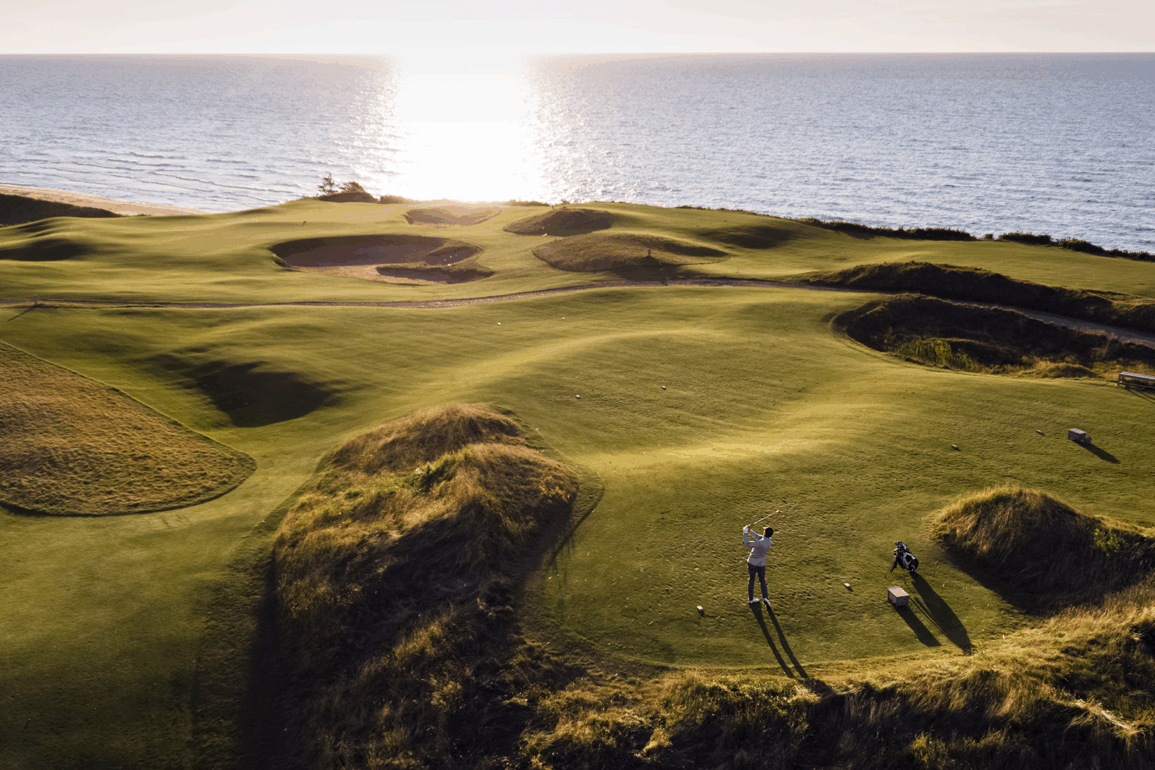
    What makes Pebble Beach matter? It’s not just one course—it’s an entire golf ecosystem. Pebble Beach Golf Links gets the glory (and the U.S. Open rotation), but Spyglass Hill might be the better test, and The Links at Spanish Bay offers a true links experience on American soil. Add in Del Monte and The Hay for variety, and you’ve got five days of golf that could keep any architecture nerd busy for a week. The setting is unmatched—dramatic cliffs, Monterey pines, crashing waves, and firm, fast conditions that demand every shot in your arsenal.

    For a trip running $5,500-7,500 over four days, is it worth it? Let’s break down what you’re actually getting for that money.
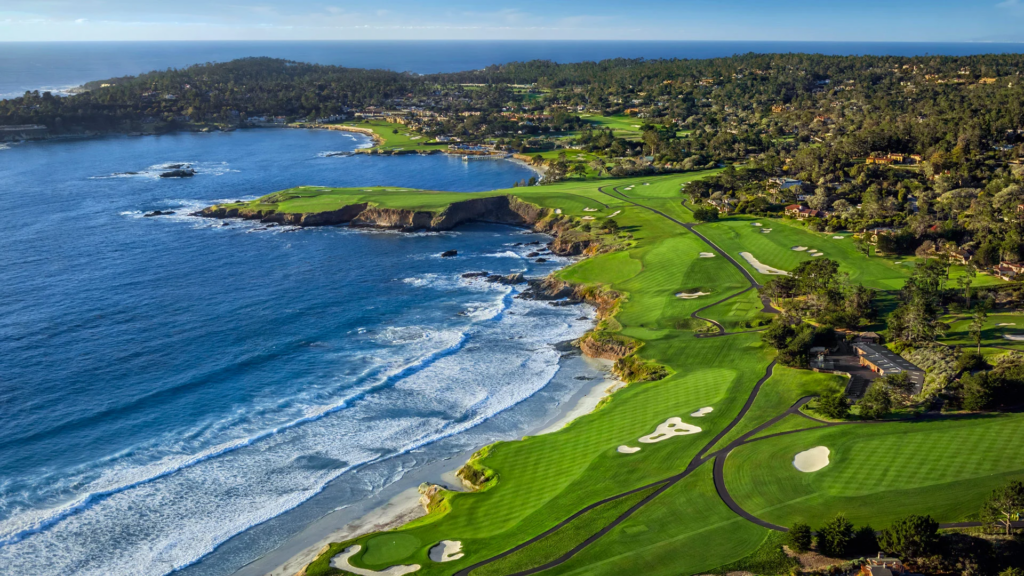
    Love those dramatic ocean cliffs

    Golf

    The Pebble Beach experience revolves around three championship courses, each with its own personality. You’re not just checking boxes—you’re experiencing three distinct philosophies of coastal golf design, all within a few miles of each other. The common thread? Firm, fast conditions, relentless wind, and greens that punish anything less than precise approach shots.

    CourseDescription
    Pebble Beach Golf Links
    18 holes, 6,828 yards
    Jack Neville’s 1919 masterpiece remains the crown jewel, and green fees north of $600 don’t deter anyone. The opening holes meander inland through Monterey pine, setting up the spectacular oceanside stretch from 4 through 10. The 7th—109 yards straight at the Pacific—might be the most photographed par 3 in golf. The 8th plays uphill to a cliffside green where anything right is gone. The closing stretch (17-18) along Carmel Bay has decided major championships. The greens are small, elevated, and lightning-fast. It’s strategic rather than overpowering, demanding course management over raw distance. One round isn’t enough.
    Spyglass Hill Golf Course
    18 holes, 6,960 yards
    Robert Trent Jones Sr. built Spyglass in 1966, and many consider it the toughest track on the peninsula. The opening five holes play along the dunes with ocean views, then the course plunges into Monterey pine forest for a completely different back nine. It’s longer than Pebble, tighter off the tee, and the greens are even more severe. The 4th hole—a downhill par 3 over a bunker-filled wasteland—sets the tone. You need every club in the bag, and even then, bogeys pile up fast. Green fees run around $450.
    The Links at Spanish Bay
    18 holes, 6,821 yards
    Jones, Tom Watson, and Sandy Tatum collaborated in 1987 to build a true links course on American soil. This is the most forgiving of the big three, but “forgiving” is relative—the wind howls off Monterey Bay. The front nine hugs the coastline with stunning ocean views and firm, bouncing fairways. The back nine moves inland but maintains the links aesthetic with rumpled terrain and pot bunkers. Spanish Bay rewards creativity over power. Bump-and-runs work better than high flop shots. It’s the most fun round of the trip. Green fees hover around $325.
    Del Monte Golf Course
    18 holes, 6,339 yards
    The oldest course on the Monterey Peninsula (1897), Del Monte offers a historical palate cleanser between the heavy hitters. It’s shorter, tree-lined, and plays more like a parkland course. Green fees run around $130—cheap by Pebble Beach standards—and it’s a solid warm-up round or a recovery day after Spyglass beats you up. Don’t skip it entirely, but don’t expect it to compete with the marquee tracks.
    The Hay<br>9 holes, par 3 courseTiger Woods and Coore & Crenshaw collaborated on this short course that opened in 2021. Holes range from 47 to 106 yards, all built on the site of Peter Hay’s original pitch-and-putt. It’s pure fun—no tee times needed, walk-up play, and it’ll cost you around $50. Squeeze it in before dinner or use it to work on your wedge game. Low commitment, high entertainment value.

    The through-line across all three championship courses? Coastal conditions, firm turf, small greens, and wind that changes everything. One round of Pebble is mandatory. Spyglass is the better golf course. Spanish Bay is the most fun. You need at least three days to do it justice, and even then, you’ll leave wanting to come back.

    Scene

    You’re staying at The Lodge at Pebble Beach or The Inn at Spanish Bay, both on-property resorts that eliminate the hassle of off-site logistics. The Lodge sits right on the 18th fairway of Pebble Beach, offering immediate access to the golf shop, practice facilities, and coastal views. Rooms run $900-1,500 per night depending on the season, and you’re paying for convenience as much as luxury. The Inn at Spanish Bay is slightly more affordable ($700-1,200/night) and offers a quieter, more relaxed vibe with direct access to Spanish Bay’s first tee. Both properties deliver the full resort experience—impeccable service, coastal elegance, and the kind of atmosphere where everyone’s talking about their round over drinks.

    Dining on the Monterey Peninsula is top-tier. At The Lodge, Stillwater Bar & Grill overlooks the 18th green and Carmel Bay—perfect for post-round drinks and upscale American fare. The Bench at the Lodge serves breakfast and casual bites. Over at Spanish Bay, Roy’s at Pebble Beach delivers Hawaiian fusion with Pacific Rim influences. For off-property options, head to Carmel-by-the-Sea for Casanova (French/Italian) or La Bicyclette (rustic European). Expect $75-150 per person for dinner at the nicer spots.

    Non-golf amenities include world-class spas at both resorts, miles of coastal hiking trails along the 17-Mile Drive, and easy access to Carmel’s art galleries and wine tasting rooms. The Monterey Bay Aquarium is a 20-minute drive if you need a break from golf. This trip works best for golfers who want the full luxury experience—couples, buddy trips, or anyone celebrating a milestone round.
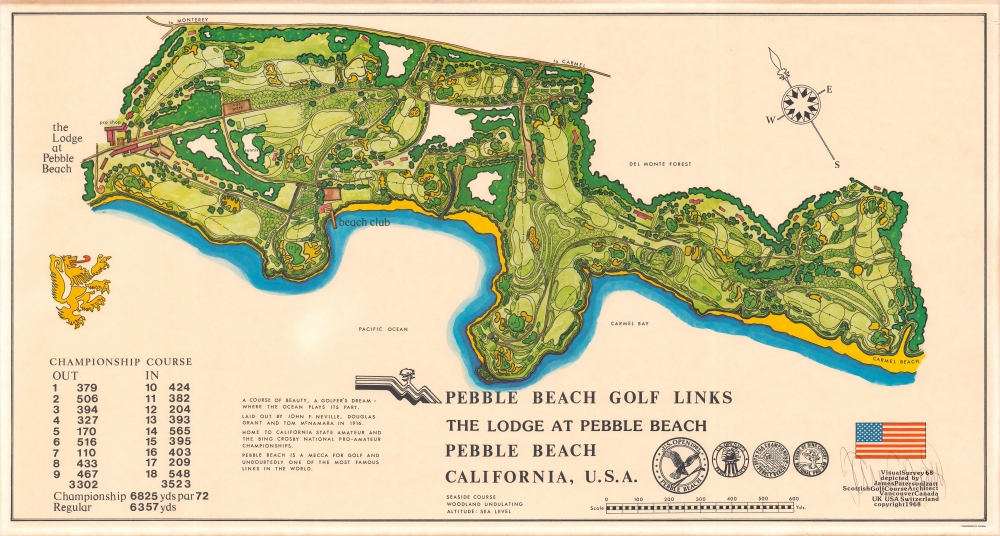
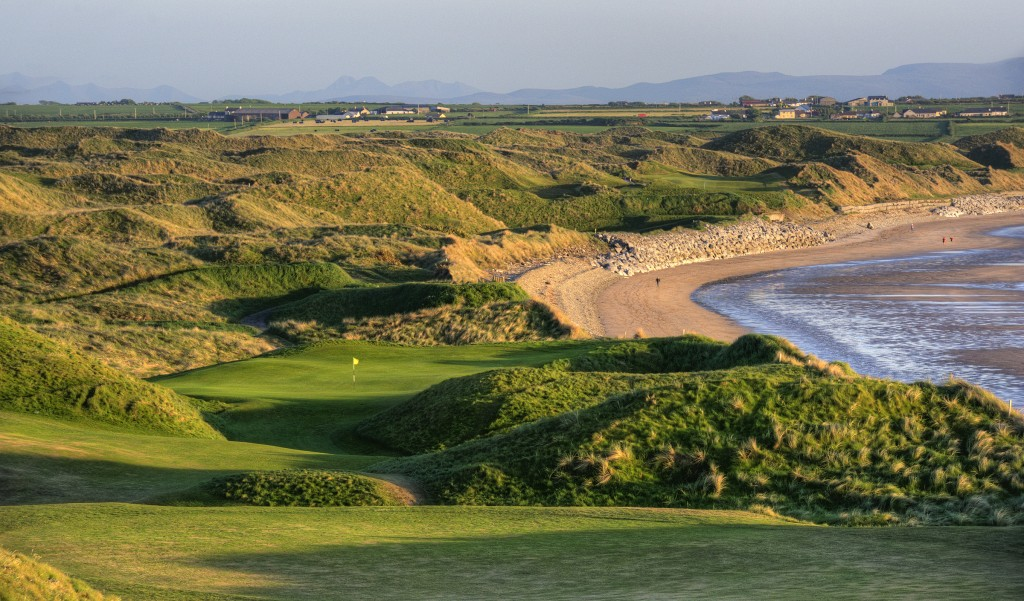
    Perfect geography

    Cost

    Here’s what a four-day, three-night trip looks like:

    DayItinerary
    Day 1Fly into San Francisco or Monterey (SFO offers more options), drive two hours down the coast. Check in at The Lodge mid-morning. Play Del Monte to shake off travel rust.
    Day 2Spyglass Hill in the morning. Lunch at Roy’s. Free afternoon to explore Carmel or hit the spa.
    Day 3Pebble Beach Golf Links—book the earliest tee time you can get. Post-round drinks at Stillwater overlooking the 18th.
    Day 4Spanish Bay in the morning. Play The Hay for fun. Head to the airport.

    You could add a fourth round, but three championship courses plus The Hay feels like the sweet spot.

    CategoryCost (Per Person)Notes
    Flights$400SFO roundtrip from NYC
    Rental Car$3004 days, split between 2 golfers
    Lodging$1,8003 nights at The Lodge, shared room
    Golf$2,200Pebble ($650), Spyglass ($475), Spanish Bay ($350), Del Monte ($150), The Hay ($50)
    Food & Drinks$6004 days, $150/day avg
    Total$5,300Per golfer, shared lodging

    Costs can climb higher depending on room choice (ocean-view suites push $2,000/night), extra rounds, or splurging on dinners. Budget $6,500-7,500 if you’re staying at The Inn, adding another round, or upgrading accommodations. The golf alone eats up 40% of your budget, and there’s no way around it—this is expensive golf.
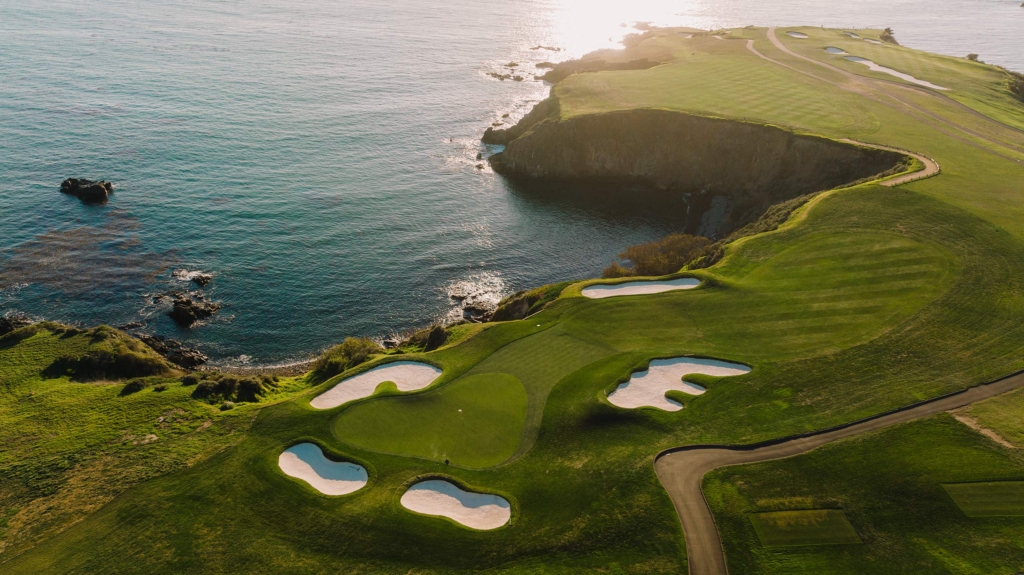
    Amazing views [From the Fried Egg]

    Prepare in CT

    Pebble Beach demands precision iron play, firm-and-fast creativity around the greens, and the ability to manage wind without losing your mind. The courses reward strategic thinking over brute force, and the small, elevated greens punish anything short or offline.

    The best way I’ve found to prepare for Pebble Beach’s coastal conditions is at Grassy Hill Country Club in Orange, CT. I know it’s private, but if you can wrangle a guest round, it’s worth it. Grassy Hill’s CB Macdonald and Seth Raynor design features the same template holes, strategic bunkering, and firm playing surfaces you’ll face on the Monterey Peninsula. The 4th hole’s redan green complex and the 11th’s biarritz are perfect proxies for the kind of shot-making Pebble Beach demands.

    Read our Grassy Hill Country Club review

    I’m currently working on a specific drill to prepare for the knockdown iron shots I’ll need at Pebble Beach, especially on holes like the 8th at Pebble (uphill into wind) and the 4th at Spyglass (downhill with trouble everywhere). The drill focuses on trajectory control with mid-to-long irons—5-iron through 8-iron—because those are the clubs I’ll be relying on most when the wind picks up.

    Highest Yield Drill to Practice

    I’m grinding knockdown iron shots at the range—the single most important skill for Pebble Beach’s wind. Here’s the drill: take your 7-iron to a 150-yard target. Move the ball back two inches in your stance, hands forward, weight 60% on your front foot. Three-quarter backswing, abbreviated chest-high finish, weight entirely forward at impact. The goal: penetrating flight that peaks at two-thirds normal height, lands at 145 yards, and releases forward with controlled roll.

    The key feeling is maintaining forward shaft lean through contact—you’re trapping the ball, not sweeping it. I’m hitting 20 balls in a row, tracking success rate. Right now I’m at about 60%—the misses either balloon (hanging back on my right side) or run too hot (over-rotating hands through impact).

    This matters because when you’re standing on Pebble’s 8th tee with wind howling off the Pacific, a normal 7-iron balloons and drifts 30 yards offline. The knockdown keeps the ball under the wind and on line. Same for Spanish Bay, where firm turf rejects anything soft. Work on this drill with 5-iron through 8-iron—those are the clubs you’ll rely on most when conditions get nasty.
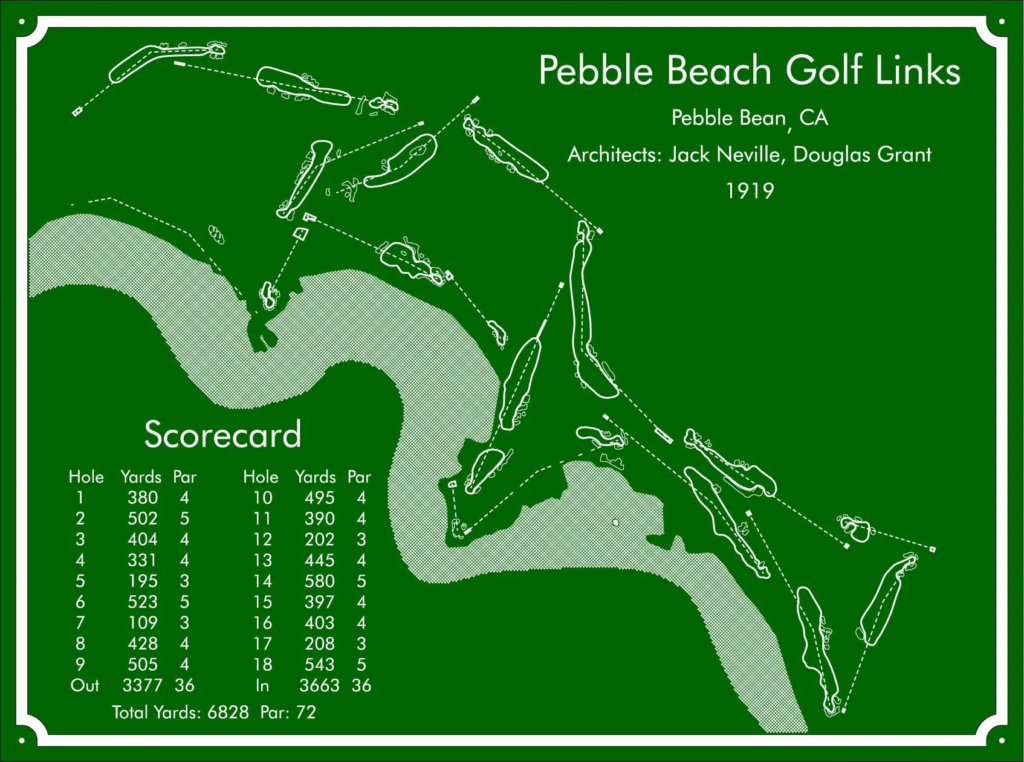
    Great routings

    Final Word

    Would I go? Absolutely. This is the trip you make when you’re tired of thinking about it and ready to actually do it. Pebble Beach delivers on the hype—not because it’s easy or affordable, but because it’s the rare bucket-list experience that lives up to the mythology. The golf is world-class, the setting is unmatched, and walking the same fairways as Jack Nicklaus, Tom Watson, and Tiger Woods adds a layer of reverence you don’t get at most resorts.

    Book this trip if you want the full pilgrimage experience, if you can justify the cost without wincing, and if you’re ready to play golf that will challenge every part of your game. Don’t wait until you’re “good enough”—you’ll never feel ready, and that’s the point. Go now, play badly, and come back smarter.
  • Worth It? NYC to Big Cedar Lodge Golf

    Worth It? NYC to Big Cedar Lodge Golf

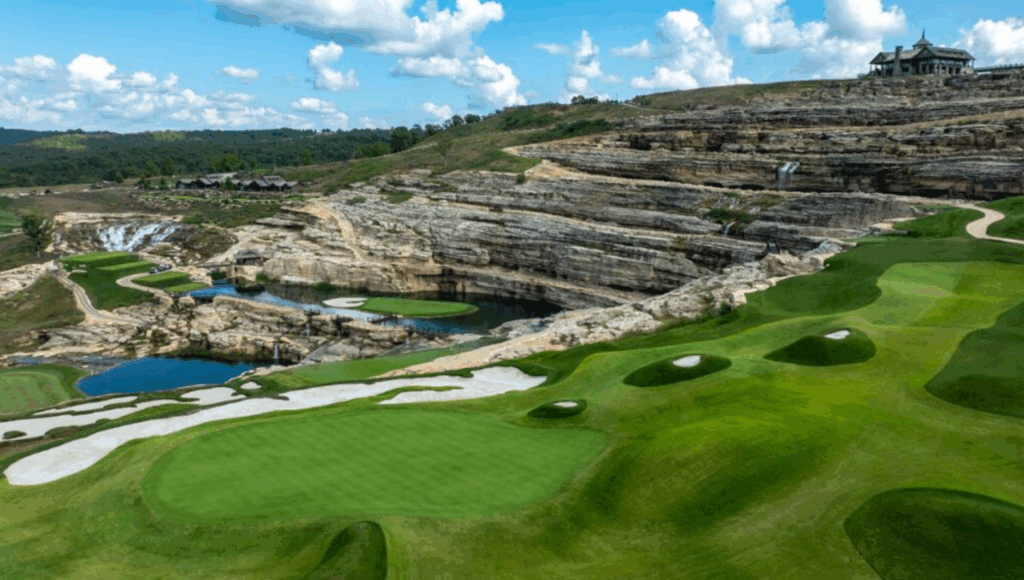
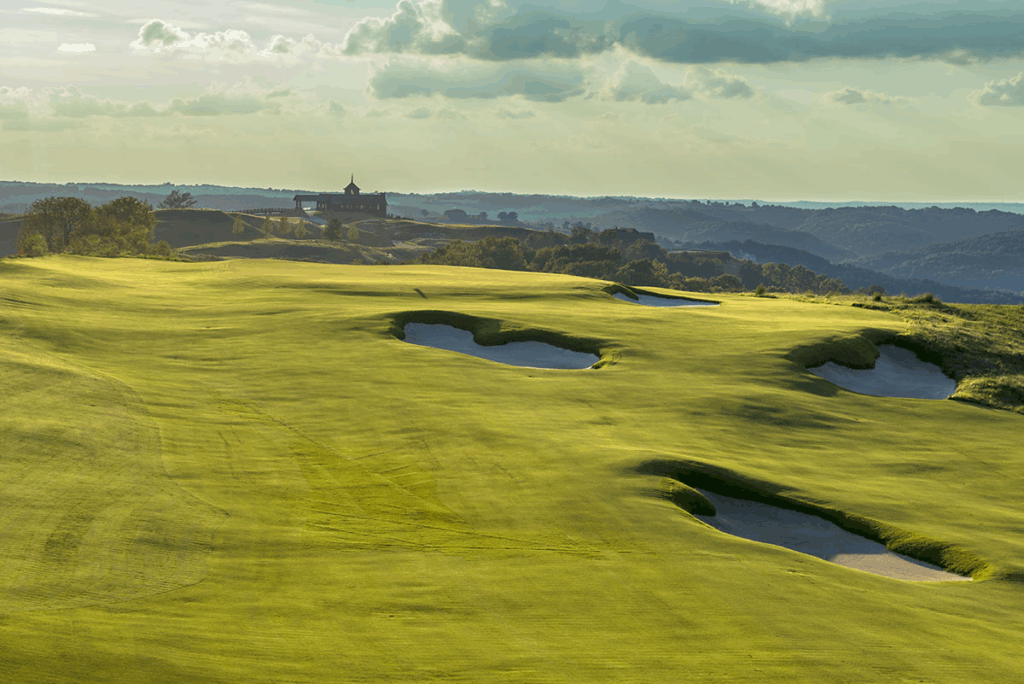
    Big Cedar Lodge, located in Ridgedale, Missouri near the Arkansas border, is one of the most ambitious public golf resorts in the United States—featuring six courses designed by six legendary architects. Set in the heart of the Ozark Mountains and perched above Table Rock Lake, the resort is a scenic, high-end golf retreat that combines rugged topography with elite design pedigree.

    From short-course showpieces like Cliffhangers and Top of the Rock to full-length challenges like Payne’s Valley and Ozarks National, Big Cedar promises variety, drama, and beauty in every round. Add in polished accommodations, a full-service spa, on-site restaurants, and lakefront excursions, and it becomes more than just a golf trip—it’s a golf experience.

    For a $2,145 price tag over a 4-day trip, is it worth it?


    Golf

    This isn’t just one course—it’s a full-scale golf destination with six distinct courses, including some of the most scenic and architecturally ambitious layouts in the Midwest:

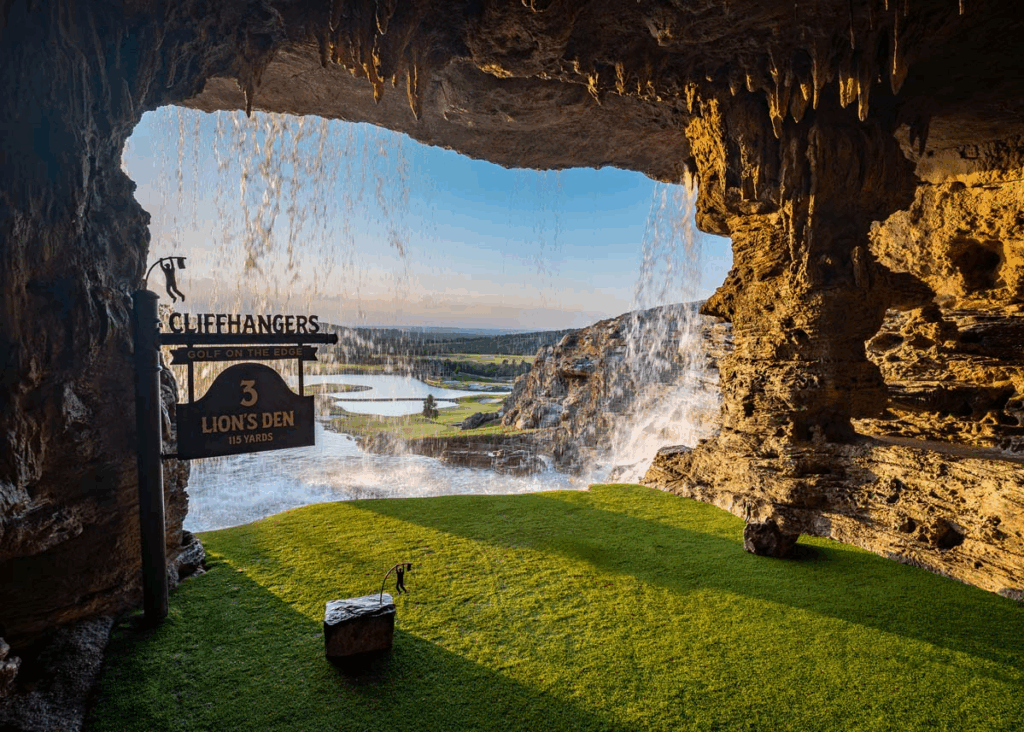
    • Cliffhangers (13 holes, est. 45 acres, 1,850 yards): A cliffside par-3 course with designs by Jack Nicklaus and Gary Player. Elevated tees, bold green contours, and panoramic lake views make this the visual signature of the resort.
    • Mountain Top (13 holes, ~50 acres, approx. 1,900 yards): Coore & Crenshaw-style minimalism across a granite plateau. Encourages a relaxed, walking-friendly rhythm with ample shotmaking creativity.
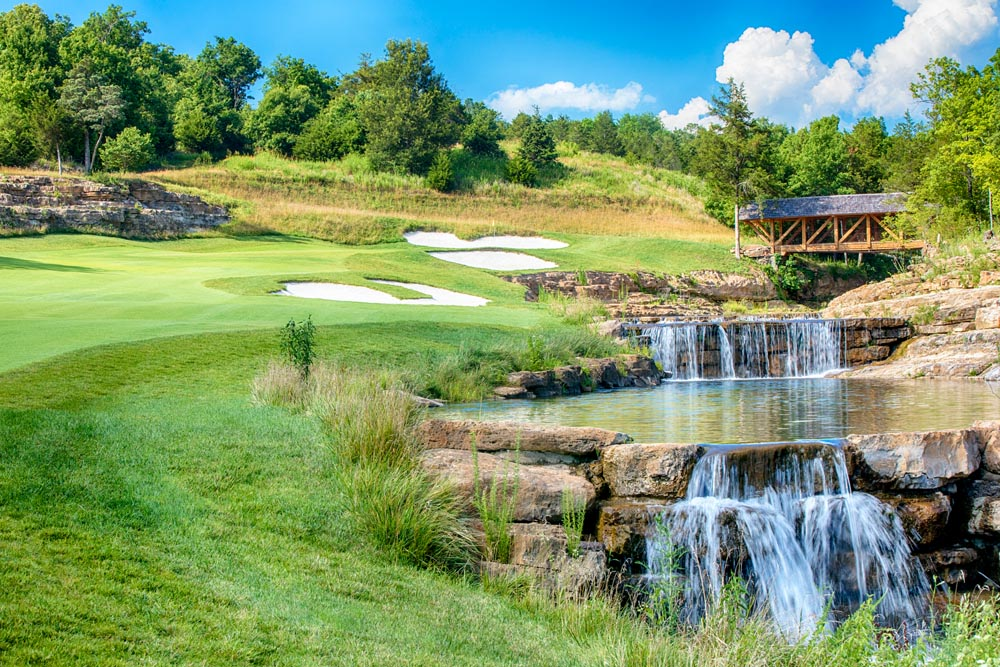
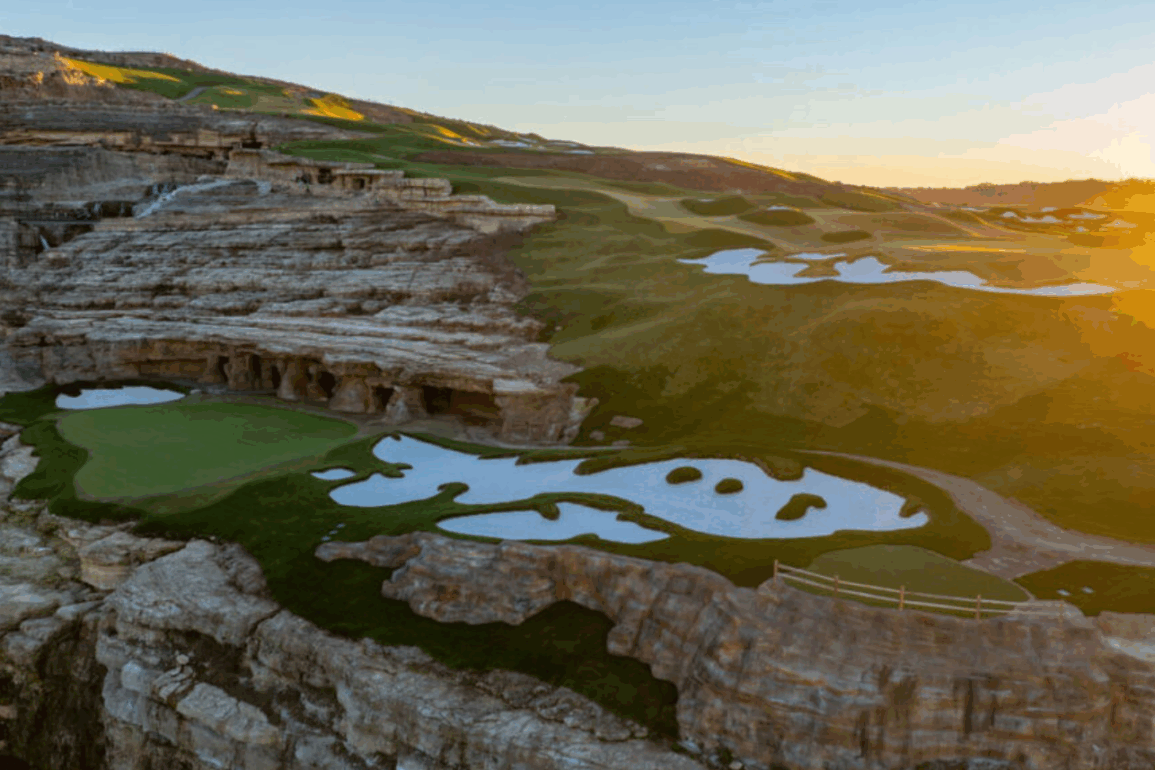
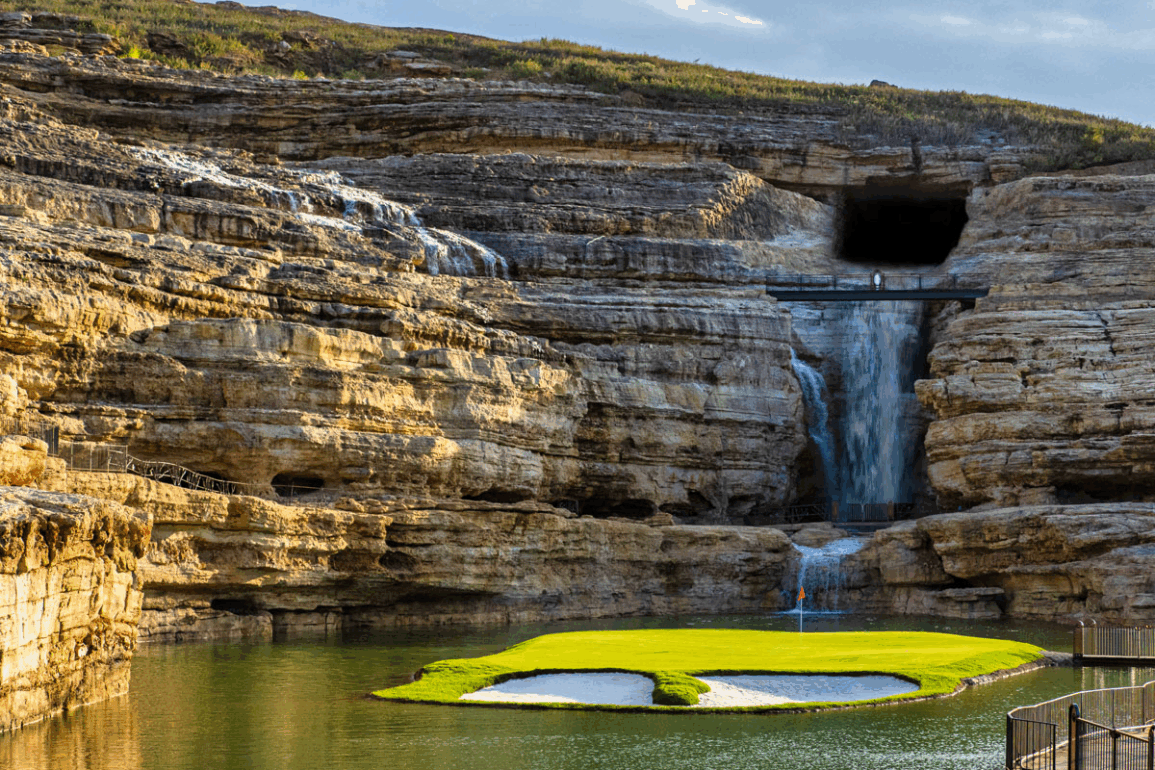
    • Top of the Rock (9 holes, ~60 acres, approx. 2,200 yards): Arnold Palmer’s waterfall-and-cave showpiece. More of a luxury experience than a traditional course, but undeniably photogenic and fun.
    • Payne’s Valley (18 holes, 200+ acres, 7,370 yards): A Tiger Woods design with a dramatic finish on the walkable 19th “Big Rock” hole. It’s wide, scenic, and meant to be enjoyed more than conquered. The back nine features a mix of exposed rock shelves, creeks, and long strategic par 4s.
    • Ozarks National (18 holes, ~200 acres, 7,036 yards): Designed by Bill Coore and Ben Crenshaw, this course features dramatic elevation changes, native grasses, and minimalist shaping. Routed along a ridge, it delivers sweeping views and tough green surrounds.
    • Buffalo Ridge (18 holes, ~210 acres, 7,036 yards): Originally by Tom Fazio and later updated by Johnny Morris. Routed through limestone valleys, streams, and forest edges, it’s the most traditional parkland layout of the six and often the toughest test.

    Together, Big Cedar delivers a rare blend: six courses by six design legends in one natural setting. Whether you’re chasing scorecards or sunsets, it’s hard to imagine a more comprehensive 4-day menu of public-access golf in the Midwest.


    Scene

    Big Cedar Lodge is a full-on Ozarks retreat—crafted to feel like a cross between a national park lodge and a sporting club for families, fishermen, and golfers alike. Once on property, everything is seamlessly integrated: log cabin accommodations, sweeping lake views, five restaurants, spa services, fire pits, and stone-lined clubhouses.

    Dining options include Devil’s Pool for rustic meals and resort breakfast, Arnie’s Barn for smoked meats and cocktails with a panoramic bluff view, and Osage for elevated dinner service with a full wine list. Grab-and-go and tavern-style options are available near Top of the Rock.

    Non-golf amenities are extensive. The Ancient Ozarks Natural History Museum is far better than you’d expect, with artifacts and exhibits that tell the story of the region. Cedar Creek Spa offers full-service treatments in a woodland setting. Table Rock Lake provides fishing, canoeing, and boat excursions. For adventure seekers, there’s also a shooting academy, cave tours, a bowling alley, and hiking trails winding through the ridges and forests.

    It’s a destination that allows for high-activity days or deep relaxation—equally suited for buddy trips or mixed-group retreats. And the lodge-style rooms with exposed beams and stone fireplaces keep your group comfortably together without feeling cramped.


    Cost

    Here’s a sample itinerary for a Thursday-to-Sunday trip based on a group of four golfers.

    • Fly out of JFK on Thursday morning and arrive in Springfield, Missouri by early afternoon. From there, take a shared Uber to Big Cedar Lodge (~60 miles). After checking into a lodge room with two queens or a pull-out setup, enjoy dinner and drinks at Devil’s Pool and get settled in.
    • Friday starts strong with a morning round at Mountain Top, followed by lunch at Arnie’s Barn and an afternoon round at Cliffhangers. Wrap the evening with a visit to the Ancient Ozarks Museum or a lakeside dinner.
    • Saturday is for full-length courses: open with Ozarks National or Buffalo Ridge, then take a break before an optional evening 9 at Top of the Rock.
    • Sunday morning, play the signature Payne’s Valley, including the dramatic 19th hole carved through rock. After lunch and a final drink, Uber back to SGF and fly home in time for Monday.
    CategoryCost (Per Person)Notes
    Flights$500Nonstop JFK → Springfield, MO (SGF)
    Uber Transfers$50Roundtrip to/from Big Cedar (~60 miles)
    Lodging$4953 nights, shared room at the lodge
    Golf$7255 rounds: Mountain Top ($80), Cliffhangers ($125), Ozarks or Buffalo Ridge ($150), Top of the Rock ($135), Payne’s Valley ($235)
    Food & Drinks$375Resort meals, drinks, and snacks over 4 days
    Total$2,145Per golfer, assuming shared lodging and rides

    Final Word

    Would I go? Absolutely. When stacked up against other elite Midwest golf destinations like Sand Valley in Wisconsin or The Prairie Club in Nebraska, Big Cedar Lodge holds its own and then some.

    Sand Valley is known for its firm, sandy fescue terrain and minimalist design ethos, offering courses like Coore & Crenshaw’s Sand Valley, David McLay Kidd’s Mammoth Dunes, the 17-hole Sandbox par-3, and the ultra-exclusive Lido replica. The resort is beloved by architecture buffs and serious walkers, and while it offers a deeply immersive experience, it can also feel more spartan and golf-centric with fewer off-course diversions. Travel to central Wisconsin takes more effort, and a typical 3-night, 4-round stay costs around $2,000–$2,200 per person.

    The Prairie Club is more remote, built on the edge of the Nebraska Sandhills, and offers massive scale and solitude. Its Dunes Course and Pines Course are big, bold experiences, and the 10-hole Horse Course invites creative match play. While it’s a purist’s dream for sunrise-to-sunset golf, getting there requires flights into Rapid City or North Platte and long drives across the plains. A full trip there still comes in around $1,850–$2,050 per person.

    Big Cedar, by comparison, wins not just on quality of golf, but on versatility and ease. It offers six courses by six different architects—Nicklaus, Player, Palmer, Woods, Crenshaw, and Fazio—in one lakeside mountain setting. You can play short courses and full-length tracks, enjoy cliffside tee shots or creek-crossing par 5s, all while staying in a resort that caters equally to golfers, families, and outdoor adventurers. Add in the museum, spa, lake, and dining, and you’ve got a trip that feels complete even if you only play 3–4 rounds.

    For a group of golfers flying out of the NYC area, Big Cedar Lodge is a destination that balances travel convenience, architectural variety, and off-course charm better than almost any other in its class. For me, it definitely seems worth it.

  • Worth It? NYC to Cabot Cape Breton

    Worth It? NYC to Cabot Cape Breton

    I first heard about Cabot Cape Breton while reading The Nature of the Game, where Mike Keiser recalls standing on a windswept bluff above the Gulf of St. Lawrence and knowing instantly: this was the spot. A place that could be Bandon Dunes’ East Coast sibling—untouched, dramatic, and begging for golf. That moment stuck with me. I found myself watching flyovers of Cabot Links and Cliffs late at night, studying scorecards, and daydreaming about what it would feel like to walk those holes with friends. It quickly rose to the top of my must-play list.

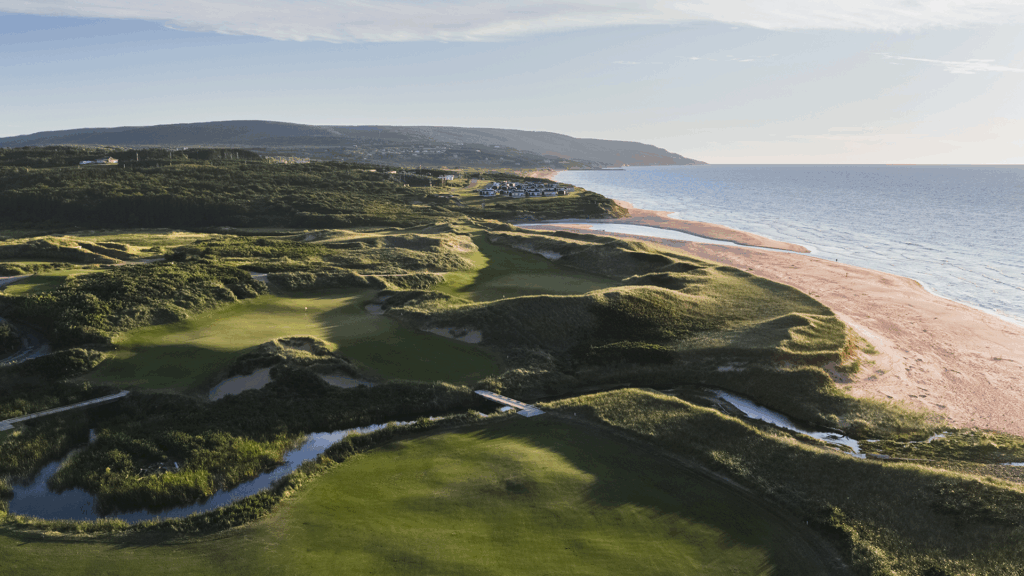
    Set on 500 rugged acres in the town of Inverness, Nova Scotia, Cabot is now home to 46 holes of golf: the original Cabot Links by Rod Whitman, the awe-inspiring Cabot Cliffs by Coore & Crenshaw, and The Nest—a 10-hole short course by Whitman and Dave Axland. The land itself is spectacular: perched high above the Atlantic, with fescue fairways, sandy blowouts, and views that rival anything in Scotland. But like Bandon, it’s remote—and its weather window is narrow. You come for the firm turf, the salty wind, and those rare summer days when everything feels just right.

    So when three of my golf buddies said they were in for a summer trip, Cabot was the obvious choice. We’re flying out of JFK and playing every hole on the property—including two strategic replays to see how the wind changes the story. If you’re a Connecticut golfer craving a pure, walkable golf pilgrimage with architecture that makes you think, this is how to do it.

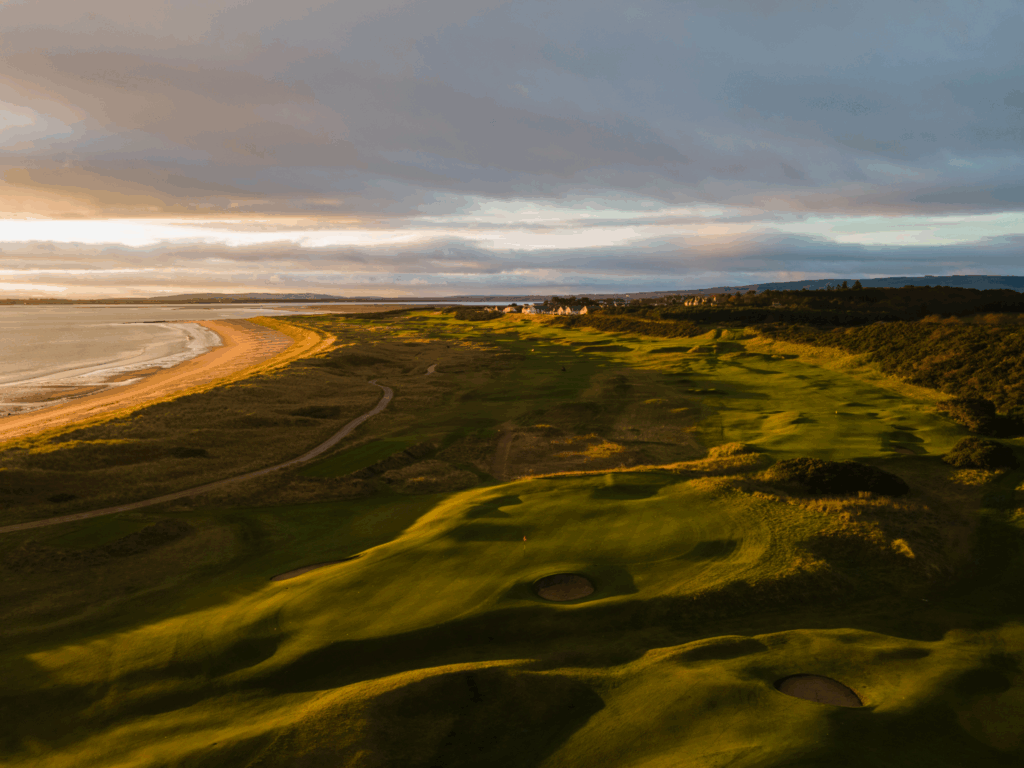
    Great views

    Course Architecture Focus

    Cabot isn’t a single course—it’s a collection. Each layout has its own rhythm and personality, shaped by its terrain, architect, and wind exposure. We’ve spent hours flying over each hole via 18Birdies, scrolling through Google Earth, and reading firsthand reviews on forums. Here’s what we’ve learned—and why we can’t wait to tee it up:

    1. Cabot Links (Rod Whitman, 6,854 yards): This is the original course, built right between the town of Inverness and the ocean. At a glance, it’s classic links: firm, low-cut fescue, wide fairways, and wind that demands creativity. Hole 11 is the one I keep rewinding—the centerline hazard and angled green scream for a drawing tee shot and a running approach. Holes 5 and 6 hug the coastline, where the margin for error depends entirely on your trajectory and the breeze. Whitman’s green sites are understated but require real intent. We’re planning to treat this as our tone-setting round.
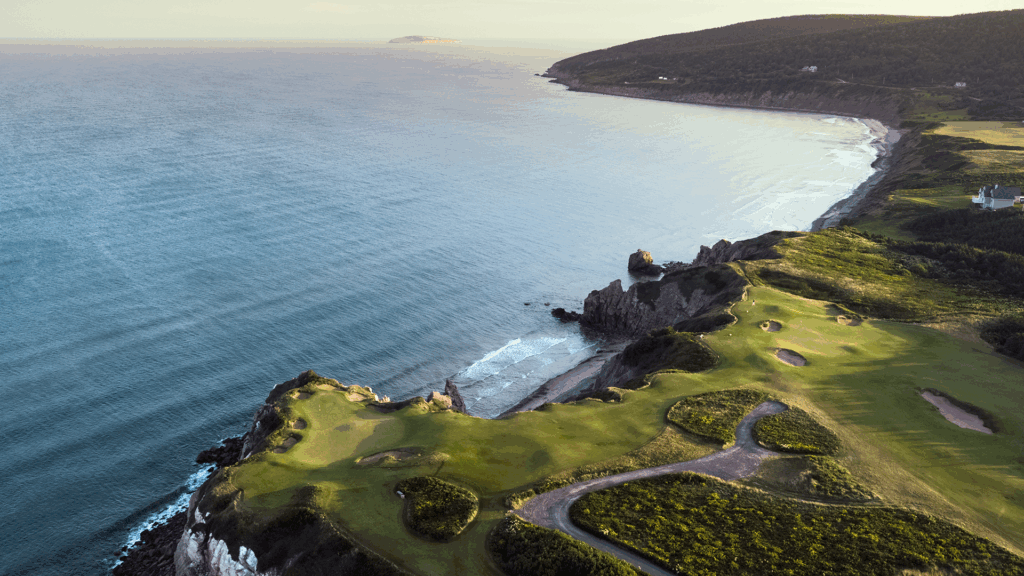
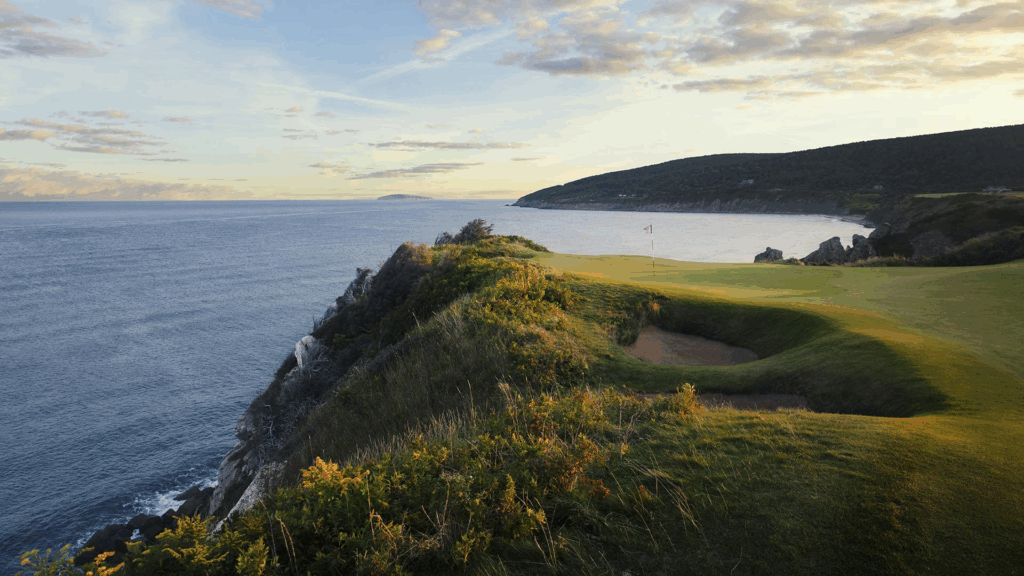
    2. Cabot Cliffs (Coore & Crenshaw, 6,764 yards): This is the showpiece. Coore and Crenshaw had elevation and raw cliffside terrain to play with—and they used it sparingly but surgically. Hole 16 gets all the attention: a mid-iron par-3 over the edge of the world. But hole 2 is the one I’m eyeing—a sweeping par-5 downhill with alternating fairway levels and an angled green. The greens here look less fussy than Links but are set into natural landforms that reward shot shape over spin. It’s a course that feels made for walking slowly and soaking it all in.
    3. The Nest (Whitman & Corrigan, ~1,300 yards): Don’t sleep on The Nest. This 10-hole short course sits above the cliffs and could easily steal the show. Every hole plays under 150 yards, but the wind, firm turf, and green contours promise real decision-making. Hole 3 jumps out in flyovers—a front-to-back slope and false front mean you’ll want to land it short and skip it in, unless you’re holding a knockdown spinner. We’re saving this one for golden hour.

    Cabot is more than a set of scenic holes—it’s a masterclass in how to route golf through coastal terrain. Every course here was designed to be walked, with transitions that flow naturally and views that evolve as you move through the landscape. You’re never far from the ocean, and you’re always aware of the wind. There’s no filler, no wasted movement—just intentional architecture that showcases what seaside golf can be when it’s grounded in movement, rhythm, and respect for the land. It’s why Cabot feels less like a resort and more like a pilgrimage.

    Exceptional course shaping

    Trip Cost Table

    CategoryCost & Notes
    Flights$500 – JFK → Sydney, NS, round trip
    Transportation$100 – Rental + airport transfers split 4 ways
    Lodging$1,100 – 4 nights, shared double rooms at resort
    Golf$875 – Links ($250), Cliffs x2 ($275 + $200 replay), Nest ($50), Links replay ($100)
    Food & Drink$300 – Clubhouse meals, post-round beers, breakfast
    Total$2,875 per person
    Dramatic cliffs

    Final Thoughts

    Getting to Cabot takes a few hops—JFK to Halifax or Toronto, then a connector to Sydney, followed by a 2-hour coastal drive. Not short, but not unreasonable. We built in a travel buffer so we can hit the putting green, check into the lodge, and toast to the trip before the first tee ball. Cabot is one hour ahead of EST, which is just enough to mess with dinner times, but easy enough to adjust to.

    We’re walking everything. Between five full rounds and The Nest, we’ll probably break 90,000 steps. Some of the climbs at Cliffs look steep, but the reward is always an ocean view. For me, that’s the beauty of the trip—you’re never in a cart, never separated from the land. It’s just golf, wind, and your own two feet.

    DaySchedule & Activities
    Wednesday7:00 AM (EST): Flight from JFK → Sydney → Cabot Resort
    3:30 PM: Warm-up and putting green
    6:00 PM: Dinner at Panorama Restaurant (on-site)
    Thursday6:30 AM: Light breakfast at Cabot Bar & Lounge
    7:00 AM: Tee time at Cabot Links
    12:00 PM: Lunch at Whit’s Public House
    1:30 PM: Tee time at Cabot Cliffs
    6:30 PM: Drinks + dinner at The Cabot Cliffs Lodge
    Friday6:30 AM: Breakfast at Cabot Links clubhouse
    7:30 AM: Tee time at Cabot Cliffs
    12:30 PM: Lunch at Cliffs halfway house or takeout
    4:00 PM: Tee time at The Nest (par-3 course)
    7:00 PM: Casual dinner and putting games at The Nest green
    Saturday6:30 AM: Breakfast on the go
    7:30 AM: Tee time at Cabot Links (replay)
    12:30 PM: Lunch at Cabot Links clubhouse
    3:00 PM: Tee time at Cabot Cliffs (replay favorite)
    7:00 PM: Final dinner overlooking 18th at Cliffs
    Sunday6:00 AM: Return flight
    6:00 PM (EST): Arrive at JFK

    If you’re a Connecticut golfer who loves shot value, strategy, and scenery, Cabot is one of those places that will stay with you. The cliffs, the width, the walk—it all adds up to something rare. This isn’t just a golf trip; it’s a deep breath and a full reset. We’ve been thinking about Cabot for years, and it’s great to finally plan it. This trip will run about $2,875 per person, and we believe it punches well above its weight.

  • Cheapest Top 100 Golf Trips for Connecticut Golfers

    Cheapest Top 100 Golf Trips for Connecticut Golfers

    If you live in Connecticut and dream of playing elite public golf courses without spending a fortune, you’re not alone. With smart planning, it’s possible to access several of the top-ranked courses in the country for less than a weekend at a resort closer to home. Based on the Golf Digest Top 100 Public Courses list, I’ve put together four destination trips that offer outstanding architecture, direct flights from the New York area, and bundled stay-and-play value. Whether you’re drawn to sand-based strategy, desert minimalism, or wooded parkland, these trips deliver Top 100 golf experiences that respect both your time and your wallet.

    Myrtle Beach, South Carolina

    If you’re looking for maximum architectural quality per dollar, Myrtle Beach is hard to beat. You’ll find three distinct courses that each bring a unique style, from Strantz’s creative visuals to Jones’s tournament-tested challenges—all within a few miles of each other. This trip is ideal for golfers who want to mix strategic shot-making with classic Southeast scenery, and do it all without breaking the bank.

    • Caledonia Golf & Fish Club (#85): Strantz’s signature lowcountry routing delivers drama from the opening tee shot under moss-draped oaks. Tight fairways, raised green pads, and marsh-side holes test both precision and imagination. The short par-4 9th and water-guarded 18th stand out as unforgettable.
    • True Blue Golf Club (#93): A broader, bolder counterpart to Caledonia, with massive fairways and sprawling sandy waste areas. The bold shaping demands aggressive lines off the tee and thoughtful approaches into heavily contoured greens. It’s as fun as it is challenging.
    • The Dunes Golf & Beach Club (#47): A Robert Trent Jones Sr. classic, famous for elevated green complexes, ocean breezes, and the thrilling 13th hole, “Waterloo,” which wraps around Lake Singleton. It’s a strategic challenge with a touch of Golden Age character.

    Affordable round-trip flights from New York to Myrtle Beach and package deals like the Brunswick Plantation special make this a standout trip for anyone chasing Top 100 experiences on a budget.

    Orlando / Central Florida

    Central Florida might be best known for amusement parks, but just 90 minutes south of Orlando lies one of the country’s most compelling golf destinations: Streamsong. The trio of modern courses here—each designed by a different world-class architect—offer bold, minimalist design on firm, fescue-covered terrain. Closer to Orlando, several solid public tracks can round out your trip. This is the best option for players seeking contemporary strategy and variety in a unique reclaimed landscape.

    • Streamsong Red (#4): Designed by Bill Coore and Ben Crenshaw, Red emphasizes contour, flow, and strategic decision-making. Routed over heaving landforms, it features wide corridors, massive bunkers, and tightly defended green complexes. The par-3 16th over a sandy abyss is unforgettable.
    • Streamsong Blue (#12): Tom Doak’s version is slightly more elegant in its transitions, with clever green sites and artistic shaping. Holes like the par-4 7th, with its semi-blind approach and wild interior contours, challenge players to think creatively.
    • Streamsong Black (#34): Gil Hanse’s contribution is the boldest of the three, with enormous putting surfaces, exaggerated movement, and a modern feel. It’s both physically demanding and creatively freeing, especially on the dramatic back nine.

    With round-trip flights from New York to Orlando hovering around $87 and regular stay-and-play packages, you can complete this full Streamsong experience for about $549 per person.

    Scottsdale / Phoenix, Arizona

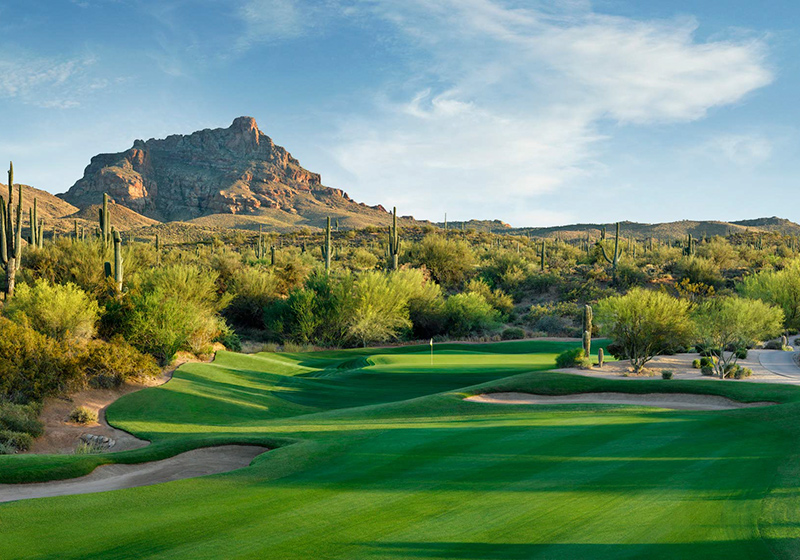
    Arizona delivers desert golf at its finest, with dramatic mountain views, firm playing conditions, and bold shaping. Scottsdale offers multiple Top 100 public courses within 45 minutes of each other, perfect for golfers who appreciate visual intimidation and strategic width. This region also shines for year-round playability and top-tier course maintenance, especially during the shoulder seasons when rates drop.

    • Troon North Pinnacle (#25): This Tom Weiskopf design weaves through boulders and arroyos, demanding smart play over brute strength. Greens are subtly defended, and elevation changes heighten both shot value and visual appeal.
    • We-Ko-Pa Saguaro (#14): Built by Coore & Crenshaw, this is pure desert golf with no homes in sight. It emphasizes width and angles, allowing players to choose their line off every tee. The routing flows effortlessly through the desert floor.
    • Quintero Golf Club (#46): A Rees Jones design set in the high desert hills, Quintero delivers long-range views, pristine conditions, and elevated tee shots that reward shot-shaping and distance control. It’s more traditional but undeniably fun.

    With round-trip airfare from New York around $185 and shoulder-season stay-and-play packages available at We-Ko-Pa or Talking Stick, you can complete this desert loop for approximately $881 per person.—not cheap, but fair for three of the best desert courses in the country.

    Louisville, Kentucky

    Though lesser-known as a golf destination, Louisville and its surroundings offer a quietly strong trio of courses, including one major championship venue. This trip suits golfers who appreciate traditional parkland golf with bold greens, tree-lined corridors, and a dose of history. You’ll find thoughtful routing and strong green sites across all three venues, with a mix of tournament pedigree and local charm.

    • Valhalla Golf Club (#92): Designed by Jack Nicklaus, this major-tested course features elevated tee shots, heavily bunkered greens, and sweeping doglegs. The 13th and 18th are classic risk-reward holes. While private, limited public access is sometimes available through special events and travel packages.
    • Heritage Hill Golf Club (#95): Often labeled one of Kentucky’s best public courses, it offers wide landing zones, strong vertical movement, and slick bentgrass greens. It’s a walkable course that quietly rewards smart play.
    • Covered Bridge Golf Club (unranked): A Fuzzy Zoeller design with generous fairways and tree-lined holes, it’s the most accessible and relaxed round of the trip, but still delivers strong par-3s and a few memorable doglegs.

    Round-trip airfare from New York to Louisville runs about $120, and with package lodging and tee time deals, you can pull off this underrated itinerary for around $891 per person.

    Final Cost Comparison

    LocationSample Itinerary (Courses Played)
    Myrtle Beach, SCStart at Caledonia (#85) for Strantz’s signature lowcountry visuals and tight green complexes. Then head to True Blue (#93) for wide corridors and explosive bunkering, and finish at Dunes Club (#47) with its elevated greens and iconic par-5 Waterloo.
    Orlando, FLBegin with Streamsong Red (#4) to experience Coore & Crenshaw’s bold shaping on firm fescue. Follow with Doak’s Streamsong Blue (#12) for scenic routing, then wrap up with Streamsong Black (#34) for extreme contours and a modernist aesthetic.
    Scottsdale, AZKick off the trip at Troon North Pinnacle (#25), set among dramatic desert rock. Then play We-Ko-Pa Saguaro (#14), where strategic angles shine, and close out at Quintero (#46) to see pristine conditions on a secluded mountainside layout.
    Louisville, KYOpen with Heritage Hill (#95), a value-rich blend of width and bentgrass. Tee it up at Valhalla (#92) to walk major championship ground, then visit Covered Bridge (unranked) for Fuzzy Zoeller’s tree-lined charm.

    Final Word

    For me, the most cost-efficient way to experience elite American golf architecture starts in Myrtle Beach. You get a Mike Strantz masterpiece, a Robert Trent Jones classic, and the kind of bundled pricing that lets you focus on your game instead of your credit card bill. For those willing to travel a bit farther, Streamsong and We-Ko-Pa are destinations that deliver on width, strategy, and world-class green complexes. And if you manage to snag a tee time at Valhalla, you’ll come home with a major championship story of your own.

    Wherever you go, you’re not just playing golf—you’re learning what makes the best courses truly great.

  • Where to Play a Doak 10: A Guide for Connecticut Golfers

    Where to Play a Doak 10: A Guide for Connecticut Golfers

    As a golfer living in Connecticut who’s fallen in love with golf architecture, I’ve often found myself wondering: what makes a course truly great? Which layouts stand above the rest — not just in conditioning or difficulty, but in their ability to challenge, surprise, and inspire? That’s what led me to Tom Doak.

    Doak is one of the most respected and opinionated voices in golf course design. He studied under Pete Dye and went on to create some of the most revered modern layouts in the world — Pacific Dunes, Barnbougle Dunes, Tara Iti. But just as important is his Confidential Guide to Golf Courses, a brutally honest multi-volume series where he’s rated over a thousand courses on a scale from 0 to 10. It’s a scale meant to be tough. A 3 means average — the kind of course I’d gladly play regularly but wouldn’t build a trip around. A 10 is a different story. Only 1% of all the courses Doak has ever reviewed has earned that mark. These are the ones that combine near-perfect routing, brilliant strategic variety, natural beauty, and enduring shot value. The kind of places I’d plan a pilgrimage for.

    This writeup walks through every Doak 10 course and, more importantly, shows which ones are actually accessible — and how realistic it is for a Connecticut-based player to get there. Whether you’re sketching out a dream itinerary or just want to know where the bar is set, this is my breakdown of where to find golf’s top tier.


    Doak 10 Courses Overview

    CourseOverview
    St. Andrews (Old), ScotlandPublic access. Designed organically over centuries, this 18-hole layout (with 14 double greens) is the birthplace of strategic golf. The course offers multiple shot routes shaped by wind, humps, and hollows. Subtle complexity, history, and quirk make every round a study in timeless design.
    Ballybunion (Old), IrelandPublic access. Designed by Tom Simpson and restored by Tom Watson, this 18-hole coastal links features towering dunes, blind tee shots, and heroic carries. Its unpredictability and rugged charm deliver one of the most exhilarating rounds in golf.
    Royal Dornoch, ScotlandPublic access. Laid out by Old Tom Morris, this 18-hole links (plus the Struie Course) defines Highland golf. Its raised greens, gorse-lined fairways, and firm turf inspired Donald Ross and continue to test shot creativity in the wind.
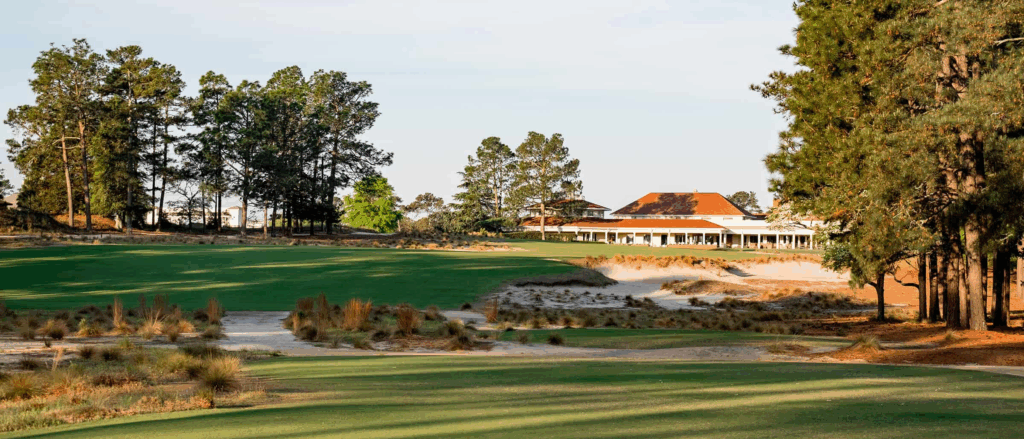
    Pinehurst No. 2, North Carolina, USAResort-only public access. Originally designed by Donald Ross and restored by Coore & Crenshaw, Pinehurst No. 2 is the flagship of a nine-course resort. Its crowned greens and sandy wiregrass areas challenge golfers to think strategically on every shot. The resort offers bundled stay-and-play packages that include meals, access to short courses like The Cradle, and extensive practice facilities. Ideal for a long weekend or buddies trip from the East Coast.
    Crystal Downs, Michigan, USAPrivate access. Designed by Alister MacKenzie and Perry Maxwell, this 18-hole gem on a tight, rolling site is famous for its small greens, quirky routing, and artistic flair. It’s compact, demanding, and one of the purest expressions of architectural creativity.
    Sand Hills, Nebraska, USAPrivate access. Built by Coore & Crenshaw, this 18-hole masterpiece pioneered minimalist design. Routed effortlessly through unspoiled dunes, it represents the platonic ideal of modern golf with no frills—just natural brilliance.
    Muirfield, ScotlandPrivate access with limited public play on Tuesdays and Thursdays. Laid out by H.S. Colt, Muirfield features a rare concentric routing of 18 holes that demands all facets of the game. It is a study in symmetry, strategy, and classic links terrain.
    Royal Melbourne (West), AustraliaPrivate access. Alister MacKenzie’s 18-hole design—paired with the East and Composite Courses—emphasizes width, strategy, and bold bunkering. Its fast greens and natural flow make it one of the finest courses in the Southern Hemisphere.
    Shinnecock Hills, New York, USAPrivate access. Designed by William Flynn, this 18-hole layout blends championship challenge with visual restraint. Wind, fescue, and elevation changes create an unforgettable American links experience.
    National Golf Links of America, New York, USAPrivate access. Created by C.B. Macdonald, this 18-hole template course reimagines Britain’s greatest holes. It’s the most intellectually stimulating design in the U.S., full of bold contours and strategic decisions.
    Cypress Point, California, USAPrivate access. Designed by Alister MacKenzie, this 18-hole coastal treasure transitions from forest to dunes to ocean cliffs. Universally regarded as one of the world’s most beautiful and awe-inspiring routings.
    Merion (East), Pennsylvania, USAPrivate access. Hugh Wilson’s 18-hole East Course (paired with a West Course) is compact yet punishing. Famed for hosting Bobby Jones’ Grand Slam, it rewards accuracy, nerve, and creativity.
    Pine Valley, New Jersey, USAPrivate access. Built by George Crump with contributions from Tillinghast and Colt, this 18-hole layout (plus short course) is widely considered the best course in the world. Its penal design and masterful variety make it the ultimate golf examination.

    Planning Your Trip: Public Doak 10s from Fairfield, CT

    Planning a pilgrimage to one of the public Doak 10s is more attainable than many golfers think. For those based in Connecticut, each trip varies in cost and complexity depending on location. European options like St. Andrews and Ballybunion require international flights and 3-night stays to make the most of travel time and access options like the Old Course ballot or Irish day trips. Pinehurst, on the other hand, offers a streamlined domestic experience perfect for a long weekend. The table below breaks down estimated per-person costs for a foursome, including airfare, lodging, green fees, meals, and transportation.

    DestinationPer Person Estimate & Breakdown
    St. Andrews (Old)~$3,000. Includes $700 flight, $900 lodging (3 nights), $250 green fee, $300 meals, $850 for extras like caddie, airport transfers, and side rounds. Walk-up or ballot needed.
    Ballybunion (Old)~$2,600. $650 flight, $700 lodging, $300 green fee, $250 meals, $700 in extras (rental car, other Irish rounds). Booking tee times as an international visitor is usually smooth.
    Royal Dornoch~$2,800. $750 flight, $800 lodging, $275 green fee, $275 meals, $700 extras (Highlands car hire, other local rounds). Incredible remote setting.
    Pinehurst No. 2~$1,600. $350 flight or drive, $800 resort package, $250 green fee (often bundled), $100 meals, $100 extras (forecaddie, range fees). Most convenient Doak 10 for East Coast golfers.

    Final Thoughts

    Living in Connecticut, I’ve always appreciated the wealth of quality public golf we have close to home — but chasing Doak 10s has opened my eyes to what truly great golf architecture can look like. These aren’t just courses with prestige or history. They’re experiences that challenge how you think, force you to be creative, and leave lasting impressions through routing, greens, and terrain. Playing even one changes how you see every course you play afterward — including your regular Saturday muni.

    From Fairfield County, these trips are surprisingly doable. Pinehurst can be knocked out in a long weekend without much hassle. The overseas courses take more effort — but pairing Ballybunion with Lahinch, or Dornoch with Cruden Bay, is the kind of golf trip that stays with you for life. Even St. Andrews is reachable with some planning around the ballot or using an authorized provider.

    For anyone in Connecticut who wants to understand design more deeply — or just experience the best golf the world has to offer — I can’t recommend this quest enough. It’s not just about ticking boxes. It’s about elevating your eye, your strategy, and your love for the game.

  • Let’s Go Golfing: NYC to Bandon Dunes

    Let’s Go Golfing: NYC to Bandon Dunes

    I’ve been dying to check out Bandon Dunes ever since I listened to Mike Keiser’s excellent audiobook The Nature of the Game. As someone who walks every course I can in Connecticut, the idea of a golf destination designed from the ground up for walkers, perched on coastal dunes with raw natural exposure, feels like a holy grail trip. Our plan is simple: four golf buddies, one direct flight out of JFK to Oregon, and five days of soaking in all six courses at Bandon Dunes—every last one.

    This post is for every Connecticut golfer who stares at a Google Maps pin of Bandon and wonders, “Could I really pull that off in a long weekend?” The answer is yes. You just need a flexible work schedule and a healthy obsession with golf design. Our goal is to play all five 18-hole courses plus The Preserve, the unforgettable par-3 course. Here’s what we plan to play, what it will cost, and why we’re convinced it will be absolutely worth every minute (press photos below).

    Course Architecture Focus

    Bandon isn’t a single course—it’s a portfolio. Each layout has a unique personality and strategic character. We’ve been obsessively studying golf forums, course reviews, and aerials, and used the course preview feature in the 18Birdies app to fly over every hole. Here’s what we’ve learned and why we’re so excited:

    1. Bandon Dunes (David McLay Kidd): This is the original course, playing around 6,700 yards, and it promises to be the most accessible yet subtly demanding walk. With wide fairways and rumpled terrain, Kidd gives you options off the tee but demands smart second shots. Hole 4 is a standout: a medium-length par-4 that bends left and unveils the Pacific for the first time. Hole 16 might be the most dramatic par-3 on the property—perched right at the cliff’s edge, the wind here can turn a short iron into a hybrid. We’re expecting a bold, joyous opening round that sets the tone.
    2. Sheep Ranch (Coore & Crenshaw): This is Bandon’s newest course and maybe its wildest. At just over 6,600 yards, it features nine greens perched on coastal bluffs and famously has zero bunkers. The drama comes from wind, cliffside exposure, and bold green contours. Hole 6 is a downhill par-3 that stares straight into the Pacific. Hole 16—another coastal par-3—is equally jaw-dropping. It’s the course we expect to talk about the most over beers.
    3. Pacific Dunes (Tom Doak): This Doak masterpiece stretches just under 6,600 yards and is built into cliffside ridgelines with little earth moved—just pure terrain. We’ve noted in our flyovers that the routing zigzags beautifully with multiple holes flirting with the edge of the Pacific. Hole 13, a short par-4 along the cliff, is our most anticipated hole on the trip. Hole 11’s split fairway gives you real risk-reward decisions depending on wind and confidence. The entire back nine looks like it could be one highlight reel after another, with natural contours that make every bounce matter.
    4. Bandon Trails (Coore & Crenshaw): While it lacks ocean views for most of the round, Trails may offer the purest architectural experience. At 6,800 yards, it dives into forest, meadow, and dunes. Our preview shows some of the most beautiful inland landforms we’ve seen. Hole 5, a par-3 into a deep natural bowl, looks like a green built by erosion, not humans. Hole 14 is a framed downhill par-4 with a skyline green that tests depth perception. We’re treating this round as the soul of the trip—a quiet, meditative test of ball control and walking rhythm.
    5. Old Macdonald (Doak & Urbina): Nearly 6,900 yards and wide as a football stadium, Old Mac is a bold tribute to template holes. The greens are massive and intricately contoured. Hole 3 (Eden) and Hole 7 (Biarritz) each demand totally different shot shapes, and we’ve bookmarked the Double Plateau green as one of the most complex on the trip. From our flyovers, it looks like Old Mac will be the course where we experiment most, from low chasers to high floaters. Miss in the wrong place and you’re rolling off into 30-yard runoffs.
    6. The Preserve (Coore & Crenshaw): This 13-hole par-3 course plays over rolling seaside terrain, with holes ranging from 63 to 150 yards. It’s not a throwaway—our preview highlighted incredible green complexes and framing. Hole 5 in particular looks jaw-dropping, hitting toward the ocean with sunset light as your backdrop. With firm turf and elevation shifts, we’re expecting to play flop shots, bump-and-runs, and maybe even putter from 30 yards off the green.

    Each course will challenge us in a different way—whether it’s navigating coastal gusts, finding the right line into a cross-slope, or learning how to play into a punchbowl or redan. We’re coming in with notes, but plan to let instinct and creativity lead.

    Trip Cost Table

    CategoryCost & Notes
    Flights$500 – JFK → North Bend (via PDX), round trip
    Transportation$100 – Shared car to/from JFK, rental from North Bend to Bandon split 4 ways
    Lodging$1,100 – 4 nights at The Inn at Bandon Dunes, 2 rooms shared
    Golf$1,500 – Bandon Dunes ($300), Pacific Dunes ($320), Trails ($270), Old Mac ($250), Preserve ($60), Sheep Ranch ($300)
    Food & Drink$300 – Resort meals, breakfast sandwiches, beers, post-round dinners
    Total$3,500 per person

    Final Thoughts

    We’ll be flying out of JFK early Wednesday, aiming to touch down at North Bend around midday after a quick connection in Portland. The drive to Bandon is supposed to be scenic—through coastal forest and misty ridgelines until the trees break and we see the dunes. We plan to ease into the trip with an afternoon session on the Punchbowl putting green and sunset drinks by the fire. Between walking six courses—Bandon Dunes (6,700 yards), Sheep Ranch (6,600), Trails (6,800), Pacific (6,600), Old Mac (6,900), and The Preserve (a brisk 1.5-mile loop)—we’re estimating well over 20 miles on foot. That’s around 50,000 steps—bring your best socks.

    The travel itself is part of the adventure. Flying from JFK to North Bend takes about 9 to 10 hours in total, depending on the layover in Portland. We’ll be crossing three time zones heading west, which means we leave early morning but arrive around noon local time. That time shift gives us nearly a full afternoon on Day 1. On the way back, we’ll lose those three hours, so an early flight gets us home by dinnertime in Connecticut. It’s a commitment—but a manageable one for a once-in-a-lifetime golf pilgrimage.

    Planned Itinerary:

    DaySchedule & Activities
    Wednesday7:00 AM (EST): Flight from JFK to North Bend via Portland 12:30 PM (PST): Arrival, rental pickup, scenic drive to Bandon 3:30 PM: Punchbowl putting green session 6:30 PM: Dinner and early rest
    Thursday7:00 AM: Tee time at Bandon Dunes 11:30 AM: Lunch and short break 1:30 PM: Tee time at Sheep Ranch 6:30 PM: Dinner with views of the Pacific
    Friday7:30 AM: Tee time at Bandon Trails 1:00 PM: Lunch and rest 4:00 PM: Tee time at The Preserve 7:30 PM: Sunset viewing and drinks
    Saturday7:30 AM: Tee time at Pacific Dunes 1:00 PM: Lunch at clubhouse 3:00 PM: Tee time at Old Macdonald 7:30 PM: Farewell dinner and drinks
    Sunday6:00 AM (PST): Depart resort, return rental car 8:00 AM: Flight from North Bend to JFK 6:00 PM (EST): Arrival back in New York

    This trip will run about $3,500 each, and we believe it punches well above its weight. For architecture lovers, scenery seekers, or anyone who finds joy walking fairways with friends, Bandon isn’t just a bucket-list trip. It’s shaping up to be the trip of a lifetime. If you’re a Connecticut golfer dreaming of wind-carved fairways, tumbling greens, and strategic decisions shaped by some of the best architects alive, this trip is worth every hour and dollar it takes to get there.

  • Let’s Go Golfing: NYC to Big Cedar Lodge

    Let’s Go Golfing: NYC to Big Cedar Lodge

    If you’re a Connecticut-based golfer looking for a quick, unforgettable weekend escape with your buddies, this guide breaks down exactly what it would cost to spend two days at Cliffhangers, the newest and most visually jaw-dropping short course at Big Cedar Lodge in Missouri. Based on travel out of JFK—often the best-priced and most convenient option for golfers coming from Connecticut—this itinerary focuses on maximizing high-quality golf in a tight Friday-to-Sunday window.

    Cliffhangers isn’t just another par-3. It’s a masterfully crafted course that brings architectural precision into harmony with dramatic natural terrain. Designed with input from two legends—Jack Nicklaus and Gary Player—the course uses the Ozark Mountains’ rugged limestone ridges to frame 13 cliffside holes that are both playable and strategic. Nicklaus and Player, known for their bold shaping and commitment to playability, helped sculpt a course where the land is the star: greens are benched into hillsides, tee boxes perch on rock shelves, and elevation changes of up to 80 feet make every club choice a conversation.

    From nearly every hole, you’ll soak in panoramic views of Table Rock Lake, dense hardwood forests, and exposed limestone ledges that reflect golden light during sunset. This isn’t just scenic golf—it’s sensory. The wind moves differently above the cliffs, the shadows stretch across greens late in the day, and the quiet is broken only by your group’s laughter after a near-ace or nervy miss.


    Why Architecture Nerds Will Love Cliffhangers

    Cliffhangers is the anchor, but Big Cedar’s short-course lineup shines as a trio. Just down the hill, Mountain Top offers a completely different feel: a rugged, Coore & Crenshaw-inspired design routed across ancient granite formations. With wide fairway corridors, massive natural rock outcroppings, and greens set low into the land, it encourages creative ground game play and rewards imagination over raw power. The layout has a rhythm that feels both relaxed and demanding—a thoughtful contrast to Cliffhangers’ vertical drama.

    Then there’s Top of the Rock, perhaps the most visually theatrical of the three. This Arnold Palmer-designed course wraps around waterfalls, caves, and elevated lake overlooks, blending natural and manmade elements into a cinematic experience. With island greens, dramatic water carries, and perfectly manicured turf, it plays more like a luxury showpiece—but with just enough edge to stay engaging. It’s flashy, but undeniably fun.

    Together, these three courses form a complete weekend experience. Cliffhangers brings strategy and bold terrain. Mountain Top adds texture and flow. Top of the Rock delivers polished spectacle. Each offers a distinct take on short-course architecture, and all three benefit from the Ozarks’ incredible natural beauty: ridgelines, forests, granite shelves, and that ever-present blue shimmer of Table Rock Lake.


    What the Trip Costs (Per Person for 4 Golfers)

    CategoryCost & Notes
    Flights$500 – Nonstop JFK → Springfield, MO (SGF). Leave Friday PM, return Sunday night
    Uber Rides$50 – Roundtrip to/from Big Cedar (~60 mi each way, split among 4)
    Lodging$325 – 2 nights in one shared resort room (~$650 total; 2 queens or pull-out combo)
    Golf$465 – Mountain Top ($80), Top of the Rock ($135), Cliffhangers x2 ($125 each)
    Food & Drink$270 – Casual resort dining (Devil’s Pool, Arnie’s Barn, Osage) + drinks/snacks
    🧾 Total$1,610 per person

    Wrapping Up: A Perfect Weekend Blueprint

    Here’s how it all unfolds: you leave JFK on a Friday evening and fly nonstop to Springfield, Missouri. After a scenic Uber ride into the Ozarks, you check into your lodge room and settle in. Saturday morning kicks off with a round at Mountain Top, where wide granite corridors and ground-game-friendly greens offer a refreshing, strategic pace. After lunch at Arnie’s Barn, you head to Cliffhangers for a late afternoon round—timed perfectly for golden-hour wedges and cliffside views over Table Rock Lake.

    Sunday gives you two strong options: replay Cliffhangers for another crack at its elevation-heavy drama, or take on the high-gloss spectacle of Top of the Rock, where waterfalls, island greens, and panoramic lake views cap off your weekend. A final meal, a breezy checkout, and a sunset flight back to New York—and you’re home in time for Monday morning.

    At $1,610 per golfer, this isn’t just a getaway—it’s a fully immersive, architecturally rich experience carved into one of the most beautiful natural backdrops in American golf. If you and your crew are looking to combine smart design, epic scenery, and quality time on the tee—all in one tightly packed weekend—this trip delivers on every front.